Unknown's avatar

Prayer: Powerful and Effective

“Prayer: Powerful and Effective”

James 5-16 prayer of righteous, words

James 5:13-20 (5:16) – September 30, 2018

If anyone has been following the news in the past weeks out of Washington, you know that journalists have been trying hard to get as much information as possible about the people and the situations involved. Journalists always are on the lookout for reliable information. They want to answer some basic questions: Who, What, When, Where, and Why. If you can answer those five questions clearly, you will have a good, solid news story.

The past two weeks have been a roller coaster for many people. With the nail-biting news about the Supreme Court nomination, many people across the United States have been sitting on the edge of their seats. While I am not going to play politics or tell anyone which Washington politician or opinion is right or wrong, as a pastoral caregiver I do pay close attention to people’s emotions and reactions.

What I have seen in these past days are the overwhelming number of people with heightened emotions and reactions to anxious, even fearful situations. As someone involved in pastoral care and trained as a chaplain, I notice these things. In our scripture reading today, we find the apostle James talking straight about how to pray, and thus deal with things similar to these: heightened emotions and reactions to anxious situations.

The apostle James was a practical kind of guy. We can see that from this short letter, the only letter he wrote, included in the New Testament. He gives some practical advice to his readers on how to live a faithful and effective Christian life: how to live faithfully with others in society, how to control the tongue, how to turn away from evil and towards God. Here, in the fifth chapter of James, he turns to prayer. As we look at this passage, James tells his friends how to pray, in very practical terms, almost the same way as a news reporter might tell it.

Here are the first verses of our scripture reading, from one of my favorite modern translations of the Bible, The Message, by Eugene Peterson. “Are you hurting? Pray. Do you feel great? Sing. Are you sick? Call the church leaders together to pray and anoint you with oil in the name of the Master. Believing-prayer will heal you, and Jesus will put you on your feet. And if you’ve sinned, you’ll be forgiven—healed inside and out.”

James covers the bases here. People who are hurting, happy, sick, sinning. In other words, he tells us Who ought to pray. Anyone ought to! Anyone who needs God’s help or anyone who has received God’s blessing ought to pray. That means anyone—all of us.

What is the next question? What should we pray about? Anything, and everything. That is the wonder and power of prayer. So many things to pray about, but James gives some great descriptions. He tells us what kinds of situations, in just a few words.

When should we pray? Anytime is a great time to pray. When we are hurting, or feeling great, or sick, or sinning? In each case, we are invited by James to bring everything to the Lord in prayer. Whenever we are in trouble, or in need to healing, or for forgiveness from sin? That is the time for prayer. Anytime.

Where are we to pray? Absolutely anywhere. This is one that James does not directly address, but we can see James tells us we are able to pray any time we need help from God. So, it just makes sense that you and I can pray anywhere we happen to be. Wherever we are, God is with us. God is everywhere.

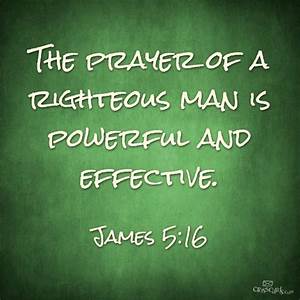
The last question is, Why should we pray? The simple answer? Because God answers prayer. Verse 16 tells us “Therefore confess your sins to each other and pray for each other so that you may be healed. The prayer of a righteous person is powerful and effective.”

Did everyone hear? “The prayer of a righteous person is powerful and effective.”

Except, I have been hearing from a large number of people during the past two weeks. Such difficult and traumatic events are extremely hurtful, especially for people who have had similar things happen to them. Psychologically speaking, the mention of a similar traumatic event can very well cause someone else to vividly relive their personal experience, no matter how long ago it happened. Trauma is imprinted on the brain in a unique way. It’s like the brain flags the specific memories as super-important. Those flagged memories can surface or re-surface at unpredictable times, when someone reminds you of something traumatic that happened. Like, for example, this serious discussion in the news of harassment and assault.

During the past two weeks, calls to rape and sexual abuse help lines have skyrocketed, anywhere from doubling to running four times as many as in a similar time period. Online, in social media, and personally, I have heard more people tell of harrowing incidents of rape and sexual abuse, and the horrible responses received when these actions were reported. Plus, I have both read and heard of situations where no one ever reported these horrific acts—until now.

Though I don’t who or what you believe, I think all of us can agree that as God’s people, we all need regular repentance and soul-searching, no matter what. We are also all in need of healing, personally, and certainly communally. Isn’t that what James tells us here?

When I was a chaplain, working in critical care units like the Emergency Department, Intensive Care, and trauma support all over the hospital, my primary job would be that of compassionate listener—even before prayer, and also as a heartfelt part of prayer. I suggest for all of us to consider a heart of compassion and a gentle hand of mercy. It’s time to put our defenses down and instead experience the vulnerability of listening to one another.

“If someone has a story to tell, the greatest gift you can offer is simply to listen. You don’t need to have answers or wisdom. You probably don’t need to say anything except, ‘I hear you. I believe you. I’m sorry you experienced that.’ In the compassionate version of the world I yearn for, we offer one another solidarity, a listening ear, and a tender heart. “ [1]

As this letter tells us, the apostle James was practical. He also had quite the reputation for prayer. We all know the familiar saying “Listen to what I do, not what I say.” That was James. He would not tell his friends and followers to pray if he didn’t follow Jesus in prayer himself.

Through the power of prayer, total personal and communal healing can occur. James was following the example of Jesus who taught his disciples to pray and showed them that people can be healed through prayer.” [2] James spent so much time in prayer that he had the nickname “Old Camel Knees,” since his knees were so hard and callused from staying on them in prayer for hours on end.

As one commentator said, “we must be active participants in the process. Whether it is the healing touch of the laying on of hands or a simple hug from a sister or brother in Christ or the potent power of prayer or the relief of corporate confession, active participation in the Body of Christ is preventative medicine at its best.[3]

What are we waiting for? “Take it to the Lord in prayer.”

Amen. Alleluia.


(My sincere thanks to Charles Kirkpatrick, for his Object Lessons & Children’s Sermons, Coloring Pages, Puzzles. Sermons4Kids.com. https://www.sermons4kids.com/5Ws_of_prayer.htm  I borrowed freely from this children’s activity for this sermon.)

(What follows is the Response our church had after the sermon. Instead of a Prayer of Hymn of Response, we had the following activity.)

Amidst the prescriptions James prescribes, the anointing of the sick is one that we do not do enough of, and one I want to offer to this congregation, to this family of faith during the worship service.

We read again these verses from our scripture passage from James chapter 5: “Call the church leaders together to pray and anoint you with oil in the name of the Master. Believing-prayer will heal you, and Jesus will put you on your feet. And if you’ve sinned, you’ll be forgiven—healed inside and out.”

Come, let us worship God, and claim our desire to be made whole – spiritually, emotionally, and physically.

And if anyone is just sick and tired of the current state of the world, come and be prayed over and be anointed with oil, a sign of the possibility of healing, inside and out.  


In the name of our Savior Jesus Christ, be strengthened and made whole, filled with God’s grace; may you know the healing power of the Holy Spirit. Amen.


Dear Comforting God, thank You for hearing and answering our prayers. Help us to remember that You want to heal us when we are sick, help us when we are in trouble, forgive us when we sin, and rejoice with us when we are happy. In the healing name of Jesus, Amen.

[1] https://fosteringyourfaith.com/2018/09/30/time-for-compassion/

Rev. Dr. Susan J. Foster (Sue) is the pastor of the East Woodstock Congregational (UCC) Church in CT.

[2] http://www.theafricanamericanlectionary.org/PopupLectionaryReading.asp?LRID=52

Commentary, James 5:13-16, Christopher Michael Jones, The African American Lectionary, 2008.

[3] http://www.stewardshipoflife.org/2012/09/rx-for-broken-lives-and-faltering-faith/

“Rx for Broken Lives and Faltering Faith,” Sharron R Blezard, Stewardship of Life, 2012.

@chaplaineliza

(Suggestion: visit me at my regular blog for 2018: matterofprayer: A Year of Everyday Prayers. #PursuePEACE – and my other blog,  A Year of Being Kind . Thanks!
Unknown's avatar

Follow Jesus on Palm Sunday

“Follow Jesus on Palm Sunday”

Jesus Palm Sunday - Giotto di Bonde, Entry into Jerusalem 1304-06, Fresco, Cappella Scrovegni Arena Chapel, Padua

Mark 11:1-11 (11:9) – March 25, 2018

            Have you ever been at a really big celebration? I mean a public celebration—like a ticker-tape parade, a celebration of a world championship, or the visit of an A-list celebrity? Something really, really big?

            From all the descriptions of the Palm Sunday Triumphal Entry in all four Gospels, that’s kind of what we are looking at today in our scripture passage. The celebration is really big, the Rabbi Jesus was a big-name celebrity, and this special entry into Jerusalem was a first-century type of a ticker-tape parade. Except with palms!

            Let’s take a closer look. Here’s the situation: It’s almost Passover, the most important religious observance of the religious year. A great number of faithful Jews from near and far come to Jerusalem, in pilgrimage, in commemoration of the Exodus event.

Jesus comes, too. He publicly, intentionally enters Jerusalem, even though the religious leaders are not pleased with Him or what He has been doing for the past few years. Jesus’s disciples must have known about the prophecy of an entry into Jerusalem riding on a donkey. This was clearly a scene with “Messiah” written all over it.

And, Jesus does not sneak into the city, all hush-hush. No! He comes in with a parade! With crowds of people waving palms and shouting “Hosanna!” and “Blessed is the one who comes in the name of the Lord!”

Jesus had been planning this entry in to Jerusalem for some time. In the Gospel of Luke, chapter 9, we can already see that He intended to do this thing. But here in our reading today from Mark, we see a concise account, relating what happened. Little additional information. We can see that from the other Gospels. This way of telling the account reminds me that Mark did not waste much time. He wrote mostly for a Roman audience, who had little time or inclination to wade through genealogies (like Matthew) or background information (like Luke). I think of Mark as the journalist of the four Gospel writers: “just the facts, ma’am.” And, Mark’s use of “immediately!” carries us right along from one situation to the next.

Except, our Gospel reading today is a culmination. We follow Jesus right into Jerusalem at this most holy time of the year—either the Jewish Year or the Christian calendar. With the entry into Jerusalem riding on a donkey, Jesus was certainly reminding everyone of a prophecy from Psalm 118.

What is the meaning of those cries of “Hosanna” and “Blessed is the one who comes in the name of the Lord?” If we look at Psalm 118, we’ll find these words written by the psalmist. This was the usual Passover greeting one person would give another, except with the addition of the word “King.” And just to let you all know, the majority of the crowd in Jerusalem on that Palm Sunday morning understood what they were quoting—they were intentionally welcoming someone they hoped would be their Messiah, their King! Someone who would save them from the awful situation they were in.

            There was a disconnect between the people and their limited understanding, and what Jesus actually was going to do. But I’m getting ahead of myself by rushing on to later in Holy Week. We are still here on Palm Sunday. And everyone is still excited to welcome the Rabbi Jesus—their hoped-for Messiah—into the city. They are hoping He will save them from the Romans and maybe, possibly, become their King. Except they had an earthly King in mind.

In Mark’s Gospel, we hear no mention of children. As one of my commentators says, this was an adult-inspired and led event. She suspects children did get into the act, but they were joining the adults. [1]  Remember the palm processions featuring children, on Palm Sunday? Either at this church, or at other services you may have attended over the years? This is not strictly biblical. We ought to make the palm procession intergenerational! That is truly what the impromptu parade was like. And then, when children participate with their parents, grandparents, other adults and leaders of the church, children can understand that this is a very important parade. And, a very important thing in the life of Jesus.

When Jesus enters Jerusalem, the rambunctious crowd calls out for the coming kingdom of their ancestor David. Messiah was supposed to be related to David, and Messiah’s coming was a time of peace on earth. But, the coming of Jesus causes a division. It causes anything but peace on earth.

The theologian Tom Mullen makes this statement about his denomination (Society of Friends or Quakers): “They work for peace — and if you really want to cause conflict, you work for peace.” [2] So it was for the Rabbi Jesus—the Messiah Jesus riding into Jerusalem. Even though we want to follow Jesus in peaceful ways, Jesus and His message created division, tension, and crisis—as seen by the violent reaction of the religious leaders.

But thank God, Jesus is more powerful than any division, any tension, any crisis. Jesus entered the city not as an earthly King, not as a conqueror, not to set up a nationalistic empire, but as the True Redeemer of Israel. And not of just Israel, but also of the whole world. This Holy Week is where all of the prophecies focus to a fine point, and reveal the Rabbi Jesus as not only the Messiah and King, but also as the Suffering Servant. The Lamb of God, sent to take away the sins of the world.

As we remember this Passover time, this Holy Week, we can thank God that our Lord Jesus did enter Jerusalem. As a King, as a Messiah, yes! But also as our Redeemer and Savior. Praise God, Jesus is our Redeemer and Savior, just as much as He was Redeemer and Savior for that crowd in Jerusalem on that Palm Sunday. In the first century, Jesus came to save His people from their sins. Praise God, He came to save us, today, too! Amen! And amen!

[1] http://worshipingwithchildren.blogspot.com/2015/01/year-b-palm-passion-sunday-march-29-2015.html

Worshiping with Children, Palm/Passion Sunday, 2015. Including children in the congregation’s worship, using the Revised Common Lectionary, Carolyn C. Brown, 2012.

[2] Mullen, Thomas, Laughing Out Loud and Other Religious Experiences (Waco, TX: Word Publishers, 1983), 50.

Unknown's avatar

Follow Jesus in Service

“Follow Jesus in Service”

John 12-26 serves, follow me

John 12:20-33 (12:26) – March 18, 2018

Following a leader can be a challenge. People follow all kinds of leaders, leaders in serious and not-so serious areas. People flock after leaders and trend-setters in fashion, certainly, purchasing the latest styles or shoes, or the newest fabrics and colors of the season. People follow charismatic leaders who convince their followers to diet or exercise or vote or meditate or do some other worthy cause.

But, what about here? What about now, in today’s Gospel reading from John? Our Lord Jesus says some pretty amazing things. Jesus wants us to follow Him with our actions. (Just as He said in weeks past. We are to follow Jesus.)

Let us take a step back. Where are we in the Gospel of John? The chapter before, chapter 11, concerns the raising of Lazarus in the town of Bethany, a suburb of Jerusalem. Immediately after that comes the Triumphal Entry into Jerusalem. We know that well from our celebration next week, on Palm Sunday. This reading from John 12 comes right after that.

Remember, Jerusalem is jam-packed with observant Jews from all over the known world, coming to worship at this special time of Passover. Not only from all over Palestine, but from Egypt, parts of Asia, and Europe. Maybe even further away than that. Some Greek-speaking Jews who must have heard about this Rabbi Jesus want to see Jesus and talk with Him. Perhaps, they even would like to consider following Him.

This is exactly what Jesus has wanted from people all along. At the very beginning of His preaching and teaching ministry, Jesus said, “Follow Me!” At various times throughout His journey up and down the country, and as He turned His face toward Jerusalem, Jesus repeated His call to follow. “Follow Me!” And, during this final week, this Passion week, just days before He went to the Cross, Jesus again says “Follow Me!” But, follow, how? In what way?

John calls these people “Greeks,” but he is not specific. They could be Greek proselytes, or they could be Greek-speaking Jews from far away. Whichever it was, they were more comfortable speaking Greek, which was the international language of trade and commerce, and the dominant international culture of the time. As one of my commentators said, “These foreigners wanted to investigate the possibility of becoming disciples. They had heard about Jesus (i.e., His reputation or ‘glory’) and wanted to ‘see’ if they could follow Him.” [1]

When the disciples bring these Greeks to Jesus, He responds with what seems to be an analogy, only sort of connected to becoming disciples. Listen to Jesus’s words: “23 Jesus answered the disciples, “The hour has now come for the Son of Man to receive great glory. 24 I am telling you the truth: a grain of wheat remains no more than a single grain unless it is dropped into the ground and dies. If it does die, then it produces many grains. 25 Those who love their own life will lose it; those who hate their own life in this world will keep it for life eternal.”

Come on now, Jesus! How did Jesus get from becoming disciples to talking about grains of wheat? And then, wheat being planted and dying in the ground? Okay, I can see what Jesus meant about a single grain growing into one stalk of wheat which can produce many grains of wheat. But, does that really connect to becoming disciples?

My commentator Larry Broding is helpful here. “Those who gave their lives to others would die, but see others live and would enjoy eternal life. They would bear ‘much fruit.’ Notice those who gave up their lives unselfishly followed Jesus to his death.” [2] That is one way of seeing discipleship. Following Jesus, in a challenging, unselfish and giving way.

What a way to demonstrate becoming disciples of Jesus!

Sometimes you and I have a problem. Sometimes, we cannot accept what Jesus sets in front of us. Sometimes, we are unwilling to follow the guidelines and rules God places before us. On occasion, some of us are too stubborn to do what God wants us to do. Even though we might know what God wants, and how to follow, sometimes—we do not.

The Rev. Janet Hunt relates something that happened about a month ago at her Lutheran church in De Kalb. Let’s see whether this helps us to understand Jesus’s words better.

“A few weeks back [in February], 93-year-old Vivian suffered a brain bleed. The damage was great and irreparable and her family opted to bring her home on hospice care. For the next almost two weeks, her 94-year-old husband sat by her bed, held her hand, and prayed and prayed and prayed. He was utterly heartbroken. From the start, I knew that they were just shy of their 70th wedding anniversary. Over the course of the last few weeks, I learned that they had been together much longer than that. For Bob actually held Vivian’s hand as he walked her to kindergarten 88 years ago.

“As the vigil neared its end, Bob became ill as well and was taken to the hospital with a severe case of pneumonia. A day later, his family talked his doctor into letting him go home, for they knew he had to be there when she died. And so he was. A day later he was back in the hospital once more. And a day after that, with a full heart and clear eyes, he declined all invasive treatment. He told me he was tired. He told me he only wanted to go to Vivian. I will not ever forget standing with him and with his family, praying for their hope and trust in God. His eyes were open and comprehending the whole time. Moments later, his nurse turned down the oxygen. After saying good-bye to his children, a few hours later he died, three days after his wife had breathed her last.

“Yes, he was 94. And yes, his health had been poor for some time. And no, he could not imagine a life without his beloved Vivian. And so, in a world where our medical system is set up to sustain ‘life’ at all costs, Bob faced it down and chose something other, something more. I cannot help but believe that while he surely did it for himself, he also did it for her. For while there was nothing more he could do for her, nor nothing more he needed to do for her, Bob was imagining heaven as a place where he could still be and do for his beloved. Even as he had always done. And he was willing to die to be able to do just that.” [3]

Do you understand? Do you see? Jesus was willing to serve and to die, for each of us. He wants us to be ready to serve and to die, for each other.

That is where our reading from Jeremiah comes in. God doesn’t have the rule book on stone tablets any more, like the Ten Commandments that Moses brought down from the mountain top. No, the prophet Jeremiah tells us that the Lord will write God’s laws upon our hearts. We do not have to blindly follow rules, but instead enter into a relationship. A real, loving relationship with Someone who loves us more than anyone on earth possibly could. God writes guidelines of love, service and relationship inside each of us, on our hearts.

God loves us so much that God sent the man Jesus into this world, to communicate that wondrous love to humanity. Jesus is communicating that wondrous love and generous service to each of us, today.

Are you ready to follow Jesus? Let us follow Jesus in love, and follow Jesus in service. Who can you serve today?

[1] http://www.word-sunday.com/Files/b/5Lent-b/A-5Lent-b.html   “The Glory of the Cross,” Lent 5B, Larry Broding’s Word-Sunday.Com: A Catholic Resource for This Sunday’s Gospel.

[2] Ibid.

[3] http://dancingwiththeword.com/a-single-grain-dying-for-the-sake-of-life/ Rev. Janet Hunt, Dancing with the Word

@chaplaineliza

(Suggestion: visit me at my regular blog for 2018: matterofprayer: A Year of Everyday Prayers. #PursuePEACE – and my other blog,  A Year of Being Kind . Thanks!)

Unknown's avatar

Follow Jesus in Love

“Follow Jesus in Love”

John 3-16 so loved, bible

John 3:14-21 (3:16) – March 11, 2018

Many people like sports. They watch football, baseball, basketball and hockey games on a regular basis. One thing that repeats on occasion at these sports matches, whether college ball or professional matches, is people who hold up signs featuring some important message. One message that keeps getting shown and broadcast on national television is the simple Bible reference of John 3:16. That is all. Held up to the camera on t-shirts, posters, and even more.

Lots of people are familiar with that Bible reference from the repeated broadcasts, but how many can quote the verse, word for word? Even if people can quote it, how many can go the next step and explain it? Talking about the context, the biblical situation, and the reason why the verse appears?

For that, we need to go back to the beginning of John chapter 3, where Nicodemus the Pharisee teacher and member of the Sanhedrin sneaks away to meet the Rabbi Jesus under the cover of darkness. To get a feel for how secretive Nicodemus is, imagine a secret agent or spy going for an undercover meeting. Imagine the caution and care that Nicodemus would be taking.          If other members of the ruling Sanhedrin found out about Nicodemus and his hush-hush visit to Jesus, I suspect Nicodemus would be in big trouble. The Pharisees were not exactly best friends with the Rabbi Jesus, and some of them were extremely antagonistic to Him.

After some talk between Jesus and Nicodemus about being born from above, the Gospel reading for today picks up in the middle of the conversation. Jesus brings up an event that happened back in the book of Numbers. Eileen read this passage from the Hebrew Scriptures for us this morning, too. Jesus breaks off talking about baptism and being born from above, and starts talking about Moses, of all things! Why change the subject to Moses in the wilderness?

The Biblical scholar Nicodemus understood immediately what Jesus was talking about. Of course he did! I bet he knew the Torah, the Books of Moses, backwards and forwards, and could even recite large portions of it, too.

However, the majority of us today do not have a clear understanding of this section of the Bible. Moses? A bronze serpent? Wilderness wandering? And of course, constant griping and complaining. It seemed like the people of Israel were forever complaining and griping. If it wasn’t one thing, it was the other. Gripe, gripe, gripe, gripe!

Listen to John 3:14-15. “14 As Moses lifted up the bronze snake on a pole in the desert, in the same way the Son of Man must be lifted up, 15 so that everyone who believes in him may have eternal life. “ That is what Jesus had to say to Nicodemus.

Remember how I talked to the children today about healing, and how Jesus heals people? That was the situation Jesus referred to. Moses and the people of Israel, wandering in the wilderness for a long time. The reading from the book of Numbers tells us that the people kept up their griping and complaining so long, and at such a volume, that finally God said “Enough!” (I’m paraphrasing here, but it is pretty close to what Numbers records.)

I am sure all of us know somebody who complains all the time. I don’t mean some of the time, or even most of the time, but all the time. Complain, gripe, moan. Everything is wrong. Nothing is right. The food stinks. The leaders are constantly wrong, and the people surrounding them can’t do anything right, either.

Wouldn’t that be annoying? Troublesome? Irksome? Even extremely frustrating? How would you feel if everything you always did and said was wrong? According to this really negative person, that is? Take that negativity, and multiply it by a lot. By thousands, even hundreds of thousands. Practically all the people of Israel were thinking, talking and acting like this. Negative thinking and acting. Some people refer to it as “stinking thinking.”

Reading from the book of Numbers: “But on the way the people lost their patience and spoke against God and Moses. They complained, “Why did you bring us out of Egypt to die in this desert, where there is no food or water? We can’t stand any more of this miserable food!” Then the Lord sent poisonous snakes among the people, and many Israelites were bitten and died.” What an extreme reaction to griping and complaining!

But, don’t you and I act like that sometimes? Don’t you and I talk against leaders, and friends and families? Moan about the food and the accommodations, and complain about God and how we always get the short end of the stick? Gripe about how “It just isn’t fair! Why does that always happen to me? What’s the use?” You know what I mean. People who complain, gripe and moan. Maybe they even look a little bit like you and me?

Jesus reminded Nicodemus that God sent poisonous snakes into the camp. After the people repented and asked God to save them, Moses held up the bronze serpent high on a pole, and everyone who looked at the serpent was healed.

The truth about God and God’s purposes is confusing. Some people just do not get it (like Nicodemus, and like us, too). “Nicodemus finds this Good News confusing (John 3:10) because it demands that he let go of all that he has accomplished and understood — let go and become like a newborn, ready to receive the world on completely new terms.” [1] Nicodemus just did not understand the spiritual healing that God was holding out to him—and to us, too!

Sometimes, the world says “no.” Sometimes, God’s message of Good News just makes no sense to us at all. Sometimes, we are in the same situation as the people of Israel, where they got stuck in their complains and negativity.  One of the commentators I consulted believes “the reason for this is because we are to understand that God has manifested His love for the world in a particular way. Godloved” the world through His Son, Jesus Christ. God “loved” the world by sending His son into the world, so that He might be “lifted up” as a sin-bearer.[2]

We all are familiar with the picture or representation of Jesus on the Cross. Artists in Central America turn this picture around, and paint crosses with pictures or faces of lots of people on them. What a cosmic understanding that our Gospel writer had when he insisted that Jesus was raised up on the Cross, and He drew all the people of the world to Him! [3]

If we look at this from Nicodemus’s point of view, “for Jesus (or John) to say that God loved the world was revolutionary, shocking, and very distressing for a strict Jew. “ [4]

Jesus did not draw not just you and your friends to Himself. No, Jesus did not draw just one particular region or country to Himself. Jesus also drew people of other races, other ethnicities, and other faith traditions to Himself. Think about that. Really think.

God so loved the world. That means everyone, in every part of the world. As the apostle Paul might say, God loves everyone: Jew, Gentile. Slave, free. Rich, poor. No exceptions. Including you. Including me.

For God so loved you. For God so loved me. Praise God.

[1] http://www.workingpreacher.org/preaching.aspx?commentary_id=2394  Lance Pape

[2] https://bible.org/seriespage/8-jesus-and-nicodemus-john-31-21

“Jesus and Nicodemus (John 3:1-21),” by Robert Deffinbaugh at the Biblical Studies Foundation.

[3] http://worshipingwithchildren.blogspot.com/2015/02/year-b-fourth-sunday-in-lent-march-15.html

Worshiping with Children, Lent 4B, Including children in the congregation’s worship, using the Revised Common Lectionary, Carolyn C. Brown, 2015

[4] https://bible.org/seriespage/8-jesus-and-nicodemus-john-31-21

“Jesus and Nicodemus (John 3:1-21),” by Robert Deffinbaugh at the Biblical Studies Foundation.

@chaplaineliza

(Suggestion: visit me at my regular blog for 2018: matterofprayer: A Year of Everyday Prayers. #PursuePEACE – and my other blog,  A Year of Being Kind . Thanks!)

Unknown's avatar

Follow, Carry the Cross

“Follow, Carry the Cross”

Mark 8-34 take up your cross, print

Mark 8:31-38 (8:34) – February 25, 2018

When you imagine children at play, what do you think of? Children in a schoolyard, out at recess or out at lunch break? I am not sure what children play now, but when I was in school, school children played all kinds of games. Besides hopscotch and jumping rope, there were games of Red Rover Red Rover, Mother May I?, Duck Duck Goose, and Simon Says. And, Follow the Leader in the playground among the play equipment.

When we compare children’s games today with the words of Jesus from Mark’s Gospel reading, we are looking at two very different things. When Jesus said, “Follow Me!” He was not talking about a fun thing like a children’s game. He spoke about something quite serious.

The background of these words is critically important for us to understand exactly what Jesus was getting at. What was the history, the backstory? Here we are at the center of the Gospel of Mark. Jesus had healed, taught, cast out demons, and performed other signs of power, but often in secret. And, people had questioned who this upstart Rabbi was, but with little answer.  Up until this time, Mark had only mentioned the term “the Christ” once, in the opening verse at the very beginning of the book, until here in today’s reading, in Chapter 8.

Just before this scripture reading today, the Rabbi Jesus asks His disciples, “Who do other people say I am?” Great question! We are familiar with the responses. Some say John the Baptist, others say Elijah or another prophet, but you and I know better. We know different. We know the end of the story. The thing is, these disciples do not.

Jesus has been asking the disciples to follow Him ever since the first chapter of Mark. When He called James and John, Simon and Andrew, Levi and all the rest, Jesus said simply, “Follow Me!” And, they did! They left everything, in fact. Commentator Matt Skinner said “Jesus isn’t so much about gathering pupils or making sure everyone understands him. He calls followers. Want to see who he really is? Join him.” [1] Which is exactly what many people did.

Today, we are following Jesus step by step on His journey to Jerusalem and the Cross during the next weeks, throughout Lent. Similar to these early followers of the Rabbi Jesus, we are taking this following thing one step at a time. We focus on one facet of the journey each Sunday. This Sunday we look at what Jesus said about taking up the cross when we follow Him. What on earth does that mean?

Here we can see that Jesus knew where He was going, and what He was going to do. Others probably did not, and even would call Jesus crazy or somehow deluded. “What do You mean, Jesus? How can You say that?”

Didn’t Peter just say that Jesus was the Messiah, the Christ, the chosen One of God? I suspect the disciples were thinking, what kind of mixed messages are coming from Jesus now?

Jesus not only mentioned that the disciples ought to follow Him, but He also wanted them to take up their cross. Jesus even made some mention of a person being willing to give up their life. The only comparison I can figure is that of police officers and firefighters. They “make the decision to put themselves in danger, risking their lives to save another person.  They measure their lives not by length, but by depth and quality.” [2] That sounds very similar to the sort of thing Jesus said in our reading today.

There is a problem. I can hear some people today saying, “Wait a minute, Jesus! I didn’t know that following You meant the possibility of giving up my life! I didn’t know that there was such danger and risk involved in being a Christian.”

Except, giving up one’s life was what the apostle Paul talked about over and over again in his letters to the churches in the New Testament. And, that’s what Jesus starts telling His disciples quite plainly, starting in today’s Gospel reading. Listen to Jesus: “If any of you want to come with Me,” He told them, “you must forget yourself, carry your cross, and follow Me. 35 For if you want to save your own life, you will lose it; but if you lose your life for Me and for the gospel, you will save it. 36 Do you gain anything if you win the whole world but lose your life? Of course not!”

What is more, Jesus rebuked Peter for telling Him He—Jesus—was wrong, and for trying to keep Jesus from walking the journey to Jerusalem and the Cross. Preventing Jesus from facing the Passion and sure death. At this point, Peter did not understand the full meaning of Jesus being the Messiah, the Christ. Plus, I suspect Peter and the other disciples were not clear on what taking up their own cross and following Jesus meant, either. But, they would find out, in the months and years to come.

Yes, sometimes it is difficult to follow Jesus. And, who in their right mind would want to shoulder the difficult burden of carrying a cross?

When we consider police officers or firefighters and what challenges they face on a regular basis, sometimes we call them heroes. Yet, Jesus calls all of His followers to face any number of difficulties and challenges, too. Except, not quite like running into a burning building or running down perpetrators, but still just as challenging.

Imagine someone you know, or someone you’re related to, bearing different crosses during their life. Crosses can be burdens we carry, difficulties we face. Some crosses involve physical pain and suffering. Other crosses can be financial, relational, or mental. What are the problems you or your family are dealing with today? Last month? Next year?

This might be the cross Jesus calls for us to bear, whether dealing with a devastating disease, accident, handicap, or disability. (Seen or unseen.) On the positive side, taking up our cross might assist us as we journey with Jesus toward Jerusalem. Lutheran pastor Edward Markquart reminds us:

-To take up our cross daily means to be open and flexible to God’s plan.

-To take up our cross daily means to focus on God daily.

-To take up our cross daily means that we can fail. That is, we do not do it.

-To take up our cross daily means to try to be loving every day.

-To take up our cross daily means to go the extra mile to do our jobs in life well.

-To take up our cross daily means to work on my relationship with my relatives and with people I do not like. [3]

Like I told the children earlier, we need to live like Jesus. We have to love God every day and love the people around us even when it gets hard. Yes, Jesus tells us clearly what it is like to follow Him. It is simple, yes. But easy, not necessarily so. May we pray for the grace, strength and perseverance to continue to follow Jesus, and to take up our own crosses.

And at the end of our lives, when we stand before Christ, what does the apostle Paul say? In Romans 8, “If God is for us, who can be against us? 32 Certainly not God, who did not even keep back his own Son, but offered him for us all! He gave us his Son—will he not also freely give us all things?” Praise God, we are indeed accepted by the Messiah Jesus. We are loved by our Beloved, Jesus Christ. Amen, and amen!

[1] http://www.workingpreacher.org/preaching.aspx?commentary_id=1383  Matt Skinner

[2] https://sacredstory.org/2012/02/29/jesus-faces-death-taking-up-the-cross/

“Jesus Faces Death: Taking Up the Cross,” Mother Anne Emry, Sacred Story, 2012.

[3] http://www.sermonsfromseattle.com/series_a_peter_the_stumbling_blockGA.htm

“Peter: The Stumbling Block and the Way of the Cross,” Gospel Analysis, Sermons from Seattle, Pastor Edward F. Markquart, Grace Lutheran Church, Seattle, Washington.

@chaplaineliza

(Suggestion: visit me at my regular blog for 2018: matterofprayer: A Year of Everyday Prayers. #PursuePEACE – and my other blog,  A Year of Being Kind . Thanks!)

Unknown's avatar

Follow, Into the Wilderness

“Follow, Into the Wilderness”

Mark 1-16 Jesus, wildreness, animals

Mark 1:9-15 (1:12) – February 18, 2018

This past week, on Wednesday, our country was transfixed and horrified to hear of yet another mass shooting. This time, in a high school, in a more affluent town north of Fort Lauderdale. These students, these adults had absolutely no idea that anything like this shooting could possibly happen. Not there. Not to them. And, not on Valentine’s Day.

I wonder how many of those families who are even now preparing to bury their loved ones feel like they are lost in the wilderness? Grieving, angry, fearful, at a total loss. Not even able to process the horrific events that happened in so short a time on Wednesday afternoon. What kind of messages are the ministers in that community of Parkland, Florida preaching this morning? This first Sunday of Lent?

Our Gospel lesson from Mark this morning begins with Jesus getting baptized in the Jordan by His cousin, John the Baptist. The heavens open, and the Holy Spirit in the form of a dove descends upon Jesus. A voice from heaven is heard saying, “You are my Son. With You I am well pleased.”

This is the very beginning of Jesus’s ministry, and we find it right at the beginning of chapter 1 in Mark’s Gospel. And, immediately—one of Mark’s favorite words—immediately after the baptism, the Holy Spirit led Jesus out into the wilderness. Alone. All by Himself.

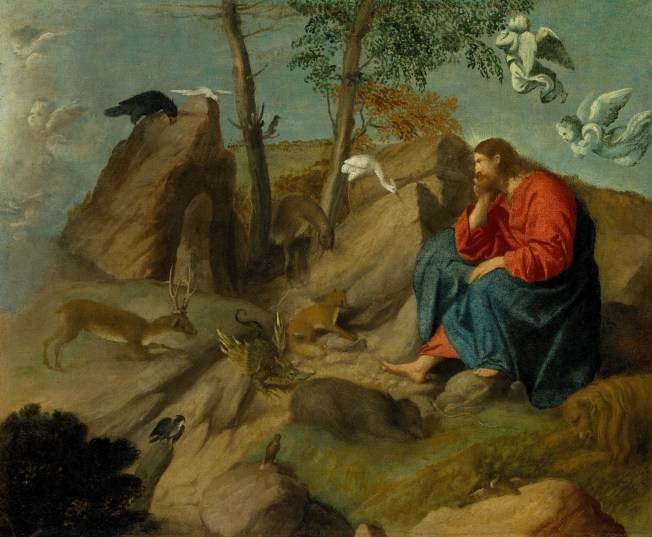
Imagine, being in the wilderness all alone. I am not sure whether a lot of people today could survive adequately in the wilderness, especially if they grew up in an urban area like Chicago. Perhaps Jesus was especially hardy. We are not told much else, except that He was out there for forty days, and at some point in this period, Jesus was tempted by Satan, the adversary.

Except—I’d like to focus on the wilderness. Jesus went to the wilderness for forty days.

Have you ever felt like you have been in the wilderness? Wandering there for forty days? Or, for even longer? Have you gone through experiences of lengthy unemployment or under-employment? What about times of sickness, and chronic health difficulties? Periods where there have been a whole series of illnesses and deaths of your loved ones and family members?

What about internal difficulties? Approximately one in four Americans suffer from some sort of mental illness or mental difficulty like depression, anxiety, or some sort of compulsion, if not the more severe kinds of affliction like bipolar disorder or schizophrenia. That’s a lot of people. And, those people often feel like they are all alone. All by themselves. These people are in a great deal of internal pain.

These times of sadness, anxiety, fearfulness, even downright despair sometimes threaten to overwhelm us. These are truly times of wandering in the wilderness. 

Let us go back to the families and friends of the people who were shot at Douglas High School in Florida, just five days ago. Here we have a whole community suddenly plunged into the wilderness. How on earth can they possibly cope? How can they find any way to hope for a better day or develop any kind of a positive outlook?

We are not going to leave these dear folks wandering in the wilderness forever. I will return to them and their dire predicament in just a few minutes. I want us to refocus on Jesus. Yes, the Holy Spirit descended on Jesus at His baptism. However, like my favorite commentator David Lose, it struck me that it is the Holy Spirit “that drives Jesus into the wilderness, that place of challenge and struggle and purification and testing and temptation.” [1]

Yes, we believe Jesus willingly withdrew into the wilderness for a time. But, what about other people, like those dear ones in Florida? Overwhelmingly, people do not willingly choose sickness or loss or deprivation, chronic pain, mental illness, or despair. And, what about us, wandering in the wilderness?

How are all of these people supposed to handle things when everything seems to be falling apart? With repeated, multiple losses, or chronic difficulties, or financial reversals? The list can go on and on. Some folks never get back on their feet, either physically, emotionally, financially, or spiritually.

When I was in my twenties, I had two small children. My former husband and I were in desperate straits. Even with college degrees, we could not find jobs. Even crummy jobs. Both of us had work for short periods of time, and then one or the other would get laid off, or the company would relocate out of state, or the position would close. No health insurance, for years. We were hitting the pavement, going to employment agencies, doing just about everything we could, for years. And, if it wasn’t for the long-term generosity of our mothers and families, we could possibly have been kicked out of our apartment and living in a car.

I know very well what it is like to do wilderness wandering. Struggling all alone. Seemingly, all by myself.

As David Lose says, “Truth be told, we rarely volunteer to go to wilderness places. We don’t often look for opportunities to struggle. Which is probably why Mark reports that the Spirit drove Jesus rather than simply make a suggestion.[2]

As Dr. Lose tries to make absolutely clear, God does not maliciously cause us misery or suffering. God does not desire that for beloved children—which we all are!

Notice, the Holy Spirit is not the one who tempts Jesus. Instead, the Holy Spirit is the Comforter and Sustainer who remains with Jesus throughout His time in the wilderness. Just so, the Holy Spirit can be with all of us through our wilderness wanderings. Indeed, God can be at work both for us and through us during our wilderness wanderings and difficult times. [3]

Sometimes, it is not easy. Sometimes, years ago, I would cry out to God, “Where are you? Do you even care about me, at all?” This is one of the hardest times of all, when folks are tempted to totally give up hope. Some struggles—physical, emotional, financial, mental or spiritual—are so difficult to bear. And, what if you have several of these struggles at the same time? On top of each other?

I want to give people a warning. I am absolutely not advocating that anyone stay in a dangerous or abusive situation. If there is danger of any kind, or any sort of abusive behavior or language coming your way, please get out. Please call someone, call or text me. Or, tell someone you trust.

All the same, God can be right next to us through extended difficult times. Again and again, I have heard testimonies about Jesus sitting right by a person’s side, all the time they went through chemotherapy and radiation treatment for cancer. Or, Jesus sitting with a person while they were having treatment for debilitating depression. And, perhaps we can “look at the struggles around us in light of this story and ask, “Even though I did not wish for this, how might God be at work through this difficult period. What can I get out of this? How might God use me to help someone else?” [4]

Yes, our thoughts and prayers are with these dear ones in Florida, mourning the loss of their loved ones. Yes, we can come alongside of people going through wilderness wandering of many types. And, yes. God is there, too. As Comforter, Sustainer. As the Spirit was with Jesus in the wilderness, so the Spirit will be with us, too.

Thank God for heavenly mercies. Jesus promises never to leave us nor forsake us. Amen.

[1] http://www.davidlose.net/2015/02/lent-1-b-wilderness-faith/

“Wilderness Faith,” David Lose, …in the Meantime, 2015.

[2] Ibid.

[3] Ibid.

[4] Ibid.

@chaplaineliza

(Suggestion: visit me at my regular blog for 2018: matterofprayer: A Year of Everyday Prayers. #PursuePEACE – and my other blog,  A Year of Being Kind . Thanks!)

Unknown's avatar

When We Fast

“When We Fast”

Matt 6-16 when you fast, script

Matthew 6:1-6, 16-21 (6:16) – February 14, 2018

The church season of Lent is a season of penitence, a forty-day period of time where we contemplate our inner selves, our sins, our shortcomings, and our position before God. But, it’s not all about us. Not by a long shot.

This Ash Wednesday service tonight is—similarly—a contemplative time where we are called to repentance. This day is the beginning of Lent. In our service we make a special effort to show God that we are sorry for our sins. We approach God through special prayers and readings of repentance, and through the visible sign of the cross of ashes.

When I was growing up on the northwest side of Chicago, our family was the only family on our block with children who attended Chicago public schools. All of the other families were Catholic, and all of the other children attended St. Ferdinand’s Catholic school. I remember them getting ash crosses on their heads. I did not. I was not Catholic.

Our Gospel reading tonight comes from the Gospel of Matthew, in the middle of the Sermon on the Mount, where Jesus talks about how we approach God. There are good ways to approach God, and not-so-good ways. Jesus talks about charity, prayer, and fasting. Good ways to do all of these things, and not-so-good ways.

Let’s focus on the third way Jesus talked about. Fasting. Not a particularly fashionable thing to do today. (Unless you need to do it for health reasons, in which case I absolutely agree with the medical professionals. I fully support them.)

People would fast to show sorrow for sin and repentance, as well as their humility before God. Years ago, centuries ago, fasting was almost a badge of honor among religious people. What was up with this? Why so much attention paid to fasting?

Those super-spiritual super heroes of Judaism, the Pharisees, practically turned fasting into performance art. They were particularly skilled at it. They even advocated fasting twice a week—on Tuesdays and Thursdays. They recommended looking tired and hungry and even dumping ashes on yourself, on the days you were fasting. That way, everyone would know you were fasting. Also, the fasting process had tight guidelines and rules on “how-to-fast.”  (That way, you could earn extra brownie points with the Lord, too!)

What is the matter with this kind of fasting? Is this the best kind of approach to God? Can we really please God if we go about it in such a rigidly controlled manner?

What did Jesus say? Reading from Matthew 6, “And when you fast, do not put on a sad face as the hypocrites do. They neglect their appearance so that everyone will see that they are fasting. I assure you, they have already been paid in full.”

I suspect Jesus would not be particularly happy with the way the Pharisees fasted. Sure, the way they treated the outward body portrayed the inner way they were trying to follow God, but in such a hypocritical fashion.

Since we are beginning Lent today, many Christians all over the world commit themselves to fasting in some way, or deny themselves some food, drink or activity during these forty days. It’s meant to remember Jesus and His withdrawal into the wilderness for forty days to prepare Himself for His public ministry. Other people read a Lenten devotional. Or, some follow various Lenten calendars or Lenten task lists to try to follow God more closely.

I remember when I was a child, the other children—Catholic schoolchildren—would give up something for Lent. Chocolate or cakes and cookies would often be selected, as would soda. A few jokesters would suggest they were giving up homework for Lent, but that would quickly be frowned upon by both the religious sisters and by their parents.

The other children would sometimes boast about what difficulties they were having, “giving up” something for Lent. Today, there is even a term for it: “humble-brag.”

Is this what Jesus wants us to do, in order to follow Him more closely? No! Other people were (and are) not to know that we are fasting! This is a way that Jesus suggests to follow God more nearly.

We have many options to follow Jesus during Lent. We can follow a daily Lenten prayer and bible reading. We can meditate and pray every day.

What are we as a congregation going to do, on Sundays in Lent? I have a small Jesus-figure, and I’ll be featuring it in the children’s sermons in the weeks ahead. I will use this figure as a visual aid, helping the children understand Jesus and His journey to the cross. Plus, we will follow Jesus all around the sanctuary.

We can all strive to love God more dearly and follow Jesus more nearly, as we journey with Jesus through Lent. Amen.

@chaplaineliza

(Suggestion: visit me at my regular blog for 2018: matterofprayer: A Year of Everyday Prayers. #PursuePEACE – and my other blog,  A Year of Being Kind . Thanks!)

Unknown's avatar

Believe the Message!

“Believe the Message!”

Mark 1-17 fishers of people

Mark 1:14-20 (1:15) – January 21, 2018

What is news? There are lots of different kinds of news. National news, local news. Partisan news, news that is slanted one way or another. What’s more, we hear so much about “fake news” today. News fit to scare the pants off of some people, and news meant to get some people really upset. News brings about all kinds of reactions. What kind of news can we possibly trust? How do we know which kind of news to believe?   

If we take a closer look at our Gospel reading for today, the Gospel writer Mark talks about news, too. Good News. God’s news—God’s wonderful message of Good News, brought by the greatest newsman, the greatest news announcer of all time, our Lord Jesus Himself.

Mark doesn’t waste any time with genealogies (like Matthew) or with long backstories of how Jesus came into the world (like Luke and John). No, Mark starts right off with a bang, with the baptism of Jesus. Then, shortly after He is baptized, Jesus starts to travel about saying, “Time’s up! God’s kingdom is here. Change your life and believe the Message.”

I love the relevance, the immediacy of Eugene Peterson’s modern translation. How appropriate that this translation of the Bible is called “The Message.” The whole Bible is God’s Good News to humanity, and most especially right here, in the Gospel of Mark.

Here we are, right at the beginning of Jesus’s ministry. John the Baptist (the cousin of Jesus) was already on the scene. A sort of a warm-up act for the main event, for some time John had already been proclaiming “Repent! And, believe God’s Good News!” First Jesus came to John to be baptized, and now was the time for Him to begin His own ministry, His own preaching of God’s Good News.

What do we hear first thing in our Gospel reading today? John the Baptist has been arrested. Next thing, Jesus begins to gather a group of disciples around Himself. Mark tells us that the way Jesus does this is by proclaiming God’s Good News. The Kingdom of God has come to us. Or, as Eugene Peterson translates it, “Believe God’s Message!”

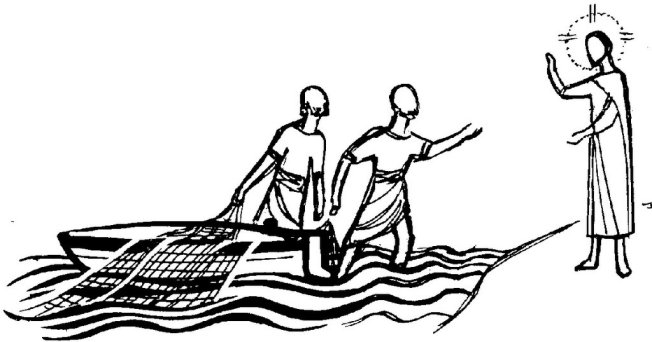
One sure way to know when the writers of the Bible really want readers to pay attention is when a word or phrase is repeated. “The emphasis of Mark’s gospel is that Jesus’ coming is the gospel, the “good news,” a term that in the first fifteen verses of the gospel occurs three times.” [1]  Today’s text continues the story from last Sunday, that is, the beginning of Jesus’ ministry as He tells God’s Good News to His first disciples. In today’s reading Jesus calls four fishermen at the Sea of Galilee — Simon Peter, Andrew, James and John.

Our Gospel reading last week was from John chapter 1, and there are some differences between John’s account and Mark’s account from today’s scripture reading. In that sermon, I also mentioned how Jesus called several of His first disciples—this time it was John and James first, and then Simon Peter and Andrew. Some people have said, “I don’t understand. Which story is true, the Gospel of John or the Gospel of Mark?” Great question.

When a car accident happens in the middle of a busy intersection, that is a real tragedy. I understand when the accident is serious enough, the police sometimes get involved to find out exactly what happened. Imagine the surprise and even consternation when eyewitnesses on different street corners have different perspectives and impressions of the same event!

In the case of the car accident, the different people all saw the same vehicles collide, but from opposite angles and varying positions. Different things may have made a strong impression on one witness, more than another.

It’s no wonder that their eyewitness accounts are somewhat different from each other. And, in the case of the four different Gospel accounts, that adds to the richness and depth of the separate narratives. Each Gospel writer had a separate emphasis and perspective, and different things he wanted to highlight and point out.

However, we need to drill down to what is common between these readings. Jesus calls His first disciples, and Jesus tells them all, “God’s kingdom is here. Change your life and believe the Message.” What is the definition of God’s Good News, anyway? In Greek, the word is euaggelion, or Gospel. God’s Message of Good News to all humanity.

As we trace this Good News through the four Gospels and the rest of the New Testament, we get some more information. God’s Good News is truth. With the coming of the man Jesus here on the earth, humanity has the opportunity to see and touch and experience what God is like. A key feature of this Good News is hope. The fallen world is pretty hopeless and dark, but Jesus brings hope to the hopeless heart. And, last, God’s Good News means salvation. Salvation is not just being saved from the negative aspects of escape from sin and death. No! Salvation is eternal life, and the power to live life victoriously. [2]

God’s Good News is something new to many; something different, even radical. Why on earth should anyone want to adopt this strange, new life from Jesus? Maybe, this way of being and living is even a bit frightening? Many people may well be afraid of taking such a big step.

As Dallas Willard writes, “when he was a boy, rural electrification was just happening and power lines were being strung throughout the countryside.  But suppose even after the lines were up and running you ran across a house where the weary family still used only candles and kerosene lanterns for light, used scrub boards, ice chests, and rug beaters.  A better life was waiting for them right outside their door if only they would let themselves be hooked into the power lines.  “My friends,” you could proclaim, “electricity is at hand!”  But suppose they just didn’t trust it, thought it was too much of a hassle, and anyway didn’t believe the promises that things might be easier with this newfangled juice running into their house.  “If it’s all the same to you, we’ll stick with the old ways.” [3]

You see the difficulty? How some people are afraid of change? Or, prefer not to change their lives? How some don’t want to accept this Good News from God because it’s different, or new, or out of their experience? Can you hear Jesus saying, “My friends, God’s Kingdom is at hand! God’s Good News of eternal life is right here, waiting for you!”

Jesus still offers this gift of God in our world today, proclaiming His Message of God’s Good News, His Message of God’s truth, hope and salvation.

God’s Good News actually makes our job simple. We need to widely and clearly communicate the Message of God. “What mustn’t be lost on us is the urgency of its communication, for the day of judgement is at hand. We point to the hope of eternal life in Christ and call on everyone everywhere to turn and put their trust in Jesus.” [4]

Have you responded as the disciples did, by dropping everything and embracing the Good News? Jesus is calling, waiting for you and for me. Jesus says, “Believe the Message! Come, follow Me.”

[1] http://www.workingpreacher.org/preaching.aspx?commentary_id=2315

Commentary, Mark 1:14-20, Michael Rogness, Preaching This Week, WorkingPreacher.org, 2015.

[2] Barkley, William, The Gospel of Mark (Westminster Press: Philadelphia, 1975), 25-26.

[3] http://cep.calvinseminary.edu/sermon-starters/epiphany-3b-2/?type=the_lectionary_gospel

Commentary and illustration idea, Mark 1:14-20, Scott Hoezee, Center for Excellence in Preaching, 2015.

[4] http://www.lectionarystudies.com/studyg/sunday3bg.html   “Repent and Believe in the Good News,” Rev. Bryan Findlayson, Lectionary Bible Studies and Sermons, Pumpkin Cottage Ministry Resources.  

@chaplaineliza

(Suggestion: visit me at my regular blog for 2018: matterofprayer: A Year of Everyday Prayers. #PursuePEACE – and my other blog,  A Year of Being Kind . Thanks!)

Unknown's avatar

Into the Wilderness

Matthew 4:1-11 – March 5, 2017

jesus-temptation-wilderness

“Into the Wilderness”

Have you ever overheard a conversation at a restaurant where someone was absolutely raving about the food served? About how delicious it was, how well seasoned, or well prepared? The magnificent desserts, or the fantastic dishes? “Out of this world!” or, “It’s to die for!” I’ve even heard a few people say, “That was positively sinful!”

Enjoying our creature comforts so much, we are not able to focus on anything else. Not able to focus on each other, and reaching out to the needy, sick and hungry. Not able to focus on God, either, much less worship God’s name regularly.

Let’s go back to the beginning. Yes, back to the very beginning, the book of Genesis. Eileen just read for us several verses from chapters 2 and 3 of Genesis, where Adam and Eve are tempted by the Devil.

We find out that the garden from Genesis has everything a person could want—except for one thing. There is one prohibition: a tree in the middle of the garden. Adam and Eve already have been told never to eat from that tree. Never, ever, ever eat from that specific tree. (Or they—we—shall surely die.)

We all know the story. The Tempter comes to Eve in the form of a snake, plants doubt in her mind, and convinces her to eat the fruit of the tree. What’s more, she gives some to Adam and he eats. And because of this sin, this disobedience, Adam and Eve have to leave the Garden of Eden.

What got in the way between Adam and Eve, and God? Adam and Eve said “Yes” to the serpent. In saying “Yes” to the snake, they found themselves saying “No” to God. They renounced the God who created them, who loved them, and who gave them all things. And, they were sent into the wilderness.

In our Gospel reading this morning, we find Jesus led out into the wilderness to be tempted by the devil. For forty days Jesus fasts and prays, away by Himself, in the wilderness. Jesus was preparing Himself for His time of ministry ahead, as well. At the end of this time, the tempter comes to a weakened, depleted Jesus, and tempts Him. The devil tempts Jesus with food, with control, and with power. The devil very much wanted to get Jesus to say “Yes” to him, to say “Yes” to at least one of the temptations he brought to Jesus.

At the beginning of each Lenten season, each year, the lectionary readings begin with the Gospel reading of Jesus and the temptation. The devil tries very hard to get Jesus to say “Yes” to him and the phony, flashy, fake things he offers. And by saying “Yes” to the devil, Jesus would end up saying “No” to God. The devil wanted to get Jesus to renounce His heavenly Father.

The period of Lent as a time of fasting, penitence and self-examination was followed early on, in the church’s history. The Church Council of Nicaea in 325 discussed a 40-day period of Lent, but did not get that period codified at that point.

What was a common practice by that time was an extended period for people intending to prepare themselves for baptism on Easter Day. Yes, this did include fasting, penitence and self-examination, along with learning the catechism of the Church.

The rest of the congregation did not take it easy during this 40-day period. They had to fast, be penitent, and examine themselves, too. We still do this today, remembering Jesus and His time of fasting and penitence in the wilderness just before He began His ministry. A time when He renounced the devil and all his works and all his ways.

Renounce. Renounce what? This is a confusing term, for some. But—what gets in the way between us and God? What tempts us to turn from God and the good things God wants for each of us?  What does it mean for us to follow after Jesus, and to renounce the devil?

The first temptation was that of hunger. The devil tempted Jesus with bread. (And, not just physical hunger.) “It is about all of those things that we use in an attempt to fill ourselves up, to satisfy our many hungers. We have a problem with excess.  We eat too much.  We drink too much.  We buy too much.  We spend too much.  We have too much.” [1]

Augustine, that great saint of the Church, said there was a God-shaped hole inside of each of us. We try to fill that empty hole, that void, with all kinds of things. Both physical as well as spiritual.  “And the food and clothes and jewels, all the drugs and alcohol and sex and movies and vacations and entertainment and money and toys in the world, aren’t going to be enough to fill up that empty space inside us.” [2]

The second and third temptations are all about control and power. And, putting God to the test. Do we try to take control of our own lives? Or, how about micro-managing everyone around us? Do you know anyone who willfully, stubbornly goes off on their own, whose theme song is “My Way” by Frank Sinatra? Not following God, not putting themselves into God’s caring, loving hands. Perhaps making bargains with God?

The commentator says this week, “Do we worship our lifestyle? The (fill in your nationality) way? Military power? Economic domination? The rich and the famous? Football or [baseball or hockey or] other sports? The almighty dollar?” [3] What do we need to renounce in order to come back into a close, loving relationship with God?

We can take for our example how Jesus responded to the devil. Three different temptations, and three times Jesus responded with the Word of God.  

Do we remember baptism? Not necessarily our own baptisms, but the more recent baptisms that have happened here. Several months ago, I baptized Claire. Part of the liturgy for that service includes several questions. The pastor says the words “Will you encourage this child to renounce the powers of the devil, his works and ways, and to receive the power of new life in Christ?” The parents and the sponsors respond, “We will, with the help of God.”

It doesn’t matter where we are, we have promised, on our behalf or on our children’s, to encourage ourselves or our loved ones to renounce the devil. With the help of God, we will say “No” to the devil. It says so, right here in the service of baptism. That is exactly what Jesus did, at His temptation, and we’re encouraged to say “No,” too!

It can be as simple and straightforward as saying “No” to the tempter, to his works and ways, and saying “Yes” to God. Turning our backs on the tempting things that beckon to us, lure us in, and instead, following after Jesus.

Whether having to do with our bodies, desires, excess, addiction, power, control; in deserts, gardens, the country, cities, mountains—wherever we find ourselves, we need to consider renouncing the devil. Refusing to follow after the devil’s pied piper flute.  Lent is not just giving up chocolate or sweets, or meat on Fridays, but this is a special time to follow Jesus, to examine ourselves, and to learn and practice the works and ways of God.

Whether we are in the wilderness or not, I encourage all of us to follow after Jesus. Say “Yes” to God, and “No” to the devil and the seductive power of evil. And, God will be with us, in the wilderness, on the mountain, in the cities, wherever we are. Thank God! Amen.
[1] https://www.umcdiscipleship.org/worship/lectionary-calendar/first-sunday-in-lent7#preaching

[2] Ibid.

[3] Ibid.

@chaplaineliza

(Suggestion: visit me at my regular blog for 2017: matterofprayer: A Year of Everyday Prayers. #PursuePEACE – and my other blog,  A Year of Being Kind . Thanks!)

(Thanks so much to the good folks at UMC Discipleship.org! I am following their Lenten series. Their online Lenten sermon notes and worship helps are invaluable.)

Unknown's avatar

Confront Evil, Love Enemies

“Confront Evil, Love Enemies”

Luke 6-27 love your enemies

Luke 6:27-28 – July 17, 2016

This week in the news has been difficult, to say the least. Thinking of two situations: the truck rampage in Nice after the Bastille Day celebrations, and the attempted coup in Turkey. Horrific situations. The loss of life, the horror, grief and trauma. Localized in the case of Nice, France. Widespread, in several regions of the country in Turkey.

I know, as sure as I am standing before you today, that many people are traumatized. The deaths, hospitalizations, shootings. Not only affected and grieving people in localized areas, but people throughout the region. Maybe even the world.

I chose this particular passage a week ago to discuss our sentence of the week from the United Church of Christ Statement of Mission. This week’s sentence: “Empowered by the Holy Spirit, we are called to name and confront the powers of evil within and among us.”

I searched the Bible to find verses and passages which dealt with evil and confronting the powers of evil. Yes, I could have chosen verses by the Apostle Paul that dealt with powers and principalities, institutional evil and great wickedness. Or, I could have gone with generalities, and centered on sin. I can think of several passages from both the Old and New Testaments that deal with sin, both individual and corporate sin.

However, a week ago, I chose chapter 6 of the Gospel of Luke, where Jesus talks about enemies and how His followers ought to treat their enemies. This was before the attack in Nice, before the attempted coup in Turkey, and before the Black Lives Matter protests here in this country. Jesus had some pointed things to say about enemies. Some surprising things, too.

Karen read this passage to us, a few minutes ago. I will read verses 27 and 28 one more time, to let us hear the words of our Lord, again. 27 “But to you who are listening I say: Love your enemies, do good to those who hate you, 28 bless those who curse you, pray for those who mistreat you.” Another way of saying this comes in verse 31:  “Do to others as you would have them do to you.”

Wait a minute. Maybe, more than a minute. Enemies do bad things to us. They speak in mean and calculating ways, and sometimes act viciously, even heartlessly. Enemies are sometimes evil, through and through. That is exactly what our sentence of the week from the Statement of Mission talks about, too.

When I think of evil, sometimes I think about something that slithers or sneaks. Something that hides in the shadows, creeping along in the darkness. Occasionally, evil acts blatantly, coming right out in the open, swaggering around all over the place, like someone who curses and cusses a blue streak. But, I would like to concentrate on evil that sneaks around secretly, even unnoticed. Spreading its poison, insidious in its grasp.

What can we do in the face of this kind of evil? When these kinds of enemies continue to rise against us?  

These words of Jesus are challenging words. Some might say hard words. Even, impossible words. But, think about it. The whole focus of evil and of enemies is to get us to retaliate. To be just as evil in return, if not more so. “An eye for an eye only makes the whole world blind,” Gandhi said. What good is that to anyone?

Not only individuals, but groups also can be sucked right in. Groups—often with the tribal mentality—can be drawn into a cycle of evil, even violence. Is that what Jesus advocates here? What about when He says “Do to others as you would have them do to you?” What do you think He meant here? Did Jesus want us to retaliate and do evil acts? Say nasty and mean things? Or, did Jesus want us to try something radically different? Unusual? Counter-cultural?

I would like to tell you about a town in Denmark. Middle-sized town, generally peaceful and harmonious. Except, in 2012, the police received calls from a number of concerned people, including some parents. Several guys in their late teens or early twenties left their homes, their town, and all that was familiar, to go to Syria. To work for Muslim terrorists.

The two police officers, Aarslev and Link, are police specialists with a role in crime prevention. This article featuring them and their idea appeared Friday on the National Public Radio website. “They usually deal with locals who are drawn to right-wing extremism, or gangs. The landscape of global terrorism was completely new to them. But they decided to take it on. And once they did, they wound up creating an unusual — and unusually successful — approach to combating radicalization.”

“The rest of Europe came down hard on citizens who had traveled to Syria. France shut down mosques it suspected of harboring radicals. The U.K. declared citizens who had gone to help ISIS enemies of the state. Several countries threatened to take away their passports — a move formerly reserved for convicted traitors.”

“But the Danish police officers took a different approach: They made it clear to citizens of Denmark who had traveled to Syria that they were welcome to come home, and that when they did, they would receive help with going back to school, finding an apartment, meeting with a psychiatrist or a mentor, or whatever they needed to fully integrate back into society.”

“Their program came to be known as the ‘Aarhus model.’” [1]

This program, this way of treating enemies reminds me a lot of Jesus. Let us listen to our Lord’s words from Luke 6, again. “27 “But to you who are listening I say: Love your enemies, do good to those who hate you, 28 bless those who curse you, pray for those who mistreat you.”

Isn’t this knowingly being kind to those who wish to do us harm? Who hate us, curse us, and wish to mistreat us? Correct me if I am off base, but I think these police officers are very much following the commands of Jesus.

These are challenging words which we find in Luke 6:27-36. I suggest re-reading this passage with an open mind and open spirit, and then ask yourselves (and myself, too—I always preach to myself, as well!), “What would Jesus do?”

As Father John Dear says, “Jesus wants us to break the downward cycle of violence by refusing to practice further violence. Violence in response to violence will only lead to further violence, he teaches, so do not retaliate with further violence. Break the chain of violence.”

Father Dear goes on to say, “Does that mean sitting back and do nothing in the face of violence? No, quite the contrary. Jesus also forbids passive resignation or indifference to evil. Instead, he demands an active, creative nonviolent response that will disarm our violent opponent without using their violent means… Through our nonviolent resistance, we insist on the truth of our common humanity, until… he repents of his violence and agrees to treat us with respect as human beings.” [2] As the Hutu and Tutsi tribes reconciled in Rwanda, as whole groups of people of all colors, classes and races reconciled in South Africa.

Is it difficult to follow the commands of Jesus? YES. Yet, I strive to do this very thing. Imperfectly, yet I strive on. I remember the words of Abraham Lincoln: “Do I not destroy my enemies when I make them my friends?”

I invite us all to seek the ways of Jesus, and search out an active, creative nonviolent response to evil, to enemies, and to violence. Will you join with me in striving to follow Jesus, today?

@chaplaineliza

(Suggestion: visit me at my regular blog for 2016: matterofprayer: A Year of Everyday Prayers. and my other blog,  A Year of Being Kind . Thanks!)

[1] http://www.npr.org/sections/health-shots/2016/07/15/485900076/how-a-danish-town-helped-young-muslims-turn-away-from-isis

[2] http://www.huffingtonpost.com/john-dear/an-eye-for-an-eye-makes-t_b_8647348.html