Unknown's avatar

Approaching God in Community

(I am on vacation this week, or rather, a stay-cation. Enjoying stepping away from pastoral and preaching responsibilities. Here is a sermon from the beginning of July 2007, when I was co-interim pastor of a (sadly) now-closed little church, St. John’s United Church of Christ in Evanston, Illinois.)

Acts 2:42        July 1, 2007

“Approaching God in Community”

            Life here in America, even here in the Chicago area, in the 21st century can be lonely. People often live alone, drive alone, shop alone, even work alone. Many people do not talk about their lives, are never asked how their day is going, rarely experience a caring touch. Loneliness and a sense of isolation are part and parcel of many people’s daily lives. Unless people intentionally make an effort to interact with others today, whole days—even weeks can go by without meaningful encounters.

            There are lots of reasons for this. The rapid communication trend with ever increasing speed has distancing, impersonal effects on many. The nuclear family is fragmented, now more than ever. Technology will continue to develop, and businesses downsize, fragmenting society and driving people further apart. And then, of course, we need to consider the speed with which everything is going now, so much faster than fifteen or twenty years ago.

            A retired pastor friend of mine told me a while ago about some elderly people at a church he pastored, a number of years ago. Some of them lived alone, either in houses or apartments. My friend told me about the loneliness that drove several of them out to the grocery store every day, because if they did not have that interaction with the checker checking out their food, they would not have a personal encounter in the entire day. A few were so hungry for personal contact, they desperately wanted the physical touch that comes from an exchange of money at the cash register; so simple, so fleeting.

            Similarly, some people today are searching for an interaction with God. George Barna, the guru of surveys, statistics and demographics, found that 49 percent of people who do not attend church, in the 1990’s—less than ten years ago—wanted a close relationship with God. These are people who do not even darken a church door. The percentage is even larger when we consider the people who do attend church. There is a common desire among many to have an encounter with God. Saint Augustine referred to it as a God-shaped hole in our hearts.

            This longing for God, this desire for an encounter with God, I see as similar to longing for human contact. Both longings stem from a deep loneliness, a need for something internally, a kind of relationship. Many people are yearning for some kind of deep relationship in their lives, both horizontally—with other human beings, as well as vertically—with God.

However, there is a problem. This longing cannot be filled. The encounter—both vertically as well as horizontally—that many people want to have cannot happen. Something gets in humanity’s way. Something is in our lives and hearts, and acts as a block, a separation. You know it as well as I do, and this something is sin.  Sin is a separation; it comes between us and other people. Sin comes between us and God.

I won’t dwell on sin much, other than to say that it is a prideful, selfish, sometimes downright rebellious attitude. The “me, first!” attitude that comes between us and other people, and especially comes between us and God. And that deep-down attitude separates us, builds walls, and keeps humanity from developing relationships, from having meaningful, honest encounters.

But there is good news. God wants to break down that separation, and allow us to encounter Him. The Bible tells us that Jesus had willingly taken our sins on Himself to pay the “wages of sin” in our place!  And God the Father made it clear to everyone that He was completely satisfied with this payment by the fact that He raised Jesus His Son up from the dead!  And so, the way is now clear for us to have the relationship with God that we were meant to have! At last, the “hole in our souls” can be filled to our satisfaction, this deep-down longing for God can be filled.

So this is good news! This is very good news! But I haven’t even started to examine our scripture passage for this morning. I wanted to take a brief look at the second chapter of Acts.

Peter—you all remember Peter, don’t you? Peter was just finishing his sermon in Jerusalem, on the day of Pentecost. The book of Acts records one of the biggest altar calls ever. About three thousand people welcomed the gospel message of Peter into their hearts, and joined the brand new group of believers that day. Talk about a soul-winning campaign! God touched the hearts of thousands of people that day, and drew all these people to Himself. God had a close encounter with each one of these people that day.

One of the most amazing things we can learn from this passage is that God not only repaired the way for Him to have a relationship with each person, vertically-speaking, but this lifting of the sin-separation repairs the way for us as individuals to have a relationship, to have an encounter with each other. God causes the separation to disappear, both horizontally, as well as vertically.

Listen again to the passage, starting at Acts 2:41-42. “So those who welcomed his message were baptized, and that day about three thousand persons were added. They devoted themselves to the apostles’ teaching and fellowship, to the breaking of bread and the prayers.”

Welcoming the message of the good news is the first part I want to consider. God repaired the separation. About three thousand people came to faith in the message Peter preached. God drew these people to Himself, reached their hearts, and caused the separation of sin to disappear.

Do you hear? Do you understand? God wants to approach us just as much as we want to approach Him—more, even, since God’s love is higher than the highest heaven and deeper than the deepest sea. And God has made this possible by the death of His Son on the cross, reconciling us to Himself, breaking the separation that divides us from God.

But wait—that’s not all. Not by a long shot.

God not only wants to bring us into a close relationship with Him, God wants each of us to come into a relationship with each other. And what an awesome opportunity to do both at the same time. In worship, we have the opportunity to experience a close encounter with God and with other people worshiping with us.

We here at St. John’s Church call this congregation a church family. Well, that’s exactly what Dr. Luke had in mind as he wrote the book of Acts. He wanted to emphasize that separate, lonely, desperate individuals not only developed a relationship with God, but through their heartfelt belief, they developed a relationship with each other. And that relationship, that fellowship has the opportunity to be realized in worship, together.

In centuries past, congregations took the opportunity to worship actively together. Congregational singing, reciting creeds, celebrating communion, reading liturgy, passing the peace—all of these are expressions, activities that congregations used to do together. But, there’s more. Much, much more. God is pleased when we are creative, and what better way to be creative than in worship and praise of our God.

Now, especially in some churches, worship is becoming increasingly a passive activity. Just sit back, and watch the show up front. But this isn’t a way to have a relationship with God, or with our fellow church family! People cannot interact with God and with others if they don’t have anything to do on a Sunday morning in a worship service.

God wants a relationship with us. God wants to get in touch with us. And part of that interaction comes from our getting in touch with each other. As someone here in the congregation mentioned a couple of weeks ago, it is especially at times of deep emotion that a congregation can pull together and show love and concern for each other.

It would be silly to think that a relationship could be built simply on loving thoughts and nothing else. No, a relationship is built on regular interactions, close encounters on a regular basis. The book written to the Hebrews advises these believers not to neglect the assembling of themselves together. They were to assemble regularly for worship. I’d like to go even further, and suggest that we not neglect worship that is interactive—not only between the congregation and God, but between the members of the congregation.

God is offering you, offering me, the opportunity for a relationship with Him, as well as a relationship with our church family. The options are there in front of us—loneliness and separation, both vertically as well as horizontally, or relationship and fellowship, with God and with our church family.

What does this look like? I don’t know, exactly. It’s different for different congregations. God is a God of infinite variation, and I suspect He accepts worship of all different kinds, just as God accepts people of all different cultures and people-groups.

I invite you to start praying about worship, and talking about it with each other, too. Some here may feel rather skittish, or downright silly, entertaining different and new ideas about worship. Some may even feel like they’re “breaking the rules,” but that’s okay.  This interactive worship, both in a horizontal way as well as a vertical way, is truly biblical worship. It is truly a way for us to approach God, as well as each other. And in this day and age, that’s what humanity needs—a close encounter with God, as well as with each other.


Unknown's avatar

God’s Faithful Promises

“God’s Faithful Promises”

Hebrews 10:15-25 (10:24-25) – Sunday, November 17, 2024

            Have you ever thought of all the different kinds of churches? Big churches, small churches, fancy places with lots of stained glass and stone carvings, or plain buildings with wooden pews and earnest prayers, plus house churches, all over the world!

            My friend Tiffany used to attend church at the National Cathedral in Washington. She grew up there. She remembers running around in that gorgeous building along with the other children in their renowned youth choir. Up and down the corridors, and even playing hide and seek in the building. Imagine having that glorious cathedral as a familiar, home church!

            I would like for us to focus on one particular idea in this Scripture reading from the letter to the Hebrews, today. “And let us consider how we may spur one another on toward love and good deeds, 25 not giving up meeting together, as some are in the habit of doing, but encouraging one another—and all the more as you see the Day approaching.”

I have worshiped at churches in a number of different faith traditions, in all different kinds of church buildings, and they all proclaimed the same Lord, Jesus Christ. The same God receives all the glory! Some churches pray in a more rambunctious manner than we do here. Yet, in every church, believers come together to worship God, and to encourage each other.

This letter to the Hebrews is a circulating letter. That means it and other circulating letters were sent from place to place in Asia Minor, so the small, struggling groups of believers could receive encouragement and teaching in writing from the Apostles and other newer church leaders. This particular letter was sent to Jews who lived a long way from Jerusalem, and possibly had rarely been to Palestine. Right here in chapter 10, this letter to the Hebrews gives the command to keep up meeting together.

Remember, the Christian community was extremely small at this point! In these towns and cities in Asia Minor and all over the Roman Empire, the Jewish community was decidedly small, too. Except, the Jewish religion at this time was known and accepted by the Roman government. Since Christianity was such a brand new religion, the Roman government did not recognize it, and in fact in some places, wanted to persecute followers of Christ!

I want everyone here to understand: in these early days, followers of Christ were not going to worship in large building dedicated to the Lord, set apart to the worship of our God. Not at all! This gathering together we read about in Hebrews 10 is in very early days of the church. We are talking about small house churches! Gathering together took place in each others’ homes, and maybe, perhaps, in a large spare room belonging to one of their number.

I’ve attended some African-American worship services. They are often quite different from the more quiet, sedate way we worship here at St. Luke’s Church. I had the privilege to preach in one service some years ago, at a Baptist church on the west side of Chicago. In a converted building, three storefronts put together. The building did not look like much from the outside. But, inside? A whole different thing.

The spirit of God came down and transformed that worship space – and the worshipers. Marvelous to experience. They truly encouraged one another, cared for one another, and helped one another show good to others. In their own context, familiar to them, on the west side of Chicago.

“After all, God has graciously adopted us into God’s family. God has transformed you and me from God’s enemies into God’s children, and from strangers into siblings. So when Christians meet together, we come to a kind of family reunion.” [1] When we meet together, whether it’s in a soaring cathedral or just where two or three are gathered together, God is present with us. And, God can draw us close. Closer to God, and closer to each other.

Now, this is only the first part of what happens when we gather together. What else can happen? What is another command from Hebrews chaplain 10? “And let us consider how we may spur one another on toward love and good deeds.”

So often, we as believers are told to be nice and gentle, meek and mild. And, that is one side of our Lord Jesus, certainly. But, the Rabbi Jesus when He was here on this earth was not just a meek, mild, retiring kind of guy. He often stepped out, and stepped up. Jesus actively worked on behalf of the poor, the forgotten, those left behind, in both love and good deeds!

How often are we called to be bold in the Scripture? To spur one another on to expressions of love and caring, to strike out and be bold and courageous? Yes, we are also called to be bold, and outspoken, and hard-working – like our Lord Jesus! This connects to the gospel call to face dangerous or difficult times bravely knowing that God is in charge. [2]

There is one important factor here, though. It’s very difficult to be brave, bold and courageous all alone. But – it helps if we do it together.

I would like to point out that all of these pronouns in these verses are plural. In the original Greek, the writer to the Hebrews is talking to “you all” when he mentions “you,” and especially when mentioning “we.” In all of these instances, all of these commands, these verses are talking to us Christians as a group. That is, all of us followers of Christ. Eugene Peterson’s excellent translation The Message interprets this as a summons to “be inventive … in encouraging love and helping out.”

As we come to the end of the church year, we consider a number of Scripture readings that talk about the end of our time here on Earth, when we look forward to our Lord Jesus returning. This Scripture reading from Hebrews is no exception. Listen again: “encouraging one another—and all the more as you see the Day approaching.”

Just as Boy Scouts are required to do a community service project to earn their Eagle Scout award, they need to organize others to help them do their special project. In the process of completing the project, they learn how to spur one another on to accomplish that goal, to join in together on good works that benefit their community. [3]

In the same way, we Christians are called to be faithful, to encourage each other, and to spur one another on! And, as each of us is drawn closer together to other believers, we are drawn closer to our God.

We followers of Christ are all called to actively work on behalf of the poor, the forgotten, those left behind, in both love and good deeds! And, all the more, as we all look forward to that Day when our Lord returns in glory.  We practice, we love each other, and we work together, looking forward to that Day when “every knee shall bow and every tongue confess that Jesus Christ is Lord.” What marvelous blessings for ourselves, for each other, for our communities, and for the world.  Alleluia, amen!

@chaplaineliza

(Suggestion: visit me at my other blogs: matterofprayer: A Year of Everyday Prayers. #PursuePEACE – and  A Year of Being Kind . Thanks!


[1] https://cepreaching.org/commentary/2018-11-12/hebrews-1011-14-15-18-19-25/

[2] http://worshipingwithchildren.blogspot.com/2015/10/year-b-proper-28-33rd-sunday-in.html

[3] Ibid.

Unknown's avatar

How Majestic is God’s Name!

“How Majestic is God’s Name!”

Psalm 8 (8:4) – October 6, 2024

            How many here can think of a truly unforgettable experience you have had? Maybe going on vacation, and seeing an unforgettable sunset or rainbow? Or perhaps taking a trip to a National Park, and experiencing some unforgettable scenery, like a spectacular waterfall? Or maybe traveling by boat or ship and seeing unforgettable sea creatures, whales, or sea lions? The world is full of marvelous, unforgettable things, and God created them all!

            But, we can’t go on vacation every day. Very few of us are able to see marvelous scenery or go to exotic places on a regular basis In the every-day, ordinary kind of way, I wonder if you and I really think the world is majestic? Awesome? God has made the world, and I think the Lord has done a pretty good job. But, how many of us think the Lord is majestic? Awesome? I mean, on an every-day basis. Are we stunned, at a loss for words by the majesty of the Lord?

            Let’s hear how our psalm today starts, again. “Lord, our Lord,  how majestic is your name in all the earth! You have set your glory in the heavens.” Wow! And, that is just the first verse! The Lord is OUR Lord, and the Lord’s name is majestic. Not just so-so, not pretty good, but majestic! Not to mention, the Lord has set glory and majesty in the heavens!

            I can see the stars on a clear night, but not quite as many here in Chicago as I can up in Wisconsin or in Michigan, far from the city. My husband Kevin spent two years in the mountains of Colorado, a number of years ago. He said the stars regularly put on an amazing display in the mountains, on a clear night. And, the moon, too! Truly majestic to see.

            Our psalmist marvels at the heavens, too – and more! “When I consider your heavens, the work of your fingers, the moon and the stars, which you have set in place, what is humankind that you are mindful of them, human beings that you care for them?

Our psalmist King David started out contemplating the heavens, and the awesome majesty of God. Now, he shifts to considering humanity. “In comparison to the grandeur of the universe, the psalmist questions why God would be mindful of humanity and care for them.” [1] Really, this is a valid question! After God created the heavens, and the stars and moons and all the other heavenly bodies, we humans are like grains of sand. Maybe even smaller, maybe microscopic. Who are we that God is even mindful, even aware of us? 

From time to time, maybe even more often than that, it is so easy to get caught up in the pressures and expectations of the world! You and I can know that very well. Such feelings of loneliness, insecurity and doubt can threaten to overwhelm us. Imagine, not being sure that we are worth anything, and feeling that we are like tiny grasshoppers or worms.

I don’t know about you, but just reading this description of humanity makes me feel so insignificant, especially in the face of such glory, such grandeur of all creation. However, isn’t this an opportunity to affirm, to witness to the blessed fact that this God who is described here by King David is also my God? In fact, our God?

            We have reassurance from King David! “Psalm 8 reminds us of our unique identity as children of God and the incredible value and purpose we have in Him. This psalm teaches us to look beyond ourselves and recognize the greatness of our Creator, who has entrusted us with the responsibility to care for [God’s] creation.” [2]

            Listen to the next verses of this psalm, and see how much trust the Lord gives to us, how much happiness and at the same time, responsibility: “You have made thema little lower than the angelsand crowned them with glory and honor You made them rulers over the works of your hands; you put everything under their feet:”

            How amazing that we – we puny humans – are crowned by God with glory and honor! And, that is all humanity we are talking about. Not just a few humans, not just the humans in our particular group or from our particular country. No! This psalm says ALL. Everyone. What a Godly proclamation to give each of us a worthy opinion of ourselves!

But wait, there’s more! God not only has made a royal proclamation that crowns all of us with glory and honor, the Lord has also made each of us heaven-appointed stewards of this marvelous world we all inhabit.

We all have a task to do, simply by nature of being born on this earth. Just as in the beginning of Genesis, Adam and Eve were assigned tasks by God to tend and keep the Garden of Eden, so with each person today. Whether we garden, or recycle and pick up trash, or choose responsibly-sourced food items and clothing, we all can be good stewards of this beautiful earth God has created for each of us and given us to live in.   
            One of my favorite people I follow on social media comes from the Peak District in northern England. She is a brilliant photographer of her native Peak district, and her handle is “Peaklass.” I love the description and the advice she gives: “In our rush through life, moving faster, working smarter, we miss so much. We miss the drift of seasons and the gentle ebb and flow of nature. We miss patterns, colours, changing light. We miss beauty and quiet. Sometimes we all need to stop and just watch the clouds roll.” [3]

            This psalm ends as it begins, “Lord, our Lord, how majestic is your name in all the earth!” Can you think of a more wonderful praise and prayer to our God than to enjoy the beauty and majesty of God’s creation, today? Yes, God’s name is majestic in all the earth! Each of us can stop where we are today, and praise God for all creation, all creatures great and small.  

            Two days ago was the feast day of St. Francis of Assisi; many faith traditions celebrate with a Blessing of the Animals this weekend. St. Francis is not only a patron saint of animals, he is also the patron of all creation, or the natural world. I want to end today with a benediction, a verse from the hymn that is attributed to Francis, “All Creatures of Our God and King.”

Let all things their Creator bless,
And worship Him in humbleness,
O praise Him! Alleluia!

Praise, praise the Father, praise the Son,
And praise the Spirit, Three in One!

            O, let us praise God, indeed! Alleluia, amen.

@chaplaineliza

(Suggestion: visit me at my other blogs: matterofprayer: A Year of Everyday Prayers. #PursuePEACE – and  A Year of Being Kind . Thanks!


[1] https://youthgroupministry.com/lessons/youth-ministry-lesson-on-psalm-8-embracing-our-identity-in-christ/

[2] Ibid.

[3] https://x.com/peaklass1/status/1842835391595905259/photo/1

Unknown's avatar

Wipe Away Every Tear

“Wipe Away Every Tear”

Revelation 7:9-17 (7:17) – November 5, 2023

            Memory is a precious thing. People remember lots of things: birthdays of loved ones, victories of sports teams, anniversaries of weddings or graduations or even the dates of those who have died. Many, many people remember Pearl Harbor, or the day John F. Kennedy was shot, or that terrible day of September 11, 2001.

            Our Scripture reading today comes from the book of Revelation, the last book of the Bible. Revelation has much that is foreshadowing, and much that is cloudy. This book also has passages that are incredibly scary and sad, and some that are hope-filled and even absolutely awe-inspiring.

            This reading today is certainly a joy-filled reading that gives hope and promise to even the saddest and most despondent follower of Christ. The Revelation was written late in the 1st century by the elderly apostle John, in exile. He wanted to give some comfort and encouragement to his fellow believers, it is true! This reading today does exactly that – in the midst of great sadness and tribulation.

            Let us pause, and think about this day. This is a special Sunday, when we remember. That is why I want us to think hard about memory and remembering today, of all days. All Saints Sunday is the day when we not only remember those our church has lost in this past year, but all of our loved ones who are no longer here on this side of the River Jordan. We also remember that great cloud of witnesses, all the saints who are in the presence of the Lord.

In the many-part vision that John saw, he wrote this: “After this I looked, and there before me was a great multitude that no one could count, from every nation, tribe, people and language, standing before the throne and before the Lamb.”

            Many churches practice the tradition of honoring the members of congregations and families who have died during the past year on All Saints Sunday, each year. Many churches also remember all of their loved ones who have passed on throughout many years, that great cloud of witnesses, and truly have a corporate memorial time in the service.

            As the United Methodist minister Rev. Dr. Derek Weber says, “This observance is worth taking the time in worship to give thanks and honor the saints of the church. The founder of the Methodist movement, John Wesley, loved All Saints Day. So, we suggest you take this day and let it stand alone as a celebration of the church that was, the church that is, and the church that will be.[1] In all its diversity, with different looks, languages, cultures, and customs.

            I know from my end-of-life work with families and their loved ones in the hospital, in skilled nursing facilities, and in homes throughout Chicago, that many people grieve even before their loved one has died. So many factors, so many features of life slip away while we are journeying with loved ones. We see a stopping of familiar activities, decrease in mobility, downsized living space, and any one of many other poignant, heart-tugging losses. The person or the family can grieve each loss as it comes, and sometimes several at once.

            At the same time, there can be quiet contentment, sharpening awareness, or gentle expectation wrapped up in this journey alongside, on the prayerful way through aging or end-of-life. You and I can see our families, our loved ones who have passed on as part of this heavenly congregation that the apostle John talks about in Revelation.

            “Yes, there is grief in the recognition of death, but there is also joy in the promise of eternity and the gratitude for the legacy that remains. On this day, we proclaim that we are who we are because of those who have gone before. But we also give thanks for the saints who are still with us.” [2] Today, All Saints Sunday, is not only a memorial time for those in the great cloud of witnesses surrounding us here, but also a celebration of the life and ministry of the church today, here and now. As the apostle Paul tells us, we are all saints! Each one of us is, for real.

            As we reflect on this Scripture reading set in the heavens, the apostle John tells us “he who sits on the throne will shelter [the saints] with his presence. 16 ‘Never again will they hunger; never again will they thirst.” Yes, we might see the “saints” as those dressed in white, in the heavens, gathered into the church triumphant. But since you and I are also called saints, couldn’t we also be considered present, before the Lamb who sits on the throne?

            To all of those who are struggling to find hope or healing, or to find the strength to continue being a caregiver, or to go to that difficult job for one more day: Jesus Christ’s promise to “wipe away every tear” is a word that all of us may appreciate hearing, today! [3]
            I encourage each of us to reflect on an everyday saint, someone you know or who you remember as being an everyday person, yet a special child of God. How was that person special? What did they do or say that makes you think of them as a saint? Today is not only a memorial and remembrance, but also a celebration. What is your favorite memory of that everyday saint? How can you best honor that person?  I encourage all of us to think of those everyday saints, our loved ones, family or friends. Think of how we can honor them best, and then do that.

Remember, the apostle John “is describing a vision: there are countless people from all over the world with different looks, languages, cultures, and customs. And they’re all worshiping God! These are the ones who have gone home to God.” [4]  We know that God was with those saints, every step of the way, just as God is with us – and we are God’s saints, too.  

@chaplaineliza

(Suggestion: visit me at my other blogs: matterofprayer: A Year of Everyday Prayers. #PursuePEACE – and  A Year of Being Kind . Thanks!


[1] https://www.umcdiscipleship.org/worship-planning/from-every-tribe/all-saints-sunday-year-a-lectionary-planning-notes

[2] Ibid.

[3] https://www.davidlose.net/2014/10/all-saints-a/

[4] https://www.umcdiscipleship.org/worship-planning/from-every-tribe/all-saints-sunday-year-a-lectionary-planning-notes/all-saints-sunday-year-a-youth-lessons

Unknown's avatar

We Want What We Want!

“We Want What We Want!”

1 Samuel 8:4-11, 16-20 (8:5) – June 6, 2021

            Is there anything you ever really wanted? I mean, really, really wanted? So much that you could taste it? Were you absolutely certain – after you got it – that this thing would make you really happy, so happy you never would wish for anything else ever again?

I know my children wanted things like bicycles, and iPods, roller skates and cell phones, during their growing-up time. I know that occasionally they even said if they just were to get that much desired thing, then they never would ask for anything else, ever again.

            We see that deep wish, that urgent desire expressed here in our Scripture reading today, from 1 Samuel chapter 8. The people of Israel really, really wanted a king. An earthly king, like all the other tribes and nations around them had.

            Just to orient ourselves to time and place, the time period of 1 Samuel was after the people of Israel came to the promised land of Canaan, conquered it, and lived in it for several hundred years. Samuel is known as the last Judge, and a prophet of God. The prophets helped the people of Israel understand messages from God, and helped lead and guide the people, too.

            The people of Israel wanted a king. But, what is the matter with this sentiment? Samuel, knowing God a little better than many of the people of Israel, understood God had tried to be a heavenly King for Israel for several centuries, with the Judges being God’s right-hand guys. The Judges had been the Lord’s representatives on earth, judging, leading and governing the people of Israel for God.

            Except, this did not work out too well. We can see that from the fact that the people of Israel kept falling away from the worship of the Lord, and started to sin – to worship idols and other, false gods. This would happen again and again. Everything would be okay for a while. The Judge would govern the people, things would prosper, the people would become complacent, and then fall away from the Lord. The people would be conquered by a neighboring tribe, repent and call out to the Lord. Another Judge would rise to chase the tribes out of Israel and bring the people back to the worship of the one, true God. Again and again this familiar pattern happened.

Does it sound familiar to you? Have your friends or family members fallen away from the Lord and had problems or difficulties, and needed to get right with God? This sadly familiar situation happens again and again, throughout the centuries. Not just in the time of the Judges.

 The elderly Samuel knew better. He had walked with the Lord for a number of years, and he understood exactly what the people of Israel were asking for. Perhaps the people thought the earthly king would protect them, or make them strong, or even have great wisdom. Perhaps a king would make the other tribes and nations respect the people of Israel! After all, the nation Israel was a little like a football, getting tossed around from tribe to tribe for the past few centuries. Perhaps Samuel’s feelings were hurt by the people’s demand! After all, he was the Judge appointed by the Lord, and he was the one who was God’s representative. But, no. The people wanted what they wanted when they wanted it. They really, really wanted a king!

Does this sound familiar? Someone wants what they want, and no one can tell them any different. They stubbornly decide they really, really want it, and that is that.

Samuel tries to reason with the people. He knew how kings acted in other nations. Samuel told the people of Israel that a king would not treat them well. He tried to spell out exactly how much a king would cost the nation of Israel. A king would take a lot of their crops and animals as taxes, and recruit their sons to fight wars and daughters to work for him, and the people would eventually complain bitterly to the Lord about the king.

Predictably, the people refused to listen. They demanded a king from Samuel.

So, Samuel went before the Lord. The Lord told Samuel to give the people what they wanted. You know the proverb “Be careful what you wish for – you may get it.” That is exactly what happened to the people of Israel. God added a postscript: someday, the king would indeed treat the people of Israel poorly, even enslaving them.

When the people of Israel finally got their king, did it really, really make them happy? Was it the best, most prudent thing for the nation? I don’t know for sure, but I think not.

            Of course, looking back at the book of 1 Samuel, we now have 20/20 hindsight. We can see clearly the kinds of things the new King of Israel will require the nation to do for him. Sometimes, “we want what we want when we want it!” is definitely not the best decision for us.

            While we are talking about leaders, and leadership, some of our current leaders today are battered and bone-tired of serving in their agency or government structure. In the past 15 or 16 months, everything has been turned topsy-turvy and inside out. Even if they might not be the most effective or the “best” leaders, we can pray for them. We can ask God to help them govern and make decisions. We can support them, even if we did not vote for them or hire them. And, God bless our leaders, even if they lead differently than the way we think they ought to.

            Do you think we ought to demand things from God? Demand what we want when we want it? Or, is it a better idea to trust the Lord to know what we need? “In giving us what we so desperately want, God disciplines us so that we learn to leave these things in God’s hands. In biblical terms, we must focus on seeking God first, and trust Him to add all those things He deems best for us. Let us be cautious that our requests to God are not demands. Let us learn from the Israelites of old so that we need not walk the path they had to walk.” [1]

God truly wants a receptive, open heart. Don’t be like the people of Israel! Instead, have an open heart and a willing spirit. Hear the word of the Lord!

  • Alleluia, amen.

(I would like to thank Illustrated Worship for their summer Worship Bundle for 2021. I appreciate the thoughts and insights found for this Lectionary reading for June 6, 2021, the 2nd Sunday after Pentecost, which I used in the creation of this sermon.)

@chaplaineliza

(Suggestion: visit me at my other blogs: matterofprayer: A Year of Everyday Prayers. #PursuePEACE – and  A Year of Being Kind . Thanks!


[1] https://bible.org/seriespage/6-give-us-king-1-samuel-81-22

“Give Us a King! (1 Samuel 8:1-22),” by Robert Deffinbaugh at the Biblical Studies Foundation.

Unknown's avatar

Give Thanks to the Lord!

“Give Thanks to the Lord!”

Psalm 107:1-3, 17-22 (107:7) – March 17, 2021 (Midweek Lenten Service, Week 4)

            One thing that I’ve heard many people miss in this time of the pandemic is congregational singing. Sure, there is piano and organ music in worship services, sometimes guitar, violin or cello, even wind instruments on taped services, when no church members are present in the congregation. But, many people really miss singing hymns together in worship services, and can’t wait until it’s safe to sing in a group once more.  

            That’s exactly what we have here today. A congregational hymn, in Psalm 107, one many people would sing together in worship as they marched up the hill to the great Temple in Jerusalem. Or, they also could possibly sing this psalm in praise to God as the worship in the Temple started to get under way.

            Just as modern worship services often begin with praise music, this psalm opens with instructions to the congregation to give thanks to God. We can think of many hymns and praise songs that do this exact thing. In this particular psalm, God, in goodness and steadfast love – or chesed – has redeemed the people from the hand of the oppressor. What is more, God’s people have been gathered “from the east and from the west, from the north and from the south” (verse 3), or from all points of the compass. [1]

            This is a longer psalm, speaking to travelers lost in the desert, prisoners, the sick, and sailors on the sea. God reaches out to all of these groups, to all of these travelers through life. I don’t know about you, but I sure feel lost and alone sometimes – especially after the year of the pandemic. We are now at the one-year point, thinking about all kinds of loss so many have gone through this past 12-month period of time. How have you navigated through these difficult times? What has been your anchor in this time of storm and distress?

            This psalm was written after the exile to Babylon, so I am certain that many of the people who had returned to the land of Palestine had difficult memories of the 50-year period of time just passed. However, this psalm urges us to remember the wonderful things God has done and continues to do for each of us, every day. The Lord is good, and displays steadfast love, or chesed, to all. God’s wonderful words to all the children of humanity completely overwhelm me – looking at the world, the beauty of each day, and the marvels of creation that God freely gives.

Commentator Nancy deClaissé-Walford does remind us, “What about those who in the wilderness and are sick to the point of death through no fault of their own? What about those who are battered by the storms of life? Yes, we can cry out to God; yes, we can hope in God’s good provisions.”

I know this is a difficult thing for some, especially when going through serious illness, extended challenges, or the loss of a close loved one. Yet, God’s mercies are faithful. They are sure every morning. “Great Is Thy Faithfulness” is not just a pretty hymn we sing in church sometimes. No, we can remember those mercies, that steadfast love God displays to all, and take comfort and encouragement from those very gifts. Free gifts, given to all, the just and the unjust.

  “We must never forget that those of us who have ample resources and strength are called to be the arms and legs, the hands and feet, the voice of God in this world. God will redeem from the east and the west, from the north and from the south; but the redemption of God often takes human form. And isn’t that what Lent is all about?” [2]


[1]  Nancy deClaisse-Walford, Professor of Old Testament and Biblical Languages

McAfee School of Theology, Mercer University, Atlanta, GAhttps://www.workingpreacher.org/commentaries/revised-common-lectionary/fourth-sunday-in-lent-2/commentary-on-psalm-1071-3-17-22-4

[2] Ibid.

@chaplaineliza

(Suggestion: visit me at my other blogs: matterofprayer: A Year of Everyday Prayers. #PursuePEACE – and  A Year of Being Kind . Thanks!

Unknown's avatar

Temptations

“Temptations”

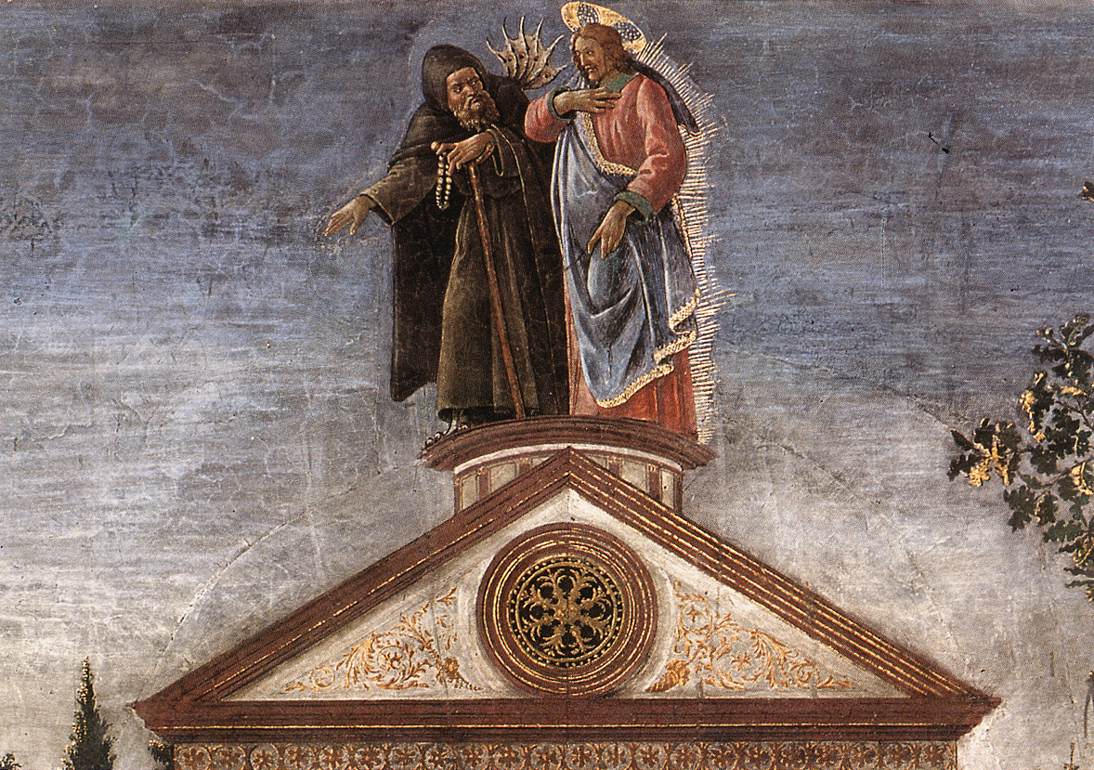
Jesus The-Temptation-of-Christ-Botticelli

Matthew 4:1-11, Genesis 3:1-7 – March 1, 2020

Different people are tempted by different kinds of things. I suppose most everyone here has been tempted at one time or another. Not necessarily with big stuff, or important things, but somewhere, sometime, there has been some kind of thing that has tempted you sorely. Maybe it was something as simple as a plate of freshly baked cookies on the kitchen counter. You knew that dinnertime was in only half an hour, but that plate of cookies looked so tempting. Or, perhaps cutting corners at work in order to save time, not quite following procedure. Or, maybe telling a little fib. You know, something that nobody else would know about. Except for you.

Of course, these are small kinds of temptations. Not quite the big, huge temptations we just heard about in our two Scripture readings this morning: the original temptation, with the special fruit and the snake from Genesis 3, and our Lord Jesus at the beginning of His ministry, tempted by Satan from Matthew 4.

This is the first Sunday of Lent, and we begin our journey with Jesus through these next weeks, until Holy Week, that time we remember the Passion of Christ. In these weeks of Lent we will look at different Scripture readings that hold the “Stories that Shape Us:” our Lenten series for this season. Today, we take a closer look at Temptations.

Are you and I tempted by the things we do, say, and think that really aren’t “too bad?” You know, all that stuff that the world tells us is okay? What about telling little fibs? Or, actions that seem like little speed bumps, or that we explain away by saying “everybody’s doing it—it’s okay! Isn’t it?” Aren’t those temptations, too?

Today we are going to zero in on our Lord Jesus, just after His baptism, as He withdraws into the wilderness to fast, pray and prepare for His years of ministry.

While Jesus is there, He’s tempted by Satan. That part is important, too. Just like the original temptation, of Eve and Adam at that special tree in the garden, so long ago.

Let’s look at Matthew’s take on the temptation. He doesn’t waste any time, but plunges right into the meat of the narrative. Verse 1: “Then Jesus was led by the Spirit into the wilderness to be tempted by the devil.” Here is the ultimate faceoff, between the Son of God and Satan, the tempter, trying to make Jesus fall or trip up.

Again, in our second reading from Genesis, we find ourselves at the tree, with Eve and the serpent. This is Genesis explaining the origin of sin, true. But, isn’t it also a way of showing each of us how human we are? Sure, God showers many blessings upon each of us, every day. But, the serpent questions that blessing, that trustworthiness of God, even quoting God’s own words back to Eve with a sly smirk in its beady eyes.

Aren’t both Bible readings communicating similar narratives? There is a lack, a hole, a need for something in our lives. And, Satan—the devil—the serpent can give it to us. Or, show us where to get it.

Think about Madison Avenue, and advertising on television, in print media, and now, on the computer. More and more, advertising plays upon our emotions, showing us our supposed “needs” or “lacks,” and then quickly following up with just what we need to fill that hole!

Jesus must have been the most self-assured, self-possessed human being, ever. He wasn’t like the typical human, feeling alone, incomplete, having a hole inside our heart and spirit. Isn’t that what each of us typical humans feel like, at least some of the time? Maybe, even, a lot of the time? Yet, our Gospel reading today tells us that Jesus was, indeed, tempted by the devil.

The first temptation was hunger. Or rather, for Jesus to use His power to take care of His own needs, His own hunger. I can just hear Satan say: “Come on, Jesus! You’re miles from anywhere. No one will see You do it! C’mon, turn these stones into bread. After all, You’re human. You’re hungry. Feel those hunger pangs in Your stomach? You know You want to.”

Yet, as commentator Carolyn Brown said, Jesus had been led out into the wilderness to learn something important. He wanted to be obedient to God and do as God asked, even if it meant being hungry in the wilderness. [1] And what was Jesus’ response? ““It is written: ‘Man shall not live on bread alone, but on every word that comes from the mouth of God.’”

The second temptation was Satan encouraging Jesus to use His power in stunts, almost like a circus performer, to get attention and show everyone how important He was. Satan even added the heavenly icing on top of this temptation: saying that angels would come catch Jesus if He threw Himself off the top of the temple. What was Jesus’s response? “It is also written: ‘Do not put the Lord your God to the test.’”

Again, Carolyn Brown tells us that God did not want the human Jesus to show off in such a flashy way, or prove how powerful and mighty God is. Instead, Jesus was sent to love and forgive people, have caring relationships, and be a visual example of what God was all about. [2]

Satan’s last temptation must have been tempting, indeed. Sure, lots of kings and rulers had tried to rule large parts of the world, but they were all fallible humans, with sins and shortcomings and all kinds of flaws all over the place. When Satan offered Jesus the opportunity to be King over the whole world, it must have been some temptation. Since Jesus was the perfect human, He would have been the absolute best King of the world. Oh, yeah. Plus, Jesus needed to bow down and worship Satan in order to become an instant King.

But, this wasn’t in God’s timetable. And, Jesus knew that.

What was Jesus’ response?  Jesus said to him, “Away from me, Satan! For it is written: ‘Worship the Lord your God, and serve him only.’”

We can see how Eve and Adam were persuaded by the serpent to give in to temptation, and eat the apple. We can see how Jesus defeated Satan, the tempter. Jesus trusted and obeyed God His heavenly Father. This struggle, this faceoff with Satan was the important thing. He showed that to Satan by responding directly and clearly, quoting Scripture passages with which all believers in Israel were familiar. [3] And after the tempter left Him, Matthew lets us know that Jesus was ministered to by angels. Like a boxer, after a hard-won fight in the ring.

For us, today, temptation is a regular part of our lives. “I’m only human!” some say. Our lives as Christians do not eliminate doubt, lacks, needs, or a sense of incompleteness. Satan will zero in on those so often! However, we can embrace our relationship with God as that place where our needs are indeed met, where our lives and very selves are made complete.

Sure, we are descendants of Adam and Eve, and as such we can be needy and lacking, searching for that God-shaped filler for the hole inside each of us. Thanks be to God that Jesus has come into our lives. We can trust Him to pick us up when we fall short from temptations’ snares. We can confess our failings and sins, and trust through the crucified and risen Jesus we indeed have the promise of forgiveness and eternal life. Amen!


@chaplaineliza

(Suggestion: visit me at my regular blog for 2020: matterofprayer: A Year of Everyday Prayers. #PursuePEACE – and my other blog,  A Year of Being Kind . Thanks!

(I would like to thank the Rev. Dr. David Lose. For this sermon, I have borrowed several extended ideas from his article http://www.workingpreacher.org/craft.aspx?post=1488  “Into Temptation,” David Lose, Working Preacher, 2011.  Thanks so much!)

[1] http://worshipingwithchildren.blogspot.com/2014/02/year-first-sunday-in-lent-march-13-2011.html

Worshiping with Children, Lent 1, Including children in the congregation’s worship, using the Revised Common Lectionary, Carolyn C. Brown, 2014.

[2] Ibid.

[3] http://www.taize.fr/en_article167.html?date=2007-03-01

“Jesus Put to the Test,” Commented Bible Passages from Taize, 2007.

Unknown's avatar

For God So Loved

“For God So Loved”

John 3-16 so loved, bible

John 3:16-17 – September 7, 2019

“For God so loved the world that He gave His one-and-only Son, that whoever believes in Him shall not perish but have everlasting life.”

That verse is from the Gospel of John, verse 3:16. It is also one of the most familiar and beloved Scripture verses of all time, and that is no exaggeration.

When I asked Gladys what verse or Bible passage was one of her father’s favorites, she immediately spoke up and said: John 3:16. What is more, Bart had his three daughters memorize this verse when they were young. What a beautiful and precious Bible verse, and also a beautiful and precious memory of their father.

This verse has been called the Gospel in a nutshell, or a simple way to view the Good News of God come to earth to save sinners. A vast number of people throughout the world love John 3:16 and can quote it word for word. Yes, it is a valid way to be introduced of the God of the Bible, and to be introduced to the Son, our Lord Jesus Christ. But, don’t stop there. Bart and Rosevelita did not stop with just that verse. They taught their children not to stop there, either.

What kinds of problems do people discover if they just stop with that one verse and ignore the rest of the Bible? They might have an incomplete understanding of salvation.

After centuries of the Christian church and church history, humanity has ended up with hundreds of different denominations, and even more different ways of understanding how to worship God and to give God honor and glory. This kind of diversity in thinking about God is a reflection of the awesome and magnificent diversity and difference in God’s creation. But, there is still—or should I say, even more—of a sharp disagreement and discord between believers and denominations that say they follow Christ.

What about Jesus Himself? What do you think Jesus would do? Or, WWJD, as the trendy bracelets and bumper stickers of some years back might say? But, I am serious, asking a serious question. What do you think Jesus would do—or say—about all the division in His church?

I suspect our Lord Jesus would cry, grieve, and be very downhearted about all the division, dissention and disharmony among people who say that they follow Christ.

But what if some don’t follow Jesus Christ, or aren’t sure about belief in God? What if some people are not in the same place as others on their journey of faith? We forget that statements like John 3:16 can portray a kind of God I suspect, if pushed, many people would rather not have. “We forget that our certainties about salvation lead to or come from claims about God that might not even reflect the God we know, the God we want.” [1]

If we say that God loves the world, this is not just a pie-in-the-sky theory for salvation. John 3:16 is not like doing advanced mathematics on a chalkboard or a biology experiment in a lab. It is specific and real-life. Particular. As particular as the God coming to earth and becoming human, just as human as you and me. But, can we measure God’s particular, tangible love, in a concrete way?

Sure, we can say “God so loved the world.” But, that means God loves a hated Samaritan woman—from John chapter 4. Does God love people who look and act and worship in a different way than we do? Do we love them, too? God loves a man paralyzed his entire life—from Mark chapter 2. Does God love handicapped and disabled people today? Do we love them, too?  God loves a man blind from birth. God loves Jesus’ friend Lazarus dead in the tomb for four days. God loves Peter who will deny his discipleship and deny being a friend of Jesus. [2]

Great calamities and difficult situations had happened to each of these people. God still loves them. God still loves you and me, and every other person, too. We may not be able to love all people, every person in the world. But, God does. John 3:16 tells us that God so loved the world. That means everyone. Every. Single. One.

Sometimes we use a measuring cup to measure things. When I made cookies a few days ago, I used a measuring cup and spoons to measure out the ingredients for cookies. Can we use a measuring cup to measure God’s love? If you or I were building something, we might use a measuring tape to measure the length and width of the wood properly. I wonder—could we use a tape measure to measure God’s love? Finally, we use a clock to measure the passage of time. Could we measure God’s love and find out how long it would last? Psalm 103 tells us that God’s love is from everlasting to everlasting, and that is pretty long, longer than we can humanly imagine. [3]

Do we have a better understanding of John 3:16 now?

We turn to another gracious promise from Scripture, from Romans 8, where the Apostle Paul tells us that he is convinced that neither death nor life, neither angels nor demons, neither the present nor the future, nor any powers, 39 neither height nor depth, nor anything else in all creation, will be able to separate us from the love of God that is in Christ Jesus our Lord.”

Bart knows the blessed truth of this verse. He is in heaven with the risen Christ right now, looking down on us. I pray that we all might think of Bart Garcia with blessing, honor his memory, and celebrate his new life in Christ Jesus our Lord..

Alleluia, amen.

[1] http://www.workingpreacher.org/craft.aspx?post=4835

“John 3:16,” Karoline Lewis, Dear Working Preacher, 2017.

[2] https://www.patheos.com/blogs/carlgregg/2012/03/lectionary-commentary-john-316-the-rest-of-the-story-for-sunday-march-18-2012/  “John 3:16 – The Rest of the Story,” Carl Gregg, Patheos, 2012.

[3] https://sermons4kids.com/measuring_gods_love.htm

“Measuring God’s Love,”  Charles Kirkpatrick, Sermons4kids.com.

@chaplaineliza

(Suggestion: visit me at my regular blog for 2019: matterofprayer: A Year of Everyday Prayers. #PursuePEACE – and my other blog,  A Year of Being Kind . Thanks!

Unknown's avatar

Gideon: Fearful and Uncertain

“Gideon: Fearful and Uncertain”

Judges 6:1, 7-24 (6:22-23) – June 24, 2018 – from Dave Ivaska’s book Be Not Afraid

Judg 6_19-24-Gideon-Sees-the-Angel-of-the-Lord

Occupied territory. An oppressive military force. Just the very words conjure frightening images in a person’s mind. Thinking of different wars and conflicts, throughout the centuries. It doesn’t have to be a conflict we actually remember. There are—sadly—plenty to draw from, from many centuries in the past.

The tribes of Israel had settled in the land of Canaan after wandering for forty years in the wilderness. But, what happened to the new country of Israel in just a few decades? How did they lose control of their country so quickly? How did Israel become a conquered region so easily?  

For a quick explanation, we need to look at the beginning of Judges chapter 6. “The Israelites did evil in the eyes of the Lord, and for seven years God gave them into the hands of the Midianites.” Throughout the Old Testament book of Judges, that is the way it was. The people of Israel stopped doing the things God told them to do, and stopped worshiping the Lord. Then, God would allow a foreign nation to take over and oppress Israel for a time. When the people couldn’t stand it any longer, they would cry out to the Lord. Then, the Lord would raise up a mighty warrior and judge. The judge would throw out the invading armies and then rule over the people of Israel for a time, and all would be prosperous and happy again.

You would think the people of Israel would learn, but, no. They would keep doing the same flawed thing; they would stop worshiping God, and get conquered by a foreign nation.

At the beginning of Judges chapter 6, we are in one of the parts of the cycle where a foreign nation is occupying the country of Israel. The Midianites are a particularly savage nation. Their armies steal all the flocks and crops from all the farmers, wherever the occupying forces go. This is a particularly fearful and uncertain time for the tribes of Israel, to be sure!

Back to the land of Israel. Occupied territory! As the scene in Judges 6 opens, the narrator lets us know that the Midian army is so greedy and grasping that they will confiscate any animals or produce from any Israelite farmer. How do we know that? Because, Gideon is threshing wheat inside of a winepress, in secret. He’s in hiding from the Midianites, so the occupying army won’t find out and take the wheat by force.

I also get the idea that Gideon is timid. Uncertain. Perhaps even fearful. Do you blame him? With the marauding Midian army prowling around, confiscating any crops from any farmer, wouldn’t you be afraid, too?

Thank God we do not have to deal with occupying armies or marauding bands of thieves today in the United States, unlike Gideon, unlike countless farmers in areas of conflict even now. But, are there big, challenging things in our lives today that cause us to be timid? Uncertain? Perhaps even fearful? Chronic sickness, unemployment, a serious accident, or a fire? Have any of these happened to you, or to your loved ones?

The next thing he knew, Gideon was shocked down to his shoes. (Or, sandals.) Wonder of wonders, an angel appeared to him. The angel spoke, saying, “The LORD is with you, mighty warrior.”

“Wait a minute! What? The Lord God said that to me? Is there some mistake? Has the angel got the wrong person? Or, made the wrong connection?  Believe me when I say I am not mighty. And, I am certainly not a warrior.”

If we paid attention in Sunday school class and read the Bible carefully, we would be familiar with several people telling God that they were not cut out to do the things God told them to. But, Gideon really means it. His clan is the weakest in the tribe of Manasseh, and he thinks he is the weakest (which probably meant he was the youngest) in his family.

But, the Lord has not made a mistake. God surely wants Gideon, believe it or not. For sure.

Imagine today, with God telling us that we are exactly what God wants, exactly what God expects from others. I wonder what else God is saying that we forget to notice. Or, maybe even outright refuse to hear?

Back to Gideon. Uncertain, fearful Gideon. I suspect he might have been a bit of a cynic and a pessimist, too. What’s the next thing out of Gideon’s mouth, in his conversation with the angel of the Lord? 13 “Pardon me, my lord,” Gideon replied, “but if the Lord is with us, why has all this happened to us? Where are all God’s wonders that our ancestors told us about when they said, ‘Did not the Lord bring us up out of Egypt?’ But now the Lord has abandoned us and given us into the hand of Midian.”

Whoa, Gideon! Did you really mean to say that? It sounds a little like you are scolding the Lord for not helping out Israel, and leaving the nation in this awful situation. Or—did you really mean to say exactly that?

I’ve got to say, I have felt like telling the Lord something like this, when I’ve been in several seemingly hopeless situations. When my former husband and I both pounded the pavement, we fruitlessly looked for work for several years. We both went to several job placement agencies over those years, and we were not able to find anything other than short-term, low-paying, temporary jobs. Between us we had thirteen years of college and graduate school education, and—no solid, permanent job offers. None. For years.

It was infuriating, and unbelievable, and incredibly frustrating. For years, I spent countless hours in prayer, raging at God, begging, pleading. Plus, we had two preschoolers, and neither of us had health insurance coverage. A frightening time, for years. I suspect Gideon might have felt the same way, except his situation was even worse. But, back to Gideon.

The angel of the Lord was patient and understanding with Gideon “when Gideon needed proof that it was an angel of God. The Lord then led Gideon on a series of events that helped Gideon gain courage to do as God had told him.” [1] We see the Lord encouraging Gideon with several statements, such as this:  14 The Lord turned to him and said, “Go in the strength you have and save Israel out of Midian’s hand. Am I not sending you?”

Gideon wants to make sure that this is God talking to him. 22 When Gideon realized that it was the angel of the Lord, he exclaimed, “Alas, Sovereign Lord! I have seen the angel of the Lord face to face!” 23 But the Lord said to him, “Peace! Do not be afraid. You are not going to die.” 24 So Gideon built an altar to the Lord there and called it The Lord Is Peace.”

This is not the end of Gideon’s uncertainty and questioning. Not by a long shot! Gideon continues to check and double check with God, just to make sure God is really and truly going to use him to deliver Israel.

Doesn’t the example of Gideon show us how patient and understanding God is, even when we have fears and uncertainty? God patiently answers so many of Gideon’s questions. God was right there with Gideon, just as God was with me and my former husband, through all those years of unemployment and under-employment. Just as God was with Joshua, and Moses, and Abraham before him.

Moreover, Gideon shows us how God looks at our potential, and not just the person we are right now. Instead, God helps us to believe in what we can be, and what God knows we can be, for God’s sake.

Gideon finally got God’s lesson into his head. I’m afraid it takes a great deal to get things into my thick head, too. But, praise God! The Lord had great patience with Gideon. I know God has great patience with so many of us, today, even when we are fearful and uncertain. Let us see what God sees, looking at one another.

Amen, alleluia.

[1] http://childrensermons.com/gideon/ August 4, 2013 Jim Kerlin People in Old Testament Hiding from the Enemy (Gideon)

@chaplaineliza

(Suggestion: visit me at my regular blog for 2018: matterofprayer: A Year of Everyday Prayers. #PursuePEACE – and my other blog,  A Year of Being Kind . Thanks!)