Unknown's avatar

Prescription for Prayer

“Prescription for Prayer”
1 Timothy 2:1-8 (2:1-3) – September 21, 2025

It’s good to be in the habit of doing certain things. Say, going to the gym. Exercise is a beneficial thing, and if I go to the gym on a regular basis, like three times a week, I will be healthier for it. Same for other things—like practicing the piano, practicing swimming or square dancing—it’s beneficial to get into the habit of regular repetition, week in, and week out.   

Worship and prayer are regular, comfortable things, things many churches do the same way, week in and week out. Here in our scripture reading today, Paul gives his younger friend Timothy some words of wisdom. Recommendations, if you will, of some things Timothy’s church can do in worship and prayer that will be beneficial to them all.

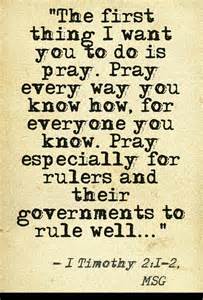
Reading again from 1 Timothy 2, “I urge, then, first of all, that petitions, prayers, intercession and thanksgiving be made for all people— for kings and all those in authority, that we may live peaceful and quiet lives in all godliness and holiness. This is good, and pleases God our Savior.”

I’ll stop right there. Not because the rest of the reading is unimportant. No! But, because Paul has so many ideas that are bursting out of him one on top of the other, I am afraid we might be overloaded if I read them all.

I am on social media, daily. I feature some things regularly, including my Daily Prayer posts. I have posted Daily Prayers on my public Facebook page for five years now. I see it as something I can contribute for my Facebook friends, and for friends of friends, too. I post a prayer each evening that I find meaningful, and I hope they can be helpful to others, too.

Other people have regular habits or practices of prayer and meditation. That is what the Apostle Paul talks about here! I am in a doctoral program for Spiritual Direction, which some people refer to as spiritual companionship. That’s coming alongside of another person, or a small group of people, being a long-term companion. Walking with them, sitting with them through their joys and through their difficulties and sorrows. I have a heart for listening to people’s stories, challenges, and difficulties in their lives. Plus, I pray with people through these things.

You recognize that is what we do in church, don’t you? In our Intercessory Prayers each week, we – as a congregation – come alongside of individuals and families and pray with them through their joys, challenges, and various difficulties. That is exactly what Paul tells Timothy to do here! This reading is a prescription for intercessory prayer in a worship service!

I know that believers and followers of Christ, Paul and Timothy were very much in the minority in their communities. The majority opinion and the overwhelming cultural context for both of them was one of a worldly avarice, where people were concerned about “me, first!” and “where’s mine?” This call to intercessory prayer was very counter-cultural!

Let’s look again at what Paul recommends. Paul begins the chapter by encouraging Timothy to offer prayers for all members of the human family during church services.He wants petitions, prayers, intercession and thanksgiving – all integral parts of praying – to be made for all people. That is not just for a few, or a family, or “only for our little, insular group of people.” No! Paul is recommending to Timothy that we pray for ALL people.

He mentions prayer in the terms of: petitions (humble, general requests to God), intercessions (requests, pleading for those in need), supplications (requests for ourselves, especially when faced with a crisis) and thanksgivings (expressing gratitude for blessings we receive). [1] All people need to be held up to God in prayer.

That means for everyone. Period. Even for mean people. Even for people we disagree with. Even for people who don’t look like us. As the modern translation from “The Message” of this reading begins, “Pray every way you know how for everyone you can.” Period.

Especially in the past few years in this country, division, discord, and dissension of large portions of the American population has only speeded up in the last few years, fueled by increasingly divisive rhetoric, shrill podcasts, and fraught news reports, as well as the regional and national conversations.

As Rev. Sharon Blezzard said, “Good news doesn’t usually sell publications or improve ratings. It takes bombast, divisiveness, and catty, snarky repartee to make headlines, not prayerful peacemakers standing in the breach attempting to reknit brokenness in quiet relationship building and listening. But we are called to a different way of being, to a stewardship of self and other that places value on people, on relationships, and on the building up of community.[2]

God has not called us to be snarky or mean, nasty or divisive. God does not want big bullies on God’s team. I have never heard of God approving of or cheering on hateful, spiteful Christians, either.

Instead, when we “Pray every way you know how for everyone you can.,” Paul reminds Timothy that “This is good, and pleases God our Savior, who wants all people to be saved and to come to a knowledge of the truth.”

Remember what the situation was for Paul and Timothy, and for all other believers in that first-century time and place. It is the same for us, today!  “We are called to be counter-cultural witnesses to God’s love, mercy, and saving grace. We cannot be a witness if our hearts are filled with hate. We cannot love our neighbors if we aren’t willing to get to know them, and certainly not if we aren’t willing to stop working violence against one another.” [3]

      Paul tells us we are to pray for all people; and we are to follow Paul’s lead in supplications, prayers, intercessions and thanksgivings. The intention of such prayers is so that we Christians in society will be able to live tranquil and quiet lives. This isn’t me saying it. It’s the apostle Paul! 

Regardless of whether there is peace in our church, peace in our neighborhood, or peace in our country, prayer is always a good idea. Having a close relationship with our Lord and Savior Jesus Christ is the reason we are here. Praise God! Thank You, Jesus. Alleluia, amen.

@chaplaineliza

(Suggestion: visit me at my other blogs: matterofprayer: A Year of Everyday Prayers. #PursuePEACE – and  A Year of Being Kind . Thanks!


[1] http://www.lectionarystudies.com/sunday25ce.html Rev. Bryan Findlayson, Lectionary Bible Studies and Sermons, Pumpkin Cottage Ministry Resources.

[2] https://www.stewardshipoflife.org/2016/09/calling-all-prayerful-peacemakers/

[3] Ibid.
Unknown's avatar

Sacrifice of Praise

“Sacrifice of Praise”

Hebrews 13:5-8, 15-16 (13:15) – August 31, 2025

            Have you ever known anyone who was really proper? Always every hair in place, always did the socially acceptable thing, and never put a toe out of line? Imagine a stern teacher, keeping order in the classroom by a mere look and a slow stare. Someone with high standards. Thinking about satisfying this kind of person makes me anxious, and nervous. I always need to be on my best behavior, minding my p’s and q’s. Just being around someone like this puts me on edge.

            But, what about putting God into the conversation? I know we are probably stretching our imaginations, but it is hard to imagine God wearing a wrinkled shirt, or with a sloppy haircut, or having a dirty face. For that matter, isn’t God perfect? Isn’t God prim and proper, always doing the right thing, never stepping out of line? Doesn’t God have incredibly high standards? Don’t we need to be on our best behavior with God, minding our p’s and q’s? Doesn’t that sum up many people’s conception of God?

Our Scripture reading today can sound like a list of rules. Do this! And, do that! And, don’t do this other thing! I can just imagine several stern Heavenly angels frowning, shaking their fingers at me if I step out of line!

However, the letter to the Hebrews was written to a bunch of scattered Jews who believed in Jesus as their Messiah, scattered in small groups throughout Asia Minor. What we know as Turkey, today. They had been chased out of Palestine by the Jewish and Roman authorities. Many of these scattered Hebrews were refugees. Migrants. People chased out of the land of their birth by an oppressive government that was out to imprison them, if not kill them, because they claimed Jesus as Lord and Messiah. So similar to migrants throughout history who come to other countries seeking asylum, because the place where they were born is very dangerous.

That is the background of the small congregations receiving this letter. This letter was copied and sent from place to place, a breath of fresh air, sound biblical teaching coming to these small groups of believers in Jesus.

Let us turn to our reading today, from Hebrews 13. At the beginning of the reading, the writer of this letter talked about sacrifice—the sacrifice for sin, which was one major way the Jews came before God in worship. In the time of the Jewish temple, it was common for Jews to bring animal offerings to God to make up for sins, to cover their sins and the sins of their loved ones, under the old covenant. One first-century Jewish idea of God was distant, angry, and even vengeful. God had incredibly high standards. God was someone to be placated. Even today, many people have that kind of view of God—a scary view. Not the view of God as loving, caring, and kind, at all.

However, we are going to flip that idea of a distant, angry, scary God. Many, many people are in fear for their religious beliefs. Governments throughout history have been cruel, indeed. Is the fear, anger and disturbance of the powerful governments today much different from the fear, anger and disturbance of the powerful people of Jesus’ day? I think not.

If we consider the wider picture today, around the world, countless followers of Christ are being actively and bitterly persecuted. It’s happening right now, in dozens of countries, officially sanctioned by their governments. Just as it was in the first century, for the small scattered congregations of Jesus followers.  

True, these scattered Hebrews in small groups have good reason to be afraid! On edge! Ready to run again. However, at the heart of this letter is a Kingdom ethic that turns worldly values upside down. Much like my summer sermon series of three years ago, when I preached on the Beatitudes, the first section of our Lord Jesus’s Sermon on the Mount from Matthew 5. That summer we looked at the Topsy Turvy Teachings of Jesus, talking about our service to others, loving mercy and kindness, and even being glad when we are persecuted, for Christ’s sake

Here, today, we can see the practical teachings in Hebrews chapter 13 as teachings of God’s Kingdom, a topsy turvy teaching which tells us that “greatness is revealed through serving others, worship is expressed in doing good, and righteousness is rooted in trusting God and acting with love. This radical re-ordering of values calls believers to live in a way that reflects the grace, justice and compassion of Christ.” [1] Truly, a topsy turvy way of living, then and now.

Instead of “pie in the sky” theological platitudes, this reading today talks about practical ways of living – and acting. These are practical ways to love others, just as Jesus told us to do. When Meier’s Bakery was donating many baked goods to our church, up until just a few years ago, we would donate those baked goods in turn to a local YMCA, for their men’s residence, which had many low-income residents. And then when we needed to stop that during the COVID shutdown, I quickly found another mission that was very grateful to receive those baked goods.

I’ve spoken about this worthy mission outreach before. A Just Harvest, which is located a block from the Howard Street El station, serves a hot meal to 200 to 250 low-income people every day, 365 days a year. This Christian group with their radical hospitality has boots on the ground. They truly welcome the stranger and reach out. They truly experience Christ’s constancy and amazing grace on a regular basis. In their daily ministry and outreach, they also rely on the Lord, as do the people in poverty they serve.[2]

            As we imitate these friends in welcoming the stranger, can there be a better way for any of us to be freed from fear, and become free to serve and praise and really live for God?

            And finally, as our instructions from Hebrews tell us, we can expand our vision of worship. Not just worship at 10:00 on Sunday morning! No, “True worship, the writer says, includes not just praise on our lips, but generosity and good works. I remind everyone: we are not doing these good works to get on God’s good side! No, the point of our good works is in response to what Jesus has done for us. Just as the whole book of Hebrews tells us!

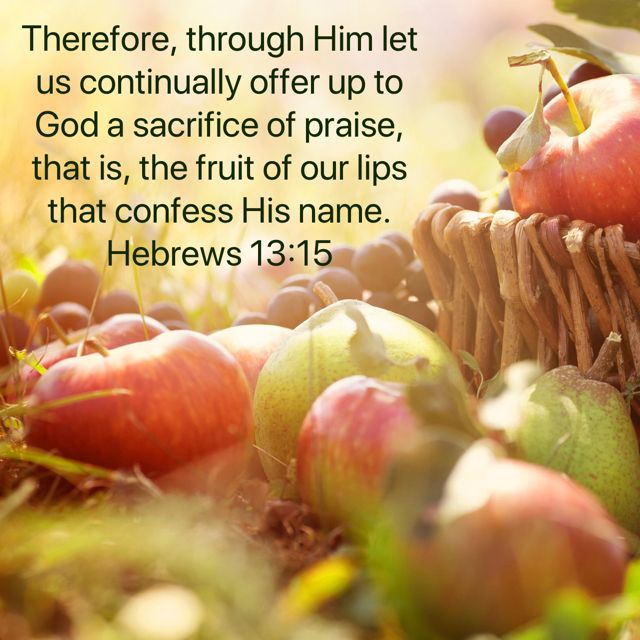
Our freely given good works, generosity and radical welcome to all are “sacrifices pleasing to God.” It’s a complete picture of faith—one that blends word and deed, praise and practice, belief and behaviour.” [3]

            Yes, we truly bring God our sacrifice of praise! And, with boots on the ground, we can truly welcome the stranger and reach out in radical hospitality. And, we truly experience Christ’s constancy and amazing grace on a regular basis. What a way to live, the Jesus way.

Alleluia, amen.

@chaplaineliza

(Suggestion: visit me at my other blogs: matterofprayer: A Year of Everyday Prayers. #PursuePEACE – and  A Year of Being Kind . Thanks!


[1] https://www.churchofscotland.org.uk/worship/weekly-worship/weekly-worship-2025-august/31-august-twelfth-sunday-after-pentecost-year-c

[2] https://www.stewardshipoflife.org/2016/08/to-be-continued/

[3] https://www.churchofscotland.org.uk/worship/weekly-worship/weekly-worship-2025-august/31-august-twelfth-sunday-after-pentecost-year-c

Unknown's avatar

Approaching God in Community

(I am on vacation this week, or rather, a stay-cation. Enjoying stepping away from pastoral and preaching responsibilities. Here is a sermon from the beginning of July 2007, when I was co-interim pastor of a (sadly) now-closed little church, St. John’s United Church of Christ in Evanston, Illinois.)

Acts 2:42        July 1, 2007

“Approaching God in Community”

            Life here in America, even here in the Chicago area, in the 21st century can be lonely. People often live alone, drive alone, shop alone, even work alone. Many people do not talk about their lives, are never asked how their day is going, rarely experience a caring touch. Loneliness and a sense of isolation are part and parcel of many people’s daily lives. Unless people intentionally make an effort to interact with others today, whole days—even weeks can go by without meaningful encounters.

            There are lots of reasons for this. The rapid communication trend with ever increasing speed has distancing, impersonal effects on many. The nuclear family is fragmented, now more than ever. Technology will continue to develop, and businesses downsize, fragmenting society and driving people further apart. And then, of course, we need to consider the speed with which everything is going now, so much faster than fifteen or twenty years ago.

            A retired pastor friend of mine told me a while ago about some elderly people at a church he pastored, a number of years ago. Some of them lived alone, either in houses or apartments. My friend told me about the loneliness that drove several of them out to the grocery store every day, because if they did not have that interaction with the checker checking out their food, they would not have a personal encounter in the entire day. A few were so hungry for personal contact, they desperately wanted the physical touch that comes from an exchange of money at the cash register; so simple, so fleeting.

            Similarly, some people today are searching for an interaction with God. George Barna, the guru of surveys, statistics and demographics, found that 49 percent of people who do not attend church, in the 1990’s—less than ten years ago—wanted a close relationship with God. These are people who do not even darken a church door. The percentage is even larger when we consider the people who do attend church. There is a common desire among many to have an encounter with God. Saint Augustine referred to it as a God-shaped hole in our hearts.

            This longing for God, this desire for an encounter with God, I see as similar to longing for human contact. Both longings stem from a deep loneliness, a need for something internally, a kind of relationship. Many people are yearning for some kind of deep relationship in their lives, both horizontally—with other human beings, as well as vertically—with God.

However, there is a problem. This longing cannot be filled. The encounter—both vertically as well as horizontally—that many people want to have cannot happen. Something gets in humanity’s way. Something is in our lives and hearts, and acts as a block, a separation. You know it as well as I do, and this something is sin.  Sin is a separation; it comes between us and other people. Sin comes between us and God.

I won’t dwell on sin much, other than to say that it is a prideful, selfish, sometimes downright rebellious attitude. The “me, first!” attitude that comes between us and other people, and especially comes between us and God. And that deep-down attitude separates us, builds walls, and keeps humanity from developing relationships, from having meaningful, honest encounters.

But there is good news. God wants to break down that separation, and allow us to encounter Him. The Bible tells us that Jesus had willingly taken our sins on Himself to pay the “wages of sin” in our place!  And God the Father made it clear to everyone that He was completely satisfied with this payment by the fact that He raised Jesus His Son up from the dead!  And so, the way is now clear for us to have the relationship with God that we were meant to have! At last, the “hole in our souls” can be filled to our satisfaction, this deep-down longing for God can be filled.

So this is good news! This is very good news! But I haven’t even started to examine our scripture passage for this morning. I wanted to take a brief look at the second chapter of Acts.

Peter—you all remember Peter, don’t you? Peter was just finishing his sermon in Jerusalem, on the day of Pentecost. The book of Acts records one of the biggest altar calls ever. About three thousand people welcomed the gospel message of Peter into their hearts, and joined the brand new group of believers that day. Talk about a soul-winning campaign! God touched the hearts of thousands of people that day, and drew all these people to Himself. God had a close encounter with each one of these people that day.

One of the most amazing things we can learn from this passage is that God not only repaired the way for Him to have a relationship with each person, vertically-speaking, but this lifting of the sin-separation repairs the way for us as individuals to have a relationship, to have an encounter with each other. God causes the separation to disappear, both horizontally, as well as vertically.

Listen again to the passage, starting at Acts 2:41-42. “So those who welcomed his message were baptized, and that day about three thousand persons were added. They devoted themselves to the apostles’ teaching and fellowship, to the breaking of bread and the prayers.”

Welcoming the message of the good news is the first part I want to consider. God repaired the separation. About three thousand people came to faith in the message Peter preached. God drew these people to Himself, reached their hearts, and caused the separation of sin to disappear.

Do you hear? Do you understand? God wants to approach us just as much as we want to approach Him—more, even, since God’s love is higher than the highest heaven and deeper than the deepest sea. And God has made this possible by the death of His Son on the cross, reconciling us to Himself, breaking the separation that divides us from God.

But wait—that’s not all. Not by a long shot.

God not only wants to bring us into a close relationship with Him, God wants each of us to come into a relationship with each other. And what an awesome opportunity to do both at the same time. In worship, we have the opportunity to experience a close encounter with God and with other people worshiping with us.

We here at St. John’s Church call this congregation a church family. Well, that’s exactly what Dr. Luke had in mind as he wrote the book of Acts. He wanted to emphasize that separate, lonely, desperate individuals not only developed a relationship with God, but through their heartfelt belief, they developed a relationship with each other. And that relationship, that fellowship has the opportunity to be realized in worship, together.

In centuries past, congregations took the opportunity to worship actively together. Congregational singing, reciting creeds, celebrating communion, reading liturgy, passing the peace—all of these are expressions, activities that congregations used to do together. But, there’s more. Much, much more. God is pleased when we are creative, and what better way to be creative than in worship and praise of our God.

Now, especially in some churches, worship is becoming increasingly a passive activity. Just sit back, and watch the show up front. But this isn’t a way to have a relationship with God, or with our fellow church family! People cannot interact with God and with others if they don’t have anything to do on a Sunday morning in a worship service.

God wants a relationship with us. God wants to get in touch with us. And part of that interaction comes from our getting in touch with each other. As someone here in the congregation mentioned a couple of weeks ago, it is especially at times of deep emotion that a congregation can pull together and show love and concern for each other.

It would be silly to think that a relationship could be built simply on loving thoughts and nothing else. No, a relationship is built on regular interactions, close encounters on a regular basis. The book written to the Hebrews advises these believers not to neglect the assembling of themselves together. They were to assemble regularly for worship. I’d like to go even further, and suggest that we not neglect worship that is interactive—not only between the congregation and God, but between the members of the congregation.

God is offering you, offering me, the opportunity for a relationship with Him, as well as a relationship with our church family. The options are there in front of us—loneliness and separation, both vertically as well as horizontally, or relationship and fellowship, with God and with our church family.

What does this look like? I don’t know, exactly. It’s different for different congregations. God is a God of infinite variation, and I suspect He accepts worship of all different kinds, just as God accepts people of all different cultures and people-groups.

I invite you to start praying about worship, and talking about it with each other, too. Some here may feel rather skittish, or downright silly, entertaining different and new ideas about worship. Some may even feel like they’re “breaking the rules,” but that’s okay.  This interactive worship, both in a horizontal way as well as a vertical way, is truly biblical worship. It is truly a way for us to approach God, as well as each other. And in this day and age, that’s what humanity needs—a close encounter with God, as well as with each other.

Unknown's avatar

A Star and a Gift from God!

“A Star and a Gift from God!”

Matthew 2:1-12 (2:10) – January 5, 2025

I remember Christmases when I was very young. I was the youngest of six children, and we lived on the northwest side of Chicago. My father worked for the National Safety Council, which was a not-for-profit organization. He didn’t get paid a huge amount of money, so I remember Christmases when we children would not have a huge pile of presents under the Christmas tree, like the television commercials of today always seem to show. But, I do remember the happiness and joy of those Christmas mornings. Those are warm memories, all of us gathered around the tree, exchanging presents.

I’m sure we all could bring to mind a similar warm memory or two, regarding Christmas. Many of my memories do involve gifts. The Scripture passage just read mentions gifts, too. It’s from Matthew, Chapter 2, the traditional Epiphany narrative, when Magi from the East came to see the young child Jesus, bearing gifts.

Here we have some wise people—probably nobles who know a great deal about stars and constellations. They have been studying the heavens for years and years, as well as studying religious books and writings. Just as it says in the gospel record, a great sign (or star) rose in the sky, so these wise astrologers knew that something momentous was going to happen.

These wise people, or Magi, were not Jewish wise people, but instead were Gentiles. Non-Jews. “Could an unusual phenomenon in the night skies have caught the attention of some of them—interest in the stars was legendary in the region—and led them to set out to Jerusalem? That people of other lands and religions are drawn to Jesus, even as a child, is also significant: in Christ, God is speaking to the hearts and minds of all people.” [1]

The old saying is true, “If you want to go fast, go alone; but if you want to go far, go together.” These Magi traveled together, and supported one another. These wise people encouraged each other and (I suspect) spurred each other on to continue following that star. It is important to point out that they were on the lookout and knew which way to go—towards Jerusalem. And, eventually, they turned up at the palace, on King Herod’s doorstep.

God understood that these Magi made a careful study of the stars, and God sovereignly decided to display signs and wonders in the heavenly places at the time of the birth of Jesus. God reached these Magi where they were at. The wonderful thing is: God continues to reach out to people, no matter what is happening to them, no matter where they might happen to be.

But, let’s go back to these Wise people. No one is exactly sure about the number of Magi who arrived in Jerusalem so long ago. Church tradition tells us that the number was three. These were not just Magi, but also royalty of the East. Assuming they were at least minor royalty, these non-Jewish V.I.P.s show up at King Herod’s palace, and he was not pleased to see them.

Turning back to our Scripture reading, “After the Magi had heard the king, they went on their way, and the star they had seen when it rose went ahead of them until it stopped over the place where the child was. 10 When they saw the star, they were overjoyed. 11 On coming to the house, they saw the child with his mother Mary, and they bowed down and worshiped him. Then they opened their treasures and presented him with gifts of gold, frankincense and myrrh.”

            The Non-Jewish wise people who followed that star found what they were searching for. And, they were overjoyed, they worshipped, and then gave precious gifts.

What about that special star? Is it easy for us to get so distracted that we cannot even see the majesty and wonder of God’s creation? Do we get turned around and separated, all alone?

For that matter, do we get comments of direction from an unlikely source? Because, that is exactly what King Herod was: an unlikely source of direction. Do we get lost as we try to follow Jesus? Or, have you even found Him in the first place?

Matthew’s birth story centers around the Star. We have come to see this as the Star of Epiphany, the Light that has come into the world! We use Light to symbolize God. The Star of Wonder represents the Light of God! Just think of the Star at the top of many Christmas trees. This signifies the Star that the Magi followed – that same star we talk about today.

I have mentioned God’s Gift, and I have mentioned God’s Light. The Gift given to the world, and the Light that has come into the world. Epiphany is all about celebrating the light that has come into the world as the Baby Jesus, and at the same time Christ the Lord. “But it is also a celebration of the community that gathers to see and follow that light. Worship this day needs to be corporate. It needs to move away from “I” language toward “us” language. We need to be reminded that this is a walk we take together.” [2]

We are reminded that the Magi came together to the Baby Jesus with a need to worship, to come to Him and bow down, and give rich gifts. “That is what brought these Magi so far – however far it was. That was why they went to Herod and anyone who might help them find their way. They longed to worship, as do we all.” [3]

Today, we celebrate Epiphany, Twelfth Night, Three Kings Day, January 6th. We mark this celebration a day early, since the 6th falls on Monday this year. Today is also our celebration of Communion, the Lord’s Supper. Epiphany commemorates the visit of the Magi as told to us by Matthew. As we consider the Star the Magi followed, we fix our eyes on Jesus, the Light of the World, the Bright Morning Star. And as we consider the precious gifts the Magi gave to the Baby in Bethlehem, we also consider that best Christmas Gift of all, for all the world – and we worship Jesus. As the Christmas carol tells us, O come, let us adore Him, Christ the Lord.

We, too, can bring our gifts. We all can give our talents, and our hearts to our Lord Jesus this Epiphany. May we continue to place ourselves, our hearts and lives in Christ’s keeping. May God bless us all as we walk with Jesus in this new year. Alleluia, amen.

@chaplaineliza

(Suggestion: visit me at my other blogs: matterofprayer: A Year of Everyday Prayers. #PursuePEACE – and  A Year of Being Kind . Thanks!


[1] http://www.taize.fr/en_article167.html?date=2012-01-01

“Jesus, Herod, the Magi and Us,” Commented Bible Passages from Taize, 2012.

[2] https://www.umcdiscipleship.org/worship-planning/re-membering-the-body/second-sunday-after-christmas-day-epiphany-year-c-lectionary-planning-notes

[3] https://www.umcdiscipleship.org/worship-planning/re-membering-the-body/second-sunday-after-christmas-day-epiphany-year-c-lectionary-planning-notes/second-sunday-after-christmas-day-epiphany-year-c-preaching-notes

Unknown's avatar

How Majestic is God’s Name!

“How Majestic is God’s Name!”

Psalm 8 (8:4) – October 6, 2024

            How many here can think of a truly unforgettable experience you have had? Maybe going on vacation, and seeing an unforgettable sunset or rainbow? Or perhaps taking a trip to a National Park, and experiencing some unforgettable scenery, like a spectacular waterfall? Or maybe traveling by boat or ship and seeing unforgettable sea creatures, whales, or sea lions? The world is full of marvelous, unforgettable things, and God created them all!

            But, we can’t go on vacation every day. Very few of us are able to see marvelous scenery or go to exotic places on a regular basis In the every-day, ordinary kind of way, I wonder if you and I really think the world is majestic? Awesome? God has made the world, and I think the Lord has done a pretty good job. But, how many of us think the Lord is majestic? Awesome? I mean, on an every-day basis. Are we stunned, at a loss for words by the majesty of the Lord?

            Let’s hear how our psalm today starts, again. “Lord, our Lord,  how majestic is your name in all the earth! You have set your glory in the heavens.” Wow! And, that is just the first verse! The Lord is OUR Lord, and the Lord’s name is majestic. Not just so-so, not pretty good, but majestic! Not to mention, the Lord has set glory and majesty in the heavens!

            I can see the stars on a clear night, but not quite as many here in Chicago as I can up in Wisconsin or in Michigan, far from the city. My husband Kevin spent two years in the mountains of Colorado, a number of years ago. He said the stars regularly put on an amazing display in the mountains, on a clear night. And, the moon, too! Truly majestic to see.

            Our psalmist marvels at the heavens, too – and more! “When I consider your heavens, the work of your fingers, the moon and the stars, which you have set in place, what is humankind that you are mindful of them, human beings that you care for them?

Our psalmist King David started out contemplating the heavens, and the awesome majesty of God. Now, he shifts to considering humanity. “In comparison to the grandeur of the universe, the psalmist questions why God would be mindful of humanity and care for them.” [1] Really, this is a valid question! After God created the heavens, and the stars and moons and all the other heavenly bodies, we humans are like grains of sand. Maybe even smaller, maybe microscopic. Who are we that God is even mindful, even aware of us? 

From time to time, maybe even more often than that, it is so easy to get caught up in the pressures and expectations of the world! You and I can know that very well. Such feelings of loneliness, insecurity and doubt can threaten to overwhelm us. Imagine, not being sure that we are worth anything, and feeling that we are like tiny grasshoppers or worms.

I don’t know about you, but just reading this description of humanity makes me feel so insignificant, especially in the face of such glory, such grandeur of all creation. However, isn’t this an opportunity to affirm, to witness to the blessed fact that this God who is described here by King David is also my God? In fact, our God?

            We have reassurance from King David! “Psalm 8 reminds us of our unique identity as children of God and the incredible value and purpose we have in Him. This psalm teaches us to look beyond ourselves and recognize the greatness of our Creator, who has entrusted us with the responsibility to care for [God’s] creation.” [2]

            Listen to the next verses of this psalm, and see how much trust the Lord gives to us, how much happiness and at the same time, responsibility: “You have made thema little lower than the angelsand crowned them with glory and honor You made them rulers over the works of your hands; you put everything under their feet:”

            How amazing that we – we puny humans – are crowned by God with glory and honor! And, that is all humanity we are talking about. Not just a few humans, not just the humans in our particular group or from our particular country. No! This psalm says ALL. Everyone. What a Godly proclamation to give each of us a worthy opinion of ourselves!

But wait, there’s more! God not only has made a royal proclamation that crowns all of us with glory and honor, the Lord has also made each of us heaven-appointed stewards of this marvelous world we all inhabit.

We all have a task to do, simply by nature of being born on this earth. Just as in the beginning of Genesis, Adam and Eve were assigned tasks by God to tend and keep the Garden of Eden, so with each person today. Whether we garden, or recycle and pick up trash, or choose responsibly-sourced food items and clothing, we all can be good stewards of this beautiful earth God has created for each of us and given us to live in.   
            One of my favorite people I follow on social media comes from the Peak District in northern England. She is a brilliant photographer of her native Peak district, and her handle is “Peaklass.” I love the description and the advice she gives: “In our rush through life, moving faster, working smarter, we miss so much. We miss the drift of seasons and the gentle ebb and flow of nature. We miss patterns, colours, changing light. We miss beauty and quiet. Sometimes we all need to stop and just watch the clouds roll.” [3]

            This psalm ends as it begins, “Lord, our Lord, how majestic is your name in all the earth!” Can you think of a more wonderful praise and prayer to our God than to enjoy the beauty and majesty of God’s creation, today? Yes, God’s name is majestic in all the earth! Each of us can stop where we are today, and praise God for all creation, all creatures great and small.  

            Two days ago was the feast day of St. Francis of Assisi; many faith traditions celebrate with a Blessing of the Animals this weekend. St. Francis is not only a patron saint of animals, he is also the patron of all creation, or the natural world. I want to end today with a benediction, a verse from the hymn that is attributed to Francis, “All Creatures of Our God and King.”

Let all things their Creator bless,
And worship Him in humbleness,
O praise Him! Alleluia!

Praise, praise the Father, praise the Son,
And praise the Spirit, Three in One!

            O, let us praise God, indeed! Alleluia, amen.

@chaplaineliza

(Suggestion: visit me at my other blogs: matterofprayer: A Year of Everyday Prayers. #PursuePEACE – and  A Year of Being Kind . Thanks!


[1] https://youthgroupministry.com/lessons/youth-ministry-lesson-on-psalm-8-embracing-our-identity-in-christ/

[2] Ibid.

[3] https://x.com/peaklass1/status/1842835391595905259/photo/1

Unknown's avatar

Trust in the LORD!

“Trust in the LORD!”

Psalm 20 (20:7) – June 16, 2024

            I seldom mention politics in my sermons, but today will be an exception. I am uncomfortable, even alarmed at the general political conversation in the United States right now, in June 2024. Many people across our country are polarized, in terms of political discussion. All kinds of issues – from schooling, bussing, immigrants, guns, diversity, human rights, ecology, taxes, unemployment, science – you name it. Just about any and every issue can be a battleground today. It seems like any two people, or two groups, or two countries have got to be fighting with each other all the time.

            This makes me want to come before God, and bring my concerns before the Lord about the political conversation – or downright fighting! – that is so regularly going on today! I read in one of my commentaries on Psalm 20, written more than ten years ago, that our commentator at that time saw “so many people willing to tear people’s reputations and actions to shreds; regardless of however right or wrong are their opinions, and their understanding!”

In her commentary, Joan Stott goes on to say “We are going through a particularly ‘sticky’ situation … people seem to be delighting in other people’s potential mistakes and/or problems, and ridiculing their deliberately made decisions.” [1] Wow. Double wow! If that argumentative attitude was pervasive in this country twelve years ago, imagine today, with fist fights breaking out in rooms and chambers where our elected representatives meet.   
            Here in our worship service, this space is set apart to be directed to God. We have the luxury of having this special place for worship, prayer, praise and thanksgiving. And, petition, too, when we need God’s help. That is what Psalm 20 begins with: petition to our God. “May the Lord answer you when you are in distress; may the name of the God of Jacob protect you.
May God send you help from the sanctuary and grant you support from Zion.”

From current news stories from across our country, I do not think many people step back and consider wisely before they angrily express opinions or enter into arguments. They yell and shout and sometimes even get into fist fights over political disagreements.

But, wait. This psalm also mentions war, and fighting. Except, coupled with prayer. Our psalmist is lifting up the concept of praying to God before making any decision, especially one as serious as a battle. Leaders from across the world this past Thursday gathered on the beaches in Normandy to remember the 80th anniversary of D-Day, June 6th, 1944. In one of the many articles commemorating this huge wartime operation, I read one about General Dwight Eisenhower, who supervised the invasions of France and Germany for the American forces.

General Eisenhower wrote a draft of a memo that was never released, just in case the invasion failed. Included among his remarks is: “My decision to attack at this time and place was based upon the best information available. The troops, the air and the Navy did all that Bravery and devotion to duty could do. If any blame or fault attaches to the attempt it is mine alone.” [2]  And, contemporary accounts tell us Eisenhower definitely prayed earnestly about the attack.

            Is there any solution to our anxiety about contentious or brawling arguments in politics today? Something that is definitely rare in today’s political discussion is active listening, and considerate hearing of different points of view. Commentator Joan Stott is grateful for “wise and considered decisions that in the past, have been made following earnest prayer, and hours of listening to … people’s viewpoints and needs.” [3] Oh, that we might be blessed with more leaders locally and nationally who are wise, and act in measured and rational ways.

            Which brings us back to Psalm 20. Not only does this psalm lift up the people of the nation: “May he give you the desire of your heart and make all your plans succeed. May we shout for joy over your victory and lift up our banners in the name of our God.” Moreover, this psalm points us toward the ultimate source of our strength, in verse 7! “Some trust in chariots and some in horses, but we trust in the name of the Lord our God.”

            I know that many prayers went up to God before the Normandy invasion in June of 1944. I am so grateful that meticulous planning and considered, measured judgment came into play in the whole operation. Would that a small amount of that measured thinking and considered judgment be used today, as friends, and acquaintances, and our political leaders engage in political infighting and mean-spirited arguments.

            What can you and I do about all this argumentation? I know it seems like a huge problem! Insurmountable, sometimes. Especially when you and I come up against angry words or harsh opinions, or even fist fights! However, we can take this psalm into our lives and hearts today, and ask God to be with each of us as we go about our daily activities.

            Plus, as a congregation before God, we know that God is with each of us, in power and in strength. This psalm really lifts up this image of God! The Lord is saving us for a life in heaven, yes! And, the Lord is saving us here and now, from the ways sin impacts our lives! [4]  Sin? Yes – not following God, not acting and speaking in ways that lift up our God. And, arguing and infighting about politics are certainly not pointing people to our loving and powerful God!  

            We – you and I are the sign that God is at work in the world. And, we can show people day by day that we are living lives that show forth God’s purposes. Not arguing, not bickering, and certainly no fist fights! Instead, we can all strive to apply God’s love, understanding and reconciliation to our speech and our actions, each and every day.

            The writer of this psalm knew from personal experience “that to call on God when in need was to place our lives, our thinking and planning within God’s overview, and to trust always in God’s leading and guidance.” [5] That was true thousands of years ago, and it is just as true today. Whether fighting with swords, shields, arrows and armor, or with the weapons of argument, animosity and downright hatred of one group against another. We need to go to God and have God lead us and guide us each day. May it be so! Alleluia, amen. 

@chaplaineliza

(Suggestion: visit me at my other blogs: matterofprayer: A Year of Everyday Prayers. and  A Year of Being Kind . Thanks!


[1] http://www.thetimelesspsalms.net/w_resources/pentecost3[11]b_2012.htm

[2] https://www.businessinsider.com/d-day-in-case-of-failure-letter-by-general-eisenhower-2012-6

[3] http://www.thetimelesspsalms.net/w_resources/pentecost3[11]b_2012.htm

[4] https://www.umcdiscipleship.org/worship-planning/ascribe-to-god/fourth-sunday-after-pentecost-year-b-lectionary-planning-notes

[5] http://www.thetimelesspsalms.net/w_resources/pentecost3[11]b_2012.htm

Unknown's avatar

God Created

“God Created”

Genesis 1:1-6, 26-28 – June 11, 2023

            With June, everything is blooming! All kinds of trees, plants, flowers and leaves are growing and blossoming, and it’s just like that song from the great American songbook, “June is Busting Out All Over!” We can easily see how much joy God took in creating the heavens and the earth, with how green and verdant all of nature appears, outside.

            And, God not only created the plants and growing things. The Lord created a whole lot more! As Genesis 1 tells us, God created all living things on the earth, sea and sky, and all the heavenly bodies in the universe, too. A mighty act of creation, for our mighty God! 

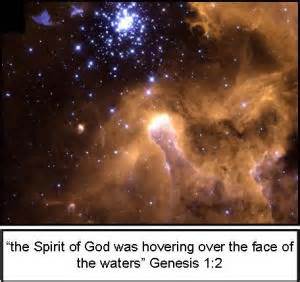
            This act of creation comes at the very beginning of things, in the very beginning of the Bible. Genesis chapter 1. “In the beginning God created the heavens and the earth. Now the earth was formless and empty, darkness was over the surface of the deep, and the Spirit of God was hovering over the waters.”

            We are starting our summer sermon series today, Re-imaging God. This series will highlight different ways of thinking about and naming attributes of our God. In this series, we will work on stretching ourselves! We will try to enlarge our image of our God.

            The words we use are important – not only the words we say, but the words we read on the printed page. The words of Scripture are all important, too. Let us take a closer look at how verses 1 and 2 describe our God. Verse 1 (the summary statement for this chapter) says that “God created.” God created the heavens up above and the earth beneath. Verse 2 describes the Spirit of God as “hovering over the waters.”

            This lean, spare description is marvelous! Can you see it? The dark heavens and the earth, formless, empty, just waiting for something to happen.

I don’t know whether you are aware, but different languages use different articles for nouns. In English, we all say “the cat” and “the dog,” and by the article “the,” they could be either male or female animals. However, many languages are structured differently.

In German or Italian, Spanish or Greek, different nouns are gendered. It’s a “male dog,” or a “female cat.” The article “the” in front of the noun changes with the word. Plus, the gender of the verbs must agree with the gender of the nouns! Any native English speaker who learns one of these languages in school struggles with the gender of the nouns and matching the proper articles and proper gender of verbs with the nouns!

It’s the same way with the Spirit of God. In the original language of the Hebrew Scriptures, “Spirit” is feminine. What’s more, the Spirit of God hovering or brooding over the waters is – according to the Hebrew language – a feminine Spirit. This verb “hovering” is also mentioned in Deuteronomy 32, where the mother eagle is protective towards her young in the nest. The “hovering” of the Spirit is a mothering activity! Here in Genesis, the Spirit of God, the Ruach ha Kodesh, is a protective, nurturing presence over the still formless waters. [1]

            Just so we do not get lost in the weeds of different languages, here’s the highlight I want us all to focus on. Whether Scripture is in Hebrew or Greek, “both masculine and feminine verbs are used for God, masculine for God, feminine for the Spirit. [And as we will see,] God’s human creation will reflect their creator as female and male.” [2]

               Seeing the nurturing, mothering nature of mammals, of dogs, cats, and humans – these mental images of puppies, kittens and babies can bring to mind gentle caring, loving encouragement, and supportive love. These are exactly the kinds of things that describe the activities of the Spirit of God! Plus, God the Father is caring, loving and supportive, too!

And what about the Good Shepherd? That’s Jesus, I want everyone to know. Remember how Jesus cares for His sheep, and how in several places in the Gospels Jesus is described as a loving, supportive Good Shepherd who guards, guides and protects His sheep.

            Isn’t it wonderful to see God as a mothering, nurturing God? Not only mighty and strong – a just, even stern, protector. Yes, God is all of those things. And, mothering and nurturing, caring and loving, too! Both/and – not either/or.

            Let us continue with verse 26: “Then God said, “Let us make humankind in our image, in our likeness, so that they may rule over the fish in the sea and the birds in the sky, over the livestock and all the wild animals, and over all the creatures that move along the ground.” God has created humans male and female. We, as humans, are created in the image of God! And, this whole chapter of Genesis 1 follows the same pattern, using pronouns of both genders.

            “We forget that Genesis 1 is a chapter brimming with goodness and blessing. In fact, God pronounces blessing on the created order three times. [God] calls creation “good” and “very good” seven times.” [3]

            We can see how the earth – the world – the universe was lovingly, joyfully created by God. And, whether we think of the feminine Spirit of God or the almighty Lord, or the Word that was in the beginning (from the Gospel of John), the preincarnate Son of God – however we consider the Triune God – all we can do is lift our hands in worship, thanksgiving and praise.

 What will you and I do with this fresh understanding of God? This understanding that transcends gender? “The creation story insists that God’s mark is imprinted on my very being. I might ignore or distort it, but the mark is always there. Whether I acknowledge it or not, I reflect something of God’s joy, God’s intentions, God’s love, and God’s beauty just by virtue of existing on the earth. I am His, and so He is mine.” [4]

            We can go out into the world, knowing that the Creator God made each of us, all of us, in the image of God. Male and female we are made, and each is in the image of God. Just as Psalm 139 tells us, “I praise you because I am fearfully and wonderfully made; your works are wonderful, I know that full well.”

            Our loving, caring, nurturing Creator God created the heavens and the earth; God created all humanity, and that includes you and me, too. Praise God! Alleluia, amen. 

@chaplaineliza

(Suggestion: visit me at my other blogs: matterofprayer: A Year of Everyday Prayers. #PursuePEACE – and  A Year of Being Kind . Thanks!


[1] van Wijk-Bos, Johanna, W.H., “Reimagining God” (Westminster John Knox Press: Louisville, KY, 1995), 72.73.

[2] Gafney, Wilda, “A Women’s Lectionary for the Whole Church” (Church Publishing, New York, NY, 2021), 142.

[3] https://www.journeywithjesus.net/Essays/20140609JJ.shtml

[4] Ibid.

Unknown's avatar

Joyful, We Adore Thee

“Joyful, We Adore Thee”

Matthew 2:1-12 (2:10) – January 8, 2023            

I love my Christmas tree ornaments. I have many that are very special to me! Quite a number came from my mother, and hung for years on her Christmas tree. A few came from both of my grandmothers. My ornaments are special to me for where and when I got them.            

One ornament I got a few years ago was made by my son Peter. He is skilled at the art of paper folding called origami; he folded this exquisite three-dimensional star. I think of this as my Epiphany star; it is very precious to me. I wonder whether the marvelous star the Magi followed was anything like this star? Bright, multi-colored, shiny from a long distance?             The 2nd chapter of Matthew tells us about these Magi, or wise men from the East. They traveled a long way, following this bright and shining star to Jerusalem. These Magi asked King Herod, “Where is the one who has been born king of the Jews? We saw his star when it rose and have come to worship him.”           

The wise men dearly want to find the child born King of the Jews! But, where are they going? They themselves are not sure! They follow the star towards Jerusalem, but that town is where their books and ancient writings leave them all puzzled. “Where is the one who has been born king of the Jews?”            

We might think of three foreign kings, traveling around Palestine. But, this is most probably a misguided way of thinking. The whole mythology of “We Three Kings of Orient Are” embroidered the simple words found in Matthew chapter 2 into a fanciful tapestry involving three noble kings in rich robes, knocking at the door of the palace in Jerusalem.             

They were not kings, but instead “magi” from Persia. Wise people who studied the stars. Plus, these Persian astronomers (or, astrologers, since they put a great deal of stock in the movements of the stars, planets and other heavenly bodies) included both men and women. There may have been women in the group who followed the special star to Palestine!            

So, these wise men – or, wise people – were not quite sure where they were going. Simply that they were following a sign, a portent in the heavens. A special star that seemed to lead them onward, westward leading, still proceeding.            

Are you – am I – sure of where we are going? We have a good deal more revelation from God, more information from the Bible to guide us. But, do we know where we are being led? What is our path? Where does the Christmas star direct each of us to go, today?            

When the Magi arrived at the palace in Jerusalem, King Herod immediately asked the chief priests and Temple scribes to search the Scriptures and find some direction he could give to these foreign visitors. Herod “asked them where the Messiah was to be born. ‘In Bethlehem in Judea,’ they replied, ‘for this is what the prophet has written.’”           

I find it fascinating that the chief priests and scribes (who wer  e also avidly studying the Scriptures themselves) did not “see” that special star. They did not “get” the message that this brilliant sign in the heavens was a particularly marvelous star. Whatever that brilliant star was had to be huge and visible from a long way away! But, only these foreigners saw something different in the sky and decided to follow it!            

The shining star that the Magi followed is surely a sign from God showing the birth of the Messiah, the newborn King of the Jews, as the Magi said.            

We know one often-repeated symbol for God is light. Since we can’t make a picture of light, we use things that make light like a star, sun, candle, or lamp. I have a lovely origami star ornament here. We can reflect upon the many reasons, the many signs of light that are talked about in the Bible, including the Star of wonder, Star of light. Just think of the Advent wreath and Christmas candle lighting services and note that we light those candles to remind ourselves that God the light is with us.  What’s more, think of the candles here on the chancel. We light the candles every week to remind us of the Light of the World, the Light that shines in the darkness, the magnificent Star in the sky the Magi followed.            

Turning back to our Scripture reading, “After the Magi had heard the king, they went on their way, and the star they had seen when it rose went ahead of them until it stopped over the place where the child was. 10 When they saw the star, they were overjoyed. 11 On coming to the house, they saw the child with his mother Mary, and they bowed down and worshiped him. Then they opened their treasures and presented him with gifts of gold, frankincense and myrrh.”            

The wise people who followed that star found what they were searching for. And, they worshiped, and were overjoyed. Are you – am I – sure of where we are going? Are we following that star, too? We have a good deal more revelation from God, more information to guide us. But, do we know where we are being led? What is our path? What does the Christmas star direct each of us to do, today?            

I ask all of us to consider these words from Howard Thurman, progressive theologian who wrote this poem: The Work of Christmas.

When the song of the angels is stilled, When the star in the sky is gone, When the kings and princes are home, When the shepherds are back with their flock,  The work of Christmas begins: To find the lost, To heal the broken, To feed the hungry, To release the prisoner, To rebuild the nations, To bring peace among others, To make music in the heart. 

            Let us take these words to heart, and go and do them. Alleluia, amen.

@chaplaineliza

(Suggestion: visit me at my other blogs: matterofprayer: A Year of Everyday Prayers. #PursuePEACE – and  A Year of Being Kind . Thanks!

Unknown's avatar

Give Thanks? For What?

“Give Thanks? For What?”

Psalm 100:1-5 (100:4) – November 24, 2021 (preached at the Morton Grove Interfaith Thanksgiving Eve service, held at St. Martha of Bethany Catholic Church campus)

            What are you thankful for? I don’t know whether you or your family come up with a “gratitude” before you eat your Thanksgiving feast tomorrow. Except, it is becoming more and more common that as families and friends gather around the festive table that they go around the table and say what each one is grateful for. Sometimes, even before they begin to eat. The religious writer Diana Butler Bass calls this “the Turkey Hostage Situation.” No food until everyone comes up with a gratitude!   

            Some years we are more grateful and thankful than others. The psalm we read tonight features thankfulness as a highlight of worship. When we come into our houses of worship, we are supposed to be thankful. Grateful. Especially now, at this Thanksgiving time of the year.

I want to dig more deeply into Psalm 100, and see what else we can discover.

I love language. I loved English classes when I was in middle school and high school. Of course, I loved literature! I was – and still am – fascinated with the way language functions and is put together. This great interest in languages helped me when I went to seminary and studied biblical Hebrew and Greek, the original languages our Bible was written in.   

One helpful tip I remember when looking at the nuts and bolts of a Bible verse or paragraph is to break it down. Look at the different parts of speech: nouns, adjectives, and especially verbs. The verbs in Psalm 100 give us a great deal of insight into this psalm, or song.

Speaking of songs, this reading IS a song. This song gives us instruction of how to come into God’s presence – the how-to’s of worship. The African-American Lectionary commentary says, “The psalmist uses seven different verbs to call to the community to worship: make, serve, come, know, enter, give thanks, and bless. Although there are moments when we need to be still and quiet in the presence of the LORD, this is not one of them.” [1]

I really appreciate and enjoy those times when I worshiped in African-American congregations. Since I lead a congregation now myself, I miss those other opportunities to go, and see other congregations, and enjoy different praise structures and faith traditions in worship.

Yet, I wonder – what is it about this psalm that makes it so marvelous as a template for worship? If we go back to the verbs used in this song, this hymn of praise and worship takes on a more wonderful meaning. And institutional meaning.

True, I have attended worship in a number of different settings, over the years. In many of these, the basic outline of worship remains the same. The worshipers come together, and they know, they understand (as best as they are able) that God is the reason they gather. Then – and this is important to any worship service – they give thanks.

I remember a small, intimate worship service some years ago while I was on a retreat. About 15 people were gathered together. We did not have any of the outside trappings of a building, no special glass, no carved woodwork or stone, no music or musicians. Yet, that was a meaningful worship experience for me, and for many others in that group.

That retreat was not at Thanksgiving-time, yet we were all thankful and grateful the group of us had gathered together. Can you relate? Have you had a feeling like that, a similar experience where you and the other members of your group felt thankful about this holy experience? This worship opportunity where you felt thankful and grateful you and the other people in your group (any group – family, friends, congregation, retreat group) felt the same way? Indescribable, worshipful, beyond words, even divine.  

This psalm talks about experiences like that in worship, and says that giving thanks is an integral part of worshiping God. We can give thanks that God is our God. And, we can give thanks for all that God has given to us.

            I agree with commentator Larry Broding that thanksgiving is one of our primary attitudes of worship. “We are to be happy when we present ourselves to God. We are to be thankful when we are in [God’s] presence. Other attitudes are possible (sorrow, need, intercession, surrender, peace, etc.) but joy and thanksgiving should be our primary focus.” [2] And, this isn’t just at Thanksgiving. It’s at any time of the year.

For those among us who do not feel like gathering with family or friends at a dinner table tomorrow, I relate. Thanksgiving can be a difficult occasion, a complicated time. Know that there are friends who stand with you, or sit beside you, in your discomfort, grief or longing.

            Specifically, what about the upcoming feast tomorrow? Similar to writer Diana Butler Bass, are you and I familiar with the Turkey Hostage Situation? Are we going to hold our turkey – or whatever other kind of main course – hostage while each one around the table scrambles to come up with something they are grateful for? We are grateful for the stuff, the things of our lives! That is turning our annual day of thanks into a commodity-based occasion. [3] It is not helpful for us to twist or force “thankful” feelings and behavior in this way

            Going back to my great interest in language, I found Butler Bass’s alternative for this round-robin of “gratitude” to be a fascinating option. Instead, an alternative suggestion: Perhaps this Thanksgiving is a good time to ask some different questions regarding gratitude:

To whom or what are you grateful?
What challenges have you been grateful through?
Have you been grateful with others?
Where have you discovered gratitude within?
Has something in your life been changed by being grateful?
In
what circumstances have you experienced thankfulness?

            Any or all of these are marvelous ideas to ponder. Situations to consider. Again, this may or may not work for the group gathered around your Thanksgiving table. But, it certainly takes our minds off of the tangible, material things, the clutter of forced gratitude at Thanksgiving, and the myriad of stuff we might have randomly filling up our lives, like the stuffing inside of a turkey.

            Tonight, I hope and pray we all can “Enter God’s gates with thanksgiving and his courts with praise;” may we all “give thanks to God and praise his name.”

             I pray a blessed and thankful holiday upon us all. Amen.

@chaplaineliza

(Suggestion: visit me at my other blogs: matterofprayer: A Year of Everyday Prayers. #PursuePEACE – and  A Year of Being Kind . Thanks!


[1] http://www.theafricanamericanlectionary.org/PopupLectionaryReading.asp?LRID=98

Commentary, Psalm 100, Alfie Wines, The African American Lectionary, 2009

[2] http://www.word-sunday.com/Files/Psalms/100.html

·  “How To Prepare for Worship,”Larry Broding’s Word-Sunday.Com: A Lectionary Resource for Catholics.

[3] https://dianabutlerbass.substack.com/about

Unknown's avatar

How to Worship?

“How to Worship?”

1 Tim 2-2 pray, message

1 Timothy 2:1-4 – September 22, 2019

Have you ever been to a different kind of worship service? A service where people prayed differently, sang different kinds of songs, played different instruments, and even spoke in different languages? I have attended a number of different kinds. Worship of God can be diverse and different, depending on where we live, what each of us grows up with, and what kind of faith tradition we come from.

In today’s reading from the first letter to Timothy, we hear about instructions for prayer and worship. This letter to Timothy is one of the pastoral letters from the New Testament. In other words, this letter contains instructions for a church leader on how to be a better pastor and leader of a congregation. Including—recommendations for corporate worship and prayer.

This is not like the instructions from the Sermon on the Mount in Matthew or the Sermon on the Plain from Luke, where our Lord Jesus gives specific instructions for personal, private prayer. No, this letter is from several decades later, when there were established groups of believers, and they needed structure and direction on corporate worship and prayer.

From 1 Timothy 2: “I urge, then, first of all, that petitions, prayers, intercession and thanksgiving be made for all people—” This sounds wonderful! I have experienced this aspect of prayer in practically every worship service I have ever attended. I suspect you have, too.

Whether prayer happens from the pulpit or lectern, or from the floor of the church, whether the prayer is offered by members of the congregation from the pews or seated in a circle, extemporaneously or written out, Paul’s recommendation of unified prayer is definitely one that has gone on as long as believers in Christ have gathered together.

However, the prayers we offer are not just generic prayers. I want to remind everyone (and I am reminding myself, too!), that we are encouraged to “offer prayers for all members of the human family during church services; prayer in the terms of: petitions (general requests to God), Intercessions (requests for those in need), supplications (requests for ourselves), and thanksgivings.” [1]  The apostle Paul is quite specific here! All of these different kinds of prayer!

I wonder: are your prayers—are my prayers—as far-ranging and thorough as these? Are these recommendations something we all can get on board with? Something we all follow?

Let’s continue with this reading from chapter 2. Who should we pray for? “for kings and all those in authority, that we may live peaceful and quiet lives in all godliness and holiness.”

We are not talking about good-tempered rulers. No, the kings, rulers and those in authority in the later half of the first century were not nice guys. What happens when we have mean rulers and cruel leaders, those in authority who do such wicked things as throw people out of their homes, put them in jail, even force them into exile, or even death?

Let’s take a look at the Roman emperors Tiberias, Caligula and Nero. None of them were particularly “good or nice,” several showed signs of mental instability, and these men were at the pinnacle of power in the Roman Empire for over 25 years. Yet, the apostle Paul recommended that his fellow believers pray for them, for other rulers, and “for those in authority, that we may live peaceful and quiet lives in all godliness and holiness.”

This was an instruction Timothy received for his regular worship services! What was the apostle thinking of? The Rev. Bryan Findlayson suggests “Such prayer seeks to restrain the powers of evil and so encourage peace and security. When society is in a state of peace, believers can freely serve both God and mankind.” [2]

Again, what about rulers and those in authority who persecute Christians? What about governments that destroy churches, jail church leaders and ministers, and make it impossible for Christians to live and raise families? What about those governments? Do we still need to pray for those wicked people? We are to pray for peace, but what kind of peace?

I would say, yes, especially for those wicked people in government who persecute Christians. “Most often our prayers for peace concern our own personal well-being. When society is at peace, life can go well for us and we can build that extra barn. Yet, the peace Paul has in mind is a positive environment for the proclamation and hearing of the gospel.” [3]

September 21st is the International Day of Peace. The website specifically for this day states: “Established in 1981 by unanimous United Nations resolution, Peace Day provides a globally shared date for all humanity to commit to Peace above all differences and to contribute to building a Culture of Peace.” [4] What a wonderful thing to contribute to building: peace.

Moreover, as the apostle Paul reminds us, peace in the world involves a positive environment for proclaiming and hearing the Good News of our Lord Jesus Christ. Is our government corrupt? We need to pray for the members of a wicked and corrupt administration, then. What matters even more is that we are safe to proclaim the Good News of the Lord, and to provide for a way to let everyone know the Good News of salvation through His name.

Division and divisiveness is not conducive to spreading the Good News. This current-day division and animosity between people who call themselves believers must make God very sad. Christians of all communities and all ethnicities ought to have their wonderful belief in Christ to unite them. But, no. Sadly, believers all over the world allow politics to divide them.

The Rev. J. Vernon McGee had this to say: “We need to pray for our country, and we need to pray for those who have authority over us. If you are a Republican and a Democrat is in office, pray for him. If you are a Democrat and a Republican is in office, pray for him.” [5]

We have been thinking about the unity of believers from all parts of the world for several weeks now. In our bible study, we are studying the book of Philippians, and talking about how the apostle Paul and his friends preached the Good News to a diverse and different population in the regional capital of Macedonia, Philippi. Diverse and different individuals came together to worship the Lord Jesus Christ, and God made it possible for them all to join in worship.

What a wonderful example to lift up! Can we do the same, here, now? We here at St. Luke’s Church can strive for the same unity and friendship, despite differences in our families, the languages we spoke as children, or the towns where we were born. We can also come together in worship, despite differences in worship styles, or singing, or prayer.

I pray at the beginning of most services here for God to bless our time in worship, and especially to aid us in lifting our vices in words, prayer and song. This is truly what God calls us all to do. Moreover, God looks upon every voice raised in prayer, praise, or song as legitimate worship, no matter what, no matter where, no matter how. We are all encouraged to do the same. We have God’s word on it!

Alleluia, amen!

@chaplaineliza

(Suggestion: visit me at my regular blog for 2019: matterofprayer: A Year of Everyday Prayers. #PursuePEACE – and my other blog,  A Year of Being Kind . Thanks!


[1] http://www.lectionarystudies.com/sunday25ce.html    “Worship in the Church,” Rev. Bryan Findlayson, Lectionary Bible Studies and Sermons, Pumpkin Cottage Ministry Resources.

[2] Ibid.

[3] Ibid.

[4] https://internationaldayofpeace.org/

[5] McGee, J. Vernon, Thru the Bible: 1 Corinthians through Revelation, Vol 5, (Nashville TN: Thomas Nelson Publishing, 1983) 436.