Unknown's avatar

Abide in God’s Shelter!

“Abide in God’s Shelter!”
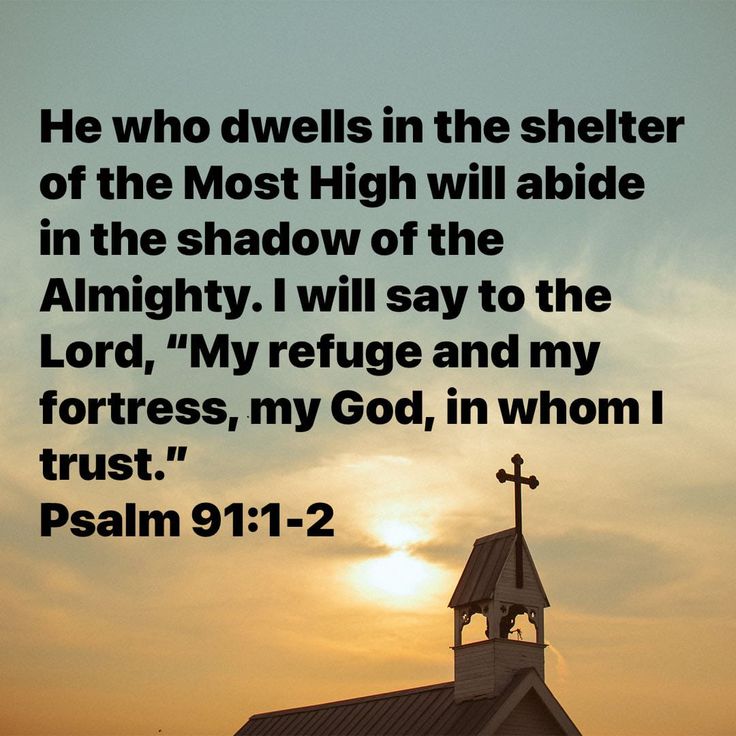
Psalm 91:1-6, 14-16 (91:2) – September 28, 2025

            I have had a number of times in my life where there was a lot of uncertainty. I am thinking of one extended time, in particular. When my older daughters were toddlers and preschoolers, my former husband and I did not have any health insurance. For years. Our girls were small, and we lived paycheck to paycheck, barely scraping by. For years.

            Times like these are downright scary, whether people have economic problems (like my family did), or health reversals, emotional or psychological concerns, or physical safety!  

            Listen to a first-person account from one of our commentators. This happened to him in rural India while he visited a missionary outpost. “As we were climbing a steep rugged narrow path, Premakar, our home missionary of Dangs cautioned us, “Wagh, Wagh” (tiger). We stopped and our torches flashed at the beast which was 200 yards away. Its glittering eyes menacingly glared at us. In spite of the blinding lights it was advancing towards us. Helpless we turned to Jesus in prayer. To our great relief the beast slinked away. We continued our journey. But within a few yards our petromax [our bright lights] failed. Just imagine our plight! It seemed ages before the petromax was fixed. After a short while a poisonous snake slithered past us and the promises of Psalm 91 sustained us.” [1]

I am not sure if you have ever had such a wild time of uncertainty in your life, but it can be beyond worrisome. Times like that can make a person anxious, fearful, even frantic. Our commentator goes on: “Thankfully the cobras and other poisonous vipers were in hibernation during my stay in the mountain village of Chikaldara. The tigers and bears, while inhabiting the area, did not harm me either. Nevertheless, my sense of danger was much more intense while walking in the darkness or through the tall grass, where some creatures could be lurking.” [2]

Just listen to these words from our reading today, Psalm 91. “Surely he will save you from the fowler’s snare and from the deadly pestilence. You will not fear the terror of night, nor the arrow that flies by day, nor the pestilence that stalks in the darkness, nor the plague that destroys at midday.”

            This reading describes a lot of unpleasant, downright dangerous things that can happen to a person. “There is a thread in this psalm that feels … dangerous. Angels will bear you up so you won’t dash your foot on a stone? Treading on lions and snakes? No scourge will come near your tent? Dangerous, and conditional: Those who love me I will deliver; I will protect those who know my name. What about those who don’t know, because they haven’t been told or haven’t been told in a way that makes sense to them? What about those who don’t know how to love You yet? Are they, are we just on our own if we find ourselves in that category, temporarily or permanently?” [3]

            I care deeply and feel for any frightened, anxious people. For, that is exactly what this psalm mentions. This psalm cautions, and gives insight, allowing you and me to get a picture of what part God plays as we go through all the trials and struggles of life.

            Verse 1 is the starting point for this psalm, the lens that aids us in reading the rest of the psalm. “God delivers because God is our shelter. God will rescue us when we call because we live in God’s shadow. People need to feel safe and secure to be brave. Notice that the psalmist encounters pestilence, arrows, and destruction as they live in the shadow of the Almighty. We need the security of abiding in God so that we can brave the trials and struggles of this life together.[4]  Can you think of a time of uncertainty in your life when you felt for sure that God was with you? When you knew for sure that God was your shelter, or shadow, or refuge? God can send this assurance into our hearts.

            And sometimes, even if it’s an extended time of uncertainty like the one my family with young children and I went through for several years straight – economic insecurity – God is still there. There is a saying: I believe in the sun even if it is not shining. In the same way, I believe in God even if the path ahead is rocky. You and I can have a deep sense of being held by God, even when answers are unclear. God can be trusted!

God is present even though we go through scary times or personal difficulties. Whether people have economic problems (like I did), or health reversals, or emotional or psychological concerns, we can trust in God’s presence. Even at the same time while we are afraid! The two feelings are not mutually exclusive, especially when we consider some really serious things like natural disasters, regional conflicts, or other catastrophes that happen beyond our control.   

            Let’s look at the last verses of this psalm. 14 “Because he loves me,” says the Lord, “I will rescue him; I will protect him, for he acknowledges my name.15 He will call on me, and I will answer him; I will be with him in trouble, I will deliver him and honor him.”

Can you imagine God speaking these words directly to you? Can you hear God saying to you, “I will rescue you, I will protect you. I will be with you in trouble and deliver you.” How does that feel, to have God lovingly responding with words of rescue, protection and long life? It is so comforting and protecting, to have God saying these things to me, personally! It is a promise I – we – didn’t even know we needed. Truly, it is a reminder that God really does see and respond to our deepest needs and cries of our hearts. [5]

            Right now, we can create a sense of safety. Here and now. We can take time to breathe. Right now. Breathe in, deeply – and breathe out, slowly. Let’s do it again. Breathe in, deeply – and breathe out, slowly. Breathing calms each of our collective nervous systems. Roll your shoulders slowly, backwards, and forwards. And, continue to breathe.

            We are, indeed, safe, living in the shelter of God. Please, bring that safety to others. Invite others to abide in God’s shelter, no matter what is happening in each individual life, in each personal situation. Because, difficult things will continue to happen. Troubles and challenges continue to crop up unexpectedly. And – and, each of us is held in God’s hand. We all can bravely face the world with strength and hope. We can all trust in God’s presence, knowing that our security comes from our God, who truly is our refuge and fortress. Alleluia, amen.

@chaplaineliza

(Suggestion: visit me at my other blogs: matterofprayer: A Year of Everyday Prayers. #PursuePEACE – and  A Year of Being Kind . Thanks!

(I would like to express appreciation for the Rev. Anthony J. Tang, one of the ministers at First United Methodist Church of Dallas TX, and his excellent small groups presentation featured on www.umcdiscipleship.org. Several of these suggestions come from that presentation.)


[1] https://bible.org/seriespage/9-psalm-91-psalm-safety

[2] Ibid.

[3] https://www.umcdiscipleship.org/worship-planning/i-will-call-upon-the-lord/sixteenth-sunday-after-pentecost-year-c-lectionary-planning-notes/sixteenth-sunday-after-pentecost-year-c-preaching-notes

[4] https://www.umcdiscipleship.org/worship-planning/i-will-call-upon-the-lord/sixteenth-sunday-after-pentecost-year-c-lectionary-planning-notes

[5] https://www.umcdiscipleship.org/worship-planning/i-will-call-upon-the-lord/sixteenth-sunday-after-pentecost-year-c-lectionary-planning-notes/sixteenth-sunday-after-pentecost-year-c-small-groups

Unknown's avatar

Jesus Says: Don’t Worry!

Jesus Says: Don’t Worry!

Matthew 6:25-34 – November 24, 2024

            Some people are real worriers. They worry about their house or apartment, they worry about their children or their parents, they worry about their job, their school, their friends, their car, their health – and that’s just to begin with! All of us know someone like this. And sometimes, worry about one or two, or even more of these things creeps into our hearts, too!

            All of these things are troubles, concerns. Worries. The news on the radio, on the television, different media websites—all depend on worry, anxiety and fear to pull in their viewers.  Here in our bible reading this morning, our Lord Jesus is telling us not to be filled with worry. Worry—anxiety—fear. When we come right down to it, this yucky predicament called worry sounds so familiar! We might not like it, we might be uncomfortable with it, but various yucky, fearful situations still happen to many of us, on a regular basis.

            All the worry and anxiety I just mentioned? That was mostly external. Looking outward. Fear of people, places and things. Yes, common to all of us. Let’s up that worry and anxiety one notch higher. Let’s sprinkle some self-centered fear on it. Does that sound familiar, too?

            Fear of the interior, that’s the inside job. Your insides, my insides. Our feelings and emotions, everything all mixed together like with a blender or a kitchen mixer. I imagine some people are so anxious and worried about what’s going on inside of them that they don’t even want to examine themselves, and do an inventory. They would far rather hide under a blanket. Or check out in ways that involve various addictions.  Emotional insecurity is very real. Lots of people feel alone. All by themselves, and cut off from others. Bitterness and frustration can make things worse. Worry and anxiety can magnify those feelings, way out of control.

            What can anyone do about this huge mountain of worry, fear, insecurity and anxiety?

            Since this Sunday is Thanksgiving Sunday, our Gospel reading has a few things to say about all this worry and negativity. This reading is from the Sermon on the Mount. The second half of Matthew chapter 6 is all about treasure and where we can find it. As is often the case in Scripture, Jesus lets us know that He is summing up this section by beginning with the word “therefore.” “Therefore” is used “to indicate that the writer or speaker is drawing a conclusion. Jesus’ words here are very simple and to the point: worrying is pointless.” [1]

Wait a long minute, there! Worry is part and parcel of the human condition. Anxiety and fear of the unknown (and especially of what IS known, what we recognize coming up!) are so often sad realities. Worry is invasive, like a nasty, invasive plant. Those of you who garden are very much aware of these weeds, these choking, creeping plants that wind around the healthy flowers and vegetables we plant in our gardens.

            I have heard a good deal about worry and anxiety in past years. In my previous job, I worked as a hospital chaplain, and now I am a hospice chaplain. Yes, I would pray with anyone who asked. But, I would also listen. As I listened, I heard about a whole lot of worry, anxiety and concern. And, rightfully so! Anxiety about upcoming treatment, worry about finances, awkward anticipation about losses of various kinds. But I would also hear about depression, anger, and self-pity. I’d hear about these painful emotions mixing and crashing around inside of people. Oftentimes, I would be helpless to do anything about it, except listen.

            In my personal life today, I have concerns. Sure, I have thoughts that sometimes preoccupy my mind. I can live in yesterday for far too long of a time. I sometimes look forward to tomorrow—or next week with some fear and anxiety. I especially have concerns about an upcoming procedure in the hospital, very soon.

But what does Jesus tell us in this paragraph from the Gospel of Matthew? He talks about the beauty and the vastness of God’s creation. He tells us to pick up our heads and look around. Doesn’t God take care of the birds of the air and the beasts of the field? If God takes care of them, think about us. Think about you and me. Do you think for one minute that God would forget about you? Or, that God would forget about me?

            One of my favorite commentators is the Rev. Janet Hunt. She is a Lutheran pastor, serving a church not too far away, in De Kalb – near the Northern Illinois campus. She talks frankly about being a worrier. She carried her fear and anxiety so deeply that her folks had her going to a therapist as a little girl (when that was still pretty unusual!). She said she still worries. She worried about where she put her cell phone the night before, She worried about an upcoming funeral sermon she needed to preach. She even worried about raking the leaves in her large yard!

            Yet, Pastor Janet gets right to the point. She says, “Without a doubt, my worries are small and even when they aren’t they don’t seem to paralyze me as they do some [people].  Still, even my small worries get in the way of my living in the moment God has prepared for me.  They take away from my fully experiencing and appreciating what is right in front of me.” [2]

            This Gospel reading is certainly a challenge for me, today, with the unknown looming ahead of me. Yet, whether our worries are big or small, we can all be reminded of this precious gift Jesus offers us all, in pointing to God’s tender care for all that is in this world.

            Anything can seem overwhelming, if we look at the whole huge thing all at once. Jesus’ words are really wise: “34 So do not worry about tomorrow; it will have enough worries of its own.” In other words, one day at a time. “Don’t worry about tomorrow!” Those aren’t my words—they’re the words of Jesus!

            As we consider this Thanksgiving week, and any week of the year, “these words [of Jesus] are ours this Thanksgiving —  urging us to let go of the worry — and to entrust whatever it is that would rob our lives of peace and joy — urging us to finally give it all back to God who gives us all of that for which we give thanks in the first place.” [3]  Praise God!

Suddenly, in this world not worrying actually becomes an option.

Our God can help each of us deal with worry, fear and anxiety, whenever and wherever they might rise up, in each of our lives. We can all say amen to the Lord’s goodness. We can truly give thanks to God.

@chaplaineliza

(Suggestion: visit me at my other blogs: matterofprayer: A Year of Everyday Prayers. #PursuePEACE – and  A Year of Being Kind . Thanks!


[1] https://lifeprojectblog.com/2024/09/09/worry-5/

[2] http://words.dancingwiththeword.com/2012/11/no-more-worries.html

[3] Ibid.

Unknown's avatar

Peace! Be Still!

“Peace! Be Still!”

Mark 4:35=41 (4:39) – June 23, 2024

            Have you ever slept in a tent while a huge thunderstorm crackled and poured overhead? The blustery wind, rain and loud thunder seem right on top of you. I know firsthand; I spent several summers in high school at a Girl Scout camp, sleeping in a platform tent every night.

            Except, in our Gospel reading, Jesus and the disciples did not even have the cover of a tent. They were out in a boat on the Sea of Galilee, in the middle of a fierce storm.  Our Gospel writer Mark tells us “Suddenly a strong wind blew up, and the waves began to spill over into the boat, so that it was about to fill with water.”

            Can you relate? Has this ever happened to you? Maybe it’s an actual storm, blowing in all of a sudden out of a clear blue sky, complete with the skies turning black and the heavens opening up with pelting rain. Except, sometimes it can be a figurative story. Something horrible comes up suddenly, upon you or upon a dear member of your family. What about a sudden car accident? Or, perhaps a house fire in the middle of the night, or emergency hospitalization, out of a clear blue sky?

            These kinds of sudden, serious storms can blow up in anyone’s life, and they can overwhelm any of us with their intensity and traumatic effects.

            Let us look at this reading again. “Jesus was in the stern, sleeping on a cushion. The disciples woke him and said to him, “Teacher, don’t you care if we drown?”

            Fear can absolutely paralyze people! I can see these guys, scared out of their sandals, on this tiny boat. Rain pelting down, the wind and the waves threatening to swamp the boat, far from shore. Some of these guys are used to sailing and used to sudden squalls on the Sea of Galilee. But, a portion of the disciples are not fishermen, and are not familiar with boats or with seafaring. And what about Jesus? He is sleeping, for heaven’s sake, through the storm, the pitching of the boat back and forth, the pelting rain coming down.

            As one of my commentators says, “This is it. They’re going down. Life’s over! Jesus doesn’t seem to care. I’m not sure what they’re expecting of him—probably they just wanted him to show a bit of concern about their plight.” [1]

            What about those sudden storms that blow into our lives, today? Catastrophic accidents, emergency hospitalizations, or the very abrupt closing of a company. (That recently happened to one of my relatives, and it’s throwing a monkey wrench into everyone’s lives! Everyone who works there, and their families, too.)

            This storm that blew up on the Sea of Galilee must have been some storm, though! Even these seasoned fishermen, familiar with the water, were certain that death was near! “They must have exhausted all their other usual options and now that panic has set in all they have left is to turn to the one who is sleeping on the cushion — seemingly oblivious to the violent wind and driving rain.” [2] What is their cry? “Teacher, don’t You care if we drown?”

            Stories from recent church history can be distressing and catastrophic. Stories about weathering storms from church history can be helpful, and empowering, too. Take, for example, the true story about Anna B.

About 100 years ago, Anna B. was a faithful member of a dying church. The building was run-down, the congregation could not afford to pay a minister. Without a minister, people stopped attending Sunday services. Except – Anna B. kept coming to the church. She opened the doors on Sunday morning, week after week. She lit the candles and provided a place for prayer. She filed the necessary papers to maintain the church as a legal entity. These simple acts of faithfulness and diligence kept the congregation going for several years. Eventually, rebirth happened, and it was in great part because of Anna B. [3]

            That is the true story of Anna B., who was instrumental in faith and revitalization when that church was going through a series of storms in the life of that struggling congregation.

            Anna B.’s history takes place over several years. The sudden storms that come into our lives can blow up abruptly. What does Jesus do in this specific situation? “Jesus rebukes the wind and tells the sea to simmer down; the first word (“Peace!” in the NRSV) is a verb meaning be silent; the second (“Be still!” in the NRSV) means literally be muzzled.” [4]  Just as suddenly, the sea calms and the wind is stilled – muzzled! And, the disciples are left dumbstruck. Jaws hanging open, they murmur, “Who is this?”

            Just as the power and miracle-working capability of Jesus became clearer to the disciples, it can become clearer to us, today. No matter what our personal storm is, no matter how fearful and anxious you and I are because of our personal circumstances, our Lord Jesus has the miraculous power to calm the storms in our lives, too.  

            This Gospel reading is a powerful reminder about the power of God, as displayed through our Lord Jesus. Except, I know from sad experience that miracles do not happen the way people expect sometimes. Even many times. Like Rev. Janet Hunt, I am also not certain how so many deal with lives devastated by all sorts of storms, actual and figurative, storms that threaten from outside and from within. “Even so, perhaps we are changed if we allow ourselves, even as the disciples did, to simply stand still in awe when in the presence of such power which muzzles the worst that can threaten us. Which is all the time, if we are paying attention. Indeed, perhaps it is so that [we] do walk away re-empowered to hold fast in the storm if [we are] able to trust that somehow our benevolent God holds us all. Even in the storms. Especially in the storms.” [5]

Jesus calls on each of us to have faith, even in the midst of the raging storms of our lives. We can believe, we can have faith that Jesus will be right by our sides, through any difficulty. And, Jesus can say “Peace, be still!” to the storms in each of our hearts, too. Alleluia, amen.

@chaplaineliza

(Suggestion: visit me at my other blogs: matterofprayer: A Year of Everyday Prayers. and  A Year of Being Kind . Thanks!


[1] https://www.bobcornwall.com/2015/06/sleeping-through-storm-lectionary.html

[2] http://words.dancingwiththeword.com/2015/06/power-over-storm.html

[3] Beaumont, Susan, How to Lead When You Don’t Know Where You’re Going, (London: Rowman & Littlefield, 2019), 99.

[4] https://www.workingpreacher.org/commentaries/revised-common-lectionary/ordinary-12-2/commentary-on-mark-435-41

[5]

Unknown's avatar

Give Thanks Every Day!

“Give Thanks Every Day!”

John 6:5-23 (6:11) – November 26, 2023

            “We gather together to ask the Lord’s blessing!”

            Those words from a beloved, traditional Thanksgiving hymn are so familiar, and so appropriate for this thankful time of the year. Our family just had a Thanksgiving celebration a few days ago, and for many who are followers of faith traditions throughout the United States, Thanksgiving was indeed a day to ask the Lord’s blessing!

            Our Scripture reading is from the Gospel of John, chapter 6. Yet, we could also read about this same miracle from the other three Gospels. This miracle is the only miracle that appears in all four Gospel accounts of the life of Christ.

            This miracle from John 6 is about providing food to a large group of people, yes, and a whole lot more. Let us set the stage. The crowds gathered around the Rabbi Jesus more and more now, because Jesus was gaining a reputation for performing miracles!

            What do you think it would be like, to stand in the crowd and actually see a miracle performed by Jesus? How would you react, or your friends or family react? Would you believe that this Rabbi could actually perform miracles? Or, would you be more skeptical?   

            Each Gospel writer tells a similar narrative. For example, here we have a waiting crowd, eager to see what this unconventional Rabbi is going to do now, and perhaps even get up close to this miracle-worker!

“Here they come, down the road toward Jesus. Can you hear their voices getting louder as they approach and taste the dust that has risen from the tramping of their feet? They are coming closer and closer and they are hungry.” [1]

But, what makes the Gospel of John’s account of this miracle different?

            Think small and simple. Jesus is found in the ordinary and everyday stuff of life. John also called the “miracles” Jesus performed “signs.” This week’s Gospel reading reminds us of John pointing to Jesus in the simple sign of bread. In these verses Jesus uses a few loaves of bread to sustain and calm hungry and fearful folk. Yes, bread says a lot about Jesus’ identity and presence, not only in the sacrament of communion but in daily life. [2]

            Getting down to the specifics of the miracle, the disciples have much discussion about how all of this huge crowd is going to be fed. In the midst of this animated discussion, the disciple Andrew brings a little boy’s lunch to Jesus. But then, he says “How will this little amount go so far among so many?

            Perhaps you and I are like the disciples. Perhaps we get caught up in the limitations, in our fears, in the worry and concern about “how much?” and “what if?” and “what now?” How on earth are we ever going to have enough? And, how can you and I explain exactly how this miracle happened?    

            That is not the important part, which was about a “who,” not a “how.” Jesus is the focus of this sign, “the meeter of needs, the worker of miracles.” The second “who” is us, or them, “the 5,000 hungry ones on the side of the mountain. Who are us too, by the way, John says with an elbow to the ribs. Get it? We are hungry for something we can’t provide for ourselves.” [3]

            Sure, we can intellectualize this miracle, and talk about the exact number fed, and whether the 5,000 were just men, or whether there were additional women and children, and how many, and where they all came from, and who exactly distributed the food. Or, we can theologize this reading, and talk about the differences between the fine points of the translation of the different readings, or how this reading from John is another metaphor for the Eucharist, the bread or manna of heaven, the communion that Jesus provided for these people in the huge crowd without a thought for the exact theological terms used for this picnic lunch.

            Then, John puts in his occasional editorial comment at the end of this narrative. Perhaps John was the only disciple who actually got the point that our Lord Jesus was making! “We know that by how he describes the event. Did you see it? It’s there in the final verse of our text. The people were hanging out in the place where it happened. The miracle place. But John doesn’t call it a miracle place. [In verse 23] He says that it is the place where they had eaten the bread after the Lord had given thanks.[4]

The first thing Jesus did when he received the little boy’s lunch was to thank God for it. He gave thanks for having the food to offer the crowd of people. Jesus gave thanks for feeding the hungry people crowded around Him. Gratitude and generosity come from a way of seeing and being in the world. [5]

            Perhaps that is our grand takeaway for today. Perhaps that is exactly why there was a miracle, a sign from God, precisely because our Lord Jesus looked up to heaven and gave thanks before He broke the bread and shared out the pieces of fish.

Think about it. That’s what John wants us to remember: that this meal, this miracle happened after gratitude was expressed. Gratitude for the abundance that didn’t look like abundance. Gratitude for the satisfaction that came out of hunger. Gratitude becomes a way of seeing and a way of being in the world. We give thanks to God for what is about to happen. We give thanks for what we might not yet see, but what we trust God will provide.” [6]

            Jesus showed us – just as much as He showed His disciples and the crowd of people – that He is able, and He will provide for us our daily bread. We can truly have thanks, truly have gratitude for all that God has done, and is continuing to do in each of our lives. Alleluia, amen.

@chaplaineliza

(Suggestion: visit me at my other blogs: matterofprayer: A Year of Everyday Prayers. #PursuePEACE – and  A Year of Being Kind . Thanks!

(I would like to express my great appreciation for the observations and commentary from the web page www,umcdiscipleship.org for their brief series on gratitude. I used several quotes and ideas from their useful resources. Thanks so much!)


[1] https://www.patheos.com/progressive-christian/mind-the-gap-alyce-mckenzie-07-20-2012

[2] https://www.stewardshipoflife.org/2012/07/bread-water-and-signs-of-god/

[3] https://www.umcdiscipleship.org/worship-planning/our-hymn-of-grateful-praise/christ-the-king-reign-of-christ-sunday-year-a-lectionary-planning-notes/christ-the-king-reign-of-christ-sunday-year-a-preaching-notes

[4] https://www.umcdiscipleship.org/worship-planning/our-hymn-of-grateful-praise/christ-the-king-reign-of-christ-sunday-year-a-lectionary-planning-notes/christ-the-king-reign-of-christ-sunday-year-a-preaching-notes

[5] https://www.umcdiscipleship.org/worship-planning/our-hymn-of-grateful-praise/christ-the-king-reign-of-christ-sunday-year-a-lectionary-planning-notes/christ-the-king-reign-of-christ-sunday-year-a-childrens-message

[6] Ibid.

Unknown's avatar

God’s Selective Memory

“God’s Selective Memory”

Jeremiah 31:31-34 (31:34) – March 21, 2021

            One of my favorite Bible commentators – David Lose – attended a large family reunion about ten years ago. One of his cousins brought greetings from her father, David’s favorite uncle. Except – David’s uncle had dementia and was unable to attend the reunion. So, the elder man sent poignant, moving greetings to the gathered relatives: “Tell my family that, although I do not remember them, I still love them.” [1]

            This reminds me strongly of verse 34 from our Bible reading from Jeremiah: “I will forgive Israel’s sins and I will no longer remember their wrongs. I, the Lord, have spoken.” But, just a moment! The Lord – God Almighty, creator of the universe – says God will no longer remember Israel’s sins. Hold it! Does that mean that the Lord gets a huge case of amnesia?  

            We need to go further into the background of our Bible reading for today. The prophet reaches back into the past, into the time of the Covenant made at Mount Sinai – the covenant of the Ten Commandments, and the covenant inscribed by circumcision. That covenant was more of a transaction, intentional and holding by a sense of obligation.

            Do you know anyone who has a relationship built on obligation? Where things are built on transactions? I am thinking of someone I’ve known for a long time. Our relationship is very much a transaction. Quid pro quo. You scratch my back, I’ll scratch yours – and that’s all.

            There is no real joy in any relationship like this because of the give-and-take nature of the association. You don’t have friends, but simply contacts. If everything is based on dollars and cents, or on what an interaction is worth, or what you can squeeze out of the connection, the resulting relationship is not very joy-filled or full of life. Can you imagine a relationship with God being like that? Where a sober-faced angel in charge of Heavenly Accounts sits at a celestial desk, a number 2 pencil behind one ear, adding up the personal debits and credits each person accrued on some heavenly adding machine? Where would the joy be in that kind of life, where you constantly had to watch your p’s and q’s, lest you might be zapped by God’s lightning bolts?

            Many considered this the life based on the Mosaic Covenant, headed up by the Ten Commandments and continuing with 600 some laws in the Mosaic rule book. That “covenant was conditional and transactional, as stated bluntly in Deuteronomy 28 and Leviticus 26. Both texts promise protection and blessing as the consequence of obedience, but judgment and ultimately exile as the consequence of disobedience.” [2] For some, this can be a particularly joy-less and somber transaction-filled life.

            We can see the main reason the people of Israel were taken out of the land and sent into exile: because the people broke the Covenant and the Mosaic laws time after time. That’s the big reason for the exile to Babylon. The book of Jeremiah prophecies to the returning Jews, coming back to the land of the Promise. The prophet mentions another Covenant – the New Covenant. The Mosaic and the Abrahamic Covenants did not work as well as everyone hoped.

            The prophet specifically says this new one is not like the old Covenant made at Mount Sinai, with Moses. But, different HOW?

            I can just imagine the prophet writing about the Lord, who gets frustrated and upset about the people of Israel forgetting about God’s mercy and lovingkindness yet again! And then, Israel ignoring God’s positive commands to come before God’s presence with offerings and singing, on a regular basis. Can you just imagine the Lord, doing a heavenly facepalm? “Oh, no! Good grief, I can’t believe you all are doing this over and over again?”

            Yet, just as David Lose reflected, this reading clearly describes the New Covenant, and “God’s intention to take the matter of Israel’s relationship with God fully into God’s own hands.” [3] The Swiss Reformed theologian Karl Barth put it this way: “‘I will put my law in their inward parts, and write it in their hearts’ (Jeremiah 31:33). It is the very heart of us, the seat of each of us as emotional beings that God wants to be near! Not the part that is obligated, or the part of us that grudgingly follows the rules.

Yes, David Lose has bittersweet memories; he can remember a beloved uncle with a quick wit, and deep and generous wisdom, slowly sliding into dementia – which is very scary. But, right here in this reading from chapter 34, God says that God forgets. Could it be that God has forgotten our sins? Your sins and mine? Or, is that too much to hope for?

The nation of Israel can’t forget what it’s like to NOT trust God. They can’t forget running to other gods and idols and customs their more powerful neighbors held. And most of all, Israel can’t forget their inexcusable pattern of faithlessness. Is it any wonder that Israel seems hopeless and helpless in the face of forgetting? Or, perhaps, not forgetting?  

            “And so God does what Israel cannot: God forgets. In response to their failure, God refuses to recognize it. In response to their infidelity, God calls them faithful. In response to their sin and brokenness and very real wretchedness, God’s memory has to be pushed and prodded to find any recollection. God forgets.” [4]

            That is truly a blessing for those of us who sin on a regular basis – that is, ALL of us. Thanks be to God that God lovingly chooses to forget our sins. And as Psalm 103 tells us, as far as the east is from the west, so far does the Lord remove our sins from us. Praise God! Thank You, Jesus. Amen, amen.


[1] https://www.workingpreacher.org/dear-working-preacher/love-and-memory

“Love and Memory,” David Lose, Dear Working Preacher, 2012.

[2] https://www.workingpreacher.org/commentaries/revised-common-lectionary/fifth-sunday-in-lent-2/commentary-on-jeremiah-3131-34-17

[3] Lose, David, ibid.

[4] Ibid.

@chaplaineliza

(Suggestion: visit me at my other blogs: matterofprayer: A Year of Everyday Prayers. #PursuePEACE – and  A Year of Being Kind . Thanks!

Unknown's avatar

Believe, Trust, and Love

“Believe, Trust, and Love”

John 3:14-21 – March 14, 2021

            Have you seen the televised sporting events where people in the crowd hold up big signs? These signs have all kinds of messages on them – from super fans supporting their teams to political messages. Sometimes, someone will show a large sign with “John 3:16” printed on it.

John 3:16 – this is one of the dearest and most memorized Bible verses of all time. “For God so loved the world that God gave His one and only Son, that whoever believes in Him shall not die, but have eternal life.”

            Have you thought about what that beloved Bible verse means? I mean, really means?

            Many people have a romanticized idea of love in their minds. With Valentine’s Day so recently celebrated, a month ago, when some think of “love” they think of Cupids and flowers and hearts. Valentine’s Day cards and chocolates in heart-shaped boxes for your sweetheart. This idealized, Hallmark-card conception of “love” is not what the Apostle John mentions here. Not by a long shot!  

            The idea of taking a single Bible verse and displaying it for everyone to see is a tricky proposition. People can run into all kinds of problems and misunderstandings that way. It’s like taking John 3:16 and saying that God’s love is all hearts and flowers, lace and Valentine’s Day wishes – and that is all. This superficial way is not the way to interpret individual Bible verses.

            The most important thing when we consider a single verse from the Bible is to look at the context. Where does it come from? What was happening in the Bible chapter? Was it part of a conversation or discussion? An extended statement or argument?

            John chapter 3 is early in the Rabbi Jesus’s ministry, and He was already gaining wide popularity and even stature for His great Biblical knowledge and understanding. An older man named Nicodemus, a learned teacher and member of the national Jewish ruling council, was so intrigued with Jesus that he snuck away to meet Jesus one night, under cover of darkness.

            During that extended conversation, Nicodemus and Jesus cover several important topics: Moses in the wilderness, how Moses saved the people of Israel, Nicodemus as a leading teacher of Israel, and how to be born from above. It is then that Jesus makes this extraordinary statement: God so loved the world.

            Several of these topics in John 3 have the foundation of belief. We need to believe in order to live. In order to be born from above. In order to have eternal life. Except – belief can be strictly intellectual. It can be cold-hearted and clinical. We can believe in the law of gravity. We can believe in the rules of cleanliness and hygiene for good health. We can believe in the invisible electric current that flows through our walls, enabling us to have electric lights, power for appliances, and power for our computers and cell phones.

            But, this pure, clinical statement of belief – even belief in Jesus’s statement “God so loved the world” – is not necessarily earth-shaking, not deeply emotional, never even reaching down into our very souls.

            If we consider the word “believe” – as used in this verse 3:16, and verse 3:18, too – I do believe in gravity, or electricity. But, is this intellectual belief enough? Will this kind of belief get me through the difficult times, or the painful situations, or those times when you or I cry out in despair to God? Sometimes, cold, pure belief is not enough.

            Another, alternate word that can be used to translate this Greek word for belief, pisteuo, is “trust.” Trust is more immediate, more intimate. Commentator Mark Skinner suggests that we use “trust” instead as we read this verse:  “For God so loved the world that God gave His one and only Son, that whoever trusts in Him shall not die, but have eternal life.”

            “Jesus is asking his hearers to trust that, in him, God has given a gift of love. Jesus urges them to commit themselves to that reality and all it entails. Trust will change a person. God’s love has consequences. How does one merely believe in love, anyway? Trust is riskier. Trusting in another’s love entails surrender.” [1] Trusting God is riskier, too.

            When my children were younger and went to church youth group, several times they had an activity called “trust falls.” This activity is called different things in different youth groups, but it has “trust” as the primary ingredient. The youth group would get in a tight circle, one member would stand in the middle, and then they would fall backwards, trusting the other members of the group to catch them as they fell. Trust taps emotions. Trust takes risks.

            It is difficult to trust that God can see us through, sometimes. More than intellectual belief, do we trust God to be there for us? To walk with us, or sit with us, right by our sides?  

            Some people cannot get past the words “God so loved the world.” If they trust that God loves them, they think God can’t possibly love their awful neighbor. Or the guy who cussed them out in traffic. Or the lady who is always really mean at the store. God can’t possibly love them? God loves the world – except for those people from a certain country overseas. Or, except for those homeless people. Or, except for those people who believe something really weird. Or, well, you get the idea.

            God’s love is extended to each of us. To all of us. “The love of God means blessing and belonging, even when the world around us chooses the way of death and self-interest.” [2] Even when we as fallible humans slip and slide in our trust of God, the Lord will never waver in persistent, caring love for each of us. And, that is a promise that is faithful and true – we have the words of Jesus on it.

For God so loved the world. Even you and even me. Amen.


[1] https://www.workingpreacher.org/dear-working-preacher/love-among-the-ruins

[2] Ibid.

@chaplaineliza

(Suggestion: visit me at my other blogs: matterofprayer: A Year of Everyday Prayers. #PursuePEACE – and  A Year of Being Kind . Thanks!

Unknown's avatar

Magnify the Lord with Me!

“Magnify the Lord with Me!”

Luke 1:38-56 (1:46) – December 6, 2020

            Do you know any teenage girls? Any girls with the maturity and balance that teenaged Mary shows to us here? This kind of maturity and balance in one so young is not very plentiful among teens, believe me.

            Socially and culturally, Mary was in an awkward situation. Even, a tight spot. A young woman (for, that was what Mary was considered, in the culture of her day), pledged to be married, who turns up pregnant. Scandalous! I am sure the old biddies in Nazareth were clucking about Mary’s situation—and character—and a whole lot more.

            While we, today, may read this narrative and think, “what a nice bible story!” this reading today is much more than that. Mary decides to go and visit her older cousin Elizabeth, in the hills of Judah. Elizabeth has miraculously gotten pregnant several months earlier. (The angel Gabriel told Mary so!) Two miraculous pregnancies, two women blessed by God. Plus, Elizabeth was an older, wiser woman, able to be a companion and mentor to the teenage Mary.  

            Yes, Mary’s extended visit to Elizabeth probably was comforting and encouraging to Mary. However, my attention is drawn to Mary’s song. The Magnificat is a tremendous counter-cultural song, turning everything in the political and cultural order upside down and topsy-turvy.

            Do you have any experience with an extended situation turning our world today upside down and topsy-turvy? Any disease or pandemic that is causing nationwide—even worldwide disruption and confusion? These two instances do not have a direct one-to-one correspondence, but there are many similarities here! The political and cultural upheaval Mary sings about in the Magnificat will greatly upend the established order of things. And, in many ways today, so will the COVID pandemic and its surrounding upheaval.

            I am reminded of a fellow professor friend of one of my Bible commentators. She grew up as a missionary kid in a poverty-stricken area in the Philippines. “Growing up among that nation’s poor, Professor Malcolm has reported that when they heard Mary’s Psalm, it was the first time that anyone had told them the good news that God cares about them — the poor, the oppressed.” [1] Some people in poverty have never heard this Good News! “Christ has come to challenge the structures of sin, death, the devil, and oppression. Christ has come in the strength of the Lord to do what the Lord has always done: lift up the lowly, free the enslaved, feed the hungry, give justice to the widow, the orphan, and the sojourner.” [2]

            Imagine Mary, having the maturity and the balance to sing such a radical, counter-cultural song! Is there some secret that Mary knew about, helping her to stay balanced and level-headed during all the upset and disruption of her unexpected pregnancy and the surrounding gossip and backbiting and sometimes outright nastiness of her fellow townspeople? Did Elizabeth aid her in finding this hope and balance, this calmness and serenity?

            Knowing what we do about the marvelous words of the Magnificat, and its similarity to Hannah’s song from 1 Samuel 2, we can learn from Mary. Her strength was in her trust in the Lord. Her faith was in God’s mighty power to overthrow society’s structures and the cultural norms of her day. Although our continuing situation is not exactly similar to Mary’s, we can still rely on God, too. Our strength can be our trust in the Lord. Our faith can be in God’s mighty power to overcome society and cultural norms.

            I’d like to think that Mary had a pleasant voice. Not operatic quality, although I do enjoy the voices of people who have studied and trained their voices into wonderful instruments! I can see how Mary knowingly turned for help to the One who would never leave her nor forsake her. Singing is one deep-seated way to come to God in prayer, in sadness, in hope and in joy.

            As commentator David Lose says, “songs are powerful. Laments express our grief and fear so as to honor these deep and difficult emotions and simultaneously strip them of their power to incapacitate us. Songs of praise and thanksgiving unite us with the One to whom we lift our voices. And canticles of courage and promise not only name our hopes but also contribute to bringing them into being.” [3]

            As we come before God in these next days and weeks ahead, perhaps we may come with trust and faith. Trust and faith in the God who is always with us, even through dark valleys, even through sickness, depression, despair and death.

            And may we, like Mary, lift up Mary’s radical song of resistance. Even though there is so much oppression and evil, and so much disease and despair in the world, God has brought light and hope into the world with the birth of God’s Messiah.

            I pray that you, like Mary, find joy even in the darkness of this particular Advent season of 2020. I also pray that the songs of Advent and Christmas bring light and hope to you as you draw closer to God each day. Alleluia, amen!


[1] https://www.workingpreacher.org/commentaries/revised-common-lectionary/fourth-sunday-of-advent-2/commentary-on-luke-146b-55

Commentary, Luke 1:39-45, (46-55), Rolf Jacobson, Preaching This Week, WorkingPreacher.org, 2014.

[2] Ibid.

[3] https://www.workingpreacher.org/dear-working-preacher/a-promise-that-changes-the-world

“A Promise That Changes the World,” David Lose, WorkingPreacher, 2012.

@chaplaineliza

(Suggestion: visit me at my regular blog for 2020: matterofprayer: A Year of Everyday Prayers. #PursuePEACE – and my other blog,  A Year of Being Kind . Thanks!

Unknown's avatar

Be Like Martin Luther

“Be Like Martin Luther” – October 25, 2020

Psalm 46:1-3 – Reformation Sunday

Here we are at Reformation Sunday, the week of the year when we remember Martin Luther posting his list of grievances against the church establishment of the Catholic Church, more than 500 years ago in 1517. These 95 grievances against the Church sparked a movement of protest that was felt around the world. And thus, the Protestant Church was born.

Father Martin Luther – for he was a Catholic priest – was a sincere, devout follower of Jesus Christ. He thought long and hard about sin and confession, faith and grace. He also thought a lot about God’s Word, and eventually translated the whole Bible – both Old and New Testaments – into German, the common tongue of his day and area of Germany.

The Catholic Church establishment certainly had it in for Martin Luther! After defending himself against strident criticism from scholars and theologians, and legal challenges for years, the official verdict was not in Luther’s favor. Because he would not recant his views on God, salvation by faith, and the Bible, Luther was officially on the run from the establishment.

Which brings us to our Scripture reading for today. Psalm 46. Martin had a very difficult time of it for a number of years, running in fear for his life. Is it any wonder that this marvelous psalm recounting God’s strength and refuge was Luther’s favorite psalm?

This is Reformation Sunday, after all. What could be more appropriate than to read Luther’s favorite psalm? Except – this was not only a favorite Scripture reading of Martin Luther. He also was a composer and poet. /Luther wrote the words and music for our opening hymn, “A Mighty Fortress Is Our God.” He used this psalm of comfort and refuge as a basis for this marvelous hymn.

In German, this hymn is called “Ein Feste Burg,” “a fortification that holds fast against any assault, a castle that can withstand every onslaught, a citadel that keeps those on the inside safe and secure from all attacks.” [1] Is anyone surprised that Martin Luther considered this comforting psalm his favorite? Even though everything is falling apart on all sides, he can stand safe and secure in his Lord.

I know Luther regularly prayed to God for protection and care, both internally as well as externally. Is that similar to us, today? In this year of the pandemic, with all the extreme weather events, the political disruption, and the wildfires of the past several months – the present situation resembles Psalm 46. “though the earth give way and the mountains fall into the heart of the sea, though its waters roar and foam and the mountains quake with their surging.”

Sure, with everything going on in the world today, we have reason to be scared half to death! Yet, we have “a God who has been time-tested and, over and over again, can be trusted upon to keep you secure in your time of trouble. Either way – and in all times and circumstances – you have a God who has got you covered. That is what Psalm 46 declares. And that is what Luther wanted to proclaim in “A Mighty Fortress is Our God.”” [2]

This precious hymn written by Luther was not only a refuge from earthly disasters, but is also personal in nature. Rev. Janet Hunt, a Lutheran minister, mentions that she hears it “as much more personal now, knowing as we do that ‘the old satanic foe’ threatened him with the sorts of ‘woes’ one could only begin to understand if one has been there. The heart-wrenching, life altering death of a child, to name but one. The days and nights of struggling to hold on to faith when the Church which had borne the faith to him no longer lived up to its promises. The fear which must have possessed Luther as his very life was threatened.” [3]

Thinking back to last week’s sermon, where Moses and the Lord were hanging out on top of the mountain, Moses wanted to see the Lord. God told Moses straight out that Moses would die if he beheld the Lord face to face. Isn’t that the God we have right here, in Psalm 46? Even though the all-powerful God could make the earth melt, and destroy us if we simply look at Him.

That is one mighty, all-powerful God! And to think, that is also the God who has chosen us, called us by name, and named us God’s beloved children. The Lord is a God who is Lord Almighty, maker of heaven and earth. Plus, the Lord is also a safe refuge, a comfort, one we can run to in times of great need. Praise God, I do not need to control everything.

Can we – you and I – loosen our tight grip on all we are clutching to our chests, knowing that God indeed holds everything? Including us?

This Reformation Sunday, I am not focused on God as our Mighty Fortress. Instead, Psalm 46 talks of a refuge, and a help in our great need.

Yes, God is indeed our refuge and strength, an ever-present help in trouble. That’s something to truly celebrate. Alleluia, amen.


[1] http://www.workingpreacher.org/preaching.aspx?commentary_id=754

Commentary, Psalm 46, Hans Weirsma, Reformation Day, Preaching This Week, WorkingPreacher.org, 2010.

[2] “A Mighty Fortress is our God” is not the only English translation of Luther’s “Ein Feste Burg.” Thomas Carlyle, the nineteenth century Scottish commentator, offered this version: “A safe stronghold our God is still, a trusty shield and weapon.” Carlyle’s contemporary, George MacDonald, rendered stanza one, verse one, in this way: “Our God he is a castle strong, a good mailcoat and weapon.”

[3] https://dancingwiththeword.com/being-still-letting-go/

@chaplaineliza

(Suggestion: visit me at my regular blog for 2020: matterofprayer: A Year of Everyday Prayers. #PursuePEACE – and my other blog,  A Year of Being Kind . Thanks!

Unknown's avatar

Temptations

“Temptations”

Jesus The-Temptation-of-Christ-Botticelli

Matthew 4:1-11, Genesis 3:1-7 – March 1, 2020

Different people are tempted by different kinds of things. I suppose most everyone here has been tempted at one time or another. Not necessarily with big stuff, or important things, but somewhere, sometime, there has been some kind of thing that has tempted you sorely. Maybe it was something as simple as a plate of freshly baked cookies on the kitchen counter. You knew that dinnertime was in only half an hour, but that plate of cookies looked so tempting. Or, perhaps cutting corners at work in order to save time, not quite following procedure. Or, maybe telling a little fib. You know, something that nobody else would know about. Except for you.

Of course, these are small kinds of temptations. Not quite the big, huge temptations we just heard about in our two Scripture readings this morning: the original temptation, with the special fruit and the snake from Genesis 3, and our Lord Jesus at the beginning of His ministry, tempted by Satan from Matthew 4.

This is the first Sunday of Lent, and we begin our journey with Jesus through these next weeks, until Holy Week, that time we remember the Passion of Christ. In these weeks of Lent we will look at different Scripture readings that hold the “Stories that Shape Us:” our Lenten series for this season. Today, we take a closer look at Temptations.

Are you and I tempted by the things we do, say, and think that really aren’t “too bad?” You know, all that stuff that the world tells us is okay? What about telling little fibs? Or, actions that seem like little speed bumps, or that we explain away by saying “everybody’s doing it—it’s okay! Isn’t it?” Aren’t those temptations, too?

Today we are going to zero in on our Lord Jesus, just after His baptism, as He withdraws into the wilderness to fast, pray and prepare for His years of ministry.

While Jesus is there, He’s tempted by Satan. That part is important, too. Just like the original temptation, of Eve and Adam at that special tree in the garden, so long ago.

Let’s look at Matthew’s take on the temptation. He doesn’t waste any time, but plunges right into the meat of the narrative. Verse 1: “Then Jesus was led by the Spirit into the wilderness to be tempted by the devil.” Here is the ultimate faceoff, between the Son of God and Satan, the tempter, trying to make Jesus fall or trip up.

Again, in our second reading from Genesis, we find ourselves at the tree, with Eve and the serpent. This is Genesis explaining the origin of sin, true. But, isn’t it also a way of showing each of us how human we are? Sure, God showers many blessings upon each of us, every day. But, the serpent questions that blessing, that trustworthiness of God, even quoting God’s own words back to Eve with a sly smirk in its beady eyes.

Aren’t both Bible readings communicating similar narratives? There is a lack, a hole, a need for something in our lives. And, Satan—the devil—the serpent can give it to us. Or, show us where to get it.

Think about Madison Avenue, and advertising on television, in print media, and now, on the computer. More and more, advertising plays upon our emotions, showing us our supposed “needs” or “lacks,” and then quickly following up with just what we need to fill that hole!

Jesus must have been the most self-assured, self-possessed human being, ever. He wasn’t like the typical human, feeling alone, incomplete, having a hole inside our heart and spirit. Isn’t that what each of us typical humans feel like, at least some of the time? Maybe, even, a lot of the time? Yet, our Gospel reading today tells us that Jesus was, indeed, tempted by the devil.

The first temptation was hunger. Or rather, for Jesus to use His power to take care of His own needs, His own hunger. I can just hear Satan say: “Come on, Jesus! You’re miles from anywhere. No one will see You do it! C’mon, turn these stones into bread. After all, You’re human. You’re hungry. Feel those hunger pangs in Your stomach? You know You want to.”

Yet, as commentator Carolyn Brown said, Jesus had been led out into the wilderness to learn something important. He wanted to be obedient to God and do as God asked, even if it meant being hungry in the wilderness. [1] And what was Jesus’ response? ““It is written: ‘Man shall not live on bread alone, but on every word that comes from the mouth of God.’”

The second temptation was Satan encouraging Jesus to use His power in stunts, almost like a circus performer, to get attention and show everyone how important He was. Satan even added the heavenly icing on top of this temptation: saying that angels would come catch Jesus if He threw Himself off the top of the temple. What was Jesus’s response? “It is also written: ‘Do not put the Lord your God to the test.’”

Again, Carolyn Brown tells us that God did not want the human Jesus to show off in such a flashy way, or prove how powerful and mighty God is. Instead, Jesus was sent to love and forgive people, have caring relationships, and be a visual example of what God was all about. [2]

Satan’s last temptation must have been tempting, indeed. Sure, lots of kings and rulers had tried to rule large parts of the world, but they were all fallible humans, with sins and shortcomings and all kinds of flaws all over the place. When Satan offered Jesus the opportunity to be King over the whole world, it must have been some temptation. Since Jesus was the perfect human, He would have been the absolute best King of the world. Oh, yeah. Plus, Jesus needed to bow down and worship Satan in order to become an instant King.

But, this wasn’t in God’s timetable. And, Jesus knew that.

What was Jesus’ response?  Jesus said to him, “Away from me, Satan! For it is written: ‘Worship the Lord your God, and serve him only.’”

We can see how Eve and Adam were persuaded by the serpent to give in to temptation, and eat the apple. We can see how Jesus defeated Satan, the tempter. Jesus trusted and obeyed God His heavenly Father. This struggle, this faceoff with Satan was the important thing. He showed that to Satan by responding directly and clearly, quoting Scripture passages with which all believers in Israel were familiar. [3] And after the tempter left Him, Matthew lets us know that Jesus was ministered to by angels. Like a boxer, after a hard-won fight in the ring.

For us, today, temptation is a regular part of our lives. “I’m only human!” some say. Our lives as Christians do not eliminate doubt, lacks, needs, or a sense of incompleteness. Satan will zero in on those so often! However, we can embrace our relationship with God as that place where our needs are indeed met, where our lives and very selves are made complete.

Sure, we are descendants of Adam and Eve, and as such we can be needy and lacking, searching for that God-shaped filler for the hole inside each of us. Thanks be to God that Jesus has come into our lives. We can trust Him to pick us up when we fall short from temptations’ snares. We can confess our failings and sins, and trust through the crucified and risen Jesus we indeed have the promise of forgiveness and eternal life. Amen!


@chaplaineliza

(Suggestion: visit me at my regular blog for 2020: matterofprayer: A Year of Everyday Prayers. #PursuePEACE – and my other blog,  A Year of Being Kind . Thanks!

(I would like to thank the Rev. Dr. David Lose. For this sermon, I have borrowed several extended ideas from his article http://www.workingpreacher.org/craft.aspx?post=1488  “Into Temptation,” David Lose, Working Preacher, 2011.  Thanks so much!)

[1] http://worshipingwithchildren.blogspot.com/2014/02/year-first-sunday-in-lent-march-13-2011.html

Worshiping with Children, Lent 1, Including children in the congregation’s worship, using the Revised Common Lectionary, Carolyn C. Brown, 2014.

[2] Ibid.

[3] http://www.taize.fr/en_article167.html?date=2007-03-01

“Jesus Put to the Test,” Commented Bible Passages from Taize, 2007.

Unknown's avatar

God Delivers Us from Evil

“God Delivers Us from Evil”

Psa 27 1-3 afraid, fear

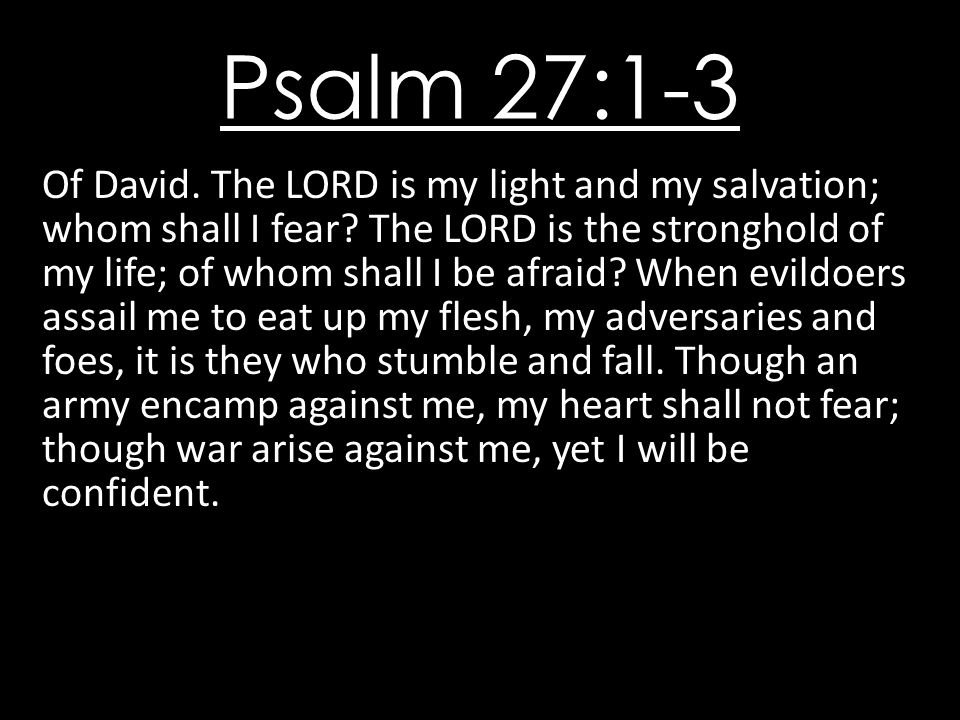
Psalm 27:1-3 – March 17, 2019

I often stay up late at night. My light is often burning way past midnight. (If you don’t believe me, ask Sunny. She can attest to the time stamp on many of my emails being past midnight, and some 1:00, even 2:00 am.) Imagine my huge shock and horror in the wee hours of Friday morning when I saw coming across the computer news feed that there had been a mass shooting in Christchurch, New Zealand. I was absolutely devastated. Talk about shocking me out of my security and complacency!

That is the portion of the Lord’s Prayer we are focusing on this week: deliver us from evil. Please, Lord! Right now!

So many faced such evil, such horror, and such sorrow in the town of Christchurch, and all New Zealand just two days ago. Imagine, if you will, two peaceful congregations, coming together for their midday time of prayer, abruptly torn apart by semi-automatic weapon fire. Is it any wonder many people around the world cannot even visualize such an attack? What on earth? Dear Lord! Deliver us from evil!

As soon as news of this horrific shooting started to come across my computer screen, you’d better believe I checked out my various favorite go-to news sites, including the BBC News. Yes, the news was even worse than I had heard or feared. And, the death toll was rising. So were my shock, dismay and horror at the rapidly developing story.

As we consider our Scripture reading from the Psalms this morning, we can flee to the assurance and strength of the first verse of Psalm 27: “The Lord is my light and my salvation; I will fear no one. The Lord protects me from all danger; I will never be afraid.”  I read these words and take heart. God is the source of my—our strength. God is our light, and we need no other light source. God is our protection and our protector. I—we—all of us need no one else.

But, wait, Lord! You didn’t mean that You would protect me from a domestic terrorist with a semi-automatic rifle!  Did You?

Even though the conception of a semi-automatic rifle was not even thought of at the time the psalm writer put pen to paper and wrote this psalm, that is the gist of verses 2 and 3: When evil people attack me and try to kill me, they stumble and fall. Even if a whole army surrounds me, I will not be afraid; even if enemies attack me, I will still trust God.”

King David is said to be the author of this Psalm, and I can believe it. David certainly knew quite a bit about having evil people try to attack him. Not only when he was young, before he even met Goliath on the field of battle, he was shepherd for his family’s flocks. He knew the many dangers a sheep or goat could face in the rocky, semi-arid pastures in the country of Israel. He was their shepherd, and he would need to rescue them when they got into trouble.

Then, when David was secretly anointed king and needed to run from the previous-but-still-on-the-throne King Saul, his fear and anxiety had the opportunity to shift into high gear. King Saul wanted to kill David. Literally. Seriously. Saul sent regular armed parties into the wilderness of Israel specifically to kill David. I am amazed that David could even write these words: “even if enemies attack me, I will still trust God.”

Dr. Beth Tanner, commentator on Psalm 27, writes “With all of the violence in our world, Christians are faced almost daily with a decision to live in fear, or despite their fear, to trust in God and God’s promises. To choose to remain true to God’s principles of hospitality feels frightening as well. Terrorists and Refugees come from the same places.” [1]

Gangs of fierce, armed men hunting you down, repeatedly? Frightening, indeed.

If we consider our problems today, whatever the specific problem is, we can draw some insight from this psalm. It’s clear that the person composing this prayer—King David—is afraid. “And yet, right in the middle of his expressions of fear, the Psalmist also declares his confident faith that God’s presence is like a light that keeps him safe.  So, he seeks God’s presence in the place where the people of Israel of his day believed God could be found: in the Temple.” [2] In the same way, we can seek the Lord where we know God is to be found: in the sanctuary, with other believers, and in meditation and prayer.

A number of these peaceful people at prayer on Friday were refugees from war-torn countries. They had fled their home countries of Somalia, Syria and Iraq—just to name a few—and had finally found sanctuary in the peaceful, beautiful town of Christchurch. New Zealand has truly gorgeous scenery, and a wonderful, equitable society of friendly people.

Not the kind of place one would expect for a domestic terror attack, certainly.

Yet, to run away, to leave almost everything you found dear and loved with all your heart, to come to a foreign land, no matter how pretty, Such heartache, and such desperation. And finally, to be getting back on your feet and finding a new home, just to have your place of worship abruptly, shockingly invaded. Get all shot up.

Dear God, deliver us from Evil, personified.

Dr. Tanner goes on to say: “Gun violence comes out of nowhere and even those places we considered safe are safe no longer. Fear threatens to defeat the gifts of trust and hospitality. The feeling of the psalm is the same.” [3]  It does not matter whether we ask to be delivered from evil things or evil people, from evil personified or evil within our own hearts. This psalm gives the message that we can depend on God as our light, our safety, our security, our salvation. And, if we depend on God, what more sure defender and protector do we need?

Jesus speaks to the city of Jerusalem rhetorically in the Gospel reading from Luke today: “Jerusalem, Jerusalem! You kill the prophets, you stone the messengers God has sent you! How many times I wanted to put my arms around all your people, just as a hen gathers her chicks under her wings, but you would not let me!” Jesus speaks of the image of a mother hen fluffing up her feathers and gathering her chicks to safety, under her wings. Such a wonderful maternal image! And, such an encouragement and comfort in times of trouble.

It doesn’t matter what evil approaches, what danger comes quickly. If we are gathered under the wings of Jesus as our mother hen, we will be safe and cared for—now, and wherever we go with our Lord.

May it be so, Lord. Amen.

[1] http://www.workingpreacher.org/preaching.aspx?commentary_id=2777

Commentary, Psalm 27 (Lent 2C), Beth L. Tanner, Preaching This Week, WorkingPreacher.org, 2016

[2] http://thewakingdreamer.blogspot.com/2014/01/what-do-we-have-to-fear.html

“What Do We Have To Fear?” Alan Brehm, The Waking Dreamer, 2016.

[3] http://www.workingpreacher.org/preaching.aspx?commentary_id=2777

Commentary, Psalm 27 (Lent 2C), Beth L. Tanner, Preaching This Week, WorkingPreacher.org, 2016

@chaplaineliza

(Suggestion: visit me at my regular blog for 2019: matterofprayer: A Year of Everyday Prayers. #PursuePEACE – and my other blog,  A Year of Being Kind . Thanks!