Unknown's avatar

How Majestic!

“How Majestic!”

Psalm 8:1-9 (8:1) – June 15, 2025

            Have you ever been far from the city lights, at night? Have you ever looked up into the sky, and seen countless stars spread out, twinkling high above? When I went to the Upper Peninsula of Michigan, and again in rural central Indiana, the starry skies were absolutely breathtaking. Amazing. Majestic, as the psalmist King David said in our Psalm reading today.

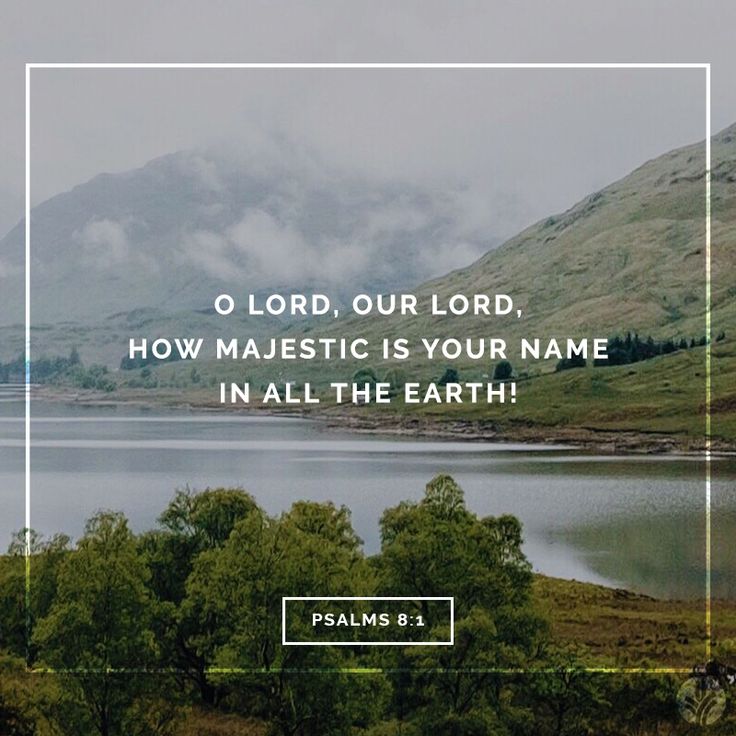
            Listen again: “Lord, our Lord, how majestic is your name in all the earth! You have set your glory in the heavens.” I can just imagine King David sitting far away from the lights of the city of Jerusalem, perhaps contemplating the stars as he saw them in his youth, when he looked after his father’s sheep, or as a younger adult, a leader of men in the wilderness of Judah, David certainly had many opportunities to gaze up into the night skies and see the breathtaking stars.

            As we gaze up into the night and see the amazing sight of all the stars laid out above us, we marvel. Marvel just as countless people have done throughout the millenia. As we think about the vastness and sheer beauty of the heavens, other vast, even unanswerable questions may come to mind. Just as countless people have done, and have reflected upon. Questions like: What was God doing before God created the world? And, how can there never be a time before or after God? And, how can God pay attention to each person in the world all the time? [1]

            These kinds of big questions have puzzled people for millenia, too. You and I could get hung up on these kinds of questions, and totally lose sight of the sheer, magnificent, bottomless awesomeness of God. Or, are we simply to return to the first verse of today’s reading, and be totally in awe at God’s glorious majesty? “Lord, our Lord, how majestic is your name in all the earth! You have set your glory in the heavens.”

            My husband tells me when I am thinking about big ideas, I am sometimes too focused on individual trees, rather than looking at a whole forest. That is what comes to mind when I get sidetracked by wondering what God was doing before God created the world. Or, maybe, why did God create rattlesnakes and mosquitoes? Perhaps – it is okay just to contemplate the vastness of the heavens and the sheer beauty of all the stars, comets, moons and other creations in the universe! Just as Psalm 8 invites us to do.

“How majestic is your name.” That’s the line that stands out, maybe because the psalm begins and ends with those same words. “How majestic is your name.” That sounds wonderful, indeed! Our opening hymn was written by Michael W. Smith, and we sang these exact words at the beginning of our service. And, the words sung by the angels, the seraphs flying around the heavenly temple in Isaiah 6 – they kept singing, kept repeating “Holy, holy, holy is the Lord of hosts, the whole earth is full of God’s glory.”

            Over and over, the seraphs sang those words. And, it is sometimes in the singing and in the repetition that the majesty and awesomeness of God begins to make sense. I mean, as much as it can, to our puny, limited, human comprehension.

            The concept of the Trinity, one God, Three in One, is a difficult concept to start to believe, much less fully comprehend. For a small comparison, we can look at water. Water is liquid, at room temperature. Yet, when we freeze water, it turns hard. It becomes ice. Is it still water? Yes. And, when we heat up water, it turns into steam – becomes gaseous. Is it still water? Yes.

            This example of the three states of water is an imperfect way to talk about the Trinity. Yet, we can marvel at the awesome complexity of the doctrine of the Trinity just as we marvel at the glory and magnificence of our God and God’s creation, just as Psalm 8 leads us to do. Whether we sing about our awesome God, talk about the glory of God, or contemplate God and God’s magnificent creation, it’s all good. And, all these activities are exactly what we are led to do throughout the Bible, and especially here in Psalm 8.

            Looking to the skies and contemplating the glory of God may be a sincere way for people to begin to try to understand how huge God is. And, if we are coming at the theological concept of the Trinity – which is also a huge thought – perhaps it’s best for you and me to think about this huge thought from God’s end of things, from God’s point of view. Whether you and I “can fully grasp the nuanced theological understanding of what Trinity means, we can acknowledge that, in part, it means that God wants to be known and experienced by those who claim the majestic name of God as sovereign. We give thanks for an accessible God.” [2]

            I return to one of my tried and true ways of looking at biblical things, from a theological perspective. You all know that sometimes I view the topics or ideas from my sermons in a way that children see them, or in a way that young people more readily understand. Psalm 8 tells us about the wonders of God. Even little children can (and do) accept this as the truth of God! However, little children are definitely not interested in explaining how or why, or about lengthy sermons droning on about different theologians and their competing view on God and the Trinity.

            Very often, deep down, children understand that God made them and God loves them. This is a foundational truth! You and I can have – along with the children – a “simple” and “trusting” faith. We don’t need to use the “right” words in our prayers and creeds. Remember – God wants to be known by us, above all! And, our Lord wants to be experienced by all who claim the name of the majestic God. By those who praise God’s name.

            Yes, the theological understanding of the Trinity is also a deep theological truth. Yet – I can tell you right now that we as fallible, frail humans fall short of understanding God’s ways. I can also tell you that in the midst of everything, we can know we are loved. God wants each of us to know our Lord intimately! As my commentator the Rev. Dr. Derek Weber says, “We are being made more like the Christ we follow. Our love is being shaped by God’s love that is poured into us. We are God’s act of creation. That’s a part of the message of Trinity Sunday. The Creator works within us, choosing us to be a sign of God’s presence in the world.” [3]

            Yes, God’s message is quite simple. We can know we are loved by God. God wants each of us to know our Lord intimately! And, our awesome God works within each of us, choosing each of us to be a sign of God’s presence in the world. This is the best Good News we can bring to the world. Alleluia, amen!

@chaplaineliza

(Suggestion: visit me at my other blogs: matterofprayer: A Year of Everyday Prayers. #PursuePEACE – and  A Year of Being Kind . Thanks!


[1] https://worshipingwithchildren.blogspot.com/2016/04/year-c-trinity-sunday-may-22-2016.html

[2] https://www.umcdiscipleship.org/worship-planning/trinity-sunday-year-c-lectionary-planning-notes

[3] https://www.umcdiscipleship.org/worship-planning/trinity-sunday-year-c-lectionary-planning-notes/trinity-sunday-year-c-preaching-notes
Unknown's avatar

How Majestic is God’s Name!

“How Majestic is God’s Name!”

Psalm 8 (8:4) – October 6, 2024

            How many here can think of a truly unforgettable experience you have had? Maybe going on vacation, and seeing an unforgettable sunset or rainbow? Or perhaps taking a trip to a National Park, and experiencing some unforgettable scenery, like a spectacular waterfall? Or maybe traveling by boat or ship and seeing unforgettable sea creatures, whales, or sea lions? The world is full of marvelous, unforgettable things, and God created them all!

            But, we can’t go on vacation every day. Very few of us are able to see marvelous scenery or go to exotic places on a regular basis In the every-day, ordinary kind of way, I wonder if you and I really think the world is majestic? Awesome? God has made the world, and I think the Lord has done a pretty good job. But, how many of us think the Lord is majestic? Awesome? I mean, on an every-day basis. Are we stunned, at a loss for words by the majesty of the Lord?

            Let’s hear how our psalm today starts, again. “Lord, our Lord,  how majestic is your name in all the earth! You have set your glory in the heavens.” Wow! And, that is just the first verse! The Lord is OUR Lord, and the Lord’s name is majestic. Not just so-so, not pretty good, but majestic! Not to mention, the Lord has set glory and majesty in the heavens!

            I can see the stars on a clear night, but not quite as many here in Chicago as I can up in Wisconsin or in Michigan, far from the city. My husband Kevin spent two years in the mountains of Colorado, a number of years ago. He said the stars regularly put on an amazing display in the mountains, on a clear night. And, the moon, too! Truly majestic to see.

            Our psalmist marvels at the heavens, too – and more! “When I consider your heavens, the work of your fingers, the moon and the stars, which you have set in place, what is humankind that you are mindful of them, human beings that you care for them?

Our psalmist King David started out contemplating the heavens, and the awesome majesty of God. Now, he shifts to considering humanity. “In comparison to the grandeur of the universe, the psalmist questions why God would be mindful of humanity and care for them.” [1] Really, this is a valid question! After God created the heavens, and the stars and moons and all the other heavenly bodies, we humans are like grains of sand. Maybe even smaller, maybe microscopic. Who are we that God is even mindful, even aware of us? 

From time to time, maybe even more often than that, it is so easy to get caught up in the pressures and expectations of the world! You and I can know that very well. Such feelings of loneliness, insecurity and doubt can threaten to overwhelm us. Imagine, not being sure that we are worth anything, and feeling that we are like tiny grasshoppers or worms.

I don’t know about you, but just reading this description of humanity makes me feel so insignificant, especially in the face of such glory, such grandeur of all creation. However, isn’t this an opportunity to affirm, to witness to the blessed fact that this God who is described here by King David is also my God? In fact, our God?

            We have reassurance from King David! “Psalm 8 reminds us of our unique identity as children of God and the incredible value and purpose we have in Him. This psalm teaches us to look beyond ourselves and recognize the greatness of our Creator, who has entrusted us with the responsibility to care for [God’s] creation.” [2]

            Listen to the next verses of this psalm, and see how much trust the Lord gives to us, how much happiness and at the same time, responsibility: “You have made thema little lower than the angelsand crowned them with glory and honor You made them rulers over the works of your hands; you put everything under their feet:”

            How amazing that we – we puny humans – are crowned by God with glory and honor! And, that is all humanity we are talking about. Not just a few humans, not just the humans in our particular group or from our particular country. No! This psalm says ALL. Everyone. What a Godly proclamation to give each of us a worthy opinion of ourselves!

But wait, there’s more! God not only has made a royal proclamation that crowns all of us with glory and honor, the Lord has also made each of us heaven-appointed stewards of this marvelous world we all inhabit.

We all have a task to do, simply by nature of being born on this earth. Just as in the beginning of Genesis, Adam and Eve were assigned tasks by God to tend and keep the Garden of Eden, so with each person today. Whether we garden, or recycle and pick up trash, or choose responsibly-sourced food items and clothing, we all can be good stewards of this beautiful earth God has created for each of us and given us to live in.   
            One of my favorite people I follow on social media comes from the Peak District in northern England. She is a brilliant photographer of her native Peak district, and her handle is “Peaklass.” I love the description and the advice she gives: “In our rush through life, moving faster, working smarter, we miss so much. We miss the drift of seasons and the gentle ebb and flow of nature. We miss patterns, colours, changing light. We miss beauty and quiet. Sometimes we all need to stop and just watch the clouds roll.” [3]

            This psalm ends as it begins, “Lord, our Lord, how majestic is your name in all the earth!” Can you think of a more wonderful praise and prayer to our God than to enjoy the beauty and majesty of God’s creation, today? Yes, God’s name is majestic in all the earth! Each of us can stop where we are today, and praise God for all creation, all creatures great and small.  

            Two days ago was the feast day of St. Francis of Assisi; many faith traditions celebrate with a Blessing of the Animals this weekend. St. Francis is not only a patron saint of animals, he is also the patron of all creation, or the natural world. I want to end today with a benediction, a verse from the hymn that is attributed to Francis, “All Creatures of Our God and King.”

Let all things their Creator bless,
And worship Him in humbleness,
O praise Him! Alleluia!

Praise, praise the Father, praise the Son,
And praise the Spirit, Three in One!

            O, let us praise God, indeed! Alleluia, amen.

@chaplaineliza

(Suggestion: visit me at my other blogs: matterofprayer: A Year of Everyday Prayers. #PursuePEACE – and  A Year of Being Kind . Thanks!


[1] https://youthgroupministry.com/lessons/youth-ministry-lesson-on-psalm-8-embracing-our-identity-in-christ/

[2] Ibid.

[3] https://x.com/peaklass1/status/1842835391595905259/photo/1

Unknown's avatar

God Created

“God Created”

Genesis 1:1-6, 26-28 – June 11, 2023

            With June, everything is blooming! All kinds of trees, plants, flowers and leaves are growing and blossoming, and it’s just like that song from the great American songbook, “June is Busting Out All Over!” We can easily see how much joy God took in creating the heavens and the earth, with how green and verdant all of nature appears, outside.

            And, God not only created the plants and growing things. The Lord created a whole lot more! As Genesis 1 tells us, God created all living things on the earth, sea and sky, and all the heavenly bodies in the universe, too. A mighty act of creation, for our mighty God! 

            This act of creation comes at the very beginning of things, in the very beginning of the Bible. Genesis chapter 1. “In the beginning God created the heavens and the earth. Now the earth was formless and empty, darkness was over the surface of the deep, and the Spirit of God was hovering over the waters.”

            We are starting our summer sermon series today, Re-imaging God. This series will highlight different ways of thinking about and naming attributes of our God. In this series, we will work on stretching ourselves! We will try to enlarge our image of our God.

            The words we use are important – not only the words we say, but the words we read on the printed page. The words of Scripture are all important, too. Let us take a closer look at how verses 1 and 2 describe our God. Verse 1 (the summary statement for this chapter) says that “God created.” God created the heavens up above and the earth beneath. Verse 2 describes the Spirit of God as “hovering over the waters.”

            This lean, spare description is marvelous! Can you see it? The dark heavens and the earth, formless, empty, just waiting for something to happen.

I don’t know whether you are aware, but different languages use different articles for nouns. In English, we all say “the cat” and “the dog,” and by the article “the,” they could be either male or female animals. However, many languages are structured differently.

In German or Italian, Spanish or Greek, different nouns are gendered. It’s a “male dog,” or a “female cat.” The article “the” in front of the noun changes with the word. Plus, the gender of the verbs must agree with the gender of the nouns! Any native English speaker who learns one of these languages in school struggles with the gender of the nouns and matching the proper articles and proper gender of verbs with the nouns!

It’s the same way with the Spirit of God. In the original language of the Hebrew Scriptures, “Spirit” is feminine. What’s more, the Spirit of God hovering or brooding over the waters is – according to the Hebrew language – a feminine Spirit. This verb “hovering” is also mentioned in Deuteronomy 32, where the mother eagle is protective towards her young in the nest. The “hovering” of the Spirit is a mothering activity! Here in Genesis, the Spirit of God, the Ruach ha Kodesh, is a protective, nurturing presence over the still formless waters. [1]

            Just so we do not get lost in the weeds of different languages, here’s the highlight I want us all to focus on. Whether Scripture is in Hebrew or Greek, “both masculine and feminine verbs are used for God, masculine for God, feminine for the Spirit. [And as we will see,] God’s human creation will reflect their creator as female and male.” [2]

               Seeing the nurturing, mothering nature of mammals, of dogs, cats, and humans – these mental images of puppies, kittens and babies can bring to mind gentle caring, loving encouragement, and supportive love. These are exactly the kinds of things that describe the activities of the Spirit of God! Plus, God the Father is caring, loving and supportive, too!

And what about the Good Shepherd? That’s Jesus, I want everyone to know. Remember how Jesus cares for His sheep, and how in several places in the Gospels Jesus is described as a loving, supportive Good Shepherd who guards, guides and protects His sheep.

            Isn’t it wonderful to see God as a mothering, nurturing God? Not only mighty and strong – a just, even stern, protector. Yes, God is all of those things. And, mothering and nurturing, caring and loving, too! Both/and – not either/or.

            Let us continue with verse 26: “Then God said, “Let us make humankind in our image, in our likeness, so that they may rule over the fish in the sea and the birds in the sky, over the livestock and all the wild animals, and over all the creatures that move along the ground.” God has created humans male and female. We, as humans, are created in the image of God! And, this whole chapter of Genesis 1 follows the same pattern, using pronouns of both genders.

            “We forget that Genesis 1 is a chapter brimming with goodness and blessing. In fact, God pronounces blessing on the created order three times. [God] calls creation “good” and “very good” seven times.” [3]

            We can see how the earth – the world – the universe was lovingly, joyfully created by God. And, whether we think of the feminine Spirit of God or the almighty Lord, or the Word that was in the beginning (from the Gospel of John), the preincarnate Son of God – however we consider the Triune God – all we can do is lift our hands in worship, thanksgiving and praise.

 What will you and I do with this fresh understanding of God? This understanding that transcends gender? “The creation story insists that God’s mark is imprinted on my very being. I might ignore or distort it, but the mark is always there. Whether I acknowledge it or not, I reflect something of God’s joy, God’s intentions, God’s love, and God’s beauty just by virtue of existing on the earth. I am His, and so He is mine.” [4]

            We can go out into the world, knowing that the Creator God made each of us, all of us, in the image of God. Male and female we are made, and each is in the image of God. Just as Psalm 139 tells us, “I praise you because I am fearfully and wonderfully made; your works are wonderful, I know that full well.”

            Our loving, caring, nurturing Creator God created the heavens and the earth; God created all humanity, and that includes you and me, too. Praise God! Alleluia, amen. 

@chaplaineliza

(Suggestion: visit me at my other blogs: matterofprayer: A Year of Everyday Prayers. #PursuePEACE – and  A Year of Being Kind . Thanks!


[1] van Wijk-Bos, Johanna, W.H., “Reimagining God” (Westminster John Knox Press: Louisville, KY, 1995), 72.73.

[2] Gafney, Wilda, “A Women’s Lectionary for the Whole Church” (Church Publishing, New York, NY, 2021), 142.

[3] https://www.journeywithjesus.net/Essays/20140609JJ.shtml

[4] Ibid.

Unknown's avatar

Holy, Holy, Holy!

“Holy, Holy, Holy!”

Isa 6-3 sanctus-holy-holy-holy

Isaiah 6:1-8 (6:3) – May 27, 2018

Today is Trinity Sunday. In the children’s message, we talked about a straightforward way of understanding the Trinity. The theological concept of the Trinity is an idea that has been and still is misunderstood—for centuries. Christians and non-Christians alike just plain do not understand it. Even knowledgeable ministers and bible scholars have problems talking about it clearly. That is one reason the children’s message about the concept of the Trinity was stated the way it was.

The simple idea behind the children’s message is an idea that can work for us adults, too.

Jesus said to approach Him as little children. He was talking to adults at that particular time. He meant that piece of advice to go for His disciples, His followers, and anyone else who was thinking about following Him. This can work in terms of the theological idea of the Trinity, as well. What’s a good way to talk or think about the Trinity?

One of my favorite commentators, Carolyn Brown, observes Trinity Sunday as one of her favorite Sundays of the year. She says: “It is God Sunday. The call is not to explain God but to celebrate God’s mysterious, more-than-we-can-ever-explain presence.  What could be better!” [1]

As we consider God’s unsearchable mystery and God’s awe-inspiring power and might, we all can look at God from a child’s point of view. We might even think about “the unanswerable questions people of all ages ask about God, such as but definitely not limited to:

  • What was God doing before God created the world?
  • How can there never be a time before or after God?
  • How can God pay attention to each person in the world all the time?” [2]
  • Why did God create rattlesnakes and mosquitoes? Along with spiders, sharks, viruses, earthquakes, and volcanos?


Let’s look at the Hebrew Scriptures. There have been hints of the Trinity from the very beginning. Think of the first chapter of Genesis. “In the beginning, God created the heavens and the earth.” And, the beginning of the Gospel of John that starts “In the beginning was the Word, and the Word was God, and the Word was with God.”

Imagine a universe still and dark. Imagine a solar system just before it was going to spring into being, with nothing hung in space—yet. Imagine a place where the earth will orbit, but nothing there, yet. Except—the spirit of God—the Holy Spirit hovering, ready to hold the newly-born earth in loving embrace. Imagine the Word, the Logos, the creative force of God, speaking forth the whole of creation with astronomical power and might. Not only the earth, but also our solar system. Not only our solar system, but all other solar systems. And stars. And meteor showers. And quasars, and black holes, and everything else that is in the universe.

Traditionally speaking, God the Father, God the Son, and God the Holy Spirit had differently described roles in different expressions of the creation of the universe.   

As we look more closely at both of these passages, Genesis 1 and John 1, we see God created the universe in the beginning. Genesis tells us that God spoke, and the world came into being. The Word, the Logos, the pre-Incarnate Son was the powerful Word spoken at the beginning of all things. And then, the Holy Spirit—or the spirit of God—described as moving over the surface of the waters, holding the earth secure. Can you begin to understand what a mind-blowing image that was?

We continue to get glimpses of this Triune God in our sermon passage for this morning, where the prophet Isaiah has a sweeping, magnificent vision of the heavenly Temple of God.

“In the year that King Uzziah died, I saw the Lord, high and exalted, seated on a throne; and the train of his robe filled the temple. Above him were seraphim, each with six wings: with two wings they covered their faces, with two they covered their feet, and with two they were flying.

                    As Isaiah describes it with vivid word pictures, I think his vision sounds fearsome, and glorious, and terrifying. But, that’s not all! “And the angels were calling to one another:

‘Holy, holy, holy is the Lord Almighty; the whole earth is full of his glory.’ At the sound of their voices the doorposts and thresholds shook and the temple was filled with smoke.”

This passage from Isaiah 6 contains important liturgical language:. Did you recognize that language? “Holy, Holy, Holy!” This is called “the Sanctus. The song is an acclamation from the congregation honoring the presence of the Lord. The minister celebrating communion has just said, “The Lord be with you… lift up your hearts… let us give thanks…” and then prayed a prayer of acknowledgment (the Preface) for what God has done in language that calls up the time of the church year.”

We find out more—in another way—about how great and mighty and powerful this God is, by looking at the Psalm passage from today’s lectionary.

Psalm 29 deals with the mighty powers of God in nature and in the crashing sounds, stunning displays and fearsome descriptions Eileen read to us.  “For the psalmist, the storm is a symbol not of the power of nature, but rather of the power and sovereignty of Israel’s God. Seven, the number of completeness, is significant [in this psalm]. Israel’s God is completely powerful and ultimately sovereign. There can be no competing claims.” [3] Just in case anyone was wondering, that is. God is the ultimate in power, majesty and glory.

In the New Testament, God the Word, God the Logos becomes incarnate; He is born and grows to adulthood as the son of Mary, Jesus the Messiah. Jesus the Anointed One, the Lamb of God chosen before the foundations of the earth, the Prince of Peace revealed to us in the Gospels of the New Testament.

Remember last week, when we celebrated Pentecost, the birthday of the Church? That was the expected coming of the Holy Spirit in each believer’s life, in great power and might. The Holy Spirit blew powerfully into the lives of the assembled persons praying. The Holy Spirit ignited their hearts and minds to go forth and tell others about the might and power of God, in raising Jesus from the dead with resurrection power, and saving us from our sins.   

Is there any wonder that we are likely to fall on our knees as we sing the hymn “Holy, Holy, Holy?” As we consider the word holy the most special and important, set-apart, and awesome aspect of God. We reflect on the Trinity as we sing this hymn:

First, we praise God. Second, everyone in heaven praises God. Third, even though we do not fully understand God, we praise God anyway!.And last, everyone and everything on earth praises God. [4]

There are not enough superlatives to even begin to describe God. We do not have enough glorious, magnificent words fit to praise God. Our vocabulary falls far short.

Why don’t we consider the words of the heavenly beings in Isaiah 6, and close today with the words of the angels from Isaiah 6: “Holy, holy, holy is the Lord Almighty; the whole earth is full of God’s glory.”

Amen. Alleluia. Praise be to the Trinity, Eternal One in Three, Three in One.

[1] http://worshipingwithchildren.blogspot.com/2015/04/year-b-trinity-sunday-may-31-2015.html

Worshiping with Children, Trinity Sunday, Including children in the congregation’s worship, using the Revised Common Lectionary, Carolyn C. Brown, 2015.

[2] Ibid, Worshiping with Children.

[3] http://www.workingpreacher.org/preaching.aspx?commentary_id=2453   Commentary, Psalm 29, J. Clinton McCann, Trinity Sunday, WorkingPreacher.org, 2015.

[4] Ibid, Worshiping with Children.


@chaplaineliza

(Suggestion: visit me at my regular blog for 2018: matterofprayer: A Year of Everyday Prayers. #PursuePEACE – and my other blog,  A Year of Being Kind . Thanks!)

Unknown's avatar

God’s Dwelling Place

“God’s Dwelling Place”

Rev 21-6 Alpha and Omega

Revelation 21:1-6 – April 24, 2016

It’s spring! It is finally spring! Bushes and trees are budding, the grass is greening up, the spring flowers are in full display. After the long, cold winter, everything finally is blooming and budding—showing signs of green, fresh, new life.

It seems like it’s been a long, long time since we have seen the last leaves fall from the trees, last year—in the autumn of the year. This past week I read several books to the four and five year old children at Kids Academy about trees. In one book, I read about what happens to trees during the winter. They certainly appear dead, from the outside. But now in spring time, life starts shifting into forward motion. Full speed ahead, with the new growing season!

Imagine the newness of spring, of exactly this time of year, with everything outside budding and blossoming and growing. See that in your mind’s eye. Now, imagine it, 100 times bigger and better. No, 1000 times bigger and better! Now we’re getting the beginnings of an idea of what the new heavens and the new earth are like. That’s a little of what Eugene Peterson meant when he wrote his translation of Revelation 21:1; “I saw Heaven and earth new-created. Gone the first Heaven, gone the first earth, gone the sea.”

Doesn’t it say somewhere that “God saw everything that he had made, and indeed, it was very good?” As the book of Genesis tells us, in the beginning, God created the heavens and the earth, and God created everything good.

God gave humanity the world and everything in it for us to enjoy. It is all a gift, everything, for us to enjoy together with God. Not only that, God wants to be in relationship with us. Can you imagine, daily strolls through beautiful gardens, in the cool of the evening? That’s just the picture that is painted for us by Genesis chapter 3.

You all know the plot line. God did have a close relationship with Adam and Eve. Then, one day, God came looking for Adam and Eve, but what happened? Sin happened. That relationship was fractured. Humanity was separated from God by sin. Now, today too, I am separated from God by my sin. We all are separated from God. Alienated from God.

When the world was created, everything was created very good. God says so, at the end of Genesis 1. Beautiful, glorious, magnificent Earth was created, and humans were placed on it to be good stewards of the Earth, and to take good care of it. But, we all know what happened. Sin happened. Not only we—us humans—were separated from God, but something catastrophic happened to the Earth, too. The world has been suffering from the catastrophe of sin, inside and out, ever since.

Another word for sin is separation. I know I sin. I displease God. And when I sin, I am separated from God. I feel it. I know I am alienated from God. I feel intense sadness, sorrow, and longing to be back in relationship with God. (And with other humans, too.)

This separation and alienation is a problem. Not only for you and for me, but for the Earth, too. The Bible is not specific on this point, but when Jesus died on the cross, the gospel of Matthew tells us that the Earth shook and the rocks were split. Somehow, the Earth knew when the Son of God died. The Earth reacted when the Creator of the heavens and the Earth died.

Thank God that Jesus, the eternal Son of God, became a human being. Just like us. Thank God that Jesus reconciled us to God, so that we don’t have to be separated from God for eternity. And, this passage from Revelation reminds us that the world is going to be renewed, reconciled to God. The Earth is going to become that fresh, new, spring green place that it once was.

Remember, the book of Revelation was written by John. This book of amazing, fantastical visions was written for our edification and to help us get ready for things to come in the future. When you read this passage, this description in Revelation 21, what is your reaction? Do you think this description is pie in the sky? Is it way, way far-fetched? Or, is it a blessed promise of things to come?

Let’s read more from Eugene Peterson’s translation. Starting with verse 3: I heard a voice thunder from the Throne: “Look! Look! God has moved into the neighborhood, making his home with men and women! They’re his people, he’s their God. He’ll wipe every tear from their eyes. Death is gone for good—tears gone, crying gone, pain gone—all the first order of things gone.”

That doesn’t sound like this crazy, messed-up world, at all. Does it? Especially the part with God moving into the neighborhood!

How would you like God—the Lord God Almighty, who created the heavens and the earth—to live in your neighborhood? On your block? Across the street, or maybe even living right next door?  For some, it’s a scary, daunting thought.

Some bible scholars say that cities—like Chicago—are scary! Sometimes, they are. Dark, dreary, dangerous places, where sin, evil, violence and alienation reign, and keep the good Christian folk huddling inside their homes and buildings. However, that is not the case here. John tells his readers that the New Jerusalem is a bright, shining city! The city of God, where God dwells. That’s God settling down, getting comfy in our very own neighborhood!

The commentator Dana Ferguson describes urban settings and cities in a fascinating way: she talks of cities being places of cooperation, interdependence and welcome. (See Feasting on the Word Year C, Vol. 2). Let’s go with that description, and think like that. What a positive, encouraging way to think of the Heavenly City, the New Jerusalem.

Yes, this bible passage provides a vision of the future, of where we’re going. These descriptive words tell how wonderful it will be. Not only a bright, shining city, but also a welcoming snapshot of what God has promised to us. And, just think. That’s where God is settling down. As Peterson translated, “Look! Look! God has moved into the neighborhood, making his home with men and women!”

Theologian Frederich Buechner gave a telling response: “What does it mean to be ‘with God’? To say that a person is ‘with it’ is slang for saying that whether he’s playing an electric guitar or just watching the clouds roll by, he’s so caught up in what he’s doing and so totally himself while he’s doing it that there’s none of him left over to be doing anything else . . . In other words, to live Eternal Life in the full and final sense is to be with God as Christ is with him, and with each other as Christ is with us.” [1] [italics mine]

Let’s enlarge that vision to include all of Earth. Have you ever thought of caring for the Earth as caring for God’s creation? We just celebrated Earth Day on Friday. Earth Day is a day of responsibility and caring for this wonderful world. And, it serves as a tangible reminder of God’s unconditional love, extended toward all humanity.

We can celebrate God’s love, God’s presence with us, and the gift of God’s creation.

Sometimes, I hear language like, “Jesus lives in my heart.” Or, “My heart, Christ’s home.” Is it, really? How welcome is Jesus Christ in my heart? Am I generous and kind with my heart and my attitude, or does Jesus feel unwelcome when He knocks at the door of our hearts? Great question! An intriguing thing to think about. Sometimes, a serious thing to think about.

I know, I know. We aren’t there yet. The new heavens and the new earth are not here, yet.  However—what are we going to do with these Bible words in this in-between time? How can these words from Scripture impact our lives, today?

We can take these words as hopeful, encouraging words: “Look! Look! God has moved into the neighborhood, making his home with men and women!”  We can celebrate God’s presence right by our sides, today. Now, in the in-between time, and at the time of the new creation, too.

Alleluia, amen!

(Thanks to Kathryn M. Matthews and her online commentary, Sermon Seeds, http://www.ucc.org/worship_samuel_sermon_seeds_april_24_2016 Several of the ideas in this sermon were used in Kathryn’s article.)

[1] Wishful Thinking: A Theological ABC by Frederick Buechner, Harper & Row, 1973, 21-23.

@chaplaineliza

(Suggestion: visit me at my daily blog for 2015: matterofprayer: A Year of Everyday Prayers. and my other blog,  A Year of Being Kind .  Thanks!)