Unknown's avatar

Remember Your Baptism!

“Remember Your Baptism!”

Luke 3:15-17, 21-22 (3:21) – January 12, 2025

Photos are marvelous at capturing memories. Now, of course, almost everyone snaps photos with their cell phones. But, can you remember looking at old photos? Especially when we are together with good friends or relatives, and several of us look at the photos together, pointing out special features, memories can come to life!

Memories are special things. Perhaps you have a memory of an exciting event, or of a special friend or relative, and the photo perfectly captures your memory. And, when you are with others now who were there for that special event in the past – something wonderful can happen.

I wonder how many of us can remember our baptisms? In this particular church’s tradition, I know the pastors almost always baptize babies and small children. That is a particular theological view of baptism, and one where we affirm that God extends heavenly blessing and grace to all, regardless of when they come before God in baptism.

How often have you have seen someone get baptized? What do you think of when you remember? The darling little child, getting baptized? The proud parents and sponsors, bringing their child forward to be welcomed into God’s forever family? The congregation, promising to teach this little one the ways of God, and to help the parents bring up this child in a manner pleasing to God?

            Well, that’s today. That’s one common understanding we now have of baptism.

            What about our scripture passage today? This section of Luke’s gospel tells about John the Baptist, baptizing people in the wilderness. John was a prophet of God. He was set apart for a special purpose, to give out a special message from God. The companion Gospel of Mark even tells us a little about John—about the rough clothes he wore, and the food he was able to scrounge from subsistence living where he was in the wilderness, some distance from Jerusalem.

            Two thousand years ago, John the Baptist wanted adults to confess their own sinfulness, to realize that each one had sinned and fallen short before God. As a result of that confession, John would then baptize each one. This is a slightly different view of baptism, and one that was (and is) just as valid. And, we come back to Jesus, waiting patiently. Jesus wanted John to baptize Him, too – even though Jesus never sinned.

The Rev. Jeff Campbell relates, “A loving God is constantly reaching out, wanting to be at the center of our lives. And although we might still have questions, we are directed to Jesus, just as John directed those gathered who were seeking a Messiah.” [1]

As we consider this baptism of Jesus focus of our service today, some may wonder about who John was. As we see in these Gospel accounts of Jesus’ baptism, some wondered there, too. In Mark’s Gospel, he tells us they were questioning in their hearts whether John the Baptist might possibly be the Messiah. John redirected their questioning and their gaze by pointing to one who would come after him. John pointed to Jesus. 

Jesus was an extra-special case, since He already had an intimate relationship with His Heavenly Father. Looking at today’s reading, we can see what happened, from Luke’s account: “And as [Jesus] was praying, heaven was opened 22 and the Holy Spirit descended on him in bodily form like a dove. And a voice came from heaven: “You are my Son, whom I love; with you I am well pleased.”

As we consider these loving words of the Lord, there are several things that are abundantly clear.  God says this about Jesus before he has taught anybody, healed anyone, or died on the cross.  As we remember this remarkable event at the beginning of a new year, God’s statement especially reminds us that God loved Jesus and loves us not because of anything we do but just because God loves us.  Period. [2]

Some people have the idea that baptism is needed and necessary for salvation. Other people see the baptism of infants and young children as a sort of rite of passage, something that needs to be done, and so they want their minister to “do the baptism.” Some faith traditions encourage this way of thinking and this kind of theology. [3]

John baptizes Jesus. In centuries to come, many differing views arise about John’s simple, straight-forward act of baptism. We don’t know if Jesus was immersed or sprinkled. We don’t know which liturgy John prefers, or if the vows that Jesus made were the same as the ones we make or not.

However, baptism is a sign of this marvelous, free gift of God’s love. God’s rich and abundant love and grace are poured out. As we can see from our reading today in Luke, all the people present received this marvelous gift, this love and grace from God. And, each of us is encouraged to follow the example of our Lord Jesus, and be baptized, too.

Just a short time ago we celebrated the birth of the Baby born in Bethlehem. We remember in the fullness of time, Jesus was nurtured in the water of Mary’s uterus. We remember Jesus was baptized by John in the water of the Jordan. We remember that Jesus became living water to a woman at a Samaritan well. We remember Jesus washed the feet of the disciples. And, we remember Jesus sent His friends forth to baptize all peoples, all nations, by water and the Holy Spirit.

Yes, Jesus was baptized, and received this affirmation of God’s love at the beginning of His ministry! As we remember our baptism, we also remember that each of us received this same love and grace from God through water and the Word.

Praise God. What wondrous love towards our Lord Jesus. What wondrous love toward each of us. God calls each of us beloved. With each one of us God is pleased.

            Alleluia, amen!

@chaplaineliza

(Suggestion: visit me at my other blogs: matterofprayer: A Year of Everyday Prayers. #PursuePEACE – and  A Year of Being Kind . Thanks!


[1] https://www.umcdiscipleship.org/worship/season-after-epiphany-2019-part-1-worship-planning-series/january-13-baptism-of-the-lord-sunday-year-c/baptism-of-the-lord-2019-year-c-preaching-notes

[2] http://worshipingwithchildren.blogspot.com/2012/11/year-c-baptism-of-lord-january-13-2013.html

[3] https://www.stewardshipoflife.org/2013/01/remember-your-baptism-live-it/

Unknown's avatar

Playing Favorites!

“Playing Favorites!”

James 2:1-10, 14-17 (2:17) – September 8, 2024

            Sometimes, my husband and I step back and observe our fellow human beings. For example, when we are at a coffee shop, or walking through a park. My husband calls it “people watching.” And sometimes, we catch snatches of conversation, too. Some of these bits of conversations are quite revealing! Sometimes, we can even hear about relationships between these people, and their family or friends. These relationships are not always the most healthy.

            Who has all really healthy, happy relationships in their family? Or, friend groups, and acquaintances? Do you – do I – have friends or family members who are mean sometimes? Or who gossip? What about family who have bad habits, like rooting for the wrong sports teams? Or to be more serious, what about friends or family members who play favorites? Who prefer certain people because of their fancy clothes, or their popularity, or how much money they have?

            That is exactly what James is talking about here in chapter 2. This letter from James is so practical! Yes, he does refer to theological concepts now and then, but James wants to give us a manual of Christian living: living the way we as believers are called to live! The description in this reading today is a pertinent, hard-hitting example. 

            James says, “Suppose a rich man wearing a gold ring and fine clothes comes to your meeting, and a poor man in ragged clothes also comes. If you show more respect to the well-dressed man and say to him, “Have this best seat here,” but say to the poor man, “Stand over there, or sit here on the floor by my feet,” then you are guilty of creating distinctions among yourselves and of making judgments based on evil motives.”

            One of my biblical commentators says, “The problem is ‘status serving’ – favoritism. Playing favorites! We are easily attracted toward the successful, wealthy and beautiful people. Yet for James, such partiality is something quite evil.” [1] Playing favorites is definitely not a way for anyone to please God, or to live the way we as believers are called to live. 

            The Gospel reading from the Revised Common Lectionary today also has some difficult, hard-hitting points. Jesus and the disciples are in the racially-mixed area of the Decapolis, near the Sea of Galilee in the far north of Israel. A Gentile woman approaches the Rabbi Jesus while He is at dinner, and asks Him to please heal her daughter. Jesus says some challenging words to her about being a Gentile. She convinces Jesus to help her and heal her daughter, which He does.

            This Gospel reading deals with favoritism and being partial to one group while excluding another group. Who would Jesus exclude? Would He exclude me and my family? Would favoritism include you? How about your children, or grandchildren? 

            These are difficult issues raised by both the apostle James and the Gospel writer Mark.

            Favoritism is all over the place! At work, in the school room, on sports teams, at home. Even – perhaps, especially, as James says – in our local churches. “To seek out the ‘beautiful’ people in our congregation and give them honour because of wealth, status in society, looks, youthfulness, race, education, breeding, success….. is a most ugly way to develop a Christian fellowship. Favoritism is rife in society, let it not exist in our church.” [2]

            Preferring one person over another or one group of people over another is a very worldly way of approaching life. James tells us point blank that we are not to behave this way. Period.  If we take the bare bones approach and look at what the apostle Paul tells us, that we are all one in Christ, and that we are to all love one another, as both Paul and John remind us, some might say we can all simply join hands in a big circle around a campfire and sing “Kum-by-yah” feel all warm and fuzzy inside, and that would be more than enough for the Christian life.

            If that simplistic attitude and short-sighted way of behavior was the only thing we had to do to live the Christian life, then the Christian life would be an insular, warm-and-fuzzy thing indeed. But, as James tells us throughout this letter, there is much more to the Christian life. In this letter, he gives us a how-to manual. A manual for living the way believers are called to live.   

            If we take the example that James gives us, one quick solution would be to simply buy the poor person a new outfit. See? Now the two people coming into church look the same! But, that is only a shallow, simplistic quick-fix for the situation. Instead, James “is asking them to treat the [poor] man with the same respect they would offer a well-dressed man.  Learning to do that in a culture that separates and creates fear between the richer and the poorer requires practice.” [3] This problem goes deep down in people’s attitudes, and is much more serious – even insidious. James says plainly, “Don’t be snobs! Don’t play favorites!”

            I can remember a church I attended some years ago was part of a group of houses of worship that hosted midday meals for the homeless once a week, as well as hosting a warming center during the winter months for five hours in the afternoon and early evening, allowing the homeless to gather inside in a safe space that was warm and welcoming. My husband volunteered at the warming center, and some of those friends who attended regularly mentioned how grateful they were for the church opening their doors freely.

            Yes, make sure our internal attitudes line up with the way that is pleasing to God. Remember, practical, matter-of-fact James shows us a manual for Christian living. Does God choose favorites? What if you are one of those excluded homeless people, or left-out high school kids, sitting at the loser lunch table, with no way to even get close to God? Shut out from God’s loving, caring, nurturing presence?

            Thank God we are always God’s beloved children! We are always the favorites – all of us! Here is a quote by Max Lucado. See if it resonates with you. “If God had a refrigerator, your picture would be on it. If God had a wallet, your photo would be in it. God sends you flowers every spring and a sunrise every morning Face it, friend – God is crazy about you!“

            Does God choose favorites? No! That is the way God feels about each one of us! Please, remember that as you go into the world. Treat every single person you meet as a very beloved child of God – because, they are! No matter what, no matter who!

@chaplaineliza

(Suggestion: visit me at my other blogs: matterofprayer: A Year of Everyday Prayers. #PursuePEACE – and  A Year of Being Kind . Thanks!


[1] http://www.lectionarystudies.com/sunday23be.html

[2] Ibid.

[3] http://worshipingwithchildren.blogspot.com/2012/08/year-b-proper-18-23rd-sunday-in.html

Unknown's avatar

Live in God’s Light!

“Live in God’s Light!”

John 3:14-21 (3:19-21) – March 10, 2024

            Remember getting report cards in school? What about yearly reviews from your boss, or your supervisor? Those can be very stressful, even upsetting. People in authority can have real power over us, and sometimes negative influence, too. Can you remember if you had any mean teachers? Unfair bosses? What about rotten coaches? Getting checks or bad marks on a report card, or a reprimand from a manager at your work?  

This Scripture reading is early in the rabbi Jesus’ ministry. Jesus had already made a name for Himself, with the tremendous teaching He had done and the wonderful miracles He had performed. So, a lot of people were talking about Jesus, this itinerant rabbi from Galilee. Even the most important leaders among the Jews, the Pharisees, were talking about this Rabbi Jesus. One of the Jewish leaders summoned up enough courage one night to sneak over to where Jesus was staying. Nicodemus wanted to know more about Jesus.  

Here in John chapter 3, our Lord Jesus and Nicodemus have a long conversation. There is so much fascinating material here! I could preach so many different sermons from this one reading alone. But, I wanted to focus today on the last part of the reading.

Listen again: “the light has come into the world, but people love the darkness rather than the light, because their deeds are evil. 20 Those who do evil things hate the light and will not come to the light, because they do not want their evil deeds to be shown up. 21 But those who do what is true come to the light in order that the light may show that what they did was in obedience to God.”

I suspect you and I and many people around the world know John 3:16. This much beloved verse is one of the dearest and most memorized Bible verses of all time. “For God so loved the world that God gave His one and only Son, that whoever believes in Him shall not perish, but have eternal life.” But, what about several verses further on? Does God really give us all a heavenly report card? Does everyone get bad marks from God, because “people love the darkness rather than the light, because their deeds are evil?”

So often people “do not want their evil deeds to be shown up.” We humans run from the light of God! A vivid image that comes to the mind of commentator Rev. Sharon Blezzard was that of “cockroaches scurrying when the lights are turned on. Being exposed, being vulnerable, even in the loving and grace-filed light of Christ, runs counter to our [fallible] human nature.” [1]

            The upright, law-following Jews of Jesus’ time tried their hardest to follow all God’s rules, to obey even the smallest rule in the Law of Moses set out in the first five books of the Bible, the Pentateuch. Even the strictest law-follower among the Jews knows they fall down sometimes, and fail to keep strict adherence to the Mosaic Law code.

            It doesn’t matter whether we are talking about the strict law-followers two thousand years ago, or upright believers in God today. Telling ourselves that we are good and right and following God all the time is so human, so natural! Sadly, many people “want to keep our evil desires, our sinful expressions, and our selfish ways hidden in the shadows. In fact, we’re pretty adept at adapting to the darkness and fooling ourselves into all sorts of pretty little lies and heady rationalizations.” [2]

The Bible calls this the natural state of people. We often see people in their natural state feeling frustrated because they are fooling themselves, and want to wallpaper over that hidden darkness in their lives, where they trip up or even turn away from following God.

            I recognize that so many of our fellow humans judge every little thing. Don’t you know a few people – even more than a few – who have frowns on their faces, their hands on their hips, or shake their fingers at certain people? And, if these disapproving, judgy folks judge you and me, it can really hurt! How much more does it hurt for us to get judged by God? Could we be fooling ourselves? Is each of us going to get a bad report card from God, with failing grades in following Jesus? This is such a helpless, hopeless place to be!

            But, thanks be to God! This helpless, hopeless place is not the end of all things. No, we have the blessed truth of John 3:16 to turn to! For God so loved the world.            

               Some people cannot get past the words “God so loved the world.” If they trust that God loves them, they think God can’t possibly love their awful neighbor. Or the guy who cussed them out. Or the lady who is always really mean. God can’t possibly love them? God loves the world – except for those people from a certain country overseas. Or, except for those homeless people or undocumented people. Or, except for those people who believe something really weird about God. Or, well, you get the idea.

            Let’s try an experiment. I am going to say John 3:16 several times, except with little changes each time. Here goes. For God so loved the world that he gave his only Son, so that everyone who believes in him may not perish but may have eternal life.

            Second time: imagine someone saying this to you. For God so loved (person’s name) that he gave his only Son, so that if (person’s name) believes in him, (person’s name) may not perish but may have eternal life. And, the third time, say this to yourself. For God so loved me that he gave his only Son, so that if I believe in him, I may not perish but may have eternal life. [3]

            Has anyone ever said that to you before? Jesus means it. He truly does.

What this reading is doing is giving all of us permission to get out of the condemnation business! Jesus did not come to condemn us. [4]

Jesus shines His loving, grace-filled light into the darkness and shadows of our hearts and loves us anyway. As I say each week in the Assurance of Pardon: believe the Good News! The Lord will never waver in persistent, caring love for each of us. And, that is a promise that is faithful and true – we have the words of Jesus on it.

For God so loved the world. Even you and me.

Amen.

@chaplaineliza

(Suggestion: visit me at my other blogs: matterofprayer: A Year of Everyday Prayers. and  A Year of Being Kind . Thanks!


[1] https://www.stewardshipoflife.org/2015/03/living-in-the-light/

[2] Ibid.

[3] https://www.umcdiscipleship.org/worship-planning/depths-of-love/fourth-sunday-in-lent-year-b-lectionary-planning-notes/fourth-sunday-in-lent-year-b-youth-lessons

[4] https://www.umcdiscipleship.org/worship-planning/depths-of-love/fourth-sunday-in-lent-year-b-lectionary-planning-notes/fourth-sunday-in-lent-year-b-preaching-notes

Unknown's avatar

With Us, in the Wilderness

“With Us, in the Wilderness”

Mark 1:9-15 (1:13) – February 18, 2024

            Have you ever felt like you were wandering in the wilderness? Like the Israelites, after coming out of Egypt? Going into the wilderness is not something for the faint of heart, believe me! I have periodically spent time in the wilderness, throughout my decades of walking with Christ, and that time was not pleasant or easy, to be sure!

            I don’t mean completely, physically on my own, stranded out dozens of miles from anyone in a trackless wasteland! No, but I certainly felt that way. I felt parched, even though I had water to drink. Famished, even though I had food to eat.

The Lord seemed silent to me, withdrawn from me, and that was the worst thing in the world. That was why I was lost in the spiritual wilderness. Have you ever felt like you were lost, with the Lord withdrawn from you, too?

            Our Scripture reading today comes from the Gospel of Mark, and it is a very short reading. Spare, and to the point. It tells us about our Lord Jesus, at the beginning of His ministry, right after His baptism. Let me read this important part again: “12 At once the Spirit made Jesus go into the desert, 13 where he stayed forty days, being tempted by Satan. Wild animals were there also, but angels came and helped him.”

            One of Mark’s favorite words is “immediately!” In another translation, it’s phrased another way: “at once!” Mark doesn’t use a ton of words to say what he wants to say. “Immediately!” is one of those words he uses a lot, carrying us along on this nonstop roller coaster ride of our Lord Jesus, His life and ministry.

            We are going to place special emphasis on the first stop in our journey. “At once the Spirit made Jesus go into the desert, where he stayed forty days.” I have wondered at that phrase for a long, long time: “the Spirit made Jesus go into the desert.” Is there some “kind of holy inevitability to Jesus’ being violently impelled into the wilderness?” [1]  Jesus must have been riding high immediately after His baptism! I mean, having His Heavenly Father give affirmation and praise to Jesus, in such a public forum? That must have been unbelievable, at the very least.

            The next thing that Mark states in his typical economy of language is that the Holy Spirit of God – the third person of the Trinity – led Jesus out. The New International Version translates that verse as “the Spirit sent Him out into the wilderness.” 

            Wait. Mark only gives us bullet points of this Temptation experience of our Lord Jesus. Let’s back up again. “Mark says the important stuff is there. He says, look at the process. Baptism, heavens torn open, gentle Spirit like a dove settles, and Jesus is blessed. Then gentle Spirit becomes an irresistible force driving him out into the wilderness. Driving him. Temptation, wild animals, angels. That’s all you need to know.” [2]

We heard the Lord say “You are My own beloved Son” at His baptism in the Jordan River, and we immediately follow Jesus into the wild chaos of the wilderness. We watch the God-man Jesus persevere through temptation, and be lifted up and helped by angelic aid. Jesus truly was out there! Actual wild beasts, miles from anywhere, and temptation abundant. And, God called Jesus beloved, all the way through.

            When we are in the wilderness, either spiritually, emotionally, or in the actual physical wilderness, are we alone? When we find ourselves off track or out of step with God, are you like me, thinking “what am I doing here? How did I end up in this place?” Feeling lost and alone and like no one will ever come to help me, ever? When we find ourselves in difficult or incredibly sad situations, is our thinking negative, accusing of ourselves? Do we ask, “What did I do wrong? How on earth did I get here?” and most of all, “Why me?”

I wonder if the hungry, thirsty, tired Jesus ever felt any of these things? We do not know.

If each of us reflects, what would going out into the wilderness look like for us? Are we lonely? In the hospital? Grieving? Unemployed? Infirm? I think each of us might have different wilderness wandering experiences. My wilderness might look very different from yours. More importantly, one person’s temptation might be very different from another’s.

Looking at Mark’s bare bones account of the Temptation, I think our main takeaway is one of struggle. The very human Jesus versus the fallen angel Satan, in the wilderness. As I consider this reading from Mark, one major thing that pops out at me is God calling God’s Son Jesus beloved, as He is baptized. That Divine affirmation goes with Jesus into the wilderness, to strengthen Him and nurture Him through the Temptation. How could it not?

Even though we feel alone in the wilderness – whatever our chaotic wilderness looks like – whether physical, emotional or spiritual – Jesus is right by our sides. Just as the angels helped and ministered to Jesus while He was tempted and afterwards, so Jesus is right next to us in our dark times, when Satan is trying his hardest to lead us into temptation.  

A reminder from my online friend the Rev. Daniel Brereton: “Whatever voice suggests that you need to prove your inherent belovedness, test God’s love or earn it, isn’t coming from God. It’s as if Mark is saying that THIS is the important thing.: the truths Love proclaims about us, not the lies Evil whispers. Hold on to the truth. You ARE beloved.” [3]

We do not hear about the blow-by-blow of Jesus’s meeting with Satan from Mark in his very brief account. For that, we need to go to Matthew or Luke. But, Mark’s account of Jesus’ perseverance, Jesus’ belovedness through the forces of chaos and temptation can give us hope, strength, and lift our hearts. This is indeed Good News!

Yes, we hear from God that we are beloved, too! We can keep going, keep striving, and know that Jesus is with us, too.

Jesus knows exactly what it is like to be tempted. And, He knows exactly what it is like to be beloved. Because He is, too. Our Lord Jesus went through great brokenness and hurt as a human, and can walk with us as we journey through rough places, dark and hurting spaces, too. We can truly say “what a friend we have in Jesus,” because He is always there, right by our sides. Amen, and amen.

@chaplaineliza

(Suggestion: visit me at my other blogs: matterofprayer: A Year of Everyday Prayers. and  A Year of Being Kind . Thanks!


[1] https://cepreaching.org/resources/liturgical-season-resources/lent-year-b/

[2] https://www.umcdiscipleship.org/worship-planning/depths-of-love/first-sunday-in-lent-year-b-lectionary-planning-notes/first-sunday-in-lent-year-b-preaching-notes

[3] https://twitter.com/RevDaniel/status/1759061812371247523

Unknown's avatar

Marked by God’s Love!

“Marked by God’s Love!”

Mark 9:2-9 (9:) – February 11, 2024

            It’s almost Valentine’s Day. If you go into stores or look at ads now, we see Valentine’s Day celebrated, Valentine celebrations encouraged, and of course, we all need to buy something for our own personal Valentine, or else! Flowers, chocolate, stuffed animals, hearts – all to show our love for people, and especially for our particular loved ones and family members.

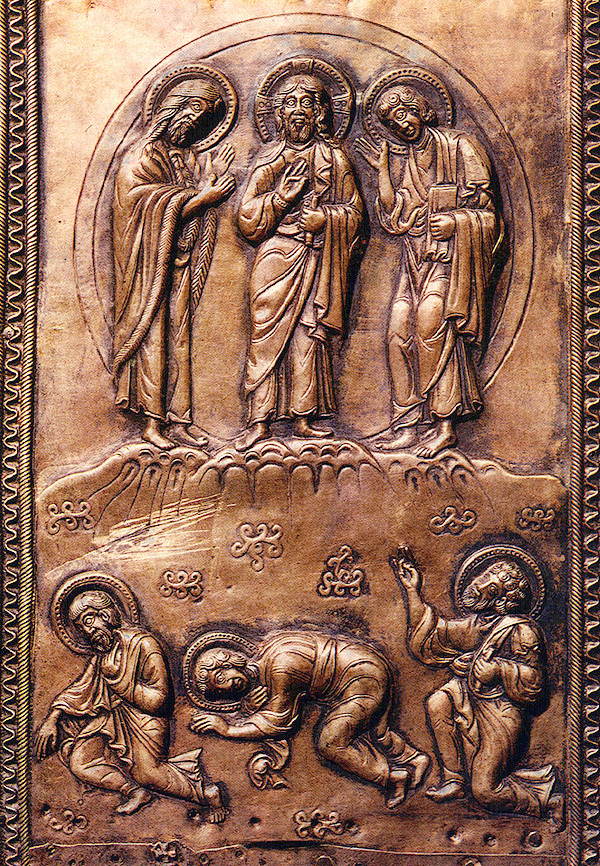
            If we go back 2000 years to that mountaintop where the Transfiguration happened, we can see when God spoke. And moreover, when God expressed Divine love. Not an expression of earthly or human or fallible love, but God’s love.

            Jesus had been preaching God’s word, healing people and doing other miracles for some time. If we think about it, by this time the Rabbi Jesus was really popular. Just think of any popular person, or famous celebrity. Often mobbed by people when He stopped to preach in a synagogue, or if He stayed overnight at someone’s home.

Shortly before today’s reading Jesus heals another blind man. Jesus was even more in demand than ever, after that display of power and might! Remember, that’s one of the main emphases for Mark. Showing the power and might of the Son of God!

Let’s set the scene. We have Jesus with His disciples. He had twelve disciples who are named, and some other followers. Women, too! Usually unnamed, but also there. But in several important instances, Jesus had an inner circle. Three special, or key disciples, who would be the ones he wanted to tell special things. Important things, as in the Gospel reading for today.

            This inner circle – Peter, James and John – were asked by Jesus to accompany Him early one morning. When they arrive at the top of the mountain, what do they find? Jesus, “His appearance changed from the inside out, right before their eyes. His clothes shimmered, glistening white, whiter than any bleach could make them. Elijah, along with Moses, came into view, in deep conversation with Jesus.” That sudden happening must have shocked the three disciples down to their sandals! Can you comprehend the utter shock and even dismay that these men felt? Awe and amazement, too.

            The most important thing about this point in Jesus’ journey through Palestine is that He had been speaking quite frankly to His disciples for some time. Mark tells this story in the midst of Jesus’ frustrated, repeated attempts to help his disciples understand that he must suffer the trial and death that leads to the cross, but they just cannot accept it.” [1]

            I don’t know whether I would have accepted these statements from Jesus, either, if I had been a follower of Jesus at this point in His ministry. The Rabbi – the Messiah – Jesus all along had been displaying all the signs of the Coming One, the Messiah sent by the Lord. Healing, miracles, preaching and teaching God’s message with authority and power. What a message of hope and encouragement for the downtrodden people of Israel!

            On top of this mountain, after months of this miracle-making, teaching and preaching, Peter, James and John see their Rabbi Jesus have a Divine encounter with Moses and Elijah

            Can you just see these three grown men, clutching at each other, huddling together like small children? Scared to death at these miraculous, out-of-this-world happenings? “Um—oh, Lord! Um—let’s build three altars here! One for You, and—um—one for the other two guys, too!” Or, something like that. Do you think Peter and the other two disciples were very receptive to what God was saying at this point? I suspect not.

            Here on the mountain of Transfiguration, Jesus elevates His message even further. Yes, His disciples hear the message in the form of speech directly from the Lord. The spoken words from the Lord were not many, but they were significant. “This is my Son, marked by my love. Listen to him.” If the three disciples were not paying strict enough attention to Jesus before, you can bet that this breathtaking experience caused them to really sit up and take notice!

            The Divine voice from within the cloud certainly confirms what the earthly Jesus had been communicating to His disciples all along. And, these words show a turning point in the ministry of Jesus – traveling down the road to Jerusalem, towards suffering, the Passion and death, despite His disciples’ refusal to hear what Jesus was saying, repeatedly.  

            I am wondering if the words from the Lord helped to transform Peter James and John? Yes, these words are confirmation for our Lord Jesus, and an expression of God’s Divine love: “This is my Son, marked by my love. Listen to him.” And I wonder, were the disciples changed and transformed by these words, too?

Just as our Lord Jesus was affirmed and transfigured by this Divine statement of love, can we be changed and transformed as we think about these words? Can you and I meditate on these words of the Lord, and see whether this message has a deeper meaning for us, and can change and transform us, too?  

This supernatural event of Transfiguration prepares us as we begin the period of Lent, that 40-day time of preparation when we journey with Jesus toward Jerusalem and the Passion and Crucifixion. How can you – how can I prepare our hearts and minds as we journey with Jesus? I think considering God’s words of Divine love are a wonderful starting point.

Just as much as God spoke out of the cloud on top of that mountain and expressed love for the earthly Jesus, just so much God loves each of us. This Divine love is not faulty or fallible, not human or limited, but instead unconditional and everlasting. We don’t need to be on the top of a mountain to experience God’s love. God will be there. We can celebrate the fullness of the Lord’s presence, and the reality of God’s love and grace! God does indeed love all of us.

Alleluia, amen.

Take a few moments to reread the gospel. Imagine you’re before the Lord Jesus as He speaks to you in His glory. What is His word to you? We start the journey of Lent this week with Ash Wednesday. How will that word of Jesus help you this week on your Lenten journey?

@chaplaineliza

(Suggestion: visit me at my other blogs: matterofprayer: A Year of Everyday Prayers. and  A Year of Being Kind . Thanks!


[1] https://www.umcdiscipleship.org/worship-planning/crossing-over/transfiguration-sunday-year-b-lectionary-planning-notes/transfiguration-sunday-year-b-preaching-notes

Unknown's avatar

The Baptism, the Love!

“The Baptism, the Love!”

Mark 1:1-11 (1:11) – January 14, 2024

            I don’t know about you, but I love taking a bath! My husband is more of a shower person, instead. What do we need when we take a bath? How about a bar of soap, a bottle of shampoo, and maybe a back scrubber? I remember my small children liked a big, fluffy towel, and perhaps even bath toys! That was when they were really small.

            I know people need to take regular baths and showers. That’s in order to stay clean and healthy. And, we take baths and showers again and again, because we keep getting dirty and keep needing the cleansing that soap and shampoo provide.

But, what does this have to do with our Scripture reading today? Did you realize that some people – certain faith traditions – refer to baptism as a bath? Do we need soap, shampoo, or bath toys for a baptism? No, not quite the same thing. But, we do need water, and we definitely need the Word of God for this sacrament. [1]

We read these words from the Gospel of Mark: “John the Baptist appeared in the wilderness, preaching a baptism of repentance for the forgiveness of sins. The whole Judean countryside and all the people of Jerusalem went out to him. Confessing their sins, they were baptized by him in the Jordan River.” Not the same thing as taking a bath in a roomy tub, is it?

John the Baptist is specific about a baptism of repentance! And, the Gospel record says that many, many people from Jerusalem and the surrounding countryside flocked to the River Jordan to get baptized.

John the Baptist and Jesus are cousins, and I suspect they grew up together, talked, walked and interacted with one another often. Perhaps studied together, too. Now, John has burst upon the public scene and is proclaimed as a prophet of God! John even has the audacity (and temerity) to call for public confession of sins and a subsequent baptism in the River Jordan! The chief draw was John’s urgent call for the forgiveness of sins. That is the attraction!

Let us shift our focus from the general baptism for the repentance of sins to the specific baptism of Jesus. This special event happens right up front, at the very beginning of the Gospel of Mark. John already has a following, and disciples. John’s getting a great deal of publicity in Palestine. His star is rising, for sure.  And what should happen but Jesus shows up at one of John’s baptism events by the river?

Remember, this was before Jesus even started His ministry, before He ever said anything important, or healed anyone, or done anything special at this point. Just think: there is so much pressure on people to be successful in this day and age.

If John the Baptist were our contemporary and had his prophetic ministry today, I can just see him on television, perhaps YouTube. Maybe even short TikTok videos. He was probably too much of a rebel and outsider to be on the inner circle of any denomination or official structure, but I think John would definitely make a splash and be well-known for his straight talking and action-oriented way of communication!

And get this – Jesus asks John to be baptized! Just as Jesus began His ministry with obedience to God, with being baptized, so we are encouraged to begin our lives, our ministries, with baptism, too. 

As we consider Jesus being baptized, what happened as He was with His cousin John in the river? Listen to the words of Mark’s Gospel: “Just as Jesus was coming up out of the water, he saw heaven being torn open and the Spirit descending on him like a dove. 11 And a voice came from heaven: ‘You are my Son, whom I love; with you I am well pleased.’”

Remember: this was before Jesus had ever done a miracle, preached a sermon or done anything else that was special. And God said that Jesus was loved and God was well-pleased with Him. “Notice in Mark’s treatment of the story of Jesus’ baptism two things. First, notice God’s words to Jesus. They are personal, poignant, and powerful. “You are my beloved son. With you I am well pleased.” Wrapped in these words of acceptance are the blessings of identity, worth, and unwavering regard.” [2]

What about you and me? When we were baptized, do you think we were loved by God? Yes, God was well-pleased with us, and with every other human of God’s creation! Yes, you and I are also accepted, with the added blessings of identity, worth and unwavering regard, too!

You may remember bracelets and t-shirts with the initials “WWJD” imprinted on them. The words “What Would Jesus Do?” were a Christian, even pop-culture, trend some years ago. Remembering this trend brings up a valid question. Let’s reframe it into a question about baptism. Who would Jesus exclude? For that matter, who would John turn away from baptism?

We celebrate this event in our Lord’s life each year during the season of Epiphany, during January. Yes, praise God, Jesus went into the waters of baptism, and served as an example for us. Plus, this day is a reminder for each of us who have been baptized. Maybe we made our own promises, or perhaps someone made them on our behalf. [3] Regardless, all are welcome to the waters of baptism! This is a sacrament of repentance, forgiveness, and of radical welcome.

St. Luke’s Church, our church, is a member church of the United Churches of Christ. UCC churches are supposed to welcome everyone. No matter if someone is grumpy, or mean, or stingy. You are welcome here at St. Luke’s Church. No matter if someone is painfully shy, or has some physical or mental infirmity, or has a really strong personality. No matter what your gender or sexual orientation is, either. All are welcome here, in this particular church, too. 

That means a radical, open-hearted, open-handed welcome to all people, no matter what. No matter who. You and I are welcome with God. We are welcome to the waters of baptism, and with you – and me – God is well-pleased. Amen, alleluia.

@chaplaineliza

(Suggestion: visit me at my other blogs: matterofprayer: A Year of Everyday Prayers. and  A Year of Being Kind . Thanks!


[1] https://www.stewardshipoflife.org/2015/01/wet-well-pleased/

[2] https://www.davidlose.net/2015/01/baptism-of-our-lord-b/

[3] https://www.stewardshipoflife.org/2015/01/wet-well-pleased/

Unknown's avatar

We Will Be Like Him

1 John 3:1-3    November 2, 2014   (St. Luke’s Church, Morton Grove)

(I was ill this weekend, and did not preach a sermon today. This is my All Saints Sunday sermon from November 2014.)

“We Will Be Like Him”

            Going on vacation. Who remembers vacations? I remember long car trips with smaller children. We did not have all the latest devices, the video games, Game Boys, small DVD players. No, those were simpler times. A number of years ago. And the children would ask, “Are we there yet?”  The trip would seem like it took forever! We would be on the road. Not quite there. Not quite yet. Still on the way. Still waiting.

            Of course, an extended car trip only seemed like it took forever! Here, in the first letter of John, the aged disciple is telling his friends something similar. But—I’m getting ahead of myself! We ought to go back to the beginning of this short passage. Just a little chunk, really, of what John says in this whole letter. 

            Let’s start with an overview. This letter was written to a group of dispersed believers. Similar to several other New Testament letters. The Apostle John was older by this time—late in the first century. He wanted to straighten out some misunderstandings. And, he wanted to get several main points across.  I’m not going to test you on these, but for people who were just wondering. Number one, God is light. Number two, God is love. Number three, Jesus Christ was a real human being, not just a spirit. Those main points were to combat some disagreements and squabbles that had already come about. Even though Christianity was only fifty or so years old.   

            I’ve given you all an overview, a bird’s eye view. Now, let’s dive in with a magnifying glass, and look at two verses in Chapter three.

I’ll remind us all of verse one of chapter three: “See what love the Father has given us, that we should be called children of God; and that is what we are.” This statement of John’s is significant! Why? Because this verse tells us such an important fact. We are called children of God. That’s incontrovertible. Why? Not just because you and I say so. No! But because God says so, that’s why!

I am not sure, but I suspect that John’s friends, the people he’s writing the letter to, have a similar problem as the disciples did. I’ve mentioned this problem before, when Jesus was here on this earth. A couple of decades before the writing of this letter. I don’t think the other believers “got it.” I don’t think they fully understood where John was coming from. That’s why he tells them in several different ways and several different places in this letter that God is love, and God gives love.  

The starting point, where John starts from at this point in the letter, is that God has named us all God’s children. Bam! Named! [ hand forward ]  Done! [ ref signal ]

We have a problem, though. The problem is the world. As the first chapter of the Gospel of John verse 10 tells us, Jesus “was in the world, and the world came into being through Him; yet the world did not know Him.” The world has a huge blind spot. The world is not in sync with God. The world is hostile to God, even though God made the world. And the solar system. And the whole universe. It doesn’t matter—the world is reeling under the effects of sin, and is therefore hostile to God.

What can we do about this negative state of affairs? Check out verse two. John says it again! “Beloved (or, friends), we are God’s children now.” John wants to make certain that we have got it!

We all—each of us—are called God’s children. Who is the oldest member of our congregation? And who is the youngest member of our congregation? All God’s children. Each of you is, and me, too! Each of us is God’s beloved child!

Yes, the hostile world gets in the way of living life God’s way. Nobody ever said the Christian walk and the Christian life was going to be a piece of cake. Ask the Apostle Paul. Ask the other apostles, including John.

But let’s move on. My favorite part of this passage is coming up! Remember how I started this sermon, a few minutes ago?  I started with the mention of vacations. Who remembers vacations? I remember long car trips with smaller children. A number of years ago. And the children would ask, “Are we there yet?”  The trip would seem like it took forever! We would be on the road. Not quite there. Not quite yet. Still on the way. Still waiting.  

I’m suggesting the concept of being on a very, very long trip. Not arriving yet, still being on the way. We are still in transit. We are children of God now, but not yet, too! We have a seeming paradox of both/and. Now, and not yet! That’s what I compare with this statement of John’s. Listen to verse two: “What we will be has not yet been revealed.”

Did you hear what John told us? That is why I say we are still in transit. Nobody knows for sure what we will be. And the best part of all, in my opinion, is this last sentence of verse two: “What we do know is this: when Jesus is revealed, we will be like Him, for we will see Him as He is.” Did you hear? “We will see Him as He is.”

Did you all know we all are wearing veils? Invisible veils, that keep us from fully understanding the words of Scripture. We hear in Exodus that Moses talked face to face with the Lord. As a man talks to his friend. And whenever Moses talked like that, face to face with God, his face actually shone. The glory of the Lord made his face shine supernaturally! Did you know that the people of Israel were so scared of Moses after he talked with the Lord—and his face got all shiny—that they begged Moses to wear a veil? They wanted a separation between them and the glory, the power, the presence of God.   

Isn’t it similar with us, sometimes? The straight-up glory of God is too much for most of us to handle. We are still in transit. Still on the road, on this very long trip to heaven. Both/and. Now, and not yet.

Again, verse two: “What we do know is this: when Jesus is revealed, we will be like Him, for we will see Him as He is.” Today, when we commemorate All Saints Day, is that time of year when we remember again and again the ‘now’ and ‘not yet’ of God’s kingdom. Yes, we are God’s children! Yes! A thousand times yes! We have the best guarantee in the world for this, too. God says so.

But what about the ‘not yet’ part? How can we reconcile that? Let me tell you my take on that: I do not know.  NOW but NOT YET. We are not quite sure. We don’t know the fullness of what that means. But I’ll tell you who does know. The saints in glory, our fellow believers who have gone before us, have received that fullness. They know. With unveiled faces, they see Jesus, glorified in heaven.

As for us? As we are here, in transit? Now, and not yet? We wait in this world, expectant. We live in hope, thankfulness, and gratitude as we gather around this table. As we gather for this meal, joined with the church of every time and place – with all the saints.

Alleluia, amen.

@chaplaineliza

(Suggestion: visit me at my other blogs: matterofprayer: A Year of Everyday Prayers. #PursuePEACE – and  A Year of Being Kind . Thanks!

Unknown's avatar

Surely Goodness and Mercy

“Surely Goodness and Mercy”

Psalm 23 (23:6) – May 8, 2022

            Words matter. The words you and I choose to use really do matter. How do you speak about God? Do you – do I – speak of God as being a strict, even punitive taskmaster? Perhaps we speak of God as distant, and really far away, not to be bothered with our petty little affairs here on earth. Do the words you and I use about God show others God’s marvelous love and care? Or do those words show how scary and intimidating God is, instead?

            Our Scripture reading today comes from the book of Psalms, and is one of the most familiar and beloved readings in the whole Bible, in either the Hebrew Scriptures or the New Testament. Countless people have turned to Psalm 23 for peace, for reassurance, in times of anxiety or struggle, and even in times of great joy. This psalm is a psalm for the ages, and has been read for centuries by believers, skeptics and atheists alike.

            What words does King David have to say about the Lord? We can see those words of trust and encouragement throughout this psalm. For, this is indeed a song of praise to God and comfort to one another!

            Except, what if David’s trusting expressions for the Lord are not what you and I might say to God? Or, about God? What if we think of the Lord as something other than a loving Shepherd? What other words do you and I have to describe our Shepherd? Strict? Angry? Distant? What about disapproving? Even, unforgiving? This is not the way that I came to know the Lord Jesus, as a child in Sunday school. I came to know Him as a loving Shepherd!

            One of my favorite commentators Carolyn Brown reminds us that “it is important to recognize that the Good Shepherd is a metaphor and children have a hard time with metaphors.  Studies show that most children do not develop the brain skill of transference that is necessary to understand metaphors until they are into adolescence.  But, the Bible and our worship is filled with metaphors.  I suspect that we help the children claim them when we carefully explore the details of a few key ones, expecting them to become familiar with the concrete part of the metaphor and some of the spiritual realities it embodies, but not fully making the connection until later.  The Good Shepherd is definitely one of those key metaphors. 

“Dr. Maria Montessori reports that while working in a children’s hospital she found that when she told sick children stories about the Good Shepherd using small wooden figures, they almost all grabbed the [shepherd] figure and held onto it “for keeps.”  So the Good Shepherd made sense to them in some way.” [1]

That is all very well, to talk about the Shepherd psalm as literature and as a metaphor. But, can I personalize this scripture reading, and get some meaning out of it for me? Where am I in this psalm? Where are you? Can we see ourselves in this scripture passage?

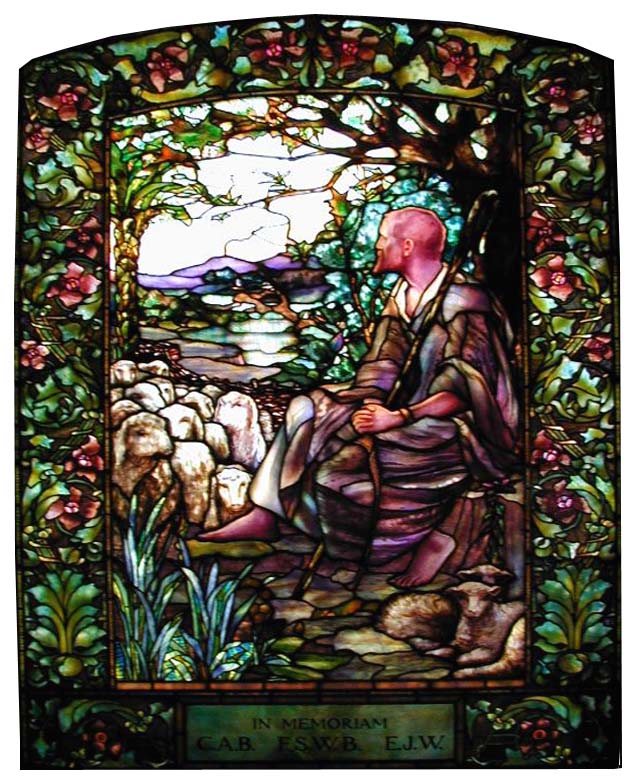
            Yes, I certainly can, and I hope you can, too. I can recognize myself throughout. David compares himself to a sheep, here, and the Lord God is the Good Shepherd. So, when I look at this psalm, I find I have no problem seeing myself as a sheep, too. If you imagine with me here, we can all identify as sheep in the flock that Jesus our Good Shepherd herds.

I want us to focus on one particular idea from verse 4 of this very personal psalm. “Even though I walk through the darkest valley . . . “  King David had some scary experiences, and downright dangerous ones, as well. Even though he had already been anointed as king by the prophet Samuel, there was a problem . . . in the person of King Saul. King Saul was still claiming to be king, and he sent his soldiers after David for a whole bunch of years. So, David was seriously on the run for his life, for a long time. He got into some really tight situations after being acknowledged as king by the people of Israel, too. He lost friends and family to illness and death. And I am sure he was scared over the years, much more than once or twice.

In the same way, it does not matter how strong of a believer you or I happen to be, it can be terrifying to walk in the darkest valley, whatever that dark valley of our life may be. Believers, whatever their personal or inner strength may be, cannot help but be frightened.

It is scary to walk through the dark valleys of life. I see people who are walking through some of life’s darkest valleys on a weekly basis, even on a daily basis. In my chaplain’s work at Unity Hospice, I meet with patients and their loved ones who at times are in denial, fearful, or angry. Sometimes, they even may be serene and accepting of that valley of shadow.

            Phillip Keller, a pastor who had also been a sheep farmer, or shepherd, for about eight years, wrote a book called A Shepherd Looks at Psalm 23. Rev. Keller was brought up in East Africa, surrounded by native herders. Their manner of herding sheep was very similar to the way their counterparts in the Middle East herded sheep.

            In talking about this verse from the psalm, Rev. Keller mentions that a good shepherd knows every step of the rough terrain his sheep are likely to tread upon. The good shepherd knows the difficulties and the dangers of the land, as well as the easy places, the pleasant, sheltered places. That’s true, in our case, too. God knows where each of us has been, and where each of us is going. God knows our every step, and our every misstep, too. God goes ahead of us, to look over the terrain, and check out any adverse conditions. There are no surprises to God.

            So, is it any wonder that this psalm ends with the marvelous words “Surely goodness and mercy shall follow me all the days of my life, and I will dwell in the house of the Lord forever.” God knows where we have been, and God knows where each of us is going. And, God is right by our sides all the way. God will lead us home, no matter what. That is good news for all of us! Alleluia, amen.


[1] http://worshipingwithchildren.blogspot.com/2015/03/year-b-fourth-sunday-of-easter-april-26.html

@chaplaineliza

(Suggestion: visit me at my other blogs: matterofprayer: A Year of Everyday Prayers. #PursuePEACE – and  A Year of Being Kind . Thanks!

Unknown's avatar

Becoming—Like Christ

“Becoming—Like Christ” – November 1, 2020

1 John 3:1-3 – All Saints Sunday

            Simple words go straight to the heart. Words can echo and re-echo deep within. Have you experienced that? The elderly apostle John uses simple, straightforward words to communicate deep, eternal truths. Like, right here, in our Scripture reading today.

In today’s reading, John urges the Christian community to hold fast to what we have been taught, persevere in leading a moral life, and love one another.

You do know that you are God’s beloved child? Yes! Each of us has been chosen by God. We are the Saints of God! Not only in the eyes of this church on this corner, but in the eyes of all churches that observe All Saints Day or All Saints Sunday.

Today is All Saints Day. It is a special day in the life of the Church. A day to remember those who were persecuted, and those who died to keep the faith. And, a day to celebrate the living saints: you and me.

Sometimes, you and I may not feel especially saint-like. Yes, the age-old problem of sin does creep into our lives, and cause some disruption. Sin can make us feel far away from God, and like everything is turning topsy-turvy.

            Can other things happen in our lives, other kinds of disruptions make us feel like we are unworthy of God? Absolutely. All kinds of circumstances, trouble, losses of various kinds, calamities, and all manner of tumult can strain our nerves, our bodies and our souls to the very breaking point.

            The pandemic is also a perfect opportunity for Satan to turn our lives topsy-turvy. Churches closing, isolation from our communities; with fear and anxiety, we become afraid of the stranger. We end up not setting aside time for regular worship and prayer.

            Perhaps the apostle John did not have a pandemic to worry about. However, John would have seen the passing of many believers. John wrote this letter of encouragement because Dissenters wanted to lead astray the community of faith. Maybe these troublemakers were even trying to convince John’s followers to forsake Jesus Christ and throw their lot in with someone or something else. He was witness to many people leaving the faith, because their own beliefs had changed.

As believers in Christ, we know who we can depend on. The Lord has called us children of God. We can always turn to our heavenly Parent – or, heavenly Father, as John says.

Yet—today is All Saints Day, a day for us to remember our loved ones, who we miss and mourn. Yes, the Lord is our heavenly Parent. But, everything here on this earth seems to be turned upside down.

The Rev Janet Hunt reflects on her church’s traditions of All Saints Day. At her church, this has long been a day for gathering together. This is a day “which begins with the resounding strains of ‘For All the Saints’ and ends with the dancing percussion of ‘When the Saints Go Marching In…’  And in the middle, we read the names, sound the bells, light the candles one by one by countless one until the whole place is alight with palpable memory and almost tangible hope. And it, along with so many precious rituals which help to tie us to all who we have been and all we will one day be, will simply not be ours this year. At least not here where the COVID-19 numbers are rising.” [1]

             Do as John tells you: turn to our trustworthy God. What marvelous love our God has extended to us! John reminds us that God has already called us children! We have already been adopted into God’s family, [2] We can be hesitant, or disbelieving, or fearful. The Lord still loves us, and has already called us God’s children, without any pleading or whining, without special offerings or mystical midnight services on our part. This gift is already ours. John affirms so, right here.

            This is the extravagant welcome that God provides. God so loves the world. Period.

            We all have places where we fall short, where we sin in thought, word and deed. Places where we are not Christ-like—yet.

            John says, “What we know is that when Christ is openly revealed, we’ll see him—and in seeing him, become like him.” Each of us should strive to become more and more Christ-like. Do not surrender to the evil world of the pandemic. Seek help if you are struggling. God is here. I am here. Call, write, e-mail, pray.

            What a glorious gift. What a marvelous hope. We may not see our Lord Jesus now, but that glorious day that is quickly coming. We shall see Jesus in glory – just as our loved ones, saints in Christ who have died, are seeing Him right now. And, that is a promise that is faithful and true. Alleluia, amen!


[1] https://dancingwiththeword.com/all-saints-day-2020-blessed-are-those-w-ho-mourn/

[2] https://wordpress.com/posts/pastorpreacherprayer.wordpress.com 

Commentary, 1 John 3:1-7, Nijay Gupta, Preaching This Week, WorkingPreacher.org, 2015. 

@chaplaineliza

(Suggestion: visit me at my regular blog for 2020: matterofprayer: A Year of Everyday Prayers. #PursuePEACE – and my other blog,  A Year of Being Kind . Thanks!

Unknown's avatar

Life on God’s Terms

“Life on God’s Terms” – July 12, 2020

Rom 8_11 Spirit of God

Romans 8:1-11 (8:10)

Does anyone know what this is? [motioning towards the garbage can] You’re right. This is a garbage can. Good for being a container for all the garbage – refuse – junk – from our homes, workplaces, and communities. All kinds of worthless garbage that is not needed or wanted goes right in here. The apostle Paul talks about all kinds of garbage in our lives, on our insides, here in the letter to the church in Rome.

Imagine, if you will, all the internal junk in a person’s life, and mind, and heart. All of that meanness, and selfishness, gossip and swearing, bullying and arguing. And, what about the times people cheat? Or, blow off assignments or obligations? Or, stretch the truth just a little – or, perhaps a lot? Oh, it’s not much. But, do you think God keeps track of each and every time?

Just think of a person’s life. Perhaps, your life, or mine. If all the years and decades of those junky, selfish, stubborn, or mean thoughts, words or deeds were piled in this garbage can, I’d imagine it would be pretty full. Even, perhaps, full to overflowing.

Life on the inside, our internal selves without God can be pretty hopeless. Worthless. Just like garbage – refuse – junk that goes into this garbage can. Another word that Paul uses for all the stuff in these garbage cans is sin. I suspect many of us here can quote Romans 3:23, where Paul says “For all have sinned and fall short of the glory of God.” Paul does not say, “For some have sinned,” or even “For many have sinned.” No, we all have our internal selves filled up with meanness, selfishness, gossip, swearing, bullying, arguing. And, then some.

God does have laws. Many of these laws are common sense, and others are in keeping with moral codes that many civilizations have held for millenia. We know the big 10, the Ten Commandments, and many of the other laws of Moses that are found in the Hebrew Scriptures. Right before Paul writes these marvelous words in Romans 8, he talks about the huge problem with law and sin. We know about that. Sin and the law of God do not get along.

What do I do now? I know a lot of these laws of God, sure. But I still fall into sin, even though I know the rules. Another way of looking at sin is separation from God. When you—I—when all of us sin, we are separated from God. What’s more than that, sometimes people don’t even think of the Lord. God does not even enter their minds. Can you imagine? Ignoring God? Yet, so many people do just that.

So many people today are running on that treadmill of self will run riot, of selfish, mean, resentful living. I have seen a number of these kinds of persons, and they keep running, running, running on that treadmill of separation from God.

I have one particular person in mind. An acquaintance, from some years ago. To all outward appearances, she was very successful. She had designer clothes, a successful job, a luxury car, a fancy house. But, on the inside? All kinds of resentment, anger, greed, envy, gossiping and backbiting. She cut corners on her integrity and honesty, and just did not have a moral compass. Do you know someone like that? I have a feeling we all might have more in common with this unhappy lady than any of us might like to admit.

I’d like all of you to think of a sin in your life. I suspect you have thought of a sin that is really obvious to you, right now. the one thing you feel worst about. The one regret or misdeed or misfortune that you wear like a snail does its shell. The one part of your life that forever threatens sin and condemnation. Could you write it down? Or, if you don’t have a pen and paper, could you think really hard of that particular sin right now?

Paul does not leave us in that horrible place. Yes, all of Romans chapter 7 is talking about sin, and separation from God, and how much difficulty all of us have with these sinful thoughts, words and deeds. We might think that we are stuck at the bottom of one of these smelly, stinky, filthy garbage cans, with no way out. Who will rescue me from this body of sin and death? How can I – can we – get in a place where we can possibly have access to God?

Paul has good news for us. In fact, it’s great news! We do not have to stay in this garbage dump for the rest of our lives. No, Jesus reaches down from heaven and rescues us from sin and death. Jesus takes each of us out of that separated, filthy garbage can and brings us into the glorious presence of God!

Here is the best part of all. God’s Holy Spirit helps us to stay free from the power of sin and death. We no longer need to reflect on what we have done – or said – or thought that was wrong. No! Jesus Christ delivers us from sin and the Law.

I want to invite all of us to—virtually—toss that sin we wrote down into the garbage can right here. Jesus can clean us up from the inside, and help us to sin less and less. Amen!

One last thing. I invite each of you to take another piece of paper, and write what you are free to do now that you do not have that condemnation in your life and inside your very self. What challenge will God bring into your life, now that you know you are beloved by God and filled with God’s Spirit? What kindness or generosity will you attempt? What will you do with all the love and grace God can give you? [1]

God promises to be with us, yes! And, even more, God promises to use each of us for the sake of the people and the world God loves so much. Go out into the world for God, today.

[1] http://www.workingpreacher.org/craft.aspx?post=1571

“What Willl You Do…?” David Lose, Dear Working Preacher, 2011.

@chaplaineliza

(Suggestion: visit me at my regular blog for 2020: matterofprayer: A Year of Everyday Prayers. #PursuePEACE – and my other blog,  A Year of Being Kind . Thanks!