Unknown's avatar

Are We Doubters, Too?

“Are We Doubters, Too?”

John 20:19-31 (20:29) – April 7, 2024

            Seeing is believing! Or . . . is it?

            I wonder what things come to mind when I mention the phrase, “Seeing is believing”? Or even, “I won’t believe it until I see it!” Sometimes, people can be really doubtful, even really skeptical about things. I can just imagine several people I know folding their arms across their chests and saying, “Unless you show me . . . “

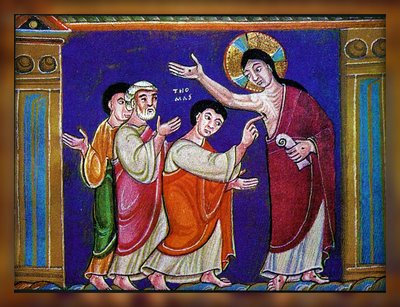
            In the gospel account we read today, from John 20, the disciple Thomas had just that reaction. After the Resurrection, the first time Jesus came to the disciples, Thomas was not there. We’re not told why, simply that he wasn’t there. Maybe he was scared, maybe he was away for the day, or out of town. Maybe he was sick. We just aren’t told why he wasn’t there.

            The ‘why’ is not the important part. The fact that Thomas wasn’t present the first time is. Thomas had doubts. Sincere doubts. Truth to tell, the other disciples’ story was a little farfetched. I mean, how many people have you known who came back from the dead, and walked through walls into a locked room?

            I wonder. I wonder if Thomas’ reaction strikes a chord with anyone here today. How many of us today are like Thomas? Doubting that Jesus has risen indeed from the dead? Or, completely missing Jesus, and doubting that Jesus is even here at all, today?

            Let’s think some more about Thomas and his reaction. Thomas not only doubted, he wanted concrete proof. Tangible proof, proof he could touch and feel and handle. Thomas wanted to put his hands in the nail marks on Jesus’ hands. That’s pretty concrete. But – what about you and me? Do we want concrete proof that God is working in our lives right now? Do we want concrete proof that Jesus rose from the dead and is present with us, today?

            The second time the risen Jesus appeared to the disciples, it was also in a locked room. And, this time, Thomas was present. Let’s paint the picture. The disciples are huddled together in the Upper Room, still frightened of the Jewish leaders. It’s only been a little over a week since their Rabbi Jesus had died on the cross, after all! I’d imagine they would be shaking in their shoes! Then, the risen Jesus suddenly appears in the midst of them all, Thomas included. What do you think would be going through Thomas’s mind right about now? His Rabbi, his Lord, back from the dead, right in front of him!

            Let’s go further as we imagine Thomas’s face, and imagine what he is thinking and feeling as the risen Lord Jesus invites Thomas to touch Him. Then, we look around at the faces of the other disciples and try to figure out what they are thinking and feeling, too! The commentator Carolyn Brown says that she suspects the disciples “are glad Thomas asked his question because they really wanted to know the same thing but were afraid to ask.  It does take courage to ask some questions and Thomas had it.” [1]

            I think that “doubting Thomas” is not the most accurate nickname for this earnest disciple. Perhaps, maybe, just maybe, we ought to think of Thomas as courageous Thomas. Because, it takes real courage to ask out loud some of those questions Thomas wanted the answers to. After all, he was a real “show-me!” kind of guy, and not in a mean way, either. A healthy skepticism is just that – healthy and curious.

            I wonder whether our doubts and fears about Jesus and the Resurrection can be as easily taken care of, as Thomas’s? What if our problem is less doubt, and more fear? Fear of being misunderstood by others, fear of looking foolish, fear of falling flat on our face? Perhaps, some kind of nebulous fear that you and I do not even understand, but we know is deep down inside of us?

            Let us return to Thomas. When he sees our risen Lord Jesus in the flesh – the resurrected body – he suddenly believes that everything the disciples were telling him about the resurrected Jesus is true! And, “he makes the climactic confession of John’s Gospel, addressing Jesus as, ‘My Lord and my God!’” When Thomas saw Jesus with his own eyes, that was enough for him. Enough to make the declaration of divinity directly to our risen Lord! Remember the confession made in the first verse of John chapter 1: “In the beginning was the Word, and the Word was with God, and the Word was God.” [2]

            Sure, some healthy curiosity is just that – curiosity. And, some people are naturally skeptical. We know God can handle that! After all, that is the way God constructed many people. Our Lord Jesus is not surprised by any of this. He won’t get mad, or storm out, all upset. No! He was warm and accepting of Thomas and his “show-me” attitude, and even answered him right back! And, what did Thomas do? What did Thomas say to Jesus? “My Lord and my God!”

            As commentator David Lose tells us, Thomas offers those same readers a model for faithful response to an encounter with Jesus – belief, belief that leads to confession. All through the Gospel of John we see a variety of responses to Jesus. The confusion of Nicodemus the religious teacher, the trust of the Samaritan women, the stubborn fidelity of the man born blind, the disdain of Pilate, the denial of Peter. [3] John saves the best for last: he shows us the radical, bold confession of Thomas, sure and certain at last.

            Have there been long moments in your life where you have doubted God’s presence? Have you ever felt lost and alone, almost like the way the disciples felt right after the Crucifixion? We do not need to fear or be alone, because Jesus has promised never to leave us nor forsake us. We can embrace our flickering faith with the same words of Thomas: “My Lord and my God!”          

So, the Gospel of John helps us to believe, too. This Gospel was not only written to bear witness so long ago, in the first century, months and years after Jesus was raised from the dead. This Gospel was also written for the many generations which have come to believe in Jesus Christ throughout the centuries. That includes us, too.

Even though today we may have doubts, and fears, and unbelief, and wonder whether, and why, or even why not, Jesus comes to us in our doubts and fears and unbelief. Our Lord comes to us with reassurance and open arms and says “Do not doubt, but believe!” And our faithful, bold response to Jesus? “My Lord and my God!” Alleluia, amen!

@chaplaineliza

(Suggestion: visit me at my other blogs: matterofprayer: A Year of Everyday Prayers. and  A Year of Being Kind . Thanks!


[1] http://worshipingwithchildren.blogspot.com/2015/02/year-b-second-sunday-of-easter-april-12.html

[2] https://www.workingpreacher.org/dear-working-preacher/its-not-about-thomas  

[3] Ibid.

Unknown's avatar

Only the Beginning!

“Only the Beginning!”

Mark 16:1-8 (16:7) – March 31, 2024

            Who here is on social media? Surfing the web, looking through my several accounts is a pleasant way to pass the time, but it is also a way to see some really humorous things. For example, just yesterday I saw a meme that said “In order to be truly Biblical, the only people invited to the sunrise Easter service will be women.” Because, at sunrise on that first Easter, that is all who were there – the women were the first witnesses to the Resurrection!

            We know more about what happened on that Easter Sunday from the other Gospel accounts. But, Mark? Not so much. Mark writes in his usual concise, blunt manner. Short on details and description, heavy on action. Let’s take a closer look at our Gospel reading.

            “After the Sabbath was over, Mary Magdalene, Mary the mother of James, and Salome bought spices to go and anoint the body of Jesus. Very early on Sunday morning, at sunrise, they went to the tomb.” 

I want to remind everyone that Jesus did not have only men disciples. There were many more than just the twelve men named in the Gospels. “In their accounts of Jesus’ last days, all four gospel writers mention “the women who had followed Jesus from Galilee”.  Taken together we find that eight women are named, with the most familiar being Mary Magdalene.” [1]

Some of these faithful women go to their Rabbi’s tomb early on Sunday. What did they encounter? What was it that really happened early that Sunday?

The big stone rolled over the entrance to the tomb must have been worrying the women. Mark even mentions it. I suspect they already were discussing how their combined strength was probably not enough to even budge the stone. But—what is this? The stone is already rolled away! It’s the first inkling that things at the tomb are not as these women first thought.          

“So they entered the tomb, where they saw a young man sitting at the right, wearing a white robe—and they were alarmed.“Don’t be alarmed,” he said. “I know you are looking for Jesus of Nazareth, who was crucified. He is not here—he has been raised!”

            Their Rabbi, whom they had just seen die three days ago in the most horrific way, is suddenly said to be miraculously alive – awake, aware, and raised from the dead!  

            Let’s continue with the angel’s words from Mark 16: “Look, there is the place they laid him. But go, tell his disciples and Peter that he is going ahead of you to Galilee; there you will see him, just as he told you.” So they went out and fled from the tomb, for terror and amazement had seized them; and they said nothing to anyone, for they were afraid.”

Frankly, the reaction of the women makes a great deal of sense. “Terror would be a natural response to the unexpected, especially where a dead loved one is concerned. Amazement would certainly be realistic when the terror of the moment gives way to a hint of hope. Could it really be true? Could the prophecies have been fulfilled?” [2]

            Of course, looking back with our historical perspective and the perspective of faith in our risen Lord Jesus Christ, it is next to impossible for us to imagine what it was like for the women disciples, encountering an empty tomb!

These words are the first ending of the gospel of Mark, right here. Yes, our Bibles have some additional verses that come after verse 8, that were added later on. But, right here is where we are left for now. The women frightened half to death, and no trace of the men disciples up to this point. What happens now? This is surely infinitely more agonizing a cliff-hanger than any radio serial or any two-part television episode!

The immediate response of the disciples isn’t really that far-fetched when you stop to think about it. We have already seen the betrayal of Judas, the denial of Peter, the desertion of his disciples, and “finally even the failure of these women, who up to this point had proved the most faithful of his disciples. They are afraid, too afraid to speak of the wonders they have heard. And so Mark ends here, right here, inviting us the reader to pick up where these women left off and share the good news announced by the messenger at the empty tomb.[3]

We know the men disciples scoffed at the women’s testimony, at first. I don’t know if I could have believed this right away, either. What would your response have been?

But wait, the blessed reality is that our God conquered death. We don’t just hope so, we don’t think it would just be a nice idea, Jesus Christ rose from the dead, and the angel told the women the blessed truth. It took some time for all the disciples to believe it and fully comprehend it, but that is a reality we can trust today, too.

We know now, from the other Gospel accounts, that this was just the beginning of the story, the beginning of that Good News, that Jesus has risen, indeed! Despite worry, anxiety, despair, loss, and cynicism today, we know the tomb is empty.

As commentator David Lose says, “The story of what God is doing in and through Jesus isn’t over at the empty tomb, you see. It’s only just getting started. Resurrection isn’t a conclusion, it’s an invitation. And Jesus’ triumph over death, sin, and hate isn’t what Mark’s Gospel is all about. Rather, Mark’s Gospel is all about setting us up to live resurrection lives and continue the story of God’s redemption of the world.”

            Our opening hymn “He Lives!” has the words “I serve a living Savior, He’s in the world today.” Our Lord Jesus wants each of us to go out and tell others that He lives! Easter Sunday is not a nice nursery story or a pretty fairy tale. It is saving truth. I know – we all know that our Redeemer lives!  Jesus came to redeem His people from their sins. The Resurrection is not the end of the story. It’s only the beginning!

And yes, we are invited to witness to Him, to go and tell everyone that Jesus Christ is risen today! Share this Good News, today! Alleluia, amen.

@chaplaineliza

(Suggestion: visit me at my other blogs: matterofprayer: A Year of Everyday Prayers. and  A Year of Being Kind . Thanks!


[1] https://juniaproject.com/did-jesus-spend-most-time-12-men/  (Matthew 27:55, Mark 15:40, Luke 23:49, John 19:25)

[2] https://www.stewardshipoflife.org/2012/04/a-story-for-uncertain-times/

[3] https://www.davidlose.net/2015/03/easter-b-only-the-beginning/

Unknown's avatar

Believe, Trust, and Love

“Believe, Trust, and Love”

John 3:14-21 – March 14, 2021

            Have you seen the televised sporting events where people in the crowd hold up big signs? These signs have all kinds of messages on them – from super fans supporting their teams to political messages. Sometimes, someone will show a large sign with “John 3:16” printed on it.

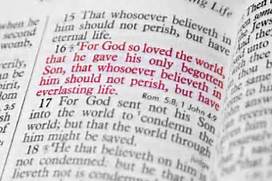
John 3:16 – this is one of the dearest and most memorized Bible verses of all time. “For God so loved the world that God gave His one and only Son, that whoever believes in Him shall not die, but have eternal life.”

            Have you thought about what that beloved Bible verse means? I mean, really means?

            Many people have a romanticized idea of love in their minds. With Valentine’s Day so recently celebrated, a month ago, when some think of “love” they think of Cupids and flowers and hearts. Valentine’s Day cards and chocolates in heart-shaped boxes for your sweetheart. This idealized, Hallmark-card conception of “love” is not what the Apostle John mentions here. Not by a long shot!  

            The idea of taking a single Bible verse and displaying it for everyone to see is a tricky proposition. People can run into all kinds of problems and misunderstandings that way. It’s like taking John 3:16 and saying that God’s love is all hearts and flowers, lace and Valentine’s Day wishes – and that is all. This superficial way is not the way to interpret individual Bible verses.

            The most important thing when we consider a single verse from the Bible is to look at the context. Where does it come from? What was happening in the Bible chapter? Was it part of a conversation or discussion? An extended statement or argument?

            John chapter 3 is early in the Rabbi Jesus’s ministry, and He was already gaining wide popularity and even stature for His great Biblical knowledge and understanding. An older man named Nicodemus, a learned teacher and member of the national Jewish ruling council, was so intrigued with Jesus that he snuck away to meet Jesus one night, under cover of darkness.

            During that extended conversation, Nicodemus and Jesus cover several important topics: Moses in the wilderness, how Moses saved the people of Israel, Nicodemus as a leading teacher of Israel, and how to be born from above. It is then that Jesus makes this extraordinary statement: God so loved the world.

            Several of these topics in John 3 have the foundation of belief. We need to believe in order to live. In order to be born from above. In order to have eternal life. Except – belief can be strictly intellectual. It can be cold-hearted and clinical. We can believe in the law of gravity. We can believe in the rules of cleanliness and hygiene for good health. We can believe in the invisible electric current that flows through our walls, enabling us to have electric lights, power for appliances, and power for our computers and cell phones.

            But, this pure, clinical statement of belief – even belief in Jesus’s statement “God so loved the world” – is not necessarily earth-shaking, not deeply emotional, never even reaching down into our very souls.

            If we consider the word “believe” – as used in this verse 3:16, and verse 3:18, too – I do believe in gravity, or electricity. But, is this intellectual belief enough? Will this kind of belief get me through the difficult times, or the painful situations, or those times when you or I cry out in despair to God? Sometimes, cold, pure belief is not enough.

            Another, alternate word that can be used to translate this Greek word for belief, pisteuo, is “trust.” Trust is more immediate, more intimate. Commentator Mark Skinner suggests that we use “trust” instead as we read this verse:  “For God so loved the world that God gave His one and only Son, that whoever trusts in Him shall not die, but have eternal life.”

            “Jesus is asking his hearers to trust that, in him, God has given a gift of love. Jesus urges them to commit themselves to that reality and all it entails. Trust will change a person. God’s love has consequences. How does one merely believe in love, anyway? Trust is riskier. Trusting in another’s love entails surrender.” [1] Trusting God is riskier, too.

            When my children were younger and went to church youth group, several times they had an activity called “trust falls.” This activity is called different things in different youth groups, but it has “trust” as the primary ingredient. The youth group would get in a tight circle, one member would stand in the middle, and then they would fall backwards, trusting the other members of the group to catch them as they fell. Trust taps emotions. Trust takes risks.

            It is difficult to trust that God can see us through, sometimes. More than intellectual belief, do we trust God to be there for us? To walk with us, or sit with us, right by our sides?  

            Some people cannot get past the words “God so loved the world.” If they trust that God loves them, they think God can’t possibly love their awful neighbor. Or the guy who cussed them out in traffic. Or the lady who is always really mean at the store. God can’t possibly love them? God loves the world – except for those people from a certain country overseas. Or, except for those homeless people. Or, except for those people who believe something really weird. Or, well, you get the idea.

            God’s love is extended to each of us. To all of us. “The love of God means blessing and belonging, even when the world around us chooses the way of death and self-interest.” [2] Even when we as fallible humans slip and slide in our trust of God, the Lord will never waver in persistent, caring love for each of us. And, that is a promise that is faithful and true – we have the words of Jesus on it.

For God so loved the world. Even you and even me. Amen.


[1] https://www.workingpreacher.org/dear-working-preacher/love-among-the-ruins

[2] Ibid.

@chaplaineliza

(Suggestion: visit me at my other blogs: matterofprayer: A Year of Everyday Prayers. #PursuePEACE – and  A Year of Being Kind . Thanks!

Unknown's avatar

Are We Fearful?

“Are We Fearful?”

John 20-28 st-thomas

John 20:19-29 (20:19, 26) – April 19, 2020

Have you ever been afraid? I mean, really scared? I am talking about so scared that you wanted to hide away from the people in charge, permanently? Maybe it was you, maybe it was some acquaintance or friend, but some people have really been scared so much that they stay holed up in some hiding place, some attic or some upper room—just like the disciples, after they watched their Rabbi Jesus get arrested, beaten and then crucified.

Two thousand years later, we all know the rest of the story. Jesus rose from the dead on the first day of the week, that first Easter morning. What was it like for the disciples? I mean, the men disciples? Sure, they had heard from the women disciples that the tomb was empty. Peter and John had even checked things out at the tomb for themselves. It was true! The tomb was empty! I am sure that news caused a great deal of excitement, discussion, and wonder!

But, what about other feelings? What kinds of other emotions were happening to the disciples? How did they feel on the insides? Were their stomachs doing flips? Were their hearts in their mouths? Were they filled with amazement? Fear? Doubt? Or all of these emotions, all at once, or in stages? Could the disciples be hiding out behind locked doors because they were afraid, embarrassed and ashamed? What were they doing as Jesus died? They certainly were not with Jesus at the cross—except for John. Were they afraid of what Jesus would say to them about all their desertions if He really were alive again? [1]

John’s Gospel tells us, plainly, that the disciples were afraid. Fear is a legitimate emotion and reaction to a dangerous, scary experience.  Sure, the disciples knew that the tomb was empty, but that did not stop them from being afraid. I also suspect that they feared that the Roman authorities might come after them, as known associates of the Rabbi Jesus. The disciples did have good reason to be afraid and anxious of the people in charge.

And right into the middle of all this fear and anxiety—even though the disciples knew about the empty tomb—Jesus walked through a locked door into the upper room, greeted the disciples, and they were suddenly overjoyed! As if a modern switch were flipped, the disciples’ emotional expression flipped, too.

Except—for some reason, the disciple Thomas was not present in the upper room on that occasion. We don’t know why. The Gospel of John does not say. The other disciples told him, excitedly, “We have seen the Lord Jesus!”  But, Thomas was skeptical. He responded, “I need proof for myself. Unless I see the nail marks and put my hand in the wound in His side, I will not believe.” I can just see Thomas crossing his arms across his chest and turning his back to his friends. “Nope. No way. That is too big a whopper for me to swallow.”

Do you know someone who needs concrete proof in order to believe something? Different people’s minds work in different ways. Certain types of people need concrete evidence in order to convince them of the truth, or of the facts, or of someone’s honesty. Thomas was that sort of a person: a “show me” sort of guy. He needed that kind of proof in order to truly believe.

Whether we are talking about two thousand years ago, or about today, people have not changed. One type—one size does not fit all. Some people hear about the Gospel and believe right away. Other people hear about heavenly coincidences, or “God-incidences,” and then come to believe. We can compare Thomas’s skepticism before belief to Paul’s Road to Damascus experience, where the apostle Paul had a sudden “come to Jesus” moment. (Literally.) The New Testament holds up both of these very different experiences as valid.

I have heard sermons about “doubting Thomas.” As if there is something shameful or wrong with being skeptical! I suspect Thomas didn’t know whether to believe or not to believe; there is no shame in being skeptical! We can see that different people come to their own sense of belief in their own individual way, because God has created each of us as unique individuals. Is it any wonder that each of us comes to God in our own personal way?

When you and I think about this Gospel narrative in light of today’s events, there is indeed a great deal of fear and anxiety. Just as there was with the disciples, so it is right now. All over the nation, all over the world the virus COVID-19 makes all of us afraid and anxious. This virus is even more dangerous than the Roman authorities, forcing vast groups of people all over the world to curtail their travel, their interaction, even to the point of quarantine.

Yet, just as our risen Lord Jesus spoke to the disciples and declared, “Peace be with you!” He says the same thing to us. “Peace be with you!” Jesus has declared His peace to fearful people and to dreadful situations over and over again, throughout history. In times of serious illness, in times of conflict and war, in times of natural disaster—Jesus has these hopeful, heartening words for us: “Peace be with you!”

Jesus can come alongside of each of us, through fear, through anger, through desperation, and through grief. And if Jesus is at our sides, walking next to us even though we walk through dark valleys, that is peace, indeed. Jesus gives us His peace, no matter what.

Amen, alleluia!

@chaplaineliza

(Suggestion: visit me at my regular blog for 2020: matterofprayer: A Year of Everyday Prayers. #PursuePEACE – and my other blog,  A Year of Being Kind . Thanks!

[1] http://worshipingwithchildren.blogspot.com/2014/03/year-the-second-sunday-of-easter-april_13.html

Worshiping with Children, Easter 2A, Including children in the congregation’s worship, using the Revised Common Lectionary, Carolyn C. Brown, 2014.

Unknown's avatar

Stepping Out (in Faith)

“Stepping Out (in Faith)”

Gen 12-5 God-calls-abram

John 3:1-17, Genesis 12:1-4 – March 8, 2020

Is faith an important part of your life? Your everyday life?

Faith is complicated, for many reasons. Sometimes, people can have a lot of faith in someone or something. Other times, those same people can choke up, or get scared or anxious. And, sometimes, those same people can step out in faith, taking big chances—or opportunities.

We have two stories of faith this morning. Miss Eileen read them to us. The first is the calling of Abram by the Lord, and the second is the nighttime visit of Nicodemus to the Rabbi Jesus. In both of these we see faith, and the need for faith.

I ask again: is faith an important part of your life? Your everyday life?

We look first at Abram, in Genesis chapter 12. He was living in a big city called Ur, and at this point he probably did not know very much about the Lord, the God who made heaven and earth. Abram was fairly well off, with flocks and herds and other resources. In other words, a man of substance. Similar to someone in the upper middle class here in the Chicago area. Can’t you see a well-off executive, or business owner, or entrepreneur, getting acquainted with the Lord for the first time? That is the situation for Abram here.

We have a different type of man in Nicodemus, presented to us in John chapter 3. Nicodemus was a renowned teacher in Israel and a member of the religious council in Jerusalem. (Probably what we would call a full professor of bible and theology at one of the leading universities today.) He was curious and intrigued enough to visit this new upstart Rabbi Jesus, to have a one-on-one conversation with Him.

Abram had a one-on-one with the Lord, too. The Lord of heaven and earth had a command for Abram: “Go.” Go out from your comfortable house and stable place of living, Abram. Go into the wilderness, and I won’t even tell you where your destination is. Just, go, Abram. Go because I tell you to go.

In Nicodemus’s one-on-one conversation with Jesus, the set-up was a little different. We see Nicodemus—the well-respected, senior teacher of Israel—coming to the young upstart Rabbi by night. Sneaking away to see Jesus, because it probably would not be good for his reputation. Imagine, a highly-placed, scholarly professor, actually having a conversation with this young guy with the wild and crazy ideas? Sure, this Jesus is a Rabbi, and He is knowledgeable about the Bible, but, some of His ideas are way out there. Yet, as we see from reading John chapter 3, Jesus has just as much authority as the Lord of heaven and earth.

We see Abram and his reaction to the Lord. When the Lord says, “Go!” Abram packs up his bags and tents and flocks and herds, and his wife Sarai and nephew Lot, and does just that.

We hear much more of the conversation between Nicodemus and Jesus. We hear the marvelous words of John 3:16-17, which is part of Jesus’s response to Nicodemus. We do not find out much about the response of Nicodemus—at least, not yet.

In the children’s time today, I talked about Abram and how much faith he had. Abram went when the Lord told him to go. And, Abram did not even know where he was going to end up. He had faith in God. Isn’t this another way of explaining faith? Faith is more than what Abram thought. Faith is what Abram did and where he went. Faith is believing God.

Is faith an important part of your life? Your everyday life? Is faith more than just what you think? Is faith what you do and where you go? Just like Abram?

Nicodemus is a little bit different from Abram. Abram actually stepped out in faith. The Lord told him to go, and he went. But, Nicodemus was more cautious. Isn’t it difficult to jump in with both feet? Or, step out, the way Abram did? Nicodemus didn’t want other people knowing about him going to see this young Rabbi Jesus.

Sure, we might know lots of things about Jesus. We might think Jesus was right about a lot of stuff He said, too. Jesus even did a whole lot of miracles! At least, people said He did. Or, do we sneak around and visit Jesus by night, under cover of darkness, just like Nicodemus? Are we willing to stick our necks out and tell everyone we are Christians, in broad daylight? Or, are we afraid people might make fun of us for believing some of that stuff about Jesus, including that part about the resurrection from the dead and His ascension into heaven?

Sure, Abram shows us what it means to believe the Lord, and to act on that belief. Faith is having our Godly sandals on, and stepping out. Faith is what we do and where we go.

But, before we criticize Nicodemus for not having “enough faith,” this is not the end of his story in the Gospel of John. No, we see him again, twice. In John chapter 7, Nicodemus came to Jesus’s defense when the religious authorities tried to defame Jesus. And again, in John chapter 19 after the crucifixion, Nicodemus assists Joseph of Arimathea with burying Jesus.

We see Nicodemus as he steps out in faith, listens to Jesus’s words, and watches Jesus’s actions. In his everyday life, faith becomes what Nicodemus does and where he goes.

It’s true that having faith can be a challenge to you and to me. We are not necessarily people of great faith. As commentator Karoline Lewis states, “Believing for the characters in the Fourth Gospel is a verb. And as a verb, believing is subject to all of the ambiguity, the uncertainty, and the indecisiveness of being human.” [1]

Did you hear? Yes, it is only human to be unsure. And, yes, believing—even in God—is something that is a journey. A stepping-out-in-faith journey like that of Abram, in Genesis 12, even a hesitant, journey-by-night, like that of Nicodemus, starting in John 3 and continuing throughout the Gospel of John.

For over 100 years, starting in 1859, the Sunday School Times was published. This was a Christian family magazine. Features, articles and vignettes were all included in this publication, including the following:

“There was once a good woman who was well-known among her circle [of friends] for her simple faith and her great calmness in the midst of many trials. Another woman, living at a distance, hearing of her, said, “I must go and see that woman, and learn the secret of her calm, happy life.” She went, and, accosting the woman, said, “Are you the woman with the great faith?” “No,” was the answer, “I am not the woman with the great faith, but I am the woman with the little faith in the great God.” [2]

We believe that God can love us and forgive us, even when we mess up. How can such things be? Because we believe in a great God.

Is faith an important part of your everyday life? We may not be giants of faith, like Abram. We can still step out, in our uncertainty and our hesitancy. We might just be stepping out at night, under cover of darkness, as we strive to have more faith, like Nicodemus.

We might have little faith, but we believe in our great God. And, that’s enough. Amen.

[1] http://www.workingpreacher.org/preaching.aspx?commentary_id=43

Commentary, John 3:1-17 (Lent 2A), Karoline Lewis, Preaching This Week, WorkingPreacher.org, 2008.

[2] http://www.moreillustrations.com/Illustrations/faith%208.html (Sunday School Times)

@chaplaineliza

(Suggestion: visit me at my regular blog for 2020: matterofprayer: A Year of Everyday Prayers. #PursuePEACE – and my other blog,  A Year of Being Kind . Thanks!

Unknown's avatar

Believe and Obey!

“Believe and Obey!”

Gen 8 Noah's Ark 5

Genesis 7:5, 23, 8:1 – June 23, 2019

Who remembers Sunday school? If not your own experience in Sunday school, perhaps your children’s time there? Or even your experiences teaching Sunday school? Children’s bible stories play a big part in Sunday school. We are going to look at ten children’s Sunday school stories for our summer sermon series, starting with Noah and the ark from Genesis.

I have memories of Sunday school and Vacation Bible School where the children sang songs about Noah and his ark, including “Rise and Shine!” complete with hand motions and hand claps. I suspect many of us have memories about Noah, Mrs. Noah, the ark, the animals coming two by two, the rain falling for forty days and forty nights, and finally the rainbow at the end of the story. We can learn some things as adults from this narrative in Genesis, too.

First, imagine yourself—ourselves—back in Noah’s time, in Genesis. According to the Bible, the world was different, in a lot of ways. People had a huge tendency to do things and say things that were contrary to God’s will and God’s ways. (Some things have not changed.) People were so downright disobedient to the Lord’s manner of living and the ways God had instructed people to act that God got extremely angry with all the people. Except, for Noah and his family.

This is not the version of Noah and the ark that is found in Sunday school stories for children. That warm, fuzzy, sanitized version tells children about Noah and his sons building the ark, the animals coming two by two (carnivorous beasts, too!), and everyone living in harmony on the ark while it rained. Which is one version of the events.

Are you familiar with what some other groups say about the God of the Old Testament? About how God is a mean, angry, vengeful God, ready to smite anyone who steps even a toe out of line? These groups emphasize narratives like this one from Genesis, “a story that is most definitely not for children. In this interpretation, God is so angered by human rebellion that God floods the whole earth, wiping out nearly everything in a fit of divine rage. This is a story about a God whom you’d be crazy to want to have anything to do with, a God of wrath who is ready and willing to strike down sinners.” [1]

This second interpretation does not quite hit the mark either. We have two ends of a pendulum swing—the first version warm and fuzzy and happily-ever-after, and the second version mean and vengeful and smiting and wiping out everything on the face of the earth.

What does the book of Genesis say? As Eileen read from Genesis earlier in the service, “The Lord then said to Noah, “Go into the ark, you and your whole family, because I have found you righteous in this generation.” And, “Noah did all that the Lord commanded him.”

This is in contrast with the whole rest of humanity that God had created. In Genesis chapter 6, “The Lord saw how great the wickedness of the human race had become on the earth, and that every inclination of the thoughts of the human heart was only evil all the time. The Lord regretted that he had made human beings on the earth, and his heart was deeply troubled.”

Or as Eugene Peterson’s translation “The Message” says so poignantly, “People thought evil, imagined evil—evil, evil, evil from morning to night. God was sorry that he had made the human race in the first place; it broke his heart.” And, “As far as God was concerned, the Earth had become a sewer; there was violence everywhere. God took one look and saw how bad it was, everyone corrupt and corrupting—life itself corrupt to the core.”

It is difficult for me even to contemplate such extreme evil and wickedness as Genesis describes—until I think of murder, slaughter, concentration camps, internment camps, gas chambers, razor-wire fences, genocide, people “disappearing” and abducted in plain sight, carpet bombing of civilians, and napalm raids. There have been so many people approving of these horrible activities throughout history, in hatred and fear of other people-groups, or in the name of their country’s security. Even today.

God’s heart, in striking contrast to the evil inclination of the human heart, is grieved by their betrayal. God is pained by the brokenness of creation. God sends the flood, then, not as an act of revenge, but out of grief over the rending of right human relationship with God.” [2] Perhaps I can see why the Lord was sorry God had made the human race in the first place. Perhaps all of this horror and human-made devastation can break our hearts, too.

But—Noah alone believed God. Noah was a righteous man, and was obedient to the words and ways of the Lord. As The Message says in Genesis 6, “Noah was a good man, a man of integrity in his community. Noah walked with God.”

How many of us can say that about ourselves? How many of us are good people, and people of integrity? For that matter, can we point to anyone, any single person we know and say, “That person walks with God!” Yet, the Bible says that about Noah.

So, Noah and his sons (and perhaps their wives, too) built the ark, believed God and were obedient. The Lord sent the rain upon the earth to wipe away every living creature, for forty days and forty nights. Only Noah and those with him on the ark were saved. And finally, “But God remembered Noah and all the wild animals and the livestock that were with him in the ark, and he sent a wind over the earth, and the waters receded.”

After Noah and his family finally left the ark, the Lord made a covenant with Noah. Perhaps we remember this covenant of the rainbow. “At the heart of that covenant with Noah and his descendants is God’s promise that “Never again will the waters become a flood to destroy all life” (11b).  In other words, God seems to promise that God will never again use a natural catastrophe to destroy all earthly life. Yet while God says “never again,” God doesn’t add, as we might expect, “but in order for me to spare creation, you must do this and that.”  God’s post-Flood covenant is unconditional.” [3] In other words, no strings attached.

As commentator Doug Bratt reminds us, perhaps the Lord knows if we try to keep up our end of the bargain by acting in a manner pleasing to God, we will just fail completely. Again. “People after the Flood, after all, aren’t much different than they were before it.” [4]

Just as the rainbow covenant (or promise) was unconditional—no strings attached, so is the promise of Resurrection we have in the risen Lord Jesus. God promises through Christ Jesus and His death on the cross to forgive us our sins; just as the Lord promises through the rainbow to never flood the earth again.

Can we believe God, today? Can we obey God, instead of going our own way?

We have the opportunity to believe and be obedient to God, just like Noah. We can strive to be people of integrity, walking before the Lord in righteous living, and treating each other as God would have us do. We can thank the Lord for the Resurrection promise we grasp hold of, the blessed truth that the risen Lord Jesus has provided salvation for us, just as the ark provided salvation for Noah and his family.

Alleluia, amen.

[1] http://www.workingpreacher.org/preaching.aspx?commentary_id=1222

Commentary, Genesis 9:8-17, Elizabeth Webb, Preaching This Week, WorkingPreacher.org, 2012.

[2] Ibid.

[3] https://cep.calvinseminary.edu/sermon-starters/lent-1b-2/?type=old_testament_lectionary

Sermon Starter of the Week, illustrations, text commentary, etc, Scott Hoezee, Center for Excellence in Preaching, 2015.

[4] Ibid.

@chaplaineliza

(Suggestion: visit me at my regular blog for 2019: matterofprayer: A Year of Everyday Prayers. #PursuePEACE – and my other blog,  A Year of Being Kind . Thanks!

Unknown's avatar

The Jailer’s Story

“The Jailer’s Story”

Acts 16-31 Believe in the Lord Jesus Christ stained glass

Acts 16:30-34 – June 2, 2019

A number of years ago, a pastor friend of mine needed to buy some new tires for his car. He had an acquaintance who was an auto mechanic, and went to his auto shop to purchase the tires. My friend Pastor Jamie was fascinated by the machine used for balancing, and watched the tires go round and round. The mechanic watched, too. Pastor Jamie suddenly asked the mechanic, “Did you ever feel your life was just spinning round and round, just like that tire? So fast, that you weren’t sure if it was going to spin out of control?”

As we follow the apostle Paul through the book of Acts, we might get the same idea. Paul’s life seemed to spin out of control time and time again. Trouble certainly seemed to follow Paul; take this week’s Scripture reading, for example. Paul and his friend Silas were beaten and thrown into prison. What is that all about?

We need to back up and see exactly why the people of the city of Philippi were so upset. Last week, we met Lydia, a well-to-do Gentile business owner who became a believer in the Gospel. She invited Paul and his friends to stay at her large house and use that as their base of operations. This week, we continue in Philippi with a slave girl who had an evil spirit, who did fortune-telling to earn money for her owners. She followed Paul and his friends around town for days, calling out, “These men are servants of the Most High God, telling you the way to be saved!”

On the face of it, Paul and his friends might have looked on this slave girl’s hollering to be free advertising. But, no! It got annoying, very quickly! The slave girl was a kind of heckler, constantly trailing after the missionaries. Finally, Paul got fed up, and cast the evil spirit out of the slave girl. The spirit was gone! However, so was the way the girl had earned money, telling people’s futures and fortunes. The girl’s owners were really upset at this turn of events! They got mad at the apostle Paul, too.

Now we start to see why Paul and Silas got thrown into prison—this time.

I am not sure whether life has ever spun out of control so much that you and I have gotten thrown into prison, but things can take unexpected twists and turns, and sometimes drag us into some awful predicaments.

It did not matter whether the owners of the slave girl were lying or not when they accused Paul and Silas in front of the Philippian judge. (They were, though.) The false accusation—that Paul and Silas were trying to lead the citizens of Philippi astray by encouraging them to leave behind good, solid Roman practices—fired up the crowd and got them to shout out against Paul and Silas. What is more, the judge was convinced to have Paul and Silas beaten and put in prison.

To give us a closer look at what their punishment involved, I am afraid Dr. Luke will offer a candid description. I am letting people know, just in case anyone needs a trigger warning.

First, Paul and Silas were beaten with rods—around the size of a broom handle. We cannot be sure in Paul’s and Silas’s case, but the beating with rods was oftentimes so severe that it broke bones and lacerated the skin. Following the painful beating, Paul and Silas had their legs pulled far apart and wooden stocks were clamped around their ankles. [1]

After this acute pain and suffering, the two missionaries actually were singing hymns of praise at midnight. Can you imagine how much Paul and Silas had just experienced? After all that, Dr. Luke reports that they were singing hymns of praise to God, and the other prisoners were listening. What a change from the usual prison noise of shouts, groans and curses.

Perhaps we have not experienced anything as severely agonizing as being beaten and thrown into jail unjustly, but life can spin out of control in any one of a number of ways.

We can see how Paul and Silas singing hymns at midnight is a key part of this narrative, because the Lord sends an earthquake to the Philippian jail as a result of that praise. “Just as the Gerasene demoniac was loosed from his chains by Jesus (Luke 8:35), all the prisoners, including Paul and Silas, are loosed. The work of the Spirit brings freedom to all who are captive.” [2]

Enter the jailer upon the scene. At this climactic point, the Philippian jailer was filled with fear and despair. Dr. Luke says, “When the jailer saw the prison doors open, he drew his sword and was about to kill himself because he thought the prisoners had escaped.”  His prisoners—his duly-appointed charges—had been sprung. The jail had been destroyed, and the jailer thought he would be tortured and killed by the Roman authorities for failing in his duty.

It is at this critical point of despair for the jailer that Paul calls out, “Don’t harm yourself! We are all here!”

Remember my friend, Pastor Jamie, and his acquaintance the auto mechanic? Remember how they both watched the tire spinning round and round, almost out of control? Jamie made that comment, and the auto mechanic immediately agreed. The auto mechanic then asked the question of the day: “what’s the use? What can I do about it?”

This is so similar to the question asked by the Philippian jailer: “The jailer called for lights, rushed in and fell trembling before Paul and Silas. 30 He then brought them out and asked, “Sirs, what must I do to be saved?”

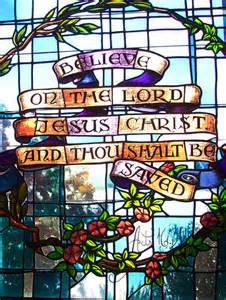
What can we do to get right with God, get our lives on track, and come into a loving relationship with our Lord and Savior? Paul and Silas’s answer is in the next verse: “They replied, “Believe in the Lord Jesus, and you will be saved—you and your household.” 32 Then they spoke the word of the Lord to him and to all the others in his house.”

Pastor Jamie shared the good news of Lord and Savior with his acquaintance the car mechanic. Similarly, Paul and Silas shared the good news with the jailer, another working-class guy. Both gratefully received the Gospel. And, the jailer and his prisoners were ultimately freed—both in this world, and the next.

To take that sudden out-of-control moment and transform it into something God-sent is truly a gift of God. We can all pray with Jesus in our reading from the Gospel of John, our Gospel reading for today, “26 I have made you known to them, and will continue to make you known in order that the love you have for me may be in them and that I myself may be in them.”

The narrator Dr. Luke so skillfully expanded the apostle Paul’s groundbreaking adventures in the city of Philippi into an elegant story or drama in Acts 16. Using the backdrop of Galatians 3:28, “There is no longer Jew [Paul and Silas] or Greek [Lydia, the slave girl, the jailer], there is no longer slave [the slave girl] or free [Lydia, Paul], there is no longer male [Paul, Silas, the jailer] or female [Lydia, slave girl], for all of you are one in Christ Jesus.” [3]

God’s power acts to bring together the most unlikely group of people for God’s glory. We can celebrate, because God has arms wide open for all who believe. Even me, even you.

Praise God! Amen, alleluia.

[1] http://www.christianlibrary.org/authors/John_L_Kachelman_Jr/phil28.htm

[2] Landers, Richard M., Homiletical Perspective on Acts 16:16-34, 7th Sunday of Easter, Feasting on the Word: Preaching the Revised Common Lectionary, Year C, Vol. 2 (Louisville KY: Westminster John Knox, 2009), 527.

[3] Walaskay, Paul W., exegetical Perspective on Acts 16:16-34, 7th Sunday of Easter, Feasting on the Word: Preaching the Revised Common Lectionary, Year C, Vol. 2 (Louisville KY: Westminster John Knox, 2009), 527.

@chaplaineliza

(Suggestion: visit me at my regular blog for 2019: matterofprayer: A Year of Everyday Prayers. #PursuePEACE – and my other blog,  A Year of Being Kind . Thanks!


Unknown's avatar

You Had to Be There!

“You Had to Be There!”

Acts 16-14 Lydia, words

Acts 16:14-15 – May 26, 2019

Sometimes, you had to be there. Consider my daughter Rachel. As part of her music studies, she is taking an intensive summer course in Broadway musicals. Right now, she, her small class of graduate students, and her professor are all in New York City—studying Broadway musicals, in depth. She has told me a little about two of the performances she has seen, and they sound wonderful. So wonderful, she could not even do them justice in describing them. I can imagine her saying “You had to be there!”

The power of narrative, of story. That is what a Broadway play or musical is all about. That is what personal testimonies are all about. As we hear personal stories, we can become immersed in the happenings, the events, the trials and tribulations of the person we are listening to—sometimes to the point of having a personal stake in the events we hear and see.

Consider the apostle Paul. He and his friends Silas, Dr. Luke and several others were traveling around Asia Minor—present-day Turkey—on Paul’s second missionary journey. When, all of a sudden, Paul receives a vision from God. A man from Macedonia—northern Greece—appears to Paul. He begs for Paul to come to Macedonia and preach the Gospel to the people there. This dream or vision was God-sent, and Paul and his friends got on a ship immediately and set sail for Greece.

Ever been in that situation, where you had a dream or vision or message from God that was so strong, you just had to obey? Apparently, this sort of thing happened more frequently in Bible times. And, the followers of Jesus hearkened to Paul and his words about the vision. It wasn’t a second-hand or even a third-hand recounting of some vision some guy had, no. Paul’s first-person account of his amazing vision was so much more compelling!

The narrow stretch of water Paul and his friends crossed to get into Macedonia was the same strip of water that many, many refugees from the Middle East recently crossed to get away from life-threatening danger. Imagine their relief to finally cross the water and be physically separated from war, starvation, political persecution, and loss of life and property. That was the first-person story of the refugees in recent times, their personal testimony.

Let us return to Paul and his friends, and their personal story. Dr. Luke is with them at this time, and he makes note of the place where they are staying: Philippi, a leading city in that area of Macedonia. Not anywhere else in Macedonia, “it is straight to Philippi. In places just like that God planted (and still plants) the church to the community that says ‘no’ to the ways of imperial power and offers a different way of life, a different story, and a different promise.” [1] We have the opportunity to hear a different kind of first-person account, a different sort of personal testimony from people from the imperial city of Philippi, in Europe—not in Asia.

Paul and his friends stay there for some days before any serious preaching or teaching goes on. Then, as is Paul’s habit when in a new town, today’s reading tells us “On the Sabbath we went outside the city gate to the river, where we expected to find a place of prayer. We sat down and began to speak to the women who had gathered there.”

Hold it right there! I see a couple of things right off the bat that make this a different kind of situation. There is no synagogue, no ordered gathering of Jews in this large town. Plus, Paul and his friends meet with a bunch of women. Not even a mixed gathering of men and women, but a group of Gentile women. How open-minded of Paul!

Something further: the Bible hardly ever mentions a gathering of only women. Now, this was not in Israel, where things were culturally sensitive. How fascinating “that this well-known Pharisee and teacher from Jerusalem would carry on a serious discussion with a group of women.” [2] Yes, aspects of this whole situation were completely new, almost alien for Paul and his friends. All the same, Paul still preached and taught the Gospel of the Lord Jesus. He still preached Christ crucified. He still told his own personal story.

As Paul discusses spiritual and theological things with the group of women, Dr. Luke tells us about one in particular: “One of those listening was a woman from the city of Thyatira named Lydia, a dealer in purple cloth. She was a worshiper of God. The Lord opened her heart to respond to Paul’s message.”

God does the totally unexpected. “When God does begin to work in Philippi, it comes with a surprise. Paul’s vision had involved a Macedonian man. But the first to welcome the gospel in Philippi was a woman, and in fact a woman from the area that Paul had just left in the east.” [3] We saw several weeks ago when we considered the Easter morning testimony that God chose women to be the first ones to hear and believe the Good News of the Resurrection. Now, here in Europe, the first one to hear and believe the message of the Good News of the Resurrection is also a woman, and a prominent one for this time, too.

Lydia is a business-woman, a dealer in purple cloth. This is a luxury item, which only the upper class was allowed to wear. In today’s terms, she could be seen as a high-end clothing designer and manufacturer. She owns a large house, and has a number of servants and/or employees. Plus, she is held in high enough esteem that when she believes the Good News of the Gospel, her whole household is led to believe in the Good News, too. A pretty persuasive woman! And, a leading citizen of Philippi.

What a turn of events! The first convert in Europe is not a sober Jewish man of stature, a leader of a local synagogue, but a savvy Gentile business-woman, wealthy and significant in the community. Any expectations Paul and his friends had of their missionary trip to Greece were certainly turned on their heads. This reminds me not to make meticulous plans set in concrete for any operation, because God will often surprise us with unexpected outcomes.

But, that is not all. Dr. Luke tells us, “When she and the members of her household were baptized, she invited us to her home. ‘If you consider me a believer in the Lord,” she said, “come and stay at my house.’ And she persuaded us.” Imagine, Paul and his friends invited into a large, spacious, wealthy home. Not only that, Lydia probably invited them to make her house a base of operations for their mission to the whole region. A good friend and follower of Christ, indeed.

Remember what I said about having plans set in concrete? “It is not the charismatic personality of the pastor or preacher that has the power to create faith; it must come from God’s own merciful activity. From beginning to end, this [Scripture passage] stresses that it is God who is in charge of the mission, God who sets its direction, and God who determines its results.” [4]

Can we show hospitality like Lydia? Like Paul, can we persuade others to consider the claims of Christ? We are still in the Easter season, a wonderful opportunity to tell others our personal story. God can use any personal testimony, to God’s glory. Praise the Lord, we can invite friends, neighbors and acquaintances into a relationship with God. Let us not miss this wonderful, God-given opportunity. To God be the glory. Amen.

[1] http://www.workingpreacher.org/preaching.aspx?commentary_id=1627

Commentary, Acts 16:9-15, Brian Peterson, Preaching This Week, WorkingPreacher.org, 2013.

[2] Walaskay, Paul W., Exegetical Perspective on Acts 16:9-15, 6th Sunday of Easter, Feasting on the Word: Preaching the Revised Common Lectionary, Year C, Vol. 2 (Louisville KY: Westminster John Knox, 2009), 479.

[3] http://www.workingpreacher.org/preaching.aspx?commentary_id=1627

Commentary, Acts 16:9-15, Brian Peterson, Preaching This Week, WorkingPreacher.org, 2013.

[4] Ibid.

@chaplaineliza

(Suggestion: visit me at my regular blog for 2019: matterofprayer: A Year of Everyday Prayers. #PursuePEACE – and my other blog,  A Year of Being Kind . Thanks!

Unknown's avatar

Jesus is Back! Just Ask Thomas.

“Jesus is Back! Just Ask Thomas.”

John 20-28 st-thomas

John 20:19-29 – April 28, 2019

Who remembers reading storybooks to their children or grandchildren? I do! I love to read stories, and I read books to the preschoolers here every Tuesday morning. One of my favorite stories is about Curious George. Curious George is a monkey who is very curious and mischievous, and always gets into big trouble because of his curiosity. But, by the end of the books, everything always comes out all right. Except—George remains curious.

Traditionally, many people have thought of “doubting Thomas” as really negative, a person we might point our fingers at, and perhaps view as “the Disciple least likely to believe in Jesus.” But what if we viewed Thomas as curious, as the kind of person who needed evidence? Sincere questioning is positive. Being curious is positive. Some people need first-hand evidence. Curious Thomas was just such a person.

What would the monkey Curious George have thought of not being there for something exciting, a super exciting event he missed out on? That was what happened to Curious Thomas. For some reason—we are not told why—Thomas was not with the other Disciples when the risen Lord Jesus came to be with them on that first day of the week. Afterwards, I suspect when the others told Thomas about it, Curious Thomas was beside himself with curiosity! He had to see for himself what had happened!

Do you know someone who is like that, who really needs evidence to fully believe? How many of us need evidence before we stop being skeptical? “Well, I’m not sure. It seems like a real long shot. I wonder—but we will have to see.” Curious, yes! And skeptical, yes!

We know God welcomes questions! How many times was Jesus asked honest questions during the Gospels? And how many times was Thomas one of those asking the questions? I suspect Thomas was one of the Disciples who just had to know “why,” who was both skeptical and curious. Curious Thomas.

Dr. David Lose, one of my favorite commentators, put it this way: “But that’s not the way it works with Thomas. He doubts. He questions. He disbelieves. He’s not satisfied with second-hand reports and wants to see for himself. And again I would say, who can blame him? He was, after all, one of those who saw his Lord and friend mistreated, beaten, and then crucified and has probably spent the last few days pulling the broken pieces of his life back together and trying to figure out what to do next.” [1]

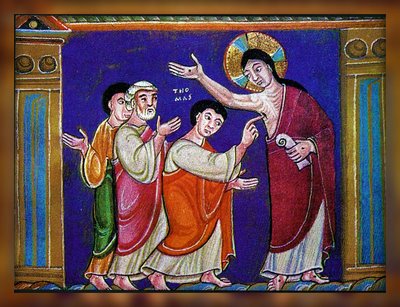
Listen again to our Gospel reading from John: “24 Now Thomas (also known as Didymus[a]), one of the Twelve, was not with the disciples when Jesus came. 25 So the other disciples told him, “We have seen the Lord!” But he said to them, “Unless I see the nail marks in his hands and put my finger where the nails were, and put my hand into his side, I will not believe.”

In this modern day and age, scientific evidence is held up as the gold standard for many things: for medical testing, for chemistry experiments, for biological research. Commentator Dr. Martin Marty says, “The counsel is clear: do not accept something just because people traditionally have done so. Science is creatively disrespectful of such traditions. Scientists reason that if they are to heal, they must probe, criticize, evaluate, and seek to discover.” [2]

Sometimes, our honest questions show we are particularly curious, and extremely interested in what we are questioning. Sometimes, we need evidence, just like Thomas.

Except—Jesus does something remarkable the next time He returns to the Upper Room. He obviously knows that Thomas has honest questions, and He will certainly respond to them! However, listen to what Jesus does first: “26 A week later his disciples were in the house again, and Thomas was with them. Though the doors were locked, Jesus came and stood among them and said, “Peace be with you!”

Did you hear? Before Jesus does anything else, He wishes His disciples peace. “Peace be with you.” That is what we did after the reading of Scripture today. Many churches make the Passing of the Peace a weekly part of their worship service, and I wanted to highlight it. Peace, or shalom, is a traditional Jewish greeting, it is true, but for Jesus to wish His friends peace? For the risen Lord Jesus to bless His disciples with peace, and commend peace to them? This is so significant, and so moving.

It is only then that our Lord Jesus turns to curious, skeptical Thomas: “Then Jesus focused his attention on Thomas. “Take your finger and examine my hands. Take your hand and stick it in my side. Don’t be unbelieving. Believe.”

The Italian Baroque painter Caravaggio created a famous painting called “The Incredulity of Saint Thomas.” In this painting, the risen Jesus shows the wound in His side, and Thomas is actually sticking his finger into the wound. We know from John’s Gospel account that Jesus was quite willing to go to any length to give Thomas the evidence he needed to satisfy his questions, to allay his curiosity and skepticism.

How far are we willing to go with Jesus? Do we have honest questions? Do we have questions regarding some miracle, or are we curious about a parable Jesus told? Or, perhaps are we just plain skeptical about the Resurrection story itself? Do we wonder how on earth the story of Jesus rising from the dead 2000 years ago will make any difference in our lives today?

What is it to be a Christian? Do we need faith? Do we need evidence? Do we need to see God at work in people’s lives?

How serious are we about this thing we call Christianity? Is it a religion, a creed, a set of beliefs we believe in, and if other people don’t believe exactly the way we do, are they wrong? Do we banish them to outer darkness, and not allow those people to come into our churches or our lives? Or, do we have a living, vital relationship with the risen Lord Jesus Christ? Is He our Best Friend? Does He come alongside of each one of us, in the happy times as well as the sad times, and walk by our sides all the way? No matter what?

Thomas made the first-person testimony after he was convinced that Jesus was alive. He said, “My Lord and my God!” Can you and I say that, and mean it?

Jesus is waiting. He has His arms open wide. Come with your honest questions: God can handle them. Come with your skepticism and fear, your anger, or hesitancy and doubt. Jesus does understand. He really does.

Come to Jesus, today. Alleluia, amen.

[1] http://www.davidlose.net/2016/03/easter-2-c-blessed-doubt/

“Blessed Doubt,” David Lose, …in the meantime, 2016.

[2] Marty, Martin E., Theological Perspective on John 20:19-31, 2nd Sunday of Easter, Feasting on the Word: Preaching the Revised Common Lectionary, Year C, Vol. 2 (Louisville KY: Westminster John Knox, 2009), 396.

@chaplaineliza

(Suggestion: visit me at my regular blog for 2019: matterofprayer: A Year of Everyday Prayers. #PursuePEACE – and my other blog,  A Year of Being Kind . Thanks!

Unknown's avatar

Gideon: Fearful and Uncertain

“Gideon: Fearful and Uncertain”

Judges 6:1, 7-24 (6:22-23) – June 24, 2018 – from Dave Ivaska’s book Be Not Afraid

Judg 6_19-24-Gideon-Sees-the-Angel-of-the-Lord

Occupied territory. An oppressive military force. Just the very words conjure frightening images in a person’s mind. Thinking of different wars and conflicts, throughout the centuries. It doesn’t have to be a conflict we actually remember. There are—sadly—plenty to draw from, from many centuries in the past.

The tribes of Israel had settled in the land of Canaan after wandering for forty years in the wilderness. But, what happened to the new country of Israel in just a few decades? How did they lose control of their country so quickly? How did Israel become a conquered region so easily?  

For a quick explanation, we need to look at the beginning of Judges chapter 6. “The Israelites did evil in the eyes of the Lord, and for seven years God gave them into the hands of the Midianites.” Throughout the Old Testament book of Judges, that is the way it was. The people of Israel stopped doing the things God told them to do, and stopped worshiping the Lord. Then, God would allow a foreign nation to take over and oppress Israel for a time. When the people couldn’t stand it any longer, they would cry out to the Lord. Then, the Lord would raise up a mighty warrior and judge. The judge would throw out the invading armies and then rule over the people of Israel for a time, and all would be prosperous and happy again.

You would think the people of Israel would learn, but, no. They would keep doing the same flawed thing; they would stop worshiping God, and get conquered by a foreign nation.

At the beginning of Judges chapter 6, we are in one of the parts of the cycle where a foreign nation is occupying the country of Israel. The Midianites are a particularly savage nation. Their armies steal all the flocks and crops from all the farmers, wherever the occupying forces go. This is a particularly fearful and uncertain time for the tribes of Israel, to be sure!

Back to the land of Israel. Occupied territory! As the scene in Judges 6 opens, the narrator lets us know that the Midian army is so greedy and grasping that they will confiscate any animals or produce from any Israelite farmer. How do we know that? Because, Gideon is threshing wheat inside of a winepress, in secret. He’s in hiding from the Midianites, so the occupying army won’t find out and take the wheat by force.

I also get the idea that Gideon is timid. Uncertain. Perhaps even fearful. Do you blame him? With the marauding Midian army prowling around, confiscating any crops from any farmer, wouldn’t you be afraid, too?

Thank God we do not have to deal with occupying armies or marauding bands of thieves today in the United States, unlike Gideon, unlike countless farmers in areas of conflict even now. But, are there big, challenging things in our lives today that cause us to be timid? Uncertain? Perhaps even fearful? Chronic sickness, unemployment, a serious accident, or a fire? Have any of these happened to you, or to your loved ones?

The next thing he knew, Gideon was shocked down to his shoes. (Or, sandals.) Wonder of wonders, an angel appeared to him. The angel spoke, saying, “The LORD is with you, mighty warrior.”

“Wait a minute! What? The Lord God said that to me? Is there some mistake? Has the angel got the wrong person? Or, made the wrong connection?  Believe me when I say I am not mighty. And, I am certainly not a warrior.”

If we paid attention in Sunday school class and read the Bible carefully, we would be familiar with several people telling God that they were not cut out to do the things God told them to. But, Gideon really means it. His clan is the weakest in the tribe of Manasseh, and he thinks he is the weakest (which probably meant he was the youngest) in his family.

But, the Lord has not made a mistake. God surely wants Gideon, believe it or not. For sure.

Imagine today, with God telling us that we are exactly what God wants, exactly what God expects from others. I wonder what else God is saying that we forget to notice. Or, maybe even outright refuse to hear?

Back to Gideon. Uncertain, fearful Gideon. I suspect he might have been a bit of a cynic and a pessimist, too. What’s the next thing out of Gideon’s mouth, in his conversation with the angel of the Lord? 13 “Pardon me, my lord,” Gideon replied, “but if the Lord is with us, why has all this happened to us? Where are all God’s wonders that our ancestors told us about when they said, ‘Did not the Lord bring us up out of Egypt?’ But now the Lord has abandoned us and given us into the hand of Midian.”

Whoa, Gideon! Did you really mean to say that? It sounds a little like you are scolding the Lord for not helping out Israel, and leaving the nation in this awful situation. Or—did you really mean to say exactly that?

I’ve got to say, I have felt like telling the Lord something like this, when I’ve been in several seemingly hopeless situations. When my former husband and I both pounded the pavement, we fruitlessly looked for work for several years. We both went to several job placement agencies over those years, and we were not able to find anything other than short-term, low-paying, temporary jobs. Between us we had thirteen years of college and graduate school education, and—no solid, permanent job offers. None. For years.

It was infuriating, and unbelievable, and incredibly frustrating. For years, I spent countless hours in prayer, raging at God, begging, pleading. Plus, we had two preschoolers, and neither of us had health insurance coverage. A frightening time, for years. I suspect Gideon might have felt the same way, except his situation was even worse. But, back to Gideon.

The angel of the Lord was patient and understanding with Gideon “when Gideon needed proof that it was an angel of God. The Lord then led Gideon on a series of events that helped Gideon gain courage to do as God had told him.” [1] We see the Lord encouraging Gideon with several statements, such as this:  14 The Lord turned to him and said, “Go in the strength you have and save Israel out of Midian’s hand. Am I not sending you?”

Gideon wants to make sure that this is God talking to him. 22 When Gideon realized that it was the angel of the Lord, he exclaimed, “Alas, Sovereign Lord! I have seen the angel of the Lord face to face!” 23 But the Lord said to him, “Peace! Do not be afraid. You are not going to die.” 24 So Gideon built an altar to the Lord there and called it The Lord Is Peace.”

This is not the end of Gideon’s uncertainty and questioning. Not by a long shot! Gideon continues to check and double check with God, just to make sure God is really and truly going to use him to deliver Israel.

Doesn’t the example of Gideon show us how patient and understanding God is, even when we have fears and uncertainty? God patiently answers so many of Gideon’s questions. God was right there with Gideon, just as God was with me and my former husband, through all those years of unemployment and under-employment. Just as God was with Joshua, and Moses, and Abraham before him.

Moreover, Gideon shows us how God looks at our potential, and not just the person we are right now. Instead, God helps us to believe in what we can be, and what God knows we can be, for God’s sake.

Gideon finally got God’s lesson into his head. I’m afraid it takes a great deal to get things into my thick head, too. But, praise God! The Lord had great patience with Gideon. I know God has great patience with so many of us, today, even when we are fearful and uncertain. Let us see what God sees, looking at one another.

Amen, alleluia.

[1] http://childrensermons.com/gideon/ August 4, 2013 Jim Kerlin People in Old Testament Hiding from the Enemy (Gideon)

@chaplaineliza

(Suggestion: visit me at my regular blog for 2018: matterofprayer: A Year of Everyday Prayers. #PursuePEACE – and my other blog,  A Year of Being Kind . Thanks!)