Unknown's avatar

New Life Reality

“New Life Reality”

Acts 2-42 teaching, fellowship, breaking of bread, prayers

Acts 2:42-47 – June 7, 2015

Have you ever looked through a photo album, or a scrap book? Showing memorable photos, distinctive times to remember. Hitting the high points of a person’s life, or of a family’s experiences. Or, if not the most wonderful times, at least the most significant times.

That’s what we are going to be looking at, in this summer sermon series. We are going to focus on the book of Acts, and see what vignettes Dr. Luke has for us, in this photo album of the Early Church. We’re starting with the Day of Pentecost, and its immediate aftermath. Right after Peter’s sermon, and the great big revival meeting there in the city of Jerusalem.

When last we left our intrepid heroes—I mean, the disciples—their revival meeting had a tremendous response! The report given here at the end of Acts 2 is that three thousand people came to belief in Jesus as their Messiah, who died on the cross, buried, and risen from the dead. Just as prophesied by the Hebrew Scriptures.

Now what? Sure, this extremely large group of people had their “come to Jesus” moment. The Holy Spirit blew through all of their lives. I do not at all wish to diminish this glorious experience. Dr. Luke records this marvelous “Kodak moment” in each of these individuals’ separate lives. Yes, God reached down, and touched each one.

But, in all seriousness, I repeat—now what? Where do they go from here? The group of believers in the Messiah Yeshua—or, Jesus Christ—went from a couple of dozen to 3000 people. All in one morning!

Wait just a moment: imagine a huge group of people, milling about. Think of a large location, like a high school auditorium, or a large gymnasium, or a festival at the lakefront. Now, imagine yourself plunked down in the middle of that huge crowd. We have a huge group of people who just came to a saving belief in Jesus as their Messiah. Now what? Is there any larger purpose? Any master plan?

Acts doesn’t tell us exactly who came up with this plan, but our passage today does tell us what they did. It’s a systematic listing. Four simple, straight-forward steps.

Verse 42 tells us the new believers “devoted themselves to the apostles’ teaching, and fellowship, to the breaking of bread, and the prayers.” Four simple steps are the spiritual glue that binds this miscellaneous group—diverse believers from all over creation—together as one cohesive whole.

First, the central activity: they “devoted themselves to the apostles’ teaching.” I suspect many of these 3000 people, these new believers, had only heard of Jesus of Nazareth. Some had never heard Jesus’ teachings directly, never mind about seeing His miracles! Why was this aspect so important? Because if these new believers started traipsing after their own ideas, they might go off into flights of fancy. The wild blue yonder. They needed to be grounded in solid teaching, directly from the men and women who learned from Jesus for three years. His disciples, and followers. Then they would know for sure what Jesus did—or did—not teach!

Has anyone here ever watched a plastic television preacher? Or listened to a sketchy evangelist on the radio or on a podcast? How about someone who was preaching the “health, wealth and happiness gospel?” Jesus wants us all to be healthy, wealthy and happy! Look at Job, after the Lord gave him everything back! Look at King David and King Solomon! Fabulously wealthy! All of them had favor with God, and you can, too! Just send the evangelist lots of money, and then you’ll be blessed! Just make sure you walk the straight and narrow, otherwise the Lord will smite you with sickness and poverty! Are you sick? Are your loved ones poor? Then, you’re not sending the preacher enough money! And, you don’t have enough faith!

Hold it! What I just said? False. Not true, at all.

Not the health, wealth and happiness gospel, not sending some huckster preacher or evangelist money in order to get health and prosperity. This is skillful twisting of Scripture passages, and is NOT GOOD AT ALL. This is exactly why it was so important that these new believers had ready access to the apostles, and paid such close attention to the disciples’ teaching. To prevent this kind of false teaching from getting started. It was true in the first century, and is just as true today, too!

Second on the Acts 2 list, fellowship. That means hanging out together! Eating meals together, visiting each others’ homes, going places together. This is closely followed by number three, breaking bread together. In other words, eating together! How many here just hang out together, occasionally? Visit, and be friends together?

Our friends from Love Sharing Congregation, do exactly that! If you come here early on a Sunday morning, before most people from St. Luke’s Church come into the building, you’ll find Love Sharing Congregation meeting together for early worship, and fellowship. They meet together, eat together, and hang out together. Then, again, every Sunday after 12 noon. They meet for worship service, and then eat a meal together. Be together, some more.

What a wonderful way to live out the activities the book of Acts recommends.

Fourth on the list we have “the prayers” mentioned. Not just general, private times of prayer, although the life of Jesus certainly models this for us, if anyone examines His life closely. “The prayers” probably refers to set times of prayer at the Temple. Gathering together regularly for prayer and worship was and is considered to be an important way to join together with others, horizontally, as well as joining with God, vertically.

These four things are activities that this group of brand new believers were involved in, from the get-go, from the very start. And, guess what? Their group continued to grow, and grow some more! Let’s take a special look at verses 46 and 47: “Day by day, as they spent much time together in the temple, they broke bread at home and ate their food with glad and generous hearts, 47 praising God and having the goodwill of all the people. And day by day the Lord added to their number those who were being saved.” This is what their new life together looked like! And, people noticed. They wanted to find out more.

I wonder whether the new believers might have been onto something?

On an online bulletin board, I read earlier this week about a church in Minnesota. This post was written a few years ago. I can’t tell you what the pastor’s name was, since he or she did not leave it. However, the pastor wrote about this awesome example of togetherness: communal living, spending time together, eating together, and hanging out together.

“The most profound example of communal living I see in our world is the work being done in homeless shelters. We often take our Sr. and Jr. High kids to a shelter and bring an evening meal for the shelter’s staff and residents. Individually, we cannot feed them because of the great need but, when we work together and plan together, we have more than enough to provide a good meal for the 70 or 80 residents of the shelter.

“In our church, it has become a badge of honor to insure that we can provided the best food for these folk and we now go to the shelter once a month. The point we make with our church members is that the residents of the shelter deserve our best, so we strive to provide it. Our youth like the work because it is a direct way to put their budding theology to work.”

You all see? Life together. Fellowship. Being friends. Eating and drinking together. Worshipping and praying together. Did I mention being comfortable together? This is “doing church,” at its best. Of course, we are all humans, and disagreements occur. Disappointments happen. But, this passage shows us a snapshot of what our life as a church can be!

Something to shoot for. Something to hope for. Something all of us can strive for. Wouldn’t it be marvelous if people in Morton Grove—Niles—Glenview—Park Ridge—Des Plaines—noticed what was going on here at St. Luke’s Church? The new church in Acts 2 reported “having the goodwill of all the people. And day by day the Lord added to their number those who were being saved.” This is what their new life together looked like! People noticed. They wanted to find out more.

Let’s celebrate the power of the Holy Spirit! We have that same power here. Nothing is impossible for the Spirit of God. This is a wonderful reminder of what church is all about.

Can I hear an “amen?” Alleluia, amen!

summer sermon series

@chaplaineliza

(Suggestion: visit me at my daily blog for 2015: matterofprayer: A Year of Everyday Prayers. and my other blog,  A Year of Being Kind .  Thanks!)

Unknown's avatar

Born of the Spirit

“Born of the Spirit” – May 31, 2015

Trinity - Holy Spirit

John 3:8

The wind can be really powerful. Has anyone here experienced a really strong wind? I remember the wind blowing so strong that I almost got blown off the highway while I was driving in Michigan. And when walking, I had to really lean into the wind to make any headway at all. We can watch the wind rush the clouds along and whip the trees and leaves. And what about devastating windstorms? Think of the tremendous power of hurricanes and tornados! We see the strong power of wind at work, regularly.

Wind is also a symbol from the Bible—a symbol of the Holy Spirit, in both the Hebrew Scriptures as well as the New Testament. The Holy Spirit is all over our Scripture passage today. We’ll hear our Lord Jesus mention the Holy Spirit in a few minutes, but first let’s set the stage.

Here it is, early in Jesus’ ministry. He had already made a name for Himself, with the marvelous teaching He had done and the wonderful miracles He had performed. A lot of people were talking about Jesus, this itinerant rabbi from Galilee. Even the most important leaders among the Jews, the Pharisees, were talking about Rabbi Jesus. One of the Jewish leaders, a man named Nicodemus, summoned up enough courage one night to sneak over to where Jesus was staying.

Nicodemus wanted to know more about Jesus.

Isn’t that just like some people? Some people know a little bit about Jesus, but they don’t know much. There is a veil across their understanding. This state is not godly; the Bible calls it the natural state of man, or of people. In their natural state, people often do not even consider God at all. They cannot come close to God. So, we often see people in their natural state feeling defeated and frustrated because they have a hole in their lives. There is something missing.

St. Augustine wrote a book centuries ago, an autobiography called The Confessions. He speaks of this emptiness, this void, this God-shaped hole inside of people. Augustine also talked about how it was impossible for anyone to fill up that hole with anything else but God.

People do try. They try to fill that hole with all kinds of things: work, money, education, status, alcohol, drugs, computers, family, exercise, shopping. All these things are ways to fill our lives, and to keep us busy. But—we cannot fill that God-shaped hole all by ourselves. No matter how hard we try.

Let’s go back to Nicodemus, coming to see this itinerant Rabbi Jesus in the middle of the night. Nicodemus is worried, or frightened, or a bit of both. But he does come to Jesus.

Did Nicodemus—a leader and prominent teacher among the Jews—come to have an intellectual, theological discussion with Jesus? Or, was it something else that convinced him to seek out this upstart Rabbi?

We discover he is drawn to Jesus by the wise words Jesus has said, as well as the witness of the mighty signs He has done. In other words, the word and the works of God draw Nicodemus to Jesus. Let me say that again: the word of God and the works of God draw Nicodemus to Jesus.

Early on in the interview—for that is what Nicodemus came to do, have an in depth interview with Rabbi Jesus—Jesus makes a surprising comment—surprising to Nicodemus, anyway. “Very truly I tell you, no one can see the kingdom of God without being born from above.” Nicodemus begins to stutter and stammer, and complains that he cannot crawl back inside of his mother to be reborn, can he?

Again and again, the prophets in the Old Testament mention the new birth and the new life from God. This was nothing surprising. As a teacher of the Jews, Nicodemus should have known this teaching. Jesus is patient and answers again in the same vein. He even jokes with Nicodemus—as one of the premier teachers and scholars in Israel, Nicodemus needed some itinerant rabbi to fill him in on the hope of Israel??

Here we are, almost two thousand years after this conversation. Are you and I any further along in belief? Do we understand everything about the Holy Spirit’s work in the typical believer’s life? Or, are we still trying to painstakingly piece together the activity of God? I know I am. I don’t have all the answers, and that’s okay by God.

Many deep, theological books have been written over the centuries to explain the theology of this third chapter of the Gospel of John. But—I don’t want to give you just a hodgepodge of theology. Instead, I want to tell you about Jesus and His response to Nicodemus’ questions. I want to lift up to you the One who was sent to earth by God, His Heavenly Father. I want to point to the One who gave testimony of the power of God through the Holy Spirit.

Just as no one can actually see electricity or the wind in operation, no one can tell us exactly how they work. But, we all can see their effects. In the same way, God works in our lives today in much the same way. God’s hand is not visible. The power of the Holy Spirit is very often invisible—it is sort of like the wind, similar to electricity. We can see the Holy Spirit’s effects. And we can definitely tell how God works in our lives and hearts. We can see people’s lives changed by the mighty power of God, the Father, Son and Holy Spirit.

Jesus here is mentioning powerHoly Spirit power. Do you believe it? Can you feel it? Like a gentle breeze, or even a strong wind, blowing through our lives?

Jesus forgives us our sins and wipes out the past. God cleanses us, and strengthens us. The Holy Spirit provides a way for us to be reborn, born from above. The Holy Spirit allows us to enter eternal life as children of God. Do you believe it? Can you feel it? What a wonderful opportunity! Praise God for His everlasting love.

“For God so loved the world that He gave His only begotten Son, that whoever believes in Him may not perish but may have eternal life.” Believe the good news of the Gospel!

Alleluia. Amen.

@chaplaineliza

(Suggestion: visit me at my daily blog for 2015: matterofprayer: A Year of Everyday Prayers. and my other blog,  A Year of Being Kind .  Thanks!)
Unknown's avatar

From Fearful to Fearless

“From Fearful to Fearless”

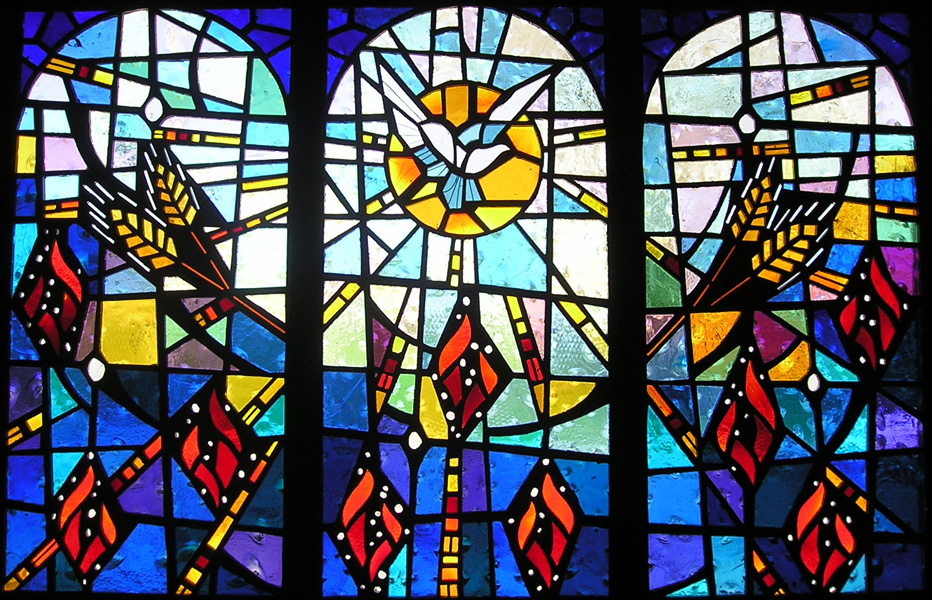
Pentecost stained glass - Boone Tabernacle Church of God in Christ

Pentecost stained glass – Boone Tabernacle Church of God in Christ

Acts 2:1-18 – May 24, 2015

Everyone feels afraid, some time. I know I usually do not make sweeping statements like that, but I feel safe in making that particular one: everyone is afraid, sometime. Being fearful; it goes with being human.

If we look at the disciples, gathered in that upper room—the same upper room where their leader and Rabbi Jesus had them gather together to eat the Passover dinner on Thursday in Holy Week—we can see several good, valid reasons for them to be afraid.

Confusing events happening in short succession. This was compounded by the followers of Jesus scattering, running away, frightened by the very real, very legal, very official things happening to Jesus just before His crucifixion.

     Let’s fast-forward past Easter Sunday, past the weeks when the risen Jesus was occasionally present with the disciples. Past the time of the Ascension. The disciples still must have been frightened to death of the authorities. But, I suspect they needed to talk about the happenings of the past few weeks, too. Debriefed. Tried to figure things out, as best as they could. We go to the day of Pentecost, another major feast day for the people of Israel. And where are the disciples? Back in Jerusalem, in the upper room, hidden away from the authorities.

Let’s begin to read our scripture passage for today, starting at Acts chapter 2, verse 1: “When the day of Pentecost came, they were all together in one place. Suddenly a sound like the blowing of a violent wind came from heaven and filled the whole house where they were sitting. They saw what seemed to be tongues of fire that separated and came to rest on each of them. All of them were filled with the Holy Spirit and began to speak in other tongues/languages as the Spirit enabled them.”

If we were watching this scene as it happened on television, or in a movie, the special effects would be awe-inspiring! Can you see it now? Except, this was long centuries before the time of anything approaching motion pictures, even electricity. Imagine what it was like for these few dozen people, gathered together to pray in the upper room.

The biblical record refers to the coming of the Holy Spirit as being similar to the blowing of a violent wind. I’m sure this was an eye witness report. That must have been what it really felt like! Buffeted about by the sheer power of a strong wind—except—they were all inside the house, with all the doors shut tight! Let’s continue with the next verses:

Now there were staying in Jerusalem God-fearing Jews from every nation under heaven. When they heard this sound, a crowd came together in bewilderment, because each one heard their own language being spoken. Utterly amazed, they asked: “Aren’t all these who are speaking Galileans? Then how is it that each of us hears them in our native language? Parthians, Medes and Elamites; residents of Mesopotamia, Judea and Cappadocia, Pontus and Asia, 10 Phrygia and Pamphylia, Egypt and the parts of Libya near Cyrene; visitors from Rome 11 (both Jews and converts to Judaism); Cretans and Arabs—we hear them declaring the wonders of God in our own tongues/languages!” 12 Amazed and perplexed, they asked one another, “What does this mean?”

Here in these verses, we take a tour of Asia Minor, and parts of Africa and some of Europe. That’s how far the Jewish people had dispersed, in the past few hundred years. Observant, practicing Jews had settled in these far-flung places many years before. Their present-day descendants were fully enculturated, and spoke the local languages and dialects as their own. However, some still came back to Jerusalem on a pilgrimage, to worship at the Temple. As I mentioned, Pentecost was a big festival in the Jewish religious calendar.

Moreover, these dispersed Jews from far-flung provinces were amazed that home-grown Jews from Galilee, the boondocks of Israel, were able to speak many regional languages and dialects so fluently! Wonder upon wonder!

These Galilean Jews had gone out on the street, rubbing shoulders with all and sundry outside. They all had gotten a big shot of courage from somewhere, and were communicating the good news—to everyone. To all of these visitors to Jerusalem, who in turn could take the good news of the Gospel with them, to all parts of the Roman Empire when they returned home.

True, I could preach about the erasing of the Tower of Babel’s barrier, the division of separate languages, and the ease of communication that took place here on Pentecost. I could talk about the birthday of the church, and how the church began its great mission of spreading the good news. But—I wanted to focus on the disciples. How they went from fearful to fearless.

Let’s turn back to our scripture passage: “13 Some, however, made fun of them and said, “They have had too much wine.” 14 Then Peter stood up with the Eleven, raised his voice and addressed the crowd: “Fellow Jews and all of you who live in Jerusalem, let me explain this to you; listen carefully to what I say. 15 These people are not drunk, as you suppose. It’s only nine in the morning! 16 No, this is what was spoken by the prophet Joel: 17 “‘In the last days, God says, I will pour out my Spirit on all people. Your sons and daughters will prophesy, your young men will see visions, your old men will dream dreams. 18 Even on my servants, both men and women, I will pour out my Spirit in those days, and they will prophesy.”

Did you hear what Peter said? It’s because of the Holy Spirit. Everything is because of the Holy Spirit! That is exactly why the disciples poured out into the street after their fiery experience in the upper room! After the wind of the Holy Spirit swept through that room, their hearts, and their very lives. It didn’t matter—men, women, whoever was there. Each one in that room had the Spirit energize their hearts and their minds. The Spirit came with fire!

What is more, we see from the prophet Joel that the Spirit was prophesied to be poured upon all people. Sons, daughters, young men, old men, even men and women servants. I think that is everyone. We are all going to get power from the Spirit of God. The ruach ha kodesh, the Holy Spirit. What’s more all of us have the possibility of going from fearful to fearless!

Here is the last of today’s reading from Acts: “20 The sun will be turned to darkness  and the moon to blood before the coming of the great and glorious day of the Lord. 21 And everyone who calls on the name of the Lord will be saved.’”

Pentecost was not just a one-time-only event. Sure, Dr. Luke put this account down on paper so we all could remember, so we all could see the power of God as it happened so long ago, in Jerusalem. But—we can see the power of the Spirit of God now, each and every day. We can tell others about what the Lord has done and is doing in our lives—how the Spirit of the Lord blows through our lives on a regular basis–today.

The important thing about the arrival of the Spirit of God was not the wind or the flames. That’s just the exterior way we all knew that the Holy Spirit had arrived! But the disciples knew, from experience, that God was now with them in power and in might. The same way the Spirit is with us, today. That knowledge changed the disciples from fearful to fearless, and that knowledge can do the same thing for each of us, today.

Is there a Pentecost in our lives today? Is the Holy Spirit living, breathing, active in our lives, today? Please God, yes. God can enable us to go forth from here in the Spirit’s power, to share what God has done for each of us. And the response? As Peter quoted from the prophet Joel, “everyone who calls on the name of the Lord shall be saved.” Amen, and amen!

@chaplaineliza

(Suggestion: visit me at my daily blog for 2015: matterofprayer: A Year of Everyday Prayers. and my other blog,  A Year of Being Kind .  Thanks!)

Unknown's avatar

Jesus Sends Us Forth!

John 17:11-19 – May 17, 2015

Sent into the world - John 17-18

“Jesus Sends Us Forth!”

Most everyone I know like to receive packages. Have you ever received something extremely fragile in the U.S. mail, or from Federal Express or UPS? Can you just visualize the package? Unpacking something like this is a multi-step process! Opening the box, taking out the protective foam pellets, unwrapping the layers of encasing bubble wrap, taking off the newspaper cushioning the fragile piece. And, then—there it is. Finally, unwrapped.

We didn’t want to allow the fragile piece of glassware—or pottery—to get chipped or broken. Heavens, no! So, we take extra-special care. We wrap it, protect it, and swathe it, even immobilize it, in order to make extra sure that it’s safe and won’t get hurt or broken.

Except—as we consider our gospel passage today, we aren’t talking about fragile glassware or delicate pottery. Here, our Lord Jesus is praying to His Heavenly Father about the disciples. Asking some things for them, specifically.

Let’s set the scene. It’s a familiar scene. The Upper Room, after the Passover dinner with His disciples. Jesus has just finished His last words to His friends, and now in John 17, He prays. It’s an intimate time, with Jesus addressing God His Father in the most intimate way.

God sent His Son into the world—special delivery. Into a battered, fallen, sinful, hate-filled world. Did you know that? Did you realize that? From time to time we may say that, in an Affirmation of Faith, or some such statement of belief. I try to make it a central point in my sermons, when the Scripture passage mentions it.

Yes! Jesus, the Son, was sent into the world in order to proclaim the gospel, as well as to give everyone a picture, an actual physical representation of God in heaven. Here, on earth. One of the names of Jesus is Emmanuel, God with us.

Question: when God sent Jesus into the world—special delivery, what was the situation?

Where was He sent, in the first place, according to the Christmas narrative in the Gospel of Luke, chapter 2? We remember! Jesus—the eternal Son, laid down all of His heavenly Godly-ness, all of His awesome power and might, and was born as a helpless infant to an unmarried girl. In an occupied state, from a marginalized people. Here on this earth in amongst fallen, messy, dirty people who often make mistakes. Lose their tempers. Are unkind and rude—and even worse—to others. Where sin and disease and unemployment and accidents happen, on a regular basis. Imagine that!

God the Heavenly Father could have wrapped the man Jesus securely in bubble wrap. Or, in case Jesus even moved, God could have made sure He was packed in protective foam pellets, so Jesus wouldn’t get injured or harmed. But—that sounds silly! Maybe that idea works for shipping fragile items or glasswear, but not for people!

Let’s take a closer look at verse 18 of this intimate prayer. Jesus says, “As you sent me into the world, I have sent them into the world.” So—Jesus is talking about sending the disciples out into the world. Do you get the picture? The past three years were a training program. An internship, if you will, to get the disciples prepared for ministry.

Being sent out. Getting down to the business of letting others know about God. The disciples are getting ready to be launched into the world. In order to proclaim the gospel, the Good News, as well as to give everyone a picture, a representation of God in heaven. Here, on earth.

Wait a second, Jesus. That’s scary!

The thought of the disciples going forth, being sent out. Who knows where they might end up? Here on this earth in amongst fallen, messy, dirty people who often make mistakes. Lose their tempers. Are unkind and rude—and even worse—to others. Where sin and disease and unemployment and accidents happen, on a regular basis. Imagine that!

These words in this intimate prayer to God are words that entrust the future to God. These words do not leave the disciples as orphans (as Jesus said), nor do they set the disciples adrift, completely on their own. These words do prepare the disciples for His departure, and for their work and lives in ministry after His death and resurrection.

In short, Jesus is asking God to take care of His friends, after He leaves. How caring! How considerate! How awesome! But, Jesus did not ask for God to pack the disciples in protective foam pellets or encase them in bubble wrap.

In preparing this message, one of the resources I used is one I occasionally turn to. An online website where clergy discuss the lectionary passages of the week. In one of the discussions on this gospel passage, a pastor from North Dakota gave the following reflection and then, illustration.

“The thing that strikes me this year about this text – this prayer – is that Jesus prays for protection. He doesn’t pray for removal – removal from the world – removal from evil. It seems to me that we are expected to be in the world (not of it) and with that comes dealing with sin and evil. And Jesus prays for protection. I also think there is a difference between protection and shielding.

“Here in North Dakota (not in May, mind you!) an image that works for me is that we dress our kids in snowsuits and hats and mittens and boots and then we send them out into the cold. We don’t just hide out in the house with the nice warm furnace and hot chocolate and we don’t shield our children from the weather. We protect them, yes, but, still, they are sent out into the wind and cold. I think God is like that with us as well. God doesn’t help us to hide from the world and all its ‘stuff.’ God gives us what we need as protection … the Word, faith, a conscience … you get the idea.”

You get the idea—God protected our Lord Jesus while Jesus was here on the earth, even though I’m sure Jesus and His friends had to put up with being itinerant and homeless all the time they were traveling around Israel, with all the accompanying discomforts and getting dirty and sometimes going hungry. God protected the disciples, the followers of Jesus—and they were still sent out into the wind and the cold. Into the world where sin and disease and unemployment and accidents happen, on a regular basis.

The part of this passage that hits home the most, for me, is that Jesus prays for His friends. Not only the disciples, but we can also see His prayer broadened to include all those who follow Him. That includes you and me! Us. All those who receive Jesus’ good news, His Gospel of the revelation of God.

Just as Jesus prays for us in this prayer in John 17, so we share in this mission. We, too, are being sent! We, too, have the awesome direction from our Lord Jesus to go forth, let others know about God. We are launched into the world. In order to proclaim the gospel, the Good News, as well as to give everyone a picture, a representation of God in heaven. Here, on earth.

The best part is that Jesus has prayed for us, already! He has covered us with prayer, with protection, so that we are suited up to go out into the world. Just as we don’t shield our children from the weather; we protect them, yes, but, still, they are sent out into the wind and the weather and cold. I think God is like that with us as well.

We are sent out into the world, to spread the Good News about Jesus. God is right by our sides, too. God gives us what we need, too. We can have that assurance. For sure, and certain. Alleluia, amen!

@chaplaineliza

(Suggestion: visit me at my daily blog for 2015: matterofprayer: A Year of Everyday Prayers. and my other blog,  A Year of Being Kind .  Thanks!)

Unknown's avatar

Friends, Not Servants.

John 15:9-15 – May 10, 2015

handshake drawing

“Friends, Not Servants”

How would you like to have no friends? None, at all? According to several recent surveys, a significant number of American adults say that they have no friends. Today, in this fast-paced world with so many people rushing to and fro, and so many things filling our lives, who has the time for real friendship? Who has the commitment? How do we meet friendly people? How do we make room in our lives for genuine, honest relationships?

Another name for having no friends is being disconnected, or cut off. This idea of being cut off, with no friendships or relationships, to my mind, is like living without love. It is exactly what condition I am in without God.

Without God in my life, without a vertical relationship with my loving Heavenly Parent, I am lost. I am hard-pressed to find any joy in my life. This makes it very difficult for me to connect with other people in a horizontal way, in any meaningful way.

Let’s turn to our gospel reading for today. One of the important points He makes when He is talking to His disciples, our Lord Jesus mentions servants. As the Greek word doulos is translated, slave. Jesus describes His disciples being called servants, or slaves.

That image struck me. I know something about slavery at the time of the 1st century of this common era, when our Lord Jesus was here on this earth. I know about the imagery that the Apostle John brings up here in chapter 15 of his gospel: the image of slavery. Bondage. This image was very familiar to the people of the first century; ancient society was built on slavery. This image is less familiar, even distasteful for us, here in 21st century America, but John uses it several times in his gospel, including here.

If I consider a similar passage about believers being servants—slaves in Romans 6, where the Apostle Paul also talks about being a servant, a slave, I find out some interesting things. Slaves became slaves through a number of different ways: through economic hardship, by becoming prisoners of war, or by being children of slaves. Slaves were utterly dependent on their masters, and were looked upon with scorn in the world of the first century. Slaves have no rights, no voice, nothing at all except to do the will of their master. The Apostle Paul says sin is our master. So sin claims our allegiance and service.

Except—Jesus through His death on the cross has transferred us from being slaves, or servants of sin to servants of God. To me, that is good news indeed!

But wait, there’s more. Much, much more.

Jesus talks with His disciples for the last time here in the room where they ate the Passover dinner, just a few hours before He is arrested and tried. He tells them all kinds of really important things, like how to be close to Him, how to treat each other, and even commands them to love each other. Here, in this reading today, our Lord Jesus makes a tremendous statement: “I do not call you servants any longer, because the servant does not know what the master is doing; but I have called you friends.” That’s friends! Of our Lord Jesus!

When I was doing some study last week and preparing this sermon, I happened upon a biblical reflection about this particular passage from John 15. A pastor named Melissa Bane Sevier made the following observation.

A few months ago this pastor was eating pizza with some of her church’s youth on a Sunday night at youth group. She asked them what it means to be a friend. She wrote down all the definitions, because they were better than any she could come up with. “A friend is someone who is herself.” “A friend cares about you, listens to your problems, and helps you.” “A friend thinks about you before he thinks about himself.” “A friend cares about other people’s opinions and beliefs, and respects them.” Astute descriptions coming from these teenagers. They are showing wisdom beyond their years.

Just imagine: that’s what these teens thought were the attributes of a good friend. Here, in this passage from John 15, Jesus is offering us friendship, a relationship, intimacy with God! I repeat Jesus’ words: “I do not call you servants any longer, because the servant does not know what the master is doing; but I have called you friends.”

The Greek verb in this verse is significant, too. The Greek word for “called” is the verb “ereo.” This verb means “to declare,” or “to promise.” So, our Lord Jesus is not only calling or mentioning we are friends, He is declaring, or promising that we are now friends. This change in our status did not happen because of anything that we did or said. No. This change in status was totally up to Jesus. It’s all Him. He decided, He declared that we are now the friends of God!

This was rare in the Hebrew Scriptures. “The Lord used to speak to Moses face to face, as a man speaks to a friend,” the book of Exodus says (33:11). Absolutely, the Lord extends His friendship and favor to Moses. In the book of Isaiah it is God and God only who says the same thing of Abraham. “Abraham, my friend,” God says of him (41:8). It is a staggering thought. Think about it! The friendship of God?

During the time of the first century, there was a special designation for certain, very special people. They were called Friends of the Emperor, or Friends of the King. They had the privilege to have access to him at any time, day or night. The Friends of the King had the closest and most intimate connection with him of anyone.

I have news for you—we are friends of the King. The King of Kings. We have the ability to talk to our Lord Jesus at any time, night or day. That is a tremendous opportunity, a wonderful privilege. You and I no longer have to stand afar off like servants, with our eyes lowered and faces to the ground, like servants who have no right to enter into the presence of the master. No! Jesus gave us this intimacy with God, so that God can be our best friend, our heavenly Friend!

We can see from our Lord’s words that God wishes to reveal Godself to us. Jesus tells us that He has revealed the things of God to us. That is what a friend does. How many people can you go to, can you reveal deep troubles to, or share wonderful joys?

Jesus wants to be friends with us! Good friends, the best there is!

And Jesus not only is friends with us, but He wants us to be friends with each other, to love one another. We know from experience what kind of friend Jesus is to us.  His command to us is to be that kind of friend to others. “Love one another,” He says.

And friendship is a two way street. Relationships go both ways, otherwise they are not much of a relationship. I urge you to think about yourself, about your friendship with Jesus. What kind of a friend are you to Jesus? And consider: what kind of friend is Jesus to you?

What an opportunity to have the relationship of our lives!

Praise God that God has sought us out, and offers us the opportunity to be friends with God. Good friends, the best friends there is. We can tell the Lord anything—absolutely anything at all, and we will receive understanding, help and encouragement from a loving, caring God.

What a tremendous gift! And what a tremendous God.

Alleluia, amen.

@chaplaineliza

(Suggestion: visit me at my daily blog for 2015: matterofprayer: A Year of Everyday Prayers. and my other blog,  A Year of Being Kind .  Thanks!)

Unknown's avatar

Good News about Jesus!

“Good News about Jesus!”

Ethiopian painting, unknown artist  Philip and the Ethiopian royal official

Ethiopian painting, unknown artist
Philip and the Ethiopian royal official

Acts 8:34-35 – May 3, 2015

Who enjoys hearing good news? Just about everyone! And what about those who share good news? A relative getting married, perhaps? A new baby in the family? What about a big graduation—from college, trade school, or nursing school? The purchase of a new condo or a new car? These are all things that cause a great deal of rejoicing!

We’re going to talk more about sharing good news, but first, we need to set the scene. Tell you a little about our Scripture text for today. We are going to take a closer look at Acts chapter 8.

The risen Lord Jesus has been with His disciples and followers for a number of weeks after Easter, after the Resurrection. He ascended into heaven in the first chapter of Acts, and the great events of Acts chapter 2—Pentecost, the birth of the church at the Temple in Jerusalem—have occurred. The number of believers in the risen Jesus has simply exploded!

Four thousand came to believe on Pentecost, in one day, alone. Thousands of Jewish people heard about the Messiah coming, dying on a cross, and being raised from the dead. And they believed!

As we view the new gathering of believers at this point, in the early chapters of Acts, it’s a Jewish gathering. It’s pretty monochromatic. All of the believers have similar skin tones. All of the believers come from the same religious background. Jewish. All of the believers heard the Good News in the city of Jerusalem. All of the Jewish believers originate from an oppressed people-group in an occupied territory in Asia Minor (Israel), even if they currently reside outside the territorial bounds as their current place of residence. They still made the pilgrimage to worship at the Temple in Jerusalem.

The disciples do not have a difficult time communicating the Good News of the risen Lord Jesus to their fellow Jews! No cross-cultural differences to be dealt with, here!

Not yet . . . anyway.

The disciples were greatly heartened by such a huge response to their spreading the Good News! They fanned out into the area around Jerusalem (just as Jesus told them to do), and continued preaching. Sharing their stories. Until—the beginning of Acts 8.

Here, we have Philip. Directed by the Holy Spirit, Philip travels in Samaria, sharing the Good News with the people he met there. People who were not fully Jewish! As if this wasn’t enough, we have the encounter just read to us. Where Philip meets a royal official from Ethiopia.

Let’s step away from the events of the reading to talk about the author of this book of Scripture.

Dr. Luke, who wrote the Acts of the Apostles along with the Gospel of Luke, had a special concern for certain parts of the general population. He highlights women, children, sick people, and—Gentiles. Non-Jews. Dr. Luke himself was a Gentile, a Greek doctor. He therefore lifts up these powerless, unprotected individuals.

He shows God’s concern and care for the least of God’s creation. Those who are often forgotten or overlooked by the preferred ones.

This royal official of the queen of Ethiopia was a powerful man, it’s true. He wielded considerable power in the palace, in his own arena. But outside of his country? He was an outsider, for sure. And for more reason than just the color of his skin. The royal official was a eunuch. That means probably when he was a young boy—probably as he started serving in the house of the queen—he was forcibly castrated in order to serve the queen. He didn’t allow that to deter him, though. He rose in the queen’s household, became well educated and literate, and eventually became an important official, in charge of her treasury.

This official also desired to know more about the God of the Jews.

We don’t know where he heard of that particular God, a foreign God, but he had an earnest desire to learn more about the God who made heaven and earth, the God of the Jewish people.

There was a problem. A big problem. Sure, the royal official could learn about the Jewish God. He could become a proselyte, even come to Jerusalem and visit the area outside of the Temple. But—he could not enter the Temple. There were strict rules regarding that, in the Mosaic Law Code. The official was a eunuch. He was castrated. He was not fully “a man,” like every other natural male.

According to Jewish law, that made this Ethiopian’s spiritual standing with God less than that of others. He was automatically excluded from a close relationship with the Jewish understanding of God, due to factors completely beyond his control.

Did that make any difference to Philip? Let Dr. Luke tell us more.

Let’s get back to the story. After going to Jerusalem and diligently, faithfully worshiping outside of the Temple, this Ethiopian official started back to Africa in his chariot. Philip, nudged by the Holy Spirit, came alongside the chariot. The Ethiopian was reading from the book of Isaiah—aloud. Very common practice of the time. Reading aloud. Coming alongside the chariot, Philip asked, “Do you understand what you are reading?”

Excellent question! I can just see the scene—the Ethiopian, poring over the open book in his hands, perhaps in Greek translation (the trade language of the time). Young, strong Philip, jogging alongside, engages the official. The Ethiopian, intrigued, invites Philip to sit beside him in the chariot and explain the passage further.

One thing leads to another, and next thing you know, Philip is telling the official his story. Telling the Good News of the risen Jesus. Sharing the Gospel from the book of Isaiah, as well as his own personal testimony. The official must have known a great deal about the Jewish Bible and have been able to connect the dots of the Good News in short order! Because, what do we see next?

They come to some water. I bet the Ethiopian was so excited when he asked Philip, “What is to prevent me from being baptized?”

Do you understand what happened here? Philip explained the Gospel—the Good News about Jesus—to this worthy man. And in very short order, he was ready—so ready to believe in the Resurrection, to accept the Gospel!

Now at the impromptu baptism, when the Ethiopian made a public declaration of his belief in the risen Lord Jesus, did Philip stop and ask whether this man was Jewish, or not? Did he notice whether this man was an eunuch, or not? Did he care about the color of this man’s skin, or not? The conversation in the passage is not specific, but Philip’s actions certainly are!

“Both Philip and the Ethiopian went down into the water, and Philip baptized him.” That’s what Dr. Luke tells us.

The early church records let us know that this royal official not only goes back to Ethiopia—rejoicing in his absolute acceptance by our Lord as a fully beloved child of God!—but he also carries the message of that Good News to others in his home country! He tells others his story, that God fully and lovingly accepted him. A non-Jew, a person of color, even a man who was castrated.

This official became a believer, part of those who spread the Good News, that God loves each individual, no matter what.

Can we be sure that God accepts us? What about the questionable things in our past? What about those things? God still loves us. What if we don’t have very high standing in the community? God still loves us. What about the bad feelings we have in our hearts? God still loves us. What if we come from the “wrong side of the tracks?” God still loves us.

Are you a child of God? If you are member of the human race, YES. Does God love you? If you are a member of the human race, YES. Can we celebrate in God’s love? YES. Can we share that Good News? YES.

God loves you so much that God sent Jesus to this earth to die on a cross and rise from the dead on the third day. Do you believe this Good News? This fantastic, phenomenal News?

Praise God, just as much as Philip, just as much as the Ethiopian official, just as much as any other disciple, we can rejoice in the Good News of the risen Christ and share our story.

I encourage you today.  Tell someone how much God loves you!

Philip did. The Ethiopian did. And we are encouraged to do so, too. Praise God! Alleluia! Amen.

@chaplaineliza

(Suggestion: visit me at my daily blog for 2015: matterofprayer: A Year of Everyday Prayers. and my other blog,  A Year of Being Kind .  Thanks!)

Unknown's avatar

Listen for the Shepherd’s Voice

“Listen for the Shepherd’s Voice”

Jesus Mafa, from a Christian community in Cameroon, Africa. From Art in the Christian Tradition, a project of the Vanderbilt Divinity Library

Jesus Mafa, from a Christian community in Cameroon, Africa.
From Art in the Christian Tradition, a project of the Vanderbilt Divinity Library

John 10:14-16 – April 26, 2015

So many voices, sounds and cries, clamoring for our attention today! Noisy voices, going bash, bang! Clash, crash! Busy voices—hurry, scurry! Going round and round, almost spinning out of control! Angry voices, growling, scowling, mean and nasty. Making me want to run and hide myself away! All of these loud voices, and sounds, almost too much to handle.

Here in our Gospel reading today, Jesus talks about being the Good Shepherd. He is referring to us—that’s each one of us—as sheep. Rather unflattering, but in my opinion, pretty accurate.

Jesus portrays Himself as the Shepherd. The Good Shepherd, caring for His sheep.

Sheep can be fearful, not sure of what to do. Sheep can be stubborn and single-minded, going their own way. Sheep can even be gluttons, eating food that will make themselves sick unless they are steered away from certain kinds of plants in the pasture. But our Lord Jesus identifies Himself as our Shepherd. That’s a difficult job. Being Shepherd of so many, varied, and assorted kinds of sheep.

As someone who was born and bred in the city of Chicago, I do not know anything at all about sheep, or lambs, or ewes. However, I have learned a number of things since I’ve become an adult. I’ve gleaned information from books, and articles, and from people relating their experiences with sheep.

You might be aware that sheep are at the same time stubborn and timid.

Sheep aren’t good at many things. They are relatively dumb animals and can do little on their own. However—they are good at following—sometimes. As I have read on one of my favorite inductive bible study websites, sheep are also good at distinguishing sounds. They can recognize the familiar voice of their own shepherd. They often follow their own shepherd willingly enough, but won’t pay any attention to others who try to lead them—sometimes.

Even still, as our Good Shepherd, I suspect that Jesus has a difficult time in leading His widely varied multitude of sheep around the pasture. What with stubborn or confused ones wandering off into far-flung or seldom-traveled areas of the pasture, this huge flock must be hard to keep track of, and even harder to round up.

This particular morning, I want to focus on one particular verse: John 10:16. Our Lord Jesus mentions that He has lots of sheep. Other sheep, from outside of this little sheep pen. Lots of sheep, from all over the place. Even from all over the world! Jesus is not going to neglect those other sheep, either.

What are we, as sheep, going to do out on the hillside, when we are out in the great, big pasture with Jesus? This wide pasture can be a scary place. We might get lost from the Good Shepherd. Maybe there are dark places, rough spots on the hillside, where I as a sheep, or some of the other sheep, might wander off. Maybe, get in trouble, become sick, have an accident, or meet a predator.

Let’s consider the wider context. The wider world. Other voices can be just as loud as the welcoming, confident voice of our Good Shepherd. Instead, the craving, the desire for more, and never having enough. Just think how listening to that alluring, insidious, beckoning voice can destroy relationships within a family or a group of friends.

A second voice can be quite loud, drowning out the supportive voice of the Good Shepherd. Instead, the sneaking voice of suffering and despair, weakness and sorrow. The penetrating voice of bitter tears and clamor can distract and cause a great deal of dismay. That insistent voice doesn’t have to be loud, but is so often nagging, persistent, even heart-rending.

What can our Good Shepherd do, in those cases? I admit it. I am often a fearful, anxious sheep. I cry out, and say “help me!” or “save me!” And, “I’m scared!” or “I’m all alone!” Thank God that our Shepherd Jesus has a strong, familiar voice. He is insistent and persistent, too!

          I can hear Him when He calls out to me. Can you hear Him when He calls to you, too?

When my older two children were very small—I’m talking a toddler and a preschooler, now—I can vividly remember one time when we were at a department store in Chicago, in the women’s clothing section. There were a great number of round clothing racks, about four feet high, and I was pushing my younger daughter in a stroller. I took my eyes off my older daughter for just a few seconds, and by the time I looked back at the place where she had been standing, she was gone.

I tried not to panic, but began calling her name. Calling over and over, traveling in and out among the many racks, around the clothing section. Sure enough, she came out from the middle of one of the clothing racks where she was hiding, coming towards my voice. A familiar, comforting voice, one that she knew well. She knew she could respond to that voice in trust and assurance.

Do we know the familiar, nurturing voice of Jesus, our Shepherd? Or, is that voice the voice of a stranger—to us? Is Jesus just a nodding acquaintance, or is He one of our best friends?

Let me tell you about a Lutheran pastor who I sincerely respect, the Rev. Dr. Janet Hunt. I often read her sermons online. I was especially moved by the one she wrote on this passage.

She, too, is listening for the nurturing, encouraging, supportive voice of the Shepherd in her life. As she listened for the voice of the Shepherd, she found herself remembering other, life-giving voices which have shaped her.

Let Dr. Hunt tell you, in her own words:

“When I was in my last month of seminary, my adviser Paul was preparing to retire. Like me, he was a lover of books, but without his office shelves, he needed to get rid of a whole lot of them. So he let me have my pick. . . . A number of them still sit on my shelf. Paul died of cancer not long after that, so all I have left of him are those books with his handwritten name inside and a handful of letters he sent me while I was on internship. . . . I feel as though I still hear his voice of confidence in me whenever I run my fingers along their spines.”

We can see that our Good Shepherd’s encouraging voice can echo in the voices of other dear ones, too. Other helpers, who reflect that familiar Voice of our Shepherd, and also serve as confident supports. Challenge and teach us. Mentor us. Come alongside of us, and act as nurturing, helpful voices in each of our lives.

          What do you hear as you listen today?

Do you hear the confusing voices of the world? Or, do you hear the nurturing voice of Jesus, our Shepherd? Do you hear the discouraging internal voices of sadness, hurt, and depression? Or, does the comforting voice of Jesus come through, loud and clear?

          I encourage each one of us to listen for our Good Shepherd’s voice.

Listen to that familiar, comforting, nurturing, supportive voice. This is the Good Shepherd, who loves each of us so much He laid down His life for the sheep. Praise God, we can celebrate! We can rejoice that we do have a Good Shepherd who intimately knows each one of us, and loves us. No matter what. Praise God!

Alleluia, amen.

@chaplaineliza

(Suggestion: visit me at my daily blog for 2015: matterofprayer: A Year of Everyday Prayers. and my other blog,  A Year of Being Kind .  Thanks!)

Unknown's avatar

We All Are Witnesses!

“We All Are Witnesses!”

Jesus laid down His life for us 1 John 3-16

Luke 24:48 – April 19, 2015

Have you ever been confused by the number of hurried, jumbled nature of things happening at once? And the speed at which these things happen? This experience is more common than we might think. Just think of this past week, preparing for the Not-So-Lent fish fry at our church, and everything that had to be done by yesterday afternoon!

However hurried and jumbled this past week has been around here, it pales in comparison with our Gospel reading today. The end of the Passion Week must have been momentous and confusing for the followers of the Rabbi Jesus. Some confusing and jumbled things were happening very quickly. From the big festival entrance on Palm Sunday to the Passover Dinner of Maundy Thursday evening, to the arrest, trial and Crucifixion on Good Friday. Events happening in short succession from morning until night. Everything happening one thing after another. This was compounded by the followers of Jesus scattering, running away, frightened by the very real, very legal, very official things happening to Jesus on Thursday night and Friday during the day.

Let’s fast-forward to that Sunday morning, the first day of the week. The disciples still must have been frightened to death of the authorities. But, I suspect they needed to talk about the happenings of the past few days, too. We can see that from our scripture passage.

We pick up the narrative right after the events of the Road to Emmaus. To fill everyone in, two followers of Jesus got on the road to Emmaus that Sunday. As they walked, they talked. Debriefed. Tried to figure things out, as best as they could. And what circumstances they needed to figure out! A Stranger began to walk with them on the way, and unbeknownst to them, it was the risen Jesus, incognito. He shared with them a summary of all that He had come to earth to do. Of His ministry, His message, and His purpose. And still, they did not know it was Jesus.

Not until dinner that evening in Emmaus, when the risen Jesus was revealed when He blessed and broke the bread. And then—Jesus disappeared! The other two at the dinner table didn’t waste any time! They ran back to Jerusalem, to the Upper Room, to tell what they had seen. Yes, they were witnesses. Eye witnesses, verifying everything that had happened that day.

Our Gospel reading for today picks up the story at this point. All of the followers of Jesus are gathered together in the Upper Room, and are talking about the story of the road to Emmaus. Do they believe? Or, don’t they? Are a few skeptical? Or doubtful? Are some still frightened?

Let’s transition to today. Here and now. I can hear some people today, scoffing at the idea of some guy rising from the dead. And then, miraculously traveling alongside of two other guys? Good as new—in fact, even better? No way! Not a chance. The other two must have been hallucinating. Or dreaming. Or maybe, seeing a ghost. They can’t believe. Or, won’t believe.

As we start the Gospel reading today, the risen Jesus suddenly appears to the group in the locked Upper Room. What does He say? “Peace be with you.” A common greeting of the time, yes. However, Jesus is also calming their hearts, their spirits, their anxieties, their emotions. “Peace be with you.”

How does the risen Jesus immediately respond to the disciples? “Don’t be frightened! It is I, myself.” He emphasizes His identification. “I, myself!” It’s not anyone else, but Jesus! He lets them know that He is solid and corporeal, not a ghost. Not a spirit. And, Jesus doesn’t criticize His followers for being afraid! For feeling uncertain, doubtful and anxious!

I wonder whether you have ever had a kind and patient teacher, or instructor, or coach. When you were afraid, uncertain, or anxious, did this kind and patient person get angry with you? Or, upset? Or, did this person continue to be open and willing to help you? Generous with time and welcoming to your attempts? That is Jesus, all over. To a T.

Jesus even volunteers to eat a piece of fish, just to show everyone that He was, indeed, for real! An actual, physical person. (A ghost or spirit couldn’t eat or drink!)

What’s the big deal?

Jesus tells us. Wait—He tells the disciples, first. They are to proclaim what they have seen and heard. They are to be witnesses to the power of the resurrection. They are to tell how the risen Jesus has made a difference in their lives! And boy, that was a big difference!

When we read the book of Acts, that is exactly what we see. The disciples are witnesses of what they have seen and heard, witnesses of the power of the resurrection. Time after time, no matter what, the disciples tell others about how Jesus lived, preached, did miracles, and rose from the dead. Then, how all that has made an earth-shaking difference in their lives.

Our second Scripture reading today is from the first letter of the Apostle John, chapter 3. This passage also tells about the power of the resurrection. The aged apostle John mentions this in verse 16. John was giving his friends some instructions, even some admonitions. We are told to love one another. Why? Because of the One who laid down His life for us. That’s why. And following His example, we ought to be willing to lay down our lives for each other.

This is the message that Jesus told the disciples to start to carry, when John was a very young man. Looking at 1 John 3 and 4, some decades later, we see the aged John still carrying the message Jesus told him to, the message of sacrifice, hope, and resurrection. Let me read two verses: 4:13-14. “We know that we live in Him and He in us, because He has given us of His Spirit. And we have seen and testify that the Father has sent His Son to be the Savior of the world.” John is still being a witness, all those decades later, at the close of the first century!

Dear friends, our Lord Jesus gave specific instructions to His friends, to go and be witnesses. He gives those same instructions to us. We are to be witnesses of the power of the resurrection. The aged apostle John continued to do that, all of his life.

Can you think of someone who was a witness to the power of God, in your life? Someone who immediately comes to mind for me is Miss Rose. I met her almost thirty years ago, when my older two children were very small. She was a witness to the power of God, and to God’s love. She communicated God’s love to everyone she ever met, just about! A little lady, a dynamo for God, she would tell everyone about God and how much God loved them.

I met her again, ten years ago when I was a chaplain intern at the Presbyterian Homes. She was a resident there. I was so happy to see her. Miss Rose and her joy in the Lord bubbled over and communicated to everyone she met there, too. Even though she was in severe, chronic pain, she witnessed to the power of the resurrection. She asked people she met, “Do you know Jesus? Can I tell you about Him, and what He’s done in my life? Can I tell you my story?”

Each of us has an opportunity to be a witness, to communicate the Good News about the risen Jesus and the power of the resurrection. We can communicate by words, by a smile, by being kind, through our actions, through our generosity.

Think about someone who impacted your life, who communicated the Good News to you. There’s a great example for you! Just like Miss Rose is a marvelous example for me, to be a witness despite pain and suffering, even through difficulty in my life. I can still communicate God’s love, just like the aged Apostle John did, too. He was even in prison when he wrote his first letter, on a little island in the Mediterranean Sea. That didn’t make any difference. John still told his story, how the risen Jesus made a difference to him.

What is important is that we get out there and start being a witness, telling people about the power of God, and about how much the risen Jesus has changed our lives. Can you be a witness? It’s as simple as telling your story. Can you tell the story of Jesus and His love? Jesus loves you. Jesus loves me. Jesus loves all of us.

Be witnesses to God’s love and power.

Alleluia, Amen.


@chaplaineliza

(Suggestion: visit me at my daily blog for 2015: matterofprayer: A Year of Everyday Prayers. and my other blog,  A Year of Being Kind .  Thanks!)
Unknown's avatar

Seeing is Believing!

“Seeing is Believing”

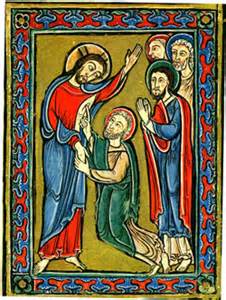
Jesus and Thomas illustration John 20-24

John 20:24-29 – April 12, 2015

Seeing is believing! Or . . . is it?

I wonder what things come to mind when I mention the phrase, “Seeing is believing”? Or even, “I won’t believe it until I see it!” Sometimes, people can be really doubtful about things. I can just imagine several people I know folding their arms across their chests and saying, “Unless you show me . . . “

In the gospel account we read today, from John 20, the disciple Thomas had just that reaction. After the resurrection, the first time Jesus came to the disciples, Thomas was not there. We’re not told why, simply that he wasn’t there. Maybe he was scared, maybe he was away, or out of town. Maybe he was sick. We just aren’t told why he wasn’t there.

The ‘why’ is not the important part. The fact that Thomas wasn’t present is. Thomas had doubts. Sincere doubts. Truth to tell, the other disciples’ story was a little farfetched. I mean, how many people have you known who came back from the dead, and walked through walls into a locked room?

I wonder. I wonder if Thomas’ reaction strikes a chord with anyone here today. How many of us today are like Thomas? Doubting that Jesus has risen indeed from the dead? Or, completely missing Jesus, and doubting that Jesus is even here at all, today?

Let’s think some more about Thomas and his reaction. Thomas not only doubted, he also refused to believe! He not only doubted, he wanted concrete proof. Tangible proof, proof he could touch and feel and handle. Thomas wanted to put his hands in the nail marks on Jesus’ hands. That’s pretty concrete.

As I thought more about Thomas and his reaction and attitude toward Jesus and His first appearance to the disciples, I was reminded about my children. Generally, children have concrete thinking processes, especially smaller children. I have four children, and I’m accustomed to talking with them and communicating in more appropriate ways for their age groups. My children are just about grown up now. But when I used to explain something about God to my children, sometimes it was difficult for the younger ones to fully grasp the ideas I’m trying to explain. And they can ask some pretty hard questions. Gee, sometimes it’s difficult for me to know how to explain things about God to anyone who asks!

Maybe Thomas needed more concrete explanations, too. We just aren’t sure. The Gospel of John isn’t clear at this point. We as readers don’t know why Thomas had difficulty believing. But the gospel account says he did.

How many of us today are like Thomas? Not sure? Not believing? Closed up behind the locked doors of feeble faith? Not believing that Jesus can make a difference in our lives today? Could Jesus come and reveal Himself to Thomas? Can He come and reveal Himself to those today who are fearful, doubting, and unbelieving? . . . Can He reveal Himself to me?

Perhaps Thomas even had difficulty finding something to believe in, since he had so recently seen his Master and Teacher arrested and crucified. Grief, fear, anger, dashed hopes, shattered dreams. I strongly suspect several, if not all of these, were operating in Thomas’ life at this time.

These strong feelings and emotions inside are intense, and raw. From what is known today about the stages of grief, Thomas could very well have been feeling awful, angry, fearful and upset. Thomas could have felt like his life was falling apart. But Jesus can break through all of that. Jesus could enter Thomas’ life with new hope, standing right in front of him. In the same way, Jesus Christ can enter through the closed doors of our hearts, and meet us where we are, with open arms.

Just as Jesus did not leave Thomas high and dry, to figure things out on his own, so Jesus will not leave us. Our Lord came to Thomas in the upper room, despite his doubts and unbelief, and Jesus also comes to us in our doubts, and in our unbelief.

Now, Thomas didn’t actually see Jesus, at first. He had just heard from others who had seen Jesus. But then, a second time, the risen Lord appeared to the disciples. Again, in the locked room, and this time, Thomas was there.

What were Jesus’ words to Thomas? “Put your finger here and see my hands. Reach out your hand and put it in my side. Do not doubt, but believe.”

Thomas responded with that tremendous affirmation, “My Lord and my God!” Praise God for the sincere, heartfelt response of Thomas.

Jesus’ words to His doubting disciple serve as words of comfort and reassurance to me. I know I have doubts and fears, sometimes. And just as Jesus did not leave Thomas doubting, so too, Jesus will not leave me doubting, either. He will welcome me with open arms, coming through the locked doors of my fear, anger, doubt and unbelief.

Thomas saw Jesus. Seeing was believing, in Thomas’ case. Moreover, the risen Jesus continues with the statement, “Have you believed because you have seen me?” –here’s the best part of all. “Blessed are those who have not seen and yet have come to believe.”

What was that Jesus just said? Did I read that correctly? “Blessed are those who have not seen and yet have come to believe.” So–the Gospel of John says here that all who have not actually seen the risen Lord and yet have come to believe are indeed blessed.

That means Christians throughout the centuries are blessed, since they have come to believe in Jesus Christ and yet have not actually, physically seen Him as risen from the dead. That means you and I are blessed, since we have come to believe in Jesus Christ, too. How awesome is that? I am–you are–we all are blessed because the Lord Jesus says so!

Just as Jesus helped Thomas to believe, so the Gospel of John helps us to believe, too. This Gospel was not only written to bear witness so long ago, in the first century, some years after Jesus was raised from the dead. This Gospel was also written for the many generations which have come to believe throughout the centuries. And that includes us, too. Even though we may have doubts, and unbelief, and wonder whether, and why, or even why not, Jesus comes to us in our doubts and unbelief. Our Lord comes to us with reassurance and open arms and says “Do not doubt, but believe!”

Praise God that as we come to believe that Jesus is the Messiah, we can have life in His name. And Jesus can come to us, at any point in our walk with the Lord, no matter what the circumstance happens to be, no matter where we are in our lives. Thank God that Jesus will be there for us and with us, no matter what. May we all be able to affirm, with Thomas, that the risen Jesus is our Lord and our God.

Alleluia, amen.

@chaplaineliza

(Suggestion: visit me at my daily blog for 2015: matterofprayer: A Year of Everyday Prayers. and my other blog,  A Year of Being Kind .  Thanks!)

Unknown's avatar

“I Have Seen the Lord!”

“I Have Seen the Lord!”

Woman-and-Jesus-

April 5, 2015 – John 20:18

Who doesn’t like to hear a good story? Storytellers are wonderful to listen to. Small children love to hear stories. Even grown-ups enjoy stories. Certain stories are told over and over again, in different ways. Cinderella. King Arthur. The Arabian Nights. Aesop’s fables. Even the Wizard of Oz. What about The Greatest Story Ever Told? That’s another name for the narrative of the Passion Week, following Jesus step by step from Palm Sunday through Good Friday, finishing up with the happily ever after ending on Easter morning!

We left Jesus on the cross, on Friday afternoon, when last we met in St. Luke’s sanctuary on Good Friday. Jesus had walked through the days of Holy Week, debating with the Pharisees and other Jewish leaders in the Temple. He had eaten a Passover dinner with His disciples on Thursday evening. The special thing Jesus did on Thursday was instituting the Lord’s Supper with the bread and cup of the Passover meal. Do this in remembrance of Me, He said.

After dinner, Jesus went to the Garden of Gethsemane to pray. He wanted His disciples to keep watch with Him, but they were too exhausted. After the events of a very busy week, just think. The disciples couldn’t keep their eyes open!

Then the events follow in rapid succession. The arrest, torture, trials, and sentencing. The walk down the Via Dolorosa, the Way of Sorrow. Jesus dragging the cross outside the old city of Jerusalem. The disciples fled. (I won’t blame them—since their Rabbi and master was sentenced as a criminal and enemy of the state, I suspect the disciples were afraid they might be connected with their leader Jesus, too!) We see the women at the foot of the cross. The faithful women. And Jesus’ mother, Mary. Then—Jesus dies on the cross. The earth quakes, the sky is darkened. All creation mourns as the Word made flesh, the creator of all the universe, dies on the cross.

As we continued to follow the Greatest Story Ever Told, Jesus is taken down from the cross shortly before sunset. His body is turned over to one of the Pharisees, Joseph of Arimethea. That Pharisee who came to Jesus one night early in His ministry, recorded in John chapter 3. Joseph hurriedly lays the dead body of Jesus in a tomb nearby. And, the faithful women are also there. They follow the dead body to the tomb.

What faith they must have had! What tenacity, and what love. To follow their leader, their rabbi, their Lord and master, even though He’s dead. To care for His body, in the absence of the disciples. The men disciples who are in hiding.

The women are there. Not shunted aside, not put in second place. These faithful women play an important role in caring for their Rabbi and their friend, hurriedly washing and preparing His dead body for the grave, before the Sabbath begins at sunset.

As Friday night swiftly approaches, with it comes the Jewish holy observance. Especially this special Sabbath—which falls during Passover. No work is to be done at all on this holy day of rest, not even the compassionate work of caring for a dead body.

After Sabbath day and Saturday night end, it is now Sunday morning. Faithful Mary Magdalene heads out for the tomb even before the sun has fully risen. Can you see her, eager in her haste to get to the tomb? With some oils to anoint the body, perhaps? But as she comes near the tomb, she discovers the stone has been rolled away. The tomb is now empty. What happened? What on earth is going on? Mary runs to get some assistance, someone to come with her and check things out more fully. (Prudent, I say! Better to be safe, Mary!)

Sure enough, Mary tells what she discovered. Two of the—men—disciples come back with her. Mary returns with the other two, back to the tomb. They see the tomb, and sure enough. It is empty. And then, these two disciples turn right around. Go back to the rest. In hiding.

But—what about Mary? What does she do?

Again, I come back to the indisputable fact that the women are faithful and true. The women show compassion, love, and care for their Rabbi, their master and friend. Mary stays put near the tomb, and weeps.

What a roller coaster ride Mary has been on. Starting on Palm Sunday, their leader and master Jesus marches right into the lion’s den, right into Jerusalem itself. All through the Passion Week, Jesus appears in and around Jerusalem, in the Temple, doing anything but keeping a low profile. And I am certain the disciples and the women accompanying them knew very well that the Jewish leaders and most of the Pharisees were planning on doing bad things to Jesus. I suspect the events of Good Friday were not totally unexpected.

So, at this desperate point, early on Sunday morning, Mary weeps. She does not know where her Lord and Master’s body has gone! After many days and nights of worry, anxiety, strong emotion, and intense grief, I can well understand how Mary broke down in tears.

What about us, today? Have you ever been through days of intense emotion, gut-wrenching anxiety, even intense grief? All of those feelings tumbling and roiling through you? Then you know a little of what Mary was going through.

What Mary did not suspect at first was that she was in the Greatest Story Ever Told. She sees Someone through her tears, in the cemetery. She suspects this Person is the gardener, of all things! She says, still crying, “Sir, if you have carried him away, tell me where you have put him, and I will get him.”

Then, Jesus—for it is He!—Jesus speaks to her. Jesus calls her by name. “Mary!”   Do you hear that? Jesus calls her by name. “Mary!” How sweet to have someone who loves you very much call you by name! Remember, I just said that Mary had been on an emotional roller coaster the whole week previous? Just think what this would do! Wow!

Mary’s eyes are opened. Mary finally sees clearly, and responds, “Rabbi!” “Teacher!”

There’s a word in the next verse that is sometimes misunderstood. In verse 17, Jesus tells Mary, “Do not hold on to me.” I’d like to tell you about this phrase. In the original language, Greek, the word ‘hold on’ or ‘touch’ is a present imperative verb. The verb in the sentence can be translated “Do not keep touching me!” Mary finally realizes that it was really and truly Jesus, in the flesh. And I bet she fell on her knees and grabbed onto His legs with every ounce of strength in her body. Clutching, crying, laughing. Can you just see her? Can you just see them? Jesus, gently trying to get her to let go. “Mary, Mary, can you stop clutching at Me?”

Can you see Mary now, as she understands in full. Jesus is alive! He is risen! Then, she listens to Jesus. Returns to the disciples, and declares the joyful truth to everyone!

So, Mary is not only a faithful friend and follower of her Rabbi, she is also someone who carries the Good News! The news that Jesus is no longer dead, but He is risen! He is alive again. I want all of you to understand this all-important point. Jesus has entrusted Mary with the Gospel message. Mary Magdalene is no longer just a supporting player, just a side note in the Gospel. Instead, she transitions to a lead actor in the Greatest Story Ever Told, here in John 20. And, one of the first and best preachers, sharing her experience, hope and joy.

What a story! Except—this is not make-believe. This is for real. This is very much the truth. Yes, Jesus is alive. Yes, He is Lord. And, yes, He has conquered death once and for all. Do you hear? Listen again to the words of Mary. She told the disciples, “I have seen the Lord!”

I pray that we all can affirm together today: He is risen! Christ is risen, indeed!

Alleluia! Amen!

@chaplaineliza

Thanks to the kind friends at http://www.40acts.org.uk – I am using their sermon suggestions and notes for Lent 2015. #40acts Do Lent generously! And, to the Rev. Dave Buerstetta for several ideas from his commentary notes on John 20:1-18.

(Suggestion: visit me at my daily blog for 2015: matterofprayer: A Year of Everyday Prayers. Thanks!)