Unknown's avatar

Follow Jesus in Love

“Follow Jesus in Love”

John 3-16 so loved, bible

John 3:14-21 (3:16) – March 11, 2018

Many people like sports. They watch football, baseball, basketball and hockey games on a regular basis. One thing that repeats on occasion at these sports matches, whether college ball or professional matches, is people who hold up signs featuring some important message. One message that keeps getting shown and broadcast on national television is the simple Bible reference of John 3:16. That is all. Held up to the camera on t-shirts, posters, and even more.

Lots of people are familiar with that Bible reference from the repeated broadcasts, but how many can quote the verse, word for word? Even if people can quote it, how many can go the next step and explain it? Talking about the context, the biblical situation, and the reason why the verse appears?

For that, we need to go back to the beginning of John chapter 3, where Nicodemus the Pharisee teacher and member of the Sanhedrin sneaks away to meet the Rabbi Jesus under the cover of darkness. To get a feel for how secretive Nicodemus is, imagine a secret agent or spy going for an undercover meeting. Imagine the caution and care that Nicodemus would be taking.          If other members of the ruling Sanhedrin found out about Nicodemus and his hush-hush visit to Jesus, I suspect Nicodemus would be in big trouble. The Pharisees were not exactly best friends with the Rabbi Jesus, and some of them were extremely antagonistic to Him.

After some talk between Jesus and Nicodemus about being born from above, the Gospel reading for today picks up in the middle of the conversation. Jesus brings up an event that happened back in the book of Numbers. Eileen read this passage from the Hebrew Scriptures for us this morning, too. Jesus breaks off talking about baptism and being born from above, and starts talking about Moses, of all things! Why change the subject to Moses in the wilderness?

The Biblical scholar Nicodemus understood immediately what Jesus was talking about. Of course he did! I bet he knew the Torah, the Books of Moses, backwards and forwards, and could even recite large portions of it, too.

However, the majority of us today do not have a clear understanding of this section of the Bible. Moses? A bronze serpent? Wilderness wandering? And of course, constant griping and complaining. It seemed like the people of Israel were forever complaining and griping. If it wasn’t one thing, it was the other. Gripe, gripe, gripe, gripe!

Listen to John 3:14-15. “14 As Moses lifted up the bronze snake on a pole in the desert, in the same way the Son of Man must be lifted up, 15 so that everyone who believes in him may have eternal life. “ That is what Jesus had to say to Nicodemus.

Remember how I talked to the children today about healing, and how Jesus heals people? That was the situation Jesus referred to. Moses and the people of Israel, wandering in the wilderness for a long time. The reading from the book of Numbers tells us that the people kept up their griping and complaining so long, and at such a volume, that finally God said “Enough!” (I’m paraphrasing here, but it is pretty close to what Numbers records.)

I am sure all of us know somebody who complains all the time. I don’t mean some of the time, or even most of the time, but all the time. Complain, gripe, moan. Everything is wrong. Nothing is right. The food stinks. The leaders are constantly wrong, and the people surrounding them can’t do anything right, either.

Wouldn’t that be annoying? Troublesome? Irksome? Even extremely frustrating? How would you feel if everything you always did and said was wrong? According to this really negative person, that is? Take that negativity, and multiply it by a lot. By thousands, even hundreds of thousands. Practically all the people of Israel were thinking, talking and acting like this. Negative thinking and acting. Some people refer to it as “stinking thinking.”

Reading from the book of Numbers: “But on the way the people lost their patience and spoke against God and Moses. They complained, “Why did you bring us out of Egypt to die in this desert, where there is no food or water? We can’t stand any more of this miserable food!” Then the Lord sent poisonous snakes among the people, and many Israelites were bitten and died.” What an extreme reaction to griping and complaining!

But, don’t you and I act like that sometimes? Don’t you and I talk against leaders, and friends and families? Moan about the food and the accommodations, and complain about God and how we always get the short end of the stick? Gripe about how “It just isn’t fair! Why does that always happen to me? What’s the use?” You know what I mean. People who complain, gripe and moan. Maybe they even look a little bit like you and me?

Jesus reminded Nicodemus that God sent poisonous snakes into the camp. After the people repented and asked God to save them, Moses held up the bronze serpent high on a pole, and everyone who looked at the serpent was healed.

The truth about God and God’s purposes is confusing. Some people just do not get it (like Nicodemus, and like us, too). “Nicodemus finds this Good News confusing (John 3:10) because it demands that he let go of all that he has accomplished and understood — let go and become like a newborn, ready to receive the world on completely new terms.” [1] Nicodemus just did not understand the spiritual healing that God was holding out to him—and to us, too!

Sometimes, the world says “no.” Sometimes, God’s message of Good News just makes no sense to us at all. Sometimes, we are in the same situation as the people of Israel, where they got stuck in their complains and negativity.  One of the commentators I consulted believes “the reason for this is because we are to understand that God has manifested His love for the world in a particular way. Godloved” the world through His Son, Jesus Christ. God “loved” the world by sending His son into the world, so that He might be “lifted up” as a sin-bearer.[2]

We all are familiar with the picture or representation of Jesus on the Cross. Artists in Central America turn this picture around, and paint crosses with pictures or faces of lots of people on them. What a cosmic understanding that our Gospel writer had when he insisted that Jesus was raised up on the Cross, and He drew all the people of the world to Him! [3]

If we look at this from Nicodemus’s point of view, “for Jesus (or John) to say that God loved the world was revolutionary, shocking, and very distressing for a strict Jew. “ [4]

Jesus did not draw not just you and your friends to Himself. No, Jesus did not draw just one particular region or country to Himself. Jesus also drew people of other races, other ethnicities, and other faith traditions to Himself. Think about that. Really think.

God so loved the world. That means everyone, in every part of the world. As the apostle Paul might say, God loves everyone: Jew, Gentile. Slave, free. Rich, poor. No exceptions. Including you. Including me.

For God so loved you. For God so loved me. Praise God.

[1] http://www.workingpreacher.org/preaching.aspx?commentary_id=2394  Lance Pape

[2] https://bible.org/seriespage/8-jesus-and-nicodemus-john-31-21

“Jesus and Nicodemus (John 3:1-21),” by Robert Deffinbaugh at the Biblical Studies Foundation.

[3] http://worshipingwithchildren.blogspot.com/2015/02/year-b-fourth-sunday-in-lent-march-15.html

Worshiping with Children, Lent 4B, Including children in the congregation’s worship, using the Revised Common Lectionary, Carolyn C. Brown, 2015

[4] https://bible.org/seriespage/8-jesus-and-nicodemus-john-31-21

“Jesus and Nicodemus (John 3:1-21),” by Robert Deffinbaugh at the Biblical Studies Foundation.

@chaplaineliza

(Suggestion: visit me at my regular blog for 2018: matterofprayer: A Year of Everyday Prayers. #PursuePEACE – and my other blog,  A Year of Being Kind . Thanks!)

Unknown's avatar

Follow, Carry the Cross

“Follow, Carry the Cross”

Mark 8-34 take up your cross, print

Mark 8:31-38 (8:34) – February 25, 2018

When you imagine children at play, what do you think of? Children in a schoolyard, out at recess or out at lunch break? I am not sure what children play now, but when I was in school, school children played all kinds of games. Besides hopscotch and jumping rope, there were games of Red Rover Red Rover, Mother May I?, Duck Duck Goose, and Simon Says. And, Follow the Leader in the playground among the play equipment.

When we compare children’s games today with the words of Jesus from Mark’s Gospel reading, we are looking at two very different things. When Jesus said, “Follow Me!” He was not talking about a fun thing like a children’s game. He spoke about something quite serious.

The background of these words is critically important for us to understand exactly what Jesus was getting at. What was the history, the backstory? Here we are at the center of the Gospel of Mark. Jesus had healed, taught, cast out demons, and performed other signs of power, but often in secret. And, people had questioned who this upstart Rabbi was, but with little answer.  Up until this time, Mark had only mentioned the term “the Christ” once, in the opening verse at the very beginning of the book, until here in today’s reading, in Chapter 8.

Just before this scripture reading today, the Rabbi Jesus asks His disciples, “Who do other people say I am?” Great question! We are familiar with the responses. Some say John the Baptist, others say Elijah or another prophet, but you and I know better. We know different. We know the end of the story. The thing is, these disciples do not.

Jesus has been asking the disciples to follow Him ever since the first chapter of Mark. When He called James and John, Simon and Andrew, Levi and all the rest, Jesus said simply, “Follow Me!” And, they did! They left everything, in fact. Commentator Matt Skinner said “Jesus isn’t so much about gathering pupils or making sure everyone understands him. He calls followers. Want to see who he really is? Join him.” [1] Which is exactly what many people did.

Today, we are following Jesus step by step on His journey to Jerusalem and the Cross during the next weeks, throughout Lent. Similar to these early followers of the Rabbi Jesus, we are taking this following thing one step at a time. We focus on one facet of the journey each Sunday. This Sunday we look at what Jesus said about taking up the cross when we follow Him. What on earth does that mean?

Here we can see that Jesus knew where He was going, and what He was going to do. Others probably did not, and even would call Jesus crazy or somehow deluded. “What do You mean, Jesus? How can You say that?”

Didn’t Peter just say that Jesus was the Messiah, the Christ, the chosen One of God? I suspect the disciples were thinking, what kind of mixed messages are coming from Jesus now?

Jesus not only mentioned that the disciples ought to follow Him, but He also wanted them to take up their cross. Jesus even made some mention of a person being willing to give up their life. The only comparison I can figure is that of police officers and firefighters. They “make the decision to put themselves in danger, risking their lives to save another person.  They measure their lives not by length, but by depth and quality.” [2] That sounds very similar to the sort of thing Jesus said in our reading today.

There is a problem. I can hear some people today saying, “Wait a minute, Jesus! I didn’t know that following You meant the possibility of giving up my life! I didn’t know that there was such danger and risk involved in being a Christian.”

Except, giving up one’s life was what the apostle Paul talked about over and over again in his letters to the churches in the New Testament. And, that’s what Jesus starts telling His disciples quite plainly, starting in today’s Gospel reading. Listen to Jesus: “If any of you want to come with Me,” He told them, “you must forget yourself, carry your cross, and follow Me. 35 For if you want to save your own life, you will lose it; but if you lose your life for Me and for the gospel, you will save it. 36 Do you gain anything if you win the whole world but lose your life? Of course not!”

What is more, Jesus rebuked Peter for telling Him He—Jesus—was wrong, and for trying to keep Jesus from walking the journey to Jerusalem and the Cross. Preventing Jesus from facing the Passion and sure death. At this point, Peter did not understand the full meaning of Jesus being the Messiah, the Christ. Plus, I suspect Peter and the other disciples were not clear on what taking up their own cross and following Jesus meant, either. But, they would find out, in the months and years to come.

Yes, sometimes it is difficult to follow Jesus. And, who in their right mind would want to shoulder the difficult burden of carrying a cross?

When we consider police officers or firefighters and what challenges they face on a regular basis, sometimes we call them heroes. Yet, Jesus calls all of His followers to face any number of difficulties and challenges, too. Except, not quite like running into a burning building or running down perpetrators, but still just as challenging.

Imagine someone you know, or someone you’re related to, bearing different crosses during their life. Crosses can be burdens we carry, difficulties we face. Some crosses involve physical pain and suffering. Other crosses can be financial, relational, or mental. What are the problems you or your family are dealing with today? Last month? Next year?

This might be the cross Jesus calls for us to bear, whether dealing with a devastating disease, accident, handicap, or disability. (Seen or unseen.) On the positive side, taking up our cross might assist us as we journey with Jesus toward Jerusalem. Lutheran pastor Edward Markquart reminds us:

-To take up our cross daily means to be open and flexible to God’s plan.

-To take up our cross daily means to focus on God daily.

-To take up our cross daily means that we can fail. That is, we do not do it.

-To take up our cross daily means to try to be loving every day.

-To take up our cross daily means to go the extra mile to do our jobs in life well.

-To take up our cross daily means to work on my relationship with my relatives and with people I do not like. [3]

Like I told the children earlier, we need to live like Jesus. We have to love God every day and love the people around us even when it gets hard. Yes, Jesus tells us clearly what it is like to follow Him. It is simple, yes. But easy, not necessarily so. May we pray for the grace, strength and perseverance to continue to follow Jesus, and to take up our own crosses.

And at the end of our lives, when we stand before Christ, what does the apostle Paul say? In Romans 8, “If God is for us, who can be against us? 32 Certainly not God, who did not even keep back his own Son, but offered him for us all! He gave us his Son—will he not also freely give us all things?” Praise God, we are indeed accepted by the Messiah Jesus. We are loved by our Beloved, Jesus Christ. Amen, and amen!

[1] http://www.workingpreacher.org/preaching.aspx?commentary_id=1383  Matt Skinner

[2] https://sacredstory.org/2012/02/29/jesus-faces-death-taking-up-the-cross/

“Jesus Faces Death: Taking Up the Cross,” Mother Anne Emry, Sacred Story, 2012.

[3] http://www.sermonsfromseattle.com/series_a_peter_the_stumbling_blockGA.htm

“Peter: The Stumbling Block and the Way of the Cross,” Gospel Analysis, Sermons from Seattle, Pastor Edward F. Markquart, Grace Lutheran Church, Seattle, Washington.

@chaplaineliza

(Suggestion: visit me at my regular blog for 2018: matterofprayer: A Year of Everyday Prayers. #PursuePEACE – and my other blog,  A Year of Being Kind . Thanks!)

Unknown's avatar

Follow, Into the Wilderness

“Follow, Into the Wilderness”

Mark 1-16 Jesus, wildreness, animals

Mark 1:9-15 (1:12) – February 18, 2018

This past week, on Wednesday, our country was transfixed and horrified to hear of yet another mass shooting. This time, in a high school, in a more affluent town north of Fort Lauderdale. These students, these adults had absolutely no idea that anything like this shooting could possibly happen. Not there. Not to them. And, not on Valentine’s Day.

I wonder how many of those families who are even now preparing to bury their loved ones feel like they are lost in the wilderness? Grieving, angry, fearful, at a total loss. Not even able to process the horrific events that happened in so short a time on Wednesday afternoon. What kind of messages are the ministers in that community of Parkland, Florida preaching this morning? This first Sunday of Lent?

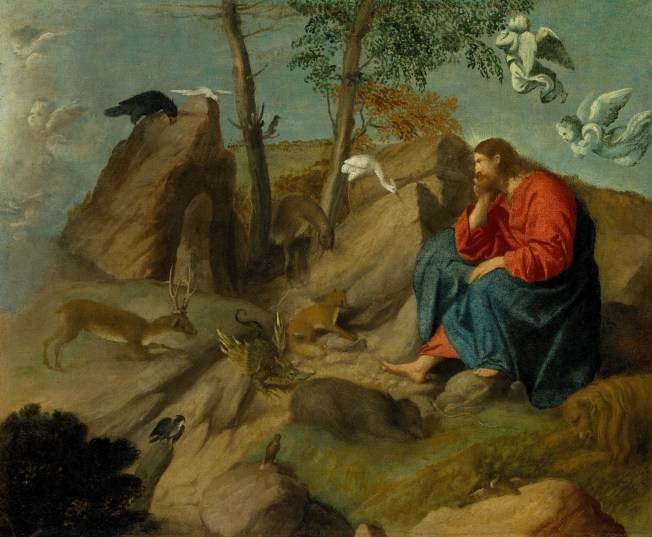
Our Gospel lesson from Mark this morning begins with Jesus getting baptized in the Jordan by His cousin, John the Baptist. The heavens open, and the Holy Spirit in the form of a dove descends upon Jesus. A voice from heaven is heard saying, “You are my Son. With You I am well pleased.”

This is the very beginning of Jesus’s ministry, and we find it right at the beginning of chapter 1 in Mark’s Gospel. And, immediately—one of Mark’s favorite words—immediately after the baptism, the Holy Spirit led Jesus out into the wilderness. Alone. All by Himself.

Imagine, being in the wilderness all alone. I am not sure whether a lot of people today could survive adequately in the wilderness, especially if they grew up in an urban area like Chicago. Perhaps Jesus was especially hardy. We are not told much else, except that He was out there for forty days, and at some point in this period, Jesus was tempted by Satan, the adversary.

Except—I’d like to focus on the wilderness. Jesus went to the wilderness for forty days.

Have you ever felt like you have been in the wilderness? Wandering there for forty days? Or, for even longer? Have you gone through experiences of lengthy unemployment or under-employment? What about times of sickness, and chronic health difficulties? Periods where there have been a whole series of illnesses and deaths of your loved ones and family members?

What about internal difficulties? Approximately one in four Americans suffer from some sort of mental illness or mental difficulty like depression, anxiety, or some sort of compulsion, if not the more severe kinds of affliction like bipolar disorder or schizophrenia. That’s a lot of people. And, those people often feel like they are all alone. All by themselves. These people are in a great deal of internal pain.

These times of sadness, anxiety, fearfulness, even downright despair sometimes threaten to overwhelm us. These are truly times of wandering in the wilderness. 

Let us go back to the families and friends of the people who were shot at Douglas High School in Florida, just five days ago. Here we have a whole community suddenly plunged into the wilderness. How on earth can they possibly cope? How can they find any way to hope for a better day or develop any kind of a positive outlook?

We are not going to leave these dear folks wandering in the wilderness forever. I will return to them and their dire predicament in just a few minutes. I want us to refocus on Jesus. Yes, the Holy Spirit descended on Jesus at His baptism. However, like my favorite commentator David Lose, it struck me that it is the Holy Spirit “that drives Jesus into the wilderness, that place of challenge and struggle and purification and testing and temptation.” [1]

Yes, we believe Jesus willingly withdrew into the wilderness for a time. But, what about other people, like those dear ones in Florida? Overwhelmingly, people do not willingly choose sickness or loss or deprivation, chronic pain, mental illness, or despair. And, what about us, wandering in the wilderness?

How are all of these people supposed to handle things when everything seems to be falling apart? With repeated, multiple losses, or chronic difficulties, or financial reversals? The list can go on and on. Some folks never get back on their feet, either physically, emotionally, financially, or spiritually.

When I was in my twenties, I had two small children. My former husband and I were in desperate straits. Even with college degrees, we could not find jobs. Even crummy jobs. Both of us had work for short periods of time, and then one or the other would get laid off, or the company would relocate out of state, or the position would close. No health insurance, for years. We were hitting the pavement, going to employment agencies, doing just about everything we could, for years. And, if it wasn’t for the long-term generosity of our mothers and families, we could possibly have been kicked out of our apartment and living in a car.

I know very well what it is like to do wilderness wandering. Struggling all alone. Seemingly, all by myself.

As David Lose says, “Truth be told, we rarely volunteer to go to wilderness places. We don’t often look for opportunities to struggle. Which is probably why Mark reports that the Spirit drove Jesus rather than simply make a suggestion.[2]

As Dr. Lose tries to make absolutely clear, God does not maliciously cause us misery or suffering. God does not desire that for beloved children—which we all are!

Notice, the Holy Spirit is not the one who tempts Jesus. Instead, the Holy Spirit is the Comforter and Sustainer who remains with Jesus throughout His time in the wilderness. Just so, the Holy Spirit can be with all of us through our wilderness wanderings. Indeed, God can be at work both for us and through us during our wilderness wanderings and difficult times. [3]

Sometimes, it is not easy. Sometimes, years ago, I would cry out to God, “Where are you? Do you even care about me, at all?” This is one of the hardest times of all, when folks are tempted to totally give up hope. Some struggles—physical, emotional, financial, mental or spiritual—are so difficult to bear. And, what if you have several of these struggles at the same time? On top of each other?

I want to give people a warning. I am absolutely not advocating that anyone stay in a dangerous or abusive situation. If there is danger of any kind, or any sort of abusive behavior or language coming your way, please get out. Please call someone, call or text me. Or, tell someone you trust.

All the same, God can be right next to us through extended difficult times. Again and again, I have heard testimonies about Jesus sitting right by a person’s side, all the time they went through chemotherapy and radiation treatment for cancer. Or, Jesus sitting with a person while they were having treatment for debilitating depression. And, perhaps we can “look at the struggles around us in light of this story and ask, “Even though I did not wish for this, how might God be at work through this difficult period. What can I get out of this? How might God use me to help someone else?” [4]

Yes, our thoughts and prayers are with these dear ones in Florida, mourning the loss of their loved ones. Yes, we can come alongside of people going through wilderness wandering of many types. And, yes. God is there, too. As Comforter, Sustainer. As the Spirit was with Jesus in the wilderness, so the Spirit will be with us, too.

Thank God for heavenly mercies. Jesus promises never to leave us nor forsake us. Amen.

[1] http://www.davidlose.net/2015/02/lent-1-b-wilderness-faith/

“Wilderness Faith,” David Lose, …in the Meantime, 2015.

[2] Ibid.

[3] Ibid.

[4] Ibid.

@chaplaineliza

(Suggestion: visit me at my regular blog for 2018: matterofprayer: A Year of Everyday Prayers. #PursuePEACE – and my other blog,  A Year of Being Kind . Thanks!)
Unknown's avatar

When We Fast

“When We Fast”

Matt 6-16 when you fast, script

Matthew 6:1-6, 16-21 (6:16) – February 14, 2018

The church season of Lent is a season of penitence, a forty-day period of time where we contemplate our inner selves, our sins, our shortcomings, and our position before God. But, it’s not all about us. Not by a long shot.

This Ash Wednesday service tonight is—similarly—a contemplative time where we are called to repentance. This day is the beginning of Lent. In our service we make a special effort to show God that we are sorry for our sins. We approach God through special prayers and readings of repentance, and through the visible sign of the cross of ashes.

When I was growing up on the northwest side of Chicago, our family was the only family on our block with children who attended Chicago public schools. All of the other families were Catholic, and all of the other children attended St. Ferdinand’s Catholic school. I remember them getting ash crosses on their heads. I did not. I was not Catholic.

Our Gospel reading tonight comes from the Gospel of Matthew, in the middle of the Sermon on the Mount, where Jesus talks about how we approach God. There are good ways to approach God, and not-so-good ways. Jesus talks about charity, prayer, and fasting. Good ways to do all of these things, and not-so-good ways.

Let’s focus on the third way Jesus talked about. Fasting. Not a particularly fashionable thing to do today. (Unless you need to do it for health reasons, in which case I absolutely agree with the medical professionals. I fully support them.)

People would fast to show sorrow for sin and repentance, as well as their humility before God. Years ago, centuries ago, fasting was almost a badge of honor among religious people. What was up with this? Why so much attention paid to fasting?

Those super-spiritual super heroes of Judaism, the Pharisees, practically turned fasting into performance art. They were particularly skilled at it. They even advocated fasting twice a week—on Tuesdays and Thursdays. They recommended looking tired and hungry and even dumping ashes on yourself, on the days you were fasting. That way, everyone would know you were fasting. Also, the fasting process had tight guidelines and rules on “how-to-fast.”  (That way, you could earn extra brownie points with the Lord, too!)

What is the matter with this kind of fasting? Is this the best kind of approach to God? Can we really please God if we go about it in such a rigidly controlled manner?

What did Jesus say? Reading from Matthew 6, “And when you fast, do not put on a sad face as the hypocrites do. They neglect their appearance so that everyone will see that they are fasting. I assure you, they have already been paid in full.”

I suspect Jesus would not be particularly happy with the way the Pharisees fasted. Sure, the way they treated the outward body portrayed the inner way they were trying to follow God, but in such a hypocritical fashion.

Since we are beginning Lent today, many Christians all over the world commit themselves to fasting in some way, or deny themselves some food, drink or activity during these forty days. It’s meant to remember Jesus and His withdrawal into the wilderness for forty days to prepare Himself for His public ministry. Other people read a Lenten devotional. Or, some follow various Lenten calendars or Lenten task lists to try to follow God more closely.

I remember when I was a child, the other children—Catholic schoolchildren—would give up something for Lent. Chocolate or cakes and cookies would often be selected, as would soda. A few jokesters would suggest they were giving up homework for Lent, but that would quickly be frowned upon by both the religious sisters and by their parents.

The other children would sometimes boast about what difficulties they were having, “giving up” something for Lent. Today, there is even a term for it: “humble-brag.”

Is this what Jesus wants us to do, in order to follow Him more closely? No! Other people were (and are) not to know that we are fasting! This is a way that Jesus suggests to follow God more nearly.

We have many options to follow Jesus during Lent. We can follow a daily Lenten prayer and bible reading. We can meditate and pray every day.

What are we as a congregation going to do, on Sundays in Lent? I have a small Jesus-figure, and I’ll be featuring it in the children’s sermons in the weeks ahead. I will use this figure as a visual aid, helping the children understand Jesus and His journey to the cross. Plus, we will follow Jesus all around the sanctuary.

We can all strive to love God more dearly and follow Jesus more nearly, as we journey with Jesus through Lent. Amen.

@chaplaineliza

(Suggestion: visit me at my regular blog for 2018: matterofprayer: A Year of Everyday Prayers. #PursuePEACE – and my other blog,  A Year of Being Kind . Thanks!)

Unknown's avatar

Transfigured? Frightened!

“Transfigured? Frightened!”

Mark 9:6 (9:6-7) – February 11, 2018

Jesus Transfiguration Georgian relief Luke 9

Transformations can be quite a surprise. For example, when a run-down house gets a top-to-bottom rehab job over weeks or months, the house can be really transformed. Or, when someone is diligent over time with diet and exercise, and loses a lot of weight, they can be really transformed, as well. People can be surprised and impressed when they see the stunning changes that happen, gradually. These kinds of transformative changes can take a while.

The type of stunning change that happened in our Gospel reading today did not take weeks or months. Instead, our Gospel writer Mark talks about the transformation happening suddenly. Or, to use one of Mark’s favorite words: immediately.

We need to set the scene. Just previous to this reading, in Mark chapter 8 Jesus asks His disciples who others say that He is, followed by who the disciples think He is. Peter makes the great statement “You are the Messiah.” It is then that Jesus predicts His death. He starts to tell His disciples that He will have to suffer, be rejected and die, and then rise after three days. All of which must have been difficult to understand for the disciples.

I can relate to the followers of Jesus. Jesus was a charismatic leader, and many people listened to Him, and even followed Him. However, some of the things Jesus said were clear out of their experience. Even with all of the biblical revelation, evidence and commentary that we have nowadays, some of the statements of Jesus are still a challenge for us to understand, today. I can relate to the disciples’ confusion and puzzlement!  

A few days after the confession of Peter and all this big stuff happening, Jesus decides to go for a day trip, up on the top of a mountain. He asks only three of His disciples to come with him: Peter, James and John. After they reach the mountaintop, Jesus suddenly is changed. Transformed. Or, as the Gospels tell us, Jesus is transfigured. This is a state of God’s heavenly glory, suddenly appearing all around Jesus, making His clothing whiter than anyone has ever seen. If that is not enough, the glorified Jesus is seen talking with Moses and Elijah.

Can you see the picture? Imagine a huge, bright spotlight shining on Jesus, Moses and Elijah. Plus, there are more small spotlights all around, and the background surrounding them is all backlit. Except—the people of Jesus’s time have never even heard of electricity. All of this super-white light and super-white clothing is supernatural. Of heavenly origin.

I am reminded of the heavenly glory that surrounded Moses on top of Mount Sinai. Moses was no stranger to heavenly whiteness and brightness. He was in the presence of the Lord God Almighty for many days. And, Elijah—going up to heaven in a fiery chariot pulled by fiery horses? That must have been a heavenly experience of light and glory, too. Much less being in heaven, in God’s presence for centuries at that point.

Moses and Elijah were the premier representatives of the Jewish people, of the Jewish law code and the voice of the prophets. Revered by millions of Jews since their time. And, on top of that, they were in the presence of the suddenly-glorified Lord Jesus Christ. Is it any wonder that mere humans Peter, James and John were all shaking in their shoes?

I discovered a fictionalized conversation between Jesus, Moses and Elijah, from that mountaintop that Mark tells us about. This conversation comes from Pastor Joyce, written in 2003, from a commentary website I visit on occasion. Listen to this conversation:

Elijah: Look at these stubborn and fearful people. How do you get these children to honor God?

“Moses: And how do you teach them to love each other? God knows I tried. I brought God’s law down from the mountain top. It is very clear. The simple commandments tell them how to love and honor God and how to live together in mutual love and respect.

But right after I told them how to live, they began complaining about God and began to worship false idols. The law told them not to betray or disrespect others. Yet, the powerful continued to grasp for more wealth and power. Foolish people they thought that would give them security. But for these things they have to oppress the weak. Then the fighting starts. It can lead to killing.

“Elijah: Well, I warned them. I told King Ahab and the people not to worship false idols. I challenged 450 prophets of Baal and they died on the mountain top. But today, people still worship the idols they create: power, material possessions, and the comfort they bring. But they do not receive satisfaction from them. NO! How do we teach people to find the real thing — joy in relationships with God and with each other?

“Jesus: God sent you, Moses, to give the law.  God sent you, Elijah, and other prophets to warn the people of how they are harming themselves. Now God has sent ME… I will live among these rebellious people for a while. I will love them and I will die for them. These men you see before you, and those who follow them, will carry on my work of reconciliation to God and humankind.

“Moses: These men? Look, they are dumbstruck. They are frail. They are confused.

“Elijah: Good joke, Jesus. Now… tell us your real plan.

“Jesus: I have no other plan.

“Elijah: But how will they find the wisdom and the strength?

“Jesus: Ahhh… I will be with them.” [1]

Did everyone hear? Jesus promised to be with the disciples, a number of times. Not only with the disciples, but with all of His friends and followers.

It’s true that Peter—good, old foot-in-mouth Peter—made some sort of confused and excited offer to build three little booths or mini-altars there, on top of the mountain. Yes, with our 20/20 retrospect, we can laugh at Peter’s fumbling and falling all over himself. But, wouldn’t we be in the same boat? What if there were a heavenly visitation right here, right now? Boom! Cue the bright lights! The glorified Jesus, here in our midst, here at St. Luke’s Church!

The thing is, Jesus could have stayed there, on that mountaintop, with Peter, James and John. Relatively safe, and the mountaintop could have become a pilgrimage site, renowned throughout the world. But, no. Jesus knew He had to walk the way of the Cross. He knew we, His followers and friends, had to come down from that mountaintop, too.

The disciples did not just slink away and hide. No, they went out after the Resurrection and Ascension and after Pentecost, and they turned the world upside down with the Good News of the risen Lord Jesus. It was not all sweetness and light for the disciples, or for the other followers of Jesus. No, many of them had a very difficult time. Yet, Jesus was with them.

Today, we don’t permanently live on the mountaintop, either. Yes, we often walk through the dark valleys. Yes, there is sorrow and pain in our lives. As David Lose says, the nitty-gritty details of misunderstanding, squabbling, disbelieving disciples. Religious and political quarrels of the day. Jealousies and rivalries both petty and gigantic. Into the poverty and pain that are part and parcel of all of our lives. [2] Yet—Jesus is right by our sides, too. Yes, in the good times, and yes, in the not-so-good, even sorrowful times, too.

Do you hear? Jesus will be with us, in good times and bad. We can take comfort in that. We can celebrate. Praise God. We are not left alone and friendless. What a friend we have in Jesus, indeed. Amen, alleluia.

[1] http://desperatepreacher.com//bodyii.htm

[2] http://www.workingpreacher.org/craft.aspx?post=1563

“He Came Down,” David Lose, Dear Working Preacher, 2012.

@chaplaineliza

(Suggestion: visit me at my regular blog for 2018: matterofprayer: A Year of Everyday Prayers. #PursuePEACE – and my other blog,  A Year of Being Kind . Thanks!)

Unknown's avatar

Not Grow Tired or Weary

“Not Grow Tired or Weary”

Isa 40-28 the Lord, mountain

Isaiah 40:21-31 (40:28) – February 4, 2018

Today, February 4, 2018, marks a great extravaganza of sport, of enjoyment, of food and drink and parties and advertising and lots of other things that encompass entertainment. Today is the evening of the Super Bowl, that year-end blow-out, where American football celebrates the best it has to offer. And then some.  This game has become a worldwide phenomenon, and millions of people will tune in and watch the festivities, worldwide.

The elite athletes who play in this game are among the small percentage of people in the United States who are in really peak physical condition. It does not matter about when or where such professional athletes are playing professional sports, vast audiences worldwide watch in admiration as these strong athletes compete. Huge crowds watch to see who will be victorious, which team will be the most mighty and powerful.

This was a similar occurrence in the days of the first century, too. The Apostle Paul talks about elite athletes involved in professional sports in his time–except, more blood-thirsty, where people received public accolades and their equivalent of Super Bowl and other championship rings.

This was definitely not the situation in the time of our Scripture passage from Isaiah 40, I am sorry to say. The nation of Israel is in exile. The last thing they are thinking of is competing in sports. In fact, the conquering nation of Babylon has demonstrated its might and its power over the defeated nation of Israel, since they transported a large portion of the people of Israel into exile, into towns of Babylon and into labor camps, too.

If we were to look at this war between Israel and Babylon as one huge competition, Team Israel would be really smacked down. Sure, it was a bloody competition, but the Babylon team ended up on top. They were the winners, and they took lots and lots of treasure and precious things from Israel for their “championship” prizes. Along with lots and lots of the best and brightest people in Israel as their captives.

The direct analogy breaks down at this point, but let’s take a closer look at the predicament of Team Israel. In exile. Discouraged, dismayed, away from “home” for decades. Away so long that the next generation of Israelites have grown up in Babylon and only have long-distance memories to fall back on. In the cosmic order of things, defeated Team Israel must really feel like grasshoppers, like verse 22 tells us.

Today, with this fierce American culture of competition, one-up-man-ship, dog-eat-dog and better-than, many people feel like grasshoppers, too. Few of us can claim to be professional athletes or elite soldiers, either. So many are made to feel less-than or inferior. Not good enough, not fast enough, not skilled enough, not popular enough.

As one of the commentators, Doug Bratt, says of our modern-day predicament, “Maybe it’s the other students at school who mock them.  Or perhaps loneliness or even advancing age makes people feel like grasshoppers.  We may feel like grasshoppers when we trudge into our workplace or try to raise a difficult child.  Or perhaps reports from their investment or pension funds make people feel like grasshoppers.” [1]

 We can feel defeated even before we begin to try, before we make the attempt to put ourselves forward and compete. Lord, what gives? How come? Why me? What’s the use? I may as well pull the covers over my head and stay in bed.

However, most everyone would agree with the statements from Isaiah chapter 40 about the Lord, the everlasting God, the creator of the heavens and the earth. The Lord is greater than all of us, here on the earth. The Lord is even greater than the kingdom of Babylon or the Roman Empire. The Lord is greater and more powerful than all the armies of all the empires of all time, put together.

Just as a comparison, a few verses earlier in this chapter, in verse 12, the prophet says “Who has measured the waters in the hollow of God’s hand, or with the breadth of God’s hand marked off the heavens? Who has held the dust of the earth in a basket, or weighed the mountains on the scales and the hills in a balance?” Just to let you all know, according to Isaiah 40, the universe can be measured in the span of God’s hand.

It’s figurative and poetic language, but this language gives us some idea of how huge and mighty and powerful our God really is.

Even the most elite Olympic athlete and the most powerful professional soldier has their down times. Even the best of the best grows weary and gets tired. It happens to the best of us, as well as to the rest of us.

Eric Liddell, the 1924 Olympic medal winning runner who was made famous again by the movie Chariots of Fire, was one of these elite Olympic athletes. Yes, athletes from all over the world, through the ages, have been at the top of their game and the best of the best.

I suspect Eric Liddell and the other men on the British running team grew tired and weary, from time to time. And, those who hear and proclaim Isaiah 40 today also know what it means to be weak.  Even children and young adults, as the prophet reminds us, sometimes “grow tired and weary.”  Even Olympic athletes and elite soldiers pccasionally stumble and fall.  So, at no matter what point of life in which we find ourselves, whether or not we always realize it, all of us very much need God’s help. [2] No matter what, no matter who, we all need God’s helping hand. Maybe more often than sometimes.

In Isaiah 40, we find that Israel is told that they can exchange their weakness for God’s strength. Commentator Ralph West tells us in Hebrew, it actually says they can “exchange their strength.”  “God can give strength without His strength being diminished at all. God can give power without His power being lessened, if you wait on God.  If you wait on the Lord, God will give replace your weakness with God’s strength, your emptiness with His wholeness, your burnout with His new beginning, all because of God’s mercy.” [3]

Do you hear? Do you understand? God’s provision is not just for the best and the brightest. God’s power and strength is not just for the one percent at the top of the heap. God’s mercy is for everyone, young and old. We all can exchange our weakness and weariness for God’s strength, for God’s mighty power.

“God doesn’t always take away our problems.  Yet God gives us the strength to deal with them.  God helps vulnerable people like us so that we can run and not tire out.” [4] Having a mighty, powerful God like this on our side is worth a whole lot more than any Super Bowl ring, any day of the week. Amen, and amen!


[1] http://cep.calvinseminary.edu/sermon-starters/epiphany-5b-2/?type=old_testament_lectionary

Commentary and illustration idea, Isaiah 40:21-31, Doug Bratt, Center for Excellence in Preaching, 2015.

[2] http://cep.calvinseminary.edu/sermon-starters/epiphany-5b-2/?type=old_testament_lectionary

Commentary and illustration idea, Isaiah 40:21-31, Doug Bratt, Center for Excellence in Preaching, 2015.

[3] http://www.theafricanamericanlectionary.org/PopupLectionaryReading.asp?LRID=100

Commentary, Isaiah 40:27-31, Ralph D. West, The African American Lectionary, 2009.

[4] http://cep.calvinseminary.edu/sermon-starters/epiphany-5b-2/?type=old_testament_lectionary

Commentary and illustration idea, Isaiah 40:21-31, Doug Bratt, Center for Excellence in Preaching, 2015

@chaplaineliza

(Suggestion: visit me at my regular blog for 2018: matterofprayer: A Year of Everyday Prayers. #PursuePEACE – and my other blog,  A Year of Being Kind . Thanks!)

Unknown's avatar

Hope and Wholeness

“Hope and Wholeness”

Mark 1-27 Jesus-the-divine

Mark 1:21-28 (1:27) – January 28, 2018

A common saying is “You only have one chance to make a first impression.” How true that is! A close parallel is beginning a new position. A great deal is riding on that first impression, the first few days or weeks at a new job, the first major thing or statement a prominent person does or says.

Our Gospel reading today from Mark chapter 1 happens at the very beginning of the Rabbi Jesus’s ministry. Jesus is beginning this new position as an itinerant rabbi, traveling around the countryside, preaching and teaching. What else does Mark include here? This is a narrative of an important first thing that this prominent person Jesus says and does, setting the tone for the rest of Mark’s Gospel. I’d like to thank bible commentator Paul Berge for his fictional first-person account, which is a narrative adaptation of this first miracle of Jesus.

“Were you at the synagogue in Capernaum today? I wasn’t sure I saw you and so I will tell you as clearly as I can what happened. I can only explain that something occurred that has never, yes, never ever happened before in our hometown synagogue where our people “gather together.” What took place is unlike anything our rabbis have instructed us in over the years. This was far beyond their teaching and authority.

“Shabbot worship started out like a routine, very normal gathering. We all came with the usual expectation. Now, don’t get me wrong, our rabbis are faithful interpreters of the Torah as they instruct us in the Word of the Lord, but their teaching does get to be routine. Everything was progressing as usual, the prayers, the Psalms, the reading of the Torah, when a newcomer “immediately” entered the synagogue and began teaching and instructing us, dare I say, with a new “authority” (Greek, exousia). His authority was not as our scribes. When I use the word “authority” about his teaching, you know that the word also includes the power to “exorcize” demonic spirits.

“I am still in shock as to what happened next. “Immediately” a deranged person screams out. No one in the synagogue had a clue as to what brought forth this outburst. It appears an unclean spirit had identified this rabbinic-like teacher as one who had authority to exorcize and called out to him by name: “What have you to do with us, Jesus of Nazareth? Have you come to destroy us?” The voice was a shrill demonic-like scream. How did this spirit know the name of the rabbi from Nazareth? Did the voice really assume that this teacher has the authority to exorcize demonic or unclean spirits?

“The scream continued with words of blasphemy using the name of God: “I know who you are, the Holy One of God.” With this a hushed silence came over the entire synagogue as these words were spoken. The rabbi named Jesus from the hill country of Nazareth sensed the offense of these words, and the identity of the Holy One of God. Jesus addressed the possessed man and rebuked him with exorcizing words which likewise silenced the entire synagogue, “Be silent, and come out of him.”

“What occurred next was a demonstration I have never, ever, witnessed before. The man was writhing on the floor like he was in conflict with the spirits possessing him. Then the voice of a demonic spirit cried out with the same shrill demonic-like scream. The unclean spirit came out of him and the man appeared to be calm. He stood up and in his right mind looked as normal as any of us.

“Needless to say, we were all overcome and amazed and kept saying to one another, “What is this? A new teaching — with authority he exorcizes a demonized person!” What took place we saw with our own eyes that he commanded even a host of unclean spirits and they were obedient to him. On my oath, this is what took place on this Shabbot. I can’t explain what came over us, but it was like we gave witness to the rabbi from Nazareth as our praise to the one, holy and righteous God in our midst. We have no other experience like this to compare. We have since heard that what took place in our synagogue “immediately” spread throughout the surrounding region of Galilee.” [1]

Do you hear what Jesus did? He cast the unclean, evil spirit out of the man, and made him whole again. Gave him a new lease on hope and wellness. Gave the man the gift of emotional, psychological and mental wholeness, of abundant life itself.

Not everyone believes that Jesus casts out evil, unclean spirits from people, in the spiritual realm. Some people are very skeptical about this kind of miracle. But, I would like to remind everyone that belief in evil spirits has been a common, widespread belief for thousands of years. It does not as much matter that many people of the 21st century don’t believe that Jesus did this. The point is that the people of New Testament times did believe in the power and authority of the Rabbi Jesus. Power to cast out unclean spirits.

For thousands of years, society has dealt with different kinds of mental, emotional and psychological issues in individuals. Sometimes, these issues and illnesses have been called spiritual and demonic. From what we now know, these conditions can be medical. These people with illnesses and issues sometimes seem to be held hostage to internal, powerful forces only recently understood.

Regardless of whether the illness or issue was emotional, physical, psychological or spiritual, Jesus came alongside of this man with an unclean spirit. Maybe Jesus was the first who had approached the man in a long time. Jesus, with holy power and authority, ordered the evil spirit out of the man. And, immediately, the man was cured.

Was it really and truly an “evil spirit?” In this case, as in certain other situations in the Gospels, My opinion is, “yes.” There are a great many situations which are spiritually energized, throughout the world. Both positive and negative, concerning good and evil spirits.

But, that is not the only thing. No, there are negative tendencies, urgings, and thoughts people get in their heads, on their insides. An explosion of anger, over and over. A suicidal impulse or thought. An intense jealousy, suddenly flaring. A wild sexual fantasy that returns again and again. An overwhelming feeling of depression and dread, creeping into the deepest places inside. We, as human beings, are keenly aware of these unwelcome, unclean spirits in our hearts and inner thoughts. We often wonder where these “unclean thoughts” come from and why we can’t get rid of them. It is as if they are part of our inner nature as human beings. [2]

It does not matter whether our issues are psychological, physical, emotional, spiritual, or some combination, Jesus can come alongside of us. Jesus has the power and authority to take care of the situation and restore hope and wholeness. Yes, in this situation in Mark’s Gospel, with this troubled young man. And, yes, in a multitude of various situations, today, too.

Today, you and I are often ashamed of individuals such as this troubled man. We tend not to speak of it. We fear the misunderstanding or the judgment or avoidance we expect we will surely see in the eyes of others. Or, hesitate to choose to whom we dare to entrust that which hurts us the most. [3] Whether we name it evil spirits, mental disturbance, emotional instability, addiction, or something else, Jesus can overcome. Jesus can provide healing, hope and wholeness, whatever the situation. Yes, in Mark’s gospel, and yes, in all of our lives, today.

(A big thank you to Dr. Paul Berge, who wrote the adapted first-person account of this Scripture reading from Mark 1:21-28. Thank you for this writing, and for your excellent insights from your Gospel commentary!)

[1] http://www.workingpreacher.org/preaching.aspx?commentary_id=1122

Commentary, Mark 1:21-28, Paul S. Berge, Preaching This Week, WorkingPreacher.org, 2012.

[2] http://www.sermonsfromseattle.com/series_b_hunger_for_healingGA.htm  “Hunger for Healing,” Gospel Analysis, Sermons from Seattle, Pastor Edward F. Markquart, Grace Lutheran Church, Seattle, Washington.

[3] http://dancingwiththeword.com/out-in-the-open-casting-out-unclean-spirits/ Janet H. Hunt.

@chaplaineliza

(Suggestion: visit me at my regular blog for 2018: matterofprayer: A Year of Everyday Prayers. #PursuePEACE – and my other blog,  A Year of Being Kind . Thanks!)

Unknown's avatar

Believe the Message!

“Believe the Message!”

Mark 1-17 fishers of people

Mark 1:14-20 (1:15) – January 21, 2018

What is news? There are lots of different kinds of news. National news, local news. Partisan news, news that is slanted one way or another. What’s more, we hear so much about “fake news” today. News fit to scare the pants off of some people, and news meant to get some people really upset. News brings about all kinds of reactions. What kind of news can we possibly trust? How do we know which kind of news to believe?   

If we take a closer look at our Gospel reading for today, the Gospel writer Mark talks about news, too. Good News. God’s news—God’s wonderful message of Good News, brought by the greatest newsman, the greatest news announcer of all time, our Lord Jesus Himself.

Mark doesn’t waste any time with genealogies (like Matthew) or with long backstories of how Jesus came into the world (like Luke and John). No, Mark starts right off with a bang, with the baptism of Jesus. Then, shortly after He is baptized, Jesus starts to travel about saying, “Time’s up! God’s kingdom is here. Change your life and believe the Message.”

I love the relevance, the immediacy of Eugene Peterson’s modern translation. How appropriate that this translation of the Bible is called “The Message.” The whole Bible is God’s Good News to humanity, and most especially right here, in the Gospel of Mark.

Here we are, right at the beginning of Jesus’s ministry. John the Baptist (the cousin of Jesus) was already on the scene. A sort of a warm-up act for the main event, for some time John had already been proclaiming “Repent! And, believe God’s Good News!” First Jesus came to John to be baptized, and now was the time for Him to begin His own ministry, His own preaching of God’s Good News.

What do we hear first thing in our Gospel reading today? John the Baptist has been arrested. Next thing, Jesus begins to gather a group of disciples around Himself. Mark tells us that the way Jesus does this is by proclaiming God’s Good News. The Kingdom of God has come to us. Or, as Eugene Peterson translates it, “Believe God’s Message!”

One sure way to know when the writers of the Bible really want readers to pay attention is when a word or phrase is repeated. “The emphasis of Mark’s gospel is that Jesus’ coming is the gospel, the “good news,” a term that in the first fifteen verses of the gospel occurs three times.” [1]  Today’s text continues the story from last Sunday, that is, the beginning of Jesus’ ministry as He tells God’s Good News to His first disciples. In today’s reading Jesus calls four fishermen at the Sea of Galilee — Simon Peter, Andrew, James and John.

Our Gospel reading last week was from John chapter 1, and there are some differences between John’s account and Mark’s account from today’s scripture reading. In that sermon, I also mentioned how Jesus called several of His first disciples—this time it was John and James first, and then Simon Peter and Andrew. Some people have said, “I don’t understand. Which story is true, the Gospel of John or the Gospel of Mark?” Great question.

When a car accident happens in the middle of a busy intersection, that is a real tragedy. I understand when the accident is serious enough, the police sometimes get involved to find out exactly what happened. Imagine the surprise and even consternation when eyewitnesses on different street corners have different perspectives and impressions of the same event!

In the case of the car accident, the different people all saw the same vehicles collide, but from opposite angles and varying positions. Different things may have made a strong impression on one witness, more than another.

It’s no wonder that their eyewitness accounts are somewhat different from each other. And, in the case of the four different Gospel accounts, that adds to the richness and depth of the separate narratives. Each Gospel writer had a separate emphasis and perspective, and different things he wanted to highlight and point out.

However, we need to drill down to what is common between these readings. Jesus calls His first disciples, and Jesus tells them all, “God’s kingdom is here. Change your life and believe the Message.” What is the definition of God’s Good News, anyway? In Greek, the word is euaggelion, or Gospel. God’s Message of Good News to all humanity.

As we trace this Good News through the four Gospels and the rest of the New Testament, we get some more information. God’s Good News is truth. With the coming of the man Jesus here on the earth, humanity has the opportunity to see and touch and experience what God is like. A key feature of this Good News is hope. The fallen world is pretty hopeless and dark, but Jesus brings hope to the hopeless heart. And, last, God’s Good News means salvation. Salvation is not just being saved from the negative aspects of escape from sin and death. No! Salvation is eternal life, and the power to live life victoriously. [2]

God’s Good News is something new to many; something different, even radical. Why on earth should anyone want to adopt this strange, new life from Jesus? Maybe, this way of being and living is even a bit frightening? Many people may well be afraid of taking such a big step.

As Dallas Willard writes, “when he was a boy, rural electrification was just happening and power lines were being strung throughout the countryside.  But suppose even after the lines were up and running you ran across a house where the weary family still used only candles and kerosene lanterns for light, used scrub boards, ice chests, and rug beaters.  A better life was waiting for them right outside their door if only they would let themselves be hooked into the power lines.  “My friends,” you could proclaim, “electricity is at hand!”  But suppose they just didn’t trust it, thought it was too much of a hassle, and anyway didn’t believe the promises that things might be easier with this newfangled juice running into their house.  “If it’s all the same to you, we’ll stick with the old ways.” [3]

You see the difficulty? How some people are afraid of change? Or, prefer not to change their lives? How some don’t want to accept this Good News from God because it’s different, or new, or out of their experience? Can you hear Jesus saying, “My friends, God’s Kingdom is at hand! God’s Good News of eternal life is right here, waiting for you!”

Jesus still offers this gift of God in our world today, proclaiming His Message of God’s Good News, His Message of God’s truth, hope and salvation.

God’s Good News actually makes our job simple. We need to widely and clearly communicate the Message of God. “What mustn’t be lost on us is the urgency of its communication, for the day of judgement is at hand. We point to the hope of eternal life in Christ and call on everyone everywhere to turn and put their trust in Jesus.” [4]

Have you responded as the disciples did, by dropping everything and embracing the Good News? Jesus is calling, waiting for you and for me. Jesus says, “Believe the Message! Come, follow Me.”

[1] http://www.workingpreacher.org/preaching.aspx?commentary_id=2315

Commentary, Mark 1:14-20, Michael Rogness, Preaching This Week, WorkingPreacher.org, 2015.

[2] Barkley, William, The Gospel of Mark (Westminster Press: Philadelphia, 1975), 25-26.

[3] http://cep.calvinseminary.edu/sermon-starters/epiphany-3b-2/?type=the_lectionary_gospel

Commentary and illustration idea, Mark 1:14-20, Scott Hoezee, Center for Excellence in Preaching, 2015.

[4] http://www.lectionarystudies.com/studyg/sunday3bg.html   “Repent and Believe in the Good News,” Rev. Bryan Findlayson, Lectionary Bible Studies and Sermons, Pumpkin Cottage Ministry Resources.  

@chaplaineliza

(Suggestion: visit me at my regular blog for 2018: matterofprayer: A Year of Everyday Prayers. #PursuePEACE – and my other blog,  A Year of Being Kind . Thanks!)

Unknown's avatar

The Lord Calls

“The Lord Calls”

1 Sam 3 speak-Lord-your-servant-is-listening

1 Samuel 3:1-20 (3:10) – January 14, 2018

When I was a young child growing up on the northwest side of Chicago, every once in a while I would hear my mother and my aunts talk about my great-aunt Bertha, my grandmother’s older sister. Sister Bertha. She was an actual “Sister.” She was a Catholic nun, from a local area convent in the Chicago suburbs.

Sister Bertha had taught school for all the years of her active service to God. She must have been a particularly stern teacher. I only remember seeing her one time, at the convent retirement home where she was living, on the occasion of her 90th birthday. She certainly had a commanding presence. I was about eight or nine years old, and I could definitely sense that sternness about her.

My great-aunt Bertha and the other nuns—and Catholic and Orthodox priests, and other Protestant ministers, for that matter—had a calling. They have been “called” by God. I know that I have been “called” by God, too. But, what exactly does that mean?

In both Scripture readings today, we hear about the call of God. From the Hebrew Scriptures in 1 Samuel, the young Samuel is called. In the Gospel of John, several disciples are called. Again, what is this “call” we are talking about?
We turn to our reading from 1 Samuel 3, starting with the first verse. “The boy Samuel was serving God under Eli’s direction. This was at a time when the revelation of God was rarely heard or seen.” There was little written down from God—only some laws handed down from Moses. You can’t just go home and pick up your personal copy of the Old Testament or Psalms and Proverbs to read. And God rarely—if ever—spoke to people at that time. God-sent visions were extremely rare, too. I love the Hebrew word for “rare.” It means “precious.”

“In biblical Hebrew, the descriptor of “rare/precious” is typically reserved for an item like jewelry, the idea of something extremely valuable due to pure lack of supply.” [1]

Do we begin to have some sort of idea how valuable—how rare and precious it was for anyone to hear from God, the Lord Almighty, who made heaven and earth? If we are abandoned to total silence from God, that must be a very sad time, indeed. And, what does this reading say about the boy Samuel? “Now Samuel did not yet know the Lord: The word of the Lord had not yet been revealed to him.”

Ah, now young Samuel enters the scene.  He works in the special tent where God’s special presence is located, where the special wooden Ark of the Covenant with the Ten Commandments inside. Samuel is the High Priest’s assistant, serving in the Tabernacle.

Reading more from this passage: “and Samuel was lying down in the house of the Lord, where the ark of God was. Then the Lord called Samuel. Samuel answered, “Here I am.” And he ran to Eli and said, “Here I am; you called me.” But Eli said, “I did not call; go back and lie down.” So he went and lay down.

Again the Lord called, “Samuel!” And Samuel got up and went to Eli and said, “Here I am; you called me.” “My son,” Eli said, “I did not call; go back and lie down.”

Samuel still doesn’t know who is calling him—by name. Similarly, when God’s voice comes to us today, can we make it out through the roar? “There are many voices competing for our attention and how many of us can say that we really know God well enough to recognize a word as being from God or someone else?” [2] Can we recognize the voice of God calling us?

Let’s return to my initial question, the question I started this sermon with. What is a “calling?” We will turn to the dictionary. One definition is “a vocation, profession, or trade.” My husband is an editor. I have a friend who is a photo-journalist. Other people are nurses, or mechanics, or accountants, for example. That is their calling, their daily work in life.

However, in this sermon, the definition that is most important to us today is the second one: a call or summons, especially when accompanied by conviction of divine influence. We turn to our Gospel lesson for today, from John, chapter 1.

“The next day John was back at his post with two disciples, who were watching. He looked up, saw Jesus walking nearby, and said, “Here he is, God’s Passover Lamb.” 37-38 The two disciples heard him and went after Jesus. Jesus looked over his shoulder and said to them, “What are you after?” They said, “Rabbi” (which means “Teacher”), “where are you staying?” 39 He replied, “Come along and see for yourself.” They came, saw where he was living, and ended up staying with him for the day. It was late afternoon when this happened.”

John, his brother James, and their friend Andrew all followed Jesus, and they all acknowledged Him as Messiah. What do we have here? A call or summons, especially when accompanied by conviction of divine influence. That is how the disciples started to follow Jesus! They received the call, the invitation. The summons.

That is how nuns, priests, ministers, and every other person follows Jesus, as well—especially when accompanied by repeated conviction of divine influence. They receive a call.

I’d like everyone to turn to the back page of today’s bulletin. See the listing of all the people who take part in ministry here at our church? What leads the listing? Who are the ministers at our church? All St. Luke’s members, that’s who. All of us are ministers of God. The Lord has called each one of us into God’s service.

Let us see what happens to Samuel. We see that the high priest Eli finally gets the message. It is the Lord calling in the night, not Eli himself. Wisely, Eli tells Samuel what to do and how to answer when the call comes again. And, the call does indeed come again. The Lord came and stood there, calling as at the other times, “Samuel! Samuel!”

Samuel’s response to God? “Then Samuel said, “Speak, for your servant is listening.” We can all take comfort in the fact that God didn’t give up on Samuel.  The Lord called, called, and called again.  How many times has the Lord needed to call to us? God called until Samuel learned how to listen. How long has God been calling your name, and mine?

God doesn’t just call us to gather us in heavenly arms of comfort. Well, yes, we are God’s beloved children. The Lord greatly desires all to come, to follow. But, that is not all! God also calls us—we are offered the opportunity and experience to work for God. Not to get on the Lord’s “good side” or to gain “brownie points,” but we serve in gratitude and appreciation for all we have been given. Also important, we have the opportunity to respond to the goodness and love of the Lord for each one of us.

Since the late 1990’s, millions of people across the United States “have celebrated Dr. King’s legacy by turning their community concerns into volunteer service and ongoing citizen action on King Day and beyond.” Martin Luther King Jr. gave us an encouraging example. “Life’s most urgent question is: What are you doing for others?”

Global Citizen is “a non-partisan organization dedicated to promoting civic engagement, community volunteering, civic responsibility, and sustained active citizenship among diverse groups, particularly young people. Global Citizen promotes democracy building, voter education, and participation, locally and globally.” [3]

Houses of worship across the country have partnered with this organization in a day of service commemorating Dr. King—service where we reach out to others in need with a hand of assistance, support, and encouragement. What a marvelous way to reach out with the love of Christ. Have you heard God’s call? Yes, God’s call of love, and yes, God’s call to serve.

Speak, Lord. Your servant is listening.


[1] http://www.workingpreacher.org/preaching.aspx?commentary_id=2305

Commentary, 1 Samuel 3:1-10, Roger Nam, Preaching This Week, WorkingPreacher.org, 2015.

[2] Commentary on 1 Samuel 3:1-10 [11-20]

http://www.workingpreacher.org/preaching.aspx?commentary_id=1185  Callie Plunket-Brewton

[3] http://mlkdayofservice.org/about-the-greater-philadelphia-martin-luther-king-day-of-service/

@chaplaineliza

(Suggestion: visit me at my regular blog for 2018: matterofprayer: A Year of Everyday Prayers. #PursuePEACE – and my other blog,  A Year of Being Kind . Thanks!)

Unknown's avatar

On the Lookout

“On the Lookout”

Matt 2-11 Adoration_magi_Pio_Christiano_4th cent. sarcophagus, Vatican museum

Matthew 2:1-12 (2:2) – January 7, 2018

Christmas Day has been over for two weeks. To modern-day Americans, this was a long time ago! But the full holiday isn’t really over on December 25th. There are the twelve days of Christmas (remember the song about the twelve days?), during which many would have parties and feasting and especially Twelfth Night celebrations.

As we think of Nativity scenes or paintings, how often do we see them with shepherds and sheep, as well as the three wise men? All of them at the same time visiting the baby Jesus in the manger?  That is not quite the way it was, as presented in the Gospels. We are all familiar with the Nativity narrative from Luke chapter 2, “In those days a decree went out from Emperor Augustus that all the world should be registered. All went to their own towns to be registered.”

For the visit of the wise men, we need to turn to Matthew’s gospel, chapter 2: “After Jesus was born in Bethlehem in Judea, during the time of King Herod, Magi [or, wise men] from the east came to Jerusalem and asked, “Where is the One who has been born king of the Jews? We saw His star when it rose and have come to worship Him.”

Here we have some wise men—probably noblemen who know a great deal about stars and constellations. They have been studying the heavens for years and years, as well as studying religious books and writings. Just as it says in the gospel record, a great sign (or star) rose in the sky, so these wise astrologers knew that something momentous was going to happen.

These wise men, or Magi, were not Jewish wise men, but instead were Gentiles. Non-Jews. “Could an unusual phenomenon in the night skies have caught the attention of some of them—interest in the stars was legendary in the region—and led them to set out to Jerusalem? That people of other lands and religions are drawn to Jesus, even as a child, is also significant: in Christ, God is speaking to the hearts and minds of all people.” [1] It is important to point out that they were on the lookout and knew which way to go—towards Jerusalem. And, eventually, they turned up at the palace, on King Herod’s doorstep.

What was King Herod’s response to the question of these noble Gentile wise men? “When Herod heard this, he was frightened and all Jerusalem with him.” “Why was Herod so frightened? Of a baby? What did he have to lose and how did he see this baby as a threat?” [2]

For the how and the what, we need to look at Herod’s psychological profile, which is not nice at all. He was bloodthirsty, cruel, narcissistic, and always on the lookout for trouble brewing that might affect him. Herod was installed as a puppet king of Israel by the Roman overlords. I suspect he did not feel very secure to begin with. When he heard about a newborn King of Israel, you can imagine how his anxiety level rose. Herod did not want any rival claim to the throne.

Herod is sneaky, and sly, and ruthless. Listen to his response to these wise men: “Then Herod called the Magi secretly and found out from them the exact time the star had appeared. He sent them to Bethlehem and said, “Go and search carefully for the child. As soon as you find him, report to me, so that I too may go and worship him.”

That leads me to ask some uncomfortable questions. We know Herod was threatened by the thought of a newborn King. Are we threatened by the thought of Jesus? Does the newborn King make us anxious? We know that cruel King Herod had horrible plans ahead for the boy babies and toddlers in the area of Bethlehem. But, are our motives clear when we think of our fear and anxiety concerning strangers and visitors coming into our hometown?

A telling observation comes from Dr. David Lose: “Perhaps it is because the one thing the powerful seek more than anything else is to remain in power. Gone from Herod and his court is any notion of the kind of servant leadership prescribed and required by Israel’s prophets. Gone is the memory that God placed them in their positions to serve rather than be served. Herod seeks his own ends and so is immediately threatened by even the mere mention of another – and therefore rival – king.” [3]

What about any self-interest we might have? We know King Herod was a prime hypocrite. But, is there any hypocrisy in our words and actions, when we think of how we treat strangers, visitors from far away? Serious questions, requiring serious thought.

We follow the wise men as they leave Jerusalem and go to Bethlehem. Remember what brought them on this journey in the first place? They had seen a star in the heavens, and by consulting their books of ancient wisdom, they knew that a King had been born. They followed that star, that Light.

We don’t know, and we cannot tell for sure, but perhaps one of the books the wise men consulted was the book of the Hebrew prophet Isaiah. Chapter 60 begins: “Arise, shine, for your light has come, and the glory of the Lord rises upon you. See, darkness covers the earth and thick darkness is over the peoples, but the Lord rises upon you, and His glory appears over you.” Maybe this was one of the ancient writings they poured over.

On Epiphany, or Three Kings Day, we sing about the wise men from the East. “We three kings, of Orient, are.” What is the chorus of that Christmas—actually, Epiphany—carol? “Star of wonder, star of night, star with royal beauty bright.” Although they were Gentiles, they still recognized that the one who was born the king of the Jews was worthy of worship. And, they came to the house where the Holy Family was staying, and offered Him gifts fit for a King.

Here in the United States in many Protestant denominations, Epiphany is not that big of a deal. Yes, the coming of the wise men is incorporated into many Christmas pageants, and is found in nativity scenes and Christmas cards. Except—I want to let everyone here know that this is a totally separate event. The coming of Light into the world—so beautifully mentioned at the beginning of the gospel of John—is the whole meaning behind our celebration of Epiphany.

One of the grand symbols of God is that of Light. Mentioned repeated throughout the Bible, when we picture Light we can think of a star, the sun, a candle, a lamp. We have the Advent wreath lit today, with the Christ candle in the middle letting us know that Jesus is with us right now. We lit those candles on the Advent wreath one by one, and on Christmas Eve lit the Christ candle to remind ourselves that God our Light is always with us. And, at the end of our service today the light from the candles behind the communion table will travel down the central aisle and out the back door to call worshipers to follow the Light of God out into the world. [4]

As the wise men followed the star—the Light—to worship the Child in Bethlehem, so we can follow Him, the True Light. The shining Star of our hearts is the risen Lord Jesus Christ. Do you know He is with us today? He opens His arms wide to all who would come. Come worship the True Light, the Child born in Bethlehem, today. Amen.

[1] http://www.taize.fr/en_article167.html?date=2012-01-01

“Jesus, Herod, the Magi and Us,” Commented Bible Passages from Taize, 2012.

[2] http://www.patheos.com/progressive-christian/gold-frankincense-myrrh-alyce-mckenzie-01-03-2013.html

“Gold, Frankincense and Myrhh,” Alyce McKenzie, Edgy Exegesis, 2013.

[3] http://www.workingpreacher.org/craft.aspx?post=1509  “An ‘Adults Only’ Nativity Story,” David Lose, WorkingPreacher, 2013.

[4] http://worshipingwithchildren.blogspot.com/2013/11/year-epiphany-monday-january-6-2014-or.html

Worshiping with Children, Epiphany, Including children in the congregation’s worship, using the Revised Common Lectionary, Carolyn C. Brown, 2014.

@chaplaineliza

(Suggestion: visit me at my regular blog for 2018: matterofprayer: A Year of Everyday Prayers. #PursuePEACE – and my other blog,  A Year of Being Kind . Thanks!)