Unknown's avatar

“The Lord Our God Helps Us”

“The Lord Our God Helps Us”

2 Chron 32 be strong, fight battles

2 Chronicles 32:14-18 (32:1-3, 6-8, 10-14, 17-22) – July 29, 2018 – from Dave Ivaska’s book Be Not Afraid

Making comparisons can be devastating. It’s so human, isn’t it, for me to compare me and my stuff with someone else’s. In the magazine Psychology Today, I saw an online article on comparisons many people make. I know, from this article, that many of these comparisons are not about life-or-death matters. However, especially in the case of young people, mental comparisons can be extremely damaging, both psychologically and emotionally.

“You know those people who have more than you—money, acclaim, looks, whatever? The spike of envy they trigger is natural, and social media is primed to amp it up. But in a world where followers and likes can seem like rock-solid proof of a person’s worth, you don’t have to take the bait.” [1] How true, isn’t it, for us to make mental comparisons between us and them, whoever “they” are?

This isn’t just a 21st century type of problem. Comparisons have been going on for centuries, even millenia. Take our scripture reading today, where the army and people of Judah were comparing themselves with the army of Assyria. One really big problem: the Assyrian army had conquered many of the surrounding tribes and countries around Israel. The Assyrians not only said they were the biggest, baddest military power in the Middle East in this time period, but they had the battles and victories to prove it.

The country and army of Assyria felt confident they were on top. Listen again to 2 Chronicles 32:1 – “Sennacherib king of Assyria came and invaded Judah. He laid siege to the fortified cities, thinking to conquer them for himself.” The Chronicler is not telling us the complete story here. He does not include what we learn from 2 Kings 18:13-16. King Hezekiah unwisely and unsuccessfully tried to satisfy the Assyrian king Sennacherib with gold and treasures from the temple. That blatant bribery didn’t work. [2]

From what it sounds like, the Assyrian king was strutting his stuff, surrounding and besieging the fortified cities of Judah, and even Jerusalem itself. The Assyrian army had been successful and victorious in many battles over the past one hundred years. King Sennacherib had every reason to believe they would continue to be victorious. So much so that he began to get too big for his britches. He started to boast, and even trash talk to the nation of Judah.

Let’s sample some of that ridicule and boasting, from the modern translation The Message. “You poor people—do you think you’re safe in that so-called fortress of Jerusalem? You’re sitting ducks. Do you think Hezekiah will save you? Don’t be stupid—Hezekiah has fed you a pack of lies. When he says, ‘God will save us from the power of the king of Assyria,’ he’s lying—you’re all going to end up dead.”

As if that wasn’t bad enough, the Assyrian king trash talks some more: “Do you have any idea what I and my ancestors have done to all the countries around here? Has there been a single god anywhere strong enough to stand up against me? Can you name one god among all the nations that either I or my ancestors have ravaged that so much as lifted a finger against me? So what makes you think you’ll make out any better with your god? Don’t let Hezekiah fool you; don’t let him get by with his barefaced lies; don’t trust him.”

Any confidence the officers and the army of Judah had had would have been completely undermined. They must have been feeling really small and dispirited after all of this. I mean, the Assyrian army was the biggest, baddest army in the whole known world, and they were besieging Jerusalem! So much so that the Assyrians were playing tremendous psychological mind games with the people of Judah

This unhealthy practice might be similar to comparing so much we feel a constant sense of inadequacy and helplessness. The author of this magazine article from Psychology Today has a sense of inadequacy that “flares especially when she compares herself to friends, colleagues, and people from her past—many of whom linger in her awareness because of social media. There’s the college buddy who achieved her dream of becoming a performer and lives in a gorgeous home in a tony suburb. There’s the junior high rival, now a globetrotting public health specialist. “He’ll post, ‘Leaving today for Liberia to help with the Ebola crisis,’ and get dozens of comments like ‘You’re the most amazing person I’ve ever met!'” [3]

Sure, the king of Judah had been previously unwise in trying to bribe the Assyrians, and he hoped they would just pack up and go home if the nation of Judah gave them a big enough payment or tribute. King Hezekiah’s army and officers are down in the dumps and really anxious and fearful about the Assyrian army outside the fortified walls of Jerusalem. What would you do in a similar situation, with intense anxiety and fear freezing your heart and mind?

The people and army of Judah fell into this trap so easily. And, frankly, I would agree with them. According to all reports, the Assyrian armies sure looked like the biggest, baddest army around. Listen: “18 Then they called out in Hebrew to the people of Jerusalem who were on the wall, to terrify them and make them afraid in order to capture the city. 19 They spoke about the God of Jerusalem as they did about the gods of the other peoples of the world—the work of human hands.” I really would half-expect to hear the Assyrians at a rally chanting “We’re number one! We’re number one!”

But, God says, “NO!” Here in this example of Hezekiah saying “Be Not Afraid!” in 2 Chronicles 32, we can surely find a prescription for the comparison trap. Here’s what King Hezekiah did. He held a rally of his own with all the army officers and government officials. He said, “Be strong and courageous. Do not be afraid or discouraged because of the king of Assyria and the vast army with him, for there is a greater power with us than with him. With him is only the arm of flesh, but with us is the Lord our God to help us and to fight our battles.” And the people gained confidence from what Hezekiah the king of Judah said.”

But, that is not all. God steps in, and sovereignly takes over. After Hezekiah and the prophet Isaiah cry out to heaven on behalf of Jerusalem and the people of Judah, “21 the Lord sent an angel, who annihilated all the fighting men and the commanders and officers in the camp of the Assyrian king.” God’s angel kills everyone in the enemy camp! The Assyrian king is so cowed and dispirited himself that he slinks off to Assyria, his tail between his legs. Listen to our bible reading: “the king withdrew to his own land in disgrace. And when he went into the temple of his god, some of his sons, his own flesh and blood, cut him down with the sword. 22 So the Lord saved Hezekiah and the people of Jerusalem from the hand of Sennacherib king of Assyria and from the hand of all others. God took care of them on every side.”

This special kind of situation doesn’t happen a lot, where God’s angel kills all the enemy army, but it’s recorded here to show that God took care of the people! God will always be with us, even when we are walking through the bad guys, or in the middle of the dark valley, or during a raging storm. We are told to Be Not Afraid! God will be with us, even to the end of the age. Alleluia, amen!

[1] https://www.psychologytoday.com/us/articles/201711/the-comparison-trap  By Rebecca Webber, published November 7, 2017

[2] https://www.blueletterbible.org/comm/guzik_david/studyguide2017-2ch/2ch-32.cfm David Guzik :: Study Guide for 2 Chronicles 32

[3] https://www.psychologytoday.com/us/articles/201711/the-comparison-trap  By Rebecca Webber, published November 7, 2017

@chaplaineliza

(Suggestion: visit me at my regular blog for 2018: matterofprayer: A Year of Everyday Prayers. #PursuePEACE – and my other blog,  A Year of Being Kind . Thanks!)

Unknown's avatar

In the Middle of Fear

“In the Middle of Fear”

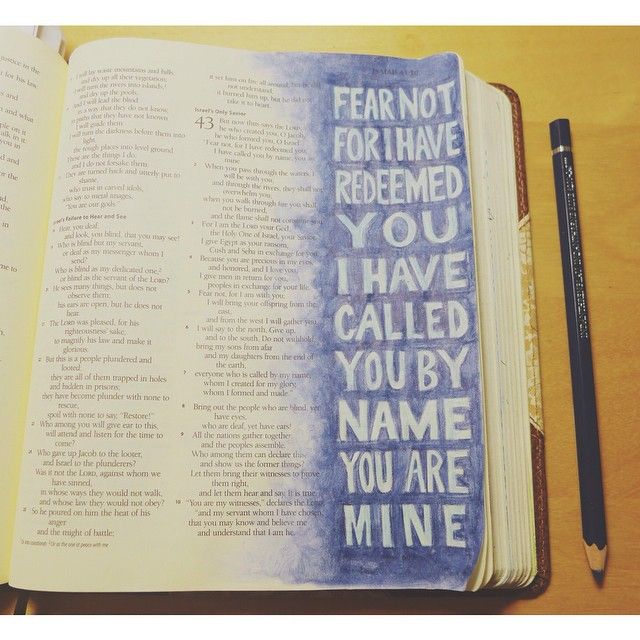
Isa 43-2 redeemed

Isaiah 43:1-3, 10-13 (43:2) – July 15, 2018 – from Dave Ivaska’s book Be Not Afraid

If you were ever in the middle of a fearsome, hair-raising experience, you might be able to relate to my sermon today. Even if you have not been personally involved in a terrifying experience like being trapped in a dangerous house fire or caught in the middle of a raging storm in deep water while on a small boat, you probably know someone who has. Or, at least heard first-person accounts of those terrifying experiences.

What does the prophet say in this morning’s scripture reading? It is really difficult to hear what anyone is saying when you or I are in the middle of a fearful predicament. Even if the words are really important, or even if they come from a particularly significant person.

We might have the words coming at us, but we are still in the horrible situation of being in the middle of a devastating fire, or a terrifying flood, or other traumatic experience. We still have situations as if we are lost in deep water, or caught up in the middle of fear-inducing flames. What will we do? How will we cope? Will the wild flames overwhelm us? Will the raging waters close over our heads? Dear Lord, answer me! Gracious God, help!

Take the nation of Judah, who the prophet of God is talking to. The nation has been conquered. The best and brightest of the people of Judah have been captured and taken captive, far away in Babylon. “By outward circumstances, the people of Judah had [good] reason to be afraid of Babylon’s army and exile. God points them past the present circumstances to both this command and promise.” [1]

Did you hear? These verses have good news! They have within them both a command and a promise. These words are a proclamation, from the Lord, no less! “But now, this is what the Lord says—God who created you, Jacob, He who formed you, Israel: “Do not fear, for I have redeemed you.”
In the paragraphs just before our reading today, in Isaiah 42, God is called not only the creator of the heavens and the earth, but also creator of all the people on the earth. God is the “source of breath and life for humankind (42:5). Now God reveals the divine self strictly in relationship to God’s chosen ones. The God who speaks the new word of freedom, life, return, and redemption is “the creator-of-you, Jacob,” “the shaper-of-you, Israel” (verse 1). This is the transcendent God whose word created all that is good (Genesis 1).” [2]

So, God not only created the heavens and the earth, and is the creator of all that is vast and unending in this universe, but God is also the Lord of the small and the personal. The prophet proclaims God as the Lord of all, of that which is large and small, the creatures and people of this world, too.

Israel was—and is a country with desert regions and vast wilderness places. Israel was—and is also a country where sudden storms come up, and flash floods suddenly happen. That can be extremely scary, to be caught in a sudden flash flood where the water starts to rise all around you without any warning. We hear on the news today about flash floods that overwhelm people and stall out their vehicles. And sometimes, those individuals even die.

What fear! What anxiety! And, what threatening troubles!

What can we do, in the face of all of this difficulty and challenge? The prophet gives us the answer. God has redeemed us.

But—what does “redeemed” mean, anyway? Isn’t that a religious word? We certainly hear it in religious contexts. According to the dictionary, “redeem” means to buy back, to recover, as by a mortgage or pledge.

So, we are kept captive by our fear and anxiety. The nation of Israel is similarly kept captive by their fear and anxiety, too. Here in the United States, in the 21st century, we do not have debtors’ prisons any longer. However, centuries ago, when people became bankrupt and could not pay their debts, they were often either were thrown into prison or made slaves until the debt was paid.

God does not magically erase all difficulty. “God does not manipulate the created order and introduce entirely new categories: fireless existence. Rather, God redeems what God has made, and redemption involves an exchange within the created realm. A price is paid in order to set things back the way they were.” [3]
This act of redemption is not the end of things. No, the Lord does not stop there. As the prophet says in today’s reading, “I have summoned you by name; you are mine.” God speaks our name. That is what the prophet says!

In this act of speaking their name, God takes ownership. The Lord God claims Israel as God’s own and sets them free. “In these verses God speaks to God’s people not like a king on a throne pronouncing an edict, but like a lover whose heart is bursting, who has waited an eternity just to say their name. In this act of speaking their name, You are mine” means also “I have ransomed you” (43:1) [or, redeemed you]. Maker, lover, and redeemer, God will pay any price and overcome every obstacle to be reunited with God’s own. [4]

We can take heart. We can claim these precious verses as our own, as we go through fiery trials. God has called us by name, too. The Lord says “You are mine.”

Bible study teacher David Guzik states plainly “God twice owns His people. God has right of ownership both as Creator and Redeemer. God’s ownership is personal, because He says I have called you by your name. His ownership is certain, because He seals it by saying You are mine.” [5]

We have the Lord’s assurance that we are God’s creation, we are redeemed, and we have been called by God’s name. What is more, we have been bought with a price, with the precious blood of our Savior.

Knowing we belong to God is a wonderful response to fear and anxiety. So, “Be Not Afraid!” No matter the trial or difficulty, God will be with us. The Lord is right by our side. We have God’s word on it, from right here in Isaiah 43.

Alleluia, amen.

[1] https://www.blueletterbible.org/comm/guzik_david/studyguide2017-isa/isa-43.cfm

Study Guide for Isaiah 43 by David Guzik – Blue Letter Bible

[2] http://www.workingpreacher.org/preaching.aspx?commentary_id=494

Commentary, Isaiah 43:1-7  Anathea Portier-Young, Preaching This Week, WorkingPreacher.org, 2010.

[3] Seitz, Christopher R., The Book of Isaiah 40-66, New Interpreters Bible Commentary, Vol. 6 (Nashville, TN: Abingdon Press, 2001), 381.

[4] http://www.workingpreacher.org/preaching.aspx?commentary_id=494

Commentary, Isaiah 43:1-7  Anathea Portier-Young, Preaching This Week, WorkingPreacher.org, 2010.

[5] https://www.blueletterbible.org/comm/guzik_david/studyguide2017-isa/isa-43.cfm

Study Guide for Isaiah 43 by David Guzik – Blue Letter Bible

@chaplaineliza

(Suggestion: visit me at my regular blog for 2018: matterofprayer: A Year of Everyday Prayers. #PursuePEACE – and my other blog,  A Year of Being Kind . Thanks!)
Unknown's avatar

Be Strong, Courageous, Unafraid, My Son

“Be Strong, Courageous, Unafraid, My Son”

1 Chronicles 28:14-18 (28:20) – July 8, 2018 – from Dave Ivaska’s book Be Not Afraid

King Solomon's Temple at Jerusalem

An older father, giving the gift of encouragement and advice to his younger son. We have seen this sort of touching scene play out, over and over again. In books, on television, in movies. This is like a pep talk from a wonderful motivational speaker, only even better.

King David is aging, and he knows his time is short. God has already chosen David’s favorite son Solomon to be the next king, among all of his sons. (And, he did have a number of sons, from a number of different wives.) What is more, David calls together a large crowd of the leaders, nobles, and executives of Israel for an important royal address.

What is the backstory here? How did this grand scene with a cast of hundreds of the leaders and administrators of Israel come about?

For that, we’ll need to step back and consider King David. He was considered a man after God’s own heart. He wrote a good portion of the book of Psalms, the song book of the Bible. He truly had a relationship with the Lord. But—God did not want David to be the one to build a special Temple for the Lord in Jerusalem. Can you imagine? Why? Why was that?

King David had also been a warrior for years, and had either killed or ordered the killing of a large number of people. The Lord God communicated in no uncertain terms to David that he was not supposed to be the one to build the special Temple. It would be up to David’s son Solomon to build the special house of the Lord. That was by order from God most high.

Can you imagine the scene? All the people, gathered for this grand motivational speech at the end of David’s life. He had been collecting the best of everything for use in the construction of such a fine structure, for years. All for Solomon’s use, and all for the glory of God. Remember, this was a dearly beloved wish of David’s, to see God’s Temple built in Jerusalem.  

David had it all. In his prime, he was a skilled warrior. David also was a fine musician—he played the harp and wrote songs; he was incredibly attractive, and he was a natural leader of men. What was not to like about King David? Or, to look at him from another point of view, King David must have been really intimidating, certainly for young Solomon. And probably for most of all the leaders and administrators of Israel.

Why do coaches, teachers and other motivational speakers give those rousing speeches? To encourage and hearten their listeners, of course. King David must have known that Solomon needed encouragement, and even reassurance.

As an important note, King David also wanted to let everyone know for sure that Solomon was his chosen successor. Just in case, even after the death of David, he wanted everyone in the kingdom of Israel to understand that fact—even though there were a number of sons of David, including several with eyes on the throne and the king’s succession.

Let’s focus on Solomon, specifically. Sure, he had already been anointed as king, and David his father had already made his views on the succession crystal clear. Can you picture Solomon, standing there next to his father?

He must have been young and inexperienced. Plus, his father David was putting the extensive plans and provisions for the Temple into his hands.  What a remarkable position to be in.  His father David is at the end of his life, and the young, inexperienced Solomon is offered both detailed plans for the Temple plus letting everyone know—for sure—that Solomon is the one God wants to follow the aged David,

Let’s take a closer look at the provisions for the Temple. David made it absolutely clear to everyone listening that everything Solomon would need would be given to him. Reading from our scripture passage today again, “10 Consider now, for the Lord has chosen you to build a house as the sanctuary. Be strong and do the work.”

11 Then David gave his son Solomon the plans for the portico of the temple, its buildings, its storerooms, its upper parts, its inner rooms and the place of atonement. 12 He gave him the plans of all that the Spirit had put in his mind for the courts of the temple of the Lord and all the surrounding rooms, for the treasuries of the temple of God and for the treasuries for the dedicated things.”

Imagine how meticulous the Temple plans of King David were. The brief excerpt I just read was only scratching the surface. I get the feeling that this kind of explanation and planning might have been right up the young man Solomon’s alley. From several situations that are mentioned about the heir apparent, after he has succeeded to the throne, I suspect Solomon might have particularly relished the level and amount of detail in the plans.

There is another important focus in this passage. I could preach a whole sermon on this aspect of David’s instruction and command to his son. However, let us just mention the charge that David gave: “in the sight of all Israel and of the assembly of the Lord, and in the hearing of our God: Be careful to follow all the commands of the Lord your God, that you may possess this good land and pass it on as an inheritance to your descendants forever.” In other words, be faithful to God! Follow the Lord all the days of your life! This is a solemn command, just as much as the rest.

We come, finally, to the assurance God has given to Solomon, and by extension, to all of us. “20 David also said to Solomon his son, “Be strong and courageous, and do the work. Do not be afraid or discouraged, for the Lord God, my God, is with you. God will not fail you or forsake you until all the work for the service of the temple of the Lord is finished.”

Just like a skilled motivational speaker, David hits on facing and overcoming natural fears and anxieties. Plus, he also focuses on assuring his son of God’s caring, enabling presence. As commentator Leslie Allen says, “The Lord is David’s own God. David is testifying that God had seen him through every problem and would be there to help Solomon to the end.” [1]

“Be not afraid or discouraged!” This is on top of “Be strong and courageous!” After the clear unequivocal statement of God’s presence being with David his whole life long? What a tremendous encouragement and reassurance this must have been to Solomon, especially since David his father said those things in front of all the important people in Israel.

What is this summer sermon series all about? We are taking a look at different aspects of the “Be Not Afraid” passages. Yes, the aging David was giving his son a much-needed boost of encouragement, as well as reducing fear and anxiety. When anyone has a huge task looming over their heads, fear and anxiety naturally enters the picture. Solomon had two huge tasks ahead of him: that of taking over as king, and of building the Temple.

As we can see from the example of Solomon, fear of huge tasks can be disabling. Fear and anxiety can cause us to trip up, even to freeze. David has a remedy for this kind of paralyzing fear: do the work! This matter-of-fact strategy helps many people conquer their fears and overcome anxiety. This apparently was just the ticket for Solomon. And, this is a great suggestion for anyone facing a really big task.

Hear the words of David: be strong! Be courageous! Be not afraid! And then, we can celebrate. For, our God will be with us, even to the end of the age. Amen, alleluia.

[1] Allen, Leslie C., The First and Second Books of Chronicles, New Interpreters Bible Commentary, Vol. 3 (Nashville, TN: Abingdon Press, 1999), 463.

@chaplaineliza

(Suggestion: visit me at my regular blog for 2018: matterofprayer: A Year of Everyday Prayers. #PursuePEACE – and my other blog,  A Year of Being Kind . Thanks!)

Unknown's avatar

Jonathan Encourages David

“Jonathan Encourages David”

be not afraid, words

1 Samuel 23:14-18 (23:17) – July 1, 2018 – from Dave Ivaska’s book Be Not Afraid

Running for your life. Always in hiding, always on the look-out. It’s what psychological specialists in trauma and similar mental challenges call hyper-vigilance. I suspect, if we think about it, we can come up with a situation where either a person we know or people who are familiar to us have been worried, afraid, looking over their shoulders, if not on the run.

This is similar to the situation David was in, for many months, on the run in the wilderness of Judah.

But, let’s back up a bit. The strong, young David—charismatic leader of men—was the hero of Israel. Young, good-looking, he had walked onto the field of battle and won in single-handed combat with the mighty warrior Goliath the Philistine champion. Everyone in Israel praised David, up-and-coming rising star in the court of Israel. Men looked up to him, women adored him. (Apparently, he was really attractive.) His name was on everyone’s lips. What was not to like about David?

We must not forget about the other important part of David’s story. He been anointed while still a teenager to become king by the aging prophet Samuel. That means, David would take the place of King Saul. Except, King Saul was still king. Awkward!  

At first, King Saul thought David was a good guy to have around the palace. Plus, David had some skill with the harp, so he could soothe the king when the king was depressed and out of sorts. Then, to add to all of this, David and Jonathan, King Saul’s oldest son and heir, became close friends.

Imagine your best friend. I mean, your best-best friend, closer to you than even the closest members of your own family. That was David and Jonathan. Best friends forever.

King Saul probably had some uncertainty and insecurity in his life, even though he was the king of Israel. We can read about the several times that the king displayed his irritation and even outright hatred for David. Eventually, middle-aged King Saul’s anger and jealousy at the younger, good-looking, charismatic David boiled over. He sent his loyal soldiers after David. Yes, to kill him.

So, the powerful king of your country is seriously jealous, and hopping mad at you. What do you do? Run, of course. Make yourself scarce.

We see several reasons for people to be on the run from powerful leaders. Yes, politics may play a part in this. War and conflict might also figure in. Power and control are also important possibilities in any severe disagreement. And with Saul, his violent anger against David was definitely more personal.

For several chapters in 1 Samuel, we can read about the adventures of David. Life-and-death adventures, too. If Saul’s soldiers had ever caught up to David, the situation would mean death for David.

Sure, David had been playing cat-and-mouse with the king’s soldiers for months.           As commentator Bob Deffinbaugh said, “David saw that Saul had come out to seek his life. …The full weight of Saul’s pursuit and its implications seems to bear down on him. Perhaps weary in both body and spirit, David is greatly distressed to hear that, once again, King Saul is nearby, fully intent on killing him. There is ample evidence to show that if given the chance, Saul will do so.” [1]

We see that King Saul decided to go out into the wilderness and eradicate David once and for all. We also know that David and Saul’s son Jonathan are best friend, even though it had been many months since they had seen each other. What a wonderful friend to have, even taking his life in his hands. That’s what it meant for Jonathan to risk visiting David, in the wilderness.

What kind of stress and trauma must David have been going through? Let’s read from 1 Samuel again: “While David was at Horesh in the Desert of Ziph, he learned that[a] Saul had come out to take his life. 16 And Saul’s son Jonathan went to David at Horesh and helped him find strength in God.”

This is one reason why it’s so important for us to see how Jonathan encouraged David, even though both friends must have felt extremely pressured. David had been on the run for many months, and his psychological state could only have been one of extreme trauma!

When these two dear friends finally meet, what the first things Jonathan does? Helps his dear friend to find strength in God.  If you are alone and struggling to keep your head above water, no matter what challenges or difficulties are coming your way, having a dear friend come alongside of you to encourage you can make all the difference.

Of course, David was in extreme difficulty. Running for your life from the king’s best crack troops must have been both mentally and physically exhausting. Having the king’s oldest son and heir as your best friend must have added a layer of challenge to the whole mess.

What does Jonathan lead off with? “Be not afraid!” He reminds David that all Israel knows that the prophet Samuel has anointed him to be king after Saul, and says that he—Jonathan—will be his right-hand man. All of which must have been a great comfort and encouragement to David. They two dear friends renew their covenant, and then Jonathan has to leave. I suspect David has to continue to elude the king’s troops, too.

Our situations and challenges today are not as dire as David’s horrible predicament. However, God continues to speak. God continues to encourage and lift up hearts, even through great trials and tribulations. Are you having troubles and difficulties in your life today? God is there, and ever present help in times of trouble and need.

Just as David’s best friend Jonathan was there to encourage him through the deep dark times, God can bring friends alongside of us, too. Friends can speak words of encouragement and trust to us, like “Be not afraid!”

Are you someone’s best friend? Is your best friend going through difficulties, pain, even trauma right now? Can you come alongside of your friend and encourage their hearts today? Consider your part. The Lord might be calling you to be that friend, today, or tomorrow.

What a ministry, that of being an encourager. What a kindness, and what a service to others. Whether you are the one who could use a friend, or whether you are the one called to be such a friend, remember David and Jonathan. Best friends forever. An encouragement, finding mutual strength in God.

Alleluia, amen.

[1] https://bible.org/seriespage/20-friend-indeed-1-samuel-2315-29 Bob Deffinbaugh 

@chaplaineliza

(Suggestion: visit me at my regular blog for 2018: matterofprayer: A Year of Everyday Prayers. #PursuePEACE – and my other blog,  A Year of Being Kind . Thanks!)

Unknown's avatar

Gideon: Fearful and Uncertain

“Gideon: Fearful and Uncertain”

Judges 6:1, 7-24 (6:22-23) – June 24, 2018 – from Dave Ivaska’s book Be Not Afraid

Judg 6_19-24-Gideon-Sees-the-Angel-of-the-Lord

Occupied territory. An oppressive military force. Just the very words conjure frightening images in a person’s mind. Thinking of different wars and conflicts, throughout the centuries. It doesn’t have to be a conflict we actually remember. There are—sadly—plenty to draw from, from many centuries in the past.

The tribes of Israel had settled in the land of Canaan after wandering for forty years in the wilderness. But, what happened to the new country of Israel in just a few decades? How did they lose control of their country so quickly? How did Israel become a conquered region so easily?  

For a quick explanation, we need to look at the beginning of Judges chapter 6. “The Israelites did evil in the eyes of the Lord, and for seven years God gave them into the hands of the Midianites.” Throughout the Old Testament book of Judges, that is the way it was. The people of Israel stopped doing the things God told them to do, and stopped worshiping the Lord. Then, God would allow a foreign nation to take over and oppress Israel for a time. When the people couldn’t stand it any longer, they would cry out to the Lord. Then, the Lord would raise up a mighty warrior and judge. The judge would throw out the invading armies and then rule over the people of Israel for a time, and all would be prosperous and happy again.

You would think the people of Israel would learn, but, no. They would keep doing the same flawed thing; they would stop worshiping God, and get conquered by a foreign nation.

At the beginning of Judges chapter 6, we are in one of the parts of the cycle where a foreign nation is occupying the country of Israel. The Midianites are a particularly savage nation. Their armies steal all the flocks and crops from all the farmers, wherever the occupying forces go. This is a particularly fearful and uncertain time for the tribes of Israel, to be sure!

Back to the land of Israel. Occupied territory! As the scene in Judges 6 opens, the narrator lets us know that the Midian army is so greedy and grasping that they will confiscate any animals or produce from any Israelite farmer. How do we know that? Because, Gideon is threshing wheat inside of a winepress, in secret. He’s in hiding from the Midianites, so the occupying army won’t find out and take the wheat by force.

I also get the idea that Gideon is timid. Uncertain. Perhaps even fearful. Do you blame him? With the marauding Midian army prowling around, confiscating any crops from any farmer, wouldn’t you be afraid, too?

Thank God we do not have to deal with occupying armies or marauding bands of thieves today in the United States, unlike Gideon, unlike countless farmers in areas of conflict even now. But, are there big, challenging things in our lives today that cause us to be timid? Uncertain? Perhaps even fearful? Chronic sickness, unemployment, a serious accident, or a fire? Have any of these happened to you, or to your loved ones?

The next thing he knew, Gideon was shocked down to his shoes. (Or, sandals.) Wonder of wonders, an angel appeared to him. The angel spoke, saying, “The LORD is with you, mighty warrior.”

“Wait a minute! What? The Lord God said that to me? Is there some mistake? Has the angel got the wrong person? Or, made the wrong connection?  Believe me when I say I am not mighty. And, I am certainly not a warrior.”

If we paid attention in Sunday school class and read the Bible carefully, we would be familiar with several people telling God that they were not cut out to do the things God told them to. But, Gideon really means it. His clan is the weakest in the tribe of Manasseh, and he thinks he is the weakest (which probably meant he was the youngest) in his family.

But, the Lord has not made a mistake. God surely wants Gideon, believe it or not. For sure.

Imagine today, with God telling us that we are exactly what God wants, exactly what God expects from others. I wonder what else God is saying that we forget to notice. Or, maybe even outright refuse to hear?

Back to Gideon. Uncertain, fearful Gideon. I suspect he might have been a bit of a cynic and a pessimist, too. What’s the next thing out of Gideon’s mouth, in his conversation with the angel of the Lord? 13 “Pardon me, my lord,” Gideon replied, “but if the Lord is with us, why has all this happened to us? Where are all God’s wonders that our ancestors told us about when they said, ‘Did not the Lord bring us up out of Egypt?’ But now the Lord has abandoned us and given us into the hand of Midian.”

Whoa, Gideon! Did you really mean to say that? It sounds a little like you are scolding the Lord for not helping out Israel, and leaving the nation in this awful situation. Or—did you really mean to say exactly that?

I’ve got to say, I have felt like telling the Lord something like this, when I’ve been in several seemingly hopeless situations. When my former husband and I both pounded the pavement, we fruitlessly looked for work for several years. We both went to several job placement agencies over those years, and we were not able to find anything other than short-term, low-paying, temporary jobs. Between us we had thirteen years of college and graduate school education, and—no solid, permanent job offers. None. For years.

It was infuriating, and unbelievable, and incredibly frustrating. For years, I spent countless hours in prayer, raging at God, begging, pleading. Plus, we had two preschoolers, and neither of us had health insurance coverage. A frightening time, for years. I suspect Gideon might have felt the same way, except his situation was even worse. But, back to Gideon.

The angel of the Lord was patient and understanding with Gideon “when Gideon needed proof that it was an angel of God. The Lord then led Gideon on a series of events that helped Gideon gain courage to do as God had told him.” [1] We see the Lord encouraging Gideon with several statements, such as this:  14 The Lord turned to him and said, “Go in the strength you have and save Israel out of Midian’s hand. Am I not sending you?”

Gideon wants to make sure that this is God talking to him. 22 When Gideon realized that it was the angel of the Lord, he exclaimed, “Alas, Sovereign Lord! I have seen the angel of the Lord face to face!” 23 But the Lord said to him, “Peace! Do not be afraid. You are not going to die.” 24 So Gideon built an altar to the Lord there and called it The Lord Is Peace.”

This is not the end of Gideon’s uncertainty and questioning. Not by a long shot! Gideon continues to check and double check with God, just to make sure God is really and truly going to use him to deliver Israel.

Doesn’t the example of Gideon show us how patient and understanding God is, even when we have fears and uncertainty? God patiently answers so many of Gideon’s questions. God was right there with Gideon, just as God was with me and my former husband, through all those years of unemployment and under-employment. Just as God was with Joshua, and Moses, and Abraham before him.

Moreover, Gideon shows us how God looks at our potential, and not just the person we are right now. Instead, God helps us to believe in what we can be, and what God knows we can be, for God’s sake.

Gideon finally got God’s lesson into his head. I’m afraid it takes a great deal to get things into my thick head, too. But, praise God! The Lord had great patience with Gideon. I know God has great patience with so many of us, today, even when we are fearful and uncertain. Let us see what God sees, looking at one another.

Amen, alleluia.

[1] http://childrensermons.com/gideon/ August 4, 2013 Jim Kerlin People in Old Testament Hiding from the Enemy (Gideon)

@chaplaineliza

(Suggestion: visit me at my regular blog for 2018: matterofprayer: A Year of Everyday Prayers. #PursuePEACE – and my other blog,  A Year of Being Kind . Thanks!)

Unknown's avatar

Joshua Called Courageous!

“Joshua Called Courageous!”

Josh 1-9 be strong, poster

Joshua 1:1-2, 5-9 (1:9) – June 17, 2018 – from Dave Ivaska’s book Be Not Afraid

Do you know what it’s like to be a second fiddle? Someone’s assistant? Someone to back up the real leader, or director, or president? Always there, just in case, always ready to step in, in case of emergency, but never really, fully in charge? I do. I’ve been in that faithful, dependable assistant position a lot, for a number of years.

It can be a relief, not having to be the top person in charge. Remember, President Harry Truman said, “The buck stops here.” With the second fiddle, the buck definitely would not stop at the assistant’s desk. He or she would be able to pass it on.

All the same, imagine Joshua, the newly designated leader of the nation of Israel. His predecessor, the strong and dynamic leader—or, director, or head of the Israelite nation—Moses, had been in charge of the nation for over forty years. Israel had been wandering in the wilderness all that time. Joshua had been Moses’s right-hand man all of that time, too. By all accounts, Joshua was a faithful, dependable assistant and second-in-command to Moses, for decades.

What kinds of things must have been going through Joshua’s head, after the death of his leader, probably even his mentor, Moses? I cannot imagine the shock and grief at his leader’s death, plus all the huge weight of the responsibility for the whole nation of Israel, now resting squarely on Joshua’s shoulders. What on earth does he do now?

As the book of Joshua begins, we hear the words read to us today, where the Lord God meets with Joshua. Not with Moses, as had happened a number of times in years past, but with Joshua, instead! Joshua is the one having an up-close-and-personal encounter with the Lord!

This is a first-hand encounter with the God who led Israel through the wilderness for forty years. Pillar of cloud by day, pillar of fire by night, manna every morning, for forty years. We’re talking an extraordinary God, here! Power beyond understanding, magnificent glory, works miracles on a daily basis. That’s the God who meets with Joshua.

Joshua probably did not feel at all up to the daunting task of primary, solo leadership. However, God knew better than Joshua. “Joshua was prepared by faithful service in small things, in being Moses’ assistant. Dr. Alan Redpath tells of a motto over a kitchen sink: “Divine service is conducted here three times daily.” [in the washing of dishes] The motto is true, and great men and women are prepared by faithfulness to the small things.” [1]

We see that God has encouraging words for Joshua: “Be strong and courageous!” And, “Be not afraid!” That is why many biblical scholars think that Joshua had an inferiority complex. The Lord needed to give him a leadership pep talk!

When Pastor Gordon and I began an interim, emergency pastorate in 2014 here at St. Luke’s Church for three months, this was a familiar job for me. Gordon and I had done it before, in an interim position at another UCC church in 2007. I was Gordon’s assistant. I was playing second fiddle to a seasoned, self-assured pastor who had many years of experience under his belt. When Pastor Gordon left St. Luke’s Church in June 2014 and left me as solo pastor, I was experiencing some of the same feelings that Joshua probably felt. How on earth am I going to lead these people? Yet, with God’s help and the help of several seasoned professional pastors and clergy, I weathered that storm of low self-confidence and low self-esteem.

Joshua faced a huge, new, daunting task, to be sure!

What is one of the most important things the Lord says to Joshua, when giving him the heavenly pep talk? “Be careful to obey all the law my servant Moses gave you; do not turn from it to the right or to the left, that you may be successful wherever you go. Keep this Book of the Law always on your lips; meditate on it day and night, so that you may be careful to do everything written in it.“ Reading and meditating on the Word of God on a regular basis is of primary importance to God. Moses did these things. Joshua must have seen Moses read and meditate on the Word of God, countless times, and I suspect he joined in, as well.

Let’s break down God’s words to Joshua in these verses, and take a closer look at what God is telling him to do. “Joshua must take great care to observe the law. God’s Word and Joshua’s commitment to it would be the pillars supporting his success. Joshua did not only need to read God’s word. It had to be on his lips (“shall not depart from your mouth”), in his mind (“meditate in it day and night”), and he had to do it (“observe to do according to all that is written”).” [2] Regular, even daily insights into God’s Word, the Bible, can help us think the way God does, behave in the way God does, and have compassion on the people God does.

Even though you and I are not facing such a huge task as Joshua, today, what we face can be daunting to us. Sometimes, we can be anxious, fearful, afraid, even stressed out, angry or confused. We might need encouragement and support from God, too. What is a daunting task, to you? How can God’s words to Joshua be helpful and encouraging to any of us, today?  

Pray, seek the Lord, and talk to other, trusted Christian friends. The helpful, encouraging answer will be there. The Lord can—and does—inspire and encourage each of us as we face new and daunting tasks in our lives, day by day. What a tremendous promise to celebrate!

Remember God’s words to Joshua: “Be strong and courageous!” And, repeated again and again throughout Scripture? “Be not afraid!” Be that way. God said so!

Alleluia, amen.

[1] https://enduringword.com/bible-commentary/joshua-1/   David Guzik Bible commentary on Joshua 1

[2] Ibid.

@chaplaineliza

(Suggestion: visit me at my regular blog for 2018: matterofprayer: A Year of Everyday Prayers. #PursuePEACE – and my other blog,  A Year of Being Kind . Thanks!)


Unknown's avatar

When Abram Believed God

“When Abram Believed God”

Gen 15-1 not afraid

Genesis 15:1-6 (15:6) – June 10, 2018 – from Dave Ivaska’s book Be Not Afraid

Fear. Anxiety. Not knowing which way is up, you’re so worried. I am sadly familiar with these kinds of emotions, since I’d often encounter them in the hospital, working as a chaplain. There is a certain kind of anxiety and worry that sometimes comes with having no one related to you. I have been with and accompanied patients who had no one to be with them as they were extremely sick, or even at the point of death. Family certainly is important.

This is our second week considering the passages where the Bible tells us to “Be Not Afraid!” In one of our Scripture passages today, we read of the Lord telling Abram not to be afraid. But, why? Why did God tell Abram something like that?

For the answer to that, we need to look at what happened in the few chapters before Genesis 15, chapters 11 through 14. Here we learn that Abram and his wife Sarai are recent immigrants from far away who came to the region escaping famine. Abram and his only relative Lot are feuding over wealth, and how to distribute it. Even worse, Lot has been captured in regional fighting, and Abram and his men need to rescue him. [1]

Yet, this is not all. God has made a big promise to Abram that has not come true. Abram is now eighty years old, his wife not far behind him in age. Since God promised Abram would be the father of many nations, and there is no son yet, Abram is probably wondering, what gives? God, what now?

I suspect that Abram must have been more than afraid. He probably was disheartened, too, perhaps even depressed. Long-term depression, too. Here the Almighty God who created heaven and earth had promised Abram that he would have a son, some years before. As time continued, no son. Just think, in Abram’s time, there was no fertility clinic, no medical advisor, nothing at all like that. Except, hoping and praying and perhaps sacrificing to God, pleading and imploring God to be gracious and grant Abram and Sarai a son.

Today, there are also people who pray for children of their own, couples who have difficulty with fertility, or carrying a baby to term. Fertility clinics and specialists certainly aid many couples in fulfilling dreams of a child of their own. But, that is today, with all of the technological and medical advances of the 21st century. Abram and Sarai had nothing at all like these treatments and medical capabilities.

Worry, fear, anxiety. How long, Lord? What gives? Am I doing something wrong? What about my wife, my husband, or my partner? Are any of us doing something wonky, or saying something they shouldn’t? What do I need to do, or say, or sacrifice, in order to get a son?  

I realize this topic of yearning for a child may be a difficult topic for some to hear. I do apologize, if that is the case for you, or for a loved one. I would humbly like to point out that this situation is something that is highlighted in Genesis. It’s referenced a number of times in other places in the Bible, in both Old and New Testaments.

After we find out that Abram is afraid, or fearful, what happens next? God shows up! By the word choice and behavior in Genesis 15:1, we see a particularly special thing is happening. “The word of the Lord came to Abram in a vision.” This construction in Hebrew means that this is a particularly marvelous thing. This is the only time we have these particular words written in the first five books of the Bible, period.

Plus, these words have special significance, wherever they appear in the Bible. These words flag us that God is going to show up, up close and personal. These words can even mean that an appearance of God in a way that humans can understand and deal with. A fancy word called “Theophany,” meaning “Learning from or making an appearance by God.”

And, what super-special thing does the Lord have to say in this super-special appearance? “Be not afraid, Abram!”  This is a momentous occasion, let me tell you. God doesn’t just happen to stop by. God doesn’t just pop in, or make appearances to any random person. No, the Lord really wants to communicate to Abram.

In this situation from long ago in Genesis, Abram is revealed to have a prophetic voice.  “The word of the Lord came to Abram in a vision.”  How awesome is that? God had a special delivery message, just for Abram. (for Abram, and his wife Sarai, too, of course.)

What else does God say to Abram? “I am your shield; your reward will be very great.” Wow! Let me ask you: what would you think if God communicated with you like this? Do you have any fears, any really big anxieties? What would it mean to you to have the Lord tell you that the Lord will shield you from harm? From worry? From evil intent?

What’s more, what would it be like to have God call you by name? By your personal name, not “O, mortal!” or even your family name. God is being extremely intimate with Abram here. That is powerful stuff!

Sure, Abram had been waiting for a long time. Even after this reassurance, he questions God! He has a contingency plan, an heir to all his property, just in case. However, as biblical commentator Sara Koenig points out, “Abram expects — and believes — God will keep God’s word, which is why Abram speaks in the way he does.” [2] God comes back at him with the marvelous statement/repeated promise, “Look up at the sky and count the stars—if indeed you can count them.” Then God said to him, “So shall your offspring be.”

How heartening is that? Such a personal, individualized promise! The next words we read are, “Abram believed the Lord, and God credited it to him as righteousness.” Pretty powerful stuff, indeed.

Even though continuing situations can be telling us that the situation is really bad, almost hopeless, we can still hope in God. Even though Abram went for years with no son, no assurance of this promise from God, God’s faithful promises still came through, in God’s time.

Did Abram have fear and anxiety in his life? Was he probably disheartened, even depressed, long-term? Yes. Did the Lord supernaturally step in and move Abram from fear to faith? Yes. The testimony of Hebrews 11 tells us “By faith Abraham made his home in the promised land like a stranger in a foreign country; 10 For he was looking forward to the city with foundations, whose architect and builder is God. 11 And by faith even Sarah, who was past childbearing age, was enabled to bear children because she[b] considered him faithful who had made the promise. 12 And so from this one man, and he as good as dead, came descendants as numerous as the stars in the sky and as countless as the sand on the seashore.”

Yes, this is the rest of the story. This is how God miraculously continued to work in the lives of Abram and Sarai (that was before God gave them the new names Abraham and Sarah.)

Can the Lord move us from fear to faith, too? Yes! We, too, can look forward to that eternal city, whose architect and builder is God. We can claim the eternal promises of God, by faith, and pass through our fear, anxiety and worry to life in God’s faithful promises.

Alleluia, amen.

[1] Ivaska, David, Be Not Afraid (Downers Grove, Illinois: InterVarsity Press, 2000), 22.

[2] http://www.workingpreacher.org/preaching.aspx?commentary_id=1730

Commentary, Genesis 15:1-6, Sara Koenig, Pentecost 12C Preaching This Week, WorkingPreacher.org, 2013.

@chaplaineliza

(Suggestion: visit me at my regular blog for 2018: matterofprayer: A Year of Everyday Prayers. #PursuePEACE – and my other blog,  A Year of Being Kind . Thanks!)

Unknown's avatar

When Adam Was Afraid

“When Adam Was Afraid”

Genesis 3:8-10 (3:10) – June 3, 2018 – from Dave Ivaska’s book Be Not Afraid

do-not-be-afraid

How often have we seen children, after they have misbehaved? Oftentimes, they know very well they have done something wrong. Their little lips may tremble, sorrowful eyes fill with tears. They may duck their heads because they fear being punished, and not meet the adult’s appraising look. Or even, run and hide so the person in charge needs to go find them.

These traits can occasionally be true for not-so-little people, too. Can you remember people you knew who acted like this, at work, or school, or among the circles of friends you know? The feeling of embarrassment and guilt, even of wrongdoing, can be very strong.

We look today at Genesis chapter 3, and at the very first instance of being afraid recorded in the Bible. But before we take a closer look at the book of Genesis, I’ll give you a preview of our summer sermon series. We will focus on a phrase that appears dozens of times in the Bible, both in the Hebrew Scriptures as well as the New Testament. “Be Not Afraid!”

Fear and anxiety—and their companion, worry—haunt many people, on a regular basis. God keeps reminding us in the Scriptures to be not afraid! We can find this command many times throughout the Bible books, in many different situations.

As I said in this month’s newsletter article, I attended both undergraduate classwork at Moody Bible Institute as well as seminary study at Garrett-Evangelical Theological Seminary. I learned in my bible study and interpretation classes that if anything is mentioned with frequency in the Scriptures, it is really important. “Be Not Afraid” certainly is one of those statements.

But, what is the first time fear is mentioned in the Bible? For that, we need to look at Genesis 3, the account of the time sin entered the world. This narrative is about permission, prohibition, temptation, and most of all, about relationship. Free, loving relationship between God and humans.

To recap, in the beginning, God created humans. We look at two representative humans, Adam and Eve, who figure prominently in Genesis 3. The crafty serpent asks Eve a leading question about God and what God has forbidden them access to. The serpent puts doubt in her mind, and tells Eve that this forbidden fruit will cause her to become wise, like God. She sees the attractive fruit on the only tree God has forbidden, plucks it and eats it. She then gives some to Adam, and he eats some, too.

I could tell you lots more about the serpent, and how crafty and manipulative it was. I could mention about thoughtful Eve, and how she drew her own conclusions from what the serpent presented to her. I might add that she saw the tree as good for food and pleasant to the eyes. Moreover, when she brought some of the forbidden fruit to her husband, he “puts up no resistance, raises no questions, and considers no theological issues….The woman does not act as a temptress in this scene; they both have succumbed to the same source of temptation.” [1]

To say this in a different way, God has given the man and woman considerable freedom and latitude in their lives in paradise. The serpent slithers in and plants doubt in Eve’s mind. She eats the fruit, her husband also eats, and they have both transgressed the only hard and fast rule that God has given them.

Adam and Eve’s eyes are opened, and they realize they both are naked. Guilt, shame, and embarrassment are all featured prominently here. What are they to do? They both sew coverings out of leaves to cover their nakedness. Cover up their shame and embarrassment. However, their human resources are just plain inadequate.

Except—their guilt and sin are now compounded. When God—in some kind of human-like form, so humans could see and relate to God—came into the garden later that day, fear strikes deep into the hearts of both Adam and Eve.

Fear! What must that have been like? To feel fear for the very first time?

All of us have had that experience. All of us have experienced fear for the very first time, and I suspect you cannot remember the situation, or exactly when it happened. It probably happened when you were very young. We are told this is the exact situation with Adam, here in Genesis chapter 3.

Why are Adam and Eve afraid? If you had disobeyed a dear parent or other beloved family member, how would you feel? If you—as a child or teen—had purposefully gone against something that was forbidden, what would be the result? Wouldn’t you be afraid? At least a little bit? Afraid of being punished?

Fear of punishment is very real, even in areas where physical or verbal punishment is frowned on. Let’s look at how punishment is defined. ”The purpose of punishment is to stop a child from doing what you don’t want—and using a painful or unpleasant method to stop him [or her].” [2] That certainly seems like what Adam and Eve might be expecting. It seems like they expect God to be full of anger, wrath, even vengeance.  

God does not act in the expected way. “The Creator of the universe and all creatures chooses not to relate to the world at a distance, but takes on human form, goes for a walk among the creatures, and personally engages them regarding recent events.” [3]

What is that? Did the commentator on the book of Genesis say that God was seeking out a relationship with Adam and Eve? Doesn’t God go out of God’s way to look for the humans? Such a striking and unusual response for God to make. Instead of punishment and retaliation, the Lord comes looking for humans with open arms, even though God knew very well what they had done, and what was necessary to set it right.

Fear causes us to hide, too, when we sin. Fear of disappointment, yes, but also fear of shame, and embarrassment, too. Plus, there is fear of punishment: punishment on a horizontal plane, from other people as well as a vertical plane, from God.

Each of us—every worshiper here today—sins. Every day. It doesn’t matter who we are, or how good we are trying to be. Each of us makes mistakes. It is like someone using a pencil; there are sometimes mistakes we would like to erase. We all have sins, or mistakes, or errors in our lives. And what’s more, we can admit them to God and receive forgiveness.

We can see the loving response right here in Genesis 3, when the Lord was walking in the evening, and how God called and called. God took the initiative. Who was it who sought out humans openly and in love and compassion? God. Simply God.

What do we think when we see the Creator of the universe coming toward us in love, compassion, and relationship? Is that Someone we can trust? Is that Someone we can ask forgiveness from? Is that Someone who cares deeply about us even though God may know every single fact about our sin and disobedience?

God wants a free and loving relationship with each of us, just like trusting children and a loving, caring parent. We celebrate that relationship today with communion, remembering what the incarnate God, Jesus Christ, did for us 2000 years ago. God wants to restore us to the peace, joy and love intended for us from the day of creation. Praise God! Alleluia, amen.

[1] Frentheim, Terence E., Book of Genesis, New Interpreters Bible Commentary, Vol. 1 (Nashville, TN: Abingdon Press, 1999), 361.

[2] https://pubs.ext.vt.edu/content/dam/pubs_ext_vt_edu/350/350-111/350-111_pdf.pdf, accessed 5/31/18.

[3] Frentheim, Terence E., Book of Genesis, 362.

@chaplaineliza

(Suggestion: visit me at my regular blog for 2018: matterofprayer: A Year of Everyday Prayers. #PursuePEACE – and my other blog,  A Year of Being Kind . Thanks!)

Unknown's avatar

Holy, Holy, Holy!

“Holy, Holy, Holy!”

Isa 6-3 sanctus-holy-holy-holy

Isaiah 6:1-8 (6:3) – May 27, 2018

Today is Trinity Sunday. In the children’s message, we talked about a straightforward way of understanding the Trinity. The theological concept of the Trinity is an idea that has been and still is misunderstood—for centuries. Christians and non-Christians alike just plain do not understand it. Even knowledgeable ministers and bible scholars have problems talking about it clearly. That is one reason the children’s message about the concept of the Trinity was stated the way it was.

The simple idea behind the children’s message is an idea that can work for us adults, too.

Jesus said to approach Him as little children. He was talking to adults at that particular time. He meant that piece of advice to go for His disciples, His followers, and anyone else who was thinking about following Him. This can work in terms of the theological idea of the Trinity, as well. What’s a good way to talk or think about the Trinity?

One of my favorite commentators, Carolyn Brown, observes Trinity Sunday as one of her favorite Sundays of the year. She says: “It is God Sunday. The call is not to explain God but to celebrate God’s mysterious, more-than-we-can-ever-explain presence.  What could be better!” [1]

As we consider God’s unsearchable mystery and God’s awe-inspiring power and might, we all can look at God from a child’s point of view. We might even think about “the unanswerable questions people of all ages ask about God, such as but definitely not limited to:

  • What was God doing before God created the world?
  • How can there never be a time before or after God?
  • How can God pay attention to each person in the world all the time?” [2]
  • Why did God create rattlesnakes and mosquitoes? Along with spiders, sharks, viruses, earthquakes, and volcanos?


Let’s look at the Hebrew Scriptures. There have been hints of the Trinity from the very beginning. Think of the first chapter of Genesis. “In the beginning, God created the heavens and the earth.” And, the beginning of the Gospel of John that starts “In the beginning was the Word, and the Word was God, and the Word was with God.”

Imagine a universe still and dark. Imagine a solar system just before it was going to spring into being, with nothing hung in space—yet. Imagine a place where the earth will orbit, but nothing there, yet. Except—the spirit of God—the Holy Spirit hovering, ready to hold the newly-born earth in loving embrace. Imagine the Word, the Logos, the creative force of God, speaking forth the whole of creation with astronomical power and might. Not only the earth, but also our solar system. Not only our solar system, but all other solar systems. And stars. And meteor showers. And quasars, and black holes, and everything else that is in the universe.

Traditionally speaking, God the Father, God the Son, and God the Holy Spirit had differently described roles in different expressions of the creation of the universe.   

As we look more closely at both of these passages, Genesis 1 and John 1, we see God created the universe in the beginning. Genesis tells us that God spoke, and the world came into being. The Word, the Logos, the pre-Incarnate Son was the powerful Word spoken at the beginning of all things. And then, the Holy Spirit—or the spirit of God—described as moving over the surface of the waters, holding the earth secure. Can you begin to understand what a mind-blowing image that was?

We continue to get glimpses of this Triune God in our sermon passage for this morning, where the prophet Isaiah has a sweeping, magnificent vision of the heavenly Temple of God.

“In the year that King Uzziah died, I saw the Lord, high and exalted, seated on a throne; and the train of his robe filled the temple. Above him were seraphim, each with six wings: with two wings they covered their faces, with two they covered their feet, and with two they were flying.

                    As Isaiah describes it with vivid word pictures, I think his vision sounds fearsome, and glorious, and terrifying. But, that’s not all! “And the angels were calling to one another:

‘Holy, holy, holy is the Lord Almighty; the whole earth is full of his glory.’ At the sound of their voices the doorposts and thresholds shook and the temple was filled with smoke.”

This passage from Isaiah 6 contains important liturgical language:. Did you recognize that language? “Holy, Holy, Holy!” This is called “the Sanctus. The song is an acclamation from the congregation honoring the presence of the Lord. The minister celebrating communion has just said, “The Lord be with you… lift up your hearts… let us give thanks…” and then prayed a prayer of acknowledgment (the Preface) for what God has done in language that calls up the time of the church year.”

We find out more—in another way—about how great and mighty and powerful this God is, by looking at the Psalm passage from today’s lectionary.

Psalm 29 deals with the mighty powers of God in nature and in the crashing sounds, stunning displays and fearsome descriptions Eileen read to us.  “For the psalmist, the storm is a symbol not of the power of nature, but rather of the power and sovereignty of Israel’s God. Seven, the number of completeness, is significant [in this psalm]. Israel’s God is completely powerful and ultimately sovereign. There can be no competing claims.” [3] Just in case anyone was wondering, that is. God is the ultimate in power, majesty and glory.

In the New Testament, God the Word, God the Logos becomes incarnate; He is born and grows to adulthood as the son of Mary, Jesus the Messiah. Jesus the Anointed One, the Lamb of God chosen before the foundations of the earth, the Prince of Peace revealed to us in the Gospels of the New Testament.

Remember last week, when we celebrated Pentecost, the birthday of the Church? That was the expected coming of the Holy Spirit in each believer’s life, in great power and might. The Holy Spirit blew powerfully into the lives of the assembled persons praying. The Holy Spirit ignited their hearts and minds to go forth and tell others about the might and power of God, in raising Jesus from the dead with resurrection power, and saving us from our sins.   

Is there any wonder that we are likely to fall on our knees as we sing the hymn “Holy, Holy, Holy?” As we consider the word holy the most special and important, set-apart, and awesome aspect of God. We reflect on the Trinity as we sing this hymn:

First, we praise God. Second, everyone in heaven praises God. Third, even though we do not fully understand God, we praise God anyway!.And last, everyone and everything on earth praises God. [4]

There are not enough superlatives to even begin to describe God. We do not have enough glorious, magnificent words fit to praise God. Our vocabulary falls far short.

Why don’t we consider the words of the heavenly beings in Isaiah 6, and close today with the words of the angels from Isaiah 6: “Holy, holy, holy is the Lord Almighty; the whole earth is full of God’s glory.”

Amen. Alleluia. Praise be to the Trinity, Eternal One in Three, Three in One.

[1] http://worshipingwithchildren.blogspot.com/2015/04/year-b-trinity-sunday-may-31-2015.html

Worshiping with Children, Trinity Sunday, Including children in the congregation’s worship, using the Revised Common Lectionary, Carolyn C. Brown, 2015.

[2] Ibid, Worshiping with Children.

[3] http://www.workingpreacher.org/preaching.aspx?commentary_id=2453   Commentary, Psalm 29, J. Clinton McCann, Trinity Sunday, WorkingPreacher.org, 2015.

[4] Ibid, Worshiping with Children.


@chaplaineliza

(Suggestion: visit me at my regular blog for 2018: matterofprayer: A Year of Everyday Prayers. #PursuePEACE – and my other blog,  A Year of Being Kind . Thanks!)

Unknown's avatar

All Who Call on God’s Name

All Who Call on God’s Name

Acts 2-3 pentecost

Acts 2:1-21 (2:21) – May 20, 2018

Reporting to you live, down the street from Temple Square, scattered reports are streaming in to our news desk. The reports are all about the huge commotion affecting almost everyone: the local people in downtown Jerusalem as well as the yearly visitors in town for the Passover festival.

What facts we have been able to piece together give an incomplete picture. But, most reports agree that something significant happened today, involving several violent gusts of wind, some flames that appeared out of nowhere, and just as quickly disappeared, and a veritable Babel of tongues from the gathering crowd, as a result. We will keep you updated on this developing story as more information comes in.

What would the modern-day media have to say about the happenings on that first day of Pentecost? Might their stories have sounded a bit like this?

Of course, you and I have heard about this account from the first day of Pentecost over and over again. But—what if this news from the streets of Jerusalem was indeed new to us?

If reported by today’s news outlets, these accounts of strong wind, tongues of fire, and unfamiliar languages sound out of control. Wild, raging, unsettling, untamed. What kind of occurrence is happening in Jerusalem—and beyond? Something definitely out of control. Out of human control, at least.

Let’s go to the end of today’s scripture reading, and listen to what Peter preached: “all who call on the name of the Lord will be saved.” That is surely beyond human control, too.  Plus, this reading can have a great deal to say to us on this Mental Health Awareness Sunday, too.


“Let’s begin with the last part – all who call on the Lord are saved. Did you hear this? It says “all.” There’s no comment on who has “right” theology, “right” behavior, “right” thinking, or the “right way” of living. It also doesn’t say that those who struggle with physical or mental illness have no place in the Body of Christ. This strange story of the first Pentecost says clearly that salvation, the Love of God shown in Christ, is for all people.” [1]

Do you hear? Salvation is not only for some people, or even for most people. What about  salvation only for people with sight or with hearing? Or, only for those who are left-handed, or for those who are right-handed. What of those people who only can speak one language, instead of those who can speak several? Or, is salvation only for those who grow up on “the right side of the tracks?” What about the rest of the people who grew up elsewhere?

I have spoken from the pulpit and from the front of the church about God’s ideas of equality, any number of times. The kind of equality that the apostle Paul talks about in Galatians chapter 3: “28 There is neither Jew nor Gentile, neither slave nor free, nor is there male and female, for you are all one in Christ Jesus.”

But, what about people with mental health challenges? Is salvation also for these people? Are those with mental health challenges—and their families and loved ones—beloved children of God, too? The account of Pentecost in Acts indicates a whole different kind of truth.

“Imagine what we would say if somebody told us this story today. If someone came into our worship and said that they saw flames of fire above our heads, we might dismiss it as a hallucination. If they told us that they heard a sound of mighty and rushing wind, we might say the same thing. Then if they added that they heard us speaking in languages not our own, we would just shake our heads and turn away, if not back away in fear. How wrong we would be!


Maybe we can consider the Pentecost narrative as invitation to welcome, include, support, and engage persons who live with mental illness, and their loved ones. Let’s face it, those disciples don’t sound particularly well in this story. Yet, God did not abandon them. God didn’t turn them away. God included them in the building of the early church. They might have had some unusual experiences and some unique ways of being in the world, but God used them to create the Body of Christ that we are all a part of.

What if this story isn’t only a story about the mysteries of the Holy Spirit, but also a story of extravagant welcome? And if we add to this Paul’s account from Romans of the Holy Spirit’s care, concern and love for each of us, we get such a powerful promise of inclusion and new life.

No brokenness, no illness is beyond the reach of our loving God. The breath of the Holy Spirit gives all of us life. God transforms our bony, broken, despairing lives by knitting us all together into the Body of Christ. We can all find wholeness and hope when we come together in the name of the One who Loves us all…” [2]

Alleluia, amen.


@chaplaineliza

(Suggestion: visit me at my regular blog for 2018: matterofprayer: A Year of Everyday Prayers. #PursuePEACE – and my other blog,  A Year of Being Kind . Thanks!)

[1] http://www.ucc.org/worship_worship-ways  Mental Health Sunday, Pentecost, May 20, 2018

[2] I have borrowed freely for my sermon today from the Sermon Starters in the Worship Ways of the United Church of Christ. Yes, today is Mental Health Awareness Sunday as well as Pentecost Sunday. May we all help to become more aware, more caring, and more welcoming of all people, including those with mental health challenges and their loved ones. #EraseTheStigma

http://www.ucc.org/worship_worship-ways  Mental Health Sunday, Pentecost, May 20, 2018