Unknown's avatar

Come, Holy Spirit!

“Come, Holy Spirit!”

Acts 2-3 pentecost

Acts 2:1-4 (2:4) – May 31, 2020

My parents grew up in the 1920’s and 1930’s. That was the golden age of radio. When I was young, my mother used to tell me about radio serials she used to follow. Serials like the Lone Ranger, Little Orphan Annie, Buck Rogers, and the Cinnamon Bear. I know many people all across the country followed these programs closely every week, and listened to even more.

I think of our friends, the followers of Jesus on that hilltop. Like in the radio serials, when last we left our intrepid heroes, we saw them with heads toward the sky. They watched the risen Lord Jesus ascend into heaven. Fast forward to this week. Thank you, Levi, for reading our Scripture from chapter 2 of Acts.

Only a few days have passed since that miraculous happening. Jesus disappeared into heaven. Yes, Jesus gave His followers their orders. Marching orders! But—where are the disciples now? What are they doing? Are they fearlessly marching out into Jerusalem, Judea, Samaria, and to the ends of the world? Come on, guys! What gives? What’s the matter? The followers of Jesus—both men and women—are waiting for something; something that Jesus foretold, something big that had not happened yet. Everyone was together in one place—waiting.

At least they all were in Jerusalem. After all, another religious festival was right around the corner. Fifty days after the Feast of Unleavened Bread (or Passover) the Festival of First Fruits, or First Harvest was celebrated. This festive day was also a glad ceremony in the Temple, and many Jews from hundreds of miles around were in Jerusalem to celebrate.

At least the Jews did not have a pandemic to worry about. No, Jerusalem and the surrounding area were packed with visitors ready to celebrate at the special worship services at the Temple, ex-pat Jews from all across the known world at that time.

And, where were the followers of Jesus? Up in that upper room, presumedly the same room where Jesus and the disciples had celebrated that Passover dinner the night before Jesus was crucified. They were there, but yes, they were shut away. Presumedly behind locked doors, for fear of what the authorities might do to them, even weeks after the crucifixion of their leader, the Rabbi Jesus. Or, is that the Messiah Jesus? Or, the risen, ascended Jesus?

The disciples of Jesus were all gathered together in one place. When, on that Harvest Festival morning, a noise like the rush of a mighty wind blew through that upper room. Apparently, it was loud enough—surprising enough—so that people on the street heard it, too!

The Holy Spirit came with full sound effects, with heavenly flames over each head and I suspect with some kind of noise, music or something that caught everyone’s attention for some distance. After the energizing of the Holy Spirit, the followers of Jesus couldn’t help themselves. They spilled out into the street, and started speaking other languages, as the Holy Spirit gave them knowledge and utterance. Surprising? Amazing? Miraculous? Yes to all three!

I think the Holy Spirit moved mightily upon the disciples, and the very breath of the risen Jesus was felt by many—on that day of Pentecost, through the centuries, and to the present day.

The disciples of Jesus were all gathered together in one place. I envy them.

Because of the pandemic and the shelter-in-place order I have not been able to gather together with a number of other believers for almost three months. And, neither have you.

Sure, we have had online worship, Zoom bible studies and prayer meetings, and telephone conversations. Perhaps individual Christians have met each other in the neighborhood, taking their dogs for a walk or running into each other at the grocery store. We remain socially-distant, to be safe and caring for others who are elderly or in fragile health—but it is not the same as in-person worship, IRL. Not the same, at all.

However—do we depend on a structure, a building, a tall steeple to witness to the Resurrection? Or, is the Church something more, something much bigger than this building?

The COVID-19 pandemic did not surprise God. I am not here to tell you this is a judgement of God upon the earth, or upon one group of people or another. I do not believe a good, gracious, loving God works that way. But—I want to suggest something else. Is it possible that we, as followers of Jesus, can also serve God by being separate, socially-distant, apart and still caring for one another? Can we follow the final instructions of our Lord that He gave just before He ascended, to go to Jerusalem, Judea and Samaria, and even to the ends of the earth?

The newly-energized disciples spread the Good News of Jesus and His Resurrection, and of God’s reconciliation. Boy, did the Good News travel! The authorities in and around Jerusalem got seriously worried, so upset that they eventually started to crack down on anyone who called themselves a follower of the risen Jesus. The disciples needed to move out from Jerusalem, and started taking the message of the Good News out to the ends of the earth.

God did a new thing at Pentecost, when the Holy Spirit came with power! I wonder if God is doing a new thing now, today? It’s possible that “God will use such a time as this to blow new life through and among and into and upon us. For our own sakes, yes. But even more so for the sake of those to whom we are sent.” [1]

We, the Church, are on assignment—out among the people God wants us to minister to. Feeding the hungry, comforting the afflicted, welcoming the stranger, taking care of the least of these. We can all tell people about the Good News—the wonderful news of God’s reconciliation and healing. Alleluia, amen!

[1] http://dancingwiththeword.com/all-together-in-one-place/

@chaplaineliza

(Suggestion: visit me at my regular blog for 2020: matterofprayer: A Year of Everyday Prayers. #PursuePEACE – and my other blog,  A Year of Being Kind . Thanks!

Unknown's avatar

Coming Attractions

“Coming Attractions”

Acts 1 ascension_of_jesus

Acts 1:6-11 (1:11) – May 24, 2020

When I used to go to the movie theater, I would be excited about the feature film. Of course! That is why many of us buy tickets and go to a theater, to see the big feature! What’s more, the feature film is usually billed as something special, indeed! Except – what about what happens before the feature film is shown? My children used to call them “commercials,” short teasers of movies coming soon. Another word for these? Coming attractions.

As we turn to the beginning of the book of the Acts of the Apostles, we find our resurrected Lord Jesus with a group of His disciples. He rose from the dead some weeks before, and I suspect this special time has been a time of intense learning. Similar to a condensed intensive course of study, if you will.

To be sure, the weeks after the Resurrection have been a time of training for the disciples. I am sure our Lord went over passages from the Hebrew Scriptures, pointing out how He fulfilled the promises given so long ago. I also suspect Jesus went over some practical things, too. What seminarians and professors refer to as practical theology – the every-day life and practice of being a follower of Jesus.

Now, Jesus is about to say good-bye. But, before He does, the disciples can’t wait to ask one more burning question. I get the feeling that this question just bursts out of them! “Lord, are you at this time going to restore the kingdom to Israel?”

I imagine our Lord stifling a big sign, and almost saying to His followers, “You’re asking Me this again? Haven’t I explained it thoroughly to you guys and girls before? I mean, many times before?” I can just see a meme of Jesus doing a facepalm, on social media. The disciples still haven’t gotten it. They still just don’t get the full picture.

Before we come down too hard on the disciples, we need to remember that they did understand a great deal of what was said in the Hebrew Scriptures. Yes, after the Resurrection, everyone certainly expects God to do something.

Some of Jesus’s disciples must have expected to be clothed with power, and deputized as Jesus’s right-hand men and women. They understood that their leader was in fact the Messiah! In large part, “their question to Jesus about the restoration of Israel is perfectly reasonable. The Messiah is expected to purify the land and rule over the nations. Is this finally the time?” [1]

“Listen, Rabbi, we know a huge miracle happened, and God raised You from the dead. But now, aren’t You going to become the greatest King of the whole world? That’s what we remember from our Torah study as kids, and from the preaching and teaching You did, too. So, when is that going to happen? Soon? Right now? When, Lord?

Jesus doesn’t go into a long discourse the way He did in the Gospels, to explain His position more thoroughly. No, instead, He gives the disciples an outline of what they are to do. A short how-to statement, after the weeks of intensive learning.

Isn’t that what practical theology is all about? I loved my practical theology classes in seminary. In those classes, I learned how to put the theological learning I got in my other studies to work. Classes like preaching, or what I’m doing right now; like pastoral care—what I use in talking with church members or as a chaplain in the hospital. And, I learned more practical things, picking up great tools for my pastoral tool belt in those practical classes. I learned the every-day life and practice of being a follower of Jesus—in the classroom.

The disciples must have learned things about the every-day life and practice of following their Lord Jesus, too. Except, there is a big difference between the classroom and real life.

As Jesus responds, “He said to them: “It is not for you to know the times or dates the Father has set by his own authority. But you will receive power when the Holy Spirit comes on you; and you will be my witnesses in Jerusalem, and in all Judea and Samaria, and to the ends of the earth.” This is the real thing, Jesus! No being just an apprentice. Not practice, not any more.

After these words come out of Jesus’s mouth, He ascends to heaven. Another miracle, accompanied by angels, even!

This to-do list from Jesus Himself ought to be a highlight for all of His followers. First, look at where we start. Jerusalem, or home. Where we stand, right here and now. Next, Judea—or our neighborhood. Is there anyone next door or down the block who needs to hear the Good News about Jesus? Maybe it’s kinda difficult. Maybe we hesitate. Really, Lord? Invite my neighbors to worship with me? Why not? Remember, Jesus said so. And then, to Samaria. What, Lord? That’s where those different people live—different from me, I mean. Sure, I know it’s nearby, but I’m just not comfortable!

Now, wait a second. The ends of the earth? Seriously? Some days I have enough problems getting out of bed in the morning, much less going to the ends of the earth. Yet, this is what our Lord Jesus commands all of us to do.

There is no “end of the earth.” “The world is my parish” John Wesley said.

The work of proclaiming that Good News, that salvation to all people is still going on today. The exciting thing to realize is that the ascension of our Lord meant that the promised Holy Spirit would come to the disciples, soon.

Coming attractions, indeed! Stay tuned for the next installment: Pentecost! The coming of the Holy Spirit. Get ready!


@chaplaineliza

(Suggestion: visit me at my regular blog for 2020: matterofprayer: A Year of Everyday Prayers. #PursuePEACE – and my other blog,  A Year of Being Kind . Thanks!

[1] http://www.workingpreacher.org/preaching.aspx?commentary_id=884

Commentary, Acts 1:6-14 (Easter 7A), Matt Skinner, Preaching This Week, WorkingPreacher.org, 2011. 

Unknown's avatar

No Longer Orphans

“No Longer Orphans”

John 14-18 not leave you

John 14:15-21 (14:18) – May 17, 2020

When I used to read lots of fiction novels, especially when I was young, a favorite theme was making the protagonist an orphan. Sometimes abandoned, sometimes ignored, sometimes desolate, this setting provided a rich background for the author’s writing.

Today’s Gospel reading from John 14 seems especially pertinent in these uncertain times of pandemic. Here Jesus promises the Holy Spirit’s coming to be with us. The Holy Spirit now is present with believers, both with them and in them. Jesus says He will not leave us all alone, the way orphans are left all alone.

When some people think of orphans, they think of children, huddled in orphanages, housed in drafty attics, or in poky little rooms. Imagine Orphan Annie at the beginning of the musical “Annie,” or Harry Potter in the first few chapters of “Harry Potter and the Sorcerer’s Stone.” Just thinking about orphans in that way feels desolate.

Except—most of us are orphans, too. We lose parents to many things: to cancer, strokes, diabetes, or accidents, among others. Most people are at least half-orphans. I was—my dad died when I was in college. In July, it will have been forty years since I lost my dad, and became a half-orphan. At least I had my mom until the early 2000’s. But, that loss of my father to cancer was a sad blow. I missed my dad very much, and now I miss both of my parents.

When Jesus said to His disciples “I will not leave you as orphans,” I would imagine that Jesus’s words were comforting to many if not all of His disciples.

Death and sickness were everyday facts of life 2000 years ago. I don’t read very much about the individual disciples in commentaries and other reference books, for the main reason we are not told very much in the Biblical record. But, I do know the human condition, for people in the present day, and other common situations many people are familiar with.

Thinking again about the human condition, and people we encounter every day—whether in person, on social media, or in the news—what is their situation? What are they dealing with?

We are all sadly familiar with people dealing with financial trauma, job loss, physical illness, spiritual desperation, emotional isolation, instability, want, disrupted relationships, abandonment, violence … the list goes on and on. These elements of the human condition are bad enough. But, when we add our current emotional and psychological climate, especially in this unprecedented time of pandemic, individuals can feel overwhelmed. Whole communities can be disheartened and desolated, particularly in hot spots affected by the coronavirus. Interesting that Jesus uses the word “orphaned” in this week’s text, as it is such a potent metaphor for what he was about to do, which was to leave his beloved disciples and go and die. [1]

Jesus just got finished promising the coming of the Holy Spirit. Many people love this promise, and grab onto it with both hands. Yes, it is a marvelous reality in believers’ lives.

But—sometimes—especially in uncertain times like right now—individuals can feel like orphans! Isolated, alone, disheartened, even desolated. I am particularly thinking of seniors I know who are in fragile health, confined to their homes or apartments. I shop for two households of seniors right now, in this time of shelter-in-place in Illinois. A senior couple, and a widower. Two of my relatives are both seniors, both living alone in Chicago. I’ve heard expressions like squirrelly, stir-crazy, isolated, even though we live in a time of computer access and social media connections.

Is this what Jesus was thinking of?

Jesus, I want to be able to communicate to people some hope, some feeling of togetherness, some kind of kindness, compassion and coming-alongside.

I know, the promise of the Holy Spirit may sound like an empty promise if you’re locked down and in quarantine. But, perhaps one way the coming of the Holy Spirit can be expressed is when we look at the words and actions of Jesus’s followers. Maybe another way to look at the work of the Holy Spirit is a way that animates and encourages people to reach out to one another.

Before I came to St. Luke’ Church, when I was a hospital chaplain, I was a listening ear to patients or loved ones or staff. I came alongside of these people in difficult situations – like a Paraclete, in a similar way to the Holy Spirit coming alongside each of us in difficult times.

In a practical sense, the way the Holy Spirit sometimes works may be the kindness we extend to each other. Yes, the Holy Spirit is with us and in us. And, yes, in these times when many people find themselves desperately alone or lonely, the Holy Spirit moves or sends others to be God’s hands and feet, God’s listening ear, the person who shows up at your door delivering groceries, or the volunteers who drop off baked goods or canned goods at a food pantry.

I am blessed with a pleasant smile – it just happens. I was told a number of times by patients and loved ones that my smile lit up a hospital room. Could your smile, your kind words, your compassion and helpfulness be the Holy Spirit’s working in all of our lives?

Listen to Jesus—God will give us another advocate to help us and be with us forever— the Spirit of truth, the Holy Spirit indwelling each believer. The Holy Spirit works through each of us, through all of us, sometimes at the most unexpected times.

Are we called to be the hands and feet of Jesus? Is God pleased when we spread kindness and help others? As we show love to each other, we show love to Jesus. And, the Holy Spirit bears witness within. What a wonderful promise from Jesus. What a wonderful opportunity to do God’s work. Go, and do likewise.

[1] https://www.patheos.com/progressive-christian/orphaned-anna-hosemann-butler-05-20-2014.html

@chaplaineliza

(Suggestion: visit me at my regular blog for 2020: matterofprayer: A Year of Everyday Prayers. #PursuePEACE – and my other blog,  A Year of Being Kind . Thanks!

Unknown's avatar

Together with Christ

“Together with Christ”

John 14-3 prepare a place, words

John 14:1-7 (14:3-4) – May 10, 2020

When I was in middle school and high school, I attended a Girl Scout camp in Wisconsin for several years. I vividly remember the girls who got so homesick while they were there. Several really missed home, and needed lots of TLC, tender loving care, for a few days. Have you ever been homesick? Can you relate to the frightened, heartsore feelings of these girls?

I don’t remember being homesick, but I can remember feeling scared at camp. I can remember being really scared on other occasions, too. I wonder if the disciples got scared while they traveled with the Rabbi Jesus from place to place? From what we know about Him, Jesus was an itinerant Rabbi, with no real home, no place to call home base.

What must that have been like, not having anywhere to call home? The Rabbi Jesus and His followers, His disciples kept moving from place to place. Different people react to being on the road a lot in different ways. It can be stressful and cause people considerable anxiety.

Added to that, all of the disciples knew very well that their Rabbi was not viewed positively by many Jewish leaders. Repeatedly, prominent Jewish teachers and lawyers had argued with Jesus. A group of leaders actively opposed this upstart Rabbi with the radical ideas and preaching, even if Jesus was a miracle worker.

The situation when the band of disciples entered Jerusalem must have been tense, to be sure. That Passover dinner on that Thursday night was not the most comfortable, I imagine. Yet, what does our Lord Jesus say to His disciples at that meal? How does He deal with this tense situation? Jesus says, “Don’t be worried! Have faith in Me!”

Have faith? Don’t worry? Listen, Jesus, Your friends have been on the road with You for many months. They are tired, they are tense, they have no home base to go back to. What do You mean, saying to them, Have faith and don’t worry!? Isn’t that expecting a lot from these guys? Isn’t that expecting a lot from us, Your followers today?

The next words are nothing but reassurance, comfort. He says, “There are many rooms in my Father’s house. I wouldn’t tell you this unless it was true. I’m going to prepare a place for you. And if I go, I will come back and take you with Me. And then, we will be together.” Total reassurance and comfort. Jesus encourages His disciples just as much as He encourages us.

However—Jesus’s disciples just don’t understand. They can’t get their minds around the metaphor Jesus is using. They mistake His reference to a heavenly house to a real, geographical space. Thomas—who likes concrete explanations, remember—asks for exact directions to plug into his GPS. [1]        How often are we like Thomas?

How often do we need (or want) exact directions, or latitude and longitude, or a detailed list of bullet-pointed things to do? And how often are we told by Jesus that we already know the way? We know Jesus, who is the Way. Precisely because Thomas knows Jesus—precisely because we know Jesus—we cannot become irrevocably lost.

Last week was Good Shepherd Sunday. We talked about the psalm for that week, Psalm 23. I can see definite tie-ins for that beloved psalm with this week’s Gospel reading, as well. Who does not relate to the idea of God shepherding us when we are lost? Who yearns for God to spread a feast in front of us, and to welcome us to the Good Shepherd’s heavenly home?

This week is the Fifth Sunday of Easter. Today is also Mother’s Day, traditionally celebrated on the second Sunday of May. This heartwarming adaptation of Psalm 23 is not only a reminder of that beloved psalm, but also a celebration of mothers.

It was written by Laurie Hays Coffman, and is called A Child Learns to Trust. [2] It says:

“My Mom is my shepherd; I shall not want. She makes me lie down under cool, downy comforters. She watches me play beside still waters. She restores my soul. She leads me in paths of respect, responsibility, and goodness, for I am her namesake! Yea, even though I walk past monsters in the dark, I will not be scared, because my mom is always near me. Her hands and her voice, they comfort me. Mama sets the table and cheerfully calls me to dinner even in front of big, mean bullies. She anoints my skinned knees and broken heart with kisses. She smiles and throws me a towel when my cup runneth over. Surely God’s peace, power, and mercy shall uphold me all the days of my life, for my Mother taught me to dwell in the house of God forever.

Yes, this is an imaginative way to think of Psalm 23. And, this adaptation gets across several of the same ideas that Jesus communicated to His disciples at that Passover dinner, too.

Do we take Jesus’s word as true? Even though it’s an anxious time right now, do we trust Jesus to carry us and remain with us—walk with us, even through the dark valleys?

We are in uncharted territory right now, quarantined, apart from each other. Can we hold on to Jesus’s promise that between now and whenever we are all together again, Jesus is showing us the way? His way! Yes, we may walk through dark places and shadowy spaces now, but Jesus our Good Shepherd stays right by our side.

Jesus also said He’d prepare a place for us—a room for us in His Heavenly Father’s house. Jesus assured us we would be reunited with Him at that heavenly banquet. What a celebration that will be! Jesus said so. We can count on it. Praise the name of Jesus!


@chaplaineliza

(Suggestion: visit me at my regular blog for 2020: matterofprayer: A Year of Everyday Prayers. #PursuePEACE – and my other blog,  A Year of Being Kind . Thanks!

[1] http://www.workingpreacher.org/craft.aspx?post=3218

David Lose, Dear Working Preacher, 2014.

[2] https://www.desperatepreacher.com/mothersday.htm

Unknown's avatar

Calling by Name

“Calling by Name”

John 10 parable-of-the-good-shepherd_lg

John 10:1-10 (10:3-4) – May 3, 2020

Have you ever felt lost? Lonely? Like everything was dark and stormy? I know I have, from time to time. Especially right now in this time of the coronavirus pandemic, that is the big difficulty with being separated from our friends and from one another: we run the risk of feeling lost and alone.

On a number of occasions, our Lord Jesus talked about being lost and alone—or rather, about being found, about living in community, in a group. Several times in the different Gospels, Jesus compares Himself to a Shepherd. Our Scripture reading today from John chapter 10 is one of those situations.

This is familiar territory, a common metaphor in the Bible. God is the Shepherd, and the nation of Israel is the flock of sheep. Though most of us today in suburban Chicago don’t know much about farm animals, this topic was an everyday subject to the people listening to Jesus. In villages and small towns, most families had a few sheep or goats. There were a few shepherds who would take all the animals from the different townspeople’s houses out of town to pasture.

As Jesus taught the people, He made sure to give a detailed account of the bad things that could threaten the sheep. Thieves and robbers sometimes waited to grab a lamb. They might even lie in wait to come over the wall of a sheepfold at night, and steal a couple of sheep away. That was one important reason for the shepherd to guard the sheep and sleep across the entrance to the sheep’s pen at night. In other words, to serve as the door for the sheep.

I know many today are fearful and anxious at such an uncertain time. Some people do not even want to hear another word about the topics of coronavirus and COVID-19. Radio, television and other social media have broadcast every variation of news about the pandemic for many weeks. Are coronavirus and COVID-19 robbers and thieves of our peace and security? Do these fearful and very real threats seek to heighten danger to all the people? All the sheep? These are things for all of us to think about and ponder in our hearts.

I attended a number of intensive summer seminars taught by the retired professor and Presbyterian pastor the Rev. Dr. Kenneth Bailey. Sadly, he died four years ago, but he greatly enriched the general understanding of Christianity and the Bible. He drew upon his many decades of familiarity with the culture and practices of the Middle East, and strongly encouraged his readers to view the Biblical texts through a Middle Eastern cultural lens.

In his book The Good Shepherd, John chapter 10 is one of the chapters in the Bible Ken Bailey tells us about. As he so often does, Dr. Bailey gives example after example of Middle Eastern accounts, described in the reading. A Syriac bishop from the 12th century discusses the thieves and robbers coming after his sheep—his parishioners—so realistically. [1] I almost was persuaded that he was describing evil and greedy fake ministers of today, out to “fleece” the unsuspecting sheep who were shepherded by the Syrian bishop Ibn-al-Salibi.

As this book describes the voice of the Shepherd, we come to see how the sheep quickly learn to recognize their own Shepherd’s voice. Even though there are other shepherds in the same area, the Good Shepherd’s sheep hear that distinctive voice and follow the one they know.

“But, wait!” you say. “Other voices might be just as loud,” or “Other noise can drown the Good Shepherd out.” Perhaps, even, the sheep get confused or anxious or downright lost, and wander away from their Shepherd. What then? What about a situation like right now, in a pandemic, where lots of fear, anxiety, emotional and economic uncertainty, worry, grieving and mourning distract us from the voice of our Good Shepherd? What about loss of jobs, loss of homes, loss of loved ones, loss of all kinds of things people hold dear?

Jesus, our Good Shepherd, knows about every situation. Nothing surprises Him. Jesus will stay by our sides and walk with us through each scary situation, each grief-filled event, and each dark valley we cross.

I know—from experience—the malicious, nagging murmur in my ear that says, “Why should the Shepherd want to call me? I’m not important. He probably does not even have a name for me, let alone know who I am.” The Syriac bishop has an answer for that. Reaching across the centuries to reach us today, Bishop Ibn-al-Salibi tells us “The shepherd expresses his true knowledge of [the sheep] by calling their names. For the one who calls another by name makes clear that he knows him.” [2]

Just think. Our Lord Jesus describes Himself as the Good Shepherd. Jesus knows the name of each of His sheep. It isn’t just a “Hey, you!” or “What’s your name?” No! Jesus calls each of us, His sheep, by personal name. Jesus knows each of us so well, He knows everything about us. And, what’s more, He still loves us!

Praise God, just as the risen Christ called Mary by name in the garden that Easter morning, so Jesus calls each of us by name. I rejoice in the knowledge that I am a much beloved sheep of our Good Shepherd. We all have a beloved relationship with Jesus! Each one of us is His dear sheep—we can trust Jesus’s word on it. Praise God! Alleluia, amen.


[1] Bailey, Kenneth E., The Good Shepherd (InterVarsity Academic: United States of America, 2014), 216-17.

[2] Bailey, Kenneth E., 218.

@chaplaineliza

(Suggestion: visit me at my regular blog for 2020: matterofprayer: A Year of Everyday Prayers. #PursuePEACE – and my other blog,  A Year of Being Kind . Thanks!

Unknown's avatar

Recognizing Jesus

“Recognizing Jesus”

Luke 24 road-to-emmaus-rembrandt

Luke 24:13-35 (24:16, 26) – April 26, 2020

Have you ever run into a good friend you haven’t seen for a while, and not recognized him or her? That is, at first? Exactly that happened to my son earlier this week, at a store near our house as he picked up a few things. He wore a mask—as is appropriate. About six or eight feet down the aisle was another young man, wearing a mask, too. The other man bumped something off the shelf and said, “Oh, no!” My son recognized his friend’s voice! But, the masks they were wearing kept them from recognizing each other—at first.

Something similar happened after the Resurrection, to two disciples. The two even heard the witness brought to them by the women disciples, that their Rabbi Jesus’s body was gone from the tomb! But, these two disciples couldn’t quite accept the women’s witness. (Apparently, the other men disciples had a hard time believing the women, too.) We don’t know why they decided to leave Jerusalem a few days after the crucifixion, but they did.

Perhaps the two disciples were nervous, or anxious. Their leader had just been arrested by the authorities and condemned to death! What if the authorities started rounding up the friends and associates of this radical, rabble-rousing Rabbi? Why else might they have left? All of the disciples were grieving. The loss of such a wise, strong, loving person like the Rabbi Jesus must have been devastating! And, different people have different reactions to grief—reactions all over the board, from anger to depression to desperate tears.

I think everyone is grieving right now. Who is not missing things from their life before the lockdown? What about school? School children miss their classmates, teachers miss their students, and parents miss the structured, ordered classes. What about adults who cannot go to work? What about closed businesses, blocked services, rules against close proximity, and—most of all—the lost income? The economic impact? What about the desperate isolation and loneliness some people experience now, with the widespread lockdown? Not to mention the grief of having loved ones in hospital and care centers, much less dying from serious illness?

These are just some of the losses and griefs countless people are experiencing right now!

Wasting no time, the two disciples hit the road early in the day, and who did they happen to meet? We know, since our Gospel writer Dr. Luke tells us: the resurrected Jesus Christ. The risen Stranger begins to walk with them, and they fall into deep conversation on the way about all that had happened in the past week or so in Jerusalem.

What about us, today? How much would you give to have Jesus take a walk with you and tell you all about Himself? What would it be like to hear about the witness of Scripture from the author of all that is holy, the Living Word, Himself?

Dr. Luke tells us that the two disciples were kept from recognizing Jesus during that whole journey from Jerusalem to the nearby town of Emmaus, about nine miles down that dusty road. Their eyes may have been closed through fear and anxiety, which certainly can cause a great deal of upset and disturbance inside. Trauma, too, which we now see as a very serious thing, indeed. The disciples might have been confused and off kilter. Death of a dear friend or loved one can do that to you! I know. I’ve experienced it. I suspect you have, too.

What about us? Is there anything keeping us from recognizing Jesus? We have already talked about grief, which is a huge thing in some people’s lives—especially now in this time of pandemic. But, other strong emotions can keep us in a fog. Living in a constant state of fear can disturb our thoughts and even our brain function. People who study the effects of trauma tell us so. What about confusion and bewilderment? Anger and frustration? All very valid reactions, and all very human feelings, too.

Any one of these can keep us from recognizing Jesus, and if two or three are going on at once, our distress is that much greater. Our distancing grows, and some even start walking away from Jesus. Believe me, it happens much more often than we realize.

I see Jesus being gentle and straightforward as He walks and talks with these two disciples. He lays out all the truths from the Hebrew Scriptures for these two men. We don’t know for sure, but they might have been like Thomas; we looked at him last week. These two disciples may have needed to hear the Truth from the ultimate Source of Truth, Himself.

At the end of our narrative, Jesus is finally revealed to the two friends at dinner. When Jesus takes and breaks the bread, the disciples see, recognize, and realize that it is indeed their Rabbi come back from the dead, the risen Christ sitting with them at the table.

And then—Jesus disappears! The two friends look at one another, saying, “What just happened?” “Was that truly Him? Really and truly?” They finally recognize Jesus for what He was. The encounter changed their lives. I wonder—when we recognize Jesus, does that encounter change our lives, too?

When we recognize Jesus—I mean, truly realize what He means in our lives—it cannot be just a casual greeting, a mild how-do-you-do and then we merrily continue on our way, without a thought more about Jesus and His Resurrection. Jesus means much more! We need to recognize all that He is, all that He means, and all that He offers freely. Resurrection! Life everlasting! And, Himself as our brother and best friend.

Praise God, Jesus can walk by our sides even now, through trouble, grief, pain, fear and anger. He has promised never to leave us nor forsake us, wherever we may journey in life. And, that is a sure and faithful promise from our resurrected Lord and Savior. Amen! Alleluia.

@chaplaineliza

(Suggestion: visit me at my regular blog for 2020: matterofprayer: A Year of Everyday Prayers. #PursuePEACE – and my other blog,  A Year of Being Kind . Thanks!

Unknown's avatar

Are We Fearful?

“Are We Fearful?”

John 20-28 st-thomas

John 20:19-29 (20:19, 26) – April 19, 2020

Have you ever been afraid? I mean, really scared? I am talking about so scared that you wanted to hide away from the people in charge, permanently? Maybe it was you, maybe it was some acquaintance or friend, but some people have really been scared so much that they stay holed up in some hiding place, some attic or some upper room—just like the disciples, after they watched their Rabbi Jesus get arrested, beaten and then crucified.

Two thousand years later, we all know the rest of the story. Jesus rose from the dead on the first day of the week, that first Easter morning. What was it like for the disciples? I mean, the men disciples? Sure, they had heard from the women disciples that the tomb was empty. Peter and John had even checked things out at the tomb for themselves. It was true! The tomb was empty! I am sure that news caused a great deal of excitement, discussion, and wonder!

But, what about other feelings? What kinds of other emotions were happening to the disciples? How did they feel on the insides? Were their stomachs doing flips? Were their hearts in their mouths? Were they filled with amazement? Fear? Doubt? Or all of these emotions, all at once, or in stages? Could the disciples be hiding out behind locked doors because they were afraid, embarrassed and ashamed? What were they doing as Jesus died? They certainly were not with Jesus at the cross—except for John. Were they afraid of what Jesus would say to them about all their desertions if He really were alive again? [1]

John’s Gospel tells us, plainly, that the disciples were afraid. Fear is a legitimate emotion and reaction to a dangerous, scary experience.  Sure, the disciples knew that the tomb was empty, but that did not stop them from being afraid. I also suspect that they feared that the Roman authorities might come after them, as known associates of the Rabbi Jesus. The disciples did have good reason to be afraid and anxious of the people in charge.

And right into the middle of all this fear and anxiety—even though the disciples knew about the empty tomb—Jesus walked through a locked door into the upper room, greeted the disciples, and they were suddenly overjoyed! As if a modern switch were flipped, the disciples’ emotional expression flipped, too.

Except—for some reason, the disciple Thomas was not present in the upper room on that occasion. We don’t know why. The Gospel of John does not say. The other disciples told him, excitedly, “We have seen the Lord Jesus!”  But, Thomas was skeptical. He responded, “I need proof for myself. Unless I see the nail marks and put my hand in the wound in His side, I will not believe.” I can just see Thomas crossing his arms across his chest and turning his back to his friends. “Nope. No way. That is too big a whopper for me to swallow.”

Do you know someone who needs concrete proof in order to believe something? Different people’s minds work in different ways. Certain types of people need concrete evidence in order to convince them of the truth, or of the facts, or of someone’s honesty. Thomas was that sort of a person: a “show me” sort of guy. He needed that kind of proof in order to truly believe.

Whether we are talking about two thousand years ago, or about today, people have not changed. One type—one size does not fit all. Some people hear about the Gospel and believe right away. Other people hear about heavenly coincidences, or “God-incidences,” and then come to believe. We can compare Thomas’s skepticism before belief to Paul’s Road to Damascus experience, where the apostle Paul had a sudden “come to Jesus” moment. (Literally.) The New Testament holds up both of these very different experiences as valid.

I have heard sermons about “doubting Thomas.” As if there is something shameful or wrong with being skeptical! I suspect Thomas didn’t know whether to believe or not to believe; there is no shame in being skeptical! We can see that different people come to their own sense of belief in their own individual way, because God has created each of us as unique individuals. Is it any wonder that each of us comes to God in our own personal way?

When you and I think about this Gospel narrative in light of today’s events, there is indeed a great deal of fear and anxiety. Just as there was with the disciples, so it is right now. All over the nation, all over the world the virus COVID-19 makes all of us afraid and anxious. This virus is even more dangerous than the Roman authorities, forcing vast groups of people all over the world to curtail their travel, their interaction, even to the point of quarantine.

Yet, just as our risen Lord Jesus spoke to the disciples and declared, “Peace be with you!” He says the same thing to us. “Peace be with you!” Jesus has declared His peace to fearful people and to dreadful situations over and over again, throughout history. In times of serious illness, in times of conflict and war, in times of natural disaster—Jesus has these hopeful, heartening words for us: “Peace be with you!”

Jesus can come alongside of each of us, through fear, through anger, through desperation, and through grief. And if Jesus is at our sides, walking next to us even though we walk through dark valleys, that is peace, indeed. Jesus gives us His peace, no matter what.

Amen, alleluia!

@chaplaineliza

(Suggestion: visit me at my regular blog for 2020: matterofprayer: A Year of Everyday Prayers. #PursuePEACE – and my other blog,  A Year of Being Kind . Thanks!

[1] http://worshipingwithchildren.blogspot.com/2014/03/year-the-second-sunday-of-easter-april_13.html

Worshiping with Children, Easter 2A, Including children in the congregation’s worship, using the Revised Common Lectionary, Carolyn C. Brown, 2014.

Unknown's avatar

Who Are We Looking For?

“Who Are We Looking For?”

Jesus and empty tomb

Matthew 28:1-10 (28:5-7) – April 12, 2020

Are you living in the midst of uncertainty? Not sure of what is happening from day to day? Sometimes, not even sure of which day it is? I talked with my sister yesterday, and she admitted she lost track of the days of the week a few days ago. I know for many, the “right-now-time” throws many people into a tailspin, and knocks them down. The “right-now-time” of quarantine is an uncertain, uncomfortable time. A time of not-knowing!

That is what it was like for the followers for the Rabbi Jesus, immediately after the crucifixion. They were in a tailspin, knocked down and uncertain what was coming next.

Their Rabbi, their leader and guide had just been killed in a particularly gruesome fashion on Friday afternoon. Joseph of Arimathea had gotten the body of Jesus released to him late Friday, and they quickly put Him in the tomb before night fell. It was the Sabbath night, too, so they had great reason for the big hurry. Friday night and Saturday day were—and are—the Jewish day of rest, especially made holy because of the Passover observance.

At such an uncertain, uncomfortable time, what do you think the disciples did on that Saturday, on that Sabbath day? Some may have cowered in fear, afraid that the Roman soldiers would come after Jesus’s close associates, too. Some may have been too grief-stricken even to move, to eat. Some may have gotten angry—angry at the Roman overlords, and angry at the Jewish authorities, but felt impotent to do anything about their anger.

What about us? What are we doing in the midst of this quarantine period, this “right-now-time” of the pandemic? Some today may also be afraid, fearful, anxious about ourselves and our loved ones. Some—whose lives have already been intimately touched by this virus—are grieving and mourning because of loved ones who are very sick or have already died. And then, there are those who are downright angry! Angry with an invisible virus, angry at the various responses to the pandemic, but feel personally impotent to do much about their anger.

Our Gospel writer, Matthew, tells us of the two women disciples who come to the tomb early Sunday morning. They come where they laid Jesus’s body on that desperate Friday afternoon. They grieve and mourn, and have spices to anoint the body properly, since on Friday there hadn’t been enough time for a proper burial. Except—Jesus is not in the tomb!

Can you see the two women, thunderstruck, as they stand in front of the empty tomb? The stone has been rolled away, showing the hole in the rock. Plus, on top of the stone sits a miraculous sight in its own right. An angel, dressed in bright, shining white, waits to speak with the women. Can you imagine their surprise, shock, even fear at the angel’s appearance? The angel says, “Don’t be afraid!” I can just see the shining figure, hand outstretched, comforting words calming their fears and anxiety.

Here we are in 2020, in the midst of the “right-now-time” of the pandemic, and we need an angel to come and reassure us! Some today have even forgotten what the presence of God feels like. We badly need comforting words to calm our fears, anxiety, anger and confusion.

The angel did exactly that. The angel tells the women disciples not to be afraid, and repeats the words of Jesus—“He is not here, just as He said!” And then, “Quickly, go tell the other disciples Jesus is risen!”

Those women had their fear, grieving and uncertainty disappear in a moment! Alas, it won’t be quite that miraculous or quite that sudden for a recovery from this pandemic.

My journalist husband makes memes from time to time, and they sometimes have biting social commentary. He recently made a meme with a grandfatherly-type man reading to two young children, with a snarky comment about “the before-time.” But, what about the “right-now-time?” That tense time between the diagnosis and the treatment? Or that worried time when others have lost the job that provides income for their household? Or, that anxious time when we fear for loved ones who are essential workers? Or, that waiting time when some cannot even sit next to an ICU bed in the hospital because of COVID-19?

We are living through tumultuous times, indeed. I suspect, when people look back on the year 2020, there will be a clear line of demarcation between the “before-time,” the “right-now-time” in the midst of the pandemic, and whatever comes after. We hope, we pray that this next time may be known as the “recovery-time.”

As the angel told the women and men disciples, Jesus is no longer in the tomb! Jesus is risen! Yes, those were desperate, anxious times for the disciples, and yet Jesus said He would be with them. There have been fearful, anxious times throughout history, yet Jesus has conquered death. Disasters, famines, floods, and yes, pandemics have come upon great numbers of people at times—yet Jesus tells us, urges us “Don’t be afraid!”

Yes, the women were afraid, yet full of joy! We can take heart that Jesus gives us the assurance that He is alive!

“God is not finished yet. We might recall that, indeed, God’s favorite thing to do is to show up where we least expect God to be and to surprise those who have given up on God.” [1] Jesus has promised; He will be with us! And, His peace can never be taken away from us, no matter what. That is Good News, indeed. Amen, alleluia!


(I would like to thank Rev. Dr. David Lose. For this sermon, I have borrowed several ideas from his commentary on Holy Saturday, from his online article http://www.davidlose.net/2020/04/the-forgotten-day/ )

@chaplaineliza

(Suggestion: visit me at my regular blog for 2020: matterofprayer: A Year of Everyday Prayers. #PursuePEACE – and my other blog,  A Year of Being Kind . Thanks!
[1] http://www.davidlose.net/2020/04/the-forgotten-day/

Unknown's avatar

Remember Through Generations

“Remember Through Generations”


Exodus 12:1-14, I Corinthians 11:23-26  – April 9, 2020

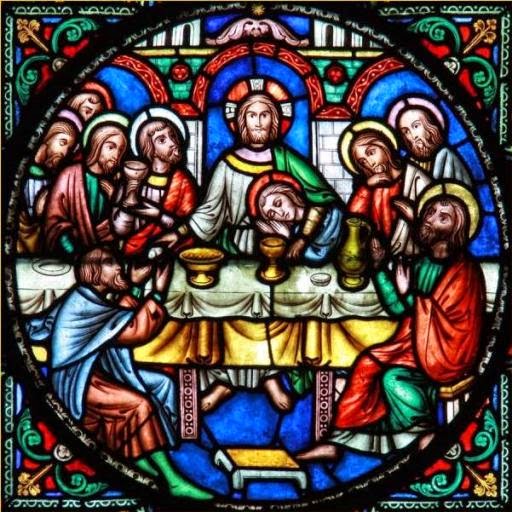
Jesus Last Supper, 2

Do you look at social media much? Maybe, Facebook? Instagram? Or perhaps, Twitter? In case you are not as familiar with these social media sites, there is a popular Internet trend that has been circulating for about ten years. It’s called (Hashtag) Throwback Thursday, or #TBT.“ This hashtag is used by people all over the world to share and relive their past experiences with anyone they want—both positive and negative experiences.

As I considered the Bible readings for this solemn evening, I could not help but think of #ThrowbackThursday. Perhaps the main reason is because when our Lord Jesus was at dinner with His disciples on that Thursday night 2000 years ago, it was Passover they commemorated with that special dinner.

That event was when Moses led the Jewish people out of Egypt, out of slavery, into freedom. But before Pharaoh was convinced to let the Jews leave, the Lord sent plagues upon Egypt. It is at this point we take up the narrative. The Lord is going to send a horrible last plague; the firstborn son in each household across Egypt would die. In order to escape that plague, Jews were instructed to smear blood from a lamb on the lintel of each house. Then, the angel of death would know not to kill any in that household. The angel would pass over that house.

Have you had Bible experiences duplicated in your life? Like, right here, here and now? Not necessarily a Passover dinner with a roast lamb—although some modern-day Jews are kind enough to invite non-Jews to their homes for a Passover dinner, or seder. But, have Bible experiences happened to you?

We are going to remember the dinner that Jesus shared with His disciples that Thursday night, 2000 years ago. Why? Because Jesus told us to remember Him.

Morgan read about the details of the Passover lamb from Exodus as our Scripture reading tonight. Holy Week and Easter as two springtime festivals, but they do not always coincide. This year, as sometimes happens, they do. As Christians mark some of the holiest days of their religious year, so do Jews. Remember #ThrowbackThursday? #TBT has special significance this year. Not only for our Lord Jesus as He remembered the Passover with His disciples, along with Jews in that time and place, but Jews today still remember, still look back to that Exodus event.

This spring is also a very different season because of the coronavirus pandemic. This health emergency has made everything more difficult for everyone. With these shelter-in-place orders for everyone’s safety and well-being, people are more anxious and fearful than usual. For some people, of whatever faith, even their faith wears thin sometimes.

How are you holding up, with Easter on hold this year? Doing things differently? Perhaps some of your friends or acquaintances are celebrating Passover in a very different way this year, too. How are they doing? People snap at each other, especially when they are forced into close quarters together. What is more, with so many restrictions on our movement—at least, here in suburban Chicago, as well as other major cities—life feels closed-in, and claustrophobic. Have you or your family felt that way? This is a great concern during this quarantine, especially for people who track spousal abuse, child and elder abuse, and violence in households. Help is available. If you or someone you love can use the National Domestic Violence Hotline, the toll-free number is 1-800-799-7233. In such tense times, I am glad caring, helpful people are at the other end of the phone.

Where else can we turn, but to God? As the Bible describes to us time and again, God has been there for others, in Bible times, throughout history, throughout similar crises of war and strife, of deadly illness and pandemic, of natural disaster, and of famine and starvation. Yes, all these things have happened, and yes, Jesus has been here through it all, right by our sides.

We come to this night. We come to the table, this table. Jesus gathered with His friends around another table, in that Upper Room. He said the words that Paul gave to us in a letter to the Corinthian church, those words we know today as the Words of Institution. Yes, Jesus, on the night He was betrayed, took bread. He took the cup. He blessed them, and passed the bread and cup to His disciples. He said about that event, “Remember Me.”

There is such a deep connection. The command in Exodus tells the Jews to remember. The words of Jesus tell His followers to remember. And each time we gather around a table like this, we repeat the Words of Institution, urging us to remember. We remember the gracious promises of God, throughout the generations. We remember the mighty power of God, the comforting presence of God, and the saving grace of God, throughout the generations.

I know that my faith falters, at such a difficult time as this. Some of my friends and acquaintances shyly admit the same. That is why it is so important to come together—virtually, if need be. We can perform the centuries-old practice of Communion on Maundy Thursday, where we remember those words Jesus spoke to a room of friends around a table. We can be strengthened spiritually by the Body and Blood of our Lord. Even though separated physically, we can pray for God’s holy presence to be with each of us in a special way tonight.

As we come to the table, let us also come to God with our hearts open wide. Let us come to the feast with Him who died for us, giving praise and thanksgiving for this great gift, as we all remember. Amen.  

@chaplaineliza

(Suggestion: visit me at my regular blog for 2020: matterofprayer: A Year of Everyday Prayers. #PursuePEACE – and my other blog,  A Year of Being Kind . Thanks!
 

Unknown's avatar

Who Is This Jesus?

“Who Is This Jesus?”

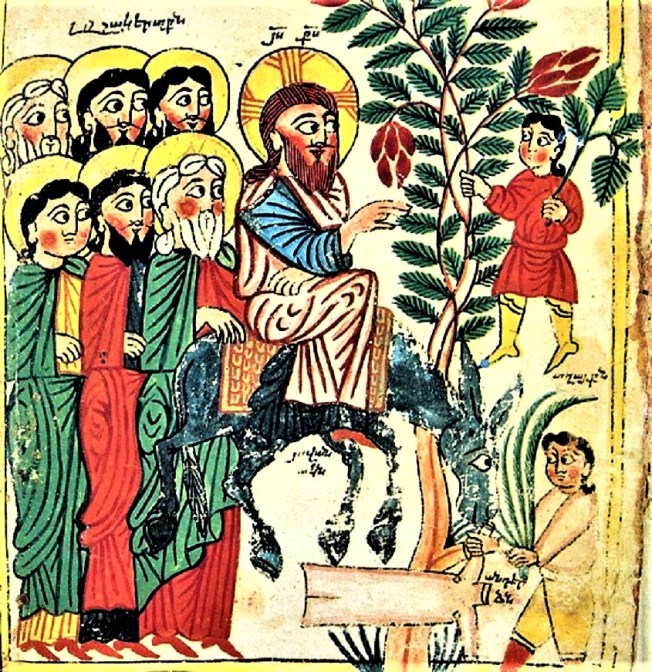
Jesus Palm Sunday, Armenian manuscript

Matthew 21:1-11 (21:10) – April 5, 2020

Do you remember watching a parade? Some might think of a small, neighborhood parade, or a large, elaborate one. I remember watching old newsreels, the kind that used to be shown in old-time movie theaters, with a cartoon before the feature film. Some of the tickertape parades I saw on the newsreels were huge spectacles, with massive crowds waving as the guest of honor came by, usually in an open convertible.

You understand the picture? That is the scene from the Gospel we are talking about today. Except, instead of confetti and tickertape, the crowds in Jerusalem waved palms. Some even threw their coats or cloaks in front of the guest of honor. Both the long-ago crowd and the modern crowd yelled and hollered and made all kinds of noise.

The Rabbi Jesus had been in circulation in the area for three years. He had been preaching with power and healing people for all that time. I suspect that great crowds wanted to welcome Jesus into the city of Jerusalem, for a number of reasons. And, a great number of people used a word from the Hebrew Scriptures to welcome Jesus. Hosanna!

Hosanna! Let’s say it again. Hosanna! Today, that word is familiar to many from church. From Palm Sunday. It’s something that people say—what children say when they wave their palms. Isn’t it? Isn’t that what it means?

The word “Hosanna!” comes from Psalm 118, meaning “Save us!” It was used when the crowds welcomed the Jewish hero Judas Maccabeus to Jerusalem, more than a century before Jesus lived in Palestine. “Isn’t the Rabbi Jesus a prophet? A healer? Didn’t He have all kinds of power? I haven’t seen it, personally, but I’ve heard about Him from all kinds of people! He’s a wonderful Rabbi, too. Don’t you think He might be the Messiah? He’s come to save us!”

I can just hear the crowd: “Save us!” “Please, bless us! Make us prosper!” “Hosanna!” In this single word, “Hosanna!” the crowd communicates a whole lot of things!

What did the crowd think of Jesus, two thousand years ago? Who did they think He was?

Today, people have lots of opinions about Jesus. Can you hear some of these ideas when people cry out to Him? Some consider Jesus to be a prophet, even a miracle worker. They certainly honor Jesus. Others think of Jesus as a very good man, one whose words, deeds and teaching were a cut above the rest of humanity. Some think the man Jesus exemplified the best of God as Jesus understood God. Or, is Jesus God incarnate, God come to earth in human flesh?

What did the crowd think of Jesus, two thousand years ago? Who did they think He was? Remember, Israel was under Roman domination. The Jews were a conquered people, under tight control by the Roman army. There had been rumors and whispers of a coming Messiah among the Jews for decades, even for centuries.

“Isn’t the Rabbi Jesus a prophet? A healer? Didn’t He have all kinds of power? I haven’t seen it, personally, but I’ve heard about Him from all kinds of people! He’s a wonderful Rabbi, too. Don’t you think He might be the Messiah? He’s come to save us!” With such urgency, such expectations, it’s no wonder the crowds cried “Hosanna!” “Save us, please!”

In the last number of weeks, not only in this country, but worldwide, vast numbers of people look calamity stark in the face. We have the loss of jobs, loss of income, loss of freedom of movement. What have we got in exchange? More fear and anxiety, more anger and confusion, more mourning. What about first responders, medical workers, janitorial staffs, grocery store workers, and people who pack and ship everything from A to Z? Front line workers all. I cannot begin to tell you about fear, worry, sorrow and anticipatory grief in operation here.

We need someone to come and be our Savior, the Rock of our salvation.

The corona virus is not quite like a physical enemy, one we are able to fight through the force of arms. Not like the Roman army, or the armies the United States fought in the wars over the past two hundred years. Would we, today, have reacted much differently than the crowds that greeted and shouted at the Rabbi Jesus? Or, would we be blinded by our fear, anxiety, confusion and profound grief at this current, horrible pandemic? Are we hearing “Hosanna!” differently this Palm Sunday? How can we walk with our Lord Jesus through this Holy Week?

Let me suggest things to do to help each other, at this desperate, anxious time. Can we show each other more kindness, help each other, be more selfless? Perhaps, even be more like Christ in our daily lives and daily activities? We can all do small, caring actions, each day. Call or text a loved one or friend. Offer to take out the garbage for a neighbor, for those who are able. Check on a senior who lives down the street—using appropriate social distance, of course.

As we call on God in our great need, can we see how God in the flesh comes to us? Humble, gentle and riding on a donkey, not charging in on a white stallion, or riding in a late model tank. Our Lord Jesus comes in vulnerability, and weakness, to join with each of us and be with us through our trials and tribulations. God comes to love us and redeem us, no matter what our situation may be. No matter what.

Praise God! Hosanna! Thank You, Jesus.


I would like to thank Rev. Dr. David Lose. For this sermon, I have borrowed several ideas from his commentary on Matthew 21:1-11 from his article Palm Sunday A – The Greater Irony

Posted: 31 Mar 2020 11:12 AM PDT http://www.davidlose.net/2020/03/palm-sunday-a-the-greater-irony/?utm_source=feedburner&utm_medium=email&utm_campaign=Feed%3A+davidlose%2FIsqE+%28…In+the+Meantime%29

@chaplaineliza

(Suggestion: visit me at my regular blog for 2020: matterofprayer: A Year of Everyday Prayers. #PursuePEACE – and my other blog,  A Year of Being Kind . Thanks!