Unknown's avatar

Who Comes in the Name of the Lord?

“Who Comes in the Name of the Lord?”

Mark 11:1-11 (11:9) – March 24, 2024

            Think of a time when you were expecting – anticipating – something really big. And, this really big thing was by no means 100 percent certain of ending well. Maybe you (or I) were facing a major interview at work, a huge exam at school, or even a really important speech. I can just imagine us being anxious, worried, with a knot at the pit of your – my stomach, or how jumpy we felt. The waiting time and expectation of that really big event was palpable! [1]

            This feeling is not exclusive to you and to me. No, many, many people have felt this way before! I wonder whether the disciples felt at all like this during the time that they were helping their Rabbi Jesus get everything ready for the entry into Jerusalem? As a subversive Rabbi and leader, Jesus knew His presence in the city was a grand challenge to the Jewish leaders. And yet, Jesus was going to walk right into Jerusalem with His eyes wide open.      

            Mark tells us in a straight forward way what happened that day. Verses 7 through 9: “When they brought the colt to Jesus and threw their cloaks over it, he sat on it. Many people spread their cloaks on the road, while others spread branches they had cut in the fields. Those who went ahead and those who followed shouted, “Hosanna!” “Blessed is he who comes in the name of the Lord!” 10 “Blessed is the coming kingdom of our father David!” “Hosanna in the highest heaven!” An impromptu grand entrance for the Rabbi Jesus; a parade, even!      

            Look at this entrance through the lens of anxiety and wonder! For, that certainly was what many people in the crowd were feeling. I suspect some of the disciples were feeling that way, too! As commentator Scott Hoezee says, “What Palm/Passion Sunday celebrates and observes is not simple, it is not neat, tidy, or straightforward.  The air fairly crackles with electricity as the characters in this grand drama sense that something big is up.” [2]

          Let’s look at this from a different direction. Here’s the situation: It’s almost Passover, the most important religious observance of the religious year. A great number of faithful Jews from near and far come to Jerusalem, in pilgrimage, in commemoration of the Exodus event. 

Jesus comes, too. He publicly, intentionally enters Jerusalem, even though the religious leaders are not pleased with Him or what He has been doing for the past few years. Jesus’s disciples must have known about the prophecy of an entry into Jerusalem riding on a donkey. This was clearly a scene with “Messiah” written all over it.  

Traditionally, when a conquering king comes home from war, he is seated on a horse, and the finest horse in the king’s stables, at that! But here, where Jesus proclaims Himself a king of peace, “he rides a donkey and enhances that statement of peace by choosing an unridden colt. The words that were spoken come from one of the enthronement psalms, used when a new king was coming into power. Hard to miss, really.” [3]

Just imagine if you and I were witnesses to our Lord Jesus and His triumphal entry to Jerusalem. I am sure that there were many people present in that crowd who only had a faint idea what was going on. What would you and I do if we were there? Would we be observers only, merely watching the parade? Would we be cheering the Rabbi Jesus as He entered Jerusalem? And, what about the reference to the psalm that people shouted? A psalm that was quoted when a new king took the throne? How many of the crowd really believed Jesus was a new King, a coming Messiah? Lots of questions we have, indeed!

There was a disconnect between the people and their limited understanding, and what Jesus actually was going to do. But I’m getting ahead of myself by rushing on to later in Holy Week. We are still here on Palm Sunday. And, many in the crowd are still excited to welcome the Rabbi Jesus—their hoped-for Messiah—into the city. They are hoping He will save them from the Romans and maybe, possibly, become their King. Except they had an earthly King in mind.

On second thought, I will go forward into Holy Week. This Triumphal Entry is the culmination of Jesus and His time on Earth, of all His time as a human, as God-become-Man in the Incarnation. Think about it: the world, the very cosmos itself, was on the brink of the most momentous event since the Big Bang, with the very Son of God about to be handed over to the authorities. Betrayed, abused, murdered. The very hosts of heaven – and maybe of hell for all we know – were quite literally holding their breath to see this all play out. [4]

            You and I have the luxury of 20/20 hindsight, of course, looking at an event so clearly reported in the historical and Biblical record. But, if a grand procession welcoming the Messiah happened today, would people still be waving palm branches? Would you and I?

This Holy Week is where all of the prophecies focus to a fine point, and reveal the Rabbi Jesus as not only the Messiah and King, but also as the Suffering Servant. The Lamb of God, sent to take away the sins of the world.

            As we remember this Passover time, this Holy Week, we can thank God that our Lord Jesus did enter Jerusalem. As a King, as a Messiah, yes! But also as Redeemer and Savior. In the first century, Jesus came to save His people from their sins. Just as much as He was Redeemer and Savior for that crowd in Jerusalem on that Palm Sunday, Jesus is our Redeemer and Savior, too. Praise God, He came to save us, today, too! Amen! And amen!

@chaplaineliza

(Suggestion: visit me at my other blogs: matterofprayer: A Year of Everyday Prayers. and  A Year of Being Kind . Thanks!


[1] https://cepreaching.org/commentary/2018-03-19/mark-111-11-2/

[2] Ibid.

[3] https://www.umcdiscipleship.org/worship-planning/depths-of-love/palm-passion-sunday-year-b-lectionary-planning-notes/palm-passion-sunday-year-b-preaching-notes

[4] https://cepreaching.org/commentary/2018-03-19/mark-111-11-2/

Unknown's avatar

Live in God’s Light!

“Live in God’s Light!”

John 3:14-21 (3:19-21) – March 10, 2024

            Remember getting report cards in school? What about yearly reviews from your boss, or your supervisor? Those can be very stressful, even upsetting. People in authority can have real power over us, and sometimes negative influence, too. Can you remember if you had any mean teachers? Unfair bosses? What about rotten coaches? Getting checks or bad marks on a report card, or a reprimand from a manager at your work?  

This Scripture reading is early in the rabbi Jesus’ ministry. Jesus had already made a name for Himself, with the tremendous teaching He had done and the wonderful miracles He had performed. So, a lot of people were talking about Jesus, this itinerant rabbi from Galilee. Even the most important leaders among the Jews, the Pharisees, were talking about this Rabbi Jesus. One of the Jewish leaders summoned up enough courage one night to sneak over to where Jesus was staying. Nicodemus wanted to know more about Jesus.  

Here in John chapter 3, our Lord Jesus and Nicodemus have a long conversation. There is so much fascinating material here! I could preach so many different sermons from this one reading alone. But, I wanted to focus today on the last part of the reading.

Listen again: “the light has come into the world, but people love the darkness rather than the light, because their deeds are evil. 20 Those who do evil things hate the light and will not come to the light, because they do not want their evil deeds to be shown up. 21 But those who do what is true come to the light in order that the light may show that what they did was in obedience to God.”

I suspect you and I and many people around the world know John 3:16. This much beloved verse is one of the dearest and most memorized Bible verses of all time. “For God so loved the world that God gave His one and only Son, that whoever believes in Him shall not perish, but have eternal life.” But, what about several verses further on? Does God really give us all a heavenly report card? Does everyone get bad marks from God, because “people love the darkness rather than the light, because their deeds are evil?”

So often people “do not want their evil deeds to be shown up.” We humans run from the light of God! A vivid image that comes to the mind of commentator Rev. Sharon Blezzard was that of “cockroaches scurrying when the lights are turned on. Being exposed, being vulnerable, even in the loving and grace-filed light of Christ, runs counter to our [fallible] human nature.” [1]

            The upright, law-following Jews of Jesus’ time tried their hardest to follow all God’s rules, to obey even the smallest rule in the Law of Moses set out in the first five books of the Bible, the Pentateuch. Even the strictest law-follower among the Jews knows they fall down sometimes, and fail to keep strict adherence to the Mosaic Law code.

            It doesn’t matter whether we are talking about the strict law-followers two thousand years ago, or upright believers in God today. Telling ourselves that we are good and right and following God all the time is so human, so natural! Sadly, many people “want to keep our evil desires, our sinful expressions, and our selfish ways hidden in the shadows. In fact, we’re pretty adept at adapting to the darkness and fooling ourselves into all sorts of pretty little lies and heady rationalizations.” [2]

The Bible calls this the natural state of people. We often see people in their natural state feeling frustrated because they are fooling themselves, and want to wallpaper over that hidden darkness in their lives, where they trip up or even turn away from following God.

            I recognize that so many of our fellow humans judge every little thing. Don’t you know a few people – even more than a few – who have frowns on their faces, their hands on their hips, or shake their fingers at certain people? And, if these disapproving, judgy folks judge you and me, it can really hurt! How much more does it hurt for us to get judged by God? Could we be fooling ourselves? Is each of us going to get a bad report card from God, with failing grades in following Jesus? This is such a helpless, hopeless place to be!

            But, thanks be to God! This helpless, hopeless place is not the end of all things. No, we have the blessed truth of John 3:16 to turn to! For God so loved the world.            

               Some people cannot get past the words “God so loved the world.” If they trust that God loves them, they think God can’t possibly love their awful neighbor. Or the guy who cussed them out. Or the lady who is always really mean. God can’t possibly love them? God loves the world – except for those people from a certain country overseas. Or, except for those homeless people or undocumented people. Or, except for those people who believe something really weird about God. Or, well, you get the idea.

            Let’s try an experiment. I am going to say John 3:16 several times, except with little changes each time. Here goes. For God so loved the world that he gave his only Son, so that everyone who believes in him may not perish but may have eternal life.

            Second time: imagine someone saying this to you. For God so loved (person’s name) that he gave his only Son, so that if (person’s name) believes in him, (person’s name) may not perish but may have eternal life. And, the third time, say this to yourself. For God so loved me that he gave his only Son, so that if I believe in him, I may not perish but may have eternal life. [3]

            Has anyone ever said that to you before? Jesus means it. He truly does.

What this reading is doing is giving all of us permission to get out of the condemnation business! Jesus did not come to condemn us. [4]

Jesus shines His loving, grace-filled light into the darkness and shadows of our hearts and loves us anyway. As I say each week in the Assurance of Pardon: believe the Good News! The Lord will never waver in persistent, caring love for each of us. And, that is a promise that is faithful and true – we have the words of Jesus on it.

For God so loved the world. Even you and me.

Amen.

@chaplaineliza

(Suggestion: visit me at my other blogs: matterofprayer: A Year of Everyday Prayers. and  A Year of Being Kind . Thanks!


[1] https://www.stewardshipoflife.org/2015/03/living-in-the-light/

[2] Ibid.

[3] https://www.umcdiscipleship.org/worship-planning/depths-of-love/fourth-sunday-in-lent-year-b-lectionary-planning-notes/fourth-sunday-in-lent-year-b-youth-lessons

[4] https://www.umcdiscipleship.org/worship-planning/depths-of-love/fourth-sunday-in-lent-year-b-lectionary-planning-notes/fourth-sunday-in-lent-year-b-preaching-notes

Unknown's avatar

Carry and Follow!

“Carry and Follow!”

Mark 8:31-38 (8:34) – February 25, 2024

            First responders do a tremendous job for their communities! Firefighters, paramedics and police officers put their lives on the line every day, risking their lives to save others. And, they do all this in the line of duty. They all serve in difficult but much-valued jobs, and these positions are to be lauded by grateful communities, certainly!

            As first responders go about their challenging jobs, I can see how some might look at them and say, “I could never do that!” Being a firefighter, paramedic or police officer can be a challenging, and especially dangerous position. Yet, what does Jesus say in our Gospel reading today? Isn’t Jesus talking about doing something just as challenging, even dangerous?

            The background of these words of Jesus is critically important for us to understand exactly what Jesus was getting at. What was the history, the backstory? Here we are at the center of the Gospel of Mark. Jesus had healed, taught, cast out demons, and performed other signs of power, but often in secret. People had questioned who this upstart Rabbi was, but with little answer.  Up until this time, Mark had only mentioned the term “the Christ” once, in the opening verse at the very beginning of the book, until here in today’s reading, in Chapter 8.

Just before this scripture reading today, the Rabbi Jesus asks His disciples, “Who do other people say I am?” Great question! We are familiar with the responses. Some say John the Baptist, others say Elijah or another prophet, but you and I know better. We know different. We know the end of the story. The thing is, these disciples do not.

            Our Lord Jesus regularly said things that were difficult to understand, and sometimes even more difficult to obey. Some theologians and bible teachers call these the “hard sayings” of Jesus. This week we are looking at one of these hard sayings. Listen again: “Then Jesus called the crowd and his disciples to him. “If any of you want to come with me,” he told them, “you must forget yourself, carry your cross, and follow me.

            We can think of the first responders and the challenging jobs they do, certainly! But, if we look at their jobs in the light of what Jesus said here, the Rabbi Jesus is calling all of us – each of us – to do something very much like what a first responder does. “For if you want to save your own life, you will lose it; but if you lose your life for me and for the gospel, you will save it.

            How on earth can we think about, much less talk about, losing our lives? Well, in a spirit of self-sacrifice, certainly many regular folks make amazing and tremendous sacrifices for their loved ones on a regular basis. “we can understand Jesus’ comments about losing our lives in a healthy manner. Sacrifice is an essential part of life. Jesus sacrifices and so do loving companions, parents, grandparents, and friends. Jesus’s ethic of self-denial is grounded in the unconditional love of God.[1]

            Ahh. Now, there I can begin to understand this hard saying of Jesus. When it was compared to the difficult jobs of a first responder, I did not really connect with the description, the comparison. But, by saying that the Rabbi Jesus grounds this taking up the cross, this self-denial, in the unconditional love of God? That I can begin to connect with!

            Yes, we can see how firefighters courageously fight fires! But, it’s no less courageous for parents to scrimp and save to provide their children with good educations or better living conditions. It’s no less courageous for a brother or sister to go way out of their way for a sibling or a parent in need. It’s no less courageous for a good friend to stand up to a bully on the playground to protect their best buddy. How many other examples can we think of, in everyday life, of everyday folks going above and beyond, showing unconditional love? That is what Jesus is talking about. That is a big part of taking up our cross and following Jesus.

            Just in case anyone is still unsure about what Jesus is telling us to do, I will say it another way. The very “act of following Jesus is totally re-ordering our priorities and principles to the way of the Kingdom. It’s no longer about saving our lives.” [2] It’s about living our lives for others, the way that Jesus did. Instead of, “ME, first!” And, “me, me, ME!” And, “where’s mine?” We need to think, “Who would Jesus love?” “Who would Jesus put first?”

            That is one thing that Lent puts front and center: the cross. Jesus told each of us to take up the cross and follow Him. As we walk with Jesus towards Jerusalem, towards Passion Week, we need to think about what we might change to follow Jesus more closely.

One positive change for each of us might be from this suggestion. “What might it mean for us to ‘take up our cross’ to follow Jesus? Are there people in our community who are persecuted for who they are, what they believe, the color of their skin, how they express themselves, or where they come from? How might we and our church share the unconditional love of God with these community members?” [3]

We are encouraged to put ourselves at the service of our Lord Jesus. To think of others, and especially to think of God’s love.  Jesus calls to each one of us to pick up our cross and to follow Him. And following Jesus is not just in Lent, as a Lenten devotion, but we are to follow Jesus all year long. How can you – how can I – show the love of God to others, today?   

@chaplaineliza

(Suggestion: visit me at my other blogs: matterofprayer: A Year of Everyday Prayers. and  A Year of Being Kind . Thanks!


[1] https://www.patheos.com/blogs/livingaholyadventure/2018/02/adventurous-lectionary-second-sunday-lent-february-25-2018/

[2] http://www.rickmorley.com/archives/1453?utm_source=rss&utm_medium=rss&utm_campaign=take-up-your-what-a-reflection-on-mark-831-38

[3] https://www.umcdiscipleship.org/worship-planning/depths-of-love/second-sunday-in-lent-year-b-for-the-sake-of-the-gospel/second-sunday-in-lent-year-b-small-groups

Unknown's avatar

Marked by God’s Love!

“Marked by God’s Love!”

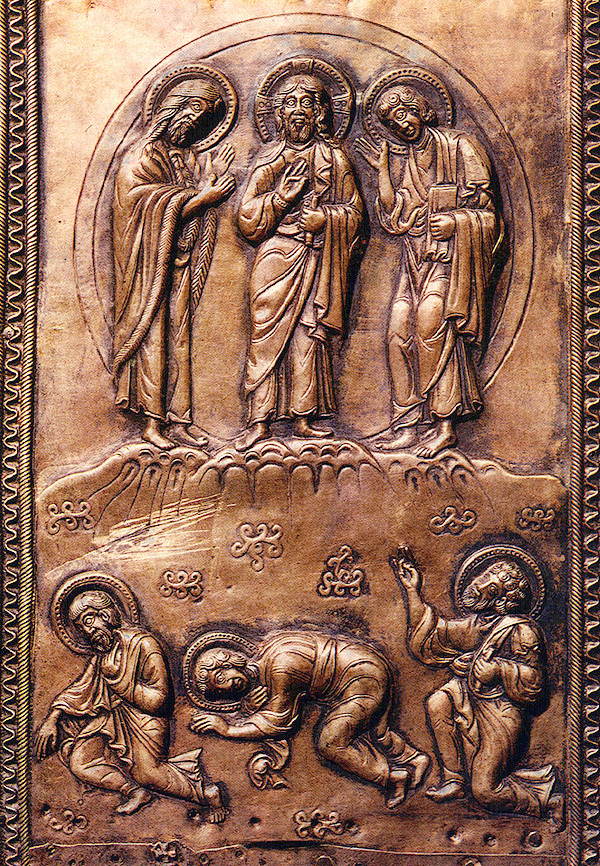
Mark 9:2-9 (9:) – February 11, 2024

            It’s almost Valentine’s Day. If you go into stores or look at ads now, we see Valentine’s Day celebrated, Valentine celebrations encouraged, and of course, we all need to buy something for our own personal Valentine, or else! Flowers, chocolate, stuffed animals, hearts – all to show our love for people, and especially for our particular loved ones and family members.

            If we go back 2000 years to that mountaintop where the Transfiguration happened, we can see when God spoke. And moreover, when God expressed Divine love. Not an expression of earthly or human or fallible love, but God’s love.

            Jesus had been preaching God’s word, healing people and doing other miracles for some time. If we think about it, by this time the Rabbi Jesus was really popular. Just think of any popular person, or famous celebrity. Often mobbed by people when He stopped to preach in a synagogue, or if He stayed overnight at someone’s home.

Shortly before today’s reading Jesus heals another blind man. Jesus was even more in demand than ever, after that display of power and might! Remember, that’s one of the main emphases for Mark. Showing the power and might of the Son of God!

Let’s set the scene. We have Jesus with His disciples. He had twelve disciples who are named, and some other followers. Women, too! Usually unnamed, but also there. But in several important instances, Jesus had an inner circle. Three special, or key disciples, who would be the ones he wanted to tell special things. Important things, as in the Gospel reading for today.

            This inner circle – Peter, James and John – were asked by Jesus to accompany Him early one morning. When they arrive at the top of the mountain, what do they find? Jesus, “His appearance changed from the inside out, right before their eyes. His clothes shimmered, glistening white, whiter than any bleach could make them. Elijah, along with Moses, came into view, in deep conversation with Jesus.” That sudden happening must have shocked the three disciples down to their sandals! Can you comprehend the utter shock and even dismay that these men felt? Awe and amazement, too.

            The most important thing about this point in Jesus’ journey through Palestine is that He had been speaking quite frankly to His disciples for some time. Mark tells this story in the midst of Jesus’ frustrated, repeated attempts to help his disciples understand that he must suffer the trial and death that leads to the cross, but they just cannot accept it.” [1]

            I don’t know whether I would have accepted these statements from Jesus, either, if I had been a follower of Jesus at this point in His ministry. The Rabbi – the Messiah – Jesus all along had been displaying all the signs of the Coming One, the Messiah sent by the Lord. Healing, miracles, preaching and teaching God’s message with authority and power. What a message of hope and encouragement for the downtrodden people of Israel!

            On top of this mountain, after months of this miracle-making, teaching and preaching, Peter, James and John see their Rabbi Jesus have a Divine encounter with Moses and Elijah

            Can you just see these three grown men, clutching at each other, huddling together like small children? Scared to death at these miraculous, out-of-this-world happenings? “Um—oh, Lord! Um—let’s build three altars here! One for You, and—um—one for the other two guys, too!” Or, something like that. Do you think Peter and the other two disciples were very receptive to what God was saying at this point? I suspect not.

            Here on the mountain of Transfiguration, Jesus elevates His message even further. Yes, His disciples hear the message in the form of speech directly from the Lord. The spoken words from the Lord were not many, but they were significant. “This is my Son, marked by my love. Listen to him.” If the three disciples were not paying strict enough attention to Jesus before, you can bet that this breathtaking experience caused them to really sit up and take notice!

            The Divine voice from within the cloud certainly confirms what the earthly Jesus had been communicating to His disciples all along. And, these words show a turning point in the ministry of Jesus – traveling down the road to Jerusalem, towards suffering, the Passion and death, despite His disciples’ refusal to hear what Jesus was saying, repeatedly.  

            I am wondering if the words from the Lord helped to transform Peter James and John? Yes, these words are confirmation for our Lord Jesus, and an expression of God’s Divine love: “This is my Son, marked by my love. Listen to him.” And I wonder, were the disciples changed and transformed by these words, too?

Just as our Lord Jesus was affirmed and transfigured by this Divine statement of love, can we be changed and transformed as we think about these words? Can you and I meditate on these words of the Lord, and see whether this message has a deeper meaning for us, and can change and transform us, too?  

This supernatural event of Transfiguration prepares us as we begin the period of Lent, that 40-day time of preparation when we journey with Jesus toward Jerusalem and the Passion and Crucifixion. How can you – how can I prepare our hearts and minds as we journey with Jesus? I think considering God’s words of Divine love are a wonderful starting point.

Just as much as God spoke out of the cloud on top of that mountain and expressed love for the earthly Jesus, just so much God loves each of us. This Divine love is not faulty or fallible, not human or limited, but instead unconditional and everlasting. We don’t need to be on the top of a mountain to experience God’s love. God will be there. We can celebrate the fullness of the Lord’s presence, and the reality of God’s love and grace! God does indeed love all of us.

Alleluia, amen.

Take a few moments to reread the gospel. Imagine you’re before the Lord Jesus as He speaks to you in His glory. What is His word to you? We start the journey of Lent this week with Ash Wednesday. How will that word of Jesus help you this week on your Lenten journey?

@chaplaineliza

(Suggestion: visit me at my other blogs: matterofprayer: A Year of Everyday Prayers. and  A Year of Being Kind . Thanks!


[1] https://www.umcdiscipleship.org/worship-planning/crossing-over/transfiguration-sunday-year-b-lectionary-planning-notes/transfiguration-sunday-year-b-preaching-notes

Unknown's avatar

Jesus Is Calling!

“Jesus Is Calling!”

Mark 1:14-20 (1:20) – January 21, 2024

            What would make you change your whole life? I know some people radically change, but what would push you to change everything about your life? For some, it’s a marriage proposal, a chance on true love. For others, it’s a wonderful job offer. Still others, a chance to do something amazing in another part of the country, even another part of the world.

            Now, what did the rabbi Jesus offer? Just think – Jesus was a former carpenter, now a rabbi and itinerant preacher. He came preaching and teaching, offering God’s good news, about God’s kingdom come near. These four career fishermen put down their nets and took off with this radical rabbi for something completely different! [1]

Again, I ask what offers, what commitments convince us that they are worth living for? Changing everything for?

            Let’s look at our Scripture passage for today. We have Mark beginning his gospel with “the Good News of Jesus the Christ, the Son of God.” This is the very start of Jesus’ ministry, I want everyone to understand. Jesus suddenly breaks onto the scene! The urgency, the immediacy is palpable! Can’t you just feel it?

 Only a few verses into the first chapter of the Gospel, the rabbi Jesus takes a purposeful walk. “As Jesus walked beside the Sea of Galilee, he saw Simon and his brother Andrew casting a net into the lake, for they were fishermen.”  

            Jesus was brilliant in His approach to these fishermen, Peter, Andrew, James and John. These were career fishermen, and they knew fishing backwards and forwards. Jesus came asking them to let down their metaphorical nets with an offer of God’s Good News. He said, 17 “Come, follow me, and I will send you out to fish for people.” Although, they probably did wonder, at least a little, what on earth they were doing. Leaving it all behind! Boats, nets, livelihood, everything!

Do you think this was the absolute first time these four men had ever seen Jesus? I suspect not. I would imagine the brothers might have seen Jesus preaching and teaching when they went into town, stood among the crowd and listened. Perhaps the brothers had discussed what Jesus had said while they were working on the job, in their boats, or mending their nets.

            Notice what Jesus did not say to these men! He did not say, “I have a theological system which I would like you to investigate.” No! Jesus did not say, “I have certain theories I would like you to think over.” Certainly not! They followed Jesus because they believed what He said about God’s Good News, about commitment. Reorienting. Reframing their whole lives.

            Let me tell you a bit about reframing. When the wood frame around a window is water damaged, carpenters pull out the wood frame and do what is called a reframing of the window. Straightening out the frame so the window will set plumb and straight up and down. It’s similar to going a new way, a new direction. These four fishermen put down their old lives and set their lives in a totally new direction. Reframing their lives, following Jesus and His call.

The commentator Gary Burge tells us “All we can say about the call is that “the kingdom of God” has broken into their lives in the immediacy of Jesus’ call. There are also two other fishermen on the shore mending their nets, James and John, sons of their father Zebedee. The call of Jesus to them is the same and their response is the same. They leave their livelihood and their father and “immediately” follow this stranger (1:20).” [2]

Friends, as Mark’s Gospel reminds us, God has broken into our world. Jesus proclaimed the Good News, but His whole point is not, “Have an opinion about the Good News.” Or, “This Good News is nice and inoffensive.” Rather, Jesus is calling for a radical, total, unqualified basing of one’s life on this Good News. Just as following this radical Rabbi is a radical idea, a radical reframing of these fishermen’s lives, so is His offer, His calling to us.  

As Lutheran pastor Janet Hunt reminds us, “I wonder now what it is that Jesus is calling us away from and what Jesus is calling us to, don’t you?  I wonder how our worlds would change if we just ‘left our nets behind’ and stepped into the new life before us. I wonder how the world itself would change if we just did this, too.” [3]

As commentator David Lose says, “We follow [Jesus] in particular and distinct ways that may or may not be like the first disciples. And that, I think, is the point. Perhaps we follow by becoming a teacher. Perhaps we follow by volunteering at the senior center. Perhaps we follow by looking out for those in our schools [or workplaces] who always seem on the outside and invite them in. Perhaps we follow by being generous with our wealth and with our time. Perhaps we follow by listening to those around us and responding with encouragement and care. Perhaps we follow by caring for an aging parent, or special needs child, or someone else who needs our care. Perhaps we follow by….” [4] Well, you get the idea.

There is a song I would like to bring to your attention. It’s a recently-written hymn called “The Summons,” written by John Bell, a member of the Iona Community, an ecumenical Christian community in Scotland. The first four verses of the hymn are questions from Jesus. He is asking these questions of us. The last verse is a first-person response to these questions. I would like to read the first and last verses of this hymn. 

Will you come and follow me if I but call your name?
Will you go where you don’t know and never be the same?
Will you let my love be shown? Will you let my name be known,
will you let my life be grown in you and you in me?

Lord, your summons echoes true when you but call my name.
Let me turn and follow you and never be the same.
In Your company I’ll go where Your love and footsteps show.
Thus I’ll move and live and grow in you and you in me. [5]

            Friends, Jesus is calling. Jesus says, “Come, follow Me.” Just as He called those four fisherman by the Sea of Galilee. He calls to each of us, today. Can you see Him? He has His hand extended. Jesus is calling. “Come, follow Me.”

            God willing, with Your help, Lord Jesus, I will follow. Will you?  

@chaplaineliza

(Suggestion: visit me at my other blogs: matterofprayer: A Year of Everyday Prayers. and  A Year of Being Kind . Thanks!


[1] https://www.workingpreacher.org/dear-working-preacher/the-call-of-the-disciples-and-the-decline-of-the-church

[2] https://www.workingpreacher.org/commentaries/revised-common-lectionary/third-sunday-after-epiphany-2/commentary-on-mark-114-20

[3] https://dancingwiththeword.com/gone-fishing/

[4] https://www.workingpreacher.org/dear-working-preacher/the-call-of-the-disciples-and-the-decline-of-the-church

[5] Words © 1987 John Bell, The Iona Community, administered by GIA Publications, Inc.

Unknown's avatar

Give Thanks Every Day!

“Give Thanks Every Day!”

John 6:5-23 (6:11) – November 26, 2023

            “We gather together to ask the Lord’s blessing!”

            Those words from a beloved, traditional Thanksgiving hymn are so familiar, and so appropriate for this thankful time of the year. Our family just had a Thanksgiving celebration a few days ago, and for many who are followers of faith traditions throughout the United States, Thanksgiving was indeed a day to ask the Lord’s blessing!

            Our Scripture reading is from the Gospel of John, chapter 6. Yet, we could also read about this same miracle from the other three Gospels. This miracle is the only miracle that appears in all four Gospel accounts of the life of Christ.

            This miracle from John 6 is about providing food to a large group of people, yes, and a whole lot more. Let us set the stage. The crowds gathered around the Rabbi Jesus more and more now, because Jesus was gaining a reputation for performing miracles!

            What do you think it would be like, to stand in the crowd and actually see a miracle performed by Jesus? How would you react, or your friends or family react? Would you believe that this Rabbi could actually perform miracles? Or, would you be more skeptical?   

            Each Gospel writer tells a similar narrative. For example, here we have a waiting crowd, eager to see what this unconventional Rabbi is going to do now, and perhaps even get up close to this miracle-worker!

“Here they come, down the road toward Jesus. Can you hear their voices getting louder as they approach and taste the dust that has risen from the tramping of their feet? They are coming closer and closer and they are hungry.” [1]

But, what makes the Gospel of John’s account of this miracle different?

            Think small and simple. Jesus is found in the ordinary and everyday stuff of life. John also called the “miracles” Jesus performed “signs.” This week’s Gospel reading reminds us of John pointing to Jesus in the simple sign of bread. In these verses Jesus uses a few loaves of bread to sustain and calm hungry and fearful folk. Yes, bread says a lot about Jesus’ identity and presence, not only in the sacrament of communion but in daily life. [2]

            Getting down to the specifics of the miracle, the disciples have much discussion about how all of this huge crowd is going to be fed. In the midst of this animated discussion, the disciple Andrew brings a little boy’s lunch to Jesus. But then, he says “How will this little amount go so far among so many?

            Perhaps you and I are like the disciples. Perhaps we get caught up in the limitations, in our fears, in the worry and concern about “how much?” and “what if?” and “what now?” How on earth are we ever going to have enough? And, how can you and I explain exactly how this miracle happened?    

            That is not the important part, which was about a “who,” not a “how.” Jesus is the focus of this sign, “the meeter of needs, the worker of miracles.” The second “who” is us, or them, “the 5,000 hungry ones on the side of the mountain. Who are us too, by the way, John says with an elbow to the ribs. Get it? We are hungry for something we can’t provide for ourselves.” [3]

            Sure, we can intellectualize this miracle, and talk about the exact number fed, and whether the 5,000 were just men, or whether there were additional women and children, and how many, and where they all came from, and who exactly distributed the food. Or, we can theologize this reading, and talk about the differences between the fine points of the translation of the different readings, or how this reading from John is another metaphor for the Eucharist, the bread or manna of heaven, the communion that Jesus provided for these people in the huge crowd without a thought for the exact theological terms used for this picnic lunch.

            Then, John puts in his occasional editorial comment at the end of this narrative. Perhaps John was the only disciple who actually got the point that our Lord Jesus was making! “We know that by how he describes the event. Did you see it? It’s there in the final verse of our text. The people were hanging out in the place where it happened. The miracle place. But John doesn’t call it a miracle place. [In verse 23] He says that it is the place where they had eaten the bread after the Lord had given thanks.[4]

The first thing Jesus did when he received the little boy’s lunch was to thank God for it. He gave thanks for having the food to offer the crowd of people. Jesus gave thanks for feeding the hungry people crowded around Him. Gratitude and generosity come from a way of seeing and being in the world. [5]

            Perhaps that is our grand takeaway for today. Perhaps that is exactly why there was a miracle, a sign from God, precisely because our Lord Jesus looked up to heaven and gave thanks before He broke the bread and shared out the pieces of fish.

Think about it. That’s what John wants us to remember: that this meal, this miracle happened after gratitude was expressed. Gratitude for the abundance that didn’t look like abundance. Gratitude for the satisfaction that came out of hunger. Gratitude becomes a way of seeing and a way of being in the world. We give thanks to God for what is about to happen. We give thanks for what we might not yet see, but what we trust God will provide.” [6]

            Jesus showed us – just as much as He showed His disciples and the crowd of people – that He is able, and He will provide for us our daily bread. We can truly have thanks, truly have gratitude for all that God has done, and is continuing to do in each of our lives. Alleluia, amen.

@chaplaineliza

(Suggestion: visit me at my other blogs: matterofprayer: A Year of Everyday Prayers. #PursuePEACE – and  A Year of Being Kind . Thanks!

(I would like to express my great appreciation for the observations and commentary from the web page www,umcdiscipleship.org for their brief series on gratitude. I used several quotes and ideas from their useful resources. Thanks so much!)


[1] https://www.patheos.com/progressive-christian/mind-the-gap-alyce-mckenzie-07-20-2012

[2] https://www.stewardshipoflife.org/2012/07/bread-water-and-signs-of-god/

[3] https://www.umcdiscipleship.org/worship-planning/our-hymn-of-grateful-praise/christ-the-king-reign-of-christ-sunday-year-a-lectionary-planning-notes/christ-the-king-reign-of-christ-sunday-year-a-preaching-notes

[4] https://www.umcdiscipleship.org/worship-planning/our-hymn-of-grateful-praise/christ-the-king-reign-of-christ-sunday-year-a-lectionary-planning-notes/christ-the-king-reign-of-christ-sunday-year-a-preaching-notes

[5] https://www.umcdiscipleship.org/worship-planning/our-hymn-of-grateful-praise/christ-the-king-reign-of-christ-sunday-year-a-lectionary-planning-notes/christ-the-king-reign-of-christ-sunday-year-a-childrens-message

[6] Ibid.

Unknown's avatar

Generosity – and Grace!

“Generosity – and Grace!”

Matthew 20:1-16 – September 24, 2023

            I often think of my four children. I sometimes remember them as younger children. I can remember very well those times when I went to school to help out in classrooms, or to chaperone on field trips. I especially remember the times when I overheard arguing and bickering in the classrooms, in the halls or on the playground between the school kids. “It’s not fair!” was one thing repeated over and over.

            Let’s see how the Rabbi Jesus begins this parable. Jesus is on His was to Jerusalem, and it will not be long before the Triumphal Entry on Palm Sunday and the Passion Week. It’s perhaps a few weeks before all those weighty events begin to happen. I am certain Jesus wanted to be certain to get some very important truths across to His disciples and to the crowds.  

            As is common with the Rabbi Jesus, when He wanted to teach some very important ideas and truths, He used parables. You and I know that using stories really helps to cement ideas into our heads! So it is with this story. That same complaint, “It’s not fair!” seems to come forth from some of the workers in this parable of Jesus. In our Gospel reading, “Jesus tells a story that reflects a completely different way of looking at things. It is a story about a vineyard owner who pays his workers on the principle of generosity, rather than on the principle of merit.” [1]

            In our parable today, Jesus tells what the kingdom of heaven is like. This is another parable in His series, in response to questions asking about what the kingdom, what heaven is like, for real! “Come on, Rabbi! Tell us! Enough with this confusing religious mumbo jumbo! Give us some straight talk about what we can expect from God!”

             Remember how the parable starts:

“Early one morning a man went out to hire some workers for his vineyard. After he had agreed to pay them the usual amount for a day’s work, he sent them off to his vineyard. About nine that morning, the man saw some other people standing in the market with nothing to do. He promised to pay them what was fair, if they would work in his vineyard. So they went. At noon and again about three in the afternoon he returned to the market. And each time he made the same agreement with others who were loafing around with nothing to do.”

            Remember, Jesus is answering a continuing question: what is the kingdom of heaven like? What will happen when we get there? In other words, another way to ask this same question is, what is God like? What can we expect from God when we get to heaven?

            I know this might be difficult, especially if you’ve been prudent with money all your life, but try and put yourself in the place of the workers who were chosen, who were sent to work at the end of the day. Imagine being a day laborer. There is no Social Security, no social safety net. Such a hard life! Imagine earning just enough to support you and your families for just one more day.

            “What we now call food insecurity is their norm, and so it’s easy to imagine their excitement when they finally get an invitation to work – they won’t earn a full day’s wage, but enough perhaps to scrape by. That excitement only multiplies when the manager unexpectedly and inexplicably pays them for a full day! I suspect that equal measures of relief, joy, and gratitude suddenly coursed through their veins as each received their payment.” [2]

            When people in the crowd or among His group of disciples continue to ask, the Rabbi Jesus is telling us that in the kingdom of heaven, God is generous! The loving, kind generosity of the owner of the vineyard is truly evident from this parable! Which brings us to the workers who were hired first, the ones who have seen all of the others, the workers hired later that day, already receive their wages for the day. Let’s hear Jesus describe the scene.

 “10 The workers who had been hired first thought they would be given more than the others. But when they were given the same, 11 they began complaining to the owner of the vineyard. 12 They said, “The ones who were hired last worked for only one hour. But you paid them the same that you did us. And we worked in the hot sun all day long!”

            Can’t you just hear these workers say, “It just isn’t fair!” Face it, their reaction ‘is almost exactly what most of us would have felt had we been in their shoes. Because what happens to them simply does not add up and so doesn’t seem fair. Never mind it’s what was contracted – if those who worked an hour received a day’s wage, then those who worked so much longer deserve more.[3] But – the owner of the vineyard is generous. Generous to everyone, no matter who, no matter what!

            Another word for this lavish, overabundant generosity is GRACE. Have you ever received grace for something you absolutely did not deserve? Many people read this parable, and say “That’s not fair!” That is exactly the point. If God were absolutely fair, none of us would be loved by God, none of us would be embraced by Jesus our Good Shepherd. No one. None. It is only by the Lord’s love, grace and mercy that any of us are welcomed into God’s family. It is all God’s grace and generosity. It is NOT about working in the vineyard, or working for salvation, at all.

                  We all have had grace extended to us here in the real world, haven’t we? – a grace period to turn in homework you did not finish or the work project you needed to finish last week. What about the landowner paying the last hired workers a whole day’s wage? And what about God forgiving us even when we don’t deserve it, or when we do things and say things that make God sad or even angry? That is grace. That is God’s generosity. God does not have to, is not obligated to forgive us and be gracious to us. But – that is exactly what God does.

      We don’t have to do more or be better in order to ensure that God loves us, because God loves each of us completely already. As Desmond Tutu puts it, “There is nothing we can do to make God love us more” and “there is nothing we can do to make God love us less.”  It is a strange kingdom indeed where there is nothing to earn.[4]

As Jesus said, this is what the kingdom of heaven is like. It’s fairness, God’s way. ”Everyone who is now last will be first, and everyone who is first will be last.” Abundant grace and generosity for all, no matter what. Thanks be to God! Alleluia, amen!

@chaplaineliza

(Suggestion: visit me at my other blogs: matterofprayer: A Year of Everyday Prayers. #PursuePEACE – and  A Year of Being Kind . Thanks!


[1] https://thewakingdreamer.blogspot.com/2011/09/nothing-to-earn-mt-201-16-1-i-have.html

[2] https://www.davidlose.net/2014/09/pentecost-15-a-love-or-justice/

[3] Ibid.

[4] https://thewakingdreamer.blogspot.com/2011/09/nothing-to-earn-mt-201-16-1-i-have.html

Unknown's avatar

God Baking Bread!

“God Baking Bread!”

Matthew 13:33 – August 6, 2023

            Has anyone here baked bread, from scratch? I have, although it’s been a number of years since I baked white bread and wheat bread. Now, I more often bake sweet breads – banana, zucchini, apple, and other types. Homemade bread is such good bread!

            In our short Scripture passage today, we have our Lord Jesus, telling another one of His parables. This one is in chapter 13, which has a number of parables or short stories, all about the kingdom of God. These metaphors and word-pictures are meant to help Jesus’s listeners get a little bit better understanding of this huge concept Jesus taught about!

            The topics Jesus used for His parables are down to earth, from real life. For example, Jesus talks about a farmer and his field, and the weeds that grow. Typical of so many in that time, and relatable to so many of His listeners! Remember, we are looking at Bible readings that help us Re-Image God, in a nurturing, feminine way. The parable we highlight today features a woman. Yes, and something typically known as women’s work, in the home.

An unusual topic for a Rabbi to talk about! I am sure there were (and are) men who traditionally and habitually bake bread, but in Palestine as in many other rural-based cultures, but women often did many of the tasks involved with housework and home-making. Including the regular baking of bread. And, in a typical Palestinian house, a lot of bread needed to be baked each week. In the first century of the Common Era, you couldn’t run out to the local grocery store and get a loaf of bread, a dozen eggs and a gallon of milk, after all.

This parable of the yeast is one where our Lord Jesus focuses on work done by a woman. Sometimes, when the Bible mentions yeast in connection with spiritual things, yeast has a negative connotation. Not here! Jesus did something unexpected! He turned the tables on a typical understanding of yeast, or leaven. This parable is unusual and unexpected! In a matter-of-fact way, Jesus lifts up this work of baking, and the work of women, too. And without specifically naming it, Jesus compares God’s work to women’s work.

One of my favorite commentators is the Rev. Janet Hunt, a Lutheran pastor in De Kalb, a couple of dozen miles to the west of us, near Northern Illinois University. She loves to bake bread, and talks about her baking at length in her article about this particular parable. Pastor Janet’s mother used to bake bread, too. According to Pastor Janet, she was told “that our mother’s mother also baked as her mother did before her in a time and place where doing so was not an occasional practice or a hobby as it is with me, but was a necessary part of one’s weekly tasks, for bread was an everyday staple and it was not yet sold in stores.” [1]

Even today, in some rural areas and small towns, baking bread at home is much more common than it is in urban areas. The woman in this parable took a lot of flour – over a bushel of flour! She probably ground that flour with a hand-cranked little mill, too. And then, baked some bread. Jesus said that she mixed the yeast into the flour until it had leavened the whole big batch of flour! In case you are not familiar with the process of leavening, the introduction of the yeast causes a transformation of the dough.  

Before the adding of the yeast, before its mixing and incorporating into the whole batch of dough, what do we have? A big pile of flour, and some water to moisten it. Perhaps a bit of sweetener like honey, perhaps not. But, imagine the working and mixing of the flour, water and yeast! As this unnamed woman mixes and kneads the dough, the yeast gets incorporated throughout the whole. As the dough rises, the yeast does its work unseen, quietly.

The woman of Jesus’ parable “would not have had a finely tuned gas or electric oven in which to bake her bread. It would likely have been done in a clay oven over hot coals. And while she certainly could have turned her attention to other things while the bread rose or the coals came to the right temperature, baking the bread would have required her to stay nearby all day long so as to be ready for the next step. For in fact, it is possible to let bread rise too long, making the final product less appealing. And coals need to be at a certain temperature to make the baking optimal.” [2]

I hope I am making the baking of bread sound like a challenging activity, because it was, and is! Let us take a step back, and consider again this short parable of Jesus. He compares the kingdom of heaven to yeast. Could it be that our Lord is saying that “Kingdom work” takes time, energy and attention, just as the work of yeast and baking takes time, energy and attention? That it sometimes requires patience as we wait for ‘yeast’ to rise?    

Time after time, I have heard stories and read accounts of the slow or hidden or pain-staking work of the kingdom of heaven finally showing fruitfulness. Finally, good dough baking and bringing forth good, homemade bread, as we recognize the kingdom of heaven at work in our lives or in the lives of those near and dear to us! We can take common things, everyday materials, and have them transformed by God.

God loves to take things as simple as bottles of water given out for free at a farmer’s market, or boxes of cereal or feminine hygiene products brought to a local food pantry to be a part of God’s kingdom. Because, they are! Something as simple and as straight-forward as common, everyday activities or items can be used and transformed into God’s purposes – God’s work – God’s kingdom.

Remembering this parable of the yeast, we can see how God works quietly, confidently, sometimes over a long time. Today, we come before God to celebrate the Lord’s Supper, that meal of common things that our Lord Jesus transformed into a sacrament. We come to meet God in a special way at God’s table, doing what Jesus commanded us to do. As often as we eat this bread and drink this cup, we celebrate our Lord until He comes again in glory.

Doing Kingdom work as Jesus told us to do from this parable, we can bring glory to our God in common ways, using everyday things. We don’t have to be extraordinary ministers or missionaries, or God’s adventurers. As Jesus told us? We can use ordinary things, everyday items, common ways. And, this will indeed bring glory to God. Let us take these words to heart, and go and do them. Amen, alleluia!

@chaplaineliza

(Suggestion: visit me at my other blogs: matterofprayer: A Year of Everyday Prayers. #PursuePEACE – and  A Year of Being Kind . Thanks!


[1] https://dancingwiththeword.com/a-one-sentence-parable-which-opens-up-the-world/

[2] Ibid.

Unknown's avatar

Seeking Jesus

“Seeking Jesus”

Matthew 28:1-10 – April 9, 2023

            “Don’t be afraid!” Is that a familiar thing to say to your family? Children or grandchildren? Even ourselves?  

            There was a lot to be afraid of, this past Passion week in Jerusalem! The Rabbi Jesus marched right into the city out in the open, riding on a donkey. Even having a grand procession. The Jewish leaders, scribes, Pharisees, and members of the Sanhedrin were all on the lookout for this troublemaking Rabbi Jesus.

Imagine, He said all kinds of things that made the Jewish leaders really angry! And, many Jewish leaders wanted to throw Jesus into prison, if not have Him tried and executed. With all that going on, this upstart Jesus entered Jerusalem like a big shot! Like someone claiming to be the Messiah! I am sure some of the followers of Jesus were afraid of what might happen.

The Rabbi Jesus openly traveled in Jerusalem, for the next few days going to the Temple and having lively discussions with the Jewish leaders, lawyers and Pharisees. With the city overflowing with visitors because of the upcoming holiday of Passover, I am sure many people heard stories about this amazing Rabbi Jesus. Perhaps a miracle worker? Maybe even the Messiah? Was it possible? Except – many of the Jewish leaders, Pharisees and members of the Sanhedrin wanted to put this upstart Rabbi behind bars! So much to be afraid of!

Yes, the Rabbi Jesus walked through the days of Holy Week, debating with the Pharisees and other Jewish leaders in the Temple and in public places. And then, the Passion Week got even more intense. He ate a Passover dinner with His disciples on Thursday evening. The special thing Jesus did on Maundy Thursday was instituting the Lord’s Supper with the bread and cup of the Passover meal. Do this in remembrance of Me, He said.

            After dinner, Jesus went to the Garden of Gethsemane to pray. He wanted His disciples to keep watch with Him, but they were too exhausted. After the events of a very busy, anxious and fearful week, just think. The disciples couldn’t keep their eyes open!

            This is when the most feared part of the week happened. Most feared yet, that is. Imagine one of the friends of Jesus, a disciple, who traveled with Him intimately for years, coming up to the Rabbi Jesus in the Garden of Gethsemane. And, kissing Him hello! An intimate gesture of affection! Yet, not affection. What is this? What happened? What was going on, thought the other, sleepy disciples? Roman soldiers? An angry crowd of people? Taking their Rabbi away?

            Oh, don’t be afraid, we hear. But how can we not fear? How can we not be anxious?

            Then the events follow in rapid succession. The arrest, torture, trials, and sentencing. The walk down the Via Dolorosa, the Way of Sorrow. Jesus dragging the cross outside the old city of Jerusalem. The disciples fled. (I won’t blame them—since their Rabbi and master was sentenced as a criminal and enemy of the state, I suspect the disciples were afraid they might be connected with their leader Jesus, too!)

We see the women at the foot of the cross. The faithful women. And Jesus’ mother, Mary. Then—Jesus dies on the cross. The earth quakes, the sky is darkened. All creation mourns as the Word made flesh, the creator of all the universe, dies on the cross.

            What some do not know is that our Lord Jesus was taken down from that cross later Friday afternoon and laid in a new tomb. Quickly, quickly, before night fell on that Friday evening, and the Jewish Sabbath began. A time of God-ordained rest when no work could be done, not even to bury a dearly loved one.

            Friday night passed. All day Saturday—the Jewish Sabbath—passed. Saturday night, and nothing could be done. No work, certainly. It was dark, after all!

            On Sunday morning, the first day of the week, the two Marys came to the new tomb. I’d imagine they came early, early in the morning, creeping—coming on tiptoe toward the tomb. I’d also imagine that they might have been frightened to come into a graveyard.

            “Don’t be afraid!” Is that a familiar thing to say to your family? Children or grandchildren? Even ourselves?  Just think of the dedication and love and respect the two Marys had for their beloved Rabbi Jesus. Even with that strong feeling, it must have taken a tremendous amount of courage to go to that new tomb early on that Sunday morning.

            What about you? What about me? Would we be with the women disciples, courageous enough to go to the tomb? Or, would we be like the rest of the men disciples? Running away, hiding, afraid to show our faces?

            As Matthew tells us in his Gospel, an Angel of the Lord had rolled away the stone, and sat upon it. “[The Angel’s] appearance was like lightning, and his clothes were white as snow. The guards were so afraid of him that they shook and became like dead men.”

            What about the two Marys? The Angel said to them, first thing, “Do not be afraid!”

            This is an important command for us, too! Do not be afraid! Let’s go a few verses further. The risen Jesus greets the two women with the same words: “Do not be afraid!” Here, I am certain the women were scared half to death when they encountered Jesus!

            Talk about an Easter surprise! No one expected their Rabbi Jesus to be alive again.

What on earth does this mean for us, today? “For children, this simply means ‘don’t be afraid of anything.  I am stronger than the worst evil there is.  And, no matter what happens I will be with you always.’” [1] And for us big people, it can mean exactly the same thing. Jesus tells all of us, “Don’t be afraid!” This is a message we can tell each other again and again.

  Who among us needs to hear this Good News from Jesus this morning? Who needs to be reassured with “Do not be afraid?” Jesus has His hands stretched out wide. This is very much the truth. Yes, Jesus is alive. Yes, He is Lord. And, yes, He has conquered death once and for all. Do you hear? Listen again to the words of Jesus: “Do not be afraid!”

We, too, can worship Jesus. We, too, can go and tell. Tell our friends, families, even strangers on the street about our Good News. Christ is risen! He is risen indeed!

Amen, alleluia!

@chaplaineliza

(Suggestion: visit me at my other blogs: matterofprayer: A Year of Everyday Prayers. #PursuePEACE – and  A Year of Being Kind . Thanks!


[1] http://worshipingwithchildren.blogspot.com/2014/03/year-easter-sunday-april-21-2014.html

Worshiping with Children, Easter Sunday, Including children in the congregation’s worship, using the Revised Common Lectionary, Carolyn C. Brown, 2014.

Unknown's avatar

Into the Wilderness

“Into the Wilderness”

Matthew 4:1-11 (4:1) – February 26, 2023

            The program of recovery has a great deal of wisdom in it, including the wisdom of how addiction happens in the first place. Addiction and its close companions craving, habit, dependence and desire depend on “more.” If one is good, eight or ten is much better! One more, just one more. Does this sound familiar? One more, just one more. One more time. One more cookie. One more tv show. Does anyone here have that craving and that problem?

            Let’s take a closer look at today’s Scripture reading. Here, Satan, the devil, the Tempter tests our Lord Jesus immediately after John baptizes Jesus in the Jordan River. Matthew tells us specifically “Then Jesus was led by the Spirit into the wilderness to be tempted by the devil.”

            This is not comedy or a stand-up joke, like Flip Wilson used to say in the 1970’s, “The devil made me do it!” He would regularly get belly laughs and applause from the audience as a result of this ”hilarious” joke. No, the devil and his ways and wiles are sneaky and persuasive and seductive. The devil came to Jesus in the wilderness on purpose, for this exact reason.

            We can listen to lectures, lessons, speeches and even sermons. So often, all they are is words. Words, words, words streaming over us, without anything to hang them on. However, if you really want to make an impact on your audience, tell them a story. Why do you think the Rabbi Jesus used parables and stories so often? He wanted His audience to remember!

Our Scripture passage for today tells us about the early part of that greatest story ever told. This is one of the first major conflicts recorded in the New Testament. The temptation of our Lord is a really significant event that happened to Jesus. It’s huge in His life experience. And, we can gather lots of spiritual principles and several excellent biblical examples for our hearts and lives. This temptation is a heckuva story! 

            One on one, in the wilderness, these two characters from the Bible are involved in one of the classic exchanges in the whole Biblical record. It’s happening right here, right now. Jesus is fasting, all alone, sent out into a wild, semi-arid place some distance from the place where He was baptized. This story has tension, drama, conflict! And, this story has a resolution, too. But more about that, later.

            Let us consider that after the baptism, the Holy Spirit led Jesus out into the wilderness. Imagine, being in the wilderness all alone. I am not sure whether a lot of people today could survive in the wilderness, especially if they grew up in an urban area like Chicago. Perhaps Jesus was especially hardy or good at basic survival skills. We are not told much else, except that He was out there for a good long time. At some point, Jesus was tempted by Satan, the adversary. And all of us, like Jesus, have to deal with difficult times and wandering in the wilderness.

I have a really important thing to bring up, though. What about our internal difficulties? Approximately one in four Americans suffer from some sort of mental illness or mental difficulty like depression, anxiety, or some sort of compulsion, if not the more severe kinds of affliction like bipolar disorder or schizophrenia. That’s a lot of people. And, those people often feel like they are all alone. All by themselves. These people are in a great deal of internal pain.

These times of sadness, anxiety, fearfulness, even downright despair sometimes threaten to overwhelm us. These are truly times of wandering in the wilderness. 

            In the Lord’s Prayer, we specifically pray “lead us not into temptation, but deliver us from evil.” One of the newer translations of this same petition is “save us from the time of trial, and deliver us from evil.” The key thing is that we often know very well what temptation is, and how seductive and persuasive and even sneaky temptation can be. How have you experienced temptation? Has it come back, again and again, and have you had difficulty facing it?

What did our Lord Jesus do, when He was tempted? For each of these three temptations that the devil mentioned, Jesus answered each one with a pointed quote from Scripture to answer the specific temptation that Satan brings up. Giving us a good example, Jesus shows us an effective way right here, in our Scripture reading.

We can also get familiar with the Word of God. We can read it on a regular basis, and get so well acquainted with it that we will also be able to answer the little and not-so-little temptations that come up each and every day. To quote from Psalm 119:11, “Your Word I have hid in my heart, that I may not sin against You.” Plus, reading God’s Word, the Bible, is a wonderful way of building a close relationship with our Lord. This is another tool that God gives to us, to help us along the wilderness way.

Different temptations appeal to (and tempt) different people. However, when people in recovery tell their personal stories, there is something about those stories of falling, hitting bottom, and recovery that resonate. They stick, deep down, and people can relate.

I suggest that you (and I) consider a spiritual practice for Lent, like bible reading or prayer. We can participate in prayer walks, works of service or acts of kindness. What might you do in Lent, the next 40 days plus six Sundays, to prepare for a deeper experience of the reality of Good Friday and a more joyous celebration of the truth of Easter?

            Notice, the Holy Spirit is the Comforter and Sustainer who remains with Jesus throughout His time in the wilderness. Just so, the Holy Spirit can be with all of us through our times in the wilderness. Indeed, God can be at work both for us and through us during our wilderness wanderings and difficult times.

  Certainly, we all have our own stories. Each is a day-by-day story, one day at a time. The best part is that Jesus is always by our side. That’s a promise, too. Even though life continues to happen, even though tough times continue to come, Jesus travels with us. As our personal stories continue, that’s a promise we all can trust.. Amen, and amen.

@chaplaineliza

(Suggestion: visit me at my other blogs: matterofprayer: A Year of Everyday Prayers. #PursuePEACE – and  A Year of Being Kind . Thanks!

(Thanks to Carolyn Brown and her website Worshiping with Children for the 1st Sunday in Lent, http://worshipingwithchildren.blogspot.com/2014/02/year-first-sunday-in-lent-march-13-2011.html . And thanks as well to Mark Roberts and his devotion from the series Life for Leaders, “The Dustiness of Lent,” https://depree.org/life-for-leaders/?mc_cid=37497859c9&mc_eid=6effffadbb )