Unknown's avatar

Who Has Seen the Lord?

“Who Has Seen the Lord?”

John 20:1-18 (20:18) – April 20, 2025

            Who doesn’t like to hear a good story? Storytellers are wonderful to listen to. Small children love to hear stories. Even grown-ups enjoy stories. Certain stories are told over and over again, in different ways. Cinderella. King Arthur. The Arabian Nights. Aesop’s fables. Even the Wizard of Oz.  What about The Greatest Story Ever Told? That’s another name for the narrative of the Passion Week, following Jesus step by step from Palm Sunday through Good Friday, finishing up with the happily ever after ending on Easter morning! 

            We left Jesus on the cross, on Friday afternoon, when last we saw Jesus on Good Friday. Jesus had walked through the days of Holy Week, debating with the Pharisees and other Jewish leaders in the Temple. He had eaten a Passover dinner with His disciples on Thursday evening. The special thing Jesus did on Thursday was instituting the Lord’s Supper with the bread and cup of the Passover meal. Do this in remembrance of Me, He said.

            After dinner, Jesus went to the Garden of Gethsemane to pray. He wanted His disciples to keep watch with Him, but they were too exhausted. After the events of a very busy week, just think. The disciples couldn’t keep their eyes open!

            Then the events follow in rapid succession. The arrest, torture, trials, and sentencing. The walk down the Via Dolorosa, the Way of Sorrow. Jesus dragging the cross outside the old city of Jerusalem. The disciples fled. (I won’t blame them—since their Rabbi was sentenced as a criminal and enemy of the state, I suspect the disciples were afraid they might be connected with their leader Jesus, too!) We see the women at the foot of the cross. The faithful women. And Jesus’ mother, Mary. Then—Jesus dies on the cross. The earth quakes, the sky darkened. All creation mourns as the Word made flesh, the creator of all the universe, dies on the cross.

            As we continued to follow the Greatest Story Ever Told, Jesus is taken down from the cross shortly before sunset. His body is turned over to one of the Pharisees, Joseph of Arimethea. Joseph hurriedly lays the dead body of Jesus in a tomb nearby. And, the faithful women are also there. What faith they must have had! What tenacity, and what love. The women disciples follow their leader, their rabbi, their Lord and master, even though He’s dead. To care for His body, in the absence of the disciples – the men disciples who are in hiding.

            The women are there. Not shunted aside, not put in second place. These faithful women disciples play an important role in caring for their Rabbi and their friend, hurriedly washing and preparing His dead body for the grave, before the Sabbath begins at sunset.

            As Friday night swiftly approaches, with it comes the Jewish holy observance. Especially this special Sabbath—which falls during Passover. No work is to be done at all on this holy day of rest, not even the compassionate work of caring for a dead body.

            After Sabbath day and Saturday night end, it is now Sunday morning. Faithful Mary Magdalene heads out for the tomb even before the sun has fully risen. Can you see her, eager in her haste to get to the tomb? With some oils to anoint the body? As she comes near the tomb, she discovers the stone has been rolled away. The tomb is now empty. What happened? Mary runs to get some assistance, someone to come with her and check things out more fully.

            Sure enough, Mary tells what she discovered. Two of the—men—disciples come back with her. Mary returns with the other two, back to the tomb. They see the tomb, and sure enough. It is empty. And then, these two men disciples turn right around. Go back to the rest. In hiding.

            But—what about Mary? What does she do? Again, I come back to the indisputable fact that the women disciples are faithful and true. What a roller coaster ride Mary has been on. Starting on Palm Sunday, their leader Jesus marches right into the lion’s den, right into Jerusalem itself. All through the Passion Week, Jesus appears in and around Jerusalem, in the Temple, doing anything but keeping a low profile. I am certain the men and the women accompanying them knew very well that the Jewish leaders were planning on doing bad things to Jesus.

The women disciples show compassion, love, and care for their Rabbi, their master and friend. Mary stays put near the tomb. Jesus had been her best friend and her teacher. After she met Jesus, her life was different – and lots better! But now, Jesus had been killed and buried. Not only that, it appeared that someone had stolen his body. [1]

            At this desperate point, early on Sunday morning, Mary weeps. She does not know where her Lord and Master’s body has gone! After many days and nights of worry, anxiety, strong emotion, and intense grief, I can well understand how Mary broke down in tears.

            What about us, today? Have you ever been through days of intense emotion, gut-wrenching anxiety, even intense grief? All of those feelings tumbling and roiling through you? Then you know a little of what Mary was going through.

            What Mary did not suspect at first was that she was in the Greatest Story Ever Told. She sees Someone through her tears. She suspects this Person is the gardener, of all things! She says, “Sir, if you have carried him away, tell me where you have put him, and I will get him.” 

            Then, Jesus—for it is He!—Jesus speaks to her. Jesus calls her by name. “Mary!”          Do you hear that? Jesus calls her by name. “Mary!” How sweet to have someone who loves you very much call you by name! Remember, I just said that Mary had been on an emotional roller coaster the whole week previous? Just think what this would do! Wow! Mary’s eyes are opened. Mary finally sees clearly, and responds, “Rabbi!” “Teacher!”

            There’s a word in the next verse that is sometimes misunderstood. In verse 17, Jesus tells Mary, “Do not hold on to me.” In the original language, Greek, the word ‘hold on’ or ‘touch’ is a present imperative verb. The verb in the sentence can be translated “Do not keep touching me!” Mary realizes that it was really and truly Jesus, in the flesh. I suspect she fell on her knees and grabbed onto His legs with every ounce of strength in her body. Clutching, crying, laughing. Can you just see her? Jesus, gently trying to get her to let go. “Mary, can you stop clutching at Me?”

            Can you see Mary now, as she understands in full. Jesus is alive! He is risen! She listens to Jesus, returns to the disciples, and declares the joyful truth to everyone!

            Mary is not only a faithful friend and follower of her Rabbi, she is also someone who carries the Good News! The news that Jesus is no longer dead, but He is risen! He is alive again. I want all of you to understand this all-important point. Jesus has entrusted Mary with the Gospel message. She is a preacher of the Good News!

Mary Magdalene is no longer just a supporting player, just a side note in the Gospel. Instead, she transitions to a lead actor in the Greatest Story Ever Told, here in John 20. And, one of the first and best preachers, sharing her experience, hope and joy.

            What a story! Except—this is not make-believe. This is for real. This is very much the truth. Yes, our risen Lord Jesus is alive. Yes, He is Lord. And, yes, He has conquered death once and for all. Do you hear? Listen again to the words of the disciple Mary. She told the disciples, “I have seen the Lord!”  

I pray we all can affirm together today: He is risen! Christ is risen, indeed!  

Alleluia! Amen!

@chaplaineliza

(Suggestion: visit me at my other blogs: matterofprayer: A Year of Everyday Prayers. #PursuePEACE – and  A Year of Being Kind . Thanks!


[1] https://worshipingwithchildren.blogspot.com/2016/02/year-c-easter-sunday-march-27-2016.html

Unknown's avatar

Who is Hallowed?

“Who is Hallowed?”

Philippians 3:4-13 (3:8) – April 6, 2025

            When I was in grade school, I used to read the encyclopedia and the dictionary. My grandfather was kind enough to buy my family a multi-volume World Book encyclopedia, and we got the yearly supplements, too! My love of words and desire for information goes back a long ways, and when I was in school, I used to read these reference books regularly, curled up in the arm chair in my parents’ living room!

          We are going to highlight “Hallowed be Thy name” as our section of the Lord’s Prayer for this week. Holy, or “hallowed” is what we say about God and God’s name every time we pray the Lord’s Prayer. I would like us to consider the word “Hallowed.” It’s quite an old-fashioned word! But, before we get to that definition for “Hallowed,” let’s take a closer look at our Scripture reading for today.

The apostle Paul is writing a thank-you letter to the church in Philippi. That’s his primary reason for writing this letter. At the beginning of chapter 3, he is just winding up into one of his great declarations. Do you know someone who boasts and brags a lot? Of course you do! I do, too. We can roll our eyes, or be really impressed, or somewhere in the middle. Paul right here is really bragging – a lot! At the beginning of this reading, Paul ticks off all the things that make him a super special Jewish person. For real!

          The apostle Paul (who often uses run-on sentences) goes on and on about himself, how much of a super Pharisee and righteous Jew he is, and even filled with great zeal for God. He is single-minded for the Lord! All God, all the time! But then—Paul comes to a complete stop. He says all of his marvelous resume is completely worthless, compared to the mega-awesome, super-special magnificence of knowing his Savior Christ Jesus his Lord. 

Listen: “But whatever were gains to me I now consider loss for the sake of Christ. What is more, I consider everything a loss because of the surpassing worth of knowing Christ Jesus my Lord, for whose sake I have lost all things. I consider them garbage, that I may gain Christ and be found in him, not having a righteousness of my own that comes from the law, but that which is through faith inChrist.”  

Paul – Saul that was – found his own self-righteous actions and trying to make himself righteous enough for God just did not work. There was no way he could earn enough “brownie points” to be acceptable to God.

In other places in the New Testament, Paul describes what an awful mess he was in when he realized this! The Pharisee Saul had lived his whole life acting self-righteous, putting on a show. Here, in Philippians, Paul cuts straight to the chase. He tells us he no longer trusts in himself or his qualifications. Instead, he trusts in Christ! Absolutely, one hundred percent.

We could consider Paul a boastful, self-important guy! I mean, telling us all of those high and mighty things about himself. And yet – look where he comes down. Remember, Paul writes from the perspective of one who has made a commitment to Jesus; and not just the human Jesus, either.  When our Lord and Savior Jesus appeared to Paul on the Damascus Road, that was a huge earthquake of an experience. The apostle Paul gives fascinating autobiographical details about himself, but then says all of that is worthless – garbage! compared to the ultimate joy of knowing Christ Jesus his Lord. Or, is that Christ Jesus our Lord?

Paul actually uses a swear word here, in verse 8. “I consider everything a loss because of the surpassing worth of knowing Christ Jesus my Lord, for whose sake I have lost all things.” – meaning, putting aside all his training, and superior resume, and everything else – “I consider them garbage, that I may gain Christ.” We might think of a four-letter swear word to use here instead of “garbage,” and that is exactly what Paul uses in the original Greek. He wrote this letter from jail in Rome. Even still, Paul speaks of the ultimate joy he has, knowing Christ!

            Let’s come at this another way. As a believer, Paul regards “everything” – his impeccable resume, his high position in Jewish society, his self-righteous striving to make brownie points with the Lord – of absolutely no value, in comparison with the far greater worth of knowing Christ. Experiencing and understanding Jesus Christ comes first of all, and is of far greater value to him!

We circle around, back to the phrase we are highlighting today, from the Lord’s Prayer. In this church, we pray it every Sunday. We are lifting up “Hallowed be Thy name” today. That quaint, old-fashioned word “hallowed.” But, what does this word really mean?

The retired Director’ of Children’s Ministries and commentator Carolyn Brown compared hallowed to the words awesome, special and wonderful. This is the very, very, very best. When we say “hallowed be Thy name,” those are words that can be applied only to God. Every time we pray the Lord’s Prayer, just like the apostle Paul, just like Mary of Bethany from today’s Gospel reading, we are saying “God, You are holy, You are the very, very, very best there is in the whole universe.” [1]

            Sure, only a small portion of Christians have a sudden, thunder clap of a Damascus Road encounter with the Lord Jesus Christ, like Paul did. Yet, we all name Him holy – or, hallowed. Don’t we? We all pray the Lord’s Prayer, don’t we? 

Life was certainly no walk in the park for Paul, especially here. Yet, we can almost feel his joy right through the printed page. Even though, hardship – yet, there was joy! Even though, trials – yet, Paul felt joy! Even though, sickness – yet, Paul and his friends were joyful!

You and I are probably not in the happiest of places right now, with stress, uncertainty and anxiety all around us. Yet, Paul reminds us, we can experience joy in knowing Christ, the very, very, very best Person in the universe! If we place our trust and hope in Jesus Christ, His joy is available to us, any time! What a marvelous promise. Be joyful in Christ Jesus. Hallowed be His name. Amen.


[1] https://worshipingwithchildren.blogspot.com/2016/02/year-c-fifth-sunday-in-lent-march-13.html

@chaplaineliza

(Suggestion: visit me at my other blogs: matterofprayer: A Year of Everyday Prayers. #PursuePEACE – and  A Year of Being Kind . Thanks!

Unknown's avatar

Dance Before the Lord!

“Dance Before the Lord!”

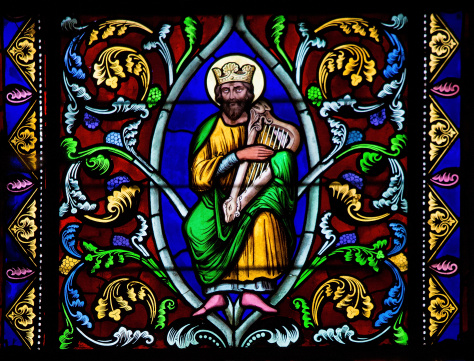
King David

2 Samuel 6:1-5, 13-19 (6:14) – July 14, 2024

            The wise theologian (and humorist) Erma Bombeck described an experience she had years ago in church. “A row or two in front of her sat a mother with a normal five-year-old boy, which means, he couldn’t sit still. As he squirmed and looked over the pew at those behind him, he was smiling. Then Erma heard the mother sternly whisper, “Stop smiling! Don’t you know that we’re in church?” [1]

            Our Bible reading this morning talks about how a large crowd behaved when they were at worship, including their leader, their King David. How different would this reading be if God’s people decided to be all stern, and stiff, and poker-faced when they came to worship? Can you imagine a stern, stiff, solemn service at this time? Or, is this joyful, musical, dance-filled procession from 2 Samuel pleasing to the Lord? Which service could you see yourself in?

            Let us listen again to a part of this reading: “David and all the Israelites were dancing and singing with all their might to honor the Lord. They were playing harps, lyres, drums, rattles, and cymbals. 15 And so [David] and all the Israelites took the Covenant Box up to Jerusalem with shouts of joy and the sound of trumpets.

            I cannot even begin to imagine the joy and exuberance of this procession! But, why so much excitement? For that, we will need to go back several chapters. Some while before, the enemy Philistines captured the Ark of the Covenant, God’s Covenant Box, and brought it back to their territory. Except, things did not go well for them. Their priests told the Philistine king that they needed to send the Covenant Box back to Israel! So, they did, and through some adventures King David and the people of Israel finally brought the Covenant Box back into Jerusalem.

            This was a rocky number of months, for the people of Israel! Losing the Covenant Box, the Ark of the Covenant, was devastating for Israel. “This was the most holy object God’s people had. The [people of Israel] had carried it as they walked through the wilderness and kept it in a special tent in the center of their town. Image how they felt when the Philistines captured it and carried it off to their country AND how they felt when they felt when they got it back.” [2]

This priceless Box was not only a beautiful, holy and precious artifact, this Covenant Box signified the very presence of God. Just imagine the rejoicing as King David and tens of thousands of Israelites danced, sang and played music as they brought the Ark into Jerusalem!

To the people of Israel, the Covenant Box was an important object, telling a story. The Ark of the Covenant “points to the larger narrative of God’s delivering the people from slavery and divine guidance into the promised land. It reminds the people of this salvation history and of the nearness of God’s Presence with them always. It provided continuity from the time of Moses to the present moment described in 2 Samuel 6.” [3]

In this chapter from 2 Samuel, God’s Covenant Box signaled God’s Presence among the people – all the people. What is more, this signified God’s promise to them! As you and I come together in our worship service today, what symbols, objects or stories help us to worship? Which of these help us to have “eyes to see and ears to hear” God’s Presence among us today? Which help us to praise and worship God, even to sing and dance before the Lord in thanksgiving?  

I know I preached on this reading three years ago, and I asked then, have you ever been to a worship service where people praised the Lord in all kinds of ways? More than singing hymns and worship songs. I mean, playing all kinds of instruments, dancing before God, and other kinds of artistic expressions.

Perhaps you have just been to worship services where there were piano and organ – and nothing else. Do you know that in a great many worship services across the world today drums are the chief instrument of praise? Drums and the human voice, the beat of human feet and clapping of hands make a joyful noise to the Lord across many cultures and in many countries today. Christians from those worship services might feel really strange if they came to a solemn service like ours where no one was actively praising God and dancing in the aisles!

We are left with a question: how do you and I respond to God’s holy Presence? We can see that King David and thousands of his people danced before the Lord “with all their might!” Pianos and organs are wonderful musical expressions, and so are praise bands and bluegrass bands and full orchestras and all kinds of percussion! Exuberant joy and dancing in the aisles is certainly a wonderful response to God! [4]

But, that is only one way. God may instead call us to quiet contemplation, or sometimes bold action. We are not required to only worship God in church buildings! No, God can be worshiped in the mountains, on the beach, or in a park. And, sometimes things can be new and different for each of us, to allow our hearts to worship in new and different ways.  

Today we can connect to God’s Presence in ways that are significant and touch the heart and soul, that are meaningful to each of us – and celebrate others for connecting in ways that are meaningful and soulful to each of them! Whether dancing and leaping, praising in loud voices, praying quietly, singing hymns and songs, drawing and painting, making banners or wall hangings. We humans have a multitude of ways to come before our God!

How does God respond to all these different types of worship, whether quiet and solemn, or joy-filled and exuberant? I go back to Carolyn Brown’s excellent commentary where she mentions the children’s tune “Hokey Pokey” “to explore the truth that we have to put more than just our left hand or our right foot in [to worship]. We must put our whole selves into worship, life, prayer, everything.[5]

 Sometimes these simple, straight-forward ways are the best ways. Put our whole selves into worship, life, prayer, everything. That’s how to honor, praise and enjoy God the best.

And, the Lord is so pleased when God’s people come together to worship! Praise the Lord!

@chaplaineliza

(Suggestion: visit me at my other blogs: matterofprayer: A Year of Everyday Prayers. and  A Year of Being Kind . Thanks!


[1] https://bible.org/seriespage/lesson-7-worship-joyful-celebration-2-samuel-6

[2] http://worshipingwithchildren.blogspot.com/2015/06/year-b-proper-10-15th-sunday-in.html

[3] https://www.workingpreacher.org/commentaries/revised-common-lectionary/ordinary-15-2/commentary-on-2-samuel-61-5-12b-19

[4] https://www.workingpreacher.org/commentaries/revised-common-lectionary/ordinary-15-2/commentary-on-2-samuel-61-5-12b-19

[5] http://worshipingwithchildren.blogspot.com/2015/06/year-b-proper-10-15th-sunday-in.html

Unknown's avatar

His Name: Emmanuel

“His Name: Emmanuel”

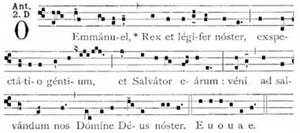
emmanuel-plainsong

Isaiah 7:10-14  – December 18, 2016

So many people love babies. Look at just about any gathering of people. Church congregation, senior center, exercise group, book club. When anyone mentions that someone has just had a baby, what happens? Lots of comments like, “What did she have? Boy or girl?” How big is the baby?” And, especially, “Oh, I hope mom and baby are happy and healthy!”

Common, everyday occurrences, like young women getting pregnant and babies being born. That is exactly what the prophet spoke of in our passage today. The prophet gave a lot of background, but he finished this passage by talking about the clear promise from God. Let’s go back to the beginning of the passage from the prophet: “Again the Lord spoke to King Ahaz, saying, Ask a sign of the Lord your God; let it be deep as Sheol or high as heaven.” It sounds like the Lord God wants to give King Ahaz a really big message. But, wait. Why is this stuff happening?

A little backstory. The kings of Syria and Israel (Northern Kingdom) join together to go to war with the Assyrians. They ask King Ahaz of Judah (Southern Kingdom) to join with them, but Ahaz refuses. Both countries send armies to march on Jerusalem to dethrone Ahaz and put a puppet king on the throne.

We have big political intrigue going on in Jerusalem at this time! Remember, it’s about seven centuries before the birth of Jesus in Bethlehem. The Lord sends Isaiah to Ahaz a second time, this time offering to give Ahaz a sign so that he will believe God. From Isaiah 7: “12 But Ahaz said, I will not ask, and I will not put the Lord to the test,” and once again Ahaz refuses.

One of the commentators I consulted said, “King Ahaz received an oracle from Yahweh, directing him to ask for a sign as deep as Sheol or as high as heaven. This may refer to a sign announced by an earthquake or in lightning. With seeming piety, Ahaz refuses to ask for a sign lest it put Yahweh to a test. Isaiah, however, treats his answer as a refusal to trust God and announces that God will give him a sign anyway.” [1]

What is this sign? A common, everyday sign. There may have likely been just a young woman who was at Ahaz’s court, to whom Isaiah could literally point a finger and say, “Look, she’s pregnant. She’s going to have a son. That birth is the sign that God is with us.” We can see this as a sign that God is in the common, everyday things, the simple, ordinary passages of life.

Do the simple, small things that come into our lives change our course? These verses give us an interesting image. God would save the people of Israel through the sign of something so common and ordinary as a pregnant woman. Isaiah began by offering the opportunity for a great big, splashy sign, but instead gave the king a common image of everyday, ordinary happenings.

The sign was certainly not for the mighty and powerful. Rejected by those in power, God would work wonders among the humble and lowly. In other words, the simple common folk. The original reference for Isaiah was to a child born in his time, and in the near future. For the prophet, the message is that in a few years, both the kingdoms threatening Judah will be no longer a problem. This indeed is historically what happened.

Some centuries pass. The Book of Isaiah was originally written in Hebrew, which was the common language of Israel during the 700’s BCE. By the time we arrive at 300 BCE, there has been a huge turnover in the world. Now, the Greeks under Alexander the Great have conquered most of the known world, and they have spread the Greek language far and wide. Plus, the Jewish people had been scattered all over the Middle East and into Asia Minor.

Many of the scattered Jewish people could hardly read and understand their own Scriptures any more! So, a large group of Jewish scholars translated the whole of the Hebrew Scriptures into Greek. It is that translation that Matthew uses when he says, “22 All this took place to fulfill what had been spoken by the Lord through the prophet: 23 “Look, the virgin shall conceive and bear a son, and they shall name him Emmanuel,” which means, “God is with us.”

Believers from the time of Matthew’s gospel have pointed to these verses as Messianic prophecies. Yes, there is a technical difference between “young woman” and “virgin.” This tension is evident if we closely examine the difference between the Hebrew words and the Greek translation. Yet—what is the same? It is a message of God’s caring and love that sees pregnancy and birth—simple, everyday happenings—as signs of God’s care and concern for God’s people.

Emmanuel. God with us. Was that true in Isaiah’s day, with the Assyrian armies breathing down the necks of the people of Israel? Of course! Isaiah gave the king a special oracle to let him know so. Emmanuel. God with us. Was that true in the time of Jesus’s birth, with the occupying Roman armies breathing down the necks of the people of Israel? Of course it was!

God has always had concern and love for God’s people, no matter where and no matter when. No matter if the persecuted Christians were running from the Romans, or being chased and persecuted by any one of the occupying forces in the centuries in between.

Jesus came from humble origins. Yet, He changed the world. Likewise, the birth of this child, was a sign that even in the midst of the chaos and destruction surrounding Jerusalem in the uncertain time of Isaiah and the uncertain time of the baby Jesus, God was still with them. Life still did go on. In a very real sense, that was (and is!) a miracle.

What is the simple message we receive from these words of the prophet? God will be with us, no matter what. That is the message to King Ahaz and the people of Israel, that is the message to occupied Israel in the newborn Jesus’s day. And, it’s the message we can take home with us this day.

“Look, she’s pregnant. She’s going to have a son. That birth is the sign that God is with us.” We can see this as a joyful sign that God is in the common, everyday things, like the simple, ordinary passages of life. Like a baby being born, displayed to all of us as a wonderful sign from the Lord God. Praise God! God is concerned about the smallest and every day and ordinary, like babies and new moms and children, like you and like me.

Alleluia, amen!

[1] http://fontes.lstc.edu/~rklein/Documents/adventa.htm#Advent4, Studies on Old Testament texts from Series A, Ralph W. Klein, Lutheran School of Theology at Chicago.

@chaplaineliza

(Suggestion: visit me at my regular blog for 2016: matterofprayer: A Year of Everyday Prayers. #PursuePEACE – and my other blog,  A Year of Being Kind . Thanks!)