Unknown's avatar

Seeing is Believing!

Seeing is Believing!

“Seeing is Believing”
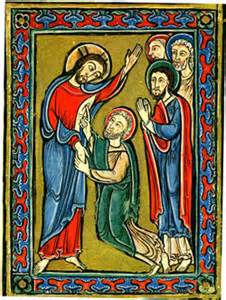
Jesus and Thomas illustration John 20-24

John 20:24-29 – April 12, 2015

Seeing is believing! Or . . . is it?

I wonder what things come to mind when I mention the phrase, “Seeing is believing”? Or even, “I won’t believe it until I see it!” Sometimes, people can be really doubtful about things. I can just imagine several people I know folding their arms across their chests and saying, “Unless you show me . . . “

In the gospel account we read today, from John 20, the disciple Thomas had just that reaction. After the resurrection, the first time Jesus came to the disciples, Thomas was not there. We’re not told why, simply that he wasn’t there. Maybe he was scared, maybe he was away, or out of town. Maybe he was sick. We just aren’t told why he wasn’t there.

The ‘why’ is not the important part. The fact that Thomas wasn’t present is. Thomas had doubts. Sincere doubts.

Truth to tell, the other disciples’ story was a little farfetched. I mean, how many people have you known who came back from the dead, and walked through walls into a locked room?

I wonder. I wonder if Thomas’ reaction strikes a chord with anyone here today. How many of us today are like Thomas? Doubting that Jesus has risen indeed from the dead? Or, completely missing Jesus, and doubting that Jesus is even here at all, today?

Let’s think some more about Thomas and his reaction. Thomas not only doubted, he also refused to believe! He not only doubted, he wanted concrete proof. Tangible proof, proof he could touch and feel and handle. Thomas wanted to put his hands in the nail marks on Jesus’ hands. That’s pretty concrete.

As I thought more about Thomas and his reaction and attitude toward Jesus and His first appearance to the disciples, I was reminded about my children. Generally, children have concrete thinking processes, especially smaller children. I have four children, and I’m accustomed to talking with them and communicating in more appropriate ways for their age groups. My children are just about grown up now. But when I used to explain something about God to my children, sometimes it was difficult for the younger ones to fully grasp the ideas I’m trying to explain. And they can ask some pretty hard questions. Gee, sometimes it’s difficult for me to know how to explain things about God to anyone who asks!

Maybe Thomas needed more concrete explanations, too. We just aren’t sure. The Gospel of John isn’t clear at this point. We as readers don’t know why Thomas had difficulty believing. But the gospel account says he did.

How many of us today are like Thomas? Not sure? Not believing? Closed up behind the locked doors of feeble faith? Not believing that Jesus can make a difference in our lives today? Could Jesus come and reveal Himself to Thomas? Can He come and reveal Himself to those today who are fearful, doubting, and unbelieving? . . . Can He reveal Himself to me?

Perhaps Thomas even had difficulty finding something to believe in, since he had so recently seen his Master and Teacher arrested and crucified. Grief, fear, anger, dashed hopes, shattered dreams. I strongly suspect several, if not all of these, were operating in Thomas’ life at this time.

These strong feelings and emotions inside are intense, and raw. From what is known today about the stages of grief, Thomas could very well have been feeling awful, angry, fearful and upset. Thomas could have felt like his life was falling apart. But Jesus can break through all of that. Jesus could enter Thomas’ life with new hope, standing right in front of him. In the same way, Jesus Christ can enter through the closed doors of our hearts, and meet us where we are, with open arms.

Just as Jesus did not leave Thomas high and dry, to figure things out on his own, so Jesus will not leave us. Our Lord came to Thomas in the upper room, despite his doubts and unbelief, and Jesus also comes to us in our doubts, and in our unbelief.

Now, Thomas didn’t actually see Jesus, at first. He had just heard from others who had seen Jesus. But then, a second time, the risen Lord appeared to the disciples. Again, in the locked room, and this time, Thomas was there.

What were Jesus’ words to Thomas? “Put your finger here and see my hands. Reach out your hand and put it in my side. Do not doubt, but believe.”

Thomas responded with that tremendous affirmation, “My Lord and my God!” Praise God for the sincere, heartfelt response of Thomas.

Jesus’ words to His doubting disciple serve as words of comfort and reassurance to me. I know I have doubts and fears, sometimes. And just as Jesus did not leave Thomas doubting, so too, Jesus will not leave me doubting, either. He will welcome me with open arms, coming through the locked doors of my fear, anger, doubt and unbelief.

Thomas saw Jesus. Seeing was believing, in Thomas’ case. Moreover, the risen Jesus continues with the statement, “Have you believed because you have seen me?” –here’s the best part of all. “Blessed are those who have not seen and yet have come to believe.”

What was that Jesus just said? Did I read that correctly? “Blessed are those who have not seen and yet have come to believe.” So–the Gospel of John says here that all who have not actually seen the risen Lord and yet have come to believe are indeed blessed.

That means Christians throughout the centuries are blessed, since they have come to believe in Jesus Christ and yet have not actually, physically seen Him as risen from the dead. That means you and I are blessed, since we have come to believe in Jesus Christ, too. How awesome is that? I am–you are–we all are blessed because the Lord Jesus says so!

Just as Jesus helped Thomas to believe, so the Gospel of John helps us to believe, too. This Gospel was not only written to bear witness so long ago, in the first century, some years after Jesus was raised from the dead. This Gospel was also written for the many generations which have come to believe throughout the centuries. And that includes us, too. Even though we may have doubts, and unbelief, and wonder whether, and why, or even why not, Jesus comes to us in our doubts and unbelief. Our Lord comes to us with reassurance and open arms and says “Do not doubt, but believe!”

Praise God that as we come to believe that Jesus is the Messiah, we can have life in His name. And Jesus can come to us, at any point in our walk with the Lord, no matter what the circumstance happens to be, no matter where we are in our lives. Thank God that Jesus will be there for us and with us, no matter what. May we all be able to affirm, with Thomas, that the risen Jesus is our Lord and our God.

Alleluia, amen.

@chaplaineliza

(Suggestion: visit me at my daily blog for 2015: matterofprayer: A Year of Everyday Prayers. and my other blog,  A Year of Being Kind .  Thanks!)
Unknown's avatar

Listen to Jesus

“Listen to Jesus”

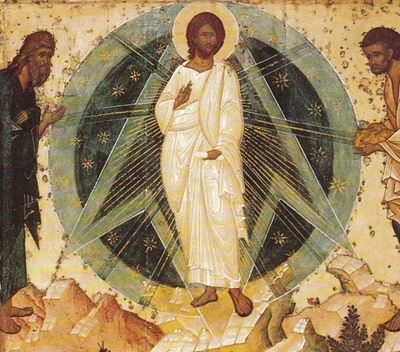
Jesus Transfiguration icon Luke 9

Luke 9:28-36 – February 7, 2016 (9:34-35)

We do many things on a regular basis or schedule. We eat at regular times. Some people take medication on a daily schedule. Some have habits of regular prayer or weekly bible study. And what about what we are doing right now? Regular Sunday morning worship? In our Protestant tradition, worship is generally on a weekly schedule. We gather together to worship, pray and sing to God, regularly.

Our Gospel reading today comes from Luke 9. As is often the case, Luke brings us in to the story in the middle of things. So often, the Gospel writers go from one event to another to still another, hardly stopping to take a breath. I suspect that’s what the Rabbi Jesus felt like most of the time. Going from one situation to another; one healing, then a teaching, and then the next and the next, and the next after that.

The Gospel writers give their readers some specific clues about Jesus. How He would not neglect the regular worship and prayer in the synagogue or the Temple, on the Sabbath days and holidays. And, how He would intentionally retreat to private places on a regular basis, separate Himself to meditate and pray.

Let’s remind ourselves about this reading. Jesus withdraws from the larger group of disciples and from His ministry. He goes to the top of a mountain to pray with His inner circle of disciples—Peter, James and John. What happens next is nothing short of absolutely amazing.

Reading from Eugene Peterson’s translation “The Message,” “While [Jesus] was in prayer, the appearance of His face changed and His clothes became blinding white. At once two men were there talking with Him. They turned out to be Moses and Elijah—and what a glorious appearance they made! They talked over His exodus, the one Jesus was about to complete in Jerusalem.” What a marvelous, mind-blowing scene that must have been, too!

I invite us to step back a moment. This Gospel reading we consider this morning is full of significance. I could go off in a number of directions, and preach any one of a vast array of sermons, with various themes and topics. The passion of Jesus? The death and resurrection of Jesus? The triumphant ascension of Jesus? The appearance of Moses and Elijah? The significance of the light? The road to the cross?

I choose to highlight the worship aspect of this Gospel reading today. Jesus chose to withdraw to the mountain to pray and meditate before God. By the time this reading ends, we end up with a rousing worship service, there on the mountain top! Amen! Glory, hallelujah!

Who was Luke, the author of our Gospel reading? Christian tradition tells us Luke was a doctor—and a Gentile, a Greek. The only non-Jewish writer of a book of the Bible. One of the commentators I consulted, David Lose, thinks Luke might even have been a pastor. “A pastor keenly interested in and attentive to the life and worship of his community.” [1] If we study the Gospel more closely, Luke outlines a basic pattern of worship several times in his Gospel. This is one of those times.

Three of the Gospels show us the Transfiguration. But, Luke is the only one who adds the description of Jesus leading the other three disciples up on the mountain to pray. Instructing us in the pattern and nature of worship!

And, what is the reaction of the three disciples? Where do we find our faithful friends, Peter, James and John? Fast asleep. Again. We do not know why or how they wake up, but they did. They wake to the sight of Jesus looking dazzling bright, whiter than snow, brighter than anything they had ever seen. This is truly a situation where I can say: Oh. My. God!

I do think our friends the disciples have a bit of a problem. Here they have their Rabbi Jesus, the best example of Godly living the world has ever seen. The best example of living with a close and deep relationship with God, with prayer and meditation front and center in His life. And where are they at this significant time in the life of Jesus? Asleep at the switch. Not paying attention, not getting involved or participating.

Participating in what, we ask? In prayer. In worship of God.

Let’s take a quick look at the steps of worship Luke illustrates for us in this passage. First, prayer. Jesus led His three friends and disciples to a quiet, lonely place to pray. We’ve already touched on this. Jesus had a regular pattern of prayer. He had a deep and intimate relationship with His Father in heaven. He wants that for us, too!

Second, discussion focused on the cross. (In this case, we see a foretaste of the glory of Jesus after the Resurrection!) Reading again from Luke 9, “At once two men were there talking with [Jesus]. They turned out to be Moses and Elijah—and what a glorious appearance they made! They talked over his exodus, the one Jesus was about to complete in Jerusalem.”

Looking at our worship service today, that’s what we do. Every Sunday, we talk about Jesus dying on the cross—as Moses and Elijah talked about with Jesus, His exodus, His departure. His crucifixion and resurrection. And, His ascension into glory. We sing about it, and pray about it, too.

Then, third, comes the time to listen to the Word. Listen to Jesus, the Word Incarnate!

Continuing with the reading from Luke 9, “When Moses and Elijah had left, Peter said to Jesus, ‘Master, this is a great moment! Let’s build three memorials: one for you, one for Moses, and one for Elijah.’ He blurted this out without thinking. 34-35 While he was babbling on like this, a light-radiant cloud enveloped them. As they found themselves buried in the cloud, they became deeply aware of God. Then there was a voice out of the cloud: ‘This is my Son, the Chosen! Listen to him.’”

Note well the command from God! Quoting David Lose again, “the voice from heaven is directed not to Jesus but to the disciples with the injunction, ‘Listen to Him.’ … this combination of prayer, discussion focused on the cross, and the command to listen … at least kindle our liturgical imagination, reminding us of what Sunday can be like.”

Remember, Jesus took the disciples away to have an intimate worship service with them, there on the mountain top. What happened, again? They didn’t pay attention. They fell asleep.

How often do we do the same thing? How often do we just go through the motions? How often do we want the same old worship styles and are hesitant to accept any change in worship or new part of the service? How often are we more concerned with what our fellow worshippers are wearing than the condition of their hearts? Their souls? Their emotional lives? Their physical well-being? Wouldn’t Jesus concern Himself with gathering, with prayer and word and praise? Or would Jesus get sidetracked like the disciples? Going through the motions?

Hard to imagine Jesus doing anything of the kind.

As we gather in this place for communion today, we remember. Jesus said, “Do this to remember Me.” Do what? Participate in worship. More specifically, all of us are to participate in the communion meal, where Jesus is revealed in the breaking of the bread.

Worship is a time to gather, to open the Scripture, the Word of God, and to celebrate the Word Incarnate. Break bread. Remember Jesus. And afterwards, we are sent forth to bring Jesus into the world. Jesus, God’s Chosen! Jesus, the hope of the nations! Jesus, the Prince of peace.

Alleluia! Amen.

[1] http://www.davidlose.net/2016/02/transfiguration-c-worship-transfigured/

Thanks to Eugene Peterson for his wonderful translation The Message. I quoted several verses from Luke chapter 9 in this sermon.

@chaplaineliza

Suggestion: visit me at my sometimes-blog: matterofprayer: A Year of Everyday Prayers– where I am doing a Lenten journey. Pursuing PEACE. And my other blog,  A Year of Being Kind -Thanks!


Unknown's avatar

Rejoice, Proclaim!

“Rejoice, Proclaim!”

Zeph 3-19 God will rejoice over you

Zephaniah 3:14 – December 13, 2015

Doom and gloom! “You brood of vipers!” and “Flee from the wrath to come!” Exactly what John the Baptist has been saying to the people of Israel for some time! And what about in this little, tiny book of the prophet Zephaniah? That is pretty much what he has been saying in the first two chapters, as well.

Why was Zephaniah so upset? In a commentary by Anne Stewart, she says “The oracles in the majority of the book announce cosmic destruction as divine judgment for the sins of [the nation of] Israel and, specifically, the priesthood. With vivid and at times disturbing language, the prophet envisions the arrival of the Day of the Lord, the time in which God will act to restore justice and to bring judgment on faithless, sinful nations.” [1]

But, what do we find in the third chapter of Zephaniah? A sudden turn-around. The people are told to rejoice! Not only rejoice, but rejoice with all of our hearts!

What gives here? What if God barged right into the middle of St. Luke’s Church, right here this Sunday morning? What if God came right into the middle of our daily lives with this message of rejoicing? What would happen then?

This is what Zephaniah says: “Be glad and rejoice with all your heart, Daughter Jerusalem! 15 The Lord has taken away your punishment, God has turned back your enemy. The Lord, the King of Israel, is with you; never again will you fear any harm.”

Before, life was bad. Awful! Doom and gloom! Horrible stuff! Yes, we were sinful. Yes, we were far away from God. Just as Zephaniah said—just as John the Baptist said—the people here on earth have fallen away from God and have been disobedient. God proclaimed judgment on everyone, for sure!

But, what now? Great question!

One of my commentaries tells us: “Imagine Zechariah and the people of God celebrating, with God there in their very midst. All are singing and dancing in the streets, and God is singing loudest of all. There is rejoicing because the people have been forgiven. They were imprisoned in sin, but all are forgiven and their sentence is commuted. God is their salvation and is coming into their midst to save them.”

This isn’t just a pause in the storm of judgment, but instead a get-out-of-jail-free card. We all—that is, you, me, everyone—are freed from sin, permanently. Did you hear? God is our salvation! That not only is Good News. That is absolutely Great News!

The prophet Zephaniah tells the people to rejoice. The third Sunday of Advent is traditionally “Rejoicing Sunday.” Our third Advent candle lets us know we can rejoice. Several of our Scripture lessons for today tell us to remember to give thanks for God’s great gifts to us.

Our commentary tells us that Zephaniah speaks in past, present, and future tenses. In terms of the present, the right now—Jesus Christ is in our midst. He is here with us, right now, of that we can be sure. What about the future? The prophet also lets us know about Christ’s coming again, in the second coming. There will be a time still to come when we will have our final homecoming with God, the greatest celebration of all.

What about the past? Zephaniah’s words are fulfilled in the coming of Christ as a baby in Bethlehem. That will be what we celebrate a week from Friday, on Christmas Day. We can see that Jesus “does not watch from a distance, but enters into the life of the world. This God enters even into human flesh, in the mystery and wonder of the Incarnation.” [2]

This third Sunday in Advent, we speak of joy. We look forward to joy coming into the world. We speak of the joy of a people redeemed and restored! And, God responds. As our reading from Zephaniah tells us, God sings. God shouts. God rejoices! Alleluia!

We will sing all four verses of “Joy to the World” in just a minute. That’s # 125 in our hymnals. But before we sing the carol, I would like everyone to follow along in the hymn books as I point out these opening lines as follows, verse by verse:

Why can we sing “Joy to the World” right now?

  1. No matter how bad things might be at the moment, “The Lord is come”, i.e. God is with us.
  2. The Savior, not any old king or mean dictator or nasty bully is in charge, is in charge of the world.   (Who is the savior?  Jesus is!)
  3. Given that, we don’t have to get upset or snowed under in our sorrows or caught up in all the bad stuff that happens.
  4. And, like all good last verses, this last verse is the summary.  We can rejoice and sing “Joy to the World!” because God rules the world with truth and grace. [3]


[1] http://www.workingpreacher.org/preaching.aspx?commentary_id=2700

[2] http://www.workingpreacher.org/preaching.aspx?commentary_id=468

[3] Worshiping with Children, Advent 3, 2015, Including children in the congregation’s worship, using the Revised Common Lectionary, Carolyn C. Brown

@chaplaineliza

Suggestion: visit me at my daily blog for 2015: matterofprayer: A Year of Everyday Prayers. and my other blog,  A Year of Being Kind .  Thanks!


Unknown's avatar

Without Hesitation

“Without Hesitation”

Heb 10-23 He who promised is faithful words

Hebrews 10:19 – November 15, 2015

Who here knows the words of the Apostles Creed? Who studied the Apostles Creed before they were confirmed? I know I did. I studied Martin Luther’s Small Catechism, and went over every part of the Lord’s Prayer as well as the Apostles Creed.

Today, we are going to take a closer look at the whys and wherefores of two phrases from the Apostles Creed: “He—Jesus—ascended into heaven, and sits on the right hand of God the Father Almighty.” You—I—all of us have been saying these words for years and years. It’s a part of our church culture. But, what do these words really mean? “Where is Jesus now?

We are departing from the Gospel of Mark. I’ve been preaching from Mark for the last two months. We have been following Jesus through His discussions with the Jewish leaders about all kinds of aspects of the proper religious life. Today, we make a big jump forward, to the New Testament passage from the letter to the Hebrews. This is after the Resurrection, after the book of Acts, and the Apostles have now been sent out into the world to tell all people about the risen Jesus, and about God’s love and forgiveness of their sins.

This letter to the Hebrews is a circulating letter. That means it and other circulating letters were sent from place to place in Asia Minor, so the small, struggling churches could receive encouragement and teaching in writing from the Apostles and other new church leaders. This particular letter was sent to Jews who lived a long way from Jerusalem. In essence, ex-pat Jews.

To give us some further background into this week’s reading, “This week’s text [from Hebrews] draws together the argument the author of this letter began six chapters ago, namely that Jesus is God’s final and ultimate High Priest. The author can point to the model of Israel’s priests to explain what Jesus does, but His priesthood differs in several fundamental respects. Beginning in verse 11 the author reiterates those differences once again.” [1]

What about those Old Testament priests in the Temple in Jerusalem, anyhow? They needed to keep on sacrificing animals over and over and over again. Why? The people of Israel had a Sin Problem. The priests had to keep sacrificing to cover the Sin Problem, to make it better. To atone for the sins of the whole people. And no matter how hard they worked, or how many animals they sacrificed, or how much they prayed to God, it was never enough. There was always more sin. The nation of Israel and all the individuals in Israel had a Sin Problem.

I know when my mother had a houseful of guests (usually several of her grown children all at once), she would try and try to keep the kitchen clean, the kitchen sink empty of dishes, and the bathroom ready and clean for anyone who needed to use it. Except—there were always so many people in the house. There was always more dirt. More mess. More dirty dishes. It seemed like it would never end! (Except, it periodically did when everyone went to their own homes, in the case of my mom’s house.)

How many people can relate to this example? Dirt, mess, dirty dishes and black marks in a crowded house never end. Just so, in the case of the priests and the sacrifices for sins that everyone commits, the Sin Problem never ends. For real! Never, ever! People are sinful. They keep doing and saying and thinking things that go against God’s laws, and sin never goes away. All the sacrifices ever brought before God could never make one dent in the Sin Problem.

When we look at our passage from Hebrews again, what do we read? Quoting from our scripture today, “As a priest, Christ made a single sacrifice for sins, and that was it!

What was that again?

Jesus Christ was the perfect High Priest. He was a better High Priest than any other of the priests throughout history who ever offered animal sacrifices to God at the Temple. What Jesus did for us on the cross (and I’m quoting again) “… was a perfect sacrifice by a perfect person to perfect some very imperfect people. By that single offering, He did everything that needed to be done for everyone who takes part in the purifying process.”

The whole repetitive process of endless animal sacrifice? Jesus came and broke that process. He ended it. He made that process obsolete, not necessary any more. Instead, Jesus and His death for us on the cross reaches way beyond animal sacrifice.

What’s more, Jesus our High Priest makes the perfect sacrifice once for all time. And then, He sits down. What about those other priests, the ones who continually stand and keep offering the imperfect animal sacrifices for all those centuries? From the Message, again: “As a priest, Christ made a single sacrifice for sins, and that was it! Then [Jesus] sat down right beside God and waited for His enemies to cave in.”

At first glance, some people might think that Jesus did not finish His work as High Priest. But, that is just the point! He did finish the work. The other priests had to continue to stand, because they had to continue to offer sacrifice after sacrifice on a daily basis. Because of the Sin Problem that just wouldn’t go away. Jesus did complete the perfect sacrifice. His sacrifice brought perfect, complete forgiveness of sins. Jesus was all done, and He sat down. The Sin Problem went away, once and for all.

But, wait! There’s more! Jesus doesn’t just sit down any old place. On any old bench, or in somebody’s creaky rocking chair. No. He takes a seat at the right hand of God. A place of great power and great authority. Jesus—the Son of God, the Second Person of the Trinity, incarnated by the Holy Spirit of the Virgin Mary—Jesus takes the number one seat in all of the universe, next to God the Father. The resurrected Lord Jesus is God the Father’s right hand man. It says so, right in our scripture text from Hebrews today.

To finish our passage from verses 19 and 20, “So, friends, we can now—without hesitation—walk right up to God, into “the Holy Place.” Jesus has cleared the way by the blood of His sacrifice, acting as our priest before God.”

I want everyone to notice that all the pronouns here are plural. That means we—all of us together—can have confidence. We—all of us—can walk right up to God. We can come into God’s presence and boldly bring our requests to God. As I say in our weekly pastoral prayers, we—all of us have free access to God. Not like the Jewish people before the time of Jesus, who were still dealing with the Sin Problem and still needed an intermediary between them and God. But because Jesus, our perfect High Priest, has cleared the way. Jesus has invited us to come. We are very welcome to enter into God’s presence!

Do you have a better understanding now of those two phrases from the Apostles Creed? “He—Jesus—ascended into heaven, and sits on the right hand of God the Father Almighty.”

This section from the letter to the Hebrews answers our questions about “where is Jesus now?”  The risen Jesus is with God and is Lord!

Do you have the confidence that your Sin Problem is taken care of? Do you dare accept the invitation that Jesus extends to us? Can we grasp that assurance that God welcomes us? This scripture passage clearly lets us know about that boldness. That “free confidence,” grounded on the consciousness that our sins have been forgiven.

As I say every week after the Confession of Sins and the Assurance of Pardon, believe the Good News of the Gospel. In Jesus Christ, our sins are forgiven.

Alleluia, amen!

[1] http://www.workingpreacher.org/preaching.aspx?commentary_id=142 Commentary on Hebrews 10:11-25 by Amy L. B. Peeler.

(Thanks to Amy for several ideas I wove into this sermon!)

@chaplaineliza

Suggestion: visit me at my daily blog for 2015: matterofprayer: A Year of Everyday Prayers. and my other blog,  A Year of Being Kind .  Thanks!


Unknown's avatar

Open Our Hearts!

“Open Our Hearts!”

Acts 16 St. Lydia

Acts 16:6-15 – August 30, 2015

Men, men, men! Here in the United States, men still take center place in many areas today. Look at most sports broadcasts. What you see is—men! Look at many industries and places of work, still, today. Firefighters? Mostly men. Police officers? Mostly men. Truckers? Construction workers? Mostly men here, too.

The sermon I have for you this morning is not the typical sermon. I would like us to consider the passage from Acts 16 that was read just now. This passage is interesting because of its highlight on women. Let’s take a closer look at the subject at hand.

We are looking at Acts, chapter 16, as part of our summer sermon series, Postcards from the Early Church. The events recorded in this book take place later in the first century after the birth of Christ, a long, long time ago. The concepts of welcoming and celebrating multi-culturalism—as we do today—were not even thought of.

The apostle Paul and his friends had a bit of a culture shock themselves. They had been itinerant preachers and missionaries throughout Asia Minor for the past several years. They were on the front lines, spreading the good news of Jesus Christ on the frontier, to people who had never heard that good news before. And now, at the beginning of Acts 16, they take the huge step of crossing into Europe. They are now in Philippi, in what is now northern Greece, in the region of Macedonia. So they are truly missionaries, bridging continents, crossing cultures, coming into a new situation with their good news.

Now, there was one structure Paul and his friends had to deal with, wherever they went: the Roman Empire. The Roman Empire embraced many different cultures, from western Europe to northern Africa, to the edges of what is Iraq today. But within that polyglot of cultures, one basic aspect remained constant: the pre-eminence of men, and the subordination of women.

We can still see this fact of life in certain societies and cultures today; in certain cultures, women are still subordinate, not allowed to do things or to be involved in activities that are normal and matter of course for both women and men today, in our culture and society here in the United States.

Let’s return to the scripture passage we are examining today. Dr. Luke is different from the other biblical authors, since he was a Gentile, and a doctor. He was used to dealing with women and children as a doctor, as a matter of course, and I believe they were important to him, professionally as well as personally. Thus, he mentions them more often in his writings. Here in Acts 16, almost the first thing that Dr. Luke tells us about Paul and his friends in Philippi is their encounter with a gathering of women outside of the city.

Let me say how unusual this is, for the Bible. In either the Hebrew Scriptures or the New Testament, the mention of a gathering of women, only, is almost unheard of. The mention of a woman, on her own, at all, is unusual.

Just think about it: women in the Bible are usually mentioned in reference to a man: Abraham’s wife, Sarah; Judah’s daughter-in-law, Tamar; Samuel’s mother, Hannah; Mordecai’s cousin, Esther; Aquila’s wife, Priscilla; Jesus’ mother, Mary.

Some women in the Bible are not even mentioned by name: the woman at the well from John 4, the woman with the flow of blood from Luke 8, and the faith of the Syro-Phoenician woman from Mark 7—anonymous women, known only to God. But wherever they appear in the Bible, the women of the Hebrew Scriptures and New Testament are clearly examples for anyone who reads the Bible today or has read the Bible, throughout the centuries.

Let’s look at this situation in Acts 16 from a different perspective, for a moment. Quite an odd occurrence, to be sure! Here we have a small group of men, strangers from out of town, coming and sitting down among a larger group of women. What is going on here?

I could mention the fascinating information I researched about Jewish synagogues among majority Gentile towns in the first centuries of this common era, or about the possibility that there was no synagogue in Philippi, which led the God-fearing people who wished to worship outside of the town. However, that is not where I wish to focus today. I would like to look at the rabbi Paul and his companions coming to pray and worship with this group of women. Rabbi Paul was probably the guest preacher for the morning, supported by his colleagues in ministry.

This prayer meeting was an open-air meeting outside the town, probably at a marginal location near the river. It was a meeting of God-fearing women, probably mostly Gentile in makeup. The amazing thing about this mention in Acts 16 is that Dr. Luke mentions the women.

Women are not mentioned often in the Bible, period. But without the active participation and support of women, and some of them of high standing, too, Paul and his companions would not have been able to accomplish half of what they did. Women, especially of high standing, were involved in local politics throughout the region, and economically involved, as well. Women were important to the ongoing life of the new church and to the spreading of the good news for several years before this occasion in Philippi. I believe Paul was acknowledging this through his willingness to talk with and preach for the women.

It is unusual for women to be mentioned on their own, self-sufficient, having their own accountability and standing in the city where they live. Yet here we have just that. Dr. Luke particularly mentions Lydia, and he gives us lots of personal information about her. We can tell by her name that she is a Gentile woman, and we are told she was born in a city called Thyatira, and is a dealer in purple cloth, which for that time was a luxury item, for sure. What we can compare this to is a dealer in high-end designer clothing in our culture and context, today. We can readily see that she not only owns her own business, but she also has her own house, and household servants and maybe even assistants and others in her entourage.

What did the Lord do? Here in verse 14, the passage says that the Lord opened Lydia’s heart to listen eagerly to the things Paul preached. And because of her attention to the message, she came to faith in the Lord Jesus Christ. And as an expression of that sincere faith in the Lord, she went the next step, and was baptized, thereby making a public declaration of her realization of coming to faith. And not only Lydia, but also her whole household was baptized.

Then, after she was baptized, she offers her own house as a hotel, as a place for Paul and his companions to stay, a base of operations while they were in Philippi. She is hospitable, showing good character and a definite spiritual gift. She had been a God-fearer, a worshiper of God, and now she was a Christian, a believer in the good news.

That’s Lydia’s story. But, how about you? Lydia was a God-fearer. Lydia was a proselyte, probably coming faithfully to prayer and worship Sabbath after Sabbath. It could even have been for years, faithful in her attendance, faithful in her giving to others. But it took the Lord to open Lydia’s heart to listen eagerly to the message of the good news. It took the Lord to lead Lydia to faith in the good news of Jesus Christ.

What about you? Have you come to that point in your life where you accept what Jesus Christ has done for you? Have you come to believe in that good news that Paul preached? Paul’s answer from Acts 16 still stands today. It is still valid. “Believe on the Lord Jesus, and you will be saved, you and your household.”

And if you are a believer in the Lord already, praise God! You can join Lydia and Dr. Luke and Paul and Silas and the rest of the saints, throughout the centuries.

And even if we do know the Lord, there may be some who have been far away from Him, and not as attentive to God’s will and God’s ways. I know I have sinned, often, and I think there may be others in the same circumstance. The Lord does not turn His back, and ignore us when we come to say we’re sorry, and we have sinned. No.

The Lord is ready to welcome us, to extend God’s mercy and grace to us. Each one of us.

Have you come to the Lord? Have you asked forgiveness for your sins, and thanked God for welcoming you to Him? See, today is the day of salvation. Let this day be the day when you open your heart to the Lord.

@chaplaineliza

Suggestion: visit me at my daily blog for 2015: matterofprayer: A Year of Everyday Prayers. and my other blog,  A Year of Being Kind .  Thanks!


Unknown's avatar

Jesus is Lord of All!

Jesus is Lord of All!

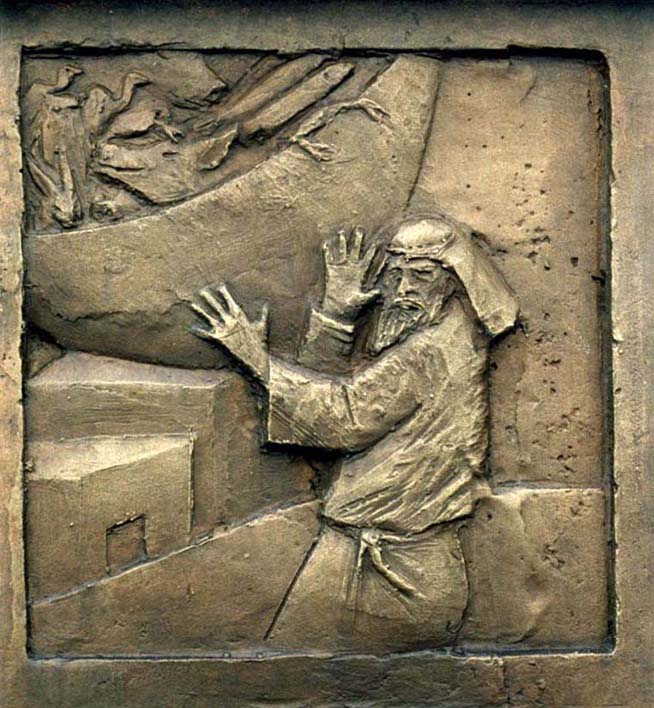
Acts 10 Peter's Vision bas relief

Acts 10:45 – August 9, 2015

Here in the church, we sometimes talk about missionaries going to far-flung places in distant parts of the earth. They navigate visible and invisible borders and boundaries. But not me! I’ve always lived here in the Chicago area. One big similarity? I served in three multi-cultural hospitals. For almost ten years, in several hospitals and extended care centers around Chicago, I worked as a chaplain. I dealt with patients, their loved ones, and health care staff—on a regular basis. Instead of going to the world, I had the world come to me, in the hospital.

What in the world does this have to do with our sermon today? I’ll tell you, in a story-telling kind of way. We start off in Caesarea, a Roman city on the coast of the Mediterranean Sea, the Roman capital of the Roman province of Judaea. Thoroughly Roman in every way, from its pagan temples, amphitheater and other architecture to the brand new deep harbor, thanks to superior Roman engineering skills.

Here we meet Cornelius, a Roman centurion, in charge of one hundred soldiers. (He’s a Gentile, by the way.) Let me tell you what Dr. Luke has to say in Acts chapter 10. I’m reading again from the excellent version translated by J.B. Phillips. “1-3 There was a man in Caesarea by the name of Cornelius, a centurion in what was called the Italian Regiment. He was a deeply religious man who reverenced God, as did all his household. He made many charitable gifts to the people and was a real man of prayer.”

Did you all catch that? Cornelius reverenced/revered God! The God who made heaven and earth. The God of the Jews. But, he was a . . . Gentile! Not a drop of Jewish blood in him.

What happens next? “About three o’clock one afternoon he saw perfectly clearly in a dream an angel of God coming into his room, saying, “Cornelius!” 4a He stared at the angel in terror, and said, “What is it, Lord?” 4b-6 The angel replied, “Your prayers and your deeds of charity have gone up to Heaven and are remembered before God. Now send men to Joppa for a man called Simon, who is also known as Peter.”

The town of Joppa was not just a mile or two down the road. No, the soldier Cornelius needed to send his servants between thirty and forty miles away in order to fetch this Simon Peter guy. Which, Cornelius did, right then and there.

Meanwhile, in Joppa—I imagine a split-screen sort of a deal here. On this side, here is the city of Caesarea. A large, Roman-style house. The camera zooms in on the centurion Cornelius, just having dispatched his men to go fetch Peter. And—on the other side of the screen, we have the camera: starting out in a long shot. We see the street scene on an afternoon in Joppa. The camera pans in, coming closer and closer to a particular building. A smaller house. Simon Peter is sitting up on the flat roof, catching some breeze off the ocean in that coastal town.

Dr. Luke continues: “9-13 Next day, while these men were still on their journey and approaching the city, Peter went up about mid-day on to the flat roof of the house to pray. He became very hungry and longed for something to eat. But while the meal was being prepared he fell into a trance and saw the heavens open and something like a great sheet descending upon the earth, let down by its four corners. In it were all kinds of animals, reptiles and birds. Then came a voice which said to him, “Get up, Peter, kill and eat!” “

In the Mosaic Law, recorded in the books of Exodus, Leviticus and Deuteronomy, the Law code has definite restrictions on what any good, kosher-keeping Jew is and is not allowed to eat. A few well-known forbidden foods are no pigs—no pork. No shrimp or other shellfish. Also, no rabbits or snakes, and no owls or birds of prey. These are just a few of the kinds of animals, fish and birds that are forbidden, for various reasons. So, let’s see what happens next!

14 Peter said, “Never, Lord! For not once in my life have I ever eaten anything common or unclean.” 15 Then the voice spoke to him a second time, “You must not call what God has cleansed common.” 16 This happened three times, and then the thing was gone, taken back into heaven.”

Wow! Amazing vision that Peter had! Talk about totally blowing Peter away. Peter had always—all of his life—kept kosher. Eaten only the things that the Mosaic Law code said he could eat. Now, out of a clear blue sky, this vision is telling him that God calls all things clean!

I want to take a little detour. Tell you a bit about my two chaplain internships, after graduating seminary. I dug right into learning about various faith traditions. I learned about widely different cultural traditions, too. This was a natural progression for me, learning more of how to accompany diverse people in crisis, critical care, trauma and end of life. It sounds rather odd, talking about my years of intensive learning and stressful internship in this way, but I very much appreciated every intense, multicultural experience I had: both in the classroom, as well as on the floors and units of the hospitals and care centers.

Let’s come back to Acts, chapter 10. “17-20 While Peter was still puzzling about the meaning of the vision which he had just seen, the men sent by Cornelius had arrived asking for the house of Simon. They were standing at the very doorway of the house calling out to enquire if Simon, surnamed Peter, were lodging there. Peter was still thinking deeply about the vision when the Spirit said to him, “Three men are here looking for you. Get up and go downstairs. Go with them without any misgivings, for I myself have sent them.”

“23b-26 On the next day Peter got up and set out with them, accompanied by some of the believers from Joppa, arriving at Caesarea on the day after that. Cornelius was expecting them and had invited together all his relations and intimate friends. As Peter entered the house Cornelius met him by falling on his knees before him and worshiping him. But Peter roused him with the words, “Stand up, I am a human being too!”

I need to interrupt, to let you know—Peter and his Jewish friends from Joppa, being good observant Jews, were forbidden by the Jewish Law code to enter the house of a Gentile. Yet—that is exactly what Peter intended to do! Let’s continue.

27-29 Then Peter went right into the house in deep conversation with Cornelius and found that a large number of people had assembled. Then he spoke to them, “You all know that it is forbidden for a man who is a Jew to associate with, or even visit, a man of another nation. But God has shown me plainly that no man must be called ‘common’ or ‘unclean’. That is why I came here when I was sent for without raising any objection.”

As for me? All three of the hospitals where I served were in the middle of multicultural areas, a crossroad of the multicultural communities of Chicago and the surrounding area. One of these hospitals has the distinction of sitting in one of the most diverse ZIP codes in the country. (The U.S. Census Bureau says so.) I never knew who was going to be in that next room I entered, or what situation I was going to encounter next.

34-43 Then Peter began to speak, “In solemn truth I can see now that God is no respecter of persons, but that in every nation the one who reverences Him and does what is right is acceptable to Him! God has sent His message to the children of Israel by giving us the good news of peace through Jesus Christ—He is the Lord of us all.” Ahh. We can see that slowly, very slowly, Peter is taking baby steps towards being open to more than just Jews.

When I served as a chaplain, I didn’t just serve Protestant Christians. I remember a Buddhist Asian family in critical care, as their loved one died just as I came in—complete silence and intense sadness greeted me as I joined them in the room. Another time, I entered the packed ICU cubicle—wall to wall with a Pentecostal Latino family, who wanted me to pray their brother (and uncle) across the River Jordan. (The crashing, palpable waves of grief struck me again and again…I vividly remember.) It wasn’t all end of life. I remember being asked to pray the Rosary with a Filipino family around their ill auntie, lying in the hospital bed. There was the situation with an older Muslim patient, and the 20-something relative wearing black hijab and very conservative dress, sitting next to the bed; she earnestly asked me to pray. Of course I did!

In fact, Peter goes on to say: “We are those witnesses, we who ate and drank with Him after he had risen from the dead! Moreover, we are the people whom He commanded to preach and bear fearless witness to the fact that He is the one appointed by God to be the judge of both the living and the dead.”

This sermon Peter preached—for it was a sermon!—had its effect. The Gentile audience heard Peter, and what happened? “44-46a While Peter was still speaking these words, the Holy Spirit fell upon all who were listening to his message. The Jewish believers who had come with Peter were absolutely amazed that the gift of the Holy Spirit was being poured out on Gentiles also; for they heard them speaking in foreign tongues and glorifying God.”

Did you hear what happened? Praise God! These Gentiles believed, and the same thing happened to them that had happened to the Jewish believers in Acts chapter 2! The gift of the Holy Spirit came upon the Gentiles, too.

Remember what Peter told his Jewish audience, at Pentecost? Acts chapter 2? Joel’s prophecy regarding the outpouring of the Holy Spirit had been fulfilled. All who call upon the name of the Lord will be saved (Joel 2:32a). At first, Peter and the rest of Jesus’ followers thought that all only meant Jews. And then, Samaritans were added.

I have Good News for you. I have Good News for us all. Jesus is the Lord of all (10:36b). All Jews and all Gentiles who believe in Him receive forgiveness of sins through His name (10:43). As the commentator Richard Carlson said, the Apostle Paul had it exactly right, “In Christ there is neither Jew nor Gentile, slave nor free, male nor female” (Galatians 3:28). In Christ, there is neither Republican nor Democrat, citizen nor undocumented visitor, gay nor straight, for all are one in Christ Jesus.

In God’s salvation plan, all now really means all.

Alleluia, amen!

@chaplaineliza

Suggestion: visit me at my daily blog for 2015: matterofprayer: A Year of Everyday Prayers. and my other blog,  A Year of Being Kind .  Thanks!