Unknown's avatar

On Eagle’s Wings

“On Eagle’s Wings” – Memorial Meditation

Isaiah 40:28-31 – Sunday, October 20, 2024

            My husband Kevin is a homebody – most of the time. However, he does enjoy occasionally hitting the road. I suggested to him about two months ago that we take a road trip, so we planned to go to the Smokies National Park next week. That is, until Hurricane Helene blasted right through that region, causing devastation all the way from landfall in Florida to many points north. The official Smokies park service website now pleads with prospective visitors not to visit, at least for a while, because of the massive clean-up that needs to be done.

            So, since I have PTO time reserved away from work already, my husband and I made a quick switch to someplace closer to home. On Wednesday, we are heading to Cahokia Mounds near St. Louis, to Pere Marquette State Park, on the Mississippi River, and to Starved Rock State Park. I know this is not prime time to see eagles, but I hope that perhaps we will catch a glimpse of these magnificent birds on their migration south to open waters for the winter! 

One of Carol Metler’s favorite church hymns was “On Eagle’s Wings.” This lovely, newer gospel song was originally written as a verse and refrain for Psalm 91, which affirms that we find refuge under God’s wings. The refrain of this gospel song is most sung in Protestant congregations – “And God will raise you up on eagles’ wings, bear you on the breath of dawn, make you to shine like the sun and hold you in the palm of God’s hand.” 

            Whether we consider Psalm 91 or Isaiah chapter 40, both sections of the Bible talk about God’s protecting hand – and more! Listen to the words of the prophet again: those who hope in the Lord will renew their strength. They will soar on wings like eagles; they will run and not grow weary, they will walk and not be faint.”

This chapter in Isaiah especially mentions the followers of God soaring on wings like eagles. You know and I know the followers of God often do not have an easy time of it. Life is not a walk in the park. Life is a challenge, sometimes. Even, more often than that, sometimes.

            I suspect our dear Carol knew that life was a challenge, many times in her life. She was stubborn, and persistent, and she made it through – with God’s help!

            However, I would like to step back and consider the historical context of this biblical passage. Isaiah chapter 40 was written while the Jewish people were in exile in Babylon, and it is  in the section of the book that deals with comfort. This reading comes from the very middle of Exile.  The Jewish people had been stuck in the foreign country long enough to feel like everything was going wrong and God wasn’t doing anything to help them. [1]

Commentator Dr. Steed Davidson stresses God’s power at work. The prophet does a compare/contrast thing here. Human people are inadequate to change the long distances of history and the circumstances of life. But – but – God is the Creator of heaven and earth! God has strength and power that transcends faulty human striving. Plus, verse 31 calls on “listeners to participate in God’s processes in order to experience transformation.” [2]

            God gives strength to the weary to continue. God comes alongside those who are bone tired, so weak and dispirited that, of themselves, they could not take even one more step. But, God! But – God! Have you ever been so tired, or worn out, or anxious, fearful, discouraged – or one of a dozen other downhearted emotions? And then – but, God!

            Imagine trying your hardest on a challenging project, and feeling like you got to the end of yourself. You can’t give any more. And then, but, God! Or, imagine you are sitting by the bed of a loved one recovering from serious surgery or in the middle of chemotherapy, and you feel so helpless to help your dear loved one. And then, but, God! God transforms everything.

            “But” is usually a negative, a placeholder, a frowny face kind of a word, in so many situations. “But” so often has negative connotations – except for this one, here – but, God!

            God transcends the negative language that we use. God transforms any downhearted stammering of “but, but, but…” into a positive, blooming, blessing of “but – God!” Showing the renewing, revitalizing possibilities of our Lord. Like the Refuge we run to, like a sturdy, safe Rock in the wilderness, God is so much more than we can possibly ask or think.

            The pastoral musician Father Michael Joncas wrote this song in the 1970’s, and it has been sung countless times, and in some very harrowing situations. Imagine the ultimate shock, horror and heart-rending grief of the September 11th attacks; this song was performed at many of the funerals of the victims of that attack. This song is often performed during or at the end of a Catholic funeral mass. And, we will have this song played later on in this worship service, too.

Countless people have been touched by the words and music of this hymn, and many of those same grieving, hurting people would testify that God did indeed come close to them through their difficult times, just as this song tells us.

            This is just what the authors of our two sections of Scripture wanted us to remember. Time and again, stories and narratives from the Bible remind us that the saints of old had challenges – difficulties – they had to deal with – walk through – even, soar above, on eagle’s wings. Can you relate? Hoping in the Lord is expecting that God’s promise of strength is a reality. God can come alongside. God can comfort and strengthen. Just as it was when our prophet wrote these words, just as it is now, today. God can assist us when we are alone as well as when we are together in one group, one congregation, one family.

“Do you not know? Have you not heard?” Praise the Lord, we know God’s protection and care is always with us, always holding us in the palm of God’s hand.

And to that, we all may say, alleluia, amen.

@chaplaineliza

(Suggestion: visit me at my other blogs: matterofprayer: A Year of Everyday Prayers. #PursuePEACE – and  A Year of Being Kind . Thanks!


[1] http://worshipingwithchildren.blogspot.com/2015/01/year-b-5th-sunday-after-epiphany-5th.html

[2] https://www.workingpreacher.org/commentaries/revised-common-lectionary/fifth-sunday-after-epiphany-2/commentary-on-isaiah-4021-31

Unknown's avatar

Be Prepared!

“Be Prepared!”

Ephesians 6:10-20 (6:10) – August 25, 2024

            I love to go to a baseball game! I do not go that often now, but in years past, I used to regularly go to Wrigley Field and watch the Cubs play. I don’t know if everyone is familiar with the equipment that baseball players need, but one player on a baseball team needs special equipment. The catcher is in a key spot on the team, and a very dangerous one! The pitcher regularly throws the ball at very high speeds. A catcher needs protection from those balls! A catcher’s mask, a chest protector, and shin guards, just to mention a few!

            This is similar to our Bible reading today. The Apostle Paul is finishing up his letter to his Ephesian friends. He warns them to be prepared, with a few practical, direct words for his long-time congregation. (I say long-time, because he spent about three years with this church, longer than with any other church he planted.)

Paul goes through a list of spiritual equipment that will protect his friends from attacks – the attacks of the Devil! Paul does not pull any punches. He is straight and up front with his former church members. He wants to warn them, prepare them for some really difficult times. These difficult times can often come into our lives today, too.

Let’s look more closely at what Paul says. “Finally, be strong in the Lord and in his mighty power. 11Put on the full armor of God, so that you can take your stand against the devil’s schemes. Therefore put on the full armor of God, so that when the day of evil comes, you may be able to stand your ground, and after you have done everything, to stand.”

            When I think of armor, my mind immediately goes to the military. Military service people definitely wear armor to protect themselves every day, in some duty stations, where some serve. Just as in baseball a catcher needs certain equipment to be prepared and safe while in a dangerous position, so do Christian people. Paul was in prison, in Rome, while writing this letter to the Ephesians. Paul was shackled to a Roman soldier inside of his cell, to make double sure he was going to stay put. Paul had the opportunity to become sadly familiar with the Roman soldier’s armor. Everyone, all believers in Christ need certain equipment (or pieces of armor) simply to be prepared!   

Let’s talk about baseball again, for a minute. What about the pieces of equipment the catcher wears? “The mask protects the catcher’s face from foul tips or pitches that might get past the glove. The glove protects the hand from balls. The chest protector protects the middle part of the body. Finally, the catcher wears shin guards to protect the knees and legs. No catcher would ever think of going into the game without this protective equipment.[1]

            Here in the letter to the Ephesians, at the very end of the practical portion of Paul’s letter, Paul details the protection you and I need in our lives, too. (And, this protection is so similar to what a baseball catcher wears!) We can see very well the kind of protection Paul is talking about if we think of a Roman soldier. Roman soldiers were commonplace, all over the Roman empire. Paul calls this protection the armor of God. He is thinking specifically of the armor the typical Roman soldier wears.

            We buckle the belt of truth around our waists. This is like putting on truthfulness. We are to tell the truth – at all times. Sometimes, it is not easy to be honest! In some situations, we are so tempted to bend the truth a little, or even a lot! But, the indwelling power of the Holy Spirit will help each of us with this important foundation of our faith.

            Next, each of us puts on the breastplate of righteousness. That’s a word we mention a lot in religious circles. Another way of thinking of it is putting on right behavior, putting on justice. Just like a catcher puts on a chest protector. Paul exhorts us to act rightly! This is certainly not easy! This thoughtful and prudent kind of action and behavior is often laughed at, by many people. Just think of rude or uncaring people, who may tease you or be mean to you for acting in a way that Jesus tells us to! (And, Jesus is our model for righteousness.)

            Which leads us to our shoes. Paul tells us to put on shoes that show we are speakers of peace. Not to argue and bicker, we are to go out of our way to bring peace to people!  

            These next two pieces of armor are clearly protective pieces. The shield of faith is our protection against those fiery darts that Satan can fire at us. And, not just physical darts! What about mean and nasty words that come our way, words that plant seeds of doubt in our hearts and minds? And, the helmet of salvation keeps the Evil One away. Thank God we have Jesus gifting each of us with salvation, because that is exactly what Paul talks about here.

            The last piece of armor is actually a weapon. The sword of the Spirit is the word of God. The letter to the Hebrews tells us that the Word of God is living, and active, and sharper than any two-edged sword. The Roman sword is a short sword, or weapon, used for combat at close quarters. This means that we are to actually engage the enemy, become active participants in battle! No sitting on the sidelines, as far as Paul’s fellow believers are concerned. As we continue to follow Jesus, we will continue to win the battle against Satan.

Whether inside or outside the church, however and wherever we serve our Lord, God intends for us to be prepared. That means being prepared by these words of caution and exhortation. Paul used these words in Ephesians to advise all of us to be ready to deal with challenging, even dangerous situations. We all need this prudent protection of God’s armor, in our everyday walk as believers.

Final words for today, quoting Paul? Be strong in the Lord! Stand ready, inside and out. And, do all this in prayer, always asking for God’s help. Are you prepared? Am I? With God’s help, yes – we are! Alleluia, amen! 

@chaplaineliza

(Suggestion: visit me at my other blogs: matterofprayer: A Year of Everyday Prayers. #PursuePEACE – and  A Year of Being Kind . Thanks!

(Thanks so much to link http://www.lectionarystudies.com/sunday21bae.html from the Rev. Bryan Findlayson of Pumpkin Cottage Ministry Resources, a lectionary resource I often quote from. Rev. Bryan gave me a lot of insight this week, and I used much of his material for describing the pieces of Godly armor!)


[1] https://sermons4kids.com/sermons/the-armor-of-god

Unknown's avatar

Taming the Tongue

“Taming the Tongue”

James 3:1-12 (3:8) – September 12, 2021

            Who remembers the schoolyard saying “Sticks and stones may break my bones, but words can never hurt me!” There’s a problem with that saying. We all know that words can hurt. And sometimes, people remember mean words, nasty words or harsh words years after they heard them. Sometimes even decades later. Words can come back to haunt us – either words we have said, or words we have heard. Internalized. Taken to heart.

            Our letter-writer James would whole-heartedly agree. Remember, in this letter the apostle James writes a manual of Christian living. A how-to book on how to live a life pleasing to God. This is the point in the letter where he talks about the tongue, and how powerful it is. James begins by comparing the small tongue to other small but powerful items. “When we put bits into the mouths of horses to make them obey us, we can turn the whole animal. Or take ships as an example. Although they are so large and are driven by strong winds, they are steered by a very small rudder wherever the pilot wants to go.” James does want to help us behave in a way pleasing to God. However, the tongue gets in the way of that, big time!      

            I am sure you and I know this, from long experience. Who hasn’t been on the receiving end of a nasty argument, or angry words? We can use our tongues for positive words and kind comments, or for negative, hurtful sniping. This use of the tongue causes all kinds of bitter feelings and sometimes can escalate arguments and even cause fighting.   

            Who hasn’t experienced this negative use of the tongue? It’s no wonder that many people hesitate to jump in the middle of quarreling, arguing people. And, bullies? Gossips? Those who misdirect or misrepresent themselves or others? People who use particularly nasty or hurtful speech? Not positive ways to win friends or influence people.

Our commentator Dr. Derek Weber tells us that James wants to help us tame the tongue. It’s true that many Christians don’t take this recommendation of James all that seriously. However, “we’ve all experienced the sting of the tongue as we were growing up, and even as adults. We all know what it is to bear the brunt of rumors or misrepresentations or words spoken in anger. And just as likely we know what it is to watch our words bring pain to another, intentional or not. How can we get worshipers to take this text seriously?” [1]

I remember when I went to the circus with my children, when they were small. Watching the wild animals and their circus acts was truly amazing! Lions, tigers, other large animals – the oohs and ahhs coming from the audience were real, let me tell you! As often is said in YouTube videos and on reality television, “do not try this at home!” Wild animals are dangerous! It is so similar with the tongue! Trying to tame the tongue is often as difficult as trying to tame wild animals! (That’s why James uses this example in verse 7.)

We have talked about how dangerous the tongue is. Yet – is gossip THAT bad? Surely, a little gossip can’t hurt. Just letting people know the whole story. Just filling in the gaps. Surely, gossip isn’t as bad as murder, or stealing, or lying, is it? Is it? But, what would James say?

Instead of spreading gossip about people, how could we turn that around? How can you and I spread a good report about people? Sometimes, about the same people we gossiped about? Instead of saying something cutting or annoying, how can we say positive things? Have good, helpful words come out of our mouths? That would be kind, be caring, and even be forgiving!

I know it takes some time to correct bad habits. Perhaps our sometimes-bad, sometimes-mean, sometimes-thoughtless words are habits that many people need lots of help with.

Let’s face it, some do not want to start correcting negative words, malicious gossip, and rude comments. I can just hear some say, “Pastor, don’t we have bigger fish to fry? More serious sins to be concerned with?” Ahh, yes. But, a little thing like the tongue can be poisonous, hurtful, even mistakenly cruel and thoughtlessly punishing.                                                                                                                                                                                                                                                                                                                                       

I do not want this sermon to be all negative! So, “let’s talk about the good we can do with our words. Let’s talk about what it means to bless. The internet is full of lists of ways to praise a child [or young person], for example – the words we can use for encouragement and for building up.”[2]  How did you feel, deep down inside, when you recall how you felt when someone said good, positive things to you or about you? Just think hard about the impact of these words! What kind of words were they? How were the words said to you? A compliment, a kind, caring word, an encouraging comment – all these are positive uses of the tongue! We then understand how powerful words are!

Speak positive, kind, encouraging words. (Think those caring, kind thoughts about others, too!) Just like with toothpaste, after you squeeze it out, it is impossible to put all the toothpaste back in the tube. Just like our hurtful or thoughtless words. Once they’ve come out of our mouths, they’re so hard to take back. That is why we need to be super careful about how we use our words.[3]

With God’s help, we can tame our tongues. With God’s help, we can speak kind, helpful, encouraging words. Words that build up, rather than tear down. Positive words, instead of negative snipes or hurtful jabs. What would James say? More important, what would Jesus do?

Remember, in this letter the apostle James writes a manual of Christian living. A how-to book on how to live a life pleasing to God.

How would Jesus speak? Would Jesus speak kind, helpful, encouraging, positive words? Do that. And, God will be so pleased!

@chaplaineliza

(Suggestion: visit me at my other blogs: matterofprayer: A Year of Everyday Prayers. #PursuePEACE – and  A Year of Being Kind . Thanks!


[1] https://www.umcdiscipleship.org/worship-planning/doers-of-the-word/sixteenth-sunday-after-pentecost-year-b-lectionary-planning-notes

[2] https://www.umcdiscipleship.org/worship-planning/doers-of-the-word/sixteenth-sunday-after-pentecost-year-b-lectionary-planning-notes/sixteenth-sunday-after-pentecost-year-b-preaching-notes

[3] https://www.umcdiscipleship.org/worship-planning/doers-of-the-word/sixteenth-sunday-after-pentecost-year-b-lectionary-planning-notes/sixteenth-sunday-after-pentecost-year-b-youth-lessons

Unknown's avatar

“Be Ready!”

“Be Ready!”

Ephesians 6:10-20 (6:14) – August 22, 2021

            When I was a girl and a teenager, I was a Girl Scout. I still remember the Girl Scout motto: “Be prepared.” In the 1947 Girl Scout Handbook, the motto was explained like this: “A Girl Scout is ready to help out wherever she is needed.” The Boy Scouts had the same motto, and my former-Boy-Scout husband occasionally reminds me of that, usually when we are packing to go on a trip. Be prepared! In other words, always be ready, for whatever comes your way.

            The apostle Paul had some important things – and encouraging words to say in this letter to his former congregation. Paul finishes up with a few practical, direct words for his long-time congregation. (I say long-time, because he spent about three years with this church, longer than with any other church he planted.)

            Many of these words involve being prepared. Being ready! The apostle Paul is very serious, and actually describes the kit of a Roman soldier. He knows what he is talking about here, too! Paul was in prison, in Rome, while writing this letter to the Ephesians. Paul was shackled to a Roman soldier inside of his cell, to make double sure he was going to stay put. And, Paul had the opportunity to become sadly familiar with the Roman soldier’s armor.  

            We had a prayer today, a Blessing of the Backpacks, before the sermon. We might think of the Scripture reading from Ephesians in terms of going back to school. We prayed for the school children in this congregation, as well as for all of those related to our church members. Children, grandchildren, nieces, nephews, godchildren.

And, it does not matter whether we are remembering preschoolers or high schoolers or those in graduate school. We pray for them all to have a good year of study, an enjoyable year with their friends and classmates, and especially a safe year from anything they might come in contact with, whether an illness, an accident, or some other form of danger. We pray for all of the children, wherever they are, whichever school they attend.

I love the commentator Carolyn Brown. She was a Children’s Ministry Director for years and years at a Presbyterian church, now retired. She draws the innovative comparison between the list of pieces of God’s armor Paul talks about, and the list of new school supplies our children and their families have just assembled over the past weeks, to carry to school. Here is her list.

We had a Blessing of the Backpacks just today. Think of the backpack of truth our children and young people carry with them, each day at school. They can carry either good or bad things with them. Our young people need to be secure in God’s love, with God’s help.

Many students have a locker. Smaller children have cubbies, for storage. I can imagine the apostle Paul thinking of a locker of righteousness for our young people. Young people need to be prudent and even cautious about their lockers, what they post in them, and what kind of messages are passed to and fro, using the lockers.                                                                                                                                                                                                       

            Carolyn Brown makes a point of talking about “pencils, pens, markers to communicate God’s word – make every word you write with them a word you would say to God.”[1] And, our young people are now carrying computer tablets and laptops to school. I could imagine the apostle Paul cautioning our young people to not only be prepared, but be wise in what they say.

            Finally, our children almost always have new shoes! New school year, new shoes to wear. Yes, these new shoes might be cool. But, do our young people bring the message of peace while wearing them? That’s what the apostle Paul intended. He wanted believers to wear the shoes of peace, and communicate that sorely needed message to everyone they met.

            We might think that these are instructive words for our children and grandchildren to hear. However, as Paul describes these pieces of Godly armor, I am reminded of the dangers of the world this armor protects us from. In the book series (and movie series) about Harry Potter, one of the most chilling bad guys in the books are the dementors, “huge dark creatures that fly through the air, capture you, wrap you in cold darkness and suck all the happiness out of you.”[2]

The recent, horrible take-over of the country by the Taliban in Afghanistan is so much like the dementors, wrapping everyone in cold darkness and sucking all the happiness out of people. Especially women and girls! This horrendous military action is not only against feelings and emotions of people, like the dementors, but it involves machine guns, bombs and assassination squads. It means life or death for countless numbers of people across Afghanistan.

I receive a great deal of email weekly, including letters and articles about community and humanitarian concerns. I want to bring this excerpt to you. It comes from an email letter dated August 18th by Sheila Katz, the Chief Executive Officer of the National Council of Jewish Women. This paragraph shows us a different way, an open-hearted way for all of us to be ready.

“Welcoming the stranger — the immigrant, the refugee, the asylum-seeker — is one of Judaism’s most core values. The Torah commands us no fewer than 36 times to care for those whose homeland, language, social network, and resources may be elsewhere.  We hear this more than any other commandment in our most sacred of texts, perhaps because it’s all too tempting, when things are going well for us — when we, ourselves are comfortable, when we, ourselves are safe, to turn our backs on those who have come to us for shelter, for protection — because their own home has become untenable. It is so easy to forget. So the Torah has to remind us, again and again, until we remember.” 

Whether inside or outside the church, however and wherever we serve our Lord, God intends for us to be ready. That means being prepared by these words of caution. Paul used these words in Ephesians to advise all of us to be ready to deal with challenging, even dangerous situations. We all need this prudent caution of God’s armor, in our everyday walk as believers. Plus, we all need the reminder of our interfaith Jewish friend, about the 36 commands – that’s 36 commands! – in the Hebrew Scriptures, to be prepared to take in those who come to us for shelter, for protection, for refuge. We all need to be ready for the challenges of living, inside and out.

Final words, quoting Paul? Be strong in the Lord! Stand ready, inside and out. And, do all this in prayer, always asking for God’s help. Alleluia, amen!  

@chaplaineliza

(Suggestion: visit me at my other blogs: matterofprayer: A Year of Everyday Prayers. #PursuePEACE – and  A Year of Being Kind . Thanks!

(Thanks so much to Carolyn Brown and her marvelous insights from Ephesians 6 for children and young people – and older people, too! – from “Worshiping with Children,” a lectionary resource I often quote from.)


[1] http://worshipingwithchildren.blogspot.com/2015/08/year-b-proper-16-21st-sunday-in_7.html

Worshiping with Children, Proper 16B, Including children in the congregation’s worship, using the Revised Common Lectionary, Carolyn C. Brown, 2015.

[2] Ibid.

Unknown's avatar

Do What to Enemies?

“Do What to Enemies?”

Luke 6-35 love enemies, bible

Luke 6:27-38 (6:27-28) – February 24, 2019

Throughout history, we can trace many battles between enemies. I don’t mean outright war, like between armies with guns and tanks and bombs, but enemies, nevertheless. Serious sports rivalries can turn ugly, like soccer hooligans causing fistfights and even rioting. Factions and strife in a town can cause a cohesive neighborhood to break up. And in recent times, political differences can cause serious rifts between former friends. Deep tension even makes family members stop speaking to each other, sometimes for years.

What is this corrosive feeling between enemies? Some say envy, others say fear, others say hatred, plain and simple. Which brings us to the Gospel. What does Jesus say about enemies?

But, first we need to back up, and remind ourselves of what came just before. Or rather, what we heard last week. Just a reminder that Luke chapter 6 contains much of the same information that Jesus preached in Matthew, chapters 5, 6 and 7. Matthew’s Sermon on the Mount—leading off with the Beatitudes—is summarized in about one third of the space, right here. In Luke’s Sermon on the Plain.

Jesus said a lot of controversial things, a lot of which got Him into serious hot water. But, “love your enemies” was a particularly troublesome statement.

The country of Israel was under occupation. Just imagine occupied France or the Netherlands during World War II. The hated Romans were Israel’s overlords, and the whole country had to pay Roman taxes. Essentially, paying tribute to Caesar and his armies. The Roman soldiers threw their weight around, and it was backed up by the threat of force of arms. In other words, Roman garrisons were stationed in towns throughout Israel, keeping the populace in line and making certain there was order in Rome’s occupied territory.

Somehow, I doubt whether the Rabbi Jesus scored many points with either the Jewish leaders or the Jewish people by preaching about loving their enemies.

Sharp divisions have come up from time to time in the modern day, too. Think back several decades, to the 1960’s. A sharp debate over civil rights tore our country apart, much like certain political stands do today.

Let’s think about that debate concerning civil rights. This is February, Black History Month. Black leaders protested, held sit-ins, and even marched on Washington in August 1963, where Martin Luther King, Jr. delivered the famous “I have a dream” speech. But many Americans at that time did not agree with civil rights, or with blacks and other people of color receiving equal treatment under the law, or equal treatment in general society.

Remember the race riots around the country, and here in Chicago. The National Guard needed to be sent in a number of situations to keep the peace. A great divide was evident in our country throughout the 1960’s, and my retired professor Ken Vaux and Pastor Gordon Smith were among those allies who stood with the black protestors.

Many people on both sides of that political divide would say that they were sincere, devout Christians. Christians who probably would hear sermons on Matthew’s Sermon on the Mount and Luke’s Sermon on the Plain from time to time in their churches.

Wait a minute. People on both sides of the civil rights issue? Sincere, devout Christians? Well, yes. Yes, they were.

Let’s get back to Jesus, preaching the Sermon on the Plain in Luke 6. He challenges the crowd. “He says the shocking phrase, ‘Love your enemies.’ What?! He doesn’t just tell us to listen to them. We are to love them!….Some must have decided that they were not ‘willing to hear’ and walked away with their heads full of questions. Others began to work on the bargain. Which enemy might they “love” without risking their own position? Others tried to imagine how they could love their enemies.” [1]

How can anyone do this seemingly impossible stuff Jesus told us to do?

First, Jesus does not ask our opinion. He doesn’t check in with us and see whether we agree with Him. His words are not an option. “Love your enemies.” “He is talking about the Kingdom of God, where love is the rule, not an eye for an eye.” [2] What did Gandhi say of that bloodthirsty comment? “An eye for an eye only ends up making the whole world blind.”

Let’s hear the next few verses: “32 “If you love those who love you, what credit is that to you? Even sinners love those who love them. 33 And if you do good to those who are good to you, what credit is that to you? Even sinners do that. 34 And if you lend to those from whom you expect repayment, what credit is that to you? Even sinners lend to sinners, expecting to be repaid in full.” Wouldn’t you expect yourself to be loving, caring and generous? Don’t we all think of ourselves in a positive light, as Jesus suggests here?

Not so fast. Jesus does not let anyone off easily. He holds us all to a high standard. These verses have “examples of ways we should be generous and loving, expecting nothing in return. In fact, Jesus tells us (if we are willing to hear), ‘If you do good to those who do good to you, why should you be commended?’ We are to ‘Be compassionate just as [God] is compassionate.’ Everything about this way of being in the world goes against the ways of the world. It is so counter-cultural that we may not be willing to hear.” [3]

So, what ought we to do when we encounter an enemy?

It could be meeting a real White Sox fanatic, when your family has been Chicago Cubs fans for generations. Or, at this local election time of the year, it could be sitting at the lunch table or the senior center with someone who vocally supports someone from the opposite political party.

Dr. Margaret Ann Crain, a retired professor from my seminary, Garrett-Evangelical Theological Seminary, tells the following story. “Many years ago, when I was first employed by a congregation as an educator, I was appalled by the resistance that came from some members of the church. They made a show of walking out on the pastor when he began to preach each Sunday. They tried to stir up support for their point of view whenever the church council had a decision to make. I confess: I did not love them! But I also did not ever ask them to explain their point of view. They were enemies, and I didn’t listen to them. As I look back now, 40 years later, I really regret that response. If I had listened to them, I could have become more compassionate and understanding. They were faithful church members all their lives. I suspect that they had some faith-filled reasons for their resistance. Clearly, their methods were poorly chosen. Yet, they may have had important lessons that all of us needed to hear. I will never know because I did not love my enemies. I was not willing to hear what Jesus has to say to us today. Are you?” [4]

What do we do when we meet someone who disagrees with us vehemently? Jesus says in verse 31, “Do to others as you would have them do to you.” We are asked to do what to our enemies? Love them. We are told to treat others—all others—how? As we wish to be treated. Period. Jesus said it, and it is not an option.

Is this difficult? Well nigh impossible! Except—with God’s help. So help us God, help us love our enemies. Help us love them as we love You, and treat our enemies as we wish to be treated.

Amen, alleluia.


(Many thanks to Dr. Margaret Ann Crain and http://www.umcdiscipleship.org for ideas and assistance for this series on discipleship.)

[1] https://www.umcdiscipleship.org/worship/season-after-epiphany-2019-part-2-worship-planning-series/february-24-seventh-sunday-after-the-epiphany-year-c/seventh-sunday-after-the-epiphany-2019-year-c-preaching-notes

[2] Ibid.

[3] Ibid.

[4] Ibid.

@chaplaineliza

(Suggestion: visit me at my regular blog for 2019: matterofprayer: A Year of Everyday Prayers. #PursuePEACE – and my other blog,  A Year of Being Kind . Thanks!

Unknown's avatar

Green Pastures, Quiet Waters

Psalm 23:2, John 10:4 – May 7, 2017

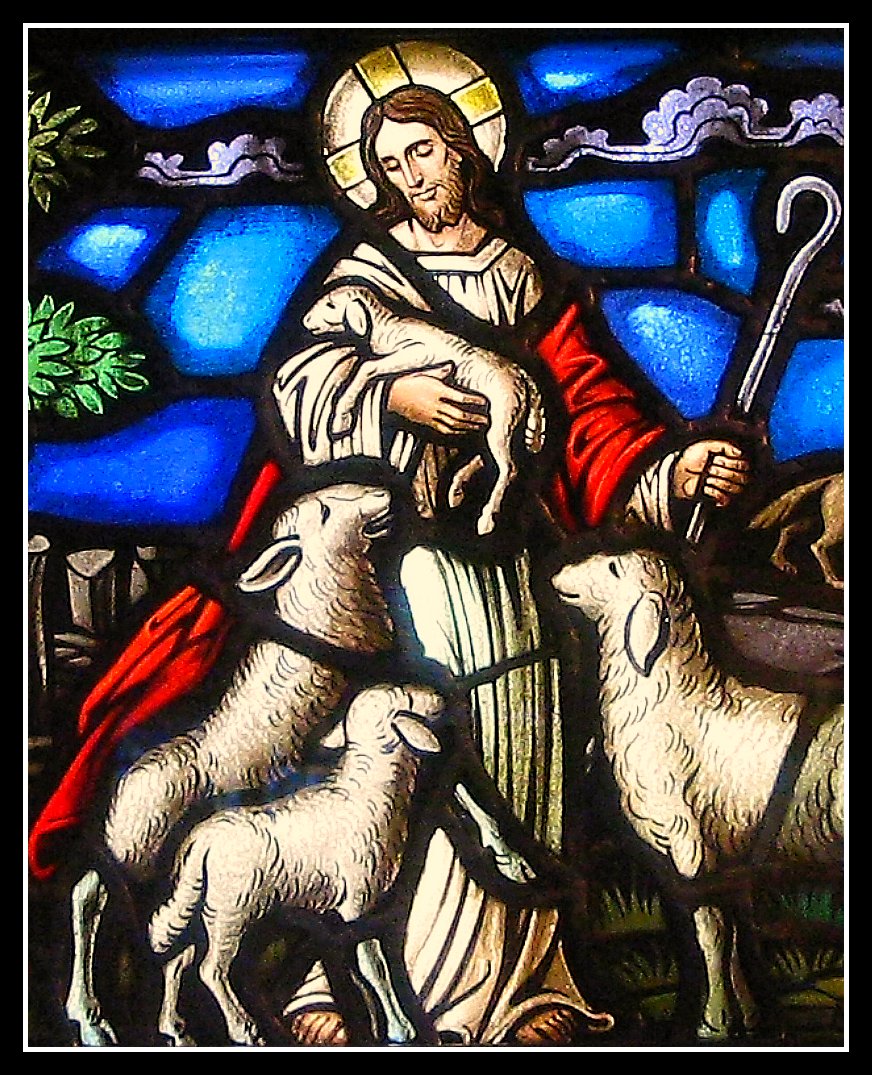
John 14 Good Shepherd, stained glass

“Green Pastures, Quiet Waters”

If I mention images of sheep and green pastures, what comes to your mind, on that video screen in your head? For some people, it might be something on the Nature channel on cable television, with verdant, green grass and gently rolling hills, dotted with fluffy white sheep. For others, it’s a painting at an art museum, with lush green meadows under brilliant blue skies. Again, dotted with sheep feeding on that green grass.

In Psalm 23, our psalm writer is King David. He is writing about his youth as a shepherd for his father’s sheep, long before he ever became king. That time as a shepherd must have been vivid in his mind, because David’s poetic description of sheep and shepherd remains one of the most striking, beloved, and relatable passages in the Bible, in either the Hebrew Scriptures or the New Testament.

Here is another way of saying the first verse of Psalm 23: Because the Lord is my Shepherd, I have everything that I need.

Wait, that makes me a sheep, and sheep are not particularly intelligent. Now, I am okay with that. As I have said in the past, this is a common analogy in the Bible. The nation of Israel is referred to as sheep several times in the Hebrew Scriptures. Different biblical writers refer to people who believe in God as sheep. Several times in the Gospels—as in our Gospel passage from John 10, today—Jesus talks about Himself as Shepherd, and His followers as sheep.

I figure God must know a few things about people, being the Creator of the Universe, and all. Since God uses this common analogy of sheep and shepherd so many times in the Bible, and since sheep have been known to be stubborn and timid and sometimes even foolish, I guess I might have a few things in common with sheep. Maybe you do, too.

Sheep need stuff. They need grass, water, nurture, and protection against enemies. They depend on their Shepherd to provide all of these things for them. But, what if there is no Shepherd? What if there is no one to provide all of this good stuff for us—I mean, for sheep?

Sometimes bible study leaders and bible teachers have their students do an exercise. They write a reverse psalm. That is, writing the reverse of what the verses say. One of the bible commentators I read used this process. She said, “I’ve been led in this process, and led my Bible Study in it. At first you might ask, ‘Why do it this way?’ But, especially when in a group, reading back all the hopeless examples of our life without God, we see the power of this psalm more clearly.” [1]

I’m going to read just the first few verses of Psalm 23, written in reverse. It was written by a then-15 year old named Anna Thompson.

“I have no shepherd, I need a shepherd./I am caught in the desert.
I am thirsty/and no one is telling me where to go.
I am lost and no one cares./I am scared of evil, because I am alone.”  [2]

This is truly a hopeless example of our life without God! What would happen to a few little sheep, huddling in the wilderness or the desert, with no one to guide them, take care of them, or to shepherd them? I don’t think they would last very long. Some predator might come along and have some lamb and mutton for dinner. That’s what probably would happen. This is a far cry from the green pastures and the quiet waters the psalm describes for us, and quite different from the Good Shepherd who supplies our wants and needs.

Jesus takes this image of sheep and a Shepherd from Psalm 23, and enlarges on it.

Notice what is not mentioned in either Psalm 23 or John 10. Is there any mention of the sheep needing all the stuff we see on television? I must have this new outfit or latest electronic gadget or trendy pair of shoes. I absolutely need to be healthy, beautiful, entertained, wealthy and successful. No, neither of these bible readings have anything of the kind.

Psalm 23 has a basic set of wants that “the shepherd provides for his sheep. That list includes food, drink, tranquility, rescue when lost, freedom from the fear of evil and death, a sense of being surrounded by the grace of the Lord, and a permanent dwelling place in the house of God. An ever-rising mountain of material possessions is not on the list.” [3]

.           Let’s think about the reverse psalm again. I have no shepherd. I am caught in the desert. I am thirsty. I am lost. I am all alone.

Doesn’t that hit you right in the gut? Hopeless, helpless, life without God. Where are You, God? I’m all alone out here, and I am lost and scared!

One of my favorite commentators is Carolyn Brown, a Christian educator who’s worked with children for decades. She writes about the Bible and our worship being filled with metaphors. We try to help children understand them “when we carefully explore the details of a few key ones, expecting them to become familiar with the concrete part of the metaphor and some of the spiritual realities it embodies, but not fully making the connection until later [when they are older].  The Good Shepherd is definitely one of those key metaphors. [Doctor and educator] Maria Montessori reports that while working in a children’s hospital she found that when she told sick children stories about the Good Shepherd using small wooden figures, they almost all grabbed the figure and held onto it ‘for keeps.’” [4]

It doesn’t matter if we are talking about the Shepherd of Psalm 23, or the Good Shepherd of John 10. The Shepherd helps the sheep to feel safe, to feel protected and full, able to rest and feel content. Not to feel hungry, thirsty, frightened, lost and alone.

In our Gospel reading this morning, Jesus adds something to the picture of the Good Shepherd that is not in the 23rd Psalm. Jesus talks about the sheep knowing the Shepherd’s voice. That means whether sheep are in green pastures or brown ones, in the desert or high in the hills, the sheep will recognize the shepherd’s voice and call. As Jesus said, “When he has brought out all his own, he goes on ahead of them, and his sheep follow him because they know his voice. But they will never follow a stranger; in fact, they will run away from him because they do not recognize a stranger’s voice.”

In Palestine, in the mid 1930’s, a village near Haifa had some internal conflict. The occupying British soldiers confiscated all the villagers’ animals and put them in a central pen, mixing them all up. The animals’ owners were permitted to redeem their animals, if they could identify them. An orphan shepherd boy whose only possessions were six sheep and goats came to the officer in charge, and asked for his animals. The officer ridiculed the idea that the shepherd boy could possibly pick out his “little flock” from among the hundreds of animals in the pen. The shepherd boy had his pipe and gave his own “call”—his unique call for his animals. “His own” separated from all the others and trotted out around him. [5]

The sheep know the Shepherd. They follow the Good Shepherd’s voice, and willingly go with Him to green pastures, and by the quiet waters. Jesus is the Good Shepherd, and He will be with us in green pastures as well as desert places, by quiet waters as well as in thirsty times. And, Jesus will walk with us through those dark and scary valleys of the shadow, too.

Even when we walk though the valley of the shadow more than we like, praise God, our Good Shepherd will always be there beside us, to help, nourish, protect and nurture us.

Yes, I am a sheep. I freely admit that.

I know if the Good Shepherd is my Shepherd, surely His goodness and love will follow me all the days of my life, and I will dwell in the house of the Lord forever.

[1] http://bethquick.blogspot.de/2011/05/lectionary-notes-for-fourth-sunday-of.html

[2] Psalm 23: “I Have No Shepherd” https://re-worship.blogspot.com/2011/05/psalm-23-i-have-no-shepherd.html

[3] Bailey, Kenneth E., The Good Shepherd (Downers Grove: IVP Academic, 2014), 39.

[4] http://worshipingwithchildren.blogspot.com/2014/03/year-fourth-sunday-of-easter-may-11-2014.html

Worshiping with Children, Easter 4A, Including children in the congregation’s worship, using the Revised Common Lectionary, Carolyn C. Brown, 2014. 2011.

[5] Bishop, Eric F. F., Jesus of Palestine (London: Lutterworth, 1955), 297-98. Quoted by Kenneth E. Bailey in The Good Shepherd, 42.


@chaplaineliza

(Suggestion: visit me at my regular blog for 2017: matterofprayer: A Year of Everyday Prayers. #PursuePEACE – and my other blog,  A Year of Being Kind . Thanks!)