Unknown's avatar

Peace – God’s Peace

“Peace – God’s Peace”

John 14:23-27 (14:27) – May 25, 2025

            I invite you to turn on the network news, read the news on your cellphone, listen to the news on a podcast, read a computer news website. Take the opportunity to sample any of these news sources. I’m sorry to say, but repeated over and over again are stories, articles, and photos of disquieting and upsetting events in this world.

            These familiar words of our Lord Jesus we have just read sound far away and distant. It seems that on the contrary, every day, we are surrounded by evidence of anger, upset, uproar, catastrophe, and outright fighting.

Peace. I’ll say it again—peace. When I think about the word “peace,” many disparate connections come to mind. Peace on earth. Interior peace. Peace be with you. Peace in the Middle East and in Ukraine. Peace in our time. Visualize world peace.

            Many today are searching for peace in an unpeaceful world. It doesn’t matter where you are located, what you do for a living, who your ancestors are. The drive for a peaceable life is a drive that is deep-seated and heartfelt in many people, a drive for living in a peaceful community, with a stable government, in a peace-filled environment.

There is a realistic, cynical part of me that wants to say, hold it! Come on. This isn’t paradise, you know. Wake up and smell the coffee. Come back to reality. Peace just won’t happen now, not on a worldwide scale. At least, not that kind of peace.

            Let’s go back to the situation of Jesus and His disciples. Jesus was living in what is now the country of Israel. During the first century of our common era, Israel was by no means an independent country. It was a Roman province, under the heel of Roman domination and oppression. In plain terms, Israel was under occupation! Remember the political situation Jesus was operating under! Everything was not hunky-dory in Jesus’ time. Certainly not.

            So, politically, the situation was not good. Personally, in the life of the Rabbi Jesus, this was not a peaceful time, either. Remember where Jesus and His disciples were, here in John 14. This was the Passion Week of our Lord. This chapter from John is part of the Upper Room Discourse, given earlier at the Passover dinner on the night Jesus was betrayed.

I ask again: was Jesus talking about external things? I think not. One big clue I have comes from our Lord Jesus’s phrase “I do not give to you as the world gives.”

            What does the world give? What is big, in the world’s eyes? What is worthwhile, as far as the world is concerned? Money, power, prestige. A big house, a big car, a big job. An attractive spouse, 2.5 well-behaved, cute children, Graduating from “appropriate” schools, living in “appropriate” places, knowing “appropriate” people. Fill in the blanks. These are all external, human attempts to try to get to peace. Many people try to achieve peace with themselves and with others through the world’s methods and by being steered into ways the world proposes.

So, some people turn around and concentrate on the inside! To be more specific, on their insides. The internal person. But, there’s a danger here, too.  If we’re not careful, worry and anxiety can sneak into the picture. Worry and anxiety can gnaw away at us on the insides, as well as our relationships with God and with others around us.

            Has anyone here had any experience with termites? I never have, thank God, but I understand that termites can go through large amounts wood over an extended period of time. If we allow worry and anxiety to eat away at our peace and relationship with God and with others, it’s like termites eating away at a wooden front porch. After a period of time, even though the porch looks stable, and seems like it can hold weight, it collapses.

            It’s the same way with us, when we allow worry and anxiety to get the better of us and take control of our insides. This refers to the second part of verse 14:27, “Do not let your hearts be troubled, and do not let them be afraid.” This is Jesus giving advice to us! He is telling us, just as He told the disciples so long ago. This is an exhortation, not a suggestion.

            What does all that have to do with you and me, today, anyway? Whether we’re talking about 2000 years ago, or whether we’re talking about today, life continues to happen. We can see that things, events, situations just don’t stop. Exterior upset, stress, catastrophic illness, fighting, calamity. All of these can happen, and probably will, at some point or other in our lives.

            Let’s think more about scary things, unpeaceful situations. When you and I are really scared, what happens? Do we have a safe space where we can run? Who do you run to? “We run to someone who loves us and will help us! Does that make us feel better? It does me! I don’t like to be scared and alone…I think that’s what Jesus means by giving us peace, Jesus reminds us that we have each other to help us remember that we are never truly alone.” [1]

It isn’t easy. Jesus didn’t say it was. This was the most event-filled night of our Lord Jesus’ life. He knew what was coming. Yet—He makes the statement, “Peace I leave with you, My peace I give to you.” He gave His disciples the gift of His peace.

            Jesus gives us the same gift, today, too. His peace. It isn’t peace like the world would expect. It isn’t always external peace (although it can very well be that, too!), but it is peace on the inside. Peace where it counts, as far as Jesus is concerned. We have His word on it. He promises to give us peace in our interior selves. Even though life happens, and trials and tribulations come into each one of our lives, we can claim our Lord’s promise and carry His peace with us, wherever we go. We can praise God for these gracious words of peace.

            How can you impart God’s peace to those around you? How can you communicate the good news of the gift of Jesus’ peace to others? My challenge to each one of you is to pray that God will not only encourage your hearts with Godly peace, but also provide opportunities for you to extend the peace of Christ to others.

            What a gift! What a promise! What an opportunity! Thank Jesus for His peace.

            Alleluia, amen.

@chaplaineliza

(Suggestion: visit me at my other blogs: matterofprayer: A Year of Everyday Prayers. #PursuePEACE – and  A Year of Being Kind . Thanks!


[1] https://faithformationjourneys.org/my-peace-i-give-to-you-john-14-23-29-may-1-2016-easter-5c/

Unknown's avatar

A Star and a Gift from God!

“A Star and a Gift from God!”

Matthew 2:1-12 (2:10) – January 5, 2025

I remember Christmases when I was very young. I was the youngest of six children, and we lived on the northwest side of Chicago. My father worked for the National Safety Council, which was a not-for-profit organization. He didn’t get paid a huge amount of money, so I remember Christmases when we children would not have a huge pile of presents under the Christmas tree, like the television commercials of today always seem to show. But, I do remember the happiness and joy of those Christmas mornings. Those are warm memories, all of us gathered around the tree, exchanging presents.

I’m sure we all could bring to mind a similar warm memory or two, regarding Christmas. Many of my memories do involve gifts. The Scripture passage just read mentions gifts, too. It’s from Matthew, Chapter 2, the traditional Epiphany narrative, when Magi from the East came to see the young child Jesus, bearing gifts.

Here we have some wise people—probably nobles who know a great deal about stars and constellations. They have been studying the heavens for years and years, as well as studying religious books and writings. Just as it says in the gospel record, a great sign (or star) rose in the sky, so these wise astrologers knew that something momentous was going to happen.

These wise people, or Magi, were not Jewish wise people, but instead were Gentiles. Non-Jews. “Could an unusual phenomenon in the night skies have caught the attention of some of them—interest in the stars was legendary in the region—and led them to set out to Jerusalem? That people of other lands and religions are drawn to Jesus, even as a child, is also significant: in Christ, God is speaking to the hearts and minds of all people.” [1]

The old saying is true, “If you want to go fast, go alone; but if you want to go far, go together.” These Magi traveled together, and supported one another. These wise people encouraged each other and (I suspect) spurred each other on to continue following that star. It is important to point out that they were on the lookout and knew which way to go—towards Jerusalem. And, eventually, they turned up at the palace, on King Herod’s doorstep.

God understood that these Magi made a careful study of the stars, and God sovereignly decided to display signs and wonders in the heavenly places at the time of the birth of Jesus. God reached these Magi where they were at. The wonderful thing is: God continues to reach out to people, no matter what is happening to them, no matter where they might happen to be.

But, let’s go back to these Wise people. No one is exactly sure about the number of Magi who arrived in Jerusalem so long ago. Church tradition tells us that the number was three. These were not just Magi, but also royalty of the East. Assuming they were at least minor royalty, these non-Jewish V.I.P.s show up at King Herod’s palace, and he was not pleased to see them.

Turning back to our Scripture reading, “After the Magi had heard the king, they went on their way, and the star they had seen when it rose went ahead of them until it stopped over the place where the child was. 10 When they saw the star, they were overjoyed. 11 On coming to the house, they saw the child with his mother Mary, and they bowed down and worshiped him. Then they opened their treasures and presented him with gifts of gold, frankincense and myrrh.”

            The Non-Jewish wise people who followed that star found what they were searching for. And, they were overjoyed, they worshipped, and then gave precious gifts.

What about that special star? Is it easy for us to get so distracted that we cannot even see the majesty and wonder of God’s creation? Do we get turned around and separated, all alone?

For that matter, do we get comments of direction from an unlikely source? Because, that is exactly what King Herod was: an unlikely source of direction. Do we get lost as we try to follow Jesus? Or, have you even found Him in the first place?

Matthew’s birth story centers around the Star. We have come to see this as the Star of Epiphany, the Light that has come into the world! We use Light to symbolize God. The Star of Wonder represents the Light of God! Just think of the Star at the top of many Christmas trees. This signifies the Star that the Magi followed – that same star we talk about today.

I have mentioned God’s Gift, and I have mentioned God’s Light. The Gift given to the world, and the Light that has come into the world. Epiphany is all about celebrating the light that has come into the world as the Baby Jesus, and at the same time Christ the Lord. “But it is also a celebration of the community that gathers to see and follow that light. Worship this day needs to be corporate. It needs to move away from “I” language toward “us” language. We need to be reminded that this is a walk we take together.” [2]

We are reminded that the Magi came together to the Baby Jesus with a need to worship, to come to Him and bow down, and give rich gifts. “That is what brought these Magi so far – however far it was. That was why they went to Herod and anyone who might help them find their way. They longed to worship, as do we all.” [3]

Today, we celebrate Epiphany, Twelfth Night, Three Kings Day, January 6th. We mark this celebration a day early, since the 6th falls on Monday this year. Today is also our celebration of Communion, the Lord’s Supper. Epiphany commemorates the visit of the Magi as told to us by Matthew. As we consider the Star the Magi followed, we fix our eyes on Jesus, the Light of the World, the Bright Morning Star. And as we consider the precious gifts the Magi gave to the Baby in Bethlehem, we also consider that best Christmas Gift of all, for all the world – and we worship Jesus. As the Christmas carol tells us, O come, let us adore Him, Christ the Lord.

We, too, can bring our gifts. We all can give our talents, and our hearts to our Lord Jesus this Epiphany. May we continue to place ourselves, our hearts and lives in Christ’s keeping. May God bless us all as we walk with Jesus in this new year. Alleluia, amen.

@chaplaineliza

(Suggestion: visit me at my other blogs: matterofprayer: A Year of Everyday Prayers. #PursuePEACE – and  A Year of Being Kind . Thanks!


[1] http://www.taize.fr/en_article167.html?date=2012-01-01

“Jesus, Herod, the Magi and Us,” Commented Bible Passages from Taize, 2012.

[2] https://www.umcdiscipleship.org/worship-planning/re-membering-the-body/second-sunday-after-christmas-day-epiphany-year-c-lectionary-planning-notes

[3] https://www.umcdiscipleship.org/worship-planning/re-membering-the-body/second-sunday-after-christmas-day-epiphany-year-c-lectionary-planning-notes/second-sunday-after-christmas-day-epiphany-year-c-preaching-notes

Unknown's avatar

God’s Living Water

“God’s Living Water”

The Samaritan woman at the well, Jesus blessing and an apostle. Mosaic (6th)

John 4:4-30 (4:10) – March 12, 2023

            I am going to Egypt. Yes, next Sunday evening, March 19, I am going to get on an airplane at O’Hare Airport and fly to Istanbul, and then to Cairo. This is going to be a great adventure for me, and a look at a whole new part of the world!

            Egypt has – for the most part – a desert or semi-arid climate. Not much water, at all. Very similar to the climate in the Sinai Peninsula, which is where Moses and the people of Israel were during our Scripture reading from Exodus today. Moses and the people of Israel were all really thirsty, and there was hardly any water to be had, out in the wilderness.

This thirsty theme carries over into our Gospel reading from John chapter 4, where the Rabbi Jesus meets a woman from Samaria by the well of the patriarch Jacob. Jesus talks to her about water, and how to take care of her thirst.

God provided water for the people of Israel through Moses. And, Jesus and the woman at the well have the longest conversation recorded in the Gospels. All about water. Do you and I really know about the water that God provides?

What are you thirsty for? What am I thirsty for?

The people of Israel were a grumbling, grousing, stiff-necked group of people. This isn’t just me saying it: this is the record both of many places in the Hebrew Scriptures and in the New Testament saying it. These thousands and thousands of people needed water that God provided.

Looking at our Gospel reading from John 4, we discover similar features. Here we are in Samaria, which was mostly a semi-arid climate. Meaning, there was some water available, but only in a few areas. The Samaritans also needed water for their daily needs. We can see they needed the water God provided, for themselves as well as for their animals and crops.

How about this woman, in particular? A Samaritan woman, having contact with a Jewish man, and a Rabbi, on top of that. Added to which, she was a divorcee. Not once, not twice, but divorced a bunch of times. This woman did not come to the well early in the day, with the other women of the town. No, this woman came to the well with her water pot at noon. An odd time to draw water, when the well most probably would be deserted. This certainly was an unexpected encounter for this woman at the well.

As I think about the griping, grousing people of Israel in the book of Exodus, I also think of being a mom. I would have been scared for my children. Since the whole group of thousands of people was out in the Sinai wilderness, there was not much water to be had. At all. What would I do for my children’s thirst? How would I cook and take care of my family? And, it wasn’t just a few families who were worried. No, multiply that fear and worry by every family in that tribal group. That’s a whole lot of anxious, worried and even angry people!

The Samaritans from John 4 had some stability and some water in their area, but I am sure they needed to be careful. Jacob’s well was far from the center of town, and the women needed to walk some distance to the well to draw water. Water they needed for drinking, cooking, and all the rest of their daily needs.

As the Rabbi Jesus and the woman at the Samaritan well had their conversation together, “It is surely fitting that Jesus speaks of himself as the source of water that eternally quenches thirst, for that is precisely the gift of God for us.” [1] Jesus knew what would solve the thirst problem for this woman, and for all the Samaritans in her village.

Tell me, what are you thirsty for? What am I thirsty for?

The Samaritans were only half-Jewish and were a minority in the majority-Jewish Palestine. At the time of Jesus, the full-blooded Jews discriminated against them, some even hated them. Except, this kind of minority attitude was nothing new to the Jews.

Remember back in the beginning of Exodus? When the Jews were slaves for centuries? They were a minority people-group in Egypt. After they came out of Egypt and were free, the Lord gave them strict injunctions. A number of times in Exodus, Leviticus and Deuteronomy, certainly, not to mention repeated in the Hebrew Scriptures and in the New Testament. In Leviticus 19: “When a stranger sojourns with you in your land, you shall not do him wrong. You shall treat the stranger who sojourns with you as the native among you, and you shall love him as yourself, for you were strangers in the land of Egypt: I am the Lord your God.”

It’s clear, over and over in the Biblical record. God provides living water to Jews and non-Jews, alike! I agree with Pastor Janet Hunt in her article on this encounter in John 4, where she says “I’m not certain the woman was necessarily ostracized from the rest of her community. In fact, having been married five times, she was likely at least tangentially related to a whole lot of people. When she returned to her city with her invitation to “come and see,” they did.” What’s more, “Jesus made himself vulnerable by agreeing to be [the Samaritans’] guest and in the resulting deepening of relationship, they were able to receive for themselves this marvelous gift of faith.” [2]

Just as God provided living water to the people of Israel countless times in the wilderness, just as God provided living water to the woman at the well and all the people in the town in Samaria, God provides living water to us, each day. Receive this free gift of living water. Receive this gift of faith. God is holding it out to us all. Amen.

@chaplaineliza

(Suggestion: visit me at my other blogs: matterofprayer: A Year of Everyday Prayers. #PursuePEACE – and  A Year of Being Kind . Thanks!


[1] https://dancingwiththeword.com/jesus-and-the-samaritans/

[2] https://dancingwiththeword.com/jesus-and-the-samaritans/

Unknown's avatar

Promises Kept

 “Promises Kept”

John 14:8-17 (14:17) – June 5, 2022

When you think of our Lord Jesus when He was here on earth, what kinds of things come to your mind? Was the Rabbi Jesus an extraordinary preacher and teacher? I believe He was. How about a miracle worker? Certainly, by countless accounts! Did He always tell the truth? I think so. And, how about keeping the promises He made? Absolutely.  

Very often in the Bible, people predict what is going to happen in the future. The prophets of God were very good at this. Sometimes these predictions are warnings and negative things; sometimes the predictions are good things and events to be eagerly awaited!

After the Ascension, the group of disciples were all in Jerusalem, awaiting some really big predictions to come to pass. Predictions by angels, and by the Hebrew Scriptures, and some plain-spoken words by the risen Lord Jesus Himself. It was on Pentecost morning that a large number of predictions came to pass – in a huge way!

You remember the scene? A little over one hundred followers of the risen Lord Jesus had gathered together in Jerusalem, in that very same second story of a building. The place that was the same Upper Room where the disciples had their Last Supper with their Rabbi, the night before His crucifixion.

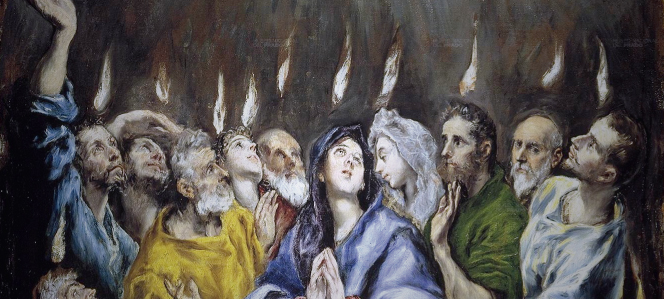
You remember the train of events? A big holiday and Jewish festival was celebrated: the festival of Shavuot, or First Fruits. Lo and behold, the group of disciples was having a prayer meeting, when suddenly “there was a sound from heaven like the roaring of a mighty windstorm, and it filled the house where they were sitting. Then, what looked like flames or tongues of fire appeared and settled on each of them. And everyone present was filled with the Holy Spirit and began speaking in other languages, as the Holy Spirit gave them this ability.”

The disciples were as surprised as anyone! Yet, Peter realized what was going on and as one of the spokesmen for the disciples, he stood up and proclaimed that this was indeed an earthshaking sign from God! He even quoted from the prophet Joel, about the descending of the Spirit of God.

You remember what happened? Peter said, ““People of Israel, listen! God publicly endorsed Jesus the Nazarene by doing powerful miracles, wonders, and signs through him, as you well know. 23 But God knew what would happen, and his prearranged plan was carried out when Jesus was betrayed.”

I am certain that as Peter spoke he remembered that last night in the Upper Room; their leader and Rabbi Jesus gave the disciples a firm promise, saying “And I will ask the Father, and he will give you another advocate to help you and be with you forever— 17 the Spirit of truth. The world cannot accept him, because it neither sees him nor knows him. But you know him, for he lives with you and will bein you.”

This cataclysmic happening on Pentecost morning was that exact thing! The pouring out of the Spirit of truth, God’s Holy Spirit! It was not a gentle, even passive pouring out, but instead a mighty rush of wind! Flames appearing over each believer’s head! And, the gift of tongues or speaking in languages that the disciples had never learned! God displayed awesome power and might on that Pentecost morning!

Let’s go back a few weeks, to that Upper Room, to that Passover dinner just before Jesus was betrayed. All during the past few weeks Jesus had been predicting His death. Fulfillment of prophecy often seems distant and impersonal…like it is not warm or intimate. By some standards, Jesus gave a prophecy, it’s true. But more than that, Jesus gave a firm promise. He promised that His Heavenly Father would send the Spirit of truth upon the disciples.

 “For he lives with you and will be in you.” Such a positive way of seeing this marvelous event! Jesus recognized that His promise would become a lifeline for the disciples, a promise made, and a promise He certainly kept! Isn’t keeping a promise warm, positive and genuine? That describes our Lord Jesus to a “T”

Throughout the Gospel of John, Jesus supplied deep needs. Wants and desires, too. He supplied a whole description on new life to Nicodemus. Jesus supplied living water, spiritual hydration to the woman at the well. He supplied healing to the man by the pool of Bethesda. Jesus supplied guidance into an unknown and frightening future to Thomas, and for knowledge that God’s promises are definitely true, in Philip’s case.

And here, in the Upper Room, to all of us here today and throughout the centuries, Jesus elaborated on the gift of the Holy Spirit. Our Gospel reading today points to “an intimate Pentecost, to the Holy Spirit at work in our inner lives and in our world drawing us into intimate relationship with God who delivers on all God’s promises.” [1]

The Pentecost event two thousand years ago was indeed a huge cataclysm of sound and wind and flame and excitement! Yes, and our individual Pentecosts today can also be quiet, introspective and just as full of the Holy Spirit. Have you not known? Have you not heard? The everlasting Lord, the God of all creation is sending the Holy Spirit into each of our lives.

This is not a mere prophecy, an impersonal declaration of the might and power of some distant Higher Power. Our risen and ascended Lord Jesus has given us a personal promise, a warm, genuine affirmation of God-With-Us, Emmanuel. A genuine promise given, and a promise bountifully kept – in your life and mine. Amen, alleluia!    

@chaplaineliza

(Suggestion: visit me at my other blogs: matterofprayer: A Year of Everyday Prayers. #PursuePEACE – and  A Year of Being Kind . Thanks!


[1] https://www.patheos.com/progressive-christian/intimate-pentecost-alyce-mckenzie-05-10-2013

Unknown's avatar

Peace of Mind and Heart

“Peace of Mind and Heart”

John 14:23-27 (14:27) – May 22, 2022

            The world is in powerful need of peace right now! Isn’t it? Just think of the many places in the world today, right now, where there is strife, conflict, fighting, and even outright warfare. The gift of Jesus that He speaks of here in today’s reading, peace of mind and heart, is something truly to wish for! Even, to clasp tightly to our minds and hearts!

            Here in John, chapters 14 through 17, is His Farewell Discourse. These are the last words that Jesus gave to His friends before His arrest and crucifixion. Important words, indeed!

            Even at this point, on the night before Jesus was betrayed, His disciples needed some further explanation of what Jesus was saying to them. First Peter (John 13:36), then Thomas (14:5), then Phillip (14:8), and then Judas (not Iscariot) (14:22) ask for clarification about exactly what Jesus is telling them. Jesus packs a whole lot into just a few short verses.

            I would like to highlight one particular verse: John 14:27. Jesus said, 27 “I am leaving you with a gift—peace of mind and heart. And the peace I give is a gift the world cannot give. So don’t be troubled or afraid.” There is so much conflict, fighting, mass shootings, and attacks of one kind or another happening in this world right now. We need peace badly!

            David Lose, one of my favorite commentators, wants us to think more deeply about this word “peace.” I hear Jesus say this word. But why? How do we understand peace? What do we imagine Jesus means? “Too often, I think, we think of peace as simply the cessation of conflict. And clearly an end to violence is a good thing. Many of us have prayed for peace in the Middle East, [peace in the Ukraine,] peace in our community, perhaps even peace in our homes. But I think the peace Jesus offers is more than the absence of something negative.” [1]

            But, wait a minute, some people say! I know the world needs peace in the Middle East, and peace in Ukraine, and peace in lots of other places worldwide. But, what about me? What about my house, my neighborhood? I am not experiencing much peace in my personal life!

            Rev. Janet Hunt agrees just this past week that peace is regularly shattered in her neighborhood in the town of Dekalb, in the community where she lives and serves. She mourns the fact that “peace of mind, heart and body are too hard to find; so many needs, physical and otherwise, go unmet. And even if all else seems to be going well, still we struggle through our personal, sometimes private heartaches which threaten our peace, our sense of wellbeing.” [2]

            Looking at Chicago, I was just on the spot of a mass shooting on Friday, just a few blocks west of the Water Tower, off of Michigan Avenue. The police activity was still very present as they investigated that evening shooting and the aftermath. I needed to be in the area for my job, to visit a patient for the hospice I work for. Yet, I saw firsthand the very real conflict and disruption in the city center, in one of the most affluent parts of the city.

When someone reports feeling calm and “at peace,” so often people scoff, or are jealous, or disbelieve. That is, at first. Why is this? Is peace so rare or so unusual?

            I want us to go back to the Upper Room, back to the Farewell Discourse. “Think, again, of the timing of Jesus’ promise: it is the night of his betrayal, the evening when he will be handed over to those who hate him and who will take him away to be executed. And yet in that moment, he not only senses peace but gives it to others.[3]

            Yes, Jesus knows He doesn’t live in a peaceful world, and Jesus knows very well that His personal life is going to be rocked to the core in just a few hours. Yet, Jesus tells His disciples that He gives them His peace. And, guess what? We can access that same peace! That peace which the world does not understand, that the world cannot give.

              When someone reports feeling “at peace,” that person “instead testifies to a sense of wholeness, even rightness, of and in one’s very being It’s a sense of harmony with those persons and things around us. Peace connotes a sense of contentment, but even more fulfillment, a sense that in this moment one is basking in God’s pleasure.” [4]

            Even when you and I are in the midst of hardship, struggle, even conflict or disruption, we can access Jesus and His peace! Countless believers have clung to this blessed promise, even through great difficulty, horrific tragedy, and deadly conflict. Through personal tragedies or nationwide devastation, it does not matter. Jesus still offers His peace, freely! That peace is not only to be embraced in some far distant future, but it is already ours!

            God’s promise of peace is not maybe, or perhaps, or just in case. God loves us with an everlasting love! God has already gifted us with that peace that passes all understanding. God has already laid claim to us! With that claim comes peace that is truly beyond our understanding, peace that is always ours for the receiving.

            With Rev. Janet, I can affirm that in the hardest of times, in the hugest of challenges, when my heart is most tender, God’s peace is right there for me, and for you, too. Both when faith runs deep, and when it’s hard to believe, too. And when it’s a challenge for you to have faith alone, that is what the church is for – to believe together, in community.

            Jesus said, “the peace I give is a gift the world cannot give. So don’t be troubled or afraid.” This gift of peace is truly for us all.  Alleluia, amen!

@chaplaineliza

(Suggestion: visit me at my other blogs: matterofprayer: A Year of Everyday Prayers. #PursuePEACE – and  A Year of Being Kind . Thanks!

(Thanks to Rev. Janet Hunt and her excellent commentary on this Gospel reading for the 6th week of Easter, https://dancingwiththeword.com/when-peace-like-a-river/. I have used several ideas and quotes from this post in this sermon. And, thanks to Rev. David Lose as well. I owe much to him, from http://www.davidlose.net/2016/04/easter-6-c-peace-the-world-cannot-give/)   


[1] http://www.davidlose.net/2016/04/easter-6-c-peace-the-world-cannot-give/

[2] https://dancingwiththeword.com/when-peace-like-a-river/

[3] http://www.davidlose.net/2016/04/easter-6-c-peace-the-world-cannot-give/

[4] http://www.davidlose.net/2016/04/easter-6-c-peace-the-world-cannot-give/

Unknown's avatar

Hallowed Is Christ Jesus

“Hallowed Is Christ Jesus”

Philippians 3:4b-14 (3:8-9) – April 3, 2022

            Lots of words are old-fashioned. To say it another way, lots of words in the dictionary are words not much used today. Many people don’t know quite what they really mean. Have you ever thought about the word “hallowed?” I know, we say the word regularly when we pray the Lord’s Prayer. But, what does that word truly mean?

            In our Scripture reading today from Philippians chapter 3, Paul makes some audacious, over-the-top statements about himself. But more than that, Paul makes some extraordinary statements about Jesus. Paul’s total commitment is to Jesus Christ. Paul gives and lives as he does because he knows God (Jesus Christ) is hallowed. Sadly, many people do not have a clear idea about the word hallowed.  Before we can pray the Lord’s Prayer with understanding, we all need to learn that hallowed is another word for holy. Separated. Set apart[1]

            Think about it: “Our Father, who art in heaven, hallowed be Thy name.”

            Let’s back up, and take a closer look at this reading. Paul starts out by clearly boasting about himself. Writing to fellow believers in Philippi, Paul admits that his heritage and reputation could give him more reason than most people to place confidence in his spiritual pedigree. [2] This is one place where we can learn a great deal about the Apostle Paul! He goes over his resume, essentially, ticking off his wonderful credentials one by one. This is a surefire way to lift himself up, certainly. Talk about being a show-off!

            Do you recognize anyone you know in these words of Paul? I am reminded of people who are obsessed with important credentials, boastful and really full of themselves. This could be people trying awfully hard to get ahead, to claw their way to the top, by making sure their resume is top notch. Only having the best of the best listed on that piece of paper!

            Was this kind of activity putting God first? And, what about these boastful, obsessed people – do they have any sort of relationship with God? Do they consider God holy, or hallowed? Or do they ever think of God at all, except for paying God lip service on those occasional times when they recited the Lord’s Prayer?

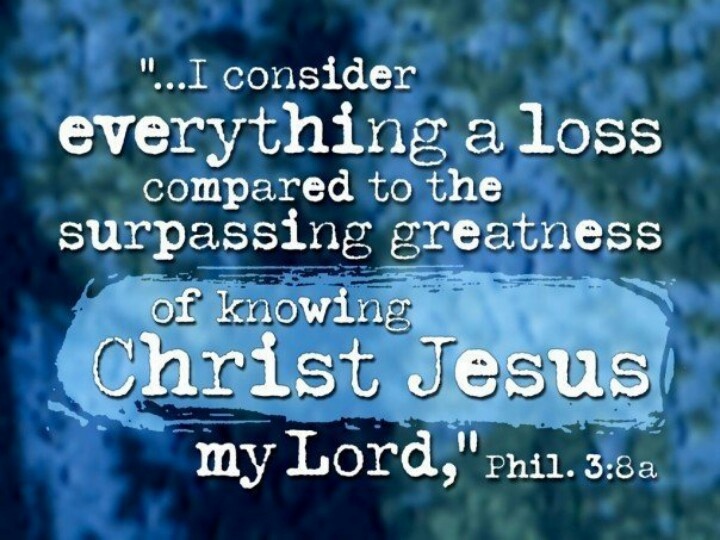
            But, those are only the first three verses of our reading. Paul does an abrupt about-face in verses 7 and 8. But whatever were gains to me I now consider loss for the sake of Christ. What is more, I consider everything a loss because of the surpassing worth of knowing Christ Jesus my Lord, for whose sake I have lost all things.” See how the Apostle Paul makes another extraordinary statement? The overwhelming grace of God – the surpassing worth of knowing Christ – calls Paul to a new, heavenly set of values.

            We will shortly be celebrating Communion, after this sermon. Here at this church, we do not usually say the Sanctus as a part of the Communion liturgy, since we use a shorter form of that section of the service. This part of the Communion liturgy is quite ancient. Here is the Sanctus: “Holy! Holy! Holy! Lord, God of Hosts! Heaven and earth are full of your glory!”  

            See how this statement fits into that Godly set of values from the Apostle Paul! “Our Father, who art in heaven, hallowed be Thy name.”

I invite you to consider the Sanctus when saying the beginning of the Lord’s Prayer. Imagine joining everyone who ever lived, lives now, and is already in heaven saying together that God’s name is hallowed. Because – God truly is holy!

What does Paul say next? “I consider [my worldly gains] garbage, that I may gain Christ and be found in him, not having a righteousness of my own that comes from the law, but that which is through faith inChrist—the righteousness that comes from God on the basis of faith.” Paul describes the value of all these worldly gains – all his marvelous resume – comparing it to the value system of the kingdom of Christ Jesus his Lord — complete rubbish! Absolute trash! That is where his outstanding resume belongs, compared to Christ Jesus our Lord!

               The Gospel reading for today comes from John 12, where Mary anoints Jesus’ feet while He is at dinner, in preparation for His death. “Like Mary pouring out her love by pouring expensive perfume, Paul shows his love and desire to know Christ by pouring out his credentials and achievements, his life, and considering them all rubbish (the Greek word also means “dung” and “excrement”) in comparison to the life to be gained in Christ.” [3]

            How much more can we consider our Lord to be holy? How much more meaningful can it be to say “Our Father, who are in Heaven, hallowed be Thy name,” compared to worldly credentials, or mere human achievements – compared to Christ Jesus our Lord.

            Paul’s goal, and our goal, is to know Christ! That holy, hallowed, set-apart Son of God, the one who reconciled us to God and bestowed upon all of us God’s gift of His righteousness. Praise God, Christ has redeemed us and we now walk in the newness of life.

            One last call to action, from the Apostle Paul: we are to straighten our priorities. Follow God’s priorities, God’s values, and follow Jesus. Make it your priority – my priority – our calling to know Christ intimately, and the power of His resurrection. Then, we surely can pray “Our Father, who art in heaven, hallowed be Thy name,” not only understand it, but mean it, too! Thanks be to God.

@chaplaineliza

(Suggestion: visit me at my other blogs: matterofprayer: A Year of Everyday Prayers. #PursuePEACE – and  A Year of Being Kind . Thanks!


[1] http://worshipingwithchildren.blogspot.com/2016/02/year-c-fifth-sunday-in-lent-march-13.html

[2] https://desperatepreacher.com//texts/phil3_4/phil3_4.htm

[3] https://desperatepreacher.com//texts/phil3_4/phil3_4.htm

Unknown's avatar

Love – No Matter What

“Love – No Matter What”

1 Corinthians 13:1-10 (13:7) – January 30, 2022

            With February right around the corner, many people start thinking about hearts and flowers. Thinking about chocolates and candy. Sweets for the sweet, as the old saying goes! Yes, Valentine’s Day is just two weeks away, and stores and card shops are full of red and pink displays and hearts and roses.

            As many hear this chapter on love from 1 Corinthians 13, some people wax sentimental. This chapter is a favorite to read at many wedding services in the church. “Everyone will nod along with a smile on their face. They’ll be remembering a wedding somewhere where these words were used to somehow capture the essence of this wild and crazy promise being made before the gathered overdressed assembly, this human enterprise that escapes human capabilities on a regular basis. [Or,] they’ll be remembering the Pinterest or Instagram post in fancy calligraphy, or the needlepoint in Grandma’s sitting room.” [1]

What if I were to tell you that love – the Bible’s definition of love – does not have anything to do with red and pink store displays, or hearts and flowers for Valentine’s Day?

            As we reflect on the biblical definition of love, let’s see what Paul says love does NOT do. I’m turning again to the wonderful modern translation of Eugene Peterson, The Message. “Love doesn’t want what it doesn’t have. Love doesn’t strut, Doesn’t have a swelled head, Doesn’t force itself on others.”

            That doesn’t sound much like lace and chocolates, hearts and big red bows, does it? No romanticized consumer version of love here! Do you recognize this honest, genuine kind of a feeling in the people you are close to, in the people you call family? Loved ones, and ones you cherish? This description is more of a love that is right down to earth, an honest, genuine feeling that is real and isn’t afraid to get its hands dirty.

            Let’s see a little more of what Paul says love does NOT do: “Isn’t always “me first,”
Doesn’t fly off the handle, Doesn’t keep score of the sins of others, Doesn’t revel when others grovel.” When I read all of these things love does NOT do, sometimes I get discouraged. It’s like I can’t measure up. I could never be that kind of person or be described that way; could you?

This enlarged, continued description of the biblical definition of love sounds too good to be true. For real people, I mean. To me, it sounds a lot like Mother Teresa, or Fred Rogers, two people who are considered to be the pinnacle of loving, caring people.

Wait a minute! Have we talked to God about this? Paul has been telling us for almost two chapters in 1 Corinthians that God freely gives believers spiritual gifts. What is more, Paul says that love is the absolute best of these different, diverse spiritual gifts. That means that God gives out love freely! With both hands! Right here, Paul is describing the gift of love that comes through people from the Lord. Isn’t that some of the best news ever?

I don’t need to scramble and strive to love, trying really, really hard. It’s not all me, putting together my own faulty kind of caring. No! God freely gives gifts of love to God’s children. God helps us to show love and caring, kindness and unselfishness. That is such a relief for me, and such a blessing to others!

We believers here on this earth may stumble on our way of walking the Christian journey, and that is okay. We do not need to fulfill each and every part of this long, involved definition that Paul given to us, either. And, it is not just up to our fallible striving or hard work to be the most loving and caring Christian believers possible. No! God will help!

When I think of God’s love, I think of certain people who modern society might not consider. Two individuals come to mind, who I knew years ago. Both are with the Lord now, and both had the diagnosis of Down syndrome. Both people were as loving and caring as anyone I have ever met. Both were selfless, totally concerned for others, and unfailingly kind, loving and giving. Isn’t this another example of love, according to the Bible? Isn’t it what love is all about?

Let’s take a final look at the last section of Paul’s definition of love, according to God. The previous entries or parts of the description were couched in the language of what love was NOT. At last, Paul describes what love IS. “Takes pleasure in the flowering of truth, Puts up with anything, Trusts God always, Always looks for the best, Never looks back, But keeps going to the end.” These are positive, affirming, uplifting traits, indeed.

We may not be able to walk the walk or talk the talk as perfectly as Paul describes here. “But we can stand in Paul’s certainty that there is a new way of being alive in the world, a new way of seeing the world and everyone in it. Must we simply accept everything going on in our messed-up world with a smile and nod? Of course not; evil exists. But we aren’t always the best at identifying where the real evil resides. Paul argues that it would better to lead with love.”[2] Again, you and I cannot generate this kind of spiritual gift in and of our own imperfect humanity, or of our own good works. We are welcome to ask the Lord for help and lead with God’s love.

This transformation is truly a gift – a gift of love! This gift comes from God, and is freely    offered to all believers! Let us thank God for this gift of love we all can display, and we all may give to others, just as freely. Alleluia, amen!


Thanks so much to Rev. Dr. Derek Weber, Director of Preaching Ministries for www.umcdiscipleship.com and his excellent preaching notes for this week’s worship service and sermon. I used several ideas from these notes for the sermon today

@chaplaineliza

(Suggestion: visit me at my other blogs: matterofprayer: A Year of Everyday Prayers. #PursuePEACE – and  A Year of Being Kind . Thanks!


[1] https://www.umcdiscipleship.org/worship-planning/love-never-ends-being-the-body-of-christ/fourth-sunday-after-the-epiphany-year-c-lectionary-planning-notes/fourth-sunday-after-the-epiphany-year-c-preaching-notes

[2] https://www.umcdiscipleship.org/worship-planning/love-never-ends-being-the-body-of-christ/fourth-sunday-after-the-epiphany-year-c-lectionary-planning-notes/fourth-sunday-after-the-epiphany-year-c-preaching-notes

Unknown's avatar

Gifts for Service

“Gifts for Service”

1 Corinthians 12:1-11 (12:4) – January 16, 2022

            Christmas was not that long ago. Less than a month ago! Remember the gift-giving? And, how much you wanted to see whether a close family member really liked your gift? Sometimes gift-giving can be stressful, especially when we exchange gifts with people who do not have a generous spirit. You know the kind, people who are so focused on themselves that they – or perhaps, we forget what Christmas is all about – receiving God’s greatest gift of all.

In this after-Christmas, post-gift-giving season, is there any wonder that many people are still up to their ears in the after-holiday bustle of gift returns or gift acknowledgements, and some even disappointment from all the gift-giving?

            God did not finish giving gifts when the Baby in Bethlehem was born in a manger two thousand years ago. By no means! God continues to give gifts to each believer, just as Eileen read to us. How generous of God! Our scripture reading says “God’s various gifts are handed out everywhere; but they all originate in God’s Spirit. God’s various ministries are carried out everywhere; but they all originate in God’s Spirit.”

Perhaps, we might paraphrase Paul: “Since you have already received gifts from God, what are you doing with them – lately?” But, perhaps I am getting too far ahead of myself. All of us as believers in Jesus Christ have been given some very special gifts from God! Perhaps you were not aware, or once knew and had forgotten, but it is true. Every Christian has a unique, God-given gift (or unique bundle of gifts!).

Oh, no, some say. I can just hear them. “Not me! I don’t have any special gifts from God! How could that be? I can’t do anything super special. I’m just a run-of-the-mill person.” Our commentator Karoline Lewis would strongly object! Lewis says we all need to recognize “that the gifts we receive are the very grace-acts of God. The term that Paul uses for “gift” has the same root as the word for “grace.” [1] These grace-filled gifts are charismaton in Greek, which is where we get the word “charismatic.” And, each believer receives these gifts!

            What a marvelous thought: each of us is a charismatic Christian, in other words! That is exactly what the apostle Paul says, right here.

Here in 1 Corinthians is not the only place where the New Testament gives a list of spiritual gifts. It talks about them in Ephesians 4, 1 Peter 4, and Romans 12, too. Plus, modern lists of spiritual gifts draw from all over the Bible. We can see that each believer has a unique, God-given gift (or unique bundle of gifts!). Individualized, and personalized!

So, what do we do, now that we know we all have spiritual gifts? Good question!

Just knowing about our spiritual gifts is only a small portion of actually having them and acknowledging them. The gifts of the Holy Spirit are an excellent way for each of us to serve God, in our own individual way. Do you know someone in the church who is a really helpful person? I can think of several. I think God may have given them the spiritual gift of helps. How about someone who is particularly encouraging to others? That person might indeed have the gift of encouragement.

What about the gift of administration, to organize and figure out what goes where? The gift of healing is seen physically, true, but it’s also used for mental, emotional or spiritual sickness or distress. And, the gift of leadership, of delegating tasks and gathering people together is another important spiritual gift.

            This is where our responsibility comes in. We don’t just sit on our hands and do nothing, now that we know about our personal spiritual gifts. God challenges us to recognize which of these spiritual gifts have been given to us individually and then to use them to the glory of God in our lives at home, at school, at work, and in the community. [2] As Paul says, it is the same God that causes these gifts to work in and through us. “God himself is behind it all. Each person is given something to do that shows who God is: Everyone gets in on it, everyone benefits.”

            Now, what about service to others? Specifically, I am thinking about the federal holiday that will be celebrated tomorrow. Yes, it is Martin Luther King Jr.’s birthday anniversary. Moreover, this holiday has been recognized as a Day of Service, nationwide.    

            The whole idea behind this service fits hand in glove with the United Church of Christ’s concept of the Beloved Community. Service is a hallmark for certain churches, especially in the UCC. The Rev. John Mingus describes the many-year journey of renewal his church took, Pilgrim UCC in Chattanooga, Tennessee, in a recent article on church renewal.

Rev. Mingus finishes his story with this moving summary: “the word is out about this church. Visitors come and stay. New folks go out and invite others. All kinds of folk see us as a safe place. We care for the homeless. We feed the hungry. We work for peace and public education. We have children and programming. We are a church in mission and when we gather it is as a beloved community. We are black and white, gay and straight, young and old, and much more. In our radical hospitality and at prayer people know that they are loved.” [3]

            Serving with spiritual gifts? Or providing a Day of Service? Or is it showing our neighbors we are indeed a Beloved Community? However you explain it, God will be so pleased that God’s people are given something to do that shows all people who God is.

God is indeed behind these marvelous expressions of Beloved Community, in exercising our spiritual gifts. Alleluia, amen.

@chaplaineliza

(Suggestion: visit me at my other blogs: matterofprayer: A Year of Everyday Prayers. #PursuePEACE – and  A Year of Being Kind . Thanks!


[1] https://www.workingpreacher.org/commentaries/revised-common-lectionary/second-sunday-after-epiphany-3/commentary-on-1-corinthians-121-11-2

[2] http://www.sundayschoollessons.com/gift.htm

[3] http://d3n8a8pro7vhmx.cloudfront.net/unitedchurchofchrist/legacy_url/11073/10JourneyTowardBelovedCommunity.pdf?1418436796

Unknown's avatar

Moved Into the Neighborhood

“Moved Into the Neighborhood”

John 1:14-18 (1:14) – January 2, 2022

            Sometimes, before a book really gets started, or before the action starts in a play or a movie, the author needs to say some important things. Things that we as readers (or watchers) need to see and absorb, in order to truly understand the rest of the book – or play, or movie. This is often called the prologue, and it can hold some pretty important stuff!

            Our Scripture reading today, the first Sunday of the New Year, comes from the first chapter of the Gospel of John, verses 14-18. This reading is from John’s prologue to his long narrative about our Lord Jesus and His life and ministry. Before the action gets going, John writes some really important stuff about the Eternal Second Person of the Trinity in this beginning, including verse 14: “The Word became flesh and made his dwelling among us.”

            Before the action begins in our lives, in our next chapter, we can sit down and think. Is there any kind of important stuff you would like to mention? Any special instructions or information for your potential readers? Let’s think about these opening verses from the Gospel of John. What do they say to us? “How do they function? [These words of the prologue] provide perspective a default position, a direction. They set the tone, set out themes so we know what to expect – a lens through which to view what comes next.” [1]

            These words remind me that you and I can take the opportunity to write prologues for our own stories, for the next chapter of our own lives.

We recognize this prologue of John’s from every Christmas, for years. Every year, we sing “O, Come, All Ye Faithful,” and every year we sing these tremendous words “Word of the Father, now in flesh appearing.” Those words are lifted right from this very chapter, right here! But, what does it mean, for the eternal Second Person of the Trinity, God from before the foundation of the universe, to become flesh, a fragile human Baby born in Bethlehem? 

This is the central, foundational promise of this Gospel – God became human, capable of being experienced and known by other humans. A simple yet profound message and promise.

Face it. We as weak, limited human beings have limited capacity to understand things. Things like God and God’s revelation. God understands our limitations, our fragility, and our hesitations. God the Eternal Second Person of the Trinity, Creator of the universe, emptied Himself of all that was God and came down from heaven. Jesus became a tiny, helpless human Baby born in Bethlehem, and then grew and experienced humanity from the inside out, to better be able to communicate to us limited humans down on earth.

How awesome, how unbelievable, how indescribably kind was that? Let’s go back to John’s Prologue. The last verse we read today says a whole lot: “the one and only Son, who is himself God and is in closest relationship with the Father, has made [the Father] known.”

As our commentator Karoline Lewis points out, verse 18 seeks to describe what the Word made flesh came here to do. John uses the Greek verb exago, “combining the prefix ex, which means “out” with the verb ago which means “to bring or to lead.” In other words, the principal purpose of the Word made flesh is to bring God out, to lead God out, so that an experience of God is possible. It makes no sense for the Word to become flesh if God is not able to be experienced, and on every level of what it means to be human.” [2]

So, here we are, as limited, fragile human beings, faced with a loving, caring God-made-flesh, Emmanuel, God-with-us. How have you experienced Emmanuel, God-with-you, in your life? Has Jesus been especially real to you at any point? Have you been going through difficulties and problems in your life, or in the lives of your families, and our Lord Jesus came alongside you and was very present in your life and experience? That is the very thing He came down from heaven to do and to be. To come alongside of us as we muddle our way through our messy lives.

As Lewis suggests, “I wonder if perhaps we all need a prologue — a prologue for our lives, even our believing, our discipleship, our relationship with God…. What themes will orient your life this year? Maybe we could call this a reorientation of New Year’s resolutions.

“This might be an especially helpful exercise at the beginning of a new year — what resolutions you want to make but also what God resolutions you need to make. In other words, resolutions not just for the sake of your life, but for the sake of God in your life, and for the sake of helping your congregation orient their lives to God’s Christmas, God’s present, and God’s future.” [3] What a marvelous idea! Make new year’s resolutions centered around God – God in the flesh, God’s present, and God’s future.

God is not someone far away, or someone who doesn’t care about us or our families, or our problems. God in very present with us. We as fragile, fallible humans CAN experience our Lord Jesus Christ, who did the ultimate. God the Father gave us all the most marvelous Christmas gift: the gift of God’s own Eternal Son, born as a Baby in Bethlehem.

I love how Eugene Peterson translated verse 14: “The Word became flesh and blood, and moved into the neighborhood.” Moved down the street, maybe even right next door. What a gift for all of us to experience. The Eternal God, right here, right now – Jesus moved into our neighborhood, and, God willing, into our very hearts and lives. Alleluia, amen!

@chaplaineliza

(Suggestion: visit me at my other blogs: matterofprayer: A Year of Everyday Prayers. #PursuePEACE – and  A Year of Being Kind . Thanks!


[1] https://www.workingpreacher.org/dear-working-preacher/a-prologue-for-the-new-year

[2]  https://www.workingpreacher.org/commentaries/revised-common-lectionary/second-sunday-of-christmas-2/commentary-on-john-11-9-10-18-5

[3] https://www.workingpreacher.org/dear-working-preacher/a-prologue-for-the-new-year

Unknown's avatar

Joy at Arm’s Length

“Joy at Arm’s Length”

 Luke 2:1-14 (2:9-10) – December 12, 2021

            Have you felt recently like there are lots of feelings coming your way? It seems like 2021 is a year of deep feelings. Yes, the feelings of fear, anxiety, worry, and grief (over many different kinds of losses!). At the same time, there are occasions of happiness, comfort, and once in a while, excitement! Can you recognize joy in that bundle of feelings?

Let’s look at what Dr. Luke has to say about the shepherds. “And there were shepherds living out in the fields nearby, keeping watch over their flocks at night. An angel of the Lord appeared to them, and the glory of the Lord shone around them, and they were terrified.”

            As we read this familiar Christmas story, was there much in the shepherds’ daily life and experience to fill them with joy? I do not think they were particularly joy-filled, with their ordinary, workaday life and their low, social status.

Remember the difficult situation the shepherds were in. The shepherds’ position on the social ladder in Palestine was pretty near the bottom. Working as a shepherd was something that vagrants might pick up, or a job for ne’er-do-wells, or others who were very much down on their luck. Similar to the current day, where the angels might come and give a heavenly announcement to homeless people.

            Today, you and I do not need to be down and out like the shepherds to have difficulty finding joy. Goodness knows, there is a lot going on in the world today, much less in each individual life. Look at the extreme weather! Look at the political situation, both local and national! Look at finances all over! Look at health situations! Need I say more? Actually, I do.

            My friend Rev. April Fiet reflects about our focus on joy, too. She says, “I was already struggling with joy because I feel guilty delighting in things when others are suffering. It feels inappropriate. How can I rejoice when someone else is experiencing the pain of a loved one in the hospital and being unable to be with them? How can I feel delight when business owners are forced to close their doors? How can I justify smiling at the sound of the birds in the trees or the scent of fresh baked bread when neighbors are sick, families are separated, and such brokenness exists in the world?” [1]

Oh, my. I can relate to Pastor April’s reflections. Are you and I uncertain about joy? Is it difficult for us to feel joy, even a challenge to think about experiencing joy?

I know what it is like to work a hum-drum, workaday job. Yes, I have had some jobs like that, years ago. I wonder whether the shepherds felt like that, right before the angel chorus broke into this hum-drum, workaday world and appeared to them?

Dr. Luke says that the shepherds were doing their job in the fields by taking care of the sheep. It is what they did every day. “Maybe their job had become a routine. Perhaps they were used to living in the fields, and they had forgotten to notice the green grass or look up at the glittering stars. Suddenly, the angels came to the shepherds to share, “the good news of great joy for all the people.” They said, “Jesus has been born. It is a blessing for you. It is a blessing for everyone!”[2] Imagine, a bunch of extraterrestrial beings lighting up the whole night sky! Imagine, what would that have been like if you had been there?

Years back, many people remember cute Christmas pageants, with children dressed in bathrobes as shepherds, and angels with aluminum papered wings and tinsel halos singing “Gloria!” Yet, the real angels’ joyous announcement was contagious! They surrounded the shepherds with that great joy, for all people! The ultimate birth announcement for all time!

I am sure you remember getting filled with joy just because your friend or relative was so joy-filled. We just celebrated the birth of a grandbaby in this congregation a few days ago, and the grandparents were so joy-filled it surely was contagious for the rest of us! And how much more to have a glorious angel chorus filled with joy, singing their Glorias to God in the highest!

But, sometimes – it can be difficult to be filled with joy, even if angels are telling us to be. Sometimes, uncertain hearts can still lean away from joy, for all kinds of reasons. Some remember birth stories of sadness, either in their own lives, or in the life of someone close to them. And some people are just not feeling particularly holly-jolly, merry and bright at this time of the year. Again, for a whole host of reasons. And, that is okay. God understands and God is right here with us, through it all.

Even if we have the angel chorus turned down low, like on a car radio, we can still hear the good news of great joy. “Today in the town of David a Savior has been born to you; he is the Messiah, the Lord.” We can listen to the joyous chorus – softly: “Glory to God in the highest heaven, and on earth peace to those on whom God’s favor rests.”

Yes, the angels brought something extraordinary to the shepherds, and to all of us. Even when we are uncertain to receive it, the angels bring us good tidings of great joy, for all the people! And even when some of us do not have the strength or wherewithal to reach out for joy, a loving, gentle God continues to beckon to us. God’s gift of joy still remains.

I encourage us all – look for God’s joy in our lives today. And, God-with-us, Emmanuel, will stay at our sides in an uncertain Advent, through the Christmas season, and for the rest of our lives. Alleluia, amen!

@chaplaineliza

(Suggestion: visit me at my other blogs: matterofprayer: A Year of Everyday Prayers. #PursuePEACE – and  A Year of Being Kind . Thanks!


[1] https://aprilfiet.com/my-thoughts/advent-for-uncertain-hearts-week-3-joy-at-arms-length?fbclid=IwAR27woV9I-D9ZOu6-QnqwTF_Md7hE8MDmhpkjxdJ9JivtCJY-Nqmscm5aG8

[2] Illustrated Ministry – Week 3, Do Not Be Afraid, Advent 2021