Unknown's avatar

Compassion for a Widow

Luke 7:11-17 (7:13) – July 30, 2017

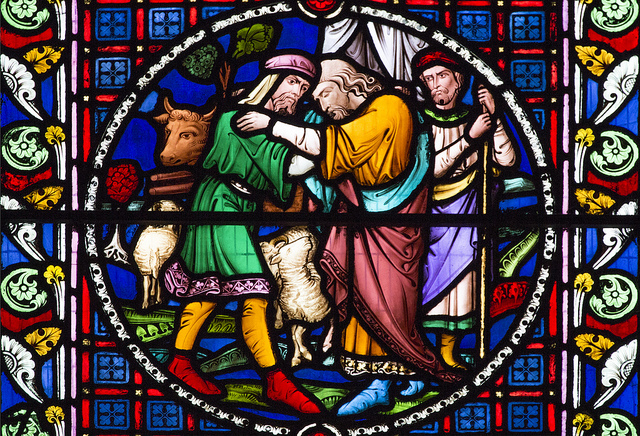
Luke 7-10 widow's son Ottheinrich_Folio081v_Lc7B

“Compassion for a Widow”

I do not often make generalizations, but I suspect everyone will agree with this one. Pretty much everyone knows the grief, pain and anguish of having a close relative or loved one die. I’ve dealt with anxiety and fear, grief, anger and mourning plenty in the hospital when I worked as a chaplain, and afterwards, as pastor of this church.

This Gospel reading features a funeral procession, mourning and grieving, on the way to bury a dead loved one. This Gospel reading also features the widow of Nain (the town). One of the Gospel of Luke’s guest stars in a cameo appearance, the widow is in deep grief.

Naturally in dismay and trauma, I suspect all the widow wants is to be able to see her son again, alive.

But, I am getting ahead of myself. Let’s concentrate on Jesus.

Hear, again, today’s reading from the Gospel of Luke, plus some commentary. “Jesus went to a town called Nain, and his disciples and a large crowd came with Him.”  The Rabbi Jesus and close friends are traveling around Israel. (Remember, Jesus was an itinerant Rabbi, like a circuit-riding teacher and preacher.) The Rabbi Jesus did not live in one, stationary place, and His followers took on the same, nomadic lifestyle.

“As Jesus came to the gate of the town, a man who had died was being carried out.”  

I would like everyone to put your imagining cap on. You might be familiar with what I mentioned several weeks ago, introduced by St. Ignatius. Among other matters, Ignatius was a spiritual director. He wanted all people to get closer to God. What is more, there are things we can see, touch and feel about this reading—in our minds. This vivid use of imagination is one amazing way for that experience to happen.

So, Jesus was on the way, traveling all up and down the country. Right in the middle of things, as usual. What should Jesus and His friends run into but a funeral procession?

Imagine the traffic jam, right at the gates of the city of Nain. All the hustle and bustle of people coming and going. Animals, wagons and carts, shopkeepers, drivers making deliveries, people in close quarters, shuffling, passing through the city gates. Perhaps it’s a dry, dusty day. Add the dust, dirt and grit to the scene.

Can you see the people gawking at the funeral procession? One thing about this funeral procession: it’s for a younger person. We don’t know how much younger he was, but I know today that when a young person dies, they have lots of people at the funeral service. Can you hear the crying and wailing of the people who are mourning. Perhaps they are also squeezing through the busy city gate with everyone else. Luke says, “A large crowd came alongside his mother; she was a widow, and he was her only son.”

Her only son. Can you hear the sorrow and anguish packed into that small statement? Can you see the shock at the death of a young person, the loss of years not lived, of length of life not experienced?

When, suddenly, the Rabbi Jesus approaches the procession. He not only views that procession from among the many people grieving that day, but Jesus also goes beyond. He enters into the procession itself. Jesus interrupts, in a very large way. Listen to Luke’s words: “When Jesus saw her, he had compassion for her. He told her, “Do not weep.”

I would like to remind people about a quick word study I did a few weeks ago. I wanted to see what a proper, in-depth study on the word “compassion” had to say. According to one word study, “Com-passio literally means to “suffer with.”  In Latin, com means “with” and passio means “to suffer.” [1]

            As we consider what St. Ignatius wants us to do with our imagination as we think more deeply about this Scripture passage, we can add to it the intense emotions of grief, sorrow, longing, worry, anger, and suffering. On top of all of these deep, intense emotions, we can now add compassion. That’s not only compassion on a human level, but Jesus’s compassion. Godly compassion and caring. Wow! Can you say, “Wow!” with me?

In our children’s message today, I spoke about our scripture reading. I said Jesus recognized that a woman he met was extremely sad. This widow was left all alone, with no relatives at all! And, Jesus had empathy for her. the word “empathy” means to recognize another person’s emotion and then feel what that person feels; if someone feels sad, we recognize she feels sad and we feel sad with her, for example.

What the Gospel writer Luke does not say (because everyone in his time would understand it very well), is “Luke’s inclusion of the detail that this was her only son highlights her difficult situation. Without a husband and now without any son to support her, it is very likely that the widow is now or will soon be financially destitute.[2]

Do you see now why it is such a big deal that Jesus felt for this widow? He showed empathy for her and her extreme distress. Emotional, psychological and financial distress, as well as the spiritual upset, grief and trauma.

Jesus not only feels empathy and compassion for this widow, He goes that important step further. Continuing with Luke chapter 7: “Jesus told her, “Do not weep.” Then He came forward and touched the coffin. The people carrying it stopped moving. And Jesus said, “Young man, listen: get up!” The dead man sat up and began to speak, and Jesus gave him  to his mother.

            Our Lord Jesus does a miracle! Not only a healing, but raising the dead.

Jesus not only felt empathy, He did a miracle. He gave this woman back her much beloved son, and He stabilized her financial position, too. Jesus did a significant healing on several different levels.

That miracle is wonderful. In bible times, that is. I can just hear people stating that we couldn’t do anything even remotely resembling that marvelous miracle. Not today. Not us little, insignificant folks. That’s for big, important people, like Jesus, or the Apostles.

Our Lord Jesus is so awesome, and a wonder-worker, too. He showed empathy, yes, and also the incredibly personal touch: he cared deeply for that widow. It is so important to know Jesus first felt compassion and empathy for the widow before He healed her son.

Empathy is an important way for us to begin caring for others, which we learn through Jesus in this week’s example of compassion. It’s easiest for us to show empathy and compassion to people who are a lot like us, and harder to show this toward people who are very different from us. Who is different from you, and how can you be loving and caring to them?

This presents an opportunity to all of us. Find someone who is different from you and reach out to them, today. Be kind and compassionate.

How can you—we—practice empathy and caring, today? We can become more aware of how we can be loving, kind and helpful to those around us, like Jesus was with the mother in our Scripture passage today. A loving challenge from our Lord Jesus, today. Go, and do likewise.

Amen.

[1] Compassion in the New Testament (Part 1) http://www.jmarklawson.com/traveling-in-place/2012/03/compassion-in-the-new-testament-part-1.html

[2] http://www.workingpreacher.org/preaching.aspx?commentary_id=1679 Commentary, Luke 7:11-17, Jeannine K. Brown, Preaching This Week, WorkingPreacher.org, 2013
 

Unknown's avatar

Compassion and a Rich Man

Mark 10:17-27 (10:21) – July 16, 2017

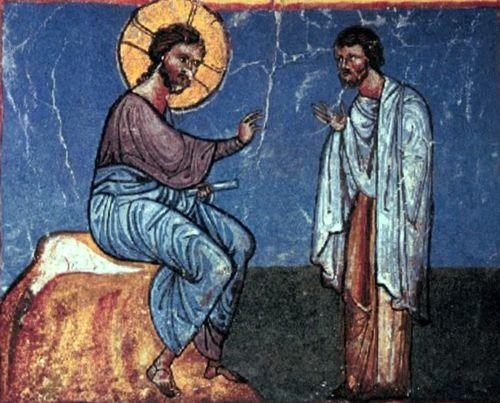
Mark 10-21 Jesus-Christ and-the-rich-man

“Compassion and a Rich Man”

If we turn on the television, read a book, or listen to a podcast or talk radio, sometimes we might hear experts giving advice. These knowledgeable experts are often from well-known places.  This week I am thinking about advice on how to live the “right” way. That’s sometimes thought to be a fruitful life, or a healthy life, or a spiritual life. Wouldn’t you be interested if you heard a radio program with a noted author or well-known expert in just this subject?

That’s the case with Rabbi Jesus, today. In today’s scripture lesson, we get just a hint of what our Lord Jesus had to deal with much of the time. Can you see this situation? I love St. Ignatius and his suggestion to put ourselves into the narrative. Let us imagine ourselves being there, right with our Lord Jesus the itinerant Rabbi, and His disciples.

Mark tells us that Rabbi Jesus (and some others) are about to leave on a journey. Can you see the hustle and the bustle as they get ready to leave? Maybe several of Jesus’s friends are concerned about last-minute details. Perhaps they have already contacted someone in the town they plan to go to, to find some kind of lodging, some kind of food and board.

I would imagine Jesus being calm and self-possessed, amidst all of this rushing around. Just like our scripture reading today says, someone runs up to the Rabbi and asks Him a parting question. After all, you don’t get an expert in religion and spiritual life coming to your town just any old day. The Rabbi Jesus was a widely acknowledged wise person, an expert in the interpretation of the Hebrew Scriptures, the Law of Moses and in lots of things associated with religious and spiritual life.

Looking at it from that angle, of course this young man would rush up and try to get the ear of the wise Rabbi just before He and His followers left their town.

The Gospel writer tells us: Jesus was beginning a journey when a man ran up and knelt in front of Him and asked, ‘Good Teacher, what must I do to get eternal life?’”

Do we hear what this man says? He wants to know how he can get God’s approval. What is more, we can watch this man kneel humbly before the wise Teacher and Rabbi when he asks.

Let’s continue with St. Ignatius and his suggestion to imagine ourselves there with Jesus. Perhaps as one of the disciples, maybe as one of the crowd, watching and waiting to hear what the Rabbi was going to say. And, we are packed into a small area. A good amount of people usually gather around when Jesus is talking in public.

The Rabbi Jesus makes an unexpected response to the young man: “Jesus asked him, “You’re calling me good? Only God is good. You know the commandments: Don’t kill, don’t betray, don’t steal, don’t lie, don’t cheat, honor your father and mother.”

This is a straightforward, traditionally Jewish response that many Rabbis would give, in answer to such a question. This is the way you gain favor with God: keep the commandments. In fact, Jesus even gives a little recap of them, a “highlights” list, just in case anyone forgot.

We look to the young man, who says. “‘Teacher, I’ve always obeyed all of these, ever since I was a kid.’”

I am sure we all know someone like this. Some goody-two-shoes who always follows the rules, straight as an arrow. Pious and earnest. Always trying his hardest to win God’s approval, as well as the approval of his parents and other grown-ups.

We return to our Lord Jesus, and listen to what He said. “Jesus looked at the man and loved him. Then Jesus said to the man, ‘There’s one more thing: Go sell all your stuff. Whatever money you make, give it to the poor. Then you’ll be rich in the things of heaven. And then, come follow me.’ The man was really surprised by what Jesus said, and really sad. He had a lot of stuff, and he really loved some of it. He walked away, still upset by what he’d heard.”

Now, we are learning additional information. This is not just any young man. No, this is a rich young man. I wonder whether the rich young man was aware that all of his stuff could act as a barrier between him and God? That’s why Jesus tells him to sell all of his stuff.

Dr. David Lose said about this point in the reading, “what Jesus really meant was that we needed to unburden ourselves of whatever might be keeping us from relying on God.” [1] Yes, the rich man had a great deal of difficulty hearing these words of Jesus.

Let’s face it: these are difficult words for many people to hear. We love our stuff, don’t we? Or, if not most of our stuff, at least some of our stuff. I would really have difficulty giving up my computer and my car. I think I am not the only one in this room today for whom that is true. Others might have difficulty unburdening themselves of whatever might be keeping each one from God.

This is a huge lesson for all of us from this Scripture reading today. And yet, it is not the only lesson. Remember our sermon series? Our sermon series on compassion is continuing with Jesus having compassion on this rich young man. What does our Gospel writer say? “Jesus looked at the man and loved him.” Jesus loved this young man—this rich young man.

Dr. Lose wonders: “whatever [the young man’s] appearance on the outside, whatever his faithful and pious life, he’s still missing something, something important, something that matters, something that’s a matter of life and death.”[2]

What about us? What is our reaction to Jesus and the rich young man?

Turn it around. Imagine we are friends of the rich young man, standing right next to him, meeting Jesus. We have a lot of stuff, too. Jesus is asking us to give it all away. We may want so badly to follow Jesus! We want to travel around with Him everywhere He goes. But, since we have so much clutter, so many things, we just can’t uproot ourselves and follow Jesus.

Can you relate? “The man was really surprised by what Jesus said, and really sad. He had a lot of stuff, and he really loved some of it. He walked away, still upset by what he’d heard.”

Just as much as Jesus loved this young man, that’s how much He loves each of us. Jesus loves you, me, and every person on the face of this earth. Even when we don’t do what God has asked us to do, God still loves us. Does everyone feel God’s love for us? And, not only us as a group, everyone in this sanctuary, but also for each one, for every individual.

And, the capper for this interaction between Jesus and the young man? “The disciples were amazed at his words. Looking at his disciples, Jesus said, ‘It is so hard—can you even imagine how hard?—for someone who has so much to come to God’s kingdom.

It’d be easier for a camel to go through the eye of a needle.’”

In other words, really, really hard. All of our stuff gets in the way between us and God’s kingdom. All of this clutter and distraction in our lives keeps us at a distance from God. We know what Jesus has asked us to do, just like this young man did. When you don’t do what God has asked you to do, how do you picture God responding to you? Do you imagine God looks at you—at us—with loving compassion like Jesus did in this story?

We might not be able to follow Jesus completely, all at once, but we can make steps in that direction. We can make small steps toward doing what pleases God. I encourage all of us to choose someone or something and be kind. Be compassionate towards them What’s more, we all will see how all of our “small steps” in loving and giving combine to create a beautiful impact of compassion in God’s world.

And, maybe, just maybe “God’s gift of salvation can actually free us to do something: to love each other, to care for God’s people and world, to share the good news…right here, right now, wherever it may be that God has placed us.” [3]

God willing, we can all show love and compassion, every day. Amen.

[1] http://www.davidlose.net/2015/10/pentecost-20-b-curing-our-heartsickness/

[2] Ibid.

[3] Ibid.

(A heartfelt thank you to An Illustrated Compassion: Learning to Love Like God. Many of these sermon ideas and thoughts came directly from this series.  I appreciate this intergenerational curriculum, which is the basis for my summer sermon series on compassion. This curriculum comes from Illustrated Children’s Ministry. Thanks so much for such great ideas!)

@chaplaineliza

(Suggestion: visit me at my regular blog for 2017: matterofprayer: A Year of Everyday Prayers. #PursuePEACE – and my other blog,  A Year of Being Kind . Thanks!)

Unknown's avatar

Compassion for People in Need

Matthew 9:35-38 (9:36) – July 9, 2017

Matt 9-36 compassion, words

“Compassion for People in Need”

Who do we know today who comes to help people in need? Our Lord Jesus talked about sheep and shepherds in our Gospel message today. If you were to think of a modern example of a shepherd—someone who guides, protects, and cares—what or who comes to mind, especially in our neighborhood?

Let’s hold that thought in our minds and hear what Jesus said again. Jesus traveled all around the wider area, teaching in all of the local places of worship, the synagogues. As He went from place to place proclaiming the Good News, Jesus had compassion for the crowds, who were milling around aimlessly like sheep without a shepherd.

Taking a closer look at these bible verses, I think I know what “compassion” is, but I wanted to see what a proper, in-depth word study on the word “compassion” had to say. According to one word study, “Com-passio literally means to “suffer with.”  In Latin, com means “with” and passio means “to suffer.”  “Passion” is suffering, which is why we talk about “the Passion of Christ” during Holy Week.” [1]

In other words, Jesus was suffering with His fellow Israelites while He was traveling around the country. Jesus saw them hurting, and His heart went out to them. “True love … involves suffering.  Suffering is an inevitable consequence of the deep joy that comes with binding oneself to the heart and soul of another.” [2]

Our Gospel lesson from Matthew said Jesus “had compassion on them, because they were harassed and helpless, like sheep without a shepherd.” We are going to take a tour through the Bible, tracing these words and these terms. This description using the word “compassion” and the term “sheep without a shepherd” is awfully similar to a description from the Hebrew Scriptures in Ezekiel 34. Picture this: the prophet said the nation of Israel is seen as sheep scattered over the mountains without a shepherd, lost, in danger. Sound familiar?

I understand that sheep are dumb animals. This word image is used over and over in both the Hebrew Scriptures and the New Testament. Herding and keeping the sheep together is a big concern with sheep. Without someone to guide them, they move about aimlessly. They get lost. They wander off and often pay little attention to what is going on around them, especially dangers and difficulty. “This is the spiritual state of the people in today’s passage, and we see that in Jesus’s actions to teach the people. “ [3]

I would like to return to the word “compassion.” We looked at the Latin roots of that word, but the Gospel of Matthew was written in Greek. If we take a closer look at what the Greek word “compassion” means, we see the word splagchna, which appears in the letter to the Philippians. The Apostle Paul’s words in the King James Version say: “I long after you all with the bowels of Jesus Christ.”  The word splagchna means “bowels” – literally, the innards in your belly.  It’s an earthy image that might offend some.

“The people of the ancient world believed that all of the most intense feelings originated in the belly.  For them, “guts” did not mean “courage,” but depth of feeling.  It’s easy for us to understand why they would believe that, because when we feel anxious or afraid, our stomachs churn.  Our lower innards give away how much we are affected by our circumstances.  Splagchna oiktirmou means something like “’the bowels of deep feeling.’” [4]

We are talking about Jesus feeling deep feelings right down to His guts. Literally.

We have some vivid images here. Lost, defenseless sheep. Jesus feeling deep feelings for those sheep, right down to the bowels of deep feeling. Right down to His guts.

But, Jesus does not leave those lost sheep defenseless, afraid and isolated. No! He has recruited helpers. Shepherds sometimes have assistants or guard dogs that help them with their job. If you were to think of a modern example of a shepherd—someone who guides, protects, and cares—what or who comes to mind, especially in our neighborhood?

Think of an accident or a fire. Or, someone getting lost, especially a child. Who shows up? Who are the first people on the spot in an emergency situation? I was thinking of police officers, firefighters, emergency medical technicians, and other first responders. What about people like social workers, trauma workers, and the medical team from a hospital’s emergency department or intensive care unit? They protect, guide and care for people in trouble, today.

That is the depth, the enormity of what our Lord Jesus was thinking of, in this reading today. In observing his fellow people of Israel, He was moved with compassion down to His guts, His “innards.”

And, what was Jesus’s compassionate response? Jesus did what He could to meet their spiritual needs—with salvation!

If we were to see a child running ahead of their parents or caregiver down the sidewalk, and that child went toward a busy street, what would any sensible person do? They would run to save the child, and stop him or her from running out in traffic. That’s what Jesus wants to do here, in our Scripture passage.

Let’s think about us, today. We are described as sheep. I own that. I realize that I am sometimes stubborn as a sheep. I sometimes wander off, blithely going in my own direction, away from the way that I know God wants me to go. And, sometimes I get lonely and lost. I get turned around and don’t know the way back to my home, to that safe place where people love me, care for me, and are concerned for my welfare. Does anyone else relate to these deep, anxious, lonely feelings? Are there some other sheep out there, in this congregation?

Jesus offers us salvation. He offers us the opportunity to become a sheep in His flock, a lamb in His tender care. Jesus is doing this out of the compassion of His heart, just as He did for His fellow countrymen, the fellow Jews in the country of Israel. Remember, Jesus saw the people as lost, alone, without direction.

How has Jesus been a shepherd for you, in your life? Either today, recently, or at a time when you really needed it? Has Jesus cared for someone close to you, for a loved one or a dear friend? Jesus is doing this out of the compassion, the deep feeling of His “innards.”

What is more, Jesus offers us the opportunity to show compassion to each other. We can show our friends, our loved ones, even absolute strangers the same compassion. We all know that feeling when we feel anxious or afraid, when our stomachs churn.  Our lower innards give away how much we are affected by our circumstances.  That is how deeply we are to feel with compassion! We are urged to go out of our way and care for others.

Can you think of ways in which you can show compassion this week? Nothing would make our God happier than to have us walk in our Lord Jesus’s steps and show compassion to others, today, and every day.

Alleluia, amen.


[1] Compassion in the New Testament (Part 1) http://www.jmarklawson.com/traveling-in-place/2012/03/compassion-in-the-new-testament-part-1.html

[2] Ibid.

[3] http://www.ligonier.org/learn/devotionals/sheep-without-shepherd/  Ligonier Ministries – The Teaching Fellowship of R.C. Sproul

[4] Compassion in the New Testament (Part 1) http://www.jmarklawson.com/traveling-in-place/2012/03/compassion-in-the-new-testament-part-1.html 

(A heartfelt thank you to An Illustrated Compassion: Learning to Love Like God. Many of these sermon ideas and thoughts came directly from this series.  I appreciate this intergenerational curriculum, which is the basis for my summer sermon series on compassion. This curriculum comes from Illustrated Children’s Ministry. Thanks so much for such great ideas!)

@chaplaineliza

(Suggestion: visit me at my regular blog for 2017: matterofprayer: A Year of Everyday Prayers. #PursuePEACE – and my other blog,  A Year of Being Kind . Thanks!)

Unknown's avatar

Elisha Shows Mercy

2 Kings 6:8-23 (6:22) – June 25, 2017


mercy

“Elisha Shows Mercy”

Compassion. Being kind. Showing mercy. Showing love. All of these are actions God calls us to do.

During the past few weeks in June, these are actions we saw carried out by people in the Old Testament, in the Hebrew Scriptures. We saw Abraham showing hospitality, the midwives for the Hebrew women displaying compassion, and King David being kind and merciful. This week’s scripture lesson is a little different. Here, we take a closer look at the prophet Elisha and see how he displayed mercy and compassion.

We need to step back and remind ourselves about our summer sermon series on Compassion. In keeping with my continuing effort to provide for activities for everyone—adults and children—I chose this series on Compassion because of its excellent, detailed children’s teaching and activities. This series also had some thought-provoking sermon ideas on how God’s people went out of their way to provide compassion, mercy and kindness for those around them.

Compassion is a big word. One thing it means is being especially kind to others. Except, the prophet Elisha and the people of Israel had a difficult time being kind because of what was going on with the political situation of the country of Israel. Is it easy to be compassionate to an opposing army that is marching against you? Even with up-to-date, fancy chariots and horses—which was the equivalent of the best tanks and armored vehicles they had at that time.

We need to see why the king of Syria was so angry at the nation of Israel. But before that, we also need a refresher on the nation of Israel. After King David died and his son King Solomon died, the nation had a short civil war. One of Solomon’s sons took over the northern part of the kingdom, and another of Solomon’s sons became king over Jerusalem and the southern part of the kingdom. A couple of hundred years go by, and here we are at the time of the prophet Elisha. Elisha served as prophet to the northern kingdom, which was called Israel.

The prophet Elisha was powerful, a miracle worker who had the spirit of the Lord resting upon him. This is exactly the reason behind the first part of our reading from the book of 2 Kings. There was conflict between the nation of Israel and the nearby country of Syria. Yes, the armies of both Israel and Syria were actively engaged in outright war.

Our biblical writer says: “The king of Syria consulted his officers and chose a place to set up his camp. But Elisha sent word to the king of Israel, warning him not to go near that place, because the Syrians were waiting in ambush there. 10 So the king of Israel warned the people who lived in that place, and they were on guard. This happened several times.”

The Syrian king must have been puzzled, and scared, and especially angry! The first thing he thought was that he had a traitor and spy on his hands. But, no. All his soldiers were faithful and true. However, to continue with our reading: “The prophet Elisha tells the king of Israel what you say even in the privacy of your own room.” 13 “Find out where he is,” the king ordered, “and I will capture him.”

Not good! The Syrian army wanted to conquer Israel and take the prophet Elisha as prisoner. Under cover of night, the army sneaks up on the city where Elisha is staying. In the morning, what do you think happens? What would you think if you woke up one morning and your town were surrounded by hostile forces?

I do not know what my reaction would be for sure, but I bet I might be able to relate to Elisha’s servant. He was scared half to death, just looking at all of these Syrian troops and chariots and horses! Again, the Syrian army had the latest in military gear, weapons and armaments. It must have been an impressive—and frightening—sight.

“The servant cried out, “What shall we do?!” Elisha reassured him, “Don’t be afraid. More are with us than with them.” Elisha prayed for his attendant’s eyes to be opened, and suddenly the young man saw the surrounding mountains filled with heavenly horses and chariots of fire.”

Elisha reassured his servant not to be afraid, and said “We have more on our side than they have on theirs.”  What is more, Elisha prays that the Lord will send blindness upon all of the Syrian army. And—God does!

What happens next is both humorous and ironic. Elisha himself goes out to the newly-blinded Syrian army. He tells them, “This is not the way you’re trying to go; this is not the city you want to get to; follow me, I’ll bring you to the man you want.

Remember, the Lord has struck all of the Syrian army blind. “Here Elisha told a technical truth but certainly intended to deceive. He did in fact bring them to the man they sought (when their eyes were opened, Elisha was there with them). However, he led them back to Samaria – the capital city of the Kingdom of Israel and an unfriendly place for [an army] of Syrian soldiers.” [1]

Let’s pause for a moment, and imagine we are with the king of Israel and Elisha. How would you have felt if you were them, facing the Syrian army? Remember, this army is at war with our country. Elisha does something unprecedented. After leading the blind army into enemy hands—Jewish hands, Elisha suggests mercy, kindness, and compassion! He tells the king to give the Syrians food and drink. In other words, serve them a feast!

One of the most surprising and beautiful parts of this story is how the Syrian army is blown away by the compassion they are shown. When they expected revenge and fighting, they receive a feast and love instead. Compassion! Kindness!

The Syrians get it. They understand. The king of Syria stops sending raiding troops into Israel because of this act of compassion and mercy. Can you think of a time when you were expecting more fighting, and there was peace and kindness instead? I realize it may not happen often, but sometimes—praise God!—sometimes it does happen.

It is not only by our own power that we act in kind, loving and merciful ways. God helps us to show compassion, even to those who persecute us. Just as Jesus said in our Gospel lesson today, 44 But now I tell you: love your enemies and pray for those who persecute you, 45 so that you may become the children of your Father in heaven.” Challenging words, to be sure! We can take the prophet Elisha for our example, as well as our Lord Jesus. Truly.

Showing compassion and kindness to those who hurt us is not the same as being passive, giving up, or letting them do whatever they want to us. When we show compassion or mercy we act in love. How can we find the strength to take these kinds of actions? Through prayer! Through doing the next loving, compassionate thing, with the Lord’s help.

God willing, God can help us act in a loving way.

Let us all follow in the footsteps of our Lord Jesus. We can all show compassion, kindness, mercy and love to those around us; to our friends as well as our enemies.

Amen, alleluia!

[1] https://www.blueletterbible.org/Comm/guzik_david/StudyGuide_2Ki/2Ki_6.cfm

(A heartfelt thank you to An Illustrated Compassion: Learning to Love Like God. Many of these sermon ideas and thoughts came directly from this series.  I appreciate this intergenerational curriculum, which is the basis for my summer sermon series on compassion. This curriculum comes from Illustrated Children’s Ministry. Thanks so much for such great ideas!)

@chaplaineliza

(Suggestion: visit me at my regular blog for 2017: matterofprayer: A Year of Everyday Prayers. #PursuePEACE – and my other blog,  A Year of Being Kind . Thanks!)

Unknown's avatar

David Shows Compassion

2 Samuel 9:1-13 (9:7) – June 25, 2017

2 Sam 9 word cloud

“David Shows Compassion”

Three and a half years ago, I started a computer blog called #ayearofbeingkind. I blogged every day for a year. (That’s 365 consecutive days.)

Since I have the spiritual gifts of helps and mercy, every evening I would blog about my experiences being kind, or helpful, or of service. I learned so much from that year. It was, simply put, an eye-opening experience. This blog and the marvelous challenges and opportunities God sent my way in 2014 are two of the reasons I wanted to share this summer sermon series with you: our summer series on Compassion.

The bible reading for today comes from 2 Samuel 9. We don’t usually focus on the Hebrew Scriptures in our sermon. This is now the third week we have talked about people from the nation of Israel being kind and compassionate towards each other.

We’ve just heard this unexpected and beautiful story read to us. One problem: this chapter of 2 Samuel starts in the middle of the story. For the previous parts in our story, we need to turn back to 1 Samuel 20 and 2 Samuel 4. Before David ever became king of Israel, he was a great friend of Jonathan, the father of Mephibosheth.

Jonathan was the eldest son of King Saul. As young men, he and David had a very special relationship. Yes, Jonathan knew his father King Saul was a bitter enemy of his best friend David. Plus, Jonathan was aware that his father the mean King had his army chasing David all over the kingdom. As the eldest son and heir of King Saul, Jonathan stood to inherit everything, as a future king of Israel.

He could have ratted out his friend David, but their great friendship was more important. David and Jonathan promised each other they would show each other kindness and compassion, even if something awful happened. They not only made this promise to each other, they decided to up the promise to the next level. David and Jonathan made a covenant before the Lord.

Let’s come back to our reading for today. It’s now been a while since King Saul and his son Jonathan have died in battle. King David remembers again his covenant promise to Jonathan, and wishes to keep it. From 2 Samuel 9: “David asked, “Is there anyone still left of the house of Saul to whom I can show kindness for Jonathan’s sake?”

David was taking his covenant responsibility very seriously. Even though Jonathan was dead, David still wanted to find out whether anyone was left alive of any of Jonathan’s children. Sometimes—like King David—we show kindness and grace to someone out of the love and caring we have for someone else.

Reading again from 2 Samuel 9, “Now there was a servant of Saul’s household named Ziba. They summoned him to appear before David, and the king said to him, “Are you Ziba?” “At your service,” he replied. The king asked, “Is there no one still alive from the house of Saul to whom I can show God’s kindness?” Ziba answered the king, “There is still a son of Jonathan; he is lame in both feet.”

It is seldom we hear anything of someone who is disabled in the Bible. Yet, here is Jonathan’s son, disabled—or lame—in both feet. For that part of the story, we need to turn to 2 Samuel 4. The author tells about a number of things with other, more important people, including the outcome of the battle where Saul and Jonathan died. Yet, one particular sentence stands out. 2 Samuel 4:4. “(Jonathan son of Saul had a son who was lame in both feet. He was five years old when the news about Saul and Jonathan came from Jezreel. His nurse picked him up and fled, but as she hurried to leave, he fell and became disabled. His name was Mephibosheth.)”

Today, when an accident happens and someone breaks some bones in their feet, what do they do next? They go to an orthopedic surgeon and have reconstructive surgery done on their feet. Sure, it’s painful and sometimes a difficult surgery, but then they go through rehabilitation and eventually learn to walk again. And often, their feet are almost as good as before.

But, what about Jonathan’s small son Mephibosheth? His nurse just found out about the death of King Saul and Jonathan on the battlefield. Filled with fear for the boy, she was running with him in her arms, and she tripped and fell. The boy fell to the ground, too. Somehow, his feet got crushed, and he became lame in both feet. This was a long time ago, and they did not have the ability to go to orthopedic surgeons. The small boy grew to be a man, and his feet remained crippled. He remained disabled.

I don’t think David ever knew about Jonathan’s disabled son Mephibosheth before. When he found out, he was greatly concerned and called the grown man before him.

Let’s look at this from Mephibosheth’s point of view. For years, he had been living his life quietly, under the radar. (At that time, according to the code of the day in every country, all close relatives of a former king were often killed.) Suddenly, he gets called into the presence of King David! I suspect Mephibosheth had no idea why he was being summoned into the king’s presence. He must have been really frightened.

Reading from 2 Samuel 9: When Mephibosheth son of Jonathan, the son of Saul, came to David, he bowed down to pay him honor. David said, “Mephibosheth!” “At your service,” he replied. “Don’t be afraid,” David said to him, “for I will surely show you kindness for the sake of your father Jonathan. I will restore to you all the land that belonged to your grandfather Saul, and you will always eat at my table.”

Imagine what was going through Mephibosheth’s mind. Wow! Double wow! Imagine someone powerful showing you undeserved kindness—compassion—grace. This is all for the sake of someone else. David did not know Mephibosheth at all, and the young man did not deserve it. Yet, David was doing this really kind thing on behalf of—in memory of Mephibosheth’s father Jonathan.

What parallels are here, using this narrative? Similar to Mephibosheth, we were separated from our heavenly King because we didn’t know God or God’s love for us. Our heavenly King sought us out before we sought Him. The King’s kindness is extended to us for the sake of another. The heavenly King’s kindness is based on covenant. [1]

This reminds me of our God’s love for people. All people. God extends an invitation to all of us. When God looks at you and at me, what does God see? Does God see all the bad things we have done? Does God count up all the unwholesome thoughts that have gone through our minds? Does God remember hearing all those mean words that came out of our mouths? I don’t think the Lord holds those bad things over our heads. Instead, God is loving and remembers the covenant with God’s much beloved people.

To say it simply? God extends kindness and compassion toward us, too. God loves us. All of us.  

Sometimes we show compassion and grace to someone out of the love we have for someone else—like how David decided to honor Mephibosheth because he loved Jonathan so much. Think about someone in your life you really love—maybe it’s a parent, a friend, or someone else. Who could you give generously to in honor of that person you love? Who is someone in your life in need of your grace and kindness? Is there someone who does not get much attention–like Mephibosheth? Is there someone in your life who might not feel like they deserve compassion and kindness?

This is our opportunity to show God’s compassion and kindness—and love!—to others, every day. Go and do likewise. Amen.


(A heartfelt thank you to An Illustrated Compassion: Learning to Love Like God. Many of these sermon ideas and thoughts came directly from this series.  I appreciate this intergenerational curriculum, which is the basis for my summer sermon series on compassion. This curriculum comes from Illustrated Children’s Ministry. Thanks so much for such great ideas!)

[1] https://www.blueletterbible.org/Comm/guzik_david/StudyGuide_2Sa/2Sa_9.cfm

@chaplaineliza

(Suggestion: visit me at my regular blog for 2017: matterofprayer: A Year of Everyday Prayers. #PursuePEACE – and my other blog,  A Year of Being Kind . Thanks!)

Unknown's avatar

Compassion and Babies

Exodus 1:15-21(1:20) – June 18, 2017

Exod 1 Pharaoh and the Midwives, Golden Haggadah, Catalonia, early 14th century, British Library,

“Compassion and Babies”

Who doesn’t love babies? Babies are sure to put smiles on the faces of many, many people, all over the world. Chubby little hands and feet, delicate ears, nose and mouth. They are adorable when they smile and yawn, and little angels when they are asleep.

I realize there are some people who are not wild about babies, but these are in the minority. Could we focus on one particular person who did not like babies at all? Our Scripture reading today from Exodus tells us a good deal about him. Starting at verse 8, “Then a new king, to whom Joseph meant nothing, came to power in Egypt. “Look,” he said to his people, “the Israelites have become far too numerous for us.”

Joseph and his brothers had been dead for many years—perhaps centuries. This king of Egypt did not remember anything of the marvelous things that Joseph did and the wonderful miracle he helped bring about, assisting all of Egypt and the regions surrounding to survive a great famine that lasted seven years. No, as far as the Pharaoh was concerned, he had forgotten all that history in the mists of a far-off past.

The King of Egypt had grown afraid of the numerous descendants of Jacob, who were growing more numerous and prolific all the time.14 The Egyptians made their lives bitter with harsh labor in brick and mortar and with all kinds of work in the fields; in all their harsh labor the Egyptians worked them ruthlessly.” In other words, the Egyptians were using these newcomers to their land as servants, even as slaves.

But, this hard labor—forced labor—was not enough. Pharaoh and many other Egyptians continued to be intimidated by the Israelites. When enough was enough, the Pharaoh called the two midwives to him, the ones who helped the Israelite women to give birth, and gave them a terrible command. He commanded genocide.15 The king of Egypt said to the Hebrew midwives, whose names were Shiphrah and Puah, 16 “When you are helping the Hebrew women during childbirth on the delivery stool, if you see that the baby is a boy, kill him; but if it is a girl, let her live.”

I suspect everyone here can guess what the midwives’ reaction is to this terrible command. Horror, shock, and revulsion, followed by refusal and resolve.

According to Dr. Brueggemann, “This narrative plunges [us] into a world of danger, brutality and desperation. It is a world into which a settled congregation does not easily go.” [1] Sure, this Scripture reading from Exodus is definitely not warm and fuzzy.  Many congregations regularly romanticize the Bible, and thus ignore the difficult parts, the ominous conflicts, the slavery, wars, death and destruction.

Imagine, so many powerless little babies, just born into this world. Remember the children’s sermon? Remember how certain people today are powerless, too? Similar to our activity during children’s time, here is a story in the book of Exodus about babies in danger who needed help. The babies couldn’t help themselves, and others—the midwives—came along to be sure they were safe.

Continuing from Exodus, “The midwives answered to God, not the king, and so they let the boy babies live, too. The king called for them, and when they came, he asked them, “Why have you done this? Why have you let the boys live?” The midwives said, “Oh, king! Hebrew women are so strong—they give birth on their own, before we can even arrive!”

These courageous women defied the direct orders of the Pharaoh. “They feared God more than they feared the new king, and for that reason they refused to participate in the state-authorized killing.” [2] What is more, they give a wonderful reason for not carrying out Pharaoh’s horrible plan: they say that the Hebrew women give birth too quickly! These women are filled with vigor and a liberated power for life, and for life-bearing, too. [3]

The Hebrew women were not the delicate flowers that many Egyptian women supposedly were. Instead, the midwives appeal to what appears to be Pharaoh’s own prejudicial sense of the relationship between physical difference and ethnicity. They insist that “the Hebrew women are not like the Egyptian women; for they are vigorous and give birth before the midwife comes to them” (Exodus 1:19).

The Hebrew word here for “vigorous” shares the root of the word “life.” The midwives deceive Pharaoh, and at the same time use language that also winks at the reader: the Hebrew women are full of life. [4] Their identity as God’s people resists death. Death is what Pharaoh demands to bring into their powerless lives—but it does not work. The midwives, Shiphrah and Puah, not only defy the King of Egypt, they also show compassion to the Israelite boy babies and their families, as well. Their community grew and became even stronger, and God was pleased with the midwives; their disobedience to the King was faithfulness to God.

According to the king, as Pharaoh, he was mighty, wily and powerful; on the other hand, the boy babies of the Israelites had no power, and neither did their parents.

Do we know what “powerless” means?  It’s to need help from others because we cannot help ourselves. Who else might be powerless? I mean, with less power in our world, or our own lives, or in their lives. Who are some people you can think of that don’t have much power in our world today? How can we help these people? Are there ways we all could show compassion and kindness to them?

This week offers us a story of humankind’s inhumanity to one another, and it is a story that gets played out in every generation. Why are we human beings unable to end our hunger for finding a group to be bullied or ostracized, be it on the playground at our local elementary school, in our neighborhood, or in the land that God promised to the Jews all those generations ago? [5]

It is the same old, same old story. One group of people come to consider themselves superior to another. Perhaps they think they are superior because of their appearance, or because they enjoy a more satisfying lifestyle, or they practice a particular religious faith. Maybe they feel they are superior because they have interpreted the Bible in such a way that they have come to believe God supports their views and lifestyle, and God condemns the views and lifestyles of those who differ from them. [6]

Who in our community enjoys favor and who is scapegoated? How does our church address these problems? Do we speak out? If not, why? Who stands to gain and who stands to lose from speaking out or keeping quiet? Can you put your own story into the story of the Hebrew people suffering under the abuses at the hands of the Egyptians? [7]

Thank God for these midwives, for Shiphrah and Puah. They stepped up, they came alongside of the Hebrew women, and they showed kindness and compassion.

How can we act today with kindness and compassion? How can we come alongside of someone in our neighborhood who is being bullied, ostracized, or even abused?

God willing, we can, and we will! Amen.


(A heartfelt thank you to An Illustrated Compassion: Learning to Love Like God. Many sermon ideas and thoughts came directly from this series.  I appreciate this intergenerational curriculum, which is the basis for my summer sermon series on compassion. This curriculum comes from Illustrated Children’s Ministry. Thanks so much for such great ideas!)

[1] Brueggemann, Walter, Exodus, The new Interpreter’s Bible: general articles & introduction, commentary, & reflections for each book of the Bible, Vol. 1 (Nashville: Abingdon Press, 1994), 696.

[2] Ibid, 695.

[3] Ibid, 696.

[4] http://www.workingpreacher.org/preaching.aspx?commentary_id=2169  Commentary, Cameron B.R. Howard, Preaching This Week, WorkingPreacher.org, 2014.

[5] https://www.umcdiscipleship.org/worship/lectionary-calendar/eleventh-sunday-after-pentecost4#notes1

[6] Ibid.

[7] Ibid.

Unknown's avatar

Compassion through Hospitality

Genesis 18:4-5 – June 11, 2017

Exod 18 Abraham bends down before Holy Trinity - angelic visitors at Mamre - mosaic in Monreale Cathedral

“Compassion through Hospitality”

Almost everyone enjoys visiting with friends. This can involve meeting for a cup of coffee or tea, going out for a meal, or having friends over at your house. What do you do to make friends or relatives welcome at your table? How do you like to be welcomed, when you go over to someone’s house or apartment?

These are great things to think about. We begin our first sermon of the summer, our Compassion sermon series. Let’s take a look at Genesis and at Abraham, the friend of God. He and his wife Sarah were on a nomadic journey—a very long caravan camping trip that lasted for years and years. While they were traveling, they camped for a time in the land of Canaan near what is now the town of Hebron.

God appeared to him. Here’s how it happened: “The Lord appeared to Abraham near the great trees of Mamre while he was sitting at the entrance to his tent in the heat of the day.” Right off the bat, this bible reading lets us know an important fact. It’s sort of the summary statement at the beginning of this reading, and then the passage explains what it’s all about.

This first verse tells us a lot. Abraham had his tent set up by some big trees. There wasn’t any air conditioning in those days, so he looked for some big trees to provide natural cooling. Abraham sat at the entrance to his tent—a cool place, to catch any little breath of wind drifting by. We also know it was the middle of the day—a really hot time in that semi-desert terrain!

Now that we’ve explained more about it, in your mind’s eye, can’t you just see Abraham sitting there, catching the breeze in the cool shade, at the door of his tent?

What happens next? “Abraham looked up and saw three men standing nearby. When he saw them, he hurried from the entrance of his tent to meet them and bowed low to the ground.”

We are not sure how much Abraham knew about these three men, but he goes out of his way to greet these three strangers. In many places in the world, people give you a warm welcome when you come to their home. It’s certainly true of many people and places throughout the Middle East.

“As a nomad, Abraham and his family lived in tents, as they traveled with their grazing herds in the desert. The few who lived in the harsh deserts of Judea depended upon each other for survival. Visitors were treated very well, for they brought companionship and help for the host. The practice of hospitality was highly prized in Abraham’s time.[1]

“Abraham and Sarah offer hospitality to strangers that come to their camp, upon seeing the strangers coming in the heat of the day, it’s suddenly high gear hospitality.  Hospitality would be the duty of any desert dweller of the time.” [2] I mean, really greet you! They give any stranger an extravagant welcome.

Let’s turn to a modern-day example. When our children, or grandchildren, or nieces and nephews go over to a friend’s house, what are some things that might make these young people feel welcome? Yes, their friend might offer them a drink or a snack. That is great. But, let’s go further. What if their friend goes the extra step? What if their friend lets our children play with their toys? What if their friend lets them pick what show they would like to watch on cable or DVD? How about inviting them to stay for dinner, or even inviting them to sleep over? All these ways of helping them feel welcome in their home are ways of showing “hospitality.”

Just as Abraham and Sarah welcomed these unexpected strangers, can’t we do the same thing? Maybe make a special effort to welcome each person into our house—or church, regardless of whether we know them or not? We can help them feel noticed, cared for and safe in joining our group of friends. How did Abraham show these three people they were welcome?

“Abraham said, “If I have found favor in your eyes, my lord, do not pass your servant by. Let a little water be brought, and then you may all wash your feet and rest under this tree.”

Let’s play a little game with this bible reading, a topsy turvy game.

What if Abraham did not feel like showing hospitality to the three strangers? What would that have looked like? What might have happened, then? As the three persons came near the tent, Abraham might hide inside and shut the tent flaps tight. When they knocked at the tent door, Abraham could tell them to go away, in an angry voice. If the three persons insisted that they were thirsty or hungry, Abraham might yell that they should go some other place, and freeload off of someone else.

If all that had been true, bible history might have happened very differently!

But, no! Abraham and Sarah were fine hosts. Let’s read more of the bible passage: “Let me get you something to eat, so you can be refreshed and then go on your way—now that you have come to your servant.” “Very well,” they answered, “do as you say.”

As a fellow pastor commented, “There was no Holiday Inn, or highway rest area, there is only Abraham and Sarah’s camp and their herds and their well. So, when strangers appear in the heat of the day, needing a wash and a rest, you tend to their needs. Some kind of host switch has been flipped.  Abraham runs, he hastens, he quickly prepares.  His hospitality seems to go above and beyond – the best of the herd, the best flour and in abundance for the meal.” [3]

Modern times have not changed hospitality. How do good hosts show us their hospitality today? They offer food and drink and try to make us as comfortable as they can.

I remember my dear prayer partner Zhou Hui. She was born in mainland China, grew up in a poor neighborhood in a medium-sized town, did really well in school, and was able to get awarded a scholarship to university. She came here to the United States as a graduate student, and became a naturalized citizen. She lives near here, and her children attend New Trier High School. She is a devout Christian, and a real pray-er. I thank God I was able to be her prayer partner for years.

I bring up Zhou Hui because she always bends over backwards to be a wonderful hostess. She has the spiritual gift of hospitality, and she always offers wonderful food and drink to her guests. I can remember many, many enjoyable meals my young children and I had at her house. That is just what Abraham did here. He and Sarah hurried up and offered their unexpected visitors wonderful food and drink.

Abraham and Sarah not only showed these strangers genuine hospitality, they showed compassion—Godly compassion.

Hospitality is the way we help others feel welcomed and cared for, and that we can do this anywhere we are: for friends at our homes, new students in our classrooms or new neighbors on our block.

This narrative is a beautiful reminder that when we show compassion and kindness to other people, we are showing compassion and kindness to God.

When we read about Abraham, we might think, “How nice! What a good job, showing kindness and hospitality.” I have news for you: Jesus shows us hospitality! Jesus shows each of us kindness and compassion! Does this change the way we see other people in our lives, especially those we don’t know very well? Or, those we don’t even know at all?

How might we show hospitality to others? I know we pride ourselves on our kind, compassionate welcome to anyone who comes into our church. We can show our community that St. Luke’s Church witnesses to the love of Christ, not only with words, but doing what we do best: serving food and showing people a warm welcome.

Hospitality is a wonderful way to show everyone the love of God and show kindness and compassion—the same way God has already shown love, kindness, compassion and welcome to each of us. Let us go out, and do likewise.

Alleluia, amen.

[1] http://www.word-sunday.com/Files/c/16-c/FR-16-c.html “Abraham Welcomes the Lord,” Larry Broding’s Word-Sunday.Com: A Lectionary Resource for Catholics.

[2] https://seattlemennonite.org/2014/07/27/the-last-laugh/

[3] https://seattlemennonite.org/2014/07/27/the-last-laugh/

(A heartfelt thank you to An Illustrated Compassion: Learning to Love Like God. Many sermon ideas and thoughts came directly from this series.  I appreciate this intergenerational curriculum, which is the basis for my summer sermon series on compassion. This curriculum comes from Illustrated Children’s Ministry. Thanks so much for such great ideas!)

Unknown's avatar

Confess Sins, Accept Forgiveness

“Confess Sins, Accept Forgiveness”

1 John 1-9 if we confess our sins

1 John 1:8-9 – June 19, 2016

Have you ever seen a small child when he or she knows or realizes they have done something wrong? Sometimes, they gasp. Their lower lip may tremble. Sometimes they might start crying. The realization that they have made a big mistake sometimes overwhelms them.

Does this picture sound at all familiar? I do not care whether it’s children, grandchildren, nieces or nephews. When a small child realizes they have done something wrong—well, that can be the saddest time in the world for that young person.

Sound familiar? I suspect it ought to. This awful feeling affects not only small children, but it can trouble grown-ups. It can happen to you or to me, too. The realization that nothing is the way it ought to be? Affecting, heart-rending, deeply sad. Sometimes feeling like the bottom dropped out of the world!  And, get this: it’s all my fault.

If we look at our Scripture lesson for today, we will find exactly that. The older Apostle John tried to get his readers to see this, in the first verse of our reading today. I will read both of these stirring verses from 1 John, chapter 1. “If we claim to be without sin, we deceive ourselves and the truth is not in us. If we confess our sins, God is faithful and just and will forgive us our sins and purify us from all unrighteousness.”

And, we are on the next line of the United Church of Christ Statement of Mission. “Empowered by the Holy Spirit . . . To praise God, confess our sin, and joyfully accept God’s forgiveness.”

I am going to depart a little from my usual sermon format, and ask: what do we do every week in our worship service, right after the opening hymn? After our prayer of invocation, where we ask God to be with us in our worship service, we move into the prayer of confession.

Why on earth do we need to confess our sins before God?

Ah! That is where John’s reminder of our sinfulness is helpful. Remember, the Bible came first. Scripture was written to be helpful to believers, and to offer praise, and to admonish and correct our behavior—when we needed that. Afterwards, people started to set down a formal worship service. Especially in our Protestant tradition several hundred years ago, they always had a formal confession of sins—just like the Apostle John mentions here.

Each of us—every worshiper here today—sins. Every day. It doesn’t matter who we are, or how good we are trying to be. Each of us makes mistakes. It is like someone using a pencil. That is what erasers are for. To erase wrong or messy writing, and to correct mistakes, like in arithmetic at school.  We all have sins, or mistakes, or errors in our lives. And what’s more, we admit them to God. We tell God all about them.

Let’s look at the first sentence in our prayer of confession today. “Merciful God, who has compassion on Your sinful children.” Right here, this has several deep theological ideas! We are saying that God is merciful! God is not unforgiving, or uncaring. Instead, merciful. Full of mercy toward each of us. The Lord has compassion on each of us, too! God feels with each of us.

The next part of the prayer: “You sent Your son Jesus Christ to be the Savior of the world.” Ah! Here is the Gospel, the Good News. This is why God sent Jesus! God knew the terrible mess humanity was in, and God had a solution: to send God the Son—in the flesh, made as a human—to become one of us. To be our Savior, and save us from our sins.

Some years ago, I knew a practically perfect person. He was a stickler for perfection, for writing precisely, for trying to act appropriately at all times. He used to joke that he thought he made a mistake once—but he was mistaken. (He understood his tendency as a perfectionist, and gently laughed at himself.)

This is where our Scripture reading is helpful. 1 John 1:8 says, “If we claim to be without sin, we deceive ourselves and the truth is not in us.” Except—the New Testament says that we all have sinned and fall short of the glory of God. (In the letter to the Romans 3:23.)

We continue with the prayer of confession: “Grant us grace to lament our sins; help us by prayer and meditation to repent and turn to You.”

If you recall, I often repeat this verse from 1 John as the weekly assurance of pardon: “If we confess our sins, God is faithful and just and will forgive us our sins.”

Sometimes in our confession of sins, we have a time of silence for personal confession. In addition to the prayers written in the bulletin each week, from time to time I provide space in our service for each of us to come to God silently in prayer, a quiet time to come with personal things that are particularly burdensome. And, did you hear what John said in this verse? “God IS faithful and just, and WILL forgive us our sins.”

The next sentence in our prayer of confession today: “Give us a true longing to be free from sin. Thank You for Your abundant love and forgiveness.”

Praise the Lord! Did you hear? “God will forgive us our sins, and cleanse us from all unrighteousness!” Those are the words of John, written in the first century. Moreover, they are still true today!

Just like dirty clothes are cleaned in the washing machine, especially when we add some laundry detergent, so we are cleansed from our sin. My mother had a wringer washer in the basement. I used to go downstairs and wash the clothes for the family. I put water in the washer, added the detergent, and turned on the agitator. Scrubbed the clothes, and then wrung them out into each of the double sinks, rinsing, and then rinsing again. I saw firsthand how this business of washing clothes worked. How the soapy water got so dirty. How the clothes got rinsed clean.

That’s us! When we come to God to confess our sins, correct the mistakes we have done and said, it’s like God has cleaned us in a washing machine. Sure, sometimes I feel like I have been in a washer from time to time. Been agitated by the machine, and then put through the wringer. I bet you can relate, too. Some people go through the wringer more often than others—and how!

 However, we come out the other side as clean people. We receive God’s abundant love and forgiveness!

The final words of the prayer of confession: “We pray these words for the sake of Jesus Christ, our only Redeemer, amen.” Jesus is the only Redeemer. Not ourselves. Not saints, or good works, or some television minister, or prayer book, or other holy practice. Our Lord Jesus is our blessed Redeemer. We are indeed redeemed by the blood of the Lamb, as our closing hymn tells us.

The assurance of pardon is what follows this confession of sins. This is not a half-hearted assurance. This is not “maybe,” or “I hope so,” or “fingers crossed!” This assurance is complete. As Jesus said as He died on the cross, “It is finished.” The work of redemption is completed. Praise God! Just as what John said in this verse: “God IS faithful and just, and will forgive us our sins and cleanse us from ALL unrighteousness.”

Shortly, we will sing a hymn all about forgiveness and redemption. I close this sermon with a verse of this wonderful old hymn, written by Fanny Crosby:

“Redeemed, how I love to proclaim it!
Redeemed by the blood of the Lamb;
Redeemed through His infinite mercy,
His child and forever I am.” —Alleluia, amen!

@chaplaineliza

(Suggestion: visit me at my regular blog for 2016: matterofprayer: A Year of Everyday Prayers. and my other blog,  A Year of Being Kind . Thanks!)

Unknown's avatar

Love, Despite Bad Choices

“Love, Despite Bad Choices”

Luke 15-20 prodigal, father, brother

March 6, 2016 – Luke 15:20

Most of us—maybe even all of us—have some experience with a prodigal child. Either one of ours, or one of our close friends’ or relatives’ children. Are you familiar with the parents, loving their child enough to let him or her go away? Go far away, cross country, or even into a foreign place? This might be familiar. It can be very sad. Heart-breaking, in fact.

We have the familiar parable of the Prodigal as our Gospel reading today. What is the setting for this parable? In verse 1 of chapter 15 we see Jesus sitting down to dinner with a bunch of social outcasts. As far as the scribes and Pharisees were concerned, that is—they were outright offended! How could Rabbi Jesus, a self-respecting, reputable rabbi, be associating with riff-raff, with undesirables, with people like that?

Tax collectors and sinners. The upright Pharisees even had rules about associating with those people. They just didn’t. They were forbidden to have any dealings with them at all. But—Rabbi Jesus welcomed the tax collectors and sinners. Get this—He even ate dinner with them!

The Pharisees and scribes (teachers of the Law of Moses) were judging Jesus for some bad choices they saw Him making, according to them and their strict rules.

You know what Jesus’s response was, before I even tell you. Jesus said, “Let me tell you all a story. A parable.” Except, He didn’t just tell one parable, He told three of them, all about similar things. Luke chapter 15 is called the chapter of lost things. Jesus tells three interconnected stories about the lost sheep, the lost coin and the lost son. Today, we are focusing on the lost son. Our Sunday school gave us a wonderful retelling of the gist of this story!

The parable of the lost son is a parable about bad choices. As the story continues, we see that the younger brother made a series of bad choices. Wanting to leave home. Asking his father for his inheritance. Going to the far country and blowing all the money in fast living. All of these decisions were bad choices.

Let me expand on just one of these bad choices. According to the inheritance rules of the time, the younger son was to receive one third of the total assets of the father, after his death. (The oldest son would get two thirds, just because he was the eldest son.) But—this shouldn’t have happened until after the father died. The younger son was so uncaring, so disrespectful to his father, that he essentially said, “Dad, I wish you were dead already, so I could have all of my inheritance now. In fact, I want you to cash in all your assets and give me one third, right now. I can’t stand around waiting for you to die for me to get my hands on your money!”

The amazing part, the unbelievable part of all this? That’s exactly what the father did.

We all know what happened. The younger son goes to the far country. (A Gentile country.) Is estranged from his father and family. He mismanages and squanders his inheritance with debauchery and fast living. The far country has a famine descend upon it, which makes the younger son lose his money even more quickly. Finally, he becomes completely poverty-stricken. Runs out of funds, and is forced to hire himself out as a pig herder. (A surprising occupation for a good Jewish boy.)

If you ask me, these all sound like pretty bad choices.

I posed the question at the beginning of this sermon: do you know some young person who has been making bad choices? I want you to keep that person in mind.

Then, the good choices start happening. The younger son “came to himself.” This phrase means so much! It could mean that the young man had taken leave of his senses, at one point. Yet, now, he makes a good choice. A sensible choice. He remembers that his father’s servants—even the most lowly servant, on the bottom rung of the ladder—had enough to eat. That lowest servant was not starving, even though he was a servant.

If you or I were in that desperate situation—practically starving in a famine-torn land—I would suspect that thought would sound pretty good to us, too! Moreover, the younger son makes the decision to ‘fess up to his father. He realizes that he has acted in a really bad way towards his father. Plus, he acted in a really bad way … towards God, too. He returns to his father, and in so doing, returns to God, too.

We all know very well that the younger son made some really bad choices. Yes! And, isn’t there just a little bit of self-satisfaction at how bad things got for the younger son? “I told you so!” “I could have predicted that!” and even, “Just what you deserve!”

Yet, how many of us make bad choices from time to time, too? Once in a while, or even a little more often than that? How many of us come to our senses, and realize we have acted badly? We return to our heavenly Father, hat in hand, tail between our legs, and ask for forgiveness. We repent, just as much as the younger son did.

Yes, the younger son finally made a good choice! He gets up, leaves the far country, and returns to his father. His faithful, loving, compassionate father.

The absolutely joyful part of this is the father’s reaction. The father sees his son coming from a long way off. All the time the son was gone, the father kept looking for the far-away son. The father kept hoping that the son would return! And when he finally sees his son in the distance, the father throws away all concern for propriety and loss of dignity. He runs down the road in the middle of town to meet his son! Embracing his son, showering him with kisses! So relieved and overjoyed at having his beloved son with him again!

But, wait! That’s not all! The father restores the son to his place, puts shoes on his feet, a ring on his finger (showing his status in the household), and gives him the best robe (a restoration of position). Reconciled! Restored! On top of that, he throws a big party!

If we celebrate the recovery of a lost sheep or a lost coin, how much more should the father celebrate the recovery of a lost son!

I don’t have time to go into the bad choices of the elder brother. That would take a whole other sermon. Suffice it to say that the disgruntled older brother made a bad choice or two, himself, even though he stayed at home. Remind you of anyone? The Pharisees and scribes, perhaps, keeping all their strict rules to the letter, but not having compassion, love and forgiveness?

So, Jesus hits the Pharisees and scribes where they live, with their own disgruntled remarks and attitudes. And, Jesus gives hope to all those who make bad choices. Including us.

God the heavenly Father—the heavenly Parent—is actively looking for us when we make bad choices. When we come to our senses and return to God for forgiveness, God comes running to meet us, from a long way off.

If that isn’t love, what is?


[I am indebted to R. Alan Culpepper’s commentary on Luke, chapter 15, found in The New Interpreter’s Bible Commentary series (United States of America: Abingdon Press, 1996). Thanks for several insights interwoven into this sermon.]

@chaplaineliza

Suggestion: visit me at my sometimes-blog: matterofprayer: A Year of Everyday Prayers– where I am doing a Lenten journey.  #PursuePEACE – And my other blog,  A Year of Being Kind -Thanks!

Unknown's avatar

Cup of Cold Water

“Cup of Cold Water”

Mark 9-41 cup of cold water, photo

Mark 9:33-41 – September 27, 2015

This weekend is the first weekend of autumn, here in the Northern Hemisphere. The baseball playoffs are around the corner. Football season is with us again. And who isn’t interested in team rankings? The Chicago Cubs—fingers crossed!—are in the playoffs, in a wildcard spot! And whether you enjoy college football or pro ball, rankings are certainly something much discussed, in news columns, on television, and in personal conversation.

What if you do not care for sports? Have you or one of your relatives looked at Yelp lately, to check out that new restaurant down the street, and see how many stars the restaurant gets? What about U.S. News and World Report’s rankings of the top colleges in the country?

Face it, this mentality has transferred to the church, too. Who’s the top ranked preacher in the country? Does the church down the road make it on to the list of best churches in Illinois? Or what about the top ten children’s ministries in the Chicago area?

In our Gospel reading today, we see that the disciples were not immune to this kind of thinking. Even though they didn’t have the Internet, or Yelp, football, or even the printing press, we can still tell that the disciples were jockeying for position. Arguing and trying to figure out which one of them was the “best.” Who was the “greatest,” anyway?

I think Jesus made them ashamed of themselves, since they got very quiet when He asked them what they were arguing about on the road, just before they reached their destination for the evening. They didn’t want to admit they were arguing over superficial or unimportant things like rankings! Who was the “best,” or the “greatest.” Striving for superficial, unimportant things. I suspect they already knew what Jesus would say about that kind of thinking and striving.

To make His point with the disciples, Jesus brought a small child into the middle of their group. Mark tells us that Jesus took the child into His arms. And then said, “Whoever welcomes one of these little children in My name welcomes me; and whoever welcomes Me does not welcome Me but the One who sent Me.”

Wow! Pretty pointed remarks, let me tell you! In other words, Jesus said that being kind to the least of society (for that was what children were, in the first century) was far better than seeking status or striving to be the “best” or the “greatest.” The disciples were right to quiet down in embarrassment when Jesus asked them why they were arguing on the road.

But, all of that is preamble. Setting the stage for what I really wanted to talk about today. And yet, this sermon topic is a continuation of Jesus speaking about being kind, thinking about, and being of service to the least of society.

The disciples just didn’t get it. Jesus makes His point clearly, repeatedly. Being kind to those who are overlooked or ignored? Helping out those who have little or nothing, with no thought for a “return on your investment?” The disciples misunderstand or get confused, over and over and over again. Like right here.

This past week, the people of the United States had a rare opportunity to see the head of the worldwide Roman Catholic Church, in the flesh. For real. Pope Francis is here now, in this country. He arrived earlier in the week, in Washington D.C. The President, Vice President, their families, and many other members of Congress and other people in Washington were among those who had the opportunity to hear his Holiness speak to a joint session of Congress. Oh, and the Pope ate lunch with the homeless, instead of with the bigwigs at the White House.

Pope Francis then went to New York City, celebrated Mass at Madison Square Garden, drove along Central Park where thousands greeted him, and visited a Catholic grammar school in a poor, Latino and Black area of the Bronx.

Then, he flew to Philadelphia. Yes, he is celebrating a huge open-air Mass in the middle of town today, but he also visited a prison, as well.

I don’t know how much anyone here follows news of Pope Francis, but he is a very unusual man for someone holding one of the highest religious positions in the world. A man of humility, who does not care for the spotlight. Who loves and engages with children and goes out of his way to take “selfies” with young people. He makes a special effort to visit disabled people wherever he goes. Pope Francis is fervent about being pro-life—that’s for all life, including ending abortion as well as capital punishment. He is fervent about protecting the environment—worldwide. He does not wish to be elevated or made much of. So, of course people recognize his humility, good humor, engaging behavior, and respond to him all the more!

(I am not advocating for or against his deeply felt convictions. I’m trying to give a snapshot of Pope Francis, so that we might see how real, genuine and compassionate he is.)

I think Pope Francis would understand immediately what Jesus was saying here. Jesus wanted His disciples to think about others, first and foremost. Not jockey for position, seek high status, or try to be the “best” or “greatest.” Not to go out of our way for standing or high rank.

Jesus goes on to say, “41 Truly I tell you, anyone who gives you a cup of water in my name because you belong to the Messiah will certainly not lose their reward.” Wait a minute. What’s this? First he’s talking about considering those on the bottom rung in society as fully human, too. Not second-class citizens! Children certainly qualify for that, as do women, the elderly, the disabled, and handicapped. As do immigrants, migrants and refugees.

Let me tell you about a college student bible fellowship in Europe, to give an example of what Jesus was telling His disciples. This comes from the prayer email sent out just a few days ago from the International Fellowship of Evangelical Students, IFES Global Communications.
            “Students with SXEF Greece are mobilising to help throughout the country. G., a staff worker in Thessaloniki, writes: ‘Greece has been one of the places on the global map where a lot of quite painful changes have taken place. Little did we realize that, in our own “neighborhood”, there was place for more suffering, until we saw the caravans of refugees and migrants crossing the borders holding their babies in their arms.

We saw this situation as an opportunity to show that the Christianity we preach is practical. So we went to the northern borders where migrants are gathering, to help in any way we can.’

S., a student, helping there, agrees with G. ‘Our daily missions gave us the opportunity not to just speak for God but to do something for him. Many times I felt that our actions had the biggest impact, whether with the migrants, the local authorities or humanitarian organizations.’

‘Just with a smile, a bottle of water or some food, I realized better why God wants to serve him with our actions. I think it is because that is also [God’s] own heart for us, to take away our fears and minister to our needs.’
Quite literally, we are sometimes called to give a cup of cold water to people in need. Like these college students did, in northern Greece. Giving a smile, and an encouraging touch. A handshake. Holding a cranky baby or a fretful toddler, so a tired mother can have a short break.

Are these big actions, or expensive things? Sometimes, no. But, they are human things. We can do what we are able to do. And with a little help from everyone, we can do a lot!

I think of what Pope Francis said to the joint session of Congress several days ago: “Our world is facing a refugee crisis of a magnitude not seen since the Second World War. . . . On this continent, too, thousands of persons are led to travel north in search of a better life for themselves and for their loved ones, in search of greater opportunities. Is this not what we want for our own children? We must not be taken aback by their numbers, but rather view them as persons, seeing their faces and listening to their stories, trying to respond as best we can to their situation.”

Isn’t this exactly the same thing that Jesus said to His disciples, in our Gospel reading today? Isn’t this what the college student bible fellowship found when they ministered to the hungry, thirsty and tired refugees crossing through their country? Giving a cup of cold water in Jesus’ name has a huge impact. The action is not a huge deed. But the smile and handshake that accompany the water, or the food, or the supplies? Priceless. And welcoming.

Showing the least of these that someone cares. Someone is concerned. They are not all alone. Each of them is made in the image of God. Just like me. Just like you.

Remember, for God so loved the world. That is, the whole world. Not just part of it. Not two thirds of it. Not just people in the Northern Hemisphere or people with four good limbs. Not just people born to married parents, or the people who are sighted and can hear. But, everyone.

What’s more, Jesus is calling for each of us, all of us, to look at each other and see God’s image in each person’s heart. For God so loved you. For God so loved me. For God so loved . . . each person. In Morton Grove. In Illinois. In the United States. Yes, even the whole world.

@chaplaineliza

Suggestion: visit me at my daily blog for 2015: matterofprayer: A Year of Everyday Prayers. and my other blog,  A Year of Being Kind .  Thanks!

[I appreciate the International Fellowship of Evangelical Students, IFES Global Communications, for the quote from their prayer email from last week. And thanks to Paul Nyquist and TODAY IN THE WORD (Daily Devotions) for inspiration for a starting point for the sermon on this Scripture passage.]