Unknown's avatar

Proclaim the Gospel!

“Proclaim the Gospel!”
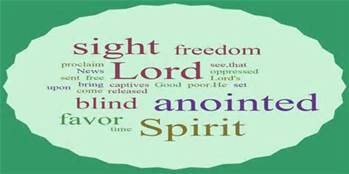
Luke 4-18 word cloud

Luke 4:14-21 – June 26, 2016

The primary season is over. You all know what that means. The presidential primaries have been going on for months, and they are finally over. Some people in the United States have followed the debates, listened to the various candidates, and discussed the various political positions, pro and con. What’s more, we are also going to elect congressional representatives, and state and local officials, too. Campaigning will begin in earnest this fall.

All of this campaigning has a purpose. The various candidates all try to have their position distilled down to a simple message. What they stand for. What they will strive to do.

I want us to look at the Gospel passage for today, from Luke. This is the very beginning of the public ministry of Rabbi Jesus. We can draw some parallels between this passage and the political campaign going on in our country, right now.

Sure, this was the very beginning. Jesus was just starting to make a name for Himself as an itinerant rabbi. And, He came to His hometown, the place where He grew up. Maybe where the butcher and baker down the street were good friends with His parents from way back. Maybe the real estate agent across the square sold His parents their house some years before, the house where His mother Mary still lives. In other words—I suspect everyone in that village was there in the synagogue that day to hear what the Rabbi Jesus—their hometown boy!—had to say.

Jesus already had generated some buzz in the greater Nazareth area. “Have you heard the latest about that Jesus? The one who says He is a Rabbi? The one who was baptized in the River Jordan by that Baptizer fellow? And, there was something about the heavens cracking open, a dove flying out of a clear blue sky—and a voice from heaven! I’m not saying all this was for real or not, but that is what people are saying about this Jesus. You know, the guy from our town.”

Jesus had hardly started to do His public ministry, and people were already talking about Him and what had happened in His life. Even in Nazareth, the town where He had grown up.

I am fascinated by this particular reading, where Jesus preaches His first sermon. It is quite a bit like political campaigns. The various candidates all try to have their position distilled down to a simple message. What they stand for. What they will strive to do. Just so, with Jesus.

Let’s read from our passage from the Gospel of Luke, again. “Jesus stood up to read, 17 and the scroll of the prophet Isaiah was handed to him. Unrolling it, He found the place where it is written: 18 ‘The Spirit of the Lord is on me, because he has anointed me to proclaim good news to the poor. He has sent me to proclaim freedom for the prisoners and recovery of sight for the blind, to set the oppressed free, 19 to proclaim the year of the Lord’s favor.’”

There we have it. Jesus distilled His message down. His position, what He stands for, and what He will strive to do. Jesus is here to proclaim good news. Or, in the word from middle English, God-spell. What we today know as Gospel. Proclaim the good news, indeed!

This is what we are told in the sentence for this week from the United Church of Christ’s Statement of Mission. Empowered by the Holy Spirit, we are called and commit ourselves: To proclaim the Gospel of Jesus Christ in our suffering world.”
If we say this passage from Luke is Jesus’s basic position statement for His overall ministry, how does that work for us? Jesus said He would proclaim: 1) good news to the poor, 2) freedom for the prisoners, 3) recovery of sight for the blind, and 4) to set the oppressed free.

My first thought is, I’m not poor! Or, a prisoner, or blind, or oppressed, either. I am not any of those things. What kind of stuff is Jesus saying here?

I live a fairly comfortable life in a small condo in Evanston. Seriously, what is Jesus bringing up? Does He have some kind of secret message? If these are the types of people Jesus says He is going to preach and minister to, I am not sure I would be comfortable with it. All that talk about the poor and blind, grief-stricken and oppressed, that is giving me some hesitation about following this new Rabbi Jesus.

But, let’s take a closer, deeper look. Here Jesus is addressing the poor. Could that be the poor in spirit, as well as poor, materially speaking? Next up, He addresses the prisoners. Perhaps, prisoners of sin? Then, speaking to the blind; blind to the love and gifts of God in their lives? And, Jesus came for the oppressed. Oppressed by anxiety, doubt, fear, anger, self-loathing, self-pity, self-righteousness. (I could go on, but I think you all have the idea.)

That is why Jesus has come to earth. That is His message, His purpose statement, distilled down to the pure essence. He has come to preach the Good News. The Gospel. The year of the Lord’s favor.

One of the commentators I consulted said it another way: “This Spirit inspired message is one of justice and mercy, of righteousness and freedom. This is a prophetic ministry, and when Jesus finishes reading the passage He sat down, and with every eye in the congregation focused on Him, He told them: ‘Today this scripture has been fulfilled in your hearing.’ In other words: I’m the one Isaiah spoke of. I’m going to do these very things.” [1]

Jesus is correct. He does do these things. That is why He came. That is the Good News, the distilled message of hope, love and promise from God. Moreover, He has come to bring that message to us—to each and every one of us, no matter what.

Jesus’s message is Good News! However, for us to really hear it, we need to become aware of our poverty, our captivity, our blindness, and what we are oppressed by. This is news “that we are not who we want to be, can be, and should be…and we never will be. Jesus comes bringing good news to those in need, and those who don’t see and admit their need want nothing to do with him.” [2]

What is more, Jesus tells us to do these things, too. We are to proclaim the Good News just as much as He proclaims it. We are sent in the same way that He is sent.

I would like everyone to turn to the back page of the bulletin. Look at the listing of the church staff. Who heads the list? We do. We all do! We are ALL ministers, every one of us sitting here today. Yes, and those in other places right now, too. Ministering, carrying the Good News of the Gospel wherever they are, too.

I loved the way the commentator David Lose put it: “This, in a sense, is what the Body of Christ and community of faith is – God’s hands delivering the promise of good news to all who come in need. Afraid? We may ask those around us. Come here to find courage. Lonely? Come join our community. Ill? Come here – or better, let us come to you – to care for you. Isolated? We will visit you. Discouraged? Let us gather together and encourage one another.”

Good News for all people, just as the angels said at Christ’s birth. Remember the Christmas narrative from Luke chapter 2? This is why Jesus was born to us. This is why He came into the world. How much better news could there possibly be?

What about you? Are you going to accept Jesus Christ’s offer of Good News today? Remember the words of the angel to the shepherds: “I bring you good news that will cause great joy for all the people.”  Ministering, carrying the Good News of the Gospel to each of us, to all the people, today.

[1] http://www.bobcornwall.com/2016/01/the-charismatic-messiah-lectionary.html

[2]  “Jesus’ Inaugural Address,” David Lose, Dear Working Preacher, 2013.  http://www.workingpreacher.org/craft.aspx?post=1771

@chaplaineliza

(Suggestion: visit me at my regular blog for 2016: matterofprayer: A Year of Everyday Prayers. and my other blog,  A Year of Being Kind . Thanks!)

Unknown's avatar

Confess Sins, Accept Forgiveness

“Confess Sins, Accept Forgiveness”

1 John 1-9 if we confess our sins

1 John 1:8-9 – June 19, 2016

Have you ever seen a small child when he or she knows or realizes they have done something wrong? Sometimes, they gasp. Their lower lip may tremble. Sometimes they might start crying. The realization that they have made a big mistake sometimes overwhelms them.

Does this picture sound at all familiar? I do not care whether it’s children, grandchildren, nieces or nephews. When a small child realizes they have done something wrong—well, that can be the saddest time in the world for that young person.

Sound familiar? I suspect it ought to. This awful feeling affects not only small children, but it can trouble grown-ups. It can happen to you or to me, too. The realization that nothing is the way it ought to be? Affecting, heart-rending, deeply sad. Sometimes feeling like the bottom dropped out of the world!  And, get this: it’s all my fault.

If we look at our Scripture lesson for today, we will find exactly that. The older Apostle John tried to get his readers to see this, in the first verse of our reading today. I will read both of these stirring verses from 1 John, chapter 1. “If we claim to be without sin, we deceive ourselves and the truth is not in us. If we confess our sins, God is faithful and just and will forgive us our sins and purify us from all unrighteousness.”

And, we are on the next line of the United Church of Christ Statement of Mission. “Empowered by the Holy Spirit . . . To praise God, confess our sin, and joyfully accept God’s forgiveness.”

I am going to depart a little from my usual sermon format, and ask: what do we do every week in our worship service, right after the opening hymn? After our prayer of invocation, where we ask God to be with us in our worship service, we move into the prayer of confession.

Why on earth do we need to confess our sins before God?

Ah! That is where John’s reminder of our sinfulness is helpful. Remember, the Bible came first. Scripture was written to be helpful to believers, and to offer praise, and to admonish and correct our behavior—when we needed that. Afterwards, people started to set down a formal worship service. Especially in our Protestant tradition several hundred years ago, they always had a formal confession of sins—just like the Apostle John mentions here.

Each of us—every worshiper here today—sins. Every day. It doesn’t matter who we are, or how good we are trying to be. Each of us makes mistakes. It is like someone using a pencil. That is what erasers are for. To erase wrong or messy writing, and to correct mistakes, like in arithmetic at school.  We all have sins, or mistakes, or errors in our lives. And what’s more, we admit them to God. We tell God all about them.

Let’s look at the first sentence in our prayer of confession today. “Merciful God, who has compassion on Your sinful children.” Right here, this has several deep theological ideas! We are saying that God is merciful! God is not unforgiving, or uncaring. Instead, merciful. Full of mercy toward each of us. The Lord has compassion on each of us, too! God feels with each of us.

The next part of the prayer: “You sent Your son Jesus Christ to be the Savior of the world.” Ah! Here is the Gospel, the Good News. This is why God sent Jesus! God knew the terrible mess humanity was in, and God had a solution: to send God the Son—in the flesh, made as a human—to become one of us. To be our Savior, and save us from our sins.

Some years ago, I knew a practically perfect person. He was a stickler for perfection, for writing precisely, for trying to act appropriately at all times. He used to joke that he thought he made a mistake once—but he was mistaken. (He understood his tendency as a perfectionist, and gently laughed at himself.)

This is where our Scripture reading is helpful. 1 John 1:8 says, “If we claim to be without sin, we deceive ourselves and the truth is not in us.” Except—the New Testament says that we all have sinned and fall short of the glory of God. (In the letter to the Romans 3:23.)

We continue with the prayer of confession: “Grant us grace to lament our sins; help us by prayer and meditation to repent and turn to You.”

If you recall, I often repeat this verse from 1 John as the weekly assurance of pardon: “If we confess our sins, God is faithful and just and will forgive us our sins.”

Sometimes in our confession of sins, we have a time of silence for personal confession. In addition to the prayers written in the bulletin each week, from time to time I provide space in our service for each of us to come to God silently in prayer, a quiet time to come with personal things that are particularly burdensome. And, did you hear what John said in this verse? “God IS faithful and just, and WILL forgive us our sins.”

The next sentence in our prayer of confession today: “Give us a true longing to be free from sin. Thank You for Your abundant love and forgiveness.”

Praise the Lord! Did you hear? “God will forgive us our sins, and cleanse us from all unrighteousness!” Those are the words of John, written in the first century. Moreover, they are still true today!

Just like dirty clothes are cleaned in the washing machine, especially when we add some laundry detergent, so we are cleansed from our sin. My mother had a wringer washer in the basement. I used to go downstairs and wash the clothes for the family. I put water in the washer, added the detergent, and turned on the agitator. Scrubbed the clothes, and then wrung them out into each of the double sinks, rinsing, and then rinsing again. I saw firsthand how this business of washing clothes worked. How the soapy water got so dirty. How the clothes got rinsed clean.

That’s us! When we come to God to confess our sins, correct the mistakes we have done and said, it’s like God has cleaned us in a washing machine. Sure, sometimes I feel like I have been in a washer from time to time. Been agitated by the machine, and then put through the wringer. I bet you can relate, too. Some people go through the wringer more often than others—and how!

 However, we come out the other side as clean people. We receive God’s abundant love and forgiveness!

The final words of the prayer of confession: “We pray these words for the sake of Jesus Christ, our only Redeemer, amen.” Jesus is the only Redeemer. Not ourselves. Not saints, or good works, or some television minister, or prayer book, or other holy practice. Our Lord Jesus is our blessed Redeemer. We are indeed redeemed by the blood of the Lamb, as our closing hymn tells us.

The assurance of pardon is what follows this confession of sins. This is not a half-hearted assurance. This is not “maybe,” or “I hope so,” or “fingers crossed!” This assurance is complete. As Jesus said as He died on the cross, “It is finished.” The work of redemption is completed. Praise God! Just as what John said in this verse: “God IS faithful and just, and will forgive us our sins and cleanse us from ALL unrighteousness.”

Shortly, we will sing a hymn all about forgiveness and redemption. I close this sermon with a verse of this wonderful old hymn, written by Fanny Crosby:

“Redeemed, how I love to proclaim it!
Redeemed by the blood of the Lamb;
Redeemed through His infinite mercy,
His child and forever I am.” —Alleluia, amen!

@chaplaineliza

(Suggestion: visit me at my regular blog for 2016: matterofprayer: A Year of Everyday Prayers. and my other blog,  A Year of Being Kind . Thanks!)

Unknown's avatar

We Are Called

“We Are Called”

call of God 1 Cor 1

I Corinthians 1:1-3 – June 12, 2016

Remember the baptism we celebrated here in this sanctuary a few weeks ago? What a wonderful opportunity to welcome a new child to God’s forever family! When we baptized baby Christine, we celebrated a sacrament of the church. And, baptism is a great expression of God calling people to God’s heart. Embracing all God’s children, no matter how young or how old they might be.

Our New Testament scripture reading comes from the beginning of the letter to the believers in the city of Corinth. The Apostle Paul wrote this letter to address some problems and answer some questions for the Christians in Corinth, a city not too far from Athens, Greece.

Paul only stayed in some towns and cities for a short time. A few towns—as we saw when we took our postcard trip through Acts last summer—he only was able to stay in for a very short time. But, the city of Corinth? When he was on his second missionary journey, Paul spent eighteen months there. That’s a good long time, in any century.

Imagine a town with loose morals. Think Las Vegas, pretty much any time of the year, and New Orleans, especially during Mardi Gras. Combine them into one city, and you have an idea of what the city of Corinth was like. Corinth was known throughout the Roman empire—and beyond—for being a loose-living, rough-and-tumble city. Lacking moral character. Yet, God tapped the prim and proper Apostle Paul on the shoulder and had him spend a year and a half here in this town. And, what a town it was!

We are taking a close look at the greeting in Paul’s letter. “Paul, called to be an apostle of Christ Jesus by the will of God, and our brother Sosthenes,” It’s like the address label or identifying mark, telling the recipients who is sending the letter.

Yes, this letter is from Paul and “our brother Sosthenes.” Except, I want us to look more closely at one particular phrase: “Paul, called to be an apostle of Christ Jesus by the will of God.”

This word “called?” A fascinating word. Paul is identifying himself as an apostle. Not just because he said so, or because he’s calling himself that, but because God said so! “Called” is the Greek verb kaleo, used dozens of times in the New Testament. It means “to call, invite or summon.” (Depending on who is doing the action. Friends invite, whereas kings summon!) This word can also be translated “to name.” (As in this case.) God has named Paul an Apostle. [1]

Paul is called as an Apostle, and given a specific job or task. We are probably familiar with the term “pulpit committee,” for filling the pulpit when a church is looking for a new pastor. When the church decides on a prospective pastor, they “call” that pastor. The church is choosing her or him to come and work for them. The church “invites” or “calls” the pastor. Kaleo.  A very biblical term!

The next verse of the greeting is in several parts. First, “To the church of God in Corinth, to those sanctified in Christ Jesus and called to be His holy people.”

There is that word again! “Called.” Kaleo. The believers in Corinth have been called to be God’s holy people! Wait, I thought Corinth was Sin City! I thought the city was a cross between Las Vegas and New Orleans in the middle of Mardi Gras! Well, yes. You would be correct. Except—this is God who is doing the calling!

God can call people out of all kinds of places. God can name individuals to be whatever God wants them to be. To do. To act. To love. To show mercy. To give. Whatever we are called to do, God summons us to fill that task, or calling. Even though many of us may never be a minister like Pastor Gordon, or a church musician like Angela, or a chaplain like I used to be, in the hospital, but God still calls.

All believers are still invited to follow God. And, that is not all. Let’s listen to this verse again. “To the church of God in Corinth, to those sanctified in Christ Jesus and called to be His holy people.”

The believers in Corinth were sanctified. There are other places in the New Testament where believers are described in just this way: “sanctified.” Which is a fancy word for “set apart,” or “separated.”

Believers are called as hagiois – saints, separated or set apart. Now, who wants to be “set apart” or “separated?” To the typical non-Christian Corinthian, that does not sound like very much fun. I do not think many of these non-Christian friends had much patience for that. However, Paul and his Christian friends did not withdraw from society and isolate. Instead, Paul and his friends lived together with the others in Corinth. They had a special quality that marked them and made them special. “Set apart” or “separated.” That is how Paul describes us as believers.

This is a difficult concept to some, but not in all contexts. Athletes set themselves apart often. They train hard, eat healthy, have particular foods and drink. A commentator mentions, “I wonder if that isn’t just another way of saying that [they’re] set apart or dedicated. That kind of language might work better for us. People are quite ready to talk in that way in our culture. Athletes set themselves aside. They dedicate themselves toward particular ends. There is a sense in which Paul is saying, ‘You are a dedicated people; you have been set apart.’” [2]

So, not only Paul is called—or named—as an Apostle of God. The believers at Corinth are called—or named—as a set apart, dedicated people of God. By extension, we—that is, all of us!—are named as a separated people of God. Not dedicated to loose living, or of low moral character; instead, set apart. Called, invited to be God’s people.

I am turning to the United Church of Christ Statement of Mission. You all have it as an insert in your bulletins. We are on the second part of the preamble today. Please read along: “we seek within the Church Universal to participate in God’s mission (John 20:21) and to follow the way of the crucified and risen Christ. Empowered by the Holy Spirit, we are called (1 Cor 1:1-3) and commit ourselves.”

This second part of the preamble, “Empowered by the Holy Spirit, we are called,” is an identification. We are not only finding out about the believers in the church at Corinth, we find out about us. About you and me, today.

We all are called! We have been invited by God, named as Christians by God. Just as baby Christine was loved by God and welcomed into God’s forever family through baptism, so God loves us and names us as part of God’s forever family, too.

This is important. The United Church of Christ is awfully particular about who receives this Statement of Mission. We all do! We all are called. We all are named as believers. And, we all are encouraged to follow this statement of mission, to carry it out.

Last, to return to our greeting from this letter, Paul has all believers everywhere calling on God. Another verb “kaleo,” another instance of us naming Jesus Christ as our Lord and Savior. Their Lord and ours. You can look at it as an identifying mark or label. We call Jesus Christ our Lord.

If we acknowledge Jesus Christ as our Lord, we are certainly ready for anything. In the weeks ahead, we will find out in more detail what the UCC Statement of Mission has for us to do. God willing, I will be ready. Will you?

[1] https://billmounce.com/greek-dictionary/kaleo. (Thank you, Dr. Mounce.)

[2] http://wordandworld.luthersem.edu/content/pdfs/15-4_Nations/15-4_Dinovo.pdf, Dinovo, Terrence L., “Jesus Christ and Him Crucified,” Word & World, Volume XV, Number 4, Fall 1995.

@chaplaineliza

(Suggestion: visit me at my regular blog for 2016: matterofprayer: A Year of Everyday Prayers. and my other blog,  A Year of Being Kind . Thanks!)


Unknown's avatar

Participate in God’s Mission

“Participate in God’s Mission”

mission word cloud

John 20:19-21 – June 5, 2016

The Morton Grove Community Peace Vigil happened last Wednesday night at the Civic Center on Dempster Street. This was a wonderful opportunity for the larger Morton Grove community to get together, pursue peace, and celebrate the diversity that is Morton Grove. The people who attended did their part to promote peace, harmony, hope and friendship.

I have not been saying much about the negative side of this Peace Vigil, or the Peace Project, either. I haven’t wanted to focus on all the negative stuff, and highlight the down side. Instead, I want all of us be positive and hopeful! To pursue peace and promote harmony. However—I do not want anyone to be naïve.

We see and hear reports on the news about the negative side, regularly. Alienation, dissention, fear, and even the threat of violence. That was very much a part of what the followers of Jesus felt immediately after the Crucifixion.

They were afraid for their very lives, and for good reason! Since their leader and Teacher had just been arrested, tried and crucified, it is not beyond possibility for the Jewish or Roman authorities to also come after the close associates of the upstart, rabble-rouser Rabbi Jesus. I suspect I might be very much afraid, if I happened to be in their shoes. (or, sandals)

Let me set the stage. Our Gospel writer John opens the scene in the Upper Room, where Jesus and His friends met for the Passover Supper. The time is immediately after the Resurrection. The horror, shock, fear and anger of the last few days are still overwhelming the disciples. And John has Jesus entering a locked room—the Upper Room. Jesus just died on the cross, a couple of days ago, for goodness sake!

Imagine the intense fear at seeing what everyone suspects to be a spirit, a ghost.

Jesus does not stop there. He gives His disciples a normal, conventional greeting of the day: “Peace be with you.” Just as two friends might say to each other on the street, the marketplace, or in the synagogue. Except—I think Jesus was reminding His followers of the promise He had just made a few days before. The promise of peace. The gift of His peace. Peace be with you. What’s more, He repeats it!

I would like to interrupt for a moment. Give a bit of background. St. Luke’s Church is taking the exciting and historic step of rejoining the United Church of Christ.

In order to help prepare this congregation to rejoin the UCC, I recently enrolled in the course the denomination offers on the History, Theology and Polity of the United Church of Christ. In the past two months, I have read books, written research papers, and had several intensive all-day sessions of class time. Several weeks ago, I received a whole packet of information and material from the UCC.

The UCC has several formal statements—statements of purpose for the whole denomination. One of these includes a Statement of Mission, which is straight-up biblical in every point, every expression. I was fascinated by this particular statement, which includes a preamble, followed by different expressions of Christ’s mission.

Which brings me back to our Gospel reading for today. Here, the resurrected Lord Jesus gives His followers a command, an exhortation: Reading from John 20: “Jesus came and stood among them and said, “Peace be with you!” 20 After He said this, He showed them His hands and side. The disciples were overjoyed when they saw the Lord. 21 Again Jesus said, ‘Peace be with you! As the Father has sent Me, I am sending you.’”

Jesus gives us a succinct statement of mission in John 20. “As the Father has sent me, so I am sending you.” This is how Jesus sent His followers out into the world.

I’d like for all of us to turn to the insert in our bulletins. We will look at the UCC Statement of Mission now. In particular, I want us to concentrate on the preamble: “As people of the United Church of Christ, affirming our Statement of Faith, we seek within the Church Universal to participate in God’s mission and to follow the way of the crucified and risen Christ.”

This is as clear as clear can be: a clear command for everyone—all of us—to participate in God’s mission. Just as the risen Lord told His disciples in John 20:21, we are commanded to bring people to God. To introduce them to our Lord.

Participation. How does that work?

For that, we need to look at the reason Jesus came to this world. He loved humanity, and gave Himself for them. Jesus had compassion on people. Jesus loved people so much, He wanted to reach out and introduce them (or, reintroduce them) to the Lord. And here in the Gospel of John, he gives us the same command.

Do we love the Lord? Can we introduce people to our God? If we do, we are following Jesus, participating in the mission of the church.

Wait a minute! Participate in mission? But, how? When? Can anyone help me? Going out and doing things? Talking to other people, people I don’t know, sometimes? That’s scary!

There are lots of ways to tell other people about God. Another way to introduce people to God is through action, by doing things for God. Common things. Everyday things.

Dallas Willard, an important Christian writer and professor of philosophy, had this to say about doing things for God: don’t think we have to reinvent the wheel. He advised Christians to get on board with a ministry or mission that already was moving. There are so many places and missions already started. Just think of what this church, St. Luke’s Church, is involved in. One big thing is the Maine Township food pantry. That is certainly a mission. Giving food and finances to hungry people? Hunger never stops, no matter what the time of year. It is always a great idea to give to food pantries. And—giving food is a common, everyday thing.

Our church financially supports two missionary couples, too. We pray for Bundled Blessings (the diaper pantry ministry) and for the Rev. Dan and his work with Presbyterian Frontier Fellowship. Those are all outside of the church. Inside our church, we have the Good Shepherd fund, and the St. Luke’s email Prayer Project, our weekly ministry of prayer through email.

            Participate in God’s Mission. Show God’s love to others. Isn’t that what Jesus is commanding all of us to do here in John 20? Seems pretty straightforward to me.

Today, as throughout the past 2000 years, Christians strive to follow Jesus’s command.

As many of you know, this church is in the process of rejoining the UCC; the denomination has formulated its mission—to do what Jesus said. Just like Jesus did, love one another. The mission of the church is often showing that love in everyday ways. Concrete, helping kinds of ways.

For our Summer Sermon Series, we are going to take a closer look at what the UCC denomination says about Jesus’s command. Each week this summer we will be looking at a different aspect of Mission, as set forth in the UCC’s Statement of Mission.

This church—St. Luke’s Church—is on a Mission from God. Will you participate?

@chaplaineliza

(Suggestion: visit me at my regular blog for 2016: matterofprayer: A Year of Everyday Prayers. and my other blog,  A Year of Being Kind . Thanks!)


Unknown's avatar

Yes, And … (Not ‘No, But’)

“Yes, And … (Not ‘No, But’)”

holy trinity stained glass

John 16:12-15 – May 22, 2016

Just about everyone has been involved with play-acting at one time or another. Either as a child in a school play, in church at a Christmas pageant, or in a high school musical or other production. Or, if you weren’t in the play, one of your best friends was. Remember? Acting. Playing a part. Pretending you are someone else.

What about Jesus? He does not act fake or play a part or put on a false face (or voice). He is genuine, real. Jesus meant what He said when He was talking about the Holy Spirit, and about God His heavenly Father. His interaction with the other two Persons of the Trinity is completely natural, real, and genuine. Just as it was from before the foundation of the earth. The interaction between the Three Persons of the Trinity? Completely natural and perfectly genuine.

Let’s look at this passage of Scripture. From the Gospel of John, where our Lord Jesus spoke to His friends on that last night of His earthly existence. I suspect He had so much on His heart, so much that He wanted to say. Concerning His passion, death, resurrection, and all of the ramifications and consequences that would unfold. Jesus wanted to share all these things, but He tells us specifically that we cannot bear them now.

I don’t know whether anyone here has been in the position of understanding the full ramifications of a difficult situation. I am more familiar with healthcare, since I served as a chaplain for some years. In certain cases, I would be told about a patient’s diagnosis and prognosis, but then be hesitant to share that information fully. Because, the patient just couldn’t bear the full brunt of all the heavy, sometimes catastrophic news at that time.

It was sort of that way with our Lord Jesus, at that Last Supper table. He knew His friends could not bear the full brunt of the awful news Jesus knew so well. As the Amplified version of the Bible renders John 16:12, “I have still many things to say to you, but you are not able to bear them or to take them upon you or to grasp them now.” In other words, in our 21st century understanding, the words and sentences Jesus could have told them would not compute. Would not penetrate into their brains.

The disciples must have been confused—anxious—maybe even downright fearful. And, who wouldn’t be? I’ve mentioned several times before about the tense situation in Jerusalem on that Passion Week, that last week of Jesus’s life. Our Lord Jesus delivered these words of our Scripture lesson today on the night of that Passover dinner, the night in which He was betrayed.

He knew He was going away—out of the disciples’ sight and daily experience. Jesus was preparing His friends for His departure. He wanted to remain with His friends, in fellowship and community. Letting them know He would be sending the Third Person of the Trinity, the Holy Spirit, to be with them, always. Yet, in this situation—in absolutely every situation—our Lord Jesus was absolutely truthful. Real, and genuine.

A number of years ago, I wanted to use my voice for radio, and for commercials. I was coached by a professional. A professional voice-over artist. She had superb skills in using her voice, and was an excellent coach, besides. Since I was not as fluid and sometimes stumbled in interaction with others, she recommended that I try improv. Comedy improvisation classes. That led to two of the most enjoyable years of my life.

I went to small group improv classes at IO (formerly Improv Olympic) and attended comedy shows on a weekly basis for two years. In this improvisational work, I acted a multitude of parts. I wore different personas. That part of my story is important. Yes! I did play any number of roles. Yes, these roles were play-acting. However, improv brought my acting to a whole new level. Not only were my roles seem more real and genuine, my close-knit relationship with the rest of the improv team was cemented more firmly. For that little while, it was as if I were really embodying whatever role I was playing.

My parts and roles? Seem almost incidental compared to my most foundational learning from that time of doing improv. That lesson? “Yes, and … !” (As opposed to, “No, but … “)

If I say “No, but … “ it stops a scene right in its tracks. Difficult to keep going with that kind of negativity. “No, but … “ shuts people down, and cuts off possibilities. It’s like letting the air out of a balloon, and sometimes forces a scene to a full stop.

However—“Yes, and…!” is just the beginning! It’s a jumping off point. You have a multiplicity of possibilities.

In improv I learned—so well—about collegiality, cooperation, welcome, and helping people out. Being together in community, and fellowship. Yes, I knew about all these things, before, but not in quite the same way. I had learned about all those things in the abstract. More like book-learning, in school. But, how was it all different when I was on an improv team?

Instead, “Yes, and … !” was very much experiential learning. Where people depended on me, and I depended on everyone else. Where people grew very close, very quickly. Where there was mutual interdependence. Friendship. Fellowship And, extravagant welcome.

Sort of like the doctrine of the Trinity, which discusses the relationship and communion of the Three persons. The Trinity affirms “the total equality and complete uniqueness and diversity of the divine persons.” [1] Just so: opening up possibilities for us to see in the Divine Trinity, that Divine community from before the foundation of the earth. Mutual interdependence, friendship, fellowship, and—extravagant welcome.

Remember, Jesus told His disciples, “13 But when he, the Spirit of truth, comes, he will guide you into all the truth. He will not speak on his own; he will speak only what he hears, and he will tell you what is yet to come.”
This is the Holy Spirit Jesus is talking about! The Third Person of the Trinity who Jesus, God the Son, knew from before the foundation of the earth! Of course Jesus wanted to let His friends know that they would not be alone after His resurrection and ascension. That friendship fellowship and community that Jesus shared with them would continue. And, of course the Holy Spirit would remind believers of the things Jesus had taught them while He was on the earth. Guiding into all the truth—the Spirit of truth.

Three in One. One in Three. Father, Son and Holy Spirit (as traditionally identified for us in the Gospels and other places in the New Testament). All three Persons are included here, in this passage today. This holy mystery is about relationship and indwelling. It is about community and the self-communication of God. The Trinity is about the mutuality of God within the God-head, about our invitation into relationship by Jesus in the power of the Holy Spirit, the Paraclete. “And it is about our mutuality with each other, guiding, speaking, and declaring to one another the glory of God, Father/Creator, Jesus/Son, and Holy Spirit. The Trinity is our way of life made possible by God.” [2]

Father, Son and Holy Spirit—the three Persons of the Trinity—had and continue to have a real, genuine relationship. I have seen something like this among the congregation here at St. Luke’s Church. Our church members are real, genuine, concerned for each other.

I would like to invite us all to think “yes, and!” Yes, we at St. Luke’s Church are loving, genuine and real to others in the congregation. Praise God! That is not all. We can go further. Do more. Be genuine and real to as many people as we can.

Is this sometimes … difficult? Sometimes … a challenge? Yes, to both. However, it is a God-given challenge.

A few years ago, it was a popular thing in churches to ask “What Would Jesus Do?” I am not absolutely sure, but I suspect Jesus would live in community. Be real and genuine in all His interactions. Embody friendship, fellowship, and—extravagant welcome.        Jesus would not say “No, but …” “No, but—that won’t be possible.“ “No, but—that looks too difficult.” “No, but—that is just too much work.” “No, but—that person seems scary. And different.”

Instead, I am sure He would enthusiastically say “Yes, and … !” “Yes, and, I’ll be glad to help!” “Yes, and, we can be welcoming to those newcomers!”   Yes, and—friendship. Yes, and—community. Yes, and—genuineness. Yes, and—countless other exciting opportunities.

We all can practice this foundational learning I absorbed in my comedy improv training. Yes, it prepared me to be a better improv player and a better member of an intimate team. And, it also helps me navigate life, today. Be a friend in community—any community. Be as real and genuine to as many people as possible. Just like the deep, intimate relationship between the Persons of the Trinity.

Are you ready? Can you say “Yes, and … !” Not just here, in this community of believers, but outside in the world? In other places, other communities? I encourage you—I challenge you—I challenge all of us not to shut down conversations and opportunities by saying “No, but … “ Instead, be open. Be encouraging. Be positive. Say “Yes, and … !”

What would Jesus do?

[1] Lacuogna, Catherine Mowry, “God in Communion with Us,” from Freeing Theology: the Essentials of Theology in Feminist Perspective, 92.

[2] Hogan, Lucy Lind,  http://www.workingpreacher.org/preaching.aspx?commentary_id=1697

Unknown's avatar

The Call of Wisdom (Repost)

(I was away from the pulpit and St. Luke’s Church this morning, so I did not preach a sermon. However, here is a sermon from some years ago. This uses the Old Testament text for today, Trinity Sunday: Proverbs 8:1-4.)

“The Call of Wisdom”

Prov 8 wisdom better than rubies

Proverbs 8:1-5

One of my very favorite movies is “The Wizard of Oz.” In it, three of the main characters are personifications of qualities within each and every person. I’m sure you remember the Tim Woodman, the Cowardly Lion and the Scarecrow. The Tin Woodman wanted a heart more than anything, because he wanted to be able to love. The Cowardly Lion wanted courage, since he was such a scaredy cat, he was afraid of his own shadow. And the Scarecrow wanted a brain, because he wanted to have good ideas and to think deep thoughts.

Here in this passage we just read today from Proverbs, we have another personification. Wisdom is seen as a woman, and not just any woman. Wisdom is seen as a giving person, as an open-handed person. She is at the crossroads, or important intersections, and at the gates of the town, where the town business takes place, calling like a herald. She is waiting and willing to give out wisdom and understanding to anyone who comes by!

If anyone is simple, or needs instruction, prudence or understanding, Lady Wisdom freely offers the gift of wisdom to anyone who will stop and accept it.

Which of us lacks intelligence sometimes? Which of us stumbles and makes mistakes every now and then, or sometimes even more often than that? Here, Lady Wisdom makes her offer of understanding and intelligence to anyone. “To you, O people, I call, and my cry is to all that live.”

There’s a complication, though. I’m sure you’ve known people who seem to know simply everything. Know-it-alls, that’s the only name for them. You can’t tell them anything, they won’t listen to anyone, they aren’t in the least teachable, and they go their own way. They wouldn’t even have the slightest interest in Lady Wisdom’s offer of wisdom, mostly because they’re so busy dispensing what “wisdom” they think they have to other people who haven’t even asked for it.

Let’s face it. It’s not only the know-it-alls who could use some wisdom from outside. Many of us today lack wisdom, and don’t even know it. Humanity’s situation is almost like a horse, wearing blinders. From what I understand, a horse is perfectly happy wearing blinders. Blinders don’t hurt a horse, but they very much restrict what a horse can see. That’s awfully limiting!! Not being able to see the whole picture, but forced to see only what’s straight ahead of you!  Not even knowing that I lack wisdom, or prudence, or understanding is a really tough situation. But it’s a real situation, one that many, many people are in today.

Let’s look at what the book of Proverbs says about foolish people, as opposed to wise people. Here’s a representative list from the first several chapters of the book: fools are called lazy, sluggards, lying, dishonest, ignorant, knowing nothing, complacent, and ignoring wisdom.

That description is pretty negative! Even mean and nasty! That’s one thing about the book of Proverbs. It doesn’t pull any punches. When the authors of Proverbs see something the matter, they name it. They call it as they see it, to use a baseball analogy. There’s nothing ambiguous or wavering about the word picture drawn by Proverbs.

What can be done about this situation? Is it hopeless?

The Epistle of James sheds some light on the subject of wisdom. Looking at Chapter 1, verse 5, let’s listen to the words from the Apostle: “If any of you is lacking in wisdom, ask God, who gives to all generously and ungrudgingly, and it will be given you.” So here, in the book of James, we have God making the offer of wisdom, again!

So, not only do we see a personification of Lady Wisdom in Proverbs 8, waiting for us, urging us to reach out for wisdom, but here in the book of James, God wants us to ask for wisdom! God is more than willing to give it. The Apostle James says that God gives to all, generously and ungrudgingly! That’s good news!

So, even when we’re faced with new, unknown circumstances or a different kind of puzzle, we do have somewhere to turn. We can go to God, pray to God for wisdom and understanding, and God will come through! He will not leave us alone and helpless, struggling in a pool of foolishness.

Can any of us imagine the Scarecrow in “The Wizard of Oz” NOT asking for a brain? That’s one great thing about that character! He wasn’t afraid to ask. He wasn’t shy. And neither should we be. We can certainly step right up and ask! And God gives to all, generously and ungrudgingly.

This free, gracious offer of wisdom can serve as a guide through difficult and puzzling cirecumstances. We can see that God is with us, and will be there for us through thick and thin, through the good times and the not-so-good times.

Whenever we’re uncertain, puzzled, in need of wisdom, God has made us the best offer of all–the offer of His wisdom. Praise God we have such a good and generous God, Who so willingly and lovingly gives us generous gifts and guides us along every winding road.

@chaplaineliza

(Suggestion: visit me at my regular blog for 2016: matterofprayer: A Year of Everyday Prayers. and my other blog,  A Year of Being Kind .  Thanks!)

Unknown's avatar

Gift of the Holy Spirit

“Gift of the Holy Spirit” – May 15, 2016

Acts 2-38 repent, be baptized

Acts 2:38

What does it mean to know someone?  Can you know a sports star? Know all of his or her stats, his earned run average, how many sacks he got last season, how many assists she had to her credit in the last game?

We can know a lot about some really famous people, and yet not know them personally. I suspect you’re all familiar with the movie star Harrison Ford (Indiana Jones, Han Solo in the Star Wars movies, Jack Ryan in a couple of Tom Clancy movies). I know just a few things about him. He is a very private person, and a licensed helicopter pilot; he started in Hollywood years ago as a carpenter until he got his first movie role. I know things about Harrison Ford, But I have no illusions about being close to Harrison Ford.

What about Jesus? Do we know things about Jesus? Can we describe things about His life, His ministry, or the things He said? What about the last week He was alive? His passion?  His trials, crucifixion, and death on the cross? Do we know about all that?

Peter did. Peter knew all those things intimately. Peter was also one of the disciples who had a very close relationship with the Rabbi Jesus throughout the three years of His ministry. We know that, through the Gospel accounts. But now, now is the morning of the Pentecost festival. A whole host of Jews from all over the region have gathered together in Jerusalem for one of the important feasts, one of the celebrations on the Jewish calendar. Peter had quite a crowd for his impromptu sermon. For—that was what he delivered. A sermon.

But, a sermon on what? Why did he feel like he had to speak out?

For that, we need to go back to our Scripture passage for the morning. I am reading from Acts chapter 2: “When the day of Pentecost came, they [the disciples and followers of Jesus] were all together in one place. Suddenly a sound like the blowing of a violent wind came from heaven and filled the whole house where they were sitting. They saw what seemed to be tongues of fire that separated and came to rest on each of them. All of them were filled with the Holy Spirit and began to speak in other tongues[a] as the Spirit enabled them.”

What happened to the disciples? The Holy Spirit happened, that’s what! The Holy Spirit blew into that house, buffeting all inside with a violent wind. Then, on top of that, tongues of fire appeared over each one’s head. The Holy Spirit came and dwelt within each one of them—with each believer in the resurrection of Jesus Christ. These tangible and visible signs of the Holy Spirit were genuine proof that the Holy Spirit was real. This coming was huge. And, this arrival was life-changing.

After such a momentous event inside the house, the newly-filled, newly-energized believers spilled out into the street. Can you see their excited faces? Can you hear them as they share about this amazing experience that had just happened?

I can just imagine a roving reporter, reporting on the noisy crowd in the streets of Jerusalem that day. “Here on the streets of Jerusalem are God-fearing Jews from every nation under heaven. I understand that a strange sound was just heard. You all can see the crowd coming together in bewilderment. Each person is hearing their own language spoken. Everyone here is utterly amazed! “Aren’t all these who are speaking Galileans?—we hear them declaring the wonders of God in many different tongues! I keep hearing again and again from these eye-witnesses, “What does this mean?” The minority opinion is, however, less flattering. Some are making fun of theses Galileans and saying, “They have had too much wine.”

You can see how brash, outspoken Peter couldn’t help himself. Energized by the Holy Spirit, he began to tell people what happened. Why all of the disciples were so energized, so filled with the Holy Spirit. And—about Jesus Christ, Jesus the Jewish Messiah, crucified, died and resurrected from the dead.

Listen to the words of Peter: “But God raised Jesus from the dead, freeing Him from the agony of death, because it was impossible for death to keep its hold on Him. 32 God has raised this Jesus to life, and we are all witnesses of it. 33 Exalted to the right hand of God, He has received from the Father the promised Holy Spirit and has poured out what you now see and hear.”

Does everyone here understand? Peter finally gets it! So many times previously, Peter and the other disciples just didn’t understand the words of Jesus. They miss His message completely, and Jesus needed to patiently backtrack, go over the same information again and again. Except—not now. The disciples—and Peter—finally understand! The Holy Spirit is now indwelling them, and Peter lets everyone in the crowd know that this Jesus, this Messiah, has come for them, too.

This Jesus, this Messiah, is the long-promised Messiah, foretold by Moses and the prophets.

Many people in the crowd had heard something about the Rabbi Jesus, who had been put to death just a few short weeks ago. Yes, and some even knew a lot about this Jesus, this supposed Messiah, long-promised and foretold by the Hebrew Scriptures. But, the words of Peter, energized by the Holy Spirit, went straight to the hearts of those who listened that day.

Listen to the words of our scripture passage today: “When the people heard this, they were cut to the heart and said to Peter and the other apostles, “Brothers, what shall we do?” 38 Peter replied, “Repent and be baptized, every one of you, in the name of Jesus Christ for the forgiveness of your sins. And you will receive the gift of the Holy Spirit. 39 The promise is for you and your children and for all who are far off—for all whom the Lord our God will call.”

Wait a second. What is Peter talking about? Believing, and immediately getting baptized?

That is exactly what he means. Baptism was an established practice in the first century. Not done by everyone, but practiced by a number of people. To show cleansing, and repentance, and renewal of life. Jesus elevates this Jewish practice to what we call a sacrament.

As in the rest of believers’ lives, so also in the receiving of the sacraments, it is God who takes the initiative in approaching the believer. It is then the believers’ turn to respond joyfully to God, as a result of God’s sovereign gift of grace. Baptism is our response to God’s gracious gift of salvation, grace, and forgiveness of sins.

Let me explain in another way. Out on the cattle ranches of the West the unbranded calves that roam at large are known as “mavericks.” Theses calves are claimed by the rancher who is first to get his brand on them at the annual round up. A little girl from a Western state had been baptized one Sunday by the Methodist minister of the town. Her friends at school questioned her the next day as to the meaning of the ceremony. “Well,” she said, “I will just tell you. I was a little maverick out on the prairie. That pastor put the Jesus mark on my forehead so that when He sees me He will know that I am one of His children.”

That Jesus mark was what so many new believers received, that morning of Pentecost. That Holy Spirit gift was what we received when each of us was baptized. Before we knew the Lord, each of us was a maverick calf, wandering on the prairie. Whether we are baptized as adults, young people, or babies like Christine, baptism is a joyful, outward expression of God’s love toward us. And, we know that Jesus will know that each one is His child.

Do you know things intellectually about Jesus? Or, do you have a close relationship with Jesus? Like the other believers on that Pentecost morning, has the Holy Spirit blown through your life and heart? I invite you all into a close relationship with Jesus, today.

@chaplaineliza

(Suggestion: visit me at my regular blog for 2016: matterofprayer: A Year of Everyday Prayers. and my other blog,  A Year of Being Kind .  Thanks!)

Unknown's avatar

Mother Love, Parent Love

“Mother Love, Parent Love” – May 8, 2016

LOVE hear word cloud

John 17:20-26 (17:23)

This is a weekend to celebrate mothers. Yes, and mothers-in-law, daughters, grandmothers, aunts, sisters and nieces and other relatives and friends who are mothers. It is a special weekend, with special meals, gifts, flowers, and cards. Significant trips to the cemetery perhaps.  Happy Mother’s Day. What a wonderful sentiment. Hallmark card holiday, some might say. Particularly meaningful day to many. A day of pain and grief, of sorrow and longing, to others. An emotional day, for sure, with a whole range of emotions.

Reminds me of the particularly emotional night that we have in our Gospel reading for today. It comes from the last night our Lord spent on earth. From John 17:20-26, when Jesus prays for His friends after the Passover dinner.

Here is the beginning of that passage, the words of Jesus to His Heavenly Parent, in prayer. 20 “My prayer is not for them [the disciples] alone. I pray also for those who will believe in Me through their message, 21 that all of them may be one, Father, just as You are in Me and I am in You.”

I wanted to highlight this section, as a prelude to the topic of this sermon. This sermon goes straight to the heart of why Jesus was here on earth. He was communicating that message to His friends and followers. This prayer lets us know Jesus is not just praying for His disciples. He is also praying for all those who come to believe as a result of the disciples’ spreading the Good News. That means, Jesus is praying for all Christians, throughout all time. He is praying here for us, too! Did you realize that? Jesus prays for us.

What does He pray, some might wonder? I’m glad you asked!

I continue reading from John 17: “22 I have given them [all believers] the glory that You gave me, that they may be one as We are one.” Here Jesus is talking about the unity of all believers. The family of God.

Did you know we are in God’s family? Children of God, that’s what we are. Knowing that living together, living in community is not easy, Jesus prays for His disciples and for us.  That prayer is for household families, the church family, and God’s world-wide family. [1]

All of us—no matter who—are included in Jesus’s description of family. All of us—no matter who—are included in the unity of believers.

But, I did not want to preach on the unity—fellowship—of the family of God today. I know that is a huge concept, and I’ve touched on it in recent sermons. No, today I wanted to describe God’s love.

Let’s let Jesus tell us more. From John’s Gospel reading, verse 23. “Then the world will know that You sent Me and have loved them [all believers] even as You have loved Me.”

I love what the commentator Barbara Lundblad said about this section of Jesus’s prayer. She talks about the surprising twists and turns of the Gospel of John. About the protective nature of this talk Jesus gave in the Upper Room, where Jesus proclaims God’s love. God’s love for—the world. God’s beloved children! [2]

But, Jesus does not just describe us all as children. He speaks of Himself as the Good Shepherd. We as children—as sheep—hear His voice. But, wait! There’s more! Just as we are ready to shut the gate, Jesus mentions other sheep. Different sheep, not of our sheepfold.

The disciples must have been really confused by this time. Not only have these past few days been really emotional, but the band of disciples know they are in a tough spot. A dangerous situation. They all know that their Rabbi Jesus is high on the Enemies of the Jewish Leaders list. Who knows if there will be an official knock at the door, summoning some if not all of them to meet with the Jewish authorities? Jesus had some daring, walking right into Jerusalem on that Passover week.

Yet, what does Jesus do? He prays for His disciples, and for all of those who will believe. He prays a prayer of protection. He prays that these beloved ones of God will be protected from the world. That sounds like a prayer from a mother’s heart. We see a word picture of our Lord Jesus, seeming very much like a mother.

That’s the thing about mothers. (Most mothers, I mean.) It doesn’t matter whether their children are small, or whether they’re grown. It doesn’t matter whether the child is near or far, employed or out of work, healthy or sick. A mother still thinks of her son, her daughter. A mother still prays for her child, no matter where, no matter what.

We are all children of God. God is our Heavenly Father, our Heavenly Parent. We are much beloved by God, and chosen and precious to God. That’s all of us, right here. It doesn’t matter what we’ve done, or what we’ve left undone. It doesn’t matter what we look like, or whether we are in poor health, or whether we’re right- or left-handed. God loves us.

But—what about people who haven’t had an ideal relationship with their mothers? I know these things are difficult to think about, and difficult to talk about. However, sometimes they do need to be voiced. These words and experiences are truths for many. Maybe not many here, but for many across the country, and throughout the world. For some children, and for some adults, that is a real and painful reality in their lives.

Every Mother’s Day card or gift, every reminder of Mother’s Day, whether on commercials, in shop windows, or from friends or relatives, is accompanied by a sinking heart, feeling of regret or grief, or perhaps a flash of anger. For all those for whom this is your reality, I grieve with you today. I have several friends for whom this is true. I do feel great compassion and sorrow in my heart, for them and for those who still suffer.

I turn back to Barbara Lundblad. She says, “we hear Jesus praying as a mother worried for her children. “I will not leave you orphaned,” Jesus said. You are my own and I will be with you forever.” Jesus, who will not let us down, who will walk right by our sides.

I hear echoes of the most comforting of Psalms here. Psalm 23, which Jesus must certainly have been familiar with. True, this was King David talking to God, but David’s words have transcended the centuries. His words have been true for oh, so many. “Yea, though I walk through the shadow of the valley of death, I will fear no evil.” Why? Because God is walking right at our sides.

Finally, David says, “Surely, goodness and mercy shall follow me all the days of my life, and I will dwell in the house of the Lord forever.” Do you hear? That is what Jesus wants for us. God’s transformative love for us will shine through. We, as God’s beloved children, are going to dwell in the house of the Lord, forever.
That’s the long view. Now, how can we use these words in our lives, today?

This is the wondrous mystery revealed to theologian Julian of Norwich in the 14th century. This well-educated Christian woman devoted her life to God through study and contemplation of scripture. She wrote a theological treatise in a day when not many people were well-educated, much less women. Her words have now become a hymn that we could sing today: “Mothering God, you gave me birth. Mothering Christ, you took my form. Mothering Spirit, nurturing One.” [3] God is so much more than we ever could imagine.

Alleluia to God, heavenly Parent of us all. Amen.

[1] http://worshipingwithchildren.blogspot.com/2016/04/year-c-seventh-sunday-of-easter-may-8.html

[2] http://www.workingpreacher.org/preaching.aspx?commentary_id=2851

[3] http://www.workingpreacher.org/preaching.aspx?commentary_id=2851

(Thanks to Barbara Lundblad and Carolyn Brown for their words and ideas!)

@chaplaineliza

(Suggestion: visit me at my regular blog for 2016: matterofprayer: A Year of Everyday Prayers. and my other blog,  A Year of Being Kind .  Thanks!)

Unknown's avatar

Healing of the Nations

“Healing of the Nations”

Rev 22 leaves of tree

Revelation 22:1-5 – May 1, 2016

When some people take trips, they often take tours. Large tours, with a large group of people, or sometimes a small, intimate tour. When you go on a trip to a different town or an exciting place, don’t you enjoy tours? When I went to Washington D.C. last May to see my daughter, we went to the National Cathedral. We went on one of the behind-the-scenes tours there, and were in a small, intimate group that went through the cathedral from top to bottom. Fascinating information! And such a gorgeous, awe-inspiring place, too!

We can think of today’s Scripture passage in that light. John was on a tour of the new heavens and the new earth. He was getting a personal tour from an angel, showing him all the awe-inspiring highlights of the new-created Holy City.

This new creation is going to be great! Just from the short description here, I can sort of, almost imagine how intricate, how detailed, and full of splendor that new Holy City will be. Can’t you? Reading from the end of Revelation 21: “22 I did not see a temple in the city, because the Lord God Almighty and the Lamb are its temple. 23 The city does not need the sun or the moon to shine on it, for the glory of God gives it light, and the Lamb is its lamp. 24 The nations will walk by its light, and the kings of the earth will bring their splendor into it. 25 On no day will its gates ever be shut, for there will be no night there. 26 The glory and honor of the nations will be brought into it.”

This City is not only full of glory and splendor, but, wait—there’s more. Much more!

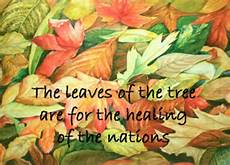
“Then the angel showed me the river of the water of life, as clear as crystal, flowing from the throne of God and of the Lamb down the middle of the great street of the city. On each side of the river stood the tree of life, yielding its fruit every month. And the leaves of the tree are for the healing of the nations. No longer will there be any curse.” Did you hear? The river of life, and the tree of life, with leaves for healing of the nations.

Let’s start with the river of life. That life-giving river is free for any to draw from. We can follow the allusion to the river or water of life, throughout the Bible. In Genesis 2, a river watered the Garden of Eden and made it fruitful. In Ezekiel 47, the prophet spoke of a river flowing through the Temple. Zechariah 14 mentions “Living waters shall flow out of Jerusalem.” And in John 7, our Lord Jesus says, “Out of the heart of the one who believes in Me shall flow rivers of living water.”

John mentioned the tree of life here in Revelation. There are not as many allusions in the Bible to a tree of life, but there are two. The tree of life is found in the Garden of Eden, in Genesis 3. And, in Ezekiel 47, the prophet describes the tree of life at some length. So similar to the description here in Revelation!

This healing aspect of the tree of life really intrigued me. Yes, in the time of the new heavens and the new earth, we will receive life from both the life-giving river and the life-giving tree. But, healing? Who doesn’t need healing, in some way, somehow? Especially now, in this fallen, imperfect world. Individuals need healing in many important ways. Physical healing, yes. But also psychological healing. Emotional healing. And, spiritual healing.

We are not in that time of the new heavens and new earth, though. We are still in the in-between time. Sometimes today, certain churches and ministries teach the children of God that God our Heavenly Parent actually makes us sick.

According to these churches, God has given us diabetes, cancer or depression to teach us something. Or, God allowed, even orchestrated neglect, trauma or abuse to take place to somehow make us a better Christian. As if God would ever do such a thing!

In the Bible, we learn about God healing various people. Time after time in the Gospels, Jesus heals individuals in body, mind and spirit. Just like the tree of life, with leaves for healing. Healing, upbuilding leaves. When we enlarge that healing to groups of people, of nations, there can be healing of relationships, healing of resentments, healing of hatred and animosity. To reference the book of Isaiah, God will settle all disputes, and see that every sword is beaten into a plowshare. No one will ever need to fight or go to war anymore.

This is just one aspect of group healing or national healing. But, there is more! I am so appreciative of the point of view of a commentary I consult from time to time, The African American Lectionary. [1] In it, Reverend Michael Lomax gives a short background and history of healing services. How these services over the years have allowed and provided African Americans hope; “hope to endure racial discrimination, economic exploitation, and emotional trauma, debilitating physical illnesses, death, and ruptures in relationships.”

Thank goodness that—in many places across the country—conditions have improved. Not only African Americans, but all people of color are often able to, in the words of Rev. Lomax, “have access to various modes of physical, mental, and emotional healing, including advanced health care and various kinds of counselors. Still, healing services continue to be a mainstay in African American congregations, where worship leaders invite the community to look beyond problems to catch a glimpse of God’s plan for restoration.”

Here we are, in the in-between time. We are not yet in the time that John talks about in this passage today, the time of the new heavens and new earth. We cannot see the crystal clear river, or smell the sweet, medicinal odor of the leaves on the tree. Not yet!

However, God has given us promises. God has given us a plan. God’s plan for restoration.  In the here and now, in the in-between time, God does heal, in any one of a number of ways. As Rev. Lomax says, “God’s healing may not include a cure of our immediate ailments. Instead, God’s healing may provide resources for us to press on in spite of our ailments. In healing services, God awakens the hope that allows us to live with grace and dignity in the present, even as we await God’s ultimate transformation of our brokenness in the future.“

What do we hear from this passage today? This word picture of a life-giving tree that bears fruit every season and is fed by a crystal river that flows out of the throne?  Sure, we have an abstract message about the fullness of eternal life. Sure, it is a complicated picture of life. However, the world will be transformed. It is completely as God intends it to become.

We can ask a follow-up question: how would this picture of the end of the world help Christians who are having hard times now? I think this picture would give believers hope. Hope in God, and praise for hope in God’s name on the foreheads of the redeemed.

As Rev. Lomax says, “God’s ‘healthcare plan’ provides equal access to wholeness and does not simply favor those who are already powerful and privileged. The healing leaves that God offers in this scene are as accessible as the river that flows. The healing supplied is not only an individual experience but also a communal experience because the leaves are “… for the healing of the nations” (22:2).”

Yes, this visionary tour of the new creation by our angelic tour guide gives us hope for the present. Hope for provision of strength. Praise be to God! God’s healing is here and now. And, God’s healing is something we all can look forward to!

God willing, may God’s healing come on earth as it is in heaven. Alleluia, amen!
[1] Michael R. Lomax, Guest Lectionary Commentator, Associate Minister, Fifteenth Avenue Baptist Church, Nashville, TN,  http://www.theafricanamericanlectionary.org/PopupLectionaryReading.asp?LRID=4

(Thank you to Rev. Michael Lomax and to the African American Lectionary for their excellent insights into Revelation 22:1-5.)

@chaplaineliza

(Suggestion: visit me at my regular blog for 2016: matterofprayer: A Year of Everyday Prayers. and my other blog,  A Year of Being Kind .  Thanks!)
 

Unknown's avatar

God’s Dwelling Place

“God’s Dwelling Place”

Rev 21-6 Alpha and Omega

Revelation 21:1-6 – April 24, 2016

It’s spring! It is finally spring! Bushes and trees are budding, the grass is greening up, the spring flowers are in full display. After the long, cold winter, everything finally is blooming and budding—showing signs of green, fresh, new life.

It seems like it’s been a long, long time since we have seen the last leaves fall from the trees, last year—in the autumn of the year. This past week I read several books to the four and five year old children at Kids Academy about trees. In one book, I read about what happens to trees during the winter. They certainly appear dead, from the outside. But now in spring time, life starts shifting into forward motion. Full speed ahead, with the new growing season!

Imagine the newness of spring, of exactly this time of year, with everything outside budding and blossoming and growing. See that in your mind’s eye. Now, imagine it, 100 times bigger and better. No, 1000 times bigger and better! Now we’re getting the beginnings of an idea of what the new heavens and the new earth are like. That’s a little of what Eugene Peterson meant when he wrote his translation of Revelation 21:1; “I saw Heaven and earth new-created. Gone the first Heaven, gone the first earth, gone the sea.”

Doesn’t it say somewhere that “God saw everything that he had made, and indeed, it was very good?” As the book of Genesis tells us, in the beginning, God created the heavens and the earth, and God created everything good.

God gave humanity the world and everything in it for us to enjoy. It is all a gift, everything, for us to enjoy together with God. Not only that, God wants to be in relationship with us. Can you imagine, daily strolls through beautiful gardens, in the cool of the evening? That’s just the picture that is painted for us by Genesis chapter 3.

You all know the plot line. God did have a close relationship with Adam and Eve. Then, one day, God came looking for Adam and Eve, but what happened? Sin happened. That relationship was fractured. Humanity was separated from God by sin. Now, today too, I am separated from God by my sin. We all are separated from God. Alienated from God.

When the world was created, everything was created very good. God says so, at the end of Genesis 1. Beautiful, glorious, magnificent Earth was created, and humans were placed on it to be good stewards of the Earth, and to take good care of it. But, we all know what happened. Sin happened. Not only we—us humans—were separated from God, but something catastrophic happened to the Earth, too. The world has been suffering from the catastrophe of sin, inside and out, ever since.

Another word for sin is separation. I know I sin. I displease God. And when I sin, I am separated from God. I feel it. I know I am alienated from God. I feel intense sadness, sorrow, and longing to be back in relationship with God. (And with other humans, too.)

This separation and alienation is a problem. Not only for you and for me, but for the Earth, too. The Bible is not specific on this point, but when Jesus died on the cross, the gospel of Matthew tells us that the Earth shook and the rocks were split. Somehow, the Earth knew when the Son of God died. The Earth reacted when the Creator of the heavens and the Earth died.

Thank God that Jesus, the eternal Son of God, became a human being. Just like us. Thank God that Jesus reconciled us to God, so that we don’t have to be separated from God for eternity. And, this passage from Revelation reminds us that the world is going to be renewed, reconciled to God. The Earth is going to become that fresh, new, spring green place that it once was.

Remember, the book of Revelation was written by John. This book of amazing, fantastical visions was written for our edification and to help us get ready for things to come in the future. When you read this passage, this description in Revelation 21, what is your reaction? Do you think this description is pie in the sky? Is it way, way far-fetched? Or, is it a blessed promise of things to come?

Let’s read more from Eugene Peterson’s translation. Starting with verse 3: I heard a voice thunder from the Throne: “Look! Look! God has moved into the neighborhood, making his home with men and women! They’re his people, he’s their God. He’ll wipe every tear from their eyes. Death is gone for good—tears gone, crying gone, pain gone—all the first order of things gone.”

That doesn’t sound like this crazy, messed-up world, at all. Does it? Especially the part with God moving into the neighborhood!

How would you like God—the Lord God Almighty, who created the heavens and the earth—to live in your neighborhood? On your block? Across the street, or maybe even living right next door?  For some, it’s a scary, daunting thought.

Some bible scholars say that cities—like Chicago—are scary! Sometimes, they are. Dark, dreary, dangerous places, where sin, evil, violence and alienation reign, and keep the good Christian folk huddling inside their homes and buildings. However, that is not the case here. John tells his readers that the New Jerusalem is a bright, shining city! The city of God, where God dwells. That’s God settling down, getting comfy in our very own neighborhood!

The commentator Dana Ferguson describes urban settings and cities in a fascinating way: she talks of cities being places of cooperation, interdependence and welcome. (See Feasting on the Word Year C, Vol. 2). Let’s go with that description, and think like that. What a positive, encouraging way to think of the Heavenly City, the New Jerusalem.

Yes, this bible passage provides a vision of the future, of where we’re going. These descriptive words tell how wonderful it will be. Not only a bright, shining city, but also a welcoming snapshot of what God has promised to us. And, just think. That’s where God is settling down. As Peterson translated, “Look! Look! God has moved into the neighborhood, making his home with men and women!”

Theologian Frederich Buechner gave a telling response: “What does it mean to be ‘with God’? To say that a person is ‘with it’ is slang for saying that whether he’s playing an electric guitar or just watching the clouds roll by, he’s so caught up in what he’s doing and so totally himself while he’s doing it that there’s none of him left over to be doing anything else . . . In other words, to live Eternal Life in the full and final sense is to be with God as Christ is with him, and with each other as Christ is with us.” [1] [italics mine]

Let’s enlarge that vision to include all of Earth. Have you ever thought of caring for the Earth as caring for God’s creation? We just celebrated Earth Day on Friday. Earth Day is a day of responsibility and caring for this wonderful world. And, it serves as a tangible reminder of God’s unconditional love, extended toward all humanity.

We can celebrate God’s love, God’s presence with us, and the gift of God’s creation.

Sometimes, I hear language like, “Jesus lives in my heart.” Or, “My heart, Christ’s home.” Is it, really? How welcome is Jesus Christ in my heart? Am I generous and kind with my heart and my attitude, or does Jesus feel unwelcome when He knocks at the door of our hearts? Great question! An intriguing thing to think about. Sometimes, a serious thing to think about.

I know, I know. We aren’t there yet. The new heavens and the new earth are not here, yet.  However—what are we going to do with these Bible words in this in-between time? How can these words from Scripture impact our lives, today?

We can take these words as hopeful, encouraging words: “Look! Look! God has moved into the neighborhood, making his home with men and women!”  We can celebrate God’s presence right by our sides, today. Now, in the in-between time, and at the time of the new creation, too.

Alleluia, amen!

(Thanks to Kathryn M. Matthews and her online commentary, Sermon Seeds, http://www.ucc.org/worship_samuel_sermon_seeds_april_24_2016 Several of the ideas in this sermon were used in Kathryn’s article.)

[1] Wishful Thinking: A Theological ABC by Frederick Buechner, Harper & Row, 1973, 21-23.

@chaplaineliza

(Suggestion: visit me at my daily blog for 2015: matterofprayer: A Year of Everyday Prayers. and my other blog,  A Year of Being Kind .  Thanks!)