Unknown's avatar

Have Hope in God

“Have Hope in God”

1 John 3-2 like Him, stars

1 John 3:1-3 – November 3, 2019

Some days are everyday days. Ordinary, run-of-the-mill days, days where nothing particularly special happens. Some days are like that. We all are familiar with those kinds of days. But, today is a special day in the life of the Church. Not only in the life of this church on this corner, but in the lives of all churches that observe All Saints Day or All Saints Sunday.

The day for the commemoration of All Saints started only a few hundred years after the beginning of the Church on Pentecost, to remember all the saints who were persecuted as well as the martyrs who had died for their faith. “All Saints Day was established as an opportunity to honor all the saints, known and unknown.[1]

But, what does that have to do with you and me, right here and right now? What about people who are still mourning, and grieving the loss of loved ones who have died? What can this day of remembering and commemoration possibly do for those who mourn and love and long for their loved one who has died?

I lost a dear brother last December, my brother Mike. His photo is on the table with the others, near the altar. Yes, this All Saints Day remembrance is personal for me, today. I think there might be some others here who have a very personal connection, and might even be struggling with their memories. That is the whole reason why we have gathered her today—to remember together, and to lift up these loved ones, along with all of the other friends in Christ who have died. Not only recently, but all throughout the years, throughout the centuries.

Instead of going with one of the primary Bible readings for All Saints Sunday, I felt drawn to an alternate reading, the second reading that Eileen read today. It is just a little, short reading, but it means a great deal to me. I will zero in on one particular verse, 1 John 3:2, where the elderly apostle John says Dear friends, now we are children of God, and what we will be has not yet been made known. But we know that when Christ appears, we shall be like him, for we shall see him as he is.”  

The elderly John has been traveling around for years—as best as he could—and preaching the Good News of his Master, Jesus Christ. He knows life has been tough for these scattered believers in Christ. So, he encourages them again and again in this letter.

How many people here have gotten discouraged? Perhaps you have been all alone, working at some thankless task. Or, perhaps no one is noticing you, and you feel left out, out in the cold? Or maybe even someone has been bugging you, pestering you for your faith, for standing up for what you believe in? Whatever sad or awkward situation you find yourself in, believe me, the apostles were familiar with a similar situation.

The apostle John was writing to some friends who had been dealing with some very difficult things, including the loss of some of their own congregation, their loved ones and friends. John specifically wants to lighten the hearts of his friends with these words.

Have you ever been down, and had someone blithely give you a super-sweet saying and just walk away without even seeing how you reacted to it? Perhaps even a verse of Scripture? I have. I had someone—thirty years ago, now—just breeze up to me and blurt out a verse of Scripture, and toddle away, oblivious that I was really hurting. I was devastated, and he did not notice me at all. He did not notice the true me, standing right there in front of him.

But, the apostle John is not that way at all. John hears the emotions of his friends, and he encourages them. John is honest and up front. He freely admits what he does not know. John does not know how Jesus will appear or what Jesus will be like when He returns. However, what John does know is that when Jesus does return, “we know that when Christ appears, we shall be like him, for we shall see him as he is.”

I don’t know about you, but this verse gives me comfort. All of it. From John’s honesty in his not knowing, to his assurance that we shall see Jesus in that day, when Jesus returns. I do not know whether God will give us special insight, or whether our eyes will be changed to brand-new heavenly eyes. Regardless, John’s words reach down deep inside of me. John’s words comfort me in my mourning and grieving, and penetrate through my suffering and pain. John’s words encourage my heart, and give me heavenly assurance and hope.

As we remember all the saints, we might think of the “big” saints, like Mother Teresa, or St. Francis of Assisi, or St. John, St. Luke or St. Paul, the apostles. However, I want to remind everyone that Paul in several of his letters refers to all believers as saints. We all are saints, every one of us. Young, old, big, small, believers of every race and kind and way of being.

For the closing hymn today, we will sing a lovely hymn. “A children’s hymn, popular in Great Britain, “I Sing a Song of the Saints of God” suggests that ordinary people, going about their business, can be saints, that is, revealers of God’s grace whose faithfulness changes the world.” [2]  I suspect that the apostle John would wholeheartedly agree with these words.

I love the letters of John, written in the New Testament. Simple words, simply written, but oh, such profound thoughts! Listen again to verse 2: “Dear friends, now we are children of God, and what we will be has not yet been made known. But we know that when Christ appears, we shall be like him, for we shall see him as he is.”

I close with some gentle words from the Rev. Janet Hunt, a Lutheran pastor in DeKalb. She writes for this special day:

May the promise and hope of this All Saints Sunday lift you.

May the music carry you.

May the familiar words hold you, filling you with comfort and confidence.

May the flickering candles remind you of the light Christ is and ever shall be: a light which we, in turn, hold and carry and pass along.

Oh, may the mystery of promise and hope and grace surround you and fill you.

And may you have at least a moment when you can simply stand still and receive all that God has for you. [3]

Alleluia, amen.

[1] https://www.presbyterianmission.org/ministries/worship/christianyear/all-saints-day/

[2] https://www.patheos.com/resources/additional-resources/2010/10/remembering-all-saints

Remembering All Saints, Bruce Epperly, Patheos, 2010.

[3] http://dancingwiththeword.com/all-saints-sunday-standing-still-in-the-mystery/ 

@chaplaineliza

(Suggestion: visit me at my regular blog for 2019: matterofprayer: A Year of Everyday Prayers. #PursuePEACE – and my other blog,  A Year of Being Kind . Thanks!
Unknown's avatar

Keeping the Faith

“Keeping the Faith”

2 Tim 4-7 kept faith, purple

2 Timothy 4:6-9 – October 27, 2019

Happy Reformation Sunday! Yes, we celebrate and commemorate the beginning of the Reformation on the last Sunday of October each year. It is that time of year when the Rev. Dr. Martin Luther tacked up his 95 Theses, or complaints, against the Catholic Church. He put them up on the chapel door at the University of Wittenberg, where he was a professor of theology, on All Hallows Eve, 1517—or, Halloween, October 31st.

Among other things, Martin Luther wanted the Catholic Church to be faithful to God in many practices. Being faithful was really important to Martin Luther! You know who else being faithful was important to? The Apostle Paul. Eileen read the end of the second letter Paul wrote to Timothy, and Paul strongly stressed being faithful to God. Just like him. Just like Martin Luther. Just like countless saints throughout the centuries. Keeping the faith, through thick or thin, through good times or bad, no matter what.

I always get sad when I read the second letter to Timothy, and especially the fourth chapter. That is the part where Paul is being up front with Timothy. He realizes he does not have very much time left here in this world. Paul was in prison in Rome for the second time, and this time, Paul did not have much hope of being freed. This is one of the last letters he expects to write to his good friend and protégé Timothy. What kinds of important things does Paul say in these last few paragraphs?

When other people know they are going to die soon—because of illness or other tragedy, somehow time becomes much more precious. Their internal and external focus becomes more acute. I think this was happening with the Apostle Paul, right here, where he told Timothy what was most on his heart.

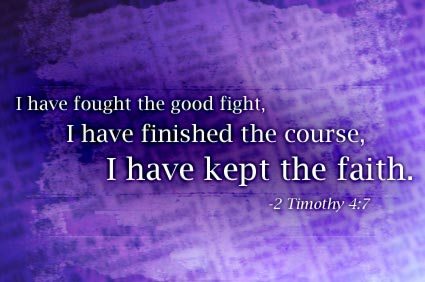
What did he want to communicate to Timothy? Looking at this last chapter, we find so much on Paul’s mind. I would like to focus on two verses in chapter 4: “For I am already being poured out like a drink offering, and the time for my departure is near. I have fought the good fight, I have finished the race, I have kept the faith.”

Paul had been through the wringer, as we read when Paul wrote about many of his experiences in the second letter to the church at Corinth. He lists that he has been put in prison repeatedly, been whipped, beaten with rods, given thirty-nine lashes, shipwrecked, then adrift on the sea for a day and a night, not to mention being cold, starved and thirsty repeatedly, in danger and on the run from all manner of people, for years at a time. What is more, Paul said he would do it all again for the sake of preaching the Good News, and knowing Jesus Christ crucified.

I don’t know about you, but when I hear Paul describe everything he has been through, I am in awe. And yes, I feel so insignificant, so unworthy even to be in Paul’s presence. Paul’s whole life is one huge example of keeping the faith.

As we come forward through the centuries, and learn more about Martin Luther, we can see that for years Martin was on the run from a bunch of different groups and from people sent by the Catholic Church. These wily guys wanted to prosecute Luther before a church court, and he argued his case again and again. Martin Luther was put through the wringer repeatedly.

True story: 1521, Martin was put on trial yet again, and finally offered the “opportunity” to say he recanted what he said and had written. Luther knew his response would get him in even deeper trouble, but that did not stop him. He boldly told the emperor, his officers and some leaders of the Catholic Church that he would not move. Martin said he was captive to the Bible, the Word of God, and he could not go against God. Many people remember Martin’s famous words, “Here I stand. I can do no other.” Martin kept the faith and stayed true to God.

Have you—have I—ever felt put through the wringer for the sake of Jesus Christ? Just thinking about what the Apostle Paul and what Martin Luther went through, being put through the wringer is definitely not fun. Standing up for what is right and Godly and the God-honoring thing to do, or a certain way to pray, or even a specific way to worship God? All over the world, for centuries, any of these things could get you imprisoned or perhaps even executed. I am serious. This is not a joke.

According to Professor Dirk Lange, “Faith is not faith in one’s own abilities but God’s faith planted within us that turns us, despite the upheavals and setbacks and failures of life, into faithful workers in the vineyard.” [1] God-given and God-planted faith helped Paul and Martin to keep on going, and to keep the faith. Can that God-given faith help us to continue on, as well?

Professor Michael Jackson had such an intriguing idea about this verse. Let me share it with you: “I have fought the good fight, I have finished the race, I have kept the faith… all three verbs are in the perfect [tense]. Even though Paul is still alive and writing these words, he views his life lived for Christ as complete… and as my Greek teacher, Roger Hahn always loved to point out for the perfect tense – completed action that has continuing and ongoing repercussions… I like that idea – our finished lives continue to speak, to influence, to make a difference in the lives of those we have served. That’s how we leave a legacy!” [2]

Whether we have been on this earth only a few years or are in the later decades of life, how have our lives been used for God? What kind of legacy are you and I leaving? Have we—as Paul commanded Timothy—fought the good fight? Finished the race? Kept the faith in Christ Jesus? These are not simple questions. They are reflection questions, questions to ponder, and questions that I hope and pray we all bring to God.

I would like to close with some words of reflection from Joseph, Cardinal Bernadin, Cardinal of this Chicago archdiocese for a number of years. He was diagnosed with a rapidly moving cancer, which took his life. In the months before he died, Cardinal Bernadin wrote a final, short book: The Gift of Peace. I’ve read it, and it is so poignant.

I would like to read from the last chapter. “As I conclude this book, I am both exhausted and exhilarated. Exhausted because the fatigue caused by the cancer is overwhelming. Exhilarated because I have finished a book that is very important to me. As I write these final words, my heart is filled with joy. I am at peace…. I will soon experience life in a different way. Although I do not know what to expect in the afterlife, I do know that just as God has called me to serve Him to the best of my ability throughout my life on earth, He is now calling me home.” [3]

So similar to what Cardinal Bernadin wrote, Paul tells us God is leading him home, in these verses we are considering today. Just like Martin Luther, Paul tells us to keep the faith, just as he did. Just as Martin Luther kept the faith, just as Cardinal Bernadin did, too.

What is Paul’s charge to all of us, on this Reformation Sunday? Keep the faith. Know the faith, preserve the faith and see that faith in God gets passed on.

God willing, I will follow Paul’s charge. Will you, too?

Alleluia, amen.

[1] Commentary, 2 Timothy 4:6-8, 16-18, Pentecost 22C, Dirk G. Lange, Preaching This Week, WorkingPreacher.org, 2010. http://www.workingpreacher.org/preaching.aspx?commentary_id=740

[2] Commentary, 2 Timothy 4:6-8, 16-18 | Michael Jackson | Associate Professor of Homiletics, TNU | A Plain Account, 2016, http://www.aplainaccount.org/copy-of-proper-25c-psalm

[3] Bernadin, Cardinal Joseph, The Gift of Peace, (Image Book: New York NY, 1998) 151-52.

@chaplaineliza

(Suggestion: visit me at my regular blog for 2019: matterofprayer: A Year of Everyday Prayers. #PursuePEACE – and my other blog,  A Year of Being Kind . Thanks!

Unknown's avatar

Suit Yourselves!

“Suit Yourselves!”

2 Tim 4-3 itching ears

2 Timothy 4:1-5 – October 20, 2019

Have you seen the comics lately? I’m sure everyone here is familiar with the comics section of the newspapers—the daily comics in black and white, and the Sunday comics in full color—even if you don’t read them regularly. Can you picture this scene from the comics? A single panel, showing two business men by an office water cooler. One looks like a boss, and he says to the other, “If there’s one thing I hate, it’s a yes-man. Isn’t that right, Baxter?”

We chuckle, because we all are familiar with that kind of attitude. I’m sure we can recognize that tendency in other forms. Getting some yes-man to tell us what we want to hear . . . not what’s good for us to hear, not what we need to hear, but instead what we want to hear.

With all the worry and anxiety, trouble and danger in this modern world, people are actively searching for good news. Many are searching in all the wrong places. Commercialism and consumerism are rampant, with many people accumulating more and more stuff and always needing to get something else, something more, something new.

Sometimes, some people search for thrills, for that adrenaline rush, for some kind of excitement in life. It doesn’t matter if thrills come from drag racing, gambling, or risky behavior, like a wild bender at the local bar. Oftentimes, these people are trying to fill a hole deep inside.

Other people turn inward, searching for spiritual fulfilment. There are many ways of experiencing some kind of spirituality, like through the martial arts, or through meditative practices. Fung shui, the Chinese method of arranging furniture is an attempt to try to find balance and proper order in this life. Sure, doing an inside job, concentrating on the inside of ourselves is a great place to start, but . . . searching for inward, spiritual fulfillment on our own just won’t work. Anyway, not without God.

We have the assurance, from our scripture passage today, that Timothy had the opportunity to know God. Timothy was instructed, from the time he was very young, in the way of salvation through Jesus Christ. His mother and grandmother were both women of faith, and Timothy grew up in a believing household, a household that put God first.

As we read further in our passage today, we find there are people who will not put up with sound doctrine. They will not even want to listen to the truth! Even when the truth is as clear as day, and presented to them in a straight-forward manner, still, some will turn away.

You probably are all familiar with that modern phenomenon—tele-evangelists, some of whom are worthy people of God. However, there are those who are frauds. Charlatans. Fakes. Preachers not of sound doctrine or biblical teaching, but instead telling their listeners exactly what they—the listenerswant to hear.

Are you familiar with the health, wealth and happiness gospel, which focuses on only a few isolated passages from scripture? This false gospel tell the listeners that God wants us all to be healthy, wealthy and happy! All the time! And even shows us the example of Job—why, didn’t God give back to Job everything that was taken away? But . . . we must have faith! And if anything is wrong in our lives, or if our house burns down, or if we get sick, or if someone we love loses a job, or if our child gets in trouble, or . . . or . . . or . . . you get the picture. Well, we just didn’t have enough faith. Oh, and we didn’t send enough money to the tele-evangelist. So, God apparently must be withholding His blessing because of our lack of faith and our stinginess.

Not so!! This is a perverse, yet skillful, twisting of the truth! I bet you can see parts of the true Gospel here in what I’ve just described, but the rest is so skillfully bent and twisted, It sounds so similar to the Good News of God we have come to know and to understand and to love. Like, and yet unlike. The true Gospel tells us that God does indeed want to bless us abundantly! And, it is an inside job! God wants to change us, to help us change ourselves, to make us new creations from the inside out, through faith in Jesus Christ.

But, what about unsuspecting folks, who get turned away from the truth in God’s Word? What did our scripture passage today say about this sort of people? It mentions that they have “itching ears.” This is a Greek phrase that can be translated several ways—another way is “having their ears tickled.” In other words, having the preacher tell you exactly what you want to hear! These people with the itching ears, who wanted nice, warm, soft, fuzzy things said to them, nonthreatening, reassuring things preached to them from the pulpit, these people turned their backs on the truth of God’s Word and of sound doctrine.

These people with the itching ears had an agenda—and that was to hear only what they wanted to hear, at all times. None of the challenging words, none of the admonishing words, none of the emotional words of Scripture. This is another form of idolatry: putting themselves first, putting God aside as an afterthought. You know the attitude—me, me, me! I’m the most important person around here! Everything needs to go my way! Nobody else counts!

As I was thinking about this text over the past days, it came to me—what would Calvin say? John Calvin was one of the foremost theologians in the Reformed tradition, the tradition we in the UCC adhere to. What would Calvin say about these false teachers, preaching a “health, wealth and happiness” gospel, or any other sort of false gospel, for that matter?

How would he deal with these false teachers, leading people astray? Checking the Institutes, I find that Calvin spoke strong words against these false teachers, saying that they, in fact, pose the greatest danger to the church. They lead people away from true scripture and sound doctrine, and are responsible for bringing in destructive heresies. [1]

But . . . that’s not what we learned. That’s not what Timothy learned. We have the “sacred writings that are able to instruct us for salvation through faith in Christ Jesus.” We have the opportunity to come into a relationship with Jesus Christ. How wonderful, how awesome, and how sobering that Jesus entrusted us with the message of His Good News.

Now what? The different New Testament letters do indeed tell us definite things about doctrine, about theology . . . but then . . . what do we do with all of this information? How do we put it into practice? How do we live the Christian life? Now what, in other words?

I consider the commands in this passage to be good advice to anyone wanting to follow Christ more nearly. We are to proclaim the message. Communicate the Good News!

This command may give some people pause. How can I preach the Good News? Am I supposed to go to some cable television station and get on the air as yet another tele-evangelist? Or how about standing out on a street corner, preaching with a megaphone? Both of these are valid ways of preaching God’s Good News, but I don’t think most of us here in this church could ever see ourselves doing either of these things. But there are other ways to proclaim the message.

Preach the Good News. Another way of thinking about it is . . . telling what God has done in your life. What has God done for you? How has God made a difference in your life? How has God made a difference in mine? What new things have you and I learned from the Lord lately? What an opportunity to share these things with others, with our friends, with those who might not know God in a personal way.

Do we need advanced degrees in divinity or theology to do this? To share what God has done for us? No! Oftentimes, we are excited to tell people about other things, like who won the latest ball game, or about the neighbor next door spraining her ankle, or what exciting story we just heard on the news. Why can’t I tell people about Jesus, and what He’s done for me? Why can’t you?     I can tell about God’s faithfulness in my busy, hectic life. I can praise God for helping me to walk the Christian walk, one day at a time.

Thank God we have been given this Good News! What a opportunity! What a thing to celebrate! Praise God, we have been granted salvation through faith in Jesus Christ. That’s truly something to celebrate. That’s truly Good News to share.             Alleluia, Amen.

[1] Calvin, John, Institutes of the Christian Religion, edited by John T. McNeill (Westminster Press: Philadelphia, 1960), IV.9.4.

@chaplaineliza

(Suggestion: visit me at my regular blog for 2019: matterofprayer: A Year of Everyday Prayers. #PursuePEACE – and my other blog,  A Year of Being Kind . Thanks!

Unknown's avatar

Were Not Ten Made Clean?

“Were Not Ten Made Clean?”

Luke 17-18 rembrandt

Luke 17:11-19 – October 13, 2019

Sometimes, I talk with people in recovery—alcoholics and addicts who are not drinking or using substances, one day at a time. I used to do this more often, when I was regularly facilitating a weekly spirituality group at an inpatient drug and alcohol rehab unit at a nearby hospital. One of the suggestions for staying clean and sober one day at a time is to keep a gratitude journal. You know, a running list of things we are grateful for.

A writer for the Hazelden/Betty Ford Clinic, Michael G., tells us “The Roman Emperor Marcus Aurelius famously said that our lives are what our thoughts make them. In other words, by simply changing the way we think and our focus, we can change our lives. Bearing this in mind, choosing gratitude can have a huge impact on your life.[1]

What on earth does a gratitude journal have to do with our Gospel reading today from Luke 17? To better understand that, we need to look at the background of the situation. Jesus and His disciples are on their way to Jerusalem. The time is growing nearer for Jesus to enter into Jerusalem on Palm Sunday—very near, now. While on the road on the border between Samaria and Galilee, Jesus is met by ten lepers—ten people with various sorts of skin deformity.

Can you see this scene? On the road at the outskirts of a town, Jesus and His disciples are walking. Perhaps, entering the town, hungry, thirsty, wanting a place to rest. When all of a sudden, ten lepers interrupt Jesus while He is on His journey. They stand some distance away, but they still make themselves heard—“Jesus, Master, have pity on us!”

Have you ever had the unexpected opportunity to meet someone special, someone important, perhaps interrupting them on their journey? That is exactly what happened.

These ten men, the men with serious skin conditions, were living a very lonely existence. They could not have any direct physical contact with any healthy or “clean” person, for fear of transmitting their skin condition or illness. Even touching a person who had leprosy or touching something they touched might be dangerous—might get someone infected.

Whenever someone developed a serious skin condition centuries ago, they had to be separated, and go live outside of their community. In the Law of Moses, the book of Leviticus devotes a whole chapter (chapter 13) to that situation, and is quite specific. ““Anyone with such a defiling disease must wear torn clothes, let their hair be unkempt, cover the lower part of their face and cry out, ‘Unclean! Unclean!’ 46 As long as they have the disease they remain unclean. They must live alone; they must live outside the camp.”

How horrible! Imagine never being able to hug your children, spouse, parents, or brothers and sisters again. Imagine never being able to enter the market or the house of worship you regularly attended, much less being banished from your home. This was life, in an ongoing and sad reality for these ten lepers. How incredibly lonely!

Especially to an observant Jew, the religious and spiritual separation must have been awful. As Dr. David Lose tells us, “That disease made them ritually unclean, which meant that they couldn’t participate in the Temple services and rituals at the center of their faith. And not able to practice their faith, these men stood on the outside of their community as well, likely feeling alone, abandoned, and desperate.” [2]             But, there is unexpected hope. I don’t know which of these lepers hears that the Rabbi Jesus is in town, but Jesus had been healing people throughout Israel and Galilee for about three years by this time. Wouldn’t you ask for healing, if you unexpected met the Rabbi Jesus?

As I considered this reading during the week, I wondered how addicts and alcoholics felt. Are they considered “Unclean!” and ostracized? Shunted aside? Ignored? Does their disease of alcoholism or addiction cause them increasingly to live alone and isolated, in poorer and poorer health?  These two situations from Luke 17 and the condition of addicts today do not line up completely, but there are some close parallels between our Gospel reading and the sad, lonely, debilitating condition of countless people who are afflicted by the disease of addiction.

I want us to begin to understand the hopeless, helpless sense of these ten lepers, ostracized and isolated, suddenly and unexpectedly getting hope for the first time in a very long time. “The Rabbi Jesus! Coming to our town? I’ve heard about Him! Isn’t He the Rabbi who heals the blind and lame? And, didn’t He raise that widow’s son from the dead? And—and—that Rabbi has healed some lepers. I know, I heard the stories. Maybe—He might heal me!”

Hoping against hope, you know what happens. Jesus does stop, and He does talk to them. He says, “Go, show yourselves to the priests.” That’s puzzling, at first hearing. But, not if you are someone living by the Law of Moses. When a person was healed from illness, they were routinely supposed to go to the Temple or to the priest and show themselves. In today’s terms, the priests were similar to physicians’ assistants in the role of certifying people’s return to good health. Jesus told the lepers to go even before they were healed. And as they were obedient and started on their way, a miracle happened. They were healed, cleansed, and their skin conditions were totally gone. Imagine how excited and delighted those former lepers were!

Here’s where the problem is: ten were healed, but how many came back with thanks to Jesus? How many were truly grateful? Yes, ten lepers left Jesus, and along the way to the priests became clean, healthy, and whole. Only one ex-leper truly recognized the incredible healing and gave thanks to the Rabbi Jesus. In giving thanks, he became what God had intended all along.

That is the answer. That is the secret to life: gratitude. “Noticing grace, seeing goodness, paying attention to healing, stopping to take in blessing, and then giving thanks for the ordinary and extraordinary graces of our life together. This is the secret to a good life and the heart of saving faith.” [3]

I started off this sermon quoting from an article on recovery. I’ll end it the same way. Michael G. says, “When I first came into recovery more than 30 years ago, my sponsor told me to buy a notebook and write down 10 things I was grateful for, and then add three things to that list every day. I stopped numbering my list when I got to 5,000 items.

Why did I write a gratitude list? Because I didn’t want to be miserable, and if being grateful was the solution, then that’s what I would do. And importantly, a grateful heart doesn’t drink. I learned very quickly that the struggle stops when gratitude begins.” [4]

I don’t often end with a challenge, but I am today. This is for me as well as for you. What practices ought we undertake, with what stories might we surround ourselves, with what rituals might we allow ourselves to be shaped, so that we might respond to God with gratitude and joy?

Dear Lord Jesus, help all of us to search for the answers to these sincere questions, and follow Your way in our daily lives, perhaps even writing a daily gratitude list.

Alleluia, amen.


[1] https://www.hazeldenbettyford.org/articles/sober-dad/gratitude-early-recovery

[2] http://www.davidlose.net/2019/10/pentecost-18-c-the-secret/

[3] Ibid.

[4] https://www.hazeldenbettyford.org/articles/sober-dad/gratitude-early-recovery

@chaplaineliza

(Suggestion: visit me at my regular blog for 2019: matterofprayer: A Year of Everyday Prayers. #PursuePEACE – and my other blog,  A Year of Being Kind . Thanks!

Unknown's avatar

Great Faithfulness, Indeed!

“Great Faithfulness, Indeed!”

Lam 3-23 faithfulness, clouds

Lamentations 3:19-26 – October 6, 2019

About twenty years ago, I attended a church with a pastor who preached very powerful sermons. This pastor would occasionally mention that he prayed his preaching “would comfort the afflicted and afflict the comfortable.” That sounds very like the Bible book we read from this morning. The little book of Lamentations was written at a complicated time in the history of the nation of Israel, and the prophet who wrote it was conflicted at the time he wrote.

I wonder, can anyone here relate to being sad, troubled and conflicted, sometimes? Does anyone here have bad or sad or troubling things happening in their lives right now, either in their lives or the lives of their loved ones? I know many people do have all kinds of things raining down on their heads.

Perhaps it’s health concerns. At countless hospitals, chaplains or nurses or doctors can tell us about patients with very serious health concerns like heart attacks or strokes. Or, what about continuing health conditions like kidney disease, COPD, multiple sclerosis, or Parkinson’s disease? I am certain that everyone here today knows at least one friend or family member who suffers from some difficulty, disease or condition like these.

Let’s look at some other concerns, like lack of finances. Loss of employment can certainly affect not only individuals, but whole families as well. What about floods or hurricanes? How many lives in the United States have been devastated by these horrible happenings, just in the past two or three months? The number is astronomical.

Add situations such as “your house has burned to the ground,” or “your family member is getting a divorce.” In these situations, what kinds of things would be going through your mind? What are the feelings of the people in these situations?  What are some of the things these conditions make you want to say to God? What are some of the questions you’d like to ask God about these situations?

That is exactly the problem our prophet and writer of Lamentations has. This little book is a series of laments, asking God about the serious situation the nation of Israel is in, asking—in a word—why? That is a question that so many people are asking!

We know the prophet Jeremiah, the probable author of this book, was no stranger to despair.  Consider how he opens in verse 1: “How lonely sits the city that once was full of people” (Lam. 1:1). His city—Jerusalem—has been ransacked by the Babylonian army and left for dead. It seemed God’s very purpose and people had been abandoned. [1]

As commentator Carolyn Brown tells us, many places in the Hebrew Scriptures have “people talking back to God.  These are deeply hurt, terribly sad, and totally angry people, and they are willing to tell God so.  We talk to children often about telling God the happy things, confessing our sins to God, and asking God for help.  But, we also need to give them permission, even encourage them to tell God when they are angry, when life seems unfair, when it looks to them as if God isn’t doing God’s job the way it should be done.” [2]

I would like to stop right here, and let us consider this particularly important task of allowing, of permitting children to grieve. We all need to grieve and mourn, from time to time. Grieving is an important thing to do. We as adults do, indeed, need to model for children our way of dealing with difficulties, problems, even catastrophes. Otherwise, many more people would pull their heads into their shells, like turtles, to escape from these serious difficulties.

And yet—and yet—amid all of this sorrow, suffering and despair, the prophet writes of how blessed he finds the present difficult situation.

What a contrast! What a puzzle! How can this be? Great question!

Commentator Steve Godfrey goes further, “From the depths of his despair Jeremiah turns to something he has come to know well, the loyal love of God.  The Hebrew word used here, hesed, is a constant theme throughout the Old Testament.  It is sometimes translated ‘steadfast love’ or ‘faithful lovingkindness.’”  [3]

What a marvelous thing to have faith in! After so many awful descriptions of horrible things during the past poems of distress, the prophet gives us a ringing endorsement of faith in God’s steadfast loving-kindness in chapter 3 of Lamentations.

Commentator Steve Godfrey has more than the usual difficulty with sad or disturbing things. He has low-grade depression, and he would like for us to know about his occasional mental condition. “As someone who has managed low-grade depression for 31 years of his adult life these are words that encourage profoundly. They don’t minimize or avoid the issue….

“These words don’t mean that Christians should never get depressed.  The Prophet Jeremiah got depressed and I’ll put his character up against depression deniers any day of the week!  The beauty of the gospel is that it embraces both anguish and hope.  Paul had a thorn in the flesh; low-grade depression is mine.  By God’s grace I manage it through diet, exercise, medication, and counseling.  It’s something I inherited through genetics, and that’s okay.” [4]

Praise God for such a constructive attitude. I doubt very much whether I would be able to maintain such a positive attitude and expression. Knowing that God is there with me, through it all, is so helpful to me when I am going through difficult, even traumatic times. I can share a testimony of God’s presence, of God’s chesed, “steadfast love” or “faithful lovingkindness,” with those who are also having difficulties in life.

But, let us shift our focus from our reading today to why we gather this morning.

We celebrate World Communion Sunday today. This sacrament has been celebrated in good times and in bad, during war and during peace, during times of turbulence and trial as well as times of great joy. Communion has also celebrated by many different people groups in many, many different places throughout the globe. Whether we call it the Lord’s Supper, the Eucharist or Communion makes little difference. The unity between various, diverse ministers leading and coordinating observances of this meal our Lord Jesus commanded us to observe is a wonderful glimpse of what this world can be.

Whether we are glad, mad or sad, whether we have only a little or have a lot of goods in this world, whether we are in good health or not-so-good, our Lord Jesus bids us join together in this meal, to be unified and one body, celebrating our diversity. He welcomes each of us to His table, no matter what.

Praise God, what a welcome! Our Lord bids us, come! Thank You, Lord Jesus.

[1] https://churchintheworld.com/2013/09/30/navigating-depression-2/

“Navigating Depression,” Steve Godfrey, Church in the World, 2013.

[2] http://worshipingwithchildren.blogspot.com/2010/09/year-c-27th-sunday-of-ordinary.html

Worshiping with Children, Ordinary 27C (World Communion Sunday), Including children in the congregation’s worship, using the Revised Common Lectionary, Carolyn C. Brown, 2010.

[3] https://churchintheworld.com/2013/09/30/navigating-depression-2/

“Navigating Depression,” Steve Godfrey, Church in the World, 2013.

[4] Ibid.

@chaplaineliza

(Suggestion: visit me at my regular blog for 2019: matterofprayer: A Year of Everyday Prayers. #PursuePEACE – and my other blog,  A Year of Being Kind . Thanks!

Unknown's avatar

Our Good Confession

“Our Good Confession”

1 Tim 6-12 good confession

1 Timothy 6:11-13 – September 29, 2019

Some people express their devotion to certain things so clearly, don’t they? Take sports teams. I am sure you know friends or acquaintances who devoutly follow a sports team in season and out. I have one particular friend who regularly wears the team jerseys (yes, he has several), plus team hats, team jackets, and team flags. All the official merchandise! Everyone knows who he supports!

I wonder, do many of us know people who express their belief or devotion to Jesus Christ with the same excited amount of fervor? Or, are people shy of expressing their belief in the Lord very loudly, lest they be considered weird or narrow-minded, or even extra judgmental?

We are looking at the letter to Timothy for the second week in a row. Here we sneak a look over Paul’s shoulder as he dictates this letter, and discover he is concerned about Timothy remembering what is really important. He tells Timothy what that is: remember when he made the good confession, when he openly told everyone he was on Team Jesus. Can you see him excitedly shouting, waving his arms and wearing his Team Jesus merchandise?

Perhaps that “Team Jesus” uniform and jersey analogy is going a bit overboard, even somewhat fanciful. However, Paul was quite sincere in reminding Timothy about the time he publicly confessed his faith in Jesus Christ. This time of baptism was an important time in any adult believer’s life, both early in the founding of the church as well as in later centuries.

I suspect we here in the United States have only an unclear idea of how much danger the first believers were in. They were outlaws, outcasts in the Roman Empire. The Roman Empire was not particularly fond of Jews, but at least Judaism was allowed. However, Christians were getting rounded up by the authorities because Christianity was a new, outlaw religion.

Did Paul realize his friends would get in trouble if they told people they were on Team Jesus? Yes, of course he did. Sadly, he knew this very well. He himself was in prison for regularly testifying to the Lord Jesus Christ.

Let’s take a closer look at the words Paul wrote to Timothy: “12 Fight the good fight of the faith. Take hold of the eternal life to which you were called when you made your good confession in the presence of many witnesses. 13 In the sight of God, who gives life to everything, and of Christ Jesus, who while testifying before Pontius Pilate made the good confession, I charge you 14 to keep this command.”

Almost everyone who became a believer in Jesus Christ at that time was converting as an adult from another kind of religion to Christianity. In other words, taking the step of a public baptism was part of confessing Jesus Christ as Lord, publicly.

In many cases, the newly-baptized person put on a fresh, white robe, signifying new life in Christ. I want to emphasize—after baptism—putting on fresh, new clothes: a brand-new Team Jesus jersey, letting everyone know that the newly-baptized person was now an openly-professing Christian.

Just so we do not mistake exactly what this confession details, let me give an illustration from the book of Acts, chapter 16. Paul, Dr. Luke and their friends were on a missionary journey to a large city in Macedonia, Philippi. Paul—as usual—was getting in trouble for preaching, teaching and casting out evil spirits. Paul and his friend Silas get thrown into prison, and God sovereignly causes an earthquake to happen. The jailer (who has been hearing all about their good confession all day and into the night) gets convicted by God, Reading from Acts 16: 29 The jailer called for lights, rushed in and fell trembling before Paul and Silas. 30 He then brought them out and asked, “Sirs, what must I do to be saved?”

31 They replied, “Believe in the Lord Jesus, and you will be saved—you and your household.” 32 Then they spoke the word of the Lord to him and to all the others in his house. 33 At that hour of the night the jailer took them and washed their wounds; then immediately he and all his household were baptized.

That was the good confession. Right there. The confession made by the Philippian jailer, even though he knew what a commitment that confession might be.

But, wait—Paul does not stop there in his letter to Timothy. He then mentions the Rabbi Jesus, who after His arrest and during His trial makes the good confession before Pontius Pilate oly a few hours before His crucifixion. Moreover, Christ Jesus made this good confession before many hostile witnesses.

A professor of the New Testament Dr. A.K.M. Adam states “In this, Timothy followed the example of Jesus before Pilate, who did not deny God in order to secure his own safety (the letter identifies Jesus’ response to Pilate also as a “good confession”).” [1] Again, the apostle Paul is not shying away from openly stating that these people believe in the Christian God.

We here in the United States might think, Paul, are you crazy? Coming right out and telling hostile people you are a Christian? Wearing your Team Jesus jersey all the time, day and night?

Yes, Paul does mean that. He is faithful, and he confesses his faith in Christ on a regular basis. He wants to encourage Timothy to do the same, to live each day for Jesus.

I think most people who knew how hard the baseball player Joe DiMaggio played would say he gave his heart and soul to the game of baseball. Late in his career, when the New York Yankees were comfortably ahead in the pennant race, Joe DiMaggio was asked why he continued to play so hard. He said, “Because there might be somebody out there who’s never seen me play.” Just so, the Christian should live every day as if someone will see him who has never seen a Christian before. [2]

So, Paul and Timothy are both wearing their Team Jesus jerseys, and maybe Team Jesus hats and jackets, too. The transformed Paul and Timothy let everyone who sees them know that they are Christians, showing love, compassion, and caring to all.

Paul even gives Timothy a run-down of all the attributes we ought to expect to show in our lives if—if we have this good confession, and before hostile witness, too! If we show this kind of sincere, persistent faithfulness, then our lives will start to show these Godly characteristics Paul mentions in verse 11. We will pursue righteousness, godliness, faith, love, endurance, and gentleness. That was the transformation that Paul told Timothy would happen. And, God does transform lives, even today!

Just like Timothy, we are encouraged to live like we mean it. Live as if someone who sees us has never seen a Christian before. Live the best life we can, for God’s glory. It’s not just with a spoken-confession, but it is also with a doing-confession. Not only show Christ by the words we say, but we show our belief by the actions we do. Yes, confess with our mouths the Lord Jesus, and also do the deeds that please God and glorify His name.

That is confessing the good confession, indeed. Alleluia, amen.

[1] http://www.workingpreacher.org/preaching.aspx?commentary_id=731

Commentary, 1 Timothy 6:6-19, A.K.M. Adam, Preaching This Week, WorkingPreacher.org, 2010.

[2] https://ministry127.com/resources/illustration/faithful-all-the-time Source: Summer of 49, David Halberstam

@chaplaineliza

(Suggestion: visit me at my regular blog for 2019: matterofprayer: A Year of Everyday Prayers. #PursuePEACE – and my other blog,  A Year of Being Kind . Thanks!
Unknown's avatar

How to Worship?

“How to Worship?”

1 Tim 2-2 pray, message

1 Timothy 2:1-4 – September 22, 2019

Have you ever been to a different kind of worship service? A service where people prayed differently, sang different kinds of songs, played different instruments, and even spoke in different languages? I have attended a number of different kinds. Worship of God can be diverse and different, depending on where we live, what each of us grows up with, and what kind of faith tradition we come from.

In today’s reading from the first letter to Timothy, we hear about instructions for prayer and worship. This letter to Timothy is one of the pastoral letters from the New Testament. In other words, this letter contains instructions for a church leader on how to be a better pastor and leader of a congregation. Including—recommendations for corporate worship and prayer.

This is not like the instructions from the Sermon on the Mount in Matthew or the Sermon on the Plain from Luke, where our Lord Jesus gives specific instructions for personal, private prayer. No, this letter is from several decades later, when there were established groups of believers, and they needed structure and direction on corporate worship and prayer.

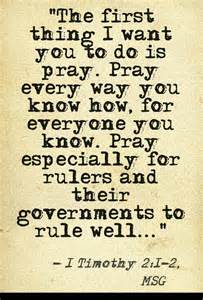
From 1 Timothy 2: “I urge, then, first of all, that petitions, prayers, intercession and thanksgiving be made for all people—” This sounds wonderful! I have experienced this aspect of prayer in practically every worship service I have ever attended. I suspect you have, too.

Whether prayer happens from the pulpit or lectern, or from the floor of the church, whether the prayer is offered by members of the congregation from the pews or seated in a circle, extemporaneously or written out, Paul’s recommendation of unified prayer is definitely one that has gone on as long as believers in Christ have gathered together.

However, the prayers we offer are not just generic prayers. I want to remind everyone (and I am reminding myself, too!), that we are encouraged to “offer prayers for all members of the human family during church services; prayer in the terms of: petitions (general requests to God), Intercessions (requests for those in need), supplications (requests for ourselves), and thanksgivings.” [1]  The apostle Paul is quite specific here! All of these different kinds of prayer!

I wonder: are your prayers—are my prayers—as far-ranging and thorough as these? Are these recommendations something we all can get on board with? Something we all follow?

Let’s continue with this reading from chapter 2. Who should we pray for? “for kings and all those in authority, that we may live peaceful and quiet lives in all godliness and holiness.”

We are not talking about good-tempered rulers. No, the kings, rulers and those in authority in the later half of the first century were not nice guys. What happens when we have mean rulers and cruel leaders, those in authority who do such wicked things as throw people out of their homes, put them in jail, even force them into exile, or even death?

Let’s take a look at the Roman emperors Tiberias, Caligula and Nero. None of them were particularly “good or nice,” several showed signs of mental instability, and these men were at the pinnacle of power in the Roman Empire for over 25 years. Yet, the apostle Paul recommended that his fellow believers pray for them, for other rulers, and “for those in authority, that we may live peaceful and quiet lives in all godliness and holiness.”

This was an instruction Timothy received for his regular worship services! What was the apostle thinking of? The Rev. Bryan Findlayson suggests “Such prayer seeks to restrain the powers of evil and so encourage peace and security. When society is in a state of peace, believers can freely serve both God and mankind.” [2]

Again, what about rulers and those in authority who persecute Christians? What about governments that destroy churches, jail church leaders and ministers, and make it impossible for Christians to live and raise families? What about those governments? Do we still need to pray for those wicked people? We are to pray for peace, but what kind of peace?

I would say, yes, especially for those wicked people in government who persecute Christians. “Most often our prayers for peace concern our own personal well-being. When society is at peace, life can go well for us and we can build that extra barn. Yet, the peace Paul has in mind is a positive environment for the proclamation and hearing of the gospel.” [3]

September 21st is the International Day of Peace. The website specifically for this day states: “Established in 1981 by unanimous United Nations resolution, Peace Day provides a globally shared date for all humanity to commit to Peace above all differences and to contribute to building a Culture of Peace.” [4] What a wonderful thing to contribute to building: peace.

Moreover, as the apostle Paul reminds us, peace in the world involves a positive environment for proclaiming and hearing the Good News of our Lord Jesus Christ. Is our government corrupt? We need to pray for the members of a wicked and corrupt administration, then. What matters even more is that we are safe to proclaim the Good News of the Lord, and to provide for a way to let everyone know the Good News of salvation through His name.

Division and divisiveness is not conducive to spreading the Good News. This current-day division and animosity between people who call themselves believers must make God very sad. Christians of all communities and all ethnicities ought to have their wonderful belief in Christ to unite them. But, no. Sadly, believers all over the world allow politics to divide them.

The Rev. J. Vernon McGee had this to say: “We need to pray for our country, and we need to pray for those who have authority over us. If you are a Republican and a Democrat is in office, pray for him. If you are a Democrat and a Republican is in office, pray for him.” [5]

We have been thinking about the unity of believers from all parts of the world for several weeks now. In our bible study, we are studying the book of Philippians, and talking about how the apostle Paul and his friends preached the Good News to a diverse and different population in the regional capital of Macedonia, Philippi. Diverse and different individuals came together to worship the Lord Jesus Christ, and God made it possible for them all to join in worship.

What a wonderful example to lift up! Can we do the same, here, now? We here at St. Luke’s Church can strive for the same unity and friendship, despite differences in our families, the languages we spoke as children, or the towns where we were born. We can also come together in worship, despite differences in worship styles, or singing, or prayer.

I pray at the beginning of most services here for God to bless our time in worship, and especially to aid us in lifting our vices in words, prayer and song. This is truly what God calls us all to do. Moreover, God looks upon every voice raised in prayer, praise, or song as legitimate worship, no matter what, no matter where, no matter how. We are all encouraged to do the same. We have God’s word on it!

Alleluia, amen!

@chaplaineliza

(Suggestion: visit me at my regular blog for 2019: matterofprayer: A Year of Everyday Prayers. #PursuePEACE – and my other blog,  A Year of Being Kind . Thanks!


[1] http://www.lectionarystudies.com/sunday25ce.html    “Worship in the Church,” Rev. Bryan Findlayson, Lectionary Bible Studies and Sermons, Pumpkin Cottage Ministry Resources.

[2] Ibid.

[3] Ibid.

[4] https://internationaldayofpeace.org/

[5] McGee, J. Vernon, Thru the Bible: 1 Corinthians through Revelation, Vol 5, (Nashville TN: Thomas Nelson Publishing, 1983) 436.

Unknown's avatar

Who Searches for the Lost?

“Who Searches for the Lost?”

Luke 15 word cloud

Luke 15:1-10 – September 15, 2019

Are you familiar with a lost-and-found box? A box full of lost belongings, perhaps at the senior center near your house, or at the school your children or grandchildren attend? Or, at the YMCA near my husband’s and my condominium? All kinds of lost valuables can be found there—valuable to someone—lost things someone is diligently searching for.

Before we get to the lost things talked about in this bible reading, we need to set the scene. The Rabbi Jesus is again eating with those nasty social outcasts, the tax collectors, and other outcast people who are labelled “sinners.” We talked about them two weeks ago, when we had the Gospel reading about Zacchaeus the tax collector. I mentioned how horrified the “decent folks” in Jericho felt about a respectable Jewish Rabbi like Jesus eating with a tax collector like Zacchaeus.

Horrible! Outrageous! Simply scandalous! But, isn’t this just like Jesus? Always doing the unexpected? Always going out of His way to do the next loving thing?

Let’s see how Dr. Luke sets up this scene. “Now the tax collectors and sinners were all gathering around to hear Jesus. But the Pharisees and the teachers of the Jewish law muttered, “This man welcomes sinners and eats with them.”

Here we have real outcasts—yes, racially and ethnically they might be Jewish, but the “decent folks” would not have anything to do with these Jewish tax collectors and other sinners. These outcasts were not even allowed into the synagogues, so they could not join with their communities in worship. Imagine, being forbidden to enter a house of worship because of who you are and how you make a living. How isolating, and how demeaning. But, that is not all. Verse 2 tells us the “righteous, decent folks” were outraged and upset that these outcasts and sinners were even listening to the Rabbi Jesus, much less eating with Him. Imagine, a respectable Rabbi eating dinner with the likes of them??

The very next verses show us Jesus telling a parable. We do not know whether Jesus was telling the parable gently and earnestly, or cynically, trying to make a challenging point. Sometimes we can tell, from context clues, but here we are not sure. These words are recorded by Dr. Luke: “Then Jesus told them this parable: “Suppose one of you has a hundred sheep and loses one of them. Doesn’t he leave the ninety-nine in the open country and go after the lost sheep until he finds it?”

Here our trusty, loving, compassionate Rabbi tells a story about one hundred sheep. These sheep are not labelled “good” or “bad.” The lost sheep is doing just what sheep do – sheep wander.

This parable reminds me of a conversation I had years ago with my father-in-law, who is now deceased. My father-in-law grew up on a farm in Iowa during the 1930’s, and his parents kept all kinds of animals: chickens, cattle, pigs, and…sheep.

My father-in-law told me a number of things about sheep. Sheep are timid and anxious, and they startle easily. Sheep are by turns stubborn and frightened, willful and easily led. Sheep are not particularly smart. Did I mention my father-in-law said sheep were stubborn, and they often wandered off and went their own way? The lost sheep is doing just what sheep habitually do – sheep wander.

Both the Hebrew Scriptures as well as the New Testament describe the nation of Israel and the Jewish people as sheep. I suspect that most everyone listening to the Rabbi Jesus understood these basic features of keeping sheep. (Not so much today, with the urbanization of people hearing the Gospel message, and the distance of people from a rural setting.)

In this parable, Jesus mentions a shepherd with one hundred sheep. One of them gets lost. One out of one hundred is only one percent. In modern terms of data marketing and warehouse management, one percent is usually an acceptable percentage of shrinkage. After all, the shepherd has ninety-nine other sheep in front of him. One little sheep is an acceptable loss.

Except, this is not an acceptable loss to Jesus. The difference is this particular Good Shepherd.

Here is the end of Luke’s parable: “And when he finds it, he joyfully puts it on his shoulders and goes home. Then he calls his friends and neighbors together and says, ‘Rejoice with me; I have found my lost sheep.’”

This parable has been interpreted in various ways, but I would like to highlight the actions of the sheep. Sheep—I mean, people get lost. Sheep—I mean, people wander. People are human. It is human nature to wander away, sometimes, and get lost.

Jesus does not differentiate between sheep that are “sinner” or “outcast,” and “righteous” sheep—and neither should we.

Finally, the aftermath of this story, as told by Jesus: “I tell you that in the same way there will be more rejoicing in heaven over one sinner who repents than over ninety-nine righteous persons who do not need to repent.”

Dr. Lois Malcolm of Luther Seminary mentions “We should note, however, that the emphasis here is not on a contrast between two different types of people: “tax collectors and sinners” versus “Pharisees and scribes.” ….Tax collectors were corrupt, dishonest, and had colluded with the Roman Empire. By contrast, the Pharisees and scribes were the religious leaders of the day, much like professional clergy [and the church leaders] in our time.” [1]

Yet, Jesus classifies them all as sheep, both the decent, “righteous” folk as well as the tax collectors and sinners. Sheep are not particularly smart. Sometimes, these stubborn sheep willfully stray, and straggle on the path, and go their own way. That is what sheep—and humans—do. That is just built in, in the basic nature of sheep—and humans.

As Dr. Malcolm says, “The shepherd evokes images of a God who not only actively seeks out individuals who are lost — note the emphasis on the “one” out of the ninety-nine – but also rejoices when they are found. This God is not a tyrant who demands subservience to impossible demands, but rather a God who actively seeks restoration: “a God merciful and gracious, slow to anger, and abounding in steadfast love and faithfulness” (Exodus 34:6; Psalm 86:15, etc.).” [2]

The Rev. Alyce McKenzie relates “One Sunday morning several years ago, on my way into the church our family attended in Pennsylvania, I spotted the Lost and Found box in the entry way and decided to look through it to see if I could find my son’s missing blue mitten.

There was no blue mitten in it, but there was a pair of glasses in there. A set of keys. A watch. There is a lot that can show up in the lost and found box of your life lying in there unclaimed while you go about your ministry.” [3]

We can all thank God that Jesus, our Good Shepherd, does come looking for us when we are lost, wherever we may be, even if it takes a long time. Getting lost is a very sheep-like—and human—thing to do. We can celebrate that our loving, caring Savior actively seeks us out, puts us on His shoulders, and restores us to the joy of our salvation.

Alleluia, amen.

[1] http://www.workingpreacher.org/preaching.aspx?commentary_id=1782

Commentary, Luke 15:1-10, Lois Malcolm, at WorkingPreacher.org, Luther Seminary, 2013.

[2] Ibid.

[3] https://www.patheos.com/progressive-christian/lost-found-alyce-mckenzie-09-09-2013.html

“Lost and Found,” Alyce M McKenzie, Edgy Exegesis, 2013.

@chaplaineliza

(Suggestion: visit me at my regular blog for 2019: matterofprayer: A Year of Everyday Prayers. #PursuePEACE – and my other blog,  A Year of Being Kind . Thanks!
Unknown's avatar

For God So Loved

“For God So Loved”

John 3-16 so loved, bible

John 3:16-17 – September 7, 2019

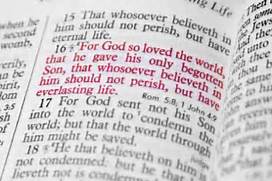
“For God so loved the world that He gave His one-and-only Son, that whoever believes in Him shall not perish but have everlasting life.”

That verse is from the Gospel of John, verse 3:16. It is also one of the most familiar and beloved Scripture verses of all time, and that is no exaggeration.

When I asked Gladys what verse or Bible passage was one of her father’s favorites, she immediately spoke up and said: John 3:16. What is more, Bart had his three daughters memorize this verse when they were young. What a beautiful and precious Bible verse, and also a beautiful and precious memory of their father.

This verse has been called the Gospel in a nutshell, or a simple way to view the Good News of God come to earth to save sinners. A vast number of people throughout the world love John 3:16 and can quote it word for word. Yes, it is a valid way to be introduced of the God of the Bible, and to be introduced to the Son, our Lord Jesus Christ. But, don’t stop there. Bart and Rosevelita did not stop with just that verse. They taught their children not to stop there, either.

What kinds of problems do people discover if they just stop with that one verse and ignore the rest of the Bible? They might have an incomplete understanding of salvation.

After centuries of the Christian church and church history, humanity has ended up with hundreds of different denominations, and even more different ways of understanding how to worship God and to give God honor and glory. This kind of diversity in thinking about God is a reflection of the awesome and magnificent diversity and difference in God’s creation. But, there is still—or should I say, even more—of a sharp disagreement and discord between believers and denominations that say they follow Christ.

What about Jesus Himself? What do you think Jesus would do? Or, WWJD, as the trendy bracelets and bumper stickers of some years back might say? But, I am serious, asking a serious question. What do you think Jesus would do—or say—about all the division in His church?

I suspect our Lord Jesus would cry, grieve, and be very downhearted about all the division, dissention and disharmony among people who say that they follow Christ.

But what if some don’t follow Jesus Christ, or aren’t sure about belief in God? What if some people are not in the same place as others on their journey of faith? We forget that statements like John 3:16 can portray a kind of God I suspect, if pushed, many people would rather not have. “We forget that our certainties about salvation lead to or come from claims about God that might not even reflect the God we know, the God we want.” [1]

If we say that God loves the world, this is not just a pie-in-the-sky theory for salvation. John 3:16 is not like doing advanced mathematics on a chalkboard or a biology experiment in a lab. It is specific and real-life. Particular. As particular as the God coming to earth and becoming human, just as human as you and me. But, can we measure God’s particular, tangible love, in a concrete way?

Sure, we can say “God so loved the world.” But, that means God loves a hated Samaritan woman—from John chapter 4. Does God love people who look and act and worship in a different way than we do? Do we love them, too? God loves a man paralyzed his entire life—from Mark chapter 2. Does God love handicapped and disabled people today? Do we love them, too?  God loves a man blind from birth. God loves Jesus’ friend Lazarus dead in the tomb for four days. God loves Peter who will deny his discipleship and deny being a friend of Jesus. [2]

Great calamities and difficult situations had happened to each of these people. God still loves them. God still loves you and me, and every other person, too. We may not be able to love all people, every person in the world. But, God does. John 3:16 tells us that God so loved the world. That means everyone. Every. Single. One.

Sometimes we use a measuring cup to measure things. When I made cookies a few days ago, I used a measuring cup and spoons to measure out the ingredients for cookies. Can we use a measuring cup to measure God’s love? If you or I were building something, we might use a measuring tape to measure the length and width of the wood properly. I wonder—could we use a tape measure to measure God’s love? Finally, we use a clock to measure the passage of time. Could we measure God’s love and find out how long it would last? Psalm 103 tells us that God’s love is from everlasting to everlasting, and that is pretty long, longer than we can humanly imagine. [3]

Do we have a better understanding of John 3:16 now?

We turn to another gracious promise from Scripture, from Romans 8, where the Apostle Paul tells us that he is convinced that neither death nor life, neither angels nor demons, neither the present nor the future, nor any powers, 39 neither height nor depth, nor anything else in all creation, will be able to separate us from the love of God that is in Christ Jesus our Lord.”

Bart knows the blessed truth of this verse. He is in heaven with the risen Christ right now, looking down on us. I pray that we all might think of Bart Garcia with blessing, honor his memory, and celebrate his new life in Christ Jesus our Lord..

Alleluia, amen.

[1] http://www.workingpreacher.org/craft.aspx?post=4835

“John 3:16,” Karoline Lewis, Dear Working Preacher, 2017.

[2] https://www.patheos.com/blogs/carlgregg/2012/03/lectionary-commentary-john-316-the-rest-of-the-story-for-sunday-march-18-2012/  “John 3:16 – The Rest of the Story,” Carl Gregg, Patheos, 2012.

[3] https://sermons4kids.com/measuring_gods_love.htm

“Measuring God’s Love,”  Charles Kirkpatrick, Sermons4kids.com.

@chaplaineliza

(Suggestion: visit me at my regular blog for 2019: matterofprayer: A Year of Everyday Prayers. #PursuePEACE – and my other blog,  A Year of Being Kind . Thanks!
Unknown's avatar

Jesus Seeks and Saves

Luke 19 zaccchaeus-the-publican

“Jesus Seeks and Saves”

Luke 19:1-10 – September 1, 2019

Do you know anyone who is really unpopular? I mean, so unpopular that people turn their backs and ignore them when they come around? That is just the sort of person we are going to talk about today: a particularly unpopular, even despised person.

The Gospel of Luke chapter 19 tells us of the tax collector Zacchaeus and the encounter he had with the Rabbi Jesus. Jesus had been in ministry for almost three years, and I suspect that He was a celebrity in the Jewish population. Perhaps even of rock-star-status, given Jesus had healed people, cast demons out of people, and performed all sorts of other miracles for the past three years. It’s no wonder Jesus attracted such a crowd wherever He went!

When you or I read about tax collectors during the first century, we might think they were simply unpleasant people tasked with an unfortunate job. Because, someone had to do it! The Roman Empire occupied a huge territory, including the region of what is now Israel and Palestine. The Roman army was the occupying force that policed the region. The conquered Jewish people were a subjugated people. But, that was not all.

No one likes to pay taxes. And, taxes are even worse when they are being collected by an occupying force, like the Romans. Except—the Romans were fiendishly clever. Some of the native population was used to collect taxes. Here’s what happened. The taxation system the Romans used was ripe for abuse. The Roman government farmed out the collection of taxes and sold off the right to do tax collection to the highest bidder. All that was necessary was that the Romans receive their assessed financial amount at the end of the year. Any money over that amount could be kept by the native-born tax collector. And, boy, did they collect the money! As I said before, this was a scheme sure to be abused. Talk about a shakedown racket!

Was it any wonder that these tax collectors were especially despised by their fellow Jews? These Jewish shakedown artists collaborated with the Roman overlords, besides being seen as extortionists for collecting double, and even triple the amount stipulated by the Roman tax assessment.

Some people think the United States tax code is punishing. They haven’t seen anything, compared to these tax collectors who were backed up by the force of the occupying Romans. In other words, just in case any Jewish person was even thinking of not paying taxes, the Roman army could come knocking at the door and drag them off to prison for tax dereliction. What is more, Zacchaeus was the chief tax collector, in charge of all the other tax collectors in the region. He must have been simply rolling in dough.

There is more, in terms of social consequences. Even though he was very wealthy, Zacchaeus had lost his place in the local synagogue, was not permitted to attend worship services, and was totally ostracized from all “decent society” in town. I mention all this to let everyone know what a scandal it was.

On top of everything else, Zacchaeus was extremely short, and probably felt even worse because of his little stature. New Testament scholar Anselm Grun theorizes that “Zacchaeus wanted to stand out to gain recognition, but the result was that he was isolated and rejected. He felt compelled to set himself above people because, alongside them, he felt too small. So perhaps there was a vicious cycle of insecurity, exploitation of others, loneliness, and rejection at work in Zacchaeus’s relationships in the community, or, more accurately, his lack of relationships.” [1]

But, no matter what, this guy really wanted to see the Rabbi Jesus!

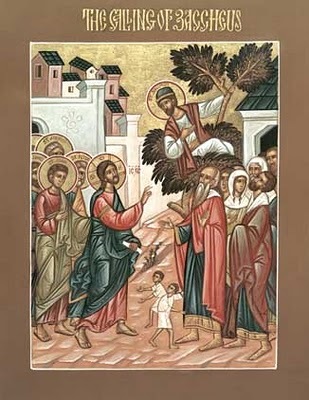
We know what happened. Reading from Luke 19, Zacchaeus “wanted desperately to see Jesus, but the crowd was in his way—he was a short man and couldn’t see over the crowd. So, he ran on ahead and climbed up in a sycamore tree so he could see Jesus when he came by.” Can you just see Zacchaeus, his head and shoulders poking out between the branches of a sycamore tree? What about the Rabbi Jesus? He called Zacchaeus by name! Can you imagine? Calling a hated tax collector by name, and even proclaiming that He would eat dinner at that tax collector’s house that evening?

What a scandal! What a horrible thing for a respectable Jewish Rabbi to do! Can you imagine what all the “decent folk” in Jericho had to say about that?

Yet, isn’t this just like Jesus?

Again and again in the Gospels, especially in Luke’s Gospel, we see Jesus side with those on the margins, those who are the least of these, those who are disrespected and dismissed. Jesus comes alongside of the down and out and those not accounted as much in the eyes of the world. “While Zacchaeus is rich, he is nevertheless despised by his neighbors, counted as nothing, even as worse than nothing. Yet Jesus singles him out.” [2]

I follow the social media account Invisible People on Twitter. This account regularly posts articles and photos of those people who are invisible to society at large: the homeless. The vignettes and stories are heartbreaking, on a daily basis. The followers who read Invisible People meet person after person who had a job and lost it, or had a spouse and lost them, or had an extended health reversal and lost their apartment, or any one of a dozen other sad scenarios. These people teetering on the poverty line, or even below it, pull at anyone’s heart strings.

Yet, to many people across our country, any mention of the homeless or those in shelters or camping in the woods because they do not have any other place to stay is certainly similar to mentioning “tax collectors” in first century Palestine. These “invisible” friends are despised by many “decent folk,” many who have money, education, experience, or moderately good health.

These “invisible people” of today are on the margins of society, similar to the tax collectors of the first century. Reading from Luke 19, we get some indication of what the onlookers said: “Everyone who saw the incident was indignant and grumped, “What business does Jesus have getting cozy with this crook?” 8 Zacchaeus just stood there, a little stunned. He stammered apologetically, “Master, I give away half my income to the poor—and if I’m caught cheating, I pay four times the damages.”

Jesus responds in typical, loving, caring Jesus-fashion: He lets everyone know that Zacchaeus is just as good as any of the “decent folk.” 9-10 Jesus said, “Today is salvation day in this home! Here he is: Zacchaeus, son of Abraham! For the Son of Man came to find and restore the lost.”

Who has a corner on perfect righteousness and standing before God? Which of us is not lost and wandering, at times? Don’t we all need to be found and restored to God’s loving embrace? Jesus has come to seek and save the lost, the wandering, the people on the margins and the outskirts of society, as well as “decent folk.” Jesus has His arms open wide to welcome each of us, no matter what.

Surely it is God who saves me—God has arms open to save all of us. Amen, alleluia.

[1] https://www.patheos.com/progressive-christian/power-persistence-alyce-mckenzie-10-28-2013.html

“The Power of Persistence, Part 3,” Alyce M. McKenzie, Edgy Exegesis, 2013.

[2] http://www.workingpreacher.org/preaching.aspx?commentary_id=2968  October 30, 2016

David Lose

@chaplaineliza

(Suggestion: visit me at my regular blog for 2019: matterofprayer: A Year of Everyday Prayers. #PursuePEACE – and my other blog,  A Year of Being Kind . Thanks!