Unknown's avatar

Living Water

“Living Water”

John 4-14 word cloud

John 4:5-42, Exodus 17:1-7 – March 15, 2020

In any group of people, you will certainly see several at least with disposable water bottles or the more expensive refillable kind. So many people today understand the importance of drinking enough water. My daughters remind me: “Hydrate! Hydrate!”

If we know the importance of drinking water today, in this temperate climate where water is readily available, just think of what it was—and is—like for people living in a semi-arid region like Samaria. Sources of water were not plentiful, at all. Having a deep well near a town, especially a well dug by one of the patriarchs of old, would be considered a great community asset. That well would be a valuable material resource, too.

John tells us it’s the middle of the day, nearing the hottest part of the day. The rest of the band of disciples goes into the Samaritan town of Sychar to find food, but their Rabbi Jesus stays behind at the well. We don’t even know the name of the woman who comes to the well, but Jesus engages her in conversation.

Hold on, here. Fetching water was and is a task that women have done, for ages. For thousands of years. There is a togetherness, a community feel to fetching water; I suspect it was similar for the women of Sychar. All go with their water jars, fetching their loads in the morning, before the heat of the day. But—what about this straggler, coming in the middle of the day? This particular woman’s lifestyle sets her apart from the others!

The Rabbi Jesus starts to talk with her. Imagine, a respected Jewish rabbi, talking to some outcast woman? That shouldn’t be! And moreover, this woman is a hated half-breed Samaritan! Worse and worse! Jesus, what are You thinking of? This activity is really culturally and socially disgraceful. That would be what any respectable, observant Jew would think about Jesus’s words and actions. Shaking their heads, saying, “Shame, shame! There is SO much wrong here!” However, Jesus does not allow social or cultural conventions of His day to dictate to Him.

Jesus had something important to communicate. He talked to the woman at the well about Living Water. Water from heaven, Godly water that gives eternal life! What is more, he treated this outsider, this “loser” of a woman with kindness and respect. What an example for us to follow, too. Imagine, treating all people with kindness and respect, because each one is made in the image of God. Jesus gives us another challenge, to treat each person we meet with respect and kindness, just as Jesus did with the woman at the well.

What are you thirsty for, these days? Sure, we might have one of those fancy refillable water bottles, and try to keep it full most days. As my daughters tell me, “Hydrate, Mom! Hydrate!” We might satisfy our physical thirst, true. But, what about our spiritual thirst? Are we even aware of this deep-down thirsting, yearning for something to fill us up from the inside out?

In Jesus’s case, He told this woman some significant things about her life, things that rocked her to the core. In fact, when she ran to tell the people in town about this marvelous Rabbi, she said 29 “’Come, see a man who told me everything I ever did. Could this be the Messiah?’ 30 They came out of the town and made their way toward him.”

Different people have different reactions. Some people scoff when they hear about the Rabbi Jesus—“He couldn’t possibly be the Messiah! You’re pulling my leg!” Others are just not sure. They might like to believe, but they might be fearful, or anxious, or have their minds on too many other things. And, then, there are those who hear about this Jesus, this promised Messiah, and come running to see Him. That is the woman at the well. She brought a whole bunch of people with her, to check Jesus out. To have the possibility of drinking from this Living Water.

Remember, Jesus says “13 “Everyone who drinks this water [from Jacob’s well] will be thirsty again, 14 but whoever drinks the water I give them will never thirst. Indeed, the water I give them will become in them a spring of water welling up to eternal life.” How are you reacting to your spiritual thirst? Are you anxious or fearful, angry, distracted or discouraged?

Jesus promises to give this Living Water to anyone who asks. What would it be like to enjoy Living Water from Jesus in each of our lives, on the inside? Let’s get even bigger. Imagine what it would be like to have Jesus supply each of our congregations with this Living Water, providing a supply for all our spiritual thirst? Filling us up on the inside, so we aren’t anxious or fearful, angry, distracted or discouraged?

We have the opportunity to supply others with Living Water, in the same way that Jesus can. With God’s help, we can fill others with this wonderful spiritual water from the well that never goes dry. I ask again: What are you thirsty for?

Jesus has an amazing spiritual well. God willing, Jesus can fill us, from the inside up.  Amen.


(Thanks to Dr. Hongsuk Um of the Church of Scotland for several ideas I used in this sermon.)

https://www.churchofscotland.org.uk/__data/assets/pdf_file/0011/62984/15-March-3-Sunday-of-Lent.pdf

Third Sunday in Lent – 15 March 2020 The Faith Nurture Forum would like to thank Dr Hongsuk Um, Faith Nurture Forum Development Worker, for his thoughts on the third Sunday in Lent.


@chaplaineliza

(Suggestion: visit me at my regular blog for 2020: matterofprayer: A Year of Everyday Prayers. #PursuePEACE – and my other blog,  A Year of Being Kind . Thanks!

Unknown's avatar

Stepping Out (in Faith)

“Stepping Out (in Faith)”

Gen 12-5 God-calls-abram

John 3:1-17, Genesis 12:1-4 – March 8, 2020

Is faith an important part of your life? Your everyday life?

Faith is complicated, for many reasons. Sometimes, people can have a lot of faith in someone or something. Other times, those same people can choke up, or get scared or anxious. And, sometimes, those same people can step out in faith, taking big chances—or opportunities.

We have two stories of faith this morning. Miss Eileen read them to us. The first is the calling of Abram by the Lord, and the second is the nighttime visit of Nicodemus to the Rabbi Jesus. In both of these we see faith, and the need for faith.

I ask again: is faith an important part of your life? Your everyday life?

We look first at Abram, in Genesis chapter 12. He was living in a big city called Ur, and at this point he probably did not know very much about the Lord, the God who made heaven and earth. Abram was fairly well off, with flocks and herds and other resources. In other words, a man of substance. Similar to someone in the upper middle class here in the Chicago area. Can’t you see a well-off executive, or business owner, or entrepreneur, getting acquainted with the Lord for the first time? That is the situation for Abram here.

We have a different type of man in Nicodemus, presented to us in John chapter 3. Nicodemus was a renowned teacher in Israel and a member of the religious council in Jerusalem. (Probably what we would call a full professor of bible and theology at one of the leading universities today.) He was curious and intrigued enough to visit this new upstart Rabbi Jesus, to have a one-on-one conversation with Him.

Abram had a one-on-one with the Lord, too. The Lord of heaven and earth had a command for Abram: “Go.” Go out from your comfortable house and stable place of living, Abram. Go into the wilderness, and I won’t even tell you where your destination is. Just, go, Abram. Go because I tell you to go.

In Nicodemus’s one-on-one conversation with Jesus, the set-up was a little different. We see Nicodemus—the well-respected, senior teacher of Israel—coming to the young upstart Rabbi by night. Sneaking away to see Jesus, because it probably would not be good for his reputation. Imagine, a highly-placed, scholarly professor, actually having a conversation with this young guy with the wild and crazy ideas? Sure, this Jesus is a Rabbi, and He is knowledgeable about the Bible, but, some of His ideas are way out there. Yet, as we see from reading John chapter 3, Jesus has just as much authority as the Lord of heaven and earth.

We see Abram and his reaction to the Lord. When the Lord says, “Go!” Abram packs up his bags and tents and flocks and herds, and his wife Sarai and nephew Lot, and does just that.

We hear much more of the conversation between Nicodemus and Jesus. We hear the marvelous words of John 3:16-17, which is part of Jesus’s response to Nicodemus. We do not find out much about the response of Nicodemus—at least, not yet.

In the children’s time today, I talked about Abram and how much faith he had. Abram went when the Lord told him to go. And, Abram did not even know where he was going to end up. He had faith in God. Isn’t this another way of explaining faith? Faith is more than what Abram thought. Faith is what Abram did and where he went. Faith is believing God.

Is faith an important part of your life? Your everyday life? Is faith more than just what you think? Is faith what you do and where you go? Just like Abram?

Nicodemus is a little bit different from Abram. Abram actually stepped out in faith. The Lord told him to go, and he went. But, Nicodemus was more cautious. Isn’t it difficult to jump in with both feet? Or, step out, the way Abram did? Nicodemus didn’t want other people knowing about him going to see this young Rabbi Jesus.

Sure, we might know lots of things about Jesus. We might think Jesus was right about a lot of stuff He said, too. Jesus even did a whole lot of miracles! At least, people said He did. Or, do we sneak around and visit Jesus by night, under cover of darkness, just like Nicodemus? Are we willing to stick our necks out and tell everyone we are Christians, in broad daylight? Or, are we afraid people might make fun of us for believing some of that stuff about Jesus, including that part about the resurrection from the dead and His ascension into heaven?

Sure, Abram shows us what it means to believe the Lord, and to act on that belief. Faith is having our Godly sandals on, and stepping out. Faith is what we do and where we go.

But, before we criticize Nicodemus for not having “enough faith,” this is not the end of his story in the Gospel of John. No, we see him again, twice. In John chapter 7, Nicodemus came to Jesus’s defense when the religious authorities tried to defame Jesus. And again, in John chapter 19 after the crucifixion, Nicodemus assists Joseph of Arimathea with burying Jesus.

We see Nicodemus as he steps out in faith, listens to Jesus’s words, and watches Jesus’s actions. In his everyday life, faith becomes what Nicodemus does and where he goes.

It’s true that having faith can be a challenge to you and to me. We are not necessarily people of great faith. As commentator Karoline Lewis states, “Believing for the characters in the Fourth Gospel is a verb. And as a verb, believing is subject to all of the ambiguity, the uncertainty, and the indecisiveness of being human.” [1]

Did you hear? Yes, it is only human to be unsure. And, yes, believing—even in God—is something that is a journey. A stepping-out-in-faith journey like that of Abram, in Genesis 12, even a hesitant, journey-by-night, like that of Nicodemus, starting in John 3 and continuing throughout the Gospel of John.

For over 100 years, starting in 1859, the Sunday School Times was published. This was a Christian family magazine. Features, articles and vignettes were all included in this publication, including the following:

“There was once a good woman who was well-known among her circle [of friends] for her simple faith and her great calmness in the midst of many trials. Another woman, living at a distance, hearing of her, said, “I must go and see that woman, and learn the secret of her calm, happy life.” She went, and, accosting the woman, said, “Are you the woman with the great faith?” “No,” was the answer, “I am not the woman with the great faith, but I am the woman with the little faith in the great God.” [2]

We believe that God can love us and forgive us, even when we mess up. How can such things be? Because we believe in a great God.

Is faith an important part of your everyday life? We may not be giants of faith, like Abram. We can still step out, in our uncertainty and our hesitancy. We might just be stepping out at night, under cover of darkness, as we strive to have more faith, like Nicodemus.

We might have little faith, but we believe in our great God. And, that’s enough. Amen.

[1] http://www.workingpreacher.org/preaching.aspx?commentary_id=43

Commentary, John 3:1-17 (Lent 2A), Karoline Lewis, Preaching This Week, WorkingPreacher.org, 2008.

[2] http://www.moreillustrations.com/Illustrations/faith%208.html (Sunday School Times)

@chaplaineliza

(Suggestion: visit me at my regular blog for 2020: matterofprayer: A Year of Everyday Prayers. #PursuePEACE – and my other blog,  A Year of Being Kind . Thanks!

Unknown's avatar

Temptations

“Temptations”

Jesus The-Temptation-of-Christ-Botticelli

Matthew 4:1-11, Genesis 3:1-7 – March 1, 2020

Different people are tempted by different kinds of things. I suppose most everyone here has been tempted at one time or another. Not necessarily with big stuff, or important things, but somewhere, sometime, there has been some kind of thing that has tempted you sorely. Maybe it was something as simple as a plate of freshly baked cookies on the kitchen counter. You knew that dinnertime was in only half an hour, but that plate of cookies looked so tempting. Or, perhaps cutting corners at work in order to save time, not quite following procedure. Or, maybe telling a little fib. You know, something that nobody else would know about. Except for you.

Of course, these are small kinds of temptations. Not quite the big, huge temptations we just heard about in our two Scripture readings this morning: the original temptation, with the special fruit and the snake from Genesis 3, and our Lord Jesus at the beginning of His ministry, tempted by Satan from Matthew 4.

This is the first Sunday of Lent, and we begin our journey with Jesus through these next weeks, until Holy Week, that time we remember the Passion of Christ. In these weeks of Lent we will look at different Scripture readings that hold the “Stories that Shape Us:” our Lenten series for this season. Today, we take a closer look at Temptations.

Are you and I tempted by the things we do, say, and think that really aren’t “too bad?” You know, all that stuff that the world tells us is okay? What about telling little fibs? Or, actions that seem like little speed bumps, or that we explain away by saying “everybody’s doing it—it’s okay! Isn’t it?” Aren’t those temptations, too?

Today we are going to zero in on our Lord Jesus, just after His baptism, as He withdraws into the wilderness to fast, pray and prepare for His years of ministry.

While Jesus is there, He’s tempted by Satan. That part is important, too. Just like the original temptation, of Eve and Adam at that special tree in the garden, so long ago.

Let’s look at Matthew’s take on the temptation. He doesn’t waste any time, but plunges right into the meat of the narrative. Verse 1: “Then Jesus was led by the Spirit into the wilderness to be tempted by the devil.” Here is the ultimate faceoff, between the Son of God and Satan, the tempter, trying to make Jesus fall or trip up.

Again, in our second reading from Genesis, we find ourselves at the tree, with Eve and the serpent. This is Genesis explaining the origin of sin, true. But, isn’t it also a way of showing each of us how human we are? Sure, God showers many blessings upon each of us, every day. But, the serpent questions that blessing, that trustworthiness of God, even quoting God’s own words back to Eve with a sly smirk in its beady eyes.

Aren’t both Bible readings communicating similar narratives? There is a lack, a hole, a need for something in our lives. And, Satan—the devil—the serpent can give it to us. Or, show us where to get it.

Think about Madison Avenue, and advertising on television, in print media, and now, on the computer. More and more, advertising plays upon our emotions, showing us our supposed “needs” or “lacks,” and then quickly following up with just what we need to fill that hole!

Jesus must have been the most self-assured, self-possessed human being, ever. He wasn’t like the typical human, feeling alone, incomplete, having a hole inside our heart and spirit. Isn’t that what each of us typical humans feel like, at least some of the time? Maybe, even, a lot of the time? Yet, our Gospel reading today tells us that Jesus was, indeed, tempted by the devil.

The first temptation was hunger. Or rather, for Jesus to use His power to take care of His own needs, His own hunger. I can just hear Satan say: “Come on, Jesus! You’re miles from anywhere. No one will see You do it! C’mon, turn these stones into bread. After all, You’re human. You’re hungry. Feel those hunger pangs in Your stomach? You know You want to.”

Yet, as commentator Carolyn Brown said, Jesus had been led out into the wilderness to learn something important. He wanted to be obedient to God and do as God asked, even if it meant being hungry in the wilderness. [1] And what was Jesus’ response? ““It is written: ‘Man shall not live on bread alone, but on every word that comes from the mouth of God.’”

The second temptation was Satan encouraging Jesus to use His power in stunts, almost like a circus performer, to get attention and show everyone how important He was. Satan even added the heavenly icing on top of this temptation: saying that angels would come catch Jesus if He threw Himself off the top of the temple. What was Jesus’s response? “It is also written: ‘Do not put the Lord your God to the test.’”

Again, Carolyn Brown tells us that God did not want the human Jesus to show off in such a flashy way, or prove how powerful and mighty God is. Instead, Jesus was sent to love and forgive people, have caring relationships, and be a visual example of what God was all about. [2]

Satan’s last temptation must have been tempting, indeed. Sure, lots of kings and rulers had tried to rule large parts of the world, but they were all fallible humans, with sins and shortcomings and all kinds of flaws all over the place. When Satan offered Jesus the opportunity to be King over the whole world, it must have been some temptation. Since Jesus was the perfect human, He would have been the absolute best King of the world. Oh, yeah. Plus, Jesus needed to bow down and worship Satan in order to become an instant King.

But, this wasn’t in God’s timetable. And, Jesus knew that.

What was Jesus’ response?  Jesus said to him, “Away from me, Satan! For it is written: ‘Worship the Lord your God, and serve him only.’”

We can see how Eve and Adam were persuaded by the serpent to give in to temptation, and eat the apple. We can see how Jesus defeated Satan, the tempter. Jesus trusted and obeyed God His heavenly Father. This struggle, this faceoff with Satan was the important thing. He showed that to Satan by responding directly and clearly, quoting Scripture passages with which all believers in Israel were familiar. [3] And after the tempter left Him, Matthew lets us know that Jesus was ministered to by angels. Like a boxer, after a hard-won fight in the ring.

For us, today, temptation is a regular part of our lives. “I’m only human!” some say. Our lives as Christians do not eliminate doubt, lacks, needs, or a sense of incompleteness. Satan will zero in on those so often! However, we can embrace our relationship with God as that place where our needs are indeed met, where our lives and very selves are made complete.

Sure, we are descendants of Adam and Eve, and as such we can be needy and lacking, searching for that God-shaped filler for the hole inside each of us. Thanks be to God that Jesus has come into our lives. We can trust Him to pick us up when we fall short from temptations’ snares. We can confess our failings and sins, and trust through the crucified and risen Jesus we indeed have the promise of forgiveness and eternal life. Amen!


@chaplaineliza

(Suggestion: visit me at my regular blog for 2020: matterofprayer: A Year of Everyday Prayers. #PursuePEACE – and my other blog,  A Year of Being Kind . Thanks!

(I would like to thank the Rev. Dr. David Lose. For this sermon, I have borrowed several extended ideas from his article http://www.workingpreacher.org/craft.aspx?post=1488  “Into Temptation,” David Lose, Working Preacher, 2011.  Thanks so much!)

[1] http://worshipingwithchildren.blogspot.com/2014/02/year-first-sunday-in-lent-march-13-2011.html

Worshiping with Children, Lent 1, Including children in the congregation’s worship, using the Revised Common Lectionary, Carolyn C. Brown, 2014.

[2] Ibid.

[3] http://www.taize.fr/en_article167.html?date=2007-03-01

“Jesus Put to the Test,” Commented Bible Passages from Taize, 2007.

Unknown's avatar

Cleanse Me, Wash Me

“Cleanse Me, Wash Me”

Psa 51-2 wash me, cleanse me

Psalm 51:7 – February 26, 2020

Some people do not care for washing clothes. I don’t mind it. In fact, I rather enjoy the whole process. I remember both of my parents—who grew up in Chicago during the 1920’s and ‘30’s, told me about their moms who had wringer washers. Their moms would wash the families’ clothes, and wring them out down in the basements of the buildings where they lived. My mom had a wringer washer, too, until she died in 2002. I used to run clothes through the wringer sometimes, when I went to her house to help out.

As we read the Psalm for this evening, I wonder—did King David think of the times he watched his mother and other women washing the clothes in the village where he grew up? The words David uses are so vivid and descriptive, I can’t help but wonder!

But more than just washing clothes, King David was dealing with some pretty serious sins. He had lusted after a married woman, summoned her to his palace, slept with her and gotten her pregnant, and then killed her husband. All with little or no apparent guilt—at first.

When the prophet Nathan called out King David for all of these compounded sins, David finally gets it. He finally is overcome with the audacity and hugeness of his sins. It is then he comes to God and begs God to forgive him of his sin.

As I just said, I do not think any of us has committed sins of the magnitude of King David. However—that does not change the fact that all of us, each of us, sins. Each of us does things, says things, even thinks things that displease God.

I suspect when King David was a boy, he would watch the women of his village washing their clothes in a stream, or perhaps in a vat of water. Perhaps if the clothes soaked in a vat of soap suds, the village boys might be asked to lend a hand and stir the wet clothes awhile, to agitate them and loosen up the dirt. When we consider ourselves and the sins we commit against the Lord, is this similar? Are our sins agitated by a heavenly agitator? Is all that dirt and sinfulness loosened up in the soapy suds of our lives?

What about the things we do, say, and think that really aren’t “too bad?” You know, all that stuff that the world tells us is okay? All of the sins or transgressions that are just little fibs, or seem like little speed bumps, or that we explain away by saying “everybody’s doing it—it’s okay! Isn’t it?”

Here in Psalm 51, David is filled with remorse at the gravity of his sin. True, fornication, adultery and murder are pretty big whoppers in anyone’s book. But, if we read the words of this psalm, they are hauntingly familiar to us and our broken hearts. “Wash away all my iniquity and cleanse me from my sin. For I know my transgressions, and my sin is always before me. Against you, you only, have I sinned and done what is evil in your sight;”

I don’t know about you, but when I read these words, I feel the sin and yuckiness of my iniquities all over me. I need to have the forgiveness of God wash me clean and make me whiter than snow. That’s what King David asks for, too.

David goes even further, and asks “Cleanse me with hyssop, and I will be clean; wash me, and I will be whiter than snow.” The plant hyssop was used in David’s day as an aromatic purifier, in a similar way that people used mint, marjoram and similar scented herbs. When Martin Luther translated this psalm, he used the phrase “un-sin me with hyssop.” Take my sin away, Lord! Make me smell minty fresh and clean again!

I know for a fact that Martin Luther had many, continuing struggles in his life with his personal sin. He regularly confessed his sins to God and to his spiritual director, his father confessor. Translating Psalm 51 was probably a very intense, personal experience for him. We can say with Martin, “un-sin each of us with hyssop, Lord. Cleanse us, loosen the dirt of sin with Your heavenly agitator, and make us whiter than snow.”

Please turn to hymn number 436. Let us read together the first verse of that hymn, “Whiter Than Snow.”

“Lord Jesus, I long to be perfectly whole; I want Thee forever to live in my soul. Break down every idol, cast out every foe. Now wash me and I shall be whiter than snow. Whiter than snow, yes, whiter than snow—Now wash me and I shall be whiter than snow.”

The best part is that our God welcomes everyone who comes with a contrite heart and spirit. Come to God now, confessing those dark places and spaces in our lives and hearts, those times we have said unkind words, and done thoughtless actions, even thought evil thoughts. Bring them to our Lord, knowing that if we confess our sins, God is faithful and just and will forgive us our sins and cleanse us from all unrighteousness. Amen, and amen!


@chaplaineliza

(Suggestion: visit me at my regular blog for 2020: matterofprayer: A Year of Everyday Prayers. #PursuePEACE – and my other blog,  A Year of Being Kind . Thanks!
Unknown's avatar

Jesus Says Don’t Be Afraid!

“Jesus Says Don’t Be Afraid!”

imandoa001p4

Matthew 17:1-9 (17:7) – February 23, 2020

Have you ever been really scared? I know I have. Most of us can relate when we hear about people being terrified. I mean, shocked, totally frightened out of your shoes!

What is it that terrifies you? Is it gunfire? Perhaps a gang shootout, on the street? Thankfully, most of us are fortunate to live in safer neighborhoods. What else could scare you to death? A huge fire in your house or work building? Or, what about a natural disaster here in Illinois, like a tornado, or in the Philippines, like a volcanic eruption?

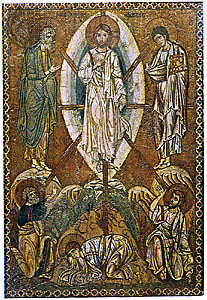
Any of those events could terrify people. We heard about an event today that terrified the onlookers, too: the Transfiguration of Jesus. Peter, James and John were scared out of their sandals! Our Gospel reading from Matthew 17 tells us so.

Let us step back from this reading, and take a long view on the situation in Matthew 17. Jesus is not too far from the end of His ministry, His final trip to Judea and to Jerusalem. It’s only a matter of months before the culmination of Jesus’s time on earth. For the past three years, the itinerant Rabbi Jesus has been preaching, healing, performing miracles, telling parables, and generally doing the things we are used to Jesus doing.

I know Jesus’s typical daily schedule might seem different to us, today, but Jesus had been doing the same thing for quite a number of months.

Yes, He might be an itinerant Rabbi, traveling from place to place, but Jesus had a number of back-up people, ready to take care of His itinerary and check out possible places to stay and eat, not to mention travel. Did you ever think about that? There must have been at least a few people in Jesus’s traveling group of disciples who must have had some expertise in travel arrangements, and setting up food and lodgings.

And, that isn’t all. We understand from references in the Gospels that Jesus regularly took time out for prayer and meditation. At the beginning of our Scripture reading this morning, we see Jesus taking His inner circle of disciples away with Him to the top of a mountain. Did the three disciples have any idea of what would happen later that day? Do we? Do we really know what happened, there on that mountain?

Whatever the event in Matthew 17 was, it was absolutely amazing to see. Our other reading this morning from Exodus 24 also took place on a mountain. Try to see this scene in your imagination. If you will, picture it on the video screen in your head.

In Exodus, the Lord invited Moses up to the mountaintop, to get the tablets of stone with the Ten Commandments inscribed on them. Also, Moses was supposed to be on the Mountain with God for some time. Both events took place on top of a mountain, in the presence of the glory of God. As the face of Moses shone with that glorious light, so also shone the face of Jesus. Matthew tells us so!

But, it isn’t only the face of Jesus that gets all lit up. No, His clothing becomes brighter than bright, too! A Transfiguration is how the Gospel writer translates the word. In Greek, this word is actually “metamorphed.” We might recognize that word from metamorphosis, the changing of a caterpillar into a butterfly, from an earth-bound creature into something totally and radically different. That is how much Jesus transformed.

For us, today, this sort of transforming effect is not too uncommon. With modern stage lighting, and special effects in the movies, and fancy costuming, we here in the United States in the 21st century might be surprised, but not scared. Certainly not terrified. But, Peter, James and John knew nothing of elaborate lighting or fancy costumes, or even electricity. Imagine, if you can, what an absolutely unbelievable – preposterous – sight Jesus showed to His three disciples. Plus, Moses and Elijah showed up next to the transfigured Jesus, on top of that mountain. Far, far beyond the disciples’ experience. No wonder they were terrified!

If you remember, we had a wonderful Summer Sermon Series in 2018 where we focused on many times in the Bible where people were told, “Be not afraid!” Here is another instance of those powerful words. Powerful, because they almost always come as a result of people seeing the glory of God or the presence of an angel. Memorable, because our Lord Jesus said them to His friends, to Peter, James and John.

We might wonder: how could the disciples possibly relate to Jesus again with any sort of naturalness? Any kind of normalcy, after this clearly supernatural experience?

The answer? Jesus transformed back into regular, human form, and touched His friends. He encourages them with the words “Don’t be afraid!” By touching them and reassuring them that it was really and truly Him, just as He was before? It wasn’t the glorified, “glowing” Jesus who touched them, but the all-too-human, relatable Jesus.

The Rev. Janet Hunt tells us that, as she understands it, “when Jesus tells them to ‘get up’ he is using the same words he also used in raising the dead.  No, Jesus does not leave them there ‘dead’ in their terror and their confusion.  For while they may find themselves in the midst of something unlike anything they have ever seen before.  They may be so afraid that they are as paralyzed as though they were in fact, dead. And yet, Jesus does not leave them there.  He tells them to get up and to leave their fear behind.” [1]

Fear of what, I wonder?

  •   Fear of the unknown?
  •   Fear of the incomprehensible power of God?
  •   Fear of their own inadequacy in the glare of that overpowering bright light?

How many of us are frightened or anxious, and need to hear those words today? How many of our friends or family members find themselves in difficult places, or walking through scary situations, and could be encouraged by those words today? Listen to Jesus! Hear His words to the disciples. Hear His words to us, too.

Sure, we, today, can be dazzled and awestruck as we see the marvelous, miraculous event unfold on the Mountain of the Transfiguration.

How much more do we need this healing, life-giving, transforming touch from our Lord Jesus? The words of Jesus—“Be not afraid!” are surely for each of us, too.      

Alleluia, amen.


[1] http://dancingwiththeword.com/get-up-and-dont-be-afraid-revisited/

(janet@dancingwiththeword.com)

@chaplaineliza

(Suggestion: visit me at my regular blog for 2020: matterofprayer: A Year of Everyday Prayers. #PursuePEACE – and my other blog,  A Year of Being Kind . Thanks!

Unknown's avatar

Jesus Says Relationships Matter!

“Jesus Says Relationships Matter!”

Matt 5-22 angry, bird

Matthew 5:21-26 – February 16, 2020

The Psalm reading for today tells us all about the Bible, and how wonderful it is. Every single verse of Psalm 119 – and it is the longest psalm in our Bible – mentions the Word of God. We get just a taste of this with our reading today. The first eight verses, talk about the law, the statutes, the decrees and the commandments of God, using different names in each verse for the marvelous book, the Bible.

These words from Psalms are all describing God’s Word. I want us all to get this concept in our heads: this psalm praising the Bible is describing God’s Word as God’s rules for living life.

Some might already know one or two verses from Psalm 119. These two verses are extremely meaningful to me, and I have memorized both of them. The first, Psalm 119:11 – “I have hidden Your Word in my heart, that I may not sin against You.” The second, Psalm 119:105 – “Your Word is a lamp to my feet and a light to my path.” In other words, it’s all about the Bible, the Word of God.

The same with our Gospel reading today. In this part of the Sermon on the Mount, the Rabbi Jesus is giving an extended talk on the Law of Moses, part of the Word of God, the Bible. But, what do we do when the words of Jesus are difficult to swallow?

What gives, Jesus? I can understand a murderer getting sent to hell. That’s what Jesus said in verse 21: 21 “You have heard that it was said to the people long ago, ‘You shall not murder, and anyone who murders will be subject to judgment.’” Okay. Depending on people’s views on capital punishment today, they may not exactly agree with the Law of Moses and its rules and punishment on murder, but few people would have serious discussion with the Rabbi Jesus for stating this rule from the Law of Moses.

Here is the part that is hard to swallow. Listen to the next verse, the next thing Jesus says: “22 But I tell you that anyone who is angry with a brother or sister will be subject to judgment. Again, anyone who says to a brother or sister, ‘Idiot!’ is answerable to the court. And anyone who says, ‘You fool!’ will be in danger of the fire of hell.”

Seriously, Jesus? Really? Look here, Jesus, You have got to be kidding. Aren’t You? I mean, Getting sent to hell for losing my temper and calling someone an idiot? That’s only human. We are all fallible. We all lose our tempers and get angry, once in a while. Don’t we?

Let’s go back to the idea of the Bible described as the rulebook God gave us for our lives. We all know about rules. Good, clear rules make a great deal of sense and make lots of things easier. If it wasn’t for traffic rules, the rules of the road, there would be lots more accidents and lots more people getting hurt on the road.

What about rules for playing games, and rules for different sports? I bet we all know lots of rules. For baseball, a basic rule is “three strikes and you’re out!” In football the ball proceeds down the field ten yards at a time: “First down!” And, in basketball, the object of the game is to get the ball through the opposing net. If players did not follow these basic rules, they would end up in the penalty box – like in hockey! And, if we do not follow God’s rules for life, what happens? Is there a heavenly penalty box that we can end up in? Or, something even worse?

“That isn’t fair!” How many times have we heard that, either on a playing field or over a board game? Following the rules can be a tricky business. Some people take rule-following to an extreme. But, isn’t there a way to follow the spirit of the rules – or the spirit of God’s laws?

That is what I think Jesus is getting at here in Matthew 5:22. My goodness, if God decided to throw everyone into hell for name-calling, getting angry and calling each other “idiot” and “stupid,” would anyone end up in heaven? I seriously doubt it. I don’t think Jesus means this literally – He is exaggerating to make a point, like He did a few verses further on, in verses 5:27-28. Jesus talks about cutting off hands or plucking out eyes to keep from sinning. Plus, many other commentators believe this, too. Jesus is using hyperbole here, exaggerating to make an important point: Jesus cares about relationships between people. He cares, and cares very deeply!

One of my favorite commentators, Dr. David Lose, said exactly this: “our God cares about our relationships—cares deeply and passionately, that is, about how we treat each other because God loves each and all of us so much.” [1]

If we acknowledge that our relationships with one another matter deeply to God, we are being faithful to the spirit of this reading. We agree with the nature and the purpose of God’s commands and God’s rule-book. Jesus doesn’t just heighten the force of the Law of Moses, He broadens it. Jesus makes this relational command all-encompassing. “It’s not enough just to refrain from murder. We should also treat each other with respect and that means not speaking hateful words.” [2]

What a profound concept. Jesus gives each of us a basic lesson on how to get along with each other in the next verses—how to reconcile with each other.

Jesus knows people get angry. What is a common saying? “I’m only human!” A shrug of the shoulders, and people try to sweep their anger and bitterness under the rug. Not deal with it, and avoid it. (This is not psychologically healthy.) However, Jesus gives us an excellent suggestion on how each of us can cope with anger. Everyone does get angry, sometimes. As commentator Carolyn Brown says, it just happens. “Good people get angry as often as bad people do. Adults, teenagers, and children all get angry. So the question is, ‘what do you do when you get angry?’” [3]

Jesus says not to wait too long to do this. (We all know that anger and bad feelings can fester if left alone for too long.) Name the problem that makes us angry, and figure out something each of us can do about it. Jesus wants us to be reconciled with the person who made us angry. That means for each of us to work it out together, to figure out how to solve the problem between us. That is not easy, and it may help to get advice or help from other, trusted friends. [4]

Commentator and preacher David Lose has a suggestion. He would like each of us to call to mind one of the relationships in our lives that is most important to us. One that is healthy, whole, and good, and sustains each of us regularly. What makes that relationship good? Why is it important? We are invited to give God thanks for that person and the relationship we share.

Second, think of a relationship that is also important, but has suffered some damage. Please don’t concentrate on the blame for that hurt. Let us hold that person and relationship in prayer, right now. Let us offer that broken relationship to God as an offering, and ask God to help us and heal that relationship. What might each of us do to move that relationship to great health and wholeness?

Each of us, let us pray that God would continue to use both God’s commands and God’s Good News of the Gospel to heal and restore ALL our relationships. [5]

Alleluia, amen.


(I would like to thank the commentator David Lose for his article on “The Relational God,” and Matthew 5 from Dear Working Preacher in February 2014. For this sermon, I have borrowed several ideas and quotes from this devotional. I also thank Carolyn Brown and her excellent blog Worshiping with Children, for the week of Epiphany 6. I used some material from her blog, too. Thanks so much!)

[1] http://www.workingpreacher.org/craft.aspx?m=4377&post=3071

“The Relational God,” David Lose, Dear Working Preacher, 2014.

[2] Ibid.

[3] http://worshipingwithchildren.blogspot.com/2014/01/year-sixth-sunday-after-epiphany-sixth.html

Worshiping with Children, Epiphany 6, Including children in the congregation’s worship, using the Revised Common Lectionary, Carolyn C. Brown, 2014.

[4] Ibid.

[5] http://www.workingpreacher.org/craft.aspx?m=4377&post=3071

“The Relational God,” David Lose, Dear Working Preacher, 2014.

@chaplaineliza

(Suggestion: visit me at my regular blog for 2020: matterofprayer: A Year of Everyday Prayers. #PursuePEACE – and my other blog,  A Year of Being Kind . Thanks!

Unknown's avatar

Shine the Light

“Shine the Light”

Matt 5-16 light so shine

Matthew 5:13-16 (5:16) – February 9, 2020

My family lives in Evanston, not too far from Lighthouse Beach. Yes, there is still a working lighthouse standing on the lakefront. In fact, a number of working lighthouses still are shining their lights over Lake Michigan, and the other Great Lakes. Less so today, with all the electronic and computer-assisted help, but in years past, lighthouses had an essential purpose in helping navigators stay safe on stormy water.

I suspect Jesus knew about lighthouses and navigation lights, living near the sea of Galilee as He did. Navigation lights help sailors a great deal, giving them direct knowledge and understanding about how to stay safe on the water. In our Gospel reading today, Jesus talks about light. He’s talking directly to the people listening to Him, who I suspect are mostly His followers. And—Jesus makes this remarkable statement: “You are the light of the world.”

Some might think that our Lord Jesus is just expressing a pious platitude, or perhaps a devout wish. Oh, I wish people could be the light of the world! Wouldn’t it be nice?

However, Jesus not only is saying that about the people listening to Him at the time, 2000 years ago, but He is also saying that to everyone who reads these words in Matthew’s Gospel. Jesus says those words to us, here, today. We are the light of the world.

Now, if we are light, that implies certain things. Jesus means that the world is in a state of darkness. What is it like to be in darkness, with no light? Let me tell you, when I was younger, I used to go to rural Wisconsin and do tent camping a long way away from any electric lights or settled places. It got really dark at night, and I sure was glad I had a flashlight! I suspect some of you have had similar experiences in the dark. It gets really dark at night, far from the safety of electricity and steady sources of light. It can be scary and dangerous, too.

I’ve never been out on a stormy night on the water, but I suspect people can be very scared of dangerous conditions on the ocean or on a big lake, too. That is one reason why people have depended on lighthouses and navigation lights for safety, security and direction, for many centuries.

As we have mentioned before in weeks past, light and darkness both have their places in God’s world. Darkness can be gentle and needed at times. During Advent and Epiphany, we thought about different aspects about darkness that are warm, friendly, even inviting. We thought about nocturnal animals, gestating animals, and growing seeds underground. All in the warm, nurturing, friendly darkness. These examples give us a whole different view of darkness as opposed to light.

Except, we do not want there to be no light at all in the world, ever, and only perpetual darkness. Perpetual darkness can be a downright scary idea. Jesus told us clearly that we are the light of the world, bringing light into dark places. Can you think of times and places where light is much needed?

As I read the words of one of my favorite commentators this past week, Rev. Janet Hunt, this concept struck home to me. See whether her words strike you as true, too.

“Light helps us to distinguish difference and to celebrate diversity.

Light can deepen understanding.

Light works on cellular structures to promote growth.

Light heals.

Light helps us find our way.

Light. And today Jesus says, “You are the light of the world.” [1]

I don’t know about you, but I suspect Pastor Janet Hunt would absolutely agree with us when we also add lighthouses and navigation lights to the list of things that help each of us to find our way in the dark. Yes, darkness can be gentle and welcoming, but darkness is also scary, producing anxiety. Darkness can cause fear of the unknown, and even make people shrink to engage and interact. And, on dark and stormy nights on the water, we all sure are glad to see lighthouses and navigation lights that show us the way to go.   

When Jesus tells us that we are the light of the world, that means that Jesus is describing our inside nature as followers of Him. After all, He also said He is the light of the world in John chapter 8. Just as Jesus came into the world to bring light to people who walk in darkness, just so Jesus has given each of us that light. Jesus gives us power to display that light of His like a lighthouse brings light to a dark, dangerous coastline, providing hope and direction.

Now, wait, some people might say. I know that professional Christians are supposed to bring people the light of God. Professional Christians have learned how to do that in school, haven’t they? Well, yes. But, Jesus is not just talking to professionals here. Jesus means this description of our inside nature to be for all of us—for every believer in Him.

How are each of us supposed to shine the light of Jesus? That’s hard. That’s scary.

I remember a friend of mine—Miss Rose, who I’ve mentioned before. I came to know and love Miss Rose over thirty years ago at another Chicago-area church. She was a church member all of her life, and her special ministry was working with the children. She loved being a Sunday school teacher, and she would eagerly and willingly tell children and young people about the Lord. She never shied away from letting people know that she shined the light of Jesus as much as she possibly could.

When I think about this verse from Matthew 5, I often think of Miss Rose, shining the light of Jesus, and bringing hope and direction to many young people.

Imagine my delight at meeting Miss Rose again, when I was a chaplain intern at the Presbyterian Homes, a senior retirement community in Evanston. While I was in seminary, one of my field education positions was as a chaplain intern in the large healthcare unit there.

Miss Rose was a resident living there. And lo and behold, Miss Rose shared her love of the Lord with everyone in the healthcare unit. She was the light of the world in her little corner of the world. Even though she was in constant pain, Miss Rose never let that stop her shining the light of Jesus. When I grow up, I want to be like Miss Rose.  

I want to provide a challenge for all of us. As Pastor Janet Hunt says, we are all called to go into dark places with the light of Jesus. Sometimes, we are even called to shine the light of God onto an unfair or sad situation, and bring comfort, direction and friendship.

  • Where have you seen such ‘light’ bringing hope, direction, and promise to a world that is too often dark?
  • Where will you seek to bring such ‘light,’ to be such ‘light’ in the days to come? And, how might you do this together with others who are called to ‘be the light of the world’ with you?

All great questions. I pray that we might go forth from this place, all of us shining the light of Jesus in our particular corner of the world, each and every day.

Alleluia, amen.

[1] http://dancingwiththeword.com/you-are-the-light-of-the-world-2/

@chaplaineliza

(Suggestion: visit me at my regular blog for 2020: matterofprayer: A Year of Everyday Prayers. #PursuePEACE – and my other blog,  A Year of Being Kind . Thanks!

[I would like to thank the Rev. D. Martyn Lloyd-Jones and his superb book Studies in the Sermon on the Mount (Eerdmans Publishing Company: Grand Rapids, MI, 1971). For this sermon, I have borrowed several extended ideas from Chapter Fifteen, “The Light of the World.” Thanks so much!]


Unknown's avatar

Blessed Are We

“Blessed Are We”

Matt 5 beatitudes, word cloud

Matthew 5:1-12 – February 2, 2020

This Thursday afternoon, my husband and I are taking a short trip to St. Louis to see our daughter. Before we leave the house, we are going to print out some maps on our computer. Lots of journeys begin with a road map. There are signs to follow and road maps we can consult, just in case. We have landmarks we know along the way. I wonder, when you are on a journey, do you have a road map to follow?

In the previous Gospel reading from Matthew chapter 4, our Lord Jesus gives a summary statement of the message He wants to get across to everyone. “Repent, for the kingdom of heaven is at hand!” That message is—in brief—a headline for the whole of the next three chapters of the Gospel of Matthew, the Sermon on the Mount. These three chapters tell the world what God wants them to do, how to act, even what to say.

Today, Eileen read to us the first twelve verses of Matthew 5. These verses have a particular name: the Beatitudes. In these statements, our Lord Jesus tells us about His followers’ road through life. In other words, Jesus gives us a road map which will guide us to the kingdom of heaven. (In other parts of the Gospels, this is identified as the kingdom, or the reign, of God.)

This is great! Isn’t it? We have a road map to heaven! If we follow the signs and landmarks that Jesus describes for us here in the Beatitudes, we will make it to heaven, for sure! Won’t we? Or, will we? How easy is it to follow the signs and landmarks that Jesus tells us about?

Hold on just a minute. Following Jesus is more than just a pleasant walk in the park. Let’s take a look at who benefits from being selfish, who gets the lion’s share of attention, and how the faulty, selfish world wants people to act.

In case you and I haven’t noticed, there is a huge difference between what God wants and what the selfish, self-centered world wants. This is the first detour we are going to take from the road God means for all Christians to take.

Let’s look at a topsy-turvy, cynical, worldly view of the Beatitudes. In today’s faulty, selfish world, things are good for the rich, they can buy whatever they want. It’s good for the strong, they can take whatever they want. They will also make the team. Things are good for the winners, they get all the prizes. It’s good for the smart, and the smart-alecks. They get straight A’s, go to the best colleges, and get great jobs. It’s good for the beautiful. They will get their pictures in magazines, on social media, and get to be in movies. Things are good for the important people. They get to make all the plans and all the decisions. [1]

But, is that the way God wants people to live? Is that what Jesus tells us here, in the Beatitudes? Is that how God wants us to live? If you and I live in that selfish, self-centered kind of a way I just described, will we be traveling on the road to the kingdom of heaven?

We know the selfish, self-centered world rewards the powerful, the wealthy, the attractive, the ones who push others out of the way and trample the weak and poor and sick ones.

Now that we have figured out the topsy-turvy, twisted detour way of looking at the Beatitudes, let’s look at a second detour some might take when they consider the Beatitudes.

Sometimes, certain people think that only super-holy people can possibly follow God’s way to heaven. You know, only real saints of God. People like Mother Teresa, or St. Francis of Assisi, or St. Augustine, or Pastor Dietrich Bonhoeffer. The rest of us cannot possibly measure up to such a high standard. I am sorry, but you and I are only going through the motions. Some say we are much too weak and sinful to ever be able to follow God’s high and lofty recommendations in the Beatitudes.

Now, this detour around the Beatitudes is a bit closer to the true road map that God marks out for us, but still not quite on target. God wants all of us—each one of us—to have an opportunity to walk more closely with the Lord, and to follow God in each of our individual journeys through life in this selfish, self-centered world

But, wait! Does that mean that you and I need to follow each of these items on the road map of the Beatitudes, to the letter? We have already seen how selfish, self-centered people often live, disregarding all of God’s recommendations. How instead would Jesus want us to fit into His world and His kingdom?

Jesus says that in His kingdom, it’s good for those who know they do not know everything. They belong in God’s world. It’s good for those who are terribly sad. They will be comforted. It’s good for those who obey God. They will be in charge, according to God’s way. It’s good for those who don’t get justice now. Sooner or later, they WILL get it—God says so. It’s good for those who forgive and care about others. God forgives and cares about them. It’s good for those who are pure in heart. They will see God. It’s good for the peacemakers. They will be praised as God’s own children. It’s good for those who are hurt because they stand up for God’s ways. They will be called heroes and heroines. It’s even good for you and me when people come after us in anger because we follow Jesus. We will be rewarded by God in heaven. [2]

Some people will scoff. How do any of Jesus’s suggestions work properly? If I do any of that stuff, I’ll be laughed out of my workplace! People will taunt me and ignore me, or even worse. Well, I think that is just the point. Our Lord Jesus said these things might happen. In fact, Jesus tells His followers, point blank, that these kinds of things will undoubtably happen. And, Jesus also tells His followers which people are His precious ones, His dear sisters and brothers.

There is a kicker—a high point in this section of Jesus’s sermon. When you and I follow the road map Jesus shows to us, He calls us blessed. This is our Lord’s description of every single Christian. In each Beatitude, everyone who follows God is declared blessed.

Are you mourning for a loved one right now? Jesus said you are truly His sister, His brother. Are you poor, and especially poor in spirit? Jesus says you are really on the road to heaven. Are you meek and humble? Then, the world will be in your hands—in this world or the next. And what about those who work for peace in our neighborhoods, our cities, our country? What a wonderful thing to be called God’s children—God’s daughters and sons. And, God promises to abundantly bless us as we journey with Jesus.

This road map of blessing, this road map to the Christian life, shows us a God who delights to create, bless and redeem. May we always remember that we—all of us—have been abundantly blessed with the Beatitudes, for now, and for always.


[1] http://worshipingwithchildren.blogspot.com/2014/01/year-fourth-sunday-after-epiphany.html

Worshiping with Children, Epiphany 4, Including children in the congregation’s worship, using the Revised Common Lectionary, Carolyn C. Brown, 2014.

[2] http://worshipingwithchildren.blogspot.com/2014/01/year-fourth-sunday-after-epiphany.html

Worshiping with Children, Epiphany 4, Including children in the congregation’s worship, using the Revised Common Lectionary, Carolyn C. Brown, 2014.

@chaplaineliza

(Suggestion: visit me at my regular blog for 2020: matterofprayer: A Year of Everyday Prayers. #PursuePEACE – and my other blog,  A Year of Being Kind . Thanks!

Unknown's avatar

Light and Salvation

“Light and Salvation”

Psa 27-1 fear, afraid, words

Psalm 27:1, 4-8 – January 26, 2020

How many times have you been somewhere when the lights flickered off? When the electricity stopped working at night, and everything went dark? I have vivid memories of times like that. When I was a little girl in Chicago, sometimes the wind and the rainstorm were raging outside, and the lights suddenly went away. I wasn’t too afraid, even though I was small, but some of my friends and classmates at school were. Light is so needed in our homes and our lives. You could even say light is a foundation, a fundamental to our existence.

Our psalm today shines a light on that very thing: light. King David wrote this psalm, and the very first statement he writes down is “The Lord is my light, and my salvation.” A commentator says “The opening verse describes the Lord with language that suggests God’s presence is life-giving and protective. The Lord is called ‘light’ because light drives darkness away. Light is a basic category of order and stability that recalls the first act of creation (see Gen 1:3; and Exodus 10:21).” [1]

This summary statement echoes so many other verses in other parts of the Bible, but I wanted to focus next on the Gospel of John, chapter one. The Word—the Messiah—is called the Light. Referring to God as Light makes this psalm particularly appropriate for the season of Epiphany. This is the time we especially celebrate God’s presence, and the Light of the world coming to earth.

Our Gospel reading from Matthew 4 has much the same idea. Matthew even quotes from the prophet Isaiah: “the people living in darkness have seen a great light; those living in the land of the shadow of death, on them a light has dawned.” Again, the divine Light breaks into the world and allows us, for all time, to come to be close friends, even sisters and brothers of our Lord Jesus Christ.

When you or I come home at night during a storm and the lights suddenly flicker off, what is the first thing we do? Almost always, we light a flashlight, or a candle. We restore some light to that dark room we are standing in. With light comes safety and salvation.

When I was a young child, I knew I was safe in my house at night with our big dog, even if the lights could not go on. But, what about children who are afraid of the dark, and a big storm shuts off all their lights? Shuts down all the electricity. And, the nightlights can’t go on for those frightened girls and boys. There might be dangerous monsters creeping around the bedroom, or in the attic or basement. What happens then? Wouldn’t the children need the reassurance of a loving parent in the scary darkness of night?

What about King David? What does he say about the dark spaces and dangerous places? He comes right out and tells it to us like it is. Verse 2: “When evil men advance against me to devour my flesh, when my enemies and my foes attack me, they will stumble and fall.” Sure, David had a lot of enemies, and sure, the bad guys were actively pursuing David, for years.

Reading about parts of the life of David is like being on a roller coaster—so many ups and downs, and terribly exciting, most of the time. David was on the run from King Saul in the wilderness, for years. I bet you anything that as David wrote this psalm, he was thinking about those times, those years that he was pursued by the finest soldiers in Israel, the best in the business of being a soldier.

Even though we are not pursued by a whole bunch of military personnel, I suspect from time to time you and I feel pursued by a bunch of other evil circumstances, or horrible people. Perhaps it is someone at work who makes your life miserable? Or, maybe it is a continuing health situation for yourself or a loved one that just won’t go away? Or, like several of my friends, underemployment, where they just cannot make ends meet, no matter what? When we are in predicaments like these, God can seem really far away. God might never even hear us when we call! At least, that is what we might feel in our hearts—sometimes.

I suspect King David had his moments of fear and trembling, moments when he doubted that God would come through for him. Such moments are only human. Throughout the centuries, countless people have cried out to God in distress and despair. We today have a lot of those moments, too. I don’t think anyone could manage to live life in this world and not have those kinds of doubts.

Thank God that David thought of this, too. David not only called the Lord his “light,” but he named the Lord his “salvation,” too. Again and again in the Hebrew Scriptures, the various writers refer to and remember that part of God’s identity as they remember the Exodus from Egypt. God delivered Israel numerous times with a mighty hand. And, David knows very well that God has delivered him, personally, from King Saul’s soldiers—again and again.

As David celebrates the presence of the Lord with the words of this psalm, he asks to “dwell in the house of the Lord all the days of my life, to gaze on the beauty of the Lord and to seek him in his temple.” What a joy, what a privilege to be able to come to the house of the Lord on a regular basis.

We have the assurance—as David tells us—that we will be in God’s presence, hidden in the sacred shelter of God’s tabernacle. What a promise! What a God. How can we help but praise the Lord? Alleluia, amen.

[1] http://www.workingpreacher.org/preaching.aspx?commentary_id=4358

Jerome Creach |

@chaplaineliza

(Suggestion: visit me at my regular blog for 2020: matterofprayer: A Year of Everyday Prayers. #PursuePEACE – and my other blog,  A Year of Being Kind . Thanks!

Unknown's avatar

In Whom I Delight

“In Whom I Delight”

Matt 3-16 baptism word cloud

Isaiah 42:1-8, Matthew 3:13-17 – January 12, 2020

Most people are familiar with job descriptions. A job description for a bus driver would highlight their ability to be able to transport people safely and efficiently from one place to another. A job description for a magazine editor would feature their skill at editing and synthesizing copy for publication. But, what would the job description be for the Messiah, the Chosen One of the Lord?

We turn to our Gospel reading for this morning, from Matthew chapter 3. We meet Jesus at the very beginning of His public ministry at the River Jordan. He presents Himself to John the Baptist, along with a whole crowd of other people. They all want to be baptized, yes. But, what will Jesus do after baptism? What is His ministry going to look like? Do we know the requirements of His position as Servant of the Lord?

If we step back from this close-up view of Jesus and His cousin John the Baptist, we might be surprised at what we see. John had made a big splash in Jewish society, and in fact that whole geographical region. There were many, many people coming to where he was stationed at the River Jordan. Sure, many of them had heard the fire-and-brimstone way he preached. Many others wanted the first-hand experience with a true prophet of God. He called for serious repentance! Not a simple, breezy “I’m sorry” sort of thing. No, John preached a genuine, heartfelt, sometimes gut-wrenching repentance.

Isn’t that what you and I are supposed to do, before we come to the waters of baptism? Repent? Follow God? Or, if we are bringing babies or small children to be baptized, aren’t the parents and godparents supposed to answer for the children and affirm that these little ones are going to strive to follow God all the days of their lives? Serious matters. Serious vows.

But, Jesus was sinless! He did not need to be baptized! Why on earth did Jesus do this? Two of the reasons I believe Jesus went through the waters of baptism: He publicly inaugurated His public ministry, and He closely identified with the penitent people of God. How better to let people know that He was one of them than to experience all things in the same way that they did, go through all of life’s ups and downs, striving to live life as God would have Him live it.

Yet, John also prophesied the coming of the Lord’s Messiah—or as translated into Greek, the Christ. The Servant of the Lord, as mentioned by several prophets in the Hebrew Scriptures. There has got to be a job description in one of those Servant-of-the-Lord sections. Isn’t there?

Many organizations and businesses have detailed job descriptions for each of their positions. In want-ads on line, you can see details of each job, listing required qualifications, desired expectations, practically everything an applicant would need to know in order to apply for the featured position.

In our Hebrew Scripture reading from Isaiah 42, we see a clear description of the prophesied Servant of the Lord. In other words, a job description for the Messiah. We can also think of this as a checklist for the several years of the Rabbi Jesus’s public ministry.

The first qualification the prophet talks about? “I have called you in righteousness.” This is answered directly by Jesus, in Matthew 3. Why was one of the reasons for Jesus’s baptism? As Jesus said, “to fulfill all righteousness.” I suspect Jesus may have had this very section in Isaiah 42 in mind when he responded to John the Baptist.

We hear this job description repeated again and again, by various prophets in the Hebrew Scriptures, as well as prophecy fulfilled in the Gospels. Sort of like a first-century job board. Is it any wonder that many people already knew what was ahead of the Rabbi Jesus as He begins His ministry among the people of Israel?

The prophet Isaiah writes God “will make you to be a covenant for the people and a light for the Gentiles,” We go back to that jam-packed chapter 2 of the Gospel of Luke. After the angels and the shepherds went away, Mary and Joseph took the eight-day old baby Jesus to be presented at the Temple in Jerusalem. When he saw this Baby, the devout man Simeon also made a prophesy about this Gift from God. It is almost word-for-word out of Isaiah 42. Simeon said “For my eyes have seen [God’s] salvation, which you have prepared in the sight of all nations: a light for revelation to the Gentiles, and the glory of your people Israel.” As Luke said, Simeon had been told by the Lord that he would live to see the Messiah. Lo and behold, when Mary and Joseph brought the Baby into the Temple, Simeon was there, to be a witness.

Another phrase from Isaiah 42: “to open eyes that are blind.” A number of times in the Gospels, we see Jesus healing people who are blind, restoring their sight. One of these healings is recorded in John 9, where Jesus publicly heals a man born blind, and argues with the religious leaders while He was doing the healing. (Plus, an editorial comment: I cannot believe Jesus would heal anyone’s sight to less than 20/20. Perfect sight.)
The prophet Isaiah foretold that the Servant of the Lord would “free captives from prison and release from the dungeon those who sit in darkness.” When Jesus proclaimed in His hometown synagogue that He was the Servant of the Lord, He read from another section of Isaiah. Jesus said these same words: He would free the captives and set the oppressed free.
Last but certainly not least, Isaiah 42 begins with a summary statement: “Here is my servant, whom I uphold, my chosen one in whom I delight.” Could this be any more clearly the voice of the Lord, echoing across the waters of the River Jordan? “A voice from heaven said, “This is my Son, whom I love; with him I am well pleased.” What love. What affirmation. What blessing.

If only we all could have that approval from our earthly parents and families. As one of my favorite commentators David Lose said, “Baptism is nothing less than the promise that we are God’s beloved children. That no matter where we go, God will be with us.” [1]

Certain job descriptions designate people with specific titles or names. I suspect you are familiar with a number of them, too. “Nurse,” “doctor,” “judge,” “teacher,” and even “pastor.” Jesus had the job titles “rabbi,” “teacher” and even “Messiah” or “Christ.” Names or titles are important; some lifting up, and others tearing down.

Think of the various titles or names you have had in your life, as will I. Were all those names or titles positive, good, or helpful? Or, were some of these hurtful, hateful, or demeaning? Some of these names or titles can stay in the memory for years, or even longer, when said in a mean or nasty way. Think of names or titles like “Stupid” or “Egghead,” “Fatso” or “Ugly.” Names like “Loser” or “Prissy,” “Know-it-all” or “Victim”.

As I remind all of us about these negative, hateful names or titles, and we sit with them for a moment, it is just for a moment. Each of us has a God-inspired job description, too. Each of us has the title or name of beloved child. Think about it. We may hold this title, this name, to our hearts—Christian. What an affirmation. What a blessing!

Just as Jesus had the title God’s beloved in His job description, so do we. We have God’s word on it.  

(I would like to thank the commentator David Lose for his article on the Baptism of Jesus and Matthew 3 from Dear Working Preacher. For this sermon, I have borrowed several ideas and quotes from this devotional. Thanks so much!)

[1] http://www.workingpreacher.org/craft.aspx?post=1580

“The Power of a Good Name,” David Lose, Dear Working Preacher, 2011.