Unknown's avatar

Whose Calling? God’s Calling!

“Whose Calling? God’s Calling!”

Ephesians 4:1-6, 13-16 (4:1-3) – August 4, 2024

            I love the Olympics! Yes, the Winter Olympics are wonderful! No doubt about it. However, I have always had a warm place in my heart for the Summer Olympics. Watching such marvelous athletes can be excellent for both the head as well as the heart.

Watching the nations of the world come together in friendship and friendly competition is wonderful, too. Sports and friendly competition can transcend national rivalry, ethnic differences and even bring about an end to conflict and wars – as temporary as the peace and truce every four years at the time of the Olympics is.

            Sadly, in Paul’s time, regions and countries were in regular conflict and war, one with another. The apostle Paul is quite deliberate here at the beginning of Ephesians chapter 4. He does entreat, in all seriousness! Paul knows how difficult it is for individuals to get along with each other, much less countries. It sounds much like today!  

            The letter to the Ephesian church is divided into two parts. Paul ended the first section with Ephesians 3, with a prayer for an outpouring of Christ’s love. Paul wished the Lord might grant strength and power to the Ephesian believers, prayed they might experience the full-ness of God, and closed with a spontaneous doxology to the immeasurable praise and glory of God. Here at the beginning of the second section of his letter, Paul gets practical.

I would like to read again these words from the apostle Paul. “live a life that measures up to the standard God set when he called you. Be always humble, gentle, and patient. Show your love by being tolerant with one another. Do your best to preserve the unity which the Spirit gives by means of the peace that binds you together. There is one body and one Spirit, just as there is one hope to which God has called you.”  

            When you think of someone who is humble, gentle, and patient, who comes to mind? Let me tell you who comes to mind for me. Mister Rogers. Yes, Fred Rogers from Mister Rogers Neighborhood is for me a star at being humble, gentle, and patient. Yet, look at our culture here in the United States.  These three attributes are not seen to be highly regarded or sought after. Look at television commercials, which deliver a hard no to humble, gentle, and patient.

            Especially as – and I am going to venture into the political realm for a moment, which I usually do not do – we consider the general tenor and divisive attitude of the whole nation, with our national election only three months away. Who among our political leaders and those running for office wants to showcase themselves as humble, gentle and patient? Yet, that is exactly what the apostle Paul tells us to be, as believers in Christ.

            Paul moves to the idea of being worthy of “the calling you have received.” That is, each of us is called. God has chosen us, as the Bible says in multiple places, to be God’s beloved children. The Lord has chosen each of us to be a part of God’s Church Universal. And, each in our congregation is a part of our local church here. St. Luke’s Christian Community Church.

            In the Olympic competition every four years, we can watch many, many different teams playing a variety of sports, from all over the world. I was very much struck by the USA women’s rugby team, who actually medalled, winning bronze. The first time a USA team has won a medal in rugby, since 1924. I heard Illona Maher, the earnest, sincere captain of the team interviewed, and several of her teammates also commented. They are so grateful they had the opportunity to practice and to compete together. There is a special bond between these women that will last a lifetime. May the bonds between each of us as fellow Christians lead us to such togetherness.

            Now, WHY should there be such togetherness? As Paul is urging believers in Ephesus to live lives worthy of this Godly calling, he also urges each of us to do the same. “Nothing we do can ever make us truly worthy of the gift of God’s grace, but God’s grace should make us want to live lives that align with who God has called us to be.” [1] Isn’t grace the whole point of living our lives as believers in Christ? Talk about being counter-cultural! This is it, right here.

 God not only freely gives each of us grace – which none of us has done anything to earn! – but we, the church, have been given unity! I know it doesn’t seem like we are unified some of the time. Even, most of the time, depending on which groups of people you and I are looking at! Paul reminds us: “Do your best to preserve the unity which the Spirit gives by means of the peace that binds you together.”

As we look at the spirit and goal of the Olympics, we can see another expression of unity. Unity in sport, in friendly competition. This year, athletes from more than 200 countries are living together under one roof, and are unified as ambassadors of peace, for these two weeks at least. What a marvelous expression, and how similar is this unity that the apostle Paul talks about here in our reading today! What better way to express this unity, as Paul says, than by stewarding this unity through you and me striving to be humble, gentle, patient and loving.

            I know sometimes there are fierce rivalries between sports teams, and between their devoted fans. But, not here! Not in God’s gifting. Just as on a sports team there are different gifts displayed by the various team members, so there is in every local church different people performing different functions. Even equipped with different but equal talents! “It is notable that God, desiring unity, didn’t make us all the same, but instead has given us the opportunity to encounter people who differ from us. Our goal as a Church is to learn to love all peoples ‘until we all reach unity in the faith and in the knowledge of the Son of God.’” [2]

            So, God is again doing the unexpected: giving us grace! And, calling us with the rich calling that is even more amazing than we could possibly ask for. Plus, the hallmarks of our calling as believers come as we all strive to be humble, gentle, patient and loving – to everyone! All people, from everywhere. Just like the Olympics. Just like the Church, all over the world.

Listen to Paul – be peacemakers to all people, and be unified. As God has gifted us to be. Alleluia, amen!

@chaplaineliza

(Suggestion: visit me at my other blogs: matterofprayer: A Year of Everyday Prayers. and  A Year of Being Kind . Thanks!


[1] https://www.churchofscotland.org.uk/worship/weekly-worship/monthly/2024-august/sunday-4-august-2024-eleventh-sunday-after-pentecost-year-b

[2] Ibid.

Unknown's avatar

More Than Enough!

“More Than Enough!”

John 6:4-21 (6:11) – July 28, 2024

               A memorable picture book I dearly remember from my childhood is called “Stone Soup.” I remember reading it to my children, too. This story is about a small village in Europe after the wars, several hundred years ago. The villagers are frightened of strangers. As a result, they are tight-fisted, and keep their precious food to themselves. They hide the food, until coaxed to bring it out, be generous and share it all together. And then, all the village has a wonderful feast.

            Our Gospel reading today from John 6 has a similar sort of idea. Someone is generous, and food is shared. The Rabbi Jesus blesses the food, multiplies it, and all the people end up having a wonderful feast.

            In today’s Scripture reading—which appears in all four Gospels, by the way—we see Jesus and His disciples traveling far away from town, to pray. Far away from a ready source of food. Yet, here comes a huge crowd of people, pursuing Jesus!

            I wonder why all those people are pursuing the Rabbi Jesus? Maybe it’s because of His wonderful preaching and teaching. More likely, it’s because of the miracles He has been doing! And I suspect that some of those coming after this Rabbi want to push Him to become politically active, perhaps even see Jesus as the coming political Messiah!

            Regardless of why they all were there, a huge crowd was following Jesus and His disciples. Thousands of people, and they were all in a deserted place, far from any grocery store or restaurant, unable to buy something to eat. What a catastrophe waiting to happen!  

            From our Gospel reading today, “Jesus looked around and saw that a large crowd was coming to him, so he asked Philip, “Where can we buy enough food to feed all these people?” (He said this to test Philip; actually he already knew what he would do.)

            Have you ever been in a situation something like this one, where there were hungry or restless crowds milling about, and time was running out? What were they all to do?

            The Gospel writer John tells us in a parenthetical aside that Jesus already knew what He was going to do. But, the disciples clearly did not! Even though Jesus had performed many miracles by this time, the disciples still had no clue of what would happen.

            The matter-of-fact disciple Philip responds to his Rabbi, “performs some quick calculations and arrives at a vision of scarcity. His words (v.7) may suggest sentiments like: “this feeding thing is way too expensive and it’s definitely not in our budget”; “we don’t have enough resources or volunteers”; “there’s not enough time, people are hungry now”; and “this will set a bad precedent – more and more people will be clamoring after us if we do this.” [1]

            Talk about throwing a wet blanket on the whole problem! Aren’t these well-intentioned words heard again and again in church council meetings and committees? What if you and I take these words like “way too expensive” and “not enough resources” to heart?

            Let’s look at the disciple Andrew, who found one small boy with a meal fit for a very poor person. “When Andrew finds this boy and his small gifts, he too arrives at a place of scarcity. Other than his poverty, … the only other thing that we can say with certainty about this boy is that his small “mite” would become a miracle for all, once placed in Jesus’ hands.” [2]

 The unnamed boy here turns his food over to Jesus. I can just see him, giving Jesus the little lunch, perhaps wrapped in a cloth by his mother that morning. He empties the food from his hands into those of Jesus. Jesus turns around, blesses the boy’s lunch, and miraculously multiplies it to feed thousands of people.

What about us? Are we frightened and fearful, like the villagers in the picture book “Stone Soup?” Are we hesitant to share our food, our resources, our money, time and talents with Jesus? Our Lord Jesus can take what we offer and turn it into such abundance! Just as the boy was generous and turned over his lunch, look at what a marvel Jesus did with that!

As Jesus’ followers today, we are also invited to be generous. To see God’s abundance, and to stretch out our hearts, minds, and hands. Not like the disciples, who were constrained by practical problems, economic and logistical drawbacks. They couldn’t see that God wants people to be open to God’s working, and willing to serve. Willing to be generous with whatever they have to offer.

            There is a lot for us to unpack from the narrative of this miracle! One of the simplest ways to understand it is that God is very interested in getting people enough to eat. As I have so often said, hunger never takes a vacation – even in August, and especially not at the holidays.

This church – St. Luke’s Church – has supported the Maine Township Food Pantry for decades. Although not a church’s ministry, this food pantry serves the hungry from all across Maine Township. “Just as it was surprising that one boy’s lunch in Jesus’ hands could feed a crowd, so it is surprising how many people can eat when all of us pool our food and money.” [3]

Everyone has something to offer. If each of us gives our little bit, and we gather it all together, it turns out to be a whole lot! Not only food, but time. Talents. Money, when possible. In addition, what about prayer? Some of us have the gift of praying. too! We can pray for those who are hungry. Pray that they may know God’s abundance—through our generosity, as well!  

Jesus comes to open our hearts, our hands and our minds to those around us, especially to those in need. We can do that only because Jesus also comes to open our hearts, minds and eyes to His own presence in our midst. May God increase our generosity! May God increase our love and caring for all who hunger after the abundance that Jesus offers.

May we all too discover the “one small gift” that God is inviting us to bring – that humble yet crucial gift that will help announce to a hungry world that God’s table is set and all are most welcome! [4]

@chaplaineliza

(Suggestion: visit me at my other blogs: matterofprayer: A Year of Everyday Prayers. and  A Year of Being Kind . Thanks!


[1] From: Stewardship Emphasis, PNW Annual Conference [tanya@umfnw.org]

. (please cite “Radical Gratitude,” http://www.umfnw.org)

[2] Ibid.

[3] http://worshipingwithchildren.blogspot.com/2015/06/year-b-proper-12-17th-sunday-in.html

[4] From: Stewardship Emphasis, PNW Annual Conference [tanya@umfnw.org]

. (please cite “Radical Gratitude,” http://www.umfnw.org)

Unknown's avatar

Today!

(I attended a denominational national assembly this weekend, and was not leading worship. Here is a sermon from my archives! I hope it touches your heart and spirit.)

“Today” – 2 Corinthians 5:20-6:2

June 28, 2006

            Once upon a time, there was a loving Father with abundant wealth, property and resources. He loved His many children dearly and did everything in His power to provide abundantly for them.

            Does this story line sound familiar? It should. That loving Father is God, our Heavenly Father. He created the world in the beginning, including humanity. Our loving God gave humans abundant resources, and provided many good and gracious gifts for them, doing everything possible to provide a rich and rewarding life for them.

I’d especially like to focus on the love. God’s love for humanity, for the world, for us. I dare say that many of us here today could quote John 3:16—“For God so loved the world that He gave His only begotten Son, that whoever believes in Him should not perish, but have everlasting life.”

From this verse, can we tell how much God loves the world? How much does God love us? This much?     (spread arms and pause)  

There was a problem, way back when, when God lavished such good and loving care on humans, on His children. That problem was and is SIN.

Face it, humanity—and that includes you and me—is fallen. I usually hesitate when I make sweeping statements, but not in this area. We are sinful. As Romans 3:23 says, “For all have sinned and fall short of the glory of God.” That is ALL. Not a few, not even most, but ALL. Everyone. All humanity. We don’t sin all the time, or in every situation. There are plenty of times when members of the human race act in kind ways, and think loving thoughts, but that troublesome sin nature is alive and kicking in each one of us.

Can you see a toddler or preschooler, stamping her feet, crossing her arms across her chest, and shouting, “No!!” Can you see a teenager, disrespectful and angry, slouching away from the dinner table without a word? Can you see the prodigal mentioned in the Gospel of Luke, wishing that his father would kick the bucket already, so he could get his inheritance? Do these selfish, proud, disrespectful, ungrateful actions (and thoughts, I might add) have anything in common? I would say, yes, they do. The sin nature that is part and parcel of all humanity is readily evident, in all of these situations. We are human, therefore we sin—by thought, word, or deed—by omission or by commission.

It would be really bad news if the story ended there, wouldn’t it? Humanity would be both hopeless and helpless, stuck in the miry clay of our own sinfulness. BUT, that is not the end of the story. God still loves us. Remember John 3:16? “For God so loved the world?” That love still comes to us, regardless of our sinfulness, regardless of our selfishness, regardless of how much we have disregarded the abundant love and the lavish care that God showers upon us each and every day.

As our passage from 2 Corinthians says, we humans trespass. We sin. We mess up. We make mistakes. But God loves us anyhow! God doesn’t keep a tally sheet, a ledger of all our good deeds and bad deeds. God does not count these mistakes against us. In fact, God goes above and beyond our mistakes, reconciling the world to Himself.

It’s not that God is estranged from the world, from humanity. It’s the other way round. It is humanity—it is you and me—that is estranged from God. God created humans, and He loves humans. He created each of us with our foibles and quirks and personality flaws as well as our individual strengths. He created each one of us as individuals to give glory to His name in our own individual ways. God knows us so much better than we know ourselves, and He still loves us just the same! God reconciled the world—that’s you and me—to Himself, out of love.

Like I said, that is wonderful news! Amen! Praise God! Thank You, Jesus!

Jesus was sinless, but He was made to be sin for us. Jesus took all of our collective sin upon Himself on the cross so that in Him we might become righteous before God. Can we tell how much God loves the world? How much does God love us? Is it this much?     (spread arms and pause)  

So, now that we know about God’s abundant love that He lavishes upon each of us, what are we going to do about it? Listen to the words of our passage again. “’At an acceptable time I have listened to you, and on a day of salvation I have helped you.’ See, now is the acceptable time; see, now is the day of salvation!”

D.L. Moody, noted evangelist during the 1800’s and founder of Moody Bible Institute, did much of his evangelistic work around Chicago. One Sunday evening in September 1871, Mr. Moody closed his sermon with the injunction for the congregation to evaluate their relationship with God over the next week and to return the following Sunday. When Mr. Moody was on his way home after the evening service, he heard the fire alarms all over and saw the flames against the sky, turning the night sky red and orange. That meeting hall where the service was held burnt to the ground, along with most of the city of Chicago. The Great Chicago Fire happened that night.

Mr. Moody was horrified, knowing that he had not told his listeners the full message of the love of God, for each one of them. He vowed from that day on to tell the whole story, to always let people know the good news of salvation in every sermon he preached.

What about you? Are you still thinking about God’s offer of salvation? You may have been a church member all your life, faithful and hard at work for many years. But you may have never realized that God’s joyful message of reconciliation was especially for you. You may have been born into a loving Christian family, maybe even a pastor’s kid or missionary’s kid, and been surrounded by God’s abundant love all your life. But just because I may be born in the room behind a bakery doesn’t make me a biscuit . . . and just because I may be born into a Christian family doesn’t make me a Christian by birthright or by osmosis. God has no grandchildren. There are only children of God.

God has been loving us—you and me—all of our lives, even when we turned our backs on Him. If this is that day for you, that acceptable time, that day of salvation, praise God! Enter into the joy of a loving relationship with God, a close friendship with God.

If God had a refrigerator, your picture would be on it. If God had a wallet, your photo would be in it. God can live anywhere in the universe, and He wants to live in your heart. If you have never, truly experienced God’s love for you, individually, there is no time like the present. We can indeed enter into the joy of our Father’s loving embrace and experience His abundant love for each one of us. Today is the day of salvation! God is ready. Are you?
@chaplaineliza

(Suggestion: visit me at my other blogs: matterofprayer: A Year of Everyday Prayers. and  A Year of Being Kind . Thanks!

Unknown's avatar

Dance Before the Lord!

“Dance Before the Lord!”

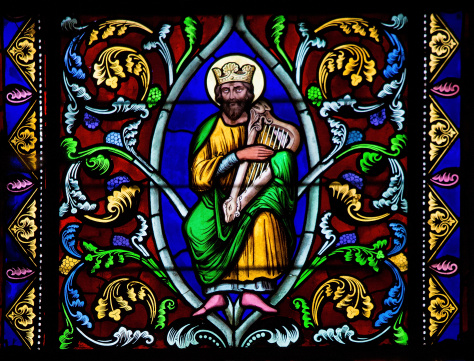
King David

2 Samuel 6:1-5, 13-19 (6:14) – July 14, 2024

            The wise theologian (and humorist) Erma Bombeck described an experience she had years ago in church. “A row or two in front of her sat a mother with a normal five-year-old boy, which means, he couldn’t sit still. As he squirmed and looked over the pew at those behind him, he was smiling. Then Erma heard the mother sternly whisper, “Stop smiling! Don’t you know that we’re in church?” [1]

            Our Bible reading this morning talks about how a large crowd behaved when they were at worship, including their leader, their King David. How different would this reading be if God’s people decided to be all stern, and stiff, and poker-faced when they came to worship? Can you imagine a stern, stiff, solemn service at this time? Or, is this joyful, musical, dance-filled procession from 2 Samuel pleasing to the Lord? Which service could you see yourself in?

            Let us listen again to a part of this reading: “David and all the Israelites were dancing and singing with all their might to honor the Lord. They were playing harps, lyres, drums, rattles, and cymbals. 15 And so [David] and all the Israelites took the Covenant Box up to Jerusalem with shouts of joy and the sound of trumpets.

            I cannot even begin to imagine the joy and exuberance of this procession! But, why so much excitement? For that, we will need to go back several chapters. Some while before, the enemy Philistines captured the Ark of the Covenant, God’s Covenant Box, and brought it back to their territory. Except, things did not go well for them. Their priests told the Philistine king that they needed to send the Covenant Box back to Israel! So, they did, and through some adventures King David and the people of Israel finally brought the Covenant Box back into Jerusalem.

            This was a rocky number of months, for the people of Israel! Losing the Covenant Box, the Ark of the Covenant, was devastating for Israel. “This was the most holy object God’s people had. The [people of Israel] had carried it as they walked through the wilderness and kept it in a special tent in the center of their town. Image how they felt when the Philistines captured it and carried it off to their country AND how they felt when they felt when they got it back.” [2]

This priceless Box was not only a beautiful, holy and precious artifact, this Covenant Box signified the very presence of God. Just imagine the rejoicing as King David and tens of thousands of Israelites danced, sang and played music as they brought the Ark into Jerusalem!

To the people of Israel, the Covenant Box was an important object, telling a story. The Ark of the Covenant “points to the larger narrative of God’s delivering the people from slavery and divine guidance into the promised land. It reminds the people of this salvation history and of the nearness of God’s Presence with them always. It provided continuity from the time of Moses to the present moment described in 2 Samuel 6.” [3]

In this chapter from 2 Samuel, God’s Covenant Box signaled God’s Presence among the people – all the people. What is more, this signified God’s promise to them! As you and I come together in our worship service today, what symbols, objects or stories help us to worship? Which of these help us to have “eyes to see and ears to hear” God’s Presence among us today? Which help us to praise and worship God, even to sing and dance before the Lord in thanksgiving?  

I know I preached on this reading three years ago, and I asked then, have you ever been to a worship service where people praised the Lord in all kinds of ways? More than singing hymns and worship songs. I mean, playing all kinds of instruments, dancing before God, and other kinds of artistic expressions.

Perhaps you have just been to worship services where there were piano and organ – and nothing else. Do you know that in a great many worship services across the world today drums are the chief instrument of praise? Drums and the human voice, the beat of human feet and clapping of hands make a joyful noise to the Lord across many cultures and in many countries today. Christians from those worship services might feel really strange if they came to a solemn service like ours where no one was actively praising God and dancing in the aisles!

We are left with a question: how do you and I respond to God’s holy Presence? We can see that King David and thousands of his people danced before the Lord “with all their might!” Pianos and organs are wonderful musical expressions, and so are praise bands and bluegrass bands and full orchestras and all kinds of percussion! Exuberant joy and dancing in the aisles is certainly a wonderful response to God! [4]

But, that is only one way. God may instead call us to quiet contemplation, or sometimes bold action. We are not required to only worship God in church buildings! No, God can be worshiped in the mountains, on the beach, or in a park. And, sometimes things can be new and different for each of us, to allow our hearts to worship in new and different ways.  

Today we can connect to God’s Presence in ways that are significant and touch the heart and soul, that are meaningful to each of us – and celebrate others for connecting in ways that are meaningful and soulful to each of them! Whether dancing and leaping, praising in loud voices, praying quietly, singing hymns and songs, drawing and painting, making banners or wall hangings. We humans have a multitude of ways to come before our God!

How does God respond to all these different types of worship, whether quiet and solemn, or joy-filled and exuberant? I go back to Carolyn Brown’s excellent commentary where she mentions the children’s tune “Hokey Pokey” “to explore the truth that we have to put more than just our left hand or our right foot in [to worship]. We must put our whole selves into worship, life, prayer, everything.[5]

 Sometimes these simple, straight-forward ways are the best ways. Put our whole selves into worship, life, prayer, everything. That’s how to honor, praise and enjoy God the best.

And, the Lord is so pleased when God’s people come together to worship! Praise the Lord!

@chaplaineliza

(Suggestion: visit me at my other blogs: matterofprayer: A Year of Everyday Prayers. and  A Year of Being Kind . Thanks!


[1] https://bible.org/seriespage/lesson-7-worship-joyful-celebration-2-samuel-6

[2] http://worshipingwithchildren.blogspot.com/2015/06/year-b-proper-10-15th-sunday-in.html

[3] https://www.workingpreacher.org/commentaries/revised-common-lectionary/ordinary-15-2/commentary-on-2-samuel-61-5-12b-19

[4] https://www.workingpreacher.org/commentaries/revised-common-lectionary/ordinary-15-2/commentary-on-2-samuel-61-5-12b-19

[5] http://worshipingwithchildren.blogspot.com/2015/06/year-b-proper-10-15th-sunday-in.html

Unknown's avatar

A Hometown Reaction?

“A Hometown Reaction?”

Mark 6:1-7 (6:5) – July 7, 2024

            I have not rubbed shoulders with many VIPs – Very Important People – in my life. All of those VIPs grew up somewhere. All of those high-profile people started out as kids, and teenagers, and some grew up in small towns before they hit it big. When they went back to the old neighborhood where they grew up, how were they received? Were the older people from the neighborhood filled with awe or pride? Or, did these VIPs get disrespected?

            From what our reading tells us, the people from the old neighborhood in Nazareth did not think very much of the newly-minted Rabbi Jesus. Starting at verse 2, “On the Sabbath Jesus began to teach in the synagogue. Many people were there; and when they heard him, they were all amazed. “Where did he get all this?” they asked. “What wisdom is this that has been given him? How does he perform miracles? Isn’t he the carpenter, the son of Mary, and the brother of James, Joseph, Judas, and Simon? Aren’t his sisters living here?” And so they rejected him.”

            The folks from the old neighborhood – from where Jesus grew up – would not see Jesus as He had become. They insisted on seeing Him as the young boy who had grown up down the block, where His extended family still lived. Nothing more. Talk about disrespect! “There is an undertone of ‘who does he think he is’ in this passage. Not the warm welcome you might expect your home crowd to give you. And yet is it not often the case that when people know you, really know you, that they can be quick to believe the gossipmongers?” [1]

            When our Lord Jesus went home, things did not go well for Him, as we see here. How many of us wish to “go home,” wherever “home” is for you?

            Of course, a great deal depends on our family of origin and the situation of our growing up, the neighborhood where we were born, even how long we lived there. Did our family move from place to place several times during the time we were children? What about the place were we were born – was it in a large town, or a little village, or on the wrong side of the tracks?

            And, what about where you were in the birth order in your family? Some families have definite birth orders, while other family structures are more lackadaisical and some even haphazard. How many of us do not get respect from brothers or sisters or family elders simply because of place in our family “pecking order?” Certainly, Jesus got this kind of attitude when he went home and preached in Nazareth. [2]

Mark’s Gospel clearly says that a number of townsfolk took offense at Jesus. Some commentaries particularly mention this word. In Greek, it is “skandalon,” from which we get the word “scandal.” Can you imagine being scandalized by a young man from your hometown or neighborhood actually preaching, teaching, and even doing miracles? I cannot imagine it. It’s a little beyond me, but Mark says it’s so, right here in chapter 6.           

            Jesus said to them, “Prophets are respected everywhere except in their own hometown and by their relatives and their family.” He was not able to perform any miracles there, except that he placed his hands on a few sick people and healed them. Jesus was greatly surprised, because the people did not have faith.

            Jesus realizes that His teaching, preaching and miracles would not always be well-received. But, this is still the beginning of His ministry. Jesus is still building His team and training them for the work He knows they will have to do. Jesus knows that it will not be easy and the teaching and preaching of the disciples will not always be well-received or even welcome – although even Jesus is amazed at how hostile the crowd in Nazareth are. [3]

But, what if we took the sad situation in Nazareth – or wherever our small town or old neighborhood is – and flipped it upside down? What kinds of things might happen? Instead of some hometown boy or girl coming back and being disrespected, what might happen?

            What if you and I are more alert and more attuned to what God can do in our world than Jesus’s neighbors in Nazareth were? Can we watch for God at work in our world? How about on our block or down the street? Does God work here, today, and not just in Bible times? A pastor friend of mine (another Pastor Joe) calls these “God sightings.”

What about an older brother or sister leaving friends to take care of a younger sibling? What about some young people working on and repairing an elderly church member’s house? What about a son or daughter (or grandson or granddaughter) getting a first job at a local mission agency or food pantry, like A Great Harvest hear the Howard Street El station? I used to take the baked goods from Maier’s Bakery there for a number of months. What about a church member bringing a dinner or some take-out to a shut-in or someone recently returned from the hospital? Aren’t these all “God sightings?”  God working through ordinary people – like us?

            We can see from our Gospel reading today that the Rabbi Jesus came home, but He wasn’t “at home.” How were His friends and disciples His new “found family,” or “family of choice?” Are you – am I more comfortable with a “family of choice?” And, does God support us when we find family in unexpected places? Each of us – all of us can find family and can find “God sightings” each and every day!

            I encourage all of us to open our eyes and look for these everyday ways that God works in our lives, our homes, and our neighborhoods each day. We all have the opportunity to support “God sightings!” Plus, we all have regular opportunities to find places where you and I can get active and perform one of these “God sightings” ourselves!

Today, this week, whenever we can.

            Don’t be like the people in Nazareth, hostile and scandalized at Jesus and His ways of doing God’s work. Instead, celebrate – support – and get involved in any of the places where God is at work in our neighborhoods, today! Alleluia, amen!

@chaplaineliza

(Suggestion: visit me at my other blogs: matterofprayer: A Year of Everyday Prayers. and  A Year of Being Kind . Thanks!


[1] https://www.churchofscotland.org.uk/worship/weekly-worship/monthly/2024-july/sunday-7-july-2024-seventh-sunday-after-pentecost-year-b

[2] http://www.word-sunday.com/Files/b/14-b/A-14-b.html

“Going Home,” Ordinary 14B, Larry Broding’s Word-Sunday.Com: A Catholic Resource for This Sunday’s Gospel

[3] https://www.churchofscotland.org.uk/worship/weekly-worship/monthly/2024-july/sunday-7-july-2024-seventh-sunday-after-pentecost-year-b

Unknown's avatar

Love in Their Hearts!

“Love in Their Hearts!”

2 Corinthians 8:7-15 (8:7) – June 30, 2024 

Remember children on the playground, or maybe your friends or relatives’ children, divvying up some playthings, or some sports equipment, or some dress-up clothes? And then, getting into arguments about how someone had more, or another kid had the best one, or somebody was being overlooked? “Nobody pays any attention to me!” was the cry! “They’re cheating!” was another. “It’s not fair!” was the ultimate complaint.

Things have been that way for thousands and thousands of years. Human nature has not changed one bit. It does not matter whether we are talking about children or adults. We don’t always get what we want. We can’t sit wherever we want to. “He gets more than I do!” “Why is it her turn first?” And it always comes back to, “It’s not fair!”

Except, the apostle Paul is talking about being generous to each other here. In this letter to his friends and former church members in Corinth, Paul congratulates the friends in Corinth for their generosity! He is not able to say this to every group of believers he writes to, that’s for sure! The Corinthians go out of their way to give of themselves! As Paul says, “You are so rich in all you have: in faith, speech, and knowledge, in your eagerness to help and in your love for us. And so we want you to be generous also in this service of love.”

A little background here. Some years had passed since the Resurrection and the start of the Church, and the Church in Jerusalem and the surrounding area was very persecuted by the ruling authorities. These believers were – frankly – in poverty, because of the maltreatment by soldiers, by the government, and by their fellow citizens. The believers in the far-away city of Corinth had taken up an offering for the poverty-stricken believers in Jerusalem and the surrounding area, and the apostle Paul was really commending them for their generosity!

Paul’s kind words to his fellow believers make me think about us, today. Christians in Jerusalem are very much like people in dire poverty, today. Christians in Corinth are very much like those living in comfort, today. Just think about the believers in Corinth sending money to the struggling believers in Jerusalem. How does this church send money to people in poverty, today?

How about the Maine Township Food Pantry? Does that feed people in poverty? How about providing paper goods for those who have very little money? I know I have said this before, and it needs to be said again and again. You cannot buy disposable diapers with food stamps. You cannot get feminine products – sanitary pads or tampons – with SNAP cards. These are essential products that young families need.

Let’s look back at what Paul said here. This church in far-away Corinth collected money for their fellow believers whom they have likely never met. This offering binds the two churches – the two communities – together! “To use Paul’s language, this collection shows the believers’ indebtedness to one another and ultimately to the God who is working among them.” [1]

Which draws us to the high point of this reading today: “You know the grace of our Lord Jesus Christ; rich as he was, he made himself poor for your sake, in order to make you rich by means of his poverty.” Time after time in these letters, Paul reminds his friends about our Lord Jesus became human, becoming one of us frail creatures. And in our reading today, we see Jesus made Himself ultimately poor for OUR sake. For US.

What an astounding thing to think about! Jesus voluntarily made Himself poor. He took on poverty in this world so that you and I might become spiritually rich. That is so marvelous and astounding, that I almost cannot comprehend it. Plus, Paul then adds to his friends in Corinth that they need to finish the job that they started. Paul acknowledges that they are blessed with much. He says, “since you have plenty at this time, it is only fair that you should help those who are in need. Then, when you are in need and they have plenty, they will help you.”

I want to go back to hungry people, today. I am especially thinking about hungry children. I think all of us here know about children (and grandchildren) who are hungry enough to eat a horse, regularly! There are many families here in this community who do not have enough to feed their hungry children. Many families only get two meals a day, and sometimes even only one meal a day. That is all the food that the family can afford.

When children are hungry, they cannot pay attention in school or to their schoolwork. That is why reduced cost and free lunches are so necessary! Except, what about when weekends come? Or, school is on vacation? And, there are no extra lunches to be had? That is where the Backpack Project comes in. Backpacks are distributed by teachers and social workers at schools to families in great financial need. Quietly, without any fuss or fanfare, and with dignity. This is surely a way to provide for those in need, who do not have enough.

Paul shows us a way to let abundant grace be seen in these believers’ lives and announced to the church as a whole. Besides, giving to the church in Jerusalem is something the Corinthian believers are already doing. “Paul wants us to give, but he wants our hearts in it too, not that the value of our giving is measured by the depth of our desire to give, but that grace is at work in us, evidently at work in us, when our desires match our actions. Paul commended them for their giving, but also for their wanting to give.” And he is encouraging them to keep both the giving and the desire to give going to the utmost. [2]

Can we as believers do the same, today? Give abundantly, with grace?  

The apostle Paul tells us we – you and I – we are all one in the body of Christ. This reading tells us we all share as one in the body of Christ. Yes, it’s an ideal. Yes, we freely admit it. “Yet we strive for it anytime we open our hearts. And whether we have more than enough or whether we are lacking, we find help and hope in the body, hope in the relationship within the community of faith to whom we have opened our hearts.” [3]

            Paul calls each of us to generosity! Be generous with what we have, always. Open your heart and open yourselves to others, and we will all share as one in the body of Christ.

Alleluia, amen.

@chaplaineliza

(Suggestion: visit me at my other blogs: matterofprayer: A Year of Everyday Prayers. and  A Year of Being Kind . Thanks!


[1] https://www.churchofscotland.org.uk/worship/weekly-worship/monthly/2024-june/sunday-30-june-2024-sixth-sunday-after-pentecost-year-b

[2] https://www.workingpreacher.org/commentaries/revised-common-lectionary/ordinary-13-2/commentary-on-2-corinthians-87-15.

[3] https://www.umcdiscipleship.org/worship-planning/open-your-heart/sixth-sunday-after-pentecost-year-b-lectionary-planning-notes/sixth-sunday-after-pentecost-year-b-preaching-notes

Unknown's avatar

Peace! Be Still!

“Peace! Be Still!”

Mark 4:35=41 (4:39) – June 23, 2024

            Have you ever slept in a tent while a huge thunderstorm crackled and poured overhead? The blustery wind, rain and loud thunder seem right on top of you. I know firsthand; I spent several summers in high school at a Girl Scout camp, sleeping in a platform tent every night.

            Except, in our Gospel reading, Jesus and the disciples did not even have the cover of a tent. They were out in a boat on the Sea of Galilee, in the middle of a fierce storm.  Our Gospel writer Mark tells us “Suddenly a strong wind blew up, and the waves began to spill over into the boat, so that it was about to fill with water.”

            Can you relate? Has this ever happened to you? Maybe it’s an actual storm, blowing in all of a sudden out of a clear blue sky, complete with the skies turning black and the heavens opening up with pelting rain. Except, sometimes it can be a figurative story. Something horrible comes up suddenly, upon you or upon a dear member of your family. What about a sudden car accident? Or, perhaps a house fire in the middle of the night, or emergency hospitalization, out of a clear blue sky?

            These kinds of sudden, serious storms can blow up in anyone’s life, and they can overwhelm any of us with their intensity and traumatic effects.

            Let us look at this reading again. “Jesus was in the stern, sleeping on a cushion. The disciples woke him and said to him, “Teacher, don’t you care if we drown?”

            Fear can absolutely paralyze people! I can see these guys, scared out of their sandals, on this tiny boat. Rain pelting down, the wind and the waves threatening to swamp the boat, far from shore. Some of these guys are used to sailing and used to sudden squalls on the Sea of Galilee. But, a portion of the disciples are not fishermen, and are not familiar with boats or with seafaring. And what about Jesus? He is sleeping, for heaven’s sake, through the storm, the pitching of the boat back and forth, the pelting rain coming down.

            As one of my commentators says, “This is it. They’re going down. Life’s over! Jesus doesn’t seem to care. I’m not sure what they’re expecting of him—probably they just wanted him to show a bit of concern about their plight.” [1]

            What about those sudden storms that blow into our lives, today? Catastrophic accidents, emergency hospitalizations, or the very abrupt closing of a company. (That recently happened to one of my relatives, and it’s throwing a monkey wrench into everyone’s lives! Everyone who works there, and their families, too.)

            This storm that blew up on the Sea of Galilee must have been some storm, though! Even these seasoned fishermen, familiar with the water, were certain that death was near! “They must have exhausted all their other usual options and now that panic has set in all they have left is to turn to the one who is sleeping on the cushion — seemingly oblivious to the violent wind and driving rain.” [2] What is their cry? “Teacher, don’t You care if we drown?”

            Stories from recent church history can be distressing and catastrophic. Stories about weathering storms from church history can be helpful, and empowering, too. Take, for example, the true story about Anna B.

About 100 years ago, Anna B. was a faithful member of a dying church. The building was run-down, the congregation could not afford to pay a minister. Without a minister, people stopped attending Sunday services. Except – Anna B. kept coming to the church. She opened the doors on Sunday morning, week after week. She lit the candles and provided a place for prayer. She filed the necessary papers to maintain the church as a legal entity. These simple acts of faithfulness and diligence kept the congregation going for several years. Eventually, rebirth happened, and it was in great part because of Anna B. [3]

            That is the true story of Anna B., who was instrumental in faith and revitalization when that church was going through a series of storms in the life of that struggling congregation.

            Anna B.’s history takes place over several years. The sudden storms that come into our lives can blow up abruptly. What does Jesus do in this specific situation? “Jesus rebukes the wind and tells the sea to simmer down; the first word (“Peace!” in the NRSV) is a verb meaning be silent; the second (“Be still!” in the NRSV) means literally be muzzled.” [4]  Just as suddenly, the sea calms and the wind is stilled – muzzled! And, the disciples are left dumbstruck. Jaws hanging open, they murmur, “Who is this?”

            Just as the power and miracle-working capability of Jesus became clearer to the disciples, it can become clearer to us, today. No matter what our personal storm is, no matter how fearful and anxious you and I are because of our personal circumstances, our Lord Jesus has the miraculous power to calm the storms in our lives, too.  

            This Gospel reading is a powerful reminder about the power of God, as displayed through our Lord Jesus. Except, I know from sad experience that miracles do not happen the way people expect sometimes. Even many times. Like Rev. Janet Hunt, I am also not certain how so many deal with lives devastated by all sorts of storms, actual and figurative, storms that threaten from outside and from within. “Even so, perhaps we are changed if we allow ourselves, even as the disciples did, to simply stand still in awe when in the presence of such power which muzzles the worst that can threaten us. Which is all the time, if we are paying attention. Indeed, perhaps it is so that [we] do walk away re-empowered to hold fast in the storm if [we are] able to trust that somehow our benevolent God holds us all. Even in the storms. Especially in the storms.” [5]

Jesus calls on each of us to have faith, even in the midst of the raging storms of our lives. We can believe, we can have faith that Jesus will be right by our sides, through any difficulty. And, Jesus can say “Peace, be still!” to the storms in each of our hearts, too. Alleluia, amen.

@chaplaineliza

(Suggestion: visit me at my other blogs: matterofprayer: A Year of Everyday Prayers. and  A Year of Being Kind . Thanks!


[1] https://www.bobcornwall.com/2015/06/sleeping-through-storm-lectionary.html

[2] http://words.dancingwiththeword.com/2015/06/power-over-storm.html

[3] Beaumont, Susan, How to Lead When You Don’t Know Where You’re Going, (London: Rowman & Littlefield, 2019), 99.

[4] https://www.workingpreacher.org/commentaries/revised-common-lectionary/ordinary-12-2/commentary-on-mark-435-41

[5]

Unknown's avatar

Unfailing Love and Faithfulness!

“Unfailing Love and Faithfulness!”

Psalm 138:1-8 (138:2) – June 9, 2024 

Individualism certainly is the end-all and be-all of the modern mindset. The rugged individual is presented to us in television commercials as a rugged adventurer, or someone hiking or skiing or sailing on their own. Whatever they’re involved in, they are grabbing all the gusto they can! Some people do indeed reject the offer of any help, for any number of reasons. “I can do it, myself!” Is that statement something that sounds familiar to you? And, perhaps to me, too?

Our psalmist is certainly not an individualist. This modern mindset is just not applicable here in the Biblical mindset. In Psalm 138, our psalmist (most probably King David) is clearly thankful and grateful that he has such support from a mighty, caring God! Just from looking at one verse from this psalm, we can see David’s loving gratitude! “Though I walk in the midst of trouble, you preserve my life. You stretch out your hand against the anger of my foes; with your right hand you save me.”

When individuals or loners are out there, all by themselves, they can run into some trouble. Our psalmist calls it “a day of trouble,” in fact! Really tough times. Have we ever kit times of trouble, when things just did not go the right way? I am not sure what kind of “day of trouble” you may have had, or even still be going through a “day of trouble” right now. All kinds of things could be going on. Physical illness, spiritual struggle, financial peril, military threat. All of these times are legitimate times of crisis! [1]

King David had some real times of struggle, and more than a few times of crisis, too! We get a very personal viewpoint on his struggles, from his intensely personal psalms, too. He does not pull any punches here, either. Except – Psalm 138 is a retrospective psalm. He states that he has indeed been through a “day of trouble,” but that day is past. David is not specific here about whatever crisis he was thinking of.

And, that is the point of this psalm. Our singer says, “On the day I called, you answered me.” What a wonderful statement! We can see from these very personal psalms, that when David came up against a time of crisis or despair, time after time he came before the Lord in prayer. Because – times of crisis are also times of concerted prayer!

Is that how things are for you, and for me? Do we come before God in prayer when we are in deep distress? Or, do we try to “tough” it through, all by ourselves?

Let’s think a bit more deeply about today’s situation. Or perhaps, it wasn’t today. But, recently. You were in a tight spot. Something awful had happened, and you just didn’t know how you were going to pull through. It may have been a health crisis, or a financial situation, or even a natural disaster. Maybe even a flood in your basement! (That counts, too!)

I don’t know about you, but when things like that happen, I can feel all alone. All by myself. Even if I have others in my family nearby, sometimes they are just not available to help out, either. Let me tell you – Psalm 138 is a wonderful reminder that God will be there for us, when we are in distress! Verse 3 tells us, “When I called, You answered me!”  

Some people have lots of friends! Fair-weather friends, that is. They are friendly enough when the sun is shining and the road ahead is straight with no curves or bumps. But, good friends? True-blue friends? Those kinds of friends are hard to find. “A good friend is a treasure, for he or she will stand by you through the tough times, even from a long distance. This is the kind of person that will support you and help you throughout life.” [2]

Yes, it’s a blessing to have true-blue friends like this, sitting by our sides, journeying with us, running to the grocery store or throwing in a load of laundry for us when we need it. We all need a good friend with work boots on, sometimes! Commentator Larry Broding says, “God is this kind of friend. Our Creator not only made us and sustains us, he actively works in our lives for our ultimate good. God is present through times of blessing and tragedy. God deserves our thanks and praise for his constant care.” [3]

In Psalm 135, the psalm writer says, “great is the LORD, our God, our Lord, more than all the gods.” I do not know if you caught this expression, but in this particular psalm, he says, “I will praise you, Lord, with all my heart; before the “gods” I will sing your praise.” In both instances, our psalmist mentions other gods. Because, at the time these psalms or songs were written, there were lots of gods! Local gods, tribal gods, gods of the harvest, gods of war, gods of hearth and home. Lots of gods! But, right here, King David praises the LORD above every other god – with a small “g!” Our God, the LORD who made heaven and earth, is far, far greater than any other god who comes up against our God, the LORD!

Finally, King David punctuates this psalm with “unfailing love and faithfulness!” I would be grateful to any friend who not only comes alongside of me when I need a hand, but God is stated to be a good-hearted, loving and faithful friend by none other than King David!

 “The two terms — steadfast love (Hebrew, hesed) and faithfulness (Hebrew, ’emet) — describe God’s character. It is a character that is trustworthy, which means that the promises God makes can be trusted.” [4] This is what David says in this psalm. This is his heartfelt affirmation of his God. If we looked at all the psalms, and boiled down the witness of this marvelous book to one phrase, it would be this: The Lord is faithful.  

I started out today by talking about individualism, being captain of her own soul, or master of his own fate. “Biblical faith starts with admitting our own weakness — and of accepting the gracious mercy and fidelity of the Savior who comes among us to serve rather than to be served. The psalm ends with a request for continued help: ‘Do not forsake the work of your hands.’ Each of us is the work of God’s hands. And to be a follower of the Lord means to know that we cannot and need not do it all on our own.” [5]

Thank God for that! We are never alone, and that’s a promise. A promise from King David, and a promise from our loving God. Alleluia, amen!

@chaplaineliza

(Suggestion: visit me at my other blogs: matterofprayer: A Year of Everyday Prayers. and  A Year of Being Kind . Thanks!


[1] https://www.workingpreacher.org/commentaries/revised-common-lectionary/ordinary-21/commentary-on-psalm-1381-8-2

[2] http://www.word-sunday.com/Files/Psalms/138.html

Thank You, God, For Standing By Me,” Larry Broding’s Word-Sunday.Com

[3] Ibid.

[4] https://www.workingpreacher.org/commentaries/revised-common-lectionary/ordinary-21/commentary-on-psalm-1381-8-2

[5] Ibid.

Unknown's avatar

Trust in the LORD!

“Trust in the LORD!”

Psalm 20 (20:7) – June 16, 2024

            I seldom mention politics in my sermons, but today will be an exception. I am uncomfortable, even alarmed at the general political conversation in the United States right now, in June 2024. Many people across our country are polarized, in terms of political discussion. All kinds of issues – from schooling, bussing, immigrants, guns, diversity, human rights, ecology, taxes, unemployment, science – you name it. Just about any and every issue can be a battleground today. It seems like any two people, or two groups, or two countries have got to be fighting with each other all the time.

            This makes me want to come before God, and bring my concerns before the Lord about the political conversation – or downright fighting! – that is so regularly going on today! I read in one of my commentaries on Psalm 20, written more than ten years ago, that our commentator at that time saw “so many people willing to tear people’s reputations and actions to shreds; regardless of however right or wrong are their opinions, and their understanding!”

In her commentary, Joan Stott goes on to say “We are going through a particularly ‘sticky’ situation … people seem to be delighting in other people’s potential mistakes and/or problems, and ridiculing their deliberately made decisions.” [1] Wow. Double wow! If that argumentative attitude was pervasive in this country twelve years ago, imagine today, with fist fights breaking out in rooms and chambers where our elected representatives meet.   
            Here in our worship service, this space is set apart to be directed to God. We have the luxury of having this special place for worship, prayer, praise and thanksgiving. And, petition, too, when we need God’s help. That is what Psalm 20 begins with: petition to our God. “May the Lord answer you when you are in distress; may the name of the God of Jacob protect you.
May God send you help from the sanctuary and grant you support from Zion.”

From current news stories from across our country, I do not think many people step back and consider wisely before they angrily express opinions or enter into arguments. They yell and shout and sometimes even get into fist fights over political disagreements.

But, wait. This psalm also mentions war, and fighting. Except, coupled with prayer. Our psalmist is lifting up the concept of praying to God before making any decision, especially one as serious as a battle. Leaders from across the world this past Thursday gathered on the beaches in Normandy to remember the 80th anniversary of D-Day, June 6th, 1944. In one of the many articles commemorating this huge wartime operation, I read one about General Dwight Eisenhower, who supervised the invasions of France and Germany for the American forces.

General Eisenhower wrote a draft of a memo that was never released, just in case the invasion failed. Included among his remarks is: “My decision to attack at this time and place was based upon the best information available. The troops, the air and the Navy did all that Bravery and devotion to duty could do. If any blame or fault attaches to the attempt it is mine alone.” [2]  And, contemporary accounts tell us Eisenhower definitely prayed earnestly about the attack.

            Is there any solution to our anxiety about contentious or brawling arguments in politics today? Something that is definitely rare in today’s political discussion is active listening, and considerate hearing of different points of view. Commentator Joan Stott is grateful for “wise and considered decisions that in the past, have been made following earnest prayer, and hours of listening to … people’s viewpoints and needs.” [3] Oh, that we might be blessed with more leaders locally and nationally who are wise, and act in measured and rational ways.

            Which brings us back to Psalm 20. Not only does this psalm lift up the people of the nation: “May he give you the desire of your heart and make all your plans succeed. May we shout for joy over your victory and lift up our banners in the name of our God.” Moreover, this psalm points us toward the ultimate source of our strength, in verse 7! “Some trust in chariots and some in horses, but we trust in the name of the Lord our God.”

            I know that many prayers went up to God before the Normandy invasion in June of 1944. I am so grateful that meticulous planning and considered, measured judgment came into play in the whole operation. Would that a small amount of that measured thinking and considered judgment be used today, as friends, and acquaintances, and our political leaders engage in political infighting and mean-spirited arguments.

            What can you and I do about all this argumentation? I know it seems like a huge problem! Insurmountable, sometimes. Especially when you and I come up against angry words or harsh opinions, or even fist fights! However, we can take this psalm into our lives and hearts today, and ask God to be with each of us as we go about our daily activities.

            Plus, as a congregation before God, we know that God is with each of us, in power and in strength. This psalm really lifts up this image of God! The Lord is saving us for a life in heaven, yes! And, the Lord is saving us here and now, from the ways sin impacts our lives! [4]  Sin? Yes – not following God, not acting and speaking in ways that lift up our God. And, arguing and infighting about politics are certainly not pointing people to our loving and powerful God!  

            We – you and I are the sign that God is at work in the world. And, we can show people day by day that we are living lives that show forth God’s purposes. Not arguing, not bickering, and certainly no fist fights! Instead, we can all strive to apply God’s love, understanding and reconciliation to our speech and our actions, each and every day.

            The writer of this psalm knew from personal experience “that to call on God when in need was to place our lives, our thinking and planning within God’s overview, and to trust always in God’s leading and guidance.” [5] That was true thousands of years ago, and it is just as true today. Whether fighting with swords, shields, arrows and armor, or with the weapons of argument, animosity and downright hatred of one group against another. We need to go to God and have God lead us and guide us each day. May it be so! Alleluia, amen. 

@chaplaineliza

(Suggestion: visit me at my other blogs: matterofprayer: A Year of Everyday Prayers. and  A Year of Being Kind . Thanks!


[1] http://www.thetimelesspsalms.net/w_resources/pentecost3[11]b_2012.htm

[2] https://www.businessinsider.com/d-day-in-case-of-failure-letter-by-general-eisenhower-2012-6

[3] http://www.thetimelesspsalms.net/w_resources/pentecost3[11]b_2012.htm

[4] https://www.umcdiscipleship.org/worship-planning/ascribe-to-god/fourth-sunday-after-pentecost-year-b-lectionary-planning-notes

[5] http://www.thetimelesspsalms.net/w_resources/pentecost3[11]b_2012.htm

Unknown's avatar

Fearfully and Wonderfully Made!

“Fearfully and Wonderfully Made!”

Psalm 139:13-18 (Psalm 139:14) – June 2, 2024

            As some of you know, I am a new grandma. My lovely twin grandchildren were born recently, much-awaited, and very welcome to their family and their parents. I was praying for the twins each day while my daughter was pregnant, and now that they are here, growing and maturing, and being their own wonderful selves, of course I continue to pray for them.

            I have always felt a real connection with Psalm 139, but never more so than when I – with their parents – was awaiting the birth of my lovely grandchildren. This psalm was written by King David, and shows his trust and confidence that God is indeed with him, all the time. And, indeed, with all of us.

            As Dr. Streaty-Wimberly says in her commentary on this psalm, the 139th Psalm reveals an account of what may be called “an encounter of the closest kind” with God. What a statement! And, what a word-picture David paints here.

“The psalm details an intimate conversation with God in which the psalmist is speaker and God is listener. The psalmist focuses quickly in verses1-2 on the word, “know(n).” This key reference points to the psalmist’s relating to God the experience of not simply being recognized and acknowledged by God, but of belonging inseparably to God.[1]

Along with the rest of my family, I eagerly awaited the arrival of my grandchildren! And, I find my wonder and amazement echoed by so many friends and acquaintances as they welcome newborns into their larger families, too.

One of the commentators I read has an extended example of her joy and wonder at welcoming her nephew. “My nephew was born on the day I started working on this commentary [about Psalm 139]. When the picture of Mason James arrived, my initial thoughts were, “There you are. What were you doing in there all of these months?” And then I read: For it was you who formed my inward parts;you knit me together in my mother’s womb (vs. 13).

“How did you go from a hoped-for dream of your parents to flesh and blood, bones, muscles and those long, skinny fingers and those cute ears?” I wondered. Then I read: My frame was not hidden from you, when I was being made in secret, intricately woven in the depths of the earth. Your eyes beheld my unformed substance (vs. 15).

“I wanted to shout, “Mason, you are perfect.” Yet this acclamation paled in comparison to his parents’ “You are perfect!” which pales in comparison to God’s “You are PERFECT!”

My hope for this little guy on his first day, his birth day, was that one day he would realize and pray with the psalmist, I praise you, for I am fearfully and wonderfully made (vs. 14). [2]

            What a marvelous addition to this commentary on such a rich, praise-worthy psalm! Dr. Hannan usually writes in a more academic style, but enriched and awed by the birth of her nephew, this particular commentary is unusually personal. And, her prayer is heartfelt.

            Sure, if we go to biology and look at the growth of a bunch of cells inside a female mammal, we can still be intellectually amazed by the intricacy of the growing being inside of the uterus. However, when we take into consideration the reference to “being ‘knit together’ in the mother’s womb, the psalmist seems to describe God as a weaver who engages on the highly intricate, and artistic, endeavor of creating a unique and wonderfully made living being.” [3]

            How marvelous that each of us – whether parents, grandparents, siblings, great-aunts and -uncles, or dear friends of the parents – can stand by and observe these miracles that come into the world each day. What a privilege to welcome one of these little ones, and nurture and help it grow!

            Now, we need to turn from beloved babies, entering life as very much wanted members of the family (and of God’s family), and consider another sad possibility. Sadly, there are many, many babies and children who have unhappy childhoods, are not valued members of a family, and even know that they are not welcome in their homes – from a young age. This is heart-breaking, and happens much more often in this world, for any number of sad reasons.

            Rabbi Sharon Brous talks about a commentary written in the ninth century that “declares that every person is accompanied, at all times, by a procession of angels crying out, “Make way, for an image of the Holy One is approaching!” Every person, like royalty… How do we keep missing all those angels, with their trumpets and proclamations, desperate to rouse us to the dignity of every human being?” [4]

            What an earth-shaking concept! This is true not only for cute, adorable newborn babies, but also for all children. For tweens and teenagers (even if we are irked or frustrated with them). This is true for each adult, whoever and wherever they may be on their journey through life. And, this is true as well for each sick person and each senior I may encounter as a chaplain in my day-to-day travels to skilled nursing facilities and extended care centers.

            Rabbi Brous continues to reflect that this attitude “heightens the amazing and magnificent artistry of God’s creation. Indeed, this recognition becomes reason for praising God and affirming the self’s ultimate worth in the sight of God (v. 14).” [5]

            Indeed, we are all – each of us, every person in the world – fearfully and wonderfully made! Each person is accompanied, at all times, by a procession of angels crying out, “Make way, for an image of the Holy One is approaching!” That means every single person, in beautiful diversity, regardless of color, creed, cultural difference, language or nation of origin.

            We are celebrating our graduates today! Let us celebrate each other, too. In the words of the lovely children’s hymn “All things bright and beautiful, all creatures great and small, All things wise and wonderful, the Lord God made them all.” [6] God made you, me, and every single person in the world – all fearfully and wonderfully made. Alleluia, amen!


[1] http://www.theafricanamericanlectionary.org/PopupLectionaryReading.asp?LRID=27

[2] https://www.workingpreacher.org/commentaries/revised-common-lectionary/second-sunday-after-epiphany-2/commentary-on-psalm-1391-6-13-18-3

[3] http://www.theafricanamericanlectionary.org/PopupLectionaryReading.asp?LRID=27

[4] Brous, Sharon, The Amen Effect: Ancient Wisdom to Mend Our Broken Hearts and World (New York: Avery, 2024), 53–54,

[5] Ibid.

[6] https://hymnary.org/text/each_little_flower_that_opens

@chaplaineliza

(Suggestion: visit me at my other blogs: matterofprayer: A Year of Everyday Prayers. and  A Year of Being Kind . Thanks!