Unknown's avatar

Written on Our Hearts!

“Written on Our Hearts!”

Jeremiah 31:31-34 (31:33) – March 17, 2024

            Relationships are foundational to life. Positive, negative, distant, close.  Both of my parents are gone now, but I had a loving relationship with both of them. My sisters and brothers—again, I have relationships with them. Members of my extended family, too, are included in my list of relationships. Also my friends, acquaintances, colleagues, even my enemies. All of these people have relationships with me.

Think about yourself. You have relationships with many, many people, too. Most of your relatives and acquaintances I just mentioned, if not all of them. Positive or negative, distant or close. We all have relationships—or friendships—with many people.

            But what about God? What kind of relationship do you and I have with God? Is that relationship good? Even wonderful? Is it close? Or distant? Bumpy at times? Our Scripture reading for today talks about this relationship. The prophet is talking about it from God’s perspective. God’s view of the relationship, or the friendship, if you will.

            If we think about the nation of Israel in the time of Jeremiah, the nation was devastated, and destroyed by the conquering nation of Babylon. The nation of Israel was probably not thinking about keeping up their relationship with God at all – with so much chaos and destruction surrounding each individual, each family, across the whole country.

            Centuries before the time of Jeremiah, God gave the Ten Commandments to Moses, and the whole law code of Moses in the years after that. This law code or rule book was meant to be a structure for the nation of Israel to follow, to live their lives, on a daily basis. And, this structure was a way for them to have a relationship with their God, their helper and deliverer – if they chose to follow God and God’s ways.

            Isn’t that the main problem? The nation of Israel had continuing problems following God’s rule book, God’s law code. Isn’t it exactly the same thing today, that you and I have the same problems following God, too?

            We’re not talking about a distant God, a God Who wound up the universe like a watch, put it on some shelf, and then walked away and promptly forgot all about it. No! The Lord wants to be in a relationship – with us!

            If we look at this reading, we see that God did have a relationship—a friendship, we could say—with the nation of Israel. God was the one Who started it. See what verse 32 says? God took the nation of Israel by the hand when God led them out of Egypt. God wanted the friendship. Israel did not start the relationship.

            We can compare that friendship to God’s relationship with us. God wants us as friends, too!  Just as with the nation of Israel, God goes out of God’s way to make friends with us. You and me. Each and every one of us. God approaches us.

            But something happened. Something awful! The nation of Israel was not a faithful friend to God. The relationship was disrupted, broken. But, God didn’t break it. No! Israel did. Remember the many, many times  in the Hebrew Scriptures that Israel ran away from God? Or forgot about God? Or just plain ignored God? Time after time, we can read about how the nation stumbled, resisted, or was unfaithful to their friendship. Their relationship.

            We can see the number one reason the people of Israel were taken out of the land and sent into exile: because the people broke their Covenant and God’s rule book time after time after time again. That’s the big reason for the nation of Israel’s exile to Babylon.

            What about us? What about you and me, in our relationship with God? Isn’t it a lot the same? Don’t we stumble, or fall? Haven’t we forgotten about God, or even broken God’s rules? I’m thinking of sin. Putting other things in God’s place. Making other things or other people in our lives more important to us than God. 

            Our relationship with God is broken! Disrupted. Sometimes we grow so used to sinning, to being apart from God, that you and I cannot choose to do anything else. What a predicament! Our relationship with God—under the Old Covenant—is gone. Destroyed. We are sunk, there is not a chance for you and for me.

            What about the nation of Israel? What did God do for them? Rev. Sharon Blezzard said, “God does not abandon the people, even when their hearts have turned from God’s divine love and life-giving law. God is faithful and promises to be known – not just in word and in teaching, but in the very DNA of the people.” [1]

            The Lord does not leave us abandoned, either! God still wants to be in relationship with us! With you, and with me. God’s nature is not punishing or arbitrary, but instead loving and forgiving. This forgiveness is heart language, from God. And, God will write this new covenant, this new relationship upon our hearts.

            The foundation of this forgiveness comes from our new knowledge of God, written on our hearts. And what is our response to God’s love? God’s forgiveness? God’s reconciling embrace? You and I have the opportunity to live changed lives, as changed people—from the inside out. God is not willing that anyone should be strangers, but instead that all would have the opportunity to be friends with God. Best friends.

God will be our God. We will be God’s people. And that’s a promise. That’s forgiveness. That’s the opportunity that each of us has to be with God, forever. Amen, and amen.

@chaplaineliza

(Suggestion: visit me at my other blogs: matterofprayer: A Year of Everyday Prayers. and  A Year of Being Kind . Thanks!


[1] https://www.stewardshipoflife.org/2015/03/language-of-the-heart/

Unknown's avatar

Live in God’s Light!

“Live in God’s Light!”

John 3:14-21 (3:19-21) – March 10, 2024

            Remember getting report cards in school? What about yearly reviews from your boss, or your supervisor? Those can be very stressful, even upsetting. People in authority can have real power over us, and sometimes negative influence, too. Can you remember if you had any mean teachers? Unfair bosses? What about rotten coaches? Getting checks or bad marks on a report card, or a reprimand from a manager at your work?  

This Scripture reading is early in the rabbi Jesus’ ministry. Jesus had already made a name for Himself, with the tremendous teaching He had done and the wonderful miracles He had performed. So, a lot of people were talking about Jesus, this itinerant rabbi from Galilee. Even the most important leaders among the Jews, the Pharisees, were talking about this Rabbi Jesus. One of the Jewish leaders summoned up enough courage one night to sneak over to where Jesus was staying. Nicodemus wanted to know more about Jesus.  

Here in John chapter 3, our Lord Jesus and Nicodemus have a long conversation. There is so much fascinating material here! I could preach so many different sermons from this one reading alone. But, I wanted to focus today on the last part of the reading.

Listen again: “the light has come into the world, but people love the darkness rather than the light, because their deeds are evil. 20 Those who do evil things hate the light and will not come to the light, because they do not want their evil deeds to be shown up. 21 But those who do what is true come to the light in order that the light may show that what they did was in obedience to God.”

I suspect you and I and many people around the world know John 3:16. This much beloved verse is one of the dearest and most memorized Bible verses of all time. “For God so loved the world that God gave His one and only Son, that whoever believes in Him shall not perish, but have eternal life.” But, what about several verses further on? Does God really give us all a heavenly report card? Does everyone get bad marks from God, because “people love the darkness rather than the light, because their deeds are evil?”

So often people “do not want their evil deeds to be shown up.” We humans run from the light of God! A vivid image that comes to the mind of commentator Rev. Sharon Blezzard was that of “cockroaches scurrying when the lights are turned on. Being exposed, being vulnerable, even in the loving and grace-filed light of Christ, runs counter to our [fallible] human nature.” [1]

            The upright, law-following Jews of Jesus’ time tried their hardest to follow all God’s rules, to obey even the smallest rule in the Law of Moses set out in the first five books of the Bible, the Pentateuch. Even the strictest law-follower among the Jews knows they fall down sometimes, and fail to keep strict adherence to the Mosaic Law code.

            It doesn’t matter whether we are talking about the strict law-followers two thousand years ago, or upright believers in God today. Telling ourselves that we are good and right and following God all the time is so human, so natural! Sadly, many people “want to keep our evil desires, our sinful expressions, and our selfish ways hidden in the shadows. In fact, we’re pretty adept at adapting to the darkness and fooling ourselves into all sorts of pretty little lies and heady rationalizations.” [2]

The Bible calls this the natural state of people. We often see people in their natural state feeling frustrated because they are fooling themselves, and want to wallpaper over that hidden darkness in their lives, where they trip up or even turn away from following God.

            I recognize that so many of our fellow humans judge every little thing. Don’t you know a few people – even more than a few – who have frowns on their faces, their hands on their hips, or shake their fingers at certain people? And, if these disapproving, judgy folks judge you and me, it can really hurt! How much more does it hurt for us to get judged by God? Could we be fooling ourselves? Is each of us going to get a bad report card from God, with failing grades in following Jesus? This is such a helpless, hopeless place to be!

            But, thanks be to God! This helpless, hopeless place is not the end of all things. No, we have the blessed truth of John 3:16 to turn to! For God so loved the world.            

               Some people cannot get past the words “God so loved the world.” If they trust that God loves them, they think God can’t possibly love their awful neighbor. Or the guy who cussed them out. Or the lady who is always really mean. God can’t possibly love them? God loves the world – except for those people from a certain country overseas. Or, except for those homeless people or undocumented people. Or, except for those people who believe something really weird about God. Or, well, you get the idea.

            Let’s try an experiment. I am going to say John 3:16 several times, except with little changes each time. Here goes. For God so loved the world that he gave his only Son, so that everyone who believes in him may not perish but may have eternal life.

            Second time: imagine someone saying this to you. For God so loved (person’s name) that he gave his only Son, so that if (person’s name) believes in him, (person’s name) may not perish but may have eternal life. And, the third time, say this to yourself. For God so loved me that he gave his only Son, so that if I believe in him, I may not perish but may have eternal life. [3]

            Has anyone ever said that to you before? Jesus means it. He truly does.

What this reading is doing is giving all of us permission to get out of the condemnation business! Jesus did not come to condemn us. [4]

Jesus shines His loving, grace-filled light into the darkness and shadows of our hearts and loves us anyway. As I say each week in the Assurance of Pardon: believe the Good News! The Lord will never waver in persistent, caring love for each of us. And, that is a promise that is faithful and true – we have the words of Jesus on it.

For God so loved the world. Even you and me.

Amen.

@chaplaineliza

(Suggestion: visit me at my other blogs: matterofprayer: A Year of Everyday Prayers. and  A Year of Being Kind . Thanks!


[1] https://www.stewardshipoflife.org/2015/03/living-in-the-light/

[2] Ibid.

[3] https://www.umcdiscipleship.org/worship-planning/depths-of-love/fourth-sunday-in-lent-year-b-lectionary-planning-notes/fourth-sunday-in-lent-year-b-youth-lessons

[4] https://www.umcdiscipleship.org/worship-planning/depths-of-love/fourth-sunday-in-lent-year-b-lectionary-planning-notes/fourth-sunday-in-lent-year-b-preaching-notes

Unknown's avatar

Bigger Than We Can Imagine!

“Bigger Than We Can Imagine!”

Exodus 20:1-4 (20:3) – March 3, 2024

            Who likes following the rules? How about the rules for games or contests, or the rules of the road? Knowing the rules means you know how to act, how to play the game, what is expected. As people try to figure out the world around them, rules are very helpful[1]

            For the past number of weeks, we have been following the Gospel readings each Sunday for our Scripture lessons and to highlight for our sermons. I am sad we have not been focusing on the Lectionary Hebrew Scripture readings, though. For the past weeks, our Lectionary for the Hebrew Scriptures has followed the Exodus narrative, following Moses and the people of Israel as they left Egypt, left slavery, and became a free people under God.

And now, they are wandering in the wilderness. This Exodus narrative is powerful, indeed! We talked about wandering in the wilderness several weeks ago, when we considered our Lord Jesus in the wilderness, being tempted by Satan. I mentioned that you and I are not often in the actual wilderness, miles from the nearest town, from the nearest person, even! However, you and I can feel very much lost in the wilderness, sometimes. We can be lost and wandering emotionally, psychologically, and especially, spiritually.

            It’s at times like these that we need our friends, our families, a familiar group of people we can travel with. Because, that is exactly what the people of Israel were doing, out there in the wilderness. They were surrounded by their beloved community, every step of the way.

            Or, was their community really so beloved? As the hungry, tired and footsore people of Israel have been wandering in the wilderness, they haven’t stopped arguing with their leader Moses and testing God! That’s the powerful God who led them out of Egypt with a mighty hand, and made miracle after miracle happen, supplying the people’s basic needs for food and water. Can you see why Moses might have had it with being the leader of this stiff-necked people? This stubborn group of constant complainers? [2]          

            I don’t know about you, but when I get a bunch of rules, I like to know why. I am not very likely to follow a bunch of rules just because the leader is twisting my arm. Or, even worse, because God said – imagine folding God’s arms – “Because I said so!” If that were the case, I think I might be a little stubborn and stiff-necked, too.

            If we look at the larger narrative from Exodus, when God gives the commandments to the people of Israel, this provides “the people with a sense of purpose and identity and even a bit of security. Although God has brought them out of Egypt and performed a number of miracles, it is not until this point in the story that God tells the people about God’s intentions for them.” [3]

            Think back to your childhood, or perhaps the childhoods of your cousins or your friends. When you had rules in your house growing up, how often were those rules set to give you boundaries, and to make you feel secure? Rules from a loving parent or a caring coach are meant to give us boundaries, to help us feel safe, secure, and even loved!

            One of my favorite Bible commentators is Carolyn Brown. She is now retired, but she was a longtime Children’s Ministry Director in the Presbyterian church. She paraphrased the Ten Commandments for our Scripture reading today. Many if not all of these Ten Commandments are there to help us be in community with each other. Listen to several selected ones:

            I am God.  I am the one and only God.  Don’t worship or pray to anything or anyone else.

I am bigger than anyone or anything you can imagine.  So don’t make pictures or statues that you think look like me and worship them.  You’ll get them wrong.

Say my name with respect.  Work six days of the week, but keep one for rest and for remembering that you are my people.

Treat your father and mother with respect.  Don’t kill anyone. Be loyal to your family. 

Don’t take what is not yours.  Don’t tell lies about other people.

Don’t wish that you had things that belong to other people. [4]

            These rules sound like common sense, and to help all of us to live in community! These rules help all of us to form ourselves into an alternative community. Not a community under a king or a dictator, but “rather by loyalty to a god who has chosen to redeem a group of slaves from a life of bondage. The commandments mean to sketch out a space where human beings can live fruitful, productive, and meaningful lives before God and with one another.” [5]

            We do not have a mean, distant God, giving us a rule-book that is difficult to follow. We do not have God as an annoying supervisor, looking to be a harassing tyrant over us. No! Instead, these commands are “a piece of the whole life of faith, enlightening us as to our relationship with God and our dependency on that relationship.” [6]

When we are wandering in the dark, in the wilderness, far away from the light of God’s presence, it may seem like God’s loving presence and caring counsel are far away, too. Our loving, caring God is always waiting, arms wide open, for us stubborn people to turn around, to come back home.  

Remember, God will not say, “Jump through these hoops, and only then will I love you!” No! Instead, God says, “My love for you will shape you into these kinds of people, this kind of loving, beloved community.” Let us strive to live together as a people of faith, as a community loved by God. Amen!

@chaplaineliza

(Suggestion: visit me at my other blogs: matterofprayer: A Year of Everyday Prayers. and  A Year of Being Kind . Thanks!


[1] http://worshipingwithchildren.blogspot.com/2011/09/year-proper-22-27th-sunday-in-ordinary.html

[2] https://www.workingpreacher.org/commentaries/revised-common-lectionary/ordinary-27/commentary-on-exodus-201-4-7-9-12-20-2

[3] Ibid.

[4] http://worshipingwithchildren.blogspot.com/2011/09/year-proper-22-27th-sunday-in-ordinary.html

[5]  https://www.workingpreacher.org/commentaries/revised-common-lectionary/ordinary-27/commentary-on-exodus-201-4-7-9-12-20-2

[6] https://revgalblogpals.org/2014/06/10/narrative-lectionary-the-rules-of-engagement-edition/

Unknown's avatar

Carry and Follow!

“Carry and Follow!”

Mark 8:31-38 (8:34) – February 25, 2024

            First responders do a tremendous job for their communities! Firefighters, paramedics and police officers put their lives on the line every day, risking their lives to save others. And, they do all this in the line of duty. They all serve in difficult but much-valued jobs, and these positions are to be lauded by grateful communities, certainly!

            As first responders go about their challenging jobs, I can see how some might look at them and say, “I could never do that!” Being a firefighter, paramedic or police officer can be a challenging, and especially dangerous position. Yet, what does Jesus say in our Gospel reading today? Isn’t Jesus talking about doing something just as challenging, even dangerous?

            The background of these words of Jesus is critically important for us to understand exactly what Jesus was getting at. What was the history, the backstory? Here we are at the center of the Gospel of Mark. Jesus had healed, taught, cast out demons, and performed other signs of power, but often in secret. People had questioned who this upstart Rabbi was, but with little answer.  Up until this time, Mark had only mentioned the term “the Christ” once, in the opening verse at the very beginning of the book, until here in today’s reading, in Chapter 8.

Just before this scripture reading today, the Rabbi Jesus asks His disciples, “Who do other people say I am?” Great question! We are familiar with the responses. Some say John the Baptist, others say Elijah or another prophet, but you and I know better. We know different. We know the end of the story. The thing is, these disciples do not.

            Our Lord Jesus regularly said things that were difficult to understand, and sometimes even more difficult to obey. Some theologians and bible teachers call these the “hard sayings” of Jesus. This week we are looking at one of these hard sayings. Listen again: “Then Jesus called the crowd and his disciples to him. “If any of you want to come with me,” he told them, “you must forget yourself, carry your cross, and follow me.

            We can think of the first responders and the challenging jobs they do, certainly! But, if we look at their jobs in the light of what Jesus said here, the Rabbi Jesus is calling all of us – each of us – to do something very much like what a first responder does. “For if you want to save your own life, you will lose it; but if you lose your life for me and for the gospel, you will save it.

            How on earth can we think about, much less talk about, losing our lives? Well, in a spirit of self-sacrifice, certainly many regular folks make amazing and tremendous sacrifices for their loved ones on a regular basis. “we can understand Jesus’ comments about losing our lives in a healthy manner. Sacrifice is an essential part of life. Jesus sacrifices and so do loving companions, parents, grandparents, and friends. Jesus’s ethic of self-denial is grounded in the unconditional love of God.[1]

            Ahh. Now, there I can begin to understand this hard saying of Jesus. When it was compared to the difficult jobs of a first responder, I did not really connect with the description, the comparison. But, by saying that the Rabbi Jesus grounds this taking up the cross, this self-denial, in the unconditional love of God? That I can begin to connect with!

            Yes, we can see how firefighters courageously fight fires! But, it’s no less courageous for parents to scrimp and save to provide their children with good educations or better living conditions. It’s no less courageous for a brother or sister to go way out of their way for a sibling or a parent in need. It’s no less courageous for a good friend to stand up to a bully on the playground to protect their best buddy. How many other examples can we think of, in everyday life, of everyday folks going above and beyond, showing unconditional love? That is what Jesus is talking about. That is a big part of taking up our cross and following Jesus.

            Just in case anyone is still unsure about what Jesus is telling us to do, I will say it another way. The very “act of following Jesus is totally re-ordering our priorities and principles to the way of the Kingdom. It’s no longer about saving our lives.” [2] It’s about living our lives for others, the way that Jesus did. Instead of, “ME, first!” And, “me, me, ME!” And, “where’s mine?” We need to think, “Who would Jesus love?” “Who would Jesus put first?”

            That is one thing that Lent puts front and center: the cross. Jesus told each of us to take up the cross and follow Him. As we walk with Jesus towards Jerusalem, towards Passion Week, we need to think about what we might change to follow Jesus more closely.

One positive change for each of us might be from this suggestion. “What might it mean for us to ‘take up our cross’ to follow Jesus? Are there people in our community who are persecuted for who they are, what they believe, the color of their skin, how they express themselves, or where they come from? How might we and our church share the unconditional love of God with these community members?” [3]

We are encouraged to put ourselves at the service of our Lord Jesus. To think of others, and especially to think of God’s love.  Jesus calls to each one of us to pick up our cross and to follow Him. And following Jesus is not just in Lent, as a Lenten devotion, but we are to follow Jesus all year long. How can you – how can I – show the love of God to others, today?   

@chaplaineliza

(Suggestion: visit me at my other blogs: matterofprayer: A Year of Everyday Prayers. and  A Year of Being Kind . Thanks!


[1] https://www.patheos.com/blogs/livingaholyadventure/2018/02/adventurous-lectionary-second-sunday-lent-february-25-2018/

[2] http://www.rickmorley.com/archives/1453?utm_source=rss&utm_medium=rss&utm_campaign=take-up-your-what-a-reflection-on-mark-831-38

[3] https://www.umcdiscipleship.org/worship-planning/depths-of-love/second-sunday-in-lent-year-b-for-the-sake-of-the-gospel/second-sunday-in-lent-year-b-small-groups

Unknown's avatar

With Us, in the Wilderness

“With Us, in the Wilderness”

Mark 1:9-15 (1:13) – February 18, 2024

            Have you ever felt like you were wandering in the wilderness? Like the Israelites, after coming out of Egypt? Going into the wilderness is not something for the faint of heart, believe me! I have periodically spent time in the wilderness, throughout my decades of walking with Christ, and that time was not pleasant or easy, to be sure!

            I don’t mean completely, physically on my own, stranded out dozens of miles from anyone in a trackless wasteland! No, but I certainly felt that way. I felt parched, even though I had water to drink. Famished, even though I had food to eat.

The Lord seemed silent to me, withdrawn from me, and that was the worst thing in the world. That was why I was lost in the spiritual wilderness. Have you ever felt like you were lost, with the Lord withdrawn from you, too?

            Our Scripture reading today comes from the Gospel of Mark, and it is a very short reading. Spare, and to the point. It tells us about our Lord Jesus, at the beginning of His ministry, right after His baptism. Let me read this important part again: “12 At once the Spirit made Jesus go into the desert, 13 where he stayed forty days, being tempted by Satan. Wild animals were there also, but angels came and helped him.”

            One of Mark’s favorite words is “immediately!” In another translation, it’s phrased another way: “at once!” Mark doesn’t use a ton of words to say what he wants to say. “Immediately!” is one of those words he uses a lot, carrying us along on this nonstop roller coaster ride of our Lord Jesus, His life and ministry.

            We are going to place special emphasis on the first stop in our journey. “At once the Spirit made Jesus go into the desert, where he stayed forty days.” I have wondered at that phrase for a long, long time: “the Spirit made Jesus go into the desert.” Is there some “kind of holy inevitability to Jesus’ being violently impelled into the wilderness?” [1]  Jesus must have been riding high immediately after His baptism! I mean, having His Heavenly Father give affirmation and praise to Jesus, in such a public forum? That must have been unbelievable, at the very least.

            The next thing that Mark states in his typical economy of language is that the Holy Spirit of God – the third person of the Trinity – led Jesus out. The New International Version translates that verse as “the Spirit sent Him out into the wilderness.” 

            Wait. Mark only gives us bullet points of this Temptation experience of our Lord Jesus. Let’s back up again. “Mark says the important stuff is there. He says, look at the process. Baptism, heavens torn open, gentle Spirit like a dove settles, and Jesus is blessed. Then gentle Spirit becomes an irresistible force driving him out into the wilderness. Driving him. Temptation, wild animals, angels. That’s all you need to know.” [2]

We heard the Lord say “You are My own beloved Son” at His baptism in the Jordan River, and we immediately follow Jesus into the wild chaos of the wilderness. We watch the God-man Jesus persevere through temptation, and be lifted up and helped by angelic aid. Jesus truly was out there! Actual wild beasts, miles from anywhere, and temptation abundant. And, God called Jesus beloved, all the way through.

            When we are in the wilderness, either spiritually, emotionally, or in the actual physical wilderness, are we alone? When we find ourselves off track or out of step with God, are you like me, thinking “what am I doing here? How did I end up in this place?” Feeling lost and alone and like no one will ever come to help me, ever? When we find ourselves in difficult or incredibly sad situations, is our thinking negative, accusing of ourselves? Do we ask, “What did I do wrong? How on earth did I get here?” and most of all, “Why me?”

I wonder if the hungry, thirsty, tired Jesus ever felt any of these things? We do not know.

If each of us reflects, what would going out into the wilderness look like for us? Are we lonely? In the hospital? Grieving? Unemployed? Infirm? I think each of us might have different wilderness wandering experiences. My wilderness might look very different from yours. More importantly, one person’s temptation might be very different from another’s.

Looking at Mark’s bare bones account of the Temptation, I think our main takeaway is one of struggle. The very human Jesus versus the fallen angel Satan, in the wilderness. As I consider this reading from Mark, one major thing that pops out at me is God calling God’s Son Jesus beloved, as He is baptized. That Divine affirmation goes with Jesus into the wilderness, to strengthen Him and nurture Him through the Temptation. How could it not?

Even though we feel alone in the wilderness – whatever our chaotic wilderness looks like – whether physical, emotional or spiritual – Jesus is right by our sides. Just as the angels helped and ministered to Jesus while He was tempted and afterwards, so Jesus is right next to us in our dark times, when Satan is trying his hardest to lead us into temptation.  

A reminder from my online friend the Rev. Daniel Brereton: “Whatever voice suggests that you need to prove your inherent belovedness, test God’s love or earn it, isn’t coming from God. It’s as if Mark is saying that THIS is the important thing.: the truths Love proclaims about us, not the lies Evil whispers. Hold on to the truth. You ARE beloved.” [3]

We do not hear about the blow-by-blow of Jesus’s meeting with Satan from Mark in his very brief account. For that, we need to go to Matthew or Luke. But, Mark’s account of Jesus’ perseverance, Jesus’ belovedness through the forces of chaos and temptation can give us hope, strength, and lift our hearts. This is indeed Good News!

Yes, we hear from God that we are beloved, too! We can keep going, keep striving, and know that Jesus is with us, too.

Jesus knows exactly what it is like to be tempted. And, He knows exactly what it is like to be beloved. Because He is, too. Our Lord Jesus went through great brokenness and hurt as a human, and can walk with us as we journey through rough places, dark and hurting spaces, too. We can truly say “what a friend we have in Jesus,” because He is always there, right by our sides. Amen, and amen.

@chaplaineliza

(Suggestion: visit me at my other blogs: matterofprayer: A Year of Everyday Prayers. and  A Year of Being Kind . Thanks!


[1] https://cepreaching.org/resources/liturgical-season-resources/lent-year-b/

[2] https://www.umcdiscipleship.org/worship-planning/depths-of-love/first-sunday-in-lent-year-b-lectionary-planning-notes/first-sunday-in-lent-year-b-preaching-notes

[3] https://twitter.com/RevDaniel/status/1759061812371247523

Unknown's avatar

Marked by God’s Love!

“Marked by God’s Love!”

Mark 9:2-9 (9:) – February 11, 2024

            It’s almost Valentine’s Day. If you go into stores or look at ads now, we see Valentine’s Day celebrated, Valentine celebrations encouraged, and of course, we all need to buy something for our own personal Valentine, or else! Flowers, chocolate, stuffed animals, hearts – all to show our love for people, and especially for our particular loved ones and family members.

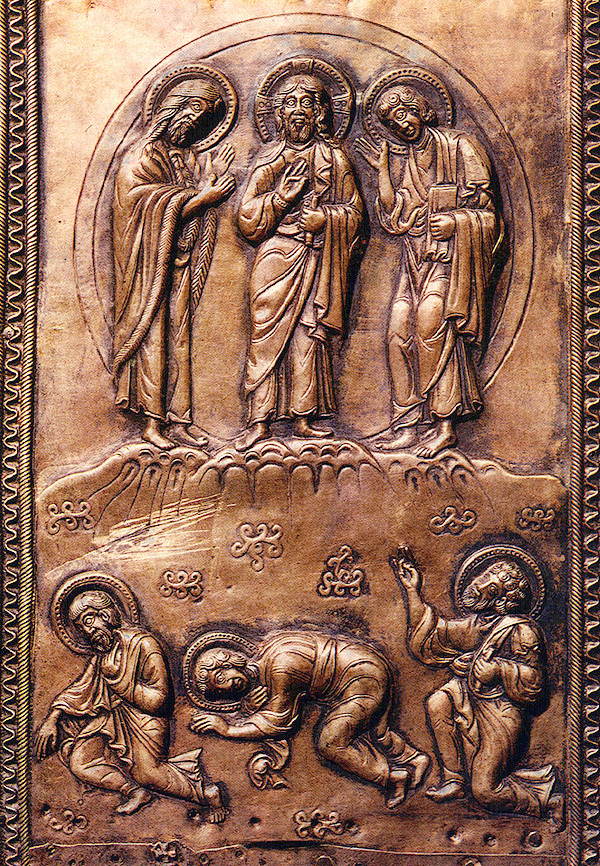
            If we go back 2000 years to that mountaintop where the Transfiguration happened, we can see when God spoke. And moreover, when God expressed Divine love. Not an expression of earthly or human or fallible love, but God’s love.

            Jesus had been preaching God’s word, healing people and doing other miracles for some time. If we think about it, by this time the Rabbi Jesus was really popular. Just think of any popular person, or famous celebrity. Often mobbed by people when He stopped to preach in a synagogue, or if He stayed overnight at someone’s home.

Shortly before today’s reading Jesus heals another blind man. Jesus was even more in demand than ever, after that display of power and might! Remember, that’s one of the main emphases for Mark. Showing the power and might of the Son of God!

Let’s set the scene. We have Jesus with His disciples. He had twelve disciples who are named, and some other followers. Women, too! Usually unnamed, but also there. But in several important instances, Jesus had an inner circle. Three special, or key disciples, who would be the ones he wanted to tell special things. Important things, as in the Gospel reading for today.

            This inner circle – Peter, James and John – were asked by Jesus to accompany Him early one morning. When they arrive at the top of the mountain, what do they find? Jesus, “His appearance changed from the inside out, right before their eyes. His clothes shimmered, glistening white, whiter than any bleach could make them. Elijah, along with Moses, came into view, in deep conversation with Jesus.” That sudden happening must have shocked the three disciples down to their sandals! Can you comprehend the utter shock and even dismay that these men felt? Awe and amazement, too.

            The most important thing about this point in Jesus’ journey through Palestine is that He had been speaking quite frankly to His disciples for some time. Mark tells this story in the midst of Jesus’ frustrated, repeated attempts to help his disciples understand that he must suffer the trial and death that leads to the cross, but they just cannot accept it.” [1]

            I don’t know whether I would have accepted these statements from Jesus, either, if I had been a follower of Jesus at this point in His ministry. The Rabbi – the Messiah – Jesus all along had been displaying all the signs of the Coming One, the Messiah sent by the Lord. Healing, miracles, preaching and teaching God’s message with authority and power. What a message of hope and encouragement for the downtrodden people of Israel!

            On top of this mountain, after months of this miracle-making, teaching and preaching, Peter, James and John see their Rabbi Jesus have a Divine encounter with Moses and Elijah

            Can you just see these three grown men, clutching at each other, huddling together like small children? Scared to death at these miraculous, out-of-this-world happenings? “Um—oh, Lord! Um—let’s build three altars here! One for You, and—um—one for the other two guys, too!” Or, something like that. Do you think Peter and the other two disciples were very receptive to what God was saying at this point? I suspect not.

            Here on the mountain of Transfiguration, Jesus elevates His message even further. Yes, His disciples hear the message in the form of speech directly from the Lord. The spoken words from the Lord were not many, but they were significant. “This is my Son, marked by my love. Listen to him.” If the three disciples were not paying strict enough attention to Jesus before, you can bet that this breathtaking experience caused them to really sit up and take notice!

            The Divine voice from within the cloud certainly confirms what the earthly Jesus had been communicating to His disciples all along. And, these words show a turning point in the ministry of Jesus – traveling down the road to Jerusalem, towards suffering, the Passion and death, despite His disciples’ refusal to hear what Jesus was saying, repeatedly.  

            I am wondering if the words from the Lord helped to transform Peter James and John? Yes, these words are confirmation for our Lord Jesus, and an expression of God’s Divine love: “This is my Son, marked by my love. Listen to him.” And I wonder, were the disciples changed and transformed by these words, too?

Just as our Lord Jesus was affirmed and transfigured by this Divine statement of love, can we be changed and transformed as we think about these words? Can you and I meditate on these words of the Lord, and see whether this message has a deeper meaning for us, and can change and transform us, too?  

This supernatural event of Transfiguration prepares us as we begin the period of Lent, that 40-day time of preparation when we journey with Jesus toward Jerusalem and the Passion and Crucifixion. How can you – how can I prepare our hearts and minds as we journey with Jesus? I think considering God’s words of Divine love are a wonderful starting point.

Just as much as God spoke out of the cloud on top of that mountain and expressed love for the earthly Jesus, just so much God loves each of us. This Divine love is not faulty or fallible, not human or limited, but instead unconditional and everlasting. We don’t need to be on the top of a mountain to experience God’s love. God will be there. We can celebrate the fullness of the Lord’s presence, and the reality of God’s love and grace! God does indeed love all of us.

Alleluia, amen.

Take a few moments to reread the gospel. Imagine you’re before the Lord Jesus as He speaks to you in His glory. What is His word to you? We start the journey of Lent this week with Ash Wednesday. How will that word of Jesus help you this week on your Lenten journey?

@chaplaineliza

(Suggestion: visit me at my other blogs: matterofprayer: A Year of Everyday Prayers. and  A Year of Being Kind . Thanks!


[1] https://www.umcdiscipleship.org/worship-planning/crossing-over/transfiguration-sunday-year-b-lectionary-planning-notes/transfiguration-sunday-year-b-preaching-notes

Unknown's avatar

“Be Strong, Together!”

Isaiah 40:21-31 (40:20) – February 4, 2024

            When I was young, I would often take walks near my parents’ house, on the northwest side of Chicago. Lots of opportunities for me to walk outside. In the mid- and late-summer, I vividly remember seeing grasshoppers by the side of the paths through the grassy sections of the Forest Preserves, and certainly hopping around in the vacant lots near my house!

            As I read the first two verses of our Scripture lesson this past week, I couldn’t help but think about the prophet’s juxtaposition in verse 22: “God sits enthroned above the circle of the earth, and its people are like grasshoppers. He stretches out the heavens like a canopy, and spreads them out like a tent to live in.” The heavens are so massive, so colossal and huge, and yet we humans are tiny grasshoppers, far, far beneath.

            The vast heavens? They stretch out majestic, and go on forever. But, grasshoppers? Tiny insects, hopping about, not very imposing or powerful creatures at all. Somewhat demeaning description, in fact. However, if we think hard about these two images, that is our starting point. Sooner or later, we all feel like grasshoppers, especially if we compare ourselves to the mighty and powerful Lord who stretched out the heavens! [1]  

            Just consider: we puny, grasshopper-like people seem pretty small and unimportant, next to a mighty and powerful God. Running to and fro, hurrying and scurrying through life, our limited human lives can be a challenge. With stresses and tumult in our personal lives as well as the lives in our communities, so many of us are seeking some hope, some peace, even some strength that comes from outside of our selves. For many, they do not know where to seek. [2]

            Comparing us limited humans to the God who stretched out the heavens is a tall order. How does that work, anyhow? I know that I have been fascinated for years by the detailed and intricate photographs taken by the Hubble space telescope. This incredibly high-powered telescope has been orbiting the earth since 1990, and takes incredible photos. It captures extremely high-resolution images without the distortion of Earth’s atmosphere, allowing for a deep, detailed view into space. [3]  If you have never examined Hubble’s marvelous photos of distant space, I strongly encourage you to view some online!   

            Looking at these photos makes me wonder and marvel even more at how the Lord has spread out the vast, starry expanse of the heavens. Today, we have a much more detailed knowledge of astronomy than the people of 2500 years ago, at the time the book of Isaiah was written. We continue to marvel at the Lord’s mighty, powerful handiwork – and, bow in awe and worship at the words found here in chapter 40, comparing humans to grasshoppers.

            However, instead of being diminished as tiny insects in the eyes of the Almighty God, humans are lifted up. In this same passage, the prophet tells us that             “God gives strength to the weary and increases the power of the weak.” Yes, the very same God who created the heavens and the earth, the very same God who stretched out the heavens like a canopy, is the same God who gives each of us strength. What a comforting and reassuring message!

            I know about weakness, first hand. Last winter, a close family member of mine had major surgery. Thank God, everything went well, but there were weeks and weeks of recovery. Gathering strength, going to rehab, and many, many hours of recuperation and recovery in the gym and outside, going on long walks and riding a bicycle. And thankfully, my family member now reports in good shape today. Getting continuing strength from our God, too.

            I know other folks have relatives – perhaps even themselves – who have weakness, sickness, or are in similar distressing circumstances. Perhaps your distress is not physical, but mental or emotional. Perhaps our strength – our human capability – is depleted. The unpredictable nature of human life can wear any of us down!

Sure, many people go to the gym and work out, or go to the pool and swim laps, taking our fitness seriously, and that is all to the good! “Those activities can provide us a level of fitness that enable our bodies to function physically, yet we also need additional inner strength to be able to function well. Since our mind, body and spirit are interconnected, how we feel spiritually or emotionally can affect our physical energy level. That’s where God can help.” [4]

Even young people can grow tired and weary, as difficult as it may be for them to believe sometimes. We all can grow weary and stumble, and we all get stressed, and even depressed sometimes. The prophet understood, and that is why we receive this message today from verse 31: “but those who hope in the LORD will renew their strength. They will soar on wings like eagles; they will run and not grow weary, they will walk and not be faint.”

We can have strength in the Lord! And, that is not all. When we are open to a meaningful and personal relationship with God, we open ourselves to inner energy and strength that can restore and sustain us. In the next weeks, I will offer some spiritual exercises that will assist in strengthening us. Some are familiar, some less so, but all of these exercises or spiritual practices can allow God to come alongside of each of us. [5] These help us to tap into special, heavenly power and strength that only our powerful, mighty God can provide.

Do you not know? Have you not heard? Has it not been told you from the beginning? Our mighty God is able. We can, indeed renew our strength Just like eagles. Amen, alleluia.

@chaplaineliza

(Suggestion: visit me at my other blogs: matterofprayer: A Year of Everyday Prayers. and  A Year of Being Kind . Thanks!


[1] https://cepreaching.org/commentary/2018-01-29/isaiah-4021-31-2/

[2] https://www.faithandhealthconnection.org/weekly-health-scripture-isaiah-4029-god-gives-strength/

[3] https://en.wikipedia.org/wiki/Hubble_Space_Telescope

[4] https://www.faithandhealthconnection.org/weekly-health-scripture-isaiah-4029-god-gives-strength/

[5] Ibid.

Unknown's avatar

Powerful Name of Jesus!

“Powerful Name of Jesus!”

Mark 1:21-28 (1:27) – January 28, 2024

            . Illness is a sad reality in this world, and all of us are witness. We all know people who either are sick right now, or have been sick in the past. Some are friends, others acquaintances, still others family members Many, many illnesses come from micro-organisms like viruses or bacteria. Today, the medical world can diagnose many of these diseases by looking at a person’s blood under a microscope or running a specific test.

            We know sickness is a part of this broken, fallen world we live in. That is a fact. Yes, this present world is full of God’s beauty and majesty, but it is also full of evil and danger, trauma, and illness. Both physical illness as well as mental illness.

            As we think about our Scripture reading this morning, what kinds of thoughts are in your mind? The Gospel of Mark shows us the Rabbi Jesus very early in His ministry. He is preaching and teaching in the area around the sea of Galilee. Listen again: “The people who heard Jesus were amazed at the way he taught, for he wasn’t like the teachers of the Law.” So, we can see “We open with Jesus and his newly formed group of disciples coming to Capernaum and the people in the synagogue being impressed with Jesus’s authority.” [1]

            Right off the bat, the Rabbi Jesus shows who and what He is. We can see, through Mark’s account of Jesus’ words and actions, that Jesus exerts power and authority. Mark wanted to make crystal clear what Jesus’s mission here on earth truly was – not only to bring Good News but also to bring freedom to the captives. We can also see that Jesus has marvelous understanding of what God means to the people He is preaching to, as well as what God intends for those same people to be – and become. Just so with this reading today

What does Jesus encounter in this synagogue? Let us listen again: “Just then a man with an evil spirit came into the synagogue and screamed, 24 “What do you want with us, Jesus of Nazareth? Are you here to destroy us? I know who you are—you are God’s holy messenger!”

I’m going to stop right here and say that I believe this event did happen. Yes, we here in the 21st century have a more nuanced view of the psyche, and what mental health and mental illness look like. Yes, chemical imbalances affect brain health and chemistry, too. This could be severe mental illness, or a complicated medical diagnosis that affects mood and stability. At the same time, I believe there are also powerful unseen forces in the wider world today, and these forces can affect individuals and their mental and emotional stability.

So, we have the Rabbi Jesus, here in the Capernaum synagogue. Next thing we know, a man with a demon inside comes up and confronts Jesus – face to face! Yes, the man in this instance could have severe mental or behavioral problems. And, yes, Jesus could well be involved in a situation with something in the spiritual realm. Any way you look at it, our Lord Jesus is exerting mighty power and authority. 

This confrontation brings things to a head, and with just a word, Jesus shuts down the evil spirit. He commands, “Be quiet!” This can also be translated “Be muzzled!” Have you ever seen an animal wearing a muzzle? This is often done with dangerous or wild animals, and the muzzle takes away their power to bite and roar. [2]

            Through this strong command, “Jesus makes the unclean spirit feeble, weak, unable to continue to use its words to exert its power. By doing so, Jesus proves that the unclean spirit does not have real authority—it is just masquerading like all other evil spirits and forces in the world.”[3] We see here, just as we are shown over and over through the Gospels, our Lord Jesus displays His mighty, Divine power and authority, and people respond! With amazement, awe and even fear.

            I don’t know if you have ever been in the presence of someone who is larger than life? Someone who you can tell has real power, real authority, and knows for sure how to use them. From all the Gospel accounts, that was Jesus. He not only was an effective teacher, but also a compelling preacher. Plus, Jesus had a remarkable gift for showing His power and authority in a winsome, persuasive and – most importantly, an authentic manner.

            The Gospel of John tells us that Jesus is the living Word of God who became a human being. We can see how effective His spoken words are with this evil spirit. “It is notable following the man’s outburst, and immediately after the unclean spirit has left him, that again the congregation talk about Jesus’ teaching. This is the first recorded miracle by Mark. The drama is not primarily presented as a healing miracle, rather a deliverance of an individual from the grip of chaotic forces that convulse and threaten their life.[4]

            Life here in the Chicago area today is certainly different than life in the first century. The modern day is vastly different from the ancient world, or medieval times. But, our Lord Jesus is still the same. He is still mighty and powerful, and has remarkable authority over all things.

Yes, Jesus has authority over things today, too. In our own lives, we might have emotional barriers or spiritual problems. With such sadness, upset and distraction going on, who wouldn’t have some difficulties and problems in their lives right now? Whether you have deep feelings, some heartache or pain, grief or despair that you are dealing with today, Jesus can work wonders in your life and spirit, too.

            I tell you today that our Lord Jesus is not afraid to face down the evil things, the traumatic events that come into each of our lives on a regular basis. Just as our Lord Jesus showed in the Gospels again and again, the authority of God and God’s Word is for God’s people’s wholeness and healing. All God’s people. That is a promise, and that is a blessed reality. Alleluia, amen!

@chaplaineliza

(Suggestion: visit me at my other blogs: matterofprayer: A Year of Everyday Prayers. and  A Year of Being Kind . Thanks!


[1] https://cepreaching.org/commentary/2024-01-22/mark-121-28-4/

[2] Ibid.

[3] Ibid.

[4] https://www.churchofscotland.org.uk/worship/weekly-worship/monthly/2024-january/28-january-2024-fourth-sunday-after-epiphany-year-b#topic5

Unknown's avatar

Jesus Is Calling!

“Jesus Is Calling!”

Mark 1:14-20 (1:20) – January 21, 2024

            What would make you change your whole life? I know some people radically change, but what would push you to change everything about your life? For some, it’s a marriage proposal, a chance on true love. For others, it’s a wonderful job offer. Still others, a chance to do something amazing in another part of the country, even another part of the world.

            Now, what did the rabbi Jesus offer? Just think – Jesus was a former carpenter, now a rabbi and itinerant preacher. He came preaching and teaching, offering God’s good news, about God’s kingdom come near. These four career fishermen put down their nets and took off with this radical rabbi for something completely different! [1]

Again, I ask what offers, what commitments convince us that they are worth living for? Changing everything for?

            Let’s look at our Scripture passage for today. We have Mark beginning his gospel with “the Good News of Jesus the Christ, the Son of God.” This is the very start of Jesus’ ministry, I want everyone to understand. Jesus suddenly breaks onto the scene! The urgency, the immediacy is palpable! Can’t you just feel it?

 Only a few verses into the first chapter of the Gospel, the rabbi Jesus takes a purposeful walk. “As Jesus walked beside the Sea of Galilee, he saw Simon and his brother Andrew casting a net into the lake, for they were fishermen.”  

            Jesus was brilliant in His approach to these fishermen, Peter, Andrew, James and John. These were career fishermen, and they knew fishing backwards and forwards. Jesus came asking them to let down their metaphorical nets with an offer of God’s Good News. He said, 17 “Come, follow me, and I will send you out to fish for people.” Although, they probably did wonder, at least a little, what on earth they were doing. Leaving it all behind! Boats, nets, livelihood, everything!

Do you think this was the absolute first time these four men had ever seen Jesus? I suspect not. I would imagine the brothers might have seen Jesus preaching and teaching when they went into town, stood among the crowd and listened. Perhaps the brothers had discussed what Jesus had said while they were working on the job, in their boats, or mending their nets.

            Notice what Jesus did not say to these men! He did not say, “I have a theological system which I would like you to investigate.” No! Jesus did not say, “I have certain theories I would like you to think over.” Certainly not! They followed Jesus because they believed what He said about God’s Good News, about commitment. Reorienting. Reframing their whole lives.

            Let me tell you a bit about reframing. When the wood frame around a window is water damaged, carpenters pull out the wood frame and do what is called a reframing of the window. Straightening out the frame so the window will set plumb and straight up and down. It’s similar to going a new way, a new direction. These four fishermen put down their old lives and set their lives in a totally new direction. Reframing their lives, following Jesus and His call.

The commentator Gary Burge tells us “All we can say about the call is that “the kingdom of God” has broken into their lives in the immediacy of Jesus’ call. There are also two other fishermen on the shore mending their nets, James and John, sons of their father Zebedee. The call of Jesus to them is the same and their response is the same. They leave their livelihood and their father and “immediately” follow this stranger (1:20).” [2]

Friends, as Mark’s Gospel reminds us, God has broken into our world. Jesus proclaimed the Good News, but His whole point is not, “Have an opinion about the Good News.” Or, “This Good News is nice and inoffensive.” Rather, Jesus is calling for a radical, total, unqualified basing of one’s life on this Good News. Just as following this radical Rabbi is a radical idea, a radical reframing of these fishermen’s lives, so is His offer, His calling to us.  

As Lutheran pastor Janet Hunt reminds us, “I wonder now what it is that Jesus is calling us away from and what Jesus is calling us to, don’t you?  I wonder how our worlds would change if we just ‘left our nets behind’ and stepped into the new life before us. I wonder how the world itself would change if we just did this, too.” [3]

As commentator David Lose says, “We follow [Jesus] in particular and distinct ways that may or may not be like the first disciples. And that, I think, is the point. Perhaps we follow by becoming a teacher. Perhaps we follow by volunteering at the senior center. Perhaps we follow by looking out for those in our schools [or workplaces] who always seem on the outside and invite them in. Perhaps we follow by being generous with our wealth and with our time. Perhaps we follow by listening to those around us and responding with encouragement and care. Perhaps we follow by caring for an aging parent, or special needs child, or someone else who needs our care. Perhaps we follow by….” [4] Well, you get the idea.

There is a song I would like to bring to your attention. It’s a recently-written hymn called “The Summons,” written by John Bell, a member of the Iona Community, an ecumenical Christian community in Scotland. The first four verses of the hymn are questions from Jesus. He is asking these questions of us. The last verse is a first-person response to these questions. I would like to read the first and last verses of this hymn. 

Will you come and follow me if I but call your name?
Will you go where you don’t know and never be the same?
Will you let my love be shown? Will you let my name be known,
will you let my life be grown in you and you in me?

Lord, your summons echoes true when you but call my name.
Let me turn and follow you and never be the same.
In Your company I’ll go where Your love and footsteps show.
Thus I’ll move and live and grow in you and you in me. [5]

            Friends, Jesus is calling. Jesus says, “Come, follow Me.” Just as He called those four fisherman by the Sea of Galilee. He calls to each of us, today. Can you see Him? He has His hand extended. Jesus is calling. “Come, follow Me.”

            God willing, with Your help, Lord Jesus, I will follow. Will you?  

@chaplaineliza

(Suggestion: visit me at my other blogs: matterofprayer: A Year of Everyday Prayers. and  A Year of Being Kind . Thanks!


[1] https://www.workingpreacher.org/dear-working-preacher/the-call-of-the-disciples-and-the-decline-of-the-church

[2] https://www.workingpreacher.org/commentaries/revised-common-lectionary/third-sunday-after-epiphany-2/commentary-on-mark-114-20

[3] https://dancingwiththeword.com/gone-fishing/

[4] https://www.workingpreacher.org/dear-working-preacher/the-call-of-the-disciples-and-the-decline-of-the-church

[5] Words © 1987 John Bell, The Iona Community, administered by GIA Publications, Inc.

Unknown's avatar

The Baptism, the Love!

“The Baptism, the Love!”

Mark 1:1-11 (1:11) – January 14, 2024

            I don’t know about you, but I love taking a bath! My husband is more of a shower person, instead. What do we need when we take a bath? How about a bar of soap, a bottle of shampoo, and maybe a back scrubber? I remember my small children liked a big, fluffy towel, and perhaps even bath toys! That was when they were really small.

            I know people need to take regular baths and showers. That’s in order to stay clean and healthy. And, we take baths and showers again and again, because we keep getting dirty and keep needing the cleansing that soap and shampoo provide.

But, what does this have to do with our Scripture reading today? Did you realize that some people – certain faith traditions – refer to baptism as a bath? Do we need soap, shampoo, or bath toys for a baptism? No, not quite the same thing. But, we do need water, and we definitely need the Word of God for this sacrament. [1]

We read these words from the Gospel of Mark: “John the Baptist appeared in the wilderness, preaching a baptism of repentance for the forgiveness of sins. The whole Judean countryside and all the people of Jerusalem went out to him. Confessing their sins, they were baptized by him in the Jordan River.” Not the same thing as taking a bath in a roomy tub, is it?

John the Baptist is specific about a baptism of repentance! And, the Gospel record says that many, many people from Jerusalem and the surrounding countryside flocked to the River Jordan to get baptized.

John the Baptist and Jesus are cousins, and I suspect they grew up together, talked, walked and interacted with one another often. Perhaps studied together, too. Now, John has burst upon the public scene and is proclaimed as a prophet of God! John even has the audacity (and temerity) to call for public confession of sins and a subsequent baptism in the River Jordan! The chief draw was John’s urgent call for the forgiveness of sins. That is the attraction!

Let us shift our focus from the general baptism for the repentance of sins to the specific baptism of Jesus. This special event happens right up front, at the very beginning of the Gospel of Mark. John already has a following, and disciples. John’s getting a great deal of publicity in Palestine. His star is rising, for sure.  And what should happen but Jesus shows up at one of John’s baptism events by the river?

Remember, this was before Jesus even started His ministry, before He ever said anything important, or healed anyone, or done anything special at this point. Just think: there is so much pressure on people to be successful in this day and age.

If John the Baptist were our contemporary and had his prophetic ministry today, I can just see him on television, perhaps YouTube. Maybe even short TikTok videos. He was probably too much of a rebel and outsider to be on the inner circle of any denomination or official structure, but I think John would definitely make a splash and be well-known for his straight talking and action-oriented way of communication!

And get this – Jesus asks John to be baptized! Just as Jesus began His ministry with obedience to God, with being baptized, so we are encouraged to begin our lives, our ministries, with baptism, too. 

As we consider Jesus being baptized, what happened as He was with His cousin John in the river? Listen to the words of Mark’s Gospel: “Just as Jesus was coming up out of the water, he saw heaven being torn open and the Spirit descending on him like a dove. 11 And a voice came from heaven: ‘You are my Son, whom I love; with you I am well pleased.’”

Remember: this was before Jesus had ever done a miracle, preached a sermon or done anything else that was special. And God said that Jesus was loved and God was well-pleased with Him. “Notice in Mark’s treatment of the story of Jesus’ baptism two things. First, notice God’s words to Jesus. They are personal, poignant, and powerful. “You are my beloved son. With you I am well pleased.” Wrapped in these words of acceptance are the blessings of identity, worth, and unwavering regard.” [2]

What about you and me? When we were baptized, do you think we were loved by God? Yes, God was well-pleased with us, and with every other human of God’s creation! Yes, you and I are also accepted, with the added blessings of identity, worth and unwavering regard, too!

You may remember bracelets and t-shirts with the initials “WWJD” imprinted on them. The words “What Would Jesus Do?” were a Christian, even pop-culture, trend some years ago. Remembering this trend brings up a valid question. Let’s reframe it into a question about baptism. Who would Jesus exclude? For that matter, who would John turn away from baptism?

We celebrate this event in our Lord’s life each year during the season of Epiphany, during January. Yes, praise God, Jesus went into the waters of baptism, and served as an example for us. Plus, this day is a reminder for each of us who have been baptized. Maybe we made our own promises, or perhaps someone made them on our behalf. [3] Regardless, all are welcome to the waters of baptism! This is a sacrament of repentance, forgiveness, and of radical welcome.

St. Luke’s Church, our church, is a member church of the United Churches of Christ. UCC churches are supposed to welcome everyone. No matter if someone is grumpy, or mean, or stingy. You are welcome here at St. Luke’s Church. No matter if someone is painfully shy, or has some physical or mental infirmity, or has a really strong personality. No matter what your gender or sexual orientation is, either. All are welcome here, in this particular church, too. 

That means a radical, open-hearted, open-handed welcome to all people, no matter what. No matter who. You and I are welcome with God. We are welcome to the waters of baptism, and with you – and me – God is well-pleased. Amen, alleluia.

@chaplaineliza

(Suggestion: visit me at my other blogs: matterofprayer: A Year of Everyday Prayers. and  A Year of Being Kind . Thanks!


[1] https://www.stewardshipoflife.org/2015/01/wet-well-pleased/

[2] https://www.davidlose.net/2015/01/baptism-of-our-lord-b/

[3] https://www.stewardshipoflife.org/2015/01/wet-well-pleased/