Unknown's avatar

Confess Sins, Accept Forgiveness

“Confess Sins, Accept Forgiveness”

1 John 1-9 if we confess our sins

1 John 1:8-9 – June 19, 2016

Have you ever seen a small child when he or she knows or realizes they have done something wrong? Sometimes, they gasp. Their lower lip may tremble. Sometimes they might start crying. The realization that they have made a big mistake sometimes overwhelms them.

Does this picture sound at all familiar? I do not care whether it’s children, grandchildren, nieces or nephews. When a small child realizes they have done something wrong—well, that can be the saddest time in the world for that young person.

Sound familiar? I suspect it ought to. This awful feeling affects not only small children, but it can trouble grown-ups. It can happen to you or to me, too. The realization that nothing is the way it ought to be? Affecting, heart-rending, deeply sad. Sometimes feeling like the bottom dropped out of the world!  And, get this: it’s all my fault.

If we look at our Scripture lesson for today, we will find exactly that. The older Apostle John tried to get his readers to see this, in the first verse of our reading today. I will read both of these stirring verses from 1 John, chapter 1. “If we claim to be without sin, we deceive ourselves and the truth is not in us. If we confess our sins, God is faithful and just and will forgive us our sins and purify us from all unrighteousness.”

And, we are on the next line of the United Church of Christ Statement of Mission. “Empowered by the Holy Spirit . . . To praise God, confess our sin, and joyfully accept God’s forgiveness.”

I am going to depart a little from my usual sermon format, and ask: what do we do every week in our worship service, right after the opening hymn? After our prayer of invocation, where we ask God to be with us in our worship service, we move into the prayer of confession.

Why on earth do we need to confess our sins before God?

Ah! That is where John’s reminder of our sinfulness is helpful. Remember, the Bible came first. Scripture was written to be helpful to believers, and to offer praise, and to admonish and correct our behavior—when we needed that. Afterwards, people started to set down a formal worship service. Especially in our Protestant tradition several hundred years ago, they always had a formal confession of sins—just like the Apostle John mentions here.

Each of us—every worshiper here today—sins. Every day. It doesn’t matter who we are, or how good we are trying to be. Each of us makes mistakes. It is like someone using a pencil. That is what erasers are for. To erase wrong or messy writing, and to correct mistakes, like in arithmetic at school.  We all have sins, or mistakes, or errors in our lives. And what’s more, we admit them to God. We tell God all about them.

Let’s look at the first sentence in our prayer of confession today. “Merciful God, who has compassion on Your sinful children.” Right here, this has several deep theological ideas! We are saying that God is merciful! God is not unforgiving, or uncaring. Instead, merciful. Full of mercy toward each of us. The Lord has compassion on each of us, too! God feels with each of us.

The next part of the prayer: “You sent Your son Jesus Christ to be the Savior of the world.” Ah! Here is the Gospel, the Good News. This is why God sent Jesus! God knew the terrible mess humanity was in, and God had a solution: to send God the Son—in the flesh, made as a human—to become one of us. To be our Savior, and save us from our sins.

Some years ago, I knew a practically perfect person. He was a stickler for perfection, for writing precisely, for trying to act appropriately at all times. He used to joke that he thought he made a mistake once—but he was mistaken. (He understood his tendency as a perfectionist, and gently laughed at himself.)

This is where our Scripture reading is helpful. 1 John 1:8 says, “If we claim to be without sin, we deceive ourselves and the truth is not in us.” Except—the New Testament says that we all have sinned and fall short of the glory of God. (In the letter to the Romans 3:23.)

We continue with the prayer of confession: “Grant us grace to lament our sins; help us by prayer and meditation to repent and turn to You.”

If you recall, I often repeat this verse from 1 John as the weekly assurance of pardon: “If we confess our sins, God is faithful and just and will forgive us our sins.”

Sometimes in our confession of sins, we have a time of silence for personal confession. In addition to the prayers written in the bulletin each week, from time to time I provide space in our service for each of us to come to God silently in prayer, a quiet time to come with personal things that are particularly burdensome. And, did you hear what John said in this verse? “God IS faithful and just, and WILL forgive us our sins.”

The next sentence in our prayer of confession today: “Give us a true longing to be free from sin. Thank You for Your abundant love and forgiveness.”

Praise the Lord! Did you hear? “God will forgive us our sins, and cleanse us from all unrighteousness!” Those are the words of John, written in the first century. Moreover, they are still true today!

Just like dirty clothes are cleaned in the washing machine, especially when we add some laundry detergent, so we are cleansed from our sin. My mother had a wringer washer in the basement. I used to go downstairs and wash the clothes for the family. I put water in the washer, added the detergent, and turned on the agitator. Scrubbed the clothes, and then wrung them out into each of the double sinks, rinsing, and then rinsing again. I saw firsthand how this business of washing clothes worked. How the soapy water got so dirty. How the clothes got rinsed clean.

That’s us! When we come to God to confess our sins, correct the mistakes we have done and said, it’s like God has cleaned us in a washing machine. Sure, sometimes I feel like I have been in a washer from time to time. Been agitated by the machine, and then put through the wringer. I bet you can relate, too. Some people go through the wringer more often than others—and how!

 However, we come out the other side as clean people. We receive God’s abundant love and forgiveness!

The final words of the prayer of confession: “We pray these words for the sake of Jesus Christ, our only Redeemer, amen.” Jesus is the only Redeemer. Not ourselves. Not saints, or good works, or some television minister, or prayer book, or other holy practice. Our Lord Jesus is our blessed Redeemer. We are indeed redeemed by the blood of the Lamb, as our closing hymn tells us.

The assurance of pardon is what follows this confession of sins. This is not a half-hearted assurance. This is not “maybe,” or “I hope so,” or “fingers crossed!” This assurance is complete. As Jesus said as He died on the cross, “It is finished.” The work of redemption is completed. Praise God! Just as what John said in this verse: “God IS faithful and just, and will forgive us our sins and cleanse us from ALL unrighteousness.”

Shortly, we will sing a hymn all about forgiveness and redemption. I close this sermon with a verse of this wonderful old hymn, written by Fanny Crosby:

“Redeemed, how I love to proclaim it!
Redeemed by the blood of the Lamb;
Redeemed through His infinite mercy,
His child and forever I am.” —Alleluia, amen!

@chaplaineliza

(Suggestion: visit me at my regular blog for 2016: matterofprayer: A Year of Everyday Prayers. and my other blog,  A Year of Being Kind . Thanks!)

Unknown's avatar

Invitation to Wonder

“Invitation to Wonder”

Virgin Mary and Child - Russian Orthodox

Luke 2:17-18 – December 24, 2015

Merry Christmas! What a wonderful expression. People greeting each other on the street, in the stores, here at church. I know not everyone celebrates Christmas, but still. What a joyous time of the year. Merry Christmas, many people say!

But I want you to go back, two thousand years. Go back to a time when “Merry Christmas” was not even a phrase, a wish, an idea in people’s heads. Go back to the time that Dr. Luke describes in the second chapter of his Gospel. Back to the time when Israel was an occupied country, and the Roman Empire was the strong man. Back to the time when all people in Israel needed to be enrolled. The Roman government decided to have a census, so that they would be able to tax the people of Israel more accurately.

In our Gospel reading tonight, we heard this census described. The Holy Family, Joseph and his fiancée Mary, went to Bethlehem to enroll, because Joseph was a direct descendant of King David. I suspect there were many people on the roads. Today, traveling can be stressful and nerve-wracking. However, I am certain travel in the first century was much more difficult. Poor roads, with many people walking to get from one place to another. We might imagine that Joseph and Mary had a donkey, but nowhere in the Gospel is that mentioned. Travel conditions were challenging, at best.

So, there they are, in Bethlehem. A long way from their home, in Nazareth. I suspect Joseph took care of the enrollment business first thing. But Mary felt the pains of labor begin. What a scary thing! To be far, far from home, in an unfamiliar place, and to have such a significant event happen. Significant, and potentially life-threatening, too.

I have had several children. I can remember all four of the deliveries. All of them happened in the hospital, with nurses and doctors standing by. Quite possibly most of the women here who have delivered babies can remember all their deliveries, too. Don’t you think Mary and Joseph remembered this experience for the rest of their lives? Yes, delivering a baby is a special day for anyone. But—even more so, for Mary and Joseph. Because of the angels. And the additional special visitors, too.

As Luke tells us, there were shepherds abiding in the fields, keeping watch over their flocks by night. Remember, there is no radio or telephone, no Internet or even telegraph. When messengers personally come to deliver a extra special announcement, it is a big deal. These angels coming to the shepherds, well, that was a super big deal, to be sure!

And the announcement? This isn’t the birth of a normal, ordinary baby. No! This baby is an extra special baby. The Messiah, who will save His people from their sins. Did you hear? This special baby, this Savior, Christ the Lord, is born to you—to me—to all of us, in the city of David, which is called Bethlehem.

Did you hear? The Savior, the Christ, the promised Messiah, came into this world as a Baby in Bethlehem. The Eternal Second Person of the Trinity, Creator of the whole universe, God the Son, emptied Himself of all God-ness. Took on humanity, and was born as a helpless Baby. That is not only good news, that is earth-shaking news. Good news of great joy for all the people. For you, for me, for all of us.

Yes, the promises of Christmas may sound familiar to us. The good news that the angels brought may be old news, to some. But those promises? They are so needed, today. What with uncertainty and fear, anxiety and hatred so common today. Peace and security seem way out of humanity’s reach. Don’t we need some good news right now?

This is good news, this Gospel the angels brought to the shepherds. And they, in turn, told everyone they could about the Child, which the Lord had made known to them. Just as Luke said, all who heard about the Child were amazed at what the shepherd told them.

After that special birth announcement from the angels, and the excited visits from the shepherds, we are left with Mary. Mary who was only a teenager. Mary, who had had nine months to consider this extraordinary pregnancy and upcoming birth.

I cannot imagine a teenager entrusted with such a serious task as bearing the Savior of the world. Yet, Mary must have been up to the task.

Mary must have been a reflective young woman.

We know from verse 18 that Mary treasured all these words and pondered them in her heart. All of these words, these unfolding events. Another translation has this verse as “Mary was keeping together (sunetare) all these words, bringing them together (sumballos) in her heart.” Keeping together, sunetare, has the sense of integration. Bringing these events together, or sumballos! She was fitting all the puzzle pieces together, bit by bit.

Can we do the same? Can we fit all the puzzle pieces together? Can we slow down, just a little, and wonder at the miracle of that night? I invite us all to listen to the good news of the shepherds.

Stop by that manger in Bethlehem, and be caught up in the wonder of what happened that night, so long ago. The eternal God, Creator of the universe, come to earth as the Babe in Bethlehem.

God gives each of us an opportunity, an invitation to wonder; an invitation to worship the newborn Savior.

O come, let us adore Him, Christ the Lord.

@chaplaineliza

Suggestion: visit me at my daily blog for 2015: matterofprayer: A Year of Everyday Prayers. and my other blog,  A Year of Being Kind .  Thanks!

Unknown's avatar

We All Are Witnesses!

“We All Are Witnesses!”

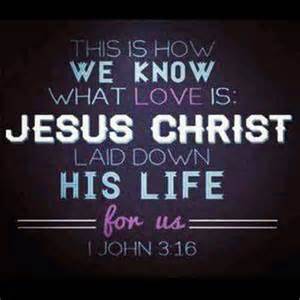
Jesus laid down His life for us 1 John 3-16

Luke 24:48 – April 19, 2015

Have you ever been confused by the number of hurried, jumbled nature of things happening at once? And the speed at which these things happen? This experience is more common than we might think. Just think of this past week, preparing for the Not-So-Lent fish fry at our church, and everything that had to be done by yesterday afternoon!

However hurried and jumbled this past week has been around here, it pales in comparison with our Gospel reading today. The end of the Passion Week must have been momentous and confusing for the followers of the Rabbi Jesus. Some confusing and jumbled things were happening very quickly. From the big festival entrance on Palm Sunday to the Passover Dinner of Maundy Thursday evening, to the arrest, trial and Crucifixion on Good Friday. Events happening in short succession from morning until night. Everything happening one thing after another. This was compounded by the followers of Jesus scattering, running away, frightened by the very real, very legal, very official things happening to Jesus on Thursday night and Friday during the day.

Let’s fast-forward to that Sunday morning, the first day of the week. The disciples still must have been frightened to death of the authorities. But, I suspect they needed to talk about the happenings of the past few days, too. We can see that from our scripture passage.

We pick up the narrative right after the events of the Road to Emmaus. To fill everyone in, two followers of Jesus got on the road to Emmaus that Sunday. As they walked, they talked. Debriefed. Tried to figure things out, as best as they could. And what circumstances they needed to figure out! A Stranger began to walk with them on the way, and unbeknownst to them, it was the risen Jesus, incognito. He shared with them a summary of all that He had come to earth to do. Of His ministry, His message, and His purpose. And still, they did not know it was Jesus.

Not until dinner that evening in Emmaus, when the risen Jesus was revealed when He blessed and broke the bread. And then—Jesus disappeared! The other two at the dinner table didn’t waste any time! They ran back to Jerusalem, to the Upper Room, to tell what they had seen. Yes, they were witnesses. Eye witnesses, verifying everything that had happened that day.

Our Gospel reading for today picks up the story at this point. All of the followers of Jesus are gathered together in the Upper Room, and are talking about the story of the road to Emmaus. Do they believe? Or, don’t they? Are a few skeptical? Or doubtful? Are some still frightened?

Let’s transition to today. Here and now. I can hear some people today, scoffing at the idea of some guy rising from the dead. And then, miraculously traveling alongside of two other guys? Good as new—in fact, even better? No way! Not a chance. The other two must have been hallucinating. Or dreaming. Or maybe, seeing a ghost. They can’t believe. Or, won’t believe.

As we start the Gospel reading today, the risen Jesus suddenly appears to the group in the locked Upper Room. What does He say? “Peace be with you.” A common greeting of the time, yes. However, Jesus is also calming their hearts, their spirits, their anxieties, their emotions. “Peace be with you.”

How does the risen Jesus immediately respond to the disciples? “Don’t be frightened! It is I, myself.” He emphasizes His identification. “I, myself!” It’s not anyone else, but Jesus! He lets them know that He is solid and corporeal, not a ghost. Not a spirit. And, Jesus doesn’t criticize His followers for being afraid! For feeling uncertain, doubtful and anxious!

I wonder whether you have ever had a kind and patient teacher, or instructor, or coach. When you were afraid, uncertain, or anxious, did this kind and patient person get angry with you? Or, upset? Or, did this person continue to be open and willing to help you? Generous with time and welcoming to your attempts? That is Jesus, all over. To a T.

Jesus even volunteers to eat a piece of fish, just to show everyone that He was, indeed, for real! An actual, physical person. (A ghost or spirit couldn’t eat or drink!)

What’s the big deal?

Jesus tells us. Wait—He tells the disciples, first. They are to proclaim what they have seen and heard. They are to be witnesses to the power of the resurrection. They are to tell how the risen Jesus has made a difference in their lives! And boy, that was a big difference!

When we read the book of Acts, that is exactly what we see. The disciples are witnesses of what they have seen and heard, witnesses of the power of the resurrection. Time after time, no matter what, the disciples tell others about how Jesus lived, preached, did miracles, and rose from the dead. Then, how all that has made an earth-shaking difference in their lives.

Our second Scripture reading today is from the first letter of the Apostle John, chapter 3. This passage also tells about the power of the resurrection. The aged apostle John mentions this in verse 16. John was giving his friends some instructions, even some admonitions. We are told to love one another. Why? Because of the One who laid down His life for us. That’s why. And following His example, we ought to be willing to lay down our lives for each other.

This is the message that Jesus told the disciples to start to carry, when John was a very young man. Looking at 1 John 3 and 4, some decades later, we see the aged John still carrying the message Jesus told him to, the message of sacrifice, hope, and resurrection. Let me read two verses: 4:13-14. “We know that we live in Him and He in us, because He has given us of His Spirit. And we have seen and testify that the Father has sent His Son to be the Savior of the world.” John is still being a witness, all those decades later, at the close of the first century!

Dear friends, our Lord Jesus gave specific instructions to His friends, to go and be witnesses. He gives those same instructions to us. We are to be witnesses of the power of the resurrection. The aged apostle John continued to do that, all of his life.

Can you think of someone who was a witness to the power of God, in your life? Someone who immediately comes to mind for me is Miss Rose. I met her almost thirty years ago, when my older two children were very small. She was a witness to the power of God, and to God’s love. She communicated God’s love to everyone she ever met, just about! A little lady, a dynamo for God, she would tell everyone about God and how much God loved them.

I met her again, ten years ago when I was a chaplain intern at the Presbyterian Homes. She was a resident there. I was so happy to see her. Miss Rose and her joy in the Lord bubbled over and communicated to everyone she met there, too. Even though she was in severe, chronic pain, she witnessed to the power of the resurrection. She asked people she met, “Do you know Jesus? Can I tell you about Him, and what He’s done in my life? Can I tell you my story?”

Each of us has an opportunity to be a witness, to communicate the Good News about the risen Jesus and the power of the resurrection. We can communicate by words, by a smile, by being kind, through our actions, through our generosity.

Think about someone who impacted your life, who communicated the Good News to you. There’s a great example for you! Just like Miss Rose is a marvelous example for me, to be a witness despite pain and suffering, even through difficulty in my life. I can still communicate God’s love, just like the aged Apostle John did, too. He was even in prison when he wrote his first letter, on a little island in the Mediterranean Sea. That didn’t make any difference. John still told his story, how the risen Jesus made a difference to him.

What is important is that we get out there and start being a witness, telling people about the power of God, and about how much the risen Jesus has changed our lives. Can you be a witness? It’s as simple as telling your story. Can you tell the story of Jesus and His love? Jesus loves you. Jesus loves me. Jesus loves all of us.

Be witnesses to God’s love and power.

Alleluia, Amen.


@chaplaineliza

(Suggestion: visit me at my daily blog for 2015: matterofprayer: A Year of Everyday Prayers. and my other blog,  A Year of Being Kind .  Thanks!)