Unknown's avatar

Loving Neighbors in the Strangest Places

“Loving Neighbors in the Strangest Places”
Luke 19:1-10 (19:5) – July 13, 2025

I have rubbed elbows with all kinds of people! I grew up in Chicago in a half-and-half, working-class and middle-class neighborhood. I lived in (and worshiped in) two racially mixed areas of Chicago for some years. I’ve had a number of jobs before I went to seminary at 40 years old, in diverse industries, including the ramp, a huge warehouse, and an order fulfillment center. So, when I hear the Rabbi Jesus getting some guff from the crowd for hanging out with the riff-raff and “sinners,” that surely gets my attention!   

I think today’s Scripture reading is particularly fascinating since it shows someone who was definitely not well liked in his neighborhood. In fact, no one wanted to call him “friend” or neighbor. Zaccheus was a chief tax-collector for the Roman occupation. Yes, he was Jewish, and yes, he was working for the hated occupying foreign forces. And as if that were not enough to get him disliked by his Jewish neighbors, Zaccheus was officially delegated by the Roman government to collect their taxes for them.

The Roman government was not very particular about how they got their tax money – as long as they got it. So, the local tax collectors could be as demanding or dishonest as they wanted to be, all for the purpose of getting money for the Romans. And, if these tax collectors squeezed a little extra money out of their fellow Jews, the Romans did not care. As long as enough money came into the Roman treasury. That was all the occupying force cared about.

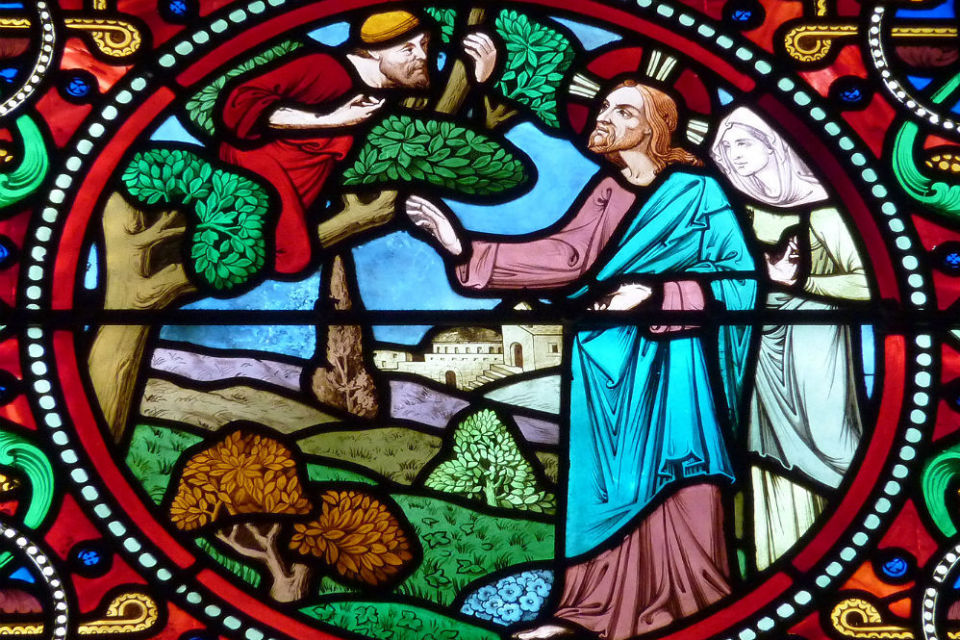
I would imagine that Zaccheus was a pretty lonely man. Until – the Rabbi Jesus came to town. This was several years after Jesus had started to preach, teach and do miracles, so I suspect by this time Jesus had quite a following, and quite the reputation! Let’s pick up right in the middle of the narrative: “3Zaccheus wanted to see who Jesus was, but because he was short he could not see over the crowd. So he ran ahead and climbed a sycamore-fig tree to see him, since Jesus was coming that way. When Jesus reached the spot, he looked up and said to him, “Zacchaeus, come down immediately. I must stay at your house today.” So he came down at once and welcomed him gladly.”

We read next that the crowd started to grumble, because the Rabbi Jesus saw and spoke with Zaccheus, truly engaged with him, and even said “I must stay at your house today.”  

Can you imagine, being the shortest guy in your high school! Plus, being one of the least popular persons in the town of Jericho! Both of those things must have been painful subjects for Zaccheus. I just imagine that he lived an isolated existence, wanting, hoping that someone would see him, notice him and validate him. This emotional response is only human!

We are currently observing a summer sermon series highlighting the person of Fred Rogers, of Mister Rogers’ Neighborhood. Have you ever thought of someone who is meek and gentle as being a strong individual? Someone who is so strong and confident themselves that they do not care what other people think? I think that is exactly the kind of person Fred Rogers was. Plus, Fred Rogers thought everyone was deserving of attention and respect, no matter what! And, that deep emotions were important things.

Of the many lessons Rogers gently gifted his audience, a chief one was that all emotions are valid, even the sad and angry ones. They need acceptance from friends and family and, often, expression – so long as it’s not violent. Sigmund Freud called this ‘sublimation,’ the channeling of destructive impulses into socially acceptable actions. It was a pillar of Rogers-ism, and [Rogers] often referred to dialogue about emotions and feelings as ‘important talk.’” [1]  

The Rabbi Jesus obviously thought that emotions were important – even the emotions of someone hated like Zaccheus. Sure, Zaccheus was seen as a hated tax collector by his Jewish neighbors! But, Zaccheus’s feelings were valid, too! Our Lord Jesus went out of His way to single Zaccheus out, see him, notice him, validate him. And, Jesus invited Himself over for dinner!

Salvation came to Zaccheus’s house that day. Jesus followed him home, and broke bread with him at a lonely table. Salvation comes to all of us when Jesus joins us, has fellowship with us. Even when people do not feel worthy, for whatever reason, to have Jesus join them – it doesn’t matter. Salvation is solidarity, hospitality, and yes, ministry.

Our commentator Karoline Lewis relates a modern (and true) narrative, taken from the column of David Brooks, long time New York Times columnist. Brooks tells the story of Kathy Fletcher and David Simpson. “They have a son named Santi, who went to Washington, D.C. public schools. Santi had a friend who sometimes went to school hungry. So, Santi invited him to occasionally eat and sleep at his house.”

“That friend had a friend and that friend had a friend, and now when you go to dinner at Kathy and David’s house on Thursday night there might be 15 to 20 teenagers crammed around the table, and later there will be groups of them crashing in the basement or in the few small bedrooms upstairs.”

The kids who show up at Kathy and David’s have endured the ordeals of modern poverty: homelessness, hunger, abuse, sexual assault. Almost all have seen death firsthand — to a sibling, friend or parent.”

“It’s anomalous for them to have a bed at home. One 21-year-old woman came to dinner last week and said this was the first time she’d been around a family table since she was 11… Poverty up close is so much more intricate and unpredictable than the picture of poverty you get from the grand national debates.”

“I started going to dinner there about two years ago,” writes Brooks, “hungry for something beyond food. Each meal we go around the table, and everybody has to say something nobody else knows about them. Each meal we demonstrate our commitment to care for one another. I took my daughter once and on the way out she said, ‘That’s the warmest place I can ever imagine.’”

The problems facing this country,” says Brooks, “are deeper than the labor participation rate and ISIS. It’s a crisis of solidarity, a crisis of segmentation, spiritual degradation, and [lack of] intimacy.”

“The kids call Kathy and David ‘Momma’ and ‘Dad,’ are unfailingly polite, clear the dishes, turn toward one another’s love like plants toward the sun and burst with big glowing personalities. The gift of Kathy and David is the gift of a complete intolerance of social distance,” insists Brooks. [2]

At church, we speak ‘salvation speech.’ This is speech that sees the other, that regards the overlooked. We speak speech that brings together, and unites across barriers and boundaries, classes and cultures. Speech that creates community and family for everyone. Speech that gives life and says that salvation is here and now, in this world as well as the next. [3]

Jesus said, “Today, salvation has come to this house.” It is salvation to a house, any house. It’s to a neighborhood, each and every neighborhood. This place where Zaccheus lives is where Fred Rogers would welcome, and be welcomed, too.

What would Jesus do? What would Fred Rogers do? Go. Do that.

(A big thank you to the online resources for Mr. Rogers Day – the Sunday nearest March 20th, Fred Rogers’ birthday. These resources come from the Presbyterian Church (USA). https://www.pcusastore.com/Content/Site119/Basics/13792MrRogersIG_00000154465.pdf )

@chaplaineliza

(Suggestion: visit me at my other blogs: matterofprayer: A Year of Everyday Prayers. #PursuePEACE – and  A Year of Being Kind . Thanks!


[1] https://www.cnn.com/2018/06/08/health/mister-rogers-go-ask-your-dad/index.html

[2] David Brooks, “The Power of a Dinner Table,” The New York Times, October, 18 2016, http://www.nytimes.com/2016/10/18/opinion/the-power-of-a-dinner-table.html

[3] https://www.workingpreacher.org/dear-working-preacher/salvation-today

Unknown's avatar

Be Prepared!

“Be Prepared!”

Ephesians 6:10-20 (6:10) – August 25, 2024

            I love to go to a baseball game! I do not go that often now, but in years past, I used to regularly go to Wrigley Field and watch the Cubs play. I don’t know if everyone is familiar with the equipment that baseball players need, but one player on a baseball team needs special equipment. The catcher is in a key spot on the team, and a very dangerous one! The pitcher regularly throws the ball at very high speeds. A catcher needs protection from those balls! A catcher’s mask, a chest protector, and shin guards, just to mention a few!

            This is similar to our Bible reading today. The Apostle Paul is finishing up his letter to his Ephesian friends. He warns them to be prepared, with a few practical, direct words for his long-time congregation. (I say long-time, because he spent about three years with this church, longer than with any other church he planted.)

Paul goes through a list of spiritual equipment that will protect his friends from attacks – the attacks of the Devil! Paul does not pull any punches. He is straight and up front with his former church members. He wants to warn them, prepare them for some really difficult times. These difficult times can often come into our lives today, too.

Let’s look more closely at what Paul says. “Finally, be strong in the Lord and in his mighty power. 11Put on the full armor of God, so that you can take your stand against the devil’s schemes. Therefore put on the full armor of God, so that when the day of evil comes, you may be able to stand your ground, and after you have done everything, to stand.”

            When I think of armor, my mind immediately goes to the military. Military service people definitely wear armor to protect themselves every day, in some duty stations, where some serve. Just as in baseball a catcher needs certain equipment to be prepared and safe while in a dangerous position, so do Christian people. Paul was in prison, in Rome, while writing this letter to the Ephesians. Paul was shackled to a Roman soldier inside of his cell, to make double sure he was going to stay put. Paul had the opportunity to become sadly familiar with the Roman soldier’s armor. Everyone, all believers in Christ need certain equipment (or pieces of armor) simply to be prepared!   

Let’s talk about baseball again, for a minute. What about the pieces of equipment the catcher wears? “The mask protects the catcher’s face from foul tips or pitches that might get past the glove. The glove protects the hand from balls. The chest protector protects the middle part of the body. Finally, the catcher wears shin guards to protect the knees and legs. No catcher would ever think of going into the game without this protective equipment.[1]

            Here in the letter to the Ephesians, at the very end of the practical portion of Paul’s letter, Paul details the protection you and I need in our lives, too. (And, this protection is so similar to what a baseball catcher wears!) We can see very well the kind of protection Paul is talking about if we think of a Roman soldier. Roman soldiers were commonplace, all over the Roman empire. Paul calls this protection the armor of God. He is thinking specifically of the armor the typical Roman soldier wears.

            We buckle the belt of truth around our waists. This is like putting on truthfulness. We are to tell the truth – at all times. Sometimes, it is not easy to be honest! In some situations, we are so tempted to bend the truth a little, or even a lot! But, the indwelling power of the Holy Spirit will help each of us with this important foundation of our faith.

            Next, each of us puts on the breastplate of righteousness. That’s a word we mention a lot in religious circles. Another way of thinking of it is putting on right behavior, putting on justice. Just like a catcher puts on a chest protector. Paul exhorts us to act rightly! This is certainly not easy! This thoughtful and prudent kind of action and behavior is often laughed at, by many people. Just think of rude or uncaring people, who may tease you or be mean to you for acting in a way that Jesus tells us to! (And, Jesus is our model for righteousness.)

            Which leads us to our shoes. Paul tells us to put on shoes that show we are speakers of peace. Not to argue and bicker, we are to go out of our way to bring peace to people!  

            These next two pieces of armor are clearly protective pieces. The shield of faith is our protection against those fiery darts that Satan can fire at us. And, not just physical darts! What about mean and nasty words that come our way, words that plant seeds of doubt in our hearts and minds? And, the helmet of salvation keeps the Evil One away. Thank God we have Jesus gifting each of us with salvation, because that is exactly what Paul talks about here.

            The last piece of armor is actually a weapon. The sword of the Spirit is the word of God. The letter to the Hebrews tells us that the Word of God is living, and active, and sharper than any two-edged sword. The Roman sword is a short sword, or weapon, used for combat at close quarters. This means that we are to actually engage the enemy, become active participants in battle! No sitting on the sidelines, as far as Paul’s fellow believers are concerned. As we continue to follow Jesus, we will continue to win the battle against Satan.

Whether inside or outside the church, however and wherever we serve our Lord, God intends for us to be prepared. That means being prepared by these words of caution and exhortation. Paul used these words in Ephesians to advise all of us to be ready to deal with challenging, even dangerous situations. We all need this prudent protection of God’s armor, in our everyday walk as believers.

Final words for today, quoting Paul? Be strong in the Lord! Stand ready, inside and out. And, do all this in prayer, always asking for God’s help. Are you prepared? Am I? With God’s help, yes – we are! Alleluia, amen! 

@chaplaineliza

(Suggestion: visit me at my other blogs: matterofprayer: A Year of Everyday Prayers. #PursuePEACE – and  A Year of Being Kind . Thanks!

(Thanks so much to link http://www.lectionarystudies.com/sunday21bae.html from the Rev. Bryan Findlayson of Pumpkin Cottage Ministry Resources, a lectionary resource I often quote from. Rev. Bryan gave me a lot of insight this week, and I used much of his material for describing the pieces of Godly armor!)


[1] https://sermons4kids.com/sermons/the-armor-of-god

Unknown's avatar

Today!

(I attended a denominational national assembly this weekend, and was not leading worship. Here is a sermon from my archives! I hope it touches your heart and spirit.)

“Today” – 2 Corinthians 5:20-6:2

June 28, 2006

            Once upon a time, there was a loving Father with abundant wealth, property and resources. He loved His many children dearly and did everything in His power to provide abundantly for them.

            Does this story line sound familiar? It should. That loving Father is God, our Heavenly Father. He created the world in the beginning, including humanity. Our loving God gave humans abundant resources, and provided many good and gracious gifts for them, doing everything possible to provide a rich and rewarding life for them.

I’d especially like to focus on the love. God’s love for humanity, for the world, for us. I dare say that many of us here today could quote John 3:16—“For God so loved the world that He gave His only begotten Son, that whoever believes in Him should not perish, but have everlasting life.”

From this verse, can we tell how much God loves the world? How much does God love us? This much?     (spread arms and pause)  

There was a problem, way back when, when God lavished such good and loving care on humans, on His children. That problem was and is SIN.

Face it, humanity—and that includes you and me—is fallen. I usually hesitate when I make sweeping statements, but not in this area. We are sinful. As Romans 3:23 says, “For all have sinned and fall short of the glory of God.” That is ALL. Not a few, not even most, but ALL. Everyone. All humanity. We don’t sin all the time, or in every situation. There are plenty of times when members of the human race act in kind ways, and think loving thoughts, but that troublesome sin nature is alive and kicking in each one of us.

Can you see a toddler or preschooler, stamping her feet, crossing her arms across her chest, and shouting, “No!!” Can you see a teenager, disrespectful and angry, slouching away from the dinner table without a word? Can you see the prodigal mentioned in the Gospel of Luke, wishing that his father would kick the bucket already, so he could get his inheritance? Do these selfish, proud, disrespectful, ungrateful actions (and thoughts, I might add) have anything in common? I would say, yes, they do. The sin nature that is part and parcel of all humanity is readily evident, in all of these situations. We are human, therefore we sin—by thought, word, or deed—by omission or by commission.

It would be really bad news if the story ended there, wouldn’t it? Humanity would be both hopeless and helpless, stuck in the miry clay of our own sinfulness. BUT, that is not the end of the story. God still loves us. Remember John 3:16? “For God so loved the world?” That love still comes to us, regardless of our sinfulness, regardless of our selfishness, regardless of how much we have disregarded the abundant love and the lavish care that God showers upon us each and every day.

As our passage from 2 Corinthians says, we humans trespass. We sin. We mess up. We make mistakes. But God loves us anyhow! God doesn’t keep a tally sheet, a ledger of all our good deeds and bad deeds. God does not count these mistakes against us. In fact, God goes above and beyond our mistakes, reconciling the world to Himself.

It’s not that God is estranged from the world, from humanity. It’s the other way round. It is humanity—it is you and me—that is estranged from God. God created humans, and He loves humans. He created each of us with our foibles and quirks and personality flaws as well as our individual strengths. He created each one of us as individuals to give glory to His name in our own individual ways. God knows us so much better than we know ourselves, and He still loves us just the same! God reconciled the world—that’s you and me—to Himself, out of love.

Like I said, that is wonderful news! Amen! Praise God! Thank You, Jesus!

Jesus was sinless, but He was made to be sin for us. Jesus took all of our collective sin upon Himself on the cross so that in Him we might become righteous before God. Can we tell how much God loves the world? How much does God love us? Is it this much?     (spread arms and pause)  

So, now that we know about God’s abundant love that He lavishes upon each of us, what are we going to do about it? Listen to the words of our passage again. “’At an acceptable time I have listened to you, and on a day of salvation I have helped you.’ See, now is the acceptable time; see, now is the day of salvation!”

D.L. Moody, noted evangelist during the 1800’s and founder of Moody Bible Institute, did much of his evangelistic work around Chicago. One Sunday evening in September 1871, Mr. Moody closed his sermon with the injunction for the congregation to evaluate their relationship with God over the next week and to return the following Sunday. When Mr. Moody was on his way home after the evening service, he heard the fire alarms all over and saw the flames against the sky, turning the night sky red and orange. That meeting hall where the service was held burnt to the ground, along with most of the city of Chicago. The Great Chicago Fire happened that night.

Mr. Moody was horrified, knowing that he had not told his listeners the full message of the love of God, for each one of them. He vowed from that day on to tell the whole story, to always let people know the good news of salvation in every sermon he preached.

What about you? Are you still thinking about God’s offer of salvation? You may have been a church member all your life, faithful and hard at work for many years. But you may have never realized that God’s joyful message of reconciliation was especially for you. You may have been born into a loving Christian family, maybe even a pastor’s kid or missionary’s kid, and been surrounded by God’s abundant love all your life. But just because I may be born in the room behind a bakery doesn’t make me a biscuit . . . and just because I may be born into a Christian family doesn’t make me a Christian by birthright or by osmosis. God has no grandchildren. There are only children of God.

God has been loving us—you and me—all of our lives, even when we turned our backs on Him. If this is that day for you, that acceptable time, that day of salvation, praise God! Enter into the joy of a loving relationship with God, a close friendship with God.

If God had a refrigerator, your picture would be on it. If God had a wallet, your photo would be in it. God can live anywhere in the universe, and He wants to live in your heart. If you have never, truly experienced God’s love for you, individually, there is no time like the present. We can indeed enter into the joy of our Father’s loving embrace and experience His abundant love for each one of us. Today is the day of salvation! God is ready. Are you?
@chaplaineliza

(Suggestion: visit me at my other blogs: matterofprayer: A Year of Everyday Prayers. and  A Year of Being Kind . Thanks!

Unknown's avatar

Redeemed – Imperishable!

“Redeemed – Imperishable!”

1 Peter 1:17-23 – April 23, 2023

            Have you ever heard children or young people bicker? Argue back and forth? I can remember listening to my own children argue, getting mad at each other, and slamming the door or stomping out of the room. And, even sometimes being really mean to each other in front of their friends or other family members!

            In our Bible reading from 1 Peter today, the apostle tells us to “love each other from the heart.” This loving attitude from Peter is not what siblings or friends often show to each other. What a shocking or sad difference it makes when siblings, or friends – or when you or I – say mean things or act badly towards each other. I thought 1 Peter chapter 1 tells us to “love each other from the heart!” ALL the time! Except, it just doesn’t happen in the real world.

            I would like to remind us all about this epistle written to scattered believers throughout modern-day Turkey. This little letter at the end of the New Testament came several decades after the events of the Crucifixion and the Resurrection. Many of the people who were actual witnesses of the resurrected Lord Jesus had themselves died. These were actual eye-witnesses. They knew beyond a reasonable doubt, they understood with all of their hearts that they were indeed redeemed by the blood of the Lamb, as the apostle affirms here in our reading today.

As I said last week, the local governments and authorities were cracking down on anything that looked like rebellion or conflict against the accepted status quo. The situation throughout the whole region was, frankly, dangerous for these new believers! Yet, they kept on spreading the witness of the Resurrection, telling others that the Lord Jesus had redeemed them! And that you can be redeemed, too!

 But, what do you and I need to be redeemed from?

You, and I, and the rest of the world, all have a big problem – the sin problem.

We are not perfect, and we all make mistakes. We fall flat on our faces, sometimes, and we can say mean things to each other, act badly towards each other, and even hurt each other. Lots of people try really hard to make themselves pure, to strive as hard as they can to live right, to keep to the straight and narrow, to run as hard as they can or as fast as possible to get right with God. But, they trip up or fall behind, or miss the mark – again and again.

Can you relate? Do you know what I am talking about? Do you see people running on these endless, hopeless hamster wheels, spinning their wheels of striving? Trying to build a ladder to heaven to get to God? It just doesn’t work. We – on our own – cannot do it.        

What does 1 Peter 1 say about this huge problem? How can we solve it?  

Quick answer? We fallible, faulty humans never can make it to heaven on our own.

The apostle tells his readers they must be born again, just like the conversation with Jesus in John chapter 3. Like Nicodemus thought in John 3, we could talk about being born again, or think about being born from above. Except, I want to focus on verses 18 and 19 where the apostle says we “were redeemed from the empty way of life handed down to you from your ancestors” “with the precious blood of Christ, a lamb without blemish or defect.”

The apostle Peter was brought up in a Jewish home, and he – like the other disciples understood the system of sacrifice in the Temple. Everyone sinned, and everyone needed to make sacrifices in the Temple so that God would forgive their sins. Especially at Passover time, a lamb without blemish was slain as a sacrifice for the sins of each person or family. I don’t know if we all understand all this today, but the apostle tells us right here that our sins – yours and mine – are taken care of, once for all. Jesus, the perfect Lamb of God, the one without sin, died on the cross for our sins. All of our sins.

And, it is finished. Our debt of imperfection and sinfulness before God is cleared away.

 Some people understand redemption and salvation in different ways. Yes, Jesus Christ is the perfect Lamb of God who died on the cross for you and me. Yes, Jesus Christ rose from the dead, so that we believers in Him can rise, too! Yes, the blood of Jesus Christ redeems us, and “has redemptive power to liberate Christians from their pasts, making it possible for them to live a radically transformed existence. This transformation had already been inaugurated when they were born anew to a living hope through the resurrection of Jesus Christ from the dead.” [1]

We do not need to sacrifice endless animals over and over simply to be good enough, clean enough, able to approach God. No! Easter is so much more than just a single day at the end of Passion Week. Because of what Jesus Christ has done, “weeks [and months] after Easter Sunday, we are still talking about Jesus. We should still be talking about those events. It’s that important to our faith. This passage tells us that our faith and hope are in God.” [2]

             Which brings us back full circle to the command we started with: the apostle tells us to “love each other from the heart.”When we come to believe in Jesus, believe in salvation and redemption, we don’t believe with just our heads, or with just our intellect. We also believe in our hearts. 1 Peter chapter 1 says to “love each other from the heart.” Can you see how our minds, feelings and actions are all rolled into one? That’s all of what Jesus redeemed!

            So – we are to love one another with our hearts, minds and actions. That is what we are commanded to do here, by the apostle. This is truly a way to make the Resurrection part of your life and mine, today.

We can ask God to bring us opportunities this week to show God’s love – in all ways – to others we encounter. This is how we can have a true, Godly love for one another, loving each other with all our hearts, minds and actions. Are we ready?

Alleluia, amen.

@chaplaineliza

(Suggestion: visit me at my other blogs: matterofprayer: A Year of Everyday Prayers. #PursuePEACE – and  A Year of Being Kind . Thanks!


[1] https://www.workingpreacher.org/commentaries/revised-common-lectionary/third-sunday-of-easter/commentary-on-1-peter-117-23-5

[2] https://www.umcdiscipleship.org/worship-planning/a-living-hope/third-sunday-of-easter-year-a-lectionary-planning-notes/third-sunday-of-easter-year-a-childrens-message

Unknown's avatar

God, Our Light

“God, Our Light”

Psalm 27:1-10 (27:1) – March 13, 2022

            When I set the theme for the Second Sunday in Lent about three weeks ago, I had no idea that there would be an actual war being waged, right now. The Russian army is attacking Ukraine as we speak, and all the horrors of modern-day warfare are a reality, all across the country of Ukraine. Psalm 27 means so much to many of the Ukrainian people right now.

            As this congregation highlights another petition of the Lord’s Prayer, “Deliver us from evil,” we are brought up sharply by the traumatic situation in our own world. We can turn on war news, from both national as well as international media. Videos and photos are – sadly – readily accessible, and the news is heart-rending. No matter which side you are on.

            Wasn’t this the case when King David wrote this psalm, so many centuries before?

            Wars, rumors of wars, battles, skirmishes, fighting – and King David writes this song of praise to the Lord, to thank the Lord for deliverance from evil.

            King David was certainly no stranger to fighting and to war. After King Saul ran David off into the Judean wilderness (a harsh and unhospitable place, the same place where Jesus went after His baptism), David stayed away from Jerusalem for years. Even though David was rightfully anointed by the prophet Samuel as king of Israel, David would not lift his hand against King Saul. At the same time, David was essentially a guerilla leader of 600 battle-hardened fighters, for years. They also would do mercenary fighting, while on the run from King Saul and the troops of Israel. And, that was just the beginning of David being a fighter.

            As we see from both 1 and 2 Samuel, David knew what he was talking about when he wrote these psalms about the Lord delivering him and his men from evil – from war, and from fighting. David was on the run from King Saul for over ten years. And, he was no coward! However, he thanked God that God watched over him and kept him from evil – kept him from being overtaken by the troops of King Saul, as well as foreign troops he was fighting against.

            You and I are not fighting battles against opposing armies, but we still can come to God, praying this psalm for our safety. You and I might consider evil to be bad stuff. Bullies who intimidate and harass. Robbers who steal purses or take cell phones or wallets. Car-jackings, vindictive anger, abusive behavior, vandals who destroy property. All of these are evil, and we can pray for God to protect us from all of these, plus many more.

            As our commentator Beth Tanner says, “With all of the violence in our world, Christians are faced almost daily with a decision to live in fear, or despite their fear, to trust in God and God’s promises.“ [1] “Deliver us from evil” is a powerful prayer! A prayer of trust and assurance in God’s provision, in God’s ability to keep us safe, whatever our situation.

            Yet, the world has had many, many wars through the centuries. Many, many periods of fighting, ethnic strife, border conflicts, and even genocides. Horrific atrocities committed, and whole societies, entire countries stricken by death and destruction. How can anyone lift up their hearts to God in such catastrophic times?

We know, too, God wants us to be hospitable, even in such times. “To choose to remain true to God’s principles of hospitality feels frightening as well. Terrorists and Refugees come from the same places. Gun violence comes out of nowhere and even those places we considered safe are safe no longer. Fear threatens to defeat the gifts of trust and hospitality.” [2]

            It is so interesting that King David seems to waver back and forth, from the sure certainty of God’s saving power to fear of some kind of situation where David’s enemies are trying to “devour his flesh,” as Psalm 27:2 tells us. Whatever the specific problems or fighting happens to be, we suspect God may turn away. Don’t you, sometimes? Even if you are usually firm in faith and fervent in prayer, sometimes…stuff happens. People fail us. Situations baffle us. How can we cope? What is there to do? God, help us!  Sometimes we need to step back, take a deep breath, and think of difficult things as a child might. The best child’s translation of this part of the prayer is “Lord, save us from all the bad stuff that happens.” [3]

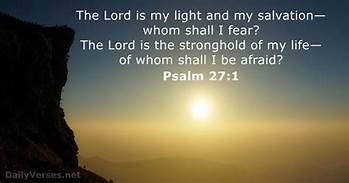
And yet,” right in the middle of his expressions of fear, the Psalmist also declares his confident faith that God’s presence is like a light that keeps him safe.” [4] Our Scripture reading today, Psalm 27, remains as a beacon. This encourages us to come to God even as we find ourselves afraid. Even, afraid out of our wits.

We might find ourselves praying the Lord’s Prayer, and saying it by rote, without even concentrating on the words as they come out of our mouths. Yet – “Lent is a time to ask the deep questions of our faith. We can repeat the fears of the past, or trust a new ending to God. It is never easy, but it is the call of God on our lives. This psalm invites us to believe again that our faith in God will never desert us, no matter what happens. Life without fear is not possible, but faith can call us to live into God’s will for our life instead of reducing our lives because of our fears and insecurities.” [5]

Yes, “deliver us from evil” is a powerful prayer, indeed. Yes, we can be afraid, and yes, God can alleviate our fears. If we want to dispel the darkness of fear, we can affirm that God is indeed our light and our salvation. We can all say amen to that!

@chaplaineliza

(Suggestion: visit me at my other blogs: matterofprayer: A Year of Everyday Prayers. #PursuePEACE – and  A Year of Being Kind . Thanks!


[1]   https://www.workingpreacher.org/commentaries/revised-common-lectionary/second-sunday-in-lent-3/commentary-on-psalm-27-3

[2]   Ibid.

[3]  http://worshipingwithchildren.blogspot.com/2016/01/year-c-second-sunday-in-lent-february.html

[4]   https://thewakingdreamer.blogspot.com/2014/01/what-do-we-have-to-fear.html

“What Do We Have To Fear?” Alan Brehm, The Waking Dreamer, 2016.

[5]   https://www.workingpreacher.org/commentaries/revised-common-lectionary/second-sunday-in-lent-3/commentary-on-psalm-27-3

Unknown's avatar

God’s Children

“God’s Children” – July 19, 2020

Rom 8-14 children of God

Romans 8:12-19 (8:17-19)

Many people know what it’s like to be part of a family. Parents, grandparents, aunts, uncles, cousins. For many, this is a warm and happy feeling! For others, not so much. What would it be like to have an unhappy childhood? Perhaps, to grow up as an orphan or in foster care? Or, with a parent or close family member who is an active addict or abuser? This is a sad reality for many, many people throughout the world, who do not experience the same warm, comfortable feelings about family that many of us here do.

We are in the middle of a short series about the Lectionary readings from Romans chapter 8 this month. Before I get into the wonders of salvation that Paul talks about in this chapter, we are going to take a short detour. Our Hebrew Scripture reading from this week concerns Jacob, from Genesis 28. Jacob was not a particularly honest guy. He was a sharp customer, who connived with his mother Rachel to steal the blessing of the firstborn from his older brother Esau. He also pulled the wool over the eyes of his dishonest father-in-law Laban, who did the same to him.

These are the things that are reported about Jacob, in the book of Genesis. I wonder what Jacob’s family life was really like? How were his relations with his father and mother, and his brother? We just don’t know for sure, but we can guess a good deal from his actions.

This was a very human, very fallible family we see from Genesis. Not at all like the Godly family the apostle Paul tells us about in Romans chapter 8.

Paul does not say that you and I are God’s employees, or servants of God. No, certainly not! The Lord could have said, “Oh, I’ll keep you around as long as you do things My way, as long as you behave and don’t put one toe out of line.” That is what many worldly people would have said! No, Paul tells us that those who are led by God’s Spirit are God’s children. Can you believe it? I can hardly understand why God would do such a thing for a such a sinner like me, but I do believe it. That is a blessed fact, and a promise from the Lord.

Now, wait a minute. Let’s think about Jacob again. He was not honest. He deceived people, was cowardly, and wasn’t a nice guy. But, what did God do to Jacob? Do you think the Lord kicked Jacob out of God’s family for doing all that sneaky, rotten stuff, for years? No!

“Instead, God promised to stick with him throughout his life and even told him that through him everyone in the world would be blessed. Jacob is a good person to remember when we feel like we should be kicked out of God’s family.[1]

Because we are part of God’s family, we can expect to enjoy the happy, easy days in the family.  But we must also be ready to stick with the family when the going gets hard.  The sufferings of Christ are very real. Paul says in verse 17 that we are going to have our share of suffering and suffer with Christ. Some suffer with cancer, or with diabetes, like my father and siblings. Some suffer with economic hardship, or a bad car accident, or paralysis. Perhaps we all are suffering right now, with the COVID-19 virus. I don’t know. That is one of the things we are going to need to ask God about when we meet God after we cross that River Jordan.

As David Lose, one of my favorite commentators, mentions, “Paul describes the difference it makes, being considered God’s children, adopted by God. Rather than being afraid – of the future, of what people may think of us, of our status, of our standing with God – Paul invites us instead to imagine a life of courage, the courage of those who have been adopted by God and invited into the full measure of God’s blessings and riches.[2]

Even if you or I or our friends had a less-than-perfect growing-up time, God calls us children. Even though some may not feel comfortable with the idea of an earthly parent or grandparent, or other members of the extended family, even though some may be orphans or foster children, abandoned by those who brought them into this world, God calls us heirs with Christ! Not employees, not servants, not someone who can be simply dismissed or ignored. We are God’s children! That is huge! Can I hear an amen? Isn’t that the best news you’ve heard all week? Even, all month? Perhaps, all year?

Paul tells us in verse 17 “Since we are God’s children, we will possess the blessings God keeps for his people, and we will also possess with Christ what God has kept for him; for if we share Christ’s suffering, we will also share his glory.” Praise God, we ARE God’s children, no matter what! And, God is going to shower us with blessing and glory! Amen! Alleluia!

Now, I have a challenge: what difference does it make NOW? What difference does being God’s child make to you? To know that you are unconditionally loved? That you have immeasurable value in God’s eyes? That no matter what to do – or is done to you – and no matter where you go, yet God always loves you and cares about you? [3]

I hope this blessed truth makes a huge difference to you – to you, to me, to all of us! Again, praise God for God’s declaration that we are God’s children! In this world, and in the next. Amen, alleluia.


(I would like to thank Carolyn C. Brown for her superb commentary in Worshiping with Children. This is a marvelous series, and I so appreciate her insights and wisdom. I have borrowed freely from this week’s Lectionary study on Year A – Proper 11, 16th Sunday in Ordinary Time, 6th Sunday after Pentecost.)

[1] http://worshipingwithchildren.blogspot.com/2014/06/year-proper-11-16th-sunday-in-ordinary.html

Worshiping with Children, Including children in the congregation’s worship, using the Revised Common Lectionary, Carolyn C. Brown, 2014.

[2] http://www.davidlose.net/2015/05/trinity-b-three-in-one-plus-one/

“Three-In-One Plus One!” David Lose, …in the Meantime, 2015.

[3] http://www.davidlose.net/2015/05/trinity-b-three-in-one-plus-one/

“Three-In-One Plus One!” David Lose, …in the Meantime, 2015.

@chaplaineliza

(Suggestion: visit me at my regular blog for 2020: matterofprayer: A Year of Everyday Prayers. #PursuePEACE – and my other blog,  A Year of Being Kind . Thanks!

Unknown's avatar

Life on God’s Terms

“Life on God’s Terms” – July 12, 2020

Rom 8_11 Spirit of God

Romans 8:1-11 (8:10)

Does anyone know what this is? [motioning towards the garbage can] You’re right. This is a garbage can. Good for being a container for all the garbage – refuse – junk – from our homes, workplaces, and communities. All kinds of worthless garbage that is not needed or wanted goes right in here. The apostle Paul talks about all kinds of garbage in our lives, on our insides, here in the letter to the church in Rome.

Imagine, if you will, all the internal junk in a person’s life, and mind, and heart. All of that meanness, and selfishness, gossip and swearing, bullying and arguing. And, what about the times people cheat? Or, blow off assignments or obligations? Or, stretch the truth just a little – or, perhaps a lot? Oh, it’s not much. But, do you think God keeps track of each and every time?

Just think of a person’s life. Perhaps, your life, or mine. If all the years and decades of those junky, selfish, stubborn, or mean thoughts, words or deeds were piled in this garbage can, I’d imagine it would be pretty full. Even, perhaps, full to overflowing.

Life on the inside, our internal selves without God can be pretty hopeless. Worthless. Just like garbage – refuse – junk that goes into this garbage can. Another word that Paul uses for all the stuff in these garbage cans is sin. I suspect many of us here can quote Romans 3:23, where Paul says “For all have sinned and fall short of the glory of God.” Paul does not say, “For some have sinned,” or even “For many have sinned.” No, we all have our internal selves filled up with meanness, selfishness, gossip, swearing, bullying, arguing. And, then some.

God does have laws. Many of these laws are common sense, and others are in keeping with moral codes that many civilizations have held for millenia. We know the big 10, the Ten Commandments, and many of the other laws of Moses that are found in the Hebrew Scriptures. Right before Paul writes these marvelous words in Romans 8, he talks about the huge problem with law and sin. We know about that. Sin and the law of God do not get along.

What do I do now? I know a lot of these laws of God, sure. But I still fall into sin, even though I know the rules. Another way of looking at sin is separation from God. When you—I—when all of us sin, we are separated from God. What’s more than that, sometimes people don’t even think of the Lord. God does not even enter their minds. Can you imagine? Ignoring God? Yet, so many people do just that.

So many people today are running on that treadmill of self will run riot, of selfish, mean, resentful living. I have seen a number of these kinds of persons, and they keep running, running, running on that treadmill of separation from God.

I have one particular person in mind. An acquaintance, from some years ago. To all outward appearances, she was very successful. She had designer clothes, a successful job, a luxury car, a fancy house. But, on the inside? All kinds of resentment, anger, greed, envy, gossiping and backbiting. She cut corners on her integrity and honesty, and just did not have a moral compass. Do you know someone like that? I have a feeling we all might have more in common with this unhappy lady than any of us might like to admit.

I’d like all of you to think of a sin in your life. I suspect you have thought of a sin that is really obvious to you, right now. the one thing you feel worst about. The one regret or misdeed or misfortune that you wear like a snail does its shell. The one part of your life that forever threatens sin and condemnation. Could you write it down? Or, if you don’t have a pen and paper, could you think really hard of that particular sin right now?

Paul does not leave us in that horrible place. Yes, all of Romans chapter 7 is talking about sin, and separation from God, and how much difficulty all of us have with these sinful thoughts, words and deeds. We might think that we are stuck at the bottom of one of these smelly, stinky, filthy garbage cans, with no way out. Who will rescue me from this body of sin and death? How can I – can we – get in a place where we can possibly have access to God?

Paul has good news for us. In fact, it’s great news! We do not have to stay in this garbage dump for the rest of our lives. No, Jesus reaches down from heaven and rescues us from sin and death. Jesus takes each of us out of that separated, filthy garbage can and brings us into the glorious presence of God!

Here is the best part of all. God’s Holy Spirit helps us to stay free from the power of sin and death. We no longer need to reflect on what we have done – or said – or thought that was wrong. No! Jesus Christ delivers us from sin and the Law.

I want to invite all of us to—virtually—toss that sin we wrote down into the garbage can right here. Jesus can clean us up from the inside, and help us to sin less and less. Amen!

One last thing. I invite each of you to take another piece of paper, and write what you are free to do now that you do not have that condemnation in your life and inside your very self. What challenge will God bring into your life, now that you know you are beloved by God and filled with God’s Spirit? What kindness or generosity will you attempt? What will you do with all the love and grace God can give you? [1]

God promises to be with us, yes! And, even more, God promises to use each of us for the sake of the people and the world God loves so much. Go out into the world for God, today.

[1] http://www.workingpreacher.org/craft.aspx?post=1571

“What Willl You Do…?” David Lose, Dear Working Preacher, 2011.

@chaplaineliza

(Suggestion: visit me at my regular blog for 2020: matterofprayer: A Year of Everyday Prayers. #PursuePEACE – and my other blog,  A Year of Being Kind . Thanks!


Unknown's avatar

Light and Salvation

“Light and Salvation”

Psa 27-1 fear, afraid, words

Psalm 27:1, 4-8 – January 26, 2020

How many times have you been somewhere when the lights flickered off? When the electricity stopped working at night, and everything went dark? I have vivid memories of times like that. When I was a little girl in Chicago, sometimes the wind and the rainstorm were raging outside, and the lights suddenly went away. I wasn’t too afraid, even though I was small, but some of my friends and classmates at school were. Light is so needed in our homes and our lives. You could even say light is a foundation, a fundamental to our existence.

Our psalm today shines a light on that very thing: light. King David wrote this psalm, and the very first statement he writes down is “The Lord is my light, and my salvation.” A commentator says “The opening verse describes the Lord with language that suggests God’s presence is life-giving and protective. The Lord is called ‘light’ because light drives darkness away. Light is a basic category of order and stability that recalls the first act of creation (see Gen 1:3; and Exodus 10:21).” [1]

This summary statement echoes so many other verses in other parts of the Bible, but I wanted to focus next on the Gospel of John, chapter one. The Word—the Messiah—is called the Light. Referring to God as Light makes this psalm particularly appropriate for the season of Epiphany. This is the time we especially celebrate God’s presence, and the Light of the world coming to earth.

Our Gospel reading from Matthew 4 has much the same idea. Matthew even quotes from the prophet Isaiah: “the people living in darkness have seen a great light; those living in the land of the shadow of death, on them a light has dawned.” Again, the divine Light breaks into the world and allows us, for all time, to come to be close friends, even sisters and brothers of our Lord Jesus Christ.

When you or I come home at night during a storm and the lights suddenly flicker off, what is the first thing we do? Almost always, we light a flashlight, or a candle. We restore some light to that dark room we are standing in. With light comes safety and salvation.

When I was a young child, I knew I was safe in my house at night with our big dog, even if the lights could not go on. But, what about children who are afraid of the dark, and a big storm shuts off all their lights? Shuts down all the electricity. And, the nightlights can’t go on for those frightened girls and boys. There might be dangerous monsters creeping around the bedroom, or in the attic or basement. What happens then? Wouldn’t the children need the reassurance of a loving parent in the scary darkness of night?

What about King David? What does he say about the dark spaces and dangerous places? He comes right out and tells it to us like it is. Verse 2: “When evil men advance against me to devour my flesh, when my enemies and my foes attack me, they will stumble and fall.” Sure, David had a lot of enemies, and sure, the bad guys were actively pursuing David, for years.

Reading about parts of the life of David is like being on a roller coaster—so many ups and downs, and terribly exciting, most of the time. David was on the run from King Saul in the wilderness, for years. I bet you anything that as David wrote this psalm, he was thinking about those times, those years that he was pursued by the finest soldiers in Israel, the best in the business of being a soldier.

Even though we are not pursued by a whole bunch of military personnel, I suspect from time to time you and I feel pursued by a bunch of other evil circumstances, or horrible people. Perhaps it is someone at work who makes your life miserable? Or, maybe it is a continuing health situation for yourself or a loved one that just won’t go away? Or, like several of my friends, underemployment, where they just cannot make ends meet, no matter what? When we are in predicaments like these, God can seem really far away. God might never even hear us when we call! At least, that is what we might feel in our hearts—sometimes.

I suspect King David had his moments of fear and trembling, moments when he doubted that God would come through for him. Such moments are only human. Throughout the centuries, countless people have cried out to God in distress and despair. We today have a lot of those moments, too. I don’t think anyone could manage to live life in this world and not have those kinds of doubts.

Thank God that David thought of this, too. David not only called the Lord his “light,” but he named the Lord his “salvation,” too. Again and again in the Hebrew Scriptures, the various writers refer to and remember that part of God’s identity as they remember the Exodus from Egypt. God delivered Israel numerous times with a mighty hand. And, David knows very well that God has delivered him, personally, from King Saul’s soldiers—again and again.

As David celebrates the presence of the Lord with the words of this psalm, he asks to “dwell in the house of the Lord all the days of my life, to gaze on the beauty of the Lord and to seek him in his temple.” What a joy, what a privilege to be able to come to the house of the Lord on a regular basis.

We have the assurance—as David tells us—that we will be in God’s presence, hidden in the sacred shelter of God’s tabernacle. What a promise! What a God. How can we help but praise the Lord? Alleluia, amen.

[1] http://www.workingpreacher.org/preaching.aspx?commentary_id=4358

Jerome Creach |

@chaplaineliza

(Suggestion: visit me at my regular blog for 2020: matterofprayer: A Year of Everyday Prayers. #PursuePEACE – and my other blog,  A Year of Being Kind . Thanks!

Unknown's avatar

In Whom I Delight

“In Whom I Delight”

Matt 3-16 baptism word cloud

Isaiah 42:1-8, Matthew 3:13-17 – January 12, 2020

Most people are familiar with job descriptions. A job description for a bus driver would highlight their ability to be able to transport people safely and efficiently from one place to another. A job description for a magazine editor would feature their skill at editing and synthesizing copy for publication. But, what would the job description be for the Messiah, the Chosen One of the Lord?

We turn to our Gospel reading for this morning, from Matthew chapter 3. We meet Jesus at the very beginning of His public ministry at the River Jordan. He presents Himself to John the Baptist, along with a whole crowd of other people. They all want to be baptized, yes. But, what will Jesus do after baptism? What is His ministry going to look like? Do we know the requirements of His position as Servant of the Lord?

If we step back from this close-up view of Jesus and His cousin John the Baptist, we might be surprised at what we see. John had made a big splash in Jewish society, and in fact that whole geographical region. There were many, many people coming to where he was stationed at the River Jordan. Sure, many of them had heard the fire-and-brimstone way he preached. Many others wanted the first-hand experience with a true prophet of God. He called for serious repentance! Not a simple, breezy “I’m sorry” sort of thing. No, John preached a genuine, heartfelt, sometimes gut-wrenching repentance.

Isn’t that what you and I are supposed to do, before we come to the waters of baptism? Repent? Follow God? Or, if we are bringing babies or small children to be baptized, aren’t the parents and godparents supposed to answer for the children and affirm that these little ones are going to strive to follow God all the days of their lives? Serious matters. Serious vows.

But, Jesus was sinless! He did not need to be baptized! Why on earth did Jesus do this? Two of the reasons I believe Jesus went through the waters of baptism: He publicly inaugurated His public ministry, and He closely identified with the penitent people of God. How better to let people know that He was one of them than to experience all things in the same way that they did, go through all of life’s ups and downs, striving to live life as God would have Him live it.

Yet, John also prophesied the coming of the Lord’s Messiah—or as translated into Greek, the Christ. The Servant of the Lord, as mentioned by several prophets in the Hebrew Scriptures. There has got to be a job description in one of those Servant-of-the-Lord sections. Isn’t there?

Many organizations and businesses have detailed job descriptions for each of their positions. In want-ads on line, you can see details of each job, listing required qualifications, desired expectations, practically everything an applicant would need to know in order to apply for the featured position.

In our Hebrew Scripture reading from Isaiah 42, we see a clear description of the prophesied Servant of the Lord. In other words, a job description for the Messiah. We can also think of this as a checklist for the several years of the Rabbi Jesus’s public ministry.

The first qualification the prophet talks about? “I have called you in righteousness.” This is answered directly by Jesus, in Matthew 3. Why was one of the reasons for Jesus’s baptism? As Jesus said, “to fulfill all righteousness.” I suspect Jesus may have had this very section in Isaiah 42 in mind when he responded to John the Baptist.

We hear this job description repeated again and again, by various prophets in the Hebrew Scriptures, as well as prophecy fulfilled in the Gospels. Sort of like a first-century job board. Is it any wonder that many people already knew what was ahead of the Rabbi Jesus as He begins His ministry among the people of Israel?

The prophet Isaiah writes God “will make you to be a covenant for the people and a light for the Gentiles,” We go back to that jam-packed chapter 2 of the Gospel of Luke. After the angels and the shepherds went away, Mary and Joseph took the eight-day old baby Jesus to be presented at the Temple in Jerusalem. When he saw this Baby, the devout man Simeon also made a prophesy about this Gift from God. It is almost word-for-word out of Isaiah 42. Simeon said “For my eyes have seen [God’s] salvation, which you have prepared in the sight of all nations: a light for revelation to the Gentiles, and the glory of your people Israel.” As Luke said, Simeon had been told by the Lord that he would live to see the Messiah. Lo and behold, when Mary and Joseph brought the Baby into the Temple, Simeon was there, to be a witness.

Another phrase from Isaiah 42: “to open eyes that are blind.” A number of times in the Gospels, we see Jesus healing people who are blind, restoring their sight. One of these healings is recorded in John 9, where Jesus publicly heals a man born blind, and argues with the religious leaders while He was doing the healing. (Plus, an editorial comment: I cannot believe Jesus would heal anyone’s sight to less than 20/20. Perfect sight.)
The prophet Isaiah foretold that the Servant of the Lord would “free captives from prison and release from the dungeon those who sit in darkness.” When Jesus proclaimed in His hometown synagogue that He was the Servant of the Lord, He read from another section of Isaiah. Jesus said these same words: He would free the captives and set the oppressed free.
Last but certainly not least, Isaiah 42 begins with a summary statement: “Here is my servant, whom I uphold, my chosen one in whom I delight.” Could this be any more clearly the voice of the Lord, echoing across the waters of the River Jordan? “A voice from heaven said, “This is my Son, whom I love; with him I am well pleased.” What love. What affirmation. What blessing.

If only we all could have that approval from our earthly parents and families. As one of my favorite commentators David Lose said, “Baptism is nothing less than the promise that we are God’s beloved children. That no matter where we go, God will be with us.” [1]

Certain job descriptions designate people with specific titles or names. I suspect you are familiar with a number of them, too. “Nurse,” “doctor,” “judge,” “teacher,” and even “pastor.” Jesus had the job titles “rabbi,” “teacher” and even “Messiah” or “Christ.” Names or titles are important; some lifting up, and others tearing down.

Think of the various titles or names you have had in your life, as will I. Were all those names or titles positive, good, or helpful? Or, were some of these hurtful, hateful, or demeaning? Some of these names or titles can stay in the memory for years, or even longer, when said in a mean or nasty way. Think of names or titles like “Stupid” or “Egghead,” “Fatso” or “Ugly.” Names like “Loser” or “Prissy,” “Know-it-all” or “Victim”.

As I remind all of us about these negative, hateful names or titles, and we sit with them for a moment, it is just for a moment. Each of us has a God-inspired job description, too. Each of us has the title or name of beloved child. Think about it. We may hold this title, this name, to our hearts—Christian. What an affirmation. What a blessing!

Just as Jesus had the title God’s beloved in His job description, so do we. We have God’s word on it.  

(I would like to thank the commentator David Lose for his article on the Baptism of Jesus and Matthew 3 from Dear Working Preacher. For this sermon, I have borrowed several ideas and quotes from this devotional. Thanks so much!)

[1] http://www.workingpreacher.org/craft.aspx?post=1580

“The Power of a Good Name,” David Lose, Dear Working Preacher, 2011.


Unknown's avatar

Who Searches for the Lost?

“Who Searches for the Lost?”

Luke 15 word cloud

Luke 15:1-10 – September 15, 2019

Are you familiar with a lost-and-found box? A box full of lost belongings, perhaps at the senior center near your house, or at the school your children or grandchildren attend? Or, at the YMCA near my husband’s and my condominium? All kinds of lost valuables can be found there—valuable to someone—lost things someone is diligently searching for.

Before we get to the lost things talked about in this bible reading, we need to set the scene. The Rabbi Jesus is again eating with those nasty social outcasts, the tax collectors, and other outcast people who are labelled “sinners.” We talked about them two weeks ago, when we had the Gospel reading about Zacchaeus the tax collector. I mentioned how horrified the “decent folks” in Jericho felt about a respectable Jewish Rabbi like Jesus eating with a tax collector like Zacchaeus.

Horrible! Outrageous! Simply scandalous! But, isn’t this just like Jesus? Always doing the unexpected? Always going out of His way to do the next loving thing?

Let’s see how Dr. Luke sets up this scene. “Now the tax collectors and sinners were all gathering around to hear Jesus. But the Pharisees and the teachers of the Jewish law muttered, “This man welcomes sinners and eats with them.”

Here we have real outcasts—yes, racially and ethnically they might be Jewish, but the “decent folks” would not have anything to do with these Jewish tax collectors and other sinners. These outcasts were not even allowed into the synagogues, so they could not join with their communities in worship. Imagine, being forbidden to enter a house of worship because of who you are and how you make a living. How isolating, and how demeaning. But, that is not all. Verse 2 tells us the “righteous, decent folks” were outraged and upset that these outcasts and sinners were even listening to the Rabbi Jesus, much less eating with Him. Imagine, a respectable Rabbi eating dinner with the likes of them??

The very next verses show us Jesus telling a parable. We do not know whether Jesus was telling the parable gently and earnestly, or cynically, trying to make a challenging point. Sometimes we can tell, from context clues, but here we are not sure. These words are recorded by Dr. Luke: “Then Jesus told them this parable: “Suppose one of you has a hundred sheep and loses one of them. Doesn’t he leave the ninety-nine in the open country and go after the lost sheep until he finds it?”

Here our trusty, loving, compassionate Rabbi tells a story about one hundred sheep. These sheep are not labelled “good” or “bad.” The lost sheep is doing just what sheep do – sheep wander.

This parable reminds me of a conversation I had years ago with my father-in-law, who is now deceased. My father-in-law grew up on a farm in Iowa during the 1930’s, and his parents kept all kinds of animals: chickens, cattle, pigs, and…sheep.

My father-in-law told me a number of things about sheep. Sheep are timid and anxious, and they startle easily. Sheep are by turns stubborn and frightened, willful and easily led. Sheep are not particularly smart. Did I mention my father-in-law said sheep were stubborn, and they often wandered off and went their own way? The lost sheep is doing just what sheep habitually do – sheep wander.

Both the Hebrew Scriptures as well as the New Testament describe the nation of Israel and the Jewish people as sheep. I suspect that most everyone listening to the Rabbi Jesus understood these basic features of keeping sheep. (Not so much today, with the urbanization of people hearing the Gospel message, and the distance of people from a rural setting.)

In this parable, Jesus mentions a shepherd with one hundred sheep. One of them gets lost. One out of one hundred is only one percent. In modern terms of data marketing and warehouse management, one percent is usually an acceptable percentage of shrinkage. After all, the shepherd has ninety-nine other sheep in front of him. One little sheep is an acceptable loss.

Except, this is not an acceptable loss to Jesus. The difference is this particular Good Shepherd.

Here is the end of Luke’s parable: “And when he finds it, he joyfully puts it on his shoulders and goes home. Then he calls his friends and neighbors together and says, ‘Rejoice with me; I have found my lost sheep.’”

This parable has been interpreted in various ways, but I would like to highlight the actions of the sheep. Sheep—I mean, people get lost. Sheep—I mean, people wander. People are human. It is human nature to wander away, sometimes, and get lost.

Jesus does not differentiate between sheep that are “sinner” or “outcast,” and “righteous” sheep—and neither should we.

Finally, the aftermath of this story, as told by Jesus: “I tell you that in the same way there will be more rejoicing in heaven over one sinner who repents than over ninety-nine righteous persons who do not need to repent.”

Dr. Lois Malcolm of Luther Seminary mentions “We should note, however, that the emphasis here is not on a contrast between two different types of people: “tax collectors and sinners” versus “Pharisees and scribes.” ….Tax collectors were corrupt, dishonest, and had colluded with the Roman Empire. By contrast, the Pharisees and scribes were the religious leaders of the day, much like professional clergy [and the church leaders] in our time.” [1]

Yet, Jesus classifies them all as sheep, both the decent, “righteous” folk as well as the tax collectors and sinners. Sheep are not particularly smart. Sometimes, these stubborn sheep willfully stray, and straggle on the path, and go their own way. That is what sheep—and humans—do. That is just built in, in the basic nature of sheep—and humans.

As Dr. Malcolm says, “The shepherd evokes images of a God who not only actively seeks out individuals who are lost — note the emphasis on the “one” out of the ninety-nine – but also rejoices when they are found. This God is not a tyrant who demands subservience to impossible demands, but rather a God who actively seeks restoration: “a God merciful and gracious, slow to anger, and abounding in steadfast love and faithfulness” (Exodus 34:6; Psalm 86:15, etc.).” [2]

The Rev. Alyce McKenzie relates “One Sunday morning several years ago, on my way into the church our family attended in Pennsylvania, I spotted the Lost and Found box in the entry way and decided to look through it to see if I could find my son’s missing blue mitten.

There was no blue mitten in it, but there was a pair of glasses in there. A set of keys. A watch. There is a lot that can show up in the lost and found box of your life lying in there unclaimed while you go about your ministry.” [3]

We can all thank God that Jesus, our Good Shepherd, does come looking for us when we are lost, wherever we may be, even if it takes a long time. Getting lost is a very sheep-like—and human—thing to do. We can celebrate that our loving, caring Savior actively seeks us out, puts us on His shoulders, and restores us to the joy of our salvation.

Alleluia, amen.

[1] http://www.workingpreacher.org/preaching.aspx?commentary_id=1782

Commentary, Luke 15:1-10, Lois Malcolm, at WorkingPreacher.org, Luther Seminary, 2013.

[2] Ibid.

[3] https://www.patheos.com/progressive-christian/lost-found-alyce-mckenzie-09-09-2013.html

“Lost and Found,” Alyce M McKenzie, Edgy Exegesis, 2013.

@chaplaineliza

(Suggestion: visit me at my regular blog for 2019: matterofprayer: A Year of Everyday Prayers. #PursuePEACE – and my other blog,  A Year of Being Kind . Thanks!