Unknown's avatar

Peace – God’s Peace

“Peace – God’s Peace”

John 14:23-27 (14:27) – May 25, 2025

            I invite you to turn on the network news, read the news on your cellphone, listen to the news on a podcast, read a computer news website. Take the opportunity to sample any of these news sources. I’m sorry to say, but repeated over and over again are stories, articles, and photos of disquieting and upsetting events in this world.

            These familiar words of our Lord Jesus we have just read sound far away and distant. It seems that on the contrary, every day, we are surrounded by evidence of anger, upset, uproar, catastrophe, and outright fighting.

Peace. I’ll say it again—peace. When I think about the word “peace,” many disparate connections come to mind. Peace on earth. Interior peace. Peace be with you. Peace in the Middle East and in Ukraine. Peace in our time. Visualize world peace.

            Many today are searching for peace in an unpeaceful world. It doesn’t matter where you are located, what you do for a living, who your ancestors are. The drive for a peaceable life is a drive that is deep-seated and heartfelt in many people, a drive for living in a peaceful community, with a stable government, in a peace-filled environment.

There is a realistic, cynical part of me that wants to say, hold it! Come on. This isn’t paradise, you know. Wake up and smell the coffee. Come back to reality. Peace just won’t happen now, not on a worldwide scale. At least, not that kind of peace.

            Let’s go back to the situation of Jesus and His disciples. Jesus was living in what is now the country of Israel. During the first century of our common era, Israel was by no means an independent country. It was a Roman province, under the heel of Roman domination and oppression. In plain terms, Israel was under occupation! Remember the political situation Jesus was operating under! Everything was not hunky-dory in Jesus’ time. Certainly not.

            So, politically, the situation was not good. Personally, in the life of the Rabbi Jesus, this was not a peaceful time, either. Remember where Jesus and His disciples were, here in John 14. This was the Passion Week of our Lord. This chapter from John is part of the Upper Room Discourse, given earlier at the Passover dinner on the night Jesus was betrayed.

I ask again: was Jesus talking about external things? I think not. One big clue I have comes from our Lord Jesus’s phrase “I do not give to you as the world gives.”

            What does the world give? What is big, in the world’s eyes? What is worthwhile, as far as the world is concerned? Money, power, prestige. A big house, a big car, a big job. An attractive spouse, 2.5 well-behaved, cute children, Graduating from “appropriate” schools, living in “appropriate” places, knowing “appropriate” people. Fill in the blanks. These are all external, human attempts to try to get to peace. Many people try to achieve peace with themselves and with others through the world’s methods and by being steered into ways the world proposes.

So, some people turn around and concentrate on the inside! To be more specific, on their insides. The internal person. But, there’s a danger here, too.  If we’re not careful, worry and anxiety can sneak into the picture. Worry and anxiety can gnaw away at us on the insides, as well as our relationships with God and with others around us.

            Has anyone here had any experience with termites? I never have, thank God, but I understand that termites can go through large amounts wood over an extended period of time. If we allow worry and anxiety to eat away at our peace and relationship with God and with others, it’s like termites eating away at a wooden front porch. After a period of time, even though the porch looks stable, and seems like it can hold weight, it collapses.

            It’s the same way with us, when we allow worry and anxiety to get the better of us and take control of our insides. This refers to the second part of verse 14:27, “Do not let your hearts be troubled, and do not let them be afraid.” This is Jesus giving advice to us! He is telling us, just as He told the disciples so long ago. This is an exhortation, not a suggestion.

            What does all that have to do with you and me, today, anyway? Whether we’re talking about 2000 years ago, or whether we’re talking about today, life continues to happen. We can see that things, events, situations just don’t stop. Exterior upset, stress, catastrophic illness, fighting, calamity. All of these can happen, and probably will, at some point or other in our lives.

            Let’s think more about scary things, unpeaceful situations. When you and I are really scared, what happens? Do we have a safe space where we can run? Who do you run to? “We run to someone who loves us and will help us! Does that make us feel better? It does me! I don’t like to be scared and alone…I think that’s what Jesus means by giving us peace, Jesus reminds us that we have each other to help us remember that we are never truly alone.” [1]

It isn’t easy. Jesus didn’t say it was. This was the most event-filled night of our Lord Jesus’ life. He knew what was coming. Yet—He makes the statement, “Peace I leave with you, My peace I give to you.” He gave His disciples the gift of His peace.

            Jesus gives us the same gift, today, too. His peace. It isn’t peace like the world would expect. It isn’t always external peace (although it can very well be that, too!), but it is peace on the inside. Peace where it counts, as far as Jesus is concerned. We have His word on it. He promises to give us peace in our interior selves. Even though life happens, and trials and tribulations come into each one of our lives, we can claim our Lord’s promise and carry His peace with us, wherever we go. We can praise God for these gracious words of peace.

            How can you impart God’s peace to those around you? How can you communicate the good news of the gift of Jesus’ peace to others? My challenge to each one of you is to pray that God will not only encourage your hearts with Godly peace, but also provide opportunities for you to extend the peace of Christ to others.

            What a gift! What a promise! What an opportunity! Thank Jesus for His peace.

            Alleluia, amen.

@chaplaineliza

(Suggestion: visit me at my other blogs: matterofprayer: A Year of Everyday Prayers. #PursuePEACE – and  A Year of Being Kind . Thanks!


[1] https://faithformationjourneys.org/my-peace-i-give-to-you-john-14-23-29-may-1-2016-easter-5c/

Unknown's avatar

Love in Their Hearts!

“Love in Their Hearts!”

2 Corinthians 8:7-15 (8:7) – June 30, 2024 

Remember children on the playground, or maybe your friends or relatives’ children, divvying up some playthings, or some sports equipment, or some dress-up clothes? And then, getting into arguments about how someone had more, or another kid had the best one, or somebody was being overlooked? “Nobody pays any attention to me!” was the cry! “They’re cheating!” was another. “It’s not fair!” was the ultimate complaint.

Things have been that way for thousands and thousands of years. Human nature has not changed one bit. It does not matter whether we are talking about children or adults. We don’t always get what we want. We can’t sit wherever we want to. “He gets more than I do!” “Why is it her turn first?” And it always comes back to, “It’s not fair!”

Except, the apostle Paul is talking about being generous to each other here. In this letter to his friends and former church members in Corinth, Paul congratulates the friends in Corinth for their generosity! He is not able to say this to every group of believers he writes to, that’s for sure! The Corinthians go out of their way to give of themselves! As Paul says, “You are so rich in all you have: in faith, speech, and knowledge, in your eagerness to help and in your love for us. And so we want you to be generous also in this service of love.”

A little background here. Some years had passed since the Resurrection and the start of the Church, and the Church in Jerusalem and the surrounding area was very persecuted by the ruling authorities. These believers were – frankly – in poverty, because of the maltreatment by soldiers, by the government, and by their fellow citizens. The believers in the far-away city of Corinth had taken up an offering for the poverty-stricken believers in Jerusalem and the surrounding area, and the apostle Paul was really commending them for their generosity!

Paul’s kind words to his fellow believers make me think about us, today. Christians in Jerusalem are very much like people in dire poverty, today. Christians in Corinth are very much like those living in comfort, today. Just think about the believers in Corinth sending money to the struggling believers in Jerusalem. How does this church send money to people in poverty, today?

How about the Maine Township Food Pantry? Does that feed people in poverty? How about providing paper goods for those who have very little money? I know I have said this before, and it needs to be said again and again. You cannot buy disposable diapers with food stamps. You cannot get feminine products – sanitary pads or tampons – with SNAP cards. These are essential products that young families need.

Let’s look back at what Paul said here. This church in far-away Corinth collected money for their fellow believers whom they have likely never met. This offering binds the two churches – the two communities – together! “To use Paul’s language, this collection shows the believers’ indebtedness to one another and ultimately to the God who is working among them.” [1]

Which draws us to the high point of this reading today: “You know the grace of our Lord Jesus Christ; rich as he was, he made himself poor for your sake, in order to make you rich by means of his poverty.” Time after time in these letters, Paul reminds his friends about our Lord Jesus became human, becoming one of us frail creatures. And in our reading today, we see Jesus made Himself ultimately poor for OUR sake. For US.

What an astounding thing to think about! Jesus voluntarily made Himself poor. He took on poverty in this world so that you and I might become spiritually rich. That is so marvelous and astounding, that I almost cannot comprehend it. Plus, Paul then adds to his friends in Corinth that they need to finish the job that they started. Paul acknowledges that they are blessed with much. He says, “since you have plenty at this time, it is only fair that you should help those who are in need. Then, when you are in need and they have plenty, they will help you.”

I want to go back to hungry people, today. I am especially thinking about hungry children. I think all of us here know about children (and grandchildren) who are hungry enough to eat a horse, regularly! There are many families here in this community who do not have enough to feed their hungry children. Many families only get two meals a day, and sometimes even only one meal a day. That is all the food that the family can afford.

When children are hungry, they cannot pay attention in school or to their schoolwork. That is why reduced cost and free lunches are so necessary! Except, what about when weekends come? Or, school is on vacation? And, there are no extra lunches to be had? That is where the Backpack Project comes in. Backpacks are distributed by teachers and social workers at schools to families in great financial need. Quietly, without any fuss or fanfare, and with dignity. This is surely a way to provide for those in need, who do not have enough.

Paul shows us a way to let abundant grace be seen in these believers’ lives and announced to the church as a whole. Besides, giving to the church in Jerusalem is something the Corinthian believers are already doing. “Paul wants us to give, but he wants our hearts in it too, not that the value of our giving is measured by the depth of our desire to give, but that grace is at work in us, evidently at work in us, when our desires match our actions. Paul commended them for their giving, but also for their wanting to give.” And he is encouraging them to keep both the giving and the desire to give going to the utmost. [2]

Can we as believers do the same, today? Give abundantly, with grace?  

The apostle Paul tells us we – you and I – we are all one in the body of Christ. This reading tells us we all share as one in the body of Christ. Yes, it’s an ideal. Yes, we freely admit it. “Yet we strive for it anytime we open our hearts. And whether we have more than enough or whether we are lacking, we find help and hope in the body, hope in the relationship within the community of faith to whom we have opened our hearts.” [3]

            Paul calls each of us to generosity! Be generous with what we have, always. Open your heart and open yourselves to others, and we will all share as one in the body of Christ.

Alleluia, amen.

@chaplaineliza

(Suggestion: visit me at my other blogs: matterofprayer: A Year of Everyday Prayers. and  A Year of Being Kind . Thanks!


[1] https://www.churchofscotland.org.uk/worship/weekly-worship/monthly/2024-june/sunday-30-june-2024-sixth-sunday-after-pentecost-year-b

[2] https://www.workingpreacher.org/commentaries/revised-common-lectionary/ordinary-13-2/commentary-on-2-corinthians-87-15.

[3] https://www.umcdiscipleship.org/worship-planning/open-your-heart/sixth-sunday-after-pentecost-year-b-lectionary-planning-notes/sixth-sunday-after-pentecost-year-b-preaching-notes

Unknown's avatar

Like An Eagle

“Like An Eagle”

Deuteronomy 32:1-3, 7-12 – June 25, 2023

            Almost two years ago my husband and I went to visit our daughter over Labor Day in St. Louis at graduate school. On the way back, we drove north and stopped at Pere Marquette State Park, at the confluence of the Illinois and Mississippi Rivers. In case you did not know, there are bluffs and rock formations at many points on the Mississippi River. Just the place for eagles to nest and raise their young eaglets! Just like in places around Pere Marquette State Park.

            We are focusing on a Bible reading today from the book of Deuteronomy, in the Hebrew Scriptures. The fifth book of the Bible, a part of the revered Torah of the Jews, this reading comes from chapter 32, near the end of this retelling of the Law – God’s Law – to the people of Israel. And, Deuteronomy also restates God’s covenant, or contract, with God’s people.

            This reading from Deuteronomy comes in the middle of somewhat dry reading material. Most people do not particularly sink their teeth into talk of laws, statutes, and commands, which is what a large part of this book is all about. However, chapter 32 is the last song of the elderly Moses, shortly before his death. Moses’s song has many words of warning for the people of Israel, but it also has words of warmth and nurture: like the passage we look at today!

            This is how Moses describes the relationship between the people of Israel and the Lord! 10 In a desert land God found him, in a barren and howling waste. The Lord shielded him and cared for him; God guarded him as the apple of his eye, 11 like an eagle that stirs up its nest and hovers over its young, that spreads its wings to catch them and carries them aloft.”

            Right here, Moses is talking about a mama eagle! I suspect Moses and perhaps many other keen-eyed people from Israel had observed eagles and their behavior. Especially, in this case, their nesting behavior, and how the mother eagles interact with their young.

            While my husband and I were at the state park, I want to let you all know that we both were especially fascinated by an actual eagle’s nest in the interpretive center. I suspect you all are familiar with the typical bird’s nests around here, nests from robins, sparrows, cardinals, and other types of birds. The eagle’s nest is absolutely gigantic, compared to a nest that is smaller than six inches around. We could stand in the eagle’s nest and have it be higher than our waists.

            Moses sang about the mama eagle stirring up her nest. More importantly, the eagle hovers over the young eaglets in the nest. This Hebrew verb is the same verb that is used in Genesis 1. Genesis 1:1 (the summary statement for this first chapter of the Bible) says that “God created.” God created the heavens up above and the earth beneath. And in particular, verse 2 describes the Spirit of God as “hovering over the waters.”

If you remember back two weeks ago, I preached on Genesis 1. In the original language of the Hebrew Scriptures, “Spirit” is feminine. What’s more, the Spirit of God hovering or brooding over the waters is – according to the Hebrew language – a feminine Spirit. This verb “hovering” is also mentioned here in Deuteronomy 32, where the mother eagle is protective towards her young in the nest. The “hovering” of God is a mothering activity! Here in Deuteronomy (as in Genesis), God is a protective, nurturing presence over Israel, over the young eaglets in the nest. [1] Not just a masculine presence of God, but also feminine. Both/and.

            Commentator Matthew Henry says, “The eagle is observed to have a strong affection for her young, and to show it, not only as other creatures by protecting them and making provision for them, but by educating them and teaching them to fly. For this purpose she stirs them out of the nest where they lie dozing, flutters over them, to show them how they must use their wings, and then accustoms them to fly upon her wings till they have learnt to fly upon their own.” [2]

Yes, we often see God pictured in the Hebrew Scriptures as strong and mighty. A strong Deliverer, and mighty to save God’s people! A mama eagle is pretty powerful, too. When we consider her hovering over the nest, her protective presence and action on the behalf of her young is a striking image for the reader. And, in the last song of Moses, he uses this same imagery to show the people of Israel how much the Lord loves, cares for and nurtures them, too.

We young eaglets might be huddling in the nest. We might be frightened, or hurt, or sick. We might not be ready to fly yet. But, the Lord is hovering over us. Our God is protecting us, and keeping the predators away. Besides that, God is teaching us and guiding us to learn how to fly on our own, too.

When my husband and I stood looking at that eagle’s nest, we were amazed at the size of the nest, and the accompanying photos of the actual nests in place and in use. Amazing birds, guiding, guarding and protecting their young. And, that is exactly how God is with us!

We can take heart, too! Right here in Deuteronomy, Moses tells the people of Israel of God’s continuing love and care and nurture. As hesitant to follow God and as foolish as the people of Israel often were, the Lord kept loving them, kept forgiving them, and kept hovering over those eaglets in God’s nest. Just as the Lord does for us!

Sure, we may mess up sometimes. We may turn away from following God, and go our own way. Sure, we might be foolish sometimes, too! Saying, doing, and thinking things that are not what God would have us say, do or think. We know God still is our strong, caring, loving Mama Eagle! And, we can always trust in God’s goodness, caring and nurture towards all God’s eaglets! That is, towards all God’s children. Praise God, God has been loving, caring and full of nurture for us all. God is our protecting Mama Eagle, and that’s a blessed fact. Alleluia, amen.  

@chaplaineliza

(Suggestion: visit me at my other blogs: matterofprayer: A Year of Everyday Prayers. #PursuePEACE – and  A Year of Being Kind . Thanks!


[1] van Wijk-Bos, Johanna, W.H., “Reimagining God” (Westminster John Knox Press: Louisville, KY, 1995), 72,73.

[2] https://www.biblestudytools.com/commentaries/matthew-henry-complete/deuteronomy/32.html

Unknown's avatar

Introductions!

“Introductions!”

John 1:29-42 (1:36) – January 15, 2023

            Have you ever looked in a Where’s Waldo? book? The character we know as Waldo was first drawn in England in 1986 by illustrator Martin Handford, and the first book with the character published in September 1987. “Wally” was his name originally in the UK, although the worldwide popularity of this character often gave him different name changes. Although, he always looked the same, no matter where the books were published, regardless of his name.

            In our Scripture reading today, we have several distinctive names for the brand new teacher and preacher, Jesus of Nazareth. We can see several different people with different ideas about this preacher, too!

            We cannot go to a book and look up an exact photograph or definitive portrait of Jesus of Nazareth, though. Sure, different artists throughout the years have drawn what they think Jesus might have looked like. Or, their impressions of what Jesus might have resembled. But, no one can be exactly sure how Jesus looked.

            This Scripture reading today helps us to understand quite a number of things about Jesus, though. Not exactly how he looked, like a digital photograph, but more importantly, about His character. We have three instances where people introduce others to Jesus. Each one talks about Jesus in a slightly different way.  

            When you introduce someone, do you lead off with an important aspect of their character? Or, telling people what you find most endearing about them?

            Let’s see what John the Baptist said about Jesus: “Look, the Lamb of God, who takes away the sin of the world!” and “I myself did not know him, but the one who sent me to baptize with water told me, ‘The man on whom you see the Spirit come down and remain is the one who will baptize with the Holy Spirit.’ 34 I have seen and I testify that this is God’s Chosen One.” John says some very significant things.

            John the Baptist not only had this calling to baptize people, but he also understood that he was the Messiah’s forerunner. Every day in the Temple in Jerusalem, a lamb was sacrificed for the sins of the people of Israel. John was fully acknowledging that Jesus was the Messiah, born to take away the sins of the world.

            John knew Jesus well. (They were cousins!) What is more than that, John also stated that he saw the Holy Spirit come down and remain on Jesus at His baptism. The Person who had that happen was a special Person, indeed! John names Jesus “God’s Chosen One.” John was the one who pointed people to Jesus the Messiah.

            Do you need an introduction to Jesus? Perhaps, a re-introduction? Maybe you haven’t been following Him much any more. Maybe you have left Jesus behind, and are going your own way. Don’t you think – don’t I think – that we can walk more closely with Jesus from now on?

            The next day, John again goes walking with two of his disciples and identifies Jesus as “the Lamb of God.” We can see that John fully expects God’s chosen Messiah. John’s disciples do, too, because they immediately leave John and start following Jesus.

            Have you – have I – recently thought about ways we learn about Jesus? I know this church and especially this sanctuary is very familiar to many here. But, is there anything here in the sanctuary that tells us more about Jesus? Let’s look around. First and foremost, there is the large cross up above. This reminds us all of Jesus and the whole purpose of Him coming into the world. Jesus willingly became the Lamb of God who takes away the sins of the world.

            But, that is not all! Look at the altar. We see the chalice or cup, and the plate for communion. I know our Scripture reading today comes from the first chapter of John, and this example of communion is the end of the story. This is one of the concrete, tangible ways that Jesus has given us to remember Him. And, it is definitely a way to introduce people to Jesus.

            We also have visual reminders in our church banners, and audible reminders in the church hymns and other music. Everywhere we look and listen we have introductions to Jesus.

            Our Scripture today gives us just a glimpse about Andrew, one of John’s disciples who turns to follow Jesus. It was Andrew who was so excited about meeting God’s chosen Messiah, Jesus, that he immediately got his brother Simon Peter and introduced the two of them. Plus, Andrew was so enthusiastic that he was eager to introduce everyone he could to Jesus.           

Today’s Scripture reading from John’s Gospel “is a story about people who told others what they knew and introduced their friends to important people. They teach about Jesus in everyday situations to people they knew.” [1] I give you a challenge, to be like John the Baptist and Jesus’ disciples! Speak up to our friends, and siblings at home, or neighbors or coworkers, or wherever you are during the week. Even if people have some understanding about God, there is always more to learn, to know and understand! 

            Do we need an introduction to Jesus? Perhaps, a re-introduction? Do we hear the call to follow this Chosen One of God who restores not just a nation but all of creation to right relationship with God?  Do we hear a call to join with Andrew to introduce Jesus to our neighbors and families? I’ve found the one we’ve been looking for, the one in whom our restless hearts will find their rest!   

            Let us take these words to heart, and go and do them. Alleluia, amen.

@chaplaineliza

(Suggestion: visit me at my other blogs: matterofprayer: A Year of Everyday Prayers. #PursuePEACE – and  A Year of Being Kind . Thanks!


[1] http://worshipingwithchildren.blogspot.com/2013/12/year-second-sunday-after-epiphany.html

Unknown's avatar

“Heart-Pure Blessings”

“Heart-Pure Blessings”

Matthew 5:1-8 (5:8) – August 14, 2022

Our modern society today is noisy, that’s for sure! So many noisy people, so many competing advertisements, all kinds of sound and visual media vying for our attention. How can we manage if we want to step away from all of this clutter and clatter and cacophony filling our ears? And what about the overwhelming smorgasbord of visual media overloading our eyes?

I want to do as Jesus suggests in this Beatitude and strive to be pure of heart. You may want to do this, too! I know that seeing God is something that many Christians really desire. But, how can we be pure of heart when we have all of these competing audio and visual noises, sounds and media constantly in our faces?

When Jesus mentions those who are pure in heart, I think of those who have integrity. Can you think of someone you know who is truly a person of integrity? How do they live their lives? Do they watch eight, ten, twelve hours of television or other kinds of media each day? Do they have their ears and eyes filled with all kinds of extraneous noise and clutter and cacophony? Do they bicker and argue with family and friends, ignoring what God finds important?

Jesus spent time regularly being quiet, peaceful, allowing Himself to listen to God as well as to His inner thoughts and feelings. Do you take the time to listen to your own heart, as well as listen to others expressing their deep thoughts and feelings?   

If we look at Jesus and His message throughout the Gospels, it’s all about the heart, and the inner person. As preacher and theologian D. Martin Lloyd-Jones, says, the observant Jews of Jesus’s day were so concerned about external behavior. It was the Rabbi Jesus’s “great charge against them always that they were interested in the outside of the pots and platters and ignored the inside. Looked at externally, they were without spot…they were most concerned about the external injunctions of religion; but they forgot the weightier matters of the law.” [1]

Instead of the outside of a person, again and again throughout the Gospels our Lord Jesus reminds His disciples (and us!) that all along He is talking about the heart. Those weighty matters of God’s Law include love to God and the love of one’s neighbor. Again and again, the commands of Jesus to love God and to love neighbor trump any other command.

I am reminded about the prophet Samuel in the Hebrew Scriptures. When God sent the prophet Samuel to Jesse and his sons, Samuel looked at the outward appearance of Jesse’s sons. “Surely the Lord wants to choose one of these fine, upstanding young men!”

How do people today judge leaders, or kings, politicians, or CEOs? Most people “tend to judge others on how they look, what they do, how they act, and what they say.” In other words, all of the external stuff, all the stuff on the outside. But, what about the Lord? “God goes much deeper in relationship than that; God goes right into our hearts. God knows the secrets that we don’t tell anyone, and knows our greatest fears and what embarrasses us the most…God knows us better than we know ourselves.” [2]

Think about it. Seven of Jesse’s sons were considered by the prophet Samuel, and none of them were chosen by God. I can’t help but remember 1 Samuel 16:7 – “Do not look on his appearance or the height of his stature. For the LORD sees not as man sees: man looks on the outward appearance, but the LORD looks on the heart.” God encouraged Samuel to find David, Jesse’s youngest son, the one with the least amount of honor and standing in his family, who was indeed anointed king of Israel.

God wanted to find someone after God’s own heart!

“We have to remind ourselves again that the Christian faith is ultimately not only a matter of doctrine or understanding or of intellect, it is a condition of the heart.” [3] It does not matter whether we are considering the Hebrew Scriptures or the New Testament. Here in this Beatitude is the concentration on the heart. Your heart, and mine, too!

 If we take the time to read through these Topsy-Turvy Teachings from Matthew 5, and read them slowly, savoring each one, this collection of traits of followers of God honestly makes me take a step back. I am serious. This list is daunting. And, this week, the idea that if someone is pure in heart then they will see God? That makes me hold my breath and hesitate again.

I guess I am still tentative, agreeing with many people in the Hebrew Scriptures who are hesitant at actually seeing God. If God is making Godself available so that the run of the mill pew-sitting Christian can have a deep friendship and an intimate relationship with God, that is something very serious indeed! Am I really ready to see God? Are you?

“Jesus reminded us that when our actions align with our thoughts and feelings, we can see God around us and in our world. But it is difficult to see God around us if we do not quiet ourselves and listen to our hearts.” [4]

The thoughts and ideas we carry in our hearts have a big impact on the actions we take and the choices we make. Our insides – our hearts – guide and direct the words we speak and the actions we take. This is why the heart – the inside of us – is so important to Jesus.

One big way to be pure in heart is to show love for God, your neighbor, and yourself in how you act, speak, and think. God wants to find someone after God’s own heart!

What a way to be a blessing to others! Remember, this is how Jesus said the “pure in heart” will be blessed. Amen, alleluia!

@chaplaineliza

(Suggestion: visit me at my other blogs: matterofprayer: A Year of Everyday Prayers. #PursuePEACE – and  A Year of Being Kind . Thanks!

(Thanks to illustratedministries.com for their excellent family Sunday school curriculum on the Beatitudes. I will be using this curriculum all summer as source material for a summer sermon series on the Topsy-Turvy Teachings of Jesus!)


[1] Lloyd-Jones, D. Martyn, Studies in the Sermon on the Mount (Wm. Eerdmans Pub. Co., Grand Rapids MI, 1971), 108.

[2] https://ministry-to-children.com/beatitudes-lesson-7/

[3] https://ministry-to-children.com/beatitudes-lesson-7/

[4] Illustrated Ministries, Curriculum for Summer Sunday school family series, “The Beatitudes.” Summer 2022.

Unknown's avatar

Promises Kept

 “Promises Kept”

John 14:8-17 (14:17) – June 5, 2022

When you think of our Lord Jesus when He was here on earth, what kinds of things come to your mind? Was the Rabbi Jesus an extraordinary preacher and teacher? I believe He was. How about a miracle worker? Certainly, by countless accounts! Did He always tell the truth? I think so. And, how about keeping the promises He made? Absolutely.  

Very often in the Bible, people predict what is going to happen in the future. The prophets of God were very good at this. Sometimes these predictions are warnings and negative things; sometimes the predictions are good things and events to be eagerly awaited!

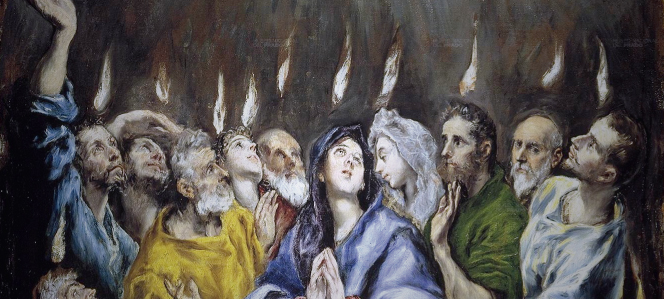
After the Ascension, the group of disciples were all in Jerusalem, awaiting some really big predictions to come to pass. Predictions by angels, and by the Hebrew Scriptures, and some plain-spoken words by the risen Lord Jesus Himself. It was on Pentecost morning that a large number of predictions came to pass – in a huge way!

You remember the scene? A little over one hundred followers of the risen Lord Jesus had gathered together in Jerusalem, in that very same second story of a building. The place that was the same Upper Room where the disciples had their Last Supper with their Rabbi, the night before His crucifixion.

You remember the train of events? A big holiday and Jewish festival was celebrated: the festival of Shavuot, or First Fruits. Lo and behold, the group of disciples was having a prayer meeting, when suddenly “there was a sound from heaven like the roaring of a mighty windstorm, and it filled the house where they were sitting. Then, what looked like flames or tongues of fire appeared and settled on each of them. And everyone present was filled with the Holy Spirit and began speaking in other languages, as the Holy Spirit gave them this ability.”

The disciples were as surprised as anyone! Yet, Peter realized what was going on and as one of the spokesmen for the disciples, he stood up and proclaimed that this was indeed an earthshaking sign from God! He even quoted from the prophet Joel, about the descending of the Spirit of God.

You remember what happened? Peter said, ““People of Israel, listen! God publicly endorsed Jesus the Nazarene by doing powerful miracles, wonders, and signs through him, as you well know. 23 But God knew what would happen, and his prearranged plan was carried out when Jesus was betrayed.”

I am certain that as Peter spoke he remembered that last night in the Upper Room; their leader and Rabbi Jesus gave the disciples a firm promise, saying “And I will ask the Father, and he will give you another advocate to help you and be with you forever— 17 the Spirit of truth. The world cannot accept him, because it neither sees him nor knows him. But you know him, for he lives with you and will bein you.”

This cataclysmic happening on Pentecost morning was that exact thing! The pouring out of the Spirit of truth, God’s Holy Spirit! It was not a gentle, even passive pouring out, but instead a mighty rush of wind! Flames appearing over each believer’s head! And, the gift of tongues or speaking in languages that the disciples had never learned! God displayed awesome power and might on that Pentecost morning!

Let’s go back a few weeks, to that Upper Room, to that Passover dinner just before Jesus was betrayed. All during the past few weeks Jesus had been predicting His death. Fulfillment of prophecy often seems distant and impersonal…like it is not warm or intimate. By some standards, Jesus gave a prophecy, it’s true. But more than that, Jesus gave a firm promise. He promised that His Heavenly Father would send the Spirit of truth upon the disciples.

 “For he lives with you and will be in you.” Such a positive way of seeing this marvelous event! Jesus recognized that His promise would become a lifeline for the disciples, a promise made, and a promise He certainly kept! Isn’t keeping a promise warm, positive and genuine? That describes our Lord Jesus to a “T”

Throughout the Gospel of John, Jesus supplied deep needs. Wants and desires, too. He supplied a whole description on new life to Nicodemus. Jesus supplied living water, spiritual hydration to the woman at the well. He supplied healing to the man by the pool of Bethesda. Jesus supplied guidance into an unknown and frightening future to Thomas, and for knowledge that God’s promises are definitely true, in Philip’s case.

And here, in the Upper Room, to all of us here today and throughout the centuries, Jesus elaborated on the gift of the Holy Spirit. Our Gospel reading today points to “an intimate Pentecost, to the Holy Spirit at work in our inner lives and in our world drawing us into intimate relationship with God who delivers on all God’s promises.” [1]

The Pentecost event two thousand years ago was indeed a huge cataclysm of sound and wind and flame and excitement! Yes, and our individual Pentecosts today can also be quiet, introspective and just as full of the Holy Spirit. Have you not known? Have you not heard? The everlasting Lord, the God of all creation is sending the Holy Spirit into each of our lives.

This is not a mere prophecy, an impersonal declaration of the might and power of some distant Higher Power. Our risen and ascended Lord Jesus has given us a personal promise, a warm, genuine affirmation of God-With-Us, Emmanuel. A genuine promise given, and a promise bountifully kept – in your life and mine. Amen, alleluia!    

@chaplaineliza

(Suggestion: visit me at my other blogs: matterofprayer: A Year of Everyday Prayers. #PursuePEACE – and  A Year of Being Kind . Thanks!


[1] https://www.patheos.com/progressive-christian/intimate-pentecost-alyce-mckenzie-05-10-2013

Unknown's avatar

Moved Into the Neighborhood

“Moved Into the Neighborhood”

John 1:14-18 (1:14) – January 2, 2022

            Sometimes, before a book really gets started, or before the action starts in a play or a movie, the author needs to say some important things. Things that we as readers (or watchers) need to see and absorb, in order to truly understand the rest of the book – or play, or movie. This is often called the prologue, and it can hold some pretty important stuff!

            Our Scripture reading today, the first Sunday of the New Year, comes from the first chapter of the Gospel of John, verses 14-18. This reading is from John’s prologue to his long narrative about our Lord Jesus and His life and ministry. Before the action gets going, John writes some really important stuff about the Eternal Second Person of the Trinity in this beginning, including verse 14: “The Word became flesh and made his dwelling among us.”

            Before the action begins in our lives, in our next chapter, we can sit down and think. Is there any kind of important stuff you would like to mention? Any special instructions or information for your potential readers? Let’s think about these opening verses from the Gospel of John. What do they say to us? “How do they function? [These words of the prologue] provide perspective a default position, a direction. They set the tone, set out themes so we know what to expect – a lens through which to view what comes next.” [1]

            These words remind me that you and I can take the opportunity to write prologues for our own stories, for the next chapter of our own lives.

We recognize this prologue of John’s from every Christmas, for years. Every year, we sing “O, Come, All Ye Faithful,” and every year we sing these tremendous words “Word of the Father, now in flesh appearing.” Those words are lifted right from this very chapter, right here! But, what does it mean, for the eternal Second Person of the Trinity, God from before the foundation of the universe, to become flesh, a fragile human Baby born in Bethlehem? 

This is the central, foundational promise of this Gospel – God became human, capable of being experienced and known by other humans. A simple yet profound message and promise.

Face it. We as weak, limited human beings have limited capacity to understand things. Things like God and God’s revelation. God understands our limitations, our fragility, and our hesitations. God the Eternal Second Person of the Trinity, Creator of the universe, emptied Himself of all that was God and came down from heaven. Jesus became a tiny, helpless human Baby born in Bethlehem, and then grew and experienced humanity from the inside out, to better be able to communicate to us limited humans down on earth.

How awesome, how unbelievable, how indescribably kind was that? Let’s go back to John’s Prologue. The last verse we read today says a whole lot: “the one and only Son, who is himself God and is in closest relationship with the Father, has made [the Father] known.”

As our commentator Karoline Lewis points out, verse 18 seeks to describe what the Word made flesh came here to do. John uses the Greek verb exago, “combining the prefix ex, which means “out” with the verb ago which means “to bring or to lead.” In other words, the principal purpose of the Word made flesh is to bring God out, to lead God out, so that an experience of God is possible. It makes no sense for the Word to become flesh if God is not able to be experienced, and on every level of what it means to be human.” [2]

So, here we are, as limited, fragile human beings, faced with a loving, caring God-made-flesh, Emmanuel, God-with-us. How have you experienced Emmanuel, God-with-you, in your life? Has Jesus been especially real to you at any point? Have you been going through difficulties and problems in your life, or in the lives of your families, and our Lord Jesus came alongside you and was very present in your life and experience? That is the very thing He came down from heaven to do and to be. To come alongside of us as we muddle our way through our messy lives.

As Lewis suggests, “I wonder if perhaps we all need a prologue — a prologue for our lives, even our believing, our discipleship, our relationship with God…. What themes will orient your life this year? Maybe we could call this a reorientation of New Year’s resolutions.

“This might be an especially helpful exercise at the beginning of a new year — what resolutions you want to make but also what God resolutions you need to make. In other words, resolutions not just for the sake of your life, but for the sake of God in your life, and for the sake of helping your congregation orient their lives to God’s Christmas, God’s present, and God’s future.” [3] What a marvelous idea! Make new year’s resolutions centered around God – God in the flesh, God’s present, and God’s future.

God is not someone far away, or someone who doesn’t care about us or our families, or our problems. God in very present with us. We as fragile, fallible humans CAN experience our Lord Jesus Christ, who did the ultimate. God the Father gave us all the most marvelous Christmas gift: the gift of God’s own Eternal Son, born as a Baby in Bethlehem.

I love how Eugene Peterson translated verse 14: “The Word became flesh and blood, and moved into the neighborhood.” Moved down the street, maybe even right next door. What a gift for all of us to experience. The Eternal God, right here, right now – Jesus moved into our neighborhood, and, God willing, into our very hearts and lives. Alleluia, amen!

@chaplaineliza

(Suggestion: visit me at my other blogs: matterofprayer: A Year of Everyday Prayers. #PursuePEACE – and  A Year of Being Kind . Thanks!


[1] https://www.workingpreacher.org/dear-working-preacher/a-prologue-for-the-new-year

[2]  https://www.workingpreacher.org/commentaries/revised-common-lectionary/second-sunday-of-christmas-2/commentary-on-john-11-9-10-18-5

[3] https://www.workingpreacher.org/dear-working-preacher/a-prologue-for-the-new-year

Unknown's avatar

“In My Father’s House”

“In My Father’s House”

Luke 2:41-52 – December 26, 2021

            Have you ever been concerned about someone’s whereabouts? Not knowing where they are, or when they might return? Maybe it was a teenage son or a daughter, out after curfew, forgetful of the time. Maybe it was a brother or sister, late coming back home. We are worried, true. Concern and care are there, too. Normal, human reactions connect with such a happening. But here in our scripture passage today, the care and concern that Mary and Joseph are dealing with are a bit more serious than just the concern over a teenager coming home a little late one night.          

            Let’s look at this passage a bit more closely. The Holy Family worships in Jerusalem for the Passover festival when Jesus is twelve years old, This snapshot of Jesus’ life is the only picture shown to us by the Gospels in between the birth narratives of Matthew and Luke, and the time when Jesus begins His public ministry when He’s an adult.

            His parents start to go back to Nazareth with the group of people they had come to Jerusalem with. One problem: Jesus isn’t there. The group Mary and Joseph were traveling with must have been pretty big, since Jesus’ parents were not aware that Jesus wasn’t with them when they started off for Nazareth.

            This must have been a really unusual happening. I mean, seriously . . . can you imagine Jesus ditching His earthly parents? Can anyone here imagine Jesus being mean, or teasing weaker kids, or being disobedient to Mary and Joseph? I suspect Mary and Joseph had a hard time believing it themselves, since the book of Luke tells us that they checked the group of travelers thoroughly before heading back to Jerusalem.

            It takes Mary and Joseph several days to find Jesus, once they get to Jerusalem. And where do they find Him? In the Temple. And what is Jesus doing there? He is amazing everyone with His understanding and precocious answers, at such a young age.

            I am reminded of my older brother John, a number of years older than I am. I wasn’t even alive when the following happened, but I was told many times by my other siblings about my brother’s abilities. When he was in kindergarten, my brother John was quite advanced in his school work. In fact, he could read fluently. When the kindergarten teacher found out about this, she tried having John read a number of things, including the daily newspaper. So, when I read this passage in Luke, it sometimes reminds me of my kindergarten-aged brother John, reading the newspaper aloud to a group of admiring teachers in the teachers’ lounge.

            The Gospel of Luke tells us the priests, Pharisees and other teachers of the Law of Moses were also an admiring group, gathered around Jesus, listening to His answers and understanding concerning matters in Hebrew Scriptures. The boy Jesus had a clear, deep understanding of the Scriptures, and this came from His understanding of God the Father. 

            And how does Jesus respond when Mary and Joseph finally catch up with Him? “Did you not know that I must be in my Father’s house?” What a response. Could Jesus go wrong, being in His Father’s house? And, thinking about it, what more natural, obvious place for Jesus to be than in the Temple? Even though today’s preaching passage doesn’t tell us so, numerous other places in the Gospel records do tell us that Jesus was regular in prayer. He did have a close relationship with His heavenly Father. We can follow Jesus’ example, and be close friends with God.

            We see at the end of this narrative that Mary had a close relationship with God, too, except that she was more reflective. She meditated, reflected, pondered upon these things. She communicated to God in that way. Another way for people to be close to God.

            When I consider this snapshot of Jesus in the Temple, I desire a better understanding of Scripture, too. I not only wish to have a more thorough grasp of the Bible, I want to become better able to understand what God desires of me. For example, Dr. Luke says that Mary continued to treasure up all these things in her heart. Pondered, meditated on and considered all of these wondrous, miraculous happenings, and thus understood God better.

            But how am I to better understand God? Two good ways of becoming better acquainted with God and God’s desires for me are through reading the Scripture and through prayer and meditation – pondering what God says, what I read in the Bible. And this has the dual benefit of helping me to develop a closer relationship, a closer walk with the Lord. I see Jesus, having a close relationship with God, and therefore having a clearer understanding of what God’s Word says. I have the opportunity to have that, too!

            Prayer, talking to God, even thinking to God in the privacy of our own rooms, while in bed at night, or while taking a walk—all are good ways that we can keep up that relationship with God. We can praise God that God wants us to have a closer walk with the Lord, and provides all of us the means to do it.

            Alleluia, amen.

@chaplaineliza

(Suggestion: visit me at my other blogs: matterofprayer: A Year of Everyday Prayers. #PursuePEACE – and  A Year of Being Kind . Thanks!

Unknown's avatar

Delight in God’s Word!

“Delight in God’s Word!”

Psalm 119:9-16 (119:11) – March 24, 2021 (Midweek Lenten Service, Week 5)

            I have been fascinated by Psalm 119 for decades. Since I was a teenager, in fact. These many verses describe what so many seek – a close relationship with God through God’s Word. Psalm 119 is the longest psalm in our Bible book of Psalms, and an acrostic psalm. That means that each group of eight verses begins with the same Hebrew letter. In verses 9-16, each verse begins with the second letter “B” or “bet” in Hebrew.  

What’s more, this psalm is all about God’s Word – the Bible. This psalm uses many instructive and innovative descriptions of speaking, meditating, pondering and just plain reading the Bible. One of the first verses I ever memorized as a teen is found here, in Psalm 119:11 – “Thy Word have I hidden in my heart, that I might not sin against Thee.” (King James version)

A helpful way for me to consider these verses is to focus on the verbs: how does the psalmist ask us to think about the Word of God? Bible commentator Joan Stott broke the verbs down into three sections, the past tense, present tense and future tense. (Such wise assistance.) First, the present tense: verse 12. “I praise You, Lord.” That is a continuous song of praise! Hebrew has a continuous action for the present tense, and this is it! I’ve been trained as a musician, and Nancy is a professional musician, too. Praising God with music can be amazing!

The church musician Johann Sebastian Bach inscribed almost every piece of music he ever wrote with the initials “SDG,” or Soli Deo Gloria. To God alone be the glory. That is what Bach intended for all of his glorious music – that it glorify God alone. And then, the second half of verse 12 is “teach me Your laws.” Again, “teach” is in the present tense. Continuous action! We need to be taught (or, reminded) about God’s Word, regularly.

            Then, the past tense. As Stott says, “The past tense section of these verses can also teach us more about reflecting on and confessing our sin; and praying for God’s help to overcome these temptations. “…I have tried hard to find you – don’t let me wander from your commands. I have hidden your word in my heart, that I might not sin against you.”  [1]

            We need to keep trying, keep striving to find God. One of my all-time favorite hymns has the lines “prone to wander, Lord, I feel it, / Prone to leave the God I love.” “Come, Thou Fount of Ev’ry Blessing” is a gentle reminder that we do need to keep following, and to ask God for help when you and I are prone to wander.

             “The future tense section of verses is about the various commitments we make to God—but do we keep them? “…I will study your commandments and reflect on your ways. I will delight in your decrees and not forget your word…” [2] Ahh. I find myself reflected in this section, more than I would like. I do not study God’s Word much now. (I confess.) Yes, I do reflect on it, but I don’t dig in and truly study hard. I used to! But now, not as often.

            However, there is the verb “delight.” This is a word we all can choose to do. And, God will be so pleased when we delight in God’s Word! We have such wonderful verses to reflect upon. Not only in Psalms, but in Isaiah, and sprinkled in the historical books of the Hebrew Scriptures. Large parts of the New Testament are a delight and comfort for us to read, too. This is what God wants us to do, you understand! Psalm 119 is a wonderful place to start, too.

            Delight is joy, satisfaction, enchantment, or even glee. We are invited to love God, and sing praises to God’s name! Have you delighted in the Lord lately? And if not, why not start now? Plus, perhaps we can memorize a verse or two, and hide God’s Word in our hearts, too. That will please God so much, too. Amen!


[1] http://www.thetimelesspsalms.net/w_resources/lent5b_2018.htm

The Timeless Psalms: Psalm 119:9-16, Joan Stott, prayers and meditations based on lectionary Psalms, 2018.

[2] Ibid.

@chaplaineliza

(Suggestion: visit me at my other blogs: matterofprayer: A Year of Everyday Prayers. #PursuePEACE – and  A Year of Being Kind . Thanks!

Unknown's avatar

When God Shields Us

“When God Shields Us” – October 18, 2020

Exodus 33:12-23 (33:19-22)

Have you ever known someone who was really important? I mean, really, really a V.I.P.?

Moses was personally acquainted with the biggest V.I.P. in the whole world. Even, in the whole universe. Eileen just read today’s Scripture lesson from Exodus 33, and we heard what an awesome experience Moses had on top of that mountain. Just him and the Lord, they had personal one-on-one time.

Let’s take a closer look at this reading. An overview, so we can understand exactly what is at stake. We can simply take Exodus 33 as a striking word-picture of how awesome, mighty and all-powerful God is, and we would be absolutely correct. Our God is indeed an Awesome God. But, there is so much more involved here.   

Moses and the Lord talk about the presence of God. This is huge! The presence of God is a continuing theme in the book of Exodus, and right here is a particularly important exchange between our two protagonists.  

We could simply watch Moses and the Lord, almost like we are in the audience, or viewing on a television screen. Reading this story from Exodus, we might say “What does this story have to do with me?”  But, we can relate this to our personal situation – each one of us.

To come before the physical presence of God is truly rare – but it was something Moses greatly desired! What is more, he also wanted to be able to reassure the people of Israel with the reality of God’s presence. Is that something that reassures you, today?

Throughout the Hebrew Scriptures, again and again, we hear about how dangerous it is to approach the Lord. God’s presence is so fearsome that a number of people are immediately struck dead for daring to come in contact with the Lord. For much of Exodus, the Lord is not even sure whether Israel is even worthy enough to sit by and receive that Godly presence. Yet, Moses sees God’s presence and blessing as a beneficial thing, a good and necessary thing.

Have you ever been given the silent treatment? This could be by a parent or other grown-up when you were younger, or perhaps by a sibling or a friend? The silent treatment is particularly sad and jarring, especially when you really respect, even love the person giving you the silent treatment.

That is pretty close to what the Lord wanted to do to the whole nation of Israel by removing God’s presence and blessing from Israel. That would be horrible! Like, drinking water, and finding it was dry water. Or, going outside in the middle of the day, and finding there was an eclipse of the sun – permanently. What a traumatic, even cataclysmic event, having the Lord discuss permanently removing God’s presence and blessing from Israel. [1]

Yet – God said to Moses, ‘I know you by name and you have found favor with me.’ And, even further, “the Lord said to Moses, “I will do the very thing you have asked, because I am pleased with you and I know you by name.” That must be so heartwarming, hearing God say, “I know you by name and you have found favor with me.”

I remind you, looking on the face of God was fatal, for a number of those in the Hebrew Scriptures. I wonder: is it a fatal act to think that we see God’s glory, that we fully comprehend God, today? The hazard of thinking you’ve got it all figured out becomes a sign of our self-centered, self-involved problem. The idea that we’ve got it figured out, because once we figure that, WE become God to ourselves – our self-centered delusion is that WE are greater than God. This was certainly part of what was going on with the self-involved people of Israel, periodically thinking they were much more important than the presence of God.

If we step back from being self-centered and self-involved, we realize we are invited into a relationship – a relationship with the Lord. Moses knew that to become more aware of the presence of God, he needed to spend time with God. That is exactly what he and God were doing on top of that mountain. And, God and Moses had a number of one-on-one encounters that helped Moses get through his life’s journey.

Knowing that we are always in the presence of God will help us get through many difficult things. Though complicated questions and weighty issues overwhelm us on a regular basis, we can be certain that God walks beside each of us on our journey through life, too. [2]

Are you ready to have a relationship with the Lord? To have one-on-one conversations with God? Sure, our God IS a powerful, mighty, Awesome God. We are also freely invited into the generous, merciful presence of God.

Let us celebrate the presence of God, today. Amen, alleluia.


[1] Brueggemann, Walter, “Exodus,” The New Interpreters Bible Commentary, Vol. I (Abingdon, Nashville, TN: 1994), 938-39.

[2] https://www.umcdiscipleship.org/worship-planning/pressing-on/twentieth-sunday-after-pentecost-year-a-lectionary-planning-notes/twentieth-sunday-after-pentecost-year-a-preaching-notes

@chaplaineliza

(Suggestion: visit me at my regular blog for 2020: matterofprayer: A Year of Everyday Prayers. #PursuePEACE – and my other blog,  A Year of Being Kind . Thanks!