Unknown's avatar

Have Mercy on Us!

“Have Mercy on Us!”

Luke 17:11-19 (17:13) – October 12, 2025

            Ever been to the dentist, or the doctor, with a health complaint? Of course, you have! You all—we all have, at one time or another. Thank goodness, we live here, in the suburbs of Chicago. It is fairly easy to get good—or even, excellent medical and dental care, as opposed to the rural spaces in the United States, where health care is not as accessible. And, can you imagine outside of this country?

            Imagine living in the first century of the Common Era. In Jesus’ day, doctors were rare even in mid- to large-sized towns. When people had health complaints, there were some homeopathic remedies, true. And local healers, people who were good with herbs, poultices, and ointments. But for continuing problems or chronic diseases? There weren’t many options for any other kind of health care.

            Let us set the scene. Dr. Luke tells us, “Now on his way to Jerusalem, Jesus traveled along the border between Samaria and Galilee. 12 As he was going into a village, ten men who had leprosy met him.”  We have a situation with some chronically ill people. These people had skin diseases. Commonly referred to as leprosy, these skin afflictions could be anything from severe eczema to Hansen’s disease, what we now know today as leprosy. And any disfiguring skin problem, in between.chronic

            In Jesus’ day, there were priests and Levites stationed all throughout the land of Israel. These official people were not only on duty for the Sabbath day, for religious observance, but they had several other important duties under the law of Moses. Did you know that the priests and Levites could make rulings on whether a person was too disfigured, too blemished to live in close quarters with the rest of the townspeople?  True facts!

            This was an early example of a health code. The priests and Levites were among the first health inspectors! Because some of these skin diseases were contagious, and so the people who had them would contaminate others, the priests and Levites would have to exile them. Kick these former upstanding people out of town. Out of society, and isolated. Marginalized. Exiled. Called ‘unclean.’ Living far away from everyone and everything they once held dear. Ringing bells to warn others not to come near them. That was the situation for these ten lepers we read about in Luke’s Gospel today. What a lonely existence for these poor people.

            The Rabbi Jesus was on His way to Jerusalem with His disciples when he met these ten men, on the border between Galilee and Samaria. This is yet another time that our Gospel writers tell us that “Jesus is again in a border region, again crossing boundaries and wandering where he probably shouldn’t go, and again healing people with whom he has no business interacting.” [1] Commentator Dr. Davis Lose reminds us that Jesus is again doing something out of the ordinary. In fact, extraordinary!  

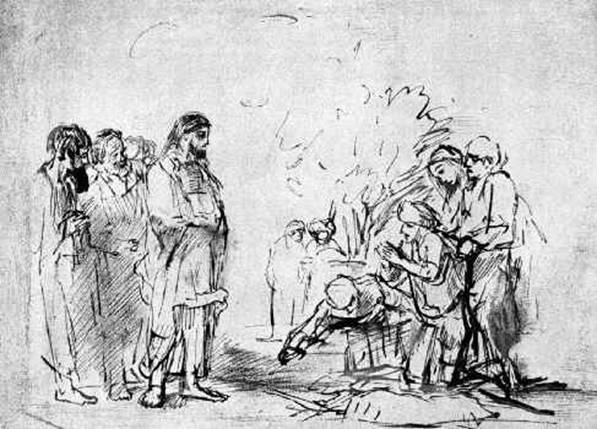
            Let us consider that this unconventional Rabbi Jesus is not only crossing geographical boundaries and wandering – traveling where “good, rule-keeping Jews” just don’t go. But, Jesus is also interacting with these ten lepers! These men obviously kept at a distance from all other “normal” or “regular” people, except I am certain they had heard of this miracle-working Rabbi! Can’t you just hear the anguish and the hoping-against-hope in their voices as they cry out, “Jesus, Master, have mercy upon us!”  

            Jesus’ response is simple. Straight-forward. “Go, show yourselves to the priests. I can just imagine these ten men, told by Jesus to go and show themselves to the priests in town. Except, Jesus told them to go before He had done the act of visibly healing them from their skin disease. They needed to act, they needed to start to go before they saw what had happened.

            Have you ever needed to go on faith, and start an action, go on a trip, take a step without knowing for sure that God is right there with you? And, the whole idea of a borderland, an in-between place that is neither one place or the other. Doesn’t God meet us right there, before healing is completely complete?  [2]

That’s all Jesus says to them. The verb in Greek means ‘show, or point out something to someone.’ Remember, I said the priests were the health inspectors of that day? Can you understand these ten guys, isolated, banished, marginalized. And Jesus says, “Go, show yourselves to the priests.”

            Lo and behold, “as they went”—that is, in the going—“they were cleansed.” Do you understand? These poor, lonely people believed Jesus, had faith, and were healed as a result. We are not told exactly how they discovered it, but it probably didn’t take too long.

            One ex-leper, out of the original ten—one ex-leper comes back to thank Jesus. Glorifies God! Comes to Jesus and prostrates himself at His feet. Once the Samaritan realized he’d been healed, he couldn’t help but turn back and share his joy and thanksgiving with Jesus.

            Thanksgiving is like that. When it’s genuine, it’s spontaneous—you recognize you’ve been blessed and can’t help but share your joy through thanksgiving.

“Have you ever noticed just how powerful it is not only to receive blessing but also to name it and give thanks for it? Maybe you’re at dinner with family or friends, then you lean over to another, or maybe raise your glass in a toast, and say, “This is great. This time, this meal, you all. Thank you.” And in seeing and giving thanks, the original blessing is somehow multiplied. You’ve been blessed a second time.” [3]

The Samaritan knows he’s been given a gift and can’t help turning around to say something. In doing so, he’s given a second gift: He leaves his encounter with Jesus not only healed but also blessed in his own recognition of healing, blessed at being drawn into deeper relationship with the one he thanks, blessed at hearing himself commended for having great faith.

Imagine the huge difference that must have made in his life. That’s the way thanksgiving works—in giving thanks for gifts given to us, we are blessed again. We can all say alleluia, Thanks be to God!

@chaplaineliza

(Suggestion: visit me at my other blogs: matterofprayer: A Year of Everyday Prayers. #PursuePEACE – and  A Year of Being Kind . Thanks!


[1] https://www.workingpreacher.org/dear-working-preacher/second-blessing

[2] https://www.umcdiscipleship.org/worship-planning/choosing-faith/eighteenth-sunday-after-pentecost-year-c-lectionary-planning-notes/eighteenth-sunday-after-pentecost-year-c-small-groups

[3] https://www.workingpreacher.org/dear-working-preacher/second-blessing
Unknown's avatar

Prescription for Prayer

“Prescription for Prayer”

1 Timothy 2:1-8 (2:1-3) – September 21, 2025

It’s good to be in the habit of doing certain things. Say, going to the gym. Exercise is a beneficial thing, and if I go to the gym on a regular basis, like three times a week, I will be healthier for it. Same for other things—like practicing the piano, practicing swimming or square dancing—it’s beneficial to get into the habit of regular repetition, week in, and week out.   

Worship and prayer are regular, comfortable things, things many churches do the same way, week in and week out. Here in our scripture reading today, Paul gives his younger friend Timothy some words of wisdom. Recommendations, if you will, of some things Timothy’s church can do in worship and prayer that will be beneficial to them all.

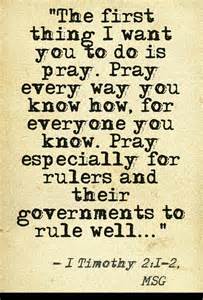
Reading again from 1 Timothy 2, “I urge, then, first of all, that petitions, prayers, intercession and thanksgiving be made for all people— for kings and all those in authority, that we may live peaceful and quiet lives in all godliness and holiness. This is good, and pleases God our Savior.”

I’ll stop right there. Not because the rest of the reading is unimportant. No! But, because Paul has so many ideas that are bursting out of him one on top of the other, I am afraid we might be overloaded if I read them all.

I am on social media, daily. I feature some things regularly, including my Daily Prayer posts. I have posted Daily Prayers on my public Facebook page for five years now. I see it as something I can contribute for my Facebook friends, and for friends of friends, too. I post a prayer each evening that I find meaningful, and I hope they can be helpful to others, too.

Other people have regular habits or practices of prayer and meditation. That is what the Apostle Paul talks about here! I am in a doctoral program for Spiritual Direction, which some people refer to as spiritual companionship. That’s coming alongside of another person, or a small group of people, being a long-term companion. Walking with them, sitting with them through their joys and through their difficulties and sorrows. I have a heart for listening to people’s stories, challenges, and difficulties in their lives. Plus, I pray with people through these things.

You recognize that is what we do in church, don’t you? In our Intercessory Prayers each week, we – as a congregation – come alongside of individuals and families and pray with them through their joys, challenges, and various difficulties. That is exactly what Paul tells Timothy to do here! This reading is a prescription for intercessory prayer in a worship service!

I know that believers and followers of Christ, Paul and Timothy were very much in the minority in their communities. The majority opinion and the overwhelming cultural context for both of them was one of a worldly avarice, where people were concerned about “me, first!” and “where’s mine?” This call to intercessory prayer was very counter-cultural!

Let’s look again at what Paul recommends. Paul begins the chapter by encouraging Timothy to offer prayers for all members of the human family during church services.He wants petitions, prayers, intercession and thanksgiving – all integral parts of praying – to be made for all people. That is not just for a few, or a family, or “only for our little, insular group of people.” No! Paul is recommending to Timothy that we pray for ALL people.

He mentions prayer in the terms of: petitions (humble, general requests to God), intercessions (requests, pleading for those in need), supplications (requests for ourselves, especially when faced with a crisis) and thanksgivings (expressing gratitude for blessings we receive). [1] All people need to be held up to God in prayer.

That means for everyone. Period. Even for mean people. Even for people we disagree with. Even for people who don’t look like us. As the modern translation from “The Message” of this reading begins, “Pray every way you know how for everyone you can.” Period.

Especially in the past few years in this country, division, discord, and dissension of large portions of the American population has only speeded up in the last few years, fueled by increasingly divisive rhetoric, shrill podcasts, and fraught news reports, as well as the regional and national conversations.

As Rev. Sharon Blezzard said, “Good news doesn’t usually sell publications or improve ratings. It takes bombast, divisiveness, and catty, snarky repartee to make headlines, not prayerful peacemakers standing in the breach attempting to reknit brokenness in quiet relationship building and listening. But we are called to a different way of being, to a stewardship of self and other that places value on people, on relationships, and on the building up of community.[2]

God has not called us to be snarky or mean, nasty or divisive. God does not want big bullies on God’s team. I have never heard of God approving of or cheering on hateful, spiteful Christians, either.

Instead, when we “Pray every way you know how for everyone you can.,” Paul reminds Timothy that “This is good, and pleases God our Savior, who wants all people to be saved and to come to a knowledge of the truth.”

Remember what the situation was for Paul and Timothy, and for all other believers in that first-century time and place. It is the same for us, today!  “We are called to be counter-cultural witnesses to God’s love, mercy, and saving grace. We cannot be a witness if our hearts are filled with hate. We cannot love our neighbors if we aren’t willing to get to know them, and certainly not if we aren’t willing to stop working violence against one another.” [3]

      Paul tells us we are to pray for all people; and we are to follow Paul’s lead in supplications, prayers, intercessions and thanksgivings. The intention of such prayers is so that we Christians in society will be able to live tranquil and quiet lives. This isn’t me saying it. It’s the apostle Paul! 

Regardless of whether there is peace in our church, peace in our neighborhood, or peace in our country, prayer is always a good idea. Having a close relationship with our Lord and Savior Jesus Christ is the reason we are here. Praise God! Thank You, Jesus. Alleluia, amen.

@chaplaineliza

(Suggestion: visit me at my other blogs: matterofprayer: A Year of Everyday Prayers. #PursuePEACE – and  A Year of Being Kind . Thanks!


[1] http://www.lectionarystudies.com/sunday25ce.html Rev. Bryan Findlayson, Lectionary Bible Studies and Sermons, Pumpkin Cottage Ministry Resources.

[2] https://www.stewardshipoflife.org/2016/09/calling-all-prayerful-peacemakers/

[3] Ibid.

Unknown's avatar

God Knows Us Full Well

“God Knows Us Full Well”

Psalm 139:1-6, 13-18 (139:14) – September 7, 2025

If you look at the news online, or on television, or listen to the radio or podcasts, many people often look for knowledgeable experts. Experts in their field or craft. People who know things. Think about it: cooking shows have culinary experts, home repair shows have building experts, news reports have experts in various fields, talk shows have behavioral experts to help solve the relationship problems of society, even newspapers have horoscopes written by psychics who are supposedly experts in astrology. Expert opinions!

            This craving for information, for people who know about things … I am afraid that I get sucked right into it. I go to people who are experts in their fields, and try to pick their brains and get what information I can, so I can masquerade as a sort of an expert, too. I like to think I know about things. And, I do. I know lots of things. I know lots about how to be a chaplain, and about music, and about the Bible, but that doesn’t hold a candle to the amount God knows! 

            God knows—now there is an expert opinion. Let’s look at the scripture reading for today. “O LORD, You have searched me and known me, You know when I sit down and when I rise up, You discern my thought from far away.” That truly is knowing. God knows every part of me. King David wrote this psalm many centuries ago, and its message still strikes home and hits my heart with penetrating directness.

            These verses from this psalm are among the most direct and poetic description of God’s omniscience in the whole Bible. Omniscience. Knowing absolutely everything. That’s a pretty scary thought, if we sit down and think about it.  It’s a good thing that God is loving, caring and merciful. We just have a shadow of understanding about how God knows us, yet it’s a loving, caring and intimate knowing. The omniscience of our knowing by our heavenly Father.

            When a word is repeated in a passage in the Bible, that is a way of underlining that word, indicating that word is particularly important. The Hebrew word “yada,” or “to know,” appears in today’s reading four times. The emphasis of this rich biblical word, this “concept of ‘knowledge’ is a critical element of meaningful relationship. We are to know God, just as God knows us.” [1]

            When you and I contemplate God, the totality, the tremendous experience of God’s knowledge is just “too wonderful” for us! That is us, as limited humans, trying to understand and contemplate the Lord. That is the eternal God who created the heavens and the earth! We read here in Psalm 139 that God’s capacity for knowing is utterly beyond comprehension, so far beyond us limited humans that we feel like we are reaching up to touch the moon, much less the stars in the sky. King David said, “so high that I cannot attain it,” in verse 6. And yet – God wants to be known! Known by us.

            This Sunday is when the church in Scotland celebrates the beginning of the season of Creation, when we celebrate God creating the world, the galaxy, the whole universe. As we contemplate God’s vast creative power, let us consider the creation of a single human life. Our psalmist considers it, too! Verse 13 says, “For you created my inmost being; you knit me together in my mother’s womb.” This is a glimpse of the psalmist’s understanding of the nature of God, of knowing God!

“This points to a God whose love for God’s own creation extends to concern, since this human creation is finite and therefore not perfect. Yet, it does not lessen but instead heightens the amazing and magnificent artistry of God’s creation. Indeed, this recognition becomes reason for praising God and affirming the self’s ultimate worth in the sight of God (v. 14).” [2]

God knows. God knows my circumstances, knows whether I’m sitting or getting up or lying down. God even knows what I’m thinking, before I can say a word. Talk about being an expert! The Lord knows my psychological makeup, my emotions and my heart, so much better than I do myself.

            It’s a good thing to get to know ourselves. It’s a worthy study, and one that would be useful in helping us to understand others. I like to tell myself that I know myself pretty well. I’ve seen a therapist for a number of years who has helped me come to understand my own thoughts and emotions better. He’s helped me to understand how I relate to others and why I act and react in certain ways. At times, after years of therapy, I may fancy myself somewhat of an expert on myself. But in reality, I am not. Sometimes I may think I am, but I’m just fooling myself.

            God knows everything about me, too. Everything. God knows all the flaws, all the rough spots, every praiseworthy feature as well as everything that isn’t. And–here’s the amazing part–God loves me anyway! Even with all that intimate knowledge about every single aspect of our character as well as our character flaws, God loves us anyway!

And, it isn’t just all about me. God knows each of us in the same way. He knows each one of you, intimately, too. The Lord has searched you and known you, and is acquainted with all your ways. And, God loves each of us, even more intensely than we can possibly imagine.

            Sometimes, certain authors have a way of capturing an idea in a special way. It’s that way with Max Lucado, a recent Christian author for both children and adults. I know I have referenced this before, and it’s just so good that I have to quote it again! This is a quote from Prayer: A Heavenly Invitation, which describes just the idea I’ve been trying to communicate.

            ”If God had a refrigerator, your picture would be on it. If He had a wallet, your photo would be in it. He sends you flowers every spring and a sunrise every morning. Whenever you want to talk, He’ll listen. He can live anywhere in the universe, and He chose your heart. And the Christmas gift He sent you in Bethlehem? Face it, friend. He’s crazy about you.” [3]

            Friends, God knows all about us, and He loves us anyway. What else can we do but fall on our knees before God in praise, thanksgiving and adoration? Thank God for His boundless love towards you and towards me.

            Alleluia, amen.

@chaplaineliza

(Suggestion: visit me at my other blogs: matterofprayer: A Year of Everyday Prayers. #PursuePEACE – and  A Year of Being Kind . Thanks!


[1] https://www.workingpreacher.org/commentaries/revised-common-lectionary/second-sunday-after-epiphany-2/commentary-on-psalm-1391-6-13-18-2

[2] http://www.theafricanamericanlectionary.org/PopupLectionaryReading.asp?LRID=27

[3] Prayer: A Heavenly Invitation – Max Lucado

Unknown's avatar

Approaching God in Community

(I am on vacation this week, or rather, a stay-cation. Enjoying stepping away from pastoral and preaching responsibilities. Here is a sermon from the beginning of July 2007, when I was co-interim pastor of a (sadly) now-closed little church, St. John’s United Church of Christ in Evanston, Illinois.)

Acts 2:42        July 1, 2007

“Approaching God in Community”

            Life here in America, even here in the Chicago area, in the 21st century can be lonely. People often live alone, drive alone, shop alone, even work alone. Many people do not talk about their lives, are never asked how their day is going, rarely experience a caring touch. Loneliness and a sense of isolation are part and parcel of many people’s daily lives. Unless people intentionally make an effort to interact with others today, whole days—even weeks can go by without meaningful encounters.

            There are lots of reasons for this. The rapid communication trend with ever increasing speed has distancing, impersonal effects on many. The nuclear family is fragmented, now more than ever. Technology will continue to develop, and businesses downsize, fragmenting society and driving people further apart. And then, of course, we need to consider the speed with which everything is going now, so much faster than fifteen or twenty years ago.

            A retired pastor friend of mine told me a while ago about some elderly people at a church he pastored, a number of years ago. Some of them lived alone, either in houses or apartments. My friend told me about the loneliness that drove several of them out to the grocery store every day, because if they did not have that interaction with the checker checking out their food, they would not have a personal encounter in the entire day. A few were so hungry for personal contact, they desperately wanted the physical touch that comes from an exchange of money at the cash register; so simple, so fleeting.

            Similarly, some people today are searching for an interaction with God. George Barna, the guru of surveys, statistics and demographics, found that 49 percent of people who do not attend church, in the 1990’s—less than ten years ago—wanted a close relationship with God. These are people who do not even darken a church door. The percentage is even larger when we consider the people who do attend church. There is a common desire among many to have an encounter with God. Saint Augustine referred to it as a God-shaped hole in our hearts.

            This longing for God, this desire for an encounter with God, I see as similar to longing for human contact. Both longings stem from a deep loneliness, a need for something internally, a kind of relationship. Many people are yearning for some kind of deep relationship in their lives, both horizontally—with other human beings, as well as vertically—with God.

However, there is a problem. This longing cannot be filled. The encounter—both vertically as well as horizontally—that many people want to have cannot happen. Something gets in humanity’s way. Something is in our lives and hearts, and acts as a block, a separation. You know it as well as I do, and this something is sin.  Sin is a separation; it comes between us and other people. Sin comes between us and God.

I won’t dwell on sin much, other than to say that it is a prideful, selfish, sometimes downright rebellious attitude. The “me, first!” attitude that comes between us and other people, and especially comes between us and God. And that deep-down attitude separates us, builds walls, and keeps humanity from developing relationships, from having meaningful, honest encounters.

But there is good news. God wants to break down that separation, and allow us to encounter Him. The Bible tells us that Jesus had willingly taken our sins on Himself to pay the “wages of sin” in our place!  And God the Father made it clear to everyone that He was completely satisfied with this payment by the fact that He raised Jesus His Son up from the dead!  And so, the way is now clear for us to have the relationship with God that we were meant to have! At last, the “hole in our souls” can be filled to our satisfaction, this deep-down longing for God can be filled.

So this is good news! This is very good news! But I haven’t even started to examine our scripture passage for this morning. I wanted to take a brief look at the second chapter of Acts.

Peter—you all remember Peter, don’t you? Peter was just finishing his sermon in Jerusalem, on the day of Pentecost. The book of Acts records one of the biggest altar calls ever. About three thousand people welcomed the gospel message of Peter into their hearts, and joined the brand new group of believers that day. Talk about a soul-winning campaign! God touched the hearts of thousands of people that day, and drew all these people to Himself. God had a close encounter with each one of these people that day.

One of the most amazing things we can learn from this passage is that God not only repaired the way for Him to have a relationship with each person, vertically-speaking, but this lifting of the sin-separation repairs the way for us as individuals to have a relationship, to have an encounter with each other. God causes the separation to disappear, both horizontally, as well as vertically.

Listen again to the passage, starting at Acts 2:41-42. “So those who welcomed his message were baptized, and that day about three thousand persons were added. They devoted themselves to the apostles’ teaching and fellowship, to the breaking of bread and the prayers.”

Welcoming the message of the good news is the first part I want to consider. God repaired the separation. About three thousand people came to faith in the message Peter preached. God drew these people to Himself, reached their hearts, and caused the separation of sin to disappear.

Do you hear? Do you understand? God wants to approach us just as much as we want to approach Him—more, even, since God’s love is higher than the highest heaven and deeper than the deepest sea. And God has made this possible by the death of His Son on the cross, reconciling us to Himself, breaking the separation that divides us from God.

But wait—that’s not all. Not by a long shot.

God not only wants to bring us into a close relationship with Him, God wants each of us to come into a relationship with each other. And what an awesome opportunity to do both at the same time. In worship, we have the opportunity to experience a close encounter with God and with other people worshiping with us.

We here at St. John’s Church call this congregation a church family. Well, that’s exactly what Dr. Luke had in mind as he wrote the book of Acts. He wanted to emphasize that separate, lonely, desperate individuals not only developed a relationship with God, but through their heartfelt belief, they developed a relationship with each other. And that relationship, that fellowship has the opportunity to be realized in worship, together.

In centuries past, congregations took the opportunity to worship actively together. Congregational singing, reciting creeds, celebrating communion, reading liturgy, passing the peace—all of these are expressions, activities that congregations used to do together. But, there’s more. Much, much more. God is pleased when we are creative, and what better way to be creative than in worship and praise of our God.

Now, especially in some churches, worship is becoming increasingly a passive activity. Just sit back, and watch the show up front. But this isn’t a way to have a relationship with God, or with our fellow church family! People cannot interact with God and with others if they don’t have anything to do on a Sunday morning in a worship service.

God wants a relationship with us. God wants to get in touch with us. And part of that interaction comes from our getting in touch with each other. As someone here in the congregation mentioned a couple of weeks ago, it is especially at times of deep emotion that a congregation can pull together and show love and concern for each other.

It would be silly to think that a relationship could be built simply on loving thoughts and nothing else. No, a relationship is built on regular interactions, close encounters on a regular basis. The book written to the Hebrews advises these believers not to neglect the assembling of themselves together. They were to assemble regularly for worship. I’d like to go even further, and suggest that we not neglect worship that is interactive—not only between the congregation and God, but between the members of the congregation.

God is offering you, offering me, the opportunity for a relationship with Him, as well as a relationship with our church family. The options are there in front of us—loneliness and separation, both vertically as well as horizontally, or relationship and fellowship, with God and with our church family.

What does this look like? I don’t know, exactly. It’s different for different congregations. God is a God of infinite variation, and I suspect He accepts worship of all different kinds, just as God accepts people of all different cultures and people-groups.

I invite you to start praying about worship, and talking about it with each other, too. Some here may feel rather skittish, or downright silly, entertaining different and new ideas about worship. Some may even feel like they’re “breaking the rules,” but that’s okay.  This interactive worship, both in a horizontal way as well as a vertical way, is truly biblical worship. It is truly a way for us to approach God, as well as each other. And in this day and age, that’s what humanity needs—a close encounter with God, as well as with each other.

Unknown's avatar

Dazzling White!

“Dazzling White!”

Luke 9:28-36 (9:35) – March 2, 2025

Have you ever seen a caterpillar? I know that crawly caterpillars are not particularly exciting to look at. Walking around on multiple little feet, eating big hunks of leaves and generally being crawly – some might say a bit creepy. As caterpillars begin to go through the process of changing from a rather ugly crawly thing into a breathtaking, lovely butterfly, that multiple-day process is called metamorphosis. How remarkable to see a new butterfly coming out of a chrysalis! As it has turned from a crawly caterpillar into a beautiful butterfly!  

I know, this natural process takes a great number of days, and we cannot closely compare the caterpillar-to-butterfly to our Bible reading today. Except – in a marvelous, unexpected way, we can. As we stop, look and see our Lord Jesus transforming His appearance on top of the mountain, I am reminded of the beautiful butterfly we see coming out of the chrysalis.

Christian tradition tells us Luke was a doctor—and a Gentile, a Greek. The only non-Jewish writer of two books of the Bible. Three of the Gospel accounts show us the Transfiguration. But, Dr. Luke is the only one who adds the description of Jesus leading the other three disciples up on the mountain. Let’s take those three disciples, Peter, James, and John, his brother. Jesus asks them to climb with Him to the top of a mountain to pray. This was a regular thing that Jesus did—not the mountain part, but going away by Himself—or with a couple of other people—to pray and meditate in depth.

And, what is the reaction of the three disciples? Where do we find our faithful friends, Peter, James and John? Fast asleep. Again. We do not know why or how they wake up, but they did. They wake to the sight of Jesus looking dazzling bright, whiter than snow, brighter than anything they had ever seen.  

Dr. Luke says,The appearance of his face changed” (Luke 9:29). “The appearance. He didn’t look like what they were used to looking at. He looked different. He looked … more. Transfigured is the word that we are used to reading here. That sounds more holy somehow, more theological than to say simply that he changed. But the Greek word here is metamorphothe, from which we get metamorphosis. Or change.” [1]

This event is truly a situation where I can say: Oh. My. God!!

I do think our friends the disciples have a bit of a problem. Here they have their Rabbi Jesus, the best example of Godly living the world has ever seen. The best example of living with a close and deep relationship with God, with prayer and meditation front and center in His life. And where are they at this significant time in the life of Jesus? Asleep at the switch. Not paying attention, not getting involved or participating.

Remember, even though the disciples followed Jesus, the disciples were not exactly sure who the Rabbi Jesus really and truly was, before the Transfiguration. True, they understood the Rabbi Jesus was especially anointed by God, and was a definite prophet and miracle-worker, and anointed preacher. They had been traveling with Jesus. They ate with Him and even bunked down by Him at night. You get to know a person very well if you do that for long enough. The disciples knew that Jesus was something special.  However, these earnest disciples may have been confused about the exact identity of who they were following.   

Our Lord Jesus did not need the Transfiguration, certainly. He was rock solid in His identity, and knew He was God’s Son. He understood His mission here on earth. Who needed the Transfiguration, then? God did this special showing or metamorphosis in particular for the disciples, for Peter, James and John. And for those who would later read about it – all of us.

Yes, our Lord Jesus appeared all dazzling white, and was deep in conversation on top of the mountain with a transfigured Moses and Elijah. These disciples had been eye-witnesses to some really big miracles, even before this mountaintop experience! Except … these three certainly were puzzled and amazed here. And, I get the feeling that these three and the other disciples at the bottom of the mountain looked that way most of the time!

 “They knew Jesus was special, but they were never quite sure what that meant.  By wrapping Jesus in a shiny cloud and incredible clothes, God was telling the disciples, ‘Jesus is more than a special person.  Jesus is God with you.’” [2]

What happened on top of that mountain was much more than just a spectacular laser, fog and lights show, with fancy costumes. As Jesus – and Moses and Elijah – appeared in dazzling white, glorious robes, the essence of Jesus became more visible, more obvious. Our Lord Jesus was the same Person who climbed the mountain, the same Person who went down again. He displayed even more of Himself on that mountaintop. He is always who He is, just as Jesus is always present in the fullness of His being.[3]  

And, if that picture is not mind-blowing, I do not know what is!

How can we open our ears and take this narrative into our hearts and lives today? Remember, Jesus took the disciples away to pray with them, there on the mountain top. What happened, again? They didn’t pay attention. They fell asleep. How often do we do the same thing? How often do we just go through the motions? How often do we want the same old experiences and are hesitant to accept any change in life or church or a new part of the service? How often are we more concerned with what our fellow believers are wearing than the condition of their hearts?  Their souls? Their emotional lives? Their physical well-being? Wouldn’t Jesus concern Himself with real people’s lives, with prayer and word and praise? Or would Jesus get sidetracked like the disciples? Going through the motions?

Hard to imagine our Lord Jesus doing anything of the kind.

As we gather in this place for communion today, we remember. Jesus said, “Do this to remember Me.” Do what? Pray together. Participate together. More specifically, all of us are to participate in the communion meal, where Jesus is revealed in the breaking of the bread.

And afterwards, we are sent forth to bring Jesus into the world. Jesus, God’s Chosen One! Jesus, the hope of the nations! Jesus, the Prince of peace.  Alleluia! Amen.

@chaplaineliza

(Suggestion: visit me at my other blogs: matterofprayer: A Year of Everyday Prayers. #PursuePEACE – and  A Year of Being Kind . Thanks!

(Many thanks to the website www.umcdiscipleship.org for their preaching notes for Transfiguration Sunday! I am very grateful to this wonderful website for several significant ideas for this sermon.)


[1] https://www.umcdiscipleship.org/worship-planning/where-you-are-far-horizons/transfiguration-sunday-year-c-lectionary-planning-notes/transfiguration-sunday-year-c-preaching-notes

[2] http://worshipingwithchildren.blogspot.com/2013/01/year-c-transfiguration-of-lord-february.html

[3] https://www.umcdiscipleship.org/worship-planning/where-you-are-far-horizons/transfiguration-sunday-year-c-lectionary-planning-notes/transfiguration-sunday-year-c-preaching-notes

Unknown's avatar

Let’s Go Deep!

“Let’s Go Deep!”

Luke 5:1-11 (5:4) – February 9, 2025

When did God become real to you? Were you sitting in Sunday school, when you felt deep within that God was real, and you felt wonder? Or, were you at a camp or retreat, around a campfire, when something let you know God was the real thing, and you felt nothing but awe? Or, perhaps, were you praying next to a loved one’s bed in the hospital, and you powerfully understood that God is real, and you felt deep comfort? Have you had a God-encounter?

            The situation here today is where God becomes real for these people. Edward just read the Gospel lesson from Luke 5 to us, and we heard about Jesus calling the first disciples. But, we need to back up in this reading, before the Rabbi Jesus calls anyone to be a disciple.  

            We break into the action quite early in the public ministry of Jesus. So early, in fact, that He has not even called anyone to follow Him, to be His disciples. We see Rabbi Jesus, alone, teaching, preaching, healing, and beginning His ministry. Luke starts off with the phrase “One day as Jesus was standing on the shore of the Lake of Gennesaret.” I think Doctor Luke meant this to say that this was a typical day in the life of Jesus. Teaching, preaching, doing miracles. All in a day’s activities, for the Rabbi Jesus.

            But, Jesus is not the only one mentioned in this Gospel reading today. We are introduced to Simon. (or Simon Peter, but that name comes later on.) Simon did not have a good night fishing. In those days, people fished at night.

“The fishermen would spend the night in the shallows, tossing their nets and pulling in the catch. Then as dawn broke, they would bring the fish to shore and sell them at the market. Because of a lack of facilities for preserving fish, this was a daily event. Except this day.” [1]

            Have you ever had a bad day (or night) at work, too? Or how about at school? Has everything gone off the rails? Did you get off on the wrong foot? Or, was your supervisor, or teacher, or co-worker just downright grumpy, and their negative attitude threw a monkey wrench into the whole day?

            I suspect our friend – and future disciple – Simon could relate. He caught nothing the whole night long, so he had nothing to sell at the local market, and nothing to take to his folks at home to eat. No one knows for certain how Simon was feeling, but I know that many people in a similar situation would feel demoralized, defeated, or just plain empty inside. All because the nets had been empty all night long! But this Gospel reading does not only feature Jesus and Simon, No, there is a crowd, too!

The crowds who have gathered to hear the Rabbi Jesus teach and preach—and watch the miracles!—I suspect are filled with wonder, curiosity, and questions. Who is this rabbi with such clarity in teaching the word of God? Who is this rabbi with such power and authority? Yes, we see the people crowding around Jesus so much that He got in a boat by the seashore, put out a little way, and then preached to the crowd.

(Did you know—little known fact—that Jesus was using the natural amplification of the water to make His voice heard better? When someone is out in the water a little distance from shore, their voice can be heard as naturally amplified because of the sound waves bouncing off or echoing off of the surface of the water and traveling on towards the shore.)

            Doctor Luke tells us what happened next. When Jesus was done preaching, He asked Simon to cast off, take the boat out again, and lower his nets. Now, fishermen would customarily dock the boats, then wash their nets away from the boats. They had already cleaned up after a night and early morning’s work and were ready to go home. [2]

And yes, this non-fisherman Rabbi Jesus asked Simon to start all over again. To go out into the deep water and go fishing – again! In the daytime! Against his better judgment, Simon agrees to traipse out to the deep water to go fishing, even though they have worked hard all night, because Jesus requested that he and his co-workers go out and try fishing again.

We know what happened. Hardly had the nets gone into the water, but the fish came swimming into the nets. The nets were filled to bursting! It was a miracle. Simon Peter and his co-workers experienced it—they were eye witnesses.  

“Just think. A little invitation from Jesus, a small inconvenience, and before you know it, Simon was in over his head. Did Jesus show up that day looking for followers? Or was that a bonus? The catch of the day?” [3] Was this all because Jesus asked them to go deep, and to set sail for deep waters?

What was the surprising response? Continuing from Luke 5: “When Simon Peter saw this, he fell at Jesus’ knees and said, “Go away from me, Lord; I am a sinful man!”For he and all his companions were astonished at the catch of fish they had taken, 10 and so were James and John, the sons of Zebedee, Simon’s partners.”

What happened? Simon Peter had a God-encounter, there in the boat. God became real to him. Simon Peter deeply experienced God as very real to his life, but couldn’t handle it. What is Jesus’s unexpected response? Jesus tells Simon Peter and his co-workers, “Don’t be afraid; from now on you will fish for people.” Jesus calls them into a God-encounter.

For Simon Peter and his co-workers, his friends, this was decision-time. They decided to drop their nets on the shore, leave their boats where they were, and follow Jesus. There were many, many people in the crowd who also had the opportunity to follow Jesus, but they did not. The crowd only stayed for the good preaching and the miracles, not the following-Jesus-part.

Has Jesus struck you to the heart and soul, like Peter? Has God become real to you, through this Scripture reading? I encourage you to follow Him today. Thank Him for forgiving your shortcomings and sins. Thank Jesus for inviting you to come with Him for the journey.

What can we do with this newfound, exciting relationship with God? Become a disciple. Go out and talk about how God became real in your life. Talk about God’s Good News, today. God will be wonderfully praised by all who tell how God has become very real to them, and changed their hearts and lives.

How has God become real to you? Go deep. Become a disciple. Go and tell.

@chaplaineliza

(Suggestion: visit me at my other blogs: matterofprayer: A Year of Everyday Prayers. #PursuePEACE – and  A Year of Being Kind . Thanks!


[1] https://www.umcdiscipleship.org/worship-planning/where-you-are-far-horizons/fifth-sunday-after-the-epiphany-year-c-lectionary-planning-notes/fifth-sunday-after-the-epiphany-year-c-preaching-notes

[2] http://www.word-sunday.com/Files/c/5-c/A-5-c.html

[3] https://www.umcdiscipleship.org/worship-planning/where-you-are-far-horizons/fifth-sunday-after-the-epiphany-year-c-lectionary-planning-notes/fifth-sunday-after-the-epiphany-year-c-preaching-notes

Unknown's avatar

Go to Work for God!

“Go to Work for God!”

James 1:17-25 (1:19-20) – September 1, 2024

This is Labor Day weekend, all across the nation, a weekend to picnic, to barbeque, to go to the beach or pool one last time, or a weekend to get out into nature. This is the unofficial end of summer, and the beginning of our fall schedule. Even the college football season started this weekend! You know it’s got to be fall when football begins and baseball winds down.

But, it’s also Labor Day weekend – commemorating “when labor activists pushed for a federal holiday to recognize the many contributions workers have made to America’s strength, prosperity, and well-being. The first Labor Day holiday was celebrated on Tuesday, September 5, 1882, in New York City. By 1894, 23 more states had adopted the holiday, and on June 28, 1894, President Grover Cleveland signed a law making the first Monday in September of each year a national holiday.” [1]

            What does the history of our holiday of Labor Day have to do with this Bible reading from the first chapter of the letter of James? Just this: “God is at work for the health of this world God loves so much.” [2]     

            We know this letter is from the apostle James, but who on earth is he writing to? He says who, several verses back, and in fact throughout the letter. He is writing to his fellow believers in Christ, those who are dispersed, who are scattered far and wide. James refers to these fellow believers as “beloved” and “brothers,” so you can tell that he has a relationship with them. In other words, James is not just writing to some stranger in another city.

            I don’t know about you, but when I’m communicating with someone I know, it’s a lot easier for me to be open and to come straight out with important stuff I need to say.  I think it’s the same with the apostle James, especially since I’m familiar with this letter and its contents. He must have known some of these people pretty well, because he talks straight. He doesn’t pull his punches. And, what he’s communicating here in chapter 1 is pretty significant.

Remember how James began this passage? “Every generous act of giving…comes from above.” That means every generous act of giving. Not some generous acts, not only Christian acts of giving (whatever those might be). But ALL generous acts of giving. Period. No matter WHO does them. They all come from above – that is, from God, or Godly impulses. All that we do that is good comes from God, which is an amazing statement. [3]

            We all can do God’s work, all the time. Not just on Sunday.

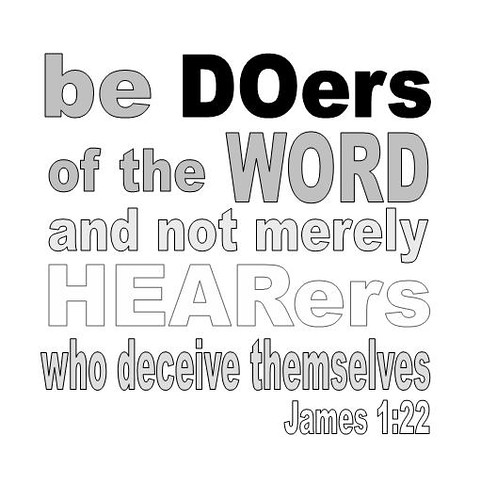
            A natural follow-up to Godly giving and Godly working is Godly listening. James says, “19 Remember this, my dear friends! Everyone must be quick to listen, but slow to speak and slow to become angry. 20 Human anger does not achieve God’s righteous purpose.” Not only are we to listen well, what does James say next? Don’t get angry!

            James has the following advice in the following verses: “So get rid of every filthy habit and all wicked conduct. Submit to God and accept the word that he plants in your hearts, which is able to save you.” My goodness! What is James doing here, writing a heavenly advice column? It certainly sounds like it. And, heavenly advice it is, too.  

            James even gets down to specifics. Avoid these behaviors! Don’t be slow to listen! Don’t be quick to anger! Plus, promote these behaviors! Instead, be quick to listen! Be slow to speak! And most important, be “eager to care for those most vulnerable. All of these things are within our reach.” As commentator Dr. David Lose says, “What parent doesn’t want to be slower to anger with his or her children? What friend doesn’t want to be a better listener? Aren’t all of us in a position to offer help and support to those in need?” [4] James here is encouraging all of us not just to think the faith, but to do it.

            Here, James is dealing with the Law. God’s rule book. James is a faithful Jewish follower of God, and as such is thoroughly steeped in the Mosaic Law code, or God’s rule book. Moreover, he has a pragmatic way of looking at the new way of living that comes from following his Messiah Jesus. Again, don’t just think the faith or hear the faith. Instead, do it!

            I return time and again to Carolyn Brown, retired Director of Children’s Ministry and commentator on the nuts and bolts of the Bible. She breaks things down to simple, straight forward truths. She says of this reading, “At the beginning of the school year children are learning the rules for their new classes, teams and clubs.  The rules tell them who they are and how they act in each situation.  Knowing that is important to them.” [5] 

            Just so with James. God’s rule book is important to him, too! Plus, following the way of God, following these acts of giving, acts of mercy, or advocacy, or support, or friendship are available to any of us. All of us, all the time. This manual for Christian living is NOT just something we do on Sundays, not just when we are in church or thinking heavenly thoughts. We can go to work for God anytime. All the time. Anywhere. Everywhere.  

            Dr. David Lose suggests that we try something for this coming week. Each of us consider this challenge. “write down one place [you] will be in the coming week where God could use [you] to listen, to be patient, or to care for those in need.” [6]  We are hereby all commissioned as God’s co-workers and partners. We all can continue to help make this world a more trustworthy, safe and healthy place, to work for God on this Labor Day, and every day. Alleluia, amen!

@chaplaineliza

(Suggestion: visit me at my other blogs: matterofprayer: A Year of Everyday Prayers. and  A Year of Being Kind . Thanks!


[1] https://www.dol.gov/general/laborday/history

[2] https://www.workingpreacher.org/dear-working-preacher/ordinary-saints

[3] Ibid.

[4] Ibid.

[5] http://worshipingwithchildren.blogspot.com/2015/08/year-b-proper-17-22nd-sunday-in.html

[6] https://www.workingpreacher.org/dear-working-preacher/ordinary-saints

Unknown's avatar

Today!

(I attended a denominational national assembly this weekend, and was not leading worship. Here is a sermon from my archives! I hope it touches your heart and spirit.)

“Today” – 2 Corinthians 5:20-6:2

June 28, 2006

            Once upon a time, there was a loving Father with abundant wealth, property and resources. He loved His many children dearly and did everything in His power to provide abundantly for them.

            Does this story line sound familiar? It should. That loving Father is God, our Heavenly Father. He created the world in the beginning, including humanity. Our loving God gave humans abundant resources, and provided many good and gracious gifts for them, doing everything possible to provide a rich and rewarding life for them.

I’d especially like to focus on the love. God’s love for humanity, for the world, for us. I dare say that many of us here today could quote John 3:16—“For God so loved the world that He gave His only begotten Son, that whoever believes in Him should not perish, but have everlasting life.”

From this verse, can we tell how much God loves the world? How much does God love us? This much?     (spread arms and pause)  

There was a problem, way back when, when God lavished such good and loving care on humans, on His children. That problem was and is SIN.

Face it, humanity—and that includes you and me—is fallen. I usually hesitate when I make sweeping statements, but not in this area. We are sinful. As Romans 3:23 says, “For all have sinned and fall short of the glory of God.” That is ALL. Not a few, not even most, but ALL. Everyone. All humanity. We don’t sin all the time, or in every situation. There are plenty of times when members of the human race act in kind ways, and think loving thoughts, but that troublesome sin nature is alive and kicking in each one of us.

Can you see a toddler or preschooler, stamping her feet, crossing her arms across her chest, and shouting, “No!!” Can you see a teenager, disrespectful and angry, slouching away from the dinner table without a word? Can you see the prodigal mentioned in the Gospel of Luke, wishing that his father would kick the bucket already, so he could get his inheritance? Do these selfish, proud, disrespectful, ungrateful actions (and thoughts, I might add) have anything in common? I would say, yes, they do. The sin nature that is part and parcel of all humanity is readily evident, in all of these situations. We are human, therefore we sin—by thought, word, or deed—by omission or by commission.

It would be really bad news if the story ended there, wouldn’t it? Humanity would be both hopeless and helpless, stuck in the miry clay of our own sinfulness. BUT, that is not the end of the story. God still loves us. Remember John 3:16? “For God so loved the world?” That love still comes to us, regardless of our sinfulness, regardless of our selfishness, regardless of how much we have disregarded the abundant love and the lavish care that God showers upon us each and every day.

As our passage from 2 Corinthians says, we humans trespass. We sin. We mess up. We make mistakes. But God loves us anyhow! God doesn’t keep a tally sheet, a ledger of all our good deeds and bad deeds. God does not count these mistakes against us. In fact, God goes above and beyond our mistakes, reconciling the world to Himself.

It’s not that God is estranged from the world, from humanity. It’s the other way round. It is humanity—it is you and me—that is estranged from God. God created humans, and He loves humans. He created each of us with our foibles and quirks and personality flaws as well as our individual strengths. He created each one of us as individuals to give glory to His name in our own individual ways. God knows us so much better than we know ourselves, and He still loves us just the same! God reconciled the world—that’s you and me—to Himself, out of love.

Like I said, that is wonderful news! Amen! Praise God! Thank You, Jesus!

Jesus was sinless, but He was made to be sin for us. Jesus took all of our collective sin upon Himself on the cross so that in Him we might become righteous before God. Can we tell how much God loves the world? How much does God love us? Is it this much?     (spread arms and pause)  

So, now that we know about God’s abundant love that He lavishes upon each of us, what are we going to do about it? Listen to the words of our passage again. “’At an acceptable time I have listened to you, and on a day of salvation I have helped you.’ See, now is the acceptable time; see, now is the day of salvation!”

D.L. Moody, noted evangelist during the 1800’s and founder of Moody Bible Institute, did much of his evangelistic work around Chicago. One Sunday evening in September 1871, Mr. Moody closed his sermon with the injunction for the congregation to evaluate their relationship with God over the next week and to return the following Sunday. When Mr. Moody was on his way home after the evening service, he heard the fire alarms all over and saw the flames against the sky, turning the night sky red and orange. That meeting hall where the service was held burnt to the ground, along with most of the city of Chicago. The Great Chicago Fire happened that night.

Mr. Moody was horrified, knowing that he had not told his listeners the full message of the love of God, for each one of them. He vowed from that day on to tell the whole story, to always let people know the good news of salvation in every sermon he preached.

What about you? Are you still thinking about God’s offer of salvation? You may have been a church member all your life, faithful and hard at work for many years. But you may have never realized that God’s joyful message of reconciliation was especially for you. You may have been born into a loving Christian family, maybe even a pastor’s kid or missionary’s kid, and been surrounded by God’s abundant love all your life. But just because I may be born in the room behind a bakery doesn’t make me a biscuit . . . and just because I may be born into a Christian family doesn’t make me a Christian by birthright or by osmosis. God has no grandchildren. There are only children of God.

God has been loving us—you and me—all of our lives, even when we turned our backs on Him. If this is that day for you, that acceptable time, that day of salvation, praise God! Enter into the joy of a loving relationship with God, a close friendship with God.

If God had a refrigerator, your picture would be on it. If God had a wallet, your photo would be in it. God can live anywhere in the universe, and He wants to live in your heart. If you have never, truly experienced God’s love for you, individually, there is no time like the present. We can indeed enter into the joy of our Father’s loving embrace and experience His abundant love for each one of us. Today is the day of salvation! God is ready. Are you?
@chaplaineliza

(Suggestion: visit me at my other blogs: matterofprayer: A Year of Everyday Prayers. and  A Year of Being Kind . Thanks!

Unknown's avatar

Full of God’s Glory!

“Full of God’s Glory!”

Isaiah 6:1-8 (6:3) – May 26, 2024 

Have you ever visited a really beautiful church? Magnificent, with lovely stained glass windows, carved pews, high, vaulted ceilings? What comes to my mind is the National Cathedral in Washington D.C., or St. Paul’s Church in London, or perhaps one of the great Gothic cathedrals in the Rhine valley in France or Germany. Think of a church like that, only magnify the beauty and wonder of the building ten times. I cannot even imagine a place that spectacular.

Yet that is just what Isaiah is trying to describe for us in our scripture passage today. A church—or, more specifically, a heavenly temple—so magnificent that he can hardly even begin to describe it.

That is only the beginning! What is even more magnificent, more awe-inspiring is what Isaiah sees inside that heavenly temple. The prophet says he “saw the Lord, high and exalted, seated on a throne; and the train of his robe filled the temple. Above him were seraphim, each with six wings: With two wings they covered their faces, with two they covered their feet, and with two they were flying. And they were calling to one another: “Holy, holy, holy is the Lord Almighty; the whole earth is full of his glory.”

Isaiah finds himself in the throne room of heaven in the presence of the Lord of creation. Awe-inspiring, terrifying, humbling, overwhelming. I don’t know about you, but God’s magnificence and glory can knock me off my feet when I least expect it. God can bump me and shake me up. God can turn my self-sufficiency inside out. Has that happened to you, too?

Perhaps you recognize the words from our opening hymn this morning: “Holy, Holy, Holy, Lord God Almighty!” Today is Trinity Sunday, that day in the church year, the week after Pentecost, when we lift up one of the ineffable mysteries of the Church: the holy Trinity itself. I love this passage from Isaiah for several reasons. First, this is Isaiah’s call story, how the Lord God reached out to Isaiah and touched this man with the power of God, and placed him on the road of being a prophet for God.

Such a moving story, and one that resonates with anyone who has been similarly called by the Lord into a God-ordained calling or vocation. (And not necessarily just a “churchy” vocation.) Some people feel very strongly that they have been called to be doctors or nurses, teachers or social workers, farmers or mechanics. God can call people to a variety of positions, all to serve to God’s glory and for the good of humanity.

Yet, this reading today is much more than that. Not only is Isaiah’s experience one of marvel and awe. This reading is one of the sources for our worship service today.

As Dr. Lisa Hancock advises, “The whole encounter begins with Isaiah showing up at the temple. So, consider taking some time to welcome and orient the congregation toward showing up to God’s presence in their midst. Acknowledge all that we bring with us into worship, the burdens and joys and everything in between.” [1] We as a congregation strive to tune into God’s presence with us even as we have come to be present to God and one another. The most amazing part is, we come into God’s presence each time we gather to worship!

            Orthodox Christianity confesses the Holy Trinity each time a congregation repeats the Apostles Creed. Confessing belief in the Father, Son and the Holy Spirit – or in more modern language, Creator, Redeemer and Sustainer – is an intellectual, static form of statement of faith. Yet, as we consider the Trinity more deeply, even more theologically, we often are thrust into the midst of relationship! This awe-inspiring, terrifying Presence that Isaiah saw in the heavenly temple is also a vibrant Three-Persons-in-One. Difficult for us to even comprehend, but the idea of a Divine Relationship, companionship, a heavenly Community-in-One is the beginning of our understanding. As complex and mind-blowing as it can be.             

            Just as those seraphim sang, “Holy, holy, holy is the Lord of Hosts!” and just as we are welcomed into God’s presence each time our congregation enters into worship, so the Holy Trinity is here in this place. The Three Persons of God are in beautiful relationship with one another, and we are invited into that heavenly relationship, too!      

            We are cautioned, however. God does not only want the people from this particular neighborhood as a part of that heavenly relationship. God does not only belong to this particular church. God also is God of our Catholic friends, and of Holy Name Cathedral in downtown Chicago, and of Trinity UCC and San Lucas United Church of Christ. God is also God of the Quaker meeting in Evanston as well as Chinese Christian Union Church in Chinatown, and our Korean friends Love Sharing Disciple Church in Morton Grove. A whole multitude of different faith traditions, too, from every tribe, every nation under heaven.

            As my online friend Rev. Bosco Peters says, “We live in a world that so often fears difference. We bully them, persecute them, will not employ them, do not want to live in their neighbourhood, kill them, go to war with them. Yet the universe…holds wonderful diversity in unity. This beautiful multiplicity held in harmony in our universe is no accident because the source and heart of all reality is the one we call “God” – three in one. To live the Trinity life is to rejoice in diversity and to work towards holding it in unity.” [2]

It does not matter to God – the awe-inspiring, humbling and overwhelming God is above all and over all. Just as the Holy Trinity is in relationship and in heavenly community, Triune Three-in-One, our God wants a relationship with each of us! The Lord desires to develop an intimate relationship with every person, in beautiful diversity, promoting harmony and unity regardless of color, creed, cultural difference, language or nation of origin.

We are encouraged to enter into relationship just as we are encouraged to enter into worship each week! With God, yes! And with every other person in diversity, regardless of color, creed, cultural difference, language or nation of origin. God created each one of us to live the Trinity life! Rejoice in diversity and work towards holding it in unity. That means each and every person, each and every child of God. Including you, including me. Alleluia, amen.

@chaplaineliza

(Suggestion: visit me at my other blogs: matterofprayer: A Year of Everyday Prayers. and  A Year of Being Kind . Thanks!


[1] https://www.umcdiscipleship.org/worship-planning/ascribe-to-god/trinity-sunday-year-b-lectionary-planning-notes

[2] https://liturgy.co.nz/trinity-sunday-2024?fbclid=IwZXh0bgNhZW0CMTAAAR30CzSonnCEtgz7V1bvjxP9SYmzEmRrJj2NYa4L3R2dl-dmA1nf3cPFzL4_aem_ATWps3Va7lMKpyFuppPtoxnznrMJ8apyP_Fq3to2Rlo1zOv7fsosZJtrIT-639n4JB33Yo04O1K_sCdt-hhKevdp

Unknown's avatar

Bigger Than We Can Imagine!

“Bigger Than We Can Imagine!”

Exodus 20:1-4 (20:3) – March 3, 2024

            Who likes following the rules? How about the rules for games or contests, or the rules of the road? Knowing the rules means you know how to act, how to play the game, what is expected. As people try to figure out the world around them, rules are very helpful[1]

            For the past number of weeks, we have been following the Gospel readings each Sunday for our Scripture lessons and to highlight for our sermons. I am sad we have not been focusing on the Lectionary Hebrew Scripture readings, though. For the past weeks, our Lectionary for the Hebrew Scriptures has followed the Exodus narrative, following Moses and the people of Israel as they left Egypt, left slavery, and became a free people under God.

And now, they are wandering in the wilderness. This Exodus narrative is powerful, indeed! We talked about wandering in the wilderness several weeks ago, when we considered our Lord Jesus in the wilderness, being tempted by Satan. I mentioned that you and I are not often in the actual wilderness, miles from the nearest town, from the nearest person, even! However, you and I can feel very much lost in the wilderness, sometimes. We can be lost and wandering emotionally, psychologically, and especially, spiritually.

            It’s at times like these that we need our friends, our families, a familiar group of people we can travel with. Because, that is exactly what the people of Israel were doing, out there in the wilderness. They were surrounded by their beloved community, every step of the way.

            Or, was their community really so beloved? As the hungry, tired and footsore people of Israel have been wandering in the wilderness, they haven’t stopped arguing with their leader Moses and testing God! That’s the powerful God who led them out of Egypt with a mighty hand, and made miracle after miracle happen, supplying the people’s basic needs for food and water. Can you see why Moses might have had it with being the leader of this stiff-necked people? This stubborn group of constant complainers? [2]          

            I don’t know about you, but when I get a bunch of rules, I like to know why. I am not very likely to follow a bunch of rules just because the leader is twisting my arm. Or, even worse, because God said – imagine folding God’s arms – “Because I said so!” If that were the case, I think I might be a little stubborn and stiff-necked, too.

            If we look at the larger narrative from Exodus, when God gives the commandments to the people of Israel, this provides “the people with a sense of purpose and identity and even a bit of security. Although God has brought them out of Egypt and performed a number of miracles, it is not until this point in the story that God tells the people about God’s intentions for them.” [3]

            Think back to your childhood, or perhaps the childhoods of your cousins or your friends. When you had rules in your house growing up, how often were those rules set to give you boundaries, and to make you feel secure? Rules from a loving parent or a caring coach are meant to give us boundaries, to help us feel safe, secure, and even loved!

            One of my favorite Bible commentators is Carolyn Brown. She is now retired, but she was a longtime Children’s Ministry Director in the Presbyterian church. She paraphrased the Ten Commandments for our Scripture reading today. Many if not all of these Ten Commandments are there to help us be in community with each other. Listen to several selected ones:

            I am God.  I am the one and only God.  Don’t worship or pray to anything or anyone else.

I am bigger than anyone or anything you can imagine.  So don’t make pictures or statues that you think look like me and worship them.  You’ll get them wrong.

Say my name with respect.  Work six days of the week, but keep one for rest and for remembering that you are my people.

Treat your father and mother with respect.  Don’t kill anyone. Be loyal to your family. 

Don’t take what is not yours.  Don’t tell lies about other people.

Don’t wish that you had things that belong to other people. [4]

            These rules sound like common sense, and to help all of us to live in community! These rules help all of us to form ourselves into an alternative community. Not a community under a king or a dictator, but “rather by loyalty to a god who has chosen to redeem a group of slaves from a life of bondage. The commandments mean to sketch out a space where human beings can live fruitful, productive, and meaningful lives before God and with one another.” [5]

            We do not have a mean, distant God, giving us a rule-book that is difficult to follow. We do not have God as an annoying supervisor, looking to be a harassing tyrant over us. No! Instead, these commands are “a piece of the whole life of faith, enlightening us as to our relationship with God and our dependency on that relationship.” [6]

When we are wandering in the dark, in the wilderness, far away from the light of God’s presence, it may seem like God’s loving presence and caring counsel are far away, too. Our loving, caring God is always waiting, arms wide open, for us stubborn people to turn around, to come back home.  

Remember, God will not say, “Jump through these hoops, and only then will I love you!” No! Instead, God says, “My love for you will shape you into these kinds of people, this kind of loving, beloved community.” Let us strive to live together as a people of faith, as a community loved by God. Amen!

@chaplaineliza

(Suggestion: visit me at my other blogs: matterofprayer: A Year of Everyday Prayers. and  A Year of Being Kind . Thanks!


[1] http://worshipingwithchildren.blogspot.com/2011/09/year-proper-22-27th-sunday-in-ordinary.html

[2] https://www.workingpreacher.org/commentaries/revised-common-lectionary/ordinary-27/commentary-on-exodus-201-4-7-9-12-20-2

[3] Ibid.

[4] http://worshipingwithchildren.blogspot.com/2011/09/year-proper-22-27th-sunday-in-ordinary.html

[5]  https://www.workingpreacher.org/commentaries/revised-common-lectionary/ordinary-27/commentary-on-exodus-201-4-7-9-12-20-2

[6] https://revgalblogpals.org/2014/06/10/narrative-lectionary-the-rules-of-engagement-edition/