Unknown's avatar

Prescription for Prayer

“Prescription for Prayer”
1 Timothy 2:1-8 (2:1-3) – September 21, 2025

It’s good to be in the habit of doing certain things. Say, going to the gym. Exercise is a beneficial thing, and if I go to the gym on a regular basis, like three times a week, I will be healthier for it. Same for other things—like practicing the piano, practicing swimming or square dancing—it’s beneficial to get into the habit of regular repetition, week in, and week out.   

Worship and prayer are regular, comfortable things, things many churches do the same way, week in and week out. Here in our scripture reading today, Paul gives his younger friend Timothy some words of wisdom. Recommendations, if you will, of some things Timothy’s church can do in worship and prayer that will be beneficial to them all.

Reading again from 1 Timothy 2, “I urge, then, first of all, that petitions, prayers, intercession and thanksgiving be made for all people— for kings and all those in authority, that we may live peaceful and quiet lives in all godliness and holiness. This is good, and pleases God our Savior.”

I’ll stop right there. Not because the rest of the reading is unimportant. No! But, because Paul has so many ideas that are bursting out of him one on top of the other, I am afraid we might be overloaded if I read them all.

I am on social media, daily. I feature some things regularly, including my Daily Prayer posts. I have posted Daily Prayers on my public Facebook page for five years now. I see it as something I can contribute for my Facebook friends, and for friends of friends, too. I post a prayer each evening that I find meaningful, and I hope they can be helpful to others, too.

Other people have regular habits or practices of prayer and meditation. That is what the Apostle Paul talks about here! I am in a doctoral program for Spiritual Direction, which some people refer to as spiritual companionship. That’s coming alongside of another person, or a small group of people, being a long-term companion. Walking with them, sitting with them through their joys and through their difficulties and sorrows. I have a heart for listening to people’s stories, challenges, and difficulties in their lives. Plus, I pray with people through these things.

You recognize that is what we do in church, don’t you? In our Intercessory Prayers each week, we – as a congregation – come alongside of individuals and families and pray with them through their joys, challenges, and various difficulties. That is exactly what Paul tells Timothy to do here! This reading is a prescription for intercessory prayer in a worship service!

I know that believers and followers of Christ, Paul and Timothy were very much in the minority in their communities. The majority opinion and the overwhelming cultural context for both of them was one of a worldly avarice, where people were concerned about “me, first!” and “where’s mine?” This call to intercessory prayer was very counter-cultural!

Let’s look again at what Paul recommends. Paul begins the chapter by encouraging Timothy to offer prayers for all members of the human family during church services.He wants petitions, prayers, intercession and thanksgiving – all integral parts of praying – to be made for all people. That is not just for a few, or a family, or “only for our little, insular group of people.” No! Paul is recommending to Timothy that we pray for ALL people.

He mentions prayer in the terms of: petitions (humble, general requests to God), intercessions (requests, pleading for those in need), supplications (requests for ourselves, especially when faced with a crisis) and thanksgivings (expressing gratitude for blessings we receive). [1] All people need to be held up to God in prayer.

That means for everyone. Period. Even for mean people. Even for people we disagree with. Even for people who don’t look like us. As the modern translation from “The Message” of this reading begins, “Pray every way you know how for everyone you can.” Period.

Especially in the past few years in this country, division, discord, and dissension of large portions of the American population has only speeded up in the last few years, fueled by increasingly divisive rhetoric, shrill podcasts, and fraught news reports, as well as the regional and national conversations.

As Rev. Sharon Blezzard said, “Good news doesn’t usually sell publications or improve ratings. It takes bombast, divisiveness, and catty, snarky repartee to make headlines, not prayerful peacemakers standing in the breach attempting to reknit brokenness in quiet relationship building and listening. But we are called to a different way of being, to a stewardship of self and other that places value on people, on relationships, and on the building up of community.[2]

God has not called us to be snarky or mean, nasty or divisive. God does not want big bullies on God’s team. I have never heard of God approving of or cheering on hateful, spiteful Christians, either.

Instead, when we “Pray every way you know how for everyone you can.,” Paul reminds Timothy that “This is good, and pleases God our Savior, who wants all people to be saved and to come to a knowledge of the truth.”

Remember what the situation was for Paul and Timothy, and for all other believers in that first-century time and place. It is the same for us, today!  “We are called to be counter-cultural witnesses to God’s love, mercy, and saving grace. We cannot be a witness if our hearts are filled with hate. We cannot love our neighbors if we aren’t willing to get to know them, and certainly not if we aren’t willing to stop working violence against one another.” [3]

      Paul tells us we are to pray for all people; and we are to follow Paul’s lead in supplications, prayers, intercessions and thanksgivings. The intention of such prayers is so that we Christians in society will be able to live tranquil and quiet lives. This isn’t me saying it. It’s the apostle Paul! 

Regardless of whether there is peace in our church, peace in our neighborhood, or peace in our country, prayer is always a good idea. Having a close relationship with our Lord and Savior Jesus Christ is the reason we are here. Praise God! Thank You, Jesus. Alleluia, amen.

@chaplaineliza

(Suggestion: visit me at my other blogs: matterofprayer: A Year of Everyday Prayers. #PursuePEACE – and  A Year of Being Kind . Thanks!


[1] http://www.lectionarystudies.com/sunday25ce.html Rev. Bryan Findlayson, Lectionary Bible Studies and Sermons, Pumpkin Cottage Ministry Resources.

[2] https://www.stewardshipoflife.org/2016/09/calling-all-prayerful-peacemakers/

[3] Ibid.

Unknown's avatar

Heavenly Prescription for Prayer

“Heavenly Prescription for Prayer”

James 5:13-20 (5:13) – September 29, 2024

How many of you remember being really sick? So sick that you had to stay in bed for days, or perhaps even had to go to the hospital? Thank goodness here in the Chicago area we have many devoted doctors and excellent hospitals to choose from, and to figure out exactly what is ailing us. And, thank goodness we are able to have effective medicine prescribed for us when we are sick, too!

Except – what do we do when our hearts and spirits are feeling sick? Anxious, or disturbed? Where do you and I go when our faith in God seems shaky? We could perhaps go to the doctor or the hospital, but they probably will not have the right tools or equipment to help when you or I have spiritual afflictions. [1]

This is our fifth week looking into the letter of James, and we have seen over the past few weeks that James is a very practical man. He displays a great deal of common sense, and does not pull punches when it comes to talking straight to his friends scattered around Asia Minor. (The area to the north and east of present-day Palestine.)

Let’s hear from James about this very problem: “Are any among you in trouble? They should pray. Are any among you happy? They should sing praises. 14 Are any among you sick? They should send for the church elders, who will pray for them and rub olive oil on them in the name of the Lord. 15 This prayer made in faith will heal the sick; the Lord will restore them to health, and the sins they have committed will be forgiven.”

What I have seen in these past weeks and months are the overwhelming number of people with heightened emotions and reactions to anxious, even fearful situations. As someone involved in pastoral care and trained as a chaplain, I notice these things. In our scripture reading today, we find the apostle James talking straight about how to pray, and thus deal with things similar to these things he mentions: heightened, negative emotions and reactions to anxious situations, not to mention physical needs, too.

The apostle James was a practical kind of guy. We can see that from this short letter, the only letter he wrote, included in the New Testament. He gives some practical advice to his readers on how to live a faithful and effective Christian life: how to live faithfully with others in society, how to control the tongue, how to turn away from evil and towards God. Here, in the fifth chapter of James, he turns to prayer. As we look at this passage, James tells his friends how to pray, in very practical terms, almost the same way as a doctor with a prescription pad might write it out.

What are the beginnings of this spiritual prescription? You and I need a special place and a special way to access God; we need to be open and willing, in this place! You and I need God – especially through the Holy Spirit – to help our hearts and spirits feel renewed, and we need the body of Christ–all of us–to help us strengthen our faith. In fact, we all need each other. [2]

When I was a hospital chaplain, working in critical care units like the Emergency Department, Intensive Care, and trauma support all over the hospital, my primary job would be that of compassionate listener—even before prayer, and also as a heartfelt part of prayer.

Now that I am a hospice chaplain, compassionate listening becomes an even more important part of what I do, not only for my patients, but for their loved ones. I suggest for all of us to consider a heart of compassion and a gentle hand of mercy. It’s time to put our defenses down and instead experience the vulnerability of listening to one another.

“If someone has a story to tell, the greatest gift you can offer is simply to listen. You don’t need to have answers or wisdom. You probably don’t need to say anything except, ‘I hear you. I believe you. I’m sorry you experienced that.’ In the compassionate version of the world I yearn for, we offer one another solidarity, a listening ear, and a tender heart.[3]

Another way of defining this spiritual prescription is through prayer – corporate prayer. James says, “16 So then, confess your sins to one another and pray for one another, so that you will be healed. The prayer of a good person has a powerful effect.“

Again, I am reminding us all, this exercise of prayer is not meant to be only for persons in isolation. It’s true, as a hospice chaplain, I see many people isolated in hospitals, in care centers, all alone in their rooms with no one to hold their hands or offer them a kind word of compassion or comfort. James would give us – fellow Christians – the practical advice to come alongside the sick persons in prayer and fellowship, even solidarity.

My commentator Dr. James Boyce echoes this very call from our letter-writer: “James knows a wisdom that is communal, especially in its faithful exercise of prayer. Twice he charges that confession should be “to one another,” and that we should pray “for one another,” if we have any expectation that the promised healing is to take place (James 5.16). Such prayer exercised within and on behalf of the community has power — James says it is “effective.” [4]

I think all of us can agree that as God’s people, we all need regular repentance and soul-searching, no matter what. We are also all in need of healing, personally, and certainly communally. Isn’t that what James tells us here?

At the end of this 5th chapter, this practical how-to manual on the Christian life, we can follow the heavenly prescription James sets forth. We can pray. We can worship. “We learn about how to be God’s people by reading the Bible. We find ways to serve – to do spiritual exercises that both help the world and strengthen us. We develop relationships within our faith community [or church] that are healing and helpful. And we learn to be generous – to share the many good things God has given us with others.” [5]

Whether it is the healing touch of the laying on of hands, or a simple hug from a sister or brother in Christ, or the potent power of prayer or the relief of corporate confession, active participation in the Body of Christ is preventative medicine at its best. What are you waiting for? There’s no co-pay, third-party billing, or lifetime limits on God’s grace and love. Prayer is our heavenly prescription from God.

Alleluia, amen!

@chaplaineliza

(Suggestion: visit me at my other blogs: matterofprayer: A Year of Everyday Prayers. #PursuePEACE – and  A Year of Being Kind . Thanks!


[1] https://www.stewardshipoflife.org/2012/09/rx-for-broken-lives-and-faltering-faith/

[2] https://www.stewardshipoflife.org/2012/09/rx-for-broken-lives-and-faltering-faith/

[3] https://fosteringyourfaith.com/2018/09/30/time-for-compassion/

[4] https://www.workingpreacher.org/commentaries/revised-common-lectionary/ordinary-26-2/commentary-on-james-513-20-4

[5] https://www.stewardshipoflife.org/2012/09/rx-for-broken-lives-and-faltering-faith/

Unknown's avatar

Unfailing Love and Faithfulness!

“Unfailing Love and Faithfulness!”

Psalm 138:1-8 (138:2) – June 9, 2024 

Individualism certainly is the end-all and be-all of the modern mindset. The rugged individual is presented to us in television commercials as a rugged adventurer, or someone hiking or skiing or sailing on their own. Whatever they’re involved in, they are grabbing all the gusto they can! Some people do indeed reject the offer of any help, for any number of reasons. “I can do it, myself!” Is that statement something that sounds familiar to you? And, perhaps to me, too?

Our psalmist is certainly not an individualist. This modern mindset is just not applicable here in the Biblical mindset. In Psalm 138, our psalmist (most probably King David) is clearly thankful and grateful that he has such support from a mighty, caring God! Just from looking at one verse from this psalm, we can see David’s loving gratitude! “Though I walk in the midst of trouble, you preserve my life. You stretch out your hand against the anger of my foes; with your right hand you save me.”

When individuals or loners are out there, all by themselves, they can run into some trouble. Our psalmist calls it “a day of trouble,” in fact! Really tough times. Have we ever kit times of trouble, when things just did not go the right way? I am not sure what kind of “day of trouble” you may have had, or even still be going through a “day of trouble” right now. All kinds of things could be going on. Physical illness, spiritual struggle, financial peril, military threat. All of these times are legitimate times of crisis! [1]

King David had some real times of struggle, and more than a few times of crisis, too! We get a very personal viewpoint on his struggles, from his intensely personal psalms, too. He does not pull any punches here, either. Except – Psalm 138 is a retrospective psalm. He states that he has indeed been through a “day of trouble,” but that day is past. David is not specific here about whatever crisis he was thinking of.

And, that is the point of this psalm. Our singer says, “On the day I called, you answered me.” What a wonderful statement! We can see from these very personal psalms, that when David came up against a time of crisis or despair, time after time he came before the Lord in prayer. Because – times of crisis are also times of concerted prayer!

Is that how things are for you, and for me? Do we come before God in prayer when we are in deep distress? Or, do we try to “tough” it through, all by ourselves?

Let’s think a bit more deeply about today’s situation. Or perhaps, it wasn’t today. But, recently. You were in a tight spot. Something awful had happened, and you just didn’t know how you were going to pull through. It may have been a health crisis, or a financial situation, or even a natural disaster. Maybe even a flood in your basement! (That counts, too!)

I don’t know about you, but when things like that happen, I can feel all alone. All by myself. Even if I have others in my family nearby, sometimes they are just not available to help out, either. Let me tell you – Psalm 138 is a wonderful reminder that God will be there for us, when we are in distress! Verse 3 tells us, “When I called, You answered me!”  

Some people have lots of friends! Fair-weather friends, that is. They are friendly enough when the sun is shining and the road ahead is straight with no curves or bumps. But, good friends? True-blue friends? Those kinds of friends are hard to find. “A good friend is a treasure, for he or she will stand by you through the tough times, even from a long distance. This is the kind of person that will support you and help you throughout life.” [2]

Yes, it’s a blessing to have true-blue friends like this, sitting by our sides, journeying with us, running to the grocery store or throwing in a load of laundry for us when we need it. We all need a good friend with work boots on, sometimes! Commentator Larry Broding says, “God is this kind of friend. Our Creator not only made us and sustains us, he actively works in our lives for our ultimate good. God is present through times of blessing and tragedy. God deserves our thanks and praise for his constant care.” [3]

In Psalm 135, the psalm writer says, “great is the LORD, our God, our Lord, more than all the gods.” I do not know if you caught this expression, but in this particular psalm, he says, “I will praise you, Lord, with all my heart; before the “gods” I will sing your praise.” In both instances, our psalmist mentions other gods. Because, at the time these psalms or songs were written, there were lots of gods! Local gods, tribal gods, gods of the harvest, gods of war, gods of hearth and home. Lots of gods! But, right here, King David praises the LORD above every other god – with a small “g!” Our God, the LORD who made heaven and earth, is far, far greater than any other god who comes up against our God, the LORD!

Finally, King David punctuates this psalm with “unfailing love and faithfulness!” I would be grateful to any friend who not only comes alongside of me when I need a hand, but God is stated to be a good-hearted, loving and faithful friend by none other than King David!

 “The two terms — steadfast love (Hebrew, hesed) and faithfulness (Hebrew, ’emet) — describe God’s character. It is a character that is trustworthy, which means that the promises God makes can be trusted.” [4] This is what David says in this psalm. This is his heartfelt affirmation of his God. If we looked at all the psalms, and boiled down the witness of this marvelous book to one phrase, it would be this: The Lord is faithful.  

I started out today by talking about individualism, being captain of her own soul, or master of his own fate. “Biblical faith starts with admitting our own weakness — and of accepting the gracious mercy and fidelity of the Savior who comes among us to serve rather than to be served. The psalm ends with a request for continued help: ‘Do not forsake the work of your hands.’ Each of us is the work of God’s hands. And to be a follower of the Lord means to know that we cannot and need not do it all on our own.” [5]

Thank God for that! We are never alone, and that’s a promise. A promise from King David, and a promise from our loving God. Alleluia, amen!

@chaplaineliza

(Suggestion: visit me at my other blogs: matterofprayer: A Year of Everyday Prayers. and  A Year of Being Kind . Thanks!


[1] https://www.workingpreacher.org/commentaries/revised-common-lectionary/ordinary-21/commentary-on-psalm-1381-8-2

[2] http://www.word-sunday.com/Files/Psalms/138.html

Thank You, God, For Standing By Me,” Larry Broding’s Word-Sunday.Com

[3] Ibid.

[4] https://www.workingpreacher.org/commentaries/revised-common-lectionary/ordinary-21/commentary-on-psalm-1381-8-2

[5] Ibid.

Unknown's avatar

Trust in the LORD!

“Trust in the LORD!”

Psalm 20 (20:7) – June 16, 2024

            I seldom mention politics in my sermons, but today will be an exception. I am uncomfortable, even alarmed at the general political conversation in the United States right now, in June 2024. Many people across our country are polarized, in terms of political discussion. All kinds of issues – from schooling, bussing, immigrants, guns, diversity, human rights, ecology, taxes, unemployment, science – you name it. Just about any and every issue can be a battleground today. It seems like any two people, or two groups, or two countries have got to be fighting with each other all the time.

            This makes me want to come before God, and bring my concerns before the Lord about the political conversation – or downright fighting! – that is so regularly going on today! I read in one of my commentaries on Psalm 20, written more than ten years ago, that our commentator at that time saw “so many people willing to tear people’s reputations and actions to shreds; regardless of however right or wrong are their opinions, and their understanding!”

In her commentary, Joan Stott goes on to say “We are going through a particularly ‘sticky’ situation … people seem to be delighting in other people’s potential mistakes and/or problems, and ridiculing their deliberately made decisions.” [1] Wow. Double wow! If that argumentative attitude was pervasive in this country twelve years ago, imagine today, with fist fights breaking out in rooms and chambers where our elected representatives meet.   
            Here in our worship service, this space is set apart to be directed to God. We have the luxury of having this special place for worship, prayer, praise and thanksgiving. And, petition, too, when we need God’s help. That is what Psalm 20 begins with: petition to our God. “May the Lord answer you when you are in distress; may the name of the God of Jacob protect you.
May God send you help from the sanctuary and grant you support from Zion.”

From current news stories from across our country, I do not think many people step back and consider wisely before they angrily express opinions or enter into arguments. They yell and shout and sometimes even get into fist fights over political disagreements.

But, wait. This psalm also mentions war, and fighting. Except, coupled with prayer. Our psalmist is lifting up the concept of praying to God before making any decision, especially one as serious as a battle. Leaders from across the world this past Thursday gathered on the beaches in Normandy to remember the 80th anniversary of D-Day, June 6th, 1944. In one of the many articles commemorating this huge wartime operation, I read one about General Dwight Eisenhower, who supervised the invasions of France and Germany for the American forces.

General Eisenhower wrote a draft of a memo that was never released, just in case the invasion failed. Included among his remarks is: “My decision to attack at this time and place was based upon the best information available. The troops, the air and the Navy did all that Bravery and devotion to duty could do. If any blame or fault attaches to the attempt it is mine alone.” [2]  And, contemporary accounts tell us Eisenhower definitely prayed earnestly about the attack.

            Is there any solution to our anxiety about contentious or brawling arguments in politics today? Something that is definitely rare in today’s political discussion is active listening, and considerate hearing of different points of view. Commentator Joan Stott is grateful for “wise and considered decisions that in the past, have been made following earnest prayer, and hours of listening to … people’s viewpoints and needs.” [3] Oh, that we might be blessed with more leaders locally and nationally who are wise, and act in measured and rational ways.

            Which brings us back to Psalm 20. Not only does this psalm lift up the people of the nation: “May he give you the desire of your heart and make all your plans succeed. May we shout for joy over your victory and lift up our banners in the name of our God.” Moreover, this psalm points us toward the ultimate source of our strength, in verse 7! “Some trust in chariots and some in horses, but we trust in the name of the Lord our God.”

            I know that many prayers went up to God before the Normandy invasion in June of 1944. I am so grateful that meticulous planning and considered, measured judgment came into play in the whole operation. Would that a small amount of that measured thinking and considered judgment be used today, as friends, and acquaintances, and our political leaders engage in political infighting and mean-spirited arguments.

            What can you and I do about all this argumentation? I know it seems like a huge problem! Insurmountable, sometimes. Especially when you and I come up against angry words or harsh opinions, or even fist fights! However, we can take this psalm into our lives and hearts today, and ask God to be with each of us as we go about our daily activities.

            Plus, as a congregation before God, we know that God is with each of us, in power and in strength. This psalm really lifts up this image of God! The Lord is saving us for a life in heaven, yes! And, the Lord is saving us here and now, from the ways sin impacts our lives! [4]  Sin? Yes – not following God, not acting and speaking in ways that lift up our God. And, arguing and infighting about politics are certainly not pointing people to our loving and powerful God!  

            We – you and I are the sign that God is at work in the world. And, we can show people day by day that we are living lives that show forth God’s purposes. Not arguing, not bickering, and certainly no fist fights! Instead, we can all strive to apply God’s love, understanding and reconciliation to our speech and our actions, each and every day.

            The writer of this psalm knew from personal experience “that to call on God when in need was to place our lives, our thinking and planning within God’s overview, and to trust always in God’s leading and guidance.” [5] That was true thousands of years ago, and it is just as true today. Whether fighting with swords, shields, arrows and armor, or with the weapons of argument, animosity and downright hatred of one group against another. We need to go to God and have God lead us and guide us each day. May it be so! Alleluia, amen. 

@chaplaineliza

(Suggestion: visit me at my other blogs: matterofprayer: A Year of Everyday Prayers. and  A Year of Being Kind . Thanks!


[1] http://www.thetimelesspsalms.net/w_resources/pentecost3[11]b_2012.htm

[2] https://www.businessinsider.com/d-day-in-case-of-failure-letter-by-general-eisenhower-2012-6

[3] http://www.thetimelesspsalms.net/w_resources/pentecost3[11]b_2012.htm

[4] https://www.umcdiscipleship.org/worship-planning/ascribe-to-god/fourth-sunday-after-pentecost-year-b-lectionary-planning-notes

[5] http://www.thetimelesspsalms.net/w_resources/pentecost3[11]b_2012.htm

Unknown's avatar

Fearfully and Wonderfully Made!

“Fearfully and Wonderfully Made!”

Psalm 139:13-18 (Psalm 139:14) – June 2, 2024

            As some of you know, I am a new grandma. My lovely twin grandchildren were born recently, much-awaited, and very welcome to their family and their parents. I was praying for the twins each day while my daughter was pregnant, and now that they are here, growing and maturing, and being their own wonderful selves, of course I continue to pray for them.

            I have always felt a real connection with Psalm 139, but never more so than when I – with their parents – was awaiting the birth of my lovely grandchildren. This psalm was written by King David, and shows his trust and confidence that God is indeed with him, all the time. And, indeed, with all of us.

            As Dr. Streaty-Wimberly says in her commentary on this psalm, the 139th Psalm reveals an account of what may be called “an encounter of the closest kind” with God. What a statement! And, what a word-picture David paints here.

“The psalm details an intimate conversation with God in which the psalmist is speaker and God is listener. The psalmist focuses quickly in verses1-2 on the word, “know(n).” This key reference points to the psalmist’s relating to God the experience of not simply being recognized and acknowledged by God, but of belonging inseparably to God.[1]

Along with the rest of my family, I eagerly awaited the arrival of my grandchildren! And, I find my wonder and amazement echoed by so many friends and acquaintances as they welcome newborns into their larger families, too.

One of the commentators I read has an extended example of her joy and wonder at welcoming her nephew. “My nephew was born on the day I started working on this commentary [about Psalm 139]. When the picture of Mason James arrived, my initial thoughts were, “There you are. What were you doing in there all of these months?” And then I read: For it was you who formed my inward parts;you knit me together in my mother’s womb (vs. 13).

“How did you go from a hoped-for dream of your parents to flesh and blood, bones, muscles and those long, skinny fingers and those cute ears?” I wondered. Then I read: My frame was not hidden from you, when I was being made in secret, intricately woven in the depths of the earth. Your eyes beheld my unformed substance (vs. 15).

“I wanted to shout, “Mason, you are perfect.” Yet this acclamation paled in comparison to his parents’ “You are perfect!” which pales in comparison to God’s “You are PERFECT!”

My hope for this little guy on his first day, his birth day, was that one day he would realize and pray with the psalmist, I praise you, for I am fearfully and wonderfully made (vs. 14). [2]

            What a marvelous addition to this commentary on such a rich, praise-worthy psalm! Dr. Hannan usually writes in a more academic style, but enriched and awed by the birth of her nephew, this particular commentary is unusually personal. And, her prayer is heartfelt.

            Sure, if we go to biology and look at the growth of a bunch of cells inside a female mammal, we can still be intellectually amazed by the intricacy of the growing being inside of the uterus. However, when we take into consideration the reference to “being ‘knit together’ in the mother’s womb, the psalmist seems to describe God as a weaver who engages on the highly intricate, and artistic, endeavor of creating a unique and wonderfully made living being.” [3]

            How marvelous that each of us – whether parents, grandparents, siblings, great-aunts and -uncles, or dear friends of the parents – can stand by and observe these miracles that come into the world each day. What a privilege to welcome one of these little ones, and nurture and help it grow!

            Now, we need to turn from beloved babies, entering life as very much wanted members of the family (and of God’s family), and consider another sad possibility. Sadly, there are many, many babies and children who have unhappy childhoods, are not valued members of a family, and even know that they are not welcome in their homes – from a young age. This is heart-breaking, and happens much more often in this world, for any number of sad reasons.

            Rabbi Sharon Brous talks about a commentary written in the ninth century that “declares that every person is accompanied, at all times, by a procession of angels crying out, “Make way, for an image of the Holy One is approaching!” Every person, like royalty… How do we keep missing all those angels, with their trumpets and proclamations, desperate to rouse us to the dignity of every human being?” [4]

            What an earth-shaking concept! This is true not only for cute, adorable newborn babies, but also for all children. For tweens and teenagers (even if we are irked or frustrated with them). This is true for each adult, whoever and wherever they may be on their journey through life. And, this is true as well for each sick person and each senior I may encounter as a chaplain in my day-to-day travels to skilled nursing facilities and extended care centers.

            Rabbi Brous continues to reflect that this attitude “heightens the amazing and magnificent artistry of God’s creation. Indeed, this recognition becomes reason for praising God and affirming the self’s ultimate worth in the sight of God (v. 14).” [5]

            Indeed, we are all – each of us, every person in the world – fearfully and wonderfully made! Each person is accompanied, at all times, by a procession of angels crying out, “Make way, for an image of the Holy One is approaching!” That means every single person, in beautiful diversity, regardless of color, creed, cultural difference, language or nation of origin.

            We are celebrating our graduates today! Let us celebrate each other, too. In the words of the lovely children’s hymn “All things bright and beautiful, all creatures great and small, All things wise and wonderful, the Lord God made them all.” [6] God made you, me, and every single person in the world – all fearfully and wonderfully made. Alleluia, amen!


[1] http://www.theafricanamericanlectionary.org/PopupLectionaryReading.asp?LRID=27

[2] https://www.workingpreacher.org/commentaries/revised-common-lectionary/second-sunday-after-epiphany-2/commentary-on-psalm-1391-6-13-18-3

[3] http://www.theafricanamericanlectionary.org/PopupLectionaryReading.asp?LRID=27

[4] Brous, Sharon, The Amen Effect: Ancient Wisdom to Mend Our Broken Hearts and World (New York: Avery, 2024), 53–54,

[5] Ibid.

[6] https://hymnary.org/text/each_little_flower_that_opens

@chaplaineliza

(Suggestion: visit me at my other blogs: matterofprayer: A Year of Everyday Prayers. and  A Year of Being Kind . Thanks!

Unknown's avatar

How Shall We Love?

“How Shall We Love?”

John 17:6-19 – May 12, 2024 

Have you ever heard the saying that “Life is fragile: handle with prayer!” This is so true! Yet, some people might scoff, and say those words are too trite, or too simplistic, or, just don’t work. I feel really sad for people who think this way, because their lives or their circumstances might be sincerely sad or awkward or downright unpleasant.

If we look back at our Lord Jesus, and how He lived, and what His regular habits were, we can see that Jesus practiced regular prayer and meditation. Multiple times in several Gospels we can see our Lord Jesus slipping away to pray, or taking time in the early morning to go away by Himself to pray. He gathered others around Him when He prayed, too. I think Jesus would agree with this saying about prayer, trite though it may seem to be!

Our Gospel reading today comes from John chapter 17, at the end of that Upper Room Discourse, the section of John where Jesus and His disciples gather the night before He was crucified, to eat the Passover dinner. This chapter is an intimate look at prayer, where our Lord Jesus prays to His Heavenly Father. And most striking of all, Jesus prays for His followers. Not only the disciples, but also for us! 

            I love how straight forward commentator Karoline Lewis is. She says, “That upper room was filled with pain and abandonment. With betrayal and loss. With unsettled hearts and fearful souls. And Jesus ends it all with a prayer for his disciples. The section before this portion of the prayer is Jesus’ prayer for himself. But this segment is for his disciples.” [1]

            Jesus has several ideas in these verses, where He talked about trouble and difficulty for His followers. Sadly, this is not new information for us. Plus, these verses contain some of the most powerful concepts about God’s love that are to be found in the whole Bible. Amazingly, Jesus talks about how much God His Heavenly Father loves Jesus, and reminds His followers that they are to love each other in the same way.

            The words of Jesus to our God are written down in the whole of chapter 17. How intimate, how meaningful is that? I want to focus especially on verse 9. Jesus says, “I pray for them. I am not praying for the world, but for those you have given me, for they are yours.”

            Jesus prays for His followers. Not just any old prayer, but a significant prayer, at a profound time of Jesus’s life. The night before His crucifixion, when He must have had a thousand and one things on His mind, Jesus takes the time to think of and to pray for His followers; His friends and disciples. How selfless, how thoughtful this is. And, how much like the Jesus we know and love!

            One amazing thing about this prayer – this High Priestly Prayer of Jesus, is that Jesus not only prayed about the disciples He had at that time, those friends He loved so dearly. “Jesus is still loving and praying for us today – and so are our parents, grandparents, and church community. We are [all] covered in prayer just like a blanket.” [2]      

            When one of my children was still very small, he had a special blanket that meant a great deal to him. Being covered with that special blanket made him feel safe and secure. Does that sound comforting and heartening? Doesn’t it make you want to feel God’s love holding you (and me) securely, like a warm, fuzzy blanket? I’ve got great news for you! Jesus promises that to us, right here in John 17!   

            Today is Mother’s Day. Today is a day to take the time to think of beloved mothers (and, those who have acted as mothers).

In many, many cases throughout this country—and beyond, around the world—many caring, loving and nurturing women have mothered those under their care. In cases of religious nurture, caring mothers, grandmothers, aunties, sisters—and others who have stood in the place of these maternal figures—have prayed for their friends, relatives and loved ones, too.

Whether nearby or far away, prayer makes that intimate connection, that bond between friends, relatives, and loved ones. It does not matter whether the pray-er and the ones prayed for are next door, in the next town, or separated by miles, mountains or oceans. Jesus was making that intimate, loving connection too, through His prayer for us in John 17.

“This [prayer] is not the Lord’s Prayer. This is not Jesus teaching his disciples how to pray. This is not only a personal prayer or privatized piety. After betrayal and predicted denial, after concerned questions and foretold rejection, the disciples do not need another lesson, another miracle, another example. They need exactly what Jesus does, because Jesus knows — for Jesus to pray for them.” [3]

Just as a devout mother or grandma prays for her loved ones, just as Jesus seeks a intimate and loving connection with His friends and followers, so we can seek to have that deep connection with one another.

Dr. David Lose invites all of us to hear these words of Jesus addressed to each of us today. To imagine – really, to know – that Jesus was praying for us all those years ago and continues to care for us, support us, and love and connect with us today. Please take a moment to think about where we need to be more whole. Where do we need to have more peace in our lives? Where do we need more love? And then, imagine that Jesus is actively, intimately praying for each of you. And, indeed, for all of us. [4]

Jesus is caring for us, you know. Jesus loves each of us that much.

Plus, Jesus invites us to love one another that much, too, in this, His most intimate prayer. Take the words of Jesus seriously. Go and love others, just as Jesus loves us. Alleluia, amen. 

@chaplaineliza

(Suggestion: visit me at my other blogs: matterofprayer: A Year of Everyday Prayers. and  A Year of Being Kind . Thanks!


[1] https://www.workingpreacher.org/dear-working-preacher/prayers-needed

[2] https://www.stewardshipoflife.org/2018/05/the-power-of-prayer/

[3] https://www.workingpreacher.org/dear-working-preacher/prayers-needed

[4] http://www.workingpreacher.org/craft.aspx?post=2566  David Lose The Power of Being Prayed For

Unknown's avatar

Gratitude Is—!

“Gratitude Is—!”

Philippians 4:4-7 (4:6) – November 19, 2023

            It’s that thankful time of the year, and this service is one way we all gather to say “thank You” to God. We say thanks for all sorts of good things. Wonderful gifts. Exciting opportunities. We gladly come before God and mention how thankful each of us is—to God.

One of my favorite biblical websites (and, I fully consider her a bible commentator) is “Worshipping with Children,” written by Carolyn Brown. This is what she had to say about Thanksgiving: “One of my favourite times with the children was the year we learned how to say “Thank you” in many languages from our congregation, and ended by using those words for our prayer together.” [1]

I know I taught my children how to say “thank you” when they received gifts, and compliments, and lots of other things. It’s a common thing, for grown-ups, parents, and grandparents to instruct children in these considerate, valuable, and grateful words.

            But, gratitude? Yes, almost everyone knows they are supposed to be thankful at Thanksgiving-time. But, grateful? That is not quite thankful – or is it?  

            Our New Testament Scripture reading for this Sunday is directed toward a group of people – of believers in God. Similarly, the Psalm reading is meant for a group of people, as are our hymns today, too. Isn’t it easier for us to be thankful – jointly? And, to be grateful – together?

            Sometimes being a part of a special group of people is helpful for joining together and agreeing to be in one accord with one another. Especially in terms of encouragement and hope, any group of people makes it easier to show signs of gratitude and thankfulness. Like, in the example of the group of people the apostle Paul addresses through this thank-you note. 

            We all know that being grateful and thankful is not just a head thing, not just something we decide to do one fine day. No, being grateful and thankful is not just an intellectual belief we endorse to be true. Instead, our gratitude and thankfulness ought to be a well-worn habit, a way of living. Most important, our gratitude and thankfulness should be visible, shown in what we do and say, shown in the choices we make and the priorities we set.

            Who remembers thank-you notes? I know I just mentioned thank-you notes written for gifts received (especially written by our children), but this is on a much larger scale. If you like to think so, each of us can be saying “thank you” to God, each and every day. In the same way, each of us has many reasons to be grateful to God each and every day, too.

            We are in a worship service right now. Worship is supposed to be a grateful and thankful time, for sure! What kinds of prayers are grateful and thankful? What about the group that is us, our congregation? “What prayers can we offer that might tap into the sense of interconnectedness and belonging? How can we celebrate the community that we are and the community that we are becoming? Let there be space for saying thank you to one another and to God.” [2]

When Paul wrote this particular letter, he wrote it from prison in Rome. He had been sent to the emperor’s court on a capital charge. He was on trial for his life. And yet—the apostle Paul writes this joyful, thankful, gratitude-filled letter.

Let us count off difficulties and challenges that Paul faced: not only the upcoming trial—for his life, but on top of that, Paul considered himself to be responsible for the churches he had planted on his missionary trips in Asia Minor and throughout Greece. Such heavy burdens on Paul. Yet, here in chapter 4 we see him writing almost blithely to the Philippian believers. He not only writes a thank-you note for a financial gift the Philippian believers sent to him, but Paul also is full of praise, thanksgiving and gratitude to God!

When we look at the people who were on the receiving end of this correspondence, few of them were living comfortable lives. One of the commentaries I consulted said, “Many were poor, many were slaves and few of them would have known the meaning of security. In marked contrast, those of us who live in comparative wealth and luxury today are frequently those who are most worried and anxious.” [3] Isn’t that a true description of us, today?

Sometimes there IS stuff to worry about! A lot of times, people (yes, even Christians) worry about all kinds of stuff! Aren’t we tempted to be worried and anxious when finances are a challenge or the car is giving big problems? Or, how about when we or one of our loved ones is unemployed? Or, in the hospital or dealing with a chronic illness? What about in an accident, or even in jail? Some would say it is natural, even part of the human condition to be worried.

Here is camaraderie, teamwork, and togetherness at work. And, the togetherness, the sense of interconnectedness and belonging of the Christian life is what Paul recommends to us in verses 2 and 3. All of Paul’s commands dovetail into his urging to pray—with gratitude and thanksgiving. “Do not be anxious about anything, but in every situation, by prayer and petition, with thanksgiving, present your requests to God.”   

All too often, our prayers are just a ‘shopping list’ we bring to God, without thanksgiving and seasoned with anxiety and fear. We are urged to be grateful, to count our blessings.

            I encourage all of us – and I am preaching to myself as much as to anyone else – to strive to make it a habit. A way of living, to be thankful and grateful. Not just for this week, for Thanksgiving, but for the rest of the year, too. For always. Let us encourage each other to tap into this praiseworthy sense of interconnectedness and belonging! And celebrate the community that we are and the community that we are becoming!

Be like Paul. Don’t be filled with worry, but instead, be filled with gratitude and thanksgiving! Not just on Thanksgiving, but every day!

@chaplaineliza

(Suggestion: visit me at my other blogs: matterofprayer: A Year of Everyday Prayers. #PursuePEACE – and  A Year of Being Kind . Thanks!

(I would like to express my great appreciation for the observations and commentary from the web page www,umcdiscipleship.org for their brief series on gratitude. I used several quotes and ideas from their useful resources. Thanks so much!)


[1] http://worshipingwithchildren.blogspot.com/2013/09/year-c-thanksgiving-day-october-14-2013.html

[2] https://www.umcdiscipleship.org/worship-planning/our-hymn-of-grateful-praise/twenty-fifth-sunday-after-pentecost-year-a-lectionary-planning-notes

[3] Hooker, Morna D., The New Interpreter’s Bible Commentary (Vol. 12,The Letter to the Philippians), (Nashville, TN: Abingdon Press, 2000), 547-48.

Unknown's avatar

Guard Your Hearts and Minds!

“Guard Your Hearts and Minds!”

Philippians 4:4-9 – October 15, 2023

            Anxiety is commonplace, today. Practically everyone is anxious about something! Whether it’s work or unemployment, school or health (yours or someone else’s) – anxiety is prevalent in this world today. Just like an automatic setting on your washer or dryer, we can even call anxiety an automatic emotional setting for many, many people.

            Being anxious is very real, very automatic for a whole lot of people. When we consider things like climate change, or gun violence, or the changes in weather, or inflation, or the state of politics today, any one of those things is enough to make anyone worried, at least a little.

            Add to that widespread wildfires, droughts in large areas of continents, catastrophic floods, earthquakes and the devastation that follows, plus wars and conflicts and political instability over large portions of the world today. If we consider all of these problems and calamities, even on our own continent, much less other continents, what on earth are we to do? How are we to feel? Just about anyone would be really worried and anxious, especially if loved ones were in serious danger or in harm’s way.

            The apostle Paul was very much in harm’s way. He was in prison when he wrote this letter to the Philippian believers, in Rome, the capital city of the Roman empire. He was chained to a Roman soldier constantly. That means all the time. Paul was in serious danger of being found guilty of sedition against the emperor, which crime had a penalty of death.

            And yet, Paul writes this joy-filled letter to his friends from his former church in Philippi. Instead of being fearful, glum, or downright depressed, Paul tells his friends to rejoice!

            As Paul says from his prison cell, do not be anxious! Instead, rejoice! And again, Paul says, rejoice! A double dose of rejoicing, so to speak. Paul was not a fool, and not a Pollyanna, not thinking of pie in the sky and wearing rose-colored glasses. No, he was very much a realist in many ways. Paul faced facts, and talked straight. And – he told his friends to rejoice! Twice!

              If you and I consider our personal situations, or those of our friends, or members of our families, I am sure we would come up with quite a list of things to concern ourselves with. We do not call these requests “prayer concerns” for nothing, you know!  

            After Paul’s strong injunction (and it is almost a command!) to rejoice twice, he goes on to say “Do not be anxious about anything, but in every situation, by prayer and petition, with thanksgiving, present your requests to God.”

            Paul does not make light of our very real prayer concerns. In fact, he urges us to bring those concerns – those worries! – before God! “Paul is not saying that there is nothing to worry about or that the things we worry about are unimportant. Rather he places our anxieties, fears, and concerns in the context of our relationship to God. We are invited to make ourselves known to God, and to ourselves, at our points of greatest vulnerability.” [1]

            God does understand when we have concerns – for ourselves or friends or for loved ones. And, we are invited numerous times in the Bible to bring those concerns, those worries, those anxieties, before our God.  

            What a relief and what a help to us and to our loved ones to know we can always come before the throne of grace and bring our cares and troubles to God.

            And, that is not all! This short reading from Paul’s letter is jam-packed with positive, joy-filled, impactful statements from this man in prison. Amazing to me is how positive Paul can be in this letter. Not only does Paul encourage prayer and thanksgiving in the midst of negative situations, sometimes even dire, ominous circumstances, but there’s more! He also emphasizes peace. The reality of a peace beyond human understanding. God’s peace.

            Yes, we certainly can expect trouble in this world. Our faith will be tested. Some may even suffer as Paul suffered. But, Paul reminds us all about Jesus Christ. We are urged to “think like Jesus who stood in solidarity with the oppressed by taking on the form of a slave. Yes, Jesus died on a cross. Yes, the powers killed him… But a far greater power exalted him and bestowed upon him the name which is above every name. [That at the name of Jesus every knee will bow and every tongue confess Jesus Christ.] This God did not abandon Jesus and will not abandon [us].” [2] Do you hear? Do you believe?

            This peace is not simply calmness or the absence of anxiety. A more literal or direct translation of the word is “having power over” or “being superior to.” In other words, “peace has power over, excels, and surpasses reasoning. It is superior to human understanding because peace comes from God.” [3]  Peace from God is truly a guard against fear, worry and anxiety.      

            How awesome is that? Yes, the world is powerful, but God has overcome the world. We have God on our side. Not to be a quick fix, or a magic incantation, or a Santa Claus in the sky. Prayer is not magic, not mumbo jumbo. Instead, Paul talks about developing a relationship with this God. An ongoing, deepening, intimate relationship with this God of peace. [4]

            This can be a blessed reality! And if you wish to know more about how to be in a close relationship like this with God, ask me! I’ll introduce you to our wonderful God.

In difficult times, in times of trial, and in the good times – at all times – we can draw near to this marvelous God of peace. God of love, and joy, and grace, and mercy, too!

The result will be that God’s peace stands guard over our hearts and minds in Christ Jesus our Lord. Believe this blessed truth! Alleluia, amen.

@chaplaineliza

(Suggestion: visit me at my other blogs: matterofprayer: A Year of Everyday Prayers. #PursuePEACE – and  A Year of Being Kind . Thanks!


[1] https://www.workingpreacher.org/commentaries/revised-common-lectionary/third-sunday-of-advent-3/commentary-on-philippians-44-7-4

[2] https://www.workingpreacher.org/commentaries/revised-common-lectionary/third-sunday-of-advent-3/commentary-on-philippians-44-7-5

[3] Ibid.

[4] https://bible.org/seriespage/lesson-24-answer-anxiety-philippians-46-7

Unknown's avatar

Pray, Petition and Request

“Pray, Petition and Request”

Philippians 4:4-7 (4:6) –November 20, 2022

Sharing together. We share many things together. We share conversations, we share meals, we share good times together. We share sadness, we share worry, we share bad times together. We also share prayer praises and prayer requests together.

            I’m reminded of the time each Sunday we set aside in the services here at St. Luke’s Church, specifically for prayer concerns. We ask for concerns as well as praises. We lift up the joys that happen in our lives as well as the sad times. This time is a time of drawing closer together, of affirmation, and of caring and concern for one other as a community.

            We can see this kind of care and concern here in our Scripture passage for today. The believers in the city of Philippi had real love and concern in their hearts for the Apostle Paul. We see Paul had a deep and warm love for this group of believers in Jesus Christ.

            Paul was not the kind of guy who stayed in one place for very long. He was an itinerant minister, almost a circuit-riding teacher, preacher and evangelist. But, traveling around as Paul did, things came up. From Paul’s own account, a lot of things happened to him, and many of them were very unpleasant, including beatings, stonings, shipwrecks, and other kinds of dangers. If anyone here is interested, a first-person account of some of Paul’s life and journeys as an itinerant preacher can be found in 2 Corinthians 11.

John Lennon once said, “Life is what happens in between the things you plan.” I’m sure the Apostle Paul could relate. Somehow, the Philippian believers found out about the difficulties Paul was having. Without any letter requesting money, without any beneficence inquiry, without anyone from the apostolic development office asking for a donation, the Philippians decided on their own to take up a collection and send it to Paul.

They weren’t close by, so they sent a member of their community to hand-deliver their love-gift to Paul, their pastor, Epaphroditus. There was a complication. Paul was in prison. Not just in some sleepy little backwater of a town. No, Paul was in jail in the capitol city. Serious jail, guarded by career army personnel. The Philippians needed to send their gift all the way to Rome.

As Dr. McGee said in his commentary, the Philippian church was the group who came to Paul’s need when he was in prison. They sent him badly needed support! Paul was their former pastor, and their missionary, too. [1]

            One of the reasons that Paul wrote this letter in response to the Philippian believers was to send a thank-you letter. Sandwiched in among the suggestions and commands Paul gives his friends, long-distance from Rome, is this command—“don’t worry!” What a thing for Paul to say! Of all people, he had good reason to be anxious and concerned about his own situation!

He is waiting in prison—remember, in serious jail—looking at the capital charge of treason and blasphemy for denying that “Caesar is Lord.” At this point, it was quite possible that Paul was going to die, probably from beheading. From our point of view, today, just thinking about all that Paul was dealing with, how could he say “don’t worry!”??

            Worry can be insidious. Gnawing away at our insides. Like acid, eating us up. (And sometimes that is exactly the case, as in stomach ulcers!) You and I have lots we can potentially worry about: the economy, the government, fighting and violence near and far, our health and our loved ones’ health, our homes, our families, even worry about our pets.

            Now that we know a little more about what Paul was facing, let’s listen again to several verses from chapter 4: “6Do not worry about anything, but in everything by prayer and supplication with thanksgiving let your requests be made known to God. 7And the peace of God, which surpasses all understanding, will guard your hearts and your minds in Christ Jesus.”

            Wow! Paul—in prison, mind you!—tells the Philippians “don’t worry!” But instead—pray! Pray, and let your requests be made known to God! Paul says that prayer is the antidote for the problem of worry!

            I am especially intrigued about what Paul says after “Pray!” He says that God’s peace will replace worry. This peace of mind from God, from above, will guard your heart and mind. The Greek word “guard” means “will stand watch over your heart and mind.” In other words, the peace of God will come and occupy the place anxiety once held! Like a nightwatchman, or a soldier keeping watch. God’s peace helping keep us peaceful!

            How many of us know people who worry? How many of us are related to people who worry? . . . How many of us are people who worry? Such a difficult habit to dislodge when worry is so deeply ingrained. Worry and anxiety can become a terrible, negative, corrosive habit. As I said, eating us up, from the inside out. Here, the Apostle Paul gives us the antidote for worry. Prayer! And, we need something to put in the place of worry and anxiety.  

Let us list Paul’s Pointers on Worry. We’ll recap! One, Don’t Worry! Two, Pray! Three, God’s Peace will stand guard over your heart and mind! And now, Four: God is going to help us develop a new mental program, a new way of thinking that will build us up, instead of tearing us down. This new way of thinking will be nurturing and helpful, instead of negative and corrosive.    

Verse 8 tells us, “whatever is true, noble, right, pure, lovely, admirable—if anything is excellent or praiseworthy—think about these things!” God doesn’t want us to be worried and anxious. That is not living life abundantly. God dearly wants us to have positive, helpful, nurturing things on our minds and hearts. To be helpful and loving, inside and out. What a command from Paul!

Don’t worry?? Yes!! And God will help us with this new way of thinking, anytime we want to start! We can leave worry and anxiety behind, and God’s peace will help us guard our minds and hearts. Then, we are freed from worry to live life God’s way. The positive way. Thinking and acting in nurturing, loving, praiseworthy ways. Lord, let it be so. Alleluia, amen!

@chaplaineliza

(Suggestion: visit me at my other blogs: matterofprayer: A Year of Everyday Prayers. #PursuePEACE – and  A Year of Being Kind . Thanks!


[1] McGee, J. Vernon, Through the Bible, Vol. V (Thomas Nelson Publishers: United States of America, 1983), 286.

Unknown's avatar

“In My Father’s House”

“In My Father’s House”

Luke 2:41-52 – December 26, 2021

            Have you ever been concerned about someone’s whereabouts? Not knowing where they are, or when they might return? Maybe it was a teenage son or a daughter, out after curfew, forgetful of the time. Maybe it was a brother or sister, late coming back home. We are worried, true. Concern and care are there, too. Normal, human reactions connect with such a happening. But here in our scripture passage today, the care and concern that Mary and Joseph are dealing with are a bit more serious than just the concern over a teenager coming home a little late one night.          

            Let’s look at this passage a bit more closely. The Holy Family worships in Jerusalem for the Passover festival when Jesus is twelve years old, This snapshot of Jesus’ life is the only picture shown to us by the Gospels in between the birth narratives of Matthew and Luke, and the time when Jesus begins His public ministry when He’s an adult.

            His parents start to go back to Nazareth with the group of people they had come to Jerusalem with. One problem: Jesus isn’t there. The group Mary and Joseph were traveling with must have been pretty big, since Jesus’ parents were not aware that Jesus wasn’t with them when they started off for Nazareth.

            This must have been a really unusual happening. I mean, seriously . . . can you imagine Jesus ditching His earthly parents? Can anyone here imagine Jesus being mean, or teasing weaker kids, or being disobedient to Mary and Joseph? I suspect Mary and Joseph had a hard time believing it themselves, since the book of Luke tells us that they checked the group of travelers thoroughly before heading back to Jerusalem.

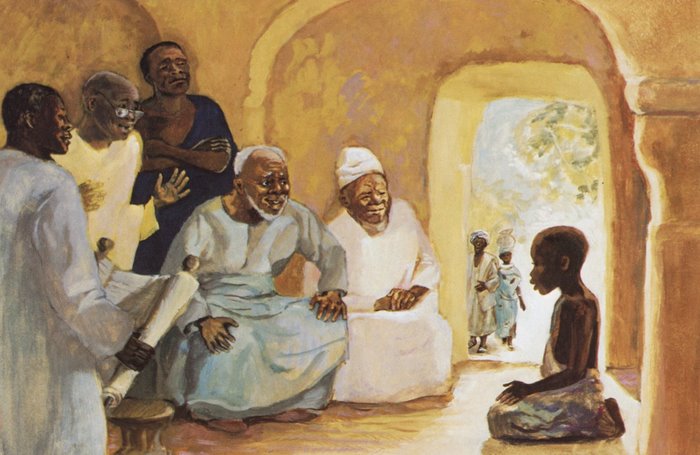
            It takes Mary and Joseph several days to find Jesus, once they get to Jerusalem. And where do they find Him? In the Temple. And what is Jesus doing there? He is amazing everyone with His understanding and precocious answers, at such a young age.

            I am reminded of my older brother John, a number of years older than I am. I wasn’t even alive when the following happened, but I was told many times by my other siblings about my brother’s abilities. When he was in kindergarten, my brother John was quite advanced in his school work. In fact, he could read fluently. When the kindergarten teacher found out about this, she tried having John read a number of things, including the daily newspaper. So, when I read this passage in Luke, it sometimes reminds me of my kindergarten-aged brother John, reading the newspaper aloud to a group of admiring teachers in the teachers’ lounge.

            The Gospel of Luke tells us the priests, Pharisees and other teachers of the Law of Moses were also an admiring group, gathered around Jesus, listening to His answers and understanding concerning matters in Hebrew Scriptures. The boy Jesus had a clear, deep understanding of the Scriptures, and this came from His understanding of God the Father. 

            And how does Jesus respond when Mary and Joseph finally catch up with Him? “Did you not know that I must be in my Father’s house?” What a response. Could Jesus go wrong, being in His Father’s house? And, thinking about it, what more natural, obvious place for Jesus to be than in the Temple? Even though today’s preaching passage doesn’t tell us so, numerous other places in the Gospel records do tell us that Jesus was regular in prayer. He did have a close relationship with His heavenly Father. We can follow Jesus’ example, and be close friends with God.

            We see at the end of this narrative that Mary had a close relationship with God, too, except that she was more reflective. She meditated, reflected, pondered upon these things. She communicated to God in that way. Another way for people to be close to God.

            When I consider this snapshot of Jesus in the Temple, I desire a better understanding of Scripture, too. I not only wish to have a more thorough grasp of the Bible, I want to become better able to understand what God desires of me. For example, Dr. Luke says that Mary continued to treasure up all these things in her heart. Pondered, meditated on and considered all of these wondrous, miraculous happenings, and thus understood God better.

            But how am I to better understand God? Two good ways of becoming better acquainted with God and God’s desires for me are through reading the Scripture and through prayer and meditation – pondering what God says, what I read in the Bible. And this has the dual benefit of helping me to develop a closer relationship, a closer walk with the Lord. I see Jesus, having a close relationship with God, and therefore having a clearer understanding of what God’s Word says. I have the opportunity to have that, too!

            Prayer, talking to God, even thinking to God in the privacy of our own rooms, while in bed at night, or while taking a walk—all are good ways that we can keep up that relationship with God. We can praise God that God wants us to have a closer walk with the Lord, and provides all of us the means to do it.

            Alleluia, amen.

@chaplaineliza

(Suggestion: visit me at my other blogs: matterofprayer: A Year of Everyday Prayers. #PursuePEACE – and  A Year of Being Kind . Thanks!