Unknown's avatar

Hope, for Mary and for Us

“Hope, for Mary and for Us”

Luke 1:26-45 (1:38) – November 30, 2025

            I have a secret confession to make. I am greatly thankful that I have never had to take a job in retail. As I said to my husband this past weekend, I would have quit after the first day, simply because of the constant, cheesy, sometimes saccharin-sweet Christmas music that is piped in over the PA system at every retail store I go into. This is done for about two months before Christmas. And, that’s a long, long time to hear Christmas carols and songs, non-stop.

            And yet – and yet, as we consider this alternative Advent Bible reading from Luke chapter 1 today, I invite you to come with me back in time, to a time before there even was a Christmas. We are not only going to time-travel, but we are going to ocean-hop, too. Let us go to the modest home of a teenager named Mary, living with her parents in Palestine, around the beginning of the first century of the Common (or, Christian) Era.

            This teenaged girl – really, young woman, as she was in that time and place – had an angel visitation. We even find out the Angel’s name, Gabriel. The few times that the angel Gabriel appears in the Bible (that we know of), are times of great importance. Especially this appearance, when Gabriel heralds the birth of the coming Messiah! But, we haven’t gotten there yet. Mary is in her parents’ home when the angel suddenly arrives, about to upend everything concerning Mary and her life as she knows it.  

            Another very important fact: the country where Mary is living, and her people, the Jews, are under Roman rule. Palestine is an occupied country, like so many other regions and nations under the boot of Rome and the powerful Roman army. Palestine doesn’t sound much like a “Silent Night, Holy Night,” where “all is calm, all is bright.” Does it?

            Our mighty God does not wait until everything is perfect, or everything is calm and placid, to work wonders and miracles. God sent the angel Gabriel to a teenager in a modest house, in a country under military occupation. Not to the ruling classes, not to the king’s family in his luxurious palace, but to an unlikely young woman in a backwater town.

            Let us shift gears and move our focus to the modern day. Here in the United States, we have a great deal of internal struggle! Things today are certainly not perfect, or calm or placid. As we mark the first Sunday in Advent, the first candle on the Advent wreath is called the candle of Hope. Can you and I possibly find hope in an atmosphere of anxiety? Of uncertainty? Overwhelmed by pervasive negativity, with the American people’s attitudes filled with division, derision and defensiveness?

            Let’s return to Mary and the angel. How does Gabriel lead off in this conversation from Luke chapter 1? 28 The angel went to her and said, “Greetings, you who are highly favored! The Lord is with you.” Admittedly, Mary wonders what on earth is going on! Dr. Luke tells us, Mary “was greatly troubled at his words and wondered what kind of greeting this might be.” I dare say you and I would be greatly troubled, too, if we were to encounter an angel!

            Sure enough, Gabriel announces to Mary that she is highly favored, and that “you will conceive and give birth to a son, and you are to call him Jesus. 32 He will be great and will be called the Son of the Most High. The Lord God will give him the throne of his father David, 33 and he will reign over Jacob’s descendants forever; his kingdom will never end.”

Mary probably knew her place in society of her time, as a female, as a second-class citizen. Mary “is common, ordinary, of little account in her world and definitely not the stuff of legends…and she knows it. Only after expressing her wonder and dismay, and then hearing again Gabriel’s affirmation and promise, does she manage to summon the courage to believe that God has indeed favoring her by working in her and through her for the health of the world.” [1] What was Mary’s response to the angel? 38 “I am the Lord’s servant,” Mary answered. “May your word to me be fulfilled.”

We all know very well that our teenaged Mary became pregnant by the Holy Spirit, and gave birth to the baby Jesus in Bethlehem. We are well used to seeing Mary as a sweet, calm, quiet, almost docile follower of God’s will for her life. However, I would like to suggest that Mary was also a prophet! As a prophet, she would also be a bringer of hope to the world!

This prophetic role, this insight is a new way of looking at Mary for me. New for me, and I hope enlightening to you, too. As we consider the call of the prophets in the Hebrew Scriptures, and consider the call of Mary by the angel Gabriel, we see all the familiar, classic steps: we see God’s initial call, God’s task, the prophet’s objection, God’s reassurance, and the prophet’s acceptance of call. [2]

 I will say more about this next week, when we take a look at the Canticle that Mary sings, but I want to bring before us the earth-shattering idea that “Luke portrays her in a startling role: one that shakes up the way we’ve been brought up to think of her and invites us to stop observing her and start imitating her.” [3]

 I know that the Christmas carol “Once in Royal David’s City” calls mother Mary “mild,” and the typical portrayal of her on Christmas cards is calm, placid and docile. But, how can this mild depiction of Mary cause our hearts to be hopeful, today? Especially when it seems that the whole world is uncertain, the current political situation is contentious, and our society in the United States is fractured and broken?

            While Mary’s specific task is specific to her, the prophetic call remains open to everyone. God can call each one of us to a prophetic role, especially at this time of Advent, at this grateful and expectant time of year when people are looking up, looking outward, looking for hope. We can all be like Mary, the prophet, bearing good news to everyone.

            Alleluia, amen.

@chaplaineliza

(Suggestion: visit me at my other blogs: matterofprayer: A Year of Everyday Prayers. #PursuePEACE – and  A Year of Being Kind . Thanks!


[1] https://www.workingpreacher.org/dear-working-preacher/favored-ones

[2] http://www.patheos.com/progressive-christian/mary-reluctant-prophet-alyce-mckenzie-12-17-2012.html

[3] Ibid.

Unknown's avatar

“Be Strong, Together!”

Isaiah 40:21-31 (40:20) – February 4, 2024

            When I was young, I would often take walks near my parents’ house, on the northwest side of Chicago. Lots of opportunities for me to walk outside. In the mid- and late-summer, I vividly remember seeing grasshoppers by the side of the paths through the grassy sections of the Forest Preserves, and certainly hopping around in the vacant lots near my house!

            As I read the first two verses of our Scripture lesson this past week, I couldn’t help but think about the prophet’s juxtaposition in verse 22: “God sits enthroned above the circle of the earth, and its people are like grasshoppers. He stretches out the heavens like a canopy, and spreads them out like a tent to live in.” The heavens are so massive, so colossal and huge, and yet we humans are tiny grasshoppers, far, far beneath.

            The vast heavens? They stretch out majestic, and go on forever. But, grasshoppers? Tiny insects, hopping about, not very imposing or powerful creatures at all. Somewhat demeaning description, in fact. However, if we think hard about these two images, that is our starting point. Sooner or later, we all feel like grasshoppers, especially if we compare ourselves to the mighty and powerful Lord who stretched out the heavens! [1]  

            Just consider: we puny, grasshopper-like people seem pretty small and unimportant, next to a mighty and powerful God. Running to and fro, hurrying and scurrying through life, our limited human lives can be a challenge. With stresses and tumult in our personal lives as well as the lives in our communities, so many of us are seeking some hope, some peace, even some strength that comes from outside of our selves. For many, they do not know where to seek. [2]

            Comparing us limited humans to the God who stretched out the heavens is a tall order. How does that work, anyhow? I know that I have been fascinated for years by the detailed and intricate photographs taken by the Hubble space telescope. This incredibly high-powered telescope has been orbiting the earth since 1990, and takes incredible photos. It captures extremely high-resolution images without the distortion of Earth’s atmosphere, allowing for a deep, detailed view into space. [3]  If you have never examined Hubble’s marvelous photos of distant space, I strongly encourage you to view some online!   

            Looking at these photos makes me wonder and marvel even more at how the Lord has spread out the vast, starry expanse of the heavens. Today, we have a much more detailed knowledge of astronomy than the people of 2500 years ago, at the time the book of Isaiah was written. We continue to marvel at the Lord’s mighty, powerful handiwork – and, bow in awe and worship at the words found here in chapter 40, comparing humans to grasshoppers.

            However, instead of being diminished as tiny insects in the eyes of the Almighty God, humans are lifted up. In this same passage, the prophet tells us that             “God gives strength to the weary and increases the power of the weak.” Yes, the very same God who created the heavens and the earth, the very same God who stretched out the heavens like a canopy, is the same God who gives each of us strength. What a comforting and reassuring message!

            I know about weakness, first hand. Last winter, a close family member of mine had major surgery. Thank God, everything went well, but there were weeks and weeks of recovery. Gathering strength, going to rehab, and many, many hours of recuperation and recovery in the gym and outside, going on long walks and riding a bicycle. And thankfully, my family member now reports in good shape today. Getting continuing strength from our God, too.

            I know other folks have relatives – perhaps even themselves – who have weakness, sickness, or are in similar distressing circumstances. Perhaps your distress is not physical, but mental or emotional. Perhaps our strength – our human capability – is depleted. The unpredictable nature of human life can wear any of us down!

Sure, many people go to the gym and work out, or go to the pool and swim laps, taking our fitness seriously, and that is all to the good! “Those activities can provide us a level of fitness that enable our bodies to function physically, yet we also need additional inner strength to be able to function well. Since our mind, body and spirit are interconnected, how we feel spiritually or emotionally can affect our physical energy level. That’s where God can help.” [4]

Even young people can grow tired and weary, as difficult as it may be for them to believe sometimes. We all can grow weary and stumble, and we all get stressed, and even depressed sometimes. The prophet understood, and that is why we receive this message today from verse 31: “but those who hope in the LORD will renew their strength. They will soar on wings like eagles; they will run and not grow weary, they will walk and not be faint.”

We can have strength in the Lord! And, that is not all. When we are open to a meaningful and personal relationship with God, we open ourselves to inner energy and strength that can restore and sustain us. In the next weeks, I will offer some spiritual exercises that will assist in strengthening us. Some are familiar, some less so, but all of these exercises or spiritual practices can allow God to come alongside of each of us. [5] These help us to tap into special, heavenly power and strength that only our powerful, mighty God can provide.

Do you not know? Have you not heard? Has it not been told you from the beginning? Our mighty God is able. We can, indeed renew our strength Just like eagles. Amen, alleluia.

@chaplaineliza

(Suggestion: visit me at my other blogs: matterofprayer: A Year of Everyday Prayers. and  A Year of Being Kind . Thanks!


[1] https://cepreaching.org/commentary/2018-01-29/isaiah-4021-31-2/

[2] https://www.faithandhealthconnection.org/weekly-health-scripture-isaiah-4029-god-gives-strength/

[3] https://en.wikipedia.org/wiki/Hubble_Space_Telescope

[4] https://www.faithandhealthconnection.org/weekly-health-scripture-isaiah-4029-god-gives-strength/

[5] Ibid.

Unknown's avatar

God Created

“God Created”

Genesis 1:1-6, 26-28 – June 11, 2023

            With June, everything is blooming! All kinds of trees, plants, flowers and leaves are growing and blossoming, and it’s just like that song from the great American songbook, “June is Busting Out All Over!” We can easily see how much joy God took in creating the heavens and the earth, with how green and verdant all of nature appears, outside.

            And, God not only created the plants and growing things. The Lord created a whole lot more! As Genesis 1 tells us, God created all living things on the earth, sea and sky, and all the heavenly bodies in the universe, too. A mighty act of creation, for our mighty God! 

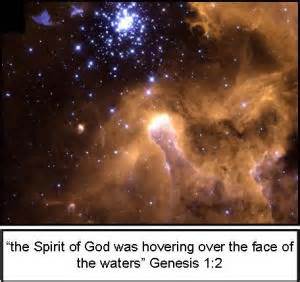
            This act of creation comes at the very beginning of things, in the very beginning of the Bible. Genesis chapter 1. “In the beginning God created the heavens and the earth. Now the earth was formless and empty, darkness was over the surface of the deep, and the Spirit of God was hovering over the waters.”

            We are starting our summer sermon series today, Re-imaging God. This series will highlight different ways of thinking about and naming attributes of our God. In this series, we will work on stretching ourselves! We will try to enlarge our image of our God.

            The words we use are important – not only the words we say, but the words we read on the printed page. The words of Scripture are all important, too. Let us take a closer look at how verses 1 and 2 describe our God. Verse 1 (the summary statement for this chapter) says that “God created.” God created the heavens up above and the earth beneath. Verse 2 describes the Spirit of God as “hovering over the waters.”

            This lean, spare description is marvelous! Can you see it? The dark heavens and the earth, formless, empty, just waiting for something to happen.

I don’t know whether you are aware, but different languages use different articles for nouns. In English, we all say “the cat” and “the dog,” and by the article “the,” they could be either male or female animals. However, many languages are structured differently.

In German or Italian, Spanish or Greek, different nouns are gendered. It’s a “male dog,” or a “female cat.” The article “the” in front of the noun changes with the word. Plus, the gender of the verbs must agree with the gender of the nouns! Any native English speaker who learns one of these languages in school struggles with the gender of the nouns and matching the proper articles and proper gender of verbs with the nouns!

It’s the same way with the Spirit of God. In the original language of the Hebrew Scriptures, “Spirit” is feminine. What’s more, the Spirit of God hovering or brooding over the waters is – according to the Hebrew language – a feminine Spirit. This verb “hovering” is also mentioned in Deuteronomy 32, where the mother eagle is protective towards her young in the nest. The “hovering” of the Spirit is a mothering activity! Here in Genesis, the Spirit of God, the Ruach ha Kodesh, is a protective, nurturing presence over the still formless waters. [1]

            Just so we do not get lost in the weeds of different languages, here’s the highlight I want us all to focus on. Whether Scripture is in Hebrew or Greek, “both masculine and feminine verbs are used for God, masculine for God, feminine for the Spirit. [And as we will see,] God’s human creation will reflect their creator as female and male.” [2]

               Seeing the nurturing, mothering nature of mammals, of dogs, cats, and humans – these mental images of puppies, kittens and babies can bring to mind gentle caring, loving encouragement, and supportive love. These are exactly the kinds of things that describe the activities of the Spirit of God! Plus, God the Father is caring, loving and supportive, too!

And what about the Good Shepherd? That’s Jesus, I want everyone to know. Remember how Jesus cares for His sheep, and how in several places in the Gospels Jesus is described as a loving, supportive Good Shepherd who guards, guides and protects His sheep.

            Isn’t it wonderful to see God as a mothering, nurturing God? Not only mighty and strong – a just, even stern, protector. Yes, God is all of those things. And, mothering and nurturing, caring and loving, too! Both/and – not either/or.

            Let us continue with verse 26: “Then God said, “Let us make humankind in our image, in our likeness, so that they may rule over the fish in the sea and the birds in the sky, over the livestock and all the wild animals, and over all the creatures that move along the ground.” God has created humans male and female. We, as humans, are created in the image of God! And, this whole chapter of Genesis 1 follows the same pattern, using pronouns of both genders.

            “We forget that Genesis 1 is a chapter brimming with goodness and blessing. In fact, God pronounces blessing on the created order three times. [God] calls creation “good” and “very good” seven times.” [3]

            We can see how the earth – the world – the universe was lovingly, joyfully created by God. And, whether we think of the feminine Spirit of God or the almighty Lord, or the Word that was in the beginning (from the Gospel of John), the preincarnate Son of God – however we consider the Triune God – all we can do is lift our hands in worship, thanksgiving and praise.

 What will you and I do with this fresh understanding of God? This understanding that transcends gender? “The creation story insists that God’s mark is imprinted on my very being. I might ignore or distort it, but the mark is always there. Whether I acknowledge it or not, I reflect something of God’s joy, God’s intentions, God’s love, and God’s beauty just by virtue of existing on the earth. I am His, and so He is mine.” [4]

            We can go out into the world, knowing that the Creator God made each of us, all of us, in the image of God. Male and female we are made, and each is in the image of God. Just as Psalm 139 tells us, “I praise you because I am fearfully and wonderfully made; your works are wonderful, I know that full well.”

            Our loving, caring, nurturing Creator God created the heavens and the earth; God created all humanity, and that includes you and me, too. Praise God! Alleluia, amen. 

@chaplaineliza

(Suggestion: visit me at my other blogs: matterofprayer: A Year of Everyday Prayers. #PursuePEACE – and  A Year of Being Kind . Thanks!


[1] van Wijk-Bos, Johanna, W.H., “Reimagining God” (Westminster John Knox Press: Louisville, KY, 1995), 72.73.

[2] Gafney, Wilda, “A Women’s Lectionary for the Whole Church” (Church Publishing, New York, NY, 2021), 142.

[3] https://www.journeywithjesus.net/Essays/20140609JJ.shtml

[4] Ibid.

Unknown's avatar

Be Like Martin Luther

“Be Like Martin Luther” – October 25, 2020

Psalm 46:1-3 – Reformation Sunday

Here we are at Reformation Sunday, the week of the year when we remember Martin Luther posting his list of grievances against the church establishment of the Catholic Church, more than 500 years ago in 1517. These 95 grievances against the Church sparked a movement of protest that was felt around the world. And thus, the Protestant Church was born.

Father Martin Luther – for he was a Catholic priest – was a sincere, devout follower of Jesus Christ. He thought long and hard about sin and confession, faith and grace. He also thought a lot about God’s Word, and eventually translated the whole Bible – both Old and New Testaments – into German, the common tongue of his day and area of Germany.

The Catholic Church establishment certainly had it in for Martin Luther! After defending himself against strident criticism from scholars and theologians, and legal challenges for years, the official verdict was not in Luther’s favor. Because he would not recant his views on God, salvation by faith, and the Bible, Luther was officially on the run from the establishment.

Which brings us to our Scripture reading for today. Psalm 46. Martin had a very difficult time of it for a number of years, running in fear for his life. Is it any wonder that this marvelous psalm recounting God’s strength and refuge was Luther’s favorite psalm?

This is Reformation Sunday, after all. What could be more appropriate than to read Luther’s favorite psalm? Except – this was not only a favorite Scripture reading of Martin Luther. He also was a composer and poet. /Luther wrote the words and music for our opening hymn, “A Mighty Fortress Is Our God.” He used this psalm of comfort and refuge as a basis for this marvelous hymn.

In German, this hymn is called “Ein Feste Burg,” “a fortification that holds fast against any assault, a castle that can withstand every onslaught, a citadel that keeps those on the inside safe and secure from all attacks.” [1] Is anyone surprised that Martin Luther considered this comforting psalm his favorite? Even though everything is falling apart on all sides, he can stand safe and secure in his Lord.

I know Luther regularly prayed to God for protection and care, both internally as well as externally. Is that similar to us, today? In this year of the pandemic, with all the extreme weather events, the political disruption, and the wildfires of the past several months – the present situation resembles Psalm 46. “though the earth give way and the mountains fall into the heart of the sea, though its waters roar and foam and the mountains quake with their surging.”

Sure, with everything going on in the world today, we have reason to be scared half to death! Yet, we have “a God who has been time-tested and, over and over again, can be trusted upon to keep you secure in your time of trouble. Either way – and in all times and circumstances – you have a God who has got you covered. That is what Psalm 46 declares. And that is what Luther wanted to proclaim in “A Mighty Fortress is Our God.”” [2]

This precious hymn written by Luther was not only a refuge from earthly disasters, but is also personal in nature. Rev. Janet Hunt, a Lutheran minister, mentions that she hears it “as much more personal now, knowing as we do that ‘the old satanic foe’ threatened him with the sorts of ‘woes’ one could only begin to understand if one has been there. The heart-wrenching, life altering death of a child, to name but one. The days and nights of struggling to hold on to faith when the Church which had borne the faith to him no longer lived up to its promises. The fear which must have possessed Luther as his very life was threatened.” [3]

Thinking back to last week’s sermon, where Moses and the Lord were hanging out on top of the mountain, Moses wanted to see the Lord. God told Moses straight out that Moses would die if he beheld the Lord face to face. Isn’t that the God we have right here, in Psalm 46? Even though the all-powerful God could make the earth melt, and destroy us if we simply look at Him.

That is one mighty, all-powerful God! And to think, that is also the God who has chosen us, called us by name, and named us God’s beloved children. The Lord is a God who is Lord Almighty, maker of heaven and earth. Plus, the Lord is also a safe refuge, a comfort, one we can run to in times of great need. Praise God, I do not need to control everything.

Can we – you and I – loosen our tight grip on all we are clutching to our chests, knowing that God indeed holds everything? Including us?

This Reformation Sunday, I am not focused on God as our Mighty Fortress. Instead, Psalm 46 talks of a refuge, and a help in our great need.

Yes, God is indeed our refuge and strength, an ever-present help in trouble. That’s something to truly celebrate. Alleluia, amen.


[1] http://www.workingpreacher.org/preaching.aspx?commentary_id=754

Commentary, Psalm 46, Hans Weirsma, Reformation Day, Preaching This Week, WorkingPreacher.org, 2010.

[2] “A Mighty Fortress is our God” is not the only English translation of Luther’s “Ein Feste Burg.” Thomas Carlyle, the nineteenth century Scottish commentator, offered this version: “A safe stronghold our God is still, a trusty shield and weapon.” Carlyle’s contemporary, George MacDonald, rendered stanza one, verse one, in this way: “Our God he is a castle strong, a good mailcoat and weapon.”

[3] https://dancingwiththeword.com/being-still-letting-go/

@chaplaineliza

(Suggestion: visit me at my regular blog for 2020: matterofprayer: A Year of Everyday Prayers. #PursuePEACE – and my other blog,  A Year of Being Kind . Thanks!

Unknown's avatar

Not Grow Tired or Weary

“Not Grow Tired or Weary”

Isa 40-28 the Lord, mountain

Isaiah 40:21-31 (40:28) – February 4, 2018

Today, February 4, 2018, marks a great extravaganza of sport, of enjoyment, of food and drink and parties and advertising and lots of other things that encompass entertainment. Today is the evening of the Super Bowl, that year-end blow-out, where American football celebrates the best it has to offer. And then some.  This game has become a worldwide phenomenon, and millions of people will tune in and watch the festivities, worldwide.

The elite athletes who play in this game are among the small percentage of people in the United States who are in really peak physical condition. It does not matter about when or where such professional athletes are playing professional sports, vast audiences worldwide watch in admiration as these strong athletes compete. Huge crowds watch to see who will be victorious, which team will be the most mighty and powerful.

This was a similar occurrence in the days of the first century, too. The Apostle Paul talks about elite athletes involved in professional sports in his time–except, more blood-thirsty, where people received public accolades and their equivalent of Super Bowl and other championship rings.

This was definitely not the situation in the time of our Scripture passage from Isaiah 40, I am sorry to say. The nation of Israel is in exile. The last thing they are thinking of is competing in sports. In fact, the conquering nation of Babylon has demonstrated its might and its power over the defeated nation of Israel, since they transported a large portion of the people of Israel into exile, into towns of Babylon and into labor camps, too.

If we were to look at this war between Israel and Babylon as one huge competition, Team Israel would be really smacked down. Sure, it was a bloody competition, but the Babylon team ended up on top. They were the winners, and they took lots and lots of treasure and precious things from Israel for their “championship” prizes. Along with lots and lots of the best and brightest people in Israel as their captives.

The direct analogy breaks down at this point, but let’s take a closer look at the predicament of Team Israel. In exile. Discouraged, dismayed, away from “home” for decades. Away so long that the next generation of Israelites have grown up in Babylon and only have long-distance memories to fall back on. In the cosmic order of things, defeated Team Israel must really feel like grasshoppers, like verse 22 tells us.

Today, with this fierce American culture of competition, one-up-man-ship, dog-eat-dog and better-than, many people feel like grasshoppers, too. Few of us can claim to be professional athletes or elite soldiers, either. So many are made to feel less-than or inferior. Not good enough, not fast enough, not skilled enough, not popular enough.

As one of the commentators, Doug Bratt, says of our modern-day predicament, “Maybe it’s the other students at school who mock them.  Or perhaps loneliness or even advancing age makes people feel like grasshoppers.  We may feel like grasshoppers when we trudge into our workplace or try to raise a difficult child.  Or perhaps reports from their investment or pension funds make people feel like grasshoppers.” [1]

 We can feel defeated even before we begin to try, before we make the attempt to put ourselves forward and compete. Lord, what gives? How come? Why me? What’s the use? I may as well pull the covers over my head and stay in bed.

However, most everyone would agree with the statements from Isaiah chapter 40 about the Lord, the everlasting God, the creator of the heavens and the earth. The Lord is greater than all of us, here on the earth. The Lord is even greater than the kingdom of Babylon or the Roman Empire. The Lord is greater and more powerful than all the armies of all the empires of all time, put together.

Just as a comparison, a few verses earlier in this chapter, in verse 12, the prophet says “Who has measured the waters in the hollow of God’s hand, or with the breadth of God’s hand marked off the heavens? Who has held the dust of the earth in a basket, or weighed the mountains on the scales and the hills in a balance?” Just to let you all know, according to Isaiah 40, the universe can be measured in the span of God’s hand.

It’s figurative and poetic language, but this language gives us some idea of how huge and mighty and powerful our God really is.

Even the most elite Olympic athlete and the most powerful professional soldier has their down times. Even the best of the best grows weary and gets tired. It happens to the best of us, as well as to the rest of us.

Eric Liddell, the 1924 Olympic medal winning runner who was made famous again by the movie Chariots of Fire, was one of these elite Olympic athletes. Yes, athletes from all over the world, through the ages, have been at the top of their game and the best of the best.

I suspect Eric Liddell and the other men on the British running team grew tired and weary, from time to time. And, those who hear and proclaim Isaiah 40 today also know what it means to be weak.  Even children and young adults, as the prophet reminds us, sometimes “grow tired and weary.”  Even Olympic athletes and elite soldiers pccasionally stumble and fall.  So, at no matter what point of life in which we find ourselves, whether or not we always realize it, all of us very much need God’s help. [2] No matter what, no matter who, we all need God’s helping hand. Maybe more often than sometimes.

In Isaiah 40, we find that Israel is told that they can exchange their weakness for God’s strength. Commentator Ralph West tells us in Hebrew, it actually says they can “exchange their strength.”  “God can give strength without His strength being diminished at all. God can give power without His power being lessened, if you wait on God.  If you wait on the Lord, God will give replace your weakness with God’s strength, your emptiness with His wholeness, your burnout with His new beginning, all because of God’s mercy.” [3]

Do you hear? Do you understand? God’s provision is not just for the best and the brightest. God’s power and strength is not just for the one percent at the top of the heap. God’s mercy is for everyone, young and old. We all can exchange our weakness and weariness for God’s strength, for God’s mighty power.

“God doesn’t always take away our problems.  Yet God gives us the strength to deal with them.  God helps vulnerable people like us so that we can run and not tire out.” [4] Having a mighty, powerful God like this on our side is worth a whole lot more than any Super Bowl ring, any day of the week. Amen, and amen!


[1] http://cep.calvinseminary.edu/sermon-starters/epiphany-5b-2/?type=old_testament_lectionary

Commentary and illustration idea, Isaiah 40:21-31, Doug Bratt, Center for Excellence in Preaching, 2015.

[2] http://cep.calvinseminary.edu/sermon-starters/epiphany-5b-2/?type=old_testament_lectionary

Commentary and illustration idea, Isaiah 40:21-31, Doug Bratt, Center for Excellence in Preaching, 2015.

[3] http://www.theafricanamericanlectionary.org/PopupLectionaryReading.asp?LRID=100

Commentary, Isaiah 40:27-31, Ralph D. West, The African American Lectionary, 2009.

[4] http://cep.calvinseminary.edu/sermon-starters/epiphany-5b-2/?type=old_testament_lectionary

Commentary and illustration idea, Isaiah 40:21-31, Doug Bratt, Center for Excellence in Preaching, 2015

@chaplaineliza

(Suggestion: visit me at my regular blog for 2018: matterofprayer: A Year of Everyday Prayers. #PursuePEACE – and my other blog,  A Year of Being Kind . Thanks!)