Unknown's avatar

Hope, for Mary and for Us

“Hope, for Mary and for Us”

Luke 1:26-45 (1:38) – November 30, 2025

            I have a secret confession to make. I am greatly thankful that I have never had to take a job in retail. As I said to my husband this past weekend, I would have quit after the first day, simply because of the constant, cheesy, sometimes saccharin-sweet Christmas music that is piped in over the PA system at every retail store I go into. This is done for about two months before Christmas. And, that’s a long, long time to hear Christmas carols and songs, non-stop.

            And yet – and yet, as we consider this alternative Advent Bible reading from Luke chapter 1 today, I invite you to come with me back in time, to a time before there even was a Christmas. We are not only going to time-travel, but we are going to ocean-hop, too. Let us go to the modest home of a teenager named Mary, living with her parents in Palestine, around the beginning of the first century of the Common (or, Christian) Era.

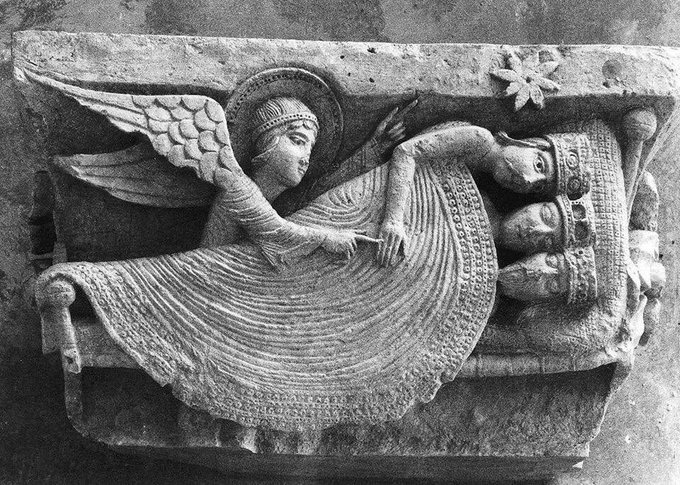
            This teenaged girl – really, young woman, as she was in that time and place – had an angel visitation. We even find out the Angel’s name, Gabriel. The few times that the angel Gabriel appears in the Bible (that we know of), are times of great importance. Especially this appearance, when Gabriel heralds the birth of the coming Messiah! But, we haven’t gotten there yet. Mary is in her parents’ home when the angel suddenly arrives, about to upend everything concerning Mary and her life as she knows it.  

            Another very important fact: the country where Mary is living, and her people, the Jews, are under Roman rule. Palestine is an occupied country, like so many other regions and nations under the boot of Rome and the powerful Roman army. Palestine doesn’t sound much like a “Silent Night, Holy Night,” where “all is calm, all is bright.” Does it?

            Our mighty God does not wait until everything is perfect, or everything is calm and placid, to work wonders and miracles. God sent the angel Gabriel to a teenager in a modest house, in a country under military occupation. Not to the ruling classes, not to the king’s family in his luxurious palace, but to an unlikely young woman in a backwater town.

            Let us shift gears and move our focus to the modern day. Here in the United States, we have a great deal of internal struggle! Things today are certainly not perfect, or calm or placid. As we mark the first Sunday in Advent, the first candle on the Advent wreath is called the candle of Hope. Can you and I possibly find hope in an atmosphere of anxiety? Of uncertainty? Overwhelmed by pervasive negativity, with the American people’s attitudes filled with division, derision and defensiveness?

            Let’s return to Mary and the angel. How does Gabriel lead off in this conversation from Luke chapter 1? 28 The angel went to her and said, “Greetings, you who are highly favored! The Lord is with you.” Admittedly, Mary wonders what on earth is going on! Dr. Luke tells us, Mary “was greatly troubled at his words and wondered what kind of greeting this might be.” I dare say you and I would be greatly troubled, too, if we were to encounter an angel!

            Sure enough, Gabriel announces to Mary that she is highly favored, and that “you will conceive and give birth to a son, and you are to call him Jesus. 32 He will be great and will be called the Son of the Most High. The Lord God will give him the throne of his father David, 33 and he will reign over Jacob’s descendants forever; his kingdom will never end.”

Mary probably knew her place in society of her time, as a female, as a second-class citizen. Mary “is common, ordinary, of little account in her world and definitely not the stuff of legends…and she knows it. Only after expressing her wonder and dismay, and then hearing again Gabriel’s affirmation and promise, does she manage to summon the courage to believe that God has indeed favoring her by working in her and through her for the health of the world.” [1] What was Mary’s response to the angel? 38 “I am the Lord’s servant,” Mary answered. “May your word to me be fulfilled.”

We all know very well that our teenaged Mary became pregnant by the Holy Spirit, and gave birth to the baby Jesus in Bethlehem. We are well used to seeing Mary as a sweet, calm, quiet, almost docile follower of God’s will for her life. However, I would like to suggest that Mary was also a prophet! As a prophet, she would also be a bringer of hope to the world!

This prophetic role, this insight is a new way of looking at Mary for me. New for me, and I hope enlightening to you, too. As we consider the call of the prophets in the Hebrew Scriptures, and consider the call of Mary by the angel Gabriel, we see all the familiar, classic steps: we see God’s initial call, God’s task, the prophet’s objection, God’s reassurance, and the prophet’s acceptance of call. [2]

 I will say more about this next week, when we take a look at the Canticle that Mary sings, but I want to bring before us the earth-shattering idea that “Luke portrays her in a startling role: one that shakes up the way we’ve been brought up to think of her and invites us to stop observing her and start imitating her.” [3]

 I know that the Christmas carol “Once in Royal David’s City” calls mother Mary “mild,” and the typical portrayal of her on Christmas cards is calm, placid and docile. But, how can this mild depiction of Mary cause our hearts to be hopeful, today? Especially when it seems that the whole world is uncertain, the current political situation is contentious, and our society in the United States is fractured and broken?

            While Mary’s specific task is specific to her, the prophetic call remains open to everyone. God can call each one of us to a prophetic role, especially at this time of Advent, at this grateful and expectant time of year when people are looking up, looking outward, looking for hope. We can all be like Mary, the prophet, bearing good news to everyone.

            Alleluia, amen.

@chaplaineliza

(Suggestion: visit me at my other blogs: matterofprayer: A Year of Everyday Prayers. #PursuePEACE – and  A Year of Being Kind . Thanks!


[1] https://www.workingpreacher.org/dear-working-preacher/favored-ones

[2] http://www.patheos.com/progressive-christian/mary-reluctant-prophet-alyce-mckenzie-12-17-2012.html

[3] Ibid.

Unknown's avatar

Hosanna to the Messiah!

“Hosanna to the Messiah!”

Luke 19:28-40 (19:37) – April 13, 2025

            Have you ever been at a really big celebration? I mean a public celebration—like a ticker-tape parade, a celebration of a world championship, or the visit of an A-list celebrity? Something really, really big?

            From all the descriptions of the Palm Sunday Triumphant Entry in all four Gospels, that’s kind of what we are looking at today in our scripture passage. The celebration is really big, the Rabbi Jesus was a big-name celebrity, and this entry into Jerusalem was a first-century type of a ticker-tape parade. Except with palms!

            Let’s take a closer look. Here’s the situation: It’s almost Passover, the most important religious observance of the year. A great number of faithful Jews from near and far come to Jerusalem, in pilgrimage, in commemoration of the Exodus event. 

Jesus comes, too. He publicly, intentionally enters Jerusalem, even though the religious leaders are not very pleased with Him or what He has been doing for the past few years. Even though Dr. Luke does not mention the prophecy in the book of Zechariah (which the other Gospels do), Jesus’s disciples must have known about the prophecy of an entry into Jerusalem riding on a donkey. This was clearly a scene with “Messiah” written all over it.   

And Jesus does not sneak into the city, all hush-hush. No! He comes in with a parade! With crowds of people waving palms and shouting “Hosanna!” and “Blessed is the one who comes in the name of the Lord!”

            What is the meaning of those cries of “Hosanna” and “Blessed is the King?” If we look at Psalm 118, we’ll find these words written by the psalmist. This was the usual Passover greeting one person would give another, except with the addition of the word “King.”  Just to let you all know, many of the crowd in Jerusalem on that Palm Sunday morning understood what they were quoting—they were intentionally welcoming someone they hoped would be their Messiah, their King! Someone who would save them from the awful situation they were in.

            There was a disconnect between the people and their limited understanding, and what Jesus actually was going to do. But I’m getting ahead of myself by rushing on to later in Holy Week. We are still here on Palm Sunday. And everyone is still excited to welcome the Rabbi Jesus—their hoped-for Messiah—into the city. They are hoping He will save them from the Romans and maybe, possibly, become their King. Except they had an earthly King in mind.

            But let’s read on in our scripture passage for today. Luke makes another striking statement. He starts to mention “peace.” “Peace in heaven, and glory in the highest!” What on earth is Luke mentioning “peace” for?

This sentence is an echo of the Gloria in excelsis Deo that the angels—the heavenly host—sang at the birth of the baby Jesus, several decades before. I know the heavenly host gave the shepherds good news of great joy, but wouldn’t that be good news for anybody? I know that was good news at the time Jesus was born, but isn’t that good news for today, as well? Peace? Glory in the highest? The difference is that at Jesus’s birth, it was peace on earth. Now, the crowd is saying “Peace in heaven.”

            So when Jesus enters Jerusalem, the crowd prays for peace in heaven. But the coming of Jesus causes a division. It causes anything but peace on earth.

            The theologian Tom Mullen makes this statement about his denomination (Society of Friends or Quakers): “They work for peace—and if you really want to cause conflict, you work for peace.” [1]  So it was for the Rabbi Jesus—the Messiah Jesus riding into Jerusalem. For all that Jesus wanted to bring peace, He and His message created division, tension, and crisis—as seen by the violent reaction of the religious leaders.

            I wonder about this tension, this violent reaction, this great desire for peace, yet a creation of division, tension and crisis. I know I have mentioned the Rev. Janet Hunt many time before in my sermons. She likewise ponders as we begin Holy Week, “If Jesus were to ride into my town today, what would be His means of transportation? What signs and symbols would speak today?” [2] The donkey was not the choice for a conquering King entering His capital city! The donkey was definitely a subversive choice for the Messiah, the Rabbi Jesus.

            I am not even going to explore what signs and symbols would display a Kingly entrance into a city today, except to say a royal entry usually entails a large police presence, a security detail, and lots of SUVs and a limousine for the royalty to ride in. Not so for the Rabbi Jesus!

Thank God, Jesus does not do that! He is more powerful than any division, any tension, any crisis. He entered the city not as an earthly King, not as a conqueror, not to set up a nationalistic empire, but as the True Redeemer of Israel. And not of just Israel, but also of the whole world. This Holy Week is where all of the prophecies focus to a fine point, and reveal the Rabbi Jesus as not only the Messiah and King, but also as the Suffering Servant. The Lamb of God, sent to take away the sins of the world.

            As we remember this Passover time, this Holy Week, we can thank God that our Lord Jesus did enter Jerusalem. As a King, as a Messiah, yes! But also as our Redeemer and Savior. Praise God, Jesus is our Redeemer and Savior, just as much as He was Redeemer and Savior for that crowd in Jerusalem on that Palm Sunday. In the first century, Jesus came to save His people from their sins. Praise God, He came to save us, too! Amen! And amen!

@chaplaineliza

(Suggestion: visit me at my other blogs: matterofprayer: A Year of Everyday Prayers. #PursuePEACE – and  A Year of Being Kind . Thanks!


[1] Mullen, Tom, Laughing Out Loud and Other Religious Experiences, (Friends United Press, Richmond IN: 1989) 50.

[2] http://words.dancingwiththeword.com/2016/03/the-donkey-subversive-choice.html

Unknown's avatar

Uncertain? Hope!

“Uncertain? Hope!”

Luke 1:26-38 (1:37) – December 1, 2024

This week, we read one of the most familiar of the narratives in the New Testament, perhaps even of the whole Bible. From the first chapter of Luke, here is the first part of the reading:  “In the sixth month of Elizabeth’s pregnancy, God sent the angel Gabriel to Nazareth, a town in Galilee, to a virgin pledged to be married to a man named Joseph, a descendant of David. The virgin’s name was Mary. The angel went to her and said, “Greetings, you who are highly favored! The Lord is with you.”

            Let’s take a closer look at this situation. Imagine yourself as Mary, a teenaged girl. Perhaps doing housework, cooking in the kitchen, or folding laundry. When, out of nowhere, an angel appears. My goodness! Out of the clear blue sky, something completely supernatural happens! And not only that, but to be greeted by the angel with such words?

            Mary’s response is one of puzzlement: “Mary was greatly troubled at the angel’s words and wondered what kind of greeting this might be.” Let’s face it—Mary is perplexed! She is wondering at the angel’s words: “the Lord is with you.” What kind of a greeting is this, anyway?

            We can be fairly sure that Mary (or, as was probably her name, for a young Jewish woman, Miriam) Mary knew her Hebrew scriptures. The phrase “The Lord is with you” is repeated several times in the Hebrew scriptures, primarily expressing the Lord’s help or assistance. This would puzzle Mary even further—why on earth did she need the Lord’s help?

            We see Mary, probably in the middle of an ordinary day, with the angel Gabriel paying a surprise visit to her! What gives? What is going on?

           I know this is not exactly the same, but I would like to compare Mary’s surprise situation to ours, today. Specifically, to my friend Anita, some time ago now. Out of the clear blue sky, she found out that she needed surgery. Before the beginning of October, she was traveling along, blithely, no serious cares or concerns. After the first week in October? Her life was turned upside down, with a serious medical situation, quickly followed by major surgery.

            How often does something like that happen? Perhaps not a medical emergency in your life, or a loved one’s life, but some other serious situation out of a clear blue sky.

            But, let’s return to Mary. Or, more directly, to the angel Gabriel and what the next words out of the angel’s mouth are: “Do not be afraid, Mary; you have found favor with God.”

            I suspect, if I had the opportunity to see an angel, I probably would be afraid, too! Practically every time an angel visits someone in the Bible, “Do not be afraid!” is one of the first things out of their mouths! Gabriel continues: “You will conceive and give birth to a son, and you are to call him Jesus. He will be great and will be called the Son of the Most High.”

            Understandably, Mary is even more puzzled, hearing this! Her response—quite sensible, under the circumstances—“How will this be,” Mary asked the angel, ‘since I am a virgin?”

            I can see Mary’s point. The word from the angel? Surprise! Truth to tell, it’s hard to top a virgin birth! We can look at other places in the Scriptures, and see other miracles. We can look at the life and ministry of our Lord Jesus when He was an adult, and acknowledge the fact that He did miracles, regularly. But—here we have Mary, herself, wondering how on earth this miracle is going to happen to her?

            The angel has an answer for Mary, sure enough. “The angel answered, “The Holy Spirit will come upon you, and the power of the Most High will overshadow you. So the holy one to be born will be called the Son of God.” In brief, here we have the angel describing the divine plan for a miraculous conception. Mary expresses doubt and uncertainty, Gabriel explains God’s plan in greater detail, Mary consents, and the angel departs.

This whole narrative makes me want to ask Mary so many questions.

How soon did you tell your parents you were pregnant? Did you tell Joseph about the pregnancy yourself, or did the gossipmongers of Nazareth take care of that for you? Was there anyone in the village who believed your story? For that matter, after the angel Gabriel left, did you doubt his visitation to you? Did you think it was a dream? Question your sanity? And what about the townspeople’s response—did you fear for your life, since people probably thought you committed adultery?

The Gospel of Luke is silent on this matter. It leaves us with so many unanswered questions! All we know is what Mary said to the angel. “I am the Lord’s servant,” she answered. “May your word to me be fulfilled,” was her response.

I feel deeply for Mary. An unmarried girl who happened to be pregnant was not just looked down on but actively persecuted. Sure, she knows that she takes the risk of being rejected as a slut, as a tramp, as unworthy of polite company, as a result of this new openness to God’s surprise activity in her life.  I would not blame her one bit for being uncertain!

            Yet, we can see that Mary exemplifies the kind of response to God’s surprises that I would like in my own life. We can see from the Gospel that Mary afterwards goes to see her older cousin Elizabeth, who also is pregnant, miraculously. (I bet they have a good deal to say to each other, too!)

Though—out of a clear blue sky—God completely spun Mary’s life around, though Mary knew that her life would never be what she expected it to be before, she nevertheless said “yes” to God in faith. Yes, she worshiped God (especially in her prayer, which comes after our Scripture reading for today.) She models the heart of worship, the giving of ourselves to the one who has given everything to us.

Mary’s example challenges and encourages us to have the courage to say to the Lord: “Be it to me according to Your word!” This is blessed hope in God’s word!

Remember, Mary may have had thoughts about how this would affect the life she had planned out. However, she realizes there is something special about to happen, that God’s plan must take precedence over her own. She accepts the challenge with hope and faith as she realizes she will be carrying the Messiah her people have longed for.

            I’d like to remind all of us today that Mary—an ordinary Jewish teenager—was visited by an angel out of a clear blue sky. Mary was an ordinary person who was willing to say “yes” to God, to respond to God’s call willingly and with courage, and go forward in faith.

            It doesn’t matter what our situations are, today. God can come into any of our lives, seemingly out of nowhere. God can rush right in, abruptly, with no warning. We all—each one of us—are encouraged to respond to God in the same way as Mary did. To agree with God, to say “yes” to God, willingly, with hope, and go forward in faith.    

@chaplaineliza

(Suggestion: visit me at my other blogs: matterofprayer: A Year of Everyday Prayers. #PursuePEACE – and  A Year of Being Kind . Thanks!

Unknown's avatar

More Than Enough!

“More Than Enough!”

John 6:4-21 (6:11) – July 28, 2024

               A memorable picture book I dearly remember from my childhood is called “Stone Soup.” I remember reading it to my children, too. This story is about a small village in Europe after the wars, several hundred years ago. The villagers are frightened of strangers. As a result, they are tight-fisted, and keep their precious food to themselves. They hide the food, until coaxed to bring it out, be generous and share it all together. And then, all the village has a wonderful feast.

            Our Gospel reading today from John 6 has a similar sort of idea. Someone is generous, and food is shared. The Rabbi Jesus blesses the food, multiplies it, and all the people end up having a wonderful feast.

            In today’s Scripture reading—which appears in all four Gospels, by the way—we see Jesus and His disciples traveling far away from town, to pray. Far away from a ready source of food. Yet, here comes a huge crowd of people, pursuing Jesus!

            I wonder why all those people are pursuing the Rabbi Jesus? Maybe it’s because of His wonderful preaching and teaching. More likely, it’s because of the miracles He has been doing! And I suspect that some of those coming after this Rabbi want to push Him to become politically active, perhaps even see Jesus as the coming political Messiah!

            Regardless of why they all were there, a huge crowd was following Jesus and His disciples. Thousands of people, and they were all in a deserted place, far from any grocery store or restaurant, unable to buy something to eat. What a catastrophe waiting to happen!  

            From our Gospel reading today, “Jesus looked around and saw that a large crowd was coming to him, so he asked Philip, “Where can we buy enough food to feed all these people?” (He said this to test Philip; actually he already knew what he would do.)

            Have you ever been in a situation something like this one, where there were hungry or restless crowds milling about, and time was running out? What were they all to do?

            The Gospel writer John tells us in a parenthetical aside that Jesus already knew what He was going to do. But, the disciples clearly did not! Even though Jesus had performed many miracles by this time, the disciples still had no clue of what would happen.

            The matter-of-fact disciple Philip responds to his Rabbi, “performs some quick calculations and arrives at a vision of scarcity. His words (v.7) may suggest sentiments like: “this feeding thing is way too expensive and it’s definitely not in our budget”; “we don’t have enough resources or volunteers”; “there’s not enough time, people are hungry now”; and “this will set a bad precedent – more and more people will be clamoring after us if we do this.” [1]

            Talk about throwing a wet blanket on the whole problem! Aren’t these well-intentioned words heard again and again in church council meetings and committees? What if you and I take these words like “way too expensive” and “not enough resources” to heart?

            Let’s look at the disciple Andrew, who found one small boy with a meal fit for a very poor person. “When Andrew finds this boy and his small gifts, he too arrives at a place of scarcity. Other than his poverty, … the only other thing that we can say with certainty about this boy is that his small “mite” would become a miracle for all, once placed in Jesus’ hands.” [2]

 The unnamed boy here turns his food over to Jesus. I can just see him, giving Jesus the little lunch, perhaps wrapped in a cloth by his mother that morning. He empties the food from his hands into those of Jesus. Jesus turns around, blesses the boy’s lunch, and miraculously multiplies it to feed thousands of people.

What about us? Are we frightened and fearful, like the villagers in the picture book “Stone Soup?” Are we hesitant to share our food, our resources, our money, time and talents with Jesus? Our Lord Jesus can take what we offer and turn it into such abundance! Just as the boy was generous and turned over his lunch, look at what a marvel Jesus did with that!

As Jesus’ followers today, we are also invited to be generous. To see God’s abundance, and to stretch out our hearts, minds, and hands. Not like the disciples, who were constrained by practical problems, economic and logistical drawbacks. They couldn’t see that God wants people to be open to God’s working, and willing to serve. Willing to be generous with whatever they have to offer.

            There is a lot for us to unpack from the narrative of this miracle! One of the simplest ways to understand it is that God is very interested in getting people enough to eat. As I have so often said, hunger never takes a vacation – even in August, and especially not at the holidays.

This church – St. Luke’s Church – has supported the Maine Township Food Pantry for decades. Although not a church’s ministry, this food pantry serves the hungry from all across Maine Township. “Just as it was surprising that one boy’s lunch in Jesus’ hands could feed a crowd, so it is surprising how many people can eat when all of us pool our food and money.” [3]

Everyone has something to offer. If each of us gives our little bit, and we gather it all together, it turns out to be a whole lot! Not only food, but time. Talents. Money, when possible. In addition, what about prayer? Some of us have the gift of praying. too! We can pray for those who are hungry. Pray that they may know God’s abundance—through our generosity, as well!  

Jesus comes to open our hearts, our hands and our minds to those around us, especially to those in need. We can do that only because Jesus also comes to open our hearts, minds and eyes to His own presence in our midst. May God increase our generosity! May God increase our love and caring for all who hunger after the abundance that Jesus offers.

May we all too discover the “one small gift” that God is inviting us to bring – that humble yet crucial gift that will help announce to a hungry world that God’s table is set and all are most welcome! [4]

@chaplaineliza

(Suggestion: visit me at my other blogs: matterofprayer: A Year of Everyday Prayers. and  A Year of Being Kind . Thanks!


[1] From: Stewardship Emphasis, PNW Annual Conference [tanya@umfnw.org]

. (please cite “Radical Gratitude,” http://www.umfnw.org)

[2] Ibid.

[3] http://worshipingwithchildren.blogspot.com/2015/06/year-b-proper-12-17th-sunday-in.html

[4] From: Stewardship Emphasis, PNW Annual Conference [tanya@umfnw.org]

. (please cite “Radical Gratitude,” http://www.umfnw.org)

Unknown's avatar

Who Comes in the Name of the Lord?

“Who Comes in the Name of the Lord?”

Mark 11:1-11 (11:9) – March 24, 2024

            Think of a time when you were expecting – anticipating – something really big. And, this really big thing was by no means 100 percent certain of ending well. Maybe you (or I) were facing a major interview at work, a huge exam at school, or even a really important speech. I can just imagine us being anxious, worried, with a knot at the pit of your – my stomach, or how jumpy we felt. The waiting time and expectation of that really big event was palpable! [1]

            This feeling is not exclusive to you and to me. No, many, many people have felt this way before! I wonder whether the disciples felt at all like this during the time that they were helping their Rabbi Jesus get everything ready for the entry into Jerusalem? As a subversive Rabbi and leader, Jesus knew His presence in the city was a grand challenge to the Jewish leaders. And yet, Jesus was going to walk right into Jerusalem with His eyes wide open.      

            Mark tells us in a straight forward way what happened that day. Verses 7 through 9: “When they brought the colt to Jesus and threw their cloaks over it, he sat on it. Many people spread their cloaks on the road, while others spread branches they had cut in the fields. Those who went ahead and those who followed shouted, “Hosanna!” “Blessed is he who comes in the name of the Lord!” 10 “Blessed is the coming kingdom of our father David!” “Hosanna in the highest heaven!” An impromptu grand entrance for the Rabbi Jesus; a parade, even!      

            Look at this entrance through the lens of anxiety and wonder! For, that certainly was what many people in the crowd were feeling. I suspect some of the disciples were feeling that way, too! As commentator Scott Hoezee says, “What Palm/Passion Sunday celebrates and observes is not simple, it is not neat, tidy, or straightforward.  The air fairly crackles with electricity as the characters in this grand drama sense that something big is up.” [2]

          Let’s look at this from a different direction. Here’s the situation: It’s almost Passover, the most important religious observance of the religious year. A great number of faithful Jews from near and far come to Jerusalem, in pilgrimage, in commemoration of the Exodus event. 

Jesus comes, too. He publicly, intentionally enters Jerusalem, even though the religious leaders are not pleased with Him or what He has been doing for the past few years. Jesus’s disciples must have known about the prophecy of an entry into Jerusalem riding on a donkey. This was clearly a scene with “Messiah” written all over it.  

Traditionally, when a conquering king comes home from war, he is seated on a horse, and the finest horse in the king’s stables, at that! But here, where Jesus proclaims Himself a king of peace, “he rides a donkey and enhances that statement of peace by choosing an unridden colt. The words that were spoken come from one of the enthronement psalms, used when a new king was coming into power. Hard to miss, really.” [3]

Just imagine if you and I were witnesses to our Lord Jesus and His triumphal entry to Jerusalem. I am sure that there were many people present in that crowd who only had a faint idea what was going on. What would you and I do if we were there? Would we be observers only, merely watching the parade? Would we be cheering the Rabbi Jesus as He entered Jerusalem? And, what about the reference to the psalm that people shouted? A psalm that was quoted when a new king took the throne? How many of the crowd really believed Jesus was a new King, a coming Messiah? Lots of questions we have, indeed!

There was a disconnect between the people and their limited understanding, and what Jesus actually was going to do. But I’m getting ahead of myself by rushing on to later in Holy Week. We are still here on Palm Sunday. And, many in the crowd are still excited to welcome the Rabbi Jesus—their hoped-for Messiah—into the city. They are hoping He will save them from the Romans and maybe, possibly, become their King. Except they had an earthly King in mind.

On second thought, I will go forward into Holy Week. This Triumphal Entry is the culmination of Jesus and His time on Earth, of all His time as a human, as God-become-Man in the Incarnation. Think about it: the world, the very cosmos itself, was on the brink of the most momentous event since the Big Bang, with the very Son of God about to be handed over to the authorities. Betrayed, abused, murdered. The very hosts of heaven – and maybe of hell for all we know – were quite literally holding their breath to see this all play out. [4]

            You and I have the luxury of 20/20 hindsight, of course, looking at an event so clearly reported in the historical and Biblical record. But, if a grand procession welcoming the Messiah happened today, would people still be waving palm branches? Would you and I?

This Holy Week is where all of the prophecies focus to a fine point, and reveal the Rabbi Jesus as not only the Messiah and King, but also as the Suffering Servant. The Lamb of God, sent to take away the sins of the world.

            As we remember this Passover time, this Holy Week, we can thank God that our Lord Jesus did enter Jerusalem. As a King, as a Messiah, yes! But also as Redeemer and Savior. In the first century, Jesus came to save His people from their sins. Just as much as He was Redeemer and Savior for that crowd in Jerusalem on that Palm Sunday, Jesus is our Redeemer and Savior, too. Praise God, He came to save us, today, too! Amen! And amen!

@chaplaineliza

(Suggestion: visit me at my other blogs: matterofprayer: A Year of Everyday Prayers. and  A Year of Being Kind . Thanks!


[1] https://cepreaching.org/commentary/2018-03-19/mark-111-11-2/

[2] Ibid.

[3] https://www.umcdiscipleship.org/worship-planning/depths-of-love/palm-passion-sunday-year-b-lectionary-planning-notes/palm-passion-sunday-year-b-preaching-notes

[4] https://cepreaching.org/commentary/2018-03-19/mark-111-11-2/

Unknown's avatar

Star of Wonder!

“Star of Wonder!”

Matthew 2:1-12 (2:11) – January 7, 2024

            I know the image of a manger scene is familiar to all of us here. Who hasn’t seen an adorable little Nativity on a friend’s mantle or under a relative’s Christmas tree? And remember the Christmas carol “The Twelve Days of Christmas?” Christmas does not end on December 25th. Christmastide continues for twelve days, through January 5th. Some here might be familiar with Twelfth Night, and Three Kings Day (which is Epiphany, or January 6th).

            While we are all thinking of a Nativity scene, let me tell you some news: the Magi did not come to see the newborn infant Jesus while He was lying in a manger. They did not show up in Bethlehem for some months. The Gospel of Matthew tells us the Magi came to see the child (or toddler) Jesus and brought Him their gifts. A different Gospel story than the angels and shepherds and the infant lying in a manger! That narrative is found in the Gospel of Luke.

            Not all of those Nativity figures we or our children unwrapped to set up around the stable under the tree are found in both stories. Some churches keep the camels and magi of the Nativity set off to the side all through Advent and Christmas, until Epiphany. Following that Star of Wonder, guiding the Magi all along.

            Matthew’s birth story centers around the Star. We have come to see this as the Star of Epiphany, the Light that has come into the world! We use Light to symbolize God. The Star of Wonder represents the Light of God! Just think of the Star at the top of many Christmas trees. This signifies the Star that the Magi followed – that same star we talk about today.

            We may reminisce about Christmas pageants we saw in years past, or how adorable the grandchildren looked, dressed up as shepherds or angels or even the Magi. But have you ever given thought to how much it meant for the Magi to really follow that Star for days, weeks, perhaps even a month or two? These foreign Magi were most probably nobility, astronomers and wise men – or should I say, wise people? For there were women who were accounted as some of these Magi, too. And, they determined to travel to where this newborn King was.

            I wonder – would you or I do as much? Would we undertake a difficult journey to find an emissary of God, not knowing quite where we were going, or when the trip would end? Would we rather stay in our safe homes, and predictable places, and steady jobs? Or, would we pick up and leave immediately because the wondrous Star suddenly was on the move?

            The Magi finally arrived in Jerusalem. Remember, these are foreign dignitaries, and at least minor nobility and perhaps royalty. They went to the palace in Jerusalem to inquire of King Herod, “Where is the one born King of the Jews?” Matthew says they asked, “We saw his star when it rose and have come to worship him..” Some translations use the more archaic term “pay him homage,” just as someone bows before a king.

“This verse might lead us to ask one another: What signs have pointed you toward faith in Christ? Are you prepared to pay him homage? To kneel at his feet as a classic, time honored posture of reverence to a king?” [1]  These are serious questions for us to ponder, and hopefully, to pray about. Most importantly, God wants us to consider these questions.

             “The [Magi] are scholars and astronomers schooled in the close observation of the stars, but how are they at observing human nature? They see signs of deity in the stars. How are they at discerning signs of deception in shifty eyes?” [2] For that matter, how are we at discerning signs of deception, those hints that someone is shifty, even untrustworthy? Do we simply keep our heads down and go about our own business, or keep our eyes on that Star, following to find the Messiah, the one born King of the Jews? Thankfully, the Magi got the information they needed and set off a few miles down the road to Bethlehem. There they found the small child Jesus, and gave Him gifts suited for a King! Gold, frankincense and myrrh.

These gifts are certainly appropriate to offer to a king. “Gold has great value; frankincense is a perfume; and myrrh is a common anointing oil. The gifts have symbolic significance in light of the identity of the baby to whom they are given. Gold is a symbol of kingship on earth, frankincense (used for incense) is a symbol of deity, and myrrh (an embalming oil) is a symbol of death.” [3]

            The Magi are savvy enough to discern that King Herod is not the kind ruler that some might think. Quite the contrary! Any student of the first century knows that this Herod is a bloodthirsty tyrant. These wise people (wise in several ways!) quietly leave Herod’s territory by another way to go back to their homes.   

            As the Magi return home, you and I are left with the Star of Wonder. What will we do with this star? The Star was so significant to the journey of the Magi as it guided them to the Christ Child. But, what about today? What guides us in our lives? Whose guidance do we seek and trust? This is a sure opportunity to follow the signs that can lead us to Christ. And, may you and I be as savvy to threats in this world.

            Just as the Magi gave precious gifts to the Christ Child, we, too, can bring our gifts. We all can give our talents, and even ourselves to Christ this Epiphany. May we continue to place ourselves and our hearts and lives in Christ’s keeping. May God bless us all as we travel on the road to God’s country. Alleluia, amen.

@chaplaineliza

(Suggestion: visit me at my other blogs: matterofprayer: A Year of Everyday Prayers. and  A Year of Being Kind . Thanks!


[1] https://www.patheos.com/progressive-christian/gold-frankincense-myrrh-alyce-mckenzie-01-03-2013

[2] https://www.patheos.com/progressive-christian/gold-frankincense-myrrh-alyce-mckenzie-01-03-2013

[3] Ibid.

Unknown's avatar

Love Amazes!

“Love Amazes!”

Luke 2:15-20 (2:18) – December 24, 2023

            Merry Christmas! What a wonderful expression. People greeting each other on the street, in the stores, here at church. This is also the fourth Sunday in Advent, the Sunday where we focus on Love. What a joyous time of the year, and what a celebration of love-come-to-earth. 

            But I want you to go back, two thousand years. Go back to a time when “Merry Christmas” was not even a phrase, a wish, an idea in people’s heads. Go back to the time that Dr. Luke describes in the second chapter of his Gospel. Back to the time when Israel was an occupied country, and the Roman Empire was the strong man. Back to the time when all people in Israel needed to be enrolled. The Roman government decided to have a census, so that they would be able to tax the people of Israel more accurately.

We heard this census described in our Gospel reading. Joseph and his fiancée Mary went to Bethlehem to enroll, because Joseph was a direct descendant of King David. I suspect there were many people on the roads. Today, traveling can be stressful and nerve-wracking. However, travel in the first century was much more difficult. Poor roads, with many people walking to get from one place to another. We might imagine that Joseph and Mary had a donkey, but nowhere in the Gospel is that mentioned. Travel conditions were challenging, at best.

There they are, in Bethlehem. A long way from their home in Nazareth. I suspect Joseph took care of the enrollment business first thing. But Mary felt the pains of labor begin. What a scary thing! To be far, far from home, in an unfamiliar place, and to have such a significant event happen. Significant, and potentially life-threatening, too.

            Yes, delivering a baby is a special day for anyone. But—even more so, for Mary and Joseph. Extra special because of the love surrounding them, this amazing love from God.

            As Dr. Luke tells us, there were shepherds abiding in the fields, keeping watch over their flocks by night. Remember, there is no radio or telephone, no Internet or telegraph. When messengers personally come to deliver a special announcement, it is a big deal. These angels coming to the shepherds, well, that was a super big deal, to be sure!

            And the announcement? This isn’t the birth of a normal, ordinary baby. No! This baby is an extra special baby. The Messiah, who will save His people from their sins. A special announcement of God’s love! This special baby, this Savior, Christ the Lord, is born to you—to me—to all of us, in the city of David, which is called Bethlehem.

            Did you hear? The Savior, the Christ, the promised Messiah, came into this world as a Baby in Bethlehem. The Eternal Second Person of the Trinity, Creator of the whole universe, God the Son, emptied Himself of all God-ness. Took on humanity, and was born as a helpless Baby. That is not only good news, that is earth-shaking news. Good news of great joy for all the people. For you, for me, for all of us.

            Yes, the promises of Christmas may sound familiar to us. The good news that the angels brought may be old news, to some. But those promises? They are so needed, today. What with uncertainty and fear, anxiety and hatred so common today. Peace and security seem way out of humanity’s reach. Don’t we need some good news right now? Don’t we need news of God’s amazing love for all of us, for each one of us?

This is good news, this Gospel the angels brought to the shepherds. And they, in turn, told everyone they could about the Child, which the Lord had made known to them. Just as Luke said, all who heard about the Child were amazed at what the shepherd told them.

When I take a step back from this narrative that is so familiar to all of us here in this church, I try to imagine this event brought up to date. “I do find myself wondering just where this might happen today. If Jesus were to come again in human form, would it be like the last time? Would it be in a country far away or would it be in our own back yard? Would it be in an unused room at a nursing home?  Or at a homeless shelter?  Or under a city bridge? I do wonder where Jesus would be born today, don’t you? I wonder how my wondering changes how I encounter those who are in those places now.” [1] It is very possible that those places are already made ‘holy’ – that babies born in unused rooms or homeless shelters or under bridges are holy, too. Even before the presence of the Christ Child makes them even more special.

After that special birth announcement from the angels, and the excited visits from the shepherds, we are left with Mary. Mary who was only a teenager, who had had nine months to consider this extraordinary pregnancy and upcoming birth. Mary must have been up to the task. Mary must have been an extraordinary, reflective young woman.

We know from verse 18 that Mary treasured all these words and pondered them in her heart. All of these words, these unfolding events. Another translation has this verse as “Mary was keeping together (the Greek verb sunetare) all these words, bringing them together (sumballos) in her heart.” Keeping together, sunetare, has the sense of integration. Bringing these events together, or sumballos! Mary was fitting all the puzzle pieces together, bit by bit.

Can we do the same? Can we fit all the pieces together? Can we slow down, just a little, and wonder at the miracle of that night? I invite us all to listen to the good news of the shepherds. The eternal God, Creator of the universe, come to earth as the Babe in Bethlehem.

God gives each of us an opportunity, an invitation to experience amazing love; an invitation to worship the newborn Savior. We, too, can stop by that manger in Bethlehem, and be caught up in the wonder of what happened that night, so long ago.  We, too, can say “O come, let us adore Him, Christ the Lord.” Alleluia, amen.

@chaplaineliza

(Suggestion: visit me at my other blogs: matterofprayer: A Year of Everyday Prayers. #PursuePEACE – and  A Year of Being Kind . Thanks!

(I would like to express my great appreciation for the observations and commentary from the Do Not Be Afraid Advent Devotional – © 2022 Illustrated Ministry, LLC.. I used several ideas from their useful resources. Thanks so much!)


[1] Dancing with the Word: Christmas in the Barn

Unknown's avatar

To Practice Joy!

“To Practice Joy!”

Luke 2:1-14 (2:10) – December 17, 2023

            Have you ever been so busy, so worried, or so focused, that you couldn’t be joyful? Sometimes it feels that way for me. Sometimes, with so much work for the hospice I work for, so many things to do for the small church I pastor – St. Luke’s Church – I feel stretched thin and working hard. Many people I know are head down, sitting in the computer chair, laptop on till late at night. It seems like I cannot find the time to be joyful – to practice joy!

            I wonder whether the shepherds on the hills surrounding Bethlehem felt anything like that? I wonder if their livelihood as shepherds – precarious at best – was also problematic, even hectic? I mean, you and I might connect shepherds with idyllic, pastoral scenes, with green pastures and quiet waters flowing gently under a sparkling blue sky. Let me tell you: life as a shepherd in Palestine was not idyllic, not by any means!

            Working as a shepherd was truly lurking on the outskirts of Palestinian society, in the first century. We just heard in our reading that the angels brought Good News. The shepherds needed some Good News, too. On those hilltops around Bethlehem, they were not exactly welcome in the general society of the town, either. Focusing on today’s Scripture reading, Dr. Luke tells us about the shepherds, abiding in the fields, keeping watch over their flocks by night. But, he does not mention anything about the low position they held in society.

            Let’s come at this miraculous birth announcement from another direction. Yes, the shepherds were keeping watch over their flocks by night, and yes, the divine messenger from heaven bursts upon them, lighting up the sky. The first words out of the angel’s mouth: “Do not be afraid!” I am certain the shepherds were terrified! And then, the angel shares the Good News: ““I bring you good news that will cause great joy for all the people. 11 Today in the town of David a Savior has been born to you; he is the Messiah, the Lord.” The angel’s marvelous news surely would cause great joy for everyone! Wouldn’t it?

            Then—before the shepherds have had a chance to digest this incredible announcement—the sky changes again. What had moments ago been silent and dark now roars with sound and flashes with light, a multitude of angels offering praise to God. [1] We can almost hear the angelic chorus in Handel’s Messiah: “Glory to God in the highest!”

            I wonder: are you and I ready to rejoice with the shepherds right now? Can we sing with the multitude of angels, praising God and lifting our voices to the skies? Or, would we be terrified, along with the shepherds, at the Good News of great joy that the angel brought?

            Let’s think some more about those shepherds. “By the time of Jesus, shepherding had become a profession most likely to be filled from the bottom rung of the social ladder, by persons who could not find what was regarded as decent work. Society stereotyped shepherds as liars, degenerates, and thieves. The testimony of shepherds was not admissible in court, and many towns had ordinances barring shepherds from their city limits.” [2]

Imagine the difference in class between the shepherds and the bulk of the townspeople of Bethlehem. Certain people live “on the wrong side of the tracks,” or “on the other side of town.” Perhaps they come from the “low-class hill country,” or “that sketchy place down by the river.”

Yet, God revealed the great Good News of the Messiah’s birth to these lowly, no-count shepherds! Imagine, angels – God’s heavenly messengers – came to these people on the bottom rung of the social ladder, not to the president of the biggest synagogue in Bethlehem, and not to the most respected Rabbi in town.    

The Gospel of Luke is a gospel centered on “a connection to the marginalized, the lowly, and the common and often unacceptable people of first century Judea that will be present throughout Jesus’ life and ministry. It reminds us that these are the very people who Jesus will invite to be part of the Kingdom of God.” [3] This stunning heavenly birth announcement came to the outsiders, people on the margins. In modern-day terms, God’s heavenly birth announcement comes to the homeless, people selling Streetwise or begging at street corners, migrants, people in tent camps, to lonely seniors, and children of teenaged mothers.  

            It truly does not matter – you and I can spread the Good News to everyone we meet, too.  

            The angels did not observe the class consciousness of society, or the language barriers or color barriers of so much of our world. No! The angels sent from God brought glad tidings of great joy to ALL the people. Not just some select few, not even to most of the earth’s population. No! This Good News came to ALL the people. It comes to all with an emotional, mental, or spiritual disconnect, too!       

            The angels came to the “fields of the isolated, the disenfranchised and the forgotten, or in our own painful places of spiritual wilderness, because God speaks the good news of Christ’s coming there. God brings great joy to those who need it most there.” [4]

            I realize that it can take a tremendous amount of emotional energy to navigate each day’s difficulties. Each day’s challenges can sap each one of us of strength to continue. So, “joy” can seem like a luxury, something that is almost unattainable. Yet, such joy is a gift. God brings joy to each of us, to lighten our hearts and brighten our souls. “We practice what we might have a knack for but want to get better at: drawing, soup-making, karate. We practice what we’re good at and know we’ll lose if we don’t keep at it: yoga, math, courage. Could joy fall into that category? Could we practice delighting in some piece of each new day, meeting each new person with wonder, treasuring each connection?” [5]

God wishes to draw ALL of us in to the Good News of the birth of God’s Son. Regardless of where we come from, or where we are right now, we receive great joy. Each one of us has the angel of the Lord bringing Good News to us—personally. Glad tidings of great joy, no matter what! Wonderful news, any time we need it! Alleluia, amen! m

@chaplaineliza

(Suggestion: visit me at my other blogs: matterofprayer: A Year of Everyday Prayers. #PursuePEACE – and  A Year of Being Kind . Thanks!

(I would like to express my great appreciation for the observations and commentary from the Do Not Be Afraid Advent Devotional – © 2022 Illustrated Ministry, LLC.. I used several quotes and ideas from their useful resources. Thanks so much!)


[1] The Do Not Be Afraid Advent Devotional – © 2022 Illustrated Ministry, LLC

[2] http://www.workingpreacher.org/preaching.aspx?commentary_id=1522

[3] https://www.workingpreacher.org/commentaries/revised-common-lectionary/christmas-eve-nativity-of-our-lord/commentary-on-luke-21-14-15-20-12

[4] http://www.workingpreacher.org/preaching.aspx?commentary_id=1522

[5] The Do Not Be Afraid Advent Devotional – © 2022 Illustrated Ministry, LLC

Unknown's avatar

The Humility of the King

“The Humility of a King”

Matthew 21:1-10 – April 2, 2023 (March 20, 2005)

            Do you all have experiences of someone who is well-known? Someone whose name is on everybody’s lips? Someone who everybody is talking about? Whenever you hear the buzz, chances are it’s about that person. And when that well-known person, that person of greatness makes a big entrance, we know what to expect, don’t we? Well-known people are supposed to enter a city with pomp and ceremony: black limos, bands, waving, cheering crowds lining the streets, live coverage on television.

            That is just what we have here in the Gospel reading for today (minus the limousines and the television coverage). The name of Jesus was on just about everyone’s lips. Some people were glad He had come to Jerusalem, and some people were mad He had come, and some people weren’t sure what to think. But, I suspect almost everyone in Jerusalem that day had some sort of idea or opinion, one way or another.

            I bet a common question on people’s lips on that Sunday centuries ago was, “Who is this guy, anyway?” Let’s consider. The Rabbi Jesus had options. He could have quietly snuck into Jerusalem in the middle of the night, avoiding notice and controversy, and not making a fuss or bother. But that wouldn’t have been very kingly, would it?

            Jesus could have entered Jerusalem boldly and proudly, seated on a big white horse, like other triumphant generals or kings. A conquering king on a horse is the very image of war and forcing submission. But—that wouldn’t have struck quite the right note, not with everything we know about Jesus.

            What were people expecting? In other words, “Who is this guy, anyway?”

            At that time, the country of Israel in general, and the area surrounding Jerusalem in particular, was under enemy occupation. They were under the oppressive thumb of the Roman government, subdued by the Roman army, and had been in that position for many, many years. I know for a fact that around the time of Jesus, several people had proclaimed themselves “Messiahs”—meaning political leaders—for the purpose of overthrowing the Roman government and authority. So, this was not the first time this had been done. We can even see among Jesus’ disciples there was movement in this direction, and several of His disciples tried to persuade Jesus to be that powerful political leader.

            So, on that Palm Sunday, some people fully expected Jesus to make good on His claim to be Messiah—a claim to be a strong political leader, come to free the Israelite people from the tyranny of the Romans. True, Jesus had repeatedly proclaimed Himself the Messiah, the Anointed One of God. He used the title “Son of David” for Himself, which was a plain statement of His kingly claim, His claim to be Messiah. But with the Roman occupation and the messianic expectations of the day, a peaceful Messiah was not what anyone was expecting.

            Some people–I’m thinking of the Pharisees, the Sadducees, the scribes and other temple leaders—were  awfully uneasy about Jesus. For them, Jesus was their worst nightmare. This rogue rabbi from Nazareth was saying things that penetrated right to the heart. Usually it was right to the hearts of the religious leaders—in a negative way. And, those things Rabbi Jesus was saying did not make the religious leaders feel good about themselves at all. Which made them want to get rid of Jesus even more.

            But, wait a minute! Jesus had also consistently healed the sick, given sight to the blind made the lame walk, and preached God’s good news to the poor. What about that part of His ministry? He certainly appeared to many to be a mighty prophet of God, and lots and lots of people were following Him as a result. Jesus’ words and teaching had authority. Jesus’ person had great credibility. Jesus’ healing showed God’s mighty power, and people even called the works He did miracles! Many people expected great things out of Jesus as a result of this aspect of His ministry.

            Who is this guy, anyway?

            Jesus entered Jerusalem the way He did as a fulfillment of prophecy. He didn’t just do this because He felt like it. No. I believe He fully understood what was prophesied in Zechariah 9 and Isaiah 62. So, the Lord Jesus entered Jerusalem just as the prophets said He would, on a donkey, as a visible sign of His coming in peace. The donkey was the image of peace. And that was what Jesus was bringing. He came to bring peace to people’s hearts, not a popular uprising, and not war to the streets of Jerusalem.

            Yes, Jesus entered Jerusalem as a king, and what I’d like to emphasize, as a humble and peaceful king. Humility is brought out as an attribute of this Messiah, this Anointed One of God, in three places. First, in the prophecy from Zechariah; second, in our gospel text this morning in Matthew 21 (which is a quote from Zechariah); and third, in our epistle passage today from Philippians.

            Jesus not only entered Jerusalem as a king, but as a humble king. Jesus could have been mighty and powerful. Jesus could have entered Jerusalem at the head of a mighty army of angels, ready for war. But, NO. Jesus entered Jerusalem in humility. He humbled Himself.

            Humility gets a bum rap today. I can’t imagine big, burly sports stars regularly being humble. Or, look at Hollywood actors and actresses—the very opposite of humility! Or, think of our political leaders—can any of them be described as humble? Our Lord Jesus presents us with a very, very different picture of humility.

            Just by coming to this earth, being born as a baby in Bethlehem, putting Himself under the authority of His earthly parents, Mary and Joseph, Jesus showed us how much He humbled Himself. Jesus showed how much He cared for us. Jesus’ willingness to become human, to humble Himself, to become obedient, to the point of death–even death on a cross–this is love. This is obedience. This is humility.

            As our Lord Jesus—Messiah—Son of David—Lamb of God—Savior of the world—was seated on that donkey, He knew what was going to happen later that week. He knew about the arrest and the crucifixion. He knew that some of that crowd who cried “Hosanna!” on Palm Sunday morning would be screaming “Crucify Him!” on Good Friday morning. He had set His face and steeled His heart to go to Jerusalem, and on Palm Sunday morning, He was there. Jesus was preparing Himself to be obedient to the point of death, even death on a cross, one of the most horrible kinds of execution ever thought of by anyone, anywhere.

            So—the question of the morning—who is this guy?—is a question that needs to be answered in each and every person’s heart. The hearts of the people in Jerusalem were in turmoil. Are our hearts any different today?

            Who is Jesus, anyway? Is He a great Teacher? Is He a troublemaker? Is He a prophet of God? Is He the fulfillment of prophecy? Or . . . is He something much more?

            The one who embodied the peace of heaven died just outside a city that was AND is blind to peace. Yet that one who died—Jesus—Son of David—Savior of the world—came to be King of our hearts, not King of a small territory on the coast of the Mediterranean Sea. That one who died—Jesus—Messiah—Lamb of God—brings peace to all who trust in Him.

            Through all the pain and suffering of Holy Week, Jesus brings peace. Despite the horror of crucifixion, Jesus brings peace. Through the glorious resurrection of Easter Sunday, Jesus brings peace. I trusted Jesus to bring peace to my heart over thirty years ago, and I praise God for that peace and security, and for His presence always at my side.

            What about you? Have you trusted Jesus to bring peace to your heart? Trust Him today. And praise God that Jesus is King of our hearts, King of Kings, and Lord of Lords.

            Amen, and amen.

@chaplaineliza

(Suggestion: visit me at my other blogs: matterofprayer: A Year of Everyday Prayers. #PursuePEACE – and  A Year of Being Kind . Thanks!

Unknown's avatar

Introductions!

“Introductions!”

John 1:29-42 (1:36) – January 15, 2023

            Have you ever looked in a Where’s Waldo? book? The character we know as Waldo was first drawn in England in 1986 by illustrator Martin Handford, and the first book with the character published in September 1987. “Wally” was his name originally in the UK, although the worldwide popularity of this character often gave him different name changes. Although, he always looked the same, no matter where the books were published, regardless of his name.

            In our Scripture reading today, we have several distinctive names for the brand new teacher and preacher, Jesus of Nazareth. We can see several different people with different ideas about this preacher, too!

            We cannot go to a book and look up an exact photograph or definitive portrait of Jesus of Nazareth, though. Sure, different artists throughout the years have drawn what they think Jesus might have looked like. Or, their impressions of what Jesus might have resembled. But, no one can be exactly sure how Jesus looked.

            This Scripture reading today helps us to understand quite a number of things about Jesus, though. Not exactly how he looked, like a digital photograph, but more importantly, about His character. We have three instances where people introduce others to Jesus. Each one talks about Jesus in a slightly different way.  

            When you introduce someone, do you lead off with an important aspect of their character? Or, telling people what you find most endearing about them?

            Let’s see what John the Baptist said about Jesus: “Look, the Lamb of God, who takes away the sin of the world!” and “I myself did not know him, but the one who sent me to baptize with water told me, ‘The man on whom you see the Spirit come down and remain is the one who will baptize with the Holy Spirit.’ 34 I have seen and I testify that this is God’s Chosen One.” John says some very significant things.

            John the Baptist not only had this calling to baptize people, but he also understood that he was the Messiah’s forerunner. Every day in the Temple in Jerusalem, a lamb was sacrificed for the sins of the people of Israel. John was fully acknowledging that Jesus was the Messiah, born to take away the sins of the world.

            John knew Jesus well. (They were cousins!) What is more than that, John also stated that he saw the Holy Spirit come down and remain on Jesus at His baptism. The Person who had that happen was a special Person, indeed! John names Jesus “God’s Chosen One.” John was the one who pointed people to Jesus the Messiah.

            Do you need an introduction to Jesus? Perhaps, a re-introduction? Maybe you haven’t been following Him much any more. Maybe you have left Jesus behind, and are going your own way. Don’t you think – don’t I think – that we can walk more closely with Jesus from now on?

            The next day, John again goes walking with two of his disciples and identifies Jesus as “the Lamb of God.” We can see that John fully expects God’s chosen Messiah. John’s disciples do, too, because they immediately leave John and start following Jesus.

            Have you – have I – recently thought about ways we learn about Jesus? I know this church and especially this sanctuary is very familiar to many here. But, is there anything here in the sanctuary that tells us more about Jesus? Let’s look around. First and foremost, there is the large cross up above. This reminds us all of Jesus and the whole purpose of Him coming into the world. Jesus willingly became the Lamb of God who takes away the sins of the world.

            But, that is not all! Look at the altar. We see the chalice or cup, and the plate for communion. I know our Scripture reading today comes from the first chapter of John, and this example of communion is the end of the story. This is one of the concrete, tangible ways that Jesus has given us to remember Him. And, it is definitely a way to introduce people to Jesus.

            We also have visual reminders in our church banners, and audible reminders in the church hymns and other music. Everywhere we look and listen we have introductions to Jesus.

            Our Scripture today gives us just a glimpse about Andrew, one of John’s disciples who turns to follow Jesus. It was Andrew who was so excited about meeting God’s chosen Messiah, Jesus, that he immediately got his brother Simon Peter and introduced the two of them. Plus, Andrew was so enthusiastic that he was eager to introduce everyone he could to Jesus.           

Today’s Scripture reading from John’s Gospel “is a story about people who told others what they knew and introduced their friends to important people. They teach about Jesus in everyday situations to people they knew.” [1] I give you a challenge, to be like John the Baptist and Jesus’ disciples! Speak up to our friends, and siblings at home, or neighbors or coworkers, or wherever you are during the week. Even if people have some understanding about God, there is always more to learn, to know and understand! 

            Do we need an introduction to Jesus? Perhaps, a re-introduction? Do we hear the call to follow this Chosen One of God who restores not just a nation but all of creation to right relationship with God?  Do we hear a call to join with Andrew to introduce Jesus to our neighbors and families? I’ve found the one we’ve been looking for, the one in whom our restless hearts will find their rest!   

            Let us take these words to heart, and go and do them. Alleluia, amen.

@chaplaineliza

(Suggestion: visit me at my other blogs: matterofprayer: A Year of Everyday Prayers. #PursuePEACE – and  A Year of Being Kind . Thanks!


[1] http://worshipingwithchildren.blogspot.com/2013/12/year-second-sunday-after-epiphany.html