Unknown's avatar

Joy for Those Who Wander

“Joy for Those Who Wander”

Luke 2:1-7 (2:4-5) – December 14, 2025

            When some thing or some reading or some sermon is so familiar, so recognizable, are you tempted to tune it out? Turn it off?

I am preaching from an alternative lectionary, enlarging our Advent meditation on Dr. Luke’s so-familiar chapters. Today, I preach from the beginning of Luke chapter 2. Such a recognizable narrative! It has everything a story needs! Not only promise and heritage, not only memory and mystery. But, hearing an old story yet again brings its own kind of anticipation!

Although, the familiarity surrounding today’s reading is a particular problem for preachers. How do we make the reading fresh, bring it to life again, imbue it with that something extra special enough to cause people to tune in rather than tune out?

            Let us listen again to a portion of today’s reading: “And everyone went to their own town to register.So Joseph also went up from the town of Nazareth in Galilee to Judea, to Bethlehem the town of David, because he belonged to the house and line of David. He went there to register with Mary, who was pledged to be married to him and was expecting a child.”

            Joseph and Mary began to travel from Nazareth in the north of Galilee up to Bethlehem. A suburb of Jerusalem, really. A small town on the outskirts of the capital city, a good ways to the south of Galilee. We find Mary and Joseph (probably without a donkey – sorry to all of the lovers of traditional Christmas cards, everywhere) on the road, walking south to register for the census. And, they were not the only ones on the road.

            Can you see yourself – can I see myself – on the road? Are we all in transit, traveling along, not anywhere particularly fixed? Even those of us who have lived in the same place for a long time, is there something about your life, about our walk with God that makes you think that we all are on the road? Could it be that we all are wandering from one place to another, and not having a definite place to call home?

            The apostle Paul speaks of the temporary nature of this world, of this earthly tent we all inhabit. He says in 2 Corinthians 5, “For we know that if the earthly tent we live in is destroyed, we have a building from God, an eternal house in heaven, not built by human hands.” So, with that to look forward to, it gives us all a heavenly perspective to view our earthly tents, and the journey each of us is on, in this wide world today.

            Which brings us back to considering: the long trip for the census. And, since Bethlehem was the ancestral home of King David, that meant there were quite a lot of people who had to be counted who were descended from David. Including Joseph. Remember the genealogy written in the Gospel of Matthew?

            Speaking of descendants of David, I am sorry to prick the other balloons of belief in the traditional Christmas carols and traditions. “It would be unthinkable that Joseph, returning to his place of ancestral origins, would not have been received by family members, even if they were not close relatives.” Presbyterian missionary and pastor Dr. Kenneth Bailey, who is renowned for his studies of first-century Palestinian culture, comments:

“Even if he has never been there before he can appear suddenly at the home of a distant cousin, recite his genealogy, and he is among friends. Joseph had only to say, ‘I am Joseph, son of Jacob, son of Matthan, son of Eleazar, the son of Eliud,’ and the immediate response must have been, ‘You are welcome. What can we do for you?’” [1]

            I know this might be news to you – and it was to me. Jesus was not born in a cave or far on the outskirts of town, out adjacent to the field surrounding Bethlehem. However, this still does not let us off the hook for considering the larger question. Mary and Joseph were traveling, and were on the way, in between. According to Biblical record, they did not have very much money at all. (Although, because of the generous dictates of hospitality, they must have been put up in some cousin’s home while they were sojourning in Bethlehem.)

            I still would like to know! Our position as believers in the one true God makes us sojourners in this world; and this position is so similar to Mary and Joseph’s position as sojourners or travelers, too. Is there any solidarity for others today who are transient, who are traveling or sojourning, especially young families? Perhaps with mothers who are great with child at this time of the year, and are looking for even a temporary place to lay their heads?

             We can take this unexpected look at the Holy Family one step further. I remember a suburban church I attended a number of years ago. One of the smaller trees near the front door to the sanctuary was practically covered with blue ribbons. A sign was posted next to the tree, saying “While celebrating One homeless Family, these ribbons ask us to remember the homeless with us today.” I had never thought about the Holy Family in that way before. It’s God’s unexpected manner of opening our eyes, and displaying the new or different way we can look at Mary and Joseph and the baby Jesus.

            As we consider the birth of the baby Jesus in Bethlehem, as the Holy Family was traveling through, we can see this birth as so much more than simply a claim or confession of the church. As you and I are sojourners through this world, so we also are traveling through. Jesus, God’s eternal Son, the Second Person of the Trinity, emptied Himself. He willingly put Himself in this human flesh and became incarnate of the Virgin Mary. And, this is the most important part! This miraculous birth shows us the truth of our God. Our God loves us so much that the only way to really, truly show us how much was to become one of us. The Baby born in Bethlehem. [2]

            The baby Jesus, His parents Mary and Joseph – the Holy Family was on the way, traveling. Sojourning, and so are we. We are travelers, looking forward to that heavenly home, prepared for us in heaven. Are you on the road with us? On the way with Jesus?

            I close with two verses from a much beloved Christmas carol, collected in Appalachia by John Jacob Niles around 1900. Listen and hear the words of traveling, of being on the way.

 When Mary birthed Jesus, ’twas in a cow’s stall/with wise men and farmers and shepherd and all.
but high from God’s heaven a star’s light did fall, /and the promise of ages it did then recall.

I wonder as I wander, out under the sky, /how Jesus the Savior did come for to die
for poor ordinary people like you and like I; /I wonder as I wander, out under the sky.

            Alleluia, amen.

@chaplaineliza

(Suggestion: visit me at my other blogs: matterofprayer: A Year of Everyday Prayers. #PursuePEACE – and  A Year of Being Kind . Thanks!)


[1] https://www.psephizo.com/biblical-studies/once-more-jesus-was-not-born-in-a-stable/

[2] https://www.workingpreacher.org/dear-working-preacher/christmas-preaching

Unknown's avatar

Love Amazes!

“Love Amazes!”

Luke 2:15-20 (2:18) – December 24, 2023

            Merry Christmas! What a wonderful expression. People greeting each other on the street, in the stores, here at church. This is also the fourth Sunday in Advent, the Sunday where we focus on Love. What a joyous time of the year, and what a celebration of love-come-to-earth. 

            But I want you to go back, two thousand years. Go back to a time when “Merry Christmas” was not even a phrase, a wish, an idea in people’s heads. Go back to the time that Dr. Luke describes in the second chapter of his Gospel. Back to the time when Israel was an occupied country, and the Roman Empire was the strong man. Back to the time when all people in Israel needed to be enrolled. The Roman government decided to have a census, so that they would be able to tax the people of Israel more accurately.

We heard this census described in our Gospel reading. Joseph and his fiancée Mary went to Bethlehem to enroll, because Joseph was a direct descendant of King David. I suspect there were many people on the roads. Today, traveling can be stressful and nerve-wracking. However, travel in the first century was much more difficult. Poor roads, with many people walking to get from one place to another. We might imagine that Joseph and Mary had a donkey, but nowhere in the Gospel is that mentioned. Travel conditions were challenging, at best.

There they are, in Bethlehem. A long way from their home in Nazareth. I suspect Joseph took care of the enrollment business first thing. But Mary felt the pains of labor begin. What a scary thing! To be far, far from home, in an unfamiliar place, and to have such a significant event happen. Significant, and potentially life-threatening, too.

            Yes, delivering a baby is a special day for anyone. But—even more so, for Mary and Joseph. Extra special because of the love surrounding them, this amazing love from God.

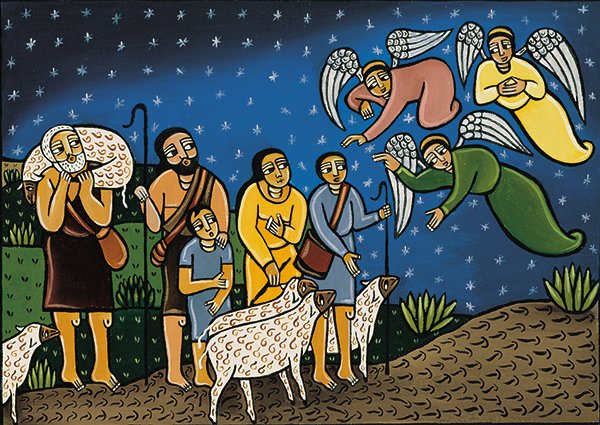
            As Dr. Luke tells us, there were shepherds abiding in the fields, keeping watch over their flocks by night. Remember, there is no radio or telephone, no Internet or telegraph. When messengers personally come to deliver a special announcement, it is a big deal. These angels coming to the shepherds, well, that was a super big deal, to be sure!

            And the announcement? This isn’t the birth of a normal, ordinary baby. No! This baby is an extra special baby. The Messiah, who will save His people from their sins. A special announcement of God’s love! This special baby, this Savior, Christ the Lord, is born to you—to me—to all of us, in the city of David, which is called Bethlehem.

            Did you hear? The Savior, the Christ, the promised Messiah, came into this world as a Baby in Bethlehem. The Eternal Second Person of the Trinity, Creator of the whole universe, God the Son, emptied Himself of all God-ness. Took on humanity, and was born as a helpless Baby. That is not only good news, that is earth-shaking news. Good news of great joy for all the people. For you, for me, for all of us.

            Yes, the promises of Christmas may sound familiar to us. The good news that the angels brought may be old news, to some. But those promises? They are so needed, today. What with uncertainty and fear, anxiety and hatred so common today. Peace and security seem way out of humanity’s reach. Don’t we need some good news right now? Don’t we need news of God’s amazing love for all of us, for each one of us?

This is good news, this Gospel the angels brought to the shepherds. And they, in turn, told everyone they could about the Child, which the Lord had made known to them. Just as Luke said, all who heard about the Child were amazed at what the shepherd told them.

When I take a step back from this narrative that is so familiar to all of us here in this church, I try to imagine this event brought up to date. “I do find myself wondering just where this might happen today. If Jesus were to come again in human form, would it be like the last time? Would it be in a country far away or would it be in our own back yard? Would it be in an unused room at a nursing home?  Or at a homeless shelter?  Or under a city bridge? I do wonder where Jesus would be born today, don’t you? I wonder how my wondering changes how I encounter those who are in those places now.” [1] It is very possible that those places are already made ‘holy’ – that babies born in unused rooms or homeless shelters or under bridges are holy, too. Even before the presence of the Christ Child makes them even more special.

After that special birth announcement from the angels, and the excited visits from the shepherds, we are left with Mary. Mary who was only a teenager, who had had nine months to consider this extraordinary pregnancy and upcoming birth. Mary must have been up to the task. Mary must have been an extraordinary, reflective young woman.

We know from verse 18 that Mary treasured all these words and pondered them in her heart. All of these words, these unfolding events. Another translation has this verse as “Mary was keeping together (the Greek verb sunetare) all these words, bringing them together (sumballos) in her heart.” Keeping together, sunetare, has the sense of integration. Bringing these events together, or sumballos! Mary was fitting all the puzzle pieces together, bit by bit.

Can we do the same? Can we fit all the pieces together? Can we slow down, just a little, and wonder at the miracle of that night? I invite us all to listen to the good news of the shepherds. The eternal God, Creator of the universe, come to earth as the Babe in Bethlehem.

God gives each of us an opportunity, an invitation to experience amazing love; an invitation to worship the newborn Savior. We, too, can stop by that manger in Bethlehem, and be caught up in the wonder of what happened that night, so long ago.  We, too, can say “O come, let us adore Him, Christ the Lord.” Alleluia, amen.

@chaplaineliza

(Suggestion: visit me at my other blogs: matterofprayer: A Year of Everyday Prayers. #PursuePEACE – and  A Year of Being Kind . Thanks!

(I would like to express my great appreciation for the observations and commentary from the Do Not Be Afraid Advent Devotional – © 2022 Illustrated Ministry, LLC.. I used several ideas from their useful resources. Thanks so much!)


[1] Dancing with the Word: Christmas in the Barn

Unknown's avatar

God’s Birth Announcement

(St. Luke’s Church had an electrical outage over the weekend. The radiator pipes burst, and there was no worship service on Sunday, December 25, 2022. This sermon comes from my archives, from December 24, 2003.)

“God’s Birth Announcement”

Luke 2:1-14 – December 24, 2003

            I have several friends who have recently had babies. Welcoming babies into the world is such a joyous occasion. One of the first things most people I know do is spread the news about the new baby, letting other friends and acquaintances know about this new little one who has joined the human race. When and where the baby was born, how big it was, whether it was a girl or a boy, and what the parents decided to name the baby are all details that are joyously spread, as soon as possible.

             I wonder . . . what would God’s birth announcement look like?

            In the fullness of time, God sent His Son. Prophesied in many passages from the Hebrew Scriptures, foretold for centuries before His coming. Looking at the Old Testament passage for today, Isaiah 9, the prophet tells his readers about the Wonderful Counselor, Mighty God, Everlasting Father, and Prince of Peace, who is the coming Messiah.

            Throughout the Advent season, we’ve been preparing for the coming of this Messiah. Well, I have news for you. He’s here. Today is Christmas Eve, and tomorrow we celebrate once again the earthly birthday of the Babe of Bethlehem, the Savior of the World, the only begotten Son of the Heavenly Father. Our Lord Jesus Christ, our savior and redeemer, from age to age the same, came into this fallen world as a baby. Imagine that. Emptying Himself of all His vast, eternal God-ness, and being born as a human baby.

            I wonder: what would God’s birth announcement look like?

            I think we have a pretty good idea, if we take a look at the second chapter of Luke. Doctor Luke gives a full accounting of what went on in those days. This account here is God’s version of a birth announcement, but what an unexpected sort of announcement!

            Let’s look at the parents of the Baby, first of all. The mother, Mary of Nazareth, is not even married yet. Sure, she’s engaged to this carpenter, Joseph, but they haven’t yet been fully joined in marriage. Marriage in those days, in the Jewish culture, was a several-step process. Mary and Joseph hadn’t quite finished the whole marriage thing.

            We read in chapter 1 of Luke that the Holy Spirit came upon Mary, and she conceived. Is Joseph the father of this Baby? No. Joseph could not believe this part of the account at first, until assisted by some heavenly help. An angel came and reassured Joseph that Mary was on the up and up, and that the baby inside of Mary was really the Messiah, the Savior of the world. In other words, the Son of God.

            So, the birth parents are not the usual kind of parents. The circumstances of the birth are not quite the typical birth scenario, either. Imagine the birth of a baby today, here in Evanston. Chances are that the baby would be born either in St. Francis or Evanston Hospitals, with the latest medical technology available, just in case. Not so for Mary, the mother of Jesus. Not only did she have the baby Jesus in less than optimum circumstances, in terms of hygiene and medical needs, but she was also far from her home as well.

            Mary and Joseph were both far away from familiar people, places and things. They were travelers, like many people in the town of Bethlehem at that time. Luke 2 tells us that there wasn’t any place for them to stay–anywhere. Because of the census ordered by Caesar Augustus, the town of Bethlehem was mobbed.

            Since Bethlehem was the ancestral home of King David (who had a lot of children!), that meant that there were quite a lot of people who had to be counted who were descended from David. And not all of them had money. We can see, from the offering that Mary and Joseph offered to the Lord shortly after the birth of the baby Jesus, that they did not have very much money.       

            Bethlehem must have been very crowded indeed, if a woman about to give birth couldn’t find even a room to have her baby in. She and Joseph had to room in a stable. It would be similar to today, where a young woman might have a baby in any common garage. We could even take it a step further, and draw some definite similarities between Mary and Joseph and some other young, homeless couple going to have a new baby, searching for a place to spend the night.

            I don’t know whether any of you have currently had the opportunity to see a sign in front of the First Presbyterian Church in Evanston, but one of the smaller trees near the front door to the sanctuary is practically covered with blue ribbons. There is a sign posted next to the tree, saying “While celebrating One homeless Family, these ribbons ask us to remember the homeless with us today.” I had never thought about the Holy Family in that way before. Again, it’s God’s unexpected way of announcing the birth of His Son.

            While we’re thinking about the stable where Mary had her baby, what about that stable, anyway? Jesus, after all, was a descendant of King David, through both His mother Mary and His adopted father, Joseph. A stable is an unexpected place to find a king. I don’t know about you, but I’d expect royalty to be born in a palace, or at least in a nice house. Not in a stable, anyway.

            And who are the people who first receive this birth announcement? Are they influential members of the community? Rich, movers and shakers? Leaders of the local synagogues and teachers of the Law of Moses? Those would be the kinds of people who I might expect to have a birth announcement sent to them. But God doesn’t work that way. Again, God does the unexpected, and chooses the most unlikely people to receive a hand-delivered message from the Lord of Hosts, the King of Kings.

            Some people in the 21st century probably are so accustomed to the Christmas story that their idea of shepherds keeping watch over their flocks by night is somehow associated with Christmas cards. But it was life as usual for these working people. An everyday way of life in Palestine. What’s more, being a shepherd was not a particularly high class job. The lowly vocation of shepherd was on the outskirts of society. A possible comparison today is to think of a person selling “Streetwise,” the paper sold for $1.00 outside of grocery stores and coffee shops here around the Chicago area.

            And suddenly, the angel of the Lord came to these shepherds–came to people in homeless shelters, people selling “Streetwise,” people down on their luck, people on the edge, on the outs of society. The angel of the Lord came to them with good news. Good news. With news of God’s birth announcement. We can see God again breaking through, in an unexpected way, to an unexpected group of people.

            God sends a birth announcement in unexpected ways to unexpected people, in many situations, all over the world. The angel was the first to tell of the newborn Baby, born in Bethlehem, but then the shepherds spread the news about the new Baby, letting other friends and acquaintances know about this new little One who has joined the human race. When and where the Baby was born, the news that it was a boy, and that the parents decided to name this Baby Jesus–for He would save people from their sins–are all details that the shepherds joyously spread, as soon as possible.

            Again, it’s God’s unexpected way of announcing the birth of His Son. Can you think of someone who hasn’t heard about this birth announcement? We today have the opportunity to spread the news about this Baby born in Bethlehem. And we can joyously praise God, for Jesus is the savior and redeemer of the world, as the angel of the Lord proclaimed so long ago.

Unknown's avatar

“In My Father’s House”

“In My Father’s House”

Luke 2:41-52 – December 26, 2021

            Have you ever been concerned about someone’s whereabouts? Not knowing where they are, or when they might return? Maybe it was a teenage son or a daughter, out after curfew, forgetful of the time. Maybe it was a brother or sister, late coming back home. We are worried, true. Concern and care are there, too. Normal, human reactions connect with such a happening. But here in our scripture passage today, the care and concern that Mary and Joseph are dealing with are a bit more serious than just the concern over a teenager coming home a little late one night.          

            Let’s look at this passage a bit more closely. The Holy Family worships in Jerusalem for the Passover festival when Jesus is twelve years old, This snapshot of Jesus’ life is the only picture shown to us by the Gospels in between the birth narratives of Matthew and Luke, and the time when Jesus begins His public ministry when He’s an adult.

            His parents start to go back to Nazareth with the group of people they had come to Jerusalem with. One problem: Jesus isn’t there. The group Mary and Joseph were traveling with must have been pretty big, since Jesus’ parents were not aware that Jesus wasn’t with them when they started off for Nazareth.

            This must have been a really unusual happening. I mean, seriously . . . can you imagine Jesus ditching His earthly parents? Can anyone here imagine Jesus being mean, or teasing weaker kids, or being disobedient to Mary and Joseph? I suspect Mary and Joseph had a hard time believing it themselves, since the book of Luke tells us that they checked the group of travelers thoroughly before heading back to Jerusalem.

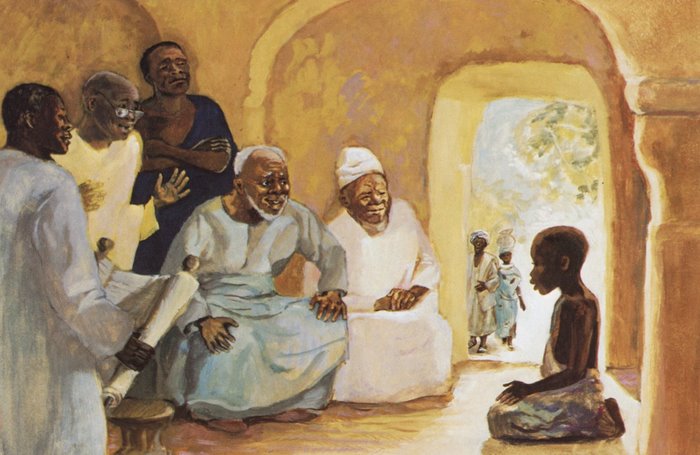
            It takes Mary and Joseph several days to find Jesus, once they get to Jerusalem. And where do they find Him? In the Temple. And what is Jesus doing there? He is amazing everyone with His understanding and precocious answers, at such a young age.

            I am reminded of my older brother John, a number of years older than I am. I wasn’t even alive when the following happened, but I was told many times by my other siblings about my brother’s abilities. When he was in kindergarten, my brother John was quite advanced in his school work. In fact, he could read fluently. When the kindergarten teacher found out about this, she tried having John read a number of things, including the daily newspaper. So, when I read this passage in Luke, it sometimes reminds me of my kindergarten-aged brother John, reading the newspaper aloud to a group of admiring teachers in the teachers’ lounge.

            The Gospel of Luke tells us the priests, Pharisees and other teachers of the Law of Moses were also an admiring group, gathered around Jesus, listening to His answers and understanding concerning matters in Hebrew Scriptures. The boy Jesus had a clear, deep understanding of the Scriptures, and this came from His understanding of God the Father. 

            And how does Jesus respond when Mary and Joseph finally catch up with Him? “Did you not know that I must be in my Father’s house?” What a response. Could Jesus go wrong, being in His Father’s house? And, thinking about it, what more natural, obvious place for Jesus to be than in the Temple? Even though today’s preaching passage doesn’t tell us so, numerous other places in the Gospel records do tell us that Jesus was regular in prayer. He did have a close relationship with His heavenly Father. We can follow Jesus’ example, and be close friends with God.

            We see at the end of this narrative that Mary had a close relationship with God, too, except that she was more reflective. She meditated, reflected, pondered upon these things. She communicated to God in that way. Another way for people to be close to God.

            When I consider this snapshot of Jesus in the Temple, I desire a better understanding of Scripture, too. I not only wish to have a more thorough grasp of the Bible, I want to become better able to understand what God desires of me. For example, Dr. Luke says that Mary continued to treasure up all these things in her heart. Pondered, meditated on and considered all of these wondrous, miraculous happenings, and thus understood God better.

            But how am I to better understand God? Two good ways of becoming better acquainted with God and God’s desires for me are through reading the Scripture and through prayer and meditation – pondering what God says, what I read in the Bible. And this has the dual benefit of helping me to develop a closer relationship, a closer walk with the Lord. I see Jesus, having a close relationship with God, and therefore having a clearer understanding of what God’s Word says. I have the opportunity to have that, too!

            Prayer, talking to God, even thinking to God in the privacy of our own rooms, while in bed at night, or while taking a walk—all are good ways that we can keep up that relationship with God. We can praise God that God wants us to have a closer walk with the Lord, and provides all of us the means to do it.

            Alleluia, amen.

@chaplaineliza

(Suggestion: visit me at my other blogs: matterofprayer: A Year of Everyday Prayers. #PursuePEACE – and  A Year of Being Kind . Thanks!

Unknown's avatar

Moved into the Neighborhood!

“Moved into the Neighborhood!”

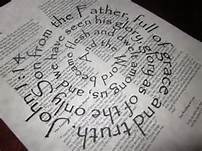
John 1-14 word made flesh, circle

John 1:1-14 – December 24, 2019

A long time ago, in a galaxy close by—even, in this galaxy right here, the Word was first. The Word was present before anything else. What came into existence was Life, and the Life was Light to live by. The Life-Light blazed out of the darkness; the darkness couldn’t put it out.

All right, I have a confession to make. I saw the new Star Wars movie on Saturday. I love the original Star Wars trilogy. I did not love the prequel trilogy, however I really liked the last trilogy of movies. And, the last of the current trilogy, “The Rise of Skywalker,” was a satisfying end to the story—thus far.

What does Star Wars have to do with Christmas? Especially during the past week, I was intrigued by the juxtaposition of Light and Dark in the Star Wars universe; the two flip sides of the Force, that ultimate dyad of positive and negative energy, where Light is Good and Dark is Evil.  I saw a few differences to what we have highlighted this Advent season here at St. Luke’s Church—the Light and the Dark.

Except, different from the Star Wars universe, this galaxy’s kind of Light and Dark are both positive, both are needed. Both are made by the same ultimate Source, or Force, or heavenly Creator at the beginning of all things.

The beginning of the Gospel of John is modeled after the beginning of Genesis 1—except John goes much deeper, and gets theological right away. John chapter 1 tells us a lot about the Word—the Light—the Life—and then, brings those descriptions down to earth. The cosmic Light—the Word spoken before anything was created—that Word—or Light—or Life comes down to earth and gets up close and personal. How much more personal can you get than becoming flesh, becoming a tiny Baby?

I think everyone here is more familiar with the narrative of Luke 2, where we hear about Joseph, and Mary, and the census, and the awkward situation the young couple was in—being still fiancés, still pledged to each other, and not yet married. But wait, there’s more! We hear about the shepherds, angels and their heavenly birth announcement. The shepherds run to visit the newborn Baby, and afterwards go and tell everyone in that town of Bethlehem: “Alleluia! The Messiah is born!”

Somehow, the narrative told by Luke seems a lot more relatable than the first chapter of John. I mean, who can relate to the eternal Word spoken before anything was created? And, the cosmic Light that is also Life? Isn’t that a mixed metaphor, John? Couldn’t you get your metaphoric descriptions straightened out before you set it down as Gospel truth?

This Scripture reading from John 1 is the reading for Christmas Eve, where John tells us of the Eternal Word, part of the everlasting Trinity, becoming flesh. As Luke would say, Emmanuel, God with us, becoming a Baby born in Bethlehem.

Jesus was the name that Mary and Joseph gave to their Son, and John tells us He is “the Light of all people” coming into the world. After a month of Advent, of waiting and longing and talking about the miraculous birth, Jesus is now here! We have also been talking about how Light and Dark are both positive things, both created by God.

As we reflect on the two narratives, the familiar one in Luke 2 and our reading for tonight, John 1, both readings talk about the Light of the world come to earth. Yet, Jesus is both human and divine. “Those two things coexist in him, just like light and dark. John tells us darkness does not overcome the light. The darkness is there alongside the light as it shines. Darkness helps light stand out, just like the stars shining in the night sky.” [1]

We have already talked about how darkness can be warm and friendly. Just think of baby animals and their mothers. Puppies, kittens, calves, lambs, all kinds of animals resting with their mothers. And, think of human babies. They rest with their mothers in the warm, welcoming darkness of night. Not like the good versus evil, light/dark split of the Star Wars universe, but instead all creation created by God, and all is named good.

We can see how there is a natural bridge connecting John 1 (talking about the Eternal Word/Light/Life), and the narrative of Luke 2, telling about the common, every-day birth of a Baby—yet miraculous, too. Both are integral parts of the Greatest Story Ever Told.

“But note: when God decided to get personally involved, God came to tell us that we are loved, deeply, truly, and forever. God loves all of us, but especially wants those who don’t feel loved or lovable, those who regularly feel like they’re on the outside looking in, those who feel forgotten, and those who wonder what the point of life is, to hear the “good news of great joy” that God loves all of us.” [2]

Is it any wonder that our Scripture reading for this evening tells us, in the wonderful translation by Eugene Peterson, that this Wonderful Counselor, Almighty God, Prince of Peace, Word become flesh, “moved into the neighborhood.” Jesus became one of us, a human being.

That is the meaning of Christmas: Jesus has moved into our neighborhood, and become one of us. As the angel said, Jesus is born for you. For me. For each of us. That is the miracle, come to earth. Glory to God in the highest! Amen.


(I would like to thank illustratedministry.com for their Advent devotional “An Illustrated Advent for Families: In Light & Darkness.” For this sermon, I have borrowed several ideas and quotes from the Christmas Day devotional. Thanks so much!)

For further information, see info@illustratedministries.com

@chaplaineliza

(Suggestion: visit me at my regular blog for 2019: matterofprayer: A Year of Everyday Prayers. #PursuePEACE – and my other blog,  A Year of Being Kind . Thanks!

[1] Advent devotional “An Illustrated Advent for Families: In Light & Darkness.”

[2] http://www.davidlose.net/2015/12/christmas-eveday-c-keep-it-simple/

“Keep It Simple,” David Lose, …in the Meantime, 2015.


Unknown's avatar

Searching for Jesus

“Searching for Jesus”

Luke 2-48 boy-jesus-in-the-temple-with-rabbis

Luke 2:41-52 (2:51) – December 30, 2018

Have you ever lost a child? Or a grandchild? I have, briefly. What a nightmare for a parent or grandparent. I remember how worried I was, and how I called and called for my oldest daughter. That is the situation we see in our Gospel reading this morning from Luke 2. Can you imagine Mary and Joseph’s panic and fear when they suddenly realize their son had disappeared from their large group of relatives and friends from Nazareth?

I remember how frightened I was when I searched for my child, and I just searched for my four-year old daughter for five minutes in a department store. I cannot even imagine how shocked and terrified Mary and Joseph were, when they finally figured out that Jesus had not even started out with His family in the morning, leaving Jerusalem.

Let us consider what we know from the Gospels. We know a lot about the time right before and after Jesus was born. Luke tells us a lot, in the first and second chapters of his Gospel record. We can assume he interviewed Jesus’s mother Mary herself. (Otherwise, how on earth would he know certain intimate details about Mary’s pregnancy and birth?)

Also, the first chapter of the Gospel of Matthew lets us in on Joseph’s side of the birth narrative. We find out that Joseph also had a visit from an angel, to let him know the particulars about the Child his fiancée was carrying. Matthew’s Gospel also tells us of the visit from the wise men, or Magi, that we will hear about next week. But, what else do the Gospels tell about the child Jesus, or the teenager Jesus? Other than this narrative from Luke 2, absolutely nothing.

In such an age of constant, 24/7 news and endless information through the computer and other media such as we live in right now, this lack of biblical information might amaze us. However we might feel about it, this Gospel reading today is the only snapshot we get of Jesus between the time He was a toddler and the time of His baptism, at 30 years old. What can we learn from this narrative? Can we search out some message, some meaning for us today?

We begin with Mary and Joseph. As Luke relates, after searching throughout their caravan of relatives and friends on the way back from Jerusalem, after the Passover celebration, Mary and Joseph cannot find their son. So, they quickly return to the capital city, to Jerusalem, to do more searching.

The Gospel tells us they spent three days looking for Jesus. Not three hours, but three whole days. What a predicament! What an emotional impact this must have had on His parents. Jesus was twelve years old. I realize that we are talking about a different time and a different culture, but, still. Mary and Joseph must have been beyond frantic.

Have you ever been frustrated, or frantic beyond belief, and really wanted to have God step in and take charge? And, it seemed that God just did not show up? I remember searching for God several times in my twenties and thirties, when I was in several continuing predicaments. I couldn’t seem to find God, when I needed God the most. Several times, I distinctly remember searching for Jesus, even crying out to Him for help. And, I had difficulty finding Him.

Have you ever searched for Jesus, and He just could not be found? That was what happened to Mary and Joseph when they searched Jerusalem diligently for three whole days. No sign of Jesus.

Let us continue with today’s reading from Luke, starting at verse 46: “46 After three days they found him in the temple courts, sitting among the teachers, listening to them and asking them questions. 47 Everyone who heard him was amazed at his understanding and his answers.” After searching in all different places, Mary and Joseph finally track Jesus down. They find Him at the Temple, talking with the most knowledgeable teachers of the Bible, and asking them questions. I suspect Jesus also was trained well in the traditions and understanding of the Hebrew Scriptures, so He probably was involved in high-level discussion, too.

When Mary and Joseph finally find their son, Mary takes the lead: “48 When his parents saw him, they were astonished. His mother said to him, “Son, why have you treated us like this? Your father and I have been anxiously searching for you.” As we can see, Mary and Joseph love Jesus very much, and are very concerned and fearful about Him. “Yes, it’s great that he is alive, and yes, it’s good to see him sitting with teachers and discussing religious matters, but why should they reward disobedience to their parental authority?” [1]

Let’s look at this situation from Jesus’s point of view. He was obviously learning and stretching his quickly-maturing mind. Some theologians and bible teachers do not care for this, because they want Jesus to have all the answers—even at twelve years old. “For some, the question is, “Didn’t he understand his own divinity?” For others, the question is, “If he understands his divinity, how authentic was his experience as a human being?” The text reads, “And Jesus increased in wisdom and in years, and in divine and human favor’” Dr. Irving Cotto says about Jesus: “so, we find him learning the ropes of his faith, and perhaps deepening his understanding of who is and what he is called to do as the Messiah.” [2]

As we puzzle through this Gospel reading this morning, I wonder. Was the young Jesus searching out parts of His own overarching story? We can see Him having unusual depth and insight for one just on the brink of teenager-hood. Were we—from our vantage point and viewpoint of almost 2000 years, also searching for Jesus? Wondering where and when He would show up? When Jesus is found in the Temple, are we surprised, too?

Jesus has the last word in today’s reading. “49 “Why were you searching for me?” he asked. “Didn’t you know I had to be in my Father’s house?”[a] 50 But they did not understand what he was saying to them. 51 Then he went down to Nazareth with them and was obedient to them. But his mother treasured all these things in her heart.”

Perhaps Mary, to her credit, treasures the story because she does not yet understand. From Gabriel’s initial message through the shepherds tracking her down in Bethle­hem, astounding events have been buffeting her world. Now she has a rebuke from her son to wrestle with. She’s honest enough to know she’s got some further thinking to do.” [3]

Are we honest enough to wrestle with this reading? Yes, there are things of historical and cultural interest here, but if we focus on that, we miss the point. Jesus looks at us and asks us, “What are you searching for?” When believers get too comfortable with Jesus, He goes beyond what is our comfort level. Jesus reorders expectations and society’s norms. Jesus turns everything upside down and surprises everyone—in the first century as well as the twenty-first.

What kind of message does He have for us? This reading is a reminder that like Jesus, “we also must be about our heavenly parent’s business. As a mother and a father, God wants us to give an account of our whereabouts, but at the same time wants us to explore, discern, ask questions, and search for answers.” [4]

Please God, we are searching for Jesus, too. Will we find Him, today?

[1] https://www.christiancentury.org/article/living-word/december-30-christmas-1c-luke-241-52

Living by the Word, David Keck, The Christian Century, 2018.

[2] https://www.umcdiscipleship.org/worship/advent-christmas-epiphany-2018-19-worship-planning-series/december-30-first-sunday-after-christmas-year-c/first-sunday-after-christmas-day-2018-year-c-preaching-notes

[3] https://www.christiancentury.org/article/living-word/december-30-christmas-1c-luke-241-52

Living by the Word, David Keck, The Christian Century, 2018.

[4] Ibid.

@chaplaineliza

(Suggestion: visit me at my regular blog for 2018: matterofprayer: A Year of Everyday Prayers. #PursuePEACE – and my other blog,  A Year of Being Kind . Thanks!

Unknown's avatar

What Christmas Is All About

“What Christmas Is All About”

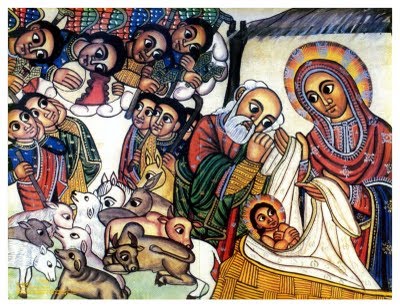
Chilean nativity scene, 1955.

John 1:1-4, 9-14 (1:14) – December 24, 2018

Christmas expectations can be wonderful. When we think of small—even middle-sized—children, they can be all wide-eyed and filled with amazement at the sense of wonder found in Christmas. That sense of wonder goes away somewhat as children get older, but then their expectations change, too. As people shift into adulthood, parenthood, and even grandparenthood, their Christmas expectations can shift even more.

What are your expectations of Christmas, this year?

I noted in one of my Advent sermons several weeks ago that December 9th was the 53rd anniversary of the first showing of the “Charlie Brown Christmas Special.” Over fifty years of this Christmas special has certainly affected how people in the United States view Christmas.

I wonder—how do we view Christmas? How are our expectations affected?

If we consider the people in and around Bethlehem on that first Christmas eve, there was a lot of hustle and bustle, a good deal of coming and going. The little town of Bethlehem was certainly a popular place, especially since the Roman law had been in effect for a while. Many descendants of King David needed to return to Bethlehem and register with the Roman government. We all know that Joseph was of the house and lineage of David, and that was why he was there.

We have heard about the shepherds, who were the first to receive God’s super-special birth announcement. They not only came to see the newborn King in a manger themselves, but they also alerted the whole town to the new birth, too. I suspect a goodly number of the people in Bethlehem had at least heard about the birth of a possible Messiah, by the time the shepherds were finished.

I wonder—what were their expectations, that first Christmas Eve?

We have the main players, Joseph himself, and Mary, his fiancée. The Holy Family. When the baby Jesus was born and the shepherds—and some others—showed up, I suspect Mary and Joseph were a bit perplexed at all the attention their Child was getting. What’s more, Dr. Luke records Mary treasuring up all these events in her heart, and reflecting upon them from time to time in the years to come.

I wonder—what were Joseph’s and Mary’s expectations from that first Christmas eve?

We shift from the common, ordinary smell of farm animals and the baby Jesus lying in a manger bed that Dr. Luke relates in the second chapter of his Gospel, to quite another scene. We shift to the first chapter of the Gospel of John. We shift from the warm, homey scene of a blessed Mother rocking her Baby to the time eternal before the heavens and earth began.

What kinds of expectations do we have from this particular retelling of the Gospel story, found in John, chapter 1? These verses, this retelling of the entrance into this world of the Messiah, goes like this: “In the beginning was the Word. The Word was with God. The Word was God. The light shines in the darkness and the darkness did not overcome it. To all who received Him, who believed in His name, He gave power to become children of God.”

Expectations of such cosmic significance! We go from the intimate, everyday retelling of Luke to the universal, cosmic retelling of John. Mind-blowing, to be sure. Most of the time, I cannot even begin to get my head around this eternal perspective.

The Apostle John was a mystic, a contemplative, and probably the least worldly of any of the disciples. It shows, in his writings. Yet, the beginning of John’s Gospel is a necessary part of the Nativity story. This cosmic retelling lets us know that Jesus broke into this world not only as a helpless Baby born in Bethlehem, but also as the pre-Incarnate Son, eternal from the time before the universe began, and eternal, to the time after the heavens and the worlds in the universe have all passed away.

One of my favorite expressions is “both/and.” I am uncomfortable with “either/or.” I do not like “black/white.” I much prefer “both/and.” Not either this, or that. Not either the Luke 2 Nativity, or the John 1 Prologue. But, both/and. Luke tells us of the very relate-able pregnant teenage mother, having her baby at a very inconvenient time. And at the same time, John tells us of the cosmic Christ, the Word, the One who spoke the universe into being at the beginning of all things. We have both. Often, too much for our puny human brains to grasp, but true, all the same.

What kind of expectations do we have from John’s cosmic retelling of the Nativity, in John chapter 1?

Let us draw closer in to the familiar Christmas story. Charlie Brown’s Christmas story. As with any cartoon, we need a villain. The villain in this cartoon special is no personification, no Abominable Snowman or Grinch, but instead the commercialization of Christmas. This is what is causing such angst and despair to Charlie Brown.

What does make Christmas? What kinds of expectations does Charlie Brown have?

Sometimes I feel like Charlie Brown at the Christmas pageant rehearsal. “Isn’t there anyone who knows what Christmas is all about?” I know Linus responds, “Sure, Charlie Brown. I can tell you what Christmas is all about.” He then recounts the Nativity narrative from Luke 2. Except—the blessed truth doesn’t penetrate into Charlie Brown’s head. Yet.

These whole four weeks of Advent we have been retelling the Nativity narrative from Luke, in anticipation of this very night. We have been singing the songs, and lighting the candles on the Advent wreath, all in preparation for this main event.

An Episcopal minister, the Rev. John Holton from Connecticut, uses this same Christmas special to relate the Nativity narrative. He says, “The good feeling, that warm fuzzy feeling I get watching A Charlie Brown Christmas is, at its core, a feeling of hope that even I could be loved.  The hope—the knowledge—that God who sees even our unloveliness loves us fully.  Loves us so much that God comes to be among us.  As one of us.  That God won’t let us go.” [1] Isn’t that the true meaning of Christmas? Isn’t that what Christmas is all about?

This is a gift that cuts through the commercialization of Christmas. Caring, compassion, and love for one another.

We can thank the Lord for God’s greatest gift, the gift to each of us of God’s Son, of God’s Love. And, we have the opportunity to bring glad tidings to all people right now, to people aching to hear of God’s love for them, for us, for all the world.

Won’t you share your expectation of Christmas with someone, tonight? Won’t you share God’s love with someone, today?

[1] http://www.christchurchnh.org/sermon/2017/12/28/thats-what-christmas-is-all-about-charlie-brown

@chaplaineliza

(Suggestion: visit me at my regular blog for 2018: matterofprayer: A Year of Everyday Prayers. #PursuePEACE – and my other blog,  A Year of Being Kind . Thanks!

Unknown's avatar

Shepherds Watched Their Flocks

“Shepherds Watched Their Flocks”

Shepherds, Annunciation, Oxford Bodlean Library

Luke 2:8-20 (2:8) – December 23, 2018

Birth announcements are often greeted with great excitement and joy. In the United States, they can be detailed and specific, with details like the time of delivery, the sex and the weight of the baby, and of course, the name of the new child. The new parents are so proud of their new bundle of joy, and the new grandparents often show everyone the latest photos of their new grandchild, sometimes before the baby is one hour old.

Nothing is new about babies being born. As long as humans have been on earth, babies have been born. As the old saying goes, “A baby is God’s opinion that the world should continue.” One particular, super-special birth announcement happened one night, two thousand years ago. Not with fancy paper, balloons, or glitter, but with something a lot more special.

We need to back up a bit. We all are familiar with the basic details of the Christmas story. Since the Roman Empire wanted to discover exactly how many people they had living in all the provinces and regions of their vast empire, a law was passed that said every adult male needed to go to their ancestral town to register, or report. So, Joseph, descendent of King David, needed to go to David’s home town, Bethlehem, to report in.

Except, Joseph and Mary find themselves on the road at an awkward time. Not only were there lots of other people traveling to their ancestral towns, but added to that, Mary was greatly pregnant. So pregnant, in fact, that soon after she arrived in Bethlehem she went into labor. Mary delivered a newborn boy, as Dr. Luke tells us in the verses previous to our reading.

There was something quite different about this birth. Several somethings, in fact.

In most birth announcements, one of the main things people want to know is the baby’s name. This newborn baby had a great name: Jesus, Yeshua, or Joshua, meaning “he saves.” We know—because one of the prophecies from the book of Isaiah told us so—that this Baby, this Child is also known as the Prince of Peace. Plus, the newborn baby is also of the house and lineage of King David. Added to which, the birth of this particular Baby was prophesied in the Hebrew Scriptures. Impressive bloodline and backstory, indeed.

After all this build-up, many people would expect a grand birth announcement, sent to the very best people. People like nobility, royalty, other V.I.P.s. But who is it who receives this birth announcement? Shepherds. Common, ordinary, lowly shepherds. As Dr. Luke records in his Gospel, “shepherds living out in the fields nearby, keeping watch over their flocks at night.” For the shepherds, it was an ordinary night. Nothing special, they were just minding their own business. And, if you have worked on a farm or with farm animals, you might know what herding animals smells like. Not very appealing, to modern minds—or noses.

Shepherds were not considered well-to-do, upright citizens. Quite the opposite! Dr. David Lose tells us “And the shepherds? These were the undesirables of the first century, the folks on the lowest of the low rungs of the socio-economic ladder.” [1] Today, we might look on people like these shepherds as street sweepers, or rag-pickers, people who emptied latrines, menial workers of the lowest variety. One step above indigent, homeless people.

Yet, these demeaned shepherds were the super-special chosen ones, the ones God favored with a super-special, divine birth announcement. Complete with a light display that lit up the whole sky, an angelic spokesperson, and angel chorus, God wanted the shepherds to know first of all. Not the rich people in town, or the president of the synagogue, or the elders on the ruling board. Not the King of Judah in his palace in Jerusalem, or the nobility who lived in fine houses with fancy clothes, or the Pharisees or members of the Sanhedrin. No, God wanted the lowest of the low to find out, first.

Isn’t it strange—or odd—or funny that God wanted these shepherds to be the first to know? Actually, no. Since God could choose absolutely anyone on earth to hear about the divine birth first, God must have had a really good reason for choosing these despised shepherds. And, God wants all people to know of the birth of the newborn King, the Prince of Peace.

“In spite of their poor reputation as a class of people, these shepherds seem to have been godly men, men who were looking for the coming of Israel’s Messiah. All the others of those who were directly informed of the birth of Messiah in Matthew and Luke were described as godly people, and so it would seem to be true of the shepherds as well.” [2]

Believe it or not, these despised shepherds were sometimes compared to God, in the Bible. God being the shepherd, and the people of Israel the sheep. As uncomplimentary as it may be, people are often compared to sheep in both the Hebrew and Christian scriptures.

As I have noticed before, the behavior of sheep and the behavior of human beings do have some similarities. Yet despite all of these negative attributes, the Jewish and Christian holy writings repeatedly talk about people being compared to sheep.

I found this lovely poem by William Blake (1757-1827). A poet and visionary, he was a committed Christian. He also was a creative writer and some called him even mystical.

As long as we are considering the shepherds coming to see the baby Jesus, I also wanted us to reflect upon the sheep—the flocks, shepherded by the workers on those cold, windswept hills around Bethlehem.


Meditation on the Lamb


Little Lamb, who made thee?

Dost thou know who made thee,

gave thee life, and bid thee feed

by the stream and o’er the mead;

gave thee clothing of delight,

softest clothing, woolly, bright;

gave thee such a tender voice,

making all the vales rejoice?


Little Lamb, who made thee?

Dost thou know who made thee?

Little Lamb, I’ll tell thee,

Little Lamb, I’ll tell thee:

He is called by thy name,

for he calls himself a Lamb.

He is meek, and he is mild;

He became a little child.

I a child, and thou a lamb,

we are called by his name.

Little Lamb, God bless thee!

Little Lamb, God bless thee!


Jesus is called a Lamb. We are called sheep. Not very flattering, is it?  The lowest of the low, the shepherds, heard of the birth of the Prince of Peace, the Lamb of God. However, it matters nothing to God about our position, or honor, or wealth, or influence.

God does care about our hearts, and how we receive God’s Son.

“In Christ we have the promise that God will not stop until each and all of us have been embraced and caught up in God’s tremendous love and have heard the good news [as proclaimed to the shepherds] that “unto you this day is born a savior, Christ the Lord.” [3]

Let us joyfully follow the shepherds’ example, “glorifying and praising God for all the things they had heard and seen.” Amen, alleluia.

[1] http://www.workingpreacher.org/craft.aspx?post=1612

“Something More,” David Lose, Dear Working Preacher, 2011.

[2] https://bible.org/seriespage/4-birth-messiah-luke-21-20

Robert L. (Bob)Deffinbaugh graduated from Dallas Theological Seminary with his Th.M. in 1971. Bob is a pastor/teacher and elder at Community Bible Chapel in Richardson, Texas.

[3] http://www.workingpreacher.org/craft.aspx?post=1612

“Something More,” David Lose, Dear Working Preacher, 2011.

@chaplaineliza

(Suggestion: visit me at my regular blog for 2018: matterofprayer: A Year of Everyday Prayers. #PursuePEACE – and my other blog,  A Year of Being Kind . Thanks!

Unknown's avatar

In A Manger

“In A Manger”

international Nativity

Luke 2:1-7 (2:6) – December 16, 2018

Nativity scenes are so sweet. You see them frequently at this time of year. Either lit up, like the one outside of our church, or carved in olive wood, similar to the figure I am holding up right now. They can be ceramic, plaster, or painted. Little, small enough to fit under a Christmas tree, or almost life-sized, like the one I saw outside of a big Catholic church in the suburbs.

I suspect we all could mention the cast of characters we might find in a nativity scene. Besides Mary, Joseph, and the baby Jesus, we find shepherds, animals, kings, and sometimes an angel. The nativity pictures look so gentle and perfect, just like a Christmas card.

Mary and Joseph did not have a picture-perfect time of it. As an adult male living under Roman occupation, Joseph was ordered to go to his ancestral town of Bethlehem and register, just as the Roman rulers said. Dr. Luke records it: “In those days Caesar Augustus issued a decree that a census should be taken of the entire Roman world. (This was the first census that took place while[a] Quirinius was governor of Syria.) And everyone went to their own town to register.”

There must have been a great deal of coming and going throughout Israel, as every adult went to their ancestral town. Complicating matters was Mary, Joseph’s betrothed, who was greatly pregnant. “So Joseph also went up from the town of Nazareth in Galilee to Judea, to Bethlehem the town of David, because he belonged to the house and line of David. He went there to register with Mary, who was pledged to be married to him and was expecting a child.”

I wonder how Joseph and Mary felt about being uprooted from their small town of Nazareth and forced to travel—that is, walk—dozens of miles through semi-arid, sometimes hilly country. I wonder what Mary and Joseph thought about coming to the very crowded town of Bethlehem, a near suburb of Jerusalem, chock full of extended relatives of King David. And, I have only an inkling of an idea of what Mary thought, being great with child, having to make the long, difficult journey. The forced timing of this whole trip must have been simply awful.

I want us to step back from Mary and Joseph for a moment. Let us leave them in Bethlehem. As one commentator mentioned, “We all see the Bible through an interpretive lens, and many Western Christians tend to read it through a European/American one. We often bypass the culture and customs that were prevalent during biblical times. We even interject our own bias and prejudice. This is a common error that causes misinterpretation to ensue.” [1]

But, isn’t that human nature? Each of us, all of us, relate to biblical narrative through the lenses of our own personal experiences, through our own separate upbringings. How else do we begin to understand some other person’s story, if not through familiar ideas, surroundings, characters, and narratives?

I was privileged to have the opportunity to get to know the Rev. Dr. Kenneth Bailey. I have attended the New Wilmington Mission Conference in western Pennsylvania the last week of July for almost twenty years, where Ken and his wife Mickey also attended. Except, they went to New Wilmington for some decades. The Baileys served as Presbyterian missionaries in the Middle East for decades, too, coming back to the United States each summer before returning to their work as teachers. Ken as a seminary professor, and his wife as a high school teacher.

Ken Bailey knew a vast amount about Middle Eastern culture and customs, both modern and ancient. He also knew a whole bunch of languages fluently, both modern and ancient. He was a man of great knowledge, stature, and influence, and yet also a humble and unassuming person. He wrote a number of biblical commentaries and scholarly discussions which included first-century Palestinian culture, and how it informs our reading of the Bible today.

I hesitate to break this to everyone, but according to current understandings of Palestinian customs and culture of the first century, Jesus was most probably not born in a stable. Where did this idea of a stable come from? It is difficult to tell. People elaborate, of course. You’ve all played “telephone” as young people, sitting in a big circle around a room, one person whispering in the ear of the next, each whispering what they heard in turn, and everyone laughing when the initial message ends up being all garbled at the end of the “telephone” chain.

We know the biblical text of the Gospel of Luke has remained constant, even through many translations over the centuries. However, as generations of people verbally relate the Nativity story, people tend to elaborate. It gets even more complicated when the message of the Gospel crosses the boundaries of different cultures, and crosses lines into different continents.

For example, considering the manger in a stable: “The mention of a ‘manger’ in Luke’s nativity story, suggesting animals, led mediaeval illustrators to depict the ox and the ass recognising the baby Jesus, so the natural setting was a stable—after all, isn’t that where animals are kept?” [2]  That stable is from a European point of view. But not necessarily, although Luke certainly mentions a manger.

Let’s go back to Mary and Joseph. We left this poor, exhausted couple on the outskirts of Bethlehem. The common modern understanding of an “inn” was another elaboration, since the Greek word kataluma is exactly the same word used to describe the upper room of the Passion Week. Its definition: “‘the spare or upper room in a private house or in a village […] where travelers received hospitality and where no payment was expected’ (ISBE 2004). A private lodging which is distinct from that in a public inn, i.e. caravanserai, or khan.” [3]

Mary and Joseph were probably bedded down in an upper room, dormitory-style, with a number of other extended relatives of the great King David. No private room, like they might have at an inn. As Luke said “she gave birth to her firstborn, a son. She wrapped him in cloths and placed him in a manger, because there was no guest room available for them.”

Not wonderful accommodations, but at least they were not freezing outside with no place to sleep. There was a communal area where the family’s animals were kept, at one end of the large open room, on the ground floor. I suspect there were animals, too—all watching the Holy Family, Mary, Joseph and the newborn baby Jesus. “Once Jesus was born, I envision the two of them tiredly improvising with a manger and some spare cloth, seeking the chance to rest before their newborn inevitably begins his new routine of squalling every 3 or 4 hours to be fed.” [4]

Where does that leave us, with our pretty nativity scenes under our Christmas trees, in front of our houses, and on our Christmas cards? What is the message we receive each Christmas? The holy God of all the universe became a human baby, born to an unmarried teenager, in uncomfortable, awkward circumstances. Not the best of beginnings from a human point of view, but certainly God-ordained beginnings.

What does all that mean for us? It means that we do not have to have neat, tidy lives, that our situations can be uncomfortable, awkward, sad, lonely, anxious, fearful, traumatic, with a whole host of other “negative” circumstances. None of that matters. What does matter is God is with us. Emmanuel, the God-become-human, God with us, is here in the middle of all those awkward, unfamiliar, even ugly situations. Have you lost a job? Jesus is with us. Have you lost a loved one? Jesus is with us. Have you lost a home, or changed neighborhoods, or are feeling lonely, depressed, or especially anxious? Jesus is still with us.

For to us a child is born, to us a son is given. Alleluia, amen.

[1] http://www.ashleyeaster.com/blog/yes-mary-knew

Guest post by: Pastor Gricel Medina, Leadership/Community Developer

[2] https://www.psephizo.com/biblical-studies/once-more-jesus-was-not-born-in-a-stable/

[3] Ibid.

[4] https://modernmetanoia.org/2016/12/09/756/

“Twas the Night Before Birthing”, Emily S. Kahm, Modern Metanoia, 2016.

@chaplaineliza

(Suggestion: visit me at my regular blog for 2018: matterofprayer: A Year of Everyday Prayers. #PursuePEACE – and my other blog,  A Year of Being Kind . Thanks!

Unknown's avatar

Mary and Joseph, Unafraid

“Mary and Joseph, Unafraid”

angel with trumpet

Luke 1:26-31, Matthew 1:19-21 – August 5, 2018 – from Dave Ivaska’s book Be Not Afraid

When a woman is pregnant and expecting a baby, it can be a marvelous experience. However, an unexpected pregnancy can be surprising, even worrisome. I know I have heard of several unplanned pregnancies over the years, and I suspect many of you have, too. An added complication can occur when the parents of the unexpected baby are not married.

That was exactly Mary and Joseph’s situation. Both were unmarried, only engaged. Both were very much involved with the birth of this unexpected baby. And, both had angels appear to them, telling them “Be not afraid!”

Just imagine: Mary and Joseph, considering the exact same unexpected situation, with two very different reactions and quite separate expectations. We are not told, but I cannot help but wonder whether Mary’s fear and Joseph’s fear of the unknown was compounded by fear for the other. How were their fears for the other encountered, and addressed? [1]

Both Mary and Joseph have angels suddenly come upon them. Both angels immediately say, “Be not afraid!” This occurrence is starting to become familiar to us by now, after two months of this summer sermon series. The sight of angels must be terrifying, since the first words out of their mouths is almost always, “Be not afraid!”

Mary must have been completely flabbergasted at the appearance of the angel. Even though she had heard about miraculous and angelic appearances in synagogue on the Sabbath for years, it’s a quite different thing to have it actually happen to her. Mary probably was interrupted while she went about her usual routine at home.

In Luke’s account, the angel Gabriel—God’s special messenger angel—comes to Mary and reassures her with the words “Be not afraid!” In this longer narrative of the birth of Jesus, the angels come to several people (and one group of people). What is more, according to commentator Shively Smith, “the simple phrase, “do not be afraid,” offers comfort and hope to those without hope, as in the case of Zechariah and Elizabeth (Luke 1:7, 24-25); miracles to those not looking for miracles, as in the case of Mary (Luke 1:26-27); and even disruption to those going about their daily routines, as in the case of the shepherds (Luke 2:8).” [2]

Matthew tells us that Joseph was interrupted by the angel of the Lord in a dream. From the short, spare account of Matthew—only a verse and a half!—we do find out that Joseph was called a righteous man. Joseph certainly was considering the unexpected news that Mary had brought to him. Both Joseph and Mary considering the same situation, but in different circumstances.

We all realize that today’s cultural references are different from those of first-century Palestine. The cultural marriage practices of the Jews of that time were patriarchal and highlighted the joining together of two families, not of two individuals, as marriage is seen today here in the United States. Nevertheless, we can see how God breaks apart first-century cultural practices and societal expectations through this miraculous birth narrative.

Joseph was, indeed, a righteous man. When his fiancée Mary first came to him with this unexpected news, he first thought she had been unfaithful. Wouldn’t you? Isn’t that the first thing anyone would think of? Either that, or that Mary had been raped, which is even more unpleasant and shocking. (But, the Gospel doesn’t go there.) Joseph does not want to expose Mary to public disgrace. So, how to deal with this unexpected situation?  

I suspect the situation was looking pretty desperate to Joseph. That is where the angel of the Lord steps in—or, flies in—to the situation.  The angel reassures Joseph that the baby within Mary’s uterus is indeed holy, conceived of the Holy Spirit. What is more, that the baby will be the Messiah! The words of the angel: “you are to give him the name Jesus, because he will save his people from their sins.”

This is quite similar to other appearances of supernatural wonder in the Gospel of Luke. Commentator Shively Smith tells us “each instance is accompanied by an awe-inspiring, even unusual moment that reasonably sparks wonder and even fear. Indeed, the practice of offering a word of assurance at moments of supernatural wonder and disruption to the norms of daily life is something Jesus takes up in his ministry later in the gospel (Luke 5:10; 8:50; 12:32).” [3]

Let us come back to Mary and Joseph, two individuals going through a difficult, even traumatic time, in terms of society’s expectations as well as cultural norms. This is a different way of thinking about the birth of Jesus than that we are used to, every Christmas. Commentator David Lose tells us “let’s not forget the distress, sense of betrayal, disappointment, and a host of other emotions that Joseph must have experienced, or the fear and hurt that Mary would likely have also felt as they sorted out their divinely complex relationship.” [4]

On one hand, Mary has this assurance of supernatural power and presence within her from the angel. On the other, Joseph gets a reassurance of supernatural power and presence concerning Mary from the angel. We might presume from all this that there is some far greater plan that neither Mary nor Joseph has any clear idea about. The injunction “Be not afraid!” is a part of this greater plan.

A supernatural plan, a plan that overarches all time and space, whereby the Savior of the world is going to enter in to our everyday lives, and blow apart every cultural norm and societal expectation. It blows our minds, just thinking about the birth of Jesus, two thousand years later. The encouragement “Be not afraid?” Don’t be afraid to step forward with TRUST, as part of a larger plan that comes from above.

You think the situations we find ourselves in today are complex? God understands the complexity and the ins and outs of every situation, every predicament, every sadness and trauma and difficulty each of us might find ourselves in. As we take a closer look at Mary and Joseph, we see that they are not just figures from some stained glass window, but instead flesh and blood people with the same emotions and fears and family difficulties we might have today.

“And the more we can imagine them as people like us — with ups and downs to their relationships, for instance — the more we might imagine ourselves to be people like them — that is, people who go through all kinds of things, some quite damaging, and yet whom God uses nevertheless to accomplish God’s purposes.” [5]

The angel’s words, “Be not afraid!” We can take them to heart, too, and be encouraged, reassured, that God is with us, today, just as much as God was with people in bible times, just as much as God was with Mary and Joseph, all the way through their wonderful and frightening and even shocking experiences. Even though we may go through all kinds of things, God will never leave us, nor forsake us. Be not afraid!

Alleluia, amen.

[1] Ivaska, David, Be Not Afraid (Downers Grove, Illinois: InterVarsity Press, 2000), 97.

[2] http://www.workingpreacher.org/preaching.aspx?commentary_id=3531

Luke 1:26-38 Shively Smith, Preaching This Week, WorkingPreacher.org, 2017.

[3] http://www.workingpreacher.org/preaching.aspx?commentary_id=3531

Luke 1:26-38 Shively Smith, Preaching This Week, WorkingPreacher.org, 2017.

[4] http://www.workingpreacher.org/craft.aspx?post=2961

“Matthew’s Version of the Incarnation,” David Lose, Dear Working Preacher, 2013.

[5] http://www.workingpreacher.org/craft.aspx?post=2961

“Matthew’s Version of the Incarnation,” David Lose, Dear Working Preacher, 2013.

@chaplaineliza

(Suggestion: visit me at my regular blog for 2018: matterofprayer: A Year of Everyday Prayers. #PursuePEACE – and my other blog,  A Year of Being Kind . Thanks!)