Unknown's avatar

Joy for Those Who Wander

“Joy for Those Who Wander”

Luke 2:1-7 (2:4-5) – December 14, 2025

            When some thing or some reading or some sermon is so familiar, so recognizable, are you tempted to tune it out? Turn it off?

I am preaching from an alternative lectionary, enlarging our Advent meditation on Dr. Luke’s so-familiar chapters. Today, I preach from the beginning of Luke chapter 2. Such a recognizable narrative! It has everything a story needs! Not only promise and heritage, not only memory and mystery. But, hearing an old story yet again brings its own kind of anticipation!

Although, the familiarity surrounding today’s reading is a particular problem for preachers. How do we make the reading fresh, bring it to life again, imbue it with that something extra special enough to cause people to tune in rather than tune out?

            Let us listen again to a portion of today’s reading: “And everyone went to their own town to register.So Joseph also went up from the town of Nazareth in Galilee to Judea, to Bethlehem the town of David, because he belonged to the house and line of David. He went there to register with Mary, who was pledged to be married to him and was expecting a child.”

            Joseph and Mary began to travel from Nazareth in the north of Galilee up to Bethlehem. A suburb of Jerusalem, really. A small town on the outskirts of the capital city, a good ways to the south of Galilee. We find Mary and Joseph (probably without a donkey – sorry to all of the lovers of traditional Christmas cards, everywhere) on the road, walking south to register for the census. And, they were not the only ones on the road.

            Can you see yourself – can I see myself – on the road? Are we all in transit, traveling along, not anywhere particularly fixed? Even those of us who have lived in the same place for a long time, is there something about your life, about our walk with God that makes you think that we all are on the road? Could it be that we all are wandering from one place to another, and not having a definite place to call home?

            The apostle Paul speaks of the temporary nature of this world, of this earthly tent we all inhabit. He says in 2 Corinthians 5, “For we know that if the earthly tent we live in is destroyed, we have a building from God, an eternal house in heaven, not built by human hands.” So, with that to look forward to, it gives us all a heavenly perspective to view our earthly tents, and the journey each of us is on, in this wide world today.

            Which brings us back to considering: the long trip for the census. And, since Bethlehem was the ancestral home of King David, that meant there were quite a lot of people who had to be counted who were descended from David. Including Joseph. Remember the genealogy written in the Gospel of Matthew?

            Speaking of descendants of David, I am sorry to prick the other balloons of belief in the traditional Christmas carols and traditions. “It would be unthinkable that Joseph, returning to his place of ancestral origins, would not have been received by family members, even if they were not close relatives.” Presbyterian missionary and pastor Dr. Kenneth Bailey, who is renowned for his studies of first-century Palestinian culture, comments:

“Even if he has never been there before he can appear suddenly at the home of a distant cousin, recite his genealogy, and he is among friends. Joseph had only to say, ‘I am Joseph, son of Jacob, son of Matthan, son of Eleazar, the son of Eliud,’ and the immediate response must have been, ‘You are welcome. What can we do for you?’” [1]

            I know this might be news to you – and it was to me. Jesus was not born in a cave or far on the outskirts of town, out adjacent to the field surrounding Bethlehem. However, this still does not let us off the hook for considering the larger question. Mary and Joseph were traveling, and were on the way, in between. According to Biblical record, they did not have very much money at all. (Although, because of the generous dictates of hospitality, they must have been put up in some cousin’s home while they were sojourning in Bethlehem.)

            I still would like to know! Our position as believers in the one true God makes us sojourners in this world; and this position is so similar to Mary and Joseph’s position as sojourners or travelers, too. Is there any solidarity for others today who are transient, who are traveling or sojourning, especially young families? Perhaps with mothers who are great with child at this time of the year, and are looking for even a temporary place to lay their heads?

             We can take this unexpected look at the Holy Family one step further. I remember a suburban church I attended a number of years ago. One of the smaller trees near the front door to the sanctuary was practically covered with blue ribbons. A sign was posted next to the tree, saying “While celebrating One homeless Family, these ribbons ask us to remember the homeless with us today.” I had never thought about the Holy Family in that way before. It’s God’s unexpected manner of opening our eyes, and displaying the new or different way we can look at Mary and Joseph and the baby Jesus.

            As we consider the birth of the baby Jesus in Bethlehem, as the Holy Family was traveling through, we can see this birth as so much more than simply a claim or confession of the church. As you and I are sojourners through this world, so we also are traveling through. Jesus, God’s eternal Son, the Second Person of the Trinity, emptied Himself. He willingly put Himself in this human flesh and became incarnate of the Virgin Mary. And, this is the most important part! This miraculous birth shows us the truth of our God. Our God loves us so much that the only way to really, truly show us how much was to become one of us. The Baby born in Bethlehem. [2]

            The baby Jesus, His parents Mary and Joseph – the Holy Family was on the way, traveling. Sojourning, and so are we. We are travelers, looking forward to that heavenly home, prepared for us in heaven. Are you on the road with us? On the way with Jesus?

            I close with two verses from a much beloved Christmas carol, collected in Appalachia by John Jacob Niles around 1900. Listen and hear the words of traveling, of being on the way.

 When Mary birthed Jesus, ’twas in a cow’s stall/with wise men and farmers and shepherd and all.
but high from God’s heaven a star’s light did fall, /and the promise of ages it did then recall.

I wonder as I wander, out under the sky, /how Jesus the Savior did come for to die
for poor ordinary people like you and like I; /I wonder as I wander, out under the sky.

            Alleluia, amen.

@chaplaineliza

(Suggestion: visit me at my other blogs: matterofprayer: A Year of Everyday Prayers. #PursuePEACE – and  A Year of Being Kind . Thanks!)


[1] https://www.psephizo.com/biblical-studies/once-more-jesus-was-not-born-in-a-stable/

[2] https://www.workingpreacher.org/dear-working-preacher/christmas-preaching

Unknown's avatar

How Majestic!

“How Majestic!”

Psalm 8:1-9 (8:1) – June 15, 2025

            Have you ever been far from the city lights, at night? Have you ever looked up into the sky, and seen countless stars spread out, twinkling high above? When I went to the Upper Peninsula of Michigan, and again in rural central Indiana, the starry skies were absolutely breathtaking. Amazing. Majestic, as the psalmist King David said in our Psalm reading today.

            Listen again: “Lord, our Lord, how majestic is your name in all the earth! You have set your glory in the heavens.” I can just imagine King David sitting far away from the lights of the city of Jerusalem, perhaps contemplating the stars as he saw them in his youth, when he looked after his father’s sheep, or as a younger adult, a leader of men in the wilderness of Judah, David certainly had many opportunities to gaze up into the night skies and see the breathtaking stars.

            As we gaze up into the night and see the amazing sight of all the stars laid out above us, we marvel. Marvel just as countless people have done throughout the millenia. As we think about the vastness and sheer beauty of the heavens, other vast, even unanswerable questions may come to mind. Just as countless people have done, and have reflected upon. Questions like: What was God doing before God created the world? And, how can there never be a time before or after God? And, how can God pay attention to each person in the world all the time? [1]

            These kinds of big questions have puzzled people for millenia, too. You and I could get hung up on these kinds of questions, and totally lose sight of the sheer, magnificent, bottomless awesomeness of God. Or, are we simply to return to the first verse of today’s reading, and be totally in awe at God’s glorious majesty? “Lord, our Lord, how majestic is your name in all the earth! You have set your glory in the heavens.”

            My husband tells me when I am thinking about big ideas, I am sometimes too focused on individual trees, rather than looking at a whole forest. That is what comes to mind when I get sidetracked by wondering what God was doing before God created the world. Or, maybe, why did God create rattlesnakes and mosquitoes? Perhaps – it is okay just to contemplate the vastness of the heavens and the sheer beauty of all the stars, comets, moons and other creations in the universe! Just as Psalm 8 invites us to do.

“How majestic is your name.” That’s the line that stands out, maybe because the psalm begins and ends with those same words. “How majestic is your name.” That sounds wonderful, indeed! Our opening hymn was written by Michael W. Smith, and we sang these exact words at the beginning of our service. And, the words sung by the angels, the seraphs flying around the heavenly temple in Isaiah 6 – they kept singing, kept repeating “Holy, holy, holy is the Lord of hosts, the whole earth is full of God’s glory.”

            Over and over, the seraphs sang those words. And, it is sometimes in the singing and in the repetition that the majesty and awesomeness of God begins to make sense. I mean, as much as it can, to our puny, limited, human comprehension.

            The concept of the Trinity, one God, Three in One, is a difficult concept to start to believe, much less fully comprehend. For a small comparison, we can look at water. Water is liquid, at room temperature. Yet, when we freeze water, it turns hard. It becomes ice. Is it still water? Yes. And, when we heat up water, it turns into steam – becomes gaseous. Is it still water? Yes.

            This example of the three states of water is an imperfect way to talk about the Trinity. Yet, we can marvel at the awesome complexity of the doctrine of the Trinity just as we marvel at the glory and magnificence of our God and God’s creation, just as Psalm 8 leads us to do. Whether we sing about our awesome God, talk about the glory of God, or contemplate God and God’s magnificent creation, it’s all good. And, all these activities are exactly what we are led to do throughout the Bible, and especially here in Psalm 8.

            Looking to the skies and contemplating the glory of God may be a sincere way for people to begin to try to understand how huge God is. And, if we are coming at the theological concept of the Trinity – which is also a huge thought – perhaps it’s best for you and me to think about this huge thought from God’s end of things, from God’s point of view. Whether you and I “can fully grasp the nuanced theological understanding of what Trinity means, we can acknowledge that, in part, it means that God wants to be known and experienced by those who claim the majestic name of God as sovereign. We give thanks for an accessible God.” [2]

            I return to one of my tried and true ways of looking at biblical things, from a theological perspective. You all know that sometimes I view the topics or ideas from my sermons in a way that children see them, or in a way that young people more readily understand. Psalm 8 tells us about the wonders of God. Even little children can (and do) accept this as the truth of God! However, little children are definitely not interested in explaining how or why, or about lengthy sermons droning on about different theologians and their competing view on God and the Trinity.

            Very often, deep down, children understand that God made them and God loves them. This is a foundational truth! You and I can have – along with the children – a “simple” and “trusting” faith. We don’t need to use the “right” words in our prayers and creeds. Remember – God wants to be known by us, above all! And, our Lord wants to be experienced by all who claim the name of the majestic God. By those who praise God’s name.

            Yes, the theological understanding of the Trinity is also a deep theological truth. Yet – I can tell you right now that we as fallible, frail humans fall short of understanding God’s ways. I can also tell you that in the midst of everything, we can know we are loved. God wants each of us to know our Lord intimately! As my commentator the Rev. Dr. Derek Weber says, “We are being made more like the Christ we follow. Our love is being shaped by God’s love that is poured into us. We are God’s act of creation. That’s a part of the message of Trinity Sunday. The Creator works within us, choosing us to be a sign of God’s presence in the world.” [3]

            Yes, God’s message is quite simple. We can know we are loved by God. God wants each of us to know our Lord intimately! And, our awesome God works within each of us, choosing each of us to be a sign of God’s presence in the world. This is the best Good News we can bring to the world. Alleluia, amen!

@chaplaineliza

(Suggestion: visit me at my other blogs: matterofprayer: A Year of Everyday Prayers. #PursuePEACE – and  A Year of Being Kind . Thanks!


[1] https://worshipingwithchildren.blogspot.com/2016/04/year-c-trinity-sunday-may-22-2016.html

[2] https://www.umcdiscipleship.org/worship-planning/trinity-sunday-year-c-lectionary-planning-notes

[3] https://www.umcdiscipleship.org/worship-planning/trinity-sunday-year-c-lectionary-planning-notes/trinity-sunday-year-c-preaching-notes

Unknown's avatar

Goodness and Mercy!

“Goodness and Mercy!”

Psalm 23 (23:5-6) – May 11, 2025

If you have been listening to the news at all this past week, you probably have heard: there is a new pope! Pope Leo XIV.

With the pageantry and voting by the Papal Conclave, during this last week the world has had many news stories and op-eds about the process of choosing a pope. As the Papal Conclave met, on Thursday the first North American pope was chosen, the former Robert Prevost, now Pope Leo XIV. And, not only is there a new pope, but he was born on the south side of Chicago! A real home town boy, indeed.  

As we think about this recent selection of the head of the worldwide Catholic church, several general descriptions of a representative Pope, the leader of the church, come to my mind. Some popes can be described as more this way than others, but Pope Leo sounds like he may indeed be an example of all of these.

The pope is seen as a bridge, connecting the disparate countries and regions of the Catholic church, and a bridge reaching out to other faith communities around the world. Also, a champion of the poor, the hungry, the migrant and immigrant, the least of these. And, most importantly for us today, the Pope can be seen as a Shepherd among shepherds. The Chief Shepherd for the Catholic church, caring for his sheep.

Does that sound familiar? Our Scripture reading today is Psalm 23. This reading goes along with Shepherd Sunday. Like the other Scripture readings today, it reminds us that God is our Chief heavenly Shepherd. We highlight this gorgeous expression of trust in God, written by King David several thousand years ago. Countless people over the centuries have found comfort in grief, solace and encouragement in sorrow, in these words and reflections.

As we consider the reflections of King David, thinking back to his time shepherding his father’s sheep, this psalm displays “comfort and reassurance of God’s caring presence with us throughout life, whether we’re in the ‘green pastures’ of verse 2 or the ‘darkest valley’ of verse 4. That’s definitely the narrative that the psalmist intended to describe and celebrate and from which, millions of us have taken comfort for generations past.” [1]

One of my favorite commentators Carolyn Brown reminds us that “it is important to recognize that the Good Shepherd is a metaphor and children have a hard time with metaphors.  Studies show that most children do not develop the brain skill of transference that is necessary to understand metaphors until they are into adolescence.  But, the Bible and our worship is filled with metaphors.  I suspect that we help the children claim them when we carefully explore the details of a few key ones, expecting them to become familiar with the concrete part of the metaphor and some of the spiritual realities it embodies, but not fully making the connection until later.  The Good Shepherd is definitely one of those key metaphors. 

“Dr. Maria Montessori reports that while working in a children’s hospital she found that when she told sick children stories about the Good Shepherd using small wooden figures, they almost all grabbed the figure and held onto it “for keeps.”  So the Good Shepherd made sense to them in some way.” [2]

That is all very well, to talk about the Shepherd psalm as literature and as a metaphor. But, can I personalize this scripture reading, and get some meaning out of it for me? Where am I in this psalm? Can I see myself in this scripture passage?

Yes, I certainly can, and I hope you can, too.

I can recognize myself throughout. David compares himself to a sheep, here, and the Lord God is the Good Shepherd. So, when I look at this psalm, I find I have no problem seeing myself as a sheep, too. If you imagine with me here, we can all identify as sheep in the flock that Jesus our Good Shepherd herds and leads.

This Sunday is the fourth Sunday after Easter, which many faith traditions in the Christian church celebrate as “Good Shepherd Sunday.” This is the Sunday where we particularly highlight our Good Shepherd, our true and eternal shepherd Jesus.

When we consider the Latin word for shepherd, we come upon the word “pastor.” Catholics worldwide are rejoicing that they again have what they term as a “universal pastor here on earth in Pope Leo.” [3] From all accounts, as the former Father Robert Prevost served in Peru for several decades, he was a pastor and shepherd for the local churches among the rural parishes he served. He highlights social justice. He has a heart for the poor, the underserved, the migrant and immigrant, and the stranger among us – just as our Lord Jesus told us to do, in Matthew 25.  

In Psalm 23, the Good Shepherd knows the difficulties and the dangers of the land, as well as the easy places, the pleasant, sheltered places. That’s true, in our case, too. God knows where each of us has been, and where each of us is going. God knows our every step, and our every misstep, too. God goes ahead of us, to look over the terrain, and check out any adverse conditions. There are no surprises to God.

            So, is it any wonder that this psalm ends with the marvelous words “Surely goodness and mercy shall follow me all the days of my life, and I will dwell in the house of the Lord forever.” God knows where we have been, and God knows where each of us is going. And, God is right by our sides all the way, no matter what.

            Good, devout people of faith all over the world are praying today with hope and thanksgiving for this new church leader, Pope Leo XIV. We can join our prayers with theirs as we come to God on this Shepherd Sunday, remembering our Good Shepherd, our Lord Jesus. That is truly good news for all of us! Alleluia, amen.

@chaplaineliza

(Suggestion: visit me at my other blogs: matterofprayer: A Year of Everyday Prayers. #PursuePEACE – and  A Year of Being Kind . Thanks!


[1] https://www.churchofscotland.org.uk/worship/weekly-worship/monthly/2025-may/sunday-11-may-2025-fourth-sunday-of-easter-year-c

[2] http://worshipingwithchildren.blogspot.com/2015/03/year-b-fourth-sunday-of-easter-april-26.html

[3] https://nypost.com/2025/05/10/world-news/cardinal-dolan-reveals-how-future-pope-leo-xiv-impressed-him-at-the-conclave-and-predicts-what-kind-of-pontiff-he-will-be/

Unknown's avatar

In Prayer Before God

“In Prayer Before God”

2 Samuel 18: 5-17, 29-33 (18:33) – August 11, 2024

            The summary of a popular novel or a made-for-TV movie might be “An aging father grieves over the sudden death of his beloved son.” How often do we see this sort of sad headline broadcast by the media, or plastered on the covers of magazines in grocery stores? We can all feel for the affected family, or the grieving friends and relatives.    

            We all know grief. We all have experienced it, too. Some people are not even sure whether they ought to be grieving, but their insides say they very much ought to! “Grief is tremendous suffering and deep sadness. Grief could come after the death of a loved one. It could begin after the death of a pet. Grief could happen when our best friend moves to another city, and we have to say goodbye. We can’t get over grief – deep sadness- the way we get over a cold.” [1]

            This is what our Bible reading from 2 Samuel is all about today. The aging King David is grieving for his son – his most favorite son, Absalom. But, let’s back up a little, in this very sad tale. Absalom must have been a good-looking, charismatic guy, and a compelling leader, too. He thought very well of himself, and was itching to take over the kingdom from his father, King David. He certainly convinced a lot of people in Israel to get on his side, enough to mount a rebellion – an army to overthrow his father’s kingdom!

            This narrative is lengthy, and I don’t want to read it all to you. Let me give you the short-short version. Absalom was one of many children of King David. David had many wives, and they all were fruitful. David ended up with several dozen children from wives and concubines. Absalom was David’s favorite son. Sadly, and shocking to think – considering David was his father, Absalom was not a kind and virtuous person. By Biblical report, he was narcissistic, stuck up, and thought way too much of himself.

            David’s many children had a great deal of drama going on between them. You can read all about this unsavory drama yourselves, in 2 Samuel. Still, King David loved Absalom very much, even though Absalom raised an army to overthrow his father and become king of Israel himself. Sadly, things did not work out well for Absalom. “In this reading we see David issuing orders, trying to ensure that whatever happens in the upcoming battle between his supporters and the rebellion led by Absalom, that Absalom is to be spared. Ultimately, today’s passage ends with David learning that Absalom had been killed and the King is heartbroken.” [2]

            What do we do when we face such heartache over a loss that is not really a loss? What do we do when we have what is called ambiguous loss and grief? Certain kinds of loss and grief are frequently not even recognized as grief. Instead, it’s marked by uncertainty – the absence of closure, the murkiness surrounding what has been lost, or whether it’s truly gone.

Look at the awful situation with Absalom, who was treating his father King David so poorly. The young man was even leading a rebellion against his father! And, King David still loved his son very much, even when Absalom died. David loved and grieved so much!

            Some of these complicated and ambiguous situations are so difficult for the people and families to respond to. And, how should you and I respond to such pain, hurt and suffering? Our worship service each week gives us a road map on a caring way to respond even to ambiguous and puzzling situations. We can pray. We can come before God.

Our commentator reflects that “Few simple solutions exist to the complex problems that plague our lives, whether we’re talking about war among nations, conflicts within families, or battles being waged in individual hearts. And yet, no matter the enormity of the challenges we face, grace abounds again and again.” [3]

It is part of a loving and grace-filled response to lift our neighbors, our loved ones and their complicated situations to the Lord. A good place to begin is to acknowledge and validate the emotions surrounding the situation. There is real grieving going on! Even though the grief inside might not be acknowledged, or might be hidden or difficult to see, there are several responses possible. Let us choose the loving and caring response by praying for these friends without judgement. Let us cover the difficult or painful situation in prayer.

We realize that God knew David’s difficult situation, with Absalom and his total disrespect and rebellion of his father. We feel so deeply for King David, still loving his favorite son despite everything crashing down around his ears.

Even though our friends and loved ones may be in distress or even in despair, “The prayers of the people remind us that when we don’t know what to do or we are afraid to acknowledge the suffering around us, we begin with prayer; and not just individual prayer—corporate prayer. We don’t have to know the details of our neighbors’ struggles [and pain] to gather together and offer one another grace through prayer.” [4]

We can do that alone, in prayer before God, certainly! What is more, we can gather together as a congregation, as friends in Christ. Let us take the opportunity to lift up each other as we grieve, as we go through all kinds of losses. What a loving way to extend comfort and encouragement! And, we can bring all of these prayers before our loving, caring, compassionate God. What a balm for the heart and soul, as we know God cares for each one of us.

@chaplaineliza

(Suggestion: visit me at my other blogs: matterofprayer: A Year of Everyday Prayers. and  A Year of Being Kind . Thanks!


[1] https://www.umcdiscipleship.org/worship-planning/worship-with-rejoicing/twelfth-sunday-after-pentecost-year-b-lectionary-planning-notes/twelfth-sunday-after-pentecost-year-b-childrens-message

[2] https://www.churchofscotland.org.uk/worship/weekly-worship/monthly/2024-august/sunday-11-august-2024-twelfth-sunday-after-pentecost-year-b

[3] https://www.umcdiscipleship.org/worship-planning/worship-with-rejoicing/twelfth-sunday-after-pentecost-year-b-lectionary-planning-notes

[4] https://www.umcdiscipleship.org/worship-planning/worship-with-rejoicing/twelfth-sunday-after-pentecost-year-b-lectionary-planning-notes

Unknown's avatar

Dance Before the Lord!

“Dance Before the Lord!”

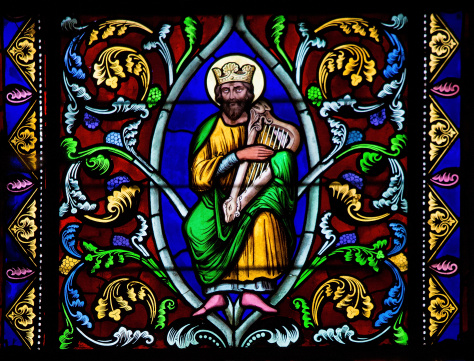
King David

2 Samuel 6:1-5, 13-19 (6:14) – July 14, 2024

            The wise theologian (and humorist) Erma Bombeck described an experience she had years ago in church. “A row or two in front of her sat a mother with a normal five-year-old boy, which means, he couldn’t sit still. As he squirmed and looked over the pew at those behind him, he was smiling. Then Erma heard the mother sternly whisper, “Stop smiling! Don’t you know that we’re in church?” [1]

            Our Bible reading this morning talks about how a large crowd behaved when they were at worship, including their leader, their King David. How different would this reading be if God’s people decided to be all stern, and stiff, and poker-faced when they came to worship? Can you imagine a stern, stiff, solemn service at this time? Or, is this joyful, musical, dance-filled procession from 2 Samuel pleasing to the Lord? Which service could you see yourself in?

            Let us listen again to a part of this reading: “David and all the Israelites were dancing and singing with all their might to honor the Lord. They were playing harps, lyres, drums, rattles, and cymbals. 15 And so [David] and all the Israelites took the Covenant Box up to Jerusalem with shouts of joy and the sound of trumpets.

            I cannot even begin to imagine the joy and exuberance of this procession! But, why so much excitement? For that, we will need to go back several chapters. Some while before, the enemy Philistines captured the Ark of the Covenant, God’s Covenant Box, and brought it back to their territory. Except, things did not go well for them. Their priests told the Philistine king that they needed to send the Covenant Box back to Israel! So, they did, and through some adventures King David and the people of Israel finally brought the Covenant Box back into Jerusalem.

            This was a rocky number of months, for the people of Israel! Losing the Covenant Box, the Ark of the Covenant, was devastating for Israel. “This was the most holy object God’s people had. The [people of Israel] had carried it as they walked through the wilderness and kept it in a special tent in the center of their town. Image how they felt when the Philistines captured it and carried it off to their country AND how they felt when they felt when they got it back.” [2]

This priceless Box was not only a beautiful, holy and precious artifact, this Covenant Box signified the very presence of God. Just imagine the rejoicing as King David and tens of thousands of Israelites danced, sang and played music as they brought the Ark into Jerusalem!

To the people of Israel, the Covenant Box was an important object, telling a story. The Ark of the Covenant “points to the larger narrative of God’s delivering the people from slavery and divine guidance into the promised land. It reminds the people of this salvation history and of the nearness of God’s Presence with them always. It provided continuity from the time of Moses to the present moment described in 2 Samuel 6.” [3]

In this chapter from 2 Samuel, God’s Covenant Box signaled God’s Presence among the people – all the people. What is more, this signified God’s promise to them! As you and I come together in our worship service today, what symbols, objects or stories help us to worship? Which of these help us to have “eyes to see and ears to hear” God’s Presence among us today? Which help us to praise and worship God, even to sing and dance before the Lord in thanksgiving?  

I know I preached on this reading three years ago, and I asked then, have you ever been to a worship service where people praised the Lord in all kinds of ways? More than singing hymns and worship songs. I mean, playing all kinds of instruments, dancing before God, and other kinds of artistic expressions.

Perhaps you have just been to worship services where there were piano and organ – and nothing else. Do you know that in a great many worship services across the world today drums are the chief instrument of praise? Drums and the human voice, the beat of human feet and clapping of hands make a joyful noise to the Lord across many cultures and in many countries today. Christians from those worship services might feel really strange if they came to a solemn service like ours where no one was actively praising God and dancing in the aisles!

We are left with a question: how do you and I respond to God’s holy Presence? We can see that King David and thousands of his people danced before the Lord “with all their might!” Pianos and organs are wonderful musical expressions, and so are praise bands and bluegrass bands and full orchestras and all kinds of percussion! Exuberant joy and dancing in the aisles is certainly a wonderful response to God! [4]

But, that is only one way. God may instead call us to quiet contemplation, or sometimes bold action. We are not required to only worship God in church buildings! No, God can be worshiped in the mountains, on the beach, or in a park. And, sometimes things can be new and different for each of us, to allow our hearts to worship in new and different ways.  

Today we can connect to God’s Presence in ways that are significant and touch the heart and soul, that are meaningful to each of us – and celebrate others for connecting in ways that are meaningful and soulful to each of them! Whether dancing and leaping, praising in loud voices, praying quietly, singing hymns and songs, drawing and painting, making banners or wall hangings. We humans have a multitude of ways to come before our God!

How does God respond to all these different types of worship, whether quiet and solemn, or joy-filled and exuberant? I go back to Carolyn Brown’s excellent commentary where she mentions the children’s tune “Hokey Pokey” “to explore the truth that we have to put more than just our left hand or our right foot in [to worship]. We must put our whole selves into worship, life, prayer, everything.[5]

 Sometimes these simple, straight-forward ways are the best ways. Put our whole selves into worship, life, prayer, everything. That’s how to honor, praise and enjoy God the best.

And, the Lord is so pleased when God’s people come together to worship! Praise the Lord!

@chaplaineliza

(Suggestion: visit me at my other blogs: matterofprayer: A Year of Everyday Prayers. and  A Year of Being Kind . Thanks!


[1] https://bible.org/seriespage/lesson-7-worship-joyful-celebration-2-samuel-6

[2] http://worshipingwithchildren.blogspot.com/2015/06/year-b-proper-10-15th-sunday-in.html

[3] https://www.workingpreacher.org/commentaries/revised-common-lectionary/ordinary-15-2/commentary-on-2-samuel-61-5-12b-19

[4] https://www.workingpreacher.org/commentaries/revised-common-lectionary/ordinary-15-2/commentary-on-2-samuel-61-5-12b-19

[5] http://worshipingwithchildren.blogspot.com/2015/06/year-b-proper-10-15th-sunday-in.html

Unknown's avatar

Unfailing Love and Faithfulness!

“Unfailing Love and Faithfulness!”

Psalm 138:1-8 (138:2) – June 9, 2024 

Individualism certainly is the end-all and be-all of the modern mindset. The rugged individual is presented to us in television commercials as a rugged adventurer, or someone hiking or skiing or sailing on their own. Whatever they’re involved in, they are grabbing all the gusto they can! Some people do indeed reject the offer of any help, for any number of reasons. “I can do it, myself!” Is that statement something that sounds familiar to you? And, perhaps to me, too?

Our psalmist is certainly not an individualist. This modern mindset is just not applicable here in the Biblical mindset. In Psalm 138, our psalmist (most probably King David) is clearly thankful and grateful that he has such support from a mighty, caring God! Just from looking at one verse from this psalm, we can see David’s loving gratitude! “Though I walk in the midst of trouble, you preserve my life. You stretch out your hand against the anger of my foes; with your right hand you save me.”

When individuals or loners are out there, all by themselves, they can run into some trouble. Our psalmist calls it “a day of trouble,” in fact! Really tough times. Have we ever kit times of trouble, when things just did not go the right way? I am not sure what kind of “day of trouble” you may have had, or even still be going through a “day of trouble” right now. All kinds of things could be going on. Physical illness, spiritual struggle, financial peril, military threat. All of these times are legitimate times of crisis! [1]

King David had some real times of struggle, and more than a few times of crisis, too! We get a very personal viewpoint on his struggles, from his intensely personal psalms, too. He does not pull any punches here, either. Except – Psalm 138 is a retrospective psalm. He states that he has indeed been through a “day of trouble,” but that day is past. David is not specific here about whatever crisis he was thinking of.

And, that is the point of this psalm. Our singer says, “On the day I called, you answered me.” What a wonderful statement! We can see from these very personal psalms, that when David came up against a time of crisis or despair, time after time he came before the Lord in prayer. Because – times of crisis are also times of concerted prayer!

Is that how things are for you, and for me? Do we come before God in prayer when we are in deep distress? Or, do we try to “tough” it through, all by ourselves?

Let’s think a bit more deeply about today’s situation. Or perhaps, it wasn’t today. But, recently. You were in a tight spot. Something awful had happened, and you just didn’t know how you were going to pull through. It may have been a health crisis, or a financial situation, or even a natural disaster. Maybe even a flood in your basement! (That counts, too!)

I don’t know about you, but when things like that happen, I can feel all alone. All by myself. Even if I have others in my family nearby, sometimes they are just not available to help out, either. Let me tell you – Psalm 138 is a wonderful reminder that God will be there for us, when we are in distress! Verse 3 tells us, “When I called, You answered me!”  

Some people have lots of friends! Fair-weather friends, that is. They are friendly enough when the sun is shining and the road ahead is straight with no curves or bumps. But, good friends? True-blue friends? Those kinds of friends are hard to find. “A good friend is a treasure, for he or she will stand by you through the tough times, even from a long distance. This is the kind of person that will support you and help you throughout life.” [2]

Yes, it’s a blessing to have true-blue friends like this, sitting by our sides, journeying with us, running to the grocery store or throwing in a load of laundry for us when we need it. We all need a good friend with work boots on, sometimes! Commentator Larry Broding says, “God is this kind of friend. Our Creator not only made us and sustains us, he actively works in our lives for our ultimate good. God is present through times of blessing and tragedy. God deserves our thanks and praise for his constant care.” [3]

In Psalm 135, the psalm writer says, “great is the LORD, our God, our Lord, more than all the gods.” I do not know if you caught this expression, but in this particular psalm, he says, “I will praise you, Lord, with all my heart; before the “gods” I will sing your praise.” In both instances, our psalmist mentions other gods. Because, at the time these psalms or songs were written, there were lots of gods! Local gods, tribal gods, gods of the harvest, gods of war, gods of hearth and home. Lots of gods! But, right here, King David praises the LORD above every other god – with a small “g!” Our God, the LORD who made heaven and earth, is far, far greater than any other god who comes up against our God, the LORD!

Finally, King David punctuates this psalm with “unfailing love and faithfulness!” I would be grateful to any friend who not only comes alongside of me when I need a hand, but God is stated to be a good-hearted, loving and faithful friend by none other than King David!

 “The two terms — steadfast love (Hebrew, hesed) and faithfulness (Hebrew, ’emet) — describe God’s character. It is a character that is trustworthy, which means that the promises God makes can be trusted.” [4] This is what David says in this psalm. This is his heartfelt affirmation of his God. If we looked at all the psalms, and boiled down the witness of this marvelous book to one phrase, it would be this: The Lord is faithful.  

I started out today by talking about individualism, being captain of her own soul, or master of his own fate. “Biblical faith starts with admitting our own weakness — and of accepting the gracious mercy and fidelity of the Savior who comes among us to serve rather than to be served. The psalm ends with a request for continued help: ‘Do not forsake the work of your hands.’ Each of us is the work of God’s hands. And to be a follower of the Lord means to know that we cannot and need not do it all on our own.” [5]

Thank God for that! We are never alone, and that’s a promise. A promise from King David, and a promise from our loving God. Alleluia, amen!

@chaplaineliza

(Suggestion: visit me at my other blogs: matterofprayer: A Year of Everyday Prayers. and  A Year of Being Kind . Thanks!


[1] https://www.workingpreacher.org/commentaries/revised-common-lectionary/ordinary-21/commentary-on-psalm-1381-8-2

[2] http://www.word-sunday.com/Files/Psalms/138.html

Thank You, God, For Standing By Me,” Larry Broding’s Word-Sunday.Com

[3] Ibid.

[4] https://www.workingpreacher.org/commentaries/revised-common-lectionary/ordinary-21/commentary-on-psalm-1381-8-2

[5] Ibid.

Unknown's avatar

Fearfully and Wonderfully Made!

“Fearfully and Wonderfully Made!”

Psalm 139:13-18 (Psalm 139:14) – June 2, 2024

            As some of you know, I am a new grandma. My lovely twin grandchildren were born recently, much-awaited, and very welcome to their family and their parents. I was praying for the twins each day while my daughter was pregnant, and now that they are here, growing and maturing, and being their own wonderful selves, of course I continue to pray for them.

            I have always felt a real connection with Psalm 139, but never more so than when I – with their parents – was awaiting the birth of my lovely grandchildren. This psalm was written by King David, and shows his trust and confidence that God is indeed with him, all the time. And, indeed, with all of us.

            As Dr. Streaty-Wimberly says in her commentary on this psalm, the 139th Psalm reveals an account of what may be called “an encounter of the closest kind” with God. What a statement! And, what a word-picture David paints here.

“The psalm details an intimate conversation with God in which the psalmist is speaker and God is listener. The psalmist focuses quickly in verses1-2 on the word, “know(n).” This key reference points to the psalmist’s relating to God the experience of not simply being recognized and acknowledged by God, but of belonging inseparably to God.[1]

Along with the rest of my family, I eagerly awaited the arrival of my grandchildren! And, I find my wonder and amazement echoed by so many friends and acquaintances as they welcome newborns into their larger families, too.

One of the commentators I read has an extended example of her joy and wonder at welcoming her nephew. “My nephew was born on the day I started working on this commentary [about Psalm 139]. When the picture of Mason James arrived, my initial thoughts were, “There you are. What were you doing in there all of these months?” And then I read: For it was you who formed my inward parts;you knit me together in my mother’s womb (vs. 13).

“How did you go from a hoped-for dream of your parents to flesh and blood, bones, muscles and those long, skinny fingers and those cute ears?” I wondered. Then I read: My frame was not hidden from you, when I was being made in secret, intricately woven in the depths of the earth. Your eyes beheld my unformed substance (vs. 15).

“I wanted to shout, “Mason, you are perfect.” Yet this acclamation paled in comparison to his parents’ “You are perfect!” which pales in comparison to God’s “You are PERFECT!”

My hope for this little guy on his first day, his birth day, was that one day he would realize and pray with the psalmist, I praise you, for I am fearfully and wonderfully made (vs. 14). [2]

            What a marvelous addition to this commentary on such a rich, praise-worthy psalm! Dr. Hannan usually writes in a more academic style, but enriched and awed by the birth of her nephew, this particular commentary is unusually personal. And, her prayer is heartfelt.

            Sure, if we go to biology and look at the growth of a bunch of cells inside a female mammal, we can still be intellectually amazed by the intricacy of the growing being inside of the uterus. However, when we take into consideration the reference to “being ‘knit together’ in the mother’s womb, the psalmist seems to describe God as a weaver who engages on the highly intricate, and artistic, endeavor of creating a unique and wonderfully made living being.” [3]

            How marvelous that each of us – whether parents, grandparents, siblings, great-aunts and -uncles, or dear friends of the parents – can stand by and observe these miracles that come into the world each day. What a privilege to welcome one of these little ones, and nurture and help it grow!

            Now, we need to turn from beloved babies, entering life as very much wanted members of the family (and of God’s family), and consider another sad possibility. Sadly, there are many, many babies and children who have unhappy childhoods, are not valued members of a family, and even know that they are not welcome in their homes – from a young age. This is heart-breaking, and happens much more often in this world, for any number of sad reasons.

            Rabbi Sharon Brous talks about a commentary written in the ninth century that “declares that every person is accompanied, at all times, by a procession of angels crying out, “Make way, for an image of the Holy One is approaching!” Every person, like royalty… How do we keep missing all those angels, with their trumpets and proclamations, desperate to rouse us to the dignity of every human being?” [4]

            What an earth-shaking concept! This is true not only for cute, adorable newborn babies, but also for all children. For tweens and teenagers (even if we are irked or frustrated with them). This is true for each adult, whoever and wherever they may be on their journey through life. And, this is true as well for each sick person and each senior I may encounter as a chaplain in my day-to-day travels to skilled nursing facilities and extended care centers.

            Rabbi Brous continues to reflect that this attitude “heightens the amazing and magnificent artistry of God’s creation. Indeed, this recognition becomes reason for praising God and affirming the self’s ultimate worth in the sight of God (v. 14).” [5]

            Indeed, we are all – each of us, every person in the world – fearfully and wonderfully made! Each person is accompanied, at all times, by a procession of angels crying out, “Make way, for an image of the Holy One is approaching!” That means every single person, in beautiful diversity, regardless of color, creed, cultural difference, language or nation of origin.

            We are celebrating our graduates today! Let us celebrate each other, too. In the words of the lovely children’s hymn “All things bright and beautiful, all creatures great and small, All things wise and wonderful, the Lord God made them all.” [6] God made you, me, and every single person in the world – all fearfully and wonderfully made. Alleluia, amen!


[1] http://www.theafricanamericanlectionary.org/PopupLectionaryReading.asp?LRID=27

[2] https://www.workingpreacher.org/commentaries/revised-common-lectionary/second-sunday-after-epiphany-2/commentary-on-psalm-1391-6-13-18-3

[3] http://www.theafricanamericanlectionary.org/PopupLectionaryReading.asp?LRID=27

[4] Brous, Sharon, The Amen Effect: Ancient Wisdom to Mend Our Broken Hearts and World (New York: Avery, 2024), 53–54,

[5] Ibid.

[6] https://hymnary.org/text/each_little_flower_that_opens

@chaplaineliza

(Suggestion: visit me at my other blogs: matterofprayer: A Year of Everyday Prayers. and  A Year of Being Kind . Thanks!

Unknown's avatar

God, Our Light

“God, Our Light”

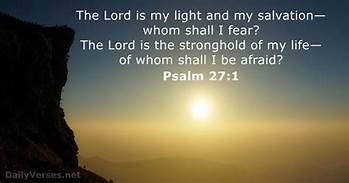
Psalm 27:1-10 (27:1) – March 13, 2022

            When I set the theme for the Second Sunday in Lent about three weeks ago, I had no idea that there would be an actual war being waged, right now. The Russian army is attacking Ukraine as we speak, and all the horrors of modern-day warfare are a reality, all across the country of Ukraine. Psalm 27 means so much to many of the Ukrainian people right now.

            As this congregation highlights another petition of the Lord’s Prayer, “Deliver us from evil,” we are brought up sharply by the traumatic situation in our own world. We can turn on war news, from both national as well as international media. Videos and photos are – sadly – readily accessible, and the news is heart-rending. No matter which side you are on.

            Wasn’t this the case when King David wrote this psalm, so many centuries before?

            Wars, rumors of wars, battles, skirmishes, fighting – and King David writes this song of praise to the Lord, to thank the Lord for deliverance from evil.

            King David was certainly no stranger to fighting and to war. After King Saul ran David off into the Judean wilderness (a harsh and unhospitable place, the same place where Jesus went after His baptism), David stayed away from Jerusalem for years. Even though David was rightfully anointed by the prophet Samuel as king of Israel, David would not lift his hand against King Saul. At the same time, David was essentially a guerilla leader of 600 battle-hardened fighters, for years. They also would do mercenary fighting, while on the run from King Saul and the troops of Israel. And, that was just the beginning of David being a fighter.

            As we see from both 1 and 2 Samuel, David knew what he was talking about when he wrote these psalms about the Lord delivering him and his men from evil – from war, and from fighting. David was on the run from King Saul for over ten years. And, he was no coward! However, he thanked God that God watched over him and kept him from evil – kept him from being overtaken by the troops of King Saul, as well as foreign troops he was fighting against.

            You and I are not fighting battles against opposing armies, but we still can come to God, praying this psalm for our safety. You and I might consider evil to be bad stuff. Bullies who intimidate and harass. Robbers who steal purses or take cell phones or wallets. Car-jackings, vindictive anger, abusive behavior, vandals who destroy property. All of these are evil, and we can pray for God to protect us from all of these, plus many more.

            As our commentator Beth Tanner says, “With all of the violence in our world, Christians are faced almost daily with a decision to live in fear, or despite their fear, to trust in God and God’s promises.“ [1] “Deliver us from evil” is a powerful prayer! A prayer of trust and assurance in God’s provision, in God’s ability to keep us safe, whatever our situation.

            Yet, the world has had many, many wars through the centuries. Many, many periods of fighting, ethnic strife, border conflicts, and even genocides. Horrific atrocities committed, and whole societies, entire countries stricken by death and destruction. How can anyone lift up their hearts to God in such catastrophic times?

We know, too, God wants us to be hospitable, even in such times. “To choose to remain true to God’s principles of hospitality feels frightening as well. Terrorists and Refugees come from the same places. Gun violence comes out of nowhere and even those places we considered safe are safe no longer. Fear threatens to defeat the gifts of trust and hospitality.” [2]

            It is so interesting that King David seems to waver back and forth, from the sure certainty of God’s saving power to fear of some kind of situation where David’s enemies are trying to “devour his flesh,” as Psalm 27:2 tells us. Whatever the specific problems or fighting happens to be, we suspect God may turn away. Don’t you, sometimes? Even if you are usually firm in faith and fervent in prayer, sometimes…stuff happens. People fail us. Situations baffle us. How can we cope? What is there to do? God, help us!  Sometimes we need to step back, take a deep breath, and think of difficult things as a child might. The best child’s translation of this part of the prayer is “Lord, save us from all the bad stuff that happens.” [3]

And yet,” right in the middle of his expressions of fear, the Psalmist also declares his confident faith that God’s presence is like a light that keeps him safe.” [4] Our Scripture reading today, Psalm 27, remains as a beacon. This encourages us to come to God even as we find ourselves afraid. Even, afraid out of our wits.

We might find ourselves praying the Lord’s Prayer, and saying it by rote, without even concentrating on the words as they come out of our mouths. Yet – “Lent is a time to ask the deep questions of our faith. We can repeat the fears of the past, or trust a new ending to God. It is never easy, but it is the call of God on our lives. This psalm invites us to believe again that our faith in God will never desert us, no matter what happens. Life without fear is not possible, but faith can call us to live into God’s will for our life instead of reducing our lives because of our fears and insecurities.” [5]

Yes, “deliver us from evil” is a powerful prayer, indeed. Yes, we can be afraid, and yes, God can alleviate our fears. If we want to dispel the darkness of fear, we can affirm that God is indeed our light and our salvation. We can all say amen to that!

@chaplaineliza

(Suggestion: visit me at my other blogs: matterofprayer: A Year of Everyday Prayers. #PursuePEACE – and  A Year of Being Kind . Thanks!


[1]   https://www.workingpreacher.org/commentaries/revised-common-lectionary/second-sunday-in-lent-3/commentary-on-psalm-27-3

[2]   Ibid.

[3]  http://worshipingwithchildren.blogspot.com/2016/01/year-c-second-sunday-in-lent-february.html

[4]   https://thewakingdreamer.blogspot.com/2014/01/what-do-we-have-to-fear.html

“What Do We Have To Fear?” Alan Brehm, The Waking Dreamer, 2016.

[5]   https://www.workingpreacher.org/commentaries/revised-common-lectionary/second-sunday-in-lent-3/commentary-on-psalm-27-3

Unknown's avatar

Finding God’s Majestic Name!

“Finding God’s Majestic Name!”

Psalm 8:1-9 (8:1) – October 3, 2021

            Have you ever been far from the city lights, at night? Have you ever looked up into the sky, and seen countless stars spread out, twinkling high above? I have. When I went to the Upper Peninsula of Michigan, and again in rural central Indiana, the starry skies were absolutely breathtaking. Amazing. Majestic, as the psalmist King David said in our Psalm reading today.

            Listen again: “Lord, our Lord, how majestic is your name in all the earth! You have set your glory in the heavens.” I can just imagine King David sitting far away from the lights of the city of Jerusalem, perhaps contemplating the stars as he saw them in his youth, when he looked after his father’s sheep, or as a younger adult, a leader of men in the wilderness of Judah,. David certainly had many opportunities to gaze up into the night skies and see the breathtaking stars.

            I needed to take two science classes in college, for my undergraduate degree. I was happy to take a biology course, and I enjoyed it! But, I wanted to take something different for my second science course. A quirky but popular teacher also taught science – he taught astronomy! I don’t remember many facts from that class, but I remember him. I remember how excited he was about his subject, and how much he tried to make the course material interesting and accessible to his students. I have always had a warm spot inside for stars, for star-gazing and the moon and other planets, both before and ever since.

            When King David wrote this psalm, he used words like “majestic” and “awesome.” Can you remember when everything was “awesome?” “In the late 1980’s and early 1990’s, the word “awesome” was overused and abused. Everything was “awesome.” Events and people were awesome. God was awesome.” [1] Now, some years later, I am relieved to find this word is not so misused. However, God has not changed. God certainly is still truly awesome. Majestic, too.

            We can see King David had great awe and godly fear for the Lord his God. Just look at the language he uses! The opening verses of Psalm 8 has royal language all over the place. The very words “Lord” and “Sovereign” are used in conversation with a king in other places in Scripture, too. We can see that usage from both 1 and 2 Kings. These books of the Hebrew Scriptures use these expressions interchangeably for the king of Judah and the king of Israel.  

            When King David praises the majesty of God’s name, this also points to a royal understanding of God. The territory over which God reigns is not a small, limited region, but instead “all the earth.” [2] Yet, Dr. Elizabeth Webb makes a point of saying that even though David leads off this psalm with such huge, overarching thoughts, he then turns to humanity. Yes, God is Sovereign! Majestic! Awesome! The ultimate Godly authority! But, then, the earth is full of mere people. Frail humanity. Here one minute, and gone the next.

            “When I consider your heavens, the work of your fingers, the moon and the stars, which you have set in place, what is humankind that you are mindful of them, human beings that you care for them?” When we consider limited humans on a scale like that, with a cosmic Sovereign as vast as the heavens, how miniscule are we? How frail and short-lasting?

“Psalm 144:3-4, for example, begins with a similar question: “O Lord, what are human beings that you regard them, or mortals that you think of them?” In Psalm 144 it is human frailty that makes God’s interest in us almost incomprehensible: “They are like a breath; their days are like a passing shadow.” What concern could God possibly have with frail beings that are here one moment, gone the next?” [3] Truly something to wonder about. I have thought about it, from time to time. How can God concern Godself with me? With my trials or troubles, with God being so huge?

In Psalm 8, what the writer finds so wondrous is that the very God who established the order of the heavens actually cares for human beings, for us, for you and me. Listen to verse 4 again: “what is humankind that you are mindful of them, human beings that you care for them?”

If I did not believe that God was loving and caring, full of chesed, full of magnificent lovingkindness, I might really give up. Why should I even try to communicate with a faraway, distant, uncaring God, who would just as soon squash me like a bug? That’s even considering whether that cold and distant God even saw me crawling around on the earth?

Except, we know that God is not that way! Instead, our Lord is full of the attributes grace, mercy, love and chesed, shown in the death and resurrection of Jesus Christ.

We are here in church today to celebrate World Communion Sunday, a day when the Church worldwide celebrates the unity of the blessed Eucharist, that Lord’s Supper that believers all over the world celebrate in a variety of different languages, but proclaiming the same Lord. Thank God our Lord is a loving and caring God. Thank God our Lord is full of that magnificent, majestic attribute chesed, full of lovingkindness.

Here we are: frail, earthly human beings. Our God truly welcomes all of us as God’s children. Our God welcomes us at the Lord’s Table, especially on this World Communion Sunday. Can you praise the name of the Lord? Can you bless God for the profound, awesome gifts you have been given?   

“O LORD, our LORD, your majestic name fills the earth. Your glory is higher than
the heavens…!
We are blessed to be able to offer God our worship and praise!
In speechless and awed worship, we marvel at God’s holy presence with us,
as we contemplate all that God has given to us! We are all so very blessed! Amen. [4]

@chaplaineliza

(Suggestion: visit me at my other blogs: matterofprayer: A Year of Everyday Prayers. #PursuePEACE – and  A Year of Being Kind . Thanks!


[1] http://www.word-sunday.com/Files/Psalms/8.html

“Our God Is Awesome!” Larry Broding’s Word-Sunday.Com: A Lectionary Resource for Catholics.

[2] https://www.workingpreacher.org/commentaries/revised-common-lectionary/the-holy-trinity/commentary-on-psalm-8-10

[3] Ibid.

[4] http://www.thetimelesspsalms.net/w_resources/pentecost1a_2017.htm

The Timeless Psalms: Psalm 8, Joan Stott, prayers and meditations based on lectionary Psalms, 2017.

Unknown's avatar

Make Us Clean!

“Make Us Clean!”

Psalm 51:1-12 (51:2) – February 17, 2021

            The marvel and puzzle of adults with smudges on their foreheads – on purpose! – is a wonder to many children. Why would adults have dirt or ash crosses put on their foreheads? And why wouldn’t they wash it off to make it all clean?

            It takes a while for young people to learn, “yes, I am a sinner, too.” Doesn’t it? Sometimes it is difficult for grown-ups to state plainly that they sin, too. They fall short of what God would have for them in this life. They mess up the clean sheet of paper. Isn’t that what sin is? Falling short, missing the mark, washing away the guilt and stains of sin. However we describe it, we know very well when sin happens. King David knew when he was dirty on the inside from sin, too.

            It does not matter whether King David was remembering the women of the village where he grew up, washing, scrubbing and wringing out their families’ clothing in tubs outside their homes, or whether we think of the agitator on those automatic wringer washers of yesterday, we all need to be cleansed from the wrongs we commit, on a regular basis.

            Today is the first day of Lent, that penitential period of forty days before Easter when the Church all across the world begins to journey with Jesus towards the Cross. Many people use external things like food or drink or certain practices to show their observance of Lent. This is a good thing, and I do not want to cause anyone to rethink their Lenten practices. However, King David here in Psalm 51 had something far more radical in mind. He wanted more than just his exterior cleaned. He wanted his insides cleaned up, too. Cleaned, and renewed!

            Ash Wednesday is the day in the liturgical year when we concentrate on renewal—the messing-up we have done, on the inside as well as the outside. Whether large or small, we can all be cleansed and renewed deep down on our insides. The psalmist uses that most intimate of all things, first-person pronouns. “Have mercy upon me,” “blot out my transgressions,” “wash me thoroughly from my iniquity,” “I know my transgressions,” and “my sin is ever before me.”

“We are all first marked with the cross using water (and sometimes oil) at our baptisms.  At that time to be marked with the cross is a wonderful thing.  We are identified as the beloved children of God.  On Ash Wednesday we are marked with the cross using ashes and the words, “remember you are dust.”  The ashes and words remind us that we are not so wonderful.  In fact, we are all sinners.  The sign is not an X, marking us as [mistakes or] hopeless rejects, but a cross reminding us that God loves and forgives us, sinners though we be.” [1]  

We are not perfect believers in God. But, God says that is okay. God loves us just the same. This Ash Wednesday service is a special time to gather together, and to become aware of our turning-away from God. This understanding of the messing-up we have done and are continuing to do—prepares us to receive the forgiveness and joy of salvation that comes through Jesus Christ. And the cross of ashes on each forehead is a reminder of that blessed forgiveness in each one of our lives. Praise God, we can be restored to a close relationship with God.

Hear the Good News! In Jesus Christ, we all are forgiven! Amen.


[1] http://worshipingwithchildren.blogspot.com/2015/01/years-abc-ash-wednesday-february-18-2015.html

@chaplaineliza

(Suggestion: visit me at my other blogs: matterofprayer: A Year of Everyday Prayers. #PursuePEACE – and  A Year of Being Kind . Thanks!