Unknown's avatar

Peace for Those Who Wait

“Peace for Those Who Wait”

            Waiting. I can remember waiting while being pregnant. Waiting for the weeks to pass. Waiting for another prenatal visit. Especially waiting during that last month. And, waiting for the labor pains finally to kick in and to get going, for the baby to finally be born. (Each of my pregnancies involved long labors.)

            I can relate to our Gospel reading from Luke chapter 1 today! Waiting! Waiting for something huge to happen. Waiting for babies to be born.

Except, Mary found herself in the early months of pregnancy without the protection of a husband or partner. I have a feeling she and Joseph were having continuing dialogue about her being pregnant, and not by Joseph. That must have been awkward, to say the least! We find that Mary traveled and went to her older cousin Elizabeth’s house, some distance away, for several months. Elizabeth’s home must have been a sanctuary in an unpeaceful time for Mary, while she was in a time of waiting.

Let us look at the current day, and focus on the United States. Things today, situations here and now are certainly not peaceful. We are looking at the second Sunday in Advent, and the second candle on the Advent wreath signifies the candle of Peace. Can you and I possibly find peace in an unpeaceful world?

Is there a way to look for God’s peace in a turbulent and tumultuous time?

As I said last week, we are well used to seeing Mary as a sweet, calm, quiet, almost docile follower of God’s will for her life. Last week, I brought up the fact that Mary, our Mary that Dr. Luke tells us about, was also a prophet! As a prophet, she brought hope to the world. Was it possible that Mary also brought peace to an unpeaceful world?  

This prophetic role, this insight is a new way of looking at Mary for me. New for me, and I hope enlightening to you, too. As we consider the call of the prophets in the Hebrew Scriptures, and consider the call of Mary by the angel Gabriel, we see all the familiar, classic steps: we see God’s initial call to Mary, God’s task, Mary the prophet’s objection, God’s reassurance, and Mary the prophet’s acceptance of call. [1]

All of these are found in Mary’s conversation with the angel Gabriel in the account of the Annunciation, found in Luke chapter 1. I was struck by – you might say, gobsmacked by – the clarity of all those classic steps of the prophet’s call displayed, and I had never seen it before. Sure, I had approached this insight in years past, even preaching about how Mary was a radical by singing about such radical ideas.

Even though I have been well acquainted with the first chapter of Luke for decades, the further concept of Mary as God’s chosen prophet never fully clicked with me. Until now.

As we go on to look at the Canticle that Mary sings, I want to bring before us the earth-shattering idea that “Luke portrays her in a startling role: one that shakes up the way we’ve been brought up to think of her and invites us to stop observing her and start imitating her.” [2]

Can you listen with open ears to Mary sing of God who “has brought down rulers from their thrones but has lifted up the humble,” and “has filled the hungry with good things but has sent the rich away empty.” This is a classic story (or song) about the “haves” and the “have-nots,” and we can guess who Mary associates herself with! The Jewish people are definitely downtrodden; the Roman empire certainly has them under their collective boot heel. Nevertheless, Mary’s prophetic notes of joy ring out for all to hear in the Magnificat!

Remember, Mary’s song, giving glory, magnifying God, is also clearly a radical protest song. As she sings about the injustice not only in her hometown, but within the whole occupied Jewish nation, any peace but a forced “peace” was the furthest thing from the minds of the Roman occupiers. Yet, “the new world Mary sings about here isn’t elusive or unquantifiable at all. The hope she holds onto is one passed on to her from her ancestors: from Hannah, who sang this hymn of reversal and revolution in the Hebrew scriptures, to the Psalmist, who echoed praise to God for raising the poor from the dust and lifting the needy out of their desperation.” [3]

One of my favorite interpretations of the Canticle Mary sings, the Magnificat, is a newer song written by artist Rory Cooney, set to a traditional Irish tune called “Star of the County Down.” It is presented as a story-song with refrain: “Though the nations rage from age to age, we remember who holds us fast: God’s mercy must deliver us from the conqueror’s crushing grasp. This saving word that our forebears heard is the promise which holds us bound, ‘til the spear and rod can be crushed by God, who is turning the world around.” [4]

Can you believe how radical, how revolutionary an idea this was (and is)? Especially to a large group of people who have been poor, downtrodden, and left on the outskirts for generations, perhaps for centuries? What good news – even marvelous news – this would be to such a group of people, to know that God not only loves them, but God cares about each of them, and is actively coming to their defense, to fill their stomachs and right their wrongs!

Here in the United States, right now, we have a large segment of the population becoming fearful and anxious. Not only about the economic situation for individuals and families, but also the current political situation. The roaming of ICE agents and Department of Homeland Security walking freely, touchy and eager to display their confounding and overwhelming strength, their power over.

How striking and similar is this to the occupying Roman army in first century Palestine? Some striking and sadly similar parallels between the first and twenty-first centuries. In both cases, God’s love was and is displayed, overcoming worldly power.

As the Canticle of the Turning says in the last verse, “Though the nations rage from age to age, we remember who holds us fast: God’s mercy must deliver us from the conqueror’s crushing grasp. This saving word that our forbears heard is the promise that holds us bound, ‘Til the spear and rod be crushed by God, who is turning the world around.” [5]

  Let those with ears to hear, hear the words of the prophet Mary. Alleluia, amen.

@chaplaineliza

(Suggestion: visit me at my other blogs: matterofprayer: A Year of Everyday Prayers. #PursuePEACE – and  A Year of Being Kind . Thanks!)


[1] http://www.patheos.com/progressive-christian/mary-reluctant-prophet-alyce-mckenzie-12-17-2012.html

[2] Ibid.

[3] The Do Not Be Afraid Advent Devotional – © 2022 Illustrated Ministry, LLC

[4] Cooney, Rory, “Canticle of the Turning,” (GIA Pulications, Inc. Chicago, IL: 1990)

[5] Ibid.
Unknown's avatar

Have Mercy on Us!

“Have Mercy on Us!”

Luke 17:11-19 (17:13) – October 12, 2025

            Ever been to the dentist, or the doctor, with a health complaint? Of course, you have! You all—we all have, at one time or another. Thank goodness, we live here, in the suburbs of Chicago. It is fairly easy to get good—or even, excellent medical and dental care, as opposed to the rural spaces in the United States, where health care is not as accessible. And, can you imagine outside of this country?

            Imagine living in the first century of the Common Era. In Jesus’ day, doctors were rare even in mid- to large-sized towns. When people had health complaints, there were some homeopathic remedies, true. And local healers, people who were good with herbs, poultices, and ointments. But for continuing problems or chronic diseases? There weren’t many options for any other kind of health care.

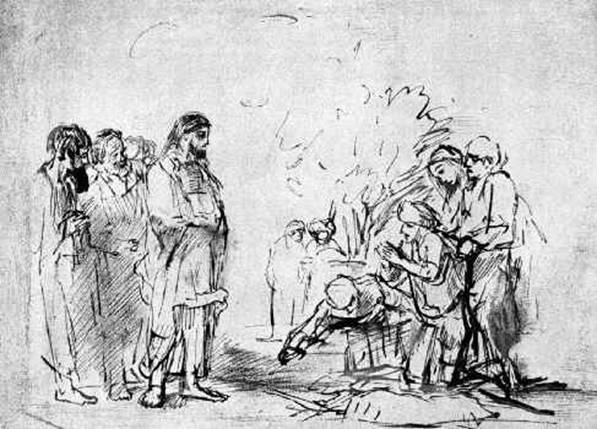
            Let us set the scene. Dr. Luke tells us, “Now on his way to Jerusalem, Jesus traveled along the border between Samaria and Galilee. 12 As he was going into a village, ten men who had leprosy met him.”  We have a situation with some chronically ill people. These people had skin diseases. Commonly referred to as leprosy, these skin afflictions could be anything from severe eczema to Hansen’s disease, what we now know today as leprosy. And any disfiguring skin problem, in between.chronic

            In Jesus’ day, there were priests and Levites stationed all throughout the land of Israel. These official people were not only on duty for the Sabbath day, for religious observance, but they had several other important duties under the law of Moses. Did you know that the priests and Levites could make rulings on whether a person was too disfigured, too blemished to live in close quarters with the rest of the townspeople?  True facts!

            This was an early example of a health code. The priests and Levites were among the first health inspectors! Because some of these skin diseases were contagious, and so the people who had them would contaminate others, the priests and Levites would have to exile them. Kick these former upstanding people out of town. Out of society, and isolated. Marginalized. Exiled. Called ‘unclean.’ Living far away from everyone and everything they once held dear. Ringing bells to warn others not to come near them. That was the situation for these ten lepers we read about in Luke’s Gospel today. What a lonely existence for these poor people.

            The Rabbi Jesus was on His way to Jerusalem with His disciples when he met these ten men, on the border between Galilee and Samaria. This is yet another time that our Gospel writers tell us that “Jesus is again in a border region, again crossing boundaries and wandering where he probably shouldn’t go, and again healing people with whom he has no business interacting.” [1] Commentator Dr. Davis Lose reminds us that Jesus is again doing something out of the ordinary. In fact, extraordinary!  

            Let us consider that this unconventional Rabbi Jesus is not only crossing geographical boundaries and wandering – traveling where “good, rule-keeping Jews” just don’t go. But, Jesus is also interacting with these ten lepers! These men obviously kept at a distance from all other “normal” or “regular” people, except I am certain they had heard of this miracle-working Rabbi! Can’t you just hear the anguish and the hoping-against-hope in their voices as they cry out, “Jesus, Master, have mercy upon us!”  

            Jesus’ response is simple. Straight-forward. “Go, show yourselves to the priests. I can just imagine these ten men, told by Jesus to go and show themselves to the priests in town. Except, Jesus told them to go before He had done the act of visibly healing them from their skin disease. They needed to act, they needed to start to go before they saw what had happened.

            Have you ever needed to go on faith, and start an action, go on a trip, take a step without knowing for sure that God is right there with you? And, the whole idea of a borderland, an in-between place that is neither one place or the other. Doesn’t God meet us right there, before healing is completely complete?  [2]

That’s all Jesus says to them. The verb in Greek means ‘show, or point out something to someone.’ Remember, I said the priests were the health inspectors of that day? Can you understand these ten guys, isolated, banished, marginalized. And Jesus says, “Go, show yourselves to the priests.”

            Lo and behold, “as they went”—that is, in the going—“they were cleansed.” Do you understand? These poor, lonely people believed Jesus, had faith, and were healed as a result. We are not told exactly how they discovered it, but it probably didn’t take too long.

            One ex-leper, out of the original ten—one ex-leper comes back to thank Jesus. Glorifies God! Comes to Jesus and prostrates himself at His feet. Once the Samaritan realized he’d been healed, he couldn’t help but turn back and share his joy and thanksgiving with Jesus.

            Thanksgiving is like that. When it’s genuine, it’s spontaneous—you recognize you’ve been blessed and can’t help but share your joy through thanksgiving.

“Have you ever noticed just how powerful it is not only to receive blessing but also to name it and give thanks for it? Maybe you’re at dinner with family or friends, then you lean over to another, or maybe raise your glass in a toast, and say, “This is great. This time, this meal, you all. Thank you.” And in seeing and giving thanks, the original blessing is somehow multiplied. You’ve been blessed a second time.” [3]

The Samaritan knows he’s been given a gift and can’t help turning around to say something. In doing so, he’s given a second gift: He leaves his encounter with Jesus not only healed but also blessed in his own recognition of healing, blessed at being drawn into deeper relationship with the one he thanks, blessed at hearing himself commended for having great faith.

Imagine the huge difference that must have made in his life. That’s the way thanksgiving works—in giving thanks for gifts given to us, we are blessed again. We can all say alleluia, Thanks be to God!

@chaplaineliza

(Suggestion: visit me at my other blogs: matterofprayer: A Year of Everyday Prayers. #PursuePEACE – and  A Year of Being Kind . Thanks!


[1] https://www.workingpreacher.org/dear-working-preacher/second-blessing

[2] https://www.umcdiscipleship.org/worship-planning/choosing-faith/eighteenth-sunday-after-pentecost-year-c-lectionary-planning-notes/eighteenth-sunday-after-pentecost-year-c-small-groups

[3] https://www.workingpreacher.org/dear-working-preacher/second-blessing

Unknown's avatar

A Star and a Gift from God!

“A Star and a Gift from God!”

Matthew 2:1-12 (2:10) – January 5, 2025

I remember Christmases when I was very young. I was the youngest of six children, and we lived on the northwest side of Chicago. My father worked for the National Safety Council, which was a not-for-profit organization. He didn’t get paid a huge amount of money, so I remember Christmases when we children would not have a huge pile of presents under the Christmas tree, like the television commercials of today always seem to show. But, I do remember the happiness and joy of those Christmas mornings. Those are warm memories, all of us gathered around the tree, exchanging presents.

I’m sure we all could bring to mind a similar warm memory or two, regarding Christmas. Many of my memories do involve gifts. The Scripture passage just read mentions gifts, too. It’s from Matthew, Chapter 2, the traditional Epiphany narrative, when Magi from the East came to see the young child Jesus, bearing gifts.

Here we have some wise people—probably nobles who know a great deal about stars and constellations. They have been studying the heavens for years and years, as well as studying religious books and writings. Just as it says in the gospel record, a great sign (or star) rose in the sky, so these wise astrologers knew that something momentous was going to happen.

These wise people, or Magi, were not Jewish wise people, but instead were Gentiles. Non-Jews. “Could an unusual phenomenon in the night skies have caught the attention of some of them—interest in the stars was legendary in the region—and led them to set out to Jerusalem? That people of other lands and religions are drawn to Jesus, even as a child, is also significant: in Christ, God is speaking to the hearts and minds of all people.” [1]

The old saying is true, “If you want to go fast, go alone; but if you want to go far, go together.” These Magi traveled together, and supported one another. These wise people encouraged each other and (I suspect) spurred each other on to continue following that star. It is important to point out that they were on the lookout and knew which way to go—towards Jerusalem. And, eventually, they turned up at the palace, on King Herod’s doorstep.

God understood that these Magi made a careful study of the stars, and God sovereignly decided to display signs and wonders in the heavenly places at the time of the birth of Jesus. God reached these Magi where they were at. The wonderful thing is: God continues to reach out to people, no matter what is happening to them, no matter where they might happen to be.

But, let’s go back to these Wise people. No one is exactly sure about the number of Magi who arrived in Jerusalem so long ago. Church tradition tells us that the number was three. These were not just Magi, but also royalty of the East. Assuming they were at least minor royalty, these non-Jewish V.I.P.s show up at King Herod’s palace, and he was not pleased to see them.

Turning back to our Scripture reading, “After the Magi had heard the king, they went on their way, and the star they had seen when it rose went ahead of them until it stopped over the place where the child was. 10 When they saw the star, they were overjoyed. 11 On coming to the house, they saw the child with his mother Mary, and they bowed down and worshiped him. Then they opened their treasures and presented him with gifts of gold, frankincense and myrrh.”

            The Non-Jewish wise people who followed that star found what they were searching for. And, they were overjoyed, they worshipped, and then gave precious gifts.

What about that special star? Is it easy for us to get so distracted that we cannot even see the majesty and wonder of God’s creation? Do we get turned around and separated, all alone?

For that matter, do we get comments of direction from an unlikely source? Because, that is exactly what King Herod was: an unlikely source of direction. Do we get lost as we try to follow Jesus? Or, have you even found Him in the first place?

Matthew’s birth story centers around the Star. We have come to see this as the Star of Epiphany, the Light that has come into the world! We use Light to symbolize God. The Star of Wonder represents the Light of God! Just think of the Star at the top of many Christmas trees. This signifies the Star that the Magi followed – that same star we talk about today.

I have mentioned God’s Gift, and I have mentioned God’s Light. The Gift given to the world, and the Light that has come into the world. Epiphany is all about celebrating the light that has come into the world as the Baby Jesus, and at the same time Christ the Lord. “But it is also a celebration of the community that gathers to see and follow that light. Worship this day needs to be corporate. It needs to move away from “I” language toward “us” language. We need to be reminded that this is a walk we take together.” [2]

We are reminded that the Magi came together to the Baby Jesus with a need to worship, to come to Him and bow down, and give rich gifts. “That is what brought these Magi so far – however far it was. That was why they went to Herod and anyone who might help them find their way. They longed to worship, as do we all.” [3]

Today, we celebrate Epiphany, Twelfth Night, Three Kings Day, January 6th. We mark this celebration a day early, since the 6th falls on Monday this year. Today is also our celebration of Communion, the Lord’s Supper. Epiphany commemorates the visit of the Magi as told to us by Matthew. As we consider the Star the Magi followed, we fix our eyes on Jesus, the Light of the World, the Bright Morning Star. And as we consider the precious gifts the Magi gave to the Baby in Bethlehem, we also consider that best Christmas Gift of all, for all the world – and we worship Jesus. As the Christmas carol tells us, O come, let us adore Him, Christ the Lord.

We, too, can bring our gifts. We all can give our talents, and our hearts to our Lord Jesus this Epiphany. May we continue to place ourselves, our hearts and lives in Christ’s keeping. May God bless us all as we walk with Jesus in this new year. Alleluia, amen.

@chaplaineliza

(Suggestion: visit me at my other blogs: matterofprayer: A Year of Everyday Prayers. #PursuePEACE – and  A Year of Being Kind . Thanks!


[1] http://www.taize.fr/en_article167.html?date=2012-01-01

“Jesus, Herod, the Magi and Us,” Commented Bible Passages from Taize, 2012.

[2] https://www.umcdiscipleship.org/worship-planning/re-membering-the-body/second-sunday-after-christmas-day-epiphany-year-c-lectionary-planning-notes

[3] https://www.umcdiscipleship.org/worship-planning/re-membering-the-body/second-sunday-after-christmas-day-epiphany-year-c-lectionary-planning-notes/second-sunday-after-christmas-day-epiphany-year-c-preaching-notes

Unknown's avatar

To Practice Joy!

“To Practice Joy!”

Luke 2:1-14 (2:10) – December 17, 2023

            Have you ever been so busy, so worried, or so focused, that you couldn’t be joyful? Sometimes it feels that way for me. Sometimes, with so much work for the hospice I work for, so many things to do for the small church I pastor – St. Luke’s Church – I feel stretched thin and working hard. Many people I know are head down, sitting in the computer chair, laptop on till late at night. It seems like I cannot find the time to be joyful – to practice joy!

            I wonder whether the shepherds on the hills surrounding Bethlehem felt anything like that? I wonder if their livelihood as shepherds – precarious at best – was also problematic, even hectic? I mean, you and I might connect shepherds with idyllic, pastoral scenes, with green pastures and quiet waters flowing gently under a sparkling blue sky. Let me tell you: life as a shepherd in Palestine was not idyllic, not by any means!

            Working as a shepherd was truly lurking on the outskirts of Palestinian society, in the first century. We just heard in our reading that the angels brought Good News. The shepherds needed some Good News, too. On those hilltops around Bethlehem, they were not exactly welcome in the general society of the town, either. Focusing on today’s Scripture reading, Dr. Luke tells us about the shepherds, abiding in the fields, keeping watch over their flocks by night. But, he does not mention anything about the low position they held in society.

            Let’s come at this miraculous birth announcement from another direction. Yes, the shepherds were keeping watch over their flocks by night, and yes, the divine messenger from heaven bursts upon them, lighting up the sky. The first words out of the angel’s mouth: “Do not be afraid!” I am certain the shepherds were terrified! And then, the angel shares the Good News: ““I bring you good news that will cause great joy for all the people. 11 Today in the town of David a Savior has been born to you; he is the Messiah, the Lord.” The angel’s marvelous news surely would cause great joy for everyone! Wouldn’t it?

            Then—before the shepherds have had a chance to digest this incredible announcement—the sky changes again. What had moments ago been silent and dark now roars with sound and flashes with light, a multitude of angels offering praise to God. [1] We can almost hear the angelic chorus in Handel’s Messiah: “Glory to God in the highest!”

            I wonder: are you and I ready to rejoice with the shepherds right now? Can we sing with the multitude of angels, praising God and lifting our voices to the skies? Or, would we be terrified, along with the shepherds, at the Good News of great joy that the angel brought?

            Let’s think some more about those shepherds. “By the time of Jesus, shepherding had become a profession most likely to be filled from the bottom rung of the social ladder, by persons who could not find what was regarded as decent work. Society stereotyped shepherds as liars, degenerates, and thieves. The testimony of shepherds was not admissible in court, and many towns had ordinances barring shepherds from their city limits.” [2]

Imagine the difference in class between the shepherds and the bulk of the townspeople of Bethlehem. Certain people live “on the wrong side of the tracks,” or “on the other side of town.” Perhaps they come from the “low-class hill country,” or “that sketchy place down by the river.”

Yet, God revealed the great Good News of the Messiah’s birth to these lowly, no-count shepherds! Imagine, angels – God’s heavenly messengers – came to these people on the bottom rung of the social ladder, not to the president of the biggest synagogue in Bethlehem, and not to the most respected Rabbi in town.    

The Gospel of Luke is a gospel centered on “a connection to the marginalized, the lowly, and the common and often unacceptable people of first century Judea that will be present throughout Jesus’ life and ministry. It reminds us that these are the very people who Jesus will invite to be part of the Kingdom of God.” [3] This stunning heavenly birth announcement came to the outsiders, people on the margins. In modern-day terms, God’s heavenly birth announcement comes to the homeless, people selling Streetwise or begging at street corners, migrants, people in tent camps, to lonely seniors, and children of teenaged mothers.  

            It truly does not matter – you and I can spread the Good News to everyone we meet, too.  

            The angels did not observe the class consciousness of society, or the language barriers or color barriers of so much of our world. No! The angels sent from God brought glad tidings of great joy to ALL the people. Not just some select few, not even to most of the earth’s population. No! This Good News came to ALL the people. It comes to all with an emotional, mental, or spiritual disconnect, too!       

            The angels came to the “fields of the isolated, the disenfranchised and the forgotten, or in our own painful places of spiritual wilderness, because God speaks the good news of Christ’s coming there. God brings great joy to those who need it most there.” [4]

            I realize that it can take a tremendous amount of emotional energy to navigate each day’s difficulties. Each day’s challenges can sap each one of us of strength to continue. So, “joy” can seem like a luxury, something that is almost unattainable. Yet, such joy is a gift. God brings joy to each of us, to lighten our hearts and brighten our souls. “We practice what we might have a knack for but want to get better at: drawing, soup-making, karate. We practice what we’re good at and know we’ll lose if we don’t keep at it: yoga, math, courage. Could joy fall into that category? Could we practice delighting in some piece of each new day, meeting each new person with wonder, treasuring each connection?” [5]

God wishes to draw ALL of us in to the Good News of the birth of God’s Son. Regardless of where we come from, or where we are right now, we receive great joy. Each one of us has the angel of the Lord bringing Good News to us—personally. Glad tidings of great joy, no matter what! Wonderful news, any time we need it! Alleluia, amen! m

@chaplaineliza

(Suggestion: visit me at my other blogs: matterofprayer: A Year of Everyday Prayers. #PursuePEACE – and  A Year of Being Kind . Thanks!

(I would like to express my great appreciation for the observations and commentary from the Do Not Be Afraid Advent Devotional – © 2022 Illustrated Ministry, LLC.. I used several quotes and ideas from their useful resources. Thanks so much!)


[1] The Do Not Be Afraid Advent Devotional – © 2022 Illustrated Ministry, LLC

[2] http://www.workingpreacher.org/preaching.aspx?commentary_id=1522

[3] https://www.workingpreacher.org/commentaries/revised-common-lectionary/christmas-eve-nativity-of-our-lord/commentary-on-luke-21-14-15-20-12

[4] http://www.workingpreacher.org/preaching.aspx?commentary_id=1522

[5] The Do Not Be Afraid Advent Devotional – © 2022 Illustrated Ministry, LLC

Unknown's avatar

Joy at Arm’s Length

“Joy at Arm’s Length”

 Luke 2:1-14 (2:9-10) – December 12, 2021

            Have you felt recently like there are lots of feelings coming your way? It seems like 2021 is a year of deep feelings. Yes, the feelings of fear, anxiety, worry, and grief (over many different kinds of losses!). At the same time, there are occasions of happiness, comfort, and once in a while, excitement! Can you recognize joy in that bundle of feelings?

Let’s look at what Dr. Luke has to say about the shepherds. “And there were shepherds living out in the fields nearby, keeping watch over their flocks at night. An angel of the Lord appeared to them, and the glory of the Lord shone around them, and they were terrified.”

            As we read this familiar Christmas story, was there much in the shepherds’ daily life and experience to fill them with joy? I do not think they were particularly joy-filled, with their ordinary, workaday life and their low, social status.

Remember the difficult situation the shepherds were in. The shepherds’ position on the social ladder in Palestine was pretty near the bottom. Working as a shepherd was something that vagrants might pick up, or a job for ne’er-do-wells, or others who were very much down on their luck. Similar to the current day, where the angels might come and give a heavenly announcement to homeless people.

            Today, you and I do not need to be down and out like the shepherds to have difficulty finding joy. Goodness knows, there is a lot going on in the world today, much less in each individual life. Look at the extreme weather! Look at the political situation, both local and national! Look at finances all over! Look at health situations! Need I say more? Actually, I do.

            My friend Rev. April Fiet reflects about our focus on joy, too. She says, “I was already struggling with joy because I feel guilty delighting in things when others are suffering. It feels inappropriate. How can I rejoice when someone else is experiencing the pain of a loved one in the hospital and being unable to be with them? How can I feel delight when business owners are forced to close their doors? How can I justify smiling at the sound of the birds in the trees or the scent of fresh baked bread when neighbors are sick, families are separated, and such brokenness exists in the world?” [1]

Oh, my. I can relate to Pastor April’s reflections. Are you and I uncertain about joy? Is it difficult for us to feel joy, even a challenge to think about experiencing joy?

I know what it is like to work a hum-drum, workaday job. Yes, I have had some jobs like that, years ago. I wonder whether the shepherds felt like that, right before the angel chorus broke into this hum-drum, workaday world and appeared to them?

Dr. Luke says that the shepherds were doing their job in the fields by taking care of the sheep. It is what they did every day. “Maybe their job had become a routine. Perhaps they were used to living in the fields, and they had forgotten to notice the green grass or look up at the glittering stars. Suddenly, the angels came to the shepherds to share, “the good news of great joy for all the people.” They said, “Jesus has been born. It is a blessing for you. It is a blessing for everyone!”[2] Imagine, a bunch of extraterrestrial beings lighting up the whole night sky! Imagine, what would that have been like if you had been there?

Years back, many people remember cute Christmas pageants, with children dressed in bathrobes as shepherds, and angels with aluminum papered wings and tinsel halos singing “Gloria!” Yet, the real angels’ joyous announcement was contagious! They surrounded the shepherds with that great joy, for all people! The ultimate birth announcement for all time!

I am sure you remember getting filled with joy just because your friend or relative was so joy-filled. We just celebrated the birth of a grandbaby in this congregation a few days ago, and the grandparents were so joy-filled it surely was contagious for the rest of us! And how much more to have a glorious angel chorus filled with joy, singing their Glorias to God in the highest!

But, sometimes – it can be difficult to be filled with joy, even if angels are telling us to be. Sometimes, uncertain hearts can still lean away from joy, for all kinds of reasons. Some remember birth stories of sadness, either in their own lives, or in the life of someone close to them. And some people are just not feeling particularly holly-jolly, merry and bright at this time of the year. Again, for a whole host of reasons. And, that is okay. God understands and God is right here with us, through it all.

Even if we have the angel chorus turned down low, like on a car radio, we can still hear the good news of great joy. “Today in the town of David a Savior has been born to you; he is the Messiah, the Lord.” We can listen to the joyous chorus – softly: “Glory to God in the highest heaven, and on earth peace to those on whom God’s favor rests.”

Yes, the angels brought something extraordinary to the shepherds, and to all of us. Even when we are uncertain to receive it, the angels bring us good tidings of great joy, for all the people! And even when some of us do not have the strength or wherewithal to reach out for joy, a loving, gentle God continues to beckon to us. God’s gift of joy still remains.

I encourage us all – look for God’s joy in our lives today. And, God-with-us, Emmanuel, will stay at our sides in an uncertain Advent, through the Christmas season, and for the rest of our lives. Alleluia, amen!

@chaplaineliza

(Suggestion: visit me at my other blogs: matterofprayer: A Year of Everyday Prayers. #PursuePEACE – and  A Year of Being Kind . Thanks!


[1] https://aprilfiet.com/my-thoughts/advent-for-uncertain-hearts-week-3-joy-at-arms-length?fbclid=IwAR27woV9I-D9ZOu6-QnqwTF_Md7hE8MDmhpkjxdJ9JivtCJY-Nqmscm5aG8

[2] Illustrated Ministry – Week 3, Do Not Be Afraid, Advent 2021

Unknown's avatar

Dance Before the Lord!

“Dance Before the Lord!”

2 Samuel 6:1-5, 14-19 (6:14) – July 11, 2021

            Have you ever been to a worship service where people praised the Lord in all kinds of ways? More than singing hymns and worship songs. I mean, playing all kinds of instruments, dancing before God, and other kinds of artistic expressions. I know some churches regularly have multiple expressions of praise to God, in lots of different ways!

            This full reading from 2 Samuel chapter 6 is a long, extended one. I left out some of the material in the middle, not because it isn’t important. Following God’s explicit instructions and God’s subsequent punishment certainly is important! However, I wanted us to focus on the second part of today’s reading: King David and his joyous dancing before the Lord.

            Have you ever attended a church that had a dance ministry? Where members of that church performed sacred dance before the Lord? I have been a guest in such churches and worship services. This can be a beautiful and expressive way of praising God, and offering up the best of what creative people can give to God. Just as much as singing a worship song as solo or duet can be, or playing an instrument for special music in church.

            Let’s take a closer look at this narrative from 2 Samuel 6. The Ark of the Covenant – or, as our reading says, God’s Covenant Box – had been taken hostage by the Philistine army. That did not go well for them. If you happen to remember the movie made some years ago where the fictional archaeologist Indiana Jones found the Ark of the Covenant hidden away in Egypt, things did not go well for the Nazis who appropriated the Ark from Indy and his friends.  

Meanwhile, the Philistines decided God’s special Covenant Box was too much for them to hold hostage any longer. God convinced them to return the Ark by sending plagues on the Philistines. So, they shipped it back into the land of Israel on an ox-drawn cart with no driver.

King David was so excited to have the Ark of the Covenant back in Israel’s hands. He organized a big procession to bring it back into Jerusalem, his capitol city.

Sadly, I will not have time to take a close look at the sudden death of one of the men entrusted to walk beside the special Covenant Box. Following God’s specific instructions could be a sermon topic all on its own! We are going to continue on to look at the next episode of this narrative: where King David and a whole bunch of priests and Levites – the leaders in charge of all Israel! – dance and praise before the Lord as they march on the way to the Tabernacle.    

I remember several leaders of some churches where I belonged, years ago. I cannot imagine any of these leaders dancing and leaping before the Lord. Either because of embarrassment or pride, anxiety or impatience, or some other emotions altogether, these church leaders probably would never, ever dance in joy before the Lord. Never, ever.

But, our writer tells us that not only David and some priests and Levites dance, but says that eventually almost everyone in Israel joins in! They all join in worship and praise to the Lord. Celebrating God’s special Presence in the Ark of the Covenant, God’s special Box.

  Many people could see the Ark as it was brought into the city. They could sing and march and dance because it had returned from the Philistines. And, the people of Israel could be greatly blessed because now the Ark of the Covenant was back where it belonged, among God’s special people. And, God’s special Covenant Box signaled God’s Presence to all of Israel.

            Today, no one knows where the Ark of the Covenant is, if it even still exists. Nevertheless, God’s Presence is still very much in evidence among God’s people, right now. As one of my commentators mentions, “What symbols, objects or stories help us ‘have eyes to see and ears to hear’ God’s Presence among us? Stories from scripture, such as the exodus from Egypt, can make God present now.” [1]

            What special objects or stories mean a great deal to you? What special objects or stories are all-important to you, so important that you cannot imagine a worship service without them? Some imagine a large cross in the front of the church. Others think of the big Bible on the altar or lectern. Christian worship services often hold special things as quite valuable.

            “The danger, of course, is that the special objects or rituals will become idols in themselves, rather than signs pointing to God-with-us. So we must cultivate dynamic awareness that allows our rituals and objects to act as a sort of hyperlink, moving us beyond them to the larger Presence there.” [2] Just so, today we can connect to God’s Presence in ways that are significant and touch the heart and soul, that are meaningful to each of us – and celebrate others for connecting in ways that are meaningful and soulful to each of them! Whether dancing and leaping, praising in loud voices, praying quietly, singing hymns and songs, drawing and painting, making banners or wall hangings. We humans have a multitude of ways to praise our God!

            What ways are especially meaningful for you to connect to God’s presence?

            Just as David and the other leaders of Israel danced and praised God, we can dance and sing and march. Make some noise, too! Immanuel, God-with-us, the Lord’s Holy Presence is always with us – not just in church. Not just when we open the Bible. We can praise through spiritual practices, through the Lord’s Supper, through God’s beautiful creation, too.

We can all be attentive to God at any time, and at all times. And, the Lord is so pleased when God’s people bring a sacrifice of praise! Praise the Lord!

@chaplaineliza

(Suggestion: visit me at my other blogs: matterofprayer: A Year of Everyday Prayers. #PursuePEACE – and  A Year of Being Kind . Thanks!

(Thanks to Illustrated Ministries for their lesson for the 7th Sunday after Pentecost from 2 Samuel 6, from their 2020 Summer Children’s series.)


[1] https://www.workingpreacher.org/commentaries/revised-common-lectionary/ordinary-15-2/commentary-on-2-samuel-61-5-12b-19

[2] Ibid.

Unknown's avatar

Through God’s Strength!

“Through God’s Strength!” – September 19, 2020

Philippians 4:12-20 (4:12-14)

When people have food, shelter, employment, and money, it’s easy to be content and happy. Isn’t it? Or, is it easy to be poor, hungry, unemployed and homeless? What would the apostle Paul’s answer to that question be?

This is our last sermon from Philippians. We are looking again at the apostle Paul, in prison, in a really awful situation. Shackled to a Roman soldier, 24 hours a day, with no privacy, in a cold, dank, drafty stone cell.

For the past eight weeks, we have considered Paul and his words to his friends from Philippi. He wrote this thank-you letter to the Philippians congregation, and it was one of the most joy-filled letters we have, included in the New Testament.

Do you know how much it means for a friend to send a message, an email, a card or letter, especially when you are downhearted and close to giving up hope? That is what Paul’s former congregation in Philippi did. They showed “a love and concern that led them to help Paul. The most significant gifts often cost us very little—sometimes nothing, except a few moments to say a friendly word or the make a telephone call or send an email, the stamp to post a letter or a card. What matters is that someone has been remembered with affection and concern.” [1]

Paul says he knows what it’s like to be poor, and he knows what it’s like to have abundance, in verse 12. I know there are many in the United States who may consider themselves to be poor, but I wonder whether you realize quite what Paul was talking about here.

We could drill down to find out more about economic, educational and societal poverty worldwide. For example, according to the United Nations latest report on poverty in 2019, 23 percent of the world population – that’s 1.3 billion people – lived in abject poverty worldwide. Just to give you an idea of how little money we are talking about, that is living on approximately $1 a day, or less.

Paul did not mean just economic poverty. He also was talking about poverty of spirit, poverty of emotional wherewithal, poverty of humility and ability to persevere.

We all know something about that. Who has not felt the pinch of poverty of spirit in the past six months? In the past six months, who has not had their emotions shredded raw, like raw vegetables on a kitchen grater? Never mind about humility, who has felt their ability to persevere stretched very, very thin? I know I have. And, I suspect I am not the only one, by far.

 Paul could have been in despair, being in prison, charged with a capital crime. He was facing possible death. Yet, he wrote one of the most joy-filled letters in the New Testament. What was his secret? How did Paul keep his chin up?

He tells us, right here. In today’s Scripture reading, Paul says, “I have learned the secret of being content in any and every situation, whether well fed or hungry, whether living in plenty or in want. 13 I can do all this through him who gives me strength.”

Yeah, right, Paul! Easy for you to say!

As one of my favorite commentators J. Vernon McGee says, “Many of us think that if things are going right and if we are in the right place, then we will be contented. That means that we depend on the circumstances of life for our contentment….But Paul had learned to be content regardless of his state. There were times when he had nothing, and he was content. There were times when God had given him an abundance, and he had learned how to abound.” [2]

Paul “is able to meet the circumstances of life head-on in the strength of Christ. Paul does not depend on his own strength or ability, rather he relies on the sustaining help of Jesus.” [3] Our Lord Jesus will sustain us with his strength. Alleluia!

Paul does not share his dire circumstances in order to twist the arms of his friends to send him more money. No! He thanks his Philippian friends for both their financial gift as well as their messenger, Epaphroditus, and this letter is so, so much more than just a simple thank-you card. Paul also communicates the fact that – over his years of serving the Lord – he has learned to be content, no matter what. Either contentment with hunger, as Jesus did in the wilderness, or “contentment with abundance, without being caught up with the desire for more. He has learned to rejoice in the lean times and does not feel compelled to change his circumstances. He leaves that to God.” [4]

This sounds like it flies in the face of everything we might hear from those television evangelists who preach the health, wealth and prosperity Gospel. But, isn’t it consistent with what many people in the Bible – both the Hebrew Scriptures and the New Testament – experience on a daily basis? Paul tells us right here that it is not the outer trappings of wealth and plenty, or the circumstances of life that count to God. No, it is the internal attitude, the Godly mindset, the inside job that truly counts.

Praise God that our internal attitude is what God finds truly valuable. May we all, like Paul, be filled to overflowing, well-supplied with the strength of Christ Jesus our Lord.   


[1] Hooker, Morna D., “The Letter to the Philippians,” The New Interpreters Bible Commentary, Vol. XI (Abingdon, Nashville, TN: 2000), 548.

[2] McGee, J. Vernon, Thru the Bible, Vol. V (Thomas Nelson Publishers: Nashville, 1983), 326.

[3]  “The Power that Christ Gives,” Rev. Bryan Findlayson, Lectionary Bible Studies and Sermons, Pumpkin Cottage Ministry Resources   http://www.lectionarystudies.com/sunday28aee.html

[4] From the series: To Live Is Christ: A Study of the Book of Philippians

https://bible.org/seriespage/13-give-and-take-phil-410-20

@chaplaineliza

(Suggestion: visit me at my regular blog for 2020: matterofprayer: A Year of Everyday Prayers. #PursuePEACE – and my other blog,  A Year of Being Kind . Thanks!

Unknown's avatar

Don’t Worry—Rejoice!

“Don’t Worry—Rejoice!”

Philippians 4:4-7 (4:6) – September 13, 2020

            I love Bobby McFerrin. His way of recording acapella music is absolutely brilliant. No instruments, but just him, as he sings, whistles, and makes other kinds of sounds.

In 1988, a song was released that went straight to the top of the billboard charts. Not only in the United States, but worldwide. That quirky song “Don’t Worry, Be Happy” had no instruments, but just Bobby McFerrin singing, whistling and making other sounds with his body.  

            Today’s Scripture reading has almost exactly the same message. The apostle Paul tells his friends from Philippi, “Don’t worry—rejoice!”

            These verses from chapter 4 are where Paul gives his personal remarks and admonitions to a very special community of believers. Stand firm! Be of the same mind! Help each other! Rejoice! Be gentle! Don’t worry! And, pray!

            Of Pal’s words, what particularly strikes me at this time is “Don’t Worry—Rejoice!”  That is a tall order for anyone at any time. But, now? With all that is going on in the United States right now? Not only the COVID pandemic, but also the uncertainty, fear and anxiety with our country’s general condition. Plus, the racial tension, the problems with the weather and the wildfires, and the political uncertainty all add to the general anxiety of many in this country.

            Seriously, where does Paul get off, telling me NOT to worry? He doesn’t know what I am going through! Or, does he?

We have talked about Paul in prison, throughout this sermon series in Philippians. Imagine, awaiting his trial for a serious offence. Shackled at the wrist to a Roman soldier night and day, Paul had absolutely no privacy. What a miserable situation! Or, was it?  

            Let’s look more closely at Paul’s admonition. Or, if you like to think about it in this way, a part of Paul’s home improvement description.

Plus, some of these seem so difficult to accomplish. I can’t do this stuff that Paul tells me to! As Alyce McKenzie comments, “I would read [this admonition] and try to psyche myself up. “Let’s do this! No anxiety! Who needs it? I am a competent adult. I just need to breathe deeper, summon more faith, and I can achieve this anxiety-free life Paul talks about. Let’s do this!” [1]

            But, anxiety and fear continue to rise up and threaten to swallow us alive. Especially with so much uncertainty swirling around so many, few of us find it easy to do what Paul advises. So often, our attitude can be the exact opposite of that rejoicing and trust in God that Paul commands of us.

            Let’s think about the people Paul was writing to, in Philippi. Many of those people were probably unlikely to have comfortable lives. Most were poor, many were slaves or indentured servants. Few would have had any idea of what we know today as peace, joy and security. Yet, Paul encouraged all of them to rejoice in the Lord. [2]

            Let me tell you, Paul was hardly in the prime place to be a quality motivational speaker. From a worldly point of view, that is. Face it, we who live in comparative security, wealth and luxury today are so much more likely to be the most worried and anxious – especially with the sizeable fear and anxiety swirling around us for the past number of months.

            So, how on earth do we do it? How do we rejoice in the Lord always? And again, Paul says, rejoice!

A few years ago, commentator Alyce McKenzie went to a fitness class twice a week taught by an excellent instructor. As she says, “She is both fit and motivating. She is so pleasant that we don’t even hate her when she is making us do the tenth round of squats that are the reason getting up and down from my writing chair today is so painful.

“When we are flagging in energy in the middle of a round of chest presses or push-ups, she’ll call out “C’mon, people! You’ve got this!” I can’t deny that it has an energizing effect. Class members will call out things like “Yeah!” and “Woo-hoo!” I don’t call out anything. I’m busy trying to keep breathing, but I do feel a surge of internal confidence. “I’ve got this! I can do this!”

            Here is camaraderie, teamwork, and togetherness at work. And, the togetherness, the teamwork of the Christian life is what Paul recommends to us in verses 2 and 3. Remember? Be of the same mind! And, help each other!

            All of Paul’s commands dovetail into his urging to pray—with thanksgiving. “Do not be anxious about anything, but in every situation, by prayer and petition, with thanksgiving, present your requests to God.”   

            All too often, our prayers are just a ‘shopping list’ we bring to God, without thanksgiving and seasoned with anxiety and fear. We are urged to be grateful, to count our blessings. While the apostle Paul would express himself differently, I think Paul would appreciate the laid back, trusting attitude of Bobby McFerrin and his song “Don’t Worry, Be Happy.”   

Rejoice! Pray! Stand together in the faith!                                                                        Alleluia, amen.       


[1] https://www.patheos.com/progressive-christian/lets-do-this-alyce-mckenzie-10-06-2014.html

“Let’s Do This!” Alyce M McKenzie, Edgy Exegesis, 2014.

[2] Hooker, Morna D., “The Letter to the Philippians,” The New Interpreters Bible Commentary, Vol. XI (Abingdon, Nashville, TN: 2000), 540-41, 547.

@chaplaineliza

(Suggestion: visit me at my regular blog for 2020: matterofprayer: A Year of Everyday Prayers. #PursuePEACE – and my other blog,  A Year of Being Kind . Thanks!

Unknown's avatar

Know Joy – Know Jesus!

“Know Joy – Know Jesus!” – August 30, 2020

Phil 3-10 That-I-may-know-Him

Philippians 3:1, 4-11 (3:8)

What is really important to you? Some people value family or friends. Others think material possessions are important. Some consider a marvelous resume to be valued above all else. Each of these can make some people satisfied, and that’s only the start of the list of important things. Many things hold value to many people, and cause them to be satisfied in life.

Is being a rule-follower important? When we dot every “I” and cross every “T” – carefully making absolutely sure that we are obeying every law; is that the thing some people value the most in their lives?

The apostle Paul said that this description described him exactly – a rule-follower who dotted every “I” and crossed every “T.” He gives us his marvelous resume, in some detail. We find out that Paul was born to a well-respected Jewish clan in the tribe of Benjamin. He was properly brought up in the Jewish faith, and even chose to live as a Pharisee, as one of the strictest followers of the Jewish Law that it was possible to be. The old Saul went overboard in his devotion to God, too – so devoted that he even persecuted the early Church.

Do you know anyone like that? Anyone who is so strict at following the rules that they even frown and get angry at their friends and family – regularly? What would the old Paul, the Pharisee Saul, have been like as a friend? Always trying to be super-righteous, always working hard at being perfect – Paul tells us straight out that he used to be a miserable person while he tried as hard as he could to be super-righteous.

I wonder what kinds of bullet points Paul – or as he was in his Pharisee days, Saul – would have on his letters of recommendation? “Pharisee Saul is one of the most righteous people I know.” Or, “The highest praise I can give to Pharisee Saul is he never, ever makes a mistake.” If anybody could possibly save himself through his own super-strict efforts at living according to the Mosaic Laws, I bet it would have been Paul, or as he was before, Pharisee Saul.

But – Paul found his own self-righteous actions and trying to make himself righteous enough for God just did not work. There was no way he could earn enough “brownie points” to be acceptable to God.

In other places in the New Testament, Paul describes what an awful mess he was in when he realized this! The Pharisee Saul had lived his whole life acting self-righteous, putting on a show. But here, in Philippians, Paul cuts straight to the chase. He tells us that he no longer trusts in himself or his qualifications. Instead he trusts in Christ! Absolutely, one hundred percent.

I am not sure whether you get excited about accounting. You know, the language of numbers, statements of profit and loss. But, that is exactly what Paul uses here. He uses accounting terms! “The end of a profit and loss statement shows the net loss or net income, indicating the extent to which a business, craft or household is profitable.” [1]

Paul is saying here that all his trying to be super-righteous, in his own power, got him absolutely nowhere! As far as the profit and loss statement of his life before God, he was absolutely bankrupt! There was no way he could possibly even approach God – except through trusting Jesus Christ as Lord.

And then – and then! Paul uses accounting language again. Paul counts knowing Christ as “gain.” When Paul wrote down the profit and loss statement for his life before God, ALL the gain, ALL the profit was credited to Jesus! As Paul came to understand what a miracle happened when he put his trust and hope in Christ Jesus, he became more and more excited.

Paul willingly, eagerly left behind all of his marvelous religious resume. Marvelous as far as the world is concerned. Paul actually uses a swear word here, in verse 8. “I consider everything as loss because of the surpassing worth of knowing Christ Jesus my Lord, for whose sake I have lost all things.” – meaning, putting aside all his training, and superior resume, and everything else – “I consider them garbage, that I may gain Christ.” We might think of a four-letter word to use here, and that is exactly what Paul uses in the original Greek.

“Paul regards ‘everything’ of little value in comparison with the far greater worth, the supreme advantage, of knowing Christ.” [2] To gain Christ – to have Jesus one hundred percent on the profit side of our profit and loss statement before God – is the most marvelous thing in the world to Paul. He is so, so joy-filled about this, he almost bursts with joy!

Paul told the friends in Philippi about his boundless joy at knowing Christ Jesus so closely, and so well, even though he was in prison, chained to a Roman soldier 24/7! He still overflowed with joy! Is that true for us? Are we in the same joyful position as the apostle Paul? Are we overflowing with joy because we know Jesus? Or, is our joy being blocked or diverted?

Life was certainly no walk in the park for Paul, especially now. Yet, we can almost feel his joy right through the printed page. Even though, hardship – yet, there was joy! Even though, trials – yet, Paul felt joy! Even though, sickness – yet, Paul and his friends were joyful!

I realize you and I are probably not in the happiest of places right now, with uncertainty and anxiety all around us. Yet, Paul reminds us, we can have joy! If we place our trust and hope in Jesus Christ, His joy is available to us, any time! What a marvelous promise. Be joyful in Christ Jesus. No matter what.

[1] http://www.workingpreacher.org/preaching.aspx?commentary_id=1592

Commentary, Philippians 3:4b-14 (Lent 5C), Elizabeth Shively, Preaching This Week, WorkingPreacher.org, 2013.

[2] http://www.lectionarystudies.com/lent5ce.html

“The Prize,” Rev. Bryan Findlayson, Lectionary Bible Studies and Sermons, Pumpkin Cottage Ministry Resources.

@chaplaineliza

(Suggestion: visit me at my regular blog for 2020: matterofprayer: A Year of Everyday Prayers. #PursuePEACE – and my other blog,  A Year of Being Kind . Thanks!

Unknown's avatar

Joy Through Difficulty

“Joy Through Difficulty” – August 9, 2020

Phil 1-12 advance Gospel

1:21-27 (1:21, 27)

When bad things happen to you, how do you react? What about when really unpleasant things continue to go wrong – what then? Do you feel down in the dumps? Depressed and anxious? What about your general attitude towards life – is that affected, too? Who am I kidding? Of course our whole lives are affected.

What about the apostle Paul and his attitude? The apostle Paul wrote this letter to the believers in Philippi as a thank you note, and a whole lot more. But, let’s take a look at Paul’s immediate situation? Where was he as he wrote this letter?

Let’s look more closely at verses 12 and 13: “12 Now I want you to know, brothers and sisters, that what has happened to me has actually served to advance the gospel. 13 As a result, it has become clear throughout the whole palace guard and to everyone else that I am in chains for Christ.” Wow! We can see, right here, that Paul was locked up, in prison.

That would be an awful situation for most people – in fact, for just about anybody! However, I know that Paul was repeatedly locked up, thrown in prison, put into stocks, beaten on a number of occasions with rods or with a whip – and I could go on. Paul himself tells us about many of these difficult situations that happened to him in 2 Corinthians, too.

During this sermon series, we will highlight Paul’s focus on joy! Again and again, Paul mentions either “joy” or “rejoice.” We know that Paul was considered a saint, and he traveled a great distance as a missionary. Plus, he certainly had perseverance. Even what some call stubbornness. And, he let his abundant joy shine through.

If we try to compare ourselves to Paul, some might say, “I’m no saint! At least, not like St. Paul! He was a real saint, and extraordinary missionary, and powerful pastor.”

Scripture – the Holy Spirit – couldn’t be talking to me through this verse…or, could it?

Sure, we see Paul in these verses, in prison, locked up. He is in chains, chained to a Roman soldier, and still, he’s joyful with the joy of Christ! What on earth…?

You and I may not be in as dire circumstances as Paul’s, but, surely there are some lessons to be learned from Paul. How can we imitate him, today? What can we do to show God’s joy to everyone, despite difficulties and big challenges in our own lives? I’m glad you asked.

Sometimes life does get particularly rough. You and I know that. Maybe really difficult times have hit my family or yours. Maybe we know friends or acquaintances who have dealt with similar challenging situations. You know these things as soon as I mention them. Serious accidents or horrifying diseases? What about when death hits close to home – repeatedly? What about natural disasters, fires, floods? Or, God forbid, armed conflict? And, what if our family has a member in the same place as the apostle Paul, in prison? What do we do then? How do we keep the joy of God front and center in our lives?

In case we haven’t noticed before, Christ is a big deal to the apostle Paul. Jesus Christ is the reason that Paul is now imprisoned. Christ is not just a sideline or an afterthought. Paul has not stopped talking about the claims of Christ even in prison. He has that deep of a relationship with Jesus Christ that he wants everyone to be similarly related to Him.

Do we – you and I – have that kind of deep, intimate relationship with Jesus Christ? And if not, why not?

I’d like everyone to imagine. And as I said last week, you can close your eyes here if it helps you to imagine. Think of your best friend. I mean, your best, best friend, whether you two are still in touch, or whether you haven’t seen each other for years and years. Is everyone thinking of that special relationship? That relationship is as close as the one with our Lord Jesus.

At least, Jesus dearly wants that very special relationship with each of us.

We know Paul already praised his friends for being partners in preaching the Good News of God. Moreover, “Paul writes from prison (Phil 1:7, 13-14, 17), uncertain whether he will die (verses 19-20), hoping only that “Christ will be exalted now as always in my body, whether by life or by death” (verse 20). The circumstances have not dampened Paul’s joy (see 1:18; 3:1a; 4:4, 10). Perhaps [the circumstances] have even clarified his focus.” [1]

How can we have that dearly close relationship with our Lord Jesus, too? What can clarify our focus?

Paul tells us again and again that we are not to be focused inwardly, not to be focused on ourselves. Our call is to be focused in an outward direction. Think of others. Do things for others. Tell others about Christ, and how much a relationship with God can change their lives. Has that relationship changed your life? As we live out the Gospel – the Good News – in our lives, that is the absolute best invitation we could possibly have for others who have not heard about the close relationship our Lord Jesus wants to have with them.

There is an added bonus, too. “The Lord’s people who are discouraged will see our faith in God in the midst of trials and be encouraged to trust God and bear witness for Him.” [2]

Let’s all pray that we can have this incredibly close friendship with Jesus Christ, not only for the sake of others, but especially for us! As we are drawn closer to God, vertically, others around us see our lives shining like a bright light. Then, we can tell many about the love of God through Christ Jesus our Lord. Is there anything better than that? Paul doesn’t think so. God will be pleased, too! Go! Do! Think of others more than of yourselves, in the name of Christ. Amen.

[1] http://www.workingpreacher.org/preaching.aspx?commentary_id=3431

Commentary, Philippians 1:21-30, Troy Toftgruben, Preaching This Week, WorkingPreacher.org, 2017.  

[2] https://bible.org/seriespage/lesson-6-happiness-through-circumstances-or-christ-philippians-112-18

@chaplaineliza

(Suggestion: visit me at my regular blog for 2020: matterofprayer: A Year of Everyday Prayers. #PursuePEACE – and my other blog,  A Year of Being Kind . Thanks!