

“The Word Became Flesh”
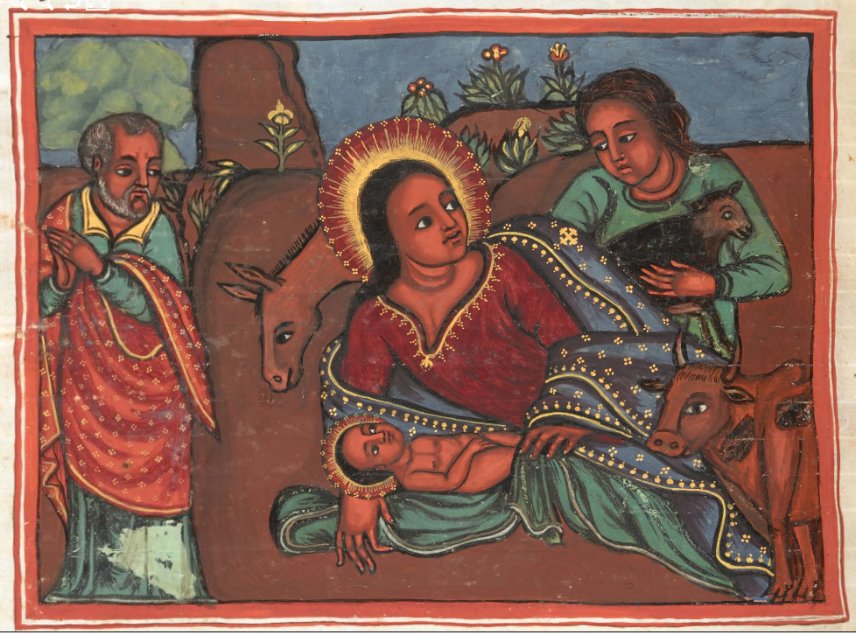
John 1:1-14 – December 25, 2025
Words, words, words, words!! Words of every kind, of every description. Words that tell, words that show, words that praise, words that criticize. Words separate and draw together. Words fill people with joy and peace as well as with suspicion and animosity. Words have power. Whether insightful words or divisive words, encouraging words or capitulating words, words have the ability to shake emotions and to inflame passions for good or for evil.
How do people use words and language, anyway? People speaking a common language need to agree upon the sense of what they say. It helps to be bound together by social convention as well as language rules of practice and use. In fact, language provides the structure of our common experience, understanding and perspectives. But I don’t want to get all high-falutin’ and theoretical. I want to bring this home to where we live.
We all use language. Every day. In conversation at home, or on the telephone, or at work. Reading a newspaper or writing e-mail. All of these uses of language use words. Words communicate meaning, ideas, stories. Each one of us has a personal story, of what it was like, what happened, and what it’s like now. Our stories are communicated using words and language, and each individual has a creative, unique way to tell his or her story.
The story of an individual’s own personal life makes sense because it is part of a larger story, the Story that has the story of Jesus Christ at its center. It is a story of God’s initiative which calls for my gratitude and response, a Story some theologians have called ‘the history of salvation.’ It is the Story of Jesus, the Story set forth in the Word of God that attracts, crossing boundaries and transcending lines of race, class, culture and age.
Our gospel text for today, the first 14 verses of the Gospel of John, is a restatement of an old theme. Remember Genesis 1:1? “In the beginning, God created the heavens and the earth.” Most scholars today believe the apostle John was thinking of that introduction to the Greatest Story ever told when he wrote his own portion of it. John 1:1: “In the beginning was the Word.” John reframed that Story, and gave it a new look from a different perspective.
In John, Chapter 1, we have God, the creative God who made heaven and earth. The almighty God wanted to communicate with us puny, limited human beings. But how was God supposed to communicate His Story?
I can remember when my children were younger, in first and second grades. Sometimes they would need help with their homework at night. Years before, I had taken several courses of math in college . . . college algebra, trigonometry, analytical geometry. But, after considering more advanced mathematical ideas, how was I supposed to explain simple addition and subtraction to my young children in language they would understand?
That’s the way I look at God’s problem sometimes. It’s sort of like God, able to do the most advanced mathematics possible–in God’s head!!–and God needed to be able to explain the simplest addition and subtraction problems to us ordinary, simple-minded human beings.
There was another problem, as if the simple-mindedness of humanity wasn’t enough. That problem was (and is!!) sin. Funny thing, how sin keeps cropping up in our lives and getting in the way. Sin divides people from one another as well as from God. Sin isolates and forces apart. Sin happens on a horizontal plane with other people as well as on a vertical plane with God. And sin causes humanity to walk in darkness and to run from God’s presence.
So here we have a loving God, a God of light, a God who wants so much to communicate with us fallen, sinful human beings. But how was God supposed to communicate God’s Story?
The Gospel of John tells us how. In the beginning was the Word. The Word was God. The Word is God. Jesus is the Word. John 1:14 says that the Word, Jesus, became flesh, and . . . the Word dwelt among us.
Think about it: the whole idea of God becoming a helpless baby, a human being, able to feel cold and heat, able to be hungry and thirsty, with blood and bones and a nervous system and a digestive system. So staggering was this idea that some of the people in John’s day could not believe it. God? the creative God who made heaven and earth? Coming to earth as a helpless, human baby? No way!!
And, that’s not all!! Not only did this Creator God appear in creation so that our eyes could see Him, this almighty God, after making Himself flesh and blood, has the crazy idea of dwelling among people. Becoming one of us limited human beings, sharing our food and living in our midst. Jesus became fully man. He didn’t just seem to be a man, and pretend to be human. He really and truly became human, living with us as one of us.
What a way for the almighty, eternal, creative God to communicate to us in a way that we limited human beings might possibly understand. God wanted humanity to understand His Story of good news, the Bible, but God also wanted humanity to understand God’s Word made flesh, the one called Jesus of Nazareth.
Jesus (the Word incarnate) is the central principle of Scripture as well as the central character of the Greatest Story ever told. Reformed believers have throughout the centuries been finding new ways to confess their faith, using the fallible, limited resources of language that have been handed down to humanity throughout the generations. God helps us understand His Story, and there is nothing God wants more than for us to want to understand God’s Story better and better.
A good many years ago, a bible translator went to a remote, mountainous region in the interior of Africa. He worked hard at turning an obscure oral language into a written language, which involved decoding the language, writing a grammar, learning extensive vocabulary, and finally translating a portion of the Bible into the heart language of that particular people-group.
After several years of intense work and language preparation, when he felt he was ready, the missionary made his first presentation of the Story of Jesus to a group of headmen from the tribe. He was surprised at their response, which was unlike any he had ever had before in all his years of being a missionary and telling people the Story of Jesus. The group of men just sat there in silence, and then the chief came forward.
The chief grasped the missionary’s hands and, with tears in his eyes, thanked him for coming to tell them the Story of Jesus. “This Story of good news is the one my people have waited for, all their lives long!!” And then came the clincher: the chief asked, “Your tribe has had this Story for many, many years. What took you so long to tell us?”
Communicating the Story of Jesus has power! Awesome power! This is a Story that can change people’s lives for eternity. Telling the Story in someone’s heart language is one of the best ways to communicate how much God loves us.
When Jesus came to this earth, He spoke the language of the people of His region, and He communicated ideas in ways people could understand. Yes, He was the Word become flesh, and yes, He showed us how to live this life that we have to live. Jesus, ‘the one Word of God which we have to hear and which we have to trust and obey in life and in death.’
Praise God that God sent the Son Jesus into this world, the Word incarnate, the Word that became a helpless baby in Bethlehem. Praise God that God has given us the right to repair that broken relationship with us, and to be called the children of God. And praise God that God loved us so much that He gave His only begotten Son on our behalf, to reconcile us to God for eternity.
Gloria in excelsis Deo.
(Suggestion: visit me at my other blogs: matterofprayer: A Year of Everyday Prayers. #PursuePEACE – and A Year of Being Kind . Thanks!

 Pastor, Preacher, Pray-er