Unknown's avatar

Love Drives Out Fear

“Love Drives Out Fear”

1 john 4-18-perfect-love-casts-out-fear.

1 John 4:7-8, 13-19 (4:18) – September 16, 2018 – from Dave Ivaska’s book Be Not Afraid

When I was in grade school, I remember a story I read where a boy was punished very severely. He was beaten, and sent to the barn without any supper. I don’t remember where the story was from (probably in one of my textbooks), but I do remember my gut reaction to the moving and evocative words that described the boy and his situation. Sullen, lonely, filled with anger, but at the same time torn with some remains of love for the brutal father who had beaten him and turned him out of the clapboard house on the frontier into the cold night.

What kinds of fear do you remember? If not fear that you experienced, fear and anxiety of someone close to you? Those feelings, emotions and experiences can be so traumatic. I know, because I dealt with many painful, fearful, anxious situations while a hospital chaplain. And, sometimes, I was completely helpless to do anything to lend a hand.

Is there some fear or anxiety that even now surfaces from deep within? If so, I am so sorry to remind you of that painful experience. Except—in this sermon, in this scripture reading today, the apostle John deals with God’s love, and with personal fear and punishment. We can relate to John’s moving words.

To back up, in this letter John talks a great deal about love. God is love. Love is of God. We love, because God first loved us. Simple words, yet profound ideas. In our reading today, John continues with more of the same: “Dear friends, let us love one another, for love comes from God. Everyone who loves has been born of God and knows God. Whoever does not love does not know God, because God is love.”

Yet, you and I know that we cannot love all the time. Because, we are human. We get angry, and lonely, and fearful. Sometimes we back away, isolate, or even snap back at others. All of us do at times. Mile-deep emotions and mile-wide feelings come upon so many as we live our day-to-day lives—in the first century, as well as the twenty-first. Awkward situations and traumatic experiences choke out the joy and delight of living in community, of life in the family of God. What can we do about these complications of living, and of loving?

The apostle John knew very well about this dilemma. He was the youngest of the disciples. He was identified as “the disciple Jesus loved.” He lived the longest of just about any of the direct witnesses to Jesus’s life, death and resurrection. He wrote this letter late in his long life, a life full of hardship and trauma, full of persecution and anxiety. Yet—he was able to write moving words such as these: “Dear friends, let us love one another.” Matter-of-fact presentation of a simple yet profound concept.

John communicates God’s unconditional love to us in this letter, even in difficult circumstances. He shows us Jesus and His love through these simple words.

John understood very well what kinds of horrible things the persecutors could (and probably would) do to any Christians they got in their clutches. From the writings and letters of the second century, we know that John had personal experience with the persecutions. He was finally exiled to a tiny island in the Mediterranean Sea called Patmos.

So, what does John have to say about fear? We are talking about gut-wrenching fear. Remember, he was well-acquainted with fear, and its close cousin anxiety. Verse 18 says, “There is no fear in love. But perfect love drives out fear, because fear has to do with punishment. The one who fears is not made perfect in love.”

The word for “fear” John uses here is the Greek word phobo, or the run-of-the-mill word that is found in the suffix “-phobia.” Many of us are familiar with all kinds of phobias, from fear of heights or enclosed spaces, to fear of spiders or snakes, to fear of the dark. Could I remind us of a certain phobia that Charlie Brown had, in the Charlie Brown Christmas special? He was frightened of everything. He had “pantaphobia.”

Perhaps the apostle John “does mean something closer to Charlie Brown’s depression-inducing pantaphobia in which fear becomes a general way to go at life.  John yokes this fear that has no place in perfect love specifically with a fear ‘of punishment,’ which may be an indication that what he is talking about is the fear of still being punished for our sins.” [1]

What a fear, indeed! Being afraid that God probably will not forgive me, no matter how much I do, no matter how hard I try to gain God’s acceptance. That unfeeling, unforgiving attitude from God would break my heart. Sort of like the attitude of an uncaring, unfeeling, even brutal parent. Not at all like Jesus, like the God whom John knew personally.

After this life is done, we move into the life to come. Common questions many would ask: “’How can I be sure I did enough for God to love me?  What if God plays all the sins of my life on some giant screen for all to see?  How will I ever live down the humiliation of that?  How do I know there is grace sufficient for even me?’ This is clearly the kind of fear of punishment John is pointing to.  And it is a miserable thing to have dangling over your head” [2]

Again, we get full assurance from John. And, John intimately knows Jesus, the only begotten Son of God, the Messiah, the creator of all the universe, the Logos, the Word. John is the beloved disciple, the one close to Jesus’s heart. John lets us know that “perfect love drives out fear, because fear has to do with punishment. The one who fears is not made perfect in love.”

Yet, what are the next words from John? “We love, because He first loved us.” John circles back to this simple yet profound truth.

Commentator Judith Jones says, “God made love real and present by sending Jesus to live among us and to die for us. God continues to show us love through Jesus’ life-giving presence among us.” [3] That is the presence John is a witness to. That is the presence John is willing to suffer for. John loves, and through extension, we all love, because Jesus loves us. Unconditionally, fully, and with all His heart. Jesus loves us. Period.

So, it does not matter what our creaturely, very human selves tell us about phobias. It does not matter what Charlie Brown and his fear of everything whispers to our insides. John’s witness is that Jesus loves us, period. Jesus’s perfect, unconditional love drives out fear. Not only fear about everything on the outside, about fighting, hardship, and persecution, but about illness, loneliness, and sorrow.

Most importantly, His perfect unconditional love drives out the fear that I won’t measure up, that I won’t be able to do enough, be enough for Jesus. We love, because He first loved us. Period. John is a faithful and true witness to Jesus and His perfect, unconditional love.

Do you believe that? “Jesus loves me, this I know, for the Bible tells me so.” John tells us so, right here in this reading today. Receive the Good News of the Gospel. Jesus came to save sinners, of which I am chief.

Fear is done with, banished, gone. Jesus came into the world to love us, unconditionally. That is truly Good News.

[1] http://cep.calvinseminary.edu/sermon-starters/easter-5b-2/?type=lectionary_epistle

The Center for Excellence in Preaching, Stan Mast, resources from Calvin Theological Seminary: Comments & Observations, Textual Points, illustration ideas, 2015.

[2] Ibid.

[3] http://www.workingpreacher.org/preaching.aspx?commentary_id=2448

Commentary, 1 John 4:7-21, Judith Jones, Preaching This Week, WorkingPreacher.org, 2015.

@chaplaineliza

(Suggestion: visit me at my regular blog for 2018: matterofprayer: A Year of Everyday Prayers. #PursuePEACE – and my other blog,  A Year of Being Kind . Thanks!)
Unknown's avatar

Believe the Message!

“Believe the Message!”

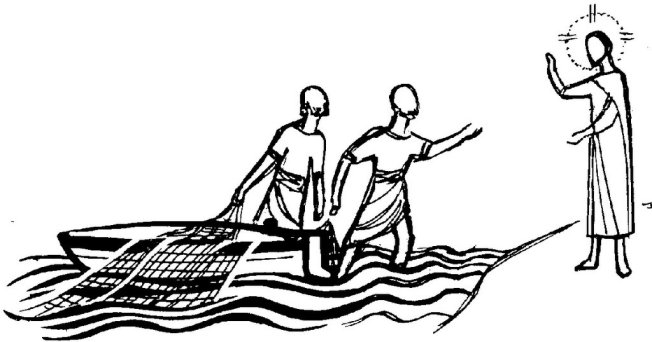
Mark 1-17 fishers of people

Mark 1:14-20 (1:15) – January 21, 2018

What is news? There are lots of different kinds of news. National news, local news. Partisan news, news that is slanted one way or another. What’s more, we hear so much about “fake news” today. News fit to scare the pants off of some people, and news meant to get some people really upset. News brings about all kinds of reactions. What kind of news can we possibly trust? How do we know which kind of news to believe?   

If we take a closer look at our Gospel reading for today, the Gospel writer Mark talks about news, too. Good News. God’s news—God’s wonderful message of Good News, brought by the greatest newsman, the greatest news announcer of all time, our Lord Jesus Himself.

Mark doesn’t waste any time with genealogies (like Matthew) or with long backstories of how Jesus came into the world (like Luke and John). No, Mark starts right off with a bang, with the baptism of Jesus. Then, shortly after He is baptized, Jesus starts to travel about saying, “Time’s up! God’s kingdom is here. Change your life and believe the Message.”

I love the relevance, the immediacy of Eugene Peterson’s modern translation. How appropriate that this translation of the Bible is called “The Message.” The whole Bible is God’s Good News to humanity, and most especially right here, in the Gospel of Mark.

Here we are, right at the beginning of Jesus’s ministry. John the Baptist (the cousin of Jesus) was already on the scene. A sort of a warm-up act for the main event, for some time John had already been proclaiming “Repent! And, believe God’s Good News!” First Jesus came to John to be baptized, and now was the time for Him to begin His own ministry, His own preaching of God’s Good News.

What do we hear first thing in our Gospel reading today? John the Baptist has been arrested. Next thing, Jesus begins to gather a group of disciples around Himself. Mark tells us that the way Jesus does this is by proclaiming God’s Good News. The Kingdom of God has come to us. Or, as Eugene Peterson translates it, “Believe God’s Message!”

One sure way to know when the writers of the Bible really want readers to pay attention is when a word or phrase is repeated. “The emphasis of Mark’s gospel is that Jesus’ coming is the gospel, the “good news,” a term that in the first fifteen verses of the gospel occurs three times.” [1]  Today’s text continues the story from last Sunday, that is, the beginning of Jesus’ ministry as He tells God’s Good News to His first disciples. In today’s reading Jesus calls four fishermen at the Sea of Galilee — Simon Peter, Andrew, James and John.

Our Gospel reading last week was from John chapter 1, and there are some differences between John’s account and Mark’s account from today’s scripture reading. In that sermon, I also mentioned how Jesus called several of His first disciples—this time it was John and James first, and then Simon Peter and Andrew. Some people have said, “I don’t understand. Which story is true, the Gospel of John or the Gospel of Mark?” Great question.

When a car accident happens in the middle of a busy intersection, that is a real tragedy. I understand when the accident is serious enough, the police sometimes get involved to find out exactly what happened. Imagine the surprise and even consternation when eyewitnesses on different street corners have different perspectives and impressions of the same event!

In the case of the car accident, the different people all saw the same vehicles collide, but from opposite angles and varying positions. Different things may have made a strong impression on one witness, more than another.

It’s no wonder that their eyewitness accounts are somewhat different from each other. And, in the case of the four different Gospel accounts, that adds to the richness and depth of the separate narratives. Each Gospel writer had a separate emphasis and perspective, and different things he wanted to highlight and point out.

However, we need to drill down to what is common between these readings. Jesus calls His first disciples, and Jesus tells them all, “God’s kingdom is here. Change your life and believe the Message.” What is the definition of God’s Good News, anyway? In Greek, the word is euaggelion, or Gospel. God’s Message of Good News to all humanity.

As we trace this Good News through the four Gospels and the rest of the New Testament, we get some more information. God’s Good News is truth. With the coming of the man Jesus here on the earth, humanity has the opportunity to see and touch and experience what God is like. A key feature of this Good News is hope. The fallen world is pretty hopeless and dark, but Jesus brings hope to the hopeless heart. And, last, God’s Good News means salvation. Salvation is not just being saved from the negative aspects of escape from sin and death. No! Salvation is eternal life, and the power to live life victoriously. [2]

God’s Good News is something new to many; something different, even radical. Why on earth should anyone want to adopt this strange, new life from Jesus? Maybe, this way of being and living is even a bit frightening? Many people may well be afraid of taking such a big step.

As Dallas Willard writes, “when he was a boy, rural electrification was just happening and power lines were being strung throughout the countryside.  But suppose even after the lines were up and running you ran across a house where the weary family still used only candles and kerosene lanterns for light, used scrub boards, ice chests, and rug beaters.  A better life was waiting for them right outside their door if only they would let themselves be hooked into the power lines.  “My friends,” you could proclaim, “electricity is at hand!”  But suppose they just didn’t trust it, thought it was too much of a hassle, and anyway didn’t believe the promises that things might be easier with this newfangled juice running into their house.  “If it’s all the same to you, we’ll stick with the old ways.” [3]

You see the difficulty? How some people are afraid of change? Or, prefer not to change their lives? How some don’t want to accept this Good News from God because it’s different, or new, or out of their experience? Can you hear Jesus saying, “My friends, God’s Kingdom is at hand! God’s Good News of eternal life is right here, waiting for you!”

Jesus still offers this gift of God in our world today, proclaiming His Message of God’s Good News, His Message of God’s truth, hope and salvation.

God’s Good News actually makes our job simple. We need to widely and clearly communicate the Message of God. “What mustn’t be lost on us is the urgency of its communication, for the day of judgement is at hand. We point to the hope of eternal life in Christ and call on everyone everywhere to turn and put their trust in Jesus.” [4]

Have you responded as the disciples did, by dropping everything and embracing the Good News? Jesus is calling, waiting for you and for me. Jesus says, “Believe the Message! Come, follow Me.”

[1] http://www.workingpreacher.org/preaching.aspx?commentary_id=2315

Commentary, Mark 1:14-20, Michael Rogness, Preaching This Week, WorkingPreacher.org, 2015.

[2] Barkley, William, The Gospel of Mark (Westminster Press: Philadelphia, 1975), 25-26.

[3] http://cep.calvinseminary.edu/sermon-starters/epiphany-3b-2/?type=the_lectionary_gospel

Commentary and illustration idea, Mark 1:14-20, Scott Hoezee, Center for Excellence in Preaching, 2015.

[4] http://www.lectionarystudies.com/studyg/sunday3bg.html   “Repent and Believe in the Good News,” Rev. Bryan Findlayson, Lectionary Bible Studies and Sermons, Pumpkin Cottage Ministry Resources.  

@chaplaineliza

(Suggestion: visit me at my regular blog for 2018: matterofprayer: A Year of Everyday Prayers. #PursuePEACE – and my other blog,  A Year of Being Kind . Thanks!)

Unknown's avatar

We See Your Salvation

“We See Your Salvation”

Luke 2-30 Simeon words

Luke 2:22-40 (2:30) – December 31, 2017

Many of us had a marvelous celebration last week for the Christmas holidays. Gatherings with extended family and friends, special parties and programs, holiday concerts and pageants, often ending with the caroling around the fireplace. And the stockings hung with care, and mounds of gaily wrapped presents around the Christmas tree.

But, too soon after the grand holiday, the main event, and the wonderful days of celebrations, everything is ended. The crumpled wrapping paper is in the trash, the many leftovers packed in the refrigerator. The unexpected visitors have gone home, and we have returned back to the plain old mundane, ordinary routine. What happens now? What next?

Mary and Joseph might have been wondering a similar thing. After the marvelous birth announcement given to the shepherds by the chorus of the heavenly hosts, and after the impromptu visit by the shepherds and others to the newborn Baby in Bethlehem, what happens now? What next? Great question! What does happen?

Reading from the second chapter of Luke: “22 When the time came for the purification rites required by the Law of Moses, Joseph and Mary took the child to Jerusalem to present him to the Lord 23 (as it is written in the Law of the Lord, “Every firstborn male is to be consecrated to the Lord”), 24 and to offer a sacrifice in keeping with what is said in the Law of the Lord: “a pair of doves or two young pigeons.”

We are told that Mary recuperates and takes the time prescribed for mothers of a first-born son from Leviticus chapter 12. Then, she and Joseph bring Jesus up to the Temple for the Child’s dedication. The Mosaic Law Code is very specific about what needs to be done for a first-born son: forty days after the birth, the parents of the newborn son take their Child to present Him before the Lord.

Now that the grand celebration of the birth is over, Mary and Joseph get down to the ordinary, everyday matter of living. The main way they do that is to follow the laws and rules prescribed for them in the Mosaic Law Code. The laws and rituals of the Jewish people were ancestral traditions. It’s pointed out that these “are a reminder to [the parents] that Jesus is born in the context of the covenant established between God and the people Israel.” [1]

The Jewish people were supposed to be sensitive to the Holy God, and this rite of purification in the Temple is a reminder of that relationship to God. “One way a woman encounters the holy is through the miracle of giving birth. It is a holiness which belongs to and describes the natural rhythm of life.” [2]

Our Gospel writer Luke breaks in right here with a new figure in his narrative. A cameo appearance by a guest star, if you think of things in terms of television or movies, in the birth narrative of Luke chapter 2. We meet the older man Simeon, and we find out about his backstory.

25 Now there was a man in Jerusalem called Simeon, who was righteous and devout. He was waiting for the consolation of Israel, and the Holy Spirit was on him. 26 It had been revealed to him by the Holy Spirit that he would not die before he had seen the Lord’s Messiah. 27 Moved by the Spirit, he went into the temple courts. When the parents brought in the child Jesus to do for Him what the custom of the Law required, 28 Simeon took Him in his arms and praised God.”

It is similar to what we covered in the weeks of Advent this year. In the midweek bible study during December, we studied the genealogy of Jesus from Matthew chapter 1. Pretty dry stuff, all of those names, and all of those “begats.” So-and-so the son of the other guy, the grandson of such-and-such. Genealogies were extremely important to the Jewish people, because keeping an orderly and exact account of who was related to whom helped cement the lines of ancestry and inheritance.

Except—the genealogy of Jesus had some surprises. Four women were mentioned in Matthew’s account. We studied the backstory of each of those four women, and found out exactly why each one was included in the genealogy of Jesus. In Luke’s birth narrative, he tells us some backstory, so we can find out exactly what the godly man Simeon is doing here.

Luke tells us that Simeon is called “just and devout,” and was waiting for the dawning of the kingdom of God – “the consolation of Israel”. The Holy Spirit had revealed to him that he would not die until he saw the Messiah. He now sees the fulfillment of this promise. In the power of the Spirit, he sings a song of praise and utters a prophecy concerning Jesus. [3]

What a marvelous expression of faith and trust in God comes from Simeon. He sings to God: “29 “Sovereign Lord, as You have promised, You may now dismiss Your servant in peace.
30 For my eyes have seen Your salvation, 31 which You have prepared in the sight of all nations:
32 a light for revelation to the Gentiles, and the glory of Your people Israel.” 33 The child’s father and mother marveled at what was said about Him.”

Sizeable words spoken about someone so small. Here we have the baby Jesus, and His mother and adoptive father did marvel at such weighty words!

However, Simeon is not finished yet. He prophecies after this wonderful expression of song. “34 Then Simeon blessed them and said to Mary, His mother: “This child is destined to cause the falling and rising of many in Israel, and to be a sign that will be spoken against, 35 so that the thoughts of many hearts will be revealed. And a sword will pierce your own soul too.”

Serious, solemn words, indeed. Simeon has waited for his whole life for this very moment. After years and decades of expectation and longing, the Messiah has finally arrived. What is more, Simeon spontaneously blesses Mary and Joseph, too, along with Jesus.

Simeon was right there, at the beginning, with Jesus as a baby. He gave witness that Jesus was as foretold, by many prophets throughout the Hebrew Scriptures. Jesus had the greatest future, here at the beginning of the Greatest Story Ever Told. “We are left in anticipation to watch as the Child grows strong, filled with wisdom and blessed with the favor of God.” [4]

Where are each of us in our understanding of Emmanuel, God being with us? Is this narrative from Luke just a fairy story, suitable only to be shared with children every December at the holidays? Or, is it more than that? Have we heard the Good News from the angels and are waiting for more assurance, more evidence that the Messiah has come to earth?

The faithful servant of God, Simeon, was waiting at the Temple for years.  He was waiting and hoping for the Messiah, the chosen One of Israel. When we come to church today, do we expect to have an encounter with the Messiah? We fall on our knees with those who came to worship. Jesus has his arms open wide to welcome all who would come to Him. Come to Jesus, today. Amen.

[1] http://www.workingpreacher.org/preaching.aspx?commentary_id=207

Commentary, Luke 2:22-40, Holly Hearon, Preaching This Week, WorkingPreacher.org, 2008. 

[2] Ibid.

[3] http://www.lectionarystudies.com/studyg/christmas1bg.html

“Jesus Grew in Wisdom and Stature,” Rev. Bryan Findlayson, Lectionary Bible Studies and Sermons, Pumpkin Cottage Ministry Resources.  

[4] http://www.workingpreacher.org/preaching.aspx?commentary_id=207

Commentary, Luke 2:22-40, Holly Hearon, Preaching This Week, WorkingPreacher.org, 2008

Unknown's avatar

My Soul Magnifies the Lord!

“My Soul Magnifies the Lord!”

Luke 1-46 Mary Magnificat, colors

Luke 1:46-55 (1:46) – December 24, 2017

People have been writing songs about the Virgin Mary for centuries. Songs of praise, songs of worship, songs honoring God, and lifting up Mary for saying “yes” to God. Christmas carols might be the first thing that come to mind—but I am also thinking of music from centuries past. From the familiar first part of Handel’s Messiah, to the various settings of the Magnificat, with lyrics from the first chapter of Luke—our Gospel reading for this morning.

Some Protestants might not be as familiar with the Virgin Mary as many Catholics and Orthodox Christians. Mary is held in extremely high esteem in many denominations and faith traditions throughout the world, and for excellent reasons. I honor her greatly.

Did you know that Mary—an unwed teenager from an oppressed people-group in an occupied country under crushing Roman rule—was also a radical? A subversive? Was plotting to overthrow the existing oppressive government and replace it with the rule of God?

What surprising, even shocking things to say about the sweet, innocent Virgin Mary! Everyone associates her with travel to Bethlehem while nine months pregnant, and needing to deliver the infant Jesus in a stable, because there was no room for them in the inn.

That Mary? Radical? Subversive? Yes.

Let’s back up. Go back to last week’s sermon, where the angel Gabriel surprises Mary and tells her God would like for her to be the mother of the Messiah.

But, what about Mary’s opinion? For a teenager, Mary must have been mature and sensible. She acknowledges the angel’s statement and God’s will. Mary says “Yes, I see it all now: I’m the Lord’s maid, ready to serve. Let it be with me just as you say.”

Sure, the wonderful classical settings of the Magnificat were often sung in a foreign language, like Latin. Or, in text from the King James version of the Bible, full of “thee’s” and “thou’s” and all manner of archaic words. Listen to the first part of her Magnificat, as translated in the modern version by Eugene Peterson, “The Message.”

“I’m bursting with God-news; I’m dancing the song of my Savior God. God took one good look at me, and look what happened—I’m the most fortunate woman on earth! What God has done for me will never be forgotten, the God whose very name is holy, set apart from all others. His mercy flows in wave after wave on those who are in awe before Him.”

One well-known depiction of the Virgin Mary is one that is meek, docile, sweet, and not raising a fuss at all. But, wait a moment. Do we realize what Mary is going to sing next? How revolutionary were many of the statements in her song?

“Even more importantly, Mary’s song is an overture to the Gospel of Luke as a whole. Mary’s lyrics set the tone for Jesus’s radical and controversial ministry that is to come:

You have shown strength with your arm;

You have scattered the proud in the thoughts of their hearts.

You have brought down the powerful from their thrones, and lifted up the lowly;

You have filled the hungry with good things, and sent the rich away empty.

“In contrast, the Christmas season leaves too many still hungry, and too many even further in debt.” [1]

Do you hear what radical things Mary is saying? If these lyrics of her song were more well-known, would our understanding of Mary be changed? Here Mary is advocating social change, rescuing victims—neglected women, forgotten elders and children, abused strangers and refugees—from being trodden underfoot, even ground under the heel of bragging, bluffing tyrants and braggarts. Turning all society as it was in her day—and ours—upside down.

What subversive idea is our revolutionary Mary advocating now? Feeding the starving? Giving the poor a banquet? Turning the unfeeling, callous rich people out into the cold? Yes, these radical words are the words found in Luke chapter 1, before we rush on to the narrative of the birth of the Baby in Bethlehem from Luke 2.

Mary was singing two thousand years ago. But, things haven’t changed much. Political leaders are still calling one another names while people starve. “Refugees struggle to find a home in a world with increasingly closed doors. The poor sleep under bridges while the rich build homes with rooms they will never need. And Abraham’s descendants—Jews, Christians, and Muslims—continue to fight over the lands where God’s messengers first spoke to all humanity.”[2]

As the Rev. Dr. Carl Gregg stated in his article on the radical nature of Mary’s Magnificat, “The Christmas story has, over time, too frequently come to have a sense of ‘preciousness,’ of saccharine sentimentality, of almost sickening sweetness as if you had eaten all the candy in your stocking all at once on Christmas morning. When this super-sweetening of the story happens, we can miss the radicality of the claim that God is found, not as the royal child of a queen in a palace, but as the son of an unwed teenager, born in a stable in a religiously-conservative small town.” [3]

Sure, we can see this saccharine sweetness of Luke chapter 2, once it is pointed out to us. But, in reality, life was not so pretty for teenaged Mary, pregnant without the benefit of marriage.

We are still in the season of Advent, the season of waiting. Today is the fourth Sunday of Advent. We still watch as Joseph and his greatly pregnant wife Mary walk one hundred miles to the town of Joseph’s ancestors (and Mary’s, too).

We still wait for the baby Jesus to be born in Bethlehem. We still hold our collective breath with all the rest of creation as we wait—and wait.

Luke, the writer of our Gospel, has a different take on things. Yes, he waits, too. But he waits with songs. Mary’s song—Mary’s Magnificat is a great example.

As Dr. David Lose says in his commentary, “Have you ever noticed how often Luke employs songs in the first several chapters of his story about Jesus? Mary sings when she is greeted by her cousin Elizabeth. Zechariah sings when his son John is born and his tongue is finally loosened. The angels sing of peace and goodwill when they share their “good news of great joy” with the shepherds. And Simeon sings his song of farewell once he has seen God’s promises to Israel kept in the Christ child.” [4]

These songs are deep expressions of the heart and soul to God and to the listeners—including us. These songs are hymns, psalms, songs of praise and exaltation, and even songs of resistance. Mary combined all of these into her song.

I’d like to close with a portion of a modern song written to Mary, asking her if she knew her infant son would truly be the Messiah, the Son of God. This song was written by Mark Lowry, and asks: “Mary, did you know that your baby boy is Lord of all creation? Mary, did you know that your baby boy would one day rule the nations?
Did you know that your baby boy is heaven’s perfect Lamb?
This sleeping child you’re holding is the great I am!

Mary, did you know? Mary, did you know?”  [5]

We are still waiting…


[1] http://www.patheos.com/blogs/carlgregg/2011/12/magnificat-learning-to-sing-mary%E2%80%99s-song-a-progressive-christian-lectionary-commentary-on-luke-146-55/

“Magnificat! Learning to Sing Mary’s Song,” Carl Gregg, Patheos, 2011.

[2] From An Advent Journey: Devotional Guide, Week Four. This curriculum comes from Illustrated Children’s Ministry.

[3] http://www.patheos.com/blogs/carlgregg/2011/12/magnificat-learning-to-sing-mary%E2%80%99s-song-a-progressive-christian-lectionary-commentary-on-luke-146-55/

“Magnificat! Learning to Sing Mary’s Song,” Carl Gregg, Patheos, 2011.

[4] http://www.davidlose.net/2015/12/advent-4-c-singing-as-an-act-of-resistance/

“Singing as an Act of Resistance,” David Lose, …in the Meantime, 2015.

[5] http://www.lyricsmode.com/lyrics/m/mark_lowry/mary_did_you_know.html

Mary Did You Know lyrics

(A heartfelt thank you to An Advent Journey: Devotional Guide. Some of these sermon ideas and thoughts came directly from this guide.  I appreciate this intergenerational curriculum, which is the basis for my Advent sermon series. This curriculum comes from Illustrated Children’s Ministry. Thanks so much for such great ideas!)

@chaplaineliza

(Suggestion: visit me at my regular blog for 2017: matterofprayer: A Year of Everyday Prayers. #PursuePEACE – and my other blog,  A Year of Being Kind . Thanks!)

Unknown's avatar

In Christ Alone

“In Christ Alone”

Acts 4-12 salvation, sun

Acts 4:1-17 (4:12) – October 15, 2017

“How many of you remember a time when you were so excited about something that you could barely wait to share that news with another person? Maybe it was getting accepted to the university you dreamed of attending? Or maybe it was that you are finally pregnant after years of waiting? Or maybe it was that you have now been confirmed to be cancer free after lengthy treatment? Or maybe it was when your special someone asked you to marry him? Or maybe you got the job you so desperately hoped for? This exciting news is changing your life, and you want to shout it from the mountaintop!” [1]

With exciting news of that magnitude of importance, who wouldn’t want to share something so earthshaking that is turning your life upside down?

That’s the case here in Acts chapters 3 and 4, where Peter and John are in Jerusalem, telling people about the Messiah Yeshua, the risen Jesus, risen from the dead. Do you know? Have you heard? This news is so exciting that it’s changing my life! Anyway, that is the story that Peter, John, and the rest of the disciples are sharing in downtown Jerusalem at the beginning of Acts 4.

But then, there’s a hitch. A problem, a complication.  Reading from Acts 4:1-2, “The priests and the captain of the temple guard and the Sadducees came up to Peter and John while they were speaking to the people. 2 They were greatly disturbed because the apostles were teaching the people, proclaiming in Jesus the resurrection of the dead.” In fact, these religious leaders are so upset, they toss Peter and John in prison.

Peter and John—and countless others throughout the centuries—were thrown into prison because of their beliefs, and because of their witness. It doesn’t matter whether it’s during the persecutions of the Roman emperors, the upheavals and persecutions of the religious wars of the 1500’s and 1600’s, or more modern persecutions and executions of the 20th and 21st centuries, people are still imprisoned for their beliefs. People are still persecuted for naming the name of Jesus Christ in a public forum.

This good news is an extremely important thing to proclaim. In many places in the world today and throughout history, this message of Jesus Christ crucified and risen from the dead is an extremely dangerous one to proclaim, too.

There must be something behind this God-sent boldness that energizes so many people!

“Solus Christus,” or “By Christ Alone” is another one of the foundational principles that sets Protestants apart. Another of the rallying cries of the Reformation, this important principle means Jesus Christ alone is the mediator between God and humanity. Not the priests as mediator between us and God, and not the sacrifices in the Temple as a necessary covering to allow us to come to God, but salvation comes through Jesus Christ alone.

Certain other faith traditions put extra emphasis on the saints, or the Virgin Mary, or on the church hierarchy. Yes, these ought to be honored. Absolutely we have the saints and Mary the mother of Jesus as our blessed examples and those we hold up as special before God. Plus, as the apostle Paul and Doctor Luke tell us repeatedly in the New Testament, we are all called saints of God, so we are all examples for one another.

Back to our passage from Acts 4. What happened to Peter and John? “The next day the rulers, the elders and the teachers of the law met in Jerusalem. They had Peter and John brought before them and began to question them: “By what power or what name did you do this?”

The religious leaders of Israel had thought they had gotten rid of their problem some weeks ago when they had a rabble-rousing rabbi called Jesus crucified. But, no! More and more problems kept cropping up, ever since they had “misplaced” this rabbi’s body, and then there were some scattered reports of Him being raised from the dead, being alive again.

The religious leaders brought Peter and John before them, and asked point blank: “By what power or what name did you do this?”
What is the foundational principle for Peter and John? Just as Acts 4:12 tells us, “Salvation is found in no one else, for there is no other name under heaven given to mankind by which we must be saved.”

What is another way of saying this great Good News? “The message of Jesus entails “salvation” (soteria) — a divine reality that generates wholeness, restoration, and reversal of societal norms (“healed” in Acts 4:9 is literally “saved,” sesotai)” [2]

We can say for sure that Peter, John and the other disciples would absolutely agree with the Reformers: “Solus Christus,” or “By Christ Alone” are we saved.

That was one principle that Protestants were willing to die for, and did.

What about you? What about me? Are we willing to proclaim Christ? Why does Peter say it so clearly? Because he has been with Jesus. So, too, we are with Jesus. “By Christ Alone” we are saved, we are restored, and we are walking by His side.

Praise God, alleluia, amen.

[1] https://www.umcdiscipleship.org/worship/lectionary-calendar/fourth-sunday-of-easter7#preaching

Preaching Helps and Worship Resources, Rev. Dawn Chesser, Prayers, Lectionary Hymns, United Methodist Church General Board of Discipleship, 2015.

[2] http://www.workingpreacher.org/preaching.aspx?commentary_id=2388  Commentary, Acts 4:5-12, Troy Troftgruben, Preaching This Week, WorkingPreacher.org, 2015.

@chaplaineliza

(Suggestion: visit me at my regular blog for 2017: matterofprayer: A Year of Everyday Prayers. #PursuePEACE – and my other blog,  A Year of Being Kind . Thanks!)


Unknown's avatar

God Wants Me to Change?

“God Wants Me to Change?”

Rom 12-2 be transformed, words

Romans 12:1-2 (12:2) – September 10, 2017

The date of September 11th is a significant date to remember. Just as many people remember where they were on November 22, 1963, the date John F. Kennedy was assassinated, so, too, many people remember where they were on September 11, 2001, when planes flew into buildings, and horror upon horror was seen on televisions and video monitors around the world..

When we think of the inhumanity that people display—people who assassinate a national leader, or who cold-bloodedly kill dozens, or even hundreds of their fellow human beings—man’s inhumanity to man can leave our jaws hanging open, shaking our heads in disbelief.

We are horrified when we think about such things. I am sorry to bring this up, but Romans, the book of the New Testament from which our Scripture reading comes, has some very bad news in it. All of us fall short of what God wants for us. All of us miss the mark, as far as God is concerned. As Romans 3:11 tells us, “There is no one righteous, not even one; there is no one who understands, no one seeks after God.” We are all self-centered, not God-centered.

However, the book of Romans also has some very good news! The Apostle Paul says we are not deserted in such a hopeless situation. No! “The message of [the book of] Romans is that sin’s mastery over humankind has been broken in the death and resurrection of Jesus Christ.” [1] We all know that the wages of sin is death—death, meaning separation from God forever. But the free gift of God is eternal life through our Lord Jesus Christ! Those are the blessed words of Romans 6:23!

I wanted to remind everyone about this difference, this separation that the Apostle Paul tells us about, us and the Roman believers. Here, on this side, is the BEFORE side. Life without God. Life is really bad news! Eternal darkness, and separation from God, forever. Here, on the other side, is the AFTER side. Life with Christ, and life eternally in God’s presence and light.

Just in case anyone is wondering exactly how we develop a relationship with Christ, we tell our Lord Jesus that we have sinned. We are truly sorry, we confess our sins to Him, and ask Him to forgive us. The best part? He will forgive us, freely! No strings attached. And then, we will enter into the best relationship we will ever have in our lives—true friendship with God.

Thanks be to God that we are accepted through our Lord Jesus Christ, and as Romans 8 tells us, nothing—in the whole universe—can separate us from the love of God!

That, in a nutshell, is the message of the first half of the letter to the Romans. But, now that we are in Christ, now what? What do we do now? How shall we then live? These first two verses of Romans chapter 12 hit home. Paul gives us several strong commands.

Let’s read Romans 12:1 again from that wonderful modern translation by Eugene Peterson, “The Message.” “So here’s what I want you to do, God helping you: Take your everyday, ordinary life—your sleeping, eating, going-to-work, and walking-around life—and place it before God as an offering.”

We were just asking, now that I—you—all of us believe in Jesus, confess our sins, and are welcomed by God into the family of God, what next? Right here, Paul tells us. Paul wants us to place our whole lives before God as our offering.

Did you know the Jewish people in Israel (before Jesus was born in Bethlehem, that is) sacrificed all kinds of things at the Temple, often? That was a requirement for being obedient to God, for being a fine, upstanding Jew. There were thank offerings, and guilt offerings, offerings for forgiveness and for harvest time, wave offerings, drink offerings, and animal offerings. Offerings on special occasions, and everyday offerings. There were enough animal, grain, wine, and other offerings to keep the many priests at the Temple in Jerusalem very busy, indeed! I’m not talking about only the Pharisees, but all of Israel. God expected offerings from everyone.

That was then—during the time of Jesus, and before. But, what about now? What kinds of offerings is Paul talking about? How do we bring offerings to God? I’ll say it again. Or rather, Paul will tell us, from Romans 12:1: “Take your everyday, ordinary life—your sleeping, eating, going-to-work, and walking-around life—and place it before God as an offering.”

A number of years ago, my children, my husband and I went to Michigan to see my in-laws. They decided we all should go to a really nice public garden, some distance away from their home. The public garden included a butterfly house. I don’t know whether anyone here has ever been to a butterfly house, but all different kinds and colors of butterflies fly around. Plus, there is a special section where the caterpillars make their cocoons and become a chrysalis. It takes some time, but finally they transform into a butterfly. My children just loved watching the butterflies flit around from flower to flower. I decided to sit still, and several butterflies came and landed on my arms. One even landed on my head.

Is there a difference between a caterpillar and a butterfly? I think we all would say, yes! Certainly! Is there a difference between the sinful us, and the forgiven us? I think so. That is what the Apostle Paul is getting at.

God is so pleased when we bring our whole selves to God. Before, our old selves were sinful, self-centered, and not doing or thinking or saying the things that pleased God. That sinful self is what the Apostle Paul talks about in the first half of this letter to the Romans! But now we have a relationship with God, we are being changed from the inside out. A complete change of our inner, spiritual selves, from being self-centered to God-centered!

A caterpillar changes or transforms into a butterfly. In the same way, “Paul speaks of radical inward change. The mind is key in the renewal process. The renewed mind is able to think, discern, and test what will please God instead of being deceived by sin.” [2]

Now, I need to let everyone know: this change is still happening. We are not completely sin-less. With God’s help, we sin less and less.

Sadly, the world we inhabit is still very much affected by sin. We can see that from natural disasters, like hurricanes, wild fires and earthquakes (to mention some catastrophic things happening in our world right now). Our fellow human beings are also very much affected by sin and self-involvement, self-centered fear and self-important egotism, focusing on their own issues to the neglect of any one or any thing else.

Which brings us full circle to what we started this sermon with: man’s inhumanity to man. It is not difficult to tick off on both hands the horrible things people do to other people. We can feel sadness for the sin we still have in our own lives, too. We can shake our heads, in sorrow and grief. And, yes, we can praise God that God is not finished with us yet!

As the Apostle Paul reminds us in our Scripture reading in Romans 12:2, “fix your attention on God. You’ll be changed from the inside out. Readily recognize what God wants from you, and quickly respond to it.”

Does God want all of us to change? You bet! Each day we are becoming more and more changed into the likeness of our Lord Jesus. We can all say “amen!” to that.

[1] http://www.workingpreacher.org/preaching.aspx?commentary_id=1038

Commentary, Romans 12:1-8, Mary Hinkle Shore,, Preaching This Week, WorkingPreacher.org, 2011.

[2] Chesser, Dawn  – Director of Preaching Ministries, https://www.umcdiscipleship.org/resources/book-of-romans-sermon-starters-week-13

@chaplaineliza

(Suggestion: visit me at my regular blog for 2017: matterofprayer: A Year of Everyday Prayers. #PursuePEACE – and my other blog,  A Year of Being Kind . Thanks!)

Unknown's avatar

He Is Not Here!

Matthew 28:1-10 (28:6) – April 16, 2017

Matt 28-6 He is not here, cursive

“He Is Not Here!”

Birds. butterflies, and flowers all have something in common: they are all surprises! You might not expect a brightly colored cardinal or peacock to hatch from a plain old egg, but, it does! You might not expect a lovely Monarch butterfly to come out of a drab cocoon, but, it does! You might not expect a colorful tulip or sweet-smelling hyacinth to grow from the lumpy bulb you planted last fall, but, it does!

Birds, butterflies and flowers are very common things. We have become used to their small surprises, every time they emerge from the dull former things to the bright, new life. What kind of surprise do we have, at Easter time? What great big thing has changed?

Let’s go back three days, from Easter Sunday to Good Friday. The priests and religious leaders finally thought they beat Jesus. That upstart Rabbi, false Messiah, calling Himself the Son of God—the religious leaders finally got that Galilean troublemaker arrested. About time, some might say! That Jesus was just a rabble-rouser, speaking against the Romans, stirring up trouble, and protesting against the established order of things. Serves Him right. (Or, so some people said.)

We know the Passion narrative, how our Lord Jesus was arrested by Roman soldiers, tried, beaten, jeered at, spat upon, and finally brought before Pilate for the sentence of execution to be delivered by the ruling governor.

We know the Way of the Cross, how our Lord Jesus walked the Via Dolorosa, the way of sorrows, carrying that cruel cross on His back through Jerusalem. And, the many women and others in the crowd, watching Jesus walk that road out of the city.

We know the Crucifixion, how our Lord Jesus was nailed to that cross, hoisted up, and hung there for hours that Good Friday morning and afternoon. Until, at last, He died on that cross amidst the thunder and earthquake.

What some do not know is that our Lord Jesus was taken down from that cross later Friday afternoon and laid in a new tomb. Quickly, quickly, before night fell on that Friday evening, and the Jewish Sabbath began. A time of God-ordained rest when no work could be done, not even to bury a dearly loved one.

Friday night passed. All day Saturday—the Jewish Sabbath—passed. Saturday night, and nothing could be done. No work, certainly. It was dark, after all!

On Sunday morning, the first day of the week, the two Marys came to the new tomb. I’d imagine they came early, early in the morning, creeping—coming on tiptoe toward the tomb. I’d also imagine that they might have been frightened to come into a graveyard.

We don’t know much about the other Mary (other than her name, which was a very common name for that time), but we do know several things about Mary Magdalene. When Jesus met her, a year or two before, she had a number of demons residing in her. Jesus, the Messiah, the Son of God, cast the demons out of her! The old, horrible existence she had been living was—gone. Everything had become new. The demons were gone, Mary was healed and free to live the abundant life. The very life she lived was proof of God’s abundant power in her life. [1]

I don’t know about you, but if Jesus had done something that awesomely powerful in my life, I may have followed Him, too, no matter what!

Both Marys were going to the tomb to perform a solemn, loving ritual for their Rabbi, teacher and leader, a ritual of anointing with precious oils and expensive spices. They had not had time to do this loving anointing when they so hurriedly placed Him in the tomb late Friday afternoon.

I suspect the women were also concerned about how to roll away the stone. Possibly, they meant to ask the Roman soldiers. The last thing the two Marys were expecting was an Easter surprise!

As Matthew tells us in his Gospel, an Angel of the Lord had rolled away the stone, and sat upon it. “[The Angel’s] appearance was like lightning, and his clothes were white as snow. The guards were so afraid of him that they shook and became like dead men.”

What about the two Marys? The Angel said to them, first thing, “Do not be afraid!”

Do you notice that? Almost every single time that angels appear in the Bible, they first have to caution people: “Do not be afraid!” Angels must really be fearsome creatures, since they always are saying, “Do not be afraid!”

Let’s go a few verses further. The risen Jesus greets the two women with the same words: “Do not be afraid!” Here, I am certain the women were scared half to death when they encountered Jesus!

Talk about an Easter surprise! No one expected their Rabbi Jesus to be alive again.

What on earth does this mean for us, today? “For children, this simply means ‘don’t be afraid of anything.  I am stronger than the worst evil there is.  And, no matter what happens I will be with you always.’” And for us big people, it can mean exactly the same thing. Jesus tells all of us, “Don’t be afraid!” This is a message we can tell each other again and again. This is a message that we can unpack repeatedly.  “On Easter for children it begins with knowing that no one could kill Jesus forever” and, it’s a celebration of God’s cosmic, unbeatable power. [2] On Easter for us big people it means that Jesus has conquered death once and for all, and lives forever.

We go back to birds, butterflies and flowers, these very common things. God has created them to hatch, to burst forth, to bloom. We have become used to their small surprises, every time they emerge from the dull former things to their bright, new lives.

“Tradition has it that Christ was raised from death to life in the springtime, when the ground and the trees are waking up from the dead of winter and showing the unmistakable signs of rebirth that come every year. But the new life that is in Christ is not really like the new life in nature in spring.” [3] New life in Christ is not only a physical matter, but a spiritual matter.

On Easter, we have a great big surprise, a huge surprise: a dead body coming out a tomb, alive again. Jesus has overcome death. God has done the biggest miracle in the world—in the universe. Our Lord Jesus is alive again. This is the greatest Good News of all!

Alleluia! He is risen! Alleluia!

[1] https://www.umcdiscipleship.org/worship/lectionary-calendar/easter-sunday-festival-of-gods-creation

Worship Planning Helps (Easter): Worship & Preaching Notes, Hymn Suggestions and Worship Resources from the United Methodist Church General Board of Discipleship.

[2] http://worshipingwithchildren.blogspot.com/2014/03/year-easter-sunday-april-21-2014.html

Worshiping with Children, Easter Sunday, Including children in the congregation’s worship, using the Revised Common Lectionary, Carolyn C. Brown, 2014.

[3] https://www.umcdiscipleship.org/worship/lectionary-calendar/easter-sunday-festival-of-gods-creation

Worship Planning Helps (Easter): Worship & Preaching Notes, Hymn Suggestions and Worship Resources from the United Methodist Church General Board of Discipleship.

@chaplaineliza

(Suggestion: visit me at my regular blog for 2017: matterofprayer: A Year of Everyday Prayers. #PursuePEACE – and my other blog,  A Year of Being Kind . Thanks!)
Unknown's avatar

Jesus Wept, Too

John 11:1-44 (11:35) – April 2, 2017

John 11-35 Jesus wept, bible

“Jesus Wept, Too”

In hospitals and care centers throughout the country, chaplains are called to the bedsides of dying patients. The families of patients are grief-stricken, and need comfort, and spiritual and emotional care. Imagine the loved ones of the patient, recently deceased, rushing to the hospital from some distance to be with their loved one, one last time. Alas, the deceased patient has, sadly, already been moved from the room.

When I worked as a chaplain, from time to time this would happen. Can you imagine such a sad visit to the hospital? I would walk with the few relatives down to the morgue in the basement of the hospital with the nursing supervisor and we would bring them to see their loved one. Always—always the loved ones would be deeply moved. Sometimes with tears, sometimes with emotion. Their relative had died. I witnessed such raw feelings of deep grief, heartbreak, sometimes anger, and even despair—just as in our reading today from the Gospel of John.

Our Gospel reading today comes from John, chapter 11. I will read most of the chapter. This is about our Lord Jesus in the town of Bethany. I’ll let John fill us in on the details.

11 1-3 A man was sick, Lazarus of Bethany, the brother of Mary and her sister Martha. This was the same Mary who massaged the Lord’s feet with aromatic oils and then wiped them with her hair. So the sisters sent word to Jesus, “Master, the one you love so very much is sick.”

When Jesus got the message, he said, “This sickness is not fatal. It will become an occasion to show God’s glory by glorifying God’s Son.”

From what John says here, we can see how much Jesus cares for Lazarus and Mary and Martha. We may wonder at the cryptic response Jesus gives in response to the urgent message from the sisters, almost an SOS for help. Jesus healed others, Certainly He will heal our brother!

“After two days, Jesus said to his disciples, “Let’s go back to Judea.” They said, “Rabbi, you can’t do that. The Jews are out to kill you, and you’re going back?”

9-10 Jesus replied, “Our friend Lazarus has fallen asleep. I’m going to wake him up.” Jesus was talking about death, while his disciples thought he was talking about taking a nap. 14-15 Then Jesus became explicit: “Lazarus died. And I am glad for your sakes that I wasn’t there. You’re about to be given new grounds for believing. Now let’s go to him.”

This is a complication, to be sure! Bethany is just down the road from Jerusalem. The Jewish leaders were already threatening to kill Rabbi Jesus, and He proposes to walk right into their backyard? Moreover, Jesus knows that His friend Lazarus is dead. But, He goes anyway. And, His disciples go with Him.

17-20 When Jesus finally got there, he found Lazarus already four days dead. Bethany was near Jerusalem, only a couple of miles away, and many of their friends were visiting Martha and Mary. Martha heard Jesus was coming and went out to meet him. Mary remained in the house.

21-22 Martha said, “Master, if you’d been here, my brother wouldn’t have died. Even now, I know that whatever you ask God he will give you.” 23 Jesus said, “Your brother will be raised up.” 24 Martha replied, “I know that he will be raised up in the resurrection at the end of time.”

25-26 “You don’t have to wait for the End. Right now, I am Resurrection and Life. The one who believes in me, even though he or she dies, will live. And everyone who lives believing in me does not ultimately die at all. Do you believe this?” 27 “Yes, Master. All along I have believed that you are the Messiah, the Son of God who comes into the world.”

We see more of this family, and more of their grief. Many of the sisters’ friends and acquaintances are mourning with them at their home. Mary remains in the house while Martha goes out to see her friend Jesus. Martha makes the heartfelt statement that Lazarus will be raised at the end of time. And, Jesus follows that with one of the most striking “I am” statements from the Gospel of John here! I am Resurrection and Life! Jesus not only has power over the present time, but He has power over the future, as well. Martha’s response? It is in the formal language of a confession of faith. In the midst of her grief, she affirms—she confesses—that Jesus is, indeed, Messiah, the Son of God.

28  She went to her sister Mary and whispered in her ear, “The Teacher is here and is asking for you.” 29-32 The moment Mary heard that, she jumped up and ran out to him. Mary came to where Jesus was waiting and fell at his feet, saying, “Master, if only you had been here, my brother would not have died.”

33-34 When Jesus saw her sobbing and the Jews with her sobbing, he was troubled and a deep anger welled up within him. He said, “Where did you all put him?” 34-35 “Master, come and see,” they said. Now Jesus wept.

Some people think Jesus is God. Only God. Not human at all. Yet, we can clearly see here that Jesus had emotions. He was troubled and deeply angry. He was sorrowful and He wept. These are deep feelings, and almost everyone has experienced them sometime in life. Jesus experienced them, too. Yes, He was fully God, and yes, He was fully human, like each of us, all of us. Jesus wept, too. He felt the loss of His friend’s death deeply, and mourned.

36 The Jews said, “Look how deeply he loved him.” 37 Others among them said, “Well, if he loved him so much, why didn’t he do something to keep him from dying? After all, he opened the eyes of a blind man.” 38-39 Then Jesus, the anger again welling up within him, arrived at the tomb. It was a simple cave in the hillside with a slab of stone laid against it. Jesus said, “Remove the stone.” Martha, said, “Master, by this time there’s a stench. He’s been dead four days!”

40 Jesus looked her in the eye. “Didn’t I tell you that if you believed, you would see the glory of God?” 41-42 Then, to the others, “Go ahead, take away the stone.” They removed the stone. Jesus raised his eyes to heaven and prayed, “Father, I’m grateful that you have listened to me. I know you always do listen, but on account of this crowd standing here I’ve spoken so that they might believe that you sent me.”

Everyone dies. Yes, it is incredibly sad. As soon as a baby is born into the world, we all know for certain that that baby will die. Yes, sometimes we say “She died too soon.” Or, “Died in his prime. What a shame!” Yet, death happens to everyone, with no exceptions. As a Rabbi acquaintance of mine said several years ago, “We all have an expiration date.” It just depends on whether it is sooner or later in our lives. Each of us must come to terms with our mortality. [1]

43-44 Then Jesus shouted, “Lazarus, come out!” And Lazarus came out, a cadaver, wrapped from head to toe, and with a kerchief over his face. Jesus told them, “Unwrap him and let him loose.” 45-48 That was a turnaround for many of the Jews who were with Mary. They saw what Jesus did, and believed in him.

            God can come alongside of all of us, whether we are grieving the death of a loved one, the shock of a sudden medical diagnosis, or the loss of a needed job. Jesus weeps with us as we go through all of these experiences. He walks with us through the valley of the shadow.

But, that is not all—oh, no! We see from today’s bible reading that Jesus is much more than just a companion in time of need. John tells us that Jesus brought Lazarus back from the dead. How can that be? How can it be that Jesus brought back to life a man who was dead?” [2] We can affirm that Jesus is not only Lord of creation, but also Life-giver of the living. Not only in the first century, but also today.


How this resurrection can possibly happen is not to be understood with our minds. But we can understand it by faith, with our hearts. Because it is by faith that you and I, like Martha, confess that Jesus is uniquely connected to God. It is by faith that we, like Martha, confess that Jesus is Messiah, the Christ, God incarnate. [3]

This is another blessed aspect of our Gospel message. As I say each Sunday after our confession of sins, “Believe the Good News of the Gospel!” Jesus tells us all today, “Believe My Good News!” Just as Jesus had the power to raise Lazarus, so He will raise us all. Jesus is the Resurrection and the Life. By faith we believe, praise God. Amen.


(The Gospel reading is from the modern translation The Message, by Eugene Peterson. With gratitude, I appreciate Rev. Peterson’s translation and use his words in my sermon today.)

[1] https://www.umcdiscipleship.org/worship/lectionary-calendar/fifth-sunday-in-lent7#preaching

[2] Ibid.

[3] Ibid.

@chaplaineliza

(Suggestion: visit me at my regular blog for 2017: matterofprayer: A Year of Everyday Prayers. #PursuePEACE – and my other blog,  A Year of Being Kind . Thanks!)

Unknown's avatar

The First Missionary

John 4:5-42 (4:29) – March 19, 2017

Jesus and woman at well icon

“The First Missionary”

When I say these words: “rotten half-breeds!” what comes to mind? Arguments, animosity, maybe even blood feuds. Fighting going on for years, decades, perhaps even centuries. Certainly, nothing good or positive.

That’s the situation we have here in John chapter 4, with the Jews and their hated half-brothers, the Samaritans. The Samaritans were, indeed, half-breeds who had been settled in the middle of modern-day Israel by the Assyrian occupation, about 700 BCE. The fighting and the hatred between these two closely-related tribes of people had been going on for several centuries.

That’s the backdrop we have as we consider this extended conversation between the Rabbi Jesus and an unnamed Samaritan woman, right smack in the middle of the Samaritan region of the country. Typical Jews would not often cross through Samaria to get from the south part of the country—around Jerusalem, to the north part of the country—around Nazareth and the Sea of Galilee. For the Jews, this encounter was in the middle of enemy territory.

Let’s listen in on Jesus and this woman.

In Samaria Jesus came to a town named Sychar. Jacob’s well was there, and Jesus, tired out by the trip, sat down by the well. It was about noon. A Samaritan woman came to draw some water, and Jesus said to her, “Give me a drink of water.” (His disciples had gone into town to buy food.)

Here is the situation. Jesus has been walking all morning, wants water, and asks for a drink. I am not going to give a long explanation concerning why this woman came to the well when everyone else had gotten their water for the day. No, and I am not going to ask what kinds of behavior might be scaring the other Samaritan townspeople away. I will let you all imagine what kinds of things they might be.

Continuing with John 4: “The woman answered, “You are a Jew, and I am a Samaritan—so how can you ask me for a drink?” 10 Jesus answered, “If you only knew what God gives and who it is that is asking you for a drink, you would ask him, and he would give you life-giving water.” 11 “Sir,” the woman said, “you don’t have a bucket, and the well is deep. Where would you get that life-giving water? 12 It was our ancestor Jacob who gave us this well; he and his children and his flocks all drank from it. You don’t claim to be greater than Jacob, do you?”

According to common Jewish thought at that time, this was a “rotten, half-breed Samaritan woman.” Yet, she goes right to the heart of it, and unerringly puts her finger on the complication in this extended conversation. “Life-giving water:” what kind of water is that? Where does it come from?

Stagnant water sits in a cistern or barrel and harbors deadly bacteria. “Life-giving water” or “living water” means running water, like in a stream or river. “Living water, rushing over rocks, cleans us more thoroughly and is much safer to drink. We build settlements where living water flows at the surface, or where wells can be dug reaching to underground streams or springs of water.” [1]

The woman’s rhetorical question, “You’re not greater than Jacob, are you?” can also imply she is rather skeptical of this Jewish guy sitting by the well. 13 Jesus answered, “Those who drink this water will get thirsty again, 14 but those who drink the water that I will give them will never be thirsty again. The water that I will give them will become in them a spring with life-giving water and give them eternal life.”

15 “Sir,” the woman said, “give me that water! Then I will never be thirsty again, nor will I have to come here to draw water.” Ah. Jesus is upping the stakes, offering this woman living water, and even life-giving water that becomes a spring inside of each person. See how eagerly the woman responds?

16 “Go and call your husband,” Jesus told her, “and come back.” 17 “I don’t have a husband,” she answered. Jesus goes to the heart of the woman (and, the heart of the interaction) by broaching the highly personal subject of the woman’s husband. Some might say it was a sore spot. However, Jesus is revealing Himself further to this woman through this statement. Back to the story.

“Jesus replied, “You are right when you say you don’t have a husband. 18 You have been married to five men, and the man you live with now is not really your husband. You have told me the truth.” 19 “I see you are a prophet, sir,” the woman said.

20 “My Samaritan ancestors worshiped God on this mountain, but you Jews say that Jerusalem is the place where we should worship God.” 21 Jesus said to her, “Believe me, woman, the time will come when people will not worship the Father either on this mountain or in Jerusalem. 22 You Samaritans do not really know whom you worship; but we Jews know whom we worship, because it is from the Jews that salvation comes.

25 The woman said to him, “I know that the Messiah will come, and when he comes, he will tell us everything.” 26 Jesus answered, “I am he, I who am talking with you.”

Do you see the natural steps of interaction Jesus took with this woman? Her surprise at his asking for a drink of water changed to curiosity at the offer of living water. This further changed to wonder and amazement at Jesus knowing all about her past, and her several marriages. Finally, they reach the topic of religion, and Jesus tells her—in plain words—that He is, indeed, the Messiah. All in a short interchange.

In fact, when Jesus reveals Himself to this woman, He speaks the words “I am.” These words make explicit connections with the divine name in Exodus 3:14, which also confirm the words of the first chapter of the Gospel of John: “the Word was God.” In this way, Jesus fulfills this woman’s expectations of the Messiah and transcends them, at the same time. [2]

27 At that moment Jesus’ disciples returned, and they were greatly surprised to find him talking with a woman.” (Jesus, as a Jewish religious leader, was not supposed to talk with a woman in public, much less a Samaritan woman.) “But none of them said to her, “What do you want?” or asked him, “Why are you talking with her?”

28 Then the woman left her water jar, went back to the town, and said to the people there, 29 “Come and see the man who told me everything I have ever done. Could he be the Messiah?” 30 So they left the town and went to Jesus.

Here we have an evangelist. The first Christian missionary! She was so struck by what Jesus had just said to her that she had to go and tell others about it. What is more, she invited all her fellow townspeople to come and see! Come and see this man who told her everything she had done in her life.

Because of this woman’s witness, the number of people who believed in Jesus grows—and not just Jews! The “hated, rotten, half-breed” Samaritans believe, too! Jesus and His words challenge each of us, today.

How do you and I come to believe in Jesus Christ as our Lord, our Savior, our Messiah? Was there some life-changing moment in your life that softened your heart and changed your mind? What was it—what is it that causes us to want to go and tell everyone the Good News? Are we eager to tell others to “Come and see?” [3]

Are we so excited that we forget our water jars—or smart phones—or briefcases—or tool belts? It is important to share our witness and to tell our own story. Jesus encourages us to tell others to “come and see!” Come on, come closer. Come, see the One who knows everything about me, and loves me anyway!

Come and see!  

[1] https://www.umcdiscipleship.org/resources/planning-for-worship-during-lent-year-a-living-our-baptismal-calling

[2] Gail R. O’Day and The New Interpreter’s Bible Commentary (Vol. 10, The Gospel of John), (Nashville, TN: Abingdon Press, 2000), 568.

[3] https://www.umcdiscipleship.org/resources/planning-for-worship-during-lent-year-a-living-our-baptismal-calling

@chaplaineliza

(Suggestion: visit me at my regular blog for 2017: matterofprayer: A Year of Everyday Prayers. #PursuePEACE – and my other blog,  A Year of Being Kind . Thanks!)

Unknown's avatar

Some Children See Him

“Some Children See Him”

peru-nativity

Luke 2:8-15 – December 24, 2016

So many houses and apartments are decorated for the season at this time of year. Colorful lights and decorations indoors and out, shining Christmas trees, special dishes and fancy tablecloths. Plus, some families have a Nativity scene in a special place, whether under the Christmas tree or placed in an extra special location. Here at St. Luke’s Church, we have the Nativity scene with some other lovely Christmas decorations, in the narthex of our church.

The Christmas narrative from the Gospel of Luke is so familiar. Mary and Joseph enrolling for a census in Joseph’s ancestral town. Since it was the time of the census, the town was crowded to bursting. Mary was greatly pregnant, and while she was in Bethlehem, labor pains started. She and Joseph found shelter in a stable, and put her newborn baby in a feeding trough, a manger.

This evening, we are going to focus on the shepherds abiding in their fields, and the angel alerting them about the birth of this super-special Baby. Starting at verse 10 of Luke 2: “10 But the angel said to them, ‘Do not be afraid; for see—I am bringing you good news of great joy for all the people: 11 to you is born this day in the city of David a Savior, who is the Messiah,[a] the Lord.’” The shepherds quickly go into town and find the Baby, and worship and adore Him.

Yes, the Nativity scene is a familiar way of retelling this story. But—how did Nativity scenes begin? It was in 1223. “According to St. Bonaventure’s biography, St. Francis of Assisi got permission from Pope Honorious III to set up a manger with hay and two live animals—an ox and an ass—in a cave in the Italian village of Grecio. He then invited the villagers to come gaze upon the scene while he preached about ‘the babe of Bethlehem.’ (Francis was supposedly so overcome by emotion that he couldn’t say ‘Jesus.’)” [1]

However, that first Nativity was located in Italy, during the 1200’s. The practice of Nativity scenes, pictures and photos has certainly spread from there, all over the world. Do you remember acting in Christmas Nativity scenes? You, or your children? Or grandchildren?

When my children were small, one of the first Christmas decorations I’d take out of the box would be our little Nativity scene. The little statues were all children, and it was intended specifically for the young. I would tell and re-tell the Christmas story again and again. My younger two children would love to play with the figures, spending a good long time with those inexpensive yet meaningful little figures.

My personal Nativity scene, the one my children played with, has white children, every one. I had not thought about this when I bought the set of figures, more than twenty years ago. Even though my children were part of a multi-ethnic, multi-cultural school system, we still had an all-white Nativity set.

Let’s hear again the words of the angel to the shepherds, that Christmas night: “the angel said to them, ‘Do not be afraid; for see—I am bringing you good news of great joy for all the people.” Not just the people in Italy, where St. Francis was. Not just the people in Europe, or North America. Good news of great joy for all the people.

Think about Edith, our church’s pen pal from Kampala, Uganda. Almost everyone she sees on a regular day happens to be African, and dark-skinned. She has seen lighter-skinned people before, but most everyone she sees and interacts with is darker-skinned. What would a Nativity scene at Edith’s church in Kampala look like? (I don’t know. I can ask her!)

I love to go to a fair trade store in Evanston, a not-for-profit shop that sells goods from all over the world, called 10,000 Villages. This store has lots of different kinds of Christmas decorations, especially different kinds of Nativity scenes. Nativities from Mexico, South America, all over Africa, India, southeast Asia, and the Middle East.

I bought this Ethiopian Nativity puzzle several years ago from a fair trade shop. I love the way the figures almost come alive, with their bright colors. Is this vibrant Nativity a welcome sight for you, or is it a bit distracting? Perhaps we might be encouraged to meditate on something a little different? Perhaps we can use an alternative, ethnic kind of manger scene, or different- culture picture of the Mother and Child, this year? Certainly something to think about.

Remember the words of the angel of the Lord: “Do not be afraid; for see—I am bringing you good news of great joy for all the people.” We can praise God! God did not send good news of great joy to just a few people in the world, or even some of the world’s people. God sent good news of great joy to all the people of the world.

The angel has come to all cultures, all ethnicities, all people, everywhere.

That is not only GOOD news, that is GREAT news. Good news of great joy! We can truly praise God with the angel hosts, saying, “Glory to God in the highest heaven,
and on earth peace among those whom God favors!” Alleluia, amen!

[1] http://www.smithsonianmag.com/smart-news/the-first-nativity-scene-was-created-in-1223-161485505/

@chaplaineliza

(Suggestion: visit me at my regular blog for 2016: matterofprayer: A Year of Everyday Prayers. #PursuePEACE – and my other blog,  A Year of Being Kind . Thanks!)