Unknown's avatar

Peace – God’s Peace

“Peace – God’s Peace”

John 14:23-27 (14:27) – May 25, 2025

            I invite you to turn on the network news, read the news on your cellphone, listen to the news on a podcast, read a computer news website. Take the opportunity to sample any of these news sources. I’m sorry to say, but repeated over and over again are stories, articles, and photos of disquieting and upsetting events in this world.

            These familiar words of our Lord Jesus we have just read sound far away and distant. It seems that on the contrary, every day, we are surrounded by evidence of anger, upset, uproar, catastrophe, and outright fighting.

Peace. I’ll say it again—peace. When I think about the word “peace,” many disparate connections come to mind. Peace on earth. Interior peace. Peace be with you. Peace in the Middle East and in Ukraine. Peace in our time. Visualize world peace.

            Many today are searching for peace in an unpeaceful world. It doesn’t matter where you are located, what you do for a living, who your ancestors are. The drive for a peaceable life is a drive that is deep-seated and heartfelt in many people, a drive for living in a peaceful community, with a stable government, in a peace-filled environment.

There is a realistic, cynical part of me that wants to say, hold it! Come on. This isn’t paradise, you know. Wake up and smell the coffee. Come back to reality. Peace just won’t happen now, not on a worldwide scale. At least, not that kind of peace.

            Let’s go back to the situation of Jesus and His disciples. Jesus was living in what is now the country of Israel. During the first century of our common era, Israel was by no means an independent country. It was a Roman province, under the heel of Roman domination and oppression. In plain terms, Israel was under occupation! Remember the political situation Jesus was operating under! Everything was not hunky-dory in Jesus’ time. Certainly not.

            So, politically, the situation was not good. Personally, in the life of the Rabbi Jesus, this was not a peaceful time, either. Remember where Jesus and His disciples were, here in John 14. This was the Passion Week of our Lord. This chapter from John is part of the Upper Room Discourse, given earlier at the Passover dinner on the night Jesus was betrayed.

I ask again: was Jesus talking about external things? I think not. One big clue I have comes from our Lord Jesus’s phrase “I do not give to you as the world gives.”

            What does the world give? What is big, in the world’s eyes? What is worthwhile, as far as the world is concerned? Money, power, prestige. A big house, a big car, a big job. An attractive spouse, 2.5 well-behaved, cute children, Graduating from “appropriate” schools, living in “appropriate” places, knowing “appropriate” people. Fill in the blanks. These are all external, human attempts to try to get to peace. Many people try to achieve peace with themselves and with others through the world’s methods and by being steered into ways the world proposes.

So, some people turn around and concentrate on the inside! To be more specific, on their insides. The internal person. But, there’s a danger here, too.  If we’re not careful, worry and anxiety can sneak into the picture. Worry and anxiety can gnaw away at us on the insides, as well as our relationships with God and with others around us.

            Has anyone here had any experience with termites? I never have, thank God, but I understand that termites can go through large amounts wood over an extended period of time. If we allow worry and anxiety to eat away at our peace and relationship with God and with others, it’s like termites eating away at a wooden front porch. After a period of time, even though the porch looks stable, and seems like it can hold weight, it collapses.

            It’s the same way with us, when we allow worry and anxiety to get the better of us and take control of our insides. This refers to the second part of verse 14:27, “Do not let your hearts be troubled, and do not let them be afraid.” This is Jesus giving advice to us! He is telling us, just as He told the disciples so long ago. This is an exhortation, not a suggestion.

            What does all that have to do with you and me, today, anyway? Whether we’re talking about 2000 years ago, or whether we’re talking about today, life continues to happen. We can see that things, events, situations just don’t stop. Exterior upset, stress, catastrophic illness, fighting, calamity. All of these can happen, and probably will, at some point or other in our lives.

            Let’s think more about scary things, unpeaceful situations. When you and I are really scared, what happens? Do we have a safe space where we can run? Who do you run to? “We run to someone who loves us and will help us! Does that make us feel better? It does me! I don’t like to be scared and alone…I think that’s what Jesus means by giving us peace, Jesus reminds us that we have each other to help us remember that we are never truly alone.” [1]

It isn’t easy. Jesus didn’t say it was. This was the most event-filled night of our Lord Jesus’ life. He knew what was coming. Yet—He makes the statement, “Peace I leave with you, My peace I give to you.” He gave His disciples the gift of His peace.

            Jesus gives us the same gift, today, too. His peace. It isn’t peace like the world would expect. It isn’t always external peace (although it can very well be that, too!), but it is peace on the inside. Peace where it counts, as far as Jesus is concerned. We have His word on it. He promises to give us peace in our interior selves. Even though life happens, and trials and tribulations come into each one of our lives, we can claim our Lord’s promise and carry His peace with us, wherever we go. We can praise God for these gracious words of peace.

            How can you impart God’s peace to those around you? How can you communicate the good news of the gift of Jesus’ peace to others? My challenge to each one of you is to pray that God will not only encourage your hearts with Godly peace, but also provide opportunities for you to extend the peace of Christ to others.

            What a gift! What a promise! What an opportunity! Thank Jesus for His peace.

            Alleluia, amen.

@chaplaineliza

(Suggestion: visit me at my other blogs: matterofprayer: A Year of Everyday Prayers. #PursuePEACE – and  A Year of Being Kind . Thanks!


[1] https://faithformationjourneys.org/my-peace-i-give-to-you-john-14-23-29-may-1-2016-easter-5c/

Unknown's avatar

Who is Hallowed?

“Who is Hallowed?”

Philippians 3:4-13 (3:8) – April 6, 2025

            When I was in grade school, I used to read the encyclopedia and the dictionary. My grandfather was kind enough to buy my family a multi-volume World Book encyclopedia, and we got the yearly supplements, too! My love of words and desire for information goes back a long ways, and when I was in school, I used to read these reference books regularly, curled up in the arm chair in my parents’ living room!

          We are going to highlight “Hallowed be Thy name” as our section of the Lord’s Prayer for this week. Holy, or “hallowed” is what we say about God and God’s name every time we pray the Lord’s Prayer. I would like us to consider the word “Hallowed.” It’s quite an old-fashioned word! But, before we get to that definition for “Hallowed,” let’s take a closer look at our Scripture reading for today.

The apostle Paul is writing a thank-you letter to the church in Philippi. That’s his primary reason for writing this letter. At the beginning of chapter 3, he is just winding up into one of his great declarations. Do you know someone who boasts and brags a lot? Of course you do! I do, too. We can roll our eyes, or be really impressed, or somewhere in the middle. Paul right here is really bragging – a lot! At the beginning of this reading, Paul ticks off all the things that make him a super special Jewish person. For real!

          The apostle Paul (who often uses run-on sentences) goes on and on about himself, how much of a super Pharisee and righteous Jew he is, and even filled with great zeal for God. He is single-minded for the Lord! All God, all the time! But then—Paul comes to a complete stop. He says all of his marvelous resume is completely worthless, compared to the mega-awesome, super-special magnificence of knowing his Savior Christ Jesus his Lord. 

Listen: “But whatever were gains to me I now consider loss for the sake of Christ. What is more, I consider everything a loss because of the surpassing worth of knowing Christ Jesus my Lord, for whose sake I have lost all things. I consider them garbage, that I may gain Christ and be found in him, not having a righteousness of my own that comes from the law, but that which is through faith inChrist.”  

Paul – Saul that was – found his own self-righteous actions and trying to make himself righteous enough for God just did not work. There was no way he could earn enough “brownie points” to be acceptable to God.

In other places in the New Testament, Paul describes what an awful mess he was in when he realized this! The Pharisee Saul had lived his whole life acting self-righteous, putting on a show. Here, in Philippians, Paul cuts straight to the chase. He tells us he no longer trusts in himself or his qualifications. Instead, he trusts in Christ! Absolutely, one hundred percent.

We could consider Paul a boastful, self-important guy! I mean, telling us all of those high and mighty things about himself. And yet – look where he comes down. Remember, Paul writes from the perspective of one who has made a commitment to Jesus; and not just the human Jesus, either.  When our Lord and Savior Jesus appeared to Paul on the Damascus Road, that was a huge earthquake of an experience. The apostle Paul gives fascinating autobiographical details about himself, but then says all of that is worthless – garbage! compared to the ultimate joy of knowing Christ Jesus his Lord. Or, is that Christ Jesus our Lord?

Paul actually uses a swear word here, in verse 8. “I consider everything a loss because of the surpassing worth of knowing Christ Jesus my Lord, for whose sake I have lost all things.” – meaning, putting aside all his training, and superior resume, and everything else – “I consider them garbage, that I may gain Christ.” We might think of a four-letter swear word to use here instead of “garbage,” and that is exactly what Paul uses in the original Greek. He wrote this letter from jail in Rome. Even still, Paul speaks of the ultimate joy he has, knowing Christ!

            Let’s come at this another way. As a believer, Paul regards “everything” – his impeccable resume, his high position in Jewish society, his self-righteous striving to make brownie points with the Lord – of absolutely no value, in comparison with the far greater worth of knowing Christ. Experiencing and understanding Jesus Christ comes first of all, and is of far greater value to him!

We circle around, back to the phrase we are highlighting today, from the Lord’s Prayer. In this church, we pray it every Sunday. We are lifting up “Hallowed be Thy name” today. That quaint, old-fashioned word “hallowed.” But, what does this word really mean?

The retired Director’ of Children’s Ministries and commentator Carolyn Brown compared hallowed to the words awesome, special and wonderful. This is the very, very, very best. When we say “hallowed be Thy name,” those are words that can be applied only to God. Every time we pray the Lord’s Prayer, just like the apostle Paul, just like Mary of Bethany from today’s Gospel reading, we are saying “God, You are holy, You are the very, very, very best there is in the whole universe.” [1]

            Sure, only a small portion of Christians have a sudden, thunder clap of a Damascus Road encounter with the Lord Jesus Christ, like Paul did. Yet, we all name Him holy – or, hallowed. Don’t we? We all pray the Lord’s Prayer, don’t we? 

Life was certainly no walk in the park for Paul, especially here. Yet, we can almost feel his joy right through the printed page. Even though, hardship – yet, there was joy! Even though, trials – yet, Paul felt joy! Even though, sickness – yet, Paul and his friends were joyful!

You and I are probably not in the happiest of places right now, with stress, uncertainty and anxiety all around us. Yet, Paul reminds us, we can experience joy in knowing Christ, the very, very, very best Person in the universe! If we place our trust and hope in Jesus Christ, His joy is available to us, any time! What a marvelous promise. Be joyful in Christ Jesus. Hallowed be His name. Amen.


[1] https://worshipingwithchildren.blogspot.com/2016/02/year-c-fifth-sunday-in-lent-march-13.html

@chaplaineliza

(Suggestion: visit me at my other blogs: matterofprayer: A Year of Everyday Prayers. #PursuePEACE – and  A Year of Being Kind . Thanks!

Unknown's avatar

God with Us, God’s Peace

“God with Us, God’s Peace”

Matthew 1:18-25 (1:23) – December 18, 2022

            Where does your name come from? What do our first names mean? Do you know? Are you named after someone beloved or meaningful in our families? Many parents choose their children’s names carefully, and sometimes name them after someone beloved or meaningful to them or their family. Several of my older brothers and sisters have names like that. I suspect some relatives of yours do, too.

            The name Jesus had a special meaning. But before we get to that, let’s talk about this reading from the Gospel of Matthew. This is not the typical reading associated with Christmas! This is not the reading with Mary or the Magnificat, or with the angels, the shepherds, the star shining in the east, and shepherds rushing to find the Baby in Bethlehem. That is the reading from Luke chapter 2. Instead, we have today’s reading from Matthew chapter 1. This is the Nativity from Joseph’s point of view.

We can’t know much about Joseph and Mary’s marriage preparations, other than some generalities that we understand from cultural and historical studies of their area and the society of the time. But, I have some experience with people. I have learned how many people behave, frequently, on different occasions. I can tell you right now that from my observations, people have not changed much over the centuries.

            Matthew tells us that Joseph observes the Law of God. That is huge! Can you say that about yourself? Can I? Are we faithful to God’s laws? Since Matthew is a faithful Jew, this law-keeping is obviously very important to him. The very next thing we hear is that Mary is pregnant, and not by Joseph! What does that mean to Joseph, who is so faithful to the Law of Moses? Matthew does let his readers know that Joseph wants to dissolve the betrothal quietly.

How often, even today, do we make plans? Trying to fix, manage and control people, places and things? Doing our best to make sure all our ducks are in a row, making sure that everything is just right, trying to orchestrate everything, so that nothing is left to chance?

We can see that Joseph made plans, too! Yes, he cared enough for Mary – pregnant as she was – that he planned to divorce her, to break the betrothal quietly. He wanted to organize what he could of his life, while still being considerate of her. But, what happened next?

            Let’s take a closer look at Matthew’s words: “But after Joseph had considered this, an angel of the Lord appeared to him in a dream and said, “Joseph son of David, do not be afraid to take Mary home as your wife, because what is conceived in her is from the Holy Spirit.”

Sure, Joseph had lots of fear and anxiety, because of the unknown and unexpected. Because of a situation he did not plan for. The angel came to him with words of comfort and hope. Can you imagine how heartwarming this must have been for Joseph, hearing these words from an angel sent from God? Can you imagine how earthshaking it would be for an angel, a messenger sent from God, delivering words of comfort and hope to us?

            We do not know much about Joseph at all, from the biblical record. He does not get very much attention, compared to Mary. But, this appearance of the angel of the Lord is certainly dynamic! In case Joseph had second thoughts about where the baby came from, the angel’s words gave Joseph no doubt: “what is conceived in Mary is from the Holy Spirit.”

            Joseph and Mary were even told what the child’s name would be! As I said a few minutes ago, names can be meaningful. In this case, Jesus’ name means something very important. Let us hear what the angel said: “Mary will give birth to a son, and you are to give him the name Jesus, because he will save his people from their sins.”       

            The name “Jesus” means “the Lord saves,” revealing the birth of the Savior of the world. This statement is an angelic birth announcement of an historic nature, indeed! But, this is not all. Matthew goes on to give the words of the prophet Isaiah: “All this took place to fulfill what the Lord had said through the prophet: 23 “The virgin will conceive and give birth to a son, and they will call him Immanuel” (which means “God with us”).

            My favorite bible commentator Carolyn Brown states, “The name Joseph and Mary are to give this child is Immanuel, “God with us.”  When we want to know what God is like, we look at Jesus.  Jesus once said, “If you have seen me, you have seen God.  What I say is what God says.  What I do is what God does.” [1]  In Isaiah the name Immanuel is defined and connected to God’s promise to be with us, even right by our sides. In the gospel Joseph is instructed to name the baby both Jesus and Immanuel. God-with-us.  

            A preview of what is to come at the end of Matthew’s Gospel is also a reminder to all of us. “The last sentence in Matthew 28 and Jesus’ last words: “remember I am with you always, even to the end of the age.”  “I will be with you” is God’s promise to us always.  It was God’s promise for hundreds of years before Jesus was born, God’s promise was God-with-us when Jesus was alive, and is God’s promise to us forever. [2]

What better source for a name than a God-given name? How amazing is the prophecy from Isaiah that lets us know God will always be right by our sides!

Unexpected situations may come up, but they are not unexpected to God. Human plans may fail, but God never fails. Through it all, God is faithful in all God does, and we can count on the Lord one hundred percent. Immanuel – God with us!


[1] http://worshipingwithchildren.blogspot.com/2013/08/year-fourth-sunday-of-advent-december.html

[2] Ibid.

@chaplaineliza

(Suggestion: visit me at my other blogs: matterofprayer: A Year of Everyday Prayers. #PursuePEACE – and  A Year of Being Kind . Thanks!

Unknown's avatar

Hope as a Way of Life

“Hope as a Way of Life”

Habakkuk 1:1-5; 2:1-4 (1:5) –November 27, 2022

            At the end of October, we celebrated Halloween, the day of scary stories, haunted houses, dressing up in all kinds of scary costumes like monsters, ghosts, and other frightening creatures.

Today marks the first Sunday of Advent, the beginning of the church year. Our Scripture reading comes from the Hebrew prophet Habakkuk, on the look out for God’s response to all kinds of scary and frightening things that were going on in the lives of the people of Israel at that time. Long time ago, at the beginning of the 6th century before Christ was born.

Every October, we observe the season of scary things, and every year, many people truly enjoy being scared down to their shoes. Because – isn’t it true that scary things or frightening places are not so scary after all? Especially when we consider that many scary monsters and creatures turn out to be just like us? And, just like the people in Habakkuk’s day, too?

However, Habakkuk talks about not only scary and frightening stuff, but about violence and injustice, causing so much pain in the world. This was not only true many centuries ago. It’s even more true today, with all the fear, uncertainty, anxiety and dread people encounter each day, In our neighborhoods and towns, as well as nationally and internationally.

How about you? How about me? Don’t we regularly see fear, uncertainty, and anxiety in our individual lives? And what about violence? What about injustice? The world just had several instances of shocking, horrible events. Significant recent disasters include mass shootings of multiple people in the past weeks around our country, and the massive earthquake in Indonesia.

Quite different events, but comparable to the many different kinds of situations that the nation of Israel was dealing with during the time of Habakkuk. And, similar to many different kinds of things going on today, like regional wars, famine, drought, rampant inflation and unemployment! What is a person to do, in the face of all this happening? Where is God in the midst of all these tragedies, no matter what their size, big, medium and small? Where is God in your life, or in mine, or in the lives of our beloved relatives and friends?

Today is the first Sunday of Advent. At first glance, this is a different Scripture reading for the beginning of the Advent season! Or, is it? Advent is the season at the beginning of the church year where we – the Church – prepare for the coming of the Christ child, the Baby born in Bethlehem. The prophet Habakkuk’s “message of waiting with hope in the midst of despair offers a powerful word for both the Advent season and for the world we live in today.” [1]

It’s true that the first words of this prophecy are a personal lament. This cry sounds so familiar to us from the Psalms! “O LORD, how long?” This is the opening of a dozen psalms, and repeated again and again in the books of the prophets! I hear this lament from relatives, loved ones, and hospice patients themselves. “O LORD, how long?” People agonize over dire circumstances, and cry out to the Lord again and again. This has happened for millenia, too.

What we can learn from our reading today is – it is okay to complain to God! And, just like Habakkuk, it is okay for us to call God to account. Just like Habakkuk, we too can give voice to what we perceive as God’s refusal to respond to cries for help. Almost as if God is forgetful, or if the Lord has gone on a journey or is asleep.

“That in and of itself is an important reminder for congregations: that being angry at God, or feeling that God seems absent, is “allowed,” and in fact has biblical precedents—and yet those feelings of despair are never the end of the story.” [2]

The things we really fear – that bullies at school or at work will go after us, that something bad will happen to someone we love, that we will lose our jobs, that there will be a war where we live, that we will never be able to do what we want most to do….   If the thinking about fears leads to talking about real, actual fears and anxiety about jobs, the economy, world conflicts, and more, we all can learn that fear is a very real part of life. [3]

Let’s talk straight. In this fallen, imperfect world, people have been fearful and anxious for millenia. But, God promises that fear, anxiety, violence and evil will not be the final word! We can hold this real fear and anxiety in tension with the blessed fact that our God brings hope! Our God is present with us! We can be ready to hear God’s promise to Habakkuk and us in Habakkuk 1:5. ““Look at the nations and watch—and be utterly amazed. For I am going to do something in your days that you would not believe, even if you were told.”  

Do you hear? Do you understand what God is telling us here? “God’s goal in asking Habakkuk to write the message so big was that God wanted everyone to read it and know that God was on the side of the faithful [that’s us!] and against the evil [violence and fear so rampant in the world today].” [4] The Lord wants us to read this message of hope and faith on billboards, or even to have skywriting planes write this hopeful message in the sky above!

God brings hope! As Habakkuk said, God will be with us through the dark valleys and disappointments and tragedies of life, just as God is right beside us through sickness, poverty, conflict, disaster, and whatever other negative things may try to creep in and surround us.

The great good news is our God will not allow these bad things to overcome. God will have the final word, and will prevail. The Lord has promised, and God’s word is sure!

Alleluia, Amen.

@chaplaineliza

(Suggestion: visit me at my other blogs: matterofprayer: A Year of Everyday Prayers. #PursuePEACE – and  A Year of Being Kind . Thanks!


[1] https://www.workingpreacher.org/commentaries/narrative-lectionary/faith-as-a-way-of-life-2/commentary-on-habakkuk-11-4-22-4-33b-6-17-19-2

[2] Ibid.

[3] http://worshipingwithchildren.blogspot.com/2013/10/year-c-proper-26-31st-sunday-in.html

[4] Ibid.

Unknown's avatar

Promises Kept

 “Promises Kept”

John 14:8-17 (14:17) – June 5, 2022

When you think of our Lord Jesus when He was here on earth, what kinds of things come to your mind? Was the Rabbi Jesus an extraordinary preacher and teacher? I believe He was. How about a miracle worker? Certainly, by countless accounts! Did He always tell the truth? I think so. And, how about keeping the promises He made? Absolutely.  

Very often in the Bible, people predict what is going to happen in the future. The prophets of God were very good at this. Sometimes these predictions are warnings and negative things; sometimes the predictions are good things and events to be eagerly awaited!

After the Ascension, the group of disciples were all in Jerusalem, awaiting some really big predictions to come to pass. Predictions by angels, and by the Hebrew Scriptures, and some plain-spoken words by the risen Lord Jesus Himself. It was on Pentecost morning that a large number of predictions came to pass – in a huge way!

You remember the scene? A little over one hundred followers of the risen Lord Jesus had gathered together in Jerusalem, in that very same second story of a building. The place that was the same Upper Room where the disciples had their Last Supper with their Rabbi, the night before His crucifixion.

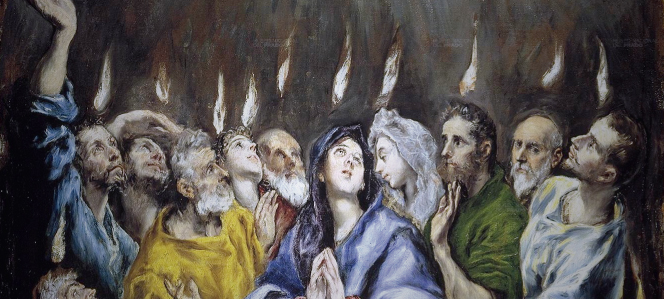
You remember the train of events? A big holiday and Jewish festival was celebrated: the festival of Shavuot, or First Fruits. Lo and behold, the group of disciples was having a prayer meeting, when suddenly “there was a sound from heaven like the roaring of a mighty windstorm, and it filled the house where they were sitting. Then, what looked like flames or tongues of fire appeared and settled on each of them. And everyone present was filled with the Holy Spirit and began speaking in other languages, as the Holy Spirit gave them this ability.”

The disciples were as surprised as anyone! Yet, Peter realized what was going on and as one of the spokesmen for the disciples, he stood up and proclaimed that this was indeed an earthshaking sign from God! He even quoted from the prophet Joel, about the descending of the Spirit of God.

You remember what happened? Peter said, ““People of Israel, listen! God publicly endorsed Jesus the Nazarene by doing powerful miracles, wonders, and signs through him, as you well know. 23 But God knew what would happen, and his prearranged plan was carried out when Jesus was betrayed.”

I am certain that as Peter spoke he remembered that last night in the Upper Room; their leader and Rabbi Jesus gave the disciples a firm promise, saying “And I will ask the Father, and he will give you another advocate to help you and be with you forever— 17 the Spirit of truth. The world cannot accept him, because it neither sees him nor knows him. But you know him, for he lives with you and will bein you.”

This cataclysmic happening on Pentecost morning was that exact thing! The pouring out of the Spirit of truth, God’s Holy Spirit! It was not a gentle, even passive pouring out, but instead a mighty rush of wind! Flames appearing over each believer’s head! And, the gift of tongues or speaking in languages that the disciples had never learned! God displayed awesome power and might on that Pentecost morning!

Let’s go back a few weeks, to that Upper Room, to that Passover dinner just before Jesus was betrayed. All during the past few weeks Jesus had been predicting His death. Fulfillment of prophecy often seems distant and impersonal…like it is not warm or intimate. By some standards, Jesus gave a prophecy, it’s true. But more than that, Jesus gave a firm promise. He promised that His Heavenly Father would send the Spirit of truth upon the disciples.

 “For he lives with you and will be in you.” Such a positive way of seeing this marvelous event! Jesus recognized that His promise would become a lifeline for the disciples, a promise made, and a promise He certainly kept! Isn’t keeping a promise warm, positive and genuine? That describes our Lord Jesus to a “T”

Throughout the Gospel of John, Jesus supplied deep needs. Wants and desires, too. He supplied a whole description on new life to Nicodemus. Jesus supplied living water, spiritual hydration to the woman at the well. He supplied healing to the man by the pool of Bethesda. Jesus supplied guidance into an unknown and frightening future to Thomas, and for knowledge that God’s promises are definitely true, in Philip’s case.

And here, in the Upper Room, to all of us here today and throughout the centuries, Jesus elaborated on the gift of the Holy Spirit. Our Gospel reading today points to “an intimate Pentecost, to the Holy Spirit at work in our inner lives and in our world drawing us into intimate relationship with God who delivers on all God’s promises.” [1]

The Pentecost event two thousand years ago was indeed a huge cataclysm of sound and wind and flame and excitement! Yes, and our individual Pentecosts today can also be quiet, introspective and just as full of the Holy Spirit. Have you not known? Have you not heard? The everlasting Lord, the God of all creation is sending the Holy Spirit into each of our lives.

This is not a mere prophecy, an impersonal declaration of the might and power of some distant Higher Power. Our risen and ascended Lord Jesus has given us a personal promise, a warm, genuine affirmation of God-With-Us, Emmanuel. A genuine promise given, and a promise bountifully kept – in your life and mine. Amen, alleluia!    

@chaplaineliza

(Suggestion: visit me at my other blogs: matterofprayer: A Year of Everyday Prayers. #PursuePEACE – and  A Year of Being Kind . Thanks!


[1] https://www.patheos.com/progressive-christian/intimate-pentecost-alyce-mckenzie-05-10-2013

Unknown's avatar

Wipe Away Every Tear

“Wipe Away Every Tear”

Revelation 21:1-6 (21:4) – November 1, 2021

            Do you remember the ending to fairy tales? “…and they lived happily ever after.” After life in this world, a life lived in an imperfect world of sadness, fear, sickness, anxiety, evil, trauma and death, I think “they lived happily ever after” sounds pretty good!

            Our Scripture reading for All Saints Day comes from Revelation, the last book of the Bible. Chapter 21 is all about the new heavens and the new earth, after God remakes everything; the heavens, the earth, and every creature living on the earth, including the New Jerusalem, the Holy City. The imperfect, fallen creation has passed away, and everything has become new!

            I want us to focus on one verse in particular: “God will wipe every tear from their eyes. There will be no more death or mourning or crying or pain, for the old order of things has passed away.” Wow! That must be something! Something other-worldly, indeed!   

            But, as I’ve said to my children a number of times before, we aren’t there yet.

            We still live in this imperfect world. Sure, it’s still a world of marvelous beauty. I have just finished a month of posting October nature photos on social media, on Facebook and Twitter. I have taken some remarkable photos in the past few weeks, and it is a joy to be able to show many people the natural wonders I have seen and experienced in the Chicago area.

            Let’s take a look way back – far, far back, to the beginning of the world. The creation of the heavens and the earth, back in Genesis chapters 1 and 2. Those first two chapters are filled with wonders, with marvelous word pictures. And when God finished the whole creation, God called it all very good. A stamp of divine approval, indeed!

In the fantasy book The Magician’s Nephew, one of the Chronicles of Narnia, we see the great Lion, Aslan, creating the brand new world where the land of Narnia is going to be. As Aslan sings His powerful, magnificent song of creation, the newly created stars sing for joy, simply because they can! C.S. Lewis did a vibrantly imaginative job in his novel, bringing Narnia to life at its beginning. I can just image the almighty God who created our heavens and earth doing something very much similar – singing the universe into being!    

            Sadly, things did not stay that way. Sin entered into the world. Adam, Eve, a serpent, and fruit from the tree of the knowledge of good and evil were all mixed up together, and from that time, the earth has been imperfect. A fallen planet, with imperfect, fallen creatures living on it.

            With sin, death entered into our reality, into our fallen creation. Yes, there is a remarkable amount of beauty in this world, but a great deal of suffering and trauma exists as well; a lot of death and mourning and crying and pain. We here in this imperfect world miss our relatives and loved ones who have died, who have transitioned to be with the Lord.

            When some people think and talk about going to heaven, they might speak of people in long white robes singing in heavenly choirs. Or, playing harps while sitting on clouds. Sure, our hymn setting of the Doxology tells us the heavenly angels praise God a lot – “praise God above, ye heavenly host.” I want everyone to notice that we are among “all creatures here below.” 

Everyone who loved God and has died is one of “the heavenly host.” All the saints we talk about in worship today praised God when they were creatures here below. These saints praise God now among the heavenly host, even before God remakes the world anew! [1] Praising God, especially in song, is one way people in this world and the heavenly realm connect.

However, let us jump forward to the new heavens and new earth again. I am not sure, but I suspect there will be a whole lot more to do in heaven than just play harps. These first few verses of Revelation chapter 21 hint at the vast new possibilities we will have, with a whole new heaven and earth laid out before us. Our God will be with us forever, and God has promised to eliminate grieving and mourning, to wipe away every tear from every eye.

            You and I may mourn here in this world. We may bend and bow and be pressed by the stresses and strains of life here, with all the difficulties and sorrows. “Honestly facing the pressures of life is the essential first step toward dealing with them, but it is viewing them in the light of eternity that gives them their true place in the scheme of things. The troubles of this age seem beyond solution, but Christ has broken the seals and confounded the darkness with light. “The old order of things” is passing away, “now the dwelling of God is with people, and he will live with them” and “God will wipe every tear from their eyes.” [2]

            That is not only comforting news, comforting to our hearts and minds, but it is marvelous news for all eternity. What we experience in this life is not the final chapter. We get a promo, like a movie trailer in the theater, letting us know about coming events, coming attractions.

            Revelation 21 and 22 are only a little glimpse into the new heaven and new earth, but I want to see more. Don’t you? How wonderful that there will no longer be any reason to shed tears or mourn or have pain.

No matter what you and I are going through right now, our Lord Jesus has promised to stay right by our sides. Plus, God has promised us a future more wonderful than anyone can possibly imagine. And, that is a divine promise.

@chaplaineliza

(Suggestion: visit me at my other blogs: matterofprayer: A Year of Everyday Prayers. #PursuePEACE – and  A Year of Being Kind . Thanks!


[1] http://worshipingwithchildren.blogspot.com/2015/09/year-b-all-saints-day-november-1-2015.html

[2] http://www.lectionarystudies.com/easter4ce.html

“God Will Wipe Away All Our Tears,” Rev. Bryan Findlayson, Lectionary Bible Studies and Sermons, Pumpkin Cottage Ministry Resources.

Unknown's avatar

God Answers When We Cry

“God Answers When We Cry”

Psalm 22:23-31 (22:24) – March 3, 2021 (Midweek Lenten Service, Week 2)

            How often do you cry out to God in prayer? Whether it’s sadness, grief, despair, or anger for yourself, or in pleading prayer for a loved one, this is an agonizing feeling that so many people have in common.

            This psalm, Psalm 22, may be familiar to many people from Jesus’ last words on the Cross. The first line of this psalm are those words of lament, “My God, my God, why have You forsaken me?” These are words many suffering people have echoed throughout the centuries. And, some will more closely examine these words from the beginning of Psalm 22 in just a few weeks, when we enter into the Passion of our Lord, in Holy Week.

            However, there is so much more to this psalm! The reading for today is from the end of the psalm, verses 23 through 31. Yes, it comes from a psalm of lament. And, who has not complained to God at some time or other? Sometimes, more often than any of us wish to?

            These cries of lament and complaint have a specific pattern to them.

  1. the invocation, in which the psalmist cries out to God to hear and listen
  2. the complaint, in which the psalmist tells God what is wrong
  3. the petition, in which the psalmist tells God what the psalmist wants God to do
  4. the expression of trust, in which the psalmist tells God why she or he knows that God can do what the psalmist asks
  5. the expression of praise and adoration, in which the psalmist celebrates the goodness and sovereignty of God [1]

This psalm reading, from verse 23 on, is wholly in the last part of this pattern: the expression of praise and adoration. We are in the praise territory of this hymn, and this last portion of the psalm is tied closely to the beginning, which seems so dark and hopeless. The psalmist makes a journey from darkness and despair to light and hope.

Is that our journey, sometimes? Can we be in the depths of misery or sadness or grief or despair? And then, gradually, the light of God’s presence comes into our experience. God extends hope and encouragement into our hopeless or sorrowful situation.

As I learned from Dr. Ken Bailey in one of his excellent Bible seminars, centuries ago there were no titles or numbers for the psalms. Bible students and scholars would refer to psalms by the first line. So, when our Lord Jesus referred to “My God, my God, why have You forsaken me?” Yes – I am sure He was speaking forth this great lament from Psalm 22. However, I believe Jesus may also have been thinking of this portion of the psalm, especially verse 24: “God does not neglect the poor or ignore their suffering; God does not turn away from them, but answers when they call for help.”

            We do not have a distant, uncaring God! Yes, there is pain and suffering and sadness in the world. Yes, we will have sorrow and grief and even despair in our lives. Yet, God is present even amidst all that negative stuff. God will sit with us, or walk by our sides, as we go through all of that. And if we have a loved one who is going through the valley of the shadow, we can come alongside of that family member, or friend, and let them know that we are there, too.

            As Paul tells us in 2 Corinthians 1, the Lord helps us in all our troubles – vertically – so that each of us may be able to help others – horizontally – when they go through their troubles and difficulties. Praise God for God’s faithfulness to all generations.

Remember, this psalm assures us that all peoples will worship the Lord; from every part of the world they will turn to God. This is a promise from God, and it is faithful and true. Amen.  

@chaplaineliza

(Suggestion: visit me at my other blogs: matterofprayer: A Year of Everyday Prayers. #PursuePEACE – and  A Year of Being Kind . Thanks!


[1] https://www.workingpreacher.org/commentaries/revised-common-lectionary/second-sunday-in-lent-2/commentary-on-psalm-2223-31-4  

Nancy deClaisse-Walford, Professor of Old Testament and Biblical Languages, McAfee School of Theology, Mercer University, Atlanta, GA


Unknown's avatar

Cheerful Givers

“Cheerful Givers”

2 Corinthians 9:7-12 (9:7) – November 15, 2020

            Have you started thinking about Thanksgiving yet? Thoughts of Thanksgiving turkeys full of seasoned stuffing, mashed potatoes heaped high, creamy green bean casserole and tangy cranberry sauce bring sure-fire memories to many, many people at this generous, giving-time of the year. Except – will anything like an ordinary Thanksgiving celebration be possible this year? Can anything save this beloved holiday from the ravages of this pandemic and the stress and anxiety that seem to accompany it at every turn?

            Yet – with all the personal trials and tribulations that were continuing to happen to the apostle Paul, how could he even focus on generosity? Just two short chapters after today’s reading, in chapter 11, Paul talks about the dozens of times he was beaten, stoned, jailed, shipwrecked, and repeatedly denied freedom of religion. Yes, I suspect Paul had a close acquaintance with stress, fear and anxiety. Perhaps he did not allow them to take root and settle down in his head and heart, but I suspect Paul knew these deep feelings pretty well.

What did the apostle Paul write just before our reading for today? In the paragraphs before today’s reading, Paul asks for a collection to be gathered together. This collection of money is to be given to the persecuted, needy church in Jerusalem. The Christian friends in Jerusalem certainly knew what it was like to be in distress, too! It’s then Paul tells more about giving. How to give, and why. How not to give, too.  

            Of course we are preoccupied. Many things are on people’s minds. Not only the coronavirus, and public health, but stress, uncertainty and political upheaval. Is there any reason stress, fear and anxiety would NOT be running rampant in the United States today?

            Who can possibly turn our minds to giving and generosity, with so much going on in our lives? How can each of us follow this command from God to give generously? Paul would remind us that many, many Christians in his day had lots of things going on in their personal lives, too. Many were truly persecuted in a way that would make our skin crawl; many were in trouble with the imperial forces and government, too. Yet – Paul praised his former church members for remembering the faithful believers in Jerusalem – sending them a much needed financial gift.

            There is a clear difference between certain people who give freely and generously, and other people who give like their arms are twisted behind their backs – out of a matter of grudging obligation. And oh! Can we tell the difference!  

            We have a proverb of Paul’s day included here, in verse 6: “the one who sows sparingly will also reap sparingly, and the one who sows bountifully will also reap bountifully.” Here Paul uses a common saying of the day to illustrate his point. Talking about bounty, about being generous, and about grudging giving out of obligation—being stingy.

            Do you know someone who is really stingy? Someone who is really pained to spend even one dollar of his or her own money? When I was young, there was an older man in our neighborhood who was exactly like this. So stingy he would creak when he walked. So stingy he couldn’t think of putting a penny in a Salvation Army kettle at the holidays.

            I suspect all of us know a tight-fisted person like this. Not at all the generous, open-handed way of giving that the Lord Jesus models for us. God never gives out of an attitude of grudging obligation, and neither should we.

            As each person purposes – or decides in their own heart, that is why we are to give. Did you ever think of giving because you want to give and because God has put it in your heart to give? To give out of the pure joy of giving? Paul had churchgoers remember the church – by sending a much needed financial gift.

One of my acquaintances knew a stingy old woman. So stingy, she would cut coupons and live on the bare minimum in her tiny house. But, she surprised us all after she died. Her will left $50 million dollars to Monmouth College. She never experienced the joy of giving away that money. She never experienced Thanks-GIVING. Don’t miss the joy of giving.
            Our giving “reveals the purposes in our own heart. “If we say we love the Lord more than surfing, but spend all our money on surfboards and do not give as we should to the Lord’s work, then the way we spend our money shows the purposes of our own heart more accurately than our words do. Jesus said it simply: ‘For where your treasure is, there your heart will be also.’” [1]

But, wait! If we have this generous attitude towards giving, being open-handed, positive and cheerful, then God will bless us abundantly with every blessing. Isn’t a warm heart and abundant blessings what we all really want?

What a marvelous promise. What wonderful words. And, this is not “maybe,” or “I hope so,” but it is a blessed promise from God! This is not only for our gifts of treasure, for our gifts of money. This blessing is for our gifts of time and of talents, as well.

For the person who comes and volunteers on Sunday mornings to start the coffee, sets out the bulletins, does the pandemic safety checks, or turns on the lights in the sanctuary—thank you. For the person who bakes a cake or makes a table decoration or repairs the church building—thank you. These are the gifts of time and of talent, and God is so pleased with that, too. God is pleased with whatever gifts you sincerely, truly offer with all your heart.

Alleluia, amen!


[1] https://www.blueletterbible.org/Comm/guzik_david/StudyGuide2017-2Cr/2Cr-9.cfm

@chaplaineliza

(Suggestion: visit me at my regular blog for 2020: matterofprayer: A Year of Everyday Prayers. #PursuePEACE – and my other blog,  A Year of Being Kind . Thanks!

Unknown's avatar

Do We Have Golden Calves?

“Do We Have Golden Calves?” – October 11, 2020

Exodus 32:1-14 (32:2-4)

We are living through great uncertainty. Look at the volatile weather during the past few months! Hurricanes, floods, wildfires, extremes in temperature. What about the COVID-19 pandemic? More than 210,000 people have died in the United States in the last six months, as many as died in all four years of the American Civil War. Added to those anxious statistics, we can name the recent racial tensions and the national political upheaval.

 When you or I are fearful or anxious or uncertain, what do we do? Where do we go for stability or comfort? What is all-important to each one, in such a tumultuous time?

As we consider the people of Israel, we might think of all of them being fearful and anxious, too. After all, they had just left Egypt not many weeks before. They were no longer slaves! Yet – they were also wandering in the wilderness of the Sinai peninsula. A foreign land, with strangeness and uncertainty at every turn!

Their trusted leader Moses had gone on top of the mountain to talk to this God that he said was the God of their ancestors Abraham, Isaac and Jacob. An invisible God they could not see, touch or understand, unlike the Egyptian gods.

“Get up and make gods,” they shout, because this Moses has obviously left us alone to die, and we cannot last another day, another minute, without some sort of God or gods to lead us. As for that guy Moses, well, “we do not know what it is to him,” which I take to mean that they have completely forgotten that he told them he was going up the mountain to chat with YHWH and would return to bring them the divine news of the day. As far as they know, Moses and YHWH are engaged in a handball tournament or a solo beach volleyball game.” [1]

Could you understand the fear, uncertainty and anxiety of the people of Israel? No wonder they begged Moses’ brother Aaron for some tangible god, a god they could see, touch and understand, like the Egyptian gods they knew from their time of slavery in Egypt.  

Aaron knew just what to do. He gathered all the golden rings, earrings and ornaments, melted them into malleable metal, and formed a golden calf. An idol the Israelites could see, touch and understand. Something to give them comfort and stability.

When you or I are fearful or anxious or uncertain, what do we do? Where do we go for stability or comfort? What is all-important to each of us, in such a tumultuous time?

We might scoff at the people of Israel sacrificing to the golden calf. But –is there anything we would sacrifice our time for? How about our money or our health? Anything that is so important in our lives that we might make it an idol? Our own personal golden calf?

Our golden calves might take many forms. I have an acquaintance who I’ve known for a long time. She considers her house to be so important. Of course, it is beautiful, but she has poured money into that house and the large garden—and the coach house out back—for many, many years. I suspect that house might be a golden calf in her life.

Another acquaintance I have owns seven cars. Seven! He is so proud of them! He washes them, waxes them, and considers them to be very valuable possessions. I think we all know someone who has idolized something – or someone – or some substance so much that it has become a golden calf to them. Perhaps each of us may consider something all-important. Something we sacrifice for. More important than God, even?

When you and I think deeply about it, the idea of an invisible God can be scary! Can we blame the people of Israel for wanting a tangible god, one they could see and touch and understand? Of course they wanted Aaron to construct a physical idol. “It is easy to mistake our own creations for our God. It is tempting to shape our plundered riches, our wages, and even the reparations for our losses into an image that pleases our senses, mollifies our anxiety, and invites admiration from our neighbors. But that thing we have made from Egypt’s gold is not our god.” [2]

We heard what happened between Moses and God at the ruckus with the idol. God got angry at the people of Israel, but Moses convinced God to allow God’s anger to subside.

Golden calves or “idols lure us with powerful illusions and misplaced hopes. They make seductive promises. These false gods come in all sizes and shapes. They promise much but deliver little. We can idolize almost anything — career, race, gender, sex, wealth, age, and especially nation. Our personal gods are so petty and pathetic that they would be laughable if they weren’t so insidious and corrosive.” [3]

We can take this example as a warning to us. We need to ask God to forgive us for constructing idols in our lives, too.

However, we also have promises from the Lord. God is always with us, even though we may not see God. Like the sun behind dark clouds, the sun is always present. Even in times of stress, fear and anxiety – such as right now! Even at times when we cannot see the invisible God, God is right there, by our sides. Surely, it is God who saves all of us. Alleluia, amen.  


[1] https://www.patheos.com/progressive-christian/2014/10/you-cant-have-it-both-ways-john-holbert-10-06-2014 

“You Can’t Have It Both Ways,” John C. Holbert, 2014.

[2] http://www.workingpreacher.org/preaching.aspx?commentary_id=3442

Commentary, Exodus 32:1-14, Anathea Portier-Young, Preaching This Week, WorkingPreacher.org, 2017.

[3] https://www.patheos.com/progressive-christian/2014/10/you-cant-have-it-both-ways-john-holbert-10-06-2014 

“You Can’t Have It Both Ways,” John C. Holbert, 2014.

@chaplaineliza

(Suggestion: visit me at my regular blog for 2020: matterofprayer: A Year of Everyday Prayers. #PursuePEACE – and my other blog,  A Year of Being Kind . Thanks!

Unknown's avatar

We Can Be Friends, Too!

(This week, we are celebrating in Sunday Worship with a Children’s Service: a service oriented toward children and young people. We pray for them as they begin a new school year, whether online, in-person, or something in between. This sermon from Philippians 2:19-30 is geared toward all ages, especially for our younger friends.)

“We Can Be Friends, Too!” – August 23, 2020

Phil 2-20 work of the Gospel

Philippians 2:19-30 (2:28-30)

Paul wrote a letter to the Philippian church, when he was in prison. Paul tells about his two close friends who are with him, supporting him while he is in prison.

What if your friend was in real big trouble? Would you be there to help your friend who was in a desperate situation? Or, would you want to hide and stay away? Would your fear keep you from helping? I bet you would be like Timothy and Epaphroditus and would be there to help your friend!

So many church members just stay out of the way. Can you – can I be a friend of Jesus if we hide and stay out of the way?

As Paul wrote this letter to the Philippian church, he was in prison. You and I might think that Paul wasn’t able to do anything in prison, but just hide and keep out of the way. He couldn’t go where he pleased. He was locked up!

Here Paul talks further about being a good friend. Paul tells about his two close friends who are with him, willingly supporting him while he is in prison.

Would you – or I – be there to help our friend who was in a desperate situation, even in prison? Or, would you want to run to hide and stay out of the way? Could our anxiety and fear make us super scared? Or, would we continue to be there for our friend?

The friends in Philippi knew Paul’s friend Timothy from when Timothy was one of Paul’s companions. Paul had the highest praise for his young friend, saying that Timothy was genuine, faithful and could certainly be depended on, no matter what. Especially when he was telling other people about God’s Good News.

Isn’t this the best kind of friend to have with you, if you are in a difficult spot?

I know that going back to school is usually not such a challenging time. However, we haven’t had Coronavirus around before. Having Coronavirus is almost like being in jail! It is keeping us locked away from our friends. It is very stressful for all of us. But, none or us are alone. God is always with us, is always fighting for us, and has great plans for each of us.

Are you willing to be genuine, faithful and dependable for your friends? How about for your fellow classmates or co-workers? Paul reminds us, we can all be like Timothy, willing to be friends for others, no matter what.

Paul’s other friend, Epaphroditus, was a church leader in Philippi. He hand-carried an important financial gift to Paul.

Epaphroditus also was very, very ill while traveling, and after he reached Rome where Paul was in prison. However, he overcame those difficult times. Paul praises his friend Epaphroditus for working just as hard as Paul did himself! Plus, while Paul was stuck in prison, his Philippian friend took excellent care of Paul. I suspect he was Paul’s hands and feet, and really helped the ministry while Paul was in jail.

For all of those reasons, Paul really praises Epaphroditus. But, at the same time, Paul needed to send him back to Philippi with this very letter. (The one we are reading.)

Do we understand how much it cost Epaphroditus to go visit Paul? Weeks, perhaps even months on the road. He was deathly ill while traveling, and after he reached his destination, too. Of course Paul was grateful and thankful for both his good friends!

Do you know anyone who has had the Coronavirus? You cannot go and see them. They are alone. Yet you can be a good friend and send them messages, right? And, if you were sick, you know that God is your good friend. No matter how things are going, how unhappy you are or how troubled your life seems, God will be right next to you. We have God’s promise on that! God is true to those who believe.

Are we supposed to be friends to others in a similar way? I think Paul would say, “Yes!”

Our hearts can be filled with gentle words, kind deeds, forgiving hearts and peacemaking. Jesus is depending on all of us! Did you ever think Jesus was depending on you? You might be the only way God could show love to some of the kids, families, co-workers, and neighbors you meet every day – in class, or in the office, or at the grocery store, or at the park. [1]

Just as much as Paul was thankful for Timothy and Epaphroditus being his good friends, you and I can be thankful that God is our good friend. No matter how things are going, how happy we are – or not, or how bumpy or steep the way is ahead, God will be right next to us. We have God’s promise on that!

Paul encourages each of us to come alongside of all our friends, and be there, just in case. That is truly something we all can be thankful for. Alleluia, amen!

[1] http://worshipingwithchildren.blogspot.com/2013/07/back-to-school-2013.html

@chaplaineliza

(Suggestion: visit me at my regular blog for 2020: matterofprayer: A Year of Everyday Prayers. #PursuePEACE – and my other blog,  A Year of Being Kind . Thanks!