Unknown's avatar

Peace for Those Who Wait

“Peace for Those Who Wait”

            Waiting. I can remember waiting while being pregnant. Waiting for the weeks to pass. Waiting for another prenatal visit. Especially waiting during that last month. And, waiting for the labor pains finally to kick in and to get going, for the baby to finally be born. (Each of my pregnancies involved long labors.)

            I can relate to our Gospel reading from Luke chapter 1 today! Waiting! Waiting for something huge to happen. Waiting for babies to be born.

Except, Mary found herself in the early months of pregnancy without the protection of a husband or partner. I have a feeling she and Joseph were having continuing dialogue about her being pregnant, and not by Joseph. That must have been awkward, to say the least! We find that Mary traveled and went to her older cousin Elizabeth’s house, some distance away, for several months. Elizabeth’s home must have been a sanctuary in an unpeaceful time for Mary, while she was in a time of waiting.

Let us look at the current day, and focus on the United States. Things today, situations here and now are certainly not peaceful. We are looking at the second Sunday in Advent, and the second candle on the Advent wreath signifies the candle of Peace. Can you and I possibly find peace in an unpeaceful world?

Is there a way to look for God’s peace in a turbulent and tumultuous time?

As I said last week, we are well used to seeing Mary as a sweet, calm, quiet, almost docile follower of God’s will for her life. Last week, I brought up the fact that Mary, our Mary that Dr. Luke tells us about, was also a prophet! As a prophet, she brought hope to the world. Was it possible that Mary also brought peace to an unpeaceful world?  

This prophetic role, this insight is a new way of looking at Mary for me. New for me, and I hope enlightening to you, too. As we consider the call of the prophets in the Hebrew Scriptures, and consider the call of Mary by the angel Gabriel, we see all the familiar, classic steps: we see God’s initial call to Mary, God’s task, Mary the prophet’s objection, God’s reassurance, and Mary the prophet’s acceptance of call. [1]

All of these are found in Mary’s conversation with the angel Gabriel in the account of the Annunciation, found in Luke chapter 1. I was struck by – you might say, gobsmacked by – the clarity of all those classic steps of the prophet’s call displayed, and I had never seen it before. Sure, I had approached this insight in years past, even preaching about how Mary was a radical by singing about such radical ideas.

Even though I have been well acquainted with the first chapter of Luke for decades, the further concept of Mary as God’s chosen prophet never fully clicked with me. Until now.

As we go on to look at the Canticle that Mary sings, I want to bring before us the earth-shattering idea that “Luke portrays her in a startling role: one that shakes up the way we’ve been brought up to think of her and invites us to stop observing her and start imitating her.” [2]

Can you listen with open ears to Mary sing of God who “has brought down rulers from their thrones but has lifted up the humble,” and “has filled the hungry with good things but has sent the rich away empty.” This is a classic story (or song) about the “haves” and the “have-nots,” and we can guess who Mary associates herself with! The Jewish people are definitely downtrodden; the Roman empire certainly has them under their collective boot heel. Nevertheless, Mary’s prophetic notes of joy ring out for all to hear in the Magnificat!

Remember, Mary’s song, giving glory, magnifying God, is also clearly a radical protest song. As she sings about the injustice not only in her hometown, but within the whole occupied Jewish nation, any peace but a forced “peace” was the furthest thing from the minds of the Roman occupiers. Yet, “the new world Mary sings about here isn’t elusive or unquantifiable at all. The hope she holds onto is one passed on to her from her ancestors: from Hannah, who sang this hymn of reversal and revolution in the Hebrew scriptures, to the Psalmist, who echoed praise to God for raising the poor from the dust and lifting the needy out of their desperation.” [3]

One of my favorite interpretations of the Canticle Mary sings, the Magnificat, is a newer song written by artist Rory Cooney, set to a traditional Irish tune called “Star of the County Down.” It is presented as a story-song with refrain: “Though the nations rage from age to age, we remember who holds us fast: God’s mercy must deliver us from the conqueror’s crushing grasp. This saving word that our forebears heard is the promise which holds us bound, ‘til the spear and rod can be crushed by God, who is turning the world around.” [4]

Can you believe how radical, how revolutionary an idea this was (and is)? Especially to a large group of people who have been poor, downtrodden, and left on the outskirts for generations, perhaps for centuries? What good news – even marvelous news – this would be to such a group of people, to know that God not only loves them, but God cares about each of them, and is actively coming to their defense, to fill their stomachs and right their wrongs!

Here in the United States, right now, we have a large segment of the population becoming fearful and anxious. Not only about the economic situation for individuals and families, but also the current political situation. The roaming of ICE agents and Department of Homeland Security walking freely, touchy and eager to display their confounding and overwhelming strength, their power over.

How striking and similar is this to the occupying Roman army in first century Palestine? Some striking and sadly similar parallels between the first and twenty-first centuries. In both cases, God’s love was and is displayed, overcoming worldly power.

As the Canticle of the Turning says in the last verse, “Though the nations rage from age to age, we remember who holds us fast: God’s mercy must deliver us from the conqueror’s crushing grasp. This saving word that our forbears heard is the promise that holds us bound, ‘Til the spear and rod be crushed by God, who is turning the world around.” [5]

  Let those with ears to hear, hear the words of the prophet Mary. Alleluia, amen.

@chaplaineliza

(Suggestion: visit me at my other blogs: matterofprayer: A Year of Everyday Prayers. #PursuePEACE – and  A Year of Being Kind . Thanks!)


[1] http://www.patheos.com/progressive-christian/mary-reluctant-prophet-alyce-mckenzie-12-17-2012.html

[2] Ibid.

[3] The Do Not Be Afraid Advent Devotional – © 2022 Illustrated Ministry, LLC

[4] Cooney, Rory, “Canticle of the Turning,” (GIA Pulications, Inc. Chicago, IL: 1990)

[5] Ibid.

Unknown's avatar

Peace – God’s Peace

“Peace – God’s Peace”

John 14:23-27 (14:27) – May 25, 2025

            I invite you to turn on the network news, read the news on your cellphone, listen to the news on a podcast, read a computer news website. Take the opportunity to sample any of these news sources. I’m sorry to say, but repeated over and over again are stories, articles, and photos of disquieting and upsetting events in this world.

            These familiar words of our Lord Jesus we have just read sound far away and distant. It seems that on the contrary, every day, we are surrounded by evidence of anger, upset, uproar, catastrophe, and outright fighting.

Peace. I’ll say it again—peace. When I think about the word “peace,” many disparate connections come to mind. Peace on earth. Interior peace. Peace be with you. Peace in the Middle East and in Ukraine. Peace in our time. Visualize world peace.

            Many today are searching for peace in an unpeaceful world. It doesn’t matter where you are located, what you do for a living, who your ancestors are. The drive for a peaceable life is a drive that is deep-seated and heartfelt in many people, a drive for living in a peaceful community, with a stable government, in a peace-filled environment.

There is a realistic, cynical part of me that wants to say, hold it! Come on. This isn’t paradise, you know. Wake up and smell the coffee. Come back to reality. Peace just won’t happen now, not on a worldwide scale. At least, not that kind of peace.

            Let’s go back to the situation of Jesus and His disciples. Jesus was living in what is now the country of Israel. During the first century of our common era, Israel was by no means an independent country. It was a Roman province, under the heel of Roman domination and oppression. In plain terms, Israel was under occupation! Remember the political situation Jesus was operating under! Everything was not hunky-dory in Jesus’ time. Certainly not.

            So, politically, the situation was not good. Personally, in the life of the Rabbi Jesus, this was not a peaceful time, either. Remember where Jesus and His disciples were, here in John 14. This was the Passion Week of our Lord. This chapter from John is part of the Upper Room Discourse, given earlier at the Passover dinner on the night Jesus was betrayed.

I ask again: was Jesus talking about external things? I think not. One big clue I have comes from our Lord Jesus’s phrase “I do not give to you as the world gives.”

            What does the world give? What is big, in the world’s eyes? What is worthwhile, as far as the world is concerned? Money, power, prestige. A big house, a big car, a big job. An attractive spouse, 2.5 well-behaved, cute children, Graduating from “appropriate” schools, living in “appropriate” places, knowing “appropriate” people. Fill in the blanks. These are all external, human attempts to try to get to peace. Many people try to achieve peace with themselves and with others through the world’s methods and by being steered into ways the world proposes.

So, some people turn around and concentrate on the inside! To be more specific, on their insides. The internal person. But, there’s a danger here, too.  If we’re not careful, worry and anxiety can sneak into the picture. Worry and anxiety can gnaw away at us on the insides, as well as our relationships with God and with others around us.

            Has anyone here had any experience with termites? I never have, thank God, but I understand that termites can go through large amounts wood over an extended period of time. If we allow worry and anxiety to eat away at our peace and relationship with God and with others, it’s like termites eating away at a wooden front porch. After a period of time, even though the porch looks stable, and seems like it can hold weight, it collapses.

            It’s the same way with us, when we allow worry and anxiety to get the better of us and take control of our insides. This refers to the second part of verse 14:27, “Do not let your hearts be troubled, and do not let them be afraid.” This is Jesus giving advice to us! He is telling us, just as He told the disciples so long ago. This is an exhortation, not a suggestion.

            What does all that have to do with you and me, today, anyway? Whether we’re talking about 2000 years ago, or whether we’re talking about today, life continues to happen. We can see that things, events, situations just don’t stop. Exterior upset, stress, catastrophic illness, fighting, calamity. All of these can happen, and probably will, at some point or other in our lives.

            Let’s think more about scary things, unpeaceful situations. When you and I are really scared, what happens? Do we have a safe space where we can run? Who do you run to? “We run to someone who loves us and will help us! Does that make us feel better? It does me! I don’t like to be scared and alone…I think that’s what Jesus means by giving us peace, Jesus reminds us that we have each other to help us remember that we are never truly alone.” [1]

It isn’t easy. Jesus didn’t say it was. This was the most event-filled night of our Lord Jesus’ life. He knew what was coming. Yet—He makes the statement, “Peace I leave with you, My peace I give to you.” He gave His disciples the gift of His peace.

            Jesus gives us the same gift, today, too. His peace. It isn’t peace like the world would expect. It isn’t always external peace (although it can very well be that, too!), but it is peace on the inside. Peace where it counts, as far as Jesus is concerned. We have His word on it. He promises to give us peace in our interior selves. Even though life happens, and trials and tribulations come into each one of our lives, we can claim our Lord’s promise and carry His peace with us, wherever we go. We can praise God for these gracious words of peace.

            How can you impart God’s peace to those around you? How can you communicate the good news of the gift of Jesus’ peace to others? My challenge to each one of you is to pray that God will not only encourage your hearts with Godly peace, but also provide opportunities for you to extend the peace of Christ to others.

            What a gift! What a promise! What an opportunity! Thank Jesus for His peace.

            Alleluia, amen.

@chaplaineliza

(Suggestion: visit me at my other blogs: matterofprayer: A Year of Everyday Prayers. #PursuePEACE – and  A Year of Being Kind . Thanks!


[1] https://faithformationjourneys.org/my-peace-i-give-to-you-john-14-23-29-may-1-2016-easter-5c/

Unknown's avatar

Peace, from Generation to Generation

“Peace, from Generation to Generation”

Luke 1:44-56 (1:50) – December 8, 2024

People have been writing songs about the Virgin Mary for centuries. Songs of praise, songs of worship, songs honoring God, and lifting up Mary for saying “yes” to God. Christmas carols might be the first thing that come to mind—but I am also thinking of music from centuries past. From the familiar first part of Handel’s Messiah, to the various settings of the Magnificat, with lyrics from the first chapter of Luke—our Gospel reading for this morning.

            Some Protestants might not be as familiar with the Virgin Mary as many Catholics and Orthodox Christians are. Mary is held in extremely high esteem in many denominations and faith traditions throughout the world, and for excellent reasons. I honor her greatly.

If we look at our modern world today, the situation here in our country, we have a great deal of uncertainty, and very little peace. Does our world today have some strong similarities to the world that Mary inhabited? I wonder, and I would say yes.

Mary sings about the mighty work of God. Yes, personally, in her life. But also in the lives of all the people in the world. “What will this work of God look like?  Something revolutionary is about to happen. God will turn the world upside down. The rich and the powerful will be brought low, and those living on the margins will be raised up. This isn’t a vision that fits very well with a Christian world that values success and power.[1]

For, that is definitely what a large portion of the so-called “Christian world” values today. At least, here in this country, and among a large number of people who claim to follow Christian values and practices religiously. Even if certain Christian denominations do not say it outright, the “Health, Wealth and Happiness Gospel” is a high priority in many people’s lives today.

Let us take a look at what Mary’s situation consisted of. Did you know that Mary—an unwed teenager from an oppressed people-group in an occupied country under crushing Roman rule—was also a radical? A subversive? Was plotting to overthrow the existing oppressive government and replace it with the rule of God?

            What surprising, even shocking things to say about the sweet, innocent Virgin Mary! Everyone associates her with travel to Bethlehem while nine months pregnant, and needing to deliver the infant Jesus in a stable, because there was no room for them in the inn.

That Mary? Radical? Subversive? Absolutely, yes.

Think about the modern Christmas season from another direction. Contrast Mary’s situation with today. Is there any place we can go where we are not bombarded with commercial messages shouting for us to “Buy, buy, buy!” and reminding us of big sales, and markdowns, and half-price! Not to mention all the pressure to be “merry and bright” all the time. Even when going to yet another event or concert or dinner or celebration is the last thing you want to do!

Let us reflect on the first chapter of Luke, on Mary’s song. The last thing on Mary’s mind was commercialism. “Mary’s song, often called the Magnificat, is a welcome contrast to the hyped-up speed of the commercialism that is too often the dominant theme in our culture during the Advent season. Her lyrics are an invitation to approach Christmas with a slower, more contemplative pace.” [2] Is it possible to slow down the frenetic pace of the holidays, to get off the commercial merry-go-round, and instead sit still and worship the coming Messiah?

Sure, the wonderful classical settings of the Magnificat were often sung in a foreign language, like Latin. Or, in text from the King James version of the Bible, full of “thee’s” and “thou’s” and all manner of archaic words. Listen to the first part of her Magnificat, as translated in the modern version by Eugene Peterson, “The Message.” 

“I’m bursting with God-news; I’m dancing the song of my Savior God. God took one good look at me, and look what happened—I’m the most fortunate woman on earth! What God has done for me will never be forgotten, the God whose very name is holy, set apart from all others. His mercy flows in wave after wave on those who are in awe before Him.”

 One well-known depiction of the Virgin Mary is one that is meek, docile, sweet, and not raising a fuss at all. But, wait a moment. Do we realize what Mary is going to sing next? How revolutionary were many of the statements in her song?

             “Even more importantly, Mary’s song is an overture to the Gospel of Luke as a whole. Mary’s lyrics set the tone for Jesus’s radical and controversial ministry that is to come:

You have shown strength with your arm;

You have scattered the proud in the thoughts of their hearts.

You have brought down the powerful from their thrones, and lifted up the lowly;

You have filled the hungry with good things, and sent the rich away empty.

“In contrast, the Christmas season leaves too many still hungry, and too many even further in debt.” [3]

            Do you hear what radical things Mary is saying? If these lyrics of her song were more well-known, would our understanding of Mary be changed? Here Mary is advocating social change, rescuing victims—neglected women, forgotten elders and children, abused strangers and refugees—from being trodden underfoot, even ground under the heel of bragging, bluffing tyrants and braggarts. Turning all society as it was in her day—and ours—upside down.

            What subversive idea is our revolutionary Mary advocating now? Feeding the starving? Giving the poor a banquet? Turning the unfeeling, callous rich people out into the cold? Yes, these radical words are the words found in Luke chapter 1, before we rush on to the narrative of the birth of the Baby in Bethlehem from Luke 2. 

Just looking at this Magnificat, we can see how subversive it was for the infant Messiah to be born to the Virgin Mary. And, we can begin to realize how radical it is for us to say, “O come, let us adore Him, Christ the Lord!” For Jesus truly will bring peace on earth, and He will truly turn the world upside down, just as Mary sang two thousand years ago.

But, this is still only the second Sunday of Advent. We still wait for the baby Jesus to be born in Bethlehem. We still hold our collective breath with all the rest of creation as we wait—and wait. And with Mary, we can rejoice in the promise of the coming Messiah.

Are we overwhelmed with the superficial, commercial glitz and bling of the holidays? Or, are we focused on what really matters – on the coming of our Messiah, our Lord, in God’s peace and wholeness? Let us focus on Jesus, today. Alleluia, amen.

@chaplaineliza

(Suggestion: visit me at my other blogs: matterofprayer: A Year of Everyday Prayers. #PursuePEACE – and  A Year of Being Kind . Thanks!


[1] http://www.bobcornwall.com/2015/12/blessed-are-you-among-women-lectionary.html

[2] http://www.patheos.com/blogs/carlgregg/2011/12/magnificat-learning-to-sing-mary%E2%80%99s-song-a-progressive-christian-lectionary-commentary-on-luke-146-55/

[3] http://www.patheos.com/blogs/carlgregg/2011/12/magnificat-learning-to-sing-mary%E2%80%99s-song-a-progressive-christian-lectionary-commentary-on-luke-146-55/

“Magnificat! Learning to Sing Mary’s Song,” Carl Gregg, Patheos, 2011.

Unknown's avatar

Draw Near to God!

“Draw Near to God!”

James 3:13-4:8 (4:8) – September 19, 2021

            Do you know people who quarrel a lot? I mean, a lot? Some people are not satisfied with anything. I am sure you recognize these people. They regularly moan and kvetch and sometimes outright quarrel about what they have or about what they don’t have. James tells us about these dissatisfied, disgruntled people in our Scripture reading today, among other things.

            We see two kinds of attitudes in our reading today. Two kinds of wisdom, and two kinds of people. One comes from earth, and is grasping, envious, with selfish ambition. The other comes from God, and is peace-loving, full of mercy, and considerate above all things! How do we come to terms with such a stark, black-and-white difference in wisdom? And in people?

            It might be repetitious to read these words from the end of chapter 3 again, but we really need to listen. Again. “if you harbor bitter envy and selfish ambition in your hearts, do not boast about it or deny the truth. 15 Such “wisdom” does not come down from heaven but is earthly, unspiritual, demonic. 16 For where you have envy and selfish ambition, there you find disorder and every evil practice.” I know how seductive the features, things and practices of the world can be. God forgive us for being so distracted and fooled by the world’s wisdom!

            Who is brave enough to admit that they have envy in their hearts, sometimes? Again, who is forthright enough to admit they have selfishness in their character, sometimes? These worldly traits or features are sadly prevalent in this world. Every person alive feels these worldly emotions from time to time. I have, and I suspect you have, too. The problems these negative emotions can cause! They bring a lot of misery in the lives of many, many people, too.

            Let’s consider the worldly, flawed way of thinking and being, for a moment. (Actually, we all fall into this way of thinking and being, more often than not.) Carolyn Brown, retired Children’s Ministry Director, has written a prayer for this reading. Listen, if you would, and see whether these words from Ms. Brown do not resonate in our hearts.

Dear God, we want to look amazing.  

We want great clothes, cool shoes, a great haircut. We want our homes filled with our stuff.

We want all the best people to be our friends. We want to be the first, the best, the most, the greatest. So we grab and hold and demand. We even kick and punch to get what we want.

Forgive us.

Teach us to let go, to open our hands and hearts to others. Teach us to be content with what we have and to share it.

Teach us to think as much about what OTHERS want as what WE want. Teach us to be as loving as Jesus. Amen. [1]

In this reading, James also presents us a much more positive way of wisdom: Godly wisdom. We hear James describe this attitude, this way of acting and thinking, with God’s help. Let’s read the attributes James lists: “the wisdom that comes from heaven is first of all pure; then peace-loving, considerate, submissive, full of mercy and good fruit, impartial and sincere.” Who would not want to display these kinds of positive, caring, loving attributes? Living God’s way is a sure-fire way to show these kinds of character traits! At least, according to James.

What are the operative words that James tells us are essential? Even, imperative? Peace, mercy and gentleness. That’s what this short list of positive, caring, Godly attributes come down to. I know in this letter, this basic manual of how to live the Christian life, James talks a great deal about doing. How to do, what to do, and why we ought to do it, please God! Except – here James concentrates on the inner person. How do we live this way? What motivates us? What is the fuel that keeps us going? Peace. God’s peace. James says, “Peacemakers who sow in peace reap a harvest of righteousness.” An internal reservoir of peace within each one of us that translates to an external harvest of righteousness. (THAT sounds like practical James!)

In the Gospel of John, in the Upper Room discourse on that last night before He was betrayed, Jesus gives us a great gift. He says, “Peace I leave with you. My peace I give to you. Not as the world gives, but as I give it to you.” Maybe, just maybe, you and I just don’t understand the concept of peace. At least, the kind of peace Jesus – and James – talk about here.

“Maybe we’ve defined peace as the absence of something, of conflict, or worry, of trouble, of doubt; but Jesus wants us to define peace as a presence. Peace is not what we’ve emptied from ourselves, but what we’ve filled ourselves with. And what we’ve not filled ourselves with is ourselves – at least according to James.” [2]

            What – practically – can we take away from this reading today? Peace is the way OF God. Peace is the how-to of living a life pleasing to God. Peace is being filled with the presence of God.

            In this practical letter, this how-to manual, James advises his friends on how to live in a way pleasing to God. “Peace is possible, even while [you and I] are works in process. This isn’t about completion and the satisfaction of a job well done; it is about a journey of discovery and transformation. But peace can be our companion in the journey to keep our feet on the path.” [3]

            Practical James would wholeheartedly agree! Keep on keeping on. Live in God’s peaceful presence. It’s a sure-fire way to have God draw near to each one of us.  

Alleluia, amen!  


[1] http://worshipingwithchildren.blogspot.com/2012/08/year-b-proper-20-25th-sunday-in_30.html

Worshiping with Children, Proper 20B, Including children in the congregation’s worship, using the Revised Common Lectionary, Carolyn C. Brown, 2012.

[2] https://www.umcdiscipleship.org/worship-planning/doers-of-the-word/seventeenth-sunday-after-pentecost-year-b-lectionary-planning-notes

[3] Ibid.

@chaplaineliza

(Suggestion: visit me at my other blogs: matterofprayer: A Year of Everyday Prayers. #PursuePEACE – and  A Year of Being Kind . Thanks!

Unknown's avatar

The Bond of God’s Peace!

“The Bond of God’s Peace!”

Ephesians 4:1-6 (4:5) – August 1, 2021

            The Summer Olympics are going on right now – different athletes from countries all over the world coming together. Each country’s team competes for medals, yes; but they also compete individually in accord with the Olympic motto: faster, higher, stronger.

            The apostle Paul refers to sports several times in his letters to the churches. Not a new thing, at all! Many of the people of his day were great fans of different sports, too. We can compare the local church to a sports team – members have different abilities, different strengths. Each individual member provides their different God-given gifts in unique ways to make up the multi-faceted, multi-colored, multi-gifted congregations many of us know.

            The letter to the Ephesian church is divided into two parts. Paul ended the first section with Ephesians 3, with a prayer for an outpouring of Christ’s love. Paul wished the Lord might grant strength and power to the Ephesian believers, prayed they might experience the full-ness of God, and closed with a spontaneous doxology to the immeasurable praise and glory of God.

            Here at the beginning of the second section of his letter, Paul gets practical. He starts Chapter 4 with a description of the Christian walk – walking together, helping one another, and supporting one another. And, walking with our Lord Jesus Christ, as called believers.  

             Paul says, “Be completely humble and gentle; be patient, bearing with one another in love. Make every effort to keep the unity of the Spirit through the bond of peace.” It doesn’t sound to me as if the church Paul had pastored for many months (he did, you know – Paul was the pastor for what probably was over a year) was in pure brother- and sisterhood, and harmony. No, Pastor Paul uses the imperative tense. That means he is using commands.

            I don’t know if you know anyone this way, but when I hear about someone who barks orders, I sometimes pause, and take a step back to consider and evaluate. I want to know who is giving the orders, and why. But, when it’s the apostle Paul? Let’s take the example of a sports team, again. What if the sports teams you watch had minor, petty disagreements amongst themselves, on a regular basis? Even, all the time? There wouldn’t be much togetherness, or teamwork. Sometimes, disagreements do happen. On sports teams, between friends, in families, and in church congregations.  

            Let’s remind ourselves of what Paul says: we are “to live a life worthy of the calling you have received. Be completely humble and gentle; be patient, bearing with one another in love.” Put another way, we are to put in the effort to maintain our relationships with each other. That doesn’t refer to just one area, like our family, and I don’t need to care about anything or anyone else. No! We need to strive to mend hurt feelings and negative vibes in all our relationships. It is then that you and I are stronger in our life together – our lives in our families, with our friends, and in our congregations. [1]

            Take this congregation. If we wanted to see a good trustee, someone who takes excellent care of the physical plant of this church, we look to Bob. For an excellent usher and caretaker for the morning services each Sunday, we would consider Al, for years and years. Now that Al has moved in with his son in Lake County, David has ably stepped up and is continuing the excellent usher duties. What about caring for hospitality in our congregation? I know we have not met together for coffee and fellowship after the morning services for over a year, but all our congregation thinks highly of Carol and Lois. And David, Bill and Pete? Assisting Bob with trustee business. What about Sunny? If there is anything creative to be done around the church, look to Sunny to head that up. Jieun heads up our music leadership for each Sunday service. I could go on and on. We have many facets of our congregational life together, ably represented.

            Paul goes on to say that “Christ himself gave the apostles, the prophets, the evangelists, the pastors and teachers, 12 to equip his people for works of service, so that the body of Christ may be built up.” In this shorter version of the gifts and graces God provides (expanded in other lists in other New Testament letters), Paul sets forth a number of different jobs, duties and gifts God freely gives to all God’s people.

            Yes, God has gifted each of us with unique gifts and abilities – those are separate and individual. Except, we are all called to be Christ-followers – each one of us, individually, and all of us, collectively, in a body. We are all called to be worthy of this higher calling, this Godly adoption, to live as God would have us to live.                

            I can just hear the objections now: “What, no disagreements, ever? What are we supposed to do, hold hands together and stand around singing ‘Kum-by-yah’ all the time?” Not in this imperfect world, no. Paul doesn’t expect us to always get along with one another, and he’d be the first to say so. God has also gifted us – that is, each one of us! – with the ability to repair and heal hurt, broken relationships, as we work through things about which we disagree.  

            Two simple, powerful tools for this? First, a genuine “I’m sorry,” from the heart. Second, a sincere, caring “How can I help?” These two phrases are caring ways to maintain unity and practice peace with our families, friends, and our congregations, too.[2] I leave us all with the exhortation of Paul: “Maintain the unity of the Spirit in the bond of peace.”  God’s peace passes all understanding, and it is God’s gift to us all. As I say at the end of each worship service, go in God’s peace – and, God’s peace is truly a gift for all of us to treasure!

(Many ideas from this sermon come from this lesson from Illustrated Ministries. Thanks to Illustrated Ministries for the use of their lesson for the 11h Sunday after Pentecost from Ephesians 4, from their 2020 Summer Children’s series.)

@chaplaineliza

(Suggestion: visit me at my other blogs: matterofprayer: A Year of Everyday Prayers. #PursuePEACE – and  A Year of Being Kind . Thanks!


[1]Illustrated Ministries, lesson for the 11th Sunday after Pentecost from Ephesians 4, from their 2020 Summer Children’s series.

[2] Ibid.

Unknown's avatar

Encourage Each Other

“Encourage Each Other” – November 8, 2020

1 Thessalonians 4:15-18

            Today’s lectionary Scripture readings show us more about the times to come. Or, some say, the end times. Wouldn’t it be wonderful if we hurried up and got to the end of days and met the Lord in the air? That is exactly what our Scripture reading describes today.

            Here the apostle Paul calms the fears of his Thessalonian church. His former church members are mourning the deaths of some of their congregation, and they wrote to Paul to ask what happened to their friends and loved ones. Where did they go after they died?

            That is a great question! As a hospital chaplain, I was sometimes asked that very question. What happens after we die? Sometimes I’d be asked by a loved one, sitting by the bed of a dying patient. But, sometimes the patient – who had just received the worst news you can possibly receive – would ask me that question, in all sincerity. With all their heart.

            When we are talking about life and death matters, many other things pale in comparison. I have walked the halls in the intensive care unit, or cardiac care, late at night or early in the morning. I have seen loved ones keeping vigil next to patients’ beds. I have hesitated, not wanting to disturb their intimate time with their precious family member. Yet, Paul’s words go straight to the heart of this vital question. What happens when we die?

            Considering our Bible reading today, commentator Scott Hoezee says, “Probably the Thessalonians did not know Jesus’ words from John 11, but if they could hear Jesus telling Martha that ’anyone who believes in me will never die,’ they may have heard that as confirming this idea that being a Christian meant not dying.  Ever.

“And then members of their church started dying.  Funerals were being held after all.  A cloud of painful questions arose: were these people not Christians after all?  Had they had inadequate faith?  If so, how can any of us be sure we are good and faithful enough?  Paul had said it was all faith, all grace, all Jesus.  But is it?  Or, far more darkly, was Paul just wrong?  Is the Gospel a hoax?  Is there no true victory of life over death?[1]

            Again, Paul reminds us: “Brothers and sisters, we do not want you to be uninformed about those who sleep in death, so that you do not grieve like the rest of humankind, who have no hope. 14 For we believe that Jesus died and rose again, and so we believe that God will bring with Jesus those who have fallen asleep in him.”

            As I write this sermon, the nation is still on tenterhooks, wondering who the next President of the United States will be. This nation is more divided now than in any time I can remember in recent history. Whoever “wins” will have an extremely difficult next four years in office, with all of the upheaval and dissention in this country. How will we manage to bridge such a cavernous gap? “Regardless of what we read in the headlines, whether or not it goes the way we hoped, how it brings discord, how can there be a place of peace in us, even in the midst of upheaval?” [2] How can we continue to live Godly lives in such a turbulent time?

            Are these not similar to the serious questions that the Thessalonian congregation brought to their pastor Paul? Paul brought words of encouragement and comfort to his former church. Yes, and words of great hope, too! “For the Lord himself will come down from heaven, with a loud command, with the voice of the archangel and with the trumpet call of God, and the dead in Christ will rise first. 17 After that, we who are still alive and are left will be caught up together with them in the clouds to meet the Lord in the air. And so we will be with the Lord forever.”

            I am not minimizing the turbulent times we are living through, right now. This past week. These next weeks and months ahead. Yet, I am taking Paul at his word. He tells us to encourage each other with these supremely hopeful words to the Thessalonians.

Yes, we are living through times of great distress and tumult. Yes, many may feel like the mountains are crumbling and falling into the sea, as Psalm 46 tells us. I preached on Psalm 46 just two weeks ago, and we found hope and encouragement through that sermon. This precious psalm also grounds us, always giving space to both feel the turmoil and to have a center of peace, unshaken by the headlines and the prevailing news of the day.

This center of peace is not a forced peace brought on by force of arms or oppression, but a peace that grows from the very nature of the One who rules with justice and joy, our Lord Jesus Christ. This is the peace that passes all understanding, God’s peace that knows no boundaries, no divisions, no human separation or dissention.

Let us visualize, for just a moment, God’s peace that passes all understanding. Now, God’s hope that fills our hopeless and helpless lives and hearts. And now, God’s love that is so all encompassing, it can fill the whole universe. That is one mighty and powerful God.

Yes, Paul tells us to encourage each other with these words.

Alleluia. Amen.


[1] https://cep.calvinseminary.edu/sermon-starters/proper-27a-2/?type=lectionary_epistle

The Center for Excellence in Preaching, resources from Calvin Theological Seminary: Comments & Observations, Textual Points, Illustration Ideas, 2017.

[2] https://www.missioalliance.org/a-nation-waits-seeking-a-center-of-peace/?utm_source=feedburner&utm_medium=email&utm_campaign=Feed%3A+missioalliance%2FEQtW+%28Missio+Alliance%29

@chaplaineliza

(Suggestion: visit me at my regular blog for 2020: matterofprayer: A Year of Everyday Prayers. #PursuePEACE – and my other blog,  A Year of Being Kind . Thanks!

Unknown's avatar

Don’t Be Troubled

“Don’t Be Troubled”    

John 14-27 don't be afraid, words

John 14:1-4, 25-27 (14:27) – August 26, 2018 – from Dave Ivaska’s book Be Not Afraid

Have you ever felt the pain and loss of an upcoming separation, even before it actually happened? Perhaps a good friend or relative is moving far away, soon Or, maybe a loved one is seriously ill in the hospital, in fact, terminally ill. You deeply feel the upcoming, approaching loss even when your loved one is still right there, with you.

Those two situations, those two instances are similar to what actually happened to the disciples. For all they knew, their Rabbi Jesus was going away, permanently. Jesus knew He was going to be parted from His friends for a while. Jesus gave His farewell speech in the Upper Room. What could any of the disciples do or say?

Let us back up a bit. The disciples did not anticipate exactly what events were going to happen. It is not that He kept quiet about His leaving and going away. It was others, the disciples, who said, “Where are you going, Lord?”  What could some possibly hear that Jesus said would happen?

Here in the Gospel of John, the writer John wanted everyone to know that Jesus was in His final efforts to convince His disciples. Jesus knew very well what was going to happen. This discourse is one of utmost significance. Jesus gave the fullest explanation in answering these questions, and in expressing His longing, His care in this Upper Room discourse.

I realize that we here in suburban Chicago are not quite as familiar with the extent of the separation, heightened fear, and anxiety the disciples were facing during that Passion Week before Jesus’s crucifixion. But, many people today do face separation, and anxiety, too. In some cases, their feelings and emotions might border on severe fear, even terror. And, in some cases, these feelings and emotions are diagnosed as mental health challenges.

“According to U.S.A. Today (11/16/11), ‘More than 20 percent of American adults took at least one drug for conditions like anxiety and depression in 2010 … including more than one in four women.’ The Anxiety and Depression Association of America reports (adaa.org/about-adaa/press-room/facts-statistics, bold type theirs), ‘Anxiety disorders are the most common mental illness in the U.S., affecting 40 million adults in the United States age 18 and older (18% of U.S. population).’” [1]

Thank God, we do have ways of managing that anxiety, even severe fear, today. Let me say that the various types of therapy and group support and medication we have available to us are all valid. These are all ways to manage anxiety and fear. Jesus gives us another way of managing our anxiety and fear, too.

Listen to the words that Jesus had for us in the reading today, from the new, modern translation “The Message.” From John 14: 1-4 “Don’t let this throw you. You trust God, don’t you? Trust me. There is plenty of room for you in my Father’s home. If that weren’t so, would I have told you that I’m on my way to get a room ready for you? And if I’m on my way to get your room ready, I’ll come back and get you so you can live where I live. And you already know the road I’m taking.”

The words that we are more familiar with, “Do not be troubled,” Eugene Peterson translates “Don’t let this throw you.” The disciples had good reason to be troubled and afraid! They knew that the Jewish leaders were out to get their leader, their Rabbi. And yet—Jesus had walked straight into the trap the leaders were setting for Him. Talk about anxiety! The disciples had every right to be scared to death!

Yes, separation can be triggered by fear and anxiety; in certain of the disciples’ cases, the fear and anxiety of just not knowing. Not knowing anything. That can be a scary prospect, indeed. The disciples enjoyed a deep intimacy with their Rabbi Jesus. Thus, “the disciples were full of fearful questions when Jesus announced His departure. Yet Jesus understood their troubled hearts and assured them of a continued home together.[2]

That was in the case of the disciples, two thousand years ago. But, what about us, today? We can see from Jesus’s words that He means a relational dimension to our interaction with Him. Yes, we can enjoy intimacy with each other, and intimacy with God. At the same time, we can be fearful and anxious at the prospect of separation—even that most permanent of separation, death itself.

How can we sort out these deep-seated feelings? Yes, fear and anxiety are part and parcel of all of us human beings. These feelings are part of our emotional make-up. Jesus goes right to the heart of our fear of separation and loss of intimacy with His words that tell us “I’m getting a room ready for you!” This image describes “the mutuality and reciprocity of the relationship of God and Jesus… [In fact,] Jesus uses the domestic image to say ‘My return to God will make it possible for you the join in the relationship that the Father and I share.’” [3]

How awesome is that? We all can join in on that relationship. Jesus lovingly invites us into that family relationship with God our heavenly Father.

But, that is not all, especially at this stressful, anxious, fear-producing time right before Jesus knows He is going to be arrested and crucified.  Listen to our Lord’s assurance to us, from Peterson’s modern translation of John 14:25-27: “I’m telling you these things while I’m still living with you. The Friend, the Holy Spirit whom the Father will send at my request, will make everything plain to you. He will remind you of all the things I have told you. I’m leaving you well and whole. That’s my parting gift to you. Peace. I don’t leave you the way you’re used to being left—feeling abandoned, bereft. So don’t be upset. Don’t be distraught.”

As if a close relationship with Jesus is not enough, He even promises us the gift of a dear Friend, the indwelling Holy Spirit. Even more amazing!

We are encouraged to think carefully about whether or not we have truly laid hold of the cure for troubled hearts that Jesus promises in our scripture reading today. “Faith in Christ’s person and hope in Christ’s promise will comfort your troubled heart. You may think, ‘That’s overly simplistic! That’s a nice thought, but it’s impractical and out of touch with reality!’ But these are the words of the Lord Jesus Christ to troubled hearts. Either His words are true or they’re not.” [4]

Do you hear? Jesus did not leave His disciples abandoned and bereft, all alone, fearful with separation anxiety. What is more, Jesus does not leave us alone today, either. Sure, we may go through difficult times, but Jesus promises to walk with us.

We will have challenges and difficulty in this world, true, yet we have an intimate relationship with God freely offered to us. So, that is our Lord’s parting gift to us all. His peace. Don’t be upset. Don’t be distraught. Be not afraid. We have Jesus’s word on it.

Alleluia, amen.

[1] bible.org/seriespage/lesson-75-comfort-troubled…

https://bible.org/seriespage/lesson-75-comfort-troubled-hearts-john-141-11

[2] Ivaska, David, Be Not Afraid (Downers Grove, Illinois: InterVarsity Press, 2000), 110.

[3] O’Day,Gail R., The Gospel of John, New Interpreters Bible Commentary, Vol. 9 (Nashville, TN: Abingdon Press, 1995), 741.

[4] bible.org/seriespage/lesson-75-comfort-troubled…

https://bible.org/seriespage/lesson-75-comfort-troubled-hearts-john-141-11

@chaplaineliza

(Suggestion: visit me at my regular blog for 2018: matterofprayer: A Year of Everyday Prayers. #PursuePEACE – and my other blog,  A Year of Being Kind . Thanks!)

Unknown's avatar

Peace Be with All of Us

“Peace Be with All of Us”

peace be with you, formal

Luke 24:36-49 (24:36) – April 15, 2018

Sometimes I just feel like pulling the covers over my head and not getting up in the morning. Wars, rumors of wars, bombings, fires, gas attacks, and these were just in the past week. Seriously, with all of the scary and shocking things going on in the world, the world can be a downright scary place.

No matter whether we live today in the United States or two thousand years ago in occupied Israel, there can be a lot of scary and confusing stuff going on.

In the case of our Gospel reading today, the scary and confusing stuff was going on right in Jerusalem. It was the time of the Passover, during what we today call the Passion Week. As we have been considering for the past few weeks, the occupying Roman forces in Jerusalem are watching the festival and worship situation very closely.

Sure, there are a great number of visitors from all over the known world, in Jerusalem for that great festival, Passover. But, the Roman forces must have doubled down on the populace in the city. And, even more, since the Rabbi Jesus had just entered the city only a few days before. He made a huge commotion, too, what with riding in on a donkey (like King David) on Palm Sunday, debating in the Temple during the week with the scribes, Pharisees and Sanhedrin, and getting arrested in the Garden of Gethsemane late on Thursday night and accused being Messiah. And, the crucifixion on Friday? Quite a week, for the occupying Roman forces.

Yes, we know some things in general about the disciples. They scattered, running away. Hiding, afraid that since their leader and Rabbi was just executed by the Romans on Friday, they might be arrested and executed next. In fact, Peter even denied knowing Jesus while in the high priest’s courtyard. He must have been scared to death, too.

The upper room, a larger room on the second floor of a building in Jerusalem, was one place where the disciples felt at least half-way safe. They were huddled up there, in hiding, trying to keep a low profile. Luke tells us the male disciples had already dismissed what the women disciples had told them about their Rabbi, early that morning. Something about an empty tomb, and their dead Rabbi gone. Even though Peter and John had run to the tomb and checked things out for themselves, they still did not have a clear idea what was going on.

This year, the lectionary does not have us look at the post-Resurrection appearance of Jesus when He walks with the two disciples from Jerusalem to the town of Emmaus. In brief, our commentator Dr. Mark Vitalis Hoffman summarizes this section of Luke 24: “Two from the group of followers of Jesus were going to Emmaus when they encounter, but do not recognize, Jesus. They express their disappointed hope that Jesus would be the one to redeem Israel, but Jesus explains how everything that happened was necessary according to Scripture. The two invite Jesus to spend the night with them. During the meal, when Jesus blessed and broke the bread, their eyes were opened, and they recognized Jesus, but he vanished from their sight. They rush back to Jerusalem and report to the gathered believers what had happened.” [1]

It is later that day that our Gospel reading picks up. Later in the evening, many disciples (I am assuming both male and female) are in hiding in the upper room. Luke specifically has the two disciples from Emmaus telling the rest about their encounter with Jesus.

Yet, the rest of the disciples are having difficulty believing, understanding. Even though several of these same disciples had angels and Jesus Himself telling them of the Resurrection, what gives? I suspect many of them are still paralyzed with fear. Scared to death. Afraid of the Roman soldiers coming around and knocking on the door at any moment, ready to carry off some of the disciples to be crucified, too.

How often have we been really afraid? Almost scared to death? Terror can paralyze a person. Fear can cause us to disbelieve, to run away, to get angry and fly off the handle. Don’t you think the disciples needed Jesus right then? When He appeared miraculously in their midst, many of them were still unbelieving. Still scared to death.

I think the first thing out of Jesus’s mouth was the most needed of all: “Peace be with you!” Do you hear? Jesus went straight to the heart of the disciples’ fear, their anxiety, their unbelief, and said “Peace be with you!”

Yes, we could talk about what happened after that, when some disciples thought Jesus was a ghost, so He ate a piece of fish to show His friends that He really, actually, had come back to life. Yes, we could talk about Jesus opening the disciples’ minds to the truth of the Scriptures, and how they were to be witnesses of the Good News and the forgiveness of sins.

I would like to go back to the first thing Jesus said: “Peace be with you!” During the Children’s Time, I talked about peace. There are many greetings in different languages that mean “Peace.” “Aloha in Hawaiian means affection, peace, compassion and mercy. Shalom (Hebrew) and Salaam (Arabic) mean peace, complete-ness, and prosperity. Aloha, Shalom, and Salaam can be used on meeting or departing.” [2]

Jesus wished the disciples His peace several times, recorded in the Gospels, including right here. This word is not only wishing a person peace, but “peace, shalom, and salaam” can also be wishing a person God’s presence. The disciples really needed that, too!

In the New Testament reading today from 1 John chapter 3, the aged disciple John tells us that we are the children of God. I remember when I was a mom of young children, sometimes then would get afraid. Sometimes I would comfort them, and hold them on my lap or give them hugs. Don’t you think it’s the same way with God? When we get afraid, even scared to death, we can run into God’s everlasting arms of care and concern. Our Lord Jesus can send us His peace.

The disciples really needed peace, first of all! Perhaps, they needed it most of all. God can send peace into the world today, too. Including peace into conflict in the Middle East, peace in warring regions in Africa and Asia, peace into difficult places in Central and South America. God can send peace to the streets of the cities of our country.

Jesus offers us comfort and peace, just the same way that parents (and grandparents) do. Jesus sends closeness, caring and loving, in addition to His peace.

Can you and I reach out in peace, in shalom, in wholeness and with God’s love? That is the message on my heart from the Gospel reading today. Reach out with God’s peace. Offer God’s peace to those around you today, and every day.

We can praise God for God’s peace and wholeness. God’s peace is a sure antidote to fear, today, and every day.

Alleluia, amen.

[1] http://www.workingpreacher.org/preaching.aspx?commentary_id=3627

Mark G. Vitalis Hoffman Associate Professor of Biblical Studies Lutheran Theological Seminary at Gettysburg

[2] http://worshipingwithchildren.blogspot.com/2015/03/year-b-third-sunday-of-easter-april-19.html

Worshiping with Children, Easter 3, Including children in the congregation’s worship, using the Revised Common Lectionary, Carolyn C. Brown, 2015

Unknown's avatar

With Thanksgiving

“With Thanksgiving”

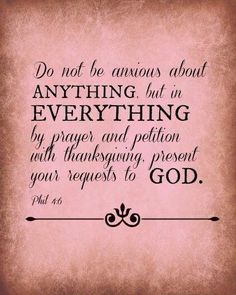
phil-4-6-dont-be-anxious-pray-instead

Philippians 4:4-7 (4:6) – November 20, 2016

It’s that thankful time of the year, and this service is where we all gather to say “thank You” to God. We say thanks for all sorts of good things. Wonderful gifts. Exciting opportunities. We gladly come before God and mention how thankful each of us is—to God.

One of my favorite biblical websites (and, I fully consider her a bible commentator) is “Worshiping with Children,” written by Carolyn C. Brown. This is what she had to say about Thanksgiving: “One of my favourite times with the children was the year we learned how to say “Thank you” in many languages from our congregation, and ended by using those words for our prayer together.” [1]

Saying “thank you.” I know I taught my children how to say “thank you” when they received gifts, and compliments, and lots of other things. It’s a common thing, for grown-ups, parents, and grandparents to instruct children in these considerate, valuable, and grateful words.

Our scripture passage for the morning comes from the letter of the Apostle Paul to the church in Philippi, in the last chapter. Paul previously said what he wanted to say in the body of the letter, and this is the final few paragraphs. What we have here are closing remarks. And, what remarks! Reading verse 4:6 again: “Do not worry about anything, but in everything by prayer and supplication with thanksgiving let your requests be made known to God.”

This letter Paul wrote to the Philippian church was, in part, a thank you letter. We can see how Paul weaves thankfulness and gratitude in several parts of this letter, including right here. Except—he throws in a number of last-minute recommendations and commands, too. Paul mentions worry, right up front. “Do not worry about anything.”

How can worry affect us? True, it can be so difficult to follow Paul’s advice! Everyone has something to worry about. Some people have lots of things to worry about, it seems. Let’s take a closer look, and see what the background to this advice is.

When Paul wrote this letter, he wrote it from prison in Rome. He had been sent to the emperor’s court on a capital charge. He was on trial for his life. And yet—the apostle Paul writes this joyful, thankful, gratitude-filled letter.

Let us count off difficulties and challenges that Paul faced: not only the upcoming trial—for his life, but on top of that, Paul considered himself to be responsible for many of the churches he had planted on his missionary trips in Asia Minor and throughout Greece. Such heavy burdens on Paul. Yet, here in chapter 4 we see him writing almost blithely to the Philippian believers.

When we look at the people who were on the receiving end of this correspondence, few of them were living comfortable lives. One of the commentaries I consulted said, “Many were poor, many were slaves and few of them would have known the meaning of security. In marked contrast, those of us who live in comparative wealth and luxury today are frequently those who are most worried and anxious.” [2]

Isn’t that a true description of us, today?

Sometimes there IS stuff to worry about! A lot of times, people (yes, even Christians) worry about all kinds of stuff! Aren’t we tempted to be worried and anxious when finances are a challenge or the car is giving big problems? Or, how about when we or one of our loved ones is unemployed? Or, in the hospital or dealing with a chronic illness? What about in an accident, or even in jail? Some would say it is natural, even part of the human condition to be worried.

Something to think about, certainly. Especially at this grateful, thankful time of the year when we are encouraged to count our blessings.

Let’s look at the next part of this verse, the part that comes after Paul tells us not to worry: “but in everything by prayer and supplication with thanksgiving let your requests be made known to God.”

Sometimes it can be extremely difficult to pray and request with thanksgiving. Sometimes exterior circumstances can make things such a challenge for us to be thankful. There are even worse things: sometimes people can be absolutely at the end of themselves, spiritually and emotionally. Look at people like Paul, when we consider him in prison, on trial for his life.

From a commentator comes this challenging illustration about Corrie ten Boom, a devout Christian who hid and saved dozens of Jews from the Nazis: “Imagine how difficult it was to pray and worship with thanksgiving in a concentration camp in Germany. ‘Corrie ten Boon’s memory of leading forbidden worship in a World War II concentration camp might shed some light for us. Almost crushed by the effort of offering praise amidst wretched, flea-infested, frigid surroundings, they worshiped God.  Always fearful of discovery and punishment, they lifted whispered prayers of thanksgiving not only for the beloved community in that unholy place but also for the hardships they helped each other bear.

‘Months passed as their cherished worship continued uninterrupted by the usually brutal guards, offering encouragement to their battered spirits. Decades later, Corrie encountered a former prison guard who admitted he had never ventured into her barrack because he feared the overwhelming flea infestation. God was indeed in that place, utilizing every means to bless those worshipers.’” [3]

If we “don’t worry,” and do the “requesting with thanksgiving” part, what happens then?

God’s peace will then guard our hearts and minds.

Yes, it can be a challenge to make our requests, and to pray with thanksgiving. Especially when we give thanks “while staring down hatred, injustice, poverty or sadness. It may strain our faithfulness. Discerning God’s love while receiving cancer treatments, caring for a critically ill loved one or agonizing over a wayward child may challenge our belief.” [4]

Yet, we have Paul’s testimony that—even though he was locked away in prison for a capital offence—he could still write this joy-filled, thankful letter to the Philippian believers. And, Paul reminds his listeners that there is a wonderful result of laying out our cares to God. “God’s peace, which is more wonderful than anyone can imagine, will stand guard over our hearts and minds. While we are still vulnerable, we are also assured of God’s concern and protection.” [5]

What a promise. God personally grants us peace. God has promised to stand like a sentinel over our hearts and minds. Yes, things can be difficult, and challenging, even heart-wrenching,  yet Paul reminds us: be thankful.

These thankful words came from Paul, and they are for believers all over the world. It does not matter who we are; we all are encouraged to say “thank you.” It doesn’t matter where on earth people are from, or what language they speak. We all can use these words for our prayer together: Dear God, thank you for Your good gifts. Merci. Danke. Sheh-sheh. Molte grazie! In Jesus’ precious, powerful name we give thanks, amen.

[1] http://worshipingwithchildren.blogspot.com/2013/09/year-c-thanksgiving-day-october-14-2013.html

[2] Hooker, Morna D., The New Interpreter’s Bible Commentary (Vol. 12,The Letter to the Philippians), (Nashville, TN: Abingdon Press, 2000), 547-48.

[3] https://fosteringyourfaith.wordpress.com/author/econgregtnl/

[4] https://fosteringyourfaith.wordpress.com/author/econgregtnl/

[5] http://www.workingpreacher.org/preaching.aspx?commentary_id=470  Commentary, Philippians 4:4-7, Michael Joseph Brown, Preaching This Week, WorkingPreacher.org, 2009.

@chaplaineliza

(Suggestion: visit me at my regular blog for 2016: matterofprayer: A Year of Everyday Prayers. #PursuePEACE – and my other blog,  A Year of Being Kind . Thanks!)