Unknown's avatar

God’s Free Gift!

“God’s Free Gift!”

Romans 3:19-31 (3:24) – October 27, 2024

I have a confession to make. I was raised a Lutheran. Baptized and confirmed in a Lutheran church on the northwest side of Chicago, I loved everything about that church. learned all I could about being a Lutheran, and about Martin Luther. I studied Luther’s Small Catechism during my two years of confirmation classes in seventh and eighth grades. I know a thing or two about Martin Luther and about the church that to this day bears his name.

            This Thursday, October 31st, is the 507th anniversary of the day Martin Luther tacked up the 95 Theses, his 95 points of disagreement he had with the Catholic Church. In 1517, the priest and doctor of theology Martin Luther posted his 95 Theses on the chapel door in Wittenberg, Germany, at the university where he served as professor. Thanks to the printing press, these 95 points of disagreement spread like wildfire. Not only in Germany, but throughout Europe. The Reformation began in earnest. 

            Why was Martin so upset? When he was a very young man, Martin Luther felt unworthy of God’s love. He felt lower than a worm sometimes, and tried his hardest to get into God’s good graces! He would go to confession several times a week, do penance after penance, and he made several pilgrimages. All of these things and more to stop feeling unworthy and sinful.  

            Taking a quick look at the letter the Apostle Paul wrote to the Roman church, you and I might get that same message, too. From chapter three, “There is no difference between Jew and Gentile, 23 for all have sinned and fall short of the glory of God.” All have sinned! Martin felt that so deeply! All fall short of God’s glory! All means everyone. All of us.

            Romans 3:23 is pretty bad news. Rotten news. Really hopeless news. That is the news Martin Luther faced, the more and more he read and studied the Bible, meditated, and prayed.

            Martin was right. According to the Law of Moses, given to the nation of Israel in the Hebrew Scriptures, no one can follow the Law one hundred percent. Not the Jews in the time of Moses, not Jews in Jesus’s day, not Martin Luther, five hundred years ago. And, not you and me, today, either. There is no way anyone can keep every single one of God’s commands!

            That was what I felt, when I was a teenager. I knew I couldn’t keep all of God’s rules, even if I tried really, really hard. Remember Romans 3:23? “For all have sinned and fall short of the glory of God.”  When I was a teenager, I was a particularly studious teen. I would read books on the Bible and on theology when I was in high school. I prayed regularly, and tried my hardest to get closer to God. I felt sinful, unlovely and unlovable a good deal of the time. 

Martin Luther tried even harder to get close to God! He did a ton of good works. He got a university degree in theology, and started teaching from the Old and New Testament at the university in Wittenberg. He studied even more about God, and preached regularly in a church in town. And yet—Martin still felt sinful and far from God! He still felt unlovable!

            Can anyone relate to Martin? Are there times when you—when I—feel unlovable?
            I remember hearing the story of a woman, horribly burned in a fire. Her husband came to see her in the hospital and was disgusted and horrified. “You are not the woman I married,” he said, and divorced her. Are we so unlovable? Is that what we are afraid God might do to us?

            What’s more, even after lots and lots of good works and all these years of reading and study, Martin still felt so inadequate. He felt God could not possibly love or forgive him. That is—until he was reading the letter to the Romans, chapter 1, verse 17: “ For in the gospel the righteousness of God is revealed—a righteousness that is by faith from first to last, just as it is written: ‘The righteous will live by faith.’” 

            Do you hear? Do you understand? It wasn’t about how sinful or unlovable Martin was. Or, how hard he tried to do good things, or tried to get on God’s good side, or tried to live by good works. God’s righteousness comes by faith. Faith alone! Faith in God!

            Remember Romans 3:23? “For all have sinned and fall short of the glory of God.” That is true. But—that isn’t the whole story! From verse 3:21: “21 But now apart from the law the righteousness of God has been made known, to which the Law and the Prophets testify. 22 This righteousness is given through faith in Jesus Christ to all who believe. There is no difference between Jew and Gentile, 23 for all have sinned and fall short of the glory of God, 24 and all are justified freely by His grace through the redemption that came by Christ Jesus.”

“From Paul’s declaration that we have all been justified by grace to Luther’s hammering his theses against the Wittenburg Church door to remind us that grace reigns supreme, the whole darn Reformation-thing was intended to tell us that, in the end, we don’t need to do anything, earn anything, say anything, accomplish anything, or buy anything to earn God’s love. That we already have it, and that most of the Church’s problems – and, indeed, the world’s problems – start when we forget we already have love and worth and dignity as a gift from God and try to earn it or take it from someone else.” [1]

I can almost see Martin falling off his chair, once he realizes how huge this is. Our sin is taken away through the redeeming that came through Jesus. We are made lovable through God’s grace. Our low self-worth and low self-esteem is now viewed by God through Jesus.

God looks at all of us, each one of us, through Jesus-tinted lenses.  We are brothers and sisters of Jesus, God’s beloved children! We are redeemed freely. By His grace, through faith, through the redemption that came by and through Christ Jesus.

The best part of this gift? It’s a free, undeserved gift, so that no one can pridefully boast about it. Another way to look at this gift from God comes from a sermon study board online I follow. I recently read this, written a few years ago by a pastor named Erik in Wisconsin.       

“This Sunday we celebrate confirmation. As a part of their confirmation requirements, students have to meet with me for a brief discussion/interview. I ask them about faith, life, God, etc. – see if they learned anything during confirmation. One question I always ask is “How will you get into heaven? How are you saved?” Most often I get the answers – “Pray. Go to church. Do good deeds.” And I shake my head and ask myself “Didn’t I emphasize grace enough?”

            “Finally, I said to the class, “Listen, you are saved purely by God’s grace as a gift. I will ask you how you are saved in your confirmation interview. If you don’t remember anything else I’ve taught during these two years, remember this: “You are saved by God’s grace!” Why is it so hard to remember? Probably because we’ve been taught not to trust anything we might get for free, even if it is from God.”

            As Martin Luther studied scripture, he finally discovered he was saved by grace, not because of anything he did or deserved. The Rev. David Hansen tells us, “He discovered a God who would send the only Son—not for the perfect people, but for the sinners. He discovered, above all else, a God and a Savior that will NEVER abandon us, that will stand by our side no matter how often we fail or how short we fall.” [2] Isn’t that good news? Jesus died for our sins. Jesus showed us radical, God-sized grace, and radical, God-sized love.

As I proclaim each week after the Confession of Sin during the Assurance of Pardon, “Believe the Good News of the Gospel: in Jesus Christ, we are forgiven!”

Alleluia, amen!


Thanks to Rev. David L. Hansen and Pastor Erik from Wisconsin for their assistance in the formulation of this sermon!

@chaplaineliza

(Suggestion: visit me at my other blogs: matterofprayer: A Year of Everyday Prayers. #PursuePEACE – and  A Year of Being Kind . Thanks!


[1] https://www.davidlose.net/2015/10/reformationpen-22-freedom/

[2] from http://www.gmi.org/services/missiographics/library/world-refugee-day

Unknown's avatar

Heavenly Prescription for Prayer

“Heavenly Prescription for Prayer”

James 5:13-20 (5:13) – September 29, 2024

How many of you remember being really sick? So sick that you had to stay in bed for days, or perhaps even had to go to the hospital? Thank goodness here in the Chicago area we have many devoted doctors and excellent hospitals to choose from, and to figure out exactly what is ailing us. And, thank goodness we are able to have effective medicine prescribed for us when we are sick, too!

Except – what do we do when our hearts and spirits are feeling sick? Anxious, or disturbed? Where do you and I go when our faith in God seems shaky? We could perhaps go to the doctor or the hospital, but they probably will not have the right tools or equipment to help when you or I have spiritual afflictions. [1]

This is our fifth week looking into the letter of James, and we have seen over the past few weeks that James is a very practical man. He displays a great deal of common sense, and does not pull punches when it comes to talking straight to his friends scattered around Asia Minor. (The area to the north and east of present-day Palestine.)

Let’s hear from James about this very problem: “Are any among you in trouble? They should pray. Are any among you happy? They should sing praises. 14 Are any among you sick? They should send for the church elders, who will pray for them and rub olive oil on them in the name of the Lord. 15 This prayer made in faith will heal the sick; the Lord will restore them to health, and the sins they have committed will be forgiven.”

What I have seen in these past weeks and months are the overwhelming number of people with heightened emotions and reactions to anxious, even fearful situations. As someone involved in pastoral care and trained as a chaplain, I notice these things. In our scripture reading today, we find the apostle James talking straight about how to pray, and thus deal with things similar to these things he mentions: heightened, negative emotions and reactions to anxious situations, not to mention physical needs, too.

The apostle James was a practical kind of guy. We can see that from this short letter, the only letter he wrote, included in the New Testament. He gives some practical advice to his readers on how to live a faithful and effective Christian life: how to live faithfully with others in society, how to control the tongue, how to turn away from evil and towards God. Here, in the fifth chapter of James, he turns to prayer. As we look at this passage, James tells his friends how to pray, in very practical terms, almost the same way as a doctor with a prescription pad might write it out.

What are the beginnings of this spiritual prescription? You and I need a special place and a special way to access God; we need to be open and willing, in this place! You and I need God – especially through the Holy Spirit – to help our hearts and spirits feel renewed, and we need the body of Christ–all of us–to help us strengthen our faith. In fact, we all need each other. [2]

When I was a hospital chaplain, working in critical care units like the Emergency Department, Intensive Care, and trauma support all over the hospital, my primary job would be that of compassionate listener—even before prayer, and also as a heartfelt part of prayer.

Now that I am a hospice chaplain, compassionate listening becomes an even more important part of what I do, not only for my patients, but for their loved ones. I suggest for all of us to consider a heart of compassion and a gentle hand of mercy. It’s time to put our defenses down and instead experience the vulnerability of listening to one another.

“If someone has a story to tell, the greatest gift you can offer is simply to listen. You don’t need to have answers or wisdom. You probably don’t need to say anything except, ‘I hear you. I believe you. I’m sorry you experienced that.’ In the compassionate version of the world I yearn for, we offer one another solidarity, a listening ear, and a tender heart.[3]

Another way of defining this spiritual prescription is through prayer – corporate prayer. James says, “16 So then, confess your sins to one another and pray for one another, so that you will be healed. The prayer of a good person has a powerful effect.“

Again, I am reminding us all, this exercise of prayer is not meant to be only for persons in isolation. It’s true, as a hospice chaplain, I see many people isolated in hospitals, in care centers, all alone in their rooms with no one to hold their hands or offer them a kind word of compassion or comfort. James would give us – fellow Christians – the practical advice to come alongside the sick persons in prayer and fellowship, even solidarity.

My commentator Dr. James Boyce echoes this very call from our letter-writer: “James knows a wisdom that is communal, especially in its faithful exercise of prayer. Twice he charges that confession should be “to one another,” and that we should pray “for one another,” if we have any expectation that the promised healing is to take place (James 5.16). Such prayer exercised within and on behalf of the community has power — James says it is “effective.” [4]

I think all of us can agree that as God’s people, we all need regular repentance and soul-searching, no matter what. We are also all in need of healing, personally, and certainly communally. Isn’t that what James tells us here?

At the end of this 5th chapter, this practical how-to manual on the Christian life, we can follow the heavenly prescription James sets forth. We can pray. We can worship. “We learn about how to be God’s people by reading the Bible. We find ways to serve – to do spiritual exercises that both help the world and strengthen us. We develop relationships within our faith community [or church] that are healing and helpful. And we learn to be generous – to share the many good things God has given us with others.” [5]

Whether it is the healing touch of the laying on of hands, or a simple hug from a sister or brother in Christ, or the potent power of prayer or the relief of corporate confession, active participation in the Body of Christ is preventative medicine at its best. What are you waiting for? There’s no co-pay, third-party billing, or lifetime limits on God’s grace and love. Prayer is our heavenly prescription from God.

Alleluia, amen!

@chaplaineliza

(Suggestion: visit me at my other blogs: matterofprayer: A Year of Everyday Prayers. #PursuePEACE – and  A Year of Being Kind . Thanks!


[1] https://www.stewardshipoflife.org/2012/09/rx-for-broken-lives-and-faltering-faith/

[2] https://www.stewardshipoflife.org/2012/09/rx-for-broken-lives-and-faltering-faith/

[3] https://fosteringyourfaith.com/2018/09/30/time-for-compassion/

[4] https://www.workingpreacher.org/commentaries/revised-common-lectionary/ordinary-26-2/commentary-on-james-513-20-4

[5] https://www.stewardshipoflife.org/2012/09/rx-for-broken-lives-and-faltering-faith/

Unknown's avatar

Today!

(I attended a denominational national assembly this weekend, and was not leading worship. Here is a sermon from my archives! I hope it touches your heart and spirit.)

“Today” – 2 Corinthians 5:20-6:2

June 28, 2006

            Once upon a time, there was a loving Father with abundant wealth, property and resources. He loved His many children dearly and did everything in His power to provide abundantly for them.

            Does this story line sound familiar? It should. That loving Father is God, our Heavenly Father. He created the world in the beginning, including humanity. Our loving God gave humans abundant resources, and provided many good and gracious gifts for them, doing everything possible to provide a rich and rewarding life for them.

I’d especially like to focus on the love. God’s love for humanity, for the world, for us. I dare say that many of us here today could quote John 3:16—“For God so loved the world that He gave His only begotten Son, that whoever believes in Him should not perish, but have everlasting life.”

From this verse, can we tell how much God loves the world? How much does God love us? This much?     (spread arms and pause)  

There was a problem, way back when, when God lavished such good and loving care on humans, on His children. That problem was and is SIN.

Face it, humanity—and that includes you and me—is fallen. I usually hesitate when I make sweeping statements, but not in this area. We are sinful. As Romans 3:23 says, “For all have sinned and fall short of the glory of God.” That is ALL. Not a few, not even most, but ALL. Everyone. All humanity. We don’t sin all the time, or in every situation. There are plenty of times when members of the human race act in kind ways, and think loving thoughts, but that troublesome sin nature is alive and kicking in each one of us.

Can you see a toddler or preschooler, stamping her feet, crossing her arms across her chest, and shouting, “No!!” Can you see a teenager, disrespectful and angry, slouching away from the dinner table without a word? Can you see the prodigal mentioned in the Gospel of Luke, wishing that his father would kick the bucket already, so he could get his inheritance? Do these selfish, proud, disrespectful, ungrateful actions (and thoughts, I might add) have anything in common? I would say, yes, they do. The sin nature that is part and parcel of all humanity is readily evident, in all of these situations. We are human, therefore we sin—by thought, word, or deed—by omission or by commission.

It would be really bad news if the story ended there, wouldn’t it? Humanity would be both hopeless and helpless, stuck in the miry clay of our own sinfulness. BUT, that is not the end of the story. God still loves us. Remember John 3:16? “For God so loved the world?” That love still comes to us, regardless of our sinfulness, regardless of our selfishness, regardless of how much we have disregarded the abundant love and the lavish care that God showers upon us each and every day.

As our passage from 2 Corinthians says, we humans trespass. We sin. We mess up. We make mistakes. But God loves us anyhow! God doesn’t keep a tally sheet, a ledger of all our good deeds and bad deeds. God does not count these mistakes against us. In fact, God goes above and beyond our mistakes, reconciling the world to Himself.

It’s not that God is estranged from the world, from humanity. It’s the other way round. It is humanity—it is you and me—that is estranged from God. God created humans, and He loves humans. He created each of us with our foibles and quirks and personality flaws as well as our individual strengths. He created each one of us as individuals to give glory to His name in our own individual ways. God knows us so much better than we know ourselves, and He still loves us just the same! God reconciled the world—that’s you and me—to Himself, out of love.

Like I said, that is wonderful news! Amen! Praise God! Thank You, Jesus!

Jesus was sinless, but He was made to be sin for us. Jesus took all of our collective sin upon Himself on the cross so that in Him we might become righteous before God. Can we tell how much God loves the world? How much does God love us? Is it this much?     (spread arms and pause)  

So, now that we know about God’s abundant love that He lavishes upon each of us, what are we going to do about it? Listen to the words of our passage again. “’At an acceptable time I have listened to you, and on a day of salvation I have helped you.’ See, now is the acceptable time; see, now is the day of salvation!”

D.L. Moody, noted evangelist during the 1800’s and founder of Moody Bible Institute, did much of his evangelistic work around Chicago. One Sunday evening in September 1871, Mr. Moody closed his sermon with the injunction for the congregation to evaluate their relationship with God over the next week and to return the following Sunday. When Mr. Moody was on his way home after the evening service, he heard the fire alarms all over and saw the flames against the sky, turning the night sky red and orange. That meeting hall where the service was held burnt to the ground, along with most of the city of Chicago. The Great Chicago Fire happened that night.

Mr. Moody was horrified, knowing that he had not told his listeners the full message of the love of God, for each one of them. He vowed from that day on to tell the whole story, to always let people know the good news of salvation in every sermon he preached.

What about you? Are you still thinking about God’s offer of salvation? You may have been a church member all your life, faithful and hard at work for many years. But you may have never realized that God’s joyful message of reconciliation was especially for you. You may have been born into a loving Christian family, maybe even a pastor’s kid or missionary’s kid, and been surrounded by God’s abundant love all your life. But just because I may be born in the room behind a bakery doesn’t make me a biscuit . . . and just because I may be born into a Christian family doesn’t make me a Christian by birthright or by osmosis. God has no grandchildren. There are only children of God.

God has been loving us—you and me—all of our lives, even when we turned our backs on Him. If this is that day for you, that acceptable time, that day of salvation, praise God! Enter into the joy of a loving relationship with God, a close friendship with God.

If God had a refrigerator, your picture would be on it. If God had a wallet, your photo would be in it. God can live anywhere in the universe, and He wants to live in your heart. If you have never, truly experienced God’s love for you, individually, there is no time like the present. We can indeed enter into the joy of our Father’s loving embrace and experience His abundant love for each one of us. Today is the day of salvation! God is ready. Are you?
@chaplaineliza

(Suggestion: visit me at my other blogs: matterofprayer: A Year of Everyday Prayers. and  A Year of Being Kind . Thanks!

Unknown's avatar

Trust in the LORD!

“Trust in the LORD!”

Psalm 20 (20:7) – June 16, 2024

            I seldom mention politics in my sermons, but today will be an exception. I am uncomfortable, even alarmed at the general political conversation in the United States right now, in June 2024. Many people across our country are polarized, in terms of political discussion. All kinds of issues – from schooling, bussing, immigrants, guns, diversity, human rights, ecology, taxes, unemployment, science – you name it. Just about any and every issue can be a battleground today. It seems like any two people, or two groups, or two countries have got to be fighting with each other all the time.

            This makes me want to come before God, and bring my concerns before the Lord about the political conversation – or downright fighting! – that is so regularly going on today! I read in one of my commentaries on Psalm 20, written more than ten years ago, that our commentator at that time saw “so many people willing to tear people’s reputations and actions to shreds; regardless of however right or wrong are their opinions, and their understanding!”

In her commentary, Joan Stott goes on to say “We are going through a particularly ‘sticky’ situation … people seem to be delighting in other people’s potential mistakes and/or problems, and ridiculing their deliberately made decisions.” [1] Wow. Double wow! If that argumentative attitude was pervasive in this country twelve years ago, imagine today, with fist fights breaking out in rooms and chambers where our elected representatives meet.   
            Here in our worship service, this space is set apart to be directed to God. We have the luxury of having this special place for worship, prayer, praise and thanksgiving. And, petition, too, when we need God’s help. That is what Psalm 20 begins with: petition to our God. “May the Lord answer you when you are in distress; may the name of the God of Jacob protect you.
May God send you help from the sanctuary and grant you support from Zion.”

From current news stories from across our country, I do not think many people step back and consider wisely before they angrily express opinions or enter into arguments. They yell and shout and sometimes even get into fist fights over political disagreements.

But, wait. This psalm also mentions war, and fighting. Except, coupled with prayer. Our psalmist is lifting up the concept of praying to God before making any decision, especially one as serious as a battle. Leaders from across the world this past Thursday gathered on the beaches in Normandy to remember the 80th anniversary of D-Day, June 6th, 1944. In one of the many articles commemorating this huge wartime operation, I read one about General Dwight Eisenhower, who supervised the invasions of France and Germany for the American forces.

General Eisenhower wrote a draft of a memo that was never released, just in case the invasion failed. Included among his remarks is: “My decision to attack at this time and place was based upon the best information available. The troops, the air and the Navy did all that Bravery and devotion to duty could do. If any blame or fault attaches to the attempt it is mine alone.” [2]  And, contemporary accounts tell us Eisenhower definitely prayed earnestly about the attack.

            Is there any solution to our anxiety about contentious or brawling arguments in politics today? Something that is definitely rare in today’s political discussion is active listening, and considerate hearing of different points of view. Commentator Joan Stott is grateful for “wise and considered decisions that in the past, have been made following earnest prayer, and hours of listening to … people’s viewpoints and needs.” [3] Oh, that we might be blessed with more leaders locally and nationally who are wise, and act in measured and rational ways.

            Which brings us back to Psalm 20. Not only does this psalm lift up the people of the nation: “May he give you the desire of your heart and make all your plans succeed. May we shout for joy over your victory and lift up our banners in the name of our God.” Moreover, this psalm points us toward the ultimate source of our strength, in verse 7! “Some trust in chariots and some in horses, but we trust in the name of the Lord our God.”

            I know that many prayers went up to God before the Normandy invasion in June of 1944. I am so grateful that meticulous planning and considered, measured judgment came into play in the whole operation. Would that a small amount of that measured thinking and considered judgment be used today, as friends, and acquaintances, and our political leaders engage in political infighting and mean-spirited arguments.

            What can you and I do about all this argumentation? I know it seems like a huge problem! Insurmountable, sometimes. Especially when you and I come up against angry words or harsh opinions, or even fist fights! However, we can take this psalm into our lives and hearts today, and ask God to be with each of us as we go about our daily activities.

            Plus, as a congregation before God, we know that God is with each of us, in power and in strength. This psalm really lifts up this image of God! The Lord is saving us for a life in heaven, yes! And, the Lord is saving us here and now, from the ways sin impacts our lives! [4]  Sin? Yes – not following God, not acting and speaking in ways that lift up our God. And, arguing and infighting about politics are certainly not pointing people to our loving and powerful God!  

            We – you and I are the sign that God is at work in the world. And, we can show people day by day that we are living lives that show forth God’s purposes. Not arguing, not bickering, and certainly no fist fights! Instead, we can all strive to apply God’s love, understanding and reconciliation to our speech and our actions, each and every day.

            The writer of this psalm knew from personal experience “that to call on God when in need was to place our lives, our thinking and planning within God’s overview, and to trust always in God’s leading and guidance.” [5] That was true thousands of years ago, and it is just as true today. Whether fighting with swords, shields, arrows and armor, or with the weapons of argument, animosity and downright hatred of one group against another. We need to go to God and have God lead us and guide us each day. May it be so! Alleluia, amen. 

@chaplaineliza

(Suggestion: visit me at my other blogs: matterofprayer: A Year of Everyday Prayers. and  A Year of Being Kind . Thanks!


[1] http://www.thetimelesspsalms.net/w_resources/pentecost3[11]b_2012.htm

[2] https://www.businessinsider.com/d-day-in-case-of-failure-letter-by-general-eisenhower-2012-6

[3] http://www.thetimelesspsalms.net/w_resources/pentecost3[11]b_2012.htm

[4] https://www.umcdiscipleship.org/worship-planning/ascribe-to-god/fourth-sunday-after-pentecost-year-b-lectionary-planning-notes

[5] http://www.thetimelesspsalms.net/w_resources/pentecost3[11]b_2012.htm

Unknown's avatar

How Shall We Love?

“How Shall We Love?”

John 17:6-19 – May 12, 2024 

Have you ever heard the saying that “Life is fragile: handle with prayer!” This is so true! Yet, some people might scoff, and say those words are too trite, or too simplistic, or, just don’t work. I feel really sad for people who think this way, because their lives or their circumstances might be sincerely sad or awkward or downright unpleasant.

If we look back at our Lord Jesus, and how He lived, and what His regular habits were, we can see that Jesus practiced regular prayer and meditation. Multiple times in several Gospels we can see our Lord Jesus slipping away to pray, or taking time in the early morning to go away by Himself to pray. He gathered others around Him when He prayed, too. I think Jesus would agree with this saying about prayer, trite though it may seem to be!

Our Gospel reading today comes from John chapter 17, at the end of that Upper Room Discourse, the section of John where Jesus and His disciples gather the night before He was crucified, to eat the Passover dinner. This chapter is an intimate look at prayer, where our Lord Jesus prays to His Heavenly Father. And most striking of all, Jesus prays for His followers. Not only the disciples, but also for us! 

            I love how straight forward commentator Karoline Lewis is. She says, “That upper room was filled with pain and abandonment. With betrayal and loss. With unsettled hearts and fearful souls. And Jesus ends it all with a prayer for his disciples. The section before this portion of the prayer is Jesus’ prayer for himself. But this segment is for his disciples.” [1]

            Jesus has several ideas in these verses, where He talked about trouble and difficulty for His followers. Sadly, this is not new information for us. Plus, these verses contain some of the most powerful concepts about God’s love that are to be found in the whole Bible. Amazingly, Jesus talks about how much God His Heavenly Father loves Jesus, and reminds His followers that they are to love each other in the same way.

            The words of Jesus to our God are written down in the whole of chapter 17. How intimate, how meaningful is that? I want to focus especially on verse 9. Jesus says, “I pray for them. I am not praying for the world, but for those you have given me, for they are yours.”

            Jesus prays for His followers. Not just any old prayer, but a significant prayer, at a profound time of Jesus’s life. The night before His crucifixion, when He must have had a thousand and one things on His mind, Jesus takes the time to think of and to pray for His followers; His friends and disciples. How selfless, how thoughtful this is. And, how much like the Jesus we know and love!

            One amazing thing about this prayer – this High Priestly Prayer of Jesus, is that Jesus not only prayed about the disciples He had at that time, those friends He loved so dearly. “Jesus is still loving and praying for us today – and so are our parents, grandparents, and church community. We are [all] covered in prayer just like a blanket.” [2]      

            When one of my children was still very small, he had a special blanket that meant a great deal to him. Being covered with that special blanket made him feel safe and secure. Does that sound comforting and heartening? Doesn’t it make you want to feel God’s love holding you (and me) securely, like a warm, fuzzy blanket? I’ve got great news for you! Jesus promises that to us, right here in John 17!   

            Today is Mother’s Day. Today is a day to take the time to think of beloved mothers (and, those who have acted as mothers).

In many, many cases throughout this country—and beyond, around the world—many caring, loving and nurturing women have mothered those under their care. In cases of religious nurture, caring mothers, grandmothers, aunties, sisters—and others who have stood in the place of these maternal figures—have prayed for their friends, relatives and loved ones, too.

Whether nearby or far away, prayer makes that intimate connection, that bond between friends, relatives, and loved ones. It does not matter whether the pray-er and the ones prayed for are next door, in the next town, or separated by miles, mountains or oceans. Jesus was making that intimate, loving connection too, through His prayer for us in John 17.

“This [prayer] is not the Lord’s Prayer. This is not Jesus teaching his disciples how to pray. This is not only a personal prayer or privatized piety. After betrayal and predicted denial, after concerned questions and foretold rejection, the disciples do not need another lesson, another miracle, another example. They need exactly what Jesus does, because Jesus knows — for Jesus to pray for them.” [3]

Just as a devout mother or grandma prays for her loved ones, just as Jesus seeks a intimate and loving connection with His friends and followers, so we can seek to have that deep connection with one another.

Dr. David Lose invites all of us to hear these words of Jesus addressed to each of us today. To imagine – really, to know – that Jesus was praying for us all those years ago and continues to care for us, support us, and love and connect with us today. Please take a moment to think about where we need to be more whole. Where do we need to have more peace in our lives? Where do we need more love? And then, imagine that Jesus is actively, intimately praying for each of you. And, indeed, for all of us. [4]

Jesus is caring for us, you know. Jesus loves each of us that much.

Plus, Jesus invites us to love one another that much, too, in this, His most intimate prayer. Take the words of Jesus seriously. Go and love others, just as Jesus loves us. Alleluia, amen. 

@chaplaineliza

(Suggestion: visit me at my other blogs: matterofprayer: A Year of Everyday Prayers. and  A Year of Being Kind . Thanks!


[1] https://www.workingpreacher.org/dear-working-preacher/prayers-needed

[2] https://www.stewardshipoflife.org/2018/05/the-power-of-prayer/

[3] https://www.workingpreacher.org/dear-working-preacher/prayers-needed

[4] http://www.workingpreacher.org/craft.aspx?post=2566  David Lose The Power of Being Prayed For

Unknown's avatar

Who Should We Love?

“Who Should We Love?”

John 15:9-17 (15:12) – May 5, 2024

            Children are great examples for us all. Children can make friends so easily! Of course, as children get older, their views of friendship and how to be a friend vary and mature with their growing and becoming more understanding of their friends.

A good example: “At five [years old], a friend is someone to play with now.  Whoever will play and work with me now is my friend.  They will proclaim adamantly to be friends forever, but then move on to other friends without recognizing what they are doing.  By the time they are ten these same children have a strong sense of the loyalty due friends, appreciate nuances of friendships, and experience deep pain in making and losing friends.  So, at different ages children respond to Jesus’ statements about being his friends differently.” [1]

Here in this Scripture reading today, our Lord Jesus talks about friends. Jesus calls His followers friends! Jesus says, “You are my friends if you do what I command. 15 I no longer call you servants, because a servant does not know his master’s business. Instead, I have called you friends, for everything that I learned from my Father I have made known to you.”

I suspect that at times the disciples felt inadequate, even felt like servants from time to time, and perhaps more often than that. After all, their Rabbi Jesus was becoming more and more renowned as time went by. More and more people from all over were coming to see Him, hear Him teach and preach, watch His miracles, and even to become His followers.

            Here in John 15, Jesus makes the powerful statement to His disciples that they are not His servants any longer. Servants are seen as less than, they can be subservient, and even denigrated. Instead, Jesus calls them friends!

Let’s take a few steps back. This chapter of John comes from the Upper Room discourse, which happened on that Thursday, the night before Jesus was crucified. Jesus had a Passover dinner with His disciples, and He had a time of intense conversation with them all. He said many really important things at this time, too, like this reading from today.

Jesus starts His command with a few words of preparation: “10 If you keep my commands, you will remain in my love, just as I have kept my Father’s commands and remain in his love.” The big thing I get from this introduction to our Lord’s command? Jesus tells us to keep His commands. This ought to be a no-brainer. We all need to keep, or follow, Jesus’s commands. Piece of cake, right? Walk in the park! No problem, Jesus.

But, always keeping our Lord’s commands is not quite that easy, is it?

            Jesus must have known how much of a problem we all would have with this command. He said, “IF you keep my commands.” I am assuming we are not braggarts and blowhards like some people. No, we really mean to try to keep God’s commands and to love others. So help us, God! But, I will say it again. It is not so easy.

            When Jesus announces that His disciples are no longer called servants, that means us, too. As we are followers and disciples of Jesus, we are called friends of Jesus, too! Except, it is He who has chosen us, not we Him. And, the commands of Jesus are a call to obedience. His command to love others is also a call to respond to God’s love! [2]

            I want to return to the idea of friends – Jesus calling the disciples – calling us – His friends. Similar to children and their growing idea of friendship, you and I can sometimes respond to Jesus’ way of calling us friends in different ways. And, the best part about that is that our Lord Jesus understands!

            Jesus gets us. He understands when we are hungry, angry, lonely or tired. He gets it when we are frustrated or preoccupied. Jesus especially understands when there are mental health issues that come up, for us or for our loved ones. And, Jesus continues to come alongside, and will continue to be right by our sides while we are trying to love as best as we can.

            A number of years ago, a commentator I follow was eating pizza with her youth group one Sunday evening. She asked them what it means to be a friend. She wrote down all the definitions, and here are a few, because they are so on the mark. “A friend is someone who is herself when she’s with you.” “A friend cares about you, listens to your problems, and helps you.” “A friend thinks about you before he thinks about himself.” “A friend cares about other people’s opinions and beliefs, and respects them.” [3]

These definitions are better than I could come up with, for sure! The best part is, if you and I follow these definitions (and suggestions) about making and keeping friends, we will be following the commands of Jesus! And, his number one command is “Love one another, as I have loved you.”

A big part of Jesus’ expression of friendship was by sharing His whole life with us. Living as God intended is community life, where we share all of who we are with others. [4] That is exactly what these teens gave as their definitions for true friends, and that is how we are to love one another, as Jesus loves each of us.

Will we be successful all the time? Unfortunately, no. Can we keep striving to love and keep on loving as much as possible? Yes, we can! With God’s help, and with the help of one another in our church community and our family and friends, we can love like Jesus! We all have the opportunity to follow the commands of Jesus. Love one another. Go and love everyone, in Jesus’s name. Alleluia, amen.

@chaplaineliza

(Suggestion: visit me at my other blogs: matterofprayer: A Year of Everyday Prayers. and  A Year of Being Kind . Thanks!


[1] http://worshipingwithchildren.blogspot.com/2015/03/year-b-sixth-sunday-of-easter-may-10.html

[2] http://gluthermonson.blogspot.com/2015/05/love-one-another.html

[3] https://melissabanesevier.wordpress.com/2015/05/05/friended/

[4] https://www.churchofscotland.org.uk/worship/weekly-worship/monthly/2024-may/sunday-5-may-2024-sixth-sunday-of-easter-year-b

Unknown's avatar

We All Are Witnesses!

“We All Are Witnesses!”

Luke 24:48 – April 14, 2024 

Have you ever been confused by the number of hurried, jumbled nature of things happening at once? And the speed at which these things happen? This experience is more common than we might think. Just think of the passing of time, where it’s New Year’s, you and I turn around, and it’s already Easter! Or, before we know it, the school year is over!

However hurried and jumbled these past months have been, it pales in comparison with our Gospel reading today. The end of the Passion Week must have been momentous and confusing for the followers of the Rabbi Jesus. Some confusing and jumbled things were happening very quickly. From the big festival entrance on Palm Sunday to the Passover Dinner of Maundy Thursday evening, to the arrest, trial and Crucifixion on Good Friday.

Events happening in short succession from morning until night. Everything happening one thing after another. This was compounded by the followers of Jesus scattering, running away, frightened by the very real, very legal, very official things happening to Jesus on Thursday night and Friday during the day.

   Let’s fast-forward to that Sunday morning, the first day of the week. The disciples still must have been frightened to death of the Jewish and Roman authorities. I suspect they needed to talk about the happenings of the past few days, too. We can see that from our scripture passage.

We pick up the narrative right after the events of the Road to Emmaus. To fill everyone in, two followers of Jesus got on the road to Emmaus that Sunday. As they walked, they talked. Debriefed. Tried to figure things out, as best as they could. And what circumstances they needed to figure out! A Stranger began to walk with them on the way, and unbeknownst to them, it was the risen Jesus, incognito. He shared with them a summary of all that He had come to earth to do. Of His ministry, His message, and His purpose. And still, they did not know it was Jesus.

Not until dinner that evening in Emmaus, the risen Jesus was revealed when He blessed and broke the bread. And then—Jesus disappeared! The other two at the dinner table did not waste any time! They ran back to Jerusalem, to the Upper Room, to tell what they had seen. Yes, they were witnesses. Eye witnesses, verifying everything that had happened that day.

Our Gospel reading for today picks up the story at this point. All of the followers of Jesus are gathered together in the Upper Room, and are talking about the story of the road to Emmaus. Do they believe? Or, don’t they? Are a few skeptical? Or doubtful? Are some still frightened?

Let’s transition to today. Here and now. I can hear some people today, scoffing at the idea of some guy rising from the dead. And then, miraculously traveling alongside of two other guys? Good as new—in fact, even better? No way! Not a chance. The other two must have been hallucinating. Or dreaming. Or maybe, seeing a ghost. They can’t believe. Or, won’t believe.

As we start the Gospel reading, the risen Jesus suddenly appears to the group in the locked Upper Room. What does He say? “Peace be with you.” A common greeting of the time. He’s also calming their hearts, their spirits, their anxieties, their emotions. “Peace be with you.”

How does the risen Jesus immediately respond to the disciples?  “Don’t be frightened! It is I, myself.” He emphasizes His identification. “I, myself!” It’s not anyone else, but Jesus! He lets them know that He is solid and corporeal, not a ghost. Not a spirit. And, Jesus doesn’t criticize His followers for being afraid! For feeling uncertain, doubful and anxious!

I wonder whether you have ever had a kind and patient teacher, or instructor, or coach. When you were afraid, uncertain, or anxious, did this kind and patient person get angry with you? Or, upset? Or, did this person continue to be open and willing to help you? Generous with time and welcoming to your attempts? Well, that is Jesus, all over. To a T.

Jesus tells the disciples, first. They are to proclaim what they have seen and heard. They are to be witnesses to the power of the resurrection. They are to tell how the risen Jesus has made a difference in their lives! And boy, that was a big difference!

When we read the book of Acts, that is exactly what we see. The disciples being witnesses of what they have seen and heard, witnesses of the power of the resurrection. Time after time, no matter what, the disciples tell others about how Jesus lived, preached, did miracles, and rose from the dead. Then, how all that has made an earth-shaking difference in their lives.

This is the message that Jesus told the disciples to start to carry, when John was a very young man. Some decades later, we see the aged John still carrying the message Jesus told him to, the message of sacrifice, hope, and resurrection. John is still being a witness, all those decades later, at the close of the first century! Dear friends, our Lord Jesus gave specific instructions to His friends, to go and be witnesses. He gives those same instructions to us. We are to be witnesses of the power of the resurrection.

Can you think of someone who was a witness to the power of God, in your life? Someone who immediately comes to mind for me is Miss Rose. I met her more than thirty years ago, when my older two children were very small. She was a witness to the power of God, and to God’s love. She communicated God’s love to everyone she ever met, just about! A little lady, a dynamo for God, she would tell everyone about God and how much God loved them.

I met her again, some years ago when I was a chaplain intern at the Presbyterian Homes. She was a resident there. I was so happy to see her. Miss Rose and her joy in the Lord bubbled over and communicated to everyone she met there, too. Even though she was in severe, chronic pain, Miss Rose witnessed to the power of the resurrection, asking people she met, “Do you know Jesus? Can I tell you about Him, and what He’s done in my life? Can I tell you my story?”

Each of us has an opportunity to be a witness, to communicate the Good News about the risen Jesus and the power of the resurrection. We can communicate by words, by a smile, by being kind, through our actions, through our generosity.

Think about someone who impacted your life, who communicated the Good News to you. There’s a great example for you! Just like Miss Rose is a marvelous example for me, to be a witness despite pain and suffering, even through difficulty in my life. I can still communicate God’s love, just like the aged Apostle John did, too, decades after the Resurrection. He was even in prison when he wrote his letters, on a little island in the Mediterranean Sea. That didn’t make any difference. John still told his story, how the risen Jesus made a difference in his life.

What is important is that we get out there and start being a witness, telling people about the power of God, and about how much the risen Jesus has changed our lives. Can you be a witness? It’s as simple as telling your story. Can you tell the story of Jesus and His love? Jesus loves you. Jesus loves me. Jesus loves all of us.  Be witnesses. Alleluia, Amen.

@chaplaineliza

(Suggestion: visit me at my other blogs: matterofprayer: A Year of Everyday Prayers. and  A Year of Being Kind . Thanks!

Unknown's avatar

Written on Our Hearts!

“Written on Our Hearts!”

Jeremiah 31:31-34 (31:33) – March 17, 2024

            Relationships are foundational to life. Positive, negative, distant, close.  Both of my parents are gone now, but I had a loving relationship with both of them. My sisters and brothers—again, I have relationships with them. Members of my extended family, too, are included in my list of relationships. Also my friends, acquaintances, colleagues, even my enemies. All of these people have relationships with me.

Think about yourself. You have relationships with many, many people, too. Most of your relatives and acquaintances I just mentioned, if not all of them. Positive or negative, distant or close. We all have relationships—or friendships—with many people.

            But what about God? What kind of relationship do you and I have with God? Is that relationship good? Even wonderful? Is it close? Or distant? Bumpy at times? Our Scripture reading for today talks about this relationship. The prophet is talking about it from God’s perspective. God’s view of the relationship, or the friendship, if you will.

            If we think about the nation of Israel in the time of Jeremiah, the nation was devastated, and destroyed by the conquering nation of Babylon. The nation of Israel was probably not thinking about keeping up their relationship with God at all – with so much chaos and destruction surrounding each individual, each family, across the whole country.

            Centuries before the time of Jeremiah, God gave the Ten Commandments to Moses, and the whole law code of Moses in the years after that. This law code or rule book was meant to be a structure for the nation of Israel to follow, to live their lives, on a daily basis. And, this structure was a way for them to have a relationship with their God, their helper and deliverer – if they chose to follow God and God’s ways.

            Isn’t that the main problem? The nation of Israel had continuing problems following God’s rule book, God’s law code. Isn’t it exactly the same thing today, that you and I have the same problems following God, too?

            We’re not talking about a distant God, a God Who wound up the universe like a watch, put it on some shelf, and then walked away and promptly forgot all about it. No! The Lord wants to be in a relationship – with us!

            If we look at this reading, we see that God did have a relationship—a friendship, we could say—with the nation of Israel. God was the one Who started it. See what verse 32 says? God took the nation of Israel by the hand when God led them out of Egypt. God wanted the friendship. Israel did not start the relationship.

            We can compare that friendship to God’s relationship with us. God wants us as friends, too!  Just as with the nation of Israel, God goes out of God’s way to make friends with us. You and me. Each and every one of us. God approaches us.

            But something happened. Something awful! The nation of Israel was not a faithful friend to God. The relationship was disrupted, broken. But, God didn’t break it. No! Israel did. Remember the many, many times  in the Hebrew Scriptures that Israel ran away from God? Or forgot about God? Or just plain ignored God? Time after time, we can read about how the nation stumbled, resisted, or was unfaithful to their friendship. Their relationship.

            We can see the number one reason the people of Israel were taken out of the land and sent into exile: because the people broke their Covenant and God’s rule book time after time after time again. That’s the big reason for the nation of Israel’s exile to Babylon.

            What about us? What about you and me, in our relationship with God? Isn’t it a lot the same? Don’t we stumble, or fall? Haven’t we forgotten about God, or even broken God’s rules? I’m thinking of sin. Putting other things in God’s place. Making other things or other people in our lives more important to us than God. 

            Our relationship with God is broken! Disrupted. Sometimes we grow so used to sinning, to being apart from God, that you and I cannot choose to do anything else. What a predicament! Our relationship with God—under the Old Covenant—is gone. Destroyed. We are sunk, there is not a chance for you and for me.

            What about the nation of Israel? What did God do for them? Rev. Sharon Blezzard said, “God does not abandon the people, even when their hearts have turned from God’s divine love and life-giving law. God is faithful and promises to be known – not just in word and in teaching, but in the very DNA of the people.” [1]

            The Lord does not leave us abandoned, either! God still wants to be in relationship with us! With you, and with me. God’s nature is not punishing or arbitrary, but instead loving and forgiving. This forgiveness is heart language, from God. And, God will write this new covenant, this new relationship upon our hearts.

            The foundation of this forgiveness comes from our new knowledge of God, written on our hearts. And what is our response to God’s love? God’s forgiveness? God’s reconciling embrace? You and I have the opportunity to live changed lives, as changed people—from the inside out. God is not willing that anyone should be strangers, but instead that all would have the opportunity to be friends with God. Best friends.

God will be our God. We will be God’s people. And that’s a promise. That’s forgiveness. That’s the opportunity that each of us has to be with God, forever. Amen, and amen.

@chaplaineliza

(Suggestion: visit me at my other blogs: matterofprayer: A Year of Everyday Prayers. and  A Year of Being Kind . Thanks!


[1] https://www.stewardshipoflife.org/2015/03/language-of-the-heart/

Unknown's avatar

Marked by God’s Love!

“Marked by God’s Love!”

Mark 9:2-9 (9:) – February 11, 2024

            It’s almost Valentine’s Day. If you go into stores or look at ads now, we see Valentine’s Day celebrated, Valentine celebrations encouraged, and of course, we all need to buy something for our own personal Valentine, or else! Flowers, chocolate, stuffed animals, hearts – all to show our love for people, and especially for our particular loved ones and family members.

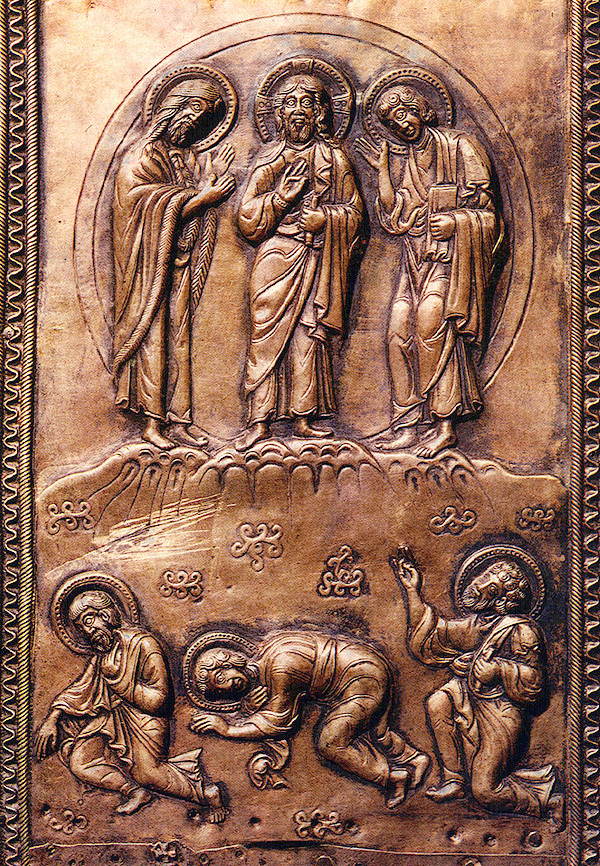
            If we go back 2000 years to that mountaintop where the Transfiguration happened, we can see when God spoke. And moreover, when God expressed Divine love. Not an expression of earthly or human or fallible love, but God’s love.

            Jesus had been preaching God’s word, healing people and doing other miracles for some time. If we think about it, by this time the Rabbi Jesus was really popular. Just think of any popular person, or famous celebrity. Often mobbed by people when He stopped to preach in a synagogue, or if He stayed overnight at someone’s home.

Shortly before today’s reading Jesus heals another blind man. Jesus was even more in demand than ever, after that display of power and might! Remember, that’s one of the main emphases for Mark. Showing the power and might of the Son of God!

Let’s set the scene. We have Jesus with His disciples. He had twelve disciples who are named, and some other followers. Women, too! Usually unnamed, but also there. But in several important instances, Jesus had an inner circle. Three special, or key disciples, who would be the ones he wanted to tell special things. Important things, as in the Gospel reading for today.

            This inner circle – Peter, James and John – were asked by Jesus to accompany Him early one morning. When they arrive at the top of the mountain, what do they find? Jesus, “His appearance changed from the inside out, right before their eyes. His clothes shimmered, glistening white, whiter than any bleach could make them. Elijah, along with Moses, came into view, in deep conversation with Jesus.” That sudden happening must have shocked the three disciples down to their sandals! Can you comprehend the utter shock and even dismay that these men felt? Awe and amazement, too.

            The most important thing about this point in Jesus’ journey through Palestine is that He had been speaking quite frankly to His disciples for some time. Mark tells this story in the midst of Jesus’ frustrated, repeated attempts to help his disciples understand that he must suffer the trial and death that leads to the cross, but they just cannot accept it.” [1]

            I don’t know whether I would have accepted these statements from Jesus, either, if I had been a follower of Jesus at this point in His ministry. The Rabbi – the Messiah – Jesus all along had been displaying all the signs of the Coming One, the Messiah sent by the Lord. Healing, miracles, preaching and teaching God’s message with authority and power. What a message of hope and encouragement for the downtrodden people of Israel!

            On top of this mountain, after months of this miracle-making, teaching and preaching, Peter, James and John see their Rabbi Jesus have a Divine encounter with Moses and Elijah

            Can you just see these three grown men, clutching at each other, huddling together like small children? Scared to death at these miraculous, out-of-this-world happenings? “Um—oh, Lord! Um—let’s build three altars here! One for You, and—um—one for the other two guys, too!” Or, something like that. Do you think Peter and the other two disciples were very receptive to what God was saying at this point? I suspect not.

            Here on the mountain of Transfiguration, Jesus elevates His message even further. Yes, His disciples hear the message in the form of speech directly from the Lord. The spoken words from the Lord were not many, but they were significant. “This is my Son, marked by my love. Listen to him.” If the three disciples were not paying strict enough attention to Jesus before, you can bet that this breathtaking experience caused them to really sit up and take notice!

            The Divine voice from within the cloud certainly confirms what the earthly Jesus had been communicating to His disciples all along. And, these words show a turning point in the ministry of Jesus – traveling down the road to Jerusalem, towards suffering, the Passion and death, despite His disciples’ refusal to hear what Jesus was saying, repeatedly.  

            I am wondering if the words from the Lord helped to transform Peter James and John? Yes, these words are confirmation for our Lord Jesus, and an expression of God’s Divine love: “This is my Son, marked by my love. Listen to him.” And I wonder, were the disciples changed and transformed by these words, too?

Just as our Lord Jesus was affirmed and transfigured by this Divine statement of love, can we be changed and transformed as we think about these words? Can you and I meditate on these words of the Lord, and see whether this message has a deeper meaning for us, and can change and transform us, too?  

This supernatural event of Transfiguration prepares us as we begin the period of Lent, that 40-day time of preparation when we journey with Jesus toward Jerusalem and the Passion and Crucifixion. How can you – how can I prepare our hearts and minds as we journey with Jesus? I think considering God’s words of Divine love are a wonderful starting point.

Just as much as God spoke out of the cloud on top of that mountain and expressed love for the earthly Jesus, just so much God loves each of us. This Divine love is not faulty or fallible, not human or limited, but instead unconditional and everlasting. We don’t need to be on the top of a mountain to experience God’s love. God will be there. We can celebrate the fullness of the Lord’s presence, and the reality of God’s love and grace! God does indeed love all of us.

Alleluia, amen.

Take a few moments to reread the gospel. Imagine you’re before the Lord Jesus as He speaks to you in His glory. What is His word to you? We start the journey of Lent this week with Ash Wednesday. How will that word of Jesus help you this week on your Lenten journey?

@chaplaineliza

(Suggestion: visit me at my other blogs: matterofprayer: A Year of Everyday Prayers. and  A Year of Being Kind . Thanks!


[1] https://www.umcdiscipleship.org/worship-planning/crossing-over/transfiguration-sunday-year-b-lectionary-planning-notes/transfiguration-sunday-year-b-preaching-notes

Unknown's avatar

Love Amazes!

“Love Amazes!”

Luke 2:15-20 (2:18) – December 24, 2023

            Merry Christmas! What a wonderful expression. People greeting each other on the street, in the stores, here at church. This is also the fourth Sunday in Advent, the Sunday where we focus on Love. What a joyous time of the year, and what a celebration of love-come-to-earth. 

            But I want you to go back, two thousand years. Go back to a time when “Merry Christmas” was not even a phrase, a wish, an idea in people’s heads. Go back to the time that Dr. Luke describes in the second chapter of his Gospel. Back to the time when Israel was an occupied country, and the Roman Empire was the strong man. Back to the time when all people in Israel needed to be enrolled. The Roman government decided to have a census, so that they would be able to tax the people of Israel more accurately.

We heard this census described in our Gospel reading. Joseph and his fiancée Mary went to Bethlehem to enroll, because Joseph was a direct descendant of King David. I suspect there were many people on the roads. Today, traveling can be stressful and nerve-wracking. However, travel in the first century was much more difficult. Poor roads, with many people walking to get from one place to another. We might imagine that Joseph and Mary had a donkey, but nowhere in the Gospel is that mentioned. Travel conditions were challenging, at best.

There they are, in Bethlehem. A long way from their home in Nazareth. I suspect Joseph took care of the enrollment business first thing. But Mary felt the pains of labor begin. What a scary thing! To be far, far from home, in an unfamiliar place, and to have such a significant event happen. Significant, and potentially life-threatening, too.

            Yes, delivering a baby is a special day for anyone. But—even more so, for Mary and Joseph. Extra special because of the love surrounding them, this amazing love from God.

            As Dr. Luke tells us, there were shepherds abiding in the fields, keeping watch over their flocks by night. Remember, there is no radio or telephone, no Internet or telegraph. When messengers personally come to deliver a special announcement, it is a big deal. These angels coming to the shepherds, well, that was a super big deal, to be sure!

            And the announcement? This isn’t the birth of a normal, ordinary baby. No! This baby is an extra special baby. The Messiah, who will save His people from their sins. A special announcement of God’s love! This special baby, this Savior, Christ the Lord, is born to you—to me—to all of us, in the city of David, which is called Bethlehem.

            Did you hear? The Savior, the Christ, the promised Messiah, came into this world as a Baby in Bethlehem. The Eternal Second Person of the Trinity, Creator of the whole universe, God the Son, emptied Himself of all God-ness. Took on humanity, and was born as a helpless Baby. That is not only good news, that is earth-shaking news. Good news of great joy for all the people. For you, for me, for all of us.

            Yes, the promises of Christmas may sound familiar to us. The good news that the angels brought may be old news, to some. But those promises? They are so needed, today. What with uncertainty and fear, anxiety and hatred so common today. Peace and security seem way out of humanity’s reach. Don’t we need some good news right now? Don’t we need news of God’s amazing love for all of us, for each one of us?

This is good news, this Gospel the angels brought to the shepherds. And they, in turn, told everyone they could about the Child, which the Lord had made known to them. Just as Luke said, all who heard about the Child were amazed at what the shepherd told them.

When I take a step back from this narrative that is so familiar to all of us here in this church, I try to imagine this event brought up to date. “I do find myself wondering just where this might happen today. If Jesus were to come again in human form, would it be like the last time? Would it be in a country far away or would it be in our own back yard? Would it be in an unused room at a nursing home?  Or at a homeless shelter?  Or under a city bridge? I do wonder where Jesus would be born today, don’t you? I wonder how my wondering changes how I encounter those who are in those places now.” [1] It is very possible that those places are already made ‘holy’ – that babies born in unused rooms or homeless shelters or under bridges are holy, too. Even before the presence of the Christ Child makes them even more special.

After that special birth announcement from the angels, and the excited visits from the shepherds, we are left with Mary. Mary who was only a teenager, who had had nine months to consider this extraordinary pregnancy and upcoming birth. Mary must have been up to the task. Mary must have been an extraordinary, reflective young woman.

We know from verse 18 that Mary treasured all these words and pondered them in her heart. All of these words, these unfolding events. Another translation has this verse as “Mary was keeping together (the Greek verb sunetare) all these words, bringing them together (sumballos) in her heart.” Keeping together, sunetare, has the sense of integration. Bringing these events together, or sumballos! Mary was fitting all the puzzle pieces together, bit by bit.

Can we do the same? Can we fit all the pieces together? Can we slow down, just a little, and wonder at the miracle of that night? I invite us all to listen to the good news of the shepherds. The eternal God, Creator of the universe, come to earth as the Babe in Bethlehem.

God gives each of us an opportunity, an invitation to experience amazing love; an invitation to worship the newborn Savior. We, too, can stop by that manger in Bethlehem, and be caught up in the wonder of what happened that night, so long ago.  We, too, can say “O come, let us adore Him, Christ the Lord.” Alleluia, amen.

@chaplaineliza

(Suggestion: visit me at my other blogs: matterofprayer: A Year of Everyday Prayers. #PursuePEACE – and  A Year of Being Kind . Thanks!

(I would like to express my great appreciation for the observations and commentary from the Do Not Be Afraid Advent Devotional – © 2022 Illustrated Ministry, LLC.. I used several ideas from their useful resources. Thanks so much!)


[1] Dancing with the Word: Christmas in the Barn