Unknown's avatar

Stand Firm in Benediction!

“Stand Firm in Benediction!”

2 Thessalonians 2:13-17 (2:16-17) – November 9, 2025

            It’s sometimes difficult to be persistent! To hold on, and continue working, continue trying, despite delays and disappointments and detours. Isn’t it? Continuing to work all alone, standing by and standing up when others fall away. Even just being faithful, and doing what you promised to do can be a real trudge up a long, winding road, up a steep and lonely hill.

            It’s a good thing that as we live the Christian life, so often we are in community with each other! Isn’t it easier and more companionable to be traveling together, or working on a project together, or carrying a load together, with a group of friends?

            That’s what the Apostle Paul was writing about, here in this second letter to the young church in Thessalonica. When Paul and his friends were on their second missionary journey, they had only spent a short time in that city before they needed to leave. This was a young church that Paul planted, and Paul had already sent one letter to the believers there. He sent this second one to correct some misunderstandings and to renew the Thessalonian believers’ hope in Christ.

            We are focusing on this small section right in the middle of Paul’s letter. He breaks away from giving further instruction on the confusing timing of our Lord Jesus Christ’s return to giving encouragement to his fellow believers. “But we ought always to thank God for you, brothers and sisters loved by the Lord, because God chose you as firstfruits to be saved through the sanctifying work of the Spirit and through belief in the truth. 14 He called you to this through our gospel, that you might share in the glory of our Lord Jesus Christ.”

            When I hear about churches and pastors today who really focus on the “end times,” and about the prophecies in both the Hebrew Scriptures as well as the few times in the New Testament that refer to the Second Coming, I often roll my eyes. If you have ever read or heard of the books on the End Times, the books are so much dominated by fear and anxiety, by persecution of Christians by cartoonish bad guys. Those same churches and pastors so often advise their congregations of strict rule-following, and black-and-white do’s and don’ts.

            Yes, I did read that first portion of the assigned reading from 2 Thessalonians 2 this past week, and I did not feel led to write a sermon on it. However, I continued reading in chapter 2, and found Paul encouraging his Thessalonian friends, and thanking God for them!

As commentator Mariam Kamell says, “Christians can be confident, encouraged people because we know that we are held as first fruits by God’s choice, preserved through the Spirit. In Paul’s paradigm there is neither room for pride in our efforts to improve the world, nor despair at the state of the world around us. For Paul, all of this talk about the end is to encourage us in our security in Christ and draw us ever further in the Spirit’s sanctifying work.” [1]

            So, we are not to despair over the End Times! We are not to be fearful and cower in the shadows, dominated by fear and anxiety! Instead, we are to rejoice, and be hopeful in our security and salvation in our Lord Jesus Christ.

            Paul then says, “so then,” which is very similar to his connecting word “therefore.” As one of my Bible instructors used to say when I was attending a Christian college for undergrad, “See what “therefore” is there, for! Why is Paul using this particular connecting word?  “15 So then, brothers and sisters, stand firm and hold fast to the teachingswe passed on to you, whether by word of mouth or by letter.”

            I know things and people and situations in this world today can be really scary, and even make us want to hide under the covers! Especially when we consider persecution and lawlessness – however, God has the final word. “Don’t worry about what will happen when you (or people you love) die and don’t worry about what will happen when you grow up or get to be a teenager or [grown-up].   Instead, think about today.  Live as God’s person today.  Do the best you can and know that God is with you.” [2]  

            Isn’t that wonderful encouragement for all of us? Instead of cowering in fear, or being a strict rule-follower or else! We are to know we are God’s people, followers of Jesus Christ, and led by the Spirit of God. Paul prays that the Thessalonian believers are to be encouraged – in their inner being.

“This is clearly a ministry of the indwelling Spirit of Christ. Against the wiles of this age, may we look in faith to the one who constantly surprises us with his love and inspires us with courage and confidence, enabling us to stand firm and not be overwhelmed by the vagaries of life. Our God will buttress us in our faith; this we can rightly ask in prayer, believing.” [3]

            The apostle Paul is truly being encouraging to his friends. Yes, they had some misunderstandings about what Paul preached to them, which Paul clarified. Yes, some of these believers were acting in ways displeasing or disappointing to our God, but at the end of the day and the end of this letter, Paul wanted to give encouragement and hope, not fear and dismay! We are to be cautious around churches and ministers who want to fix, manage and control every aspect of life! Paul leads with the grace of Christ, and the love of God. Period.

            And then, what should burst out of Paul but a benediction! Just as in the middle of the letter to the Ephesians, here at the end of the second chapter to the Thessalonians is a marvelous benediction. We will close with Carolyn Brown’s wonderful paraphrase of Paul’s words:

            “Remember that God loves you.  God chose you to hear about that love and to know the stories of Jesus.  Do not forget them.  Live by them every day.  And may God who created the whole universe, Jesus who showed us how much God loves us, and the Holy Spirit who guides us be with you giving you courage and strength to be God’s people every day.” [4]

@chaplaineliza

(Suggestion: visit me at my other blogs: matterofprayer: A Year of Everyday Prayers. #PursuePEACE – and  A Year of Being Kind . Thanks!


[1] https://www.workingpreacher.org/commentaries/revised-common-lectionary/ordinary-32-3/commentary-on-2-thessalonians-21-5-13-17-3

[2] https://worshipingwithchildren.blogspot.com/2016/09/year-c-proper-27-32nd-sunday-in.html

[3]  https://www.lectionarystudies.com/sunday32caiie.html

[4] https://worshipingwithchildren.blogspot.com/2016/09/year-c-proper-27-32nd-sunday-in.html

Unknown's avatar

God’s Law in Our Hearts

“God’s Law in Our Hearts”

Jeremiah 31:31-34 (31:33) – October 26, 2025

            Relationships are foundational to life. Positive, negative, distant, close.  Both of my parents are gone now, but I had a relationship with both of them. My sisters and brothers—again, I have relationships with them. Members of my extended family, too, are included in my list of relationships. Also my friends, acquaintances, colleagues, even my enemies. All of these people have relationships with me. Think about yourself. You have relationships with many, many people, too. Most of these people I just mentioned, if not all of them. Positive or negative, distant or close. We all have relationships—or friendships—with many people.

            But what about God? What kind of relationship do you and I have with God? Is that relationship good? Even wonderful? Is it close? Or distant? Bumpy at times?

            Our scripture reading for today talks about this relationship. Here. On this Reformation Sunday, we celebrate our clear relationship with God, the relationship that Martin Luther celebrated! But, the prophet is talking about it from God’s perspective. God’s view of the relationship, or the friendship, if you will.

            God wants to be friends. We’re not talking about a distant God, a God Who wound up the universe like a watch, put it on some shelf, and then walked away and promptly forgot all about it. No!! God wants to be in a relationship.

            If we look at this passage, we see that God had a relationship—a friendship, we could say—with the nation of Israel. God was the one Who started it. See what verse 32 says? God took the nation of Israel by the hand when God led them out of Egypt. God wanted the friendship. Israel did not start the relationship.

            We can compare that friendship to God’s friendship with us. God wants us as friends, too!  Just like the nation of Israel, God goes out of His way to make friends with us. You and me. Each and every one of us. God approaches us.

            But something happened. Something awful! The nation of Israel was not a faithful friend to God. The relationship was disrupted, broken. But God didn’t break it. No! Israel did. Remember the many, many times in the Hebrew Scriptures that Israel ran away from God? Or forgot about God? Or just plain ignored God? Time after time, we can read about how the nation stumbled, resisted, or was unfaithful to their friendship. Their relationship.

            A number of times in the various prophets’ writings, the relationship between God and Israel is pictured as a marriage. God is the husband, and Israel is the wife. God is always faithful, and Israel is not. Israel stumbles, falls, ignores her God, or just plain runs away in disobedience. Here in verse 32, the prophet tells us that Israel is unfaithful.

            What about us? What about you and me, in our on-again, off-again relationship with God? That is what Martin Luther talked about, so often. He had a real and abiding sense of his own sinfulness, his own unfaithfulness to God.

Isn’t it a lot the same with us? Don’t we stumble, or fall? Haven’t we forgotten about God a lot of the time, or even been unfaithful to our Lord? I’m thinking of sin. Putting other things in God’s place. Making other things or other people in our lives more important to us than God. 

            Our relationship with God is broken! Disrupted. Sometimes we grow so used to sinning, to being apart from God, that you and I cannot choose to do anything else.

            What a predicament! Our relationship with God—under the Old Covenant—is gone. Destroyed. We are sunk, there is not a chance for you and for me. But, wait! God does not leave us there! God still wants to be friends with us! With you, and with me.

God loves us so much that God is ready and willing to forgive our sin. Forgive us when we stumble and fall, when we put other things or other people in God’s place. God is ready to forgive absolutely. Unconditionally.

God’s nature is not punishing or arbitrary, but instead loving and forgiving. As Rev. Sharon Blezzard says, “as a Lutheran Christian I am called to re-formation on a continual basis. Even though I do die daily to sin, I also rise to newness of life; therefore, I am indeed always being made new. Thanks to the amazing gift of grace in Christ Jesus, I have options! I have a future, right here and right now.” [1]

            Just like Joseph, ruler of Egypt, freely forgave his brothers at the end of Genesis when they stood before him, God is more than willing to forgive us. Joseph’s brothers did some awful things to Joseph, but Joseph was ready and willing to forgive their treachery because of his love for them and for his father Jacob. How much more then is God able to forgive us for our falling short, for our running away, even for our disobedience! God loves us so much! . . .  God loves us this much! (spreads arms wide)

            This forgiveness is heart language, from God. The foundation of this forgiveness comes from our new knowledge of God, written on our hearts. And what is our response to God’s love? God’s forgiveness? God’s reconciling embrace? You and I have the opportunity to live changed lives, as changed people—from the inside out. God is not willing that anyone should be strangers, but instead that all would have the opportunity to be friends with God. Best friends.

God says it! Our Lord will be our God. We will be God’s people. And that’s a promise. That’s forgiveness. That’s the opportunity that each of us has to be with God, forever.

            Alleluia, amen.

@chaplaineliza

(Suggestion: visit me at my other blogs: matterofprayer: A Year of Everyday Prayers. #PursuePEACE – and  A Year of Being Kind . Thanks!


[1] https://www.stewardshipoflife.org/2015/10/oh-the-options/

Unknown's avatar

God Knows Us Full Well

“God Knows Us Full Well”

Psalm 139:1-6, 13-18 (139:14) – September 7, 2025

If you look at the news online, or on television, or listen to the radio or podcasts, many people often look for knowledgeable experts. Experts in their field or craft. People who know things. Think about it: cooking shows have culinary experts, home repair shows have building experts, news reports have experts in various fields, talk shows have behavioral experts to help solve the relationship problems of society, even newspapers have horoscopes written by psychics who are supposedly experts in astrology. Expert opinions!

            This craving for information, for people who know about things … I am afraid that I get sucked right into it. I go to people who are experts in their fields, and try to pick their brains and get what information I can, so I can masquerade as a sort of an expert, too. I like to think I know about things. And, I do. I know lots of things. I know lots about how to be a chaplain, and about music, and about the Bible, but that doesn’t hold a candle to the amount God knows! 

            God knows—now there is an expert opinion. Let’s look at the scripture reading for today. “O LORD, You have searched me and known me, You know when I sit down and when I rise up, You discern my thought from far away.” That truly is knowing. God knows every part of me. King David wrote this psalm many centuries ago, and its message still strikes home and hits my heart with penetrating directness.

            These verses from this psalm are among the most direct and poetic description of God’s omniscience in the whole Bible. Omniscience. Knowing absolutely everything. That’s a pretty scary thought, if we sit down and think about it.  It’s a good thing that God is loving, caring and merciful. We just have a shadow of understanding about how God knows us, yet it’s a loving, caring and intimate knowing. The omniscience of our knowing by our heavenly Father.

            When a word is repeated in a passage in the Bible, that is a way of underlining that word, indicating that word is particularly important. The Hebrew word “yada,” or “to know,” appears in today’s reading four times. The emphasis of this rich biblical word, this “concept of ‘knowledge’ is a critical element of meaningful relationship. We are to know God, just as God knows us.” [1]

            When you and I contemplate God, the totality, the tremendous experience of God’s knowledge is just “too wonderful” for us! That is us, as limited humans, trying to understand and contemplate the Lord. That is the eternal God who created the heavens and the earth! We read here in Psalm 139 that God’s capacity for knowing is utterly beyond comprehension, so far beyond us limited humans that we feel like we are reaching up to touch the moon, much less the stars in the sky. King David said, “so high that I cannot attain it,” in verse 6. And yet – God wants to be known! Known by us.

            This Sunday is when the church in Scotland celebrates the beginning of the season of Creation, when we celebrate God creating the world, the galaxy, the whole universe. As we contemplate God’s vast creative power, let us consider the creation of a single human life. Our psalmist considers it, too! Verse 13 says, “For you created my inmost being; you knit me together in my mother’s womb.” This is a glimpse of the psalmist’s understanding of the nature of God, of knowing God!

“This points to a God whose love for God’s own creation extends to concern, since this human creation is finite and therefore not perfect. Yet, it does not lessen but instead heightens the amazing and magnificent artistry of God’s creation. Indeed, this recognition becomes reason for praising God and affirming the self’s ultimate worth in the sight of God (v. 14).” [2]

God knows. God knows my circumstances, knows whether I’m sitting or getting up or lying down. God even knows what I’m thinking, before I can say a word. Talk about being an expert! The Lord knows my psychological makeup, my emotions and my heart, so much better than I do myself.

            It’s a good thing to get to know ourselves. It’s a worthy study, and one that would be useful in helping us to understand others. I like to tell myself that I know myself pretty well. I’ve seen a therapist for a number of years who has helped me come to understand my own thoughts and emotions better. He’s helped me to understand how I relate to others and why I act and react in certain ways. At times, after years of therapy, I may fancy myself somewhat of an expert on myself. But in reality, I am not. Sometimes I may think I am, but I’m just fooling myself.

            God knows everything about me, too. Everything. God knows all the flaws, all the rough spots, every praiseworthy feature as well as everything that isn’t. And–here’s the amazing part–God loves me anyway! Even with all that intimate knowledge about every single aspect of our character as well as our character flaws, God loves us anyway!

And, it isn’t just all about me. God knows each of us in the same way. He knows each one of you, intimately, too. The Lord has searched you and known you, and is acquainted with all your ways. And, God loves each of us, even more intensely than we can possibly imagine.

            Sometimes, certain authors have a way of capturing an idea in a special way. It’s that way with Max Lucado, a recent Christian author for both children and adults. I know I have referenced this before, and it’s just so good that I have to quote it again! This is a quote from Prayer: A Heavenly Invitation, which describes just the idea I’ve been trying to communicate.

            ”If God had a refrigerator, your picture would be on it. If He had a wallet, your photo would be in it. He sends you flowers every spring and a sunrise every morning. Whenever you want to talk, He’ll listen. He can live anywhere in the universe, and He chose your heart. And the Christmas gift He sent you in Bethlehem? Face it, friend. He’s crazy about you.” [3]

            Friends, God knows all about us, and He loves us anyway. What else can we do but fall on our knees before God in praise, thanksgiving and adoration? Thank God for His boundless love towards you and towards me.

            Alleluia, amen.

@chaplaineliza

(Suggestion: visit me at my other blogs: matterofprayer: A Year of Everyday Prayers. #PursuePEACE – and  A Year of Being Kind . Thanks!


[1] https://www.workingpreacher.org/commentaries/revised-common-lectionary/second-sunday-after-epiphany-2/commentary-on-psalm-1391-6-13-18-2

[2] http://www.theafricanamericanlectionary.org/PopupLectionaryReading.asp?LRID=27

[3] Prayer: A Heavenly Invitation – Max Lucado

Unknown's avatar

Don’t Be Good . . . Be Wise!

“Don’t Be Good . . . Be Wise!”

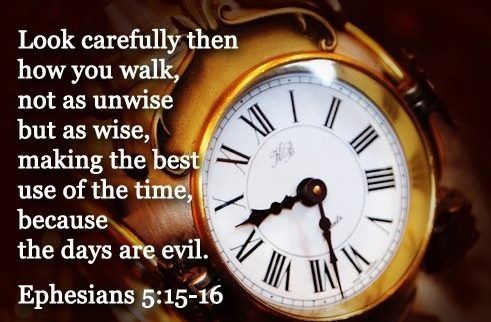
Ephesians 5:15-20 (5:15-16) – August 18, 2024

Can you picture this scenario? A tired mother, towing a whiny, unwilling child behind her in the grocery store, finally bursts out in an exasperated tone, “Will you please just be good?” How many times have you heard that cry? “Stop misbehaving!” or, “Please, be good, for once!” We may even have said it ourselves, to our children, grandchildren, nieces or nephews. Misbehavior is more than just a child’s issue. It’s bigger than that. It’s a larger issue . . . an issue of society in general, even a world issue.

The world situation today is not good. For confirmation, all anyone needs to do is look at a daily newspaper or listen to the nightly news. Misbehavior on a regional or national level. Wars and conflict overseas, violence in every large city in the United States, breakdown of society’s fabric in general, worldwide. I can quote the Apostle Paul from this passage in Ephesians 5 and say that these days are, indeed, evil.

This evil that Paul speaks of is not just generic, abstract evil. This evil is a specific kind of evil . . . in Greek, poneros—evil in active opposition to the good, pernicious. Insidious. Causing ruin. This is the situation that humanity is in without God. Left to our own devices, people will inevitably take the easier, softer way, cutting corners, with no moral compass.

If anyone here is familiar with the book The Lord of the Flies, this story is a prime example of how bad humanity can get. Briefly, the story concerns a group of British schoolboys who are wrecked on a tropical island without adult supervision, since the adults die in the plane wreck. It doesn’t take long before all kinds of evil behavior starts occurring as the boys engage in bullying, gang activity and before long, outright violence.

            Now, this book (later made into a movie) is a fictional account concerning schoolboys who do not have a moral compass. This kind of behavior is a worst case scenario, but it is happening more and more, as we see groups of people all over the world acting more and more amoral. Maybe we see it more and more because of better communications. And, with television and computers, news is beamed to the remotest corners of the world—news of these evil days.

“Though we cannot pretend that evil isn’t real (such a view would hardly be “wise”), this also cannot be the whole story of the world. We know that the world is God’s good creation, and that all days are God’s gifts” [1] – God’s gifts to God’s people!

            This is exactly the audience to whom Paul addresses this letter. The believers in Ephesus were Christians. They did believe in the claims of Jesus Christ. They were walking with God. One of the main themes of this letter is just that: keep walking with God. The Apostle Paul did not soften his words. He knew how difficult and challenging the Christian life can be.

            Paul’s strong words in Ephesians 5 are as much for us today as for believers centuries ago. “Take heed how you order your lives!” or, “Consider how you conduct yourselves!” The Christian life is not just a walk in the park, strewn with financial and material blessings, no matter what the tele-evangelists who promote a health, wealth and happiness gospel seem to say.

            Instead, and this is shown to us again and again in the Apostle Paul’s own life, the Christian life is not a spectator sport. No sitting in a comfy chair, eating bonbons. Life takes some doing. It takes rolling up our sleeves, and not being afraid to do something for God.

            Don’t get me wrong . . . I am NOT saying that we can work our way to heaven, because we CANNOT. No. We as human beings start off by our very nature separated from God, and cannot do anything about our own predicament. Yet, God’s wonderful grace sent God’s Son to redeem us from the evil things we have done, from the evil circumstances in which we find ourselves. And, when each of us believes in that gift of salvation and redemption, God helps us to be wise. God helps us to conduct ourselves in a manner pleasing to God!

            These days are evil, but with the Lord’s help, we can continue to walk in the way of God, not of evil. Yet, it is so easy to get off course. It’s like a ship on the ocean, steered by a rudder. Even if that rudder is off only a tiny amount, it doesn’t make a big difference at first. However, as the ship moves further and further across the ocean from New York City and continues on the wrong course uncorrected, instead of arriving in France, the ship might well end up in Africa! Aren’t we similar to that ship on the wrong course? Even though the course was only very slightly off in the beginning, as time went on and the journey continued, we might end up in a very different place from where we originally thought.

            This is one of the decision points of the letter to the Ephesians. We’re advised to live not as foolish people, but instead as wise people. I know very well how easy it is to become foolish. Sure enough, I do foolish things with great regularity. The Apostle Paul refers to this action as a continuing action.

Foolishness doesn’t just happen once or twice, and then stop. No, we need to keep close to God and keep coming to Him for help. God will help us understand how to be wise! God will help us to understand what God’s will is, too!

            This reminds me of my friend Mike, whose two children are about the ages of my two older daughters, in their late 30’s. Mike is a Presbyterian elder, a retired high school science teacher, and he gave me some words of wisdom some years ago regarding childrearing. He said because he wanted his children to exercise the excellent minds that God gave them, Mike would not tell his children to be good, but instead to be wise.

            Which is easier? Which is more difficult? Which takes more brain power? Being good, or being wise? Being wise takes some brain, some thoughtfulness, and some deliberation. Thank God that God loves us so much – God gave us excellent brains.

We can walk in a way pleasing to God, using the brains that God gave us to be God followers. “To be the awakened and wise people of God means that we can be good and honest stewards of time, so that opportunities to do justice, and to live boldly as God’s reconciled people during this time, are not missed.” [2]  And, the best part of all is that God will help us to be wise! God will give us wisdom, and will help us as we walk each day, one day at a time.

@chaplaineliza

(Suggestion: visit me at my other blogs: matterofprayer: A Year of Everyday Prayers. and  A Year of Being Kind . Thanks!


[1] https://www.workingpreacher.org/commentaries/revised-common-lectionary/ordinary-20-2/commentary-on-ephesians-515-20-4

[2] https://www.workingpreacher.org/commentaries/revised-common-lectionary/ordinary-20-2/commentary-on-ephesians-515-20-4

Unknown's avatar

Today!

(I attended a denominational national assembly this weekend, and was not leading worship. Here is a sermon from my archives! I hope it touches your heart and spirit.)

“Today” – 2 Corinthians 5:20-6:2

June 28, 2006

            Once upon a time, there was a loving Father with abundant wealth, property and resources. He loved His many children dearly and did everything in His power to provide abundantly for them.

            Does this story line sound familiar? It should. That loving Father is God, our Heavenly Father. He created the world in the beginning, including humanity. Our loving God gave humans abundant resources, and provided many good and gracious gifts for them, doing everything possible to provide a rich and rewarding life for them.

I’d especially like to focus on the love. God’s love for humanity, for the world, for us. I dare say that many of us here today could quote John 3:16—“For God so loved the world that He gave His only begotten Son, that whoever believes in Him should not perish, but have everlasting life.”

From this verse, can we tell how much God loves the world? How much does God love us? This much?     (spread arms and pause)  

There was a problem, way back when, when God lavished such good and loving care on humans, on His children. That problem was and is SIN.

Face it, humanity—and that includes you and me—is fallen. I usually hesitate when I make sweeping statements, but not in this area. We are sinful. As Romans 3:23 says, “For all have sinned and fall short of the glory of God.” That is ALL. Not a few, not even most, but ALL. Everyone. All humanity. We don’t sin all the time, or in every situation. There are plenty of times when members of the human race act in kind ways, and think loving thoughts, but that troublesome sin nature is alive and kicking in each one of us.

Can you see a toddler or preschooler, stamping her feet, crossing her arms across her chest, and shouting, “No!!” Can you see a teenager, disrespectful and angry, slouching away from the dinner table without a word? Can you see the prodigal mentioned in the Gospel of Luke, wishing that his father would kick the bucket already, so he could get his inheritance? Do these selfish, proud, disrespectful, ungrateful actions (and thoughts, I might add) have anything in common? I would say, yes, they do. The sin nature that is part and parcel of all humanity is readily evident, in all of these situations. We are human, therefore we sin—by thought, word, or deed—by omission or by commission.

It would be really bad news if the story ended there, wouldn’t it? Humanity would be both hopeless and helpless, stuck in the miry clay of our own sinfulness. BUT, that is not the end of the story. God still loves us. Remember John 3:16? “For God so loved the world?” That love still comes to us, regardless of our sinfulness, regardless of our selfishness, regardless of how much we have disregarded the abundant love and the lavish care that God showers upon us each and every day.

As our passage from 2 Corinthians says, we humans trespass. We sin. We mess up. We make mistakes. But God loves us anyhow! God doesn’t keep a tally sheet, a ledger of all our good deeds and bad deeds. God does not count these mistakes against us. In fact, God goes above and beyond our mistakes, reconciling the world to Himself.

It’s not that God is estranged from the world, from humanity. It’s the other way round. It is humanity—it is you and me—that is estranged from God. God created humans, and He loves humans. He created each of us with our foibles and quirks and personality flaws as well as our individual strengths. He created each one of us as individuals to give glory to His name in our own individual ways. God knows us so much better than we know ourselves, and He still loves us just the same! God reconciled the world—that’s you and me—to Himself, out of love.

Like I said, that is wonderful news! Amen! Praise God! Thank You, Jesus!

Jesus was sinless, but He was made to be sin for us. Jesus took all of our collective sin upon Himself on the cross so that in Him we might become righteous before God. Can we tell how much God loves the world? How much does God love us? Is it this much?     (spread arms and pause)  

So, now that we know about God’s abundant love that He lavishes upon each of us, what are we going to do about it? Listen to the words of our passage again. “’At an acceptable time I have listened to you, and on a day of salvation I have helped you.’ See, now is the acceptable time; see, now is the day of salvation!”

D.L. Moody, noted evangelist during the 1800’s and founder of Moody Bible Institute, did much of his evangelistic work around Chicago. One Sunday evening in September 1871, Mr. Moody closed his sermon with the injunction for the congregation to evaluate their relationship with God over the next week and to return the following Sunday. When Mr. Moody was on his way home after the evening service, he heard the fire alarms all over and saw the flames against the sky, turning the night sky red and orange. That meeting hall where the service was held burnt to the ground, along with most of the city of Chicago. The Great Chicago Fire happened that night.

Mr. Moody was horrified, knowing that he had not told his listeners the full message of the love of God, for each one of them. He vowed from that day on to tell the whole story, to always let people know the good news of salvation in every sermon he preached.

What about you? Are you still thinking about God’s offer of salvation? You may have been a church member all your life, faithful and hard at work for many years. But you may have never realized that God’s joyful message of reconciliation was especially for you. You may have been born into a loving Christian family, maybe even a pastor’s kid or missionary’s kid, and been surrounded by God’s abundant love all your life. But just because I may be born in the room behind a bakery doesn’t make me a biscuit . . . and just because I may be born into a Christian family doesn’t make me a Christian by birthright or by osmosis. God has no grandchildren. There are only children of God.

God has been loving us—you and me—all of our lives, even when we turned our backs on Him. If this is that day for you, that acceptable time, that day of salvation, praise God! Enter into the joy of a loving relationship with God, a close friendship with God.

If God had a refrigerator, your picture would be on it. If God had a wallet, your photo would be in it. God can live anywhere in the universe, and He wants to live in your heart. If you have never, truly experienced God’s love for you, individually, there is no time like the present. We can indeed enter into the joy of our Father’s loving embrace and experience His abundant love for each one of us. Today is the day of salvation! God is ready. Are you?
@chaplaineliza

(Suggestion: visit me at my other blogs: matterofprayer: A Year of Everyday Prayers. and  A Year of Being Kind . Thanks!

Unknown's avatar

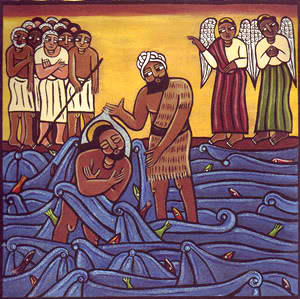
The Baptism, the Love!

“The Baptism, the Love!”

Mark 1:1-11 (1:11) – January 14, 2024

            I don’t know about you, but I love taking a bath! My husband is more of a shower person, instead. What do we need when we take a bath? How about a bar of soap, a bottle of shampoo, and maybe a back scrubber? I remember my small children liked a big, fluffy towel, and perhaps even bath toys! That was when they were really small.

            I know people need to take regular baths and showers. That’s in order to stay clean and healthy. And, we take baths and showers again and again, because we keep getting dirty and keep needing the cleansing that soap and shampoo provide.

But, what does this have to do with our Scripture reading today? Did you realize that some people – certain faith traditions – refer to baptism as a bath? Do we need soap, shampoo, or bath toys for a baptism? No, not quite the same thing. But, we do need water, and we definitely need the Word of God for this sacrament. [1]

We read these words from the Gospel of Mark: “John the Baptist appeared in the wilderness, preaching a baptism of repentance for the forgiveness of sins. The whole Judean countryside and all the people of Jerusalem went out to him. Confessing their sins, they were baptized by him in the Jordan River.” Not the same thing as taking a bath in a roomy tub, is it?

John the Baptist is specific about a baptism of repentance! And, the Gospel record says that many, many people from Jerusalem and the surrounding countryside flocked to the River Jordan to get baptized.

John the Baptist and Jesus are cousins, and I suspect they grew up together, talked, walked and interacted with one another often. Perhaps studied together, too. Now, John has burst upon the public scene and is proclaimed as a prophet of God! John even has the audacity (and temerity) to call for public confession of sins and a subsequent baptism in the River Jordan! The chief draw was John’s urgent call for the forgiveness of sins. That is the attraction!

Let us shift our focus from the general baptism for the repentance of sins to the specific baptism of Jesus. This special event happens right up front, at the very beginning of the Gospel of Mark. John already has a following, and disciples. John’s getting a great deal of publicity in Palestine. His star is rising, for sure.  And what should happen but Jesus shows up at one of John’s baptism events by the river?

Remember, this was before Jesus even started His ministry, before He ever said anything important, or healed anyone, or done anything special at this point. Just think: there is so much pressure on people to be successful in this day and age.

If John the Baptist were our contemporary and had his prophetic ministry today, I can just see him on television, perhaps YouTube. Maybe even short TikTok videos. He was probably too much of a rebel and outsider to be on the inner circle of any denomination or official structure, but I think John would definitely make a splash and be well-known for his straight talking and action-oriented way of communication!

And get this – Jesus asks John to be baptized! Just as Jesus began His ministry with obedience to God, with being baptized, so we are encouraged to begin our lives, our ministries, with baptism, too. 

As we consider Jesus being baptized, what happened as He was with His cousin John in the river? Listen to the words of Mark’s Gospel: “Just as Jesus was coming up out of the water, he saw heaven being torn open and the Spirit descending on him like a dove. 11 And a voice came from heaven: ‘You are my Son, whom I love; with you I am well pleased.’”

Remember: this was before Jesus had ever done a miracle, preached a sermon or done anything else that was special. And God said that Jesus was loved and God was well-pleased with Him. “Notice in Mark’s treatment of the story of Jesus’ baptism two things. First, notice God’s words to Jesus. They are personal, poignant, and powerful. “You are my beloved son. With you I am well pleased.” Wrapped in these words of acceptance are the blessings of identity, worth, and unwavering regard.” [2]

What about you and me? When we were baptized, do you think we were loved by God? Yes, God was well-pleased with us, and with every other human of God’s creation! Yes, you and I are also accepted, with the added blessings of identity, worth and unwavering regard, too!

You may remember bracelets and t-shirts with the initials “WWJD” imprinted on them. The words “What Would Jesus Do?” were a Christian, even pop-culture, trend some years ago. Remembering this trend brings up a valid question. Let’s reframe it into a question about baptism. Who would Jesus exclude? For that matter, who would John turn away from baptism?

We celebrate this event in our Lord’s life each year during the season of Epiphany, during January. Yes, praise God, Jesus went into the waters of baptism, and served as an example for us. Plus, this day is a reminder for each of us who have been baptized. Maybe we made our own promises, or perhaps someone made them on our behalf. [3] Regardless, all are welcome to the waters of baptism! This is a sacrament of repentance, forgiveness, and of radical welcome.

St. Luke’s Church, our church, is a member church of the United Churches of Christ. UCC churches are supposed to welcome everyone. No matter if someone is grumpy, or mean, or stingy. You are welcome here at St. Luke’s Church. No matter if someone is painfully shy, or has some physical or mental infirmity, or has a really strong personality. No matter what your gender or sexual orientation is, either. All are welcome here, in this particular church, too. 

That means a radical, open-hearted, open-handed welcome to all people, no matter what. No matter who. You and I are welcome with God. We are welcome to the waters of baptism, and with you – and me – God is well-pleased. Amen, alleluia.

@chaplaineliza

(Suggestion: visit me at my other blogs: matterofprayer: A Year of Everyday Prayers. and  A Year of Being Kind . Thanks!


[1] https://www.stewardshipoflife.org/2015/01/wet-well-pleased/

[2] https://www.davidlose.net/2015/01/baptism-of-our-lord-b/

[3] https://www.stewardshipoflife.org/2015/01/wet-well-pleased/

Unknown's avatar

God Cares for Us

“God Cares for Us!”

Isaiah 46:3-9 – July 9, 2023

            I have wonderful memories of being a mom of small children. I would be fascinated to see their endless awe, wonder and amazement. Small children love discovery and inquiry, they love Finding Out New Things. With discovery and exploring come the possibility for falling down, bumping elbows and skinning knees. Not to mention falling flat on your face! I remember washing the dirt off various owies, putting band-aids on knees, fingers and elbows. Sometimes, a small person would climb up in my lap, ready to rest and be cuddled.

            Here in Isaiah 46, we listen to the prophet talk about the Lord. Listen to this message for the remnant of the nation of Israel: ““Listen to me, descendants of Jacob, all you who remain in Israel. I have cared for you since you were born. Yes, I carried you before you were born. I will be your God throughout your lifetime—until your hair is white with age. I made you, and I will care for you. I will carry you along and save you.”

            Except, this is a different image of God than we have heard about in other parts of the book of Isaiah. As we have said during the past few weeks, not a strong, mighty, and fearsome Deliverer! No! Instead, we have a another, different view of our Lord. This image is nurturing, warm and mothering.

            I don’t know if anyone here remembers baby slings? A long piece of fabric or material that mothers use to carry their small (and even not so small) infants right near their hearts. And sometimes, as with indigenous mothers, they might carry the child on their backs, secured in a sling of fabric. What a caring, comforting way to carry an infant close to a mom’s heart!

            This image from Isaiah 46 is similar – nurturing and comforting! The God of Israel is “carrying” God’s people close to God’s heart. Like a mother, who carries the child in her uterus for nine months, and afterwards carries it close to her heart. When the prophet actually wrote these words, it had to have a powerful effect upon the nation of Israel. Imagine, actually feeling that God bore them up, and held both them and their burdens close to God’s heart!  

            As we reflect upon our powerful God, God is also creative and caring. We can see that the Lord does not simply wind up the world or the universe like a huge watch, put it down on a forgotten shelf and then go away for centuries, even eons. Remember, verse 4 tells us “I will be your God throughout your lifetime—until your hair is white with age. I made you, and I will care for you. I will carry you along and save you.”

            Just as the nation of Israel is reminded that they have experienced God’s power by constant benefits, as John Calvin’s commentary on Isaiah tells us, but God diffuses power – and creativity – through all God’s creatures, so that everyone feels God’s strength and energy. As well as Divine caring and salvation! [1]

            This metaphor used in verses 3 and 4 is so expressive. Who has not seen a pregnant mother, or a mother with a young infant? God compares Godself to a mother who carries a baby in her uterus. We hear the Lord speaking of times past, when humans were (and still are) given testimonies of God’s grace! We all can be thankful and grateful that God nourishes not only the people of Israel, but God nourishes us, too! That is, if we are okay with thinking of ourselves as babies and young children in our nurturing, caring God’s lap.

            Alyson Rockhold writes in her article on Isaiah “I sense God’s arms wrapping around me. I hear a gentle invitation to lay down my weary head. In my mind’s eye, I imagine God patting my hair like a mother comforts an overwrought child. It is in intimate moments like this that I experience the mothering God. As a child, I would run to my mother with every skinned knee and broken heart. Her acceptance was total, and her presence never failed to soothe me. Now I’m grown, and an ocean separates my home from hers. Still, in moments of sadness and struggle, I long to feel like a child in my mother’s arms: completely loved and totally accepted. I rediscover this in the Lord’s embrace.” [2]

            In past weeks, this sermon series has focused on Scriptural images of God that are not the usual images put forward. Even referring to God as “mother” might stretch our Divine vocabulary! God as spirit, yes! I would like all of us to think about widening our understanding of God. God is a divine Being beyond male and female, since male and female we all were created in God’s image, in the beginning.

            Here in this summer sermon series, we look at a dozen instances where the Scripture clearly uses feminine imagery and metaphor to explain how God relates to us! We are certainly not referring to any sort of Mother Goddess, or ancient fertility symbol. I know that kind of earthy worship involved agriculture, fertility, sexuality, and even temple prostitutes.

No, this is definitely not what we are focusing on! Neither am I only glorifying God as “Father,” putting human fatherhood and the Divine as Heavenly Father on some sort of lofty, unreachable pedestal. No! As we can see, the Scriptures “consistently merge the images and metaphors of the fatherly God with motherly compassion and love,” [3] as these Scriptural and maternal images tell us repeatedly. Both fatherly and motherly images of our God.

            I encourage all of us to pray with these images. We can all come before God in prayer, climbing up into the Lord’s loving, nurturing lap. Not only can we be grateful for mothering and nurturing of earthly mothers and those who care for us as mothers, around the world.  We can also be thankful for our ever present, sustaining and caring God. Join me in bringing thanks to our Lord for God’s enduring, everlasting care and nurture.

No matter how big or small we are, no matter how grown-up or childlike we may be, we all can say “thank You, God.” Alleluia, amen.

@chaplaineliza

(Suggestion: visit me at my other blogs: matterofprayer: A Year of Everyday Prayers. #PursuePEACE – and  A Year of Being Kind . Thanks!

[1] https://www.studylight.org/commentaries/eng/cal/isaiah-46.html

[2] https://www.americamagazine.org/faith/2021/05/09/god-mother-faith-prayer-240581

[3] https://juniaproject.com/biblical-maternal-images-for-god/  

Unknown's avatar

Be Merciful to Me!

“Be Merciful to Me!”

Luke 18:9-14 (18:13) – October 23, 2022

When you were young, in school, did the other kids joke and horse around? Sometimes, did the other kids make fun of some people in their school or down the block, or tease and belittle them behind their backs? Even worse, to their faces?   

I can relate to this, very strongly. I was one of those kids who was picked on. I wore glasses ever since kindergarten, and on top of that, I was a chubby girl. The mean kids used to call me “four eyes” and “chubby, chubby!” Do you remember a couple of other kids who were really picked on, in your acquaintance? Called names like shorty or pipsqueak, jerk or baby. These names were so hurtful. Sometimes, the picked-on kids still remember, decades later.

Do these negative names or labels remind you of anything? They certainly did, with me! In our parable this morning, it sounds like our Pharisee could be one of the really mean kids on the playground! With such a high and mighty air, and a real feeling of superiority. What do you see from this Pharisee? He was a show-off, for sure! Plus, he did not particularly care how hurtful his statements about the tax collector were. That tax collector was standing nearby, too! How do we think that poor guy felt, with the Pharisee talking trash about him?

Just listen to what the Pharisee says about the tax collector: “The Pharisee, standing by himself, was praying thus, ‘God, I thank you that I am not like other people: thieves, rogues, adulterers, or even like this rotten tax collector.”

I know I have talked about tax collectors before. These people were Jews, and they grew up in the villages and towns where they plied their trade. Except – they were turncoats. Sell-outs. Someone had to collect taxes for the Roman Empire. They took the pay and authority from their Roman overlords and were despised for it by their fellow Jews. These tax collectors soon received the reputation for graft and shake-downs, and usually that unsavory reputation was well deserved. Both the Pharisee and the tax collector came into the Temple before the Lord. Both the Pharisee and the tax collector had sin in their lives – missteps, missing the mark of how God wanted them to live. Their attitude toward their sin was as different as night and day!

We need to consider two basic truths when we take a closer look at this parable. First, God loves us! Yes, it is true! The Lord loves each one of us, more than we can ever imagine.

But, the second truth is also very evident. We are all sinners. We all have missed the mark, and all have mis-stepped. We all do things and say things and especially think things that are displeasing to the Lord. Commentator Carolyn Brown says “The Pharisee understands only one of them – God loves me.  He sees only his strengths and good deeds and tells God all about them.  It is a one sided conversation.” [1] 

Do you know people like this? People who are full of themselves, self-important, and proud? Arrogant, even? They might set themselves up on pedestals and look down their noses at anyone who doesn’t come up to their exacting, stuck-up standards. Especially “inferior” people like “thieves, rogues, adulterers, or even like this tax collector.”

The Pharisee does speak truth about himself, however. “Truth be told, he is righteous. He leads a life blameless according to the law. He fasts and gives alms and indeed bears no resemblance to the unsavory characters with which he compares himself. What, then, is his problem?” [2] He is overwhelmingly self-righteous, self-involved and blind to his own failings and shortcomings. He does not have a true picture of himself, from the inside out.
            What about the tax collector? This parable is one of my favorite parables that Jesus ever preached. I relate so much to this tax collector! We don’t even know his name. But, he understood both of these important truths that underlie this narrative. “He is well aware of his weaknesses and sins.  (Lots of people point them out to him regularly!)  If that was all he knew, he wouldn’t be at the Temple at all.  But he also knows that God loves him in spite of his sins.  So he comes to God to confess and leaves OK with God.” [3]

Do you hear? That is what the assurance of pardon is all about, after our confession of sins each Sunday. God forgives us our sins! God loves each of us very, very much! This does not negate our sinfulness, or sweep it under the rug, But, you and I have a realistic picture of ourselves as sinners touched by mercy, saved by grace, and much beloved by God.  

Carolyn Brown reminds us: “Jesus tells his listeners to be honest with God.  When we come to God honestly, admitting our sins and trusting that God loves and forgives us, we are OK with God – and also OK with ourselves and the people around us.” [4] 

I invite you – me – all of us – to look around the room. See your family, friends, strangers or people you don’t really know. Each one of us is a sinner, in thought, word and deed. Each one does or says hurtful or thoughtless things. Now, look around the room again. God loves every one of us. Every single one of your friends, your neighbors, your enemies, even.

I ask you: which man went home justified with God? Both men were loved anyhow, but the truthful, humble, repentant tax collector was embraced by God. We can take this parable to heart, and follow the truthful, humble example set for us. We can all strive to be humble and penitent, just like this repentant tax collector.

Praise God we are loved by this amazing God, the God who delights in justifying the ungodly, welcoming the outcast, and healing all who are in need. Alleluia, amen.

@chaplaineliza

(Suggestion: visit me at my other blogs: matterofprayer: A Year of Everyday Prayers. #PursuePEACE – and  A Year of Being Kind . Thanks!


[1] http://worshipingwithchildren.blogspot.com/2013/09/year-c-proper-25-30th-sunday-of.html

[2] https://www.workingpreacher.org/dear-working-preacher/the-pharisee-the-tax-collector-and-the-reformation

[3] worshipingwothchildren, ibid.

[4] Ibid.

Unknown's avatar

Jesus Was Baptized, Too

“Jesus Was Baptized, Too”

Luke 3:15-17, 21-22 (3:21) – January 9, 2022

            Imagine standing in a line for a COVID test. The lines right now are very long, depending on where you can get tested! A pastor associate in a nearby town was recently exposed, and she needed to stand in a similar line, waiting her turn. I suspect the people around her had all kinds of emotions while standing there. Some felt fear, some felt expectation, some were disgruntled that they needed to be there. Some were anxious, and I bet some were hoping, and some hesitant. All kinds of emotions!

            Now, imagine a similar line, next to the Jordan River, about two thousand years ago. People waited in line to be baptized by John the Baptist. John was preaching some really challenging truths! Calling the people listening to him a brood of vipers, and calling everyone to repentance from their sins. Those were just two of the many difficult things he preached!

            Before Jesus began His public ministry, He stood in that line, too. Jesus asked His cousin John to baptize Him, too.

            I wonder how many of us can remember our baptisms? In this particular church’s tradition, I know the pastors almost always baptize babies and small children. That is a particular theological view of baptism, and one where we affirm that God extends heavenly blessing and grace to all, regardless of when they come before God in baptism.

            Two thousand years ago, John the Baptist wanted adults to confess their own sinfulness, to realize that each one had sinned and fallen short before God. As a result of that confession, John would then baptize each one. This is a slightly different view of baptism, and one that was (and is) just as valid. And, we come back to Jesus, waiting in that line. Jesus wanted John to baptize Him, too – even though Jesus never sinned.

            Imagine what it would have been like to be an eye-witness! I know I have preached about Ignatian prayer from time to time over the past years. Using Ignatian prayer, we imagine ourselves right into the picture. What does it feel like to be right there, in line on the banks of the Jordan? It’s a dusty, dry day. There’s some greenery, some growth along the river, but not much further away. Muted colors of browns and grays further inland. The sun is bright, and the sky a bright blue. Can you hear the wind? Feel the sandy ground under your feet?

            What is it like, to see that man called Jesus in line to be baptized? Did you hear any whispers about Him, being someone special? Then, some commotion down by the water. It’s that prophet who is doing the baptizing, the one named John! He and Jesus are having an extended conversation. John is protesting something – he shakes his head. But Jesus seems like He’s talking John into something. There they go, into the water. And, John baptizes Jesus.

            In centuries to come, many differing views arise about John’s simple, straight-forward act of baptism. “We don’t know if Jesus was immersed or sprinkled. We don’t know which liturgy John prefers, or if the vows that Jesus made were the same as the ones we make or not. We don’t know if John was properly credentialed or if Jesus followed the rules. We don’t know who signed the certificate. We need to know these things, don’t we?”[1]  

            Let’s continue to come forward in time, into the present day. I know it is so meaningful for relatives and loved ones to gather around a baby, a child, a young person getting baptized. What do you remember about the day you were baptized? Or, if you cannot remember your baptism, what do you remember about the day your children were baptized? Grandchildren? Godchildren? Perhaps a younger brother or sister? This is one of the sacraments of the church, one of those times when a common element, water, is used for a holy and marvelous purpose.

            Just a short time ago we celebrated the birth of the Baby born in Bethlehem. We remember in the fullness of time, Jesus was nurtured in the water of Mary’s uterus. We remember Jesus was baptized by John in the water of the Jordan. We remember that Jesus became living water to a woman at a Samaritan well. We remember Jesus washed the feet of the disciples. And, we remember Jesus sent His friends forth to baptize all peoples, all nations, by water and the Holy Spirit.

            As we enter into our imagining one last time, we see John and Jesus in the water, and the heavens open up. I have never seen anything like this before! There is a bird – it’s a dove, flying down from the opening in the sky! And then – it’s a voice! It is coming from that same opening in the sky, in the heavens. That must be God’s voice, isn’t it? “You are my Son, the Beloved; with You I am well pleased.”

            What a marvelous thing for God to say about Jesus. Remember, this is before Jesus has taught anybody, healed anyone, or died on the cross. At the beginning of a new year, this especially reminds all of us “that God loved Jesus and loves us not because of anything we do but just because God loves us. Period.” [2]
            What a marvelous thing to remember when we remember our baptism. Remember, we were baptized, too. And, God calls each of us beloved. With each one of us God is pleased.

            Alleluia, amen!

@chaplaineliza

(Suggestion: visit me at my other blogs: matterofprayer: A Year of Everyday Prayers. #PursuePEACE – and  A Year of Being Kind . Thanks!


[1] https://www.umcdiscipleship.org/worship-planning/love-never-ends-being-the-body-of-christ/epiphany-baptism-of-the-lord-year-c-lectionary-planning-notes/epiphany-baptism-of-the-lord-year-c-preaching-notes

[2] http://worshipingwithchildren.blogspot.com/2012/11/year-c-baptism-of-lord-january-13-2013.html

Unknown's avatar

Meeting Jesus In-Between

“Meeting Jesus In-Between”

Temptation of Jesus – Jesus MAFA

Mark 1:9-13 (1:13) – February 21, 2021

            How often do we experience several significant happenings in our lives, and yet feel very much in between things? On the virtual road through life, yet not arriving at any settled place and not staying there for a good long time? When young people pass between one grade and the next, or graduation from one school or course of study to another, that is a time of being in-between.

            This whole past year – 2020 – might be seen as an in-between time. Certainly not a normal year, by anyone’s understanding. Whether it’s a busy time for our families, a hectic time at work, or a stressful time in terms of health, we might be in-between things in one or more areas of our lives. This seems like a time that is especially full of a lonely, uninhabited wilderness for so many.

As we look at Mark’s Gospel reading today, we see big changes for Jesus. His baptism – a big event! Jesus driven into the wilderness – another significant event! And then, Satan coming to Jesus – a third, powerful event! All in the space of five short verses. These three significant events all come crashing into Jesus’s life in a very short time, and with Mark’s typical economy of language.

We talked more about the Baptism of Jesus several weeks ago. This was certainly a highlight in our Lord’s life, and sure sign of His Heavenly Father’s approval. Then, immediately (one of Mark’s favorite words!), Jesus was driven by the Holy Spirit into the wilderness. Jesus must have had major feelings concerning this sudden ushering away from all human habitation. To cap the wilderness experience, the devil and Jesus interacted, face to face. That must have been a sight to see! Imagine, Jesus on one side, and Satan on the other.   

            Jesus was in the wilderness for 40 days, all alone in that deserted region. In-between times, in a time that is not a big, wonderful event, but is separated at a distance both physically and in terms of thought and experience. An in-between time, a wilderness time of loneliness and quiet.

            I understand a number of nurses serving in hospitals and care centers are so weary of seeing patients so very sick. This time of pandemic is stressful for everyone, but especially for those who care for seriously ill patients. Since the pandemic has caused patients to be so lonely and isolated, seldom receiving even one relative as a visitor, some nurses have taken it upon themselves to come alongside of very sick patients. To sit with them, give an extra squeeze of the hand or a sentence or two of encouragement or comfort before going to the next room.

            Is there a possibility that hospitals and care centers might be another place of the wilderness in the present day? Perhaps not the actual semi-arid wilderness of Palestine, but certainly an isolated experience, away from other humans except for brief times during the day.

            All the same, this in-between time can also be a time that is hallowed by God’s presence. Sure, God can meet us in this space, this liminal place in between the big things that happen in our lives – in yours and mine.  

            Even though big events can happen in our lives, so much of the daily activities of our lives are not big. Not earthshaking. Are you in the wilderness in some way today? In between events, and wondering how everything is going to right itself, or even somehow manage to continue?

            Let me tell you some good news! It is a comfort and encouragement to know that God seeks us out when we are in those in-between times. True, those wilderness times in our lives can be discouraging and disorienting for each of us. When we are lost or wandering or angry or grieving, God finds us again and again. This is the bedrock of our Reformed faith, that God takes the initiative and comes to seek us out, no matter what

            Just as the Lord God proclaimed Jesus to be God’s Son at His baptism, just as the Lord God sent angels to attend Jesus in the wilderness after Satan left, the common thread in each of these significant events is the Lord God’s closeness to Jesus. We hear the heavenly voice meet Jesus at the threshold of something new and different, and proclaim Jesus as God’s beloved!

            Not only the big places and events are holy, but also the in-between places. All places become holy as our God comes into all of them, breathing new life and encouragement and comfort into every space and place.

Are you at the threshold of something new or different? Still in the wilderness? Or, just continuing to walk that road of day-to-day existence? We can all take heart! God names us all God’s beloved. Did you hear? Each of us is God’s beloved child, no matter what.

As commentator Denise Anderson says, God meets us where each one is. God approaches each of us to claim us, equip us, and send us to do God’s will – as God’s beloved children. Amen!       

@chaplaineliza

(Suggestion: visit me at my other blogs: matterofprayer: A Year of Everyday Prayers. #PursuePEACE – and  A Year of Being Kind . Thanks!

I would like to thank the Rev. T. Denise Anderson, Coordinator for Racial and Intercultural Justice with the Presbyterian Mission Agency, and former Co-moderator of the 222nd General Assembly of the Presbyterian Church (USA), for her contributions to the Lenten sermon guide Again & Again, from Sanctified Art. These Lenten sermons are based on that sermon guide.