Unknown's avatar

Stand Firm in Benediction!

“Stand Firm in Benediction!”

2 Thessalonians 2:13-17 (2:16-17) – November 9, 2025

            It’s sometimes difficult to be persistent! To hold on, and continue working, continue trying, despite delays and disappointments and detours. Isn’t it? Continuing to work all alone, standing by and standing up when others fall away. Even just being faithful, and doing what you promised to do can be a real trudge up a long, winding road, up a steep and lonely hill.

            It’s a good thing that as we live the Christian life, so often we are in community with each other! Isn’t it easier and more companionable to be traveling together, or working on a project together, or carrying a load together, with a group of friends?

            That’s what the Apostle Paul was writing about, here in this second letter to the young church in Thessalonica. When Paul and his friends were on their second missionary journey, they had only spent a short time in that city before they needed to leave. This was a young church that Paul planted, and Paul had already sent one letter to the believers there. He sent this second one to correct some misunderstandings and to renew the Thessalonian believers’ hope in Christ.

            We are focusing on this small section right in the middle of Paul’s letter. He breaks away from giving further instruction on the confusing timing of our Lord Jesus Christ’s return to giving encouragement to his fellow believers. “But we ought always to thank God for you, brothers and sisters loved by the Lord, because God chose you as firstfruits to be saved through the sanctifying work of the Spirit and through belief in the truth. 14 He called you to this through our gospel, that you might share in the glory of our Lord Jesus Christ.”

            When I hear about churches and pastors today who really focus on the “end times,” and about the prophecies in both the Hebrew Scriptures as well as the few times in the New Testament that refer to the Second Coming, I often roll my eyes. If you have ever read or heard of the books on the End Times, the books are so much dominated by fear and anxiety, by persecution of Christians by cartoonish bad guys. Those same churches and pastors so often advise their congregations of strict rule-following, and black-and-white do’s and don’ts.

            Yes, I did read that first portion of the assigned reading from 2 Thessalonians 2 this past week, and I did not feel led to write a sermon on it. However, I continued reading in chapter 2, and found Paul encouraging his Thessalonian friends, and thanking God for them!

As commentator Mariam Kamell says, “Christians can be confident, encouraged people because we know that we are held as first fruits by God’s choice, preserved through the Spirit. In Paul’s paradigm there is neither room for pride in our efforts to improve the world, nor despair at the state of the world around us. For Paul, all of this talk about the end is to encourage us in our security in Christ and draw us ever further in the Spirit’s sanctifying work.” [1]

            So, we are not to despair over the End Times! We are not to be fearful and cower in the shadows, dominated by fear and anxiety! Instead, we are to rejoice, and be hopeful in our security and salvation in our Lord Jesus Christ.

            Paul then says, “so then,” which is very similar to his connecting word “therefore.” As one of my Bible instructors used to say when I was attending a Christian college for undergrad, “See what “therefore” is there, for! Why is Paul using this particular connecting word?  “15 So then, brothers and sisters, stand firm and hold fast to the teachingswe passed on to you, whether by word of mouth or by letter.”

            I know things and people and situations in this world today can be really scary, and even make us want to hide under the covers! Especially when we consider persecution and lawlessness – however, God has the final word. “Don’t worry about what will happen when you (or people you love) die and don’t worry about what will happen when you grow up or get to be a teenager or [grown-up].   Instead, think about today.  Live as God’s person today.  Do the best you can and know that God is with you.” [2]  

            Isn’t that wonderful encouragement for all of us? Instead of cowering in fear, or being a strict rule-follower or else! We are to know we are God’s people, followers of Jesus Christ, and led by the Spirit of God. Paul prays that the Thessalonian believers are to be encouraged – in their inner being.

“This is clearly a ministry of the indwelling Spirit of Christ. Against the wiles of this age, may we look in faith to the one who constantly surprises us with his love and inspires us with courage and confidence, enabling us to stand firm and not be overwhelmed by the vagaries of life. Our God will buttress us in our faith; this we can rightly ask in prayer, believing.” [3]

            The apostle Paul is truly being encouraging to his friends. Yes, they had some misunderstandings about what Paul preached to them, which Paul clarified. Yes, some of these believers were acting in ways displeasing or disappointing to our God, but at the end of the day and the end of this letter, Paul wanted to give encouragement and hope, not fear and dismay! We are to be cautious around churches and ministers who want to fix, manage and control every aspect of life! Paul leads with the grace of Christ, and the love of God. Period.

            And then, what should burst out of Paul but a benediction! Just as in the middle of the letter to the Ephesians, here at the end of the second chapter to the Thessalonians is a marvelous benediction. We will close with Carolyn Brown’s wonderful paraphrase of Paul’s words:

            “Remember that God loves you.  God chose you to hear about that love and to know the stories of Jesus.  Do not forget them.  Live by them every day.  And may God who created the whole universe, Jesus who showed us how much God loves us, and the Holy Spirit who guides us be with you giving you courage and strength to be God’s people every day.” [4]

@chaplaineliza

(Suggestion: visit me at my other blogs: matterofprayer: A Year of Everyday Prayers. #PursuePEACE – and  A Year of Being Kind . Thanks!


[1] https://www.workingpreacher.org/commentaries/revised-common-lectionary/ordinary-32-3/commentary-on-2-thessalonians-21-5-13-17-3

[2] https://worshipingwithchildren.blogspot.com/2016/09/year-c-proper-27-32nd-sunday-in.html

[3]  https://www.lectionarystudies.com/sunday32caiie.html

[4] https://worshipingwithchildren.blogspot.com/2016/09/year-c-proper-27-32nd-sunday-in.html
Unknown's avatar

Jesus Says: Don’t Worry!

Jesus Says: Don’t Worry!

Matthew 6:25-34 – November 24, 2024

            Some people are real worriers. They worry about their house or apartment, they worry about their children or their parents, they worry about their job, their school, their friends, their car, their health – and that’s just to begin with! All of us know someone like this. And sometimes, worry about one or two, or even more of these things creeps into our hearts, too!

            All of these things are troubles, concerns. Worries. The news on the radio, on the television, different media websites—all depend on worry, anxiety and fear to pull in their viewers.  Here in our bible reading this morning, our Lord Jesus is telling us not to be filled with worry. Worry—anxiety—fear. When we come right down to it, this yucky predicament called worry sounds so familiar! We might not like it, we might be uncomfortable with it, but various yucky, fearful situations still happen to many of us, on a regular basis.

            All the worry and anxiety I just mentioned? That was mostly external. Looking outward. Fear of people, places and things. Yes, common to all of us. Let’s up that worry and anxiety one notch higher. Let’s sprinkle some self-centered fear on it. Does that sound familiar, too?

            Fear of the interior, that’s the inside job. Your insides, my insides. Our feelings and emotions, everything all mixed together like with a blender or a kitchen mixer. I imagine some people are so anxious and worried about what’s going on inside of them that they don’t even want to examine themselves, and do an inventory. They would far rather hide under a blanket. Or check out in ways that involve various addictions.  Emotional insecurity is very real. Lots of people feel alone. All by themselves, and cut off from others. Bitterness and frustration can make things worse. Worry and anxiety can magnify those feelings, way out of control.

            What can anyone do about this huge mountain of worry, fear, insecurity and anxiety?

            Since this Sunday is Thanksgiving Sunday, our Gospel reading has a few things to say about all this worry and negativity. This reading is from the Sermon on the Mount. The second half of Matthew chapter 6 is all about treasure and where we can find it. As is often the case in Scripture, Jesus lets us know that He is summing up this section by beginning with the word “therefore.” “Therefore” is used “to indicate that the writer or speaker is drawing a conclusion. Jesus’ words here are very simple and to the point: worrying is pointless.” [1]

Wait a long minute, there! Worry is part and parcel of the human condition. Anxiety and fear of the unknown (and especially of what IS known, what we recognize coming up!) are so often sad realities. Worry is invasive, like a nasty, invasive plant. Those of you who garden are very much aware of these weeds, these choking, creeping plants that wind around the healthy flowers and vegetables we plant in our gardens.

            I have heard a good deal about worry and anxiety in past years. In my previous job, I worked as a hospital chaplain, and now I am a hospice chaplain. Yes, I would pray with anyone who asked. But, I would also listen. As I listened, I heard about a whole lot of worry, anxiety and concern. And, rightfully so! Anxiety about upcoming treatment, worry about finances, awkward anticipation about losses of various kinds. But I would also hear about depression, anger, and self-pity. I’d hear about these painful emotions mixing and crashing around inside of people. Oftentimes, I would be helpless to do anything about it, except listen.

            In my personal life today, I have concerns. Sure, I have thoughts that sometimes preoccupy my mind. I can live in yesterday for far too long of a time. I sometimes look forward to tomorrow—or next week with some fear and anxiety. I especially have concerns about an upcoming procedure in the hospital, very soon.

But what does Jesus tell us in this paragraph from the Gospel of Matthew? He talks about the beauty and the vastness of God’s creation. He tells us to pick up our heads and look around. Doesn’t God take care of the birds of the air and the beasts of the field? If God takes care of them, think about us. Think about you and me. Do you think for one minute that God would forget about you? Or, that God would forget about me?

            One of my favorite commentators is the Rev. Janet Hunt. She is a Lutheran pastor, serving a church not too far away, in De Kalb – near the Northern Illinois campus. She talks frankly about being a worrier. She carried her fear and anxiety so deeply that her folks had her going to a therapist as a little girl (when that was still pretty unusual!). She said she still worries. She worried about where she put her cell phone the night before, She worried about an upcoming funeral sermon she needed to preach. She even worried about raking the leaves in her large yard!

            Yet, Pastor Janet gets right to the point. She says, “Without a doubt, my worries are small and even when they aren’t they don’t seem to paralyze me as they do some [people].  Still, even my small worries get in the way of my living in the moment God has prepared for me.  They take away from my fully experiencing and appreciating what is right in front of me.” [2]

            This Gospel reading is certainly a challenge for me, today, with the unknown looming ahead of me. Yet, whether our worries are big or small, we can all be reminded of this precious gift Jesus offers us all, in pointing to God’s tender care for all that is in this world.

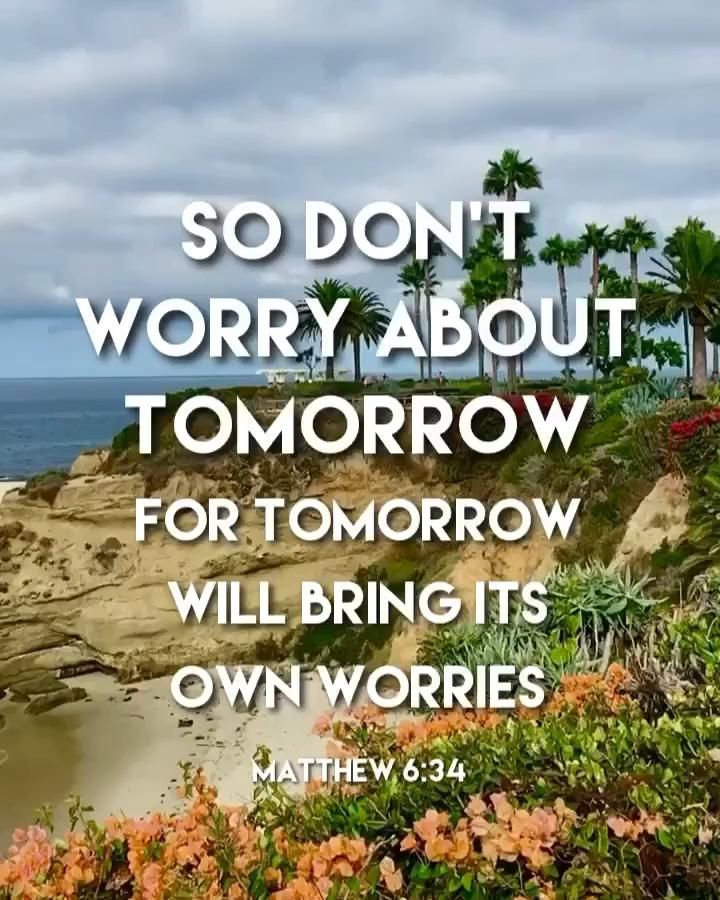
            Anything can seem overwhelming, if we look at the whole huge thing all at once. Jesus’ words are really wise: “34 So do not worry about tomorrow; it will have enough worries of its own.” In other words, one day at a time. “Don’t worry about tomorrow!” Those aren’t my words—they’re the words of Jesus!

            As we consider this Thanksgiving week, and any week of the year, “these words [of Jesus] are ours this Thanksgiving —  urging us to let go of the worry — and to entrust whatever it is that would rob our lives of peace and joy — urging us to finally give it all back to God who gives us all of that for which we give thanks in the first place.” [3]  Praise God!

Suddenly, in this world not worrying actually becomes an option.

Our God can help each of us deal with worry, fear and anxiety, whenever and wherever they might rise up, in each of our lives. We can all say amen to the Lord’s goodness. We can truly give thanks to God.

@chaplaineliza

(Suggestion: visit me at my other blogs: matterofprayer: A Year of Everyday Prayers. #PursuePEACE – and  A Year of Being Kind . Thanks!


[1] https://lifeprojectblog.com/2024/09/09/worry-5/

[2] http://words.dancingwiththeword.com/2012/11/no-more-worries.html

[3] Ibid.

Unknown's avatar

Peace! Be Still!

“Peace! Be Still!”

Mark 4:35=41 (4:39) – June 23, 2024

            Have you ever slept in a tent while a huge thunderstorm crackled and poured overhead? The blustery wind, rain and loud thunder seem right on top of you. I know firsthand; I spent several summers in high school at a Girl Scout camp, sleeping in a platform tent every night.

            Except, in our Gospel reading, Jesus and the disciples did not even have the cover of a tent. They were out in a boat on the Sea of Galilee, in the middle of a fierce storm.  Our Gospel writer Mark tells us “Suddenly a strong wind blew up, and the waves began to spill over into the boat, so that it was about to fill with water.”

            Can you relate? Has this ever happened to you? Maybe it’s an actual storm, blowing in all of a sudden out of a clear blue sky, complete with the skies turning black and the heavens opening up with pelting rain. Except, sometimes it can be a figurative story. Something horrible comes up suddenly, upon you or upon a dear member of your family. What about a sudden car accident? Or, perhaps a house fire in the middle of the night, or emergency hospitalization, out of a clear blue sky?

            These kinds of sudden, serious storms can blow up in anyone’s life, and they can overwhelm any of us with their intensity and traumatic effects.

            Let us look at this reading again. “Jesus was in the stern, sleeping on a cushion. The disciples woke him and said to him, “Teacher, don’t you care if we drown?”

            Fear can absolutely paralyze people! I can see these guys, scared out of their sandals, on this tiny boat. Rain pelting down, the wind and the waves threatening to swamp the boat, far from shore. Some of these guys are used to sailing and used to sudden squalls on the Sea of Galilee. But, a portion of the disciples are not fishermen, and are not familiar with boats or with seafaring. And what about Jesus? He is sleeping, for heaven’s sake, through the storm, the pitching of the boat back and forth, the pelting rain coming down.

            As one of my commentators says, “This is it. They’re going down. Life’s over! Jesus doesn’t seem to care. I’m not sure what they’re expecting of him—probably they just wanted him to show a bit of concern about their plight.” [1]

            What about those sudden storms that blow into our lives, today? Catastrophic accidents, emergency hospitalizations, or the very abrupt closing of a company. (That recently happened to one of my relatives, and it’s throwing a monkey wrench into everyone’s lives! Everyone who works there, and their families, too.)

            This storm that blew up on the Sea of Galilee must have been some storm, though! Even these seasoned fishermen, familiar with the water, were certain that death was near! “They must have exhausted all their other usual options and now that panic has set in all they have left is to turn to the one who is sleeping on the cushion — seemingly oblivious to the violent wind and driving rain.” [2] What is their cry? “Teacher, don’t You care if we drown?”

            Stories from recent church history can be distressing and catastrophic. Stories about weathering storms from church history can be helpful, and empowering, too. Take, for example, the true story about Anna B.

About 100 years ago, Anna B. was a faithful member of a dying church. The building was run-down, the congregation could not afford to pay a minister. Without a minister, people stopped attending Sunday services. Except – Anna B. kept coming to the church. She opened the doors on Sunday morning, week after week. She lit the candles and provided a place for prayer. She filed the necessary papers to maintain the church as a legal entity. These simple acts of faithfulness and diligence kept the congregation going for several years. Eventually, rebirth happened, and it was in great part because of Anna B. [3]

            That is the true story of Anna B., who was instrumental in faith and revitalization when that church was going through a series of storms in the life of that struggling congregation.

            Anna B.’s history takes place over several years. The sudden storms that come into our lives can blow up abruptly. What does Jesus do in this specific situation? “Jesus rebukes the wind and tells the sea to simmer down; the first word (“Peace!” in the NRSV) is a verb meaning be silent; the second (“Be still!” in the NRSV) means literally be muzzled.” [4]  Just as suddenly, the sea calms and the wind is stilled – muzzled! And, the disciples are left dumbstruck. Jaws hanging open, they murmur, “Who is this?”

            Just as the power and miracle-working capability of Jesus became clearer to the disciples, it can become clearer to us, today. No matter what our personal storm is, no matter how fearful and anxious you and I are because of our personal circumstances, our Lord Jesus has the miraculous power to calm the storms in our lives, too.  

            This Gospel reading is a powerful reminder about the power of God, as displayed through our Lord Jesus. Except, I know from sad experience that miracles do not happen the way people expect sometimes. Even many times. Like Rev. Janet Hunt, I am also not certain how so many deal with lives devastated by all sorts of storms, actual and figurative, storms that threaten from outside and from within. “Even so, perhaps we are changed if we allow ourselves, even as the disciples did, to simply stand still in awe when in the presence of such power which muzzles the worst that can threaten us. Which is all the time, if we are paying attention. Indeed, perhaps it is so that [we] do walk away re-empowered to hold fast in the storm if [we are] able to trust that somehow our benevolent God holds us all. Even in the storms. Especially in the storms.” [5]

Jesus calls on each of us to have faith, even in the midst of the raging storms of our lives. We can believe, we can have faith that Jesus will be right by our sides, through any difficulty. And, Jesus can say “Peace, be still!” to the storms in each of our hearts, too. Alleluia, amen.

@chaplaineliza

(Suggestion: visit me at my other blogs: matterofprayer: A Year of Everyday Prayers. and  A Year of Being Kind . Thanks!


[1] https://www.bobcornwall.com/2015/06/sleeping-through-storm-lectionary.html

[2] http://words.dancingwiththeword.com/2015/06/power-over-storm.html

[3] Beaumont, Susan, How to Lead When You Don’t Know Where You’re Going, (London: Rowman & Littlefield, 2019), 99.

[4] https://www.workingpreacher.org/commentaries/revised-common-lectionary/ordinary-12-2/commentary-on-mark-435-41

[5]

Unknown's avatar

Are We Doubters, Too?

“Are We Doubters, Too?”

John 20:19-31 (20:29) – April 7, 2024

            Seeing is believing! Or . . . is it?

            I wonder what things come to mind when I mention the phrase, “Seeing is believing”? Or even, “I won’t believe it until I see it!” Sometimes, people can be really doubtful, even really skeptical about things. I can just imagine several people I know folding their arms across their chests and saying, “Unless you show me . . . “

            In the gospel account we read today, from John 20, the disciple Thomas had just that reaction. After the Resurrection, the first time Jesus came to the disciples, Thomas was not there. We’re not told why, simply that he wasn’t there. Maybe he was scared, maybe he was away for the day, or out of town. Maybe he was sick. We just aren’t told why he wasn’t there.

            The ‘why’ is not the important part. The fact that Thomas wasn’t present the first time is. Thomas had doubts. Sincere doubts. Truth to tell, the other disciples’ story was a little farfetched. I mean, how many people have you known who came back from the dead, and walked through walls into a locked room?

            I wonder. I wonder if Thomas’ reaction strikes a chord with anyone here today. How many of us today are like Thomas? Doubting that Jesus has risen indeed from the dead? Or, completely missing Jesus, and doubting that Jesus is even here at all, today?

            Let’s think some more about Thomas and his reaction. Thomas not only doubted, he wanted concrete proof. Tangible proof, proof he could touch and feel and handle. Thomas wanted to put his hands in the nail marks on Jesus’ hands. That’s pretty concrete. But – what about you and me? Do we want concrete proof that God is working in our lives right now? Do we want concrete proof that Jesus rose from the dead and is present with us, today?

            The second time the risen Jesus appeared to the disciples, it was also in a locked room. And, this time, Thomas was present. Let’s paint the picture. The disciples are huddled together in the Upper Room, still frightened of the Jewish leaders. It’s only been a little over a week since their Rabbi Jesus had died on the cross, after all! I’d imagine they would be shaking in their shoes! Then, the risen Jesus suddenly appears in the midst of them all, Thomas included. What do you think would be going through Thomas’s mind right about now? His Rabbi, his Lord, back from the dead, right in front of him!

            Let’s go further as we imagine Thomas’s face, and imagine what he is thinking and feeling as the risen Lord Jesus invites Thomas to touch Him. Then, we look around at the faces of the other disciples and try to figure out what they are thinking and feeling, too! The commentator Carolyn Brown says that she suspects the disciples “are glad Thomas asked his question because they really wanted to know the same thing but were afraid to ask.  It does take courage to ask some questions and Thomas had it.” [1]

            I think that “doubting Thomas” is not the most accurate nickname for this earnest disciple. Perhaps, maybe, just maybe, we ought to think of Thomas as courageous Thomas. Because, it takes real courage to ask out loud some of those questions Thomas wanted the answers to. After all, he was a real “show-me!” kind of guy, and not in a mean way, either. A healthy skepticism is just that – healthy and curious.

            I wonder whether our doubts and fears about Jesus and the Resurrection can be as easily taken care of, as Thomas’s? What if our problem is less doubt, and more fear? Fear of being misunderstood by others, fear of looking foolish, fear of falling flat on our face? Perhaps, some kind of nebulous fear that you and I do not even understand, but we know is deep down inside of us?

            Let us return to Thomas. When he sees our risen Lord Jesus in the flesh – the resurrected body – he suddenly believes that everything the disciples were telling him about the resurrected Jesus is true! And, “he makes the climactic confession of John’s Gospel, addressing Jesus as, ‘My Lord and my God!’” When Thomas saw Jesus with his own eyes, that was enough for him. Enough to make the declaration of divinity directly to our risen Lord! Remember the confession made in the first verse of John chapter 1: “In the beginning was the Word, and the Word was with God, and the Word was God.” [2]

            Sure, some healthy curiosity is just that – curiosity. And, some people are naturally skeptical. We know God can handle that! After all, that is the way God constructed many people. Our Lord Jesus is not surprised by any of this. He won’t get mad, or storm out, all upset. No! He was warm and accepting of Thomas and his “show-me” attitude, and even answered him right back! And, what did Thomas do? What did Thomas say to Jesus? “My Lord and my God!”

            As commentator David Lose tells us, Thomas offers those same readers a model for faithful response to an encounter with Jesus – belief, belief that leads to confession. All through the Gospel of John we see a variety of responses to Jesus. The confusion of Nicodemus the religious teacher, the trust of the Samaritan women, the stubborn fidelity of the man born blind, the disdain of Pilate, the denial of Peter. [3] John saves the best for last: he shows us the radical, bold confession of Thomas, sure and certain at last.

            Have there been long moments in your life where you have doubted God’s presence? Have you ever felt lost and alone, almost like the way the disciples felt right after the Crucifixion? We do not need to fear or be alone, because Jesus has promised never to leave us nor forsake us. We can embrace our flickering faith with the same words of Thomas: “My Lord and my God!”          

So, the Gospel of John helps us to believe, too. This Gospel was not only written to bear witness so long ago, in the first century, months and years after Jesus was raised from the dead. This Gospel was also written for the many generations which have come to believe in Jesus Christ throughout the centuries. That includes us, too.

Even though today we may have doubts, and fears, and unbelief, and wonder whether, and why, or even why not, Jesus comes to us in our doubts and fears and unbelief. Our Lord comes to us with reassurance and open arms and says “Do not doubt, but believe!” And our faithful, bold response to Jesus? “My Lord and my God!” Alleluia, amen!

@chaplaineliza

(Suggestion: visit me at my other blogs: matterofprayer: A Year of Everyday Prayers. and  A Year of Being Kind . Thanks!


[1] http://worshipingwithchildren.blogspot.com/2015/02/year-b-second-sunday-of-easter-april-12.html

[2] https://www.workingpreacher.org/dear-working-preacher/its-not-about-thomas  

[3] Ibid.

Unknown's avatar

God, Our Light

“God, Our Light”

Psalm 27:1-10 (27:1) – March 13, 2022

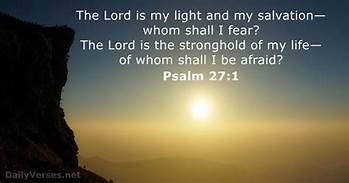
            When I set the theme for the Second Sunday in Lent about three weeks ago, I had no idea that there would be an actual war being waged, right now. The Russian army is attacking Ukraine as we speak, and all the horrors of modern-day warfare are a reality, all across the country of Ukraine. Psalm 27 means so much to many of the Ukrainian people right now.

            As this congregation highlights another petition of the Lord’s Prayer, “Deliver us from evil,” we are brought up sharply by the traumatic situation in our own world. We can turn on war news, from both national as well as international media. Videos and photos are – sadly – readily accessible, and the news is heart-rending. No matter which side you are on.

            Wasn’t this the case when King David wrote this psalm, so many centuries before?

            Wars, rumors of wars, battles, skirmishes, fighting – and King David writes this song of praise to the Lord, to thank the Lord for deliverance from evil.

            King David was certainly no stranger to fighting and to war. After King Saul ran David off into the Judean wilderness (a harsh and unhospitable place, the same place where Jesus went after His baptism), David stayed away from Jerusalem for years. Even though David was rightfully anointed by the prophet Samuel as king of Israel, David would not lift his hand against King Saul. At the same time, David was essentially a guerilla leader of 600 battle-hardened fighters, for years. They also would do mercenary fighting, while on the run from King Saul and the troops of Israel. And, that was just the beginning of David being a fighter.

            As we see from both 1 and 2 Samuel, David knew what he was talking about when he wrote these psalms about the Lord delivering him and his men from evil – from war, and from fighting. David was on the run from King Saul for over ten years. And, he was no coward! However, he thanked God that God watched over him and kept him from evil – kept him from being overtaken by the troops of King Saul, as well as foreign troops he was fighting against.

            You and I are not fighting battles against opposing armies, but we still can come to God, praying this psalm for our safety. You and I might consider evil to be bad stuff. Bullies who intimidate and harass. Robbers who steal purses or take cell phones or wallets. Car-jackings, vindictive anger, abusive behavior, vandals who destroy property. All of these are evil, and we can pray for God to protect us from all of these, plus many more.

            As our commentator Beth Tanner says, “With all of the violence in our world, Christians are faced almost daily with a decision to live in fear, or despite their fear, to trust in God and God’s promises.“ [1] “Deliver us from evil” is a powerful prayer! A prayer of trust and assurance in God’s provision, in God’s ability to keep us safe, whatever our situation.

            Yet, the world has had many, many wars through the centuries. Many, many periods of fighting, ethnic strife, border conflicts, and even genocides. Horrific atrocities committed, and whole societies, entire countries stricken by death and destruction. How can anyone lift up their hearts to God in such catastrophic times?

We know, too, God wants us to be hospitable, even in such times. “To choose to remain true to God’s principles of hospitality feels frightening as well. Terrorists and Refugees come from the same places. Gun violence comes out of nowhere and even those places we considered safe are safe no longer. Fear threatens to defeat the gifts of trust and hospitality.” [2]

            It is so interesting that King David seems to waver back and forth, from the sure certainty of God’s saving power to fear of some kind of situation where David’s enemies are trying to “devour his flesh,” as Psalm 27:2 tells us. Whatever the specific problems or fighting happens to be, we suspect God may turn away. Don’t you, sometimes? Even if you are usually firm in faith and fervent in prayer, sometimes…stuff happens. People fail us. Situations baffle us. How can we cope? What is there to do? God, help us!  Sometimes we need to step back, take a deep breath, and think of difficult things as a child might. The best child’s translation of this part of the prayer is “Lord, save us from all the bad stuff that happens.” [3]

And yet,” right in the middle of his expressions of fear, the Psalmist also declares his confident faith that God’s presence is like a light that keeps him safe.” [4] Our Scripture reading today, Psalm 27, remains as a beacon. This encourages us to come to God even as we find ourselves afraid. Even, afraid out of our wits.

We might find ourselves praying the Lord’s Prayer, and saying it by rote, without even concentrating on the words as they come out of our mouths. Yet – “Lent is a time to ask the deep questions of our faith. We can repeat the fears of the past, or trust a new ending to God. It is never easy, but it is the call of God on our lives. This psalm invites us to believe again that our faith in God will never desert us, no matter what happens. Life without fear is not possible, but faith can call us to live into God’s will for our life instead of reducing our lives because of our fears and insecurities.” [5]

Yes, “deliver us from evil” is a powerful prayer, indeed. Yes, we can be afraid, and yes, God can alleviate our fears. If we want to dispel the darkness of fear, we can affirm that God is indeed our light and our salvation. We can all say amen to that!

@chaplaineliza

(Suggestion: visit me at my other blogs: matterofprayer: A Year of Everyday Prayers. #PursuePEACE – and  A Year of Being Kind . Thanks!


[1]   https://www.workingpreacher.org/commentaries/revised-common-lectionary/second-sunday-in-lent-3/commentary-on-psalm-27-3

[2]   Ibid.

[3]  http://worshipingwithchildren.blogspot.com/2016/01/year-c-second-sunday-in-lent-february.html

[4]   https://thewakingdreamer.blogspot.com/2014/01/what-do-we-have-to-fear.html

“What Do We Have To Fear?” Alan Brehm, The Waking Dreamer, 2016.

[5]   https://www.workingpreacher.org/commentaries/revised-common-lectionary/second-sunday-in-lent-3/commentary-on-psalm-27-3

Unknown's avatar

Who Are We Looking For?

“Who Are We Looking For?”

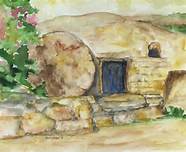
Jesus and empty tomb

Matthew 28:1-10 (28:5-7) – April 12, 2020

Are you living in the midst of uncertainty? Not sure of what is happening from day to day? Sometimes, not even sure of which day it is? I talked with my sister yesterday, and she admitted she lost track of the days of the week a few days ago. I know for many, the “right-now-time” throws many people into a tailspin, and knocks them down. The “right-now-time” of quarantine is an uncertain, uncomfortable time. A time of not-knowing!

That is what it was like for the followers for the Rabbi Jesus, immediately after the crucifixion. They were in a tailspin, knocked down and uncertain what was coming next.

Their Rabbi, their leader and guide had just been killed in a particularly gruesome fashion on Friday afternoon. Joseph of Arimathea had gotten the body of Jesus released to him late Friday, and they quickly put Him in the tomb before night fell. It was the Sabbath night, too, so they had great reason for the big hurry. Friday night and Saturday day were—and are—the Jewish day of rest, especially made holy because of the Passover observance.

At such an uncertain, uncomfortable time, what do you think the disciples did on that Saturday, on that Sabbath day? Some may have cowered in fear, afraid that the Roman soldiers would come after Jesus’s close associates, too. Some may have been too grief-stricken even to move, to eat. Some may have gotten angry—angry at the Roman overlords, and angry at the Jewish authorities, but felt impotent to do anything about their anger.

What about us? What are we doing in the midst of this quarantine period, this “right-now-time” of the pandemic? Some today may also be afraid, fearful, anxious about ourselves and our loved ones. Some—whose lives have already been intimately touched by this virus—are grieving and mourning because of loved ones who are very sick or have already died. And then, there are those who are downright angry! Angry with an invisible virus, angry at the various responses to the pandemic, but feel personally impotent to do much about their anger.

Our Gospel writer, Matthew, tells us of the two women disciples who come to the tomb early Sunday morning. They come where they laid Jesus’s body on that desperate Friday afternoon. They grieve and mourn, and have spices to anoint the body properly, since on Friday there hadn’t been enough time for a proper burial. Except—Jesus is not in the tomb!

Can you see the two women, thunderstruck, as they stand in front of the empty tomb? The stone has been rolled away, showing the hole in the rock. Plus, on top of the stone sits a miraculous sight in its own right. An angel, dressed in bright, shining white, waits to speak with the women. Can you imagine their surprise, shock, even fear at the angel’s appearance? The angel says, “Don’t be afraid!” I can just see the shining figure, hand outstretched, comforting words calming their fears and anxiety.

Here we are in 2020, in the midst of the “right-now-time” of the pandemic, and we need an angel to come and reassure us! Some today have even forgotten what the presence of God feels like. We badly need comforting words to calm our fears, anxiety, anger and confusion.

The angel did exactly that. The angel tells the women disciples not to be afraid, and repeats the words of Jesus—“He is not here, just as He said!” And then, “Quickly, go tell the other disciples Jesus is risen!”

Those women had their fear, grieving and uncertainty disappear in a moment! Alas, it won’t be quite that miraculous or quite that sudden for a recovery from this pandemic.

My journalist husband makes memes from time to time, and they sometimes have biting social commentary. He recently made a meme with a grandfatherly-type man reading to two young children, with a snarky comment about “the before-time.” But, what about the “right-now-time?” That tense time between the diagnosis and the treatment? Or that worried time when others have lost the job that provides income for their household? Or, that anxious time when we fear for loved ones who are essential workers? Or, that waiting time when some cannot even sit next to an ICU bed in the hospital because of COVID-19?

We are living through tumultuous times, indeed. I suspect, when people look back on the year 2020, there will be a clear line of demarcation between the “before-time,” the “right-now-time” in the midst of the pandemic, and whatever comes after. We hope, we pray that this next time may be known as the “recovery-time.”

As the angel told the women and men disciples, Jesus is no longer in the tomb! Jesus is risen! Yes, those were desperate, anxious times for the disciples, and yet Jesus said He would be with them. There have been fearful, anxious times throughout history, yet Jesus has conquered death. Disasters, famines, floods, and yes, pandemics have come upon great numbers of people at times—yet Jesus tells us, urges us “Don’t be afraid!”

Yes, the women were afraid, yet full of joy! We can take heart that Jesus gives us the assurance that He is alive!

“God is not finished yet. We might recall that, indeed, God’s favorite thing to do is to show up where we least expect God to be and to surprise those who have given up on God.” [1] Jesus has promised; He will be with us! And, His peace can never be taken away from us, no matter what. That is Good News, indeed. Amen, alleluia!


(I would like to thank Rev. Dr. David Lose. For this sermon, I have borrowed several ideas from his commentary on Holy Saturday, from his online article http://www.davidlose.net/2020/04/the-forgotten-day/ )

@chaplaineliza

(Suggestion: visit me at my regular blog for 2020: matterofprayer: A Year of Everyday Prayers. #PursuePEACE – and my other blog,  A Year of Being Kind . Thanks!

[1] http://www.davidlose.net/2020/04/the-forgotten-day/

Unknown's avatar

Who Is This Jesus?

“Who Is This Jesus?”

Jesus Palm Sunday, Armenian manuscript

Matthew 21:1-11 (21:10) – April 5, 2020

Do you remember watching a parade? Some might think of a small, neighborhood parade, or a large, elaborate one. I remember watching old newsreels, the kind that used to be shown in old-time movie theaters, with a cartoon before the feature film. Some of the tickertape parades I saw on the newsreels were huge spectacles, with massive crowds waving as the guest of honor came by, usually in an open convertible.

You understand the picture? That is the scene from the Gospel we are talking about today. Except, instead of confetti and tickertape, the crowds in Jerusalem waved palms. Some even threw their coats or cloaks in front of the guest of honor. Both the long-ago crowd and the modern crowd yelled and hollered and made all kinds of noise.

The Rabbi Jesus had been in circulation in the area for three years. He had been preaching with power and healing people for all that time. I suspect that great crowds wanted to welcome Jesus into the city of Jerusalem, for a number of reasons. And, a great number of people used a word from the Hebrew Scriptures to welcome Jesus. Hosanna!

Hosanna! Let’s say it again. Hosanna! Today, that word is familiar to many from church. From Palm Sunday. It’s something that people say—what children say when they wave their palms. Isn’t it? Isn’t that what it means?

The word “Hosanna!” comes from Psalm 118, meaning “Save us!” It was used when the crowds welcomed the Jewish hero Judas Maccabeus to Jerusalem, more than a century before Jesus lived in Palestine. “Isn’t the Rabbi Jesus a prophet? A healer? Didn’t He have all kinds of power? I haven’t seen it, personally, but I’ve heard about Him from all kinds of people! He’s a wonderful Rabbi, too. Don’t you think He might be the Messiah? He’s come to save us!”

I can just hear the crowd: “Save us!” “Please, bless us! Make us prosper!” “Hosanna!” In this single word, “Hosanna!” the crowd communicates a whole lot of things!

What did the crowd think of Jesus, two thousand years ago? Who did they think He was?

Today, people have lots of opinions about Jesus. Can you hear some of these ideas when people cry out to Him? Some consider Jesus to be a prophet, even a miracle worker. They certainly honor Jesus. Others think of Jesus as a very good man, one whose words, deeds and teaching were a cut above the rest of humanity. Some think the man Jesus exemplified the best of God as Jesus understood God. Or, is Jesus God incarnate, God come to earth in human flesh?

What did the crowd think of Jesus, two thousand years ago? Who did they think He was? Remember, Israel was under Roman domination. The Jews were a conquered people, under tight control by the Roman army. There had been rumors and whispers of a coming Messiah among the Jews for decades, even for centuries.

“Isn’t the Rabbi Jesus a prophet? A healer? Didn’t He have all kinds of power? I haven’t seen it, personally, but I’ve heard about Him from all kinds of people! He’s a wonderful Rabbi, too. Don’t you think He might be the Messiah? He’s come to save us!” With such urgency, such expectations, it’s no wonder the crowds cried “Hosanna!” “Save us, please!”

In the last number of weeks, not only in this country, but worldwide, vast numbers of people look calamity stark in the face. We have the loss of jobs, loss of income, loss of freedom of movement. What have we got in exchange? More fear and anxiety, more anger and confusion, more mourning. What about first responders, medical workers, janitorial staffs, grocery store workers, and people who pack and ship everything from A to Z? Front line workers all. I cannot begin to tell you about fear, worry, sorrow and anticipatory grief in operation here.

We need someone to come and be our Savior, the Rock of our salvation.

The corona virus is not quite like a physical enemy, one we are able to fight through the force of arms. Not like the Roman army, or the armies the United States fought in the wars over the past two hundred years. Would we, today, have reacted much differently than the crowds that greeted and shouted at the Rabbi Jesus? Or, would we be blinded by our fear, anxiety, confusion and profound grief at this current, horrible pandemic? Are we hearing “Hosanna!” differently this Palm Sunday? How can we walk with our Lord Jesus through this Holy Week?

Let me suggest things to do to help each other, at this desperate, anxious time. Can we show each other more kindness, help each other, be more selfless? Perhaps, even be more like Christ in our daily lives and daily activities? We can all do small, caring actions, each day. Call or text a loved one or friend. Offer to take out the garbage for a neighbor, for those who are able. Check on a senior who lives down the street—using appropriate social distance, of course.

As we call on God in our great need, can we see how God in the flesh comes to us? Humble, gentle and riding on a donkey, not charging in on a white stallion, or riding in a late model tank. Our Lord Jesus comes in vulnerability, and weakness, to join with each of us and be with us through our trials and tribulations. God comes to love us and redeem us, no matter what our situation may be. No matter what.

Praise God! Hosanna! Thank You, Jesus.


I would like to thank Rev. Dr. David Lose. For this sermon, I have borrowed several ideas from his commentary on Matthew 21:1-11 from his article Palm Sunday A – The Greater Irony

Posted: 31 Mar 2020 11:12 AM PDT http://www.davidlose.net/2020/03/palm-sunday-a-the-greater-irony/?utm_source=feedburner&utm_medium=email&utm_campaign=Feed%3A+davidlose%2FIsqE+%28…In+the+Meantime%29

@chaplaineliza

(Suggestion: visit me at my regular blog for 2020: matterofprayer: A Year of Everyday Prayers. #PursuePEACE – and my other blog,  A Year of Being Kind . Thanks!

Unknown's avatar

Shine the Light

“Shine the Light”

Matt 5-16 light so shine

Matthew 5:13-16 (5:16) – February 9, 2020

My family lives in Evanston, not too far from Lighthouse Beach. Yes, there is still a working lighthouse standing on the lakefront. In fact, a number of working lighthouses still are shining their lights over Lake Michigan, and the other Great Lakes. Less so today, with all the electronic and computer-assisted help, but in years past, lighthouses had an essential purpose in helping navigators stay safe on stormy water.

I suspect Jesus knew about lighthouses and navigation lights, living near the sea of Galilee as He did. Navigation lights help sailors a great deal, giving them direct knowledge and understanding about how to stay safe on the water. In our Gospel reading today, Jesus talks about light. He’s talking directly to the people listening to Him, who I suspect are mostly His followers. And—Jesus makes this remarkable statement: “You are the light of the world.”

Some might think that our Lord Jesus is just expressing a pious platitude, or perhaps a devout wish. Oh, I wish people could be the light of the world! Wouldn’t it be nice?

However, Jesus not only is saying that about the people listening to Him at the time, 2000 years ago, but He is also saying that to everyone who reads these words in Matthew’s Gospel. Jesus says those words to us, here, today. We are the light of the world.

Now, if we are light, that implies certain things. Jesus means that the world is in a state of darkness. What is it like to be in darkness, with no light? Let me tell you, when I was younger, I used to go to rural Wisconsin and do tent camping a long way away from any electric lights or settled places. It got really dark at night, and I sure was glad I had a flashlight! I suspect some of you have had similar experiences in the dark. It gets really dark at night, far from the safety of electricity and steady sources of light. It can be scary and dangerous, too.

I’ve never been out on a stormy night on the water, but I suspect people can be very scared of dangerous conditions on the ocean or on a big lake, too. That is one reason why people have depended on lighthouses and navigation lights for safety, security and direction, for many centuries.

As we have mentioned before in weeks past, light and darkness both have their places in God’s world. Darkness can be gentle and needed at times. During Advent and Epiphany, we thought about different aspects about darkness that are warm, friendly, even inviting. We thought about nocturnal animals, gestating animals, and growing seeds underground. All in the warm, nurturing, friendly darkness. These examples give us a whole different view of darkness as opposed to light.

Except, we do not want there to be no light at all in the world, ever, and only perpetual darkness. Perpetual darkness can be a downright scary idea. Jesus told us clearly that we are the light of the world, bringing light into dark places. Can you think of times and places where light is much needed?

As I read the words of one of my favorite commentators this past week, Rev. Janet Hunt, this concept struck home to me. See whether her words strike you as true, too.

“Light helps us to distinguish difference and to celebrate diversity.

Light can deepen understanding.

Light works on cellular structures to promote growth.

Light heals.

Light helps us find our way.

Light. And today Jesus says, “You are the light of the world.” [1]

I don’t know about you, but I suspect Pastor Janet Hunt would absolutely agree with us when we also add lighthouses and navigation lights to the list of things that help each of us to find our way in the dark. Yes, darkness can be gentle and welcoming, but darkness is also scary, producing anxiety. Darkness can cause fear of the unknown, and even make people shrink to engage and interact. And, on dark and stormy nights on the water, we all sure are glad to see lighthouses and navigation lights that show us the way to go.   

When Jesus tells us that we are the light of the world, that means that Jesus is describing our inside nature as followers of Him. After all, He also said He is the light of the world in John chapter 8. Just as Jesus came into the world to bring light to people who walk in darkness, just so Jesus has given each of us that light. Jesus gives us power to display that light of His like a lighthouse brings light to a dark, dangerous coastline, providing hope and direction.

Now, wait, some people might say. I know that professional Christians are supposed to bring people the light of God. Professional Christians have learned how to do that in school, haven’t they? Well, yes. But, Jesus is not just talking to professionals here. Jesus means this description of our inside nature to be for all of us—for every believer in Him.

How are each of us supposed to shine the light of Jesus? That’s hard. That’s scary.

I remember a friend of mine—Miss Rose, who I’ve mentioned before. I came to know and love Miss Rose over thirty years ago at another Chicago-area church. She was a church member all of her life, and her special ministry was working with the children. She loved being a Sunday school teacher, and she would eagerly and willingly tell children and young people about the Lord. She never shied away from letting people know that she shined the light of Jesus as much as she possibly could.

When I think about this verse from Matthew 5, I often think of Miss Rose, shining the light of Jesus, and bringing hope and direction to many young people.

Imagine my delight at meeting Miss Rose again, when I was a chaplain intern at the Presbyterian Homes, a senior retirement community in Evanston. While I was in seminary, one of my field education positions was as a chaplain intern in the large healthcare unit there.

Miss Rose was a resident living there. And lo and behold, Miss Rose shared her love of the Lord with everyone in the healthcare unit. She was the light of the world in her little corner of the world. Even though she was in constant pain, Miss Rose never let that stop her shining the light of Jesus. When I grow up, I want to be like Miss Rose.  

I want to provide a challenge for all of us. As Pastor Janet Hunt says, we are all called to go into dark places with the light of Jesus. Sometimes, we are even called to shine the light of God onto an unfair or sad situation, and bring comfort, direction and friendship.

  • Where have you seen such ‘light’ bringing hope, direction, and promise to a world that is too often dark?
  • Where will you seek to bring such ‘light,’ to be such ‘light’ in the days to come? And, how might you do this together with others who are called to ‘be the light of the world’ with you?

All great questions. I pray that we might go forth from this place, all of us shining the light of Jesus in our particular corner of the world, each and every day.

Alleluia, amen.

[1] http://dancingwiththeword.com/you-are-the-light-of-the-world-2/

@chaplaineliza

(Suggestion: visit me at my regular blog for 2020: matterofprayer: A Year of Everyday Prayers. #PursuePEACE – and my other blog,  A Year of Being Kind . Thanks!

[I would like to thank the Rev. D. Martyn Lloyd-Jones and his superb book Studies in the Sermon on the Mount (Eerdmans Publishing Company: Grand Rapids, MI, 1971). For this sermon, I have borrowed several extended ideas from Chapter Fifteen, “The Light of the World.” Thanks so much!]


Unknown's avatar

Dynamic Spirit Power!

“Dynamic Spirit Power!”

Acts 2 Pentecost mural

Acts 2:2-4 – June 9, 2019

Have you ever been outside in hurricane-force winds? Either you, or a loved one you know and who is very dear to you? How about a massive storm that has huge bolts of lightning, and loud cracks of thunder? Can you imagine God’s mighty power displayed, for everyone to see and hear and feel? Anyone who has ever been caught in such a powerful storm can tell you, such a dynamic panorama can be earthshaking, literally. That mighty God-sent power is just what I’ll be preaching about today.

Most of us, perhaps even all of us are familiar with the disciples’ fearful reaction after our Lord Jesus ascended into heaven. And, for good reason! The Roman authorities were still hunting for the body of the Rabbi Jesus that disappeared from the tomb, some weeks before. Remember what happened on Easter morning? Not only the Roman authorities but also Jewish leaders were still demanding to see the body of this itinerant rabbi that they said was stolen from the tomb! Of course, we know better.

God’s mighty, miraculous power intervened, by way of the Resurrection and Ascension. Our Lord rose from the dead, walked and taught on this earth in His resurrected body for seven weeks, followed by His bodily ascension into heaven. What is more, the last instructions of Jesus to wait for power, to stay put in Jerusalem, were still fresh in people’s ears.

But—still, God left the disciples very much afraid, and very much in hiding. At least, after the risen Jesus went away for good. That’s what humans thought, anyhow.

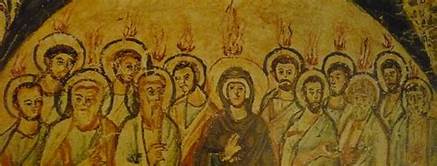
Here we are, on Pentecost morning, waiting with the disciples. As was their custom, they were gathered for prayer in the Upper Room. Can you imagine a large group of disciples, with Jesus’ mother Mary in the midst of them? Talk about a prayer meeting! Still, they were huddled, in hiding. These disciples were being faithful, as best as they could. When, on Pentecost morning, a God-sent happening occurred. But, you don’t need to take my word for it!

Listen to what Dr. Luke says at the beginning of Acts 2: “When the day of Pentecost came, they were all together in one place. Suddenly a sound like the blowing of a violent wind came from heaven and filled the whole house where they were sitting. They saw what seemed to be tongues of fire that separated and came to rest on each of them.

Now, today, if something like that happened, we might look around for the fancy special effects team in the background. We might wonder where the cameras were placed when those tongues of fire wondrously appeared above each person—marking them, letting everyone know that God was director, and God wrote the script.

Getting back to a description of a display of God’s mighty power, that other-worldly power was certainly on display in the sound like the blowing of a violent wind from heaven. In keeping with my analogy, God was also producer and certainly handled all special effects.

The Koine Greek word for “power” is dunamis, which the Analytical Lexicon of the Greek New Testament defines as: able to produce a strong effect power, might, strength” and “as supernatural manifestations of power, miracle, wonder, powerful deed.” This is the same word that is used ten times in the book of Acts to refer to God’s mighty power or acts. Plus, dunamis is the root word for dynamite: the mighty, powerful dynamite of God!

This dynamic power was on display to the disciples, in the upper room. Dr. Luke mentions that “All of them were filled with the Holy Spirit and began to speak in other tongues as the Spirit enabled them.” On display only among the disciples—at first. But, soon, other people started to get in on the action!

Let’s hear from Dr. Luke: “Now there were staying in Jerusalem God-fearing Jews from every nation under heaven. When they heard this sound, a crowd came together in bewilderment, because each one heard their own language being spoken. Utterly amazed, they asked: “Aren’t all these who are speaking Galileans? Then how is it that each of us hears them in our native language?”

Once the dynamic Holy Spirit blows in on the disciples with tongues of fire, and their physical tongues are loosened in many other languages, what an awesome display of power! Passersby from other countries off the street gathered around. They heard the violent wind of the Spirit and the expression of many languages that quickly followed. All of the disciples were telling the Good News, that Jesus our Messiah is risen from the dead—in many different languages. And, probably because of the regional pronunciation, the expat onlookers were able to tell that many of those who were speaking different languages were Galileans. Is it any wonder that these onlookers were totally amazed?

I am reminded of a flash mob in some public place, like a mall or in a downtown square. Just as passersby are engrossed in the performance the flash mob does, in a similar way, the onlookers are fascinated by the whole God-sent operation that happened in Jerusalem on Pentecost morning, especially by the sharing of the Good News of our Lord Jesus Christ in their own heart-language, their own mother tongue. And, since the Holy Spirit was present in mighty power on that Pentecost morning, many came to believe in Jesus as their Messiah that day.

But, Pentecost was not just a one-time event. You know, an event that happened just in the distant past, in Bible times, never to be repeated. No! Whenever anyone believes on the name of the Lord Jesus Christ, a Pentecost happens! The Holy Spirit blows through that person, that beloved one of God. The Holy Spirit blows into each of our lives, and the power and possibility of God acting with and through each one of us is an amazing and awesome truth!

Commentator Rev. Gary Simpson brings out the fact “I am more aware of the numerous ways the Holy Spirit comes into people’s lives and affects positive change. No longer is my understanding of Pentecost simply wrapped around the phonetic languages we speak out of our mouths. Rather, I am aware of the many ways the Holy Spirit speaks through us and to us through sounds, pictures, ideas and even hope.” [1]

I am reminded that some people think Pentecost was just a day, an event that happened two thousand years ago. But, no! Wait a minute! Are these well-meaning people putting limits on the mighty power of God? What about that violent wind of the Holy Spirit that blew through the house on that first Pentecost? Are these well-meaning people trying to put God in a little box of their own devising and understanding?

As the Rev. Simpson reminds us, Pentecost is not simply a day to remember the birth of the Church, but it is also a day to celebrate the mighty power of the Holy Spirit, the dynamite of God, active and present in each believer’s life and heart. It is God’s power working in us and through us, so we can be witnesses to what the risen Lord Jesus has done for us. Yes, we are changed, too! And we have the opportunity to change the world, just as much as the first-century disciples of Christ—by the power of the God-sent dynamite of the Holy Spirit.

Alleluia! Amen.

[1] http://www.theafricanamericanlectionary.org/PopupLectionaryReading.asp?LRID=88

Lectionary Commentary, Acts 2:1-8, Gary V. Simpson, The African American Lectionary, 2009.

@chaplaineliza

(Suggestion: visit me at my regular blog for 2019: matterofprayer: A Year of Everyday Prayers. #PursuePEACE – and my other blog,  A Year of Being Kind . Thanks!


Unknown's avatar

God Delivers Us from Evil

“God Delivers Us from Evil”

Psa 27 1-3 afraid, fear

Psalm 27:1-3 – March 17, 2019

I often stay up late at night. My light is often burning way past midnight. (If you don’t believe me, ask Sunny. She can attest to the time stamp on many of my emails being past midnight, and some 1:00, even 2:00 am.) Imagine my huge shock and horror in the wee hours of Friday morning when I saw coming across the computer news feed that there had been a mass shooting in Christchurch, New Zealand. I was absolutely devastated. Talk about shocking me out of my security and complacency!

That is the portion of the Lord’s Prayer we are focusing on this week: deliver us from evil. Please, Lord! Right now!

So many faced such evil, such horror, and such sorrow in the town of Christchurch, and all New Zealand just two days ago. Imagine, if you will, two peaceful congregations, coming together for their midday time of prayer, abruptly torn apart by semi-automatic weapon fire. Is it any wonder many people around the world cannot even visualize such an attack? What on earth? Dear Lord! Deliver us from evil!

As soon as news of this horrific shooting started to come across my computer screen, you’d better believe I checked out my various favorite go-to news sites, including the BBC News. Yes, the news was even worse than I had heard or feared. And, the death toll was rising. So were my shock, dismay and horror at the rapidly developing story.

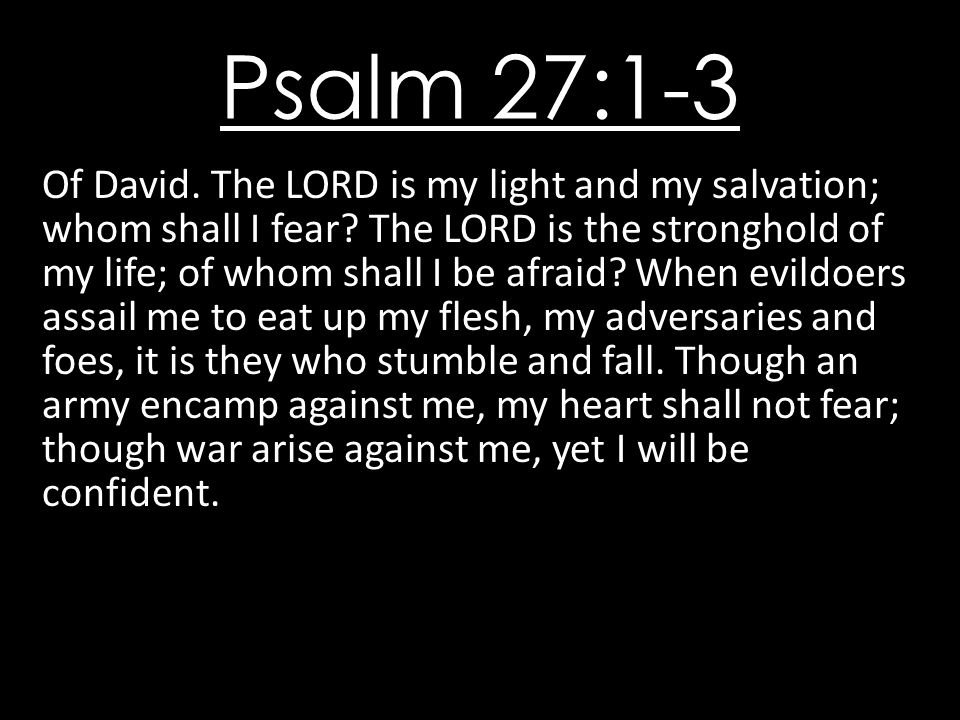
As we consider our Scripture reading from the Psalms this morning, we can flee to the assurance and strength of the first verse of Psalm 27: “The Lord is my light and my salvation; I will fear no one. The Lord protects me from all danger; I will never be afraid.”  I read these words and take heart. God is the source of my—our strength. God is our light, and we need no other light source. God is our protection and our protector. I—we—all of us need no one else.

But, wait, Lord! You didn’t mean that You would protect me from a domestic terrorist with a semi-automatic rifle!  Did You?

Even though the conception of a semi-automatic rifle was not even thought of at the time the psalm writer put pen to paper and wrote this psalm, that is the gist of verses 2 and 3: When evil people attack me and try to kill me, they stumble and fall. Even if a whole army surrounds me, I will not be afraid; even if enemies attack me, I will still trust God.”

King David is said to be the author of this Psalm, and I can believe it. David certainly knew quite a bit about having evil people try to attack him. Not only when he was young, before he even met Goliath on the field of battle, he was shepherd for his family’s flocks. He knew the many dangers a sheep or goat could face in the rocky, semi-arid pastures in the country of Israel. He was their shepherd, and he would need to rescue them when they got into trouble.

Then, when David was secretly anointed king and needed to run from the previous-but-still-on-the-throne King Saul, his fear and anxiety had the opportunity to shift into high gear. King Saul wanted to kill David. Literally. Seriously. Saul sent regular armed parties into the wilderness of Israel specifically to kill David. I am amazed that David could even write these words: “even if enemies attack me, I will still trust God.”

Dr. Beth Tanner, commentator on Psalm 27, writes “With all of the violence in our world, Christians are faced almost daily with a decision to live in fear, or despite their fear, to trust in God and God’s promises. To choose to remain true to God’s principles of hospitality feels frightening as well. Terrorists and Refugees come from the same places.” [1]

Gangs of fierce, armed men hunting you down, repeatedly? Frightening, indeed.

If we consider our problems today, whatever the specific problem is, we can draw some insight from this psalm. It’s clear that the person composing this prayer—King David—is afraid. “And yet, right in the middle of his expressions of fear, the Psalmist also declares his confident faith that God’s presence is like a light that keeps him safe.  So, he seeks God’s presence in the place where the people of Israel of his day believed God could be found: in the Temple.” [2] In the same way, we can seek the Lord where we know God is to be found: in the sanctuary, with other believers, and in meditation and prayer.

A number of these peaceful people at prayer on Friday were refugees from war-torn countries. They had fled their home countries of Somalia, Syria and Iraq—just to name a few—and had finally found sanctuary in the peaceful, beautiful town of Christchurch. New Zealand has truly gorgeous scenery, and a wonderful, equitable society of friendly people.

Not the kind of place one would expect for a domestic terror attack, certainly.

Yet, to run away, to leave almost everything you found dear and loved with all your heart, to come to a foreign land, no matter how pretty, Such heartache, and such desperation. And finally, to be getting back on your feet and finding a new home, just to have your place of worship abruptly, shockingly invaded. Get all shot up.

Dear God, deliver us from Evil, personified.

Dr. Tanner goes on to say: “Gun violence comes out of nowhere and even those places we considered safe are safe no longer. Fear threatens to defeat the gifts of trust and hospitality. The feeling of the psalm is the same.” [3]  It does not matter whether we ask to be delivered from evil things or evil people, from evil personified or evil within our own hearts. This psalm gives the message that we can depend on God as our light, our safety, our security, our salvation. And, if we depend on God, what more sure defender and protector do we need?

Jesus speaks to the city of Jerusalem rhetorically in the Gospel reading from Luke today: “Jerusalem, Jerusalem! You kill the prophets, you stone the messengers God has sent you! How many times I wanted to put my arms around all your people, just as a hen gathers her chicks under her wings, but you would not let me!” Jesus speaks of the image of a mother hen fluffing up her feathers and gathering her chicks to safety, under her wings. Such a wonderful maternal image! And, such an encouragement and comfort in times of trouble.

It doesn’t matter what evil approaches, what danger comes quickly. If we are gathered under the wings of Jesus as our mother hen, we will be safe and cared for—now, and wherever we go with our Lord.

May it be so, Lord. Amen.

[1] http://www.workingpreacher.org/preaching.aspx?commentary_id=2777

Commentary, Psalm 27 (Lent 2C), Beth L. Tanner, Preaching This Week, WorkingPreacher.org, 2016

[2] http://thewakingdreamer.blogspot.com/2014/01/what-do-we-have-to-fear.html

“What Do We Have To Fear?” Alan Brehm, The Waking Dreamer, 2016.

[3] http://www.workingpreacher.org/preaching.aspx?commentary_id=2777

Commentary, Psalm 27 (Lent 2C), Beth L. Tanner, Preaching This Week, WorkingPreacher.org, 2016

@chaplaineliza

(Suggestion: visit me at my regular blog for 2019: matterofprayer: A Year of Everyday Prayers. #PursuePEACE – and my other blog,  A Year of Being Kind . Thanks!