Unknown's avatar

God’s Law in Our Hearts

“God’s Law in Our Hearts”

Jeremiah 31:31-34 (31:33) – October 26, 2025

            Relationships are foundational to life. Positive, negative, distant, close.  Both of my parents are gone now, but I had a relationship with both of them. My sisters and brothers—again, I have relationships with them. Members of my extended family, too, are included in my list of relationships. Also my friends, acquaintances, colleagues, even my enemies. All of these people have relationships with me. Think about yourself. You have relationships with many, many people, too. Most of these people I just mentioned, if not all of them. Positive or negative, distant or close. We all have relationships—or friendships—with many people.

            But what about God? What kind of relationship do you and I have with God? Is that relationship good? Even wonderful? Is it close? Or distant? Bumpy at times?

            Our scripture reading for today talks about this relationship. Here. On this Reformation Sunday, we celebrate our clear relationship with God, the relationship that Martin Luther celebrated! But, the prophet is talking about it from God’s perspective. God’s view of the relationship, or the friendship, if you will.

            God wants to be friends. We’re not talking about a distant God, a God Who wound up the universe like a watch, put it on some shelf, and then walked away and promptly forgot all about it. No!! God wants to be in a relationship.

            If we look at this passage, we see that God had a relationship—a friendship, we could say—with the nation of Israel. God was the one Who started it. See what verse 32 says? God took the nation of Israel by the hand when God led them out of Egypt. God wanted the friendship. Israel did not start the relationship.

            We can compare that friendship to God’s friendship with us. God wants us as friends, too!  Just like the nation of Israel, God goes out of His way to make friends with us. You and me. Each and every one of us. God approaches us.

            But something happened. Something awful! The nation of Israel was not a faithful friend to God. The relationship was disrupted, broken. But God didn’t break it. No! Israel did. Remember the many, many times in the Hebrew Scriptures that Israel ran away from God? Or forgot about God? Or just plain ignored God? Time after time, we can read about how the nation stumbled, resisted, or was unfaithful to their friendship. Their relationship.

            A number of times in the various prophets’ writings, the relationship between God and Israel is pictured as a marriage. God is the husband, and Israel is the wife. God is always faithful, and Israel is not. Israel stumbles, falls, ignores her God, or just plain runs away in disobedience. Here in verse 32, the prophet tells us that Israel is unfaithful.

            What about us? What about you and me, in our on-again, off-again relationship with God? That is what Martin Luther talked about, so often. He had a real and abiding sense of his own sinfulness, his own unfaithfulness to God.

Isn’t it a lot the same with us? Don’t we stumble, or fall? Haven’t we forgotten about God a lot of the time, or even been unfaithful to our Lord? I’m thinking of sin. Putting other things in God’s place. Making other things or other people in our lives more important to us than God. 

            Our relationship with God is broken! Disrupted. Sometimes we grow so used to sinning, to being apart from God, that you and I cannot choose to do anything else.

            What a predicament! Our relationship with God—under the Old Covenant—is gone. Destroyed. We are sunk, there is not a chance for you and for me. But, wait! God does not leave us there! God still wants to be friends with us! With you, and with me.

God loves us so much that God is ready and willing to forgive our sin. Forgive us when we stumble and fall, when we put other things or other people in God’s place. God is ready to forgive absolutely. Unconditionally.

God’s nature is not punishing or arbitrary, but instead loving and forgiving. As Rev. Sharon Blezzard says, “as a Lutheran Christian I am called to re-formation on a continual basis. Even though I do die daily to sin, I also rise to newness of life; therefore, I am indeed always being made new. Thanks to the amazing gift of grace in Christ Jesus, I have options! I have a future, right here and right now.” [1]

            Just like Joseph, ruler of Egypt, freely forgave his brothers at the end of Genesis when they stood before him, God is more than willing to forgive us. Joseph’s brothers did some awful things to Joseph, but Joseph was ready and willing to forgive their treachery because of his love for them and for his father Jacob. How much more then is God able to forgive us for our falling short, for our running away, even for our disobedience! God loves us so much! . . .  God loves us this much! (spreads arms wide)

            This forgiveness is heart language, from God. The foundation of this forgiveness comes from our new knowledge of God, written on our hearts. And what is our response to God’s love? God’s forgiveness? God’s reconciling embrace? You and I have the opportunity to live changed lives, as changed people—from the inside out. God is not willing that anyone should be strangers, but instead that all would have the opportunity to be friends with God. Best friends.

God says it! Our Lord will be our God. We will be God’s people. And that’s a promise. That’s forgiveness. That’s the opportunity that each of us has to be with God, forever.

            Alleluia, amen.

@chaplaineliza

(Suggestion: visit me at my other blogs: matterofprayer: A Year of Everyday Prayers. #PursuePEACE – and  A Year of Being Kind . Thanks!


[1] https://www.stewardshipoflife.org/2015/10/oh-the-options/

Unknown's avatar

God’s Faithful Promises

“God’s Faithful Promises”

Hebrews 10:15-25 (10:24-25) – Sunday, November 17, 2024

            Have you ever thought of all the different kinds of churches? Big churches, small churches, fancy places with lots of stained glass and stone carvings, or plain buildings with wooden pews and earnest prayers, plus house churches, all over the world!

            My friend Tiffany used to attend church at the National Cathedral in Washington. She grew up there. She remembers running around in that gorgeous building along with the other children in their renowned youth choir. Up and down the corridors, and even playing hide and seek in the building. Imagine having that glorious cathedral as a familiar, home church!

            I would like for us to focus on one particular idea in this Scripture reading from the letter to the Hebrews, today. “And let us consider how we may spur one another on toward love and good deeds, 25 not giving up meeting together, as some are in the habit of doing, but encouraging one another—and all the more as you see the Day approaching.”

I have worshiped at churches in a number of different faith traditions, in all different kinds of church buildings, and they all proclaimed the same Lord, Jesus Christ. The same God receives all the glory! Some churches pray in a more rambunctious manner than we do here. Yet, in every church, believers come together to worship God, and to encourage each other.

This letter to the Hebrews is a circulating letter. That means it and other circulating letters were sent from place to place in Asia Minor, so the small, struggling groups of believers could receive encouragement and teaching in writing from the Apostles and other newer church leaders. This particular letter was sent to Jews who lived a long way from Jerusalem, and possibly had rarely been to Palestine. Right here in chapter 10, this letter to the Hebrews gives the command to keep up meeting together.

Remember, the Christian community was extremely small at this point! In these towns and cities in Asia Minor and all over the Roman Empire, the Jewish community was decidedly small, too. Except, the Jewish religion at this time was known and accepted by the Roman government. Since Christianity was such a brand new religion, the Roman government did not recognize it, and in fact in some places, wanted to persecute followers of Christ!

I want everyone here to understand: in these early days, followers of Christ were not going to worship in large building dedicated to the Lord, set apart to the worship of our God. Not at all! This gathering together we read about in Hebrews 10 is in very early days of the church. We are talking about small house churches! Gathering together took place in each others’ homes, and maybe, perhaps, in a large spare room belonging to one of their number.

I’ve attended some African-American worship services. They are often quite different from the more quiet, sedate way we worship here at St. Luke’s Church. I had the privilege to preach in one service some years ago, at a Baptist church on the west side of Chicago. In a converted building, three storefronts put together. The building did not look like much from the outside. But, inside? A whole different thing.

The spirit of God came down and transformed that worship space – and the worshipers. Marvelous to experience. They truly encouraged one another, cared for one another, and helped one another show good to others. In their own context, familiar to them, on the west side of Chicago.

“After all, God has graciously adopted us into God’s family. God has transformed you and me from God’s enemies into God’s children, and from strangers into siblings. So when Christians meet together, we come to a kind of family reunion.” [1] When we meet together, whether it’s in a soaring cathedral or just where two or three are gathered together, God is present with us. And, God can draw us close. Closer to God, and closer to each other.

Now, this is only the first part of what happens when we gather together. What else can happen? What is another command from Hebrews chaplain 10? “And let us consider how we may spur one another on toward love and good deeds.”

So often, we as believers are told to be nice and gentle, meek and mild. And, that is one side of our Lord Jesus, certainly. But, the Rabbi Jesus when He was here on this earth was not just a meek, mild, retiring kind of guy. He often stepped out, and stepped up. Jesus actively worked on behalf of the poor, the forgotten, those left behind, in both love and good deeds!

How often are we called to be bold in the Scripture? To spur one another on to expressions of love and caring, to strike out and be bold and courageous? Yes, we are also called to be bold, and outspoken, and hard-working – like our Lord Jesus! This connects to the gospel call to face dangerous or difficult times bravely knowing that God is in charge. [2]

There is one important factor here, though. It’s very difficult to be brave, bold and courageous all alone. But – it helps if we do it together.

I would like to point out that all of these pronouns in these verses are plural. In the original Greek, the writer to the Hebrews is talking to “you all” when he mentions “you,” and especially when mentioning “we.” In all of these instances, all of these commands, these verses are talking to us Christians as a group. That is, all of us followers of Christ. Eugene Peterson’s excellent translation The Message interprets this as a summons to “be inventive … in encouraging love and helping out.”

As we come to the end of the church year, we consider a number of Scripture readings that talk about the end of our time here on Earth, when we look forward to our Lord Jesus returning. This Scripture reading from Hebrews is no exception. Listen again: “encouraging one another—and all the more as you see the Day approaching.”

Just as Boy Scouts are required to do a community service project to earn their Eagle Scout award, they need to organize others to help them do their special project. In the process of completing the project, they learn how to spur one another on to accomplish that goal, to join in together on good works that benefit their community. [3]

In the same way, we Christians are called to be faithful, to encourage each other, and to spur one another on! And, as each of us is drawn closer together to other believers, we are drawn closer to our God.

We followers of Christ are all called to actively work on behalf of the poor, the forgotten, those left behind, in both love and good deeds! And, all the more, as we all look forward to that Day when our Lord returns in glory.  We practice, we love each other, and we work together, looking forward to that Day when “every knee shall bow and every tongue confess that Jesus Christ is Lord.” What marvelous blessings for ourselves, for each other, for our communities, and for the world.  Alleluia, amen!

@chaplaineliza

(Suggestion: visit me at my other blogs: matterofprayer: A Year of Everyday Prayers. #PursuePEACE – and  A Year of Being Kind . Thanks!


[1] https://cepreaching.org/commentary/2018-11-12/hebrews-1011-14-15-18-19-25/

[2] http://worshipingwithchildren.blogspot.com/2015/10/year-b-proper-28-33rd-sunday-in.html

[3] Ibid.

Unknown's avatar

Out of Their Abundance?

“Out of Their Abundance?”

Mark 12:38-44 (12:44) – November 10, 2024

Just think, for a moment, about the sound two coins make as they clink into each other. I have two coins here. I’m going to take them both in my hand and shake them. Can you hear that? What does that sound bring to mind? Do you feel satisfied, or scary? Is that the sound of abundance, or scarcity? What do you think of that sound? [1]

We turn to the Gospel reading for today, from Mark 12. The Rabbi Jesus and His disciples are in Jerusalem, and Jesus is having another in those continuing discussions with the chief leaders and teachers of the Jewish Law. They happen to be in the rear of the Temple. Large sanctuary, many people walked and talked, and went to and fro. Business being transacted, multiple conversations and commotion going on. Except – the sound of two coins shaken together would be easily drowned out.

Listen again to a portion of today’s Gospel reading: “a poor widow came and put two very small copper coins into the temple treasury, worth only a few cents. 43 Calling his disciples to him, Jesus said, “Truly I tell you, this poor widow has put more into the treasury than all the others. 44 They all gave out of their abundance; but she, out of her poverty, put in everything—all she had to live on.”

Yes, I realize that our Lord Jesus was talking primarily about giving money. But, I have always thought of giving and being generous to count just as much for giving our time, and our talents, and our generosity in many other kinds of ways. Not simply in terms of money. I have a friend who has been retired for almost ten years now. He goes around town, quietly, and does good. He was raised in the church, but that was many years ago. Yes, he does have a belief in God, and he expresses that faith by doing good for others and being faithful.

Sometimes that means driving a friend to a doctor’s appointment. Or volunteering at a local not-for-profit organization. Sometimes that means picking up the left-over baked goods from a business at the end of the day, at closing time. And then, delivering those baked goods to a homeless shelter. He does all of this without thanks, with little or no fanfare. He is faithful. He is dependable. He contributes, in any way he can. And, I am so glad he is my friend.

Except, this is not the way that many religious people operate. Many religious folks – good, church-going folks – have been taught is that God works through deals. You do this, and I’ll do that. We do our bit, and then God will follow through with God’s part. “Pay a little extra and get a better seat at God’s table. Put in some overtime, split hairs on the detail of the law and you’ll get a nice long robe and watch everyone in the marketplace bow to you as you pass. Sure, maybe they had to foreclose on a widow or two, but business is business after all. And to make up for it look how much they gave, how much went into the offering box. Isn’t that what we want, more in the [offering] plate?” [2]

I know there are multiple ways to give, to be generous, including online giving – which is a wonderful thing. Here in the United States and in many other places around the world, we can give at the touch of a computer key or by pressing a cell phone button.

A number of years ago, at another church, I remember walking by the room next to the sanctuary where two trustees would be counting the offering after the worship service. But today, we don’t hear the offering. “The clink of coins is lost. Perhaps the value we place in pennies, nickels, and dimes has been lost, too. We no longer hear, see, or feel the weight of what happens when our small offerings come together in praise and honor of the God of abundant life.” [3]

But, back to our widow, the woman our Lord Jesus specifically points out. She had next to nothing to live on. God sees this woman, and many, many just like her. God cares about her, and about the countless others around the world. Along with commentator David Lose, I doubt anyone else, including the religious elite parading around the Temple that day and dropping in their token offerings and spare change, noticed this woman.

            Don’t you think that God also sees our struggles today, recognizes our challenges, cares about where we are hard pressed to make ends meet? And, isn’t God inviting each of us? This congregation knows I do not bring divisive politics into this pulpit. I preach what the Gospel teaches, what our Lord Jesus tells each of us to do.

I’m exhorting each of us to have open ears to what God is saying. God invites us to look around and see each other, those in our community we know and those we don’t.  I mean really see each other – the pain of those who are discriminated against because of their ethnicity, the desolation of those who cannot find work and have been abandoned to fend for themselves, the despair of those who have given up on finding work and have lost hope, the anguish of those who have been exploited by unfair employers, abusive landlords, or even detestable sex traffickers. God is inviting us to see them, to care for them, and to advocate for a system that does not leave anyone behind.[4]

This vignette from the Gospel of Mark is just a slice of the widow’s life. But, I’d like to follow the widow home. See how she treats her neighbors. Does she bring over a pot of soup to a sick friend? Does she clean the apartment of someone who has fallen and broken their leg? And what about her listening skills? Is she someone people come to, to talk about their troubles? Giving to God is so much more than just dollars and cents. So much more than just the coins the show-offy rich people put into the collection box in the Temple.

What about us, today? How can we take this scripture lesson today, and apply it to our lives? Is it just a nice story about what happened to people in Jesus’s day? Or, is it much more?

Today, we all can be like the widow in Jerusalem. This widow gave extravagantly. She gave over and above. She gave, trusting in God’s abundance. And, this widow decides that everything she is and has belongs to God. Like my friend I told you about, who does lots of things without thanks, with little or no fanfare. We all can be faithful. We all can be dependable. We all can contribute, in any way we can, to God and to God’s kingdom.

God willing, I’ll contribute to God’s kingdom. Will you contribute, too? Alleluia, amen.

@chaplaineliza

(Suggestion: visit me at my other blogs: matterofprayer: A Year of Everyday Prayers. #PursuePEACE – and  A Year of Being Kind . Thanks!


[1] https://www.umcdiscipleship.org/worship-planning/truth-telling/twenty-fifth-sunday-after-pentecost-year-b-lectionary-planning-notes

[2] https://www.umcdiscipleship.org/worship-planning/truth-telling/twenty-fifth-sunday-after-pentecost-year-b-lectionary-planning-notes/twenty-fifth-sunday-after-pentecost-year-b-preaching-notes

[3] https://www.umcdiscipleship.org/worship-planning/truth-telling/twenty-fifth-sunday-after-pentecost-year-b-lectionary-planning-notes

[4] https://www.davidlose.net/2015/11/pentecost-24-b-surprisingly-good-news/

Unknown's avatar

Unfailing Love and Faithfulness!

“Unfailing Love and Faithfulness!”

Psalm 138:1-8 (138:2) – June 9, 2024 

Individualism certainly is the end-all and be-all of the modern mindset. The rugged individual is presented to us in television commercials as a rugged adventurer, or someone hiking or skiing or sailing on their own. Whatever they’re involved in, they are grabbing all the gusto they can! Some people do indeed reject the offer of any help, for any number of reasons. “I can do it, myself!” Is that statement something that sounds familiar to you? And, perhaps to me, too?

Our psalmist is certainly not an individualist. This modern mindset is just not applicable here in the Biblical mindset. In Psalm 138, our psalmist (most probably King David) is clearly thankful and grateful that he has such support from a mighty, caring God! Just from looking at one verse from this psalm, we can see David’s loving gratitude! “Though I walk in the midst of trouble, you preserve my life. You stretch out your hand against the anger of my foes; with your right hand you save me.”

When individuals or loners are out there, all by themselves, they can run into some trouble. Our psalmist calls it “a day of trouble,” in fact! Really tough times. Have we ever kit times of trouble, when things just did not go the right way? I am not sure what kind of “day of trouble” you may have had, or even still be going through a “day of trouble” right now. All kinds of things could be going on. Physical illness, spiritual struggle, financial peril, military threat. All of these times are legitimate times of crisis! [1]

King David had some real times of struggle, and more than a few times of crisis, too! We get a very personal viewpoint on his struggles, from his intensely personal psalms, too. He does not pull any punches here, either. Except – Psalm 138 is a retrospective psalm. He states that he has indeed been through a “day of trouble,” but that day is past. David is not specific here about whatever crisis he was thinking of.

And, that is the point of this psalm. Our singer says, “On the day I called, you answered me.” What a wonderful statement! We can see from these very personal psalms, that when David came up against a time of crisis or despair, time after time he came before the Lord in prayer. Because – times of crisis are also times of concerted prayer!

Is that how things are for you, and for me? Do we come before God in prayer when we are in deep distress? Or, do we try to “tough” it through, all by ourselves?

Let’s think a bit more deeply about today’s situation. Or perhaps, it wasn’t today. But, recently. You were in a tight spot. Something awful had happened, and you just didn’t know how you were going to pull through. It may have been a health crisis, or a financial situation, or even a natural disaster. Maybe even a flood in your basement! (That counts, too!)

I don’t know about you, but when things like that happen, I can feel all alone. All by myself. Even if I have others in my family nearby, sometimes they are just not available to help out, either. Let me tell you – Psalm 138 is a wonderful reminder that God will be there for us, when we are in distress! Verse 3 tells us, “When I called, You answered me!”  

Some people have lots of friends! Fair-weather friends, that is. They are friendly enough when the sun is shining and the road ahead is straight with no curves or bumps. But, good friends? True-blue friends? Those kinds of friends are hard to find. “A good friend is a treasure, for he or she will stand by you through the tough times, even from a long distance. This is the kind of person that will support you and help you throughout life.” [2]

Yes, it’s a blessing to have true-blue friends like this, sitting by our sides, journeying with us, running to the grocery store or throwing in a load of laundry for us when we need it. We all need a good friend with work boots on, sometimes! Commentator Larry Broding says, “God is this kind of friend. Our Creator not only made us and sustains us, he actively works in our lives for our ultimate good. God is present through times of blessing and tragedy. God deserves our thanks and praise for his constant care.” [3]

In Psalm 135, the psalm writer says, “great is the LORD, our God, our Lord, more than all the gods.” I do not know if you caught this expression, but in this particular psalm, he says, “I will praise you, Lord, with all my heart; before the “gods” I will sing your praise.” In both instances, our psalmist mentions other gods. Because, at the time these psalms or songs were written, there were lots of gods! Local gods, tribal gods, gods of the harvest, gods of war, gods of hearth and home. Lots of gods! But, right here, King David praises the LORD above every other god – with a small “g!” Our God, the LORD who made heaven and earth, is far, far greater than any other god who comes up against our God, the LORD!

Finally, King David punctuates this psalm with “unfailing love and faithfulness!” I would be grateful to any friend who not only comes alongside of me when I need a hand, but God is stated to be a good-hearted, loving and faithful friend by none other than King David!

 “The two terms — steadfast love (Hebrew, hesed) and faithfulness (Hebrew, ’emet) — describe God’s character. It is a character that is trustworthy, which means that the promises God makes can be trusted.” [4] This is what David says in this psalm. This is his heartfelt affirmation of his God. If we looked at all the psalms, and boiled down the witness of this marvelous book to one phrase, it would be this: The Lord is faithful.  

I started out today by talking about individualism, being captain of her own soul, or master of his own fate. “Biblical faith starts with admitting our own weakness — and of accepting the gracious mercy and fidelity of the Savior who comes among us to serve rather than to be served. The psalm ends with a request for continued help: ‘Do not forsake the work of your hands.’ Each of us is the work of God’s hands. And to be a follower of the Lord means to know that we cannot and need not do it all on our own.” [5]

Thank God for that! We are never alone, and that’s a promise. A promise from King David, and a promise from our loving God. Alleluia, amen!

@chaplaineliza

(Suggestion: visit me at my other blogs: matterofprayer: A Year of Everyday Prayers. and  A Year of Being Kind . Thanks!


[1] https://www.workingpreacher.org/commentaries/revised-common-lectionary/ordinary-21/commentary-on-psalm-1381-8-2

[2] http://www.word-sunday.com/Files/Psalms/138.html

Thank You, God, For Standing By Me,” Larry Broding’s Word-Sunday.Com

[3] Ibid.

[4] https://www.workingpreacher.org/commentaries/revised-common-lectionary/ordinary-21/commentary-on-psalm-1381-8-2

[5] Ibid.

Unknown's avatar

Only the Beginning!

“Only the Beginning!”

Mark 16:1-8 (16:7) – March 31, 2024

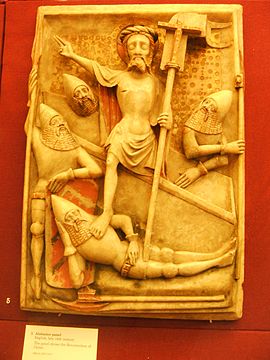
            Who here is on social media? Surfing the web, looking through my several accounts is a pleasant way to pass the time, but it is also a way to see some really humorous things. For example, just yesterday I saw a meme that said “In order to be truly Biblical, the only people invited to the sunrise Easter service will be women.” Because, at sunrise on that first Easter, that is all who were there – the women were the first witnesses to the Resurrection!

            We know more about what happened on that Easter Sunday from the other Gospel accounts. But, Mark? Not so much. Mark writes in his usual concise, blunt manner. Short on details and description, heavy on action. Let’s take a closer look at our Gospel reading.

            “After the Sabbath was over, Mary Magdalene, Mary the mother of James, and Salome bought spices to go and anoint the body of Jesus. Very early on Sunday morning, at sunrise, they went to the tomb.” 

I want to remind everyone that Jesus did not have only men disciples. There were many more than just the twelve men named in the Gospels. “In their accounts of Jesus’ last days, all four gospel writers mention “the women who had followed Jesus from Galilee”.  Taken together we find that eight women are named, with the most familiar being Mary Magdalene.” [1]

Some of these faithful women go to their Rabbi’s tomb early on Sunday. What did they encounter? What was it that really happened early that Sunday?

The big stone rolled over the entrance to the tomb must have been worrying the women. Mark even mentions it. I suspect they already were discussing how their combined strength was probably not enough to even budge the stone. But—what is this? The stone is already rolled away! It’s the first inkling that things at the tomb are not as these women first thought.          

“So they entered the tomb, where they saw a young man sitting at the right, wearing a white robe—and they were alarmed.“Don’t be alarmed,” he said. “I know you are looking for Jesus of Nazareth, who was crucified. He is not here—he has been raised!”

            Their Rabbi, whom they had just seen die three days ago in the most horrific way, is suddenly said to be miraculously alive – awake, aware, and raised from the dead!  

            Let’s continue with the angel’s words from Mark 16: “Look, there is the place they laid him. But go, tell his disciples and Peter that he is going ahead of you to Galilee; there you will see him, just as he told you.” So they went out and fled from the tomb, for terror and amazement had seized them; and they said nothing to anyone, for they were afraid.”

Frankly, the reaction of the women makes a great deal of sense. “Terror would be a natural response to the unexpected, especially where a dead loved one is concerned. Amazement would certainly be realistic when the terror of the moment gives way to a hint of hope. Could it really be true? Could the prophecies have been fulfilled?” [2]

            Of course, looking back with our historical perspective and the perspective of faith in our risen Lord Jesus Christ, it is next to impossible for us to imagine what it was like for the women disciples, encountering an empty tomb!

These words are the first ending of the gospel of Mark, right here. Yes, our Bibles have some additional verses that come after verse 8, that were added later on. But, right here is where we are left for now. The women frightened half to death, and no trace of the men disciples up to this point. What happens now? This is surely infinitely more agonizing a cliff-hanger than any radio serial or any two-part television episode!

The immediate response of the disciples isn’t really that far-fetched when you stop to think about it. We have already seen the betrayal of Judas, the denial of Peter, the desertion of his disciples, and “finally even the failure of these women, who up to this point had proved the most faithful of his disciples. They are afraid, too afraid to speak of the wonders they have heard. And so Mark ends here, right here, inviting us the reader to pick up where these women left off and share the good news announced by the messenger at the empty tomb.[3]

We know the men disciples scoffed at the women’s testimony, at first. I don’t know if I could have believed this right away, either. What would your response have been?

But wait, the blessed reality is that our God conquered death. We don’t just hope so, we don’t think it would just be a nice idea, Jesus Christ rose from the dead, and the angel told the women the blessed truth. It took some time for all the disciples to believe it and fully comprehend it, but that is a reality we can trust today, too.

We know now, from the other Gospel accounts, that this was just the beginning of the story, the beginning of that Good News, that Jesus has risen, indeed! Despite worry, anxiety, despair, loss, and cynicism today, we know the tomb is empty.

As commentator David Lose says, “The story of what God is doing in and through Jesus isn’t over at the empty tomb, you see. It’s only just getting started. Resurrection isn’t a conclusion, it’s an invitation. And Jesus’ triumph over death, sin, and hate isn’t what Mark’s Gospel is all about. Rather, Mark’s Gospel is all about setting us up to live resurrection lives and continue the story of God’s redemption of the world.”

            Our opening hymn “He Lives!” has the words “I serve a living Savior, He’s in the world today.” Our Lord Jesus wants each of us to go out and tell others that He lives! Easter Sunday is not a nice nursery story or a pretty fairy tale. It is saving truth. I know – we all know that our Redeemer lives!  Jesus came to redeem His people from their sins. The Resurrection is not the end of the story. It’s only the beginning!

And yes, we are invited to witness to Him, to go and tell everyone that Jesus Christ is risen today! Share this Good News, today! Alleluia, amen.

@chaplaineliza

(Suggestion: visit me at my other blogs: matterofprayer: A Year of Everyday Prayers. and  A Year of Being Kind . Thanks!


[1] https://juniaproject.com/did-jesus-spend-most-time-12-men/  (Matthew 27:55, Mark 15:40, Luke 23:49, John 19:25)

[2] https://www.stewardshipoflife.org/2012/04/a-story-for-uncertain-times/

[3] https://www.davidlose.net/2015/03/easter-b-only-the-beginning/

Unknown's avatar

Always Be Ready!

“Always Be Ready!”

1 Peter 3:13-22 – May 14, 2023

            For years, I used to have a simply marvelous car mechanic. Omar was the absolute best! (Sadly, he retired some years ago.) His auto shop was in the Rogers Park neighborhood of Chicago, and I have lived in Evanston for the past thirty years. Do you think that distance stopped me from going to Omar’s shop? Of course not! He was just that good and just that honest about fixing cars. And, I would tell everyone how awesome Omar was. Period.

            In our Bible reading today, the apostle talked about telling our story. In other words, telling others about our Lord Jesus Christ. That’s talking about how marvelous He is, and just that honest, too. What are we supposed to be ready to do? Tell our story! It’s as simple as that. And it’s as complicated as that. Peter says that we are always “ready to make your defense to anyone who demands from you an accounting for the hope that is in you.”

            That’s the situation. Remember, we have been discussing how dangerous it was for Christians – believers in the Lord Jesus – to be honest and transparent about their belief in the one, true God who created heaven and earth. As I have mentioned before in past weeks, we have considered even today how dangerous and toxic many of the governments through the Middle East and North Africa (as in other parts of the world) are for these believers of a fragile minority religion.

            Let us listen again to the words from 1 Peter 3: 14 But even if you should suffer for what is right, you are blessed. “Do not fear their threats; do not be frightened.” 15 But in your hearts revere Christ as Lord. Always be prepared to give an answer to everyone who asks you to give the reason for the hope that you have. But do this with gentleness and respect, 16 keeping a clear conscience.”

            Why are there so many believers through the centuries who have been ready to tell their story and give an account of themselves no matter what, as the apostle says right here?

             “We aren’t often in danger of going to jail on account of our faith; we aren’t likely to lose our jobs or get kicked out of school, at least in most parts of the world. So, we look for opportunities to tell our story when questions are asked. When we are asked about our Sunday morning habits, [why we attend church] for example, or why giving is so important to us. Questions like these are great opportunities to share our faith and to tell our story, if we are prepared.” [1]

But, how are we supposed to follow that calling to tell our story, just like the apostle tells us to do, right here? Honestly, I know some people are hesitant or shy, or downright afraid of talking about our Lord Jesus.

One way you and I can practice telling our stories is by telling them to each other in worship. I have attended Sunday services where there is a regular sharing of stories, or giving testimony. “Testimony is a long-standing tradition in the life of the church and might be worth considering reviving in your local context. We need to hear from one another so that we can become more comfortable speaking to others. We may think our story isn’t dramatic enough for a testimony, or that we aren’t always confident in the motivations or reasons for why we do what we do.” [2] Isn’t following this command of the apostle reason enough?

Yes, speaking from the heart is incredibly effective for reaching other hearts. There is nothing like an emotional impact to get under people’s guard and make them think hard about the claims of this God who made heaven and earth.

But, let’s examine this verse more closely. Emotion only goes so far. An emotional appeal does not appeal to everyone. “Peter probably has in mind a formal defense of the faith in a law court, but his words apply to any situation where a believer is called on to defend their faith. We must be ready, willing and able to speak for Jesus. Peter actually uses the word apologia, a word meaning “a formal reasoned defense” – a reasoned defense of the Christian faith. What’s being asked of us is to know and understand the gospel and be willing and able to give a reasoned (logical) account for our reliance on Christ.” [3]

Whether emotional or logical, whether incredibly personal or ordered and reasoned, a testimony is a powerful thing. But, it is not for us to measure how many people are affected by our words, by our stories. “Not how many “souls we have saved.” Not the crowds we drew or the attention we gathered. In fact, it may seem like no one at all is responding, is turning their lives around, is making any change based on our words. That doesn’t matter in the least. Yes, of course, we hope to make a difference in the world around us; we hope to bring influence for the cause of Christ and to make disciples of Jesus for the transformation of the world.” [4]

But, in this, too, we run the risk of becoming puffed up. Are we doing this to put on a good show? Or, is our true purpose our faithfulness to God? At the end of the day, we are to be faithful. God will take care of the response. It is our task – our joy – to faithfully give testimony to what Jesus has done in our lives. Always be ready to give a defense to anyone who sees the Godly hope within us.

Just like I was ready and willing to tell anyone about my marvelous car mechanic, Omar! Am I – are you – ready to tell others about Jesus? I encourage us all to consider what God has done in your life, and in mine. Be ready to give testimony to the awesome and daily power of our Lord Jesus Christ. As we trust God, let us share our hope! Be ready! Be ready to tell our stories of what God has done. Alleluia, amen.

@chaplaineliza

(Suggestion: visit me at my other blogs: matterofprayer: A Year of Everyday Prayers. #PursuePEACE – and  A Year of Being Kind . Thanks!


[1] https://www.umcdiscipleship.org/worship-planning/a-living-hope/sixth-sunday-of-easter-year-a-lectionary-planning-notes

[2] Ibid.

[3] http://www.lectionarystudies.com/easter5ae.html

[4] https://www.umcdiscipleship.org/worship-planning/a-living-hope/sixth-sunday-of-easter-year-a-lectionary-planning-notes/sixth-sunday-of-easter-year-a-preaching-notes

Unknown's avatar

God with Us, God’s Peace

“God with Us, God’s Peace”

Matthew 1:18-25 (1:23) – December 18, 2022

            Where does your name come from? What do our first names mean? Do you know? Are you named after someone beloved or meaningful in our families? Many parents choose their children’s names carefully, and sometimes name them after someone beloved or meaningful to them or their family. Several of my older brothers and sisters have names like that. I suspect some relatives of yours do, too.

            The name Jesus had a special meaning. But before we get to that, let’s talk about this reading from the Gospel of Matthew. This is not the typical reading associated with Christmas! This is not the reading with Mary or the Magnificat, or with the angels, the shepherds, the star shining in the east, and shepherds rushing to find the Baby in Bethlehem. That is the reading from Luke chapter 2. Instead, we have today’s reading from Matthew chapter 1. This is the Nativity from Joseph’s point of view.

We can’t know much about Joseph and Mary’s marriage preparations, other than some generalities that we understand from cultural and historical studies of their area and the society of the time. But, I have some experience with people. I have learned how many people behave, frequently, on different occasions. I can tell you right now that from my observations, people have not changed much over the centuries.

            Matthew tells us that Joseph observes the Law of God. That is huge! Can you say that about yourself? Can I? Are we faithful to God’s laws? Since Matthew is a faithful Jew, this law-keeping is obviously very important to him. The very next thing we hear is that Mary is pregnant, and not by Joseph! What does that mean to Joseph, who is so faithful to the Law of Moses? Matthew does let his readers know that Joseph wants to dissolve the betrothal quietly.

How often, even today, do we make plans? Trying to fix, manage and control people, places and things? Doing our best to make sure all our ducks are in a row, making sure that everything is just right, trying to orchestrate everything, so that nothing is left to chance?

We can see that Joseph made plans, too! Yes, he cared enough for Mary – pregnant as she was – that he planned to divorce her, to break the betrothal quietly. He wanted to organize what he could of his life, while still being considerate of her. But, what happened next?

            Let’s take a closer look at Matthew’s words: “But after Joseph had considered this, an angel of the Lord appeared to him in a dream and said, “Joseph son of David, do not be afraid to take Mary home as your wife, because what is conceived in her is from the Holy Spirit.”

Sure, Joseph had lots of fear and anxiety, because of the unknown and unexpected. Because of a situation he did not plan for. The angel came to him with words of comfort and hope. Can you imagine how heartwarming this must have been for Joseph, hearing these words from an angel sent from God? Can you imagine how earthshaking it would be for an angel, a messenger sent from God, delivering words of comfort and hope to us?

            We do not know much about Joseph at all, from the biblical record. He does not get very much attention, compared to Mary. But, this appearance of the angel of the Lord is certainly dynamic! In case Joseph had second thoughts about where the baby came from, the angel’s words gave Joseph no doubt: “what is conceived in Mary is from the Holy Spirit.”

            Joseph and Mary were even told what the child’s name would be! As I said a few minutes ago, names can be meaningful. In this case, Jesus’ name means something very important. Let us hear what the angel said: “Mary will give birth to a son, and you are to give him the name Jesus, because he will save his people from their sins.”       

            The name “Jesus” means “the Lord saves,” revealing the birth of the Savior of the world. This statement is an angelic birth announcement of an historic nature, indeed! But, this is not all. Matthew goes on to give the words of the prophet Isaiah: “All this took place to fulfill what the Lord had said through the prophet: 23 “The virgin will conceive and give birth to a son, and they will call him Immanuel” (which means “God with us”).

            My favorite bible commentator Carolyn Brown states, “The name Joseph and Mary are to give this child is Immanuel, “God with us.”  When we want to know what God is like, we look at Jesus.  Jesus once said, “If you have seen me, you have seen God.  What I say is what God says.  What I do is what God does.” [1]  In Isaiah the name Immanuel is defined and connected to God’s promise to be with us, even right by our sides. In the gospel Joseph is instructed to name the baby both Jesus and Immanuel. God-with-us.  

            A preview of what is to come at the end of Matthew’s Gospel is also a reminder to all of us. “The last sentence in Matthew 28 and Jesus’ last words: “remember I am with you always, even to the end of the age.”  “I will be with you” is God’s promise to us always.  It was God’s promise for hundreds of years before Jesus was born, God’s promise was God-with-us when Jesus was alive, and is God’s promise to us forever. [2]

What better source for a name than a God-given name? How amazing is the prophecy from Isaiah that lets us know God will always be right by our sides!

Unexpected situations may come up, but they are not unexpected to God. Human plans may fail, but God never fails. Through it all, God is faithful in all God does, and we can count on the Lord one hundred percent. Immanuel – God with us!


[1] http://worshipingwithchildren.blogspot.com/2013/08/year-fourth-sunday-of-advent-december.html

[2] Ibid.

@chaplaineliza

(Suggestion: visit me at my other blogs: matterofprayer: A Year of Everyday Prayers. #PursuePEACE – and  A Year of Being Kind . Thanks!

Unknown's avatar

Go and Tell!

“Go and Tell!”

Mark 16:1-8 (16:7) – April 4, 2021

            After a terrible, horrible week like the disciples have just had, anyone would be distressed, dispirited and downhearted. The last few days were horrible, indeed. The most horrible thing about the last few days was when the disciples’ Rabbi Jesus died on the Cross.

            .  Friday evening Joseph bravely claimed Jesus’ dead body and laid it in a cave tomb. He and a few of the women quickly wrapped the body in a sheet, since it was so late in the day.  There was a law that you couldn’t tend or even touch a dead body on the Sabbath.  So, everyone went home to hide and cry and try to figure out what happened.  The women gathered supplies to wash Jesus’ body and some good smelling spices to wrap into the sheet when they rewrapped it. [1]

            But, let’s back up. Back up to early Friday morning. Where were the men disciples? Except for Peter, who followed Jesus and the mob at a safe distance, the Gospel accounts make sure to tell us that all the men ran away. And, Peter denied Jesus three times in the High Priest’s front yard. We know John showed up at the foot of the Cross that Friday, because Jesus mentioned him specifically in the Last Words on the Cross. However, the men disciples must have been scared to pieces, fearing that they might be picked up by the Roman soldiers, too.

            Admittedly, it must have been a very scary time. Imagine, a bunch of Roman soldiers carrying off the leader of a rag-tag group of disciples, in the middle of the night. I probably would have run away, too. Terrifying times, indeed.

            Except, the Gospel writers – including Mark – tell us that a number of the women disciples remained at the Cross. And, watched Jesus die. And, helped Joseph of Arimathea take Jesus’ body to the fancy tomb, wrap it hurriedly in a linen sheet, and make sure things were decently done before the Sabbath time began at nightfall. What is more, nothing could be done during the Sabbath – especially this Sabbath, during the holy time of Passover.

            The angel (who Mark calls a “young man,” but the other Gospels identify as an angel) tells the first witnesses – the women disciples – to go and tell the others.

“The earliest and most reliable manuscripts of the Gospel of Mark conclude with a description of the women as “trembling and bewildered.” Mark tells us that they “fled from the tomb. They said nothing to anyone, because they were afraid” (Mark 16:8).” [2]

At first, they don’t! Would you? If you had something that horrified and grieved you to the depths of your soul happen on Friday, and then something else to shock you out of your sandals on Sunday, would you be all that eager to go and tell? Tell even your good friends about what the angel said?

            The men disciples themselves did not have a very good track record at this “go and tell” command, either. “Those who are closest to Jesus and should tell others about him often don’t. So the disciples hear Jesus predict his passion three times and regularly end up dazed, confused, and arguing about who is the greatest. Peter confesses that Jesus is the Messiah but completely misunderstands what that means and actually rebukes Jesus when he explains. Again and again those who should understand just don’t understand what is going on and so fail to share the good news.” [3] So, who are the faithful ones, the ones given the great Good News of the Risen Lord at the tomb? The women disciples, and they are told by the angel to go and tell. At first, they are afraid. But then, they gain courage – again – and do go and tell the men disciples.

            I wonder – where would we find Jesus today? The women disciples are told to go to Galilee, because Jesus is planning to go there and meet with all of the disciples, after His resurrection. But, where can Jesus be found today? Is He here, in church? Well, yes. I think He is, but not only here. Isn’t Jesus found outside of the church, too? What about in the hospital, at the bedside of those we are praying for? Isn’t Jesus there? What about right next to people who are newly unemployed? Or, homeless for a long time? Does Jesus sit by their sides? What about people who are not sure Jesus is even God, maybe not even sure God exists. Doesn’t Jesus wait patiently for them, ready to embrace them in His time?

            Jesus is right by the side of all of these people. Yet, we are also told to go and tell. It is not an either/or proposition! Yes, our Risen Lord Jesus is walking beside each of us! And yes, we are to witness to Him! To go and tell everyone that Jesus Christ is risen today! We serve a risen Savior, who’s in the world today. I know – we know that our Redeemer lives!  

            We are emerging from the tomb of pandemic quarantine into a world that desperately needs the healing touch of our risen Lord Jesus Christ. And, since we are His followers, Jesus has given us the direct order to go and tell, too!

We are to tell the world there is hope in the name of Jesus. We are to tell the world there is joy in traveling with the risen Savior. We are to tell each person we encounter that they have the opportunity to know the one who brings compassion and forgiveness and a just society. And then, we are to go out into the world and do our best to bring that about – in the name of Jesus.

Go and tell – in the name of Jesus. Alleluia, amen!

(I would like to express grateful appreciation to Dr. Esau McCaulley and his opinion column featured in the New York Times on Friday, April 2, 2021. I have taken several ideas from this column for this sermon.)

@chaplaineliza

(Suggestion: visit me at my other blogs: matterofprayer: A Year of Everyday Prayers. #PursuePEACE – and  A Year of Being Kind . Thanks!


[1] http://worshipingwithchildren.blogspot.com/2012/01/year-b-easter-sunday-april-8-2012.html

Worshiping with Children, Easter Sunday B, Including children in the congregation’s worship, using the Revised Common Lectionary, Carolyn C. Brown, 2012.

[2] https://www.nytimes.com/2021/04/02/opinion/easter-celebration.html?referringSource=articleShare

[3] http://www.davidlose.net/2015/03/easter-b-only-the-beginning/

“Only the Beginning,” David Lose, …in the Meantime, 2015.

Unknown's avatar

Jesus Calling!

“Jesus Calling!”

Mark 1:14-20 (1:17) – January 24, 2021

            Have you ever heard someone calling, and responded right away? I am sure you have. Whether it is a call out to the back yard or the garage to come in for dinner, or a call to join in on a project or job, have you felt eager to respond? Excited? Like you can’t wait to begin?

            I wonder whether the disciples felt that way when they responded to Jesus?

            Last week, we took a closer look in the Hebrew Scriptures at the Lord’s call of the young Samuel when he was serving along with the high priest Eli in the Tabernacle. Today, our Scripture reading talks about Jesus calling four of His disciples.

            But, wait a moment. The four fishermen were actively involved in their secular jobs when Jesus came up to them and called. Simon and Andrew owned one boat at least, perhaps more than one. James and John were the sons of Zebedee, and we do know that Zebedee had a fishing business with at least several boats on the Sea of Galilee. So, we are talking about some serious fishermen seriously involved up to their elbows in fishy business.  

            I am sure our Lord Jesus talked with loads of people each week. Except – I don’t think He called all of those people to be His disciples, His followers. Do you wonder about these four fishermen, in particular? Does something about this reading today bother you? How could Simon, Andrew, James and John up and leave everything right away? How could they walk away from their nets and respond to Jesus’s call – immediately?  

            Let’s consider a different translation of this reading, from The Message. Verses 16-18: “Passing along the beach of Lake Galilee, he saw Simon and his brother Andrew net-fishing. Fishing was their regular work. Jesus said to them, “Come with me. I’ll make a new kind of fisherman out of you.” I’ll show you how to catch men and women instead of perch and bass.”

“They didn’t ask questions. They dropped their nets and followed.”

            Perhaps you might not believe this narrative. Does anyone actually DO that anymore? I mean, dropping everything and just following Jesus when He calls. Maybe, in Bible times, people did things like that. But, today? Does anyone answer God’s call like that anymore?

            Let’s be honest. I cannot imagine doing what these four fishermen did. True, we do not have many professional fishermen in the Chicago area. But, can you imagine leaving your full-time job – or, if you don’t work full-time, leaving whatever takes much of your time and attention each day. “Most of us, truth be told, would find it very hard to leave work and family and friends and all the rest to venture into such an uncertain future. Does that mean we’re more or less failures as Christians? Or at least that we are less faithful than Andrew and Peter, James and John?” [1]

            I started off looking at Jesus calling four disciples. He chose them and called them, knowing them better than they knew themselves. Why don’t we flip this around and look at this scenario from the fishermen’s point of view. These four guys had Jesus call, to follow Him.

We read that they got up without hesitation, leaving their nets and boats and catches of fish behind. Immediately! Did they feel eager to respond? Excited? Like they couldn’t wait to begin to follow this unconventional Rabbi?

“We are called, perhaps not so much to follow, but to take Mark’s ‘immediately’ seriously. This is not, “wait a few minutes. Let me pack my bag. I have a few more arrangements to make.” No preparation. No packing list. No recommendations of what to take, what to do.” [2]

When I first felt a call to serve God, I was in high school. I did not listen for a long time. At least, I don’t think I heard clearly. Sure, I heard something of a message from God for some time, but it was muffled, or garbled. I did work as an eager church leader, as a faithful church worker for years and years before I had the opportunity to go to seminary when I was forty years old. But – isn’t being a faithful church worker following the call of God, too?

As commentator David Lose says, “We follow [Jesus] in particular and distinct ways that may or may not be like the first disciples. And that, I think, is the point. Perhaps we follow by becoming a teacher. Perhaps we follow by volunteering at the senior center. Perhaps we follow by looking out for those in our schools who always seem on the outside and invite them in.

“Perhaps we follow by doing a job we love as best we can to help others. Perhaps we follow by doing a job we hate but contributes to supporting our family and helping others. Perhaps we follow by being generous with our wealth and with our time. Perhaps we follow by listening to those around us and responding with encouragement and care. Perhaps we follow by caring for an aging parent, or special needs child, or someone else who needs our care. Perhaps we follow by….” [3] Well, you get the idea.

Jesus calls us all to follow Him, in any number of ways. That means us knowing that Jesus is for real – He is the real thing, the real deal, the genuine article.  

 When we are called to follow Him, that means He calls us to turn our backs on something else in our lives. Is it possible that sometimes we get altogether too comfortable, too unwilling to risk, too unable to step out in faith? My challenge to all of us: be willing to step out, and follow the calling of Jesus, whenever and wherever He wishes us to go.

Please God, I’ll go.


[1] http://www.davidlose.net/2015/01/epiphany-3-b-following-jesus-today/

“Following Jesus Today,” David Lose, …in the meantime… 2015.

[2] https://www.workingpreacher.org/dear-working-preacher/the-immediately-of-epiphany

“The Immediately of Epiphany,” Karoline Lewis, Working Preacher, 2015.

[3] http://www.davidlose.net/2015/01/epiphany-3-b-following-jesus-today/

“Following Jesus Today,” David Lose, …in the meantime… 2015.

@chaplaineliza

(Suggestion: visit me at my other blogs: matterofprayer: A Year of Everyday Prayers. #PursuePEACE – and  A Year of Being Kind . Thanks!

Unknown's avatar

We Can Be Friends, Too!

(This week, we are celebrating in Sunday Worship with a Children’s Service: a service oriented toward children and young people. We pray for them as they begin a new school year, whether online, in-person, or something in between. This sermon from Philippians 2:19-30 is geared toward all ages, especially for our younger friends.)

“We Can Be Friends, Too!” – August 23, 2020

Phil 2-20 work of the Gospel

Philippians 2:19-30 (2:28-30)

Paul wrote a letter to the Philippian church, when he was in prison. Paul tells about his two close friends who are with him, supporting him while he is in prison.

What if your friend was in real big trouble? Would you be there to help your friend who was in a desperate situation? Or, would you want to hide and stay away? Would your fear keep you from helping? I bet you would be like Timothy and Epaphroditus and would be there to help your friend!

So many church members just stay out of the way. Can you – can I be a friend of Jesus if we hide and stay out of the way?

As Paul wrote this letter to the Philippian church, he was in prison. You and I might think that Paul wasn’t able to do anything in prison, but just hide and keep out of the way. He couldn’t go where he pleased. He was locked up!

Here Paul talks further about being a good friend. Paul tells about his two close friends who are with him, willingly supporting him while he is in prison.

Would you – or I – be there to help our friend who was in a desperate situation, even in prison? Or, would you want to run to hide and stay out of the way? Could our anxiety and fear make us super scared? Or, would we continue to be there for our friend?

The friends in Philippi knew Paul’s friend Timothy from when Timothy was one of Paul’s companions. Paul had the highest praise for his young friend, saying that Timothy was genuine, faithful and could certainly be depended on, no matter what. Especially when he was telling other people about God’s Good News.

Isn’t this the best kind of friend to have with you, if you are in a difficult spot?

I know that going back to school is usually not such a challenging time. However, we haven’t had Coronavirus around before. Having Coronavirus is almost like being in jail! It is keeping us locked away from our friends. It is very stressful for all of us. But, none or us are alone. God is always with us, is always fighting for us, and has great plans for each of us.

Are you willing to be genuine, faithful and dependable for your friends? How about for your fellow classmates or co-workers? Paul reminds us, we can all be like Timothy, willing to be friends for others, no matter what.

Paul’s other friend, Epaphroditus, was a church leader in Philippi. He hand-carried an important financial gift to Paul.

Epaphroditus also was very, very ill while traveling, and after he reached Rome where Paul was in prison. However, he overcame those difficult times. Paul praises his friend Epaphroditus for working just as hard as Paul did himself! Plus, while Paul was stuck in prison, his Philippian friend took excellent care of Paul. I suspect he was Paul’s hands and feet, and really helped the ministry while Paul was in jail.

For all of those reasons, Paul really praises Epaphroditus. But, at the same time, Paul needed to send him back to Philippi with this very letter. (The one we are reading.)

Do we understand how much it cost Epaphroditus to go visit Paul? Weeks, perhaps even months on the road. He was deathly ill while traveling, and after he reached his destination, too. Of course Paul was grateful and thankful for both his good friends!

Do you know anyone who has had the Coronavirus? You cannot go and see them. They are alone. Yet you can be a good friend and send them messages, right? And, if you were sick, you know that God is your good friend. No matter how things are going, how unhappy you are or how troubled your life seems, God will be right next to you. We have God’s promise on that! God is true to those who believe.

Are we supposed to be friends to others in a similar way? I think Paul would say, “Yes!”

Our hearts can be filled with gentle words, kind deeds, forgiving hearts and peacemaking. Jesus is depending on all of us! Did you ever think Jesus was depending on you? You might be the only way God could show love to some of the kids, families, co-workers, and neighbors you meet every day – in class, or in the office, or at the grocery store, or at the park. [1]

Just as much as Paul was thankful for Timothy and Epaphroditus being his good friends, you and I can be thankful that God is our good friend. No matter how things are going, how happy we are – or not, or how bumpy or steep the way is ahead, God will be right next to us. We have God’s promise on that!

Paul encourages each of us to come alongside of all our friends, and be there, just in case. That is truly something we all can be thankful for. Alleluia, amen!

[1] http://worshipingwithchildren.blogspot.com/2013/07/back-to-school-2013.html

@chaplaineliza

(Suggestion: visit me at my regular blog for 2020: matterofprayer: A Year of Everyday Prayers. #PursuePEACE – and my other blog,  A Year of Being Kind . Thanks!