Unknown's avatar

Heavenly Prescription for Prayer

“Heavenly Prescription for Prayer”

James 5:13-20 (5:13) – September 29, 2024

How many of you remember being really sick? So sick that you had to stay in bed for days, or perhaps even had to go to the hospital? Thank goodness here in the Chicago area we have many devoted doctors and excellent hospitals to choose from, and to figure out exactly what is ailing us. And, thank goodness we are able to have effective medicine prescribed for us when we are sick, too!

Except – what do we do when our hearts and spirits are feeling sick? Anxious, or disturbed? Where do you and I go when our faith in God seems shaky? We could perhaps go to the doctor or the hospital, but they probably will not have the right tools or equipment to help when you or I have spiritual afflictions. [1]

This is our fifth week looking into the letter of James, and we have seen over the past few weeks that James is a very practical man. He displays a great deal of common sense, and does not pull punches when it comes to talking straight to his friends scattered around Asia Minor. (The area to the north and east of present-day Palestine.)

Let’s hear from James about this very problem: “Are any among you in trouble? They should pray. Are any among you happy? They should sing praises. 14 Are any among you sick? They should send for the church elders, who will pray for them and rub olive oil on them in the name of the Lord. 15 This prayer made in faith will heal the sick; the Lord will restore them to health, and the sins they have committed will be forgiven.”

What I have seen in these past weeks and months are the overwhelming number of people with heightened emotions and reactions to anxious, even fearful situations. As someone involved in pastoral care and trained as a chaplain, I notice these things. In our scripture reading today, we find the apostle James talking straight about how to pray, and thus deal with things similar to these things he mentions: heightened, negative emotions and reactions to anxious situations, not to mention physical needs, too.

The apostle James was a practical kind of guy. We can see that from this short letter, the only letter he wrote, included in the New Testament. He gives some practical advice to his readers on how to live a faithful and effective Christian life: how to live faithfully with others in society, how to control the tongue, how to turn away from evil and towards God. Here, in the fifth chapter of James, he turns to prayer. As we look at this passage, James tells his friends how to pray, in very practical terms, almost the same way as a doctor with a prescription pad might write it out.

What are the beginnings of this spiritual prescription? You and I need a special place and a special way to access God; we need to be open and willing, in this place! You and I need God – especially through the Holy Spirit – to help our hearts and spirits feel renewed, and we need the body of Christ–all of us–to help us strengthen our faith. In fact, we all need each other. [2]

When I was a hospital chaplain, working in critical care units like the Emergency Department, Intensive Care, and trauma support all over the hospital, my primary job would be that of compassionate listener—even before prayer, and also as a heartfelt part of prayer.

Now that I am a hospice chaplain, compassionate listening becomes an even more important part of what I do, not only for my patients, but for their loved ones. I suggest for all of us to consider a heart of compassion and a gentle hand of mercy. It’s time to put our defenses down and instead experience the vulnerability of listening to one another.

“If someone has a story to tell, the greatest gift you can offer is simply to listen. You don’t need to have answers or wisdom. You probably don’t need to say anything except, ‘I hear you. I believe you. I’m sorry you experienced that.’ In the compassionate version of the world I yearn for, we offer one another solidarity, a listening ear, and a tender heart.[3]

Another way of defining this spiritual prescription is through prayer – corporate prayer. James says, “16 So then, confess your sins to one another and pray for one another, so that you will be healed. The prayer of a good person has a powerful effect.“

Again, I am reminding us all, this exercise of prayer is not meant to be only for persons in isolation. It’s true, as a hospice chaplain, I see many people isolated in hospitals, in care centers, all alone in their rooms with no one to hold their hands or offer them a kind word of compassion or comfort. James would give us – fellow Christians – the practical advice to come alongside the sick persons in prayer and fellowship, even solidarity.

My commentator Dr. James Boyce echoes this very call from our letter-writer: “James knows a wisdom that is communal, especially in its faithful exercise of prayer. Twice he charges that confession should be “to one another,” and that we should pray “for one another,” if we have any expectation that the promised healing is to take place (James 5.16). Such prayer exercised within and on behalf of the community has power — James says it is “effective.” [4]

I think all of us can agree that as God’s people, we all need regular repentance and soul-searching, no matter what. We are also all in need of healing, personally, and certainly communally. Isn’t that what James tells us here?

At the end of this 5th chapter, this practical how-to manual on the Christian life, we can follow the heavenly prescription James sets forth. We can pray. We can worship. “We learn about how to be God’s people by reading the Bible. We find ways to serve – to do spiritual exercises that both help the world and strengthen us. We develop relationships within our faith community [or church] that are healing and helpful. And we learn to be generous – to share the many good things God has given us with others.” [5]

Whether it is the healing touch of the laying on of hands, or a simple hug from a sister or brother in Christ, or the potent power of prayer or the relief of corporate confession, active participation in the Body of Christ is preventative medicine at its best. What are you waiting for? There’s no co-pay, third-party billing, or lifetime limits on God’s grace and love. Prayer is our heavenly prescription from God.

Alleluia, amen!

@chaplaineliza

(Suggestion: visit me at my other blogs: matterofprayer: A Year of Everyday Prayers. #PursuePEACE – and  A Year of Being Kind . Thanks!


[1] https://www.stewardshipoflife.org/2012/09/rx-for-broken-lives-and-faltering-faith/

[2] https://www.stewardshipoflife.org/2012/09/rx-for-broken-lives-and-faltering-faith/

[3] https://fosteringyourfaith.com/2018/09/30/time-for-compassion/

[4] https://www.workingpreacher.org/commentaries/revised-common-lectionary/ordinary-26-2/commentary-on-james-513-20-4

[5] https://www.stewardshipoflife.org/2012/09/rx-for-broken-lives-and-faltering-faith/

Unknown's avatar

Wisdom from Above!

“Wisdom from Above!”

James 3:13-4:3 (3:17) – September 22, 2024

            I wonder if you can think of people who are called the best at something? The greatest athlete in a sport? The smartest student at your school? The best chef or best writer or best driver or best of anything? Just imagine how much bitter jealousy that comment can promote. Or, how much selfishness and blind ambition all this empty striving and competition leads to!

Worldly “wisdom” is anything but wise, according to our letter writer James. I am sure you recognize these jealous, covetous people. They regularly moan and kvetch and sometimes outright quarrel about what they have or about what they don’t have. James tells us about these dissatisfied, disgruntled people in our Scripture reading today.  

            Just listen to his description: “If in your heart you are jealous, bitter, and selfish, don’t sin against the truth by boasting of your wisdom. 15 Such wisdom does not come down from heaven; it belongs to the world, it is unspiritual and demonic. 16 Where there is jealousy and selfishness, there is also disorder and every kind of evil.”  

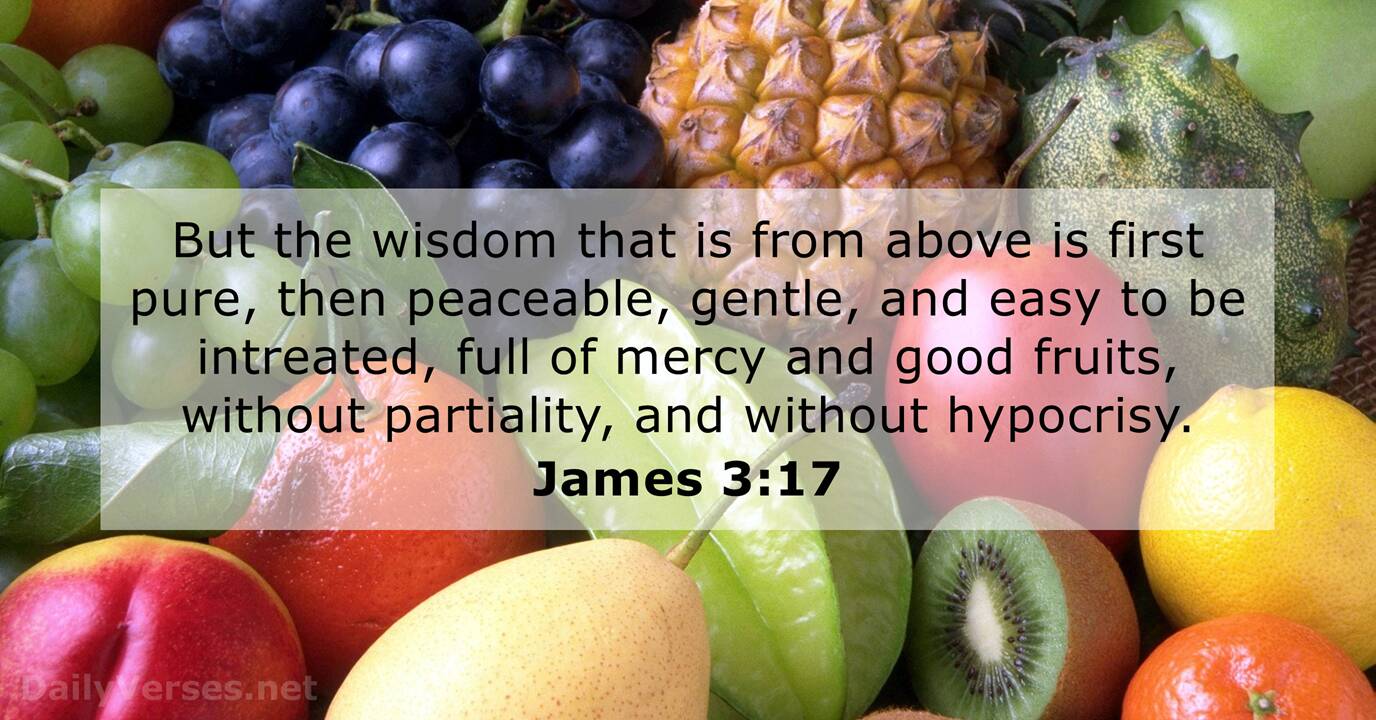
This kind of worldly striving, dog-eat-dog attitude is definitely not what James has in mind for us, as believers in Christ. He shines the spotlight on how believers ought to live. Listen! “13 Are there any of you who are wise and understanding? You are to prove it by your good life, by your good deeds performed with humility and wisdom.”

Can there be a sharper contrast between the dissatisfied, selfish, boastful worldly “wisdom” and the Godly, humble, beneficial wisdom and way of life that James talks about here? Not likely. Remember, in this practical letter, this how-to manual, James advises his friends on how to live in a way pleasing to God.

            It’s true that this fancy, flashy excitement can be attractive, even seductive, on the surface! But, all that is just for show, simply surface, an inch deep, and nothing more than worldly dissatisfaction, boastfulness and jealously. But, let’s be truthful – which of us is not tempted, sometimes, by the alluring or bright and shiny trappings of the way of worldly “wisdom?” Which of us doesn’t fall in step with others who might be jealous, or bitter, or selfish – sometimes? Most important, which of us leaves the simple, quiet, godly life of contentment for the flashy, glitzy (and shallow) excitement that so soon fades?

            Let’s consider the worldly, flawed way of thinking and being, for a moment. Carolyn Brown, retired Children’s Ministry Director, has written a prayer for this reading. Listen, if you would, and see whether these words from Ms. Brown do not resonate in our hearts.

Dear God, we want to look amazing.  

We want great clothes, cool shoes, a great haircut. We want our homes filled with our stuff.

We want all the best people to be our friends. We want to be the first, the best, the most, the greatest. So we grab and hold and demand. We even kick and punch to get what we want.

Forgive us.

Teach us to let go, to open our hands and hearts to others. Teach us to be content with what we have and to share it.

Teach us to think as much about what OTHERS want as what WE want. Teach us to be as loving as Jesus. Amen. [1]

            This prayer penetrates straight to the heart, let me tell you! I want to ask God for forgiveness, and to help me live in a loving way, like Jesus. I hope you do, too.

            This prayer makes me think of the Jewish High Holidays, which are quickly approaching. During the month before Rosh Hashanah and Yom Kippur, faithful Jews prepare for these holidays by examining their hearts. They meditate and pray, and ask forgiveness of God, of others, and of themselves for the sins and shortcomings of the past year.

            We also have a weekly time of confession and prayer at the beginning of each worship service. Thank God we receive the assurance of pardon each Sunday from our loving Lord! Yet, we keep on sinning. We still need to keep confessing our sins and shortcomings, and receive that assurance of pardon and forgiveness. Is it any wonder that we have this very practical how-to manual of how to live the Christian life by our letter-writer James, in the New Testament?  

            James assures his readers of Godly wisdom, because he describes its results. “Believers need to submit to the wise rule of God through the Spirit of God, a rule which purifies from within.” [2] The practical consequences of this wise rule of God are easy to observe. People who live God’s way are peaceable, considerate, gentle and non-combative! Does this sound very worldly to you? Certainly not selfish or jealous or bitter!

            What I wonder: how is the life of Jesus any mirror to our personal lives? Jesus is certainly recorded as merciful and loving. That is displayed over and over again in the Gospel record! When I think of our Lord Jesus during that three-year period of time in Palestine, I cannot think of anyone more sincere, honest or peaceable. More real and yet penetrating to the heart. I would love to have just a fraction of that Godly attitude and lifestyle as part of mine!

What – practically – can we take away from this reading today? Can we concentrate on living like Jesus? Living the Jesus way is peaceable, considerate, gentle and non-combative. Jesus is sincere, honest, and real. Can we make a commitment to live like Jesus?

This is the how-to of living a life pleasing to God, being filled with the presence of God. “[You and I] are works in process. This isn’t about completion and the satisfaction of a job well done; it is about a journey of discovery and transformation. But peace [gentleness, mercy, and lovingkindness] can be our companions in the journey to keep our feet on the path.” [3]

            Practical James would wholeheartedly agree! Keep on keeping on. Live in God’s way, in the wonderful, honest presence of Jesus. It’s a sure-fire way to have God draw near to each one of us. Alleluia, amen.

@chaplaineliza

(Suggestion: visit me at my other blogs: matterofprayer: A Year of Everyday Prayers. #PursuePEACE – and  A Year of Being Kind . Thanks!


[1] http://worshipingwithchildren.blogspot.com/2012/08/year-b-proper-20-25th-sunday-in_30.html

Worshiping with Children

[2] http://www.lectionarystudies.com/sunday25bee.html  

[3]  https://www.umcdiscipleship.org/worship-planning/doers-of-the-word/seventeenth-sunday-after-pentecost-year-b-lectionary-planning-notes

Unknown's avatar

What about the Tongue?

“What about the Tongue?”

James 3:1-12 (3:1-12) – September 15, 2024

How many of us can remember that old playground saying, “Sticks and stones may break my bones, but names can never hurt me!” children and young people may put on a brave face when they are teased, hurt and picked on. Children and young people can be particularly mean, teasing each other, with left-handed compliments, and even downright insults. But, what insight does this Bible reading from James give us about this very problem?

Let’s hear again these serious words from James. “Just think how large a forest can be set on fire by a tiny flame! And the tongue is like a fire. It is a world of wrong, occupying its place in our bodies and spreading evil through our whole being. It sets on fire the entire course of our existence with the fire that comes to it from hell itself. We humans are able to tame and have tamed all other creatures—wild animals and birds, reptiles and fish. But no one has ever been able to tame the tongue. It is evil and uncontrollable, full of deadly poison.”

Such a little part of the body – the tongue! And yet, despite the playground saying, the tongue can really hurt. “When people are called nasty, dirty names they know what the name caller thinks of them – and that hurts. Those people can be strong, not believe the name caller, and work to prove they are better than the name caller claims. But, it still hurts.” [1]

Names can cause pain, internally. The hurt feelings can smart and fester for a long time. And sometimes, people remember mean words, nasty words or harsh words years after they heard them. Sometimes even decades later. Words can come back to haunt us – either words we have said, or words we have heard. Internalized. Taken to heart.         

Who hasn’t been on the receiving end of a nasty argument, or mean, angry words? Sometimes, words can even change the way we think about ourselves.

Our letter-writer James would whole-heartedly agree. Remember, in this letter the apostle James writes a manual of Christian living. A how-to book on how to live a life pleasing to God.

The big problem with mean, hasty or thoughtless words is that they cannot be unsaid. Once the words have been said out loud – or, sometimes worse, printed electronically in social media – the mean or hasty or thoughtless words are out there in public, whether texts, or tweets or TikTok. These various kinds of words cannot be taken back. And, James cautions all of us on the danger of a tongue that just flaps in the wind! Or, as James says, burns like a forest fire or is fast acting as deadly poison!

Commentator Rev. Dr. Derek Weber thinks further about mean, nasty name-calling and the destructive nature of words. “In our normal catalog of sins, gossip is somewhere far down the list. We are much more concerned about other kinds of misbehavior. James would have us reconsider our hierarchy [of sins] and raise our awareness of the power of words to bring harm to the body of Christ.” [2]  

In Yiddish folklore, there is a story about a woman who would gossip and make false accusations about her neighbors. She never understood the implications of her words until the wise rabbi of her village decided to demonstrate it to her. He told her to get a feather pillow, cut the top off, and run around town with it. As she did that, the feathers flew away and fluttered all around the town. The wise rabbi then told her to collect all of the feathers that flew away and put them back in the pillow. She just couldn’t. It was an impossible task, she told him. “Maybe now you will understand,” he explained, “for you see, your words are like those feathers. Once they get out, it’s impossible to put them all back in.”

Our letter-writer James would so much agree! “As God’s children we are to be careful how we use the power of words. We are called to bless rather than harm, to seek justice and peace for all rather than revenge or harm.” [3] And, I do not want any of us to think that God is just a frowning or disapproving Supreme Being in the sky, ready to hurl thunder bolts at anyone who sins and lets their tongue run on and is a name caller and a gossip.

No, God is serious about sin, that is true! However, we can think of God our Heavenly Parent sort of like a well-loved elder who you and I love and cherish so much, who we do not want to disappoint, who we very much want to do our very best for!

Let’s flip this around, and look at our words from a positive light. Recall how you felt when someone said good, positive things to you or about you. How did you feel, deep down inside? Just think hard about the positive, beneficial impact of these words! James tells us we can certainly bless one another, just as much as we let slip mean or hateful words!

How can we build up each other with our words? What kind of effect would positive affirmations, sincere compliments and just plain being kind have on our daily interactions? I mean all of our interactions, it doesn’t matter with who. Family, friends, acquaintances, even people you meet on the street. Even people who don’t look like us, or speak our language, or wear familiar clothes. Maybe, especially different folks!

I offer the following challenge: find ways of blessing others through kind words, affirmations, and positive reinforcement. Look for everyday opportunities! Try it for the next week, and then the week after that. This is as much a challenge for me as it is for you! Please, find ways of blessing others. [4]  Remember, in this letter the apostle James writes a manual of Christian living. A how-to book on how to live a life pleasing to God. James encourages us to bless each other.

Please, consider turning to your neighbor, to the person in the next pew, and saying, “God bless you!” “God be with you!” Do it, right now. Please. That’s the way to live pleasing to God.

Finally, how would Jesus speak? Would Jesus say kind, helpful, encouraging, positive words? Would Jesus bless people? Do that. And, God will be so pleased!

@chaplaineliza

(Suggestion: visit me at my other blogs: matterofprayer: A Year of Everyday Prayers. #PursuePEACE – and  A Year of Being Kind . Thanks!


[1] http://worshipingwithchildren.blogspot.com/2012/08/year-b-proper-19-24th-sunday-in.html

[2] https://www.umcdiscipleship.org/worship-planning/doers-of-the-word/sixteenth-sunday-after-pentecost-year-b-lectionary-planning-notes/sixteenth-sunday-after-pentecost-year-b-preaching-notes

[3] https://www.stewardshipoflife.org/2012/09/the-gratitude-attitude/

[4] Ibid.

Unknown's avatar

Today!

(I attended a denominational national assembly this weekend, and was not leading worship. Here is a sermon from my archives! I hope it touches your heart and spirit.)

“Today” – 2 Corinthians 5:20-6:2

June 28, 2006

            Once upon a time, there was a loving Father with abundant wealth, property and resources. He loved His many children dearly and did everything in His power to provide abundantly for them.

            Does this story line sound familiar? It should. That loving Father is God, our Heavenly Father. He created the world in the beginning, including humanity. Our loving God gave humans abundant resources, and provided many good and gracious gifts for them, doing everything possible to provide a rich and rewarding life for them.

I’d especially like to focus on the love. God’s love for humanity, for the world, for us. I dare say that many of us here today could quote John 3:16—“For God so loved the world that He gave His only begotten Son, that whoever believes in Him should not perish, but have everlasting life.”

From this verse, can we tell how much God loves the world? How much does God love us? This much?     (spread arms and pause)  

There was a problem, way back when, when God lavished such good and loving care on humans, on His children. That problem was and is SIN.

Face it, humanity—and that includes you and me—is fallen. I usually hesitate when I make sweeping statements, but not in this area. We are sinful. As Romans 3:23 says, “For all have sinned and fall short of the glory of God.” That is ALL. Not a few, not even most, but ALL. Everyone. All humanity. We don’t sin all the time, or in every situation. There are plenty of times when members of the human race act in kind ways, and think loving thoughts, but that troublesome sin nature is alive and kicking in each one of us.

Can you see a toddler or preschooler, stamping her feet, crossing her arms across her chest, and shouting, “No!!” Can you see a teenager, disrespectful and angry, slouching away from the dinner table without a word? Can you see the prodigal mentioned in the Gospel of Luke, wishing that his father would kick the bucket already, so he could get his inheritance? Do these selfish, proud, disrespectful, ungrateful actions (and thoughts, I might add) have anything in common? I would say, yes, they do. The sin nature that is part and parcel of all humanity is readily evident, in all of these situations. We are human, therefore we sin—by thought, word, or deed—by omission or by commission.

It would be really bad news if the story ended there, wouldn’t it? Humanity would be both hopeless and helpless, stuck in the miry clay of our own sinfulness. BUT, that is not the end of the story. God still loves us. Remember John 3:16? “For God so loved the world?” That love still comes to us, regardless of our sinfulness, regardless of our selfishness, regardless of how much we have disregarded the abundant love and the lavish care that God showers upon us each and every day.

As our passage from 2 Corinthians says, we humans trespass. We sin. We mess up. We make mistakes. But God loves us anyhow! God doesn’t keep a tally sheet, a ledger of all our good deeds and bad deeds. God does not count these mistakes against us. In fact, God goes above and beyond our mistakes, reconciling the world to Himself.

It’s not that God is estranged from the world, from humanity. It’s the other way round. It is humanity—it is you and me—that is estranged from God. God created humans, and He loves humans. He created each of us with our foibles and quirks and personality flaws as well as our individual strengths. He created each one of us as individuals to give glory to His name in our own individual ways. God knows us so much better than we know ourselves, and He still loves us just the same! God reconciled the world—that’s you and me—to Himself, out of love.

Like I said, that is wonderful news! Amen! Praise God! Thank You, Jesus!

Jesus was sinless, but He was made to be sin for us. Jesus took all of our collective sin upon Himself on the cross so that in Him we might become righteous before God. Can we tell how much God loves the world? How much does God love us? Is it this much?     (spread arms and pause)  

So, now that we know about God’s abundant love that He lavishes upon each of us, what are we going to do about it? Listen to the words of our passage again. “’At an acceptable time I have listened to you, and on a day of salvation I have helped you.’ See, now is the acceptable time; see, now is the day of salvation!”

D.L. Moody, noted evangelist during the 1800’s and founder of Moody Bible Institute, did much of his evangelistic work around Chicago. One Sunday evening in September 1871, Mr. Moody closed his sermon with the injunction for the congregation to evaluate their relationship with God over the next week and to return the following Sunday. When Mr. Moody was on his way home after the evening service, he heard the fire alarms all over and saw the flames against the sky, turning the night sky red and orange. That meeting hall where the service was held burnt to the ground, along with most of the city of Chicago. The Great Chicago Fire happened that night.

Mr. Moody was horrified, knowing that he had not told his listeners the full message of the love of God, for each one of them. He vowed from that day on to tell the whole story, to always let people know the good news of salvation in every sermon he preached.

What about you? Are you still thinking about God’s offer of salvation? You may have been a church member all your life, faithful and hard at work for many years. But you may have never realized that God’s joyful message of reconciliation was especially for you. You may have been born into a loving Christian family, maybe even a pastor’s kid or missionary’s kid, and been surrounded by God’s abundant love all your life. But just because I may be born in the room behind a bakery doesn’t make me a biscuit . . . and just because I may be born into a Christian family doesn’t make me a Christian by birthright or by osmosis. God has no grandchildren. There are only children of God.

God has been loving us—you and me—all of our lives, even when we turned our backs on Him. If this is that day for you, that acceptable time, that day of salvation, praise God! Enter into the joy of a loving relationship with God, a close friendship with God.

If God had a refrigerator, your picture would be on it. If God had a wallet, your photo would be in it. God can live anywhere in the universe, and He wants to live in your heart. If you have never, truly experienced God’s love for you, individually, there is no time like the present. We can indeed enter into the joy of our Father’s loving embrace and experience His abundant love for each one of us. Today is the day of salvation! God is ready. Are you?
@chaplaineliza

(Suggestion: visit me at my other blogs: matterofprayer: A Year of Everyday Prayers. and  A Year of Being Kind . Thanks!

Unknown's avatar

A Hometown Reaction?

“A Hometown Reaction?”

Mark 6:1-7 (6:5) – July 7, 2024

            I have not rubbed shoulders with many VIPs – Very Important People – in my life. All of those VIPs grew up somewhere. All of those high-profile people started out as kids, and teenagers, and some grew up in small towns before they hit it big. When they went back to the old neighborhood where they grew up, how were they received? Were the older people from the neighborhood filled with awe or pride? Or, did these VIPs get disrespected?

            From what our reading tells us, the people from the old neighborhood in Nazareth did not think very much of the newly-minted Rabbi Jesus. Starting at verse 2, “On the Sabbath Jesus began to teach in the synagogue. Many people were there; and when they heard him, they were all amazed. “Where did he get all this?” they asked. “What wisdom is this that has been given him? How does he perform miracles? Isn’t he the carpenter, the son of Mary, and the brother of James, Joseph, Judas, and Simon? Aren’t his sisters living here?” And so they rejected him.”

            The folks from the old neighborhood – from where Jesus grew up – would not see Jesus as He had become. They insisted on seeing Him as the young boy who had grown up down the block, where His extended family still lived. Nothing more. Talk about disrespect! “There is an undertone of ‘who does he think he is’ in this passage. Not the warm welcome you might expect your home crowd to give you. And yet is it not often the case that when people know you, really know you, that they can be quick to believe the gossipmongers?” [1]

            When our Lord Jesus went home, things did not go well for Him, as we see here. How many of us wish to “go home,” wherever “home” is for you?

            Of course, a great deal depends on our family of origin and the situation of our growing up, the neighborhood where we were born, even how long we lived there. Did our family move from place to place several times during the time we were children? What about the place were we were born – was it in a large town, or a little village, or on the wrong side of the tracks?

            And, what about where you were in the birth order in your family? Some families have definite birth orders, while other family structures are more lackadaisical and some even haphazard. How many of us do not get respect from brothers or sisters or family elders simply because of place in our family “pecking order?” Certainly, Jesus got this kind of attitude when he went home and preached in Nazareth. [2]

Mark’s Gospel clearly says that a number of townsfolk took offense at Jesus. Some commentaries particularly mention this word. In Greek, it is “skandalon,” from which we get the word “scandal.” Can you imagine being scandalized by a young man from your hometown or neighborhood actually preaching, teaching, and even doing miracles? I cannot imagine it. It’s a little beyond me, but Mark says it’s so, right here in chapter 6.           

            Jesus said to them, “Prophets are respected everywhere except in their own hometown and by their relatives and their family.” He was not able to perform any miracles there, except that he placed his hands on a few sick people and healed them. Jesus was greatly surprised, because the people did not have faith.

            Jesus realizes that His teaching, preaching and miracles would not always be well-received. But, this is still the beginning of His ministry. Jesus is still building His team and training them for the work He knows they will have to do. Jesus knows that it will not be easy and the teaching and preaching of the disciples will not always be well-received or even welcome – although even Jesus is amazed at how hostile the crowd in Nazareth are. [3]

But, what if we took the sad situation in Nazareth – or wherever our small town or old neighborhood is – and flipped it upside down? What kinds of things might happen? Instead of some hometown boy or girl coming back and being disrespected, what might happen?

            What if you and I are more alert and more attuned to what God can do in our world than Jesus’s neighbors in Nazareth were? Can we watch for God at work in our world? How about on our block or down the street? Does God work here, today, and not just in Bible times? A pastor friend of mine (another Pastor Joe) calls these “God sightings.”

What about an older brother or sister leaving friends to take care of a younger sibling? What about some young people working on and repairing an elderly church member’s house? What about a son or daughter (or grandson or granddaughter) getting a first job at a local mission agency or food pantry, like A Great Harvest hear the Howard Street El station? I used to take the baked goods from Maier’s Bakery there for a number of months. What about a church member bringing a dinner or some take-out to a shut-in or someone recently returned from the hospital? Aren’t these all “God sightings?”  God working through ordinary people – like us?

            We can see from our Gospel reading today that the Rabbi Jesus came home, but He wasn’t “at home.” How were His friends and disciples His new “found family,” or “family of choice?” Are you – am I more comfortable with a “family of choice?” And, does God support us when we find family in unexpected places? Each of us – all of us can find family and can find “God sightings” each and every day!

            I encourage all of us to open our eyes and look for these everyday ways that God works in our lives, our homes, and our neighborhoods each day. We all have the opportunity to support “God sightings!” Plus, we all have regular opportunities to find places where you and I can get active and perform one of these “God sightings” ourselves!

Today, this week, whenever we can.

            Don’t be like the people in Nazareth, hostile and scandalized at Jesus and His ways of doing God’s work. Instead, celebrate – support – and get involved in any of the places where God is at work in our neighborhoods, today! Alleluia, amen!

@chaplaineliza

(Suggestion: visit me at my other blogs: matterofprayer: A Year of Everyday Prayers. and  A Year of Being Kind . Thanks!


[1] https://www.churchofscotland.org.uk/worship/weekly-worship/monthly/2024-july/sunday-7-july-2024-seventh-sunday-after-pentecost-year-b

[2] http://www.word-sunday.com/Files/b/14-b/A-14-b.html

“Going Home,” Ordinary 14B, Larry Broding’s Word-Sunday.Com: A Catholic Resource for This Sunday’s Gospel

[3] https://www.churchofscotland.org.uk/worship/weekly-worship/monthly/2024-july/sunday-7-july-2024-seventh-sunday-after-pentecost-year-b

Unknown's avatar

Love in Their Hearts!

“Love in Their Hearts!”

2 Corinthians 8:7-15 (8:7) – June 30, 2024 

Remember children on the playground, or maybe your friends or relatives’ children, divvying up some playthings, or some sports equipment, or some dress-up clothes? And then, getting into arguments about how someone had more, or another kid had the best one, or somebody was being overlooked? “Nobody pays any attention to me!” was the cry! “They’re cheating!” was another. “It’s not fair!” was the ultimate complaint.

Things have been that way for thousands and thousands of years. Human nature has not changed one bit. It does not matter whether we are talking about children or adults. We don’t always get what we want. We can’t sit wherever we want to. “He gets more than I do!” “Why is it her turn first?” And it always comes back to, “It’s not fair!”

Except, the apostle Paul is talking about being generous to each other here. In this letter to his friends and former church members in Corinth, Paul congratulates the friends in Corinth for their generosity! He is not able to say this to every group of believers he writes to, that’s for sure! The Corinthians go out of their way to give of themselves! As Paul says, “You are so rich in all you have: in faith, speech, and knowledge, in your eagerness to help and in your love for us. And so we want you to be generous also in this service of love.”

A little background here. Some years had passed since the Resurrection and the start of the Church, and the Church in Jerusalem and the surrounding area was very persecuted by the ruling authorities. These believers were – frankly – in poverty, because of the maltreatment by soldiers, by the government, and by their fellow citizens. The believers in the far-away city of Corinth had taken up an offering for the poverty-stricken believers in Jerusalem and the surrounding area, and the apostle Paul was really commending them for their generosity!

Paul’s kind words to his fellow believers make me think about us, today. Christians in Jerusalem are very much like people in dire poverty, today. Christians in Corinth are very much like those living in comfort, today. Just think about the believers in Corinth sending money to the struggling believers in Jerusalem. How does this church send money to people in poverty, today?

How about the Maine Township Food Pantry? Does that feed people in poverty? How about providing paper goods for those who have very little money? I know I have said this before, and it needs to be said again and again. You cannot buy disposable diapers with food stamps. You cannot get feminine products – sanitary pads or tampons – with SNAP cards. These are essential products that young families need.

Let’s look back at what Paul said here. This church in far-away Corinth collected money for their fellow believers whom they have likely never met. This offering binds the two churches – the two communities – together! “To use Paul’s language, this collection shows the believers’ indebtedness to one another and ultimately to the God who is working among them.” [1]

Which draws us to the high point of this reading today: “You know the grace of our Lord Jesus Christ; rich as he was, he made himself poor for your sake, in order to make you rich by means of his poverty.” Time after time in these letters, Paul reminds his friends about our Lord Jesus became human, becoming one of us frail creatures. And in our reading today, we see Jesus made Himself ultimately poor for OUR sake. For US.

What an astounding thing to think about! Jesus voluntarily made Himself poor. He took on poverty in this world so that you and I might become spiritually rich. That is so marvelous and astounding, that I almost cannot comprehend it. Plus, Paul then adds to his friends in Corinth that they need to finish the job that they started. Paul acknowledges that they are blessed with much. He says, “since you have plenty at this time, it is only fair that you should help those who are in need. Then, when you are in need and they have plenty, they will help you.”

I want to go back to hungry people, today. I am especially thinking about hungry children. I think all of us here know about children (and grandchildren) who are hungry enough to eat a horse, regularly! There are many families here in this community who do not have enough to feed their hungry children. Many families only get two meals a day, and sometimes even only one meal a day. That is all the food that the family can afford.

When children are hungry, they cannot pay attention in school or to their schoolwork. That is why reduced cost and free lunches are so necessary! Except, what about when weekends come? Or, school is on vacation? And, there are no extra lunches to be had? That is where the Backpack Project comes in. Backpacks are distributed by teachers and social workers at schools to families in great financial need. Quietly, without any fuss or fanfare, and with dignity. This is surely a way to provide for those in need, who do not have enough.

Paul shows us a way to let abundant grace be seen in these believers’ lives and announced to the church as a whole. Besides, giving to the church in Jerusalem is something the Corinthian believers are already doing. “Paul wants us to give, but he wants our hearts in it too, not that the value of our giving is measured by the depth of our desire to give, but that grace is at work in us, evidently at work in us, when our desires match our actions. Paul commended them for their giving, but also for their wanting to give.” And he is encouraging them to keep both the giving and the desire to give going to the utmost. [2]

Can we as believers do the same, today? Give abundantly, with grace?  

The apostle Paul tells us we – you and I – we are all one in the body of Christ. This reading tells us we all share as one in the body of Christ. Yes, it’s an ideal. Yes, we freely admit it. “Yet we strive for it anytime we open our hearts. And whether we have more than enough or whether we are lacking, we find help and hope in the body, hope in the relationship within the community of faith to whom we have opened our hearts.” [3]

            Paul calls each of us to generosity! Be generous with what we have, always. Open your heart and open yourselves to others, and we will all share as one in the body of Christ.

Alleluia, amen.

@chaplaineliza

(Suggestion: visit me at my other blogs: matterofprayer: A Year of Everyday Prayers. and  A Year of Being Kind . Thanks!


[1] https://www.churchofscotland.org.uk/worship/weekly-worship/monthly/2024-june/sunday-30-june-2024-sixth-sunday-after-pentecost-year-b

[2] https://www.workingpreacher.org/commentaries/revised-common-lectionary/ordinary-13-2/commentary-on-2-corinthians-87-15.

[3] https://www.umcdiscipleship.org/worship-planning/open-your-heart/sixth-sunday-after-pentecost-year-b-lectionary-planning-notes/sixth-sunday-after-pentecost-year-b-preaching-notes

Unknown's avatar

Peace! Be Still!

“Peace! Be Still!”

Mark 4:35=41 (4:39) – June 23, 2024

            Have you ever slept in a tent while a huge thunderstorm crackled and poured overhead? The blustery wind, rain and loud thunder seem right on top of you. I know firsthand; I spent several summers in high school at a Girl Scout camp, sleeping in a platform tent every night.

            Except, in our Gospel reading, Jesus and the disciples did not even have the cover of a tent. They were out in a boat on the Sea of Galilee, in the middle of a fierce storm.  Our Gospel writer Mark tells us “Suddenly a strong wind blew up, and the waves began to spill over into the boat, so that it was about to fill with water.”

            Can you relate? Has this ever happened to you? Maybe it’s an actual storm, blowing in all of a sudden out of a clear blue sky, complete with the skies turning black and the heavens opening up with pelting rain. Except, sometimes it can be a figurative story. Something horrible comes up suddenly, upon you or upon a dear member of your family. What about a sudden car accident? Or, perhaps a house fire in the middle of the night, or emergency hospitalization, out of a clear blue sky?

            These kinds of sudden, serious storms can blow up in anyone’s life, and they can overwhelm any of us with their intensity and traumatic effects.

            Let us look at this reading again. “Jesus was in the stern, sleeping on a cushion. The disciples woke him and said to him, “Teacher, don’t you care if we drown?”

            Fear can absolutely paralyze people! I can see these guys, scared out of their sandals, on this tiny boat. Rain pelting down, the wind and the waves threatening to swamp the boat, far from shore. Some of these guys are used to sailing and used to sudden squalls on the Sea of Galilee. But, a portion of the disciples are not fishermen, and are not familiar with boats or with seafaring. And what about Jesus? He is sleeping, for heaven’s sake, through the storm, the pitching of the boat back and forth, the pelting rain coming down.

            As one of my commentators says, “This is it. They’re going down. Life’s over! Jesus doesn’t seem to care. I’m not sure what they’re expecting of him—probably they just wanted him to show a bit of concern about their plight.” [1]

            What about those sudden storms that blow into our lives, today? Catastrophic accidents, emergency hospitalizations, or the very abrupt closing of a company. (That recently happened to one of my relatives, and it’s throwing a monkey wrench into everyone’s lives! Everyone who works there, and their families, too.)

            This storm that blew up on the Sea of Galilee must have been some storm, though! Even these seasoned fishermen, familiar with the water, were certain that death was near! “They must have exhausted all their other usual options and now that panic has set in all they have left is to turn to the one who is sleeping on the cushion — seemingly oblivious to the violent wind and driving rain.” [2] What is their cry? “Teacher, don’t You care if we drown?”

            Stories from recent church history can be distressing and catastrophic. Stories about weathering storms from church history can be helpful, and empowering, too. Take, for example, the true story about Anna B.

About 100 years ago, Anna B. was a faithful member of a dying church. The building was run-down, the congregation could not afford to pay a minister. Without a minister, people stopped attending Sunday services. Except – Anna B. kept coming to the church. She opened the doors on Sunday morning, week after week. She lit the candles and provided a place for prayer. She filed the necessary papers to maintain the church as a legal entity. These simple acts of faithfulness and diligence kept the congregation going for several years. Eventually, rebirth happened, and it was in great part because of Anna B. [3]

            That is the true story of Anna B., who was instrumental in faith and revitalization when that church was going through a series of storms in the life of that struggling congregation.

            Anna B.’s history takes place over several years. The sudden storms that come into our lives can blow up abruptly. What does Jesus do in this specific situation? “Jesus rebukes the wind and tells the sea to simmer down; the first word (“Peace!” in the NRSV) is a verb meaning be silent; the second (“Be still!” in the NRSV) means literally be muzzled.” [4]  Just as suddenly, the sea calms and the wind is stilled – muzzled! And, the disciples are left dumbstruck. Jaws hanging open, they murmur, “Who is this?”

            Just as the power and miracle-working capability of Jesus became clearer to the disciples, it can become clearer to us, today. No matter what our personal storm is, no matter how fearful and anxious you and I are because of our personal circumstances, our Lord Jesus has the miraculous power to calm the storms in our lives, too.  

            This Gospel reading is a powerful reminder about the power of God, as displayed through our Lord Jesus. Except, I know from sad experience that miracles do not happen the way people expect sometimes. Even many times. Like Rev. Janet Hunt, I am also not certain how so many deal with lives devastated by all sorts of storms, actual and figurative, storms that threaten from outside and from within. “Even so, perhaps we are changed if we allow ourselves, even as the disciples did, to simply stand still in awe when in the presence of such power which muzzles the worst that can threaten us. Which is all the time, if we are paying attention. Indeed, perhaps it is so that [we] do walk away re-empowered to hold fast in the storm if [we are] able to trust that somehow our benevolent God holds us all. Even in the storms. Especially in the storms.” [5]

Jesus calls on each of us to have faith, even in the midst of the raging storms of our lives. We can believe, we can have faith that Jesus will be right by our sides, through any difficulty. And, Jesus can say “Peace, be still!” to the storms in each of our hearts, too. Alleluia, amen.

@chaplaineliza

(Suggestion: visit me at my other blogs: matterofprayer: A Year of Everyday Prayers. and  A Year of Being Kind . Thanks!


[1] https://www.bobcornwall.com/2015/06/sleeping-through-storm-lectionary.html

[2] http://words.dancingwiththeword.com/2015/06/power-over-storm.html

[3] Beaumont, Susan, How to Lead When You Don’t Know Where You’re Going, (London: Rowman & Littlefield, 2019), 99.

[4] https://www.workingpreacher.org/commentaries/revised-common-lectionary/ordinary-12-2/commentary-on-mark-435-41

[5]

Unknown's avatar

The Spirit Intercedes for Us!

“The Spirit Intercedes for Us!”

Romans 8:22-27 (8:26) – May 19, 2024

            Have you ever been in a building with a power outage? A brown-out? Where something disrupted the electricity? A number of years ago, I was at an evening meeting in a large building here in Evanston, and that is exactly what happened. The electrical power was somehow shut off or interrupted, and everyone had to evacuate the building.

In situations like that, there can be a real feeling of helplessness. What happened? Where did the power go? When can we get it back? What do we do now?

            This is the situation at the beginning of Acts, chapter 2. We have a small band of disciples, followers of this Jewish Rabbi Jesus, who was crucified, raised from the dead on the third day after He died, and ascended into heaven several weeks after that. Jesus was not always perfectly clear in His communication or explanations, at least as far as His followers were concerned. Even after His resurrection and ascension, Jesus’ disciples still had problems understanding exactly what they were to do.

So, after His ascension into heaven (complete with some more, rather cryptic, remarks from Jesus, recorded in Acts 1), Jesus’ followers are in possession of this really far-out story; their miracle-worker of a teacher, rabbi and leader, died, buried, resurrected, and ascended to heaven. And, they are still on the run, or at least keeping a very low profile, in the eyes of both the Jewish and Roman authorities.

Let’s turn to one of our Scripture passages for today. Acts Chapter 2. All of a sudden, things have made a surprising turnaround! Listen to verses 1 and 2. “When the day of Pentecost had come, they were all together in one place. And suddenly from heaven there came a sound like the rush of a violent wind, and it filled the entire house where they were sitting.”

Something extraordinary happened. We now know it today as the coming of the Holy Spirit, the Day of Pentecost, the birthday of the Church. But, think of what it must have been like for these few dozen followers of Jesus—something extraordinary had happened!

            Let’s fast forward. No matter where people live in this world today, no matter what their situations are, no matter what they do for a living, a common desire among many people is that desire for reassurance, a wish for something to hope in, to believe in. A desire to know exactly where their power is coming from.

Some people—for various reasons—give up on a belief in a Higher Power, and fall back on the vacuum of nothingness, or hopelessness, the concept that life ends at the point of death, and there is nothing whatsoever afterwards—that is all there is. Others raise up the substitution of some man-made idol (like the golden calf). All kinds of things can function in our lives like a golden calf—something else like money, prosperity, position, success, or comfort. Other people cling to the Higher Power of self-sufficiency, the substitution of self for God, the crazy idea that I run the show, I’m all that matters, I can be that Power-Source in everyone’s life.

One huge surprise on that first Pentecost, “was that even though Jesus had died, been raised, and then gone to heaven, his disciples were not alone.  The Holy Spirit, the very power of God, was with them giving them the power to be the body of Christ in the world!  What was true for them on the day the church was born is also true for us today, [two thousand years later].” [1] 

            Which brings us to the Scripture we highlight today. Here in Romans, the apostle Paul tells his friends about the Holy Spirit – that same Holy Spirit that was heard and felt like a powerful rushing wind on the day of Pentecost! That same Holy Spirit helps us day by day. And, that same power enables us to do God’s work here on earth.

The apostle Paul gets specific, and lets us know that the blessed Holy Spirit will not leave us alone and forsaken. Instead, the Holy Spirit comes alongside of us, giving us heavenly power when we need it. The Spirit assists us as we journey our way through this day-to-day life.

As Paul says in Romans chapter 8, “the Spirit helps us in our weakness. We do not know what we ought to pray for, but the Spirit himself intercedes for us through wordless groans. 27 And he who searches our hearts knows the mind of the Spirit, because the Spirit intercedes for God’s people in accordance with the will of God.”

Just as the Holy Spirit empowered those first disciples on that Pentecost morning so long ago, God still intends for followers of Jesus to do powerful things for God! “God gives us power that enables us to do God’s work on earth. God inspires us, gives us gifts (talents), and works through us. God expects us to ‘do something in God’s name.’” [2] Yes, we all can pray, to further God’s work in the world! And yes, our Lord Jesus encourages each of us to touch people’s lives, speak to others in Christ’s name. We are encouraged to do acts and speak words of kindness and Godliness, each and every day. Each person, to their best ability.

Just think of it. On that first Pentecost morning, the Holy Spirit, the third Person of the Trinity, the Ruach ha Kodesh came down from heaven! The Spirit blew through these people’s lives, through their hearts, turned them inside out and upside down! The Holy Spirit is still blowing through the lives and hearts of the followers of Jesus today.

Yes, Pentecost happened, two thousand years ago, and Pentecost can happen again, right here and right now. Is the Holy Spirit speaking to you right now? God’s power can be scary, but remember, God will be with us, through whatever comes our way. Thank God for turning on the power in all of our lives, today! Alleluia, amen.

@chaplaineliza

(Suggestion: visit me at my other blogs: matterofprayer: A Year of Everyday Prayers. and  A Year of Being Kind . Thanks!


[1] http://worshipingwithchildren.blogspot.com/2015/04/year-b-day-of-pentecost-may-24-2015.html

[2] Ibid.

Unknown's avatar

“Love, in Truth and Action!”

1 John 3:16-23(3:18) – April 21, 2024

            Children love stickers! I can remember as a piano teacher years ago, I always let my piano students choose stickers after their lessons. I would have all different kinds of stickers – animals, dinosaurs, flowers, cars, space ships, and hearts, among other designs. I love stickers, too! When my children were young, they used to put them all over their notebooks, too!        

            Hearts and the heart stickers I passed out before the sermon help us think about this Scripture lesson we read today. We are commanded to be loving, sure! But, the elderly apostle John has some specific words for us – we are to love, in truth and action!

            Let us start at the beginning, with love, and where it often begins. When many people think about love, love can be a concept, an idea. Love is something people can buy in a store, with flowers and candy. Many people start thinking especially of Valentine’s Day or other Hallmark holidays, with stores and card shops full of red and pink displays and hearts and roses. Sweets for the sweet, as the old saying goes!

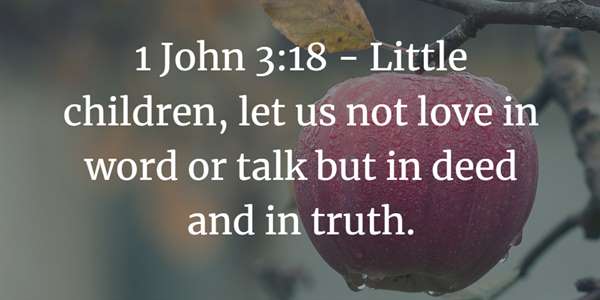
            That is definitely not what the apostle John has in mind, here in his letter to scattered believers in Christ. Let’s get right into it: John hits us all with a one-two punch. He says in chapter 3, “This is how we know what love is: Jesus Christ laid down his life for us. And we ought to lay down our lives for our brothers and sisters.”

            Wow! That is a really long way from some pretty, nice idea of hearts and flowers and Valentine’s Day cards, isn’t it? John was not playing around. He was very serious about his Lord Jesus and Jesus’s love. The amazing, sacrificial love of Jesus has been all-important to John for over fifty years at this point.  The love of Jesus is so important to John, that John gets banished to prison, in isolation on a tiny island in the Mediterranean Sea because of it.

            Let’s go back to the idea of hearts. Sure, when we see hearts on a Valentine’s Day card, that can be cute and sweet. But, it isn’t at all the idea that John is thinking of here!

When you and I really mean something, we often say we put our heart into it. “That’s how we indicate something is really important. That’s how we show that we are really committed, really involved, really connected. Right? Put your heart into it. When we really mean it, our hearts are in it. When they aren’t, when we are half-hearted or worse, then nothing happens. Or nothing of significance anyway.” [1]

            I suspect the apostle John thought about the love of Jesus a lot. I also suspect he really put his heart into communicating the message of the love of Jesus, too!

We are celebrating Shepherd Sunday this fourth week of Easter, with our Scripture readings this week focusing on the Shepherd. Our Gospel reading is from John 10, where Jesus portrays Himself as the Good Shepherd. The psalm for this Sunday is that wonderful psalm describing the Lord as our loving Shepherd – caring for all of the sheep. (even the sheep you and I don’t particularly like)

            As we consider the Shepherd theme, the Gospel of John tells us the Shepherd lays down His life for the sheep. Here in 1 John 3, the elderly John tells us more about that sacrificial love: “This is how we know what love is: Jesus Christ laid down his life for us. And we ought to lay down our lives for our brothers and sisters.”   

            The next verse is important, as well! “If anyone has material possessions and sees a brother or sister in need but has no pity on them, how can the love of God be in that person?” This cautionary word from John is another one-two punch, for sure, and it really hits home! I can tell you that I feel it deep down in my soul. I wonder if you do, too?

“If we have all we need and see another person who has nothing but do not share what we have, we cannot say we love God.  Love is not what we feel, but what we do.  God wants us to love each other with actions.” [2] God insists that we love one another not only with our words, but with our deeds – our actions – and to put our whole hearts into it, too!

            Things do not always go smoothly or lovingly, however. Some people are just half-hearted, or even less. “The problem is, we have learned to guard our feelings; we have learned to change the channel when the pictures of the hungry children appear. We have learned to turn the page when the paper is full of need and want and brokenness. “Nothing to do with me,” we think to ourselves. We have shut off our emotions; we have closed our bowels, says John.” [3]

            Who remembers several years ago, when our Church Council got together after a Council meeting and packed some disaster response kits for people affected by flooding downstate, here in Illinois? That was loving in word and deed! That was loving each other with actions! Helping others, full of need and want and brokenness, no matter what.

            Certainly, John is asking us – all of us – to do something! Actions big or small, it doesn’t matter. Spend your money wisely, where it makes a difference. Get involved! Write or call your town or state representative when you feel strongly about a local issue. What about hunger, poverty, and need? Our church supports our local food pantry, and the Salvation Army’s outreach to the homeless community in the Forest Preserves. Be sure you support these outreaches, too!

Each of us can make a difference, one person at a time, one prayer at a time, one action at a time.  John wants each of us to put our heart into it! Love truly, in action and in truth. Alleluia, amen!   

@chaplaineliza

(Suggestion: visit me at my other blogs: matterofprayer: A Year of Everyday Prayers. and  A Year of Being Kind . Thanks!


[1] https://www.umcdiscipleship.org/worship-planning/how-shall-we-live/fourth-sunday-of-easter-year-b-lectionary-planning-notes/fourth-sunday-of-easter-year-b-preaching-notes

[2] http://worshipingwithchildren.blogspot.com/2015/03/year-b-fourth-sunday-of-easter-april-26.html

[3] https://www.umcdiscipleship.org/worship-planning/how-shall-we-live/fourth-sunday-of-easter-year-b-lectionary-planning-notes/fourth-sunday-of-easter-year-b-preaching-notes

Unknown's avatar

Are We Doubters, Too?

“Are We Doubters, Too?”

John 20:19-31 (20:29) – April 7, 2024

            Seeing is believing! Or . . . is it?

            I wonder what things come to mind when I mention the phrase, “Seeing is believing”? Or even, “I won’t believe it until I see it!” Sometimes, people can be really doubtful, even really skeptical about things. I can just imagine several people I know folding their arms across their chests and saying, “Unless you show me . . . “

            In the gospel account we read today, from John 20, the disciple Thomas had just that reaction. After the Resurrection, the first time Jesus came to the disciples, Thomas was not there. We’re not told why, simply that he wasn’t there. Maybe he was scared, maybe he was away for the day, or out of town. Maybe he was sick. We just aren’t told why he wasn’t there.

            The ‘why’ is not the important part. The fact that Thomas wasn’t present the first time is. Thomas had doubts. Sincere doubts. Truth to tell, the other disciples’ story was a little farfetched. I mean, how many people have you known who came back from the dead, and walked through walls into a locked room?

            I wonder. I wonder if Thomas’ reaction strikes a chord with anyone here today. How many of us today are like Thomas? Doubting that Jesus has risen indeed from the dead? Or, completely missing Jesus, and doubting that Jesus is even here at all, today?

            Let’s think some more about Thomas and his reaction. Thomas not only doubted, he wanted concrete proof. Tangible proof, proof he could touch and feel and handle. Thomas wanted to put his hands in the nail marks on Jesus’ hands. That’s pretty concrete. But – what about you and me? Do we want concrete proof that God is working in our lives right now? Do we want concrete proof that Jesus rose from the dead and is present with us, today?

            The second time the risen Jesus appeared to the disciples, it was also in a locked room. And, this time, Thomas was present. Let’s paint the picture. The disciples are huddled together in the Upper Room, still frightened of the Jewish leaders. It’s only been a little over a week since their Rabbi Jesus had died on the cross, after all! I’d imagine they would be shaking in their shoes! Then, the risen Jesus suddenly appears in the midst of them all, Thomas included. What do you think would be going through Thomas’s mind right about now? His Rabbi, his Lord, back from the dead, right in front of him!

            Let’s go further as we imagine Thomas’s face, and imagine what he is thinking and feeling as the risen Lord Jesus invites Thomas to touch Him. Then, we look around at the faces of the other disciples and try to figure out what they are thinking and feeling, too! The commentator Carolyn Brown says that she suspects the disciples “are glad Thomas asked his question because they really wanted to know the same thing but were afraid to ask.  It does take courage to ask some questions and Thomas had it.” [1]

            I think that “doubting Thomas” is not the most accurate nickname for this earnest disciple. Perhaps, maybe, just maybe, we ought to think of Thomas as courageous Thomas. Because, it takes real courage to ask out loud some of those questions Thomas wanted the answers to. After all, he was a real “show-me!” kind of guy, and not in a mean way, either. A healthy skepticism is just that – healthy and curious.

            I wonder whether our doubts and fears about Jesus and the Resurrection can be as easily taken care of, as Thomas’s? What if our problem is less doubt, and more fear? Fear of being misunderstood by others, fear of looking foolish, fear of falling flat on our face? Perhaps, some kind of nebulous fear that you and I do not even understand, but we know is deep down inside of us?

            Let us return to Thomas. When he sees our risen Lord Jesus in the flesh – the resurrected body – he suddenly believes that everything the disciples were telling him about the resurrected Jesus is true! And, “he makes the climactic confession of John’s Gospel, addressing Jesus as, ‘My Lord and my God!’” When Thomas saw Jesus with his own eyes, that was enough for him. Enough to make the declaration of divinity directly to our risen Lord! Remember the confession made in the first verse of John chapter 1: “In the beginning was the Word, and the Word was with God, and the Word was God.” [2]

            Sure, some healthy curiosity is just that – curiosity. And, some people are naturally skeptical. We know God can handle that! After all, that is the way God constructed many people. Our Lord Jesus is not surprised by any of this. He won’t get mad, or storm out, all upset. No! He was warm and accepting of Thomas and his “show-me” attitude, and even answered him right back! And, what did Thomas do? What did Thomas say to Jesus? “My Lord and my God!”

            As commentator David Lose tells us, Thomas offers those same readers a model for faithful response to an encounter with Jesus – belief, belief that leads to confession. All through the Gospel of John we see a variety of responses to Jesus. The confusion of Nicodemus the religious teacher, the trust of the Samaritan women, the stubborn fidelity of the man born blind, the disdain of Pilate, the denial of Peter. [3] John saves the best for last: he shows us the radical, bold confession of Thomas, sure and certain at last.

            Have there been long moments in your life where you have doubted God’s presence? Have you ever felt lost and alone, almost like the way the disciples felt right after the Crucifixion? We do not need to fear or be alone, because Jesus has promised never to leave us nor forsake us. We can embrace our flickering faith with the same words of Thomas: “My Lord and my God!”          

So, the Gospel of John helps us to believe, too. This Gospel was not only written to bear witness so long ago, in the first century, months and years after Jesus was raised from the dead. This Gospel was also written for the many generations which have come to believe in Jesus Christ throughout the centuries. That includes us, too.

Even though today we may have doubts, and fears, and unbelief, and wonder whether, and why, or even why not, Jesus comes to us in our doubts and fears and unbelief. Our Lord comes to us with reassurance and open arms and says “Do not doubt, but believe!” And our faithful, bold response to Jesus? “My Lord and my God!” Alleluia, amen!

@chaplaineliza

(Suggestion: visit me at my other blogs: matterofprayer: A Year of Everyday Prayers. and  A Year of Being Kind . Thanks!


[1] http://worshipingwithchildren.blogspot.com/2015/02/year-b-second-sunday-of-easter-april-12.html

[2] https://www.workingpreacher.org/dear-working-preacher/its-not-about-thomas  

[3] Ibid.