Unknown's avatar

We See Your Salvation

“We See Your Salvation”

Luke 2-30 Simeon words

Luke 2:22-40 (2:30) – December 31, 2017

Many of us had a marvelous celebration last week for the Christmas holidays. Gatherings with extended family and friends, special parties and programs, holiday concerts and pageants, often ending with the caroling around the fireplace. And the stockings hung with care, and mounds of gaily wrapped presents around the Christmas tree.

But, too soon after the grand holiday, the main event, and the wonderful days of celebrations, everything is ended. The crumpled wrapping paper is in the trash, the many leftovers packed in the refrigerator. The unexpected visitors have gone home, and we have returned back to the plain old mundane, ordinary routine. What happens now? What next?

Mary and Joseph might have been wondering a similar thing. After the marvelous birth announcement given to the shepherds by the chorus of the heavenly hosts, and after the impromptu visit by the shepherds and others to the newborn Baby in Bethlehem, what happens now? What next? Great question! What does happen?

Reading from the second chapter of Luke: “22 When the time came for the purification rites required by the Law of Moses, Joseph and Mary took the child to Jerusalem to present him to the Lord 23 (as it is written in the Law of the Lord, “Every firstborn male is to be consecrated to the Lord”), 24 and to offer a sacrifice in keeping with what is said in the Law of the Lord: “a pair of doves or two young pigeons.”

We are told that Mary recuperates and takes the time prescribed for mothers of a first-born son from Leviticus chapter 12. Then, she and Joseph bring Jesus up to the Temple for the Child’s dedication. The Mosaic Law Code is very specific about what needs to be done for a first-born son: forty days after the birth, the parents of the newborn son take their Child to present Him before the Lord.

Now that the grand celebration of the birth is over, Mary and Joseph get down to the ordinary, everyday matter of living. The main way they do that is to follow the laws and rules prescribed for them in the Mosaic Law Code. The laws and rituals of the Jewish people were ancestral traditions. It’s pointed out that these “are a reminder to [the parents] that Jesus is born in the context of the covenant established between God and the people Israel.” [1]

The Jewish people were supposed to be sensitive to the Holy God, and this rite of purification in the Temple is a reminder of that relationship to God. “One way a woman encounters the holy is through the miracle of giving birth. It is a holiness which belongs to and describes the natural rhythm of life.” [2]

Our Gospel writer Luke breaks in right here with a new figure in his narrative. A cameo appearance by a guest star, if you think of things in terms of television or movies, in the birth narrative of Luke chapter 2. We meet the older man Simeon, and we find out about his backstory.

25 Now there was a man in Jerusalem called Simeon, who was righteous and devout. He was waiting for the consolation of Israel, and the Holy Spirit was on him. 26 It had been revealed to him by the Holy Spirit that he would not die before he had seen the Lord’s Messiah. 27 Moved by the Spirit, he went into the temple courts. When the parents brought in the child Jesus to do for Him what the custom of the Law required, 28 Simeon took Him in his arms and praised God.”

It is similar to what we covered in the weeks of Advent this year. In the midweek bible study during December, we studied the genealogy of Jesus from Matthew chapter 1. Pretty dry stuff, all of those names, and all of those “begats.” So-and-so the son of the other guy, the grandson of such-and-such. Genealogies were extremely important to the Jewish people, because keeping an orderly and exact account of who was related to whom helped cement the lines of ancestry and inheritance.

Except—the genealogy of Jesus had some surprises. Four women were mentioned in Matthew’s account. We studied the backstory of each of those four women, and found out exactly why each one was included in the genealogy of Jesus. In Luke’s birth narrative, he tells us some backstory, so we can find out exactly what the godly man Simeon is doing here.

Luke tells us that Simeon is called “just and devout,” and was waiting for the dawning of the kingdom of God – “the consolation of Israel”. The Holy Spirit had revealed to him that he would not die until he saw the Messiah. He now sees the fulfillment of this promise. In the power of the Spirit, he sings a song of praise and utters a prophecy concerning Jesus. [3]

What a marvelous expression of faith and trust in God comes from Simeon. He sings to God: “29 “Sovereign Lord, as You have promised, You may now dismiss Your servant in peace.
30 For my eyes have seen Your salvation, 31 which You have prepared in the sight of all nations:
32 a light for revelation to the Gentiles, and the glory of Your people Israel.” 33 The child’s father and mother marveled at what was said about Him.”

Sizeable words spoken about someone so small. Here we have the baby Jesus, and His mother and adoptive father did marvel at such weighty words!

However, Simeon is not finished yet. He prophecies after this wonderful expression of song. “34 Then Simeon blessed them and said to Mary, His mother: “This child is destined to cause the falling and rising of many in Israel, and to be a sign that will be spoken against, 35 so that the thoughts of many hearts will be revealed. And a sword will pierce your own soul too.”

Serious, solemn words, indeed. Simeon has waited for his whole life for this very moment. After years and decades of expectation and longing, the Messiah has finally arrived. What is more, Simeon spontaneously blesses Mary and Joseph, too, along with Jesus.

Simeon was right there, at the beginning, with Jesus as a baby. He gave witness that Jesus was as foretold, by many prophets throughout the Hebrew Scriptures. Jesus had the greatest future, here at the beginning of the Greatest Story Ever Told. “We are left in anticipation to watch as the Child grows strong, filled with wisdom and blessed with the favor of God.” [4]

Where are each of us in our understanding of Emmanuel, God being with us? Is this narrative from Luke just a fairy story, suitable only to be shared with children every December at the holidays? Or, is it more than that? Have we heard the Good News from the angels and are waiting for more assurance, more evidence that the Messiah has come to earth?

The faithful servant of God, Simeon, was waiting at the Temple for years.  He was waiting and hoping for the Messiah, the chosen One of Israel. When we come to church today, do we expect to have an encounter with the Messiah? We fall on our knees with those who came to worship. Jesus has his arms open wide to welcome all who would come to Him. Come to Jesus, today. Amen.

[1] http://www.workingpreacher.org/preaching.aspx?commentary_id=207

Commentary, Luke 2:22-40, Holly Hearon, Preaching This Week, WorkingPreacher.org, 2008. 

[2] Ibid.

[3] http://www.lectionarystudies.com/studyg/christmas1bg.html

“Jesus Grew in Wisdom and Stature,” Rev. Bryan Findlayson, Lectionary Bible Studies and Sermons, Pumpkin Cottage Ministry Resources.  

[4] http://www.workingpreacher.org/preaching.aspx?commentary_id=207

Commentary, Luke 2:22-40, Holly Hearon, Preaching This Week, WorkingPreacher.org, 2008

Unknown's avatar

The Christmas Story

“The Christmas Story”

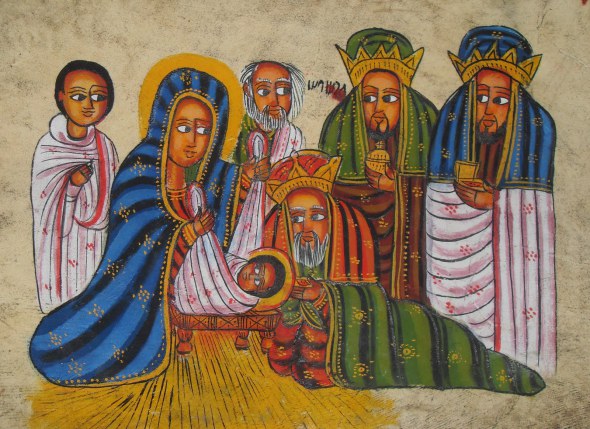
zp_ethiopian-nativity-scene-painted-in-a-traditional-style

John 1:1-18 (1:14) – Christmas Eve night, December 24, 2017

The holiday season is coming to a grand crescendo. Tonight is Christmas Eve. Tonight is a wonderful service at our church, and lots of warm and fuzzy feelings. Christmas carols sung, special music at the service, candles lit, closing with “Silent Night.” Remembering the Light that has come into the world at Christmas. Glory, hallelujah!

Yes, all of those things, and more, are wonderful. Special. One of a kind, even.

But, Father Henri Nouwen’s words bring me up short. “Somehow I realized that songs, music, good feelings, beautiful liturgies, nice presents, big dinners, and many sweet words do not make Christmas.” [1]

So, what does make Christmas?

I feel like Charlie Brown at the Christmas pageant rehearsal. “Isn’t there anyone who knows what Christmas is all about?” I know Linus responds, “Sure, Charlie Brown. I can tell you what Christmas is all about.” He then recounts the Nativity narrative from Luke 2. Except—it doesn’t penetrate into Charlie Brown’s head. Yet.

The Light of all the world—of all the universe—born as a Baby in Bethlehem? The cosmic Word, the divine Logos, made human flesh as a Baby? That just doesn’t make sense to me, either, sometimes. Sometimes, it can’t penetrate into my head, either.

There is a disconnect here. I know I have difficulty believing in the miracle of the Incarnation—sometimes! But, God wanted to bridge that cosmic chasm between divinity and humanity. That is one huge reason why God became human, why God divested Godself of all divinity and became a tiny baby named Jesus.

Can we possibly listen to Linus reading the Nativity narrative from Luke chapter 2, and not feel the specialness of this heavenly visitation? As the lights come down on the stage and the spotlight shines on the narrator, is there anyone here who cannot be moved by the marvelous cry of the shepherds, telling everyone around Bethlehem about this super special Baby they found that night?

How unimaginable—that the God who created heaven and earth, who holds the universe between the span of the fingers on one hand, could empty Godself of all God-ness. How amazing. How miraculous. Jesus came to earth to journey with us, to walk and talk and sit by our sides. So we wouldn’t ever be separated from God. Never be alone again.

I realize that “Christmas is believing that the salvation of the world is God’s work and not mine….it is into this broken world that a child is born who is called Son of the Most High, Prince of Peace, Savior.” [2] Human feelings and sentiment only partly come into the equation. It is, in fact, something far beyond all feeling and emotion, as Fr. Nouwen says.

Yet, God wants all of me. God wants all of us. God wants to save all parts of us. Not just emotions and feelings. Not just our intellect and brain. Intellect, physicality, emotions, and feelings, and all. The salvation of the world is, indeed, God’s doing.

As Christmas comes again, we can say “Thank God.” Or is it, “Thank You, God.” Thank God for the birth of Jesus. Thank God for loving us so much that You sent Your Son.

Thank You, God, for sending Jesus, the Word made flesh. Sometimes, a quiet “Thank You” speaks volumes.


[1] Advent and Christmas: Wisdom from Henri J. M. Nouwen (Linguori, Missouri: Redemptorist Pastoral Publications, 2004), 50.

[2] Ibid.

@chaplaineliza

(Suggestion: visit me at my regular blog for 2017: matterofprayer: A Year of Everyday Prayers. #PursuePEACE – and my other blog,  A Year of Being Kind . Thanks!)

Unknown's avatar

My Soul Magnifies the Lord!

“My Soul Magnifies the Lord!”

Luke 1-46 Mary Magnificat, colors

Luke 1:46-55 (1:46) – December 24, 2017

People have been writing songs about the Virgin Mary for centuries. Songs of praise, songs of worship, songs honoring God, and lifting up Mary for saying “yes” to God. Christmas carols might be the first thing that come to mind—but I am also thinking of music from centuries past. From the familiar first part of Handel’s Messiah, to the various settings of the Magnificat, with lyrics from the first chapter of Luke—our Gospel reading for this morning.

Some Protestants might not be as familiar with the Virgin Mary as many Catholics and Orthodox Christians. Mary is held in extremely high esteem in many denominations and faith traditions throughout the world, and for excellent reasons. I honor her greatly.

Did you know that Mary—an unwed teenager from an oppressed people-group in an occupied country under crushing Roman rule—was also a radical? A subversive? Was plotting to overthrow the existing oppressive government and replace it with the rule of God?

What surprising, even shocking things to say about the sweet, innocent Virgin Mary! Everyone associates her with travel to Bethlehem while nine months pregnant, and needing to deliver the infant Jesus in a stable, because there was no room for them in the inn.

That Mary? Radical? Subversive? Yes.

Let’s back up. Go back to last week’s sermon, where the angel Gabriel surprises Mary and tells her God would like for her to be the mother of the Messiah.

But, what about Mary’s opinion? For a teenager, Mary must have been mature and sensible. She acknowledges the angel’s statement and God’s will. Mary says “Yes, I see it all now: I’m the Lord’s maid, ready to serve. Let it be with me just as you say.”

Sure, the wonderful classical settings of the Magnificat were often sung in a foreign language, like Latin. Or, in text from the King James version of the Bible, full of “thee’s” and “thou’s” and all manner of archaic words. Listen to the first part of her Magnificat, as translated in the modern version by Eugene Peterson, “The Message.”

“I’m bursting with God-news; I’m dancing the song of my Savior God. God took one good look at me, and look what happened—I’m the most fortunate woman on earth! What God has done for me will never be forgotten, the God whose very name is holy, set apart from all others. His mercy flows in wave after wave on those who are in awe before Him.”

One well-known depiction of the Virgin Mary is one that is meek, docile, sweet, and not raising a fuss at all. But, wait a moment. Do we realize what Mary is going to sing next? How revolutionary were many of the statements in her song?

“Even more importantly, Mary’s song is an overture to the Gospel of Luke as a whole. Mary’s lyrics set the tone for Jesus’s radical and controversial ministry that is to come:

You have shown strength with your arm;

You have scattered the proud in the thoughts of their hearts.

You have brought down the powerful from their thrones, and lifted up the lowly;

You have filled the hungry with good things, and sent the rich away empty.

“In contrast, the Christmas season leaves too many still hungry, and too many even further in debt.” [1]

Do you hear what radical things Mary is saying? If these lyrics of her song were more well-known, would our understanding of Mary be changed? Here Mary is advocating social change, rescuing victims—neglected women, forgotten elders and children, abused strangers and refugees—from being trodden underfoot, even ground under the heel of bragging, bluffing tyrants and braggarts. Turning all society as it was in her day—and ours—upside down.

What subversive idea is our revolutionary Mary advocating now? Feeding the starving? Giving the poor a banquet? Turning the unfeeling, callous rich people out into the cold? Yes, these radical words are the words found in Luke chapter 1, before we rush on to the narrative of the birth of the Baby in Bethlehem from Luke 2.

Mary was singing two thousand years ago. But, things haven’t changed much. Political leaders are still calling one another names while people starve. “Refugees struggle to find a home in a world with increasingly closed doors. The poor sleep under bridges while the rich build homes with rooms they will never need. And Abraham’s descendants—Jews, Christians, and Muslims—continue to fight over the lands where God’s messengers first spoke to all humanity.”[2]

As the Rev. Dr. Carl Gregg stated in his article on the radical nature of Mary’s Magnificat, “The Christmas story has, over time, too frequently come to have a sense of ‘preciousness,’ of saccharine sentimentality, of almost sickening sweetness as if you had eaten all the candy in your stocking all at once on Christmas morning. When this super-sweetening of the story happens, we can miss the radicality of the claim that God is found, not as the royal child of a queen in a palace, but as the son of an unwed teenager, born in a stable in a religiously-conservative small town.” [3]

Sure, we can see this saccharine sweetness of Luke chapter 2, once it is pointed out to us. But, in reality, life was not so pretty for teenaged Mary, pregnant without the benefit of marriage.

We are still in the season of Advent, the season of waiting. Today is the fourth Sunday of Advent. We still watch as Joseph and his greatly pregnant wife Mary walk one hundred miles to the town of Joseph’s ancestors (and Mary’s, too).

We still wait for the baby Jesus to be born in Bethlehem. We still hold our collective breath with all the rest of creation as we wait—and wait.

Luke, the writer of our Gospel, has a different take on things. Yes, he waits, too. But he waits with songs. Mary’s song—Mary’s Magnificat is a great example.

As Dr. David Lose says in his commentary, “Have you ever noticed how often Luke employs songs in the first several chapters of his story about Jesus? Mary sings when she is greeted by her cousin Elizabeth. Zechariah sings when his son John is born and his tongue is finally loosened. The angels sing of peace and goodwill when they share their “good news of great joy” with the shepherds. And Simeon sings his song of farewell once he has seen God’s promises to Israel kept in the Christ child.” [4]

These songs are deep expressions of the heart and soul to God and to the listeners—including us. These songs are hymns, psalms, songs of praise and exaltation, and even songs of resistance. Mary combined all of these into her song.

I’d like to close with a portion of a modern song written to Mary, asking her if she knew her infant son would truly be the Messiah, the Son of God. This song was written by Mark Lowry, and asks: “Mary, did you know that your baby boy is Lord of all creation? Mary, did you know that your baby boy would one day rule the nations?
Did you know that your baby boy is heaven’s perfect Lamb?
This sleeping child you’re holding is the great I am!

Mary, did you know? Mary, did you know?”  [5]

We are still waiting…


[1] http://www.patheos.com/blogs/carlgregg/2011/12/magnificat-learning-to-sing-mary%E2%80%99s-song-a-progressive-christian-lectionary-commentary-on-luke-146-55/

“Magnificat! Learning to Sing Mary’s Song,” Carl Gregg, Patheos, 2011.

[2] From An Advent Journey: Devotional Guide, Week Four. This curriculum comes from Illustrated Children’s Ministry.

[3] http://www.patheos.com/blogs/carlgregg/2011/12/magnificat-learning-to-sing-mary%E2%80%99s-song-a-progressive-christian-lectionary-commentary-on-luke-146-55/

“Magnificat! Learning to Sing Mary’s Song,” Carl Gregg, Patheos, 2011.

[4] http://www.davidlose.net/2015/12/advent-4-c-singing-as-an-act-of-resistance/

“Singing as an Act of Resistance,” David Lose, …in the Meantime, 2015.

[5] http://www.lyricsmode.com/lyrics/m/mark_lowry/mary_did_you_know.html

Mary Did You Know lyrics

(A heartfelt thank you to An Advent Journey: Devotional Guide. Some of these sermon ideas and thoughts came directly from this guide.  I appreciate this intergenerational curriculum, which is the basis for my Advent sermon series. This curriculum comes from Illustrated Children’s Ministry. Thanks so much for such great ideas!)

@chaplaineliza

(Suggestion: visit me at my regular blog for 2017: matterofprayer: A Year of Everyday Prayers. #PursuePEACE – and my other blog,  A Year of Being Kind . Thanks!)

Unknown's avatar

Do Not Be Afraid!

“Do Not Be Afraid!”

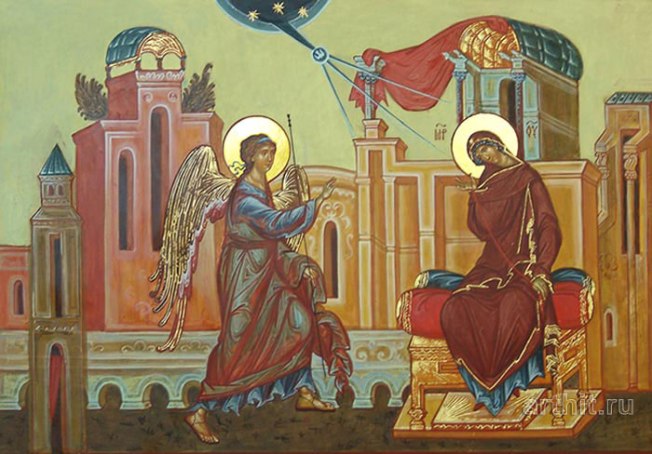
Luke 1-38 annunciation icon

Luke 1:26-38 (1:30) – December 17, 2017

Pictures of Christmas in the church bring to mind all sorts of things: Joseph and Mary entering a crowded Bethlehem, shepherds abiding in the fields, pictures of the Nativity scene. All manner of different pictures. But—we still haven’t gotten to Christmas. Christmas has not arrived yet. We are still in the waiting period; we are still in the third week of Advent.

Our Gospel reading—and presentation this morning—comes to us from the first chapter of the Gospel of Luke. We look on with Mary, the teenaged girl engaged to Joseph, when she has a heavenly visitation. This Annunciation, or visit from the angel Gabriel, has been the subject of paintings, stained glass windows, mosaics, and other forms of artwork for centuries. About as long as the Gospel of Luke has been written down.

In many of these paintings, the teenaged girl Mary often looks relaxed and comfortable. She’s holding a book, she’s sewing, she’s arranging flowers, she is hardly startled at all. [1] Consider this situation another way. What are the first words out of the angel Gabriel’s mouth? “Do not be afraid, Mary!”

Look at another picture of Mary and the angel Gabriel, in the modern-day image of the Annunciation painted by Benedictine priest, John Giuliani. “In his rendition of the Annunciation, Have No Fear, Father Giuliani depicts Gabriel coming down from heaven, feet first, aimed right at Mary’s face, with a stem of lilies outstretched like a sword. For her part, Mary nearly falls out of her chair as she shields her face from Gabriel’s descent. The chair is pushed back on only two legs, swept over by the force of the messenger’s entry into time. It’s not as pretty a picture as the ones on Christmas cards, but it might be more accurate.” [2]

Before we go further into this Gospel reading, we need to consider Mary. A teenaged girl, can we even consider how frightened Mary must have been after she was greeted this way by a heavenly visitor, an angel? I am not sure, but I suspect I would have been at least as frightened as Mary at the totally unexpected visit of the angel.  How do you think you might feel if an angel appeared to you?

The separate branches of the Christian faith think of Mary in different ways.

I grew up on the northwest side of Chicago. For me, surrounded as I was by Roman Catholics, I knew that Catholics considered the Virgin Mary to be an extra-special woman. It was not until years later that I learned exactly how: “for Roman Catholics, Mary is a Co-Redeemer with Christ whose job description is to act as a go-between with us sinners on earth and God in heaven. During the Middle Ages, Mary became important in the prayer lives of the common folk, as one who could empathize with their plight and mediate forgiveness. In the councils of the Church through the centuries, she gradually gained supernatural qualities.” [3]

Again, we are getting way ahead of ourselves! Here in Luke chapter one, Mary is still a teenager. The angel Gabriel has just left. She travels to see her older cousin, and now we come to another great picture from the life of Mary. We have the Visitation of the Virgin Mary with her cousin Elizabeth, another picture that has been painted countless times throughout the centuries.

Women are so often overlooked, when we consider the Bible. In both the Old and New Testaments, as well as in general society, women are forgotten, ignored, shunted aside, and treated as second-class citizens. That is, unless we are reading the Gospel of Luke. Luke lifts up the characters of Mary and Elizabeth, and provides a memorable exchange.

“God is already at work to overturn the world’s structures and expectations.” [4]

At our neighboring church here in Morton Grove, St. Martha’s Catholic Church and Shrine of All Saints, we would discover something else about Mary—and about her cousin Elizabeth, and about many women of many periods and cultures. We would see that in many pictures at St. Martha’s Church, each woman has a covering on her head. Similar to certain cultural standards of dress today, many religious women cover their heads. Like religious Christian women today—like many Catholic nuns, and like many Orthodox women all over the world. We have religious Jewish women who cover—like observant married Jewish women. And, we know some observant Muslim women today, here in our area as well as in other places, cover their heads. They wear hijab. Head coverings. Just like Mary and Elizabeth did.

Returning to the many pictures and other artworks that portray the Virgin Mary, many of them show Mary interrupted from reading. A book is something that has been in pictures of Mary for centuries. Mary remembered as a literate young woman.

What a wonderful thing to tell our children and our children’s children! We have it on good authority that Mary could, indeed, read. Many Jewish women of that time could, unlike their contemporaries in other places. What a wonderful opportunity for the young Jesus to have both an earthly mother and father who were literate and able to teach their children.

Is there anything better that what Gabriel said?  The angel “assured Mary that God’s Holy Spirit would be with her. Even though she was frightened, Gabriel promised that God would take care of Mary. Mary learned from the Bible about God’s love, so she knew that she could trust the words of the angel when he said “Don’t be afraid!” [5]

Mary’s cousin Elizabeth adds some intelligent and insightful comments.  “When Elizabeth says, ‘Blessed is she who believed that there would be a fulfillment of what was spoken to her by the Lord,’ she implicitly contrasts Mary’s trust in God’s power and promise with her own husband Zechariah’s skeptical questioning.” [6]

The high-powered priest Zechariah was skeptical when the angel came to him, a few months before. He asked for proof that the angel’s word was true. In contrast, Mary asked for an explanation of what was going to happen to her, and then gave her willing consent. Zechariah the religious professional doubted God, but Mary the girl from a poor family believed what the angel Gabriel said. “Her trust in God’s word opened the door for God to bless her and to bless the whole world through her. Elizabeth celebrates Mary’s willingness to say “yes” to God.[7]

We know God’s call is not always convenient. And sometimes, God asks us to set aside everything we think we know about reality in order to accomplish the Divine agenda. Such was the case with Mary. Thankfully, we know the end of the story. All of us can listen to the angel when he tells us “Do not be afraid!” Those are good words for all of us to take to heart.


[1] From An Advent Journey: Devotional Guide, Week Three. This curriculum comes from Illustrated Children’s Ministry.

[2] From An Advent Journey: Devotional Guide, Week Three. This curriculum comes from Illustrated Children’s Ministry.

[3] http://www.patheos.com/progressive-christian/mary-reluctant-prophet-alyce-mckenzie-12-17-2012.html  “Mary, the Reluctant Prophet,” Alyce M. McKenzie, Edgy Exegesis, 2012.

[4] http://www.workingpreacher.org/preaching.aspx?commentary_id=2723  Judith Jones

[5] From An Advent Journey: Devotional Guide, Week Three. This curriculum comes from Illustrated Children’s Ministry.

[6] Ibid.

[7] http://www.workingpreacher.org/preaching.aspx?commentary_id=2723  Judith Jones


(A heartfelt thank you to An Advent Journey: Devotional Guide. Some of these sermon ideas and thoughts came directly from this guide.  I appreciate this intergenerational curriculum, which is the basis for my Advent sermon series. This curriculum comes from Illustrated Children’s Ministry. Thanks so much for such great ideas!)

@chaplaineliza

(Suggestion: visit me at my regular blog for 2017: matterofprayer: A Year of Everyday Prayers. #PursuePEACE – and my other blog,  A Year of Being Kind . Thanks!)

Unknown's avatar

Some Children See Him

“Some Children See Him”

peru-nativity

Luke 2:8-15 – December 24, 2016

So many houses and apartments are decorated for the season at this time of year. Colorful lights and decorations indoors and out, shining Christmas trees, special dishes and fancy tablecloths. Plus, some families have a Nativity scene in a special place, whether under the Christmas tree or placed in an extra special location. Here at St. Luke’s Church, we have the Nativity scene with some other lovely Christmas decorations, in the narthex of our church.

The Christmas narrative from the Gospel of Luke is so familiar. Mary and Joseph enrolling for a census in Joseph’s ancestral town. Since it was the time of the census, the town was crowded to bursting. Mary was greatly pregnant, and while she was in Bethlehem, labor pains started. She and Joseph found shelter in a stable, and put her newborn baby in a feeding trough, a manger.

This evening, we are going to focus on the shepherds abiding in their fields, and the angel alerting them about the birth of this super-special Baby. Starting at verse 10 of Luke 2: “10 But the angel said to them, ‘Do not be afraid; for see—I am bringing you good news of great joy for all the people: 11 to you is born this day in the city of David a Savior, who is the Messiah,[a] the Lord.’” The shepherds quickly go into town and find the Baby, and worship and adore Him.

Yes, the Nativity scene is a familiar way of retelling this story. But—how did Nativity scenes begin? It was in 1223. “According to St. Bonaventure’s biography, St. Francis of Assisi got permission from Pope Honorious III to set up a manger with hay and two live animals—an ox and an ass—in a cave in the Italian village of Grecio. He then invited the villagers to come gaze upon the scene while he preached about ‘the babe of Bethlehem.’ (Francis was supposedly so overcome by emotion that he couldn’t say ‘Jesus.’)” [1]

However, that first Nativity was located in Italy, during the 1200’s. The practice of Nativity scenes, pictures and photos has certainly spread from there, all over the world. Do you remember acting in Christmas Nativity scenes? You, or your children? Or grandchildren?

When my children were small, one of the first Christmas decorations I’d take out of the box would be our little Nativity scene. The little statues were all children, and it was intended specifically for the young. I would tell and re-tell the Christmas story again and again. My younger two children would love to play with the figures, spending a good long time with those inexpensive yet meaningful little figures.

My personal Nativity scene, the one my children played with, has white children, every one. I had not thought about this when I bought the set of figures, more than twenty years ago. Even though my children were part of a multi-ethnic, multi-cultural school system, we still had an all-white Nativity set.

Let’s hear again the words of the angel to the shepherds, that Christmas night: “the angel said to them, ‘Do not be afraid; for see—I am bringing you good news of great joy for all the people.” Not just the people in Italy, where St. Francis was. Not just the people in Europe, or North America. Good news of great joy for all the people.

Think about Edith, our church’s pen pal from Kampala, Uganda. Almost everyone she sees on a regular day happens to be African, and dark-skinned. She has seen lighter-skinned people before, but most everyone she sees and interacts with is darker-skinned. What would a Nativity scene at Edith’s church in Kampala look like? (I don’t know. I can ask her!)

I love to go to a fair trade store in Evanston, a not-for-profit shop that sells goods from all over the world, called 10,000 Villages. This store has lots of different kinds of Christmas decorations, especially different kinds of Nativity scenes. Nativities from Mexico, South America, all over Africa, India, southeast Asia, and the Middle East.

I bought this Ethiopian Nativity puzzle several years ago from a fair trade shop. I love the way the figures almost come alive, with their bright colors. Is this vibrant Nativity a welcome sight for you, or is it a bit distracting? Perhaps we might be encouraged to meditate on something a little different? Perhaps we can use an alternative, ethnic kind of manger scene, or different- culture picture of the Mother and Child, this year? Certainly something to think about.

Remember the words of the angel of the Lord: “Do not be afraid; for see—I am bringing you good news of great joy for all the people.” We can praise God! God did not send good news of great joy to just a few people in the world, or even some of the world’s people. God sent good news of great joy to all the people of the world.

The angel has come to all cultures, all ethnicities, all people, everywhere.

That is not only GOOD news, that is GREAT news. Good news of great joy! We can truly praise God with the angel hosts, saying, “Glory to God in the highest heaven,
and on earth peace among those whom God favors!” Alleluia, amen!

[1] http://www.smithsonianmag.com/smart-news/the-first-nativity-scene-was-created-in-1223-161485505/

@chaplaineliza

(Suggestion: visit me at my regular blog for 2016: matterofprayer: A Year of Everyday Prayers. #PursuePEACE – and my other blog,  A Year of Being Kind . Thanks!)

Unknown's avatar

Until He Comes

“Until He Comes”


1-cor-11-26-until-he-comes

(My friend Pastor Gordon preached at St. Luke’s Church this morning. Here is a shorter meditation I preached, from the first week of December 2012.)

1 Corinthians 11:26 – December 7, 2012

“It’s the most wonderful time of the year!” This popular Christmas song blares from PA systems at malls, restaurants and grocery stores across the United States at this time of year. This song talks about caroling, mistletoe, snowmen, good cheer. These Christmas-themed songs blare for more than a month before Christmas, long before the Thanksgiving turkey is on the table.

But what about what comes before Christmas? What about Advent? Who remembers Advent, in our popular culture? Advent is a time of preparation. A time of waiting. A time of anticipation. But Advent is not honored or valued much here, especially in this country’s culture. Not in this society of flash and noise, of macho and posturing, of glitz and glamour. Let’s face it. The quiet, reflective season of Advent is just not as exciting as Christmas.

Seriously, from one point of view, Christmas has it all. Angel choir, big miracle, special effects, even some VIPs—the Magi. It even has some aspects that certain segments of society today would consider inclusive—featuring a marginalized people-group, starring a young, single mother, even society’s downtrodden outcasts in the shepherds. And the music! Just think of Christmas carols and music from your childhood, from concerts you’ve attended. Yup. Christmas has it all.

But what of Advent? Not so much. Advent is a waiting time. A time of anticipation. We wait for the coming of Christ, the birth of the baby Jesus in Bethlehem. For four weeks we wait, and watch, and pray. During the reflective Advent season, we hear many prophecies foretelling the coming of Christ. Both the first coming—in Bethlehem—as well as the second coming.

Often we consider the Old Testament prophecies as foretelling, as promises, as forerunners to Good News of great joy, which shall be to all people. But what about our Scripture text for today? Our text comes from 1 Corinthians, from the writing of the Apostle Paul. At first glance, one might think it has little to do with Advent. But let’s look at verse 26 of chapter 11 one more time. “For whenever you eat this bread and drink this cup, you proclaim the Lord’s death until He comes.” That sounds like Advent to me!

Each time we celebrate the Lord’s Supper, we remember the second coming. We are anticipating the coming of our Lord. Yes, we remember the story of Jesus and His love, that happened two thousand years ago. But we also look forward to the time when our Lord comes in the clouds, with all of the angel chorus. Talk about special effects! Hollywood won’t be able to hold a candle to this one!

We are told to be ready. Like the Boy Scout motto, Be Prepared! And part of our preparation is to remember—to look backwards. And also, at the same time, to look ahead! We anticipate, we get ready, we remember. Both backwards and forwards, at the same time.

And if that is not enough—we celebrate. Praise God, we are invited to the table of our Lord. Let us thank God for these gifts we are about to receive.

Alleluia, amen.


1 Corinthians 11:23-26

23 For I received from the Lord what I also passed on to you: The Lord Jesus, on the night he was betrayed, took bread, 24 and when he had given thanks, he broke it and said, “This is my body, which is for you; do this in remembrance of me.” 25 In the same way, after supper he took the cup, saying, “This cup is the new covenant in my blood; do this, whenever you drink it, in remembrance of me.” 26 For whenever you eat this bread and drink this cup, you proclaim the Lord’s death until he comes.

@chaplaineliza

(Suggestion: visit me at my regular blog for 2016: matterofprayer: A Year of Everyday Prayers. #PursuePEACE – and my other blog,  A Year of Being Kind . Thanks!)

Unknown's avatar

Bringing Gifts

“Bringing Gifts”

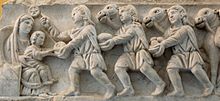
Magi bear gifts to an infant Jesus (one of the earliest-known depictions, 3rd century sarcophagus) Vatican Museums - Rome, Italy

Magi bear gifts to an infant Jesus (one of the earliest-known depictions, 3rd century sarcophagus)
Vatican Museums – Rome, Italy

Matthew 2:11 – January 3, 2016 (St. Luke’s Church, Epiphany Sunday)

I remember Christmases when I was very young. I was the youngest of six children, and we lived on the northwest side of Chicago. My father worked for the National Safety Council, which was a not-for-profit organization. He didn’t get paid a huge amount of money, so I remember Christmases when we children wouldn’t have a huge pile of presents under the Christmas tree, like the television commercials of today always seem to show. But I do remember the happiness and joy of those Christmas mornings. A number of gifts were exchanged, and we always had a big dinner later that day at one of my relatives’ houses. Those are warm memories, all of us gathered around the tree, exchanging presents.

Warm memories. I’m sure you all could bring to mind a similar warm memory or two, regarding Christmas. Many of my memories do involve gifts. The Scripture passage we just read mentions gifts, too. It’s from Matthew, Chapter 2, the traditional Epiphany story, when Wise Men from the East came to see the baby Jesus, bearing gifts.

Matthew calls them “Magi,” According to my research, they probably came from the East where the Jews had spent seventy years in the Babylonian captivity, centuries before the birth of Christ. During this period, the Babylonians and Persians probably learned of the promise of the “Messiah” from Daniel the prophet who had lived among them.

The Magi became important first among the Medes and later among the Persians by taking on the priestly functions of the mystery religion Zoroastrianism. By New Testament times, the term “Magi” was broadly used for persons adept in any number of sacred arts, including interpretation of dreams or other divine messages, astrology, magic and divination.

We can tell from the term “Magi” that here are three very important people, who are not Jewish. The consensus among biblical scholars is that Matthew was a Jewish apostle of Jesus who wrote his gospel for the Jewish people. Yet, here, front and center in the beginning of the Gospel of Matthew, we find three non-Jewish V.I.P.s, on their way to see the Child, born King of the Jews.

They know pretty much where they are headed, but not precisely. I suspect that is why the Magi went to see King Herod in Jerusalem. I mean, what better place to find a newborn King than in a palace, in the capital city?

I’ve got to give these Wise Men a lot of credit. Not only were they a little fuzzy as to their destination, and where they were going, but they were not afraid to ask questions and ask for directions. It’s too bad that they had to pick Herod to ask questions of.

“Where is the One having been born King of the Jews?”

The Wise Men saw the bright star announcing the birth of Jesus, and followed the star towards Jerusalem. Notice: they were not Jewish, yet they had heard of the Coming One, and even brought Him gifts. They even wanted to worship and adore Him. They had heard of the birth of Jesus through unconventional methods, by our standards. The Magi had foreseen the birth through signs in the stars, not necessarily through the Hebrew Scriptures, as the Jewish people had.

God understood that these Wise Men made a careful study of the stars, and He sovereignly decided to display signs and wonders in the heavenly places at the time of the birth of Jesus. God reached these Magi where they were at. And the wonderful thing is, God continues to reach out to people in ways they understand, no matter what is happening to them, no matter where they might happen to be.

But, let’s go back to these Wise Men. No one is exactly sure about the number of Magi who arrived in Jerusalem so long ago. Church tradition tells us that the number was three, and that these were not just Wise Men, but also Kings of the East. Assuming that they were at least minor royalty, these three non-Jewish V.I.P.s show up on King Herod’s doorstep, and he was not pleased to see them. He was even less pleased with their line of questioning. “What’da you mean, Child born to be King of the Jews? I’m the only king around here!”

Herod must have known something about the prophecies of a Coming One, of a Messiah, and I bet Herod was upset. The chief priests and scribes came to Herod and told him right away where the Messiah was to be born. The prophet Micah had foretold it several centuries before. In Bethlehem, in Judaea, only a little way down the road from Jerusalem.

From all accounts of Herod and his life and reign, he was a tyrant. Looking at writings from contemporary authors of that period, Herod was cruel and bloodthirsty. He was also two-faced, as we can see from his response to the Magi. He sent the Magi to Bethlehem, and requested that they come back after they find this “King of the Jews,” because Herod wished to “worship” this King as well. I have a pretty good idea of exactly what Herod wished to do to the baby Jesus.

The Gospel of Matthew tells us that Herod secretly found out the time the star had appeared in the sky, and typical of a bloodthirsty despot, he had all boy babies in the area of Bethlehem under the age of two killed. Just in case. This feature of the Christmas story usually isn’t mentioned, since it doesn’t fit into a nice, warm and fuzzy Christmas card. These verses are not included in our lectionary reading for today, either. Yet, this was the kind of world Jesus was born into. The world today hasn’t much changed.

Let’s pick up with these Wise Men. After they found out where the King of the Jews was born, they wasted no time in finding Him. Mary and Joseph must have decided to stay in Bethlehem for a time, since the Wise Men found the Holy Family inside a house. And, the original Greek of the Gospel of Matthew refers to Jesus as a boy, not as an infant, as the Gospel of Luke does. So Jesus may even have been a toddler at the time of the Wise Men’s visit.

Regardless of these minor, yet fascinating, details, the important part is that the Wise Men took the time to find the promised King of the Jews. When they found Jesus, the Wise Men were finally able to offer their gifts—gifts fit for a King, gold, frankincense and myrrh—expensive and costly gifts, to be sure. Then . . . the Wise Men worshiped Jesus, the Promised One, the coming Anointed One of God. And, they returned to their homes, rejoicing that God’s promise had been fulfilled.

What does this story from so long ago have to do with us, today, in the 21st century? God is indeed pleased when we give Him things we very much value, as the Wise Men did. But God doesn’t really want worldly things. What I see repeated in Scripture is that God really wants a relationship with us.

Christina Rossetti’s poem says it so well.

“What can I give Him, Poor as I am?/If I were a shepherd I would bring a lamb;

If I were a wise man, I would do my part;/Yet what can I give Him—give my heart.”


That’s what God wants most of all for Christmas. God wants our hearts. God wants us to come to Him, as small children come to a dear mother or father.

I can remember when my children were small, and they would come to me at night for a last cuddle before bedtime. I think that’s what God wants us to do. Only, better! God is a parent who will never be too busy to take time for us, and never be short-tempered with us. God’s everlasting arms are ready, wide open to receive any who come.

Yes, the Wise Men gave gifts to the baby Jesus, and yes, they stand as an example for us. We can celebrate their example, and remember it as we give our hearts to God, whether as a renewal gift of our lives, or as a sincere gift for the very first time. Give God the best gift you ever could. Yourself.

You are important, so important that Jesus came and gave Himself for you and for me. All He has ever wanted is to give us the chance to know Him as a personal Friend and Companion.

Won’t you give Him what He wants most for Christmas?

@chaplaineliza

Suggestion: visit me at my sometimes-blog: matterofprayer: A Year of Everyday Prayers. and my other blog,  A Year of Being Kind .  Thanks!