Unknown's avatar

Abide in God’s Shelter!

“Abide in God’s Shelter!”
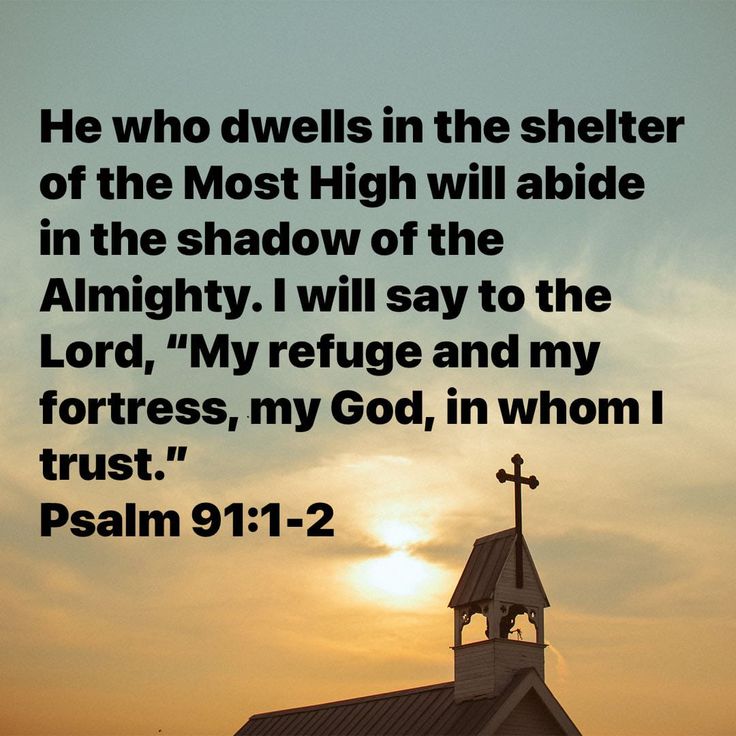
Psalm 91:1-6, 14-16 (91:2) – September 28, 2025

            I have had a number of times in my life where there was a lot of uncertainty. I am thinking of one extended time, in particular. When my older daughters were toddlers and preschoolers, my former husband and I did not have any health insurance. For years. Our girls were small, and we lived paycheck to paycheck, barely scraping by. For years.

            Times like these are downright scary, whether people have economic problems (like my family did), or health reversals, emotional or psychological concerns, or physical safety!  

            Listen to a first-person account from one of our commentators. This happened to him in rural India while he visited a missionary outpost. “As we were climbing a steep rugged narrow path, Premakar, our home missionary of Dangs cautioned us, “Wagh, Wagh” (tiger). We stopped and our torches flashed at the beast which was 200 yards away. Its glittering eyes menacingly glared at us. In spite of the blinding lights it was advancing towards us. Helpless we turned to Jesus in prayer. To our great relief the beast slinked away. We continued our journey. But within a few yards our petromax [our bright lights] failed. Just imagine our plight! It seemed ages before the petromax was fixed. After a short while a poisonous snake slithered past us and the promises of Psalm 91 sustained us.” [1]

I am not sure if you have ever had such a wild time of uncertainty in your life, but it can be beyond worrisome. Times like that can make a person anxious, fearful, even frantic. Our commentator goes on: “Thankfully the cobras and other poisonous vipers were in hibernation during my stay in the mountain village of Chikaldara. The tigers and bears, while inhabiting the area, did not harm me either. Nevertheless, my sense of danger was much more intense while walking in the darkness or through the tall grass, where some creatures could be lurking.” [2]

Just listen to these words from our reading today, Psalm 91. “Surely he will save you from the fowler’s snare and from the deadly pestilence. You will not fear the terror of night, nor the arrow that flies by day, nor the pestilence that stalks in the darkness, nor the plague that destroys at midday.”

            This reading describes a lot of unpleasant, downright dangerous things that can happen to a person. “There is a thread in this psalm that feels … dangerous. Angels will bear you up so you won’t dash your foot on a stone? Treading on lions and snakes? No scourge will come near your tent? Dangerous, and conditional: Those who love me I will deliver; I will protect those who know my name. What about those who don’t know, because they haven’t been told or haven’t been told in a way that makes sense to them? What about those who don’t know how to love You yet? Are they, are we just on our own if we find ourselves in that category, temporarily or permanently?” [3]

            I care deeply and feel for any frightened, anxious people. For, that is exactly what this psalm mentions. This psalm cautions, and gives insight, allowing you and me to get a picture of what part God plays as we go through all the trials and struggles of life.

            Verse 1 is the starting point for this psalm, the lens that aids us in reading the rest of the psalm. “God delivers because God is our shelter. God will rescue us when we call because we live in God’s shadow. People need to feel safe and secure to be brave. Notice that the psalmist encounters pestilence, arrows, and destruction as they live in the shadow of the Almighty. We need the security of abiding in God so that we can brave the trials and struggles of this life together.[4]  Can you think of a time of uncertainty in your life when you felt for sure that God was with you? When you knew for sure that God was your shelter, or shadow, or refuge? God can send this assurance into our hearts.

            And sometimes, even if it’s an extended time of uncertainty like the one my family with young children and I went through for several years straight – economic insecurity – God is still there. There is a saying: I believe in the sun even if it is not shining. In the same way, I believe in God even if the path ahead is rocky. You and I can have a deep sense of being held by God, even when answers are unclear. God can be trusted!

God is present even though we go through scary times or personal difficulties. Whether people have economic problems (like I did), or health reversals, or emotional or psychological concerns, we can trust in God’s presence. Even at the same time while we are afraid! The two feelings are not mutually exclusive, especially when we consider some really serious things like natural disasters, regional conflicts, or other catastrophes that happen beyond our control.   

            Let’s look at the last verses of this psalm. 14 “Because he loves me,” says the Lord, “I will rescue him; I will protect him, for he acknowledges my name.15 He will call on me, and I will answer him; I will be with him in trouble, I will deliver him and honor him.”

Can you imagine God speaking these words directly to you? Can you hear God saying to you, “I will rescue you, I will protect you. I will be with you in trouble and deliver you.” How does that feel, to have God lovingly responding with words of rescue, protection and long life? It is so comforting and protecting, to have God saying these things to me, personally! It is a promise I – we – didn’t even know we needed. Truly, it is a reminder that God really does see and respond to our deepest needs and cries of our hearts. [5]

            Right now, we can create a sense of safety. Here and now. We can take time to breathe. Right now. Breathe in, deeply – and breathe out, slowly. Let’s do it again. Breathe in, deeply – and breathe out, slowly. Breathing calms each of our collective nervous systems. Roll your shoulders slowly, backwards, and forwards. And, continue to breathe.

            We are, indeed, safe, living in the shelter of God. Please, bring that safety to others. Invite others to abide in God’s shelter, no matter what is happening in each individual life, in each personal situation. Because, difficult things will continue to happen. Troubles and challenges continue to crop up unexpectedly. And – and, each of us is held in God’s hand. We all can bravely face the world with strength and hope. We can all trust in God’s presence, knowing that our security comes from our God, who truly is our refuge and fortress. Alleluia, amen.

@chaplaineliza

(Suggestion: visit me at my other blogs: matterofprayer: A Year of Everyday Prayers. #PursuePEACE – and  A Year of Being Kind . Thanks!

(I would like to express appreciation for the Rev. Anthony J. Tang, one of the ministers at First United Methodist Church of Dallas TX, and his excellent small groups presentation featured on www.umcdiscipleship.org. Several of these suggestions come from that presentation.)


[1] https://bible.org/seriespage/9-psalm-91-psalm-safety

[2] Ibid.

[3] https://www.umcdiscipleship.org/worship-planning/i-will-call-upon-the-lord/sixteenth-sunday-after-pentecost-year-c-lectionary-planning-notes/sixteenth-sunday-after-pentecost-year-c-preaching-notes

[4] https://www.umcdiscipleship.org/worship-planning/i-will-call-upon-the-lord/sixteenth-sunday-after-pentecost-year-c-lectionary-planning-notes

[5] https://www.umcdiscipleship.org/worship-planning/i-will-call-upon-the-lord/sixteenth-sunday-after-pentecost-year-c-lectionary-planning-notes/sixteenth-sunday-after-pentecost-year-c-small-groups

Unknown's avatar

How Different are God’s Thoughts?

“How Different are God’s Thoughts?”

Isaiah 55:1-3, 6-9 (55:2) – March 23, 2025

            Sometimes, I get really, really busy. Involved. Even distracted. Doing a lot of things, sometimes attempting even more than I could possibly ever finish in one day. Sometimes, when I get really involved in things or activities, I don’t even think about God for whole stretches of time–for hours, sometimes even days at a time. Sometimes, I discover I don’t even look for the Lord. I don’t even concern myself with finding God. And every once in a while, I don’t even want to go looking for the Lord.

            I certainly admit it. I have been less than a perfect Christian. There have been numerous times when I’ve forgotten to pray, neglected to study the Bible, sidestepped communication with God. I definitely haven’t hit a bull’s eye in my personal Christian walk 100 percent of the time. I do freely admit it. I have a sneaking feeling that I’m not alone. If we were to admit it to ourselves (and even admit it to a few other people, too!), I suspect we would find a number of honest, repentant people, confessing where they have fallen short in their Christian lives.

            That’s bad news! What can we do about that??

            Looking at our scripture reading for today, I can find several things that may help us out when we consider a big problem like falling short in our lives before God.

            Let’s take a closer look at verses 6 and 7. “Seek the LORD while he may be found, call upon God while he is near;” Whoa! The Lord is closer than I thought! God’s right here, johnny-on-the-spot! I have a sneaking suspicion the Lord is right next to me, whenever I look for Him. And I have a feeling God will be right there, immediately, whenever I call.

            While I was writing this sermon, I was reminded of the times I played hide-and-seek with the neighborhood kids when I was young. I bet most of you have played hide-and-seek at one time or another, too. When I was seeking the other players, I knew the object of the game. Look for the other players. I understood what I was supposed to do.

            But, there’s a problem here in the scripture passage, in Isaiah 55:7. The prophet mentions the wicked, who pursue their own wicked ways. They are not following after the Lord. They are not even close to doing what the Lord wants them to do. These wicked people don’t even know what they’re missing. They don’t care about the object of the game. “Let the wicked forsake their way, and the unrighteous their thoughts.” These wicked people, these unrighteous guys are even thinking bad thoughts, thoughts that are not pleasing to the Lord!

            Again, that’s bad news! What can we do about that??

            I’ve been talking about some pretty negative people, and some pretty negative actions, where some people actively go out of their way to be disobedient and disruptive. Some people are like that. The Bible often talks about those kinds of actions and that particular kind of people

            Now, I’ll go off in a slightly different direction—still away from the Lord, but just different. Sometimes, other people get the “busy-sickness.” You know the type. Running around like chickens with their heads cut off.. In a dad-blamed hurry, frantic, running, rushing and dashing around, sometimes even without any clear direction. Sometimes their thought-life (our thought-life?) can be the same way—scattered, rushed, not able to concentrate.

            What’s more, in this culture of consumer abundance, we can become preoccupied with our belongings, with our “stuff.” This sneaky kind of mind-set can sneak into our brains! What we possess and what we think we “need” can be a source of control.[1] Sometimes it can really be difficult for me – for you – for us to figure out what we truly need. Sadly, it’s often something that redirects our minds away from God, which is never good!   

            Again, that’s bad news! What can we do about that? What do you think the Lord might say to those people? What do think the Lord might say to us, to you and me?

            I see the answer right here, in verses 7 and 8. The prophet tells us straight out. “Let them return to the LORD, that he may have mercy on them, and to our God, for he will abundantly pardon.” Mercy! Pardon! To me, that sounds an awful lot like GRACE. The Lord wants us to return to Him! The Lord IS gracious! The Lord WILL abundantly pardon! I don’t know about you, but I think that is exciting news.

            I had a general idea of what “pardon” meant, but I wanted to find out the exact meaning. According to Webster’s dictionary, pardon means “to excuse or forgive an offense or penalty.” Wow!! That means even if I do something wrong, or think something I shouldn’t, in God’s eyes, God will abundantly pardon me–God will forgive me!! And God will abundantly forgive you, as well! That’s truly good news!

            Here in Isaiah 55, as we say thank you to God for that marvelous pardon and forgiveness, we also see God providing good gifts for us. The phrase we highlight from the Lord’s Prayer is “Thy kingdom come, Thy will be done.” With as often as we pray the Lord’s Prayer, I suspect God would be really pleased if we took this part of the prayer seriously.

We know what many of the things that please God look like. We can even make a list! As we consider God’s good gifts, and God’s kingdom, there will be food for everyone, everyone feels loved and loves others, people find ways of settling problems other than war and fighting, and when people hurt each other, people forgive each other.

            We can praise God that – just as in verse 5 where God pours out on God’s people the blessings God promised to King David – the Lord will pour out those blessings on earth! Just as these blessings are true every day now in heaven, they will one day soon be true upon earth. Especially if we all work to make these blessings and love and caring for each other happen! [2]   

            God will be there for us when we need it! God will forgive, and have abundant grace and mercy and pardon for us, and we can count on that! We can have the assurance that as we come near to the Lord, the Lord will draw near to us! What a promise. What a God. Amen.

@chaplaineliza

(Suggestion: visit me at my other blogs: matterofprayer: A Year of Everyday Prayers. #PursuePEACE – and  A Year of Being Kind . Thanks!


[1] http://www.word-sunday.com/Files/a/18-a/FR-18-a.html

[2] https://worshipingwithchildren.blogspot.com/2016/01/year-c-third-sunday-in-lent-february-28.html

Unknown's avatar

Trust in the LORD!

“Trust in the LORD!”

Psalm 20 (20:7) – June 16, 2024

            I seldom mention politics in my sermons, but today will be an exception. I am uncomfortable, even alarmed at the general political conversation in the United States right now, in June 2024. Many people across our country are polarized, in terms of political discussion. All kinds of issues – from schooling, bussing, immigrants, guns, diversity, human rights, ecology, taxes, unemployment, science – you name it. Just about any and every issue can be a battleground today. It seems like any two people, or two groups, or two countries have got to be fighting with each other all the time.

            This makes me want to come before God, and bring my concerns before the Lord about the political conversation – or downright fighting! – that is so regularly going on today! I read in one of my commentaries on Psalm 20, written more than ten years ago, that our commentator at that time saw “so many people willing to tear people’s reputations and actions to shreds; regardless of however right or wrong are their opinions, and their understanding!”

In her commentary, Joan Stott goes on to say “We are going through a particularly ‘sticky’ situation … people seem to be delighting in other people’s potential mistakes and/or problems, and ridiculing their deliberately made decisions.” [1] Wow. Double wow! If that argumentative attitude was pervasive in this country twelve years ago, imagine today, with fist fights breaking out in rooms and chambers where our elected representatives meet.   
            Here in our worship service, this space is set apart to be directed to God. We have the luxury of having this special place for worship, prayer, praise and thanksgiving. And, petition, too, when we need God’s help. That is what Psalm 20 begins with: petition to our God. “May the Lord answer you when you are in distress; may the name of the God of Jacob protect you.
May God send you help from the sanctuary and grant you support from Zion.”

From current news stories from across our country, I do not think many people step back and consider wisely before they angrily express opinions or enter into arguments. They yell and shout and sometimes even get into fist fights over political disagreements.

But, wait. This psalm also mentions war, and fighting. Except, coupled with prayer. Our psalmist is lifting up the concept of praying to God before making any decision, especially one as serious as a battle. Leaders from across the world this past Thursday gathered on the beaches in Normandy to remember the 80th anniversary of D-Day, June 6th, 1944. In one of the many articles commemorating this huge wartime operation, I read one about General Dwight Eisenhower, who supervised the invasions of France and Germany for the American forces.

General Eisenhower wrote a draft of a memo that was never released, just in case the invasion failed. Included among his remarks is: “My decision to attack at this time and place was based upon the best information available. The troops, the air and the Navy did all that Bravery and devotion to duty could do. If any blame or fault attaches to the attempt it is mine alone.” [2]  And, contemporary accounts tell us Eisenhower definitely prayed earnestly about the attack.

            Is there any solution to our anxiety about contentious or brawling arguments in politics today? Something that is definitely rare in today’s political discussion is active listening, and considerate hearing of different points of view. Commentator Joan Stott is grateful for “wise and considered decisions that in the past, have been made following earnest prayer, and hours of listening to … people’s viewpoints and needs.” [3] Oh, that we might be blessed with more leaders locally and nationally who are wise, and act in measured and rational ways.

            Which brings us back to Psalm 20. Not only does this psalm lift up the people of the nation: “May he give you the desire of your heart and make all your plans succeed. May we shout for joy over your victory and lift up our banners in the name of our God.” Moreover, this psalm points us toward the ultimate source of our strength, in verse 7! “Some trust in chariots and some in horses, but we trust in the name of the Lord our God.”

            I know that many prayers went up to God before the Normandy invasion in June of 1944. I am so grateful that meticulous planning and considered, measured judgment came into play in the whole operation. Would that a small amount of that measured thinking and considered judgment be used today, as friends, and acquaintances, and our political leaders engage in political infighting and mean-spirited arguments.

            What can you and I do about all this argumentation? I know it seems like a huge problem! Insurmountable, sometimes. Especially when you and I come up against angry words or harsh opinions, or even fist fights! However, we can take this psalm into our lives and hearts today, and ask God to be with each of us as we go about our daily activities.

            Plus, as a congregation before God, we know that God is with each of us, in power and in strength. This psalm really lifts up this image of God! The Lord is saving us for a life in heaven, yes! And, the Lord is saving us here and now, from the ways sin impacts our lives! [4]  Sin? Yes – not following God, not acting and speaking in ways that lift up our God. And, arguing and infighting about politics are certainly not pointing people to our loving and powerful God!  

            We – you and I are the sign that God is at work in the world. And, we can show people day by day that we are living lives that show forth God’s purposes. Not arguing, not bickering, and certainly no fist fights! Instead, we can all strive to apply God’s love, understanding and reconciliation to our speech and our actions, each and every day.

            The writer of this psalm knew from personal experience “that to call on God when in need was to place our lives, our thinking and planning within God’s overview, and to trust always in God’s leading and guidance.” [5] That was true thousands of years ago, and it is just as true today. Whether fighting with swords, shields, arrows and armor, or with the weapons of argument, animosity and downright hatred of one group against another. We need to go to God and have God lead us and guide us each day. May it be so! Alleluia, amen. 

@chaplaineliza

(Suggestion: visit me at my other blogs: matterofprayer: A Year of Everyday Prayers. and  A Year of Being Kind . Thanks!


[1] http://www.thetimelesspsalms.net/w_resources/pentecost3[11]b_2012.htm

[2] https://www.businessinsider.com/d-day-in-case-of-failure-letter-by-general-eisenhower-2012-6

[3] http://www.thetimelesspsalms.net/w_resources/pentecost3[11]b_2012.htm

[4] https://www.umcdiscipleship.org/worship-planning/ascribe-to-god/fourth-sunday-after-pentecost-year-b-lectionary-planning-notes

[5] http://www.thetimelesspsalms.net/w_resources/pentecost3[11]b_2012.htm

Unknown's avatar

Who Is This Jesus?

“Who Is This Jesus?”

Jesus Palm Sunday, Armenian manuscript

Matthew 21:1-11 (21:10) – April 5, 2020

Do you remember watching a parade? Some might think of a small, neighborhood parade, or a large, elaborate one. I remember watching old newsreels, the kind that used to be shown in old-time movie theaters, with a cartoon before the feature film. Some of the tickertape parades I saw on the newsreels were huge spectacles, with massive crowds waving as the guest of honor came by, usually in an open convertible.

You understand the picture? That is the scene from the Gospel we are talking about today. Except, instead of confetti and tickertape, the crowds in Jerusalem waved palms. Some even threw their coats or cloaks in front of the guest of honor. Both the long-ago crowd and the modern crowd yelled and hollered and made all kinds of noise.

The Rabbi Jesus had been in circulation in the area for three years. He had been preaching with power and healing people for all that time. I suspect that great crowds wanted to welcome Jesus into the city of Jerusalem, for a number of reasons. And, a great number of people used a word from the Hebrew Scriptures to welcome Jesus. Hosanna!

Hosanna! Let’s say it again. Hosanna! Today, that word is familiar to many from church. From Palm Sunday. It’s something that people say—what children say when they wave their palms. Isn’t it? Isn’t that what it means?

The word “Hosanna!” comes from Psalm 118, meaning “Save us!” It was used when the crowds welcomed the Jewish hero Judas Maccabeus to Jerusalem, more than a century before Jesus lived in Palestine. “Isn’t the Rabbi Jesus a prophet? A healer? Didn’t He have all kinds of power? I haven’t seen it, personally, but I’ve heard about Him from all kinds of people! He’s a wonderful Rabbi, too. Don’t you think He might be the Messiah? He’s come to save us!”

I can just hear the crowd: “Save us!” “Please, bless us! Make us prosper!” “Hosanna!” In this single word, “Hosanna!” the crowd communicates a whole lot of things!

What did the crowd think of Jesus, two thousand years ago? Who did they think He was?

Today, people have lots of opinions about Jesus. Can you hear some of these ideas when people cry out to Him? Some consider Jesus to be a prophet, even a miracle worker. They certainly honor Jesus. Others think of Jesus as a very good man, one whose words, deeds and teaching were a cut above the rest of humanity. Some think the man Jesus exemplified the best of God as Jesus understood God. Or, is Jesus God incarnate, God come to earth in human flesh?

What did the crowd think of Jesus, two thousand years ago? Who did they think He was? Remember, Israel was under Roman domination. The Jews were a conquered people, under tight control by the Roman army. There had been rumors and whispers of a coming Messiah among the Jews for decades, even for centuries.

“Isn’t the Rabbi Jesus a prophet? A healer? Didn’t He have all kinds of power? I haven’t seen it, personally, but I’ve heard about Him from all kinds of people! He’s a wonderful Rabbi, too. Don’t you think He might be the Messiah? He’s come to save us!” With such urgency, such expectations, it’s no wonder the crowds cried “Hosanna!” “Save us, please!”

In the last number of weeks, not only in this country, but worldwide, vast numbers of people look calamity stark in the face. We have the loss of jobs, loss of income, loss of freedom of movement. What have we got in exchange? More fear and anxiety, more anger and confusion, more mourning. What about first responders, medical workers, janitorial staffs, grocery store workers, and people who pack and ship everything from A to Z? Front line workers all. I cannot begin to tell you about fear, worry, sorrow and anticipatory grief in operation here.

We need someone to come and be our Savior, the Rock of our salvation.

The corona virus is not quite like a physical enemy, one we are able to fight through the force of arms. Not like the Roman army, or the armies the United States fought in the wars over the past two hundred years. Would we, today, have reacted much differently than the crowds that greeted and shouted at the Rabbi Jesus? Or, would we be blinded by our fear, anxiety, confusion and profound grief at this current, horrible pandemic? Are we hearing “Hosanna!” differently this Palm Sunday? How can we walk with our Lord Jesus through this Holy Week?

Let me suggest things to do to help each other, at this desperate, anxious time. Can we show each other more kindness, help each other, be more selfless? Perhaps, even be more like Christ in our daily lives and daily activities? We can all do small, caring actions, each day. Call or text a loved one or friend. Offer to take out the garbage for a neighbor, for those who are able. Check on a senior who lives down the street—using appropriate social distance, of course.

As we call on God in our great need, can we see how God in the flesh comes to us? Humble, gentle and riding on a donkey, not charging in on a white stallion, or riding in a late model tank. Our Lord Jesus comes in vulnerability, and weakness, to join with each of us and be with us through our trials and tribulations. God comes to love us and redeem us, no matter what our situation may be. No matter what.

Praise God! Hosanna! Thank You, Jesus.


I would like to thank Rev. Dr. David Lose. For this sermon, I have borrowed several ideas from his commentary on Matthew 21:1-11 from his article Palm Sunday A – The Greater Irony

Posted: 31 Mar 2020 11:12 AM PDT http://www.davidlose.net/2020/03/palm-sunday-a-the-greater-irony/?utm_source=feedburner&utm_medium=email&utm_campaign=Feed%3A+davidlose%2FIsqE+%28…In+the+Meantime%29

@chaplaineliza

(Suggestion: visit me at my regular blog for 2020: matterofprayer: A Year of Everyday Prayers. #PursuePEACE – and my other blog,  A Year of Being Kind . Thanks!

Unknown's avatar

We Are Called

“We Are Called”

call of God 1 Cor 1

I Corinthians 1:1-3 – June 12, 2016

Remember the baptism we celebrated here in this sanctuary a few weeks ago? What a wonderful opportunity to welcome a new child to God’s forever family! When we baptized baby Christine, we celebrated a sacrament of the church. And, baptism is a great expression of God calling people to God’s heart. Embracing all God’s children, no matter how young or how old they might be.

Our New Testament scripture reading comes from the beginning of the letter to the believers in the city of Corinth. The Apostle Paul wrote this letter to address some problems and answer some questions for the Christians in Corinth, a city not too far from Athens, Greece.

Paul only stayed in some towns and cities for a short time. A few towns—as we saw when we took our postcard trip through Acts last summer—he only was able to stay in for a very short time. But, the city of Corinth? When he was on his second missionary journey, Paul spent eighteen months there. That’s a good long time, in any century.

Imagine a town with loose morals. Think Las Vegas, pretty much any time of the year, and New Orleans, especially during Mardi Gras. Combine them into one city, and you have an idea of what the city of Corinth was like. Corinth was known throughout the Roman empire—and beyond—for being a loose-living, rough-and-tumble city. Lacking moral character. Yet, God tapped the prim and proper Apostle Paul on the shoulder and had him spend a year and a half here in this town. And, what a town it was!

We are taking a close look at the greeting in Paul’s letter. “Paul, called to be an apostle of Christ Jesus by the will of God, and our brother Sosthenes,” It’s like the address label or identifying mark, telling the recipients who is sending the letter.

Yes, this letter is from Paul and “our brother Sosthenes.” Except, I want us to look more closely at one particular phrase: “Paul, called to be an apostle of Christ Jesus by the will of God.”

This word “called?” A fascinating word. Paul is identifying himself as an apostle. Not just because he said so, or because he’s calling himself that, but because God said so! “Called” is the Greek verb kaleo, used dozens of times in the New Testament. It means “to call, invite or summon.” (Depending on who is doing the action. Friends invite, whereas kings summon!) This word can also be translated “to name.” (As in this case.) God has named Paul an Apostle. [1]

Paul is called as an Apostle, and given a specific job or task. We are probably familiar with the term “pulpit committee,” for filling the pulpit when a church is looking for a new pastor. When the church decides on a prospective pastor, they “call” that pastor. The church is choosing her or him to come and work for them. The church “invites” or “calls” the pastor. Kaleo.  A very biblical term!

The next verse of the greeting is in several parts. First, “To the church of God in Corinth, to those sanctified in Christ Jesus and called to be His holy people.”

There is that word again! “Called.” Kaleo. The believers in Corinth have been called to be God’s holy people! Wait, I thought Corinth was Sin City! I thought the city was a cross between Las Vegas and New Orleans in the middle of Mardi Gras! Well, yes. You would be correct. Except—this is God who is doing the calling!

God can call people out of all kinds of places. God can name individuals to be whatever God wants them to be. To do. To act. To love. To show mercy. To give. Whatever we are called to do, God summons us to fill that task, or calling. Even though many of us may never be a minister like Pastor Gordon, or a church musician like Angela, or a chaplain like I used to be, in the hospital, but God still calls.

All believers are still invited to follow God. And, that is not all. Let’s listen to this verse again. “To the church of God in Corinth, to those sanctified in Christ Jesus and called to be His holy people.”

The believers in Corinth were sanctified. There are other places in the New Testament where believers are described in just this way: “sanctified.” Which is a fancy word for “set apart,” or “separated.”

Believers are called as hagiois – saints, separated or set apart. Now, who wants to be “set apart” or “separated?” To the typical non-Christian Corinthian, that does not sound like very much fun. I do not think many of these non-Christian friends had much patience for that. However, Paul and his Christian friends did not withdraw from society and isolate. Instead, Paul and his friends lived together with the others in Corinth. They had a special quality that marked them and made them special. “Set apart” or “separated.” That is how Paul describes us as believers.

This is a difficult concept to some, but not in all contexts. Athletes set themselves apart often. They train hard, eat healthy, have particular foods and drink. A commentator mentions, “I wonder if that isn’t just another way of saying that [they’re] set apart or dedicated. That kind of language might work better for us. People are quite ready to talk in that way in our culture. Athletes set themselves aside. They dedicate themselves toward particular ends. There is a sense in which Paul is saying, ‘You are a dedicated people; you have been set apart.’” [2]

So, not only Paul is called—or named—as an Apostle of God. The believers at Corinth are called—or named—as a set apart, dedicated people of God. By extension, we—that is, all of us!—are named as a separated people of God. Not dedicated to loose living, or of low moral character; instead, set apart. Called, invited to be God’s people.

I am turning to the United Church of Christ Statement of Mission. You all have it as an insert in your bulletins. We are on the second part of the preamble today. Please read along: “we seek within the Church Universal to participate in God’s mission (John 20:21) and to follow the way of the crucified and risen Christ. Empowered by the Holy Spirit, we are called (1 Cor 1:1-3) and commit ourselves.”

This second part of the preamble, “Empowered by the Holy Spirit, we are called,” is an identification. We are not only finding out about the believers in the church at Corinth, we find out about us. About you and me, today.

We all are called! We have been invited by God, named as Christians by God. Just as baby Christine was loved by God and welcomed into God’s forever family through baptism, so God loves us and names us as part of God’s forever family, too.

This is important. The United Church of Christ is awfully particular about who receives this Statement of Mission. We all do! We all are called. We all are named as believers. And, we all are encouraged to follow this statement of mission, to carry it out.

Last, to return to our greeting from this letter, Paul has all believers everywhere calling on God. Another verb “kaleo,” another instance of us naming Jesus Christ as our Lord and Savior. Their Lord and ours. You can look at it as an identifying mark or label. We call Jesus Christ our Lord.

If we acknowledge Jesus Christ as our Lord, we are certainly ready for anything. In the weeks ahead, we will find out in more detail what the UCC Statement of Mission has for us to do. God willing, I will be ready. Will you?

[1] https://billmounce.com/greek-dictionary/kaleo. (Thank you, Dr. Mounce.)

[2] http://wordandworld.luthersem.edu/content/pdfs/15-4_Nations/15-4_Dinovo.pdf, Dinovo, Terrence L., “Jesus Christ and Him Crucified,” Word & World, Volume XV, Number 4, Fall 1995.

@chaplaineliza

(Suggestion: visit me at my regular blog for 2016: matterofprayer: A Year of Everyday Prayers. and my other blog,  A Year of Being Kind . Thanks!)