Unknown's avatar

The Widow’s Contribution

“The Widow’s Contribution”

Mark 12-42 widow, mite mosaic

Mark 12:43 – November 8, 2015

I have a friend who is recently retired. He goes around town, quietly, and does good. He was raised in the church, but that was a good many years ago. Yes, he does have a belief in God, and he expresses that faith by doing good for others and being faithful.

Sometimes that means driving people to a doctor’s appointment. Or volunteering at a local not-for-profit organization. Sometimes that means picking up the left-over baked goods from a business at the end of the day, at closing time. And then, delivering the baked goods to a homeless shelter. He does all of this without thanks, with little or no fanfare. He is faithful. He is dependable. He contributes, in any way he can. And, I am so glad he is my friend.

We turn to the Gospel reading for today, from Mark 12. Jesus and His disciples are in Jerusalem, and Jesus is having another in those continuing discussions with the chief leaders and teachers of the Jewish Law. They happen to be in the rear of the Temple. Large sanctuary, lots of coming and going, to and fro.

These are several verses from Eugene Peterson’s excellent translation, The Message. Mark sets the scene in verse 41: “Sitting across from the offering box, Jesus was observing how the crowd tossed money in for the collection.”

Wait, didn’t the congregation at the Temple in the first century pass an offering plate? How did they collect money to keep the doors of the Temple open? And, was there any outreach, any charitable giving being done?

For this, we turn to Matthew Henry’s commentary on this chapter from Mark. “There was a public fund for charity, into which contributions were brought, and out of which distributions were made; a poor’s-box, and this in the Temple; for works of charity and works of piety very fitly go together; where God is honoured by our worship, it is proper He should be honoured by the relief of His poor.”;

So, different cultures and different places of worship, not to mention different centuries. We are looking at a slightly different practice of collecting money. Just to make sure everyone is on the same page. The principles of giving and generosity are the same, and those principles span the cultures and the centuries.

Apparently, people used to hang out at the back of the Temple and talk, have discussions, and sometimes debate. Oh—and they would also check out how much other people were contributing to the Temple and to the charitable fund. (I’m quite serious.)

Remember how open, how blatantly obvious the religious leaders were, about their religious observance? Their ostentatious prayer practice, their ritual observance of washing and cleanliness, their attention to the least little bits of the Jewish Law Code, and their finger-wagging and complaining about other people who weren’t quite as observant? So, of course the prideful extra-observant people among the religious crowd would be extreme in their giving practices. Talk about being a show-off!

Jesus has dealt with this kind of prideful observant attitude before. Here in our reading, we see Him dealing with this kind of show-offy attitude again, only in the matter of giving to the needy. What is the next thing He notices? From Mark 12: “Many of the rich were making large contributions. One poor widow came up and put in two small coins—a measly two cents.”

What is this? Jesus does a compare/contrast sort of thing. He compares the large contributions of the rich people with the measly two small coins that the widow contributed. Large amount compared to a small amount.

We will take a short detour and look at our reading from the Old Testament for today. This passage from 1 Kings is a fascinating reading, about how God provided for the prophet Elijah in the time of an extended drought.

I could have preached my sermon to you from this reading! But pairing this passage with the reading from Mark makes a more powerful story.

Elijah was one of the most prominent prophets in the Old Testament. He was God’s spokesman in a time when the nation of Israel was not following God very well at all. King Ahab was married to a foreign Queen named Jezebel, who led Ahab and much of the rest of Israel into idolatry and worship of false idols. That is one of the reasons why God sent an extended drought onto the whole region of the Middle East.

Elijah listened to God, and God communicated to Elijah to head up north, near Damascus, to the home of a non-Jewish widow in the town of Zarephath. Ordinarily, widows were not very well off, with no husband and little means of support. This widow was really, really poor. By the time Elijah arrived at her house, she only had one bag of flour and one jar of oil left in her pantry, and that is all. Hard for us here in the Chicago suburbs to believe that she had so little. Remember, it was a time of extended drought,food prices must have been going through the roof.

Elijah worked a miracle. God provided for the widow, her son, and the prophet. The widow made food for her, her son, and for their tenant the prophet Elijah, every day. The bag of flour and the jar of oil did not run out for months, until the Lord allowed the rains to return and the crops to grow again. Did you hear? God provided for them, out of God’s abundance.

This is what I suspect Jesus was thinking of when He pointed out the widow who put the two coins into the collection box. What did Jesus say? “Jesus called His disciples over and said, “The truth is that this poor widow gave more to the collection than all the others put together. All the others gave what they’ll never miss; she gave extravagantly what she couldn’t afford—she gave her all.”

Did everyone hear what Jesus points out?

All of these show-off rich people gave a portion out of their abundance. But the poor widow? The widow gave extravagantly. She gave over and above. She gave, trusting in God’s abundance. She gave, hope-filled, looking to God to provide for her needs. Like the widow in Zarephath, centuries before, this widow in Jerusalem trusts God to provide. This widow decides that everything she is and has belongs to God.

But, the treasurer and trustees at the Temple might have had a problem with this kind of thinking, and this kind of giving. Guess what? Too bad! What is valued and lifted up by Jesus, what is important to the Kingdom of God is not what is valued in this world. God does not have a dollars-and-cents kind of perspective!

This vignette is just a slice of the widow’s life. But, I’d like to follow the widow home. See how she treats her neighbors. Does she bring over a pot of soup to a sick friend? Does she clean the apartment of someone who has fallen and broken their leg? And what about her listening skills? Is she someone people come to, to talk about their troubles? Giving to God is so much more than just dollars and cents. So much more than just the coins the show-offy rich people put into the collection box in the Temple.

What about us, today? How can we take this scripture lesson today, and apply it to our lives? Is it just a nice story about what happened to people in Jesus’s day? Or, is it much more?

Today, we all can be like the widow in Jerusalem. This widow gave extravagantly. She gave over and above. She gave, trusting in God’s abundance. And, this widow decides that everything she is and has belongs to God. Like my friend I told you about, who does lots of things without thanks, with little or no fanfare. We all can be faithful. We all can be dependable. We all can contribute, in any way we can, to God and to God’s kingdom.

God willing, I’ll contribute to God’s kingdom. Will you contribute, too? Alleluia, amen.

@chaplaineliza

Suggestion: visit me at my daily blog for 2015: matterofprayer: A Year of Everyday Prayers. and my other blog,  A Year of Being Kind .  Thanks!

Unknown's avatar

A Wise Answer

“A Wise Answer”

love God, love others

Mark 12:34 – November 1, 2015

Rule books are handy things to have around.

What about the rules of the road? Doesn’t it help everyone to know and understand the rules of driving? Plus, the rules of the road give us a handy guide for safe, reliable, consistent driving. Also, we can think of rules in sports; in football, baseball, hockey, and basketball, just to name a few. All of these rules help teams, individual players, and referees to understand what to do—and what not to do in a game.

Do you know one particular person who knows the rules of one particular sport backwards and forwards? I mean, this person can call balls and strikes faster than an umpire behind the plate. Or, can figure out exactly who went offside before a football snap, or when a player got fouled in a fast-moving hockey game? It doesn’t have to be one of these sports, but any sport. And, that person is really proud of their exceptional sports knowledge, too?

That’s a lot like the situation Jesus is dealing with. As one of the commentators said, “Throughout Mark’s Gospel, the scribes [and teachers] were always evaluating Jesus’ activities. They judged Jesus theologically.” The Rabbi Jesus and some high ranking teachers of the Law are having another in their series of continuing discussions. These teachers really enjoyed discussing the Law, and both the major as well as the minor points of Judaism. Some teachers would get all excited and rub their hands at the prospect of a good argument! I mean, discussion.

That’s where we pick up our thread of the narrative. Different rabbis or teachers had different opinions on what was the greatest of all commands. I am certain some of these teachers wanted to know what Jesus considered the “most important” of the 613 laws in the Mosaic law code, which was (and is) the official, orthodox Jewish rule book.

Jesus does not name one of the “big 10,” the Ten Commandments. Instead, He responds with the Shema. “Hear, O Israel: The Lord our God, the Lord is one. 30 Love the Lord your God with all your heart and with all your soul and with all your mind and with all your strength,” from Deuteronomy 6:5-6.

Are you familiar with the Jewish custom of the mezuzah, put on the doorpost of observant Jewish homes? I quote from www.chabad.org: “Regarding these words, G‑d has commanded us, “And you shall inscribe them on the doorposts of your home, and on your gates” (ibid., verse 9). Hence the mezuzah: a parchment scroll inscribed with the verses of the Shema prayer is affixed to the right doorpost of every room in a Jewish home.”

“Why a Mezuzah? In addition to its role as a declaration and reminder of our faith, the mezuzah is also a symbol of G‑d’s watchful care. The name of G‑d, Sha-dai, which appears on the reverse side of the parchment, is an acronym for the Hebrew words which mean ‘Guardian of the doorways of Israel.’ Placing a mezuzah on the doors of a home or office protects the inhabitants—whether they are inside or out.”

Just from this short excerpt from Chabad, an orthodox Jewish website, you can see how serious this was to the scribes and teachers of the Law, in Jesus’s day as well as today. So, yes. Keeping rules properly was really high on the observant Jew’s priority list.

Going back to Jesus, and His response, what IS the greatest commandment, anyway?

Jesus did say that the greatest command was the Shema, a basic, fundamental, foundational statement of faith. Love God. Period. This was also a standard daily prayer in Jewish tradition. I suspect everyone in the room with Jesus knew Deuteronomy 6:5-6 so well they could say it backwards, or in their sleep.

But, Jesus doesn’t stop there! No, He makes another definitive statement. “31 The second is this: ‘Love your neighbor as yourself.’ There is no commandment greater than these.” Did you follow that? Jesus made “the greatest command” into a two-part command.

Love God, love others. Two sides of the same coin.

Jesus quoted from another verse in the Hebrew Scriptures, Leviticus 19:18b. Yes, it was included in the Mosaic Law Code. In the Jewish rule book. Except this particular law wasn’t considered so all-important in Jesus’s day. That is, until Jesus reached back and pointed to it.

Love God, love others.

You’d better believe this two-part law applies to a modern world torn apart by arguments, resentments, mourning, sadness, bitterness, and downright hatred. Not to mention war, violence, drought, hunger, and natural disasters, just as much as it applied to similar situations in ancient times and places. Even though this modern world finds it difficult to come near to God, even to believe in the concept of a Higher Power; this two-part law still applies.

Yes, this two-part law also applies to us, today. I encourage us all to avoid the trap of thinking that those old stories from the Bible, and from the Gospels, just apply to those people, two thousand years ago. False! Wrong-er than wrong! Jesus’s words apply just as much to us, today. To modern people, running on the treadmill of our daily routines. Yes, us up-to-date folks, who don’t have time for God, or for church. “Don’t you know? My life is so full I won’t have time to make it to church this week.”

Love God, love others. Remember, these are the words of Jesus.

In this vignette from the Gospel of Mark, one particular scribe engages with Jesus. “Well done, Teacher!” the scribe responded. “You’re right when you said: ‘He is the only God and there is no other god besides him,’ ‘Love the God with everything you have,’ 33 and, ‘love your neighbor as yourself.’ Obeying these commandments is worth far more than all the worship in the Temple at Jerusalem!” These words are not combative, or argumentative. This scribe agrees with Jesus! The Gospel describes this teacher as sincere, affirming of Jesus and His statements. Plus, this teacher acknowledges that the institutional aspects of Jewish ritual and observance are less important, secondary to loving God and loving others. Isn’t it true that religious ritual so often gets in the way of truly loving?

This scribe, this important teacher of the Law gets where Jesus is coming from. Listen to what Jesus responds: “34 When Jesus saw that he had answered wisely, He said to [the teacher], ‘You are not far from the kingdom of God.’”

Summary statement? “When we hear these words, we know that we are close to the center of Christianity, that we are close to the heart of God. The cross of Christ, the most important symbol of the Christian faith, has two dimensions: a vertical love to God and a horizontal love towards our neighbors.” (from a Gospel analysis by Edward Markquart)

The simplicity, truth and wisdom of love is at the heart of the Good News. Are there things we are engaged in right now that are secondary, less important that Jesus and His call to love God and love others? Think about it. If we truly love, what else is necessary?

Love God, love others. Jesus’s greatest command.

Alleluia, amen.

@chaplaineliza

Thanks to Rev. Edward Markquart and http://www.chabad.org for their assistance in the formulation of this sermon!

Suggestion: visit me at my daily blog for 2015: matterofprayer: A Year of Everyday Prayers. and my other blog,  A Year of Being Kind .  Thanks!

Unknown's avatar

By Grace through Faith

“By Grace through Faith”

grace = by grace through faith Lutheran

Romans 3:24 – October 25, 2015

I have a confession to make. I was raised a Lutheran. Baptized and confirmed in a Lutheran church on the northwest side of Chicago, I loved everything about that church. When I was in grammar school and high school, I learned all I could about my church, about being a Lutheran, and even about Martin Luther. I studied Luther’s Small Catechism during my two years of confirmation classes in seventh and eighth grades. So, you could say I know a thing or two about Martin Luther and about the church that to this day bears his name.

This Saturday, October 31st, is the 498th anniversary of the day Martin Luther tacked up the 95 Theses, his 95 points of disagreement he had with the Catholic Church. In 1517, the priest and doctor of theology Martin Luther posted his 95 Theses on the chapel door in Wittenberg, Germany, at the university where he served as professor. Thanks to the printing press, these 95 points of disagreement spread like wildfire. Not only in Germany, but throughout Europe. The Reformation began in earnest.

Why was Martin so upset? To understand that, we need to take a closer look at Martin’s beginnings. When he was a very young man, Martin Luther felt unworthy of God’s love. He felt lower than a worm sometimes, and tried his hardest to get into God’s good graces! He would go to confession several times a week, do penance after penance, and he made several pilgrimages. All of these things and more to stop feeling unworthy and sinful.

Taking a quick look at the letter the Apostle Paul wrote to the Roman church, you and I might get that same message, too. From chapter three, “There is no difference between Jew and Gentile, 23 for all have sinned and fall short of the glory of God.” Martin felt that so deeply! All have sinned! All fall short of God’s glory! All means everyone. All of us.

Romans 3:23 is not good news! This verse is pretty bad news. Rotten news. Really hopeless news, if you ask me. And, that is the news Martin Luther faced, the more and more he read and studied the Bible, meditated, and prayed.

Martin was right. According to the Law of Moses, given to the nation of Israel in the Old Testament, there is no one who can follow the Law one hundred percent. Not the Old Testament Jews, not Jews in Jesus’s day, not Martin Luther, five hundred years ago. And, not you and me, today, either. There is no way anyone can keep every single one of God’s commands! (Even though the Pharisees of Jesus’s day—and the Pharisees of today—try their very hardest.)

Martin Luther regularly reflected on his life and his thoughts, and how far short he fell, compared to where he knew that God wanted him to be. That was what I felt, when I was a teenager, too. I knew I couldn’t keep all of God’s rules, even if I tried really, really hard. Remember Romans 3:23? “For all have sinned and fall short of the glory of God.”

When I was a teenager, I was a particularly studious teen. I would read books on the Bible and on theology when I was in high school. I prayed regularly, and tried my hardest to get closer to God. I had low self-esteem. I felt sinful, unlovely and unlovable a good deal of the time.

Martin Luther tried even harder to get close to God! He did a ton of good works. He got a university degree in theology, and started teaching from the Old and New Testament at the university in Wittenberg. He studied even more about God, and preached regularly in a church in town. And yet—he still felt sinful and far from God! He still felt unlovable!

Can anyone relate to Martin? Are there times when you—when I—feel unlovable?
I remember hearing the story of a woman, horribly burned in a fire. Her husband came to see her in the hospital and was disgusted and horrified by what he saw. “You are not the woman I married,” he said, and promptly divorced her. Are we so unlovable? Is that what we are afraid God might do to us?

Martin felt sinful and unlovable, too. What’s more, even after lots and lots of good works and all these years of reading and study, he still felt so inadequate. He felt God could not possibly love or forgive him. That is—until he was reading the letter to the Romans, chapter 1, verse 17: “ For in the gospel the righteousness of God is revealed—a righteousness that is by faith from first to last, just as it is written: ‘The righteous will live by faith.’”

Do you hear? Do you understand? It wasn’t about Martin. It wasn’t about how sinful or unlovable he was. Or, how hard he tried to do good things, or tried to get on God’s good side, or tried to live by good works. God’s righteousness comes by faith. Faith alone! Faith in God!

Remember Romans 3:23? “For all have sinned and fall short of the glory of God.” Yes. Yes! That is true. But—that isn’t the whole story! Reading, starting from 3:21: “21 But now apart from the law the righteousness of God has been made known, to which the Law and the Prophets testify. 22 This righteousness is given through faith in Jesus Christ to all who believe. There is no difference between Jew and Gentile, 23 for all have sinned and fall short of the glory of God, 24 and all are justified freely by His grace through the redemption that came by Christ Jesus.”

I can almost see Martin falling off his chair, once he realizes how huge this is. Our sin is taken away through the redeeming that came through Jesus. We are made lovable through God’s grace. Our low self-worth and low self-esteem is now viewed by God through Jesus. God looks at all of us, each one of us, through Jesus-tinted lenses.

We are now brothers and sisters of Jesus, God’s beloved children! We are now redeemed freely. By His grace, through faith, through the redemption that came by and through Christ Jesus. The best part of this gift? It’s a free, undeserved gift, so that no one can pridefully boast about it.

Another way to look at this gift from God comes from a sermon study board online I follow. I recently read this, written a few years ago by a preacher named Erik in Wisconsin.

“This Sunday we celebrate confirmation. As a part of their confirmation requirements, students have to meet with me for a brief discussion/interview. I ask them about faith, life, God, etc. – see if they learned anything during confirmation. One question I always ask is “How will you get into heaven? How are you saved?” Most often I get the answers – “Pray. Go to church. Do good deeds.” And I shake my head and ask myself “Didn’t I emphasize grace enough?”

“Finally, I said to the class, “Listen, you are saved purely by God’s grace as a gift. I will ask you how you are saved in your confirmation interview. If you don’t remember anything else I’ve taught during these two years, remember this: “You are saved by God’s grace!” Why is it so hard to remember? Probably because we’ve been taught not to trust anything we might get for free, even if it is from God.”

Martin Luther found out that we are saved by faith alone, through grace alone. No good works! No trying and trying really, really hard, and not making it after all that! Salvation is all from God and God’s grace! Romans 3:24 says,” and all are justified freely by His grace through the redemption that came by Christ Jesus.”

As Martin Luther studied scripture, he finally discovered he was saved by grace, not because of anything he did or deserved. The Rev. David Hansen tells us, “He discovered a God who would send the only Son—not for the perfect people, but for the sinners. He discovered, above all else, a God and a Savior that will NEVER abandon us, that will stand by our side no matter how often we fail or how short we fall.”

Is that good news? Jesus died for our sins. Jesus showed us radical, God-sized grace, and radical, God-sized love.

As I proclaim each week after the Confession of Sin during the Assurance of Pardon, “Believe the Good News of the Gospel: in Jesus Christ, we are forgiven!”

Alleluia, amen!

Thanks to Rev. David L. Hansen and Pastor Erik from Wisconsin for their assistance in the formulation of this sermon!

@chaplaineliza

Suggestion: visit me at my daily blog for 2015: matterofprayer: A Year of Everyday Prayers. and my other blog,  A Year of Being Kind .  Thanks!

Unknown's avatar

Come to Serve

“Come to Serve”

Mark 10-45 serve all

Mark 10:34-45 – October 18, 2015

It’s October in Chicago, and sports teams are a common topic of conversation! Look at the Cubs: a great number of people are rooting for them in the National League championship games, and not just in Chicago, either! Not to mention the Black Hawks, the defending Stanley Cup champions. A lot of people want to get close to these very important people. Just to rub shoulders with greatness. Being close to someone on top.

This is similar to what was happening in our Gospel reading for today. James and John took their Rabbi Jesus aside, to ask Him something privately.

Now, I wanted to make sure that everyone here was aware that lots of people saw Jesus as an earthly King. Everyone recognize that? Because, it helps us to make sense out of what James and John are asking Jesus. The closer that people are to a king or a ruler, the more important they are. The more power and importance they hold. It’s like rubbing shoulders with greatness. The whole reflected glory thing.

So, James and John ask their Rabbi to let them sit on His right and left hands, when He gets to glory. In essence, to be His right hand (and left hand) guys! They not only want to be considered important by everyone else, they want their own share of Jesus’ reflected glory!

That isn’t how it works, friends. Have I mentioned before that these disciples just don’t get it? We can see from their repeated words and conversations that they just don’t understand Jesus and what He is consistently and persistently teaching.

Let’s break it down. Jesus doesn’t get mad. Instead, He patiently goes over the same ground, again. Repeats what He has said a number of times before, and now He adds a new twist. A further caution about traveling with Him, all the way to the Cross.

As we continue to consider this section from the Gospel of Mark, we slam into the horrified reaction of the other ten disciples to what James and John had asked of Jesus. If your brother or sister or good friend had gone behind your back, and tried to get preferential treatment, don’t you think you might have gotten angry, too? Sneaking around and trying to do things under the radar is not okay. No matter how James and John might have justified it.

Jesus turns from this private conversation, and calls all the disciples together to give them a short recap on the Gentiles—the Romans—the worldly way of dealing with pre-eminence, greatness, and authority.

I’m going to take a detour and tell you about a church I attended for a time while I was at seminary. Smaller church, here in the north suburbs of Chicago. The church was going to have a clean-up day in the nursery and small children’s area, after the morning worship service. The Sunday school and children’s ministry people had been planning it for a number of weeks. A number of people had dressed for church with their cleaning clothes on, blue jeans and t-shirts. People even sent out for sandwiches for a quick lunch.

My husband Kevin approved of the clean-up; our children weren’t that far beyond that age group. We couldn’t stay after service that day, but said our good-byes to the cleaners. On our way out, we ran into the associate pastor. She had delivered the sermon that morning and worn her robes up front in church. However, she had transformed; she had changed into blue jeans and a sweatshirt. She had a bucket and a spray bottle of cleanser in her hands, and cheerfully wished us well as we went off to the next event.

My husband’s opinion of that pastor rose at least 75 percent that day. Maybe more. He told me how impressed and pleased he was to see that she was willing to go to work without blowing her own horn. Willing to get her hands dirty for the church, and not just look pastoral and holy up front in the sanctuary. She was willing to be a servant, as well as a leader!

To get back to Jesus and the disciples, Jesus reminds them about the common attitude of the day. How the Gentiles, and especially the Romans, thought about leaders. How these worldly people wanted to be “first” and “greatest,” “lording it over” their underlings. These puffed-up people often seized authority as tyrants! Not the way Jesus acted, at all. Jesus reminds them that the Kingdom of God is decidedly different from the pagan kingdoms of the world.

How did Jesus say we ought to lead? How did Jesus say we ought to be “first” and “great?” I’m going back to what I preached on, two and three weeks ago. Remember how I said that the disciples just did not get what Jesus was telling them? Here, He’s telling them again. Just as Jesus embraced and welcomed children, and raised up vulnerable, disregarded children as an object lesson for the disciples, in the same way Jesus repeats what Godly leadership looks like.

Here Jesus is challenging all of society’s expectations! All of His followers’ expectations and understanding, too! How to be great, in God’s eyes? To be a leader? To be first among your fellows? Jesus said: be a servant. Even more, be a slave, working for others with no expectation of reward or honor.

Not only did Jesus turn society’s expectations of heavy-handed leadership on its head, He also was going against all ideas of political domination. If a Jewish leader were truly humble, and a true servant-leader, what would that do to Roman authority over a conquered province? Could it even affect or subvert the imbalance of military power over the subjugated people of Palestine? Imagine, all with non-violent methods, using servant-leadership.

Which brings me back to reflecting on Jesus’ words in verses 43 and 44: “Not so with you. Instead, whoever wants to become great among you must be your servant, 44 and whoever wants to be first must be slave of all.” Just as one of my fellow ministers said in the online sermon board I follow, she is more than willing to scrub toilets, print the Sunday bulletins and make grilled cheese sandwiches for her church’s weekly soup and sandwich supper. But, getting back to where I started this sermon, this concept of leader as servant of all turns all worldly ideas of leadership upside down!

Can you imagine someone of Michael Jordan or Donald Trump or Oprah’s stature scrubbing toilets? Or washing dishes? What about Pope Francis? Is it easier to think of the humble, genuine Francis doing menial labor? I suspect so.

It isn’t only servant-leadership.

Some people here might be saying to themselves, I am not a leader. I don’t need to consider this, because Jesus is only talking to people in leadership positions.

But, what about regular folks in the pews? To follow Jesus means having a whole paradigm shift on doing relationships. What is your idea of relationships? How does it square up with the examples worldly society raises up?

Here’s a challenge. I invite all of you—each of you in the congregation to think of one specific circumstance in the coming week when you might step aside from being number one to let somebody else go first. It could be getting in line at the grocery store, letting someone pass you while driving on Waukegan or Golf or Dempster, allowing a husband/wife/friend get a word in a conversation, or complimenting someone for doing a task better than you or I could.

There are lots of ways to be a servant. Be kind. Be helpful. Be of service. Let others go first, cheerfully! Why? Because Jesus told us to. Jesus showed us how to do it. Let’s follow His example!

Alleluia, amen.

@chaplaineliza

Suggestion: visit me at my daily blog for 2015: matterofprayer: A Year of Everyday Prayers. and my other blog,  A Year of Being Kind .  Thanks!

Unknown's avatar

A Blessing from Jesus

“A Blessing from Jesus”

Mark 10 Jesus blesses the children

Mark 10:13-16 – October 4, 2015

Who doesn’t love babies and small children? A small minority of people do not care for them, but by and large, babies and toddlers bring a smile to many people’s faces. Take social media, for example. Facebook, or Instagram, or Twitter. Do you want a lot of “likes” or “retweets?” Put up a photo or a picture of a darling baby or toddler, and watch how many people share or retweet your post.

We see, today, pictures of Jesus welcoming small children, even babies. Wonderful scenes! Darling, adorable, even touching pictures. However, I caution you—modern ideas of the innocence of children and the freedom we in 21st century America associate with young ones is not consistent with the first century understanding of children. But I’ll get back to that, later on.

This week’s sermon is a continuation of last week’s sermon. Last week—I’m reminded of my summer sermon series, which I compared to a radio serial. “When last we left Jesus, our intrepid hero—!” As I was saying, last week we talked about how much the disciples just didn’t understand the point Jesus was talking about.

In last week’s sermon, to make His point with the disciples, Jesus brought a small child into the middle of their group. Mark tells us that Jesus took the child into His arms. Then said, “Whoever welcomes one of these little children in My name welcomes me; and whoever welcomes Me does not welcome Me but the One who sent Me.” Here, again, same story. The disciples are really dense. Very similar situation in this case, and they just don’t seem to understand what Jesus is saying.

Let me set the scene for today’s reading The Rabbi Jesus is teaching, as He so often does. He does not discriminate! He doesn’t only teach to men, but also to women. And the women, often being moms, grandmothers, aunts or older sisters, sometimes bring their children with them to the open-air teaching sessions.

I suspect that Jesus was one of those people who loved and cared about children. Was good with little ones. Can’t you imagine Jesus as being welcoming towards babies, toddlers, children, adolescents? All the kids! Just from His brief interactions with children in the Gospels, I get that feeling. And, I bet moms and grandmas could tell that about the Rabbi Jesus, too.

So, when women try to bring their children to the Rabbi Jesus for a blessing, what happens? Our reading from the Gospel of Mark says that the disciples rebuke those who are bringing the children to Jesus. As I looked at alternate translations, one had the disciples censuring the adults for trying to pester their Rabbi! That’s a strong expression of disapproval!

Hadn’t these guys learned anything from their recent discussion with Jesus? When Jesus brings a small child into the middle of the circle, lifts the child in His arms, and says, “Whoever welcomes one of these little children in My name welcomes Me.” Are these men that dense? I guess they are, because in today’s reading Jesus gets really upset with them when He finds out that the disciples are turning parents and children away.

Now, I want everyone to think of our 21st century kind of warm, fuzzy, frolicking idea of childhood, the concept where every child is lifted up as an individual, special, unique and loved. Is everyone thinking of that idea? That idea is absolutely true. However, I have news for you: the first century had no such idea.

I’ll give you a snapshot of two competing but similar ideas from the first century. One, the Roman view. The father—and by that I mean the oldest brother in a family—was the top dog. He ruled the roost. He was the head of the whole extended family. That means younger brothers, and their wives, sisters, and any other dependents. Like elderly relatives, or babies, children, or young adolescents. He was the head of the family, or in Latin, the pater familias.

Children were on the very bottom of the ladder, socially and in terms of that culture. The pater familias could decide whether a baby or small child would be accepted into the family group! So, a baby, a child, did not have any standing in society. At all.

But Jesus and the disciples lived in Palestine. On top of the Greco-Roman culture, they also had Jewish culture to deal with. The Jewish concept of the patriarch was somewhat similar, but not exactly the same. Children were seen as a blessing from the Lord. But, again—the position of children was vulnerable. In both cases—the Greco-Roman culture as well as the Jewish culture, children were dependent, even disregarded. Children were very much counted among “the least of these,” that expression Jesus used in Matthew 25. The ignored of society, overlooked, left out, less than.

All very interesting, you might be thinking. But what has that to do with you and me, in the here and now?

What about these children? These little ones, the downtrodden of society, the overlooked? Jesus rebukes His disciples for their poor treatment of children! In essence, He tells them off! And then, Jesus welcomes the children to Him. I bet He even took them into His lap. Mark tells us He held them in His arms, certainly. And blessed them.

What about last week, when Pope Francis was here in the United States? What do you think parents and grandparents thought when the Pope—personally—blessed their children? I understand that Pope Francis has a special place in his heart for children and young people. I think Jesus did, too!

I have a further question. Does Jesus love only Jewish children? That’s who He was blessing, here in Mark. Do you think Jesus also loved Samaritan children? What about Greek children? Roman children? What about children from all over Africa? Or, from India? Or China or Mongolia? Or children from Gaul (now parts of France and Germany)? Or, across the ocean, indigenous American children? Or indigenous Australian children?

You remember the song “Jesus loves the little children, All the children of the world. Red and yellow, black and white, they are precious in His sight. Jesus loves the little children of the world.” It does not matter what a person’s culture is, or social standing, or any other ranking system. Jesus still wants to embrace them, bless them, and welcome them. That goes for children as well as for adults. Multi-ethnic? Jesus welcomes you! Multi-cultural? Jesus welcomes you, too! No matter what, no matter where, no matter who.

A minister, who used to post to a sermon discussion group I sometimes look at, put up this entry a few years ago. “One of the greatest joys of my ministry is that I serve a church which welcomes children of all ages to the Table. It is so meaningful to serve children as their parents help them break off the bread and dip it in the cup. True communion, true welcoming. … As I invited people to come to the Table, I realized that no one had told me they would be helping me serve, so asked, “Who will help me serve today.” An 8 year old boy who was already up and ready to receive to communion, said, “I will” “Oh dear,” I thought, “what will people think if I have him serve?” I was sure most would be okay, but I thought some may take exception. But I realized there was no way I could refuse such an eager heartfelt offer. So he stood beside me and offered the bread. … I’m certain it was a meaningful experience for him— it certainly was for me. I realize that the “legalities” of some would have said no to his serving, but I know that our Lord said, “Let the little children come to me…”

Here’s a final thought. Jesus transforms children from their lowly, insignificant, disregarded state into wonderful examples for the disciples to follow. Jesus here tells us we all ought to approach Him in the same way as little children do. Wonderful examples for us adults to follow today, too.

When we come to worship, and when we come to communion, we are to come as little children. Trusting, dependent, vulnerable. We do not give ourselves grace and mercy. Instead, Jesus freely offers grace and mercy to all who come to Him. We can praise God for the boundless love and the radical grace extended to each of us, each day.

@chaplaineliza

Suggestion: visit me at my daily blog for 2015: matterofprayer: A Year of Everyday Prayers. and my other blog,  A Year of Being Kind .  Thanks!

Unknown's avatar

Cup of Cold Water

“Cup of Cold Water”

Mark 9-41 cup of cold water, photo

Mark 9:33-41 – September 27, 2015

This weekend is the first weekend of autumn, here in the Northern Hemisphere. The baseball playoffs are around the corner. Football season is with us again. And who isn’t interested in team rankings? The Chicago Cubs—fingers crossed!—are in the playoffs, in a wildcard spot! And whether you enjoy college football or pro ball, rankings are certainly something much discussed, in news columns, on television, and in personal conversation.

What if you do not care for sports? Have you or one of your relatives looked at Yelp lately, to check out that new restaurant down the street, and see how many stars the restaurant gets? What about U.S. News and World Report’s rankings of the top colleges in the country?

Face it, this mentality has transferred to the church, too. Who’s the top ranked preacher in the country? Does the church down the road make it on to the list of best churches in Illinois? Or what about the top ten children’s ministries in the Chicago area?

In our Gospel reading today, we see that the disciples were not immune to this kind of thinking. Even though they didn’t have the Internet, or Yelp, football, or even the printing press, we can still tell that the disciples were jockeying for position. Arguing and trying to figure out which one of them was the “best.” Who was the “greatest,” anyway?

I think Jesus made them ashamed of themselves, since they got very quiet when He asked them what they were arguing about on the road, just before they reached their destination for the evening. They didn’t want to admit they were arguing over superficial or unimportant things like rankings! Who was the “best,” or the “greatest.” Striving for superficial, unimportant things. I suspect they already knew what Jesus would say about that kind of thinking and striving.

To make His point with the disciples, Jesus brought a small child into the middle of their group. Mark tells us that Jesus took the child into His arms. And then said, “Whoever welcomes one of these little children in My name welcomes me; and whoever welcomes Me does not welcome Me but the One who sent Me.”

Wow! Pretty pointed remarks, let me tell you! In other words, Jesus said that being kind to the least of society (for that was what children were, in the first century) was far better than seeking status or striving to be the “best” or the “greatest.” The disciples were right to quiet down in embarrassment when Jesus asked them why they were arguing on the road.

But, all of that is preamble. Setting the stage for what I really wanted to talk about today. And yet, this sermon topic is a continuation of Jesus speaking about being kind, thinking about, and being of service to the least of society.

The disciples just didn’t get it. Jesus makes His point clearly, repeatedly. Being kind to those who are overlooked or ignored? Helping out those who have little or nothing, with no thought for a “return on your investment?” The disciples misunderstand or get confused, over and over and over again. Like right here.

This past week, the people of the United States had a rare opportunity to see the head of the worldwide Roman Catholic Church, in the flesh. For real. Pope Francis is here now, in this country. He arrived earlier in the week, in Washington D.C. The President, Vice President, their families, and many other members of Congress and other people in Washington were among those who had the opportunity to hear his Holiness speak to a joint session of Congress. Oh, and the Pope ate lunch with the homeless, instead of with the bigwigs at the White House.

Pope Francis then went to New York City, celebrated Mass at Madison Square Garden, drove along Central Park where thousands greeted him, and visited a Catholic grammar school in a poor, Latino and Black area of the Bronx.

Then, he flew to Philadelphia. Yes, he is celebrating a huge open-air Mass in the middle of town today, but he also visited a prison, as well.

I don’t know how much anyone here follows news of Pope Francis, but he is a very unusual man for someone holding one of the highest religious positions in the world. A man of humility, who does not care for the spotlight. Who loves and engages with children and goes out of his way to take “selfies” with young people. He makes a special effort to visit disabled people wherever he goes. Pope Francis is fervent about being pro-life—that’s for all life, including ending abortion as well as capital punishment. He is fervent about protecting the environment—worldwide. He does not wish to be elevated or made much of. So, of course people recognize his humility, good humor, engaging behavior, and respond to him all the more!

(I am not advocating for or against his deeply felt convictions. I’m trying to give a snapshot of Pope Francis, so that we might see how real, genuine and compassionate he is.)

I think Pope Francis would understand immediately what Jesus was saying here. Jesus wanted His disciples to think about others, first and foremost. Not jockey for position, seek high status, or try to be the “best” or “greatest.” Not to go out of our way for standing or high rank.

Jesus goes on to say, “41 Truly I tell you, anyone who gives you a cup of water in my name because you belong to the Messiah will certainly not lose their reward.” Wait a minute. What’s this? First he’s talking about considering those on the bottom rung in society as fully human, too. Not second-class citizens! Children certainly qualify for that, as do women, the elderly, the disabled, and handicapped. As do immigrants, migrants and refugees.

Let me tell you about a college student bible fellowship in Europe, to give an example of what Jesus was telling His disciples. This comes from the prayer email sent out just a few days ago from the International Fellowship of Evangelical Students, IFES Global Communications.
            “Students with SXEF Greece are mobilising to help throughout the country. G., a staff worker in Thessaloniki, writes: ‘Greece has been one of the places on the global map where a lot of quite painful changes have taken place. Little did we realize that, in our own “neighborhood”, there was place for more suffering, until we saw the caravans of refugees and migrants crossing the borders holding their babies in their arms.

We saw this situation as an opportunity to show that the Christianity we preach is practical. So we went to the northern borders where migrants are gathering, to help in any way we can.’

S., a student, helping there, agrees with G. ‘Our daily missions gave us the opportunity not to just speak for God but to do something for him. Many times I felt that our actions had the biggest impact, whether with the migrants, the local authorities or humanitarian organizations.’

‘Just with a smile, a bottle of water or some food, I realized better why God wants to serve him with our actions. I think it is because that is also [God’s] own heart for us, to take away our fears and minister to our needs.’
Quite literally, we are sometimes called to give a cup of cold water to people in need. Like these college students did, in northern Greece. Giving a smile, and an encouraging touch. A handshake. Holding a cranky baby or a fretful toddler, so a tired mother can have a short break.

Are these big actions, or expensive things? Sometimes, no. But, they are human things. We can do what we are able to do. And with a little help from everyone, we can do a lot!

I think of what Pope Francis said to the joint session of Congress several days ago: “Our world is facing a refugee crisis of a magnitude not seen since the Second World War. . . . On this continent, too, thousands of persons are led to travel north in search of a better life for themselves and for their loved ones, in search of greater opportunities. Is this not what we want for our own children? We must not be taken aback by their numbers, but rather view them as persons, seeing their faces and listening to their stories, trying to respond as best we can to their situation.”

Isn’t this exactly the same thing that Jesus said to His disciples, in our Gospel reading today? Isn’t this what the college student bible fellowship found when they ministered to the hungry, thirsty and tired refugees crossing through their country? Giving a cup of cold water in Jesus’ name has a huge impact. The action is not a huge deed. But the smile and handshake that accompany the water, or the food, or the supplies? Priceless. And welcoming.

Showing the least of these that someone cares. Someone is concerned. They are not all alone. Each of them is made in the image of God. Just like me. Just like you.

Remember, for God so loved the world. That is, the whole world. Not just part of it. Not two thirds of it. Not just people in the Northern Hemisphere or people with four good limbs. Not just people born to married parents, or the people who are sighted and can hear. But, everyone.

What’s more, Jesus is calling for each of us, all of us, to look at each other and see God’s image in each person’s heart. For God so loved you. For God so loved me. For God so loved . . . each person. In Morton Grove. In Illinois. In the United States. Yes, even the whole world.

@chaplaineliza

Suggestion: visit me at my daily blog for 2015: matterofprayer: A Year of Everyday Prayers. and my other blog,  A Year of Being Kind .  Thanks!
[I appreciate the International Fellowship of Evangelical Students, IFES Global Communications, for the quote from their prayer email from last week. And thanks to Paul Nyquist and TODAY IN THE WORD (Daily Devotions) for inspiration for a starting point for the sermon on this Scripture passage.]


Unknown's avatar

Check and Double-Check!

“Check and Double-Check!”

Acts 17 bereans

Acts 17:1-5a, 10-14 – September 13, 2015

When I attended seminary I had a handful of classes that were absolutely superb in every way. Interesting course material, fascinating professors, and assignments I could totally sink my teeth into. One of these courses was Reformed Tradition, taught at the Presbyterian seminary on the south side of Chicago. This course highlighted the Reformed Protestant church practices and theology since the 1500’s. And, I absolutely loved it.

One of the strong memories I have of this course is studying the practices of the Reformed missionaries of past centuries who were called to cross barriers (and in some cases, also cross continents and oceans). They took the message of the Gospel to those who had not yet heard the Good News of Jesus Christ.

That’s just what Paul and his friends are doing here in Acts 17. This week is the last of our Summer Sermon Series, Postcards from the Early Church. When last we met our intrepid heroes, (in Acts 16) they had crossed from Asia into Greece, into Europe. Here, in both towns of Thessalonica and Berea, they start preaching and speaking with the groups of Jews living in both areas, and they also preach to their Greek neighbors and friends.

To go back to the course I loved in seminary, Reformed Tradition, I discovered that many Protestant missionaries and mission agencies had a master plan. The missionaries would not just go and preach the Gospel. No! They almost always had an excellent method behind their outreach. They not only would start a small church or chapel, but would also often develop a health clinic, sometimes even a hospital. And—the missionaries almost always began a school. They wanted to teach people; not only how to read, but also teach math and other subjects; sometimes even beginning institutions of higher learning in far flung areas.

So, reading and literacy were of extremely high regard to the missionaries! This went along with the importance of each person being able to read the Scriptures for themselves. We can see that translating the Bible became a high priority, too.

What does this have to do with our Scripture passage for today, you might ask? After Paul and his friends were thrown out of the town of Thessalonica, they went down the road to the next town of Berea, fifty miles away. We don’t know very much about Berea, except—the Bereans eagerly searched the Hebrew Scriptures after they heard Paul’s message. Paul wasn’t just delivering a line, or trying to pull the wool over anyone’s eyes, no! The Bereans not only read, but diligently searched and sifted through the Scriptures to make sure that what Paul and his friends were telling them was true!

The literacy rate in Jewish communities has always been extremely high. For millennia it’s been this way. It’s marvelous to learn how to read, as well as do math and learn other subjects, too. Literacy has been a strong priority among large groups of Protestant missionaries, too. Reading the Scriptures is and has remained a primary goal, but just think about it. As we teach people how to read, we are also teaching them how to think, and how to reason. And, as more people in these far away mission areas learn more and more, the quality and standard of living rises in the whole community, as well! All very good things.

Dr. Luke doesn’t tell us too much about the Bereans. Except, the people in the town of Berea, in the foothills of the Olympian mountains, certainly seem like “people of more noble character” than the troublemakers in Thessalonica.

Using an excellent sermon illustration I discovered, “I want you to pretend for a moment that you are a first-century Berean Jew. Now suppose one Saturday a stranger comes into your synagogue and addresses the congregation. He says that his name is Paul, and he brings you the exciting news that the long-awaited Messiah has finally come! No, he didn’t actually restore the [physical] kingdom to Israel, as expected. In fact He was murdered a few years ago by the Romans. But, Paul says, that this is exactly what was supposed to happen to the Messiah, and he seems to prove it from Scripture. So now what do you do? If you are of noble character [as Dr. Luke says], you begin to search the Scriptures yourself to see if what Paul said is true.” [1]

Luke’s word used here in this passage is a legal term. Luke states that “Paul’s appeal to Israel’s Scriptures [was] a legal ‘witness’ to warrant his gospel’s claims about Jesus.”[2] Paul was not just making up imaginary tales, or fabricating fairy stories to put little children to sleep. No! Paul was using the Hebrew Scriptures as competent testimony to back up what he was telling them. And thus, many of the people who heard Paul out, believed what he said. Because they searched the Scriptures and made sure that what Paul was telling them matched with what they knew and already believed.

It’s like fact checking, today. How many people here have “heard something” about someone famous, or about some political candidate? How many people here are not sure where they first “heard it,” but “everyone is talking about it!” Like, for example, some Internet meme or email sob story passed around from person to person that is patently untrue.

My husband is an editor and journalist, working at a trade publication downtown. He takes special delight in exposing these sorts of gossip and misinformation that keep getting passed from one person to another via email, Facebook, and other kinds of social media. One of his favorite online tools is snopes dot com. “Snopes.com is the definitive Internet reference source for urban legends, folklore, myths, rumors, and misinformation.”[3]

I can just see some of these people in Berea, going to the library or to the synagogue where the scrolls and books were kept, checking out the sermons that Paul had just preached, as well as the discussion they had afterwards. Making sure—fact checking!—that Paul was the real deal. Dr. Luke tells us, “As a result, many of [the Berean Jews] believed, as did also a number of prominent Greek women and many Greek men.”
But, wait! This was not the end. Paul and his missionary friends did not have an easy time of it after starting the church in Berea. The people who stirred up things in the previous town heard about Paul and company and how they were having such an effect on the people in Berea. Some of those troublemakers from Thessalonica came over to Berea and made trouble in that town, too. Talk about nasty people! So, Paul’s new friends, the new believers in the Messiah, the Lord Jesus, shipped Paul out of town in a big hurry.

But the church Paul founded in Berea remained. Paul’s work here was done. We know they had a firm basis, since the Berean believers already had a solid foundation in the Hebrew Scriptures.

What about us? Do we have a similar solid foundation? Thank God, we have the Bible translated into English. It was translated for us centuries ago! We can look back to the great job that William Tyndale did in the 1500’s, paving the way for the King James Version, translated just after 1600. And now, today, we have many translations!

We can celebrate those translations, just as we celebrate our freedom to read the Bible, and our ability to study and learn about Scripture. There are still some places in the world today where it is a crime to read and study the Scriptures. I encourage all of you to pick up the Bible. Read a little every day. Become familiar with it. I know some of you do already. There are wonderful helps. Just ask me and I will hook you up with one!

God’s Word is truly a lamp to all of our feet, just as I told the Sunday school children before the sermon. The Bible sheds light on all of our paths. Just as it was with the Berean believers, just as it was with the Apostle Paul and his friends, so it is today. Praise God for God’s Word, freely available to all of us, today.

[1] “The Bereans,” Acts 17:10-14. Sermon delivered 10/25/2009 – Pastor David B. Curtis

[2] Wall, Robert W., Acts, from the New Interpreter’s Commentary series. (Nashville, Abingdon Press: 1994-2004) 239.

[3] http://snopes.com/

@chaplaineliza

Suggestion: visit me at my daily blog for 2015: matterofprayer: A Year of Everyday Prayers. and my other blog,  A Year of Being Kind .  Thanks!

Unknown's avatar

Reconciled to God

“Reconciled to God”

2 Cor 5-19 God reconciles the world

2 Corinthians 5:17-20 –September 13, 2015

Last Friday was a typical day, in many ways. People had a normal day of work. Since it was the second Friday in September, for most school children it was a normal day of school. Except—it wasn’t quite a normal day here in the United States after all. Friday was September 11th. 9/11. A day that will remain in the forefront of many people’s memories.

I wanted to depart from the Sermon Series on Acts I’ve been preaching to bring a message about this serious and sobering day of remembrance. Yes, we remember the fateful day, fourteen years ago. The horrific happenings in Manhattan, Washington D.C. and Pennsylvania. And, we will remember the bravery of so many who served so selflessly, and gave so willingly.

As I prayed about this service and what bible passage I ought to preach on, I thought of several Scripture verses. Yes, I could focus on the past, and preach for those thousands of people who died on September 11, and who since have died as a result of injuries or challenges they experienced on that day and in the aftermath. We can remember. We ought to remember.

However, I also want to hold up a vision of hope. I try to keep my personal outlook on life and living firmly on hope and hopefulness. Even when looking at terribly sad events, even horrible situations, I earnestly try to see where God might have a place. Even in the worst situations, God is there. Hope is there. Somewhere.

That’s the situation we all find ourselves in. We all sin. Some sins are worse than others, and more visible. Some people sin a lot! Some people have particularly hard hearts, and they walk all over others. Hurt them, and do even more callous things to them. Did you know that Jesus came into the world for them, too? Jesus died on the cross for the people in and out of jail who have committed three, four, five and more felonies, just as much as Jesus died on the cross for the people who have not been to jail.

I’m getting ahead of myself. We need to take a closer look at this paragraph from the second letter the Apostle Paul wrote to the believers in the town of Corinth. In verse 18 of chapter 5, Paul tells us that God was reconciling us to Himself. Wait a minute! That sounds like making peace and harmony. Reconcile? That is not a term for a mean, angry God, one who just wants to smite anyone who gets in the way!

Do you know a bookkeeper? Has anyone here ever reconciled accounts, or financial statements? I mean, taken two separate and different lists of numbers, and make them compatible? See that both are in agreement? That’s another way of thinking about reconciliation. Our accounts, the deeds that we’ve done, the words spoken, the thoughts that go through our heads? The long lists of those things on our accounts are reconciled to God’s accounts.

I want to be up front and clear. I am a sinner. I freely admit that. I am stained with the dark stain of sin. But God—but God removes that stain. Through the provision of God’s love, through the coming of Christ into the world, through His death on the cross and resurrection from the dead, the stain of sin has been taken away. And, I am reconciled to God. Do you hear? The sins, the awful things I have done, have been cleansed, and taken away.

That’s not only me, but it’s you, too. All of you. All of us!

I am going to talk now about some disturbing things. If anyone wishes to leave, I will not be offended at all. I wanted to let you all know before I spoke about it. It is terribly upsetting.

I’d like to take a detour, and tell you about a woman. Eva Mozes Kor. Eva and her twin sister Miriam—born in 1934, and their family were from a small village in Romania. They were the only Jewish family in their village. Shortly after the Nazis took over that area of the country, Eva, Miriam and the rest of their family were taken to a Jewish ghetto in a larger town and they lived there several years.

In 1944, their family was shipped to the Auschwitz death camp. The twins’ parents and older sisters were immediately killed. Since Eva and Miriam were identical twins, Dr. Josef Mengele wanted them as human guinea pigs for horrific medical and genetic experiments. He and his team abused approximately 1500 twins; that’s 3000 children and young people.

Eva and Miriam were among about 200 children liberated from the camp by the Soviet Army in January 1945. Almost all of these were twins abused by Mengele.[1]

Eva spent years working through her deep-seated feelings and emotions about being in the death camp. She finally came to the place where she made a decision to forgive those who had harmed her, because she needed to take this critical step for her own, personal mental health and well-being.

It did not happen overnight. It took a long while. But now, she has forgiven those who harmed her, her family, and those she loved.

What I am wondering: does God need to do deep thinking before God forgives people? When I sin against God, and knowingly do things displeasing to Him, how does God feel? Now let’s multiply that times all of the people in the state of Illinois. Make that all the people in the United States. No, let’s up that to all of the people alive today. Does God need to do deep thinking, working through deep-seated feelings and emotions, before God forgives the world?

Consider verse 19: “God was reconciling the world to Himself in Christ, not counting people’s sins against them.” God satisfies God’s anger, enmity and displeasure through Jesus Christ. Jesus and His mediation—He steps in between and takes the burden of sin for us. Jesus restores the world—that’s all of us—to God’s love, nurture, caring, and favor.

In the original language of Greek, the word “reconcile” has the meaning “obtain the good favor of” or “lay aside enmity.” That is exactly what God does for us. But God justly ought to be filled with righteous anger at us. At all of us! We sin. We go against the things we know very well that God wants us to do or to think or to say. Or, we go out of our way to do or say or think things that out and out displease God very much! But God forgives us. God reconciles us to Himself through Jesus and His death on the Cross.

Eva Kor and her forgiveness of those who hurt her and her sister as well as those who killed her family and others she knew is one way for us to begin to understand the huge amount of forgiveness and reconciliation that God has accomplished on our behalf. That’s all of us! On all of our behalfs.

Eva Kor not only is “a Holocaust survivor and a forgiveness advocate, and public speaker. Powered by a never-give-up attitude, Eva has emerged from a trauma-filled childhood as a brilliant example of the human spirit’s power to overcome. She is a community leader, champion of human rights, and tireless educator.” [2] She has founded a Holocaust museum in Terra Haute, Indiana, and my friend Josh Thomas who started and maintains the Episcopal website www.dailyoffice.org had Eva as their Daily Office retreat speaker several weeks ago. She has a brilliant and straight-forward definition of forgiveness. “Forgiveness is a way of healing oneself from pain, trauma and/or tragedy.” I’m including her further explanation on the hand-out in your bulletins.

But what does Eva and her words about forgiveness have to do with me? Or with you? Great question! I’ll read verse 19 one more time: “God was reconciling the world to Himself in Christ, not counting people’s sins against them. And God has committed to us the message of reconciliation.” Did you hear? Paul says this in a little different way in verse 18: “God reconciled us to Himself through Christ and gave us the ministry of reconciliation.”

So, God’s forgiven me! Amen! God’s forgiven you, too! Amen, again! But wait—there’s more! God has also given us—that’s you and me, and all of us—the message of reconciliation. The ministry of reconciliation.

What a wonderful way to show people the power of the Gospel, the Good News of Jesus Christ. We can show people love, caring, nurture, and forgiveness. Each of us can reconcile ourselves to one another whenever we go astray. Or whenever anyone says a mean word, or does something unkind. Is there any way more powerful to show God’s love and care? I don’t think so.

Yes, this is really hard, sometimes almost impossible. It is so difficult to show love and caring for those who have hurt us, and have been mean to us. And have been uncaring, unkind, even cruel and heartless. Like Eva forgiving those in the death camps. Or, for those who have been enemies in war. Or even for murderers or terrorists. That’s why we can go to God. We can ask for help to show God’s love. God’s forgiveness. God’s reconciliation.

So, help us, God. Amen.

[1] From the website http://www.candlesholocaustmuseum.org/about/eva-kor.htm

[2] From the website http://www.candlesholocaustmuseum.org/about/eva-kor.htm

@chaplaineliza

Suggestion: visit me at my daily blog for 2015: matterofprayer: A Year of Everyday Prayers. and my other blog,  A Year of Being Kind .  Thanks!
Unknown's avatar

Spinning Out of Control!

“Spinning Out of Control!”

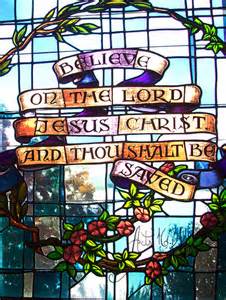
Acts 16-31 Believe in the Lord Jesus Christ stained glass

Acts 16:30-31 – September 6, 2015

Most people I know like things in order. Neat and tidy. Under control. I mean, most things. Steady income, check! Roof over our heads, check! Clothes to wear and food to eat? Check and double check. Sure, we can have little surprises now and then, but most people crave order. Everything’s hunky dory! Just the way it’s supposed it be.

Until, it isn’t. We experience things spinning out of control.

In our Scripture reading today, we have Paul, Silas, Dr. Luke and their missionary friends in the town of Philippi. This is another in our summer sermon series, Postcards from the Early Church. If you remember last week, we met Lydia, a Gentile woman. We are told she is from a city called Thyatira, and is a dealer in purple cloth, which for that time was a luxury item. What I suggested last week was that it’s similar today to a dealer in high-end designer clothing in our culture and context. She not only owns her own business, but she also has her own house.

The pertinent part for us in this week’s sermon is that after becoming a believer in the Lord Jesus Christ, Lydia invites Paul and his friends to stay at her large house in Philippi. Paul and friends start to carry out the challenging work of starting a church plant. That is, spreading the Good News of the risen Lord Jesus.

Paul is skilled at debate, and I suspect he and his friends went to gathering places all around town to talk with people. To tell them about the Good News about the Lord, how He died for our sins and was raised from the dead, conquered death, and has ascended to heaven.

Now we discover a slave girl starts to follow Paul and his friends around, as they travel about town. Listen to Acts 16: “We were met by a female slave who had a spirit by which she predicted the future. She earned a great deal of money for her owners by fortune-telling. 17 She followed Paul and the rest of us, shouting, “These men are servants of the Most High God, who are telling you the way to be saved.” 18 She kept this up for many days.”

Here Dr. Luke gives us a thumbnail sketch of this slave girl. Yes, she is telling the truth. Paul and his friends were telling people the way to be saved. But, the truth can be twisted. She refers to “the Most High God.” Meaning, a God among other Gods. And, in the polytheistic environment of Greece, the title “the Most High God” was also a common name for Zeus, ruler of the Greek pantheon of gods.

This slave girl was a factor completely out of the control of Paul and his friends. From what this looks like, she was a sort of a heckler. Walking after them, shouting and making a big fuss. And, the slave girl was a local. A known person to the inhabitants of the town. Paul and his friends were visitors, strangers in town. There was that dynamic, as well.

Not only is she starting to get irritating and annoying, following them around like a pesky little sister for many days, Paul realizes this slave girl is energized by a demon. The demon inside of her enabled her to tell fortunes, to tell people what would happen to them in the future. I suspect the demon knew with great certainty the exact identities of Paul, Silas, Dr. Luke, Lydia, and the rest of the believers in the risen Lord Jesus there in Philippi.

Let’s see what happened next! “Finally Paul became so annoyed that he turned around and said to the spirit, ‘In the name of Jesus Christ I command you to come out of her!’ At that moment the spirit left her.

What was that that happened? Paul got fed up with the persistent heckling the demon—I mean, the slave girl was doing. So, he cast the demon out of this slave girl. Next thing we know, the girl’s owners got really mad! That was a serious consequence, to be sure.

Let’s trace this back a bit. Why were her owners so angry and upset?

Apparently, the slave girl’s owners didn’t particularly care that she wandered around the city of Philippi shouting about Paul and his friends being servants of God and telling people how to be saved, as long as she pulled in the money. As long as she was a profitable cash cow, her owners were happy.

But in casting out the demon? Talk about things spinning out of control! The unexpected consequences of Paul’s action? It dried up all the profits the girl’s masters were making! Paul dried up the owners’ lucrative source of revenue! Talk about hitting them in the pocket book!

Continuing with Acts 16: “19 When her owners realized that their hope of making money was gone, they seized Paul and Silas and dragged them into the marketplace to face the authorities. 20 They brought them before the magistrates and said, “These men are Jews, and are throwing our city into an uproar 21 by advocating customs unlawful for us Romans to accept or practice.” 22 The crowd joined in the attack against Paul and Silas, and the magistrates ordered them to be stripped and beaten with rods.”

I owe thanks to John, a pastor on a sermon discussion board I follow, from time to time. His insight? The wallet. The billfold. “’Religion’ is all well and good, at least until it starts affecting my pocketbook. In this [passage], it’s only after the new religion affects the slave girl’s owners’ bank account that they have Paul and Silas arrested.”

With you and with me, today. What about us? Is “Religion” all well and good, until it hits us in the pocketbook, too? Is “Religion” affecting our bank accounts? Will following Jesus here in the United States affect us in a negative way? Affect our pocketbooks? Or, is that hitting too close to home for us? Hmm. I’ll let us think about that for a while. Let it sink in.

Let’s follow along with Paul and Silas. Dr. Luke tells us specifically about their time in the prison. “23 After they had been severely flogged, they were thrown into prison, and the jailer was commanded to guard them carefully. 24 When he received these orders, he put them in the inner cell and fastened their feet in the stocks.”

Things are spinning out of control again. Paul and Silas are thrown into the inner cell of a prison. I bet that was an especially secure place. But what do they end up doing? Instead of crying and desperately lifting their voices in prayer to God, they begin to sing. Imagine, singing hymns of praise to the Lord, at midnight. Securely locked, in a dark prison.

We continue with chapter 16: “26 Suddenly there was such a violent earthquake that the foundations of the prison were shaken. At once all the prison doors flew open, and everyone’s chains came loose. 27 The jailer woke up, and when he saw the prison doors open, he drew his sword and was about to kill himself because he thought the prisoners had escaped. 28 But Paul shouted, “Don’t harm yourself! We are all here!”’

We can see the economic effect this earthquake had on the jailer, for sure! Plus, the horrible sinking in his heart, seeing his jail destroyed, with the prisoners quite possibly running away, escaping in the middle of the night. No wonder he drew his sword, ready to kill himself.

The jailer is stopped by Paul, shouting out to him: “Don’t harm yourself! We are all here!”

29 The jailer called for lights, rushed in and fell trembling before Paul and Silas. 30 He then brought them out and asked, “Sirs, what must I do to be saved?” 31 They replied, “Believe in the Lord Jesus, and you will be saved—you and your household.”

Did you hear? What must we do to be saved? Believe on the Lord Jesus.

It doesn’t matter what is spinning out of control. It doesn’t matter what economic consequences are happening. It doesn’t matter what the authorities say or don’t say. Instead, we hear the Good News preached to us. Believe in the Lord Jesus, and we will be saved. All of us, and our households, too!

On this Labor Day weekend, we can see all levels of society hearing the Good News. We can see the slave girl—a slave, someone from the lower class, being freed and exposed to the saving grace of the Lord Jesus! And, we can see the jailer, a solid member of the middle class, receiving salvation with joy! And last week, we saw Lydia, a member of the upper class in Philippi, listening eagerly to the Good News. She came to faith in the Lord Jesus, too.

Our Lord Jesus is not only for the Gentile and the Jew, not only for male and female, but Jesus also transcends all class distinctions. All separations of caste, of nationality, of ethnicity, of background.

That’s how it was in the first century, and that’s how it is today, too. What about you? Do you believe in the Good News? Do you believe in the power of Jesus to forgive your sins, and help you to walk with Him day by day?

As I proclaim each week after our Confession of Sin at the beginning of the service, “Believe the Good News of the Gospel. In Jesus Christ we are forgiven!” Alleluia, amen!

@chaplaineliza

Suggestion: visit me at my daily blog for 2015: matterofprayer: A Year of Everyday Prayers. and my other blog,  A Year of Being Kind .  Thanks!

Unknown's avatar

Open Our Hearts!

“Open Our Hearts!”

Acts 16 St. Lydia

Acts 16:6-15 – August 30, 2015

Men, men, men! Here in the United States, men still take center place in many areas today. Look at most sports broadcasts. What you see is—men! Look at many industries and places of work, still, today. Firefighters? Mostly men. Police officers? Mostly men. Truckers? Construction workers? Mostly men here, too.

The sermon I have for you this morning is not the typical sermon. I would like us to consider the passage from Acts 16 that was read just now. This passage is interesting because of its highlight on women. Let’s take a closer look at the subject at hand.

We are looking at Acts, chapter 16, as part of our summer sermon series, Postcards from the Early Church. The events recorded in this book take place later in the first century after the birth of Christ, a long, long time ago. The concepts of welcoming and celebrating multi-culturalism—as we do today—were not even thought of.

The apostle Paul and his friends had a bit of a culture shock themselves. They had been itinerant preachers and missionaries throughout Asia Minor for the past several years. They were on the front lines, spreading the good news of Jesus Christ on the frontier, to people who had never heard that good news before. And now, at the beginning of Acts 16, they take the huge step of crossing into Europe. They are now in Philippi, in what is now northern Greece, in the region of Macedonia. So they are truly missionaries, bridging continents, crossing cultures, coming into a new situation with their good news.

Now, there was one structure Paul and his friends had to deal with, wherever they went: the Roman Empire. The Roman Empire embraced many different cultures, from western Europe to northern Africa, to the edges of what is Iraq today. But within that polyglot of cultures, one basic aspect remained constant: the pre-eminence of men, and the subordination of women.

We can still see this fact of life in certain societies and cultures today; in certain cultures, women are still subordinate, not allowed to do things or to be involved in activities that are normal and matter of course for both women and men today, in our culture and society here in the United States.

Let’s return to the scripture passage we are examining today. Dr. Luke is different from the other biblical authors, since he was a Gentile, and a doctor. He was used to dealing with women and children as a doctor, as a matter of course, and I believe they were important to him, professionally as well as personally. Thus, he mentions them more often in his writings. Here in Acts 16, almost the first thing that Dr. Luke tells us about Paul and his friends in Philippi is their encounter with a gathering of women outside of the city.

Let me say how unusual this is, for the Bible. In either the Hebrew Scriptures or the New Testament, the mention of a gathering of women, only, is almost unheard of. The mention of a woman, on her own, at all, is unusual.

Just think about it: women in the Bible are usually mentioned in reference to a man: Abraham’s wife, Sarah; Judah’s daughter-in-law, Tamar; Samuel’s mother, Hannah; Mordecai’s cousin, Esther; Aquila’s wife, Priscilla; Jesus’ mother, Mary.

Some women in the Bible are not even mentioned by name: the woman at the well from John 4, the woman with the flow of blood from Luke 8, and the faith of the Syro-Phoenician woman from Mark 7—anonymous women, known only to God. But wherever they appear in the Bible, the women of the Hebrew Scriptures and New Testament are clearly examples for anyone who reads the Bible today or has read the Bible, throughout the centuries.

Let’s look at this situation in Acts 16 from a different perspective, for a moment. Quite an odd occurrence, to be sure! Here we have a small group of men, strangers from out of town, coming and sitting down among a larger group of women. What is going on here?

I could mention the fascinating information I researched about Jewish synagogues among majority Gentile towns in the first centuries of this common era, or about the possibility that there was no synagogue in Philippi, which led the God-fearing people who wished to worship outside of the town. However, that is not where I wish to focus today. I would like to look at the rabbi Paul and his companions coming to pray and worship with this group of women. Rabbi Paul was probably the guest preacher for the morning, supported by his colleagues in ministry.

This prayer meeting was an open-air meeting outside the town, probably at a marginal location near the river. It was a meeting of God-fearing women, probably mostly Gentile in makeup. The amazing thing about this mention in Acts 16 is that Dr. Luke mentions the women.

Women are not mentioned often in the Bible, period. But without the active participation and support of women, and some of them of high standing, too, Paul and his companions would not have been able to accomplish half of what they did. Women, especially of high standing, were involved in local politics throughout the region, and economically involved, as well. Women were important to the ongoing life of the new church and to the spreading of the good news for several years before this occasion in Philippi. I believe Paul was acknowledging this through his willingness to talk with and preach for the women.

It is unusual for women to be mentioned on their own, self-sufficient, having their own accountability and standing in the city where they live. Yet here we have just that. Dr. Luke particularly mentions Lydia, and he gives us lots of personal information about her. We can tell by her name that she is a Gentile woman, and we are told she was born in a city called Thyatira, and is a dealer in purple cloth, which for that time was a luxury item, for sure. What we can compare this to is a dealer in high-end designer clothing in our culture and context, today. We can readily see that she not only owns her own business, but she also has her own house, and household servants and maybe even assistants and others in her entourage.

What did the Lord do? Here in verse 14, the passage says that the Lord opened Lydia’s heart to listen eagerly to the things Paul preached. And because of her attention to the message, she came to faith in the Lord Jesus Christ. And as an expression of that sincere faith in the Lord, she went the next step, and was baptized, thereby making a public declaration of her realization of coming to faith. And not only Lydia, but also her whole household was baptized.

Then, after she was baptized, she offers her own house as a hotel, as a place for Paul and his companions to stay, a base of operations while they were in Philippi. She is hospitable, showing good character and a definite spiritual gift. She had been a God-fearer, a worshiper of God, and now she was a Christian, a believer in the good news.

That’s Lydia’s story. But, how about you? Lydia was a God-fearer. Lydia was a proselyte, probably coming faithfully to prayer and worship Sabbath after Sabbath. It could even have been for years, faithful in her attendance, faithful in her giving to others. But it took the Lord to open Lydia’s heart to listen eagerly to the message of the good news. It took the Lord to lead Lydia to faith in the good news of Jesus Christ.

What about you? Have you come to that point in your life where you accept what Jesus Christ has done for you? Have you come to believe in that good news that Paul preached? Paul’s answer from Acts 16 still stands today. It is still valid. “Believe on the Lord Jesus, and you will be saved, you and your household.”

And if you are a believer in the Lord already, praise God! You can join Lydia and Dr. Luke and Paul and Silas and the rest of the saints, throughout the centuries.

And even if we do know the Lord, there may be some who have been far away from Him, and not as attentive to God’s will and God’s ways. I know I have sinned, often, and I think there may be others in the same circumstance. The Lord does not turn His back, and ignore us when we come to say we’re sorry, and we have sinned. No.

The Lord is ready to welcome us, to extend God’s mercy and grace to us. Each one of us.

Have you come to the Lord? Have you asked forgiveness for your sins, and thanked God for welcoming you to Him? See, today is the day of salvation. Let this day be the day when you open your heart to the Lord.

@chaplaineliza

Suggestion: visit me at my daily blog for 2015: matterofprayer: A Year of Everyday Prayers. and my other blog,  A Year of Being Kind .  Thanks!