Unknown's avatar

Blessings in Difficult Times

“Blessings in Difficult Times”

Luke 6:17-23 (6:23) – February 13, 2022

            Have you ever gotten down on the same level as a small child? I mean, physically gotten down on the floor, or on the grass, and seen what they see? Experienced what they experienced, from their point of view? From where they are at?

            That is what I want to suggest for this week’s Scripture reading, from Luke chapter 6. But before we go there, what does this reading remind you of? It sounds like another well-known Scripture passage, from Matthew chapter 5: the Beatitudes. Except, the Beatitudes come from the Sermon on the Mount, which has a slightly different focus, another point of view.

            Let us take a look at this reading from Dr. Luke’s point of view. I’ll read from the modern translation The Message: “Jesus stood on a plain surrounded by disciples, and was soon joined by a huge congregation from all over Judea and Jerusalem, even from the seaside towns of Tyre and Sidon. They had come both to hear him and to be cured of their diseases. Those disturbed by evil spirits were healed. Everyone was trying to touch him—so much energy surging from him, so many people healed!”

            What an awe-inspiring image from Luke! Just imagine, Jesus – surrounded by huge crowds who came to hear Him preach. And also, to be cured of their diseases. A totally different angle from that of Matthew, from the Sermon on the Mount. Can you imagine this huge congregation gathering together for an extended healing ministry from the Rabbi Jesus? Plus, hearing a marvelous sermon, on top of everything? That is the setting of this Sermon on the Plain. A different retelling of the Beatitudes in our reading today. Let’s continue with the reading: “Blessed are you who are poor, for yours is the kingdom of God. 21 Blessed are you who hunger now, for you will be satisfied. Blessed are you who weep now, for you will laugh.”

When some people read the next few verses from Luke 6, some might nod their heads. Or, say nice things, like “such wonderful words!” or “meaningful sentiments, surely!” But, are these opinions simply surface platitudes? Do people who praise this reading from Luke understand its full implications?  

The corresponding verse from Matthew 5 says “Blessed are the poor in spirit.” Not as Luke says, simply “Blessed are the poor.” Blessing those who are poor is more stark, more real. Less spiritual. Face it, less comfortable for those listening to Jesus.

Do any of us here in this church know what it is like to have real food insecurity? To only have enough for one meal a day? And that meal being canned vegetables from a food pantry? Do any of us here in this church know what it is like to live in a cheap motel room – for weeks, even months, on end? Perhaps with several school-age children who never get enough to eat, and who keep growing out of their clothes and shoes from Goodwill or the Salvation Army store? That is the sad reality for countless numbers of people across our country today – and for many people who get their food and groceries from the Maine Township Food Pantry, which we support and contribute to.

               I’ve spoken before about the Rev. Janet Hunt, who leads a Lutheran church in DeKalb, Illinois. She writes about a desperate woman who recently called their church, looking for assistance. She did not have enough for the February rent, after paying her many other bills. Rev. Hunt goes on to say, “Chances are great that the precious one who called this week would now be living in her car, if she had one, which she does not. Or she has moved in with a friend. Or maybe she found her way to our local homeless shelter. Where hopefully they had room for her.

“But with all of my imagining, I cannot presume to know what this has been for her, even if I did know the details.  And while I do not know how this is a ‘blessed’ state of being, truly I do not, I do know that she is close to the heart of God today, as is anyone, anywhere who find themselves where she is. As for the rest of us who know ourselves to be more ‘blessed’ by the world’s standards now, we would surely do well to get ourselves close to one such as her. For there, apparently is where God’s kingdom already is.

“And yet, I don’t always. Truth is, most of the time I am glad enough to let someone else take the call, listen to the pain, sort through the details.” [1]

The hard truth is that Jesus calls these dear ones, these people with very limited resources to be especially blessed. Theirs is the kingdom of heaven. These are the words that face us today. Personally, I struggle with these words of Jesus. Perhaps you do, too.   

I think of the setting once more. Jesus – surrounded by huge crowds who came to hear Him preach. And also, to be cured of their diseases. This huge congregation gathers together for an extended healing ministry from the Rabbi Jesus. Is this healing in a multitude of ways?

We just heard two sermons, for two weeks, focusing on love, which the Apostle Paul names as the number one spiritual gifts. We can look at this Sermon on the Plain from a different point of view, again highlighting love. “Love makes us economically poor but enriches our lives; ambition makes us economically secure but leaves us selfish and shallow. Our lives reveal our priorities. May God give us the power to choose love over ambition, his Kingdom over present riches.” [2]

As the body of Christ, as followers of Jesus, Jesus calls each of us to reach out to others and be His loving hands, His willing feet, His caring heart.

These are challenging words from our Lord Jesus, difficult to hear, and even more difficult to put into action. Jesus calls each of us to make the blessings of the kingdom of heaven a reality in this world today. I pray that when Jesus calls us, we listen and do. We listen and go. Jesus tells us, go, and do likewise.

Amen, alleluia.

@chaplaineliza

(Suggestion: visit me at my other blogs: matterofprayer: A Year of Everyday Prayers. #PursuePEACE – and  A Year of Being Kind . Thanks!


[1] https://dancingwiththeword.com/blessed-are-the-poor-2/

[2] http://www.word-sunday.com/Files/c/6-c/A-6-c.html

“O Brother (or Sister), Who Art Thou?” Larry Broding’s Word-Sunday.Com: A Catholic Resource for This Sunday’s Gospel.

Unknown's avatar

It’s All About Love

“It’s All About Love”

1 Corinthians 13:6-13 (13:13) – February 6, 2022

            Weddings are wonderful events. Brides and grooms try to make them meaningful and personalized, as much as they can. Except – I have strong feelings about certain songs that are featured at weddings. I won’t name any specific song, but I think you can recognize them when you hear them. I’m thinking of songs that highlight love as a warm and fuzzy emotion, and that is about it. Where will the newly-married couple be when the rose-colored glasses come off? What happens when that warm and fuzzy feeling called “love” goes away?

            This is the last sermon in our series on spiritual gifts, and we look more closely at the last part of Paul’s discussion on the greatest spiritual gift – love. After Paul spends all of 1 Corinthians 12 talking about the great variety of spiritual gifts that God gladly gives to believers in Christ, he turns to the greatest of all gifts, that of love.

            But, what is love all about, anyway? Last week, we talked about all the things that love is not, as listed right here in this chapter. According to 1 Corinthians 13, love is not just an emotion, not just a feeling. The description I read last week definitely had more about aspects of what love is not; these can be greatly helpful as we hammer out the biblical definition of love.  

            As I reflect more on popular culture today, and how sentimental and sappy modern love songs can be, I can see how we – as an American culture – might have different ideas about love than those we read here in 1 Corinthians 13.  

            Some church folk today might have different ideas about the Corinthian church, too. Corinth was a diverse, multi-cultural, multi-ethnic city in Greece, at the crossroads of several major roads through the region. The church was founded by Paul, an ethnic Jew, but certainly was not all one ethnicity. No, this was a diverse, multi-cultural, multi-ethnic group of believers!

            As we read further in 1 Corinthians, we can see how much discord really was in action in that dysfunctional group of believers, too. As our commentator Doug Bratt says, “challenges and controversies dogged their church. They disagreed theologically. They struggled with persistent sin, lawsuits among themselves, sexual immorality, and marriage. Corinth’s Christians disagreed on how to deal with food that had been sacrificed to idols and religious freedom.” [1]

            With that large amount of discord and disagreement among the church members in Corinth, is there any wonder why their former pastor Paul wrote them a letter detailing spiritual gifts which God gives to benefit the whole church? And further, why Paul lifts up love as the best and greatest spiritual gift of all?

            We return to the question “what is the biblical definition of love?” I know we discussed this last week, and I mentioned a number of things love was NOT. Let’s turn around and see what Paul says that love IS. “Love does not delight in evil but rejoices with the truth. It always protects, always trusts, always hopes, always perseveres. Love never fails.”

            I sometimes read an online sermon chat board, where preachers share their reflections on the week’s scripture passages before Sunday comes. I thought Rev. L’Anni from the Netherlands had some very pertinent reflections on this reading.

“When I do premarital counseling I often will read I Cor. 13:4-7 with the couple and note that in this definition of love there is not one single verse that refers to a feeling. No warm fuzzies. No Hallmark honey and sweetness. It refers to ACTION. Being patient—when you FEEL im-patient. Being kind—when you feel like being un-kind. Keeping no score of wrongs—when you feel like holding a grudge. This is how Christian marriage can not only survive but thrive. But not just marriage but any relationship where both are willing to love each other as defined by this passage.” [2]

These are things that love DOES, actions that people can take that are loving, caring and compassionate. When I think of the number one example of love, I think of our Lord Jesus, while He was here on this earth. I think of how Jesus lived, how He acted, and how He carried out His ministry. Jesus showed us how to love, by displaying love in action. Jesus truly showed His friends (as well as all the world) a life of love – and caring and compassion.

            What better thing to do than to think of our Lord Jesus, when He was here on this earth, and ask ourselves “What would Jesus do?” How would Jesus act?  How would Jesus love?

            In recovery circles, a common saying is “do the next right thing.” I had a friend of blessed memory, who is now with the Lord, who always tried his very best to be loving, caring and giving. He knew that common recovery saying very well, except he would change one word. He would often say “do the next loving thing.” That’s how to fulfill Paul’s definition of love from 1 Corinthians 13.

            So – what would Jesus do? Do the next loving thing. Go. Do that.

            Alleluia, amen.

@chaplaineliza

(Suggestion: visit me at my other blogs: matterofprayer: A Year of Everyday Prayers. #PursuePEACE – and  A Year of Being Kind . Thanks!


[1] https://cepreaching.org/commentary/2022-01-24/1-corinthians-131-13-3/

[2] https://www.desperatepreacher.com/texts/1cor13_1/1cor13_1.htm

Unknown's avatar

Love – No Matter What

“Love – No Matter What”

1 Corinthians 13:1-10 (13:7) – January 30, 2022

            With February right around the corner, many people start thinking about hearts and flowers. Thinking about chocolates and candy. Sweets for the sweet, as the old saying goes! Yes, Valentine’s Day is just two weeks away, and stores and card shops are full of red and pink displays and hearts and roses.

            As many hear this chapter on love from 1 Corinthians 13, some people wax sentimental. This chapter is a favorite to read at many wedding services in the church. “Everyone will nod along with a smile on their face. They’ll be remembering a wedding somewhere where these words were used to somehow capture the essence of this wild and crazy promise being made before the gathered overdressed assembly, this human enterprise that escapes human capabilities on a regular basis. [Or,] they’ll be remembering the Pinterest or Instagram post in fancy calligraphy, or the needlepoint in Grandma’s sitting room.” [1]

What if I were to tell you that love – the Bible’s definition of love – does not have anything to do with red and pink store displays, or hearts and flowers for Valentine’s Day?

            As we reflect on the biblical definition of love, let’s see what Paul says love does NOT do. I’m turning again to the wonderful modern translation of Eugene Peterson, The Message. “Love doesn’t want what it doesn’t have. Love doesn’t strut, Doesn’t have a swelled head, Doesn’t force itself on others.”

            That doesn’t sound much like lace and chocolates, hearts and big red bows, does it? No romanticized consumer version of love here! Do you recognize this honest, genuine kind of a feeling in the people you are close to, in the people you call family? Loved ones, and ones you cherish? This description is more of a love that is right down to earth, an honest, genuine feeling that is real and isn’t afraid to get its hands dirty.

            Let’s see a little more of what Paul says love does NOT do: “Isn’t always “me first,”
Doesn’t fly off the handle, Doesn’t keep score of the sins of others, Doesn’t revel when others grovel.” When I read all of these things love does NOT do, sometimes I get discouraged. It’s like I can’t measure up. I could never be that kind of person or be described that way; could you?

This enlarged, continued description of the biblical definition of love sounds too good to be true. For real people, I mean. To me, it sounds a lot like Mother Teresa, or Fred Rogers, two people who are considered to be the pinnacle of loving, caring people.

Wait a minute! Have we talked to God about this? Paul has been telling us for almost two chapters in 1 Corinthians that God freely gives believers spiritual gifts. What is more, Paul says that love is the absolute best of these different, diverse spiritual gifts. That means that God gives out love freely! With both hands! Right here, Paul is describing the gift of love that comes through people from the Lord. Isn’t that some of the best news ever?

I don’t need to scramble and strive to love, trying really, really hard. It’s not all me, putting together my own faulty kind of caring. No! God freely gives gifts of love to God’s children. God helps us to show love and caring, kindness and unselfishness. That is such a relief for me, and such a blessing to others!

We believers here on this earth may stumble on our way of walking the Christian journey, and that is okay. We do not need to fulfill each and every part of this long, involved definition that Paul given to us, either. And, it is not just up to our fallible striving or hard work to be the most loving and caring Christian believers possible. No! God will help!

When I think of God’s love, I think of certain people who modern society might not consider. Two individuals come to mind, who I knew years ago. Both are with the Lord now, and both had the diagnosis of Down syndrome. Both people were as loving and caring as anyone I have ever met. Both were selfless, totally concerned for others, and unfailingly kind, loving and giving. Isn’t this another example of love, according to the Bible? Isn’t it what love is all about?

Let’s take a final look at the last section of Paul’s definition of love, according to God. The previous entries or parts of the description were couched in the language of what love was NOT. At last, Paul describes what love IS. “Takes pleasure in the flowering of truth, Puts up with anything, Trusts God always, Always looks for the best, Never looks back, But keeps going to the end.” These are positive, affirming, uplifting traits, indeed.

We may not be able to walk the walk or talk the talk as perfectly as Paul describes here. “But we can stand in Paul’s certainty that there is a new way of being alive in the world, a new way of seeing the world and everyone in it. Must we simply accept everything going on in our messed-up world with a smile and nod? Of course not; evil exists. But we aren’t always the best at identifying where the real evil resides. Paul argues that it would better to lead with love.”[2] Again, you and I cannot generate this kind of spiritual gift in and of our own imperfect humanity, or of our own good works. We are welcome to ask the Lord for help and lead with God’s love.

This transformation is truly a gift – a gift of love! This gift comes from God, and is freely    offered to all believers! Let us thank God for this gift of love we all can display, and we all may give to others, just as freely. Alleluia, amen!


Thanks so much to Rev. Dr. Derek Weber, Director of Preaching Ministries for www.umcdiscipleship.com and his excellent preaching notes for this week’s worship service and sermon. I used several ideas from these notes for the sermon today

@chaplaineliza

(Suggestion: visit me at my other blogs: matterofprayer: A Year of Everyday Prayers. #PursuePEACE – and  A Year of Being Kind . Thanks!


[1] https://www.umcdiscipleship.org/worship-planning/love-never-ends-being-the-body-of-christ/fourth-sunday-after-the-epiphany-year-c-lectionary-planning-notes/fourth-sunday-after-the-epiphany-year-c-preaching-notes

[2] https://www.umcdiscipleship.org/worship-planning/love-never-ends-being-the-body-of-christ/fourth-sunday-after-the-epiphany-year-c-lectionary-planning-notes/fourth-sunday-after-the-epiphany-year-c-preaching-notes

Unknown's avatar

Useful Gifts

“Useful Gifts”

1 Corinthians 12:10-17 (12:13) – January 23, 2022

            Who remembers Mr. Potato Head? That wonderful children’s toy provided hours of pleasure and play for my children, to be sure! They would laugh when they put the feet where the eyes ought to be, or the ears where the arms fit in the potato body. And, how much laughter and silliness would happen when my children made a Potato Head person with all eyes, or all ears, or all hands – and nothing else!  

            That is exactly what comes to mind when I read these verses from 1 Corinthians 12. A Mr. or Mrs. Potato Head, and all of their representative plastic parts. The Apostle Paul reminds the Corinthian believers “All these gifts have a common origin, but are handed out one by one by the one Spirit of God. [The Spirit] decides who gets what, and when.”

As we heard last week, God continues to give gifts to each believer. How generous of God! Our scripture reading says “God’s various gifts are handed out everywhere; but they all originate in God’s Spirit.”

We never can hear this enough! All of us as believers in Jesus Christ have been given some very special gifts from God! It’s possible you were not aware, or once knew and had forgotten, but it is true. Each Christian has a unique, God-given gift (or unique bundle of gifts!).

            Today’s sermon is the second part of a sermon series on spiritual gifts. Last week, we focused on the whole Church and the God-honoring service we could give to each other, individually. This week, we will highlight our service to the whole Body of Christ. Paul gives us such great examples! Each of us matters. It’s not only a current, popular message of today – Paul wrote it right here two thousand years ago in this letter to the Corinthians, too!

            Let’s take a closer look at what exactly Paul did say. I am using Eugene Peterson’s marvelous modern translation The Message. “A body isn’t just a single part blown up into something huge. It’s all the different-but-similar parts arranged and functioning together. If Foot said, “I’m not elegant like Hand, embellished with rings; I guess I don’t belong to this body,” would that make it so? If Ear said, “I’m not beautiful like Eye, transparent and expressive; I don’t deserve a place on the head,” would you want to remove it from the body?”

            Paul’s emphasis here: “you matter because the body [of Christ] won’t be the body without you, without the gift that you bring, without the person that you are.” [1] I realize that some church members and some believers in Christ feel inferior, regarding their spiritual gifts. They might throw up their hands and say something like this: “My contribution doesn’t mean much. It isn’t worth much at all. I can’t measure up to what important Christians are able to do.”

            Some years ago, I happened to know an elderly Christian woman who felt exactly this way. She had tremendous spiritual gifts of helps and mercy, but because she had been taken advantage of numerous times by a church (long since closed) in Chicago, she was so sad and dispirited that she had given up. Her amazing spiritual gifts were simply lying unused. She even had given up going to church. Her once-abundant gifts of helping and showing mercy were sitting on a shelf, sadly gathering dust.

            Isn’t it so true that God directs different gifts to go to different people? Each one is given something fashioned exactly for that particular individual, but ALL these various gifts and people (or, parts of the Body) come together to make one Body of Christ, one Church. The Church would be pretty silly if everyone was an eye, or everyone was an ear, wouldn’t it?

That is why the Church has all different members – or limbs – or parts to do lots of different functions. And, some of these functions in the Body of Christ are unseen from the outside. It’s like with an ordinary human body. Lots of a body’s functioning is – necessarily – sight unseen. Yet, we would look silly if we saw all of our arteries and veins on the exterior, or our digestive system on the outside of our skin.

This is where our responsibility comes in. God challenges us to recognize which of these spiritual gifts have been given to the service of our local family of faith. We are called to use these gifts for the larger Body of Christ, the Church Universal. As Paul says, it is the same God that causes these gifts to work in and through us. “God himself is behind it all. Each person is given something to do that shows who God is: Everyone gets in on it, everyone benefits.”       

One of my favorite commentators is Carolyn Brown, retired director of Children’s Ministries in the Presbyterian Church. She gave an excellent example of the whole local church contributing to ministry: “Since my church is hosting the community winter overnight shelter for men for whom there is no space in the permanent shelters, I’d [like to talk about] people who are cooking meals, playing games during the evening, decorating the room and tables to welcome our guests, etc.  Together we are like a body taking care of our guests.” [2]  What a wonderful way to work together as a healthy Body of Christ! A great reminder to the rest of us, for sure.

Some good questions to ask: “What staff people are often neglected in the thank-you moments in the life of the church? Which volunteers are plugging away unremarked sometimes for years without proper recognition?” [3] Helping people find their worth is a valuable and necessary effort. And, it’s blessed by God! Whatever you do, in thought, word, or deed, do it all to the glory of God – and for the benefit of your family of faith, too! Amen!


Thanks so much to Rev. Dr. Derek Weber, Director of Preaching Ministries for www.umcdiscipleship.com and his excellent preaching notes for this week’s worship service and sermon. I used several ideas from these notes for the sermon today

@chaplaineliza

(Suggestion: visit me at my other blogs: matterofprayer: A Year of Everyday Prayers. #PursuePEACE – and  A Year of Being Kind . Thanks!


[1] https://www.umcdiscipleship.org/worship-planning/love-never-ends-being-the-body-of-christ/third-sunday-after-the-epiphany-year-c-lectionary-planning-notes/third-sunday-after-the-epiphany-year-c-preaching-notes

[2] http://worshipingwithchildren.blogspot.com/2015/12/year-c-third-sunday-after-epiphany.html

[3] Ibid, www.umc.discipleship.org  

Unknown's avatar

Gifts for Service

“Gifts for Service”

1 Corinthians 12:1-11 (12:4) – January 16, 2022

            Christmas was not that long ago. Less than a month ago! Remember the gift-giving? And, how much you wanted to see whether a close family member really liked your gift? Sometimes gift-giving can be stressful, especially when we exchange gifts with people who do not have a generous spirit. You know the kind, people who are so focused on themselves that they – or perhaps, we forget what Christmas is all about – receiving God’s greatest gift of all.

In this after-Christmas, post-gift-giving season, is there any wonder that many people are still up to their ears in the after-holiday bustle of gift returns or gift acknowledgements, and some even disappointment from all the gift-giving?

            God did not finish giving gifts when the Baby in Bethlehem was born in a manger two thousand years ago. By no means! God continues to give gifts to each believer, just as Eileen read to us. How generous of God! Our scripture reading says “God’s various gifts are handed out everywhere; but they all originate in God’s Spirit. God’s various ministries are carried out everywhere; but they all originate in God’s Spirit.”

Perhaps, we might paraphrase Paul: “Since you have already received gifts from God, what are you doing with them – lately?” But, perhaps I am getting too far ahead of myself. All of us as believers in Jesus Christ have been given some very special gifts from God! Perhaps you were not aware, or once knew and had forgotten, but it is true. Every Christian has a unique, God-given gift (or unique bundle of gifts!).

Oh, no, some say. I can just hear them. “Not me! I don’t have any special gifts from God! How could that be? I can’t do anything super special. I’m just a run-of-the-mill person.” Our commentator Karoline Lewis would strongly object! Lewis says we all need to recognize “that the gifts we receive are the very grace-acts of God. The term that Paul uses for “gift” has the same root as the word for “grace.” [1] These grace-filled gifts are charismaton in Greek, which is where we get the word “charismatic.” And, each believer receives these gifts!

            What a marvelous thought: each of us is a charismatic Christian, in other words! That is exactly what the apostle Paul says, right here.

Here in 1 Corinthians is not the only place where the New Testament gives a list of spiritual gifts. It talks about them in Ephesians 4, 1 Peter 4, and Romans 12, too. Plus, modern lists of spiritual gifts draw from all over the Bible. We can see that each believer has a unique, God-given gift (or unique bundle of gifts!). Individualized, and personalized!

So, what do we do, now that we know we all have spiritual gifts? Good question!

Just knowing about our spiritual gifts is only a small portion of actually having them and acknowledging them. The gifts of the Holy Spirit are an excellent way for each of us to serve God, in our own individual way. Do you know someone in the church who is a really helpful person? I can think of several. I think God may have given them the spiritual gift of helps. How about someone who is particularly encouraging to others? That person might indeed have the gift of encouragement.

What about the gift of administration, to organize and figure out what goes where? The gift of healing is seen physically, true, but it’s also used for mental, emotional or spiritual sickness or distress. And, the gift of leadership, of delegating tasks and gathering people together is another important spiritual gift.

            This is where our responsibility comes in. We don’t just sit on our hands and do nothing, now that we know about our personal spiritual gifts. God challenges us to recognize which of these spiritual gifts have been given to us individually and then to use them to the glory of God in our lives at home, at school, at work, and in the community. [2] As Paul says, it is the same God that causes these gifts to work in and through us. “God himself is behind it all. Each person is given something to do that shows who God is: Everyone gets in on it, everyone benefits.”

            Now, what about service to others? Specifically, I am thinking about the federal holiday that will be celebrated tomorrow. Yes, it is Martin Luther King Jr.’s birthday anniversary. Moreover, this holiday has been recognized as a Day of Service, nationwide.    

            The whole idea behind this service fits hand in glove with the United Church of Christ’s concept of the Beloved Community. Service is a hallmark for certain churches, especially in the UCC. The Rev. John Mingus describes the many-year journey of renewal his church took, Pilgrim UCC in Chattanooga, Tennessee, in a recent article on church renewal.

Rev. Mingus finishes his story with this moving summary: “the word is out about this church. Visitors come and stay. New folks go out and invite others. All kinds of folk see us as a safe place. We care for the homeless. We feed the hungry. We work for peace and public education. We have children and programming. We are a church in mission and when we gather it is as a beloved community. We are black and white, gay and straight, young and old, and much more. In our radical hospitality and at prayer people know that they are loved.” [3]

            Serving with spiritual gifts? Or providing a Day of Service? Or is it showing our neighbors we are indeed a Beloved Community? However you explain it, God will be so pleased that God’s people are given something to do that shows all people who God is.

God is indeed behind these marvelous expressions of Beloved Community, in exercising our spiritual gifts. Alleluia, amen.

@chaplaineliza

(Suggestion: visit me at my other blogs: matterofprayer: A Year of Everyday Prayers. #PursuePEACE – and  A Year of Being Kind . Thanks!


[1] https://www.workingpreacher.org/commentaries/revised-common-lectionary/second-sunday-after-epiphany-3/commentary-on-1-corinthians-121-11-2

[2] http://www.sundayschoollessons.com/gift.htm

[3] http://d3n8a8pro7vhmx.cloudfront.net/unitedchurchofchrist/legacy_url/11073/10JourneyTowardBelovedCommunity.pdf?1418436796

Unknown's avatar

Jesus Was Baptized, Too

“Jesus Was Baptized, Too”

Luke 3:15-17, 21-22 (3:21) – January 9, 2022

            Imagine standing in a line for a COVID test. The lines right now are very long, depending on where you can get tested! A pastor associate in a nearby town was recently exposed, and she needed to stand in a similar line, waiting her turn. I suspect the people around her had all kinds of emotions while standing there. Some felt fear, some felt expectation, some were disgruntled that they needed to be there. Some were anxious, and I bet some were hoping, and some hesitant. All kinds of emotions!

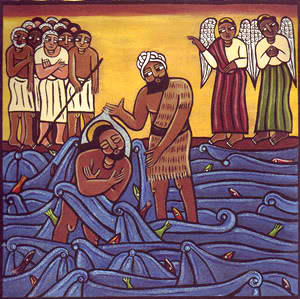
            Now, imagine a similar line, next to the Jordan River, about two thousand years ago. People waited in line to be baptized by John the Baptist. John was preaching some really challenging truths! Calling the people listening to him a brood of vipers, and calling everyone to repentance from their sins. Those were just two of the many difficult things he preached!

            Before Jesus began His public ministry, He stood in that line, too. Jesus asked His cousin John to baptize Him, too.

            I wonder how many of us can remember our baptisms? In this particular church’s tradition, I know the pastors almost always baptize babies and small children. That is a particular theological view of baptism, and one where we affirm that God extends heavenly blessing and grace to all, regardless of when they come before God in baptism.

            Two thousand years ago, John the Baptist wanted adults to confess their own sinfulness, to realize that each one had sinned and fallen short before God. As a result of that confession, John would then baptize each one. This is a slightly different view of baptism, and one that was (and is) just as valid. And, we come back to Jesus, waiting in that line. Jesus wanted John to baptize Him, too – even though Jesus never sinned.

            Imagine what it would have been like to be an eye-witness! I know I have preached about Ignatian prayer from time to time over the past years. Using Ignatian prayer, we imagine ourselves right into the picture. What does it feel like to be right there, in line on the banks of the Jordan? It’s a dusty, dry day. There’s some greenery, some growth along the river, but not much further away. Muted colors of browns and grays further inland. The sun is bright, and the sky a bright blue. Can you hear the wind? Feel the sandy ground under your feet?

            What is it like, to see that man called Jesus in line to be baptized? Did you hear any whispers about Him, being someone special? Then, some commotion down by the water. It’s that prophet who is doing the baptizing, the one named John! He and Jesus are having an extended conversation. John is protesting something – he shakes his head. But Jesus seems like He’s talking John into something. There they go, into the water. And, John baptizes Jesus.

            In centuries to come, many differing views arise about John’s simple, straight-forward act of baptism. “We don’t know if Jesus was immersed or sprinkled. We don’t know which liturgy John prefers, or if the vows that Jesus made were the same as the ones we make or not. We don’t know if John was properly credentialed or if Jesus followed the rules. We don’t know who signed the certificate. We need to know these things, don’t we?”[1]  

            Let’s continue to come forward in time, into the present day. I know it is so meaningful for relatives and loved ones to gather around a baby, a child, a young person getting baptized. What do you remember about the day you were baptized? Or, if you cannot remember your baptism, what do you remember about the day your children were baptized? Grandchildren? Godchildren? Perhaps a younger brother or sister? This is one of the sacraments of the church, one of those times when a common element, water, is used for a holy and marvelous purpose.

            Just a short time ago we celebrated the birth of the Baby born in Bethlehem. We remember in the fullness of time, Jesus was nurtured in the water of Mary’s uterus. We remember Jesus was baptized by John in the water of the Jordan. We remember that Jesus became living water to a woman at a Samaritan well. We remember Jesus washed the feet of the disciples. And, we remember Jesus sent His friends forth to baptize all peoples, all nations, by water and the Holy Spirit.

            As we enter into our imagining one last time, we see John and Jesus in the water, and the heavens open up. I have never seen anything like this before! There is a bird – it’s a dove, flying down from the opening in the sky! And then – it’s a voice! It is coming from that same opening in the sky, in the heavens. That must be God’s voice, isn’t it? “You are my Son, the Beloved; with You I am well pleased.”

            What a marvelous thing for God to say about Jesus. Remember, this is before Jesus has taught anybody, healed anyone, or died on the cross. At the beginning of a new year, this especially reminds all of us “that God loved Jesus and loves us not because of anything we do but just because God loves us. Period.” [2]
            What a marvelous thing to remember when we remember our baptism. Remember, we were baptized, too. And, God calls each of us beloved. With each one of us God is pleased.

            Alleluia, amen!

@chaplaineliza

(Suggestion: visit me at my other blogs: matterofprayer: A Year of Everyday Prayers. #PursuePEACE – and  A Year of Being Kind . Thanks!


[1] https://www.umcdiscipleship.org/worship-planning/love-never-ends-being-the-body-of-christ/epiphany-baptism-of-the-lord-year-c-lectionary-planning-notes/epiphany-baptism-of-the-lord-year-c-preaching-notes

[2] http://worshipingwithchildren.blogspot.com/2012/11/year-c-baptism-of-lord-january-13-2013.html

Unknown's avatar

Moved Into the Neighborhood

“Moved Into the Neighborhood”

John 1:14-18 (1:14) – January 2, 2022

            Sometimes, before a book really gets started, or before the action starts in a play or a movie, the author needs to say some important things. Things that we as readers (or watchers) need to see and absorb, in order to truly understand the rest of the book – or play, or movie. This is often called the prologue, and it can hold some pretty important stuff!

            Our Scripture reading today, the first Sunday of the New Year, comes from the first chapter of the Gospel of John, verses 14-18. This reading is from John’s prologue to his long narrative about our Lord Jesus and His life and ministry. Before the action gets going, John writes some really important stuff about the Eternal Second Person of the Trinity in this beginning, including verse 14: “The Word became flesh and made his dwelling among us.”

            Before the action begins in our lives, in our next chapter, we can sit down and think. Is there any kind of important stuff you would like to mention? Any special instructions or information for your potential readers? Let’s think about these opening verses from the Gospel of John. What do they say to us? “How do they function? [These words of the prologue] provide perspective a default position, a direction. They set the tone, set out themes so we know what to expect – a lens through which to view what comes next.” [1]

            These words remind me that you and I can take the opportunity to write prologues for our own stories, for the next chapter of our own lives.

We recognize this prologue of John’s from every Christmas, for years. Every year, we sing “O, Come, All Ye Faithful,” and every year we sing these tremendous words “Word of the Father, now in flesh appearing.” Those words are lifted right from this very chapter, right here! But, what does it mean, for the eternal Second Person of the Trinity, God from before the foundation of the universe, to become flesh, a fragile human Baby born in Bethlehem? 

This is the central, foundational promise of this Gospel – God became human, capable of being experienced and known by other humans. A simple yet profound message and promise.

Face it. We as weak, limited human beings have limited capacity to understand things. Things like God and God’s revelation. God understands our limitations, our fragility, and our hesitations. God the Eternal Second Person of the Trinity, Creator of the universe, emptied Himself of all that was God and came down from heaven. Jesus became a tiny, helpless human Baby born in Bethlehem, and then grew and experienced humanity from the inside out, to better be able to communicate to us limited humans down on earth.

How awesome, how unbelievable, how indescribably kind was that? Let’s go back to John’s Prologue. The last verse we read today says a whole lot: “the one and only Son, who is himself God and is in closest relationship with the Father, has made [the Father] known.”

As our commentator Karoline Lewis points out, verse 18 seeks to describe what the Word made flesh came here to do. John uses the Greek verb exago, “combining the prefix ex, which means “out” with the verb ago which means “to bring or to lead.” In other words, the principal purpose of the Word made flesh is to bring God out, to lead God out, so that an experience of God is possible. It makes no sense for the Word to become flesh if God is not able to be experienced, and on every level of what it means to be human.” [2]

So, here we are, as limited, fragile human beings, faced with a loving, caring God-made-flesh, Emmanuel, God-with-us. How have you experienced Emmanuel, God-with-you, in your life? Has Jesus been especially real to you at any point? Have you been going through difficulties and problems in your life, or in the lives of your families, and our Lord Jesus came alongside you and was very present in your life and experience? That is the very thing He came down from heaven to do and to be. To come alongside of us as we muddle our way through our messy lives.

As Lewis suggests, “I wonder if perhaps we all need a prologue — a prologue for our lives, even our believing, our discipleship, our relationship with God…. What themes will orient your life this year? Maybe we could call this a reorientation of New Year’s resolutions.

“This might be an especially helpful exercise at the beginning of a new year — what resolutions you want to make but also what God resolutions you need to make. In other words, resolutions not just for the sake of your life, but for the sake of God in your life, and for the sake of helping your congregation orient their lives to God’s Christmas, God’s present, and God’s future.” [3] What a marvelous idea! Make new year’s resolutions centered around God – God in the flesh, God’s present, and God’s future.

God is not someone far away, or someone who doesn’t care about us or our families, or our problems. God in very present with us. We as fragile, fallible humans CAN experience our Lord Jesus Christ, who did the ultimate. God the Father gave us all the most marvelous Christmas gift: the gift of God’s own Eternal Son, born as a Baby in Bethlehem.

I love how Eugene Peterson translated verse 14: “The Word became flesh and blood, and moved into the neighborhood.” Moved down the street, maybe even right next door. What a gift for all of us to experience. The Eternal God, right here, right now – Jesus moved into our neighborhood, and, God willing, into our very hearts and lives. Alleluia, amen!

@chaplaineliza

(Suggestion: visit me at my other blogs: matterofprayer: A Year of Everyday Prayers. #PursuePEACE – and  A Year of Being Kind . Thanks!


[1] https://www.workingpreacher.org/dear-working-preacher/a-prologue-for-the-new-year

[2]  https://www.workingpreacher.org/commentaries/revised-common-lectionary/second-sunday-of-christmas-2/commentary-on-john-11-9-10-18-5

[3] https://www.workingpreacher.org/dear-working-preacher/a-prologue-for-the-new-year

Unknown's avatar

“In My Father’s House”

“In My Father’s House”

Luke 2:41-52 – December 26, 2021

            Have you ever been concerned about someone’s whereabouts? Not knowing where they are, or when they might return? Maybe it was a teenage son or a daughter, out after curfew, forgetful of the time. Maybe it was a brother or sister, late coming back home. We are worried, true. Concern and care are there, too. Normal, human reactions connect with such a happening. But here in our scripture passage today, the care and concern that Mary and Joseph are dealing with are a bit more serious than just the concern over a teenager coming home a little late one night.          

            Let’s look at this passage a bit more closely. The Holy Family worships in Jerusalem for the Passover festival when Jesus is twelve years old, This snapshot of Jesus’ life is the only picture shown to us by the Gospels in between the birth narratives of Matthew and Luke, and the time when Jesus begins His public ministry when He’s an adult.

            His parents start to go back to Nazareth with the group of people they had come to Jerusalem with. One problem: Jesus isn’t there. The group Mary and Joseph were traveling with must have been pretty big, since Jesus’ parents were not aware that Jesus wasn’t with them when they started off for Nazareth.

            This must have been a really unusual happening. I mean, seriously . . . can you imagine Jesus ditching His earthly parents? Can anyone here imagine Jesus being mean, or teasing weaker kids, or being disobedient to Mary and Joseph? I suspect Mary and Joseph had a hard time believing it themselves, since the book of Luke tells us that they checked the group of travelers thoroughly before heading back to Jerusalem.

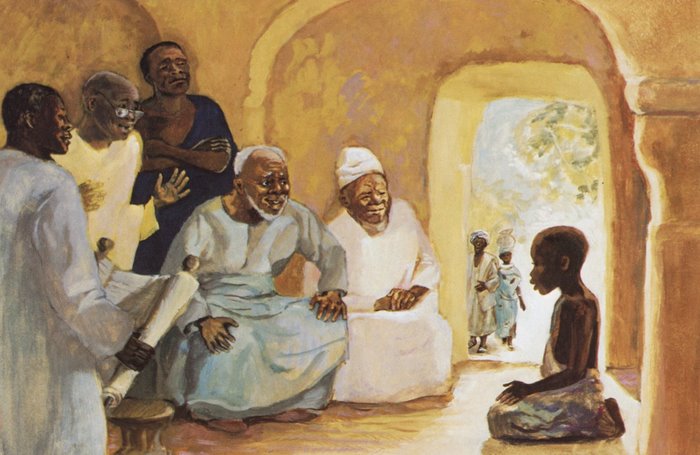
            It takes Mary and Joseph several days to find Jesus, once they get to Jerusalem. And where do they find Him? In the Temple. And what is Jesus doing there? He is amazing everyone with His understanding and precocious answers, at such a young age.

            I am reminded of my older brother John, a number of years older than I am. I wasn’t even alive when the following happened, but I was told many times by my other siblings about my brother’s abilities. When he was in kindergarten, my brother John was quite advanced in his school work. In fact, he could read fluently. When the kindergarten teacher found out about this, she tried having John read a number of things, including the daily newspaper. So, when I read this passage in Luke, it sometimes reminds me of my kindergarten-aged brother John, reading the newspaper aloud to a group of admiring teachers in the teachers’ lounge.

            The Gospel of Luke tells us the priests, Pharisees and other teachers of the Law of Moses were also an admiring group, gathered around Jesus, listening to His answers and understanding concerning matters in Hebrew Scriptures. The boy Jesus had a clear, deep understanding of the Scriptures, and this came from His understanding of God the Father. 

            And how does Jesus respond when Mary and Joseph finally catch up with Him? “Did you not know that I must be in my Father’s house?” What a response. Could Jesus go wrong, being in His Father’s house? And, thinking about it, what more natural, obvious place for Jesus to be than in the Temple? Even though today’s preaching passage doesn’t tell us so, numerous other places in the Gospel records do tell us that Jesus was regular in prayer. He did have a close relationship with His heavenly Father. We can follow Jesus’ example, and be close friends with God.

            We see at the end of this narrative that Mary had a close relationship with God, too, except that she was more reflective. She meditated, reflected, pondered upon these things. She communicated to God in that way. Another way for people to be close to God.

            When I consider this snapshot of Jesus in the Temple, I desire a better understanding of Scripture, too. I not only wish to have a more thorough grasp of the Bible, I want to become better able to understand what God desires of me. For example, Dr. Luke says that Mary continued to treasure up all these things in her heart. Pondered, meditated on and considered all of these wondrous, miraculous happenings, and thus understood God better.

            But how am I to better understand God? Two good ways of becoming better acquainted with God and God’s desires for me are through reading the Scripture and through prayer and meditation – pondering what God says, what I read in the Bible. And this has the dual benefit of helping me to develop a closer relationship, a closer walk with the Lord. I see Jesus, having a close relationship with God, and therefore having a clearer understanding of what God’s Word says. I have the opportunity to have that, too!

            Prayer, talking to God, even thinking to God in the privacy of our own rooms, while in bed at night, or while taking a walk—all are good ways that we can keep up that relationship with God. We can praise God that God wants us to have a closer walk with the Lord, and provides all of us the means to do it.

            Alleluia, amen.

@chaplaineliza

(Suggestion: visit me at my other blogs: matterofprayer: A Year of Everyday Prayers. #PursuePEACE – and  A Year of Being Kind . Thanks!

Unknown's avatar

Christmas Caroling – Uncertainly

“Christmas Caroling – Uncertainly”

John 1:1-5, 10-14 (1:10) – December 24, 2021

            Who here has gone Christmas caroling? With other friends or with fellow church members, going from house to house, standing outside singing carols in the chilly weather. That is quite a memorable experience! I have done it, a number of times. It is fun and cold and full of laughter and false starts and wrong notes. And then, next holiday season, we do it all over again.

            Except – what about this year? This is the second holiday season taking place during the pandemic. Holiday gatherings are again in short supply – except at a prudent distance. What about singing Christmas carols? Maybe, but with a good deal of uncertainty in our hearts.

            When John wrote the beginning of his Gospel, he was thinking of the cosmic Christ, the Word of God that existed from eternity past. Not the little Baby born in Bethlehem 2000 years ago. Except, that was there, too. We have the Word, the True Light, the Second Person of the Trinity putting aside all His God-ness to become a tiny little baby. Can you believe it? If you ask most people, it is pretty hard to believe. But, it’s true!

            This year of anxious, fearful living has been difficult on a lot of people, for a number of different reasons. With so many things all through 2021 that are and have been so challenging in all of our lives, can you – or I – really and truly believe the Second Person of the Trinity became a little baby, born in Bethlehem? It can be difficult to have faith, but believe me, it’s true.

            Then, if we add on top of this miracle, the miracle of the birth of the Christ child, the other miracles concerning the birth of Jesus related to us in both the gospels of Luke and Matthew, it becomes more and more of a challenge. How could someone fulfill all of those miracles? Finally, we add the global and cosmic miracles from before the beginning of time from the Gospel of John. Could it be? Really and truly? Especially at such a mixed-up, uncertain time?  

            I can just imagine the uncertainty in the hearts of Mary and Joseph, as they count down the months and weeks of pregnancy, waiting for the birth of their blessed baby. Can you feel the discomfort of the other people in Bethlehem, at having the lowly shepherds, shunted aside, receive an extra special birth announcement?

Yet, I also feel the shepherds’ uncertain hearts, as they come into the unusual premises of a town to seek out a Baby. And, such a Baby! With such a stellar birth announcement, too.

Finally, such a roller coaster of emotions for Mary and Joseph. Enforced travel at such an uncertain time of the year. And then, Bethlehem is full, packed. Not a room to be had. Such uncertainty for this couple! And, to make things even more complicated, Mary goes into labor and bears her firstborn son.

Yes, she and Joseph name this blessed baby Jesus, for He will save His people from their sins. (much later, after He grows up). However, we can see the cosmic, eternal element in this homey, rustic birth, with the baby laid in a feeding trough. The Light of the World, the Prince of Peace, Mighty God, Wonderful Counselor, Eternal Father becomes a helpless, tiny babe.  

Even though you and I may be filled with uncertainty, fear, loss and anxiety at times, I still find myself face to face with this miraculous birth. How unbelievable! How wondrous, and how beyond words this miraculous birth is.

            I turn to my friend Pastor April Fiet’s words: “What I have re-learned more than anything is that my uncertain heart cannot stop the all-embracing love of God. It cannot quench the peace that passes understanding, nor can it stifle the hope that springs eternal. There is joy in this journey, even if there is also sorrow and heartache. And the day will come when joy is born anew in our hearts in a way that can never be silenced. We will cry out “Joy to the World the Lord is come,” and we will receive the one who is, and who was, and who is to come.” [1]

            We have counted off the weeks of Advent with Pastor April, as she has considered this season through the lens of an uncertain heart. We have welcomed hope into our hearts. Peace has returned into the world. Joy blooms amid the grief and loss. And, the overarching, undergirding love of the Christ child born in Bethlehem remains with us, no matter what.

It is good news indeed that a Savior was born. Each year, we who call ourselves Christ followers get to consider anew what it all means. May the candle of the Christ child shine in your heart this Christmas, and all year long.

@chaplaineliza

(Suggestion: visit me at my other blogs: matterofprayer: A Year of Everyday Prayers. #PursuePEACE – and  A Year of Being Kind . Thanks!


[1] https://aprilfiet.com/my-thoughts/advent-for-uncertain-hearts-christmas-eve?fbclid=IwAR1gNtTG127hJ98yt8G1PUmLoZ7r4LGLL40GDiJJmR0l_xhAxA6FQ3wAKz4

Unknown's avatar

Challenged to Love

“Challenged to Love”

Luke 2:15-20 (2:19) – December 19, 2021

            The coming birth of a baby today is surely a time for rejoicing! In this country today we have such events as baby showers, regular prenatal visits, ultrasounds, and lots of other preparations made as the time for the birth gets closer and closer.

            But, what about in centuries past? How would the typical baby’s parents and family prepare for the birth of a baby? Was the baby still expected and waited for with love? What about after the baby arrived? Would uncertain and even dangerous situations cause that love from the parents and family to cool, dry up and perhaps even go away?

This Baby I have in mind was not your usual baby. No, this Baby was special. In fact, super-special. This Baby’s parents Mary and Joseph were living in an uncertain time, too. It’s not only us, today, with the uncertain health situations around the country, extreme weather, financial worries of all kinds, close friends or relatives in a jam, and much more.

Mary and Joseph’s country was under military occupation. I suspect the distance Joseph had to travel was only made more complicated by the question marks caused by the season of the year, the weather, and by the possible hassle caused by meeting Roman soldiers on the road.

A far cry from the love expressed by many people today, especially when a baby is born.

Today is the fourth Sunday in Advent, the Sunday where we focus on Love. It is such a challenge to highlight love, when we are also dealing with such uncertainty. Uncertainty in our work lives, in our personal lives, and in our corporate lives, as a congregation, a family, and in your friend groups. The minute our Savior, Christ the Lord is born, in that same uncertain minute the rug seems to be pulled out from under everyone’s feet.

How can we focus on love at an uncertain time like this?

I appreciate different people and their different blog posts and articles incorporating the coming Christ child in Bethlehem. One of the readings most true to my heart this year: “It is easy to feel disappointed when things don’t happen the way you have planned them. You can get lost in your expectations, feel frustrated, and even close your heart to what is happening unexpectedly, instead of noticing the wonderful experiences around you.” [1]

What unexpected and wonderful things were happening in Bethlehem, for sure!

But, have you ever felt that so much has gone wrong, so many things have misfired or gotten off to a rotten start that nothing that’s positive could ever happen again? It’s true that the world at the end of 2021 has had terrible, awful and downright frightening things happen for so many months. This uncertainty can manifest itself into being so anxious and unwelcoming to the Christmas angels with their “good news of great joy.” Where is love when we need it most?

Sometimes things just don’t go the way we planned. Sometimes some of us feel nervous, afraid, or even disgruntled most of the time! And then, what happens to our hearts? Are our hearts open to new things, or fresh experiences, or unexpected opportunities? Chances are, no.

“Sometimes people lock their hearts because they think it will protect them. They lock out strangers who might become friends; they lock out different places that might become places where they belong. The problem with locking your heart is that it doesn’t actually protect you; it keeps out all the love you didn’t think to imagine.” [2]

            In such an uncertain time as December 2021, many people have extra armor protecting their insides, guarding against fear and hurt, almost like pulling up the covers over our heads and wishing that all of this uproar and sadness and anxiety gripping our insides would just go away. But – God has sent love into the world. God’s love, lovely love.

            Even though her world was uncertain, Mary the mother of the infant Jesus had a whole succession of wondrous events happen to her. The coming of the angel Gabriel, confirmation of the angel’s message to her fiancé Joseph. The welcome by Elizabeth followed by Mary singing the Magnificat. The journey to Bethlehem followed by a wondrous birth. And, to cap it off, a group of dusty, dirty shepherds trooping in to see her newborn Baby with an equally wondrous story to tell. More angels! More glory! More opportunities for God to be praised!

            This world certainly was weary then, and it certainly continues to be weary – and fearful and anxious – today. Nevertheless, Dr. Luke says that Mary treasured up all these things in her heart. Pondered, meditated on and considered all of these wondrous, miraculous happenings. God’s Love had indeed broken into this weary world.

            My friend Rev. April Fiet ponders these things, too, as we all celebrate the incarnate Son of God born as the infant Jesus. “The first Christmas, Love came down and got its hands dirty. Love grew and experienced pain, was overlooked, rejected, and mocked. Love embraced others with otherworldly love and was scorned for loving the wrong people. Love didn’t just take on flesh in the holiest of senses; Love took on the struggle of being human. Love encountered us, looked us in the eyes and said, “Me, too.” [3]

            Christina Rossetti wrote a poem in the 1800’s, set to music and found in many hymnals today. “Love came down at Christmas, Love all lovely, Love divine.”  Praise God, we, too, can stop by that manger in Bethlehem, and be caught up in the wonder of what happened that night, so long ago. We, too can welcome this lovely, Godly Love that has come into this uncertain, weary world, today.

Alleluia, amen.

@chaplaineliza

(Suggestion: visit me at my other blogs: matterofprayer: A Year of Everyday Prayers. #PursuePEACE – and  A Year of Being Kind . Thanks!


[1] Illustrated Ministry – Do Not Be Afraid, Advent 2021

[2] Ibid.

[3] https://aprilfiet.com/my-thoughts/advent-for-uncertain-hearts-week-4-love-in-the-struggle?fbclid=IwAR2yzfOdmvPxceuJF0JvE01JKHOrtrTeKkGvUq2BRr1peCcvBDjXeLmOtNM