Unknown's avatar

Who Then Can Be Saved?

“Who Then Can Be Saved?”

Mark 10:17-27 (10:26) – October 13, 2024

If we turn on the television, read a book, or listen to a podcast or talk radio, sometimes we might hear experts giving advice. These knowledgeable experts are often from well-known places. This week I am thinking about advice on how to live the “right” way. That’s sometimes thought to be a fruitful life, or a healthy life, or a spiritual life. Wouldn’t you be interested if you heard a radio program with a noted author or well-known expert in just this subject?

            That’s the case with Rabbi Jesus, today. In today’s scripture lesson, we get just a hint of what our Lord Jesus had to deal with much of the time. Can you see this situation? I love St. Ignatius and his prayer suggestion to put ourselves into the narrative. Let us imagine ourselves being there, right with our Lord Jesus the itinerant Rabbi, and His disciples.

The Rabbi Jesus was about to travel somewhere, and a number of His disciples are getting ready to accompany Him. It is significant to read what our commentator David Lose has to say about this journey. “In Mark, this is not merely “a journey” in general (per the NRSV), but rather represents the road to Jerusalem and the cross.” [1] And, repeatedly, our Gospel writer Mark tells us that Jesus has His face set to go to Jerusalem.

When, what happens? “17 As Jesus went out into the street, a man came running up, greeted him with great reverence, and asked, “Good Teacher, what must I do to get eternal life?” That is a pretty big question, isn’t it? Many people throughout the ages have wondered exactly that! The Rabbi Jesus was a widely acknowledged wise person, an expert in the interpretation of the Hebrew Scriptures, the Law of Moses and in lots of things associated with religious and spiritual life.

After all, you don’t get an expert in religion and spiritual life coming to your town just any old day.

The Rabbi Jesus is matter-of-fact, and responds (as many Rabbis would), “You know the commandments: Don’t murder, don’t commit adultery, don’t steal, don’t lie, don’t cheat, honor your father and mother.”

This is a shortened list of some of the Ten Commandments from the book of Exodus. These commands from God are revered as being the shorthand version of God’s rules for living. Now, while we have our imagining caps on, imagine we are watching this whole scene play out. Our teacher, the Rabbi Jesus, is involved in conversation with this earnest young man.

Except, something is different about this young man. He’s well-dressed, and looks to be really rich. Plus, he answers the Rabbi Jesus in all seriousness! “He said, “Teacher, I have—from my youth—kept them all!” 21 Jesus looked him hard in the eye—and loved him!”

 What do we see here? “Jesus looks at him with love (verse 21). He does not treat him as insincere or mock him as self-righteous, but rather loves him. Every interpretation we may offer must therefore take seriously Jesus’ absolute regard and unconditional love for this man.” [2]

I am still looking at this whole scene through my imagination, too. I am right there, watching everything go on. Watching the gathered crowd in the dusty afternoon in one of the towns of Palestine. And, we can see the love shining out of our Rabbi’s eyes!

But, let us get back to our rich young man who asked Rabbi Jesus this serious question. “’Jesus said, “There’s one thing left: Go sell whatever you own and give it to the poor. All your wealth will then be heavenly wealth. And come follow me.’ 22 The man’s face clouded over. This was the last thing he expected to hear, and he walked off with a heavy heart. He was holding on tight to a lot of things, and not about to let go.”

Dr. David Lose said about this point in the reading, “what Jesus really meant was that we needed to unburden ourselves of whatever might be keeping us from relying on God.” [3] Yes, the rich man had a great deal of difficulty hearing these words of Jesus.

            Let’s face it: these are difficult words for many people to hear. We love our stuff, don’t we? Or, if not most of our stuff, at least some of our stuff. I would really have difficulty giving up my computer and my car. I think I am not the only one in this room today for whom that is true. Others might have difficulty unburdening themselves of whatever might be keeping each one from God.

“Jesus knew that the only thing that could overcome the gravity of the riches of this life is a force stronger, a greater pull. Love redeems; love rescues; love wins. He knew that. He knows that. Jesus loved him even though it didn’t seem to work. The young man walked away, grieving. The burden on his heart increased, instead of lightened. He had the antidote; he had the prescription. But the medicine was too bitter for him to swallow.” [4]

Let me ask, as we still consider us being there, right next to Jesus. What would it be like to have Jesus look upon each of us with that same love? What is more, Jesus asks each of us the same question about our stuff, about following Jesus. And, what is our response to Jesus?

All of our stuff gets in the way between us and God’s kingdom. All of this clutter and distraction in our lives keeps us at a distance from God. We know what Jesus has asked us to do, just like this young man did. When you don’t do what God has asked you to do, how do you picture God responding to you? Do you imagine God looks at you—at us—with loving compassion like Jesus did in this story? What’s more, we all will see how all of our “small steps” in loving and giving combine to create a beautiful impact of compassion in God’s world.

            And, maybe, just maybe “God’s gift of salvation can actually free us to do something: to love each other, to care for God’s people and world, to share the good news…right here, right now, wherever it may be that God has placed us.” [5]  

            God willing, we can all show love, giving, and compassion, every day. Alleluia, amen.

@chaplaineliza

(Suggestion: visit me at my other blogs: matterofprayer: A Year of Everyday Prayers. #PursuePEACE – and  A Year of Being Kind . Thanks!


[1] https://www.workingpreacher.org/commentaries/revised-common-lectionary/ordinary-28-2/commentary-on-mark-1017-31-3

[2] Ibid.

[3] http://www.davidlose.net/2015/10/pentecost-20-b-curing-our-heartsickness/

[4] https://www.umcdiscipleship.org/worship-planning/walking-with-jesus/twenty-first-sunday-after-pentecost-year-b-lectionary-planning-notes/twenty-first-sunday-after-pentecost-year-b-preaching-notes

[5] http://www.davidlose.net/2015/10/pentecost-20-b-curing-our-heartsickness/

Unknown's avatar

How Majestic is God’s Name!

“How Majestic is God’s Name!”

Psalm 8 (8:4) – October 6, 2024

            How many here can think of a truly unforgettable experience you have had? Maybe going on vacation, and seeing an unforgettable sunset or rainbow? Or perhaps taking a trip to a National Park, and experiencing some unforgettable scenery, like a spectacular waterfall? Or maybe traveling by boat or ship and seeing unforgettable sea creatures, whales, or sea lions? The world is full of marvelous, unforgettable things, and God created them all!

            But, we can’t go on vacation every day. Very few of us are able to see marvelous scenery or go to exotic places on a regular basis In the every-day, ordinary kind of way, I wonder if you and I really think the world is majestic? Awesome? God has made the world, and I think the Lord has done a pretty good job. But, how many of us think the Lord is majestic? Awesome? I mean, on an every-day basis. Are we stunned, at a loss for words by the majesty of the Lord?

            Let’s hear how our psalm today starts, again. “Lord, our Lord,  how majestic is your name in all the earth! You have set your glory in the heavens.” Wow! And, that is just the first verse! The Lord is OUR Lord, and the Lord’s name is majestic. Not just so-so, not pretty good, but majestic! Not to mention, the Lord has set glory and majesty in the heavens!

            I can see the stars on a clear night, but not quite as many here in Chicago as I can up in Wisconsin or in Michigan, far from the city. My husband Kevin spent two years in the mountains of Colorado, a number of years ago. He said the stars regularly put on an amazing display in the mountains, on a clear night. And, the moon, too! Truly majestic to see.

            Our psalmist marvels at the heavens, too – and more! “When I consider your heavens, the work of your fingers, the moon and the stars, which you have set in place, what is humankind that you are mindful of them, human beings that you care for them?

Our psalmist King David started out contemplating the heavens, and the awesome majesty of God. Now, he shifts to considering humanity. “In comparison to the grandeur of the universe, the psalmist questions why God would be mindful of humanity and care for them.” [1] Really, this is a valid question! After God created the heavens, and the stars and moons and all the other heavenly bodies, we humans are like grains of sand. Maybe even smaller, maybe microscopic. Who are we that God is even mindful, even aware of us? 

From time to time, maybe even more often than that, it is so easy to get caught up in the pressures and expectations of the world! You and I can know that very well. Such feelings of loneliness, insecurity and doubt can threaten to overwhelm us. Imagine, not being sure that we are worth anything, and feeling that we are like tiny grasshoppers or worms.

I don’t know about you, but just reading this description of humanity makes me feel so insignificant, especially in the face of such glory, such grandeur of all creation. However, isn’t this an opportunity to affirm, to witness to the blessed fact that this God who is described here by King David is also my God? In fact, our God?

            We have reassurance from King David! “Psalm 8 reminds us of our unique identity as children of God and the incredible value and purpose we have in Him. This psalm teaches us to look beyond ourselves and recognize the greatness of our Creator, who has entrusted us with the responsibility to care for [God’s] creation.” [2]

            Listen to the next verses of this psalm, and see how much trust the Lord gives to us, how much happiness and at the same time, responsibility: “You have made thema little lower than the angelsand crowned them with glory and honor You made them rulers over the works of your hands; you put everything under their feet:”

            How amazing that we – we puny humans – are crowned by God with glory and honor! And, that is all humanity we are talking about. Not just a few humans, not just the humans in our particular group or from our particular country. No! This psalm says ALL. Everyone. What a Godly proclamation to give each of us a worthy opinion of ourselves!

But wait, there’s more! God not only has made a royal proclamation that crowns all of us with glory and honor, the Lord has also made each of us heaven-appointed stewards of this marvelous world we all inhabit.

We all have a task to do, simply by nature of being born on this earth. Just as in the beginning of Genesis, Adam and Eve were assigned tasks by God to tend and keep the Garden of Eden, so with each person today. Whether we garden, or recycle and pick up trash, or choose responsibly-sourced food items and clothing, we all can be good stewards of this beautiful earth God has created for each of us and given us to live in.   
            One of my favorite people I follow on social media comes from the Peak District in northern England. She is a brilliant photographer of her native Peak district, and her handle is “Peaklass.” I love the description and the advice she gives: “In our rush through life, moving faster, working smarter, we miss so much. We miss the drift of seasons and the gentle ebb and flow of nature. We miss patterns, colours, changing light. We miss beauty and quiet. Sometimes we all need to stop and just watch the clouds roll.” [3]

            This psalm ends as it begins, “Lord, our Lord, how majestic is your name in all the earth!” Can you think of a more wonderful praise and prayer to our God than to enjoy the beauty and majesty of God’s creation, today? Yes, God’s name is majestic in all the earth! Each of us can stop where we are today, and praise God for all creation, all creatures great and small.  

            Two days ago was the feast day of St. Francis of Assisi; many faith traditions celebrate with a Blessing of the Animals this weekend. St. Francis is not only a patron saint of animals, he is also the patron of all creation, or the natural world. I want to end today with a benediction, a verse from the hymn that is attributed to Francis, “All Creatures of Our God and King.”

Let all things their Creator bless,
And worship Him in humbleness,
O praise Him! Alleluia!

Praise, praise the Father, praise the Son,
And praise the Spirit, Three in One!

            O, let us praise God, indeed! Alleluia, amen.

@chaplaineliza

(Suggestion: visit me at my other blogs: matterofprayer: A Year of Everyday Prayers. #PursuePEACE – and  A Year of Being Kind . Thanks!


[1] https://youthgroupministry.com/lessons/youth-ministry-lesson-on-psalm-8-embracing-our-identity-in-christ/

[2] Ibid.

[3] https://x.com/peaklass1/status/1842835391595905259/photo/1

Unknown's avatar

Heavenly Prescription for Prayer

“Heavenly Prescription for Prayer”

James 5:13-20 (5:13) – September 29, 2024

How many of you remember being really sick? So sick that you had to stay in bed for days, or perhaps even had to go to the hospital? Thank goodness here in the Chicago area we have many devoted doctors and excellent hospitals to choose from, and to figure out exactly what is ailing us. And, thank goodness we are able to have effective medicine prescribed for us when we are sick, too!

Except – what do we do when our hearts and spirits are feeling sick? Anxious, or disturbed? Where do you and I go when our faith in God seems shaky? We could perhaps go to the doctor or the hospital, but they probably will not have the right tools or equipment to help when you or I have spiritual afflictions. [1]

This is our fifth week looking into the letter of James, and we have seen over the past few weeks that James is a very practical man. He displays a great deal of common sense, and does not pull punches when it comes to talking straight to his friends scattered around Asia Minor. (The area to the north and east of present-day Palestine.)

Let’s hear from James about this very problem: “Are any among you in trouble? They should pray. Are any among you happy? They should sing praises. 14 Are any among you sick? They should send for the church elders, who will pray for them and rub olive oil on them in the name of the Lord. 15 This prayer made in faith will heal the sick; the Lord will restore them to health, and the sins they have committed will be forgiven.”

What I have seen in these past weeks and months are the overwhelming number of people with heightened emotions and reactions to anxious, even fearful situations. As someone involved in pastoral care and trained as a chaplain, I notice these things. In our scripture reading today, we find the apostle James talking straight about how to pray, and thus deal with things similar to these things he mentions: heightened, negative emotions and reactions to anxious situations, not to mention physical needs, too.

The apostle James was a practical kind of guy. We can see that from this short letter, the only letter he wrote, included in the New Testament. He gives some practical advice to his readers on how to live a faithful and effective Christian life: how to live faithfully with others in society, how to control the tongue, how to turn away from evil and towards God. Here, in the fifth chapter of James, he turns to prayer. As we look at this passage, James tells his friends how to pray, in very practical terms, almost the same way as a doctor with a prescription pad might write it out.

What are the beginnings of this spiritual prescription? You and I need a special place and a special way to access God; we need to be open and willing, in this place! You and I need God – especially through the Holy Spirit – to help our hearts and spirits feel renewed, and we need the body of Christ–all of us–to help us strengthen our faith. In fact, we all need each other. [2]

When I was a hospital chaplain, working in critical care units like the Emergency Department, Intensive Care, and trauma support all over the hospital, my primary job would be that of compassionate listener—even before prayer, and also as a heartfelt part of prayer.

Now that I am a hospice chaplain, compassionate listening becomes an even more important part of what I do, not only for my patients, but for their loved ones. I suggest for all of us to consider a heart of compassion and a gentle hand of mercy. It’s time to put our defenses down and instead experience the vulnerability of listening to one another.

“If someone has a story to tell, the greatest gift you can offer is simply to listen. You don’t need to have answers or wisdom. You probably don’t need to say anything except, ‘I hear you. I believe you. I’m sorry you experienced that.’ In the compassionate version of the world I yearn for, we offer one another solidarity, a listening ear, and a tender heart.[3]

Another way of defining this spiritual prescription is through prayer – corporate prayer. James says, “16 So then, confess your sins to one another and pray for one another, so that you will be healed. The prayer of a good person has a powerful effect.“

Again, I am reminding us all, this exercise of prayer is not meant to be only for persons in isolation. It’s true, as a hospice chaplain, I see many people isolated in hospitals, in care centers, all alone in their rooms with no one to hold their hands or offer them a kind word of compassion or comfort. James would give us – fellow Christians – the practical advice to come alongside the sick persons in prayer and fellowship, even solidarity.

My commentator Dr. James Boyce echoes this very call from our letter-writer: “James knows a wisdom that is communal, especially in its faithful exercise of prayer. Twice he charges that confession should be “to one another,” and that we should pray “for one another,” if we have any expectation that the promised healing is to take place (James 5.16). Such prayer exercised within and on behalf of the community has power — James says it is “effective.” [4]

I think all of us can agree that as God’s people, we all need regular repentance and soul-searching, no matter what. We are also all in need of healing, personally, and certainly communally. Isn’t that what James tells us here?

At the end of this 5th chapter, this practical how-to manual on the Christian life, we can follow the heavenly prescription James sets forth. We can pray. We can worship. “We learn about how to be God’s people by reading the Bible. We find ways to serve – to do spiritual exercises that both help the world and strengthen us. We develop relationships within our faith community [or church] that are healing and helpful. And we learn to be generous – to share the many good things God has given us with others.” [5]

Whether it is the healing touch of the laying on of hands, or a simple hug from a sister or brother in Christ, or the potent power of prayer or the relief of corporate confession, active participation in the Body of Christ is preventative medicine at its best. What are you waiting for? There’s no co-pay, third-party billing, or lifetime limits on God’s grace and love. Prayer is our heavenly prescription from God.

Alleluia, amen!

@chaplaineliza

(Suggestion: visit me at my other blogs: matterofprayer: A Year of Everyday Prayers. #PursuePEACE – and  A Year of Being Kind . Thanks!


[1] https://www.stewardshipoflife.org/2012/09/rx-for-broken-lives-and-faltering-faith/

[2] https://www.stewardshipoflife.org/2012/09/rx-for-broken-lives-and-faltering-faith/

[3] https://fosteringyourfaith.com/2018/09/30/time-for-compassion/

[4] https://www.workingpreacher.org/commentaries/revised-common-lectionary/ordinary-26-2/commentary-on-james-513-20-4

[5] https://www.stewardshipoflife.org/2012/09/rx-for-broken-lives-and-faltering-faith/

Unknown's avatar

Wisdom from Above!

“Wisdom from Above!”

James 3:13-4:3 (3:17) – September 22, 2024

            I wonder if you can think of people who are called the best at something? The greatest athlete in a sport? The smartest student at your school? The best chef or best writer or best driver or best of anything? Just imagine how much bitter jealousy that comment can promote. Or, how much selfishness and blind ambition all this empty striving and competition leads to!

Worldly “wisdom” is anything but wise, according to our letter writer James. I am sure you recognize these jealous, covetous people. They regularly moan and kvetch and sometimes outright quarrel about what they have or about what they don’t have. James tells us about these dissatisfied, disgruntled people in our Scripture reading today.  

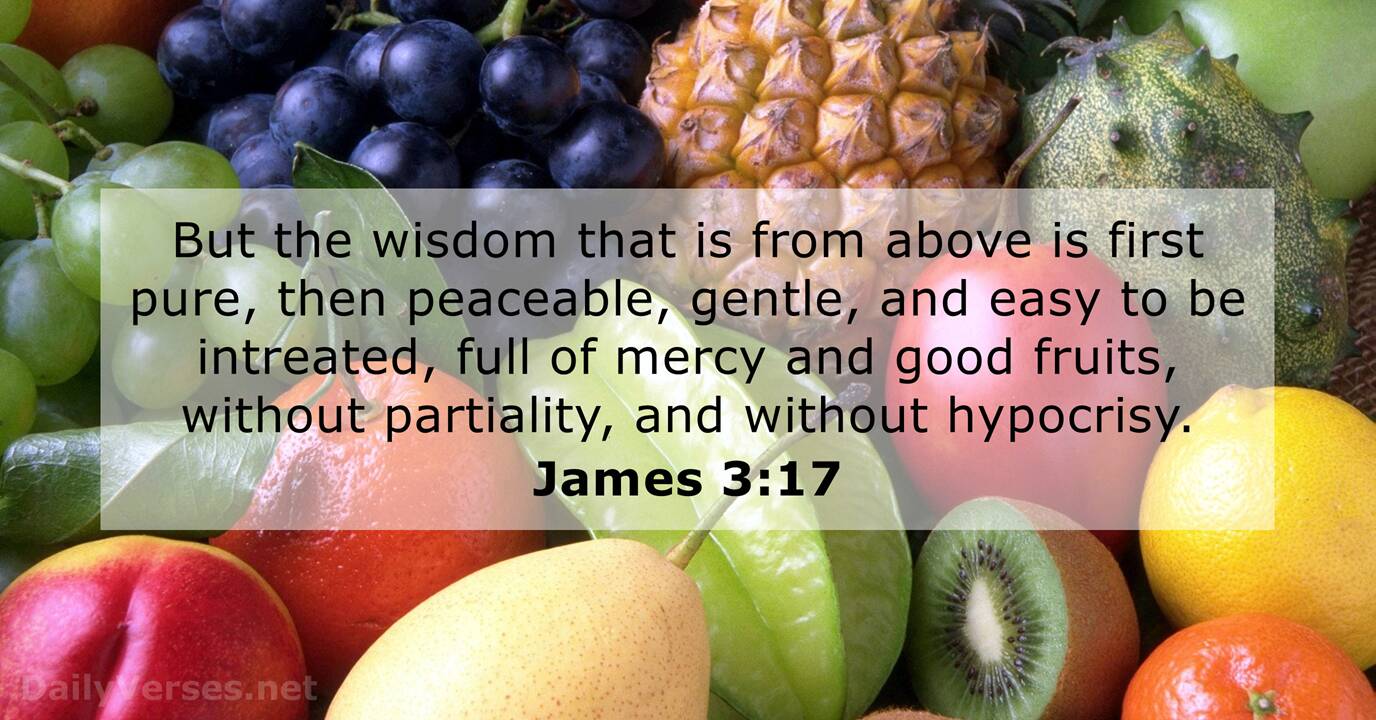
            Just listen to his description: “If in your heart you are jealous, bitter, and selfish, don’t sin against the truth by boasting of your wisdom. 15 Such wisdom does not come down from heaven; it belongs to the world, it is unspiritual and demonic. 16 Where there is jealousy and selfishness, there is also disorder and every kind of evil.”  

This kind of worldly striving, dog-eat-dog attitude is definitely not what James has in mind for us, as believers in Christ. He shines the spotlight on how believers ought to live. Listen! “13 Are there any of you who are wise and understanding? You are to prove it by your good life, by your good deeds performed with humility and wisdom.”

Can there be a sharper contrast between the dissatisfied, selfish, boastful worldly “wisdom” and the Godly, humble, beneficial wisdom and way of life that James talks about here? Not likely. Remember, in this practical letter, this how-to manual, James advises his friends on how to live in a way pleasing to God.

            It’s true that this fancy, flashy excitement can be attractive, even seductive, on the surface! But, all that is just for show, simply surface, an inch deep, and nothing more than worldly dissatisfaction, boastfulness and jealously. But, let’s be truthful – which of us is not tempted, sometimes, by the alluring or bright and shiny trappings of the way of worldly “wisdom?” Which of us doesn’t fall in step with others who might be jealous, or bitter, or selfish – sometimes? Most important, which of us leaves the simple, quiet, godly life of contentment for the flashy, glitzy (and shallow) excitement that so soon fades?

            Let’s consider the worldly, flawed way of thinking and being, for a moment. Carolyn Brown, retired Children’s Ministry Director, has written a prayer for this reading. Listen, if you would, and see whether these words from Ms. Brown do not resonate in our hearts.

Dear God, we want to look amazing.  

We want great clothes, cool shoes, a great haircut. We want our homes filled with our stuff.

We want all the best people to be our friends. We want to be the first, the best, the most, the greatest. So we grab and hold and demand. We even kick and punch to get what we want.

Forgive us.

Teach us to let go, to open our hands and hearts to others. Teach us to be content with what we have and to share it.

Teach us to think as much about what OTHERS want as what WE want. Teach us to be as loving as Jesus. Amen. [1]

            This prayer penetrates straight to the heart, let me tell you! I want to ask God for forgiveness, and to help me live in a loving way, like Jesus. I hope you do, too.

            This prayer makes me think of the Jewish High Holidays, which are quickly approaching. During the month before Rosh Hashanah and Yom Kippur, faithful Jews prepare for these holidays by examining their hearts. They meditate and pray, and ask forgiveness of God, of others, and of themselves for the sins and shortcomings of the past year.

            We also have a weekly time of confession and prayer at the beginning of each worship service. Thank God we receive the assurance of pardon each Sunday from our loving Lord! Yet, we keep on sinning. We still need to keep confessing our sins and shortcomings, and receive that assurance of pardon and forgiveness. Is it any wonder that we have this very practical how-to manual of how to live the Christian life by our letter-writer James, in the New Testament?  

            James assures his readers of Godly wisdom, because he describes its results. “Believers need to submit to the wise rule of God through the Spirit of God, a rule which purifies from within.” [2] The practical consequences of this wise rule of God are easy to observe. People who live God’s way are peaceable, considerate, gentle and non-combative! Does this sound very worldly to you? Certainly not selfish or jealous or bitter!

            What I wonder: how is the life of Jesus any mirror to our personal lives? Jesus is certainly recorded as merciful and loving. That is displayed over and over again in the Gospel record! When I think of our Lord Jesus during that three-year period of time in Palestine, I cannot think of anyone more sincere, honest or peaceable. More real and yet penetrating to the heart. I would love to have just a fraction of that Godly attitude and lifestyle as part of mine!

What – practically – can we take away from this reading today? Can we concentrate on living like Jesus? Living the Jesus way is peaceable, considerate, gentle and non-combative. Jesus is sincere, honest, and real. Can we make a commitment to live like Jesus?

This is the how-to of living a life pleasing to God, being filled with the presence of God. “[You and I] are works in process. This isn’t about completion and the satisfaction of a job well done; it is about a journey of discovery and transformation. But peace [gentleness, mercy, and lovingkindness] can be our companions in the journey to keep our feet on the path.” [3]

            Practical James would wholeheartedly agree! Keep on keeping on. Live in God’s way, in the wonderful, honest presence of Jesus. It’s a sure-fire way to have God draw near to each one of us. Alleluia, amen.

@chaplaineliza

(Suggestion: visit me at my other blogs: matterofprayer: A Year of Everyday Prayers. #PursuePEACE – and  A Year of Being Kind . Thanks!


[1] http://worshipingwithchildren.blogspot.com/2012/08/year-b-proper-20-25th-sunday-in_30.html

Worshiping with Children

[2] http://www.lectionarystudies.com/sunday25bee.html  

[3]  https://www.umcdiscipleship.org/worship-planning/doers-of-the-word/seventeenth-sunday-after-pentecost-year-b-lectionary-planning-notes

Unknown's avatar

What about the Tongue?

“What about the Tongue?”

James 3:1-12 (3:1-12) – September 15, 2024

How many of us can remember that old playground saying, “Sticks and stones may break my bones, but names can never hurt me!” children and young people may put on a brave face when they are teased, hurt and picked on. Children and young people can be particularly mean, teasing each other, with left-handed compliments, and even downright insults. But, what insight does this Bible reading from James give us about this very problem?

Let’s hear again these serious words from James. “Just think how large a forest can be set on fire by a tiny flame! And the tongue is like a fire. It is a world of wrong, occupying its place in our bodies and spreading evil through our whole being. It sets on fire the entire course of our existence with the fire that comes to it from hell itself. We humans are able to tame and have tamed all other creatures—wild animals and birds, reptiles and fish. But no one has ever been able to tame the tongue. It is evil and uncontrollable, full of deadly poison.”

Such a little part of the body – the tongue! And yet, despite the playground saying, the tongue can really hurt. “When people are called nasty, dirty names they know what the name caller thinks of them – and that hurts. Those people can be strong, not believe the name caller, and work to prove they are better than the name caller claims. But, it still hurts.” [1]

Names can cause pain, internally. The hurt feelings can smart and fester for a long time. And sometimes, people remember mean words, nasty words or harsh words years after they heard them. Sometimes even decades later. Words can come back to haunt us – either words we have said, or words we have heard. Internalized. Taken to heart.         

Who hasn’t been on the receiving end of a nasty argument, or mean, angry words? Sometimes, words can even change the way we think about ourselves.

Our letter-writer James would whole-heartedly agree. Remember, in this letter the apostle James writes a manual of Christian living. A how-to book on how to live a life pleasing to God.

The big problem with mean, hasty or thoughtless words is that they cannot be unsaid. Once the words have been said out loud – or, sometimes worse, printed electronically in social media – the mean or hasty or thoughtless words are out there in public, whether texts, or tweets or TikTok. These various kinds of words cannot be taken back. And, James cautions all of us on the danger of a tongue that just flaps in the wind! Or, as James says, burns like a forest fire or is fast acting as deadly poison!

Commentator Rev. Dr. Derek Weber thinks further about mean, nasty name-calling and the destructive nature of words. “In our normal catalog of sins, gossip is somewhere far down the list. We are much more concerned about other kinds of misbehavior. James would have us reconsider our hierarchy [of sins] and raise our awareness of the power of words to bring harm to the body of Christ.” [2]  

In Yiddish folklore, there is a story about a woman who would gossip and make false accusations about her neighbors. She never understood the implications of her words until the wise rabbi of her village decided to demonstrate it to her. He told her to get a feather pillow, cut the top off, and run around town with it. As she did that, the feathers flew away and fluttered all around the town. The wise rabbi then told her to collect all of the feathers that flew away and put them back in the pillow. She just couldn’t. It was an impossible task, she told him. “Maybe now you will understand,” he explained, “for you see, your words are like those feathers. Once they get out, it’s impossible to put them all back in.”

Our letter-writer James would so much agree! “As God’s children we are to be careful how we use the power of words. We are called to bless rather than harm, to seek justice and peace for all rather than revenge or harm.” [3] And, I do not want any of us to think that God is just a frowning or disapproving Supreme Being in the sky, ready to hurl thunder bolts at anyone who sins and lets their tongue run on and is a name caller and a gossip.

No, God is serious about sin, that is true! However, we can think of God our Heavenly Parent sort of like a well-loved elder who you and I love and cherish so much, who we do not want to disappoint, who we very much want to do our very best for!

Let’s flip this around, and look at our words from a positive light. Recall how you felt when someone said good, positive things to you or about you. How did you feel, deep down inside? Just think hard about the positive, beneficial impact of these words! James tells us we can certainly bless one another, just as much as we let slip mean or hateful words!

How can we build up each other with our words? What kind of effect would positive affirmations, sincere compliments and just plain being kind have on our daily interactions? I mean all of our interactions, it doesn’t matter with who. Family, friends, acquaintances, even people you meet on the street. Even people who don’t look like us, or speak our language, or wear familiar clothes. Maybe, especially different folks!

I offer the following challenge: find ways of blessing others through kind words, affirmations, and positive reinforcement. Look for everyday opportunities! Try it for the next week, and then the week after that. This is as much a challenge for me as it is for you! Please, find ways of blessing others. [4]  Remember, in this letter the apostle James writes a manual of Christian living. A how-to book on how to live a life pleasing to God. James encourages us to bless each other.

Please, consider turning to your neighbor, to the person in the next pew, and saying, “God bless you!” “God be with you!” Do it, right now. Please. That’s the way to live pleasing to God.

Finally, how would Jesus speak? Would Jesus say kind, helpful, encouraging, positive words? Would Jesus bless people? Do that. And, God will be so pleased!

@chaplaineliza

(Suggestion: visit me at my other blogs: matterofprayer: A Year of Everyday Prayers. #PursuePEACE – and  A Year of Being Kind . Thanks!


[1] http://worshipingwithchildren.blogspot.com/2012/08/year-b-proper-19-24th-sunday-in.html

[2] https://www.umcdiscipleship.org/worship-planning/doers-of-the-word/sixteenth-sunday-after-pentecost-year-b-lectionary-planning-notes/sixteenth-sunday-after-pentecost-year-b-preaching-notes

[3] https://www.stewardshipoflife.org/2012/09/the-gratitude-attitude/

[4] Ibid.

Unknown's avatar

Playing Favorites!

“Playing Favorites!”

James 2:1-10, 14-17 (2:17) – September 8, 2024

            Sometimes, my husband and I step back and observe our fellow human beings. For example, when we are at a coffee shop, or walking through a park. My husband calls it “people watching.” And sometimes, we catch snatches of conversation, too. Some of these bits of conversations are quite revealing! Sometimes, we can even hear about relationships between these people, and their family or friends. These relationships are not always the most healthy.

            Who has all really healthy, happy relationships in their family? Or, friend groups, and acquaintances? Do you – do I – have friends or family members who are mean sometimes? Or who gossip? What about family who have bad habits, like rooting for the wrong sports teams? Or to be more serious, what about friends or family members who play favorites? Who prefer certain people because of their fancy clothes, or their popularity, or how much money they have?

            That is exactly what James is talking about here in chapter 2. This letter from James is so practical! Yes, he does refer to theological concepts now and then, but James wants to give us a manual of Christian living: living the way we as believers are called to live! The description in this reading today is a pertinent, hard-hitting example. 

            James says, “Suppose a rich man wearing a gold ring and fine clothes comes to your meeting, and a poor man in ragged clothes also comes. If you show more respect to the well-dressed man and say to him, “Have this best seat here,” but say to the poor man, “Stand over there, or sit here on the floor by my feet,” then you are guilty of creating distinctions among yourselves and of making judgments based on evil motives.”

            One of my biblical commentators says, “The problem is ‘status serving’ – favoritism. Playing favorites! We are easily attracted toward the successful, wealthy and beautiful people. Yet for James, such partiality is something quite evil.” [1] Playing favorites is definitely not a way for anyone to please God, or to live the way we as believers are called to live. 

            The Gospel reading from the Revised Common Lectionary today also has some difficult, hard-hitting points. Jesus and the disciples are in the racially-mixed area of the Decapolis, near the Sea of Galilee in the far north of Israel. A Gentile woman approaches the Rabbi Jesus while He is at dinner, and asks Him to please heal her daughter. Jesus says some challenging words to her about being a Gentile. She convinces Jesus to help her and heal her daughter, which He does.

            This Gospel reading deals with favoritism and being partial to one group while excluding another group. Who would Jesus exclude? Would He exclude me and my family? Would favoritism include you? How about your children, or grandchildren? 

            These are difficult issues raised by both the apostle James and the Gospel writer Mark.

            Favoritism is all over the place! At work, in the school room, on sports teams, at home. Even – perhaps, especially, as James says – in our local churches. “To seek out the ‘beautiful’ people in our congregation and give them honour because of wealth, status in society, looks, youthfulness, race, education, breeding, success….. is a most ugly way to develop a Christian fellowship. Favoritism is rife in society, let it not exist in our church.” [2]

            Preferring one person over another or one group of people over another is a very worldly way of approaching life. James tells us point blank that we are not to behave this way. Period.  If we take the bare bones approach and look at what the apostle Paul tells us, that we are all one in Christ, and that we are to all love one another, as both Paul and John remind us, some might say we can all simply join hands in a big circle around a campfire and sing “Kum-by-yah” feel all warm and fuzzy inside, and that would be more than enough for the Christian life.

            If that simplistic attitude and short-sighted way of behavior was the only thing we had to do to live the Christian life, then the Christian life would be an insular, warm-and-fuzzy thing indeed. But, as James tells us throughout this letter, there is much more to the Christian life. In this letter, he gives us a how-to manual. A manual for living the way believers are called to live.   

            If we take the example that James gives us, one quick solution would be to simply buy the poor person a new outfit. See? Now the two people coming into church look the same! But, that is only a shallow, simplistic quick-fix for the situation. Instead, James “is asking them to treat the [poor] man with the same respect they would offer a well-dressed man.  Learning to do that in a culture that separates and creates fear between the richer and the poorer requires practice.” [3] This problem goes deep down in people’s attitudes, and is much more serious – even insidious. James says plainly, “Don’t be snobs! Don’t play favorites!”

            I can remember a church I attended some years ago was part of a group of houses of worship that hosted midday meals for the homeless once a week, as well as hosting a warming center during the winter months for five hours in the afternoon and early evening, allowing the homeless to gather inside in a safe space that was warm and welcoming. My husband volunteered at the warming center, and some of those friends who attended regularly mentioned how grateful they were for the church opening their doors freely.

            Yes, make sure our internal attitudes line up with the way that is pleasing to God. Remember, practical, matter-of-fact James shows us a manual for Christian living. Does God choose favorites? What if you are one of those excluded homeless people, or left-out high school kids, sitting at the loser lunch table, with no way to even get close to God? Shut out from God’s loving, caring, nurturing presence?

            Thank God we are always God’s beloved children! We are always the favorites – all of us! Here is a quote by Max Lucado. See if it resonates with you. “If God had a refrigerator, your picture would be on it. If God had a wallet, your photo would be in it. God sends you flowers every spring and a sunrise every morning Face it, friend – God is crazy about you!“

            Does God choose favorites? No! That is the way God feels about each one of us! Please, remember that as you go into the world. Treat every single person you meet as a very beloved child of God – because, they are! No matter what, no matter who!

@chaplaineliza

(Suggestion: visit me at my other blogs: matterofprayer: A Year of Everyday Prayers. #PursuePEACE – and  A Year of Being Kind . Thanks!


[1] http://www.lectionarystudies.com/sunday23be.html

[2] Ibid.

[3] http://worshipingwithchildren.blogspot.com/2012/08/year-b-proper-18-23rd-sunday-in.html

Unknown's avatar

Go to Work for God!

“Go to Work for God!”

James 1:17-25 (1:19-20) – September 1, 2024

This is Labor Day weekend, all across the nation, a weekend to picnic, to barbeque, to go to the beach or pool one last time, or a weekend to get out into nature. This is the unofficial end of summer, and the beginning of our fall schedule. Even the college football season started this weekend! You know it’s got to be fall when football begins and baseball winds down.

But, it’s also Labor Day weekend – commemorating “when labor activists pushed for a federal holiday to recognize the many contributions workers have made to America’s strength, prosperity, and well-being. The first Labor Day holiday was celebrated on Tuesday, September 5, 1882, in New York City. By 1894, 23 more states had adopted the holiday, and on June 28, 1894, President Grover Cleveland signed a law making the first Monday in September of each year a national holiday.” [1]

            What does the history of our holiday of Labor Day have to do with this Bible reading from the first chapter of the letter of James? Just this: “God is at work for the health of this world God loves so much.” [2]     

            We know this letter is from the apostle James, but who on earth is he writing to? He says who, several verses back, and in fact throughout the letter. He is writing to his fellow believers in Christ, those who are dispersed, who are scattered far and wide. James refers to these fellow believers as “beloved” and “brothers,” so you can tell that he has a relationship with them. In other words, James is not just writing to some stranger in another city.

            I don’t know about you, but when I’m communicating with someone I know, it’s a lot easier for me to be open and to come straight out with important stuff I need to say.  I think it’s the same with the apostle James, especially since I’m familiar with this letter and its contents. He must have known some of these people pretty well, because he talks straight. He doesn’t pull his punches. And, what he’s communicating here in chapter 1 is pretty significant.

Remember how James began this passage? “Every generous act of giving…comes from above.” That means every generous act of giving. Not some generous acts, not only Christian acts of giving (whatever those might be). But ALL generous acts of giving. Period. No matter WHO does them. They all come from above – that is, from God, or Godly impulses. All that we do that is good comes from God, which is an amazing statement. [3]

            We all can do God’s work, all the time. Not just on Sunday.

            A natural follow-up to Godly giving and Godly working is Godly listening. James says, “19 Remember this, my dear friends! Everyone must be quick to listen, but slow to speak and slow to become angry. 20 Human anger does not achieve God’s righteous purpose.” Not only are we to listen well, what does James say next? Don’t get angry!

            James has the following advice in the following verses: “So get rid of every filthy habit and all wicked conduct. Submit to God and accept the word that he plants in your hearts, which is able to save you.” My goodness! What is James doing here, writing a heavenly advice column? It certainly sounds like it. And, heavenly advice it is, too.  

            James even gets down to specifics. Avoid these behaviors! Don’t be slow to listen! Don’t be quick to anger! Plus, promote these behaviors! Instead, be quick to listen! Be slow to speak! And most important, be “eager to care for those most vulnerable. All of these things are within our reach.” As commentator Dr. David Lose says, “What parent doesn’t want to be slower to anger with his or her children? What friend doesn’t want to be a better listener? Aren’t all of us in a position to offer help and support to those in need?” [4] James here is encouraging all of us not just to think the faith, but to do it.

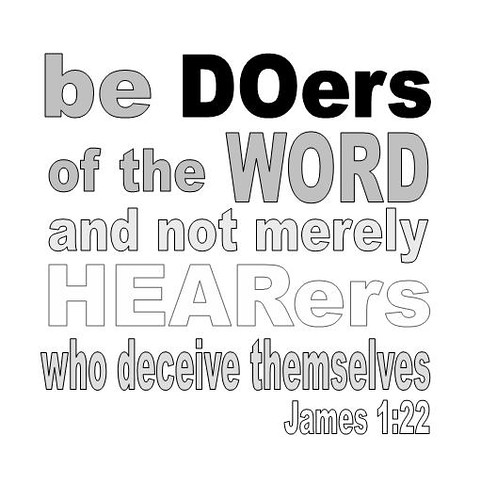
            Here, James is dealing with the Law. God’s rule book. James is a faithful Jewish follower of God, and as such is thoroughly steeped in the Mosaic Law code, or God’s rule book. Moreover, he has a pragmatic way of looking at the new way of living that comes from following his Messiah Jesus. Again, don’t just think the faith or hear the faith. Instead, do it!

            I return time and again to Carolyn Brown, retired Director of Children’s Ministry and commentator on the nuts and bolts of the Bible. She breaks things down to simple, straight forward truths. She says of this reading, “At the beginning of the school year children are learning the rules for their new classes, teams and clubs.  The rules tell them who they are and how they act in each situation.  Knowing that is important to them.” [5] 

            Just so with James. God’s rule book is important to him, too! Plus, following the way of God, following these acts of giving, acts of mercy, or advocacy, or support, or friendship are available to any of us. All of us, all the time. This manual for Christian living is NOT just something we do on Sundays, not just when we are in church or thinking heavenly thoughts. We can go to work for God anytime. All the time. Anywhere. Everywhere.  

            Dr. David Lose suggests that we try something for this coming week. Each of us consider this challenge. “write down one place [you] will be in the coming week where God could use [you] to listen, to be patient, or to care for those in need.” [6]  We are hereby all commissioned as God’s co-workers and partners. We all can continue to help make this world a more trustworthy, safe and healthy place, to work for God on this Labor Day, and every day. Alleluia, amen!

@chaplaineliza

(Suggestion: visit me at my other blogs: matterofprayer: A Year of Everyday Prayers. and  A Year of Being Kind . Thanks!


[1] https://www.dol.gov/general/laborday/history

[2] https://www.workingpreacher.org/dear-working-preacher/ordinary-saints

[3] Ibid.

[4] Ibid.

[5] http://worshipingwithchildren.blogspot.com/2015/08/year-b-proper-17-22nd-sunday-in.html

[6] https://www.workingpreacher.org/dear-working-preacher/ordinary-saints

Unknown's avatar

Be Prepared!

“Be Prepared!”

Ephesians 6:10-20 (6:10) – August 25, 2024

            I love to go to a baseball game! I do not go that often now, but in years past, I used to regularly go to Wrigley Field and watch the Cubs play. I don’t know if everyone is familiar with the equipment that baseball players need, but one player on a baseball team needs special equipment. The catcher is in a key spot on the team, and a very dangerous one! The pitcher regularly throws the ball at very high speeds. A catcher needs protection from those balls! A catcher’s mask, a chest protector, and shin guards, just to mention a few!

            This is similar to our Bible reading today. The Apostle Paul is finishing up his letter to his Ephesian friends. He warns them to be prepared, with a few practical, direct words for his long-time congregation. (I say long-time, because he spent about three years with this church, longer than with any other church he planted.)

Paul goes through a list of spiritual equipment that will protect his friends from attacks – the attacks of the Devil! Paul does not pull any punches. He is straight and up front with his former church members. He wants to warn them, prepare them for some really difficult times. These difficult times can often come into our lives today, too.

Let’s look more closely at what Paul says. “Finally, be strong in the Lord and in his mighty power. 11Put on the full armor of God, so that you can take your stand against the devil’s schemes. Therefore put on the full armor of God, so that when the day of evil comes, you may be able to stand your ground, and after you have done everything, to stand.”

            When I think of armor, my mind immediately goes to the military. Military service people definitely wear armor to protect themselves every day, in some duty stations, where some serve. Just as in baseball a catcher needs certain equipment to be prepared and safe while in a dangerous position, so do Christian people. Paul was in prison, in Rome, while writing this letter to the Ephesians. Paul was shackled to a Roman soldier inside of his cell, to make double sure he was going to stay put. Paul had the opportunity to become sadly familiar with the Roman soldier’s armor. Everyone, all believers in Christ need certain equipment (or pieces of armor) simply to be prepared!   

Let’s talk about baseball again, for a minute. What about the pieces of equipment the catcher wears? “The mask protects the catcher’s face from foul tips or pitches that might get past the glove. The glove protects the hand from balls. The chest protector protects the middle part of the body. Finally, the catcher wears shin guards to protect the knees and legs. No catcher would ever think of going into the game without this protective equipment.[1]

            Here in the letter to the Ephesians, at the very end of the practical portion of Paul’s letter, Paul details the protection you and I need in our lives, too. (And, this protection is so similar to what a baseball catcher wears!) We can see very well the kind of protection Paul is talking about if we think of a Roman soldier. Roman soldiers were commonplace, all over the Roman empire. Paul calls this protection the armor of God. He is thinking specifically of the armor the typical Roman soldier wears.

            We buckle the belt of truth around our waists. This is like putting on truthfulness. We are to tell the truth – at all times. Sometimes, it is not easy to be honest! In some situations, we are so tempted to bend the truth a little, or even a lot! But, the indwelling power of the Holy Spirit will help each of us with this important foundation of our faith.

            Next, each of us puts on the breastplate of righteousness. That’s a word we mention a lot in religious circles. Another way of thinking of it is putting on right behavior, putting on justice. Just like a catcher puts on a chest protector. Paul exhorts us to act rightly! This is certainly not easy! This thoughtful and prudent kind of action and behavior is often laughed at, by many people. Just think of rude or uncaring people, who may tease you or be mean to you for acting in a way that Jesus tells us to! (And, Jesus is our model for righteousness.)

            Which leads us to our shoes. Paul tells us to put on shoes that show we are speakers of peace. Not to argue and bicker, we are to go out of our way to bring peace to people!  

            These next two pieces of armor are clearly protective pieces. The shield of faith is our protection against those fiery darts that Satan can fire at us. And, not just physical darts! What about mean and nasty words that come our way, words that plant seeds of doubt in our hearts and minds? And, the helmet of salvation keeps the Evil One away. Thank God we have Jesus gifting each of us with salvation, because that is exactly what Paul talks about here.

            The last piece of armor is actually a weapon. The sword of the Spirit is the word of God. The letter to the Hebrews tells us that the Word of God is living, and active, and sharper than any two-edged sword. The Roman sword is a short sword, or weapon, used for combat at close quarters. This means that we are to actually engage the enemy, become active participants in battle! No sitting on the sidelines, as far as Paul’s fellow believers are concerned. As we continue to follow Jesus, we will continue to win the battle against Satan.

Whether inside or outside the church, however and wherever we serve our Lord, God intends for us to be prepared. That means being prepared by these words of caution and exhortation. Paul used these words in Ephesians to advise all of us to be ready to deal with challenging, even dangerous situations. We all need this prudent protection of God’s armor, in our everyday walk as believers.

Final words for today, quoting Paul? Be strong in the Lord! Stand ready, inside and out. And, do all this in prayer, always asking for God’s help. Are you prepared? Am I? With God’s help, yes – we are! Alleluia, amen! 

@chaplaineliza

(Suggestion: visit me at my other blogs: matterofprayer: A Year of Everyday Prayers. #PursuePEACE – and  A Year of Being Kind . Thanks!

(Thanks so much to link http://www.lectionarystudies.com/sunday21bae.html from the Rev. Bryan Findlayson of Pumpkin Cottage Ministry Resources, a lectionary resource I often quote from. Rev. Bryan gave me a lot of insight this week, and I used much of his material for describing the pieces of Godly armor!)


[1] https://sermons4kids.com/sermons/the-armor-of-god

Unknown's avatar

Don’t Be Good . . . Be Wise!

“Don’t Be Good . . . Be Wise!”

Ephesians 5:15-20 (5:15-16) – August 18, 2024

Can you picture this scenario? A tired mother, towing a whiny, unwilling child behind her in the grocery store, finally bursts out in an exasperated tone, “Will you please just be good?” How many times have you heard that cry? “Stop misbehaving!” or, “Please, be good, for once!” We may even have said it ourselves, to our children, grandchildren, nieces or nephews. Misbehavior is more than just a child’s issue. It’s bigger than that. It’s a larger issue . . . an issue of society in general, even a world issue.

The world situation today is not good. For confirmation, all anyone needs to do is look at a daily newspaper or listen to the nightly news. Misbehavior on a regional or national level. Wars and conflict overseas, violence in every large city in the United States, breakdown of society’s fabric in general, worldwide. I can quote the Apostle Paul from this passage in Ephesians 5 and say that these days are, indeed, evil.

This evil that Paul speaks of is not just generic, abstract evil. This evil is a specific kind of evil . . . in Greek, poneros—evil in active opposition to the good, pernicious. Insidious. Causing ruin. This is the situation that humanity is in without God. Left to our own devices, people will inevitably take the easier, softer way, cutting corners, with no moral compass.

If anyone here is familiar with the book The Lord of the Flies, this story is a prime example of how bad humanity can get. Briefly, the story concerns a group of British schoolboys who are wrecked on a tropical island without adult supervision, since the adults die in the plane wreck. It doesn’t take long before all kinds of evil behavior starts occurring as the boys engage in bullying, gang activity and before long, outright violence.

            Now, this book (later made into a movie) is a fictional account concerning schoolboys who do not have a moral compass. This kind of behavior is a worst case scenario, but it is happening more and more, as we see groups of people all over the world acting more and more amoral. Maybe we see it more and more because of better communications. And, with television and computers, news is beamed to the remotest corners of the world—news of these evil days.

“Though we cannot pretend that evil isn’t real (such a view would hardly be “wise”), this also cannot be the whole story of the world. We know that the world is God’s good creation, and that all days are God’s gifts” [1] – God’s gifts to God’s people!

            This is exactly the audience to whom Paul addresses this letter. The believers in Ephesus were Christians. They did believe in the claims of Jesus Christ. They were walking with God. One of the main themes of this letter is just that: keep walking with God. The Apostle Paul did not soften his words. He knew how difficult and challenging the Christian life can be.

            Paul’s strong words in Ephesians 5 are as much for us today as for believers centuries ago. “Take heed how you order your lives!” or, “Consider how you conduct yourselves!” The Christian life is not just a walk in the park, strewn with financial and material blessings, no matter what the tele-evangelists who promote a health, wealth and happiness gospel seem to say.

            Instead, and this is shown to us again and again in the Apostle Paul’s own life, the Christian life is not a spectator sport. No sitting in a comfy chair, eating bonbons. Life takes some doing. It takes rolling up our sleeves, and not being afraid to do something for God.

            Don’t get me wrong . . . I am NOT saying that we can work our way to heaven, because we CANNOT. No. We as human beings start off by our very nature separated from God, and cannot do anything about our own predicament. Yet, God’s wonderful grace sent God’s Son to redeem us from the evil things we have done, from the evil circumstances in which we find ourselves. And, when each of us believes in that gift of salvation and redemption, God helps us to be wise. God helps us to conduct ourselves in a manner pleasing to God!

            These days are evil, but with the Lord’s help, we can continue to walk in the way of God, not of evil. Yet, it is so easy to get off course. It’s like a ship on the ocean, steered by a rudder. Even if that rudder is off only a tiny amount, it doesn’t make a big difference at first. However, as the ship moves further and further across the ocean from New York City and continues on the wrong course uncorrected, instead of arriving in France, the ship might well end up in Africa! Aren’t we similar to that ship on the wrong course? Even though the course was only very slightly off in the beginning, as time went on and the journey continued, we might end up in a very different place from where we originally thought.

            This is one of the decision points of the letter to the Ephesians. We’re advised to live not as foolish people, but instead as wise people. I know very well how easy it is to become foolish. Sure enough, I do foolish things with great regularity. The Apostle Paul refers to this action as a continuing action.

Foolishness doesn’t just happen once or twice, and then stop. No, we need to keep close to God and keep coming to Him for help. God will help us understand how to be wise! God will help us to understand what God’s will is, too!

            This reminds me of my friend Mike, whose two children are about the ages of my two older daughters, in their late 30’s. Mike is a Presbyterian elder, a retired high school science teacher, and he gave me some words of wisdom some years ago regarding childrearing. He said because he wanted his children to exercise the excellent minds that God gave them, Mike would not tell his children to be good, but instead to be wise.

            Which is easier? Which is more difficult? Which takes more brain power? Being good, or being wise? Being wise takes some brain, some thoughtfulness, and some deliberation. Thank God that God loves us so much – God gave us excellent brains.

We can walk in a way pleasing to God, using the brains that God gave us to be God followers. “To be the awakened and wise people of God means that we can be good and honest stewards of time, so that opportunities to do justice, and to live boldly as God’s reconciled people during this time, are not missed.” [2]  And, the best part of all is that God will help us to be wise! God will give us wisdom, and will help us as we walk each day, one day at a time.

@chaplaineliza

(Suggestion: visit me at my other blogs: matterofprayer: A Year of Everyday Prayers. and  A Year of Being Kind . Thanks!


[1] https://www.workingpreacher.org/commentaries/revised-common-lectionary/ordinary-20-2/commentary-on-ephesians-515-20-4

[2] https://www.workingpreacher.org/commentaries/revised-common-lectionary/ordinary-20-2/commentary-on-ephesians-515-20-4

Unknown's avatar

In Prayer Before God

“In Prayer Before God”

2 Samuel 18: 5-17, 29-33 (18:33) – August 11, 2024

            The summary of a popular novel or a made-for-TV movie might be “An aging father grieves over the sudden death of his beloved son.” How often do we see this sort of sad headline broadcast by the media, or plastered on the covers of magazines in grocery stores? We can all feel for the affected family, or the grieving friends and relatives.    

            We all know grief. We all have experienced it, too. Some people are not even sure whether they ought to be grieving, but their insides say they very much ought to! “Grief is tremendous suffering and deep sadness. Grief could come after the death of a loved one. It could begin after the death of a pet. Grief could happen when our best friend moves to another city, and we have to say goodbye. We can’t get over grief – deep sadness- the way we get over a cold.” [1]

            This is what our Bible reading from 2 Samuel is all about today. The aging King David is grieving for his son – his most favorite son, Absalom. But, let’s back up a little, in this very sad tale. Absalom must have been a good-looking, charismatic guy, and a compelling leader, too. He thought very well of himself, and was itching to take over the kingdom from his father, King David. He certainly convinced a lot of people in Israel to get on his side, enough to mount a rebellion – an army to overthrow his father’s kingdom!

            This narrative is lengthy, and I don’t want to read it all to you. Let me give you the short-short version. Absalom was one of many children of King David. David had many wives, and they all were fruitful. David ended up with several dozen children from wives and concubines. Absalom was David’s favorite son. Sadly, and shocking to think – considering David was his father, Absalom was not a kind and virtuous person. By Biblical report, he was narcissistic, stuck up, and thought way too much of himself.

            David’s many children had a great deal of drama going on between them. You can read all about this unsavory drama yourselves, in 2 Samuel. Still, King David loved Absalom very much, even though Absalom raised an army to overthrow his father and become king of Israel himself. Sadly, things did not work out well for Absalom. “In this reading we see David issuing orders, trying to ensure that whatever happens in the upcoming battle between his supporters and the rebellion led by Absalom, that Absalom is to be spared. Ultimately, today’s passage ends with David learning that Absalom had been killed and the King is heartbroken.” [2]

            What do we do when we face such heartache over a loss that is not really a loss? What do we do when we have what is called ambiguous loss and grief? Certain kinds of loss and grief are frequently not even recognized as grief. Instead, it’s marked by uncertainty – the absence of closure, the murkiness surrounding what has been lost, or whether it’s truly gone.

Look at the awful situation with Absalom, who was treating his father King David so poorly. The young man was even leading a rebellion against his father! And, King David still loved his son very much, even when Absalom died. David loved and grieved so much!

            Some of these complicated and ambiguous situations are so difficult for the people and families to respond to. And, how should you and I respond to such pain, hurt and suffering? Our worship service each week gives us a road map on a caring way to respond even to ambiguous and puzzling situations. We can pray. We can come before God.

Our commentator reflects that “Few simple solutions exist to the complex problems that plague our lives, whether we’re talking about war among nations, conflicts within families, or battles being waged in individual hearts. And yet, no matter the enormity of the challenges we face, grace abounds again and again.” [3]

It is part of a loving and grace-filled response to lift our neighbors, our loved ones and their complicated situations to the Lord. A good place to begin is to acknowledge and validate the emotions surrounding the situation. There is real grieving going on! Even though the grief inside might not be acknowledged, or might be hidden or difficult to see, there are several responses possible. Let us choose the loving and caring response by praying for these friends without judgement. Let us cover the difficult or painful situation in prayer.

We realize that God knew David’s difficult situation, with Absalom and his total disrespect and rebellion of his father. We feel so deeply for King David, still loving his favorite son despite everything crashing down around his ears.

Even though our friends and loved ones may be in distress or even in despair, “The prayers of the people remind us that when we don’t know what to do or we are afraid to acknowledge the suffering around us, we begin with prayer; and not just individual prayer—corporate prayer. We don’t have to know the details of our neighbors’ struggles [and pain] to gather together and offer one another grace through prayer.” [4]

We can do that alone, in prayer before God, certainly! What is more, we can gather together as a congregation, as friends in Christ. Let us take the opportunity to lift up each other as we grieve, as we go through all kinds of losses. What a loving way to extend comfort and encouragement! And, we can bring all of these prayers before our loving, caring, compassionate God. What a balm for the heart and soul, as we know God cares for each one of us.

@chaplaineliza

(Suggestion: visit me at my other blogs: matterofprayer: A Year of Everyday Prayers. and  A Year of Being Kind . Thanks!


[1] https://www.umcdiscipleship.org/worship-planning/worship-with-rejoicing/twelfth-sunday-after-pentecost-year-b-lectionary-planning-notes/twelfth-sunday-after-pentecost-year-b-childrens-message

[2] https://www.churchofscotland.org.uk/worship/weekly-worship/monthly/2024-august/sunday-11-august-2024-twelfth-sunday-after-pentecost-year-b

[3] https://www.umcdiscipleship.org/worship-planning/worship-with-rejoicing/twelfth-sunday-after-pentecost-year-b-lectionary-planning-notes

[4] https://www.umcdiscipleship.org/worship-planning/worship-with-rejoicing/twelfth-sunday-after-pentecost-year-b-lectionary-planning-notes