Unknown's avatar

Have Compassion

“Have Compassion”

Matthew 9:35-9:38 – June 18, 2023

            Today is Father’s Day, the day people set aside in the United States to honor fathers, grandfathers, uncles, brothers – everyone who takes on a fatherly role in the lives of families and individuals across the country. Even, fathers across the world.

The Scripture reading today is the Gospel reading for this week, from the Revised Common Lectionary. I haven’t chosen an alternative reading for today, because the set reading from the Gospel of Matthew chapter 9 is so appropriate for our Summer Sermon series. We are re-imaging God. Seeing God from a different point of view.

Many, many people throughout the world look at the Holy, the Divine, and see something impersonal. This view of the Almighty can seem to be really far away. Distant and cold. Even forbidding and scary. Other times, some people see our God as a strong and mighty Deliverer. The Lord is described many times in the Hebrew Scriptures as a Rock, or a Fortress. That can be helpful, especially when we are in need of Someone strong to help us fight our battles, or when we need a safe, divine Shelter to hide inside – but quite impersonal.

But, what about when some of us (yes, I include all of us here!) need our God to be something other than distant, cold, and scary? Or Someone else than just a super-strong tough-guy? What then? It is really difficult for certain people to believe that their God could be that way! They cannot even conceive of God being warm, welcoming, caring and compassionate!

In Matthew 9:36, our Lord Jesus feels great compassion, and through the words chosen shows us just how deeply He cares. “When [Jesus] saw the crowds, he had compassion on them, because they were harassed and helpless, like sheep without a shepherd.”

            I wanted to see what a proper, in-depth word study on the word “compassion” had to say. According to one word study, “Com-passio literally means to “suffer with.”  In Latin, com means “with” and passio means “to suffer.”  “Passion” is suffering, which is why we talk about “the Passion of Christ” during Holy Week.” [1]    

            As He traveled throughout Palestine from place to place, the Rabbi Jesus had the opportunity to see a whole lot of people. Plus, many of the individuals who came to Him (or, were brought to Him) were not in good health. Many of these souls were distressed. Two other words for that state are “troubled” or the old-fashioned “vexed.” Have you seen troubled souls? Sometimes, these souls carry all their troubles inside, and the only way we know is by looking at their haunted eyes. Other times, some souls have physical aspects of their bodies that show us their distress and anxiety.

            Many of these hurting souls are dispirited. This word means “downcast” or “thrown down.” When people are inwardly helpless and forsaken, often we can see their souls as dispirited. “Philip Keller, in A Shepherd Looks at Psalm 23 [Zondervan], describes how sheep can get turned over on their backs and not be able to get up by themselves again. Such sheep are called “cast” or “cast down” sheep (p. 60). These sheep flail at the air with their legs, but they can’t get back on their feet without the aid of the shepherd. Left in this condition, helpless and vulnerable to their enemies, they will die after a few hours or days.” [2]

            We can easily see how Jesus as our Good Shepherd would be greatly concerned and compassionate for these dear souls! I would like to return to the word “compassion.” We looked at the Latin roots of that word, but the Gospel of Matthew was written in Greek.

If we take a closer look at what the Greek word “compassion” means, we see the word splagchna, which appears in the letter to the Philippians. The Apostle Paul’s words in the King James Version say: “I long after you all with the bowels of Jesus Christ.”  The word splagchna means “bowels” – literally, the innards in your belly.  It’s an earthy image that might offend some. “The people of the ancient world believed that all of the most intense feelings originated in the belly.  For them, “guts” did not mean “courage,” but depth of feeling.

It’s easy for us to understand why they would believe that, because when we feel anxious or afraid, our stomachs churn.  Our lower innards give away how much we are affected by our circumstances.  The Greek phrase Splagchna oiktirmou means something like “’the bowels of deep feeling.’” [3]

            Our Lord Jesus felt like this for the crowds surrounding Him. He had deep compassion, caring and love! As the classic hymn tells us, “O, the deep, deep love of Jesus, love of ev’ry love the best! ‘Tis an ocean vast of blessing, ‘tis a haven sweet of rest!”

            No matter how our popular culture makes fun of the “kinder, gentler” emotions like compassion, or labels them as “unmanly,” we can readily see from passages like these that our Lord Jesus felt them deeply. No matter how much some scoff at strong, mighty people also being caring and loving, we have a Divine example right here to hold up. To hold on to.

            Moreover, this does not only refer to the crowds Jesus saw in Palestine. Jesus has compassion on us, today, too. “He sees us in our lostness, in our emptiness, under attack by enemies within and without; and he loves us. Although we are harassed and helpless, he loves us. He doesn’t say, “Well, they should have known better.” He doesn’t say, “You’d think that by now they would have figured it out.” He doesn’t say, “What a bunch of losers.” [4]

Jesus has deep compassion for the sheep without a shepherd, centuries ago, and for us sheep, too! Jesus loves us all, cares for us all, down to the very depths of His being.

We can rejoice in the deep compassion, the deep caring, and yes, the “deep, deep love of Jesus.” This is for each of us today, and this is the Gospel truth. Alleluia, amen.

@chaplaineliza

(Suggestion: visit me at my other blogs: matterofprayer: A Year of Everyday Prayers. #PursuePEACE – and  A Year of Being Kind . Thanks!


[1] Compassion in the New Testament (Part 1) http://www.jmarklawson.com/traveling-in-place/2012/03/compassion-in-the-new-testament-part-1.html

[2] https://bible.org/seriespage/lesson-1-help-wanted-matthew-935-38

[3] Compassion in the New Testament (Part 1) http://www.jmarklawson.com/traveling-in-place/2012/03/compassion-in-the-new-testament-part-1.html

[4] https://www.umcdiscipleship.org/worship-planning/the-path-of-the-disciple-the-weight-of-the-call/third-sunday-after-pentecost-year-a-lectionary-planning-notes/third-sunday-after-pentecost-year-a-preaching-notes

Unknown's avatar

God Created

“God Created”

Genesis 1:1-6, 26-28 – June 11, 2023

            With June, everything is blooming! All kinds of trees, plants, flowers and leaves are growing and blossoming, and it’s just like that song from the great American songbook, “June is Busting Out All Over!” We can easily see how much joy God took in creating the heavens and the earth, with how green and verdant all of nature appears, outside.

            And, God not only created the plants and growing things. The Lord created a whole lot more! As Genesis 1 tells us, God created all living things on the earth, sea and sky, and all the heavenly bodies in the universe, too. A mighty act of creation, for our mighty God! 

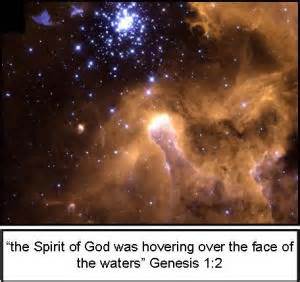
            This act of creation comes at the very beginning of things, in the very beginning of the Bible. Genesis chapter 1. “In the beginning God created the heavens and the earth. Now the earth was formless and empty, darkness was over the surface of the deep, and the Spirit of God was hovering over the waters.”

            We are starting our summer sermon series today, Re-imaging God. This series will highlight different ways of thinking about and naming attributes of our God. In this series, we will work on stretching ourselves! We will try to enlarge our image of our God.

            The words we use are important – not only the words we say, but the words we read on the printed page. The words of Scripture are all important, too. Let us take a closer look at how verses 1 and 2 describe our God. Verse 1 (the summary statement for this chapter) says that “God created.” God created the heavens up above and the earth beneath. Verse 2 describes the Spirit of God as “hovering over the waters.”

            This lean, spare description is marvelous! Can you see it? The dark heavens and the earth, formless, empty, just waiting for something to happen.

I don’t know whether you are aware, but different languages use different articles for nouns. In English, we all say “the cat” and “the dog,” and by the article “the,” they could be either male or female animals. However, many languages are structured differently.

In German or Italian, Spanish or Greek, different nouns are gendered. It’s a “male dog,” or a “female cat.” The article “the” in front of the noun changes with the word. Plus, the gender of the verbs must agree with the gender of the nouns! Any native English speaker who learns one of these languages in school struggles with the gender of the nouns and matching the proper articles and proper gender of verbs with the nouns!

It’s the same way with the Spirit of God. In the original language of the Hebrew Scriptures, “Spirit” is feminine. What’s more, the Spirit of God hovering or brooding over the waters is – according to the Hebrew language – a feminine Spirit. This verb “hovering” is also mentioned in Deuteronomy 32, where the mother eagle is protective towards her young in the nest. The “hovering” of the Spirit is a mothering activity! Here in Genesis, the Spirit of God, the Ruach ha Kodesh, is a protective, nurturing presence over the still formless waters. [1]

            Just so we do not get lost in the weeds of different languages, here’s the highlight I want us all to focus on. Whether Scripture is in Hebrew or Greek, “both masculine and feminine verbs are used for God, masculine for God, feminine for the Spirit. [And as we will see,] God’s human creation will reflect their creator as female and male.” [2]

               Seeing the nurturing, mothering nature of mammals, of dogs, cats, and humans – these mental images of puppies, kittens and babies can bring to mind gentle caring, loving encouragement, and supportive love. These are exactly the kinds of things that describe the activities of the Spirit of God! Plus, God the Father is caring, loving and supportive, too!

And what about the Good Shepherd? That’s Jesus, I want everyone to know. Remember how Jesus cares for His sheep, and how in several places in the Gospels Jesus is described as a loving, supportive Good Shepherd who guards, guides and protects His sheep.

            Isn’t it wonderful to see God as a mothering, nurturing God? Not only mighty and strong – a just, even stern, protector. Yes, God is all of those things. And, mothering and nurturing, caring and loving, too! Both/and – not either/or.

            Let us continue with verse 26: “Then God said, “Let us make humankind in our image, in our likeness, so that they may rule over the fish in the sea and the birds in the sky, over the livestock and all the wild animals, and over all the creatures that move along the ground.” God has created humans male and female. We, as humans, are created in the image of God! And, this whole chapter of Genesis 1 follows the same pattern, using pronouns of both genders.

            “We forget that Genesis 1 is a chapter brimming with goodness and blessing. In fact, God pronounces blessing on the created order three times. [God] calls creation “good” and “very good” seven times.” [3]

            We can see how the earth – the world – the universe was lovingly, joyfully created by God. And, whether we think of the feminine Spirit of God or the almighty Lord, or the Word that was in the beginning (from the Gospel of John), the preincarnate Son of God – however we consider the Triune God – all we can do is lift our hands in worship, thanksgiving and praise.

 What will you and I do with this fresh understanding of God? This understanding that transcends gender? “The creation story insists that God’s mark is imprinted on my very being. I might ignore or distort it, but the mark is always there. Whether I acknowledge it or not, I reflect something of God’s joy, God’s intentions, God’s love, and God’s beauty just by virtue of existing on the earth. I am His, and so He is mine.” [4]

            We can go out into the world, knowing that the Creator God made each of us, all of us, in the image of God. Male and female we are made, and each is in the image of God. Just as Psalm 139 tells us, “I praise you because I am fearfully and wonderfully made; your works are wonderful, I know that full well.”

            Our loving, caring, nurturing Creator God created the heavens and the earth; God created all humanity, and that includes you and me, too. Praise God! Alleluia, amen. 

@chaplaineliza

(Suggestion: visit me at my other blogs: matterofprayer: A Year of Everyday Prayers. #PursuePEACE – and  A Year of Being Kind . Thanks!


[1] van Wijk-Bos, Johanna, W.H., “Reimagining God” (Westminster John Knox Press: Louisville, KY, 1995), 72.73.

[2] Gafney, Wilda, “A Women’s Lectionary for the Whole Church” (Church Publishing, New York, NY, 2021), 142.

[3] https://www.journeywithjesus.net/Essays/20140609JJ.shtml

[4] Ibid.

Unknown's avatar

Trinity Benediction

“Trinity Benediction”

2 Corinthians 13:11-14 – June 4, 2023

            This is one of my favorite Sundays in the whole church year. Trinity Sunday! Today is a different kind of Sunday, one where we focus on a theological concept and place it in the center of our service today.

Yes, we can talk about the Trinity, and have Bible readings about the Trinity. But, the most important thing is to center our worship, praise and prayer around the indescribable reality of that most holy of holies, the God who created heaven and earth. No matter how many intellectual arguments or theological books we read, all else falls woefully short.

We have two short Bible readings today, one from the beginning of all things, from Genesis 1, and one from the end of one of Paul’s letters. We span from the beginning to a benediction. As we approach the reading from Genesis, it is the very opening of the Bible. The very beginning of the world. I will examine these verses more in depth next week, as I start our Summer Sermon Series, a Biblical view of God as Nurturer, God from a Feminine viewpoint.

 I wanted to highlight something important. When God created all things, God was there as Trinity just as much as God is here today as Trinity. But – you might ask, and I would not blame you if you did – what on earth is the Trinity? Great question! We see Trinity as One God in Three Persons, as from the marvelous hymn, “Holy, Holy, Holy.” Yet, even this soaring hymn cannot give us much information about the definition or composition of the Trinity.  

We know about our Lord Jesus, our Savior, the Good Shepherd who cares for His sheep. We have some idea about the Holy Spirit, the Holy Comforter, the one who energizes God’s people (as we heard last week at Pentecost). And, we fall down before God the Father, the Almighty, the Holy One who created heaven and earth. We can say with the host of heaven, “Holy, holy, holy! Merciful and mighty! God in three persons, blessed Trinity.” Just as I said a few minutes ago – as I do every week, after the Scripture Reading – “Glory be to the Father, and to the Son, and to the Holy Spirit. As it was in the beginning, is now and ever shall be. World without end, amen, amen.”  

            The Bible does not give a clear definition of the Trinity; it mentions it in general, several times in both the Hebrew Scriptures and the New Testament. A mystery: One God, three Persons. We can compare the Trinity to a green, growing clover with three leaves in one plant (as St. Patrick did, centuries ago). We can think of it as St. Athanasius described it, as the three stages of water, as liquid, solid (ice) and gas (steam). All water, and yet in different forms.

            Some people, younger people and small children, find it easier to grasp this challenging theological concept if we use the different names of a person. Talking about different names of a person can be more relatable. Although my children were small, they could certainly understand how my mother could be “Mom” to me, “Grandma” to them and “Sister” to my Aunt Bernice. Three different names, three different aspects, yet one person.

            Most of us, if not all of us, can relate to being called by different names. Daughter, Mom, Grandpa, Brother, Teacher, Nurse, Chaplain, Pastor. Sometimes these names are more functional, some less so. Yet, still, no matter which name is used, you are still you. It’s the same way with God. God can be called any one of dozens of names, describing different aspects and functions. [1] And, these are all various ways of understanding our huge God, just a little bit more!  

            As I have been going over several commentaries and articles about the Trinity and about our Bible reading from 2 Corinthians, this idea of God as Trinity being too immense for us limited humans to understand is one aspect that I am certainly aware of. Yes, we can get a bit closer to the idea of God in Three Persons, but never fully understand it. God is too huge.

As Rev. Janet Hunt said, “Over these last days, I have simply found myself with my eyes and heart open, hopeful to simply see the face of God, even the many faces of God, which is and are represented by the concept of the Trinity.” [2] Is it the marvelous gift of God’s very good creation we hear about in Genesis 1? Is it the holy connection which is ours through Father, Son and Holy Spirit, as described in 2 Corinthians 13?

            Perhaps, we are simply to be blessed by this theological truth, this mystery, and not worry about fully comprehending it? Just as the Father, Son and Holy Spirit are in conversation one with the other, blessed One in Three, just as the Trinity is caught up in the eternal I AM, the constant and eternal present tense. How can we understand it, much less explain it, to come anywhere close to God’s reality or satisfaction?

            The apostle Paul shared these words with his readers at the end of this letter. Perhaps he did not understand it either! Yet, he spoke of the Trinity in his benediction with warm, loving words. “12 Greet one another with a holy kiss. 13 All God’s people here send their greetings. 14 May the grace of the Lord Jesus Christ, and the love of God, and the fellowship of the Holy Spirit be with you all.”

            Perhaps this prayer by my friend Rev. Jo Anne Lesco Taylor can add another view to the different understandings I have put forth today, to close this meditation on the Trinity. I hope and I pray these words may bless us all.

Holy One in Three and Three in One, Let me dance with you.

I may not understand how you can be three distinct persons living in unity,
how you can sing in unison and harmony at the same time,
But I do not need to understand in order to trust your Presence.

I need not Know in order to Love as you love, as you open the circle to me
and invite me into your dance, into your grace,
into your wholeness and holiness, into your love.

Let it be so. Let me dance with you, God. Amen. [3]

@chaplaineliza

(Suggestion: visit me at my other blogs: matterofprayer: A Year of Everyday Prayers. #PursuePEACE – and  A Year of Being Kind . Thanks!


[1] http://worshipingwithchildren.blogspot.com/2014/05/year-trinity-sunday-first-sunday-after.html

[2] https://dancingwiththeword.com/the-face-of-god/

[3] https://pastorsings.com/2023/06/03/a-prayer-for-the-eve-of-trinity-sunday/?fbclid=IwAR2DW8vuOxwd8OzkZnSS1gD9-w9R4AxHMb66tpWUycbaf2_Ou3G9ZAL-1ZM

Unknown's avatar

Holy Spirit Power!

“Holy Spirit Power!”

Acts 2:1-4 – May 28, 2023

            Wear red for Pentecost! This is a joyful, even beloved tradition in some churches and certain denominations.  As you all can see, I am wearing red today! My stole is red, and the altar cloths are red, too. Red is a celebratory color, the color of today’s Pentecost celebration. We can praise God for the birthday of the church that happened almost 2000 years ago today!  

            Red is the color signifying the Holy Spirit, and a reminder of the flames that appeared above each believers’ head on that first Pentecost, too. “A reminder of that first startling presence that came and rested on them that day. Did you catch that, the resting? What does that mean? This amazing moment, this throbbing with power moment, is … comfortable?[1] Is it??

            Exactly what our Bible reading for today says. “When the day of Pentecost came, they were all together in one place. Suddenly a sound like the blowing of a violent wind came from heaven and filled the whole house where they were sitting. They saw what seemed to be tongues of fire that separated and came to rest on each of them.”

Yes, the presence of God has been described in the Bible as comforting and gentle – sometimes. But, here, in this Bible reading today, we have anything but!

            What is happening? I thought that our Lord Jesus was gentle and mild, like the Good Shepherd, cradling a lamb in His arms. I thought the Holy Spirit was the Holy Comforter, coming alongside of people in sorrow, trials and grief. Not a violent wind! Not with tongues of fire! That sounds earth-shaking and like the sounds of a powerful locomotive! That looks really scary, that each believer had fire on top of their heads! What on earth would you think if God sent such signs of God’s presence right here, right now? Wouldn’t it be scary, even earthshaking?

            Looking back at the Hebrew Scriptures, fire is a clear sign of the presence of God. Let’s think of the book of Exodus, with Moses looking upon the ever burning bush, burning and yet never consumed by fire. The voice of the LORD spoke out of the flame, telling Moses to take off his sandals, because the very ground he stood on was holy. This is the very presence of God, who identifies as “I AM WHO I AM,” the ever-present God.

            And, later in Exodus 19, we are told about the fire on the mountain where the presence of God, indeed the LORD descended in power. Can you imagine? The whole of Mount Sinai was shaking! The text said the mountain “trembled violently!” And, everyone in the camp where the nation of Israel trembled in fear, too, at such mighty displays from heaven!

            We read about such things, today, and put them back in history. Oh, those kinds of things just happened in Bible times. That was a long, long time ago! But, was it? True, those kinds of awesome, mighty, violent displays of God’s power did happen long ago. But, can they happen today, too? What kind of God do you believe in? How powerful is our God, today?           

The coming of the Holy Spirit was described by Dr. Luke as a violent, rushing wind. Or, to make it understandable to us folks from the modern day, Dr. J. Vernon McGee says: “A friend of my daughter lives in Kansas and went through the experience of a tornado. It did not destroy their home but came within two blocks of it. When she wrote about it to my daughter, she said, ‘The first thing we noticed was a sound like a thousand freight trains coming into town.’” [2] In Acts 2, Dr. Luke said that something very much like that kind of awesome, violent power was what that group of believers experienced on the Day of Pentecost!  

We can see the many symbols and metaphors that are used in the Hebrew Scriptures. These are physical things (and phenomena) that are used to signify spiritual matters. There are several symbols that show us just how mighty and powerful the Holy Spirit can be! (Like wind, which would be a whole sermon unto itself!) But, what a wonderful symbol is found for the person and work of the Holy Spirit in fire. Fire illuminates, and is warm. Isn’t it fitting that Christianity – the founding of the church – is characterized by fire?

One of my commentary writers suggests a grand celebration for the Day of Pentecost. “So, send out the word, “Come wearing red.” Give everyone red ribbons as they enter, drop red confetti when the worship begins, bind everyone together in red yarn, fly red kites. Do something dramatic, something memorable, something that might—let’s be honest—upset some of those who gather as not being “proper” for church. We have tamed worship, tamed Pentecost, trying to be proper and reserved. There is a time and place for proper, and for calm and reserved. But Pentecost is not that time or place.” [3]

  Whether the presence of the Holy Spirit is powerful and earthshaking, or quiet and gentle, whether our church’s celebration of Pentecost is loud or not-so-loud, we all need to acknowledge the mighty power of God in the church today. Right now!

“Oh yes, the Power of the Holy Spirit is not really to be found in the wind and the flames which only seem to foretell the amazing events yet to come.  The Power of the Spirit is discovered between us and among us and through us.” [4]  One way is through the awesome power of believers coming together, the power of all of us here in this sanctuary between us and among us and through us, that power of the Holy Spirit manifest among us today!

So, we can celebrate today! We can make noise, dance in the aisle, do something that could even upset the more staid members of any congregation! Pentecost is truly the day to celebrate! And, the day to recognize that God’s mighty power is present among us. How is the power of the Holy Spirit active in your life today? We all have access to God’s mighty power. Believe it! Claim it! And, rejoice in that power and blessing of the Holy Spirit, today and every day.  Alleluia, amen.   

@chaplaineliza

(Suggestion: visit me at my other blogs: matterofprayer: A Year of Everyday Prayers. #PursuePEACE – and  A Year of Being Kind . Thanks!


[1] https://www.umcdiscipleship.org/worship-planning/pentecost/pentecost-sunday-year-a-lectionary-planning-notes

[2] McGee, J. Vernon, Thru the Bible Commentary, Vol. 4 (Thomas Nelson Publishers: Nashville TN, 1983), 516.

[3] https://www.umcdiscipleship.org/worship-planning/pentecost/pentecost-sunday-year-a-lectionary-planning-notes

[4] https://dancingwiththeword.com/the-power-of-the-holy-spirit/

Unknown's avatar

Casting Our Cares!

“Casting Our Cares!”

1 Peter 5:6-11 – May 21, 2023

            I have a friend – really, several friends – who all have a major challenge in life. Imagine, feeling off kilter much of the time. They haven’t been to a doctor, and a few haven’t even gone to the emergency room when they have a flare up. Several of my friends don’t have health insurance and cannot even afford medical care. This is the situation for many, many people across the United States.

            Except – the situation with several of my friends is not physical illness, like a broken bone or having gallstones or needing a knee replacement. Those are all conditions that are straightforward, and can be readily fixed. No, the situation with several of my friends – and several relatives in my extended family – is mental illness. Invisible illnesses like major anxiety disorder, or one of many forms of autism, not to mention schizophrenia or bipolar disorder. This kind of affliction is a very real illness, just as real as diabetes, or spinal stenosis, or heart disease.

            The apostle Peter did not have the kind of understanding that the medical workers of today have. At least, not about the medical intricacies and interrelations of the human body and the human mind. He did not have medical understanding concerning diseases and health histories. However, Peter had significant spiritual and relational understanding, especially concerning his risen and ascended Lord Jesus Christ and Christ’s relationship with us.

            As I have reminded us all during the past weeks, Peter concentrates on suffering a number of times in this short letter. He raises it again in today’s matter-of-fact reading.

Everyone will suffer at one point or other in our lives, frankly. It just depends when and how much we suffer, whether we suffer physically, mentally, emotionally or spiritually. Sure, we can be afraid! Who wouldn’t be afraid? It only makes sense for us to fear and have concerns!

If we step back and take a look at the beginning of chapter 5, I know that Peter was thinking more about suffering in a physical sense.  But, I want us all to consider people with mental illness, especially untreated mental diseases. Peter’s words about suffering surely can apply to people like these, people like several of my friends and several in my extended family.

Perhaps, you are thinking of someone you know, someone in your circle of friends or your family. Thank goodness here in the Chicago area we have a large number of therapists, social workers, psychologists, and psychiatrists. Even though we have all of these professionals here in this area, all of these people who can diagnose and assist those with mental illness and cognitive impairment, many, many people still suffer. Just like there are many people who suffer with heart disease, or diabetes, or many other physical illnesses.  

The apostle goes into more detail here in chapter 5, when he talks about suffering. “Peter does such an amazing job of describing the human condition in such terrorizing detail. From fiery ordeals to facing a lion prowling around looking for someone to devour, yikes! Sure, it feels like that on a regular basis, but seeing [the fears] there in print makes me want to cling to those fears even more tightly. They are real; they are overwhelming; and they are mine.” [1] I think those fears might be yours, too. Except, the apostle gives us a welcome relief! A welcome refuge from all of these anxieties and fears, too!

            Let us look at verse 7. “Cast all your anxiety on him because he cares for you.” Another translation of this verse says “Cast all your cares upon him.”

            Yes, we are beset on all sides by suffering and strife, sometimes! Yet, we have this Godly solution to our problem. If you will, we have a medicine for our spiritual diagnosis. “But here’s the real question – “How do you do it?” Or even – “Can we do it?” Is such a thing humanly possible? Well, of course it is. We wouldn’t be presented with a task that is beyond human capabilities. God isn’t in the frustration business.” [2]

            Our opening hymn today, the gospel song “I Must Tell Jesus” gives us some direction. “In my distress He kindly will help me, He ever loves and cares for His own.” And the chorus gives us reassurance, too: “I must tell Jesus! I cannot bear my burdens alone.” That is just the point! We cannot bear these burdens all alone, ashamed and in silence. We need each other to assist. We need each other to come alongside, to encourage, to comfort. And, often we need the additional helps of therapists, counselors, social workers, psychologists or psychiatrists.

            I remember praying with a dear senior, some years ago. This senior had a heavy burden of the spirit that she had carried around inside of her for decades. I was finally able to have her talk about it, a little. I hope that she was helped when we prayed together. I pray she was able to let this psychological burden go. Just a little bit, at least.

            We can confide in a good friend, too, or ask for prayer. We can write in a journal and set down our fears, frustrations, and anxieties. However you and I hold these cares about mental illness, there is help! This is just one of many resources, and it’s available locally in many places throughout the United States. NAMI, the National Alliance on Mental Illness is supportive and welcoming to individuals and families living with mental illness. (www.nami.org)

I don’t know how it’s been described to you: depression, anxiety, compulsion, addiction, autism, Asperger’s, disorder, syndrome. I invite anyone who would like to have Jesus come alongside of them, to help them bear their burden to come forward and light a candle. For your loved ones, or friends, or yourself. And, we can all help bear each other’s burdens, too.

At this tender moment, this moment of release and encouragement, we can indeed cast all our cares upon the one who truly understands. Hand over our anxieties so they burden us no longer. We can cast all our cares upon Him who cares for us immeasurably more than we can ask or think or possibly understand. And, that is a sure promise from God.

Alleluia, amen.

@chaplaineliza

(Suggestion: visit me at my other blogs: matterofprayer: A Year of Everyday Prayers. #PursuePEACE – and  A Year of Being Kind . Thanks!


[1] https://www.umcdiscipleship.org/worship-planning/a-living-hope/seventh-sunday-of-easter-year-a-lectionary-planning-notes/seventh-sunday-of-easter-year-a-preaching-notes

[2] https://www.umcdiscipleship.org/worship-planning/a-living-hope/seventh-sunday-of-easter-year-a-lectionary-planning-notes/seventh-sunday-of-easter-year-a-preaching-notes

Unknown's avatar

Always Be Ready!

“Always Be Ready!”

1 Peter 3:13-22 – May 14, 2023

            For years, I used to have a simply marvelous car mechanic. Omar was the absolute best! (Sadly, he retired some years ago.) His auto shop was in the Rogers Park neighborhood of Chicago, and I have lived in Evanston for the past thirty years. Do you think that distance stopped me from going to Omar’s shop? Of course not! He was just that good and just that honest about fixing cars. And, I would tell everyone how awesome Omar was. Period.

            In our Bible reading today, the apostle talked about telling our story. In other words, telling others about our Lord Jesus Christ. That’s talking about how marvelous He is, and just that honest, too. What are we supposed to be ready to do? Tell our story! It’s as simple as that. And it’s as complicated as that. Peter says that we are always “ready to make your defense to anyone who demands from you an accounting for the hope that is in you.”

            That’s the situation. Remember, we have been discussing how dangerous it was for Christians – believers in the Lord Jesus – to be honest and transparent about their belief in the one, true God who created heaven and earth. As I have mentioned before in past weeks, we have considered even today how dangerous and toxic many of the governments through the Middle East and North Africa (as in other parts of the world) are for these believers of a fragile minority religion.

            Let us listen again to the words from 1 Peter 3: 14 But even if you should suffer for what is right, you are blessed. “Do not fear their threats; do not be frightened.” 15 But in your hearts revere Christ as Lord. Always be prepared to give an answer to everyone who asks you to give the reason for the hope that you have. But do this with gentleness and respect, 16 keeping a clear conscience.”

            Why are there so many believers through the centuries who have been ready to tell their story and give an account of themselves no matter what, as the apostle says right here?

             “We aren’t often in danger of going to jail on account of our faith; we aren’t likely to lose our jobs or get kicked out of school, at least in most parts of the world. So, we look for opportunities to tell our story when questions are asked. When we are asked about our Sunday morning habits, [why we attend church] for example, or why giving is so important to us. Questions like these are great opportunities to share our faith and to tell our story, if we are prepared.” [1]

But, how are we supposed to follow that calling to tell our story, just like the apostle tells us to do, right here? Honestly, I know some people are hesitant or shy, or downright afraid of talking about our Lord Jesus.

One way you and I can practice telling our stories is by telling them to each other in worship. I have attended Sunday services where there is a regular sharing of stories, or giving testimony. “Testimony is a long-standing tradition in the life of the church and might be worth considering reviving in your local context. We need to hear from one another so that we can become more comfortable speaking to others. We may think our story isn’t dramatic enough for a testimony, or that we aren’t always confident in the motivations or reasons for why we do what we do.” [2] Isn’t following this command of the apostle reason enough?

Yes, speaking from the heart is incredibly effective for reaching other hearts. There is nothing like an emotional impact to get under people’s guard and make them think hard about the claims of this God who made heaven and earth.

But, let’s examine this verse more closely. Emotion only goes so far. An emotional appeal does not appeal to everyone. “Peter probably has in mind a formal defense of the faith in a law court, but his words apply to any situation where a believer is called on to defend their faith. We must be ready, willing and able to speak for Jesus. Peter actually uses the word apologia, a word meaning “a formal reasoned defense” – a reasoned defense of the Christian faith. What’s being asked of us is to know and understand the gospel and be willing and able to give a reasoned (logical) account for our reliance on Christ.” [3]

Whether emotional or logical, whether incredibly personal or ordered and reasoned, a testimony is a powerful thing. But, it is not for us to measure how many people are affected by our words, by our stories. “Not how many “souls we have saved.” Not the crowds we drew or the attention we gathered. In fact, it may seem like no one at all is responding, is turning their lives around, is making any change based on our words. That doesn’t matter in the least. Yes, of course, we hope to make a difference in the world around us; we hope to bring influence for the cause of Christ and to make disciples of Jesus for the transformation of the world.” [4]

But, in this, too, we run the risk of becoming puffed up. Are we doing this to put on a good show? Or, is our true purpose our faithfulness to God? At the end of the day, we are to be faithful. God will take care of the response. It is our task – our joy – to faithfully give testimony to what Jesus has done in our lives. Always be ready to give a defense to anyone who sees the Godly hope within us.

Just like I was ready and willing to tell anyone about my marvelous car mechanic, Omar! Am I – are you – ready to tell others about Jesus? I encourage us all to consider what God has done in your life, and in mine. Be ready to give testimony to the awesome and daily power of our Lord Jesus Christ. As we trust God, let us share our hope! Be ready! Be ready to tell our stories of what God has done. Alleluia, amen.

@chaplaineliza

(Suggestion: visit me at my other blogs: matterofprayer: A Year of Everyday Prayers. #PursuePEACE – and  A Year of Being Kind . Thanks!


[1] https://www.umcdiscipleship.org/worship-planning/a-living-hope/sixth-sunday-of-easter-year-a-lectionary-planning-notes

[2] Ibid.

[3] http://www.lectionarystudies.com/easter5ae.html

[4] https://www.umcdiscipleship.org/worship-planning/a-living-hope/sixth-sunday-of-easter-year-a-lectionary-planning-notes/sixth-sunday-of-easter-year-a-preaching-notes

Unknown's avatar

God’s People!

“God’s People!”

1 Peter 2:4-10 – May 7, 2023

            I had an amazing time in Egypt! Our wonderful and knowledgeable tour guide often called our group together during our time in Egypt, saying “My people!” in his resonant baritone voice. Often, at museums, libraries and archaeological sites where there were many other tour groups, our group of 19 soon learned to listen for our guide calling out, “My people!”

            I can just imagine the apostle Peter considering the same thing. He wrote this letter to a group of scattered Jewish believers in the Messiah Jesus (our Lord Jesus Christ) all throughout Asia Minor. Peter does not say exactly “My people!” to his scattered believing friends, but that is very much his intent.

Listen to verses 9 and 10: “But you are a chosen people, a royal priesthood, a holy nation, God’s special possession, that you may declare the praises of him who called you out of darkness into his wonderful light. 10 Once you were not a people, but now you are the people of God; once you had not received mercy, but now you have received mercy.”

            The situation of these scattered believers, sprinkled far apart throughout the area north of Palestine, was a sadly common one. No matter where these first-century believers lived, very often they were persecuted. They faced becoming social outcasts simply for believing in and obeying Jesus Christ as Lord.

            As I have said in past weeks, the current situation of many believers in Jesus, in large parts of North Africa and the Middle East, is also one fraught with dangers and persecution. Believers can lose their jobs, lose their families, even become social outcasts simply by letting it be publicly known that they believe in Jesus Christ as Lord. This is a very serious thing, indeed. And, not relegated to way back when, in the first or second century.

            The apostle tried to encourage the hearts of these scattered Jewish believers! He starts off the letter by thanking God for such great salvation! He encourages his believing friends to continue to live holy lives, as is pleasing to God. In other words, we all ought to pattern ourselves upon our Lord Jesus, the cornerstone of our faith.

            Do you know what a cornerstone is there for? Why a cornerstone is placed on a building? The cornerstone is often a fancy stone, with carving or words placed (or carved) on it. The cornerstone is “the first stone set in the construction of a masonry foundation. All other stones will be set in reference to this stone, thus determining the position of the entire structure.” [1] The cornerstone has very great importance to the rest of the whole building!

            Peter knew quite a lot about stones. He had received a new name from the itinerant Rabbi Jesus during the three years the disciples followed Him around Palestine. Formerly Simon, now called Peter, or “the Rock.” I would imagine that Peter considered himself as a follower of our Lord Jesus to be a part of that heavenly Temple, that spiritual building, a Rock positioned, set in place following the Cornerstone called Christ.

            Can you see how Peter meant those words about our Lord Jesus, Him being a Cornerstone, to be an encouragement and comfort for these scattered believers? I can just see these timid believers, gathering in houses on the first day of the week, blessed by the words of this letter that was copied and circulated throughout Asia Minor!

            And the capper for this part of the letter is that these believers are God’s people. “a chosen people, a royal priesthood, a holy nation, God’s special possession, that you may declare the praises of him who called you out of darkness into his wonderful light.” I can only imagine how encouraging that was to these dear persecuted followers of Jesus!

            Not only are they – we – silent stones, placed in the building of the heavenly Temple built by our Lord Jesus. But, they – we – are also God’s people. All of us are! We have been chosen, on purpose. Not just leftovers, not just the remainders, but God’s special chosen people! God’s special possession! Praise God, can you believe it? Plus, you and I are not simply static stones in the foundation of a building. No! We are much more than that!

            How does it feel to be one of a royal priesthood? A holy nation? In fact, God’s special possession? Because, we are! We all as believers are something to be celebrated, for sure!

            A key part of this Bible reading is the enormous difference that is not due to anything that you or I did. We did not work for it. “It is what God did for us! We didn’t become the people of God by trying hard. God chose people, all people, as God’s people. God chose us. We didn’t become holy because of something we did right. We became holy because God forgives us and chose us as special treasures. It is our responsibility, then, to live a life that honors what God did for us. It is a “God thing” that we are chosen! [2]

            May is Mental Health Awareness Month, and I will be highlighting mental health on the third Sunday of May, May 21st. Whether we as believers face suffering and rejection from others or deal with suffering and mental illness from within, we can all be encouraged by these good words of great hope! Jesus Christ is our Foundation and Cornerstone, and we are all – every believer, throughout the world – are called to be God’s people! God’s chosen ones.

The apostle knew that these scattered believers needed to be encouraged! Sometimes, we need to be encouraged, too. “Peter was keen to energise these small bands of believers, to empower them to change the world one community at a time. And to do that, Peter knew, as Jesus knew, that our identity needs a rock-solid foundation.” [3]  

            We can go out into the world with confidence. We know who we are! We are God’s people, built on our strong Foundation, Jesus Christ. We can go forth with hope, with joy, with confidence, because we are indeed God’s people. Alleluia, amen!

@chaplaineliza

(Suggestion: visit me at my other blogs: matterofprayer: A Year of Everyday Prayers. #PursuePEACE – and  A Year of Being Kind . Thanks!


[1] Wikipedia, Cornerstone – https://en.wikipedia.org/wiki/Cornerstone

[2] https://www.umcdiscipleship.org/worship-planning/a-living-hope/fifth-sunday-of-easter-year-a-lectionary-planning-notes/fifth-sunday-of-easter-year-a-childrens-message

[3] https://churchofscotland.org.uk/worship/weekly-worship/monthly/may-2023/7-may-5th-sunday-of-easter

Unknown's avatar

Returning to the Shepherd

“Returning to the Shepherd”

1 Peter 2:19-25 – April 30, 2023

            How many here know the 23rd Psalm by heart? The 23rd Psalm is probably one of the most familiar Bible passages in either the Hebrew Scriptures or the New Testament. I myself memorized it when I was younger, when I was regularly memorizing verses from the Bible. These verses can be by turn comforting, soothing, encouraging, and supportive. Just what many people need at challenging or difficult times in their lives!

            Today’s Bible reading hearkens back to Psalm 23. In 1 Peter 2, the apostle is straightforward in his statements. He talks clearly of suffering: the suffering of believers, and about Christ’s suffering on our behalf. Wait a minute! I thought that since I became a Christian that I would not have to suffer! Didn’t you? When we become Christians, we get a nice, easy life, don’t we? Who said anything about suffering?

Here in 1 Peter 2 is one of many places in the New Testament that talk about suffering, certainly. A number of other places in the apostle Paul’s letters mention suffering, too. Paul’s suffering, as well as that of his friends’. And, what about the Gospels? Our Lord Jesus does not shy away from talking straight about suffering. Carrying the cross, and following Him.

            Sadly, I regularly have contact with people for whom life has become very difficult. Living one day at a time becomes the only way that some can possibly make it. Sure, since I am a hospice chaplain during the week, many of the patients and families I interact with are dealing with huge difficulties. And, usually these difficulties are physical in nature.

            Except, life does not always send us physical problems. (Or, just physical difficulties.) Life happens, as we all can attest. Life can throw many of us curve balls, and even see us (or our friends) striking out at home plate. Not only reverses in health, but emotional upsets, lack of financial security, even spiritual distress of many kinds.

            For many, many people throughout the centuries, Psalm 23 has been a help and a stay when the unexpected challenges and difficulties in life happen. This 4th Sunday of Easter is Shepherd Sunday, the day when we not only lift up the many blessings of Psalm 23, but on this Sunday we also look at other Shepherd-related Scriptures.  

             “Perhaps it was the image of Jesus tenderly carrying a lamb over his shoulders. Or the memory of shepherds in a field hearing the good news of God’s love born for them in Bethlehem. Or the Sunday School story of a shepherd boy becoming king. Even if they’d never met a shepherd. Even if they had only encountered sheep from a distance.” [1] Just about everyone attending church during Eastertide has some kind of connection to sheep and shepherds.

            What happens when this Psalm 23, these familiar verses just do not fit with our state of mind, or specific situation. What happens, then? People still get very much afraid, still have health reversals, still get into financial difficulties, still walk through dark valleys.

            This reading from 1 Peter 2 has some difficult words for us to listen to. Difficult words for us to swallow. “To this you were called, because Christ suffered for you, leaving you an example, that you should follow in his steps.” I can attest that I have seen people who know that they will greatly suffer for the sake of and for the name of Christ, and yet they still believe. They can do no other but believe!

I am remembering my trip to Egypt, just a few weeks ago. I had the experience of being in a Muslim-majority country. Just like many believers today in North Africa and the Middle East, “This letter was written [during the first century] when the church was under constant threat; when the benediction was spoken in a whisper because everyone knew when they gathered again someone likely would be missing, caught up in the cleansing, deportations, and imprisonment. They were afraid of their neighbors. They were afraid people might discover that they practiced a minority religion, a suspect faith. They worried that neighbors might turn them in to the increasingly vigilant authorities who were out to make the nation safe.” [2]

            This was the situation for these scattered believers in Christ, in the first century. And, this is the current situation – the suffering – for countless believers throughout the world today. Life continues to throw us curve balls, unexpected and sometimes unrelenting. Life continues to happen to all of us, in any number of ways. It does not matter how strong of a believer you or I may be, it can be terrifying to walk in the darkest valley, whatever that dark valley of our life may be. But – Jesus, that Shepherd of our souls is walking right beside us. Gathering His sheep together.

“The promise is that this one understands; this one has been where we are. This one walks with us into the suffering. This guardian is a close companion, not one who waits until we make it through on our own and then gives us a gold star or some other commendation. No, this one is right there with us. This one knows us. This [shepherd] cares for us.” [3]

In my chaplain’s work, I meet with patients and their loved ones who are in denial, fearful, or angry. Sometimes, they even are serene and accepting of that valley of shadow. What I have been moved to say, again and again, is that our Great Shepherd Jesus is right by our sides. Right there in the room or the hallway, whether they or their loved is sleeping or awake, in pain or pain-free.

            To be sure, our reading from 1 Peter does not just leave us wallowing in suffering. No! Our reading “presents the [shepherd] of our souls as the one who brings us back together, who brings us home. We celebrate that [shepherd] today, the one who walked through the world and showed us what a life of meaning and purpose looked like.” [4]

The message from 1 Peter for us today? Our Shepherd Jesus is with us always. Always! And, He will bring us home. No matter where, no matter what. And, that’s a promise.

            Alleluia, amen.

@chaplaineliza

(Suggestion: visit me at my other blogs: matterofprayer: A Year of Everyday Prayers. #PursuePEACE – and  A Year of Being Kind . Thanks!


[1] http://words.dancingwiththeword.com/2012/04/of-sheep-and-shepherds.html

[2] https://www.umcdiscipleship.org/worship-planning/a-living-hope/second-sunday-of-easter-year-a-lectionary-planning-notes/second-sunday-of-easter-year-a-preaching-notes

[3] https://www.umcdiscipleship.org/worship-planning/a-living-hope/fourth-sunday-of-easter-year-a-lectionary-planning-notes/fourth-sunday-of-easter-year-a-preaching-notes

[4] https://www.umcdiscipleship.org/worship-planning/a-living-hope/fourth-sunday-of-easter-year-a-lectionary-planning-notes

Unknown's avatar

Redeemed – Imperishable!

“Redeemed – Imperishable!”

1 Peter 1:17-23 – April 23, 2023

            Have you ever heard children or young people bicker? Argue back and forth? I can remember listening to my own children argue, getting mad at each other, and slamming the door or stomping out of the room. And, even sometimes being really mean to each other in front of their friends or other family members!

            In our Bible reading from 1 Peter today, the apostle tells us to “love each other from the heart.” This loving attitude from Peter is not what siblings or friends often show to each other. What a shocking or sad difference it makes when siblings, or friends – or when you or I – say mean things or act badly towards each other. I thought 1 Peter chapter 1 tells us to “love each other from the heart!” ALL the time! Except, it just doesn’t happen in the real world.

            I would like to remind us all about this epistle written to scattered believers throughout modern-day Turkey. This little letter at the end of the New Testament came several decades after the events of the Crucifixion and the Resurrection. Many of the people who were actual witnesses of the resurrected Lord Jesus had themselves died. These were actual eye-witnesses. They knew beyond a reasonable doubt, they understood with all of their hearts that they were indeed redeemed by the blood of the Lamb, as the apostle affirms here in our reading today.

As I said last week, the local governments and authorities were cracking down on anything that looked like rebellion or conflict against the accepted status quo. The situation throughout the whole region was, frankly, dangerous for these new believers! Yet, they kept on spreading the witness of the Resurrection, telling others that the Lord Jesus had redeemed them! And that you can be redeemed, too!

 But, what do you and I need to be redeemed from?

You, and I, and the rest of the world, all have a big problem – the sin problem.

We are not perfect, and we all make mistakes. We fall flat on our faces, sometimes, and we can say mean things to each other, act badly towards each other, and even hurt each other. Lots of people try really hard to make themselves pure, to strive as hard as they can to live right, to keep to the straight and narrow, to run as hard as they can or as fast as possible to get right with God. But, they trip up or fall behind, or miss the mark – again and again.

Can you relate? Do you know what I am talking about? Do you see people running on these endless, hopeless hamster wheels, spinning their wheels of striving? Trying to build a ladder to heaven to get to God? It just doesn’t work. We – on our own – cannot do it.        

What does 1 Peter 1 say about this huge problem? How can we solve it?  

Quick answer? We fallible, faulty humans never can make it to heaven on our own.

The apostle tells his readers they must be born again, just like the conversation with Jesus in John chapter 3. Like Nicodemus thought in John 3, we could talk about being born again, or think about being born from above. Except, I want to focus on verses 18 and 19 where the apostle says we “were redeemed from the empty way of life handed down to you from your ancestors” “with the precious blood of Christ, a lamb without blemish or defect.”

The apostle Peter was brought up in a Jewish home, and he – like the other disciples understood the system of sacrifice in the Temple. Everyone sinned, and everyone needed to make sacrifices in the Temple so that God would forgive their sins. Especially at Passover time, a lamb without blemish was slain as a sacrifice for the sins of each person or family. I don’t know if we all understand all this today, but the apostle tells us right here that our sins – yours and mine – are taken care of, once for all. Jesus, the perfect Lamb of God, the one without sin, died on the cross for our sins. All of our sins.

And, it is finished. Our debt of imperfection and sinfulness before God is cleared away.

 Some people understand redemption and salvation in different ways. Yes, Jesus Christ is the perfect Lamb of God who died on the cross for you and me. Yes, Jesus Christ rose from the dead, so that we believers in Him can rise, too! Yes, the blood of Jesus Christ redeems us, and “has redemptive power to liberate Christians from their pasts, making it possible for them to live a radically transformed existence. This transformation had already been inaugurated when they were born anew to a living hope through the resurrection of Jesus Christ from the dead.” [1]

We do not need to sacrifice endless animals over and over simply to be good enough, clean enough, able to approach God. No! Easter is so much more than just a single day at the end of Passion Week. Because of what Jesus Christ has done, “weeks [and months] after Easter Sunday, we are still talking about Jesus. We should still be talking about those events. It’s that important to our faith. This passage tells us that our faith and hope are in God.” [2]

             Which brings us back full circle to the command we started with: the apostle tells us to “love each other from the heart.”When we come to believe in Jesus, believe in salvation and redemption, we don’t believe with just our heads, or with just our intellect. We also believe in our hearts. 1 Peter chapter 1 says to “love each other from the heart.” Can you see how our minds, feelings and actions are all rolled into one? That’s all of what Jesus redeemed!

            So – we are to love one another with our hearts, minds and actions. That is what we are commanded to do here, by the apostle. This is truly a way to make the Resurrection part of your life and mine, today.

We can ask God to bring us opportunities this week to show God’s love – in all ways – to others we encounter. This is how we can have a true, Godly love for one another, loving each other with all our hearts, minds and actions. Are we ready?

Alleluia, amen.

@chaplaineliza

(Suggestion: visit me at my other blogs: matterofprayer: A Year of Everyday Prayers. #PursuePEACE – and  A Year of Being Kind . Thanks!


[1] https://www.workingpreacher.org/commentaries/revised-common-lectionary/third-sunday-of-easter/commentary-on-1-peter-117-23-5

[2] https://www.umcdiscipleship.org/worship-planning/a-living-hope/third-sunday-of-easter-year-a-lectionary-planning-notes/third-sunday-of-easter-year-a-childrens-message

Unknown's avatar

Not Seen, But Loved

“Not Seen, But Loved”

1 Peter 1:3-9 – April 16, 2023

            Christ is risen! He is risen, indeed! This is the ancient Easter affirmation and declaration that has come down to us today, in the 21st century. I am using this greeting because Easter is so much more than just a day at the end of the Passion Week. In fact, Easter is so much more than bunnies and brightly dyed eggs, so much more than Easter bonnets and fancy clothing, so much more than candy and Easter baskets. So, what is Easter all about?

            As we look at our Scripture reading this morning from 1 Peter chapter 1, we see right up front: “Praise be to the God and Father of our Lord Jesus Christ! In his great mercy he has given us new birth into a living hope through the resurrection of Jesus Christ from the dead.” Right off the bat, the apostle states where we get our hope from, our living hope: through the resurrection of Jesus Christ from the dead!

            But, how can we have faith in Someone we have never seen? Someone who was raised from the dead, by verbal report? A long, long time ago, at that?

            This little letter at the end of the New Testament came several decades after the events of the Crucifixion and the Resurrection, and after a number of the people who were actual witnesses of the resurrected Lord Jesus had themselves died. The local governments and authorities were cracking down on anything that looked like rebellion or conflict against the accepted status quo. The situation throughout the whole region was, frankly, dangerous for these new believers! Yet, they kept on spreading the witness of the Resurrection, telling what Jesus had done in their lives.

But, that isn’t the case today! Is it? No one would be afraid to speak up for Jesus, to witness to the Resurrection today, would they? Well, actually, yes. In the region I just visited some days ago, the region of North Africa and the Middle East, wide areas have official papers that everyone must have filed with the regional or local governments. When a baby is born, each one has a religious designation given to them: often, it’s Muslim, Christian, or Jew. In Muslim-majority areas, it is often frowned upon for a Muslim to change their religious designation. Period. Even if an adult wishes to change their religious designation on their identity papers, it is forbidden, by the government as well as the religious leaders. And sometimes by families, too.

This modern-day attitude that is continuing through large areas around the world today gives me a whole new insight to the great difficulty the apostle was dealing with, right here in this letter to scattered new believers throughout the region surrounding Palestine! The year is probably the early 60’s, and this letter was either written by the apostle Peter, or perhaps dictated by Peter to a fellow church leader who wrote it out for him.

I wonder again: how can we – today – have faith in Someone we have never seen? Someone who was raised from the dead, by report?

Just like many believers today in North Africa and the Middle East, “This letter was written [during the first century] when the church was under constant threat; when the benediction was spoken in a whisper because everyone knew when they gathered again someone likely would be missing, caught up in the cleansing, deportations, and imprisonment. They were afraid of their neighbors. They were afraid people might discover that they practiced a minority religion, a suspect faith. They worried that neighbors might turn them in to the increasingly vigilant authorities who were out to make the nation safe.” [1]

I suspect that the Apostle Peter, the Apostle Paul, and the other disciples had absolutely no idea that centuries later Easter would turn into a fancy dress occasion, with Easter bonnets, best clothes, and lots of candy, chicks, bunnies and Easter baskets. No, Easter in the first century was a whole different occasion. A joyous one, certainly! Yet, not one that was safe, at all. Too many perilous situations, too many unexpected and dangerous people who might be listening!

“If the question ‘should we hide’ is the one being addressed, who better than Peter to answer it? Peter, who professed his loyalty to his Lord with moral conviction and then ran like a scared bunny when things got heated. Peter, who claimed his steadfastness with loud protests and then claimed to not know who they were talking about when someone asked him about this Jesus. Of course, Peter would answer this question. He’s been there.”  He knows. [2]

Thirty years after the Resurrection and Ascension in the first century, thousands had responded to the Good News, the witness of these who had actually seen the resurrected Christ. Countless thousands more had come to believe on the strength of the witness of those who had not seen and yet were committed to this Good News, blessed promise of Resurrection.

 “Can you have faith in someone you’ve never seen?” The 1 Peter passage calls us to thankfulness for what God does in our lives! This reading also encourages us to have continued faith even though we haven’t physically seen Jesus. The might and the power of the Lord Jesus Christ and this same Good News of the Resurrection are preached from countless pulpits today, and shared by countless people throughout the centuries.

Some questions that face each of us today, highlighted by this reading from 1 Peter? Is Jesus your Companion, your Friend? Has Jesus worked in your life? How has Jesus come alongside of you? And, most central, is the Resurrection part of your life today?

As the apostle said in verse 8, “Though you have not seen him, you love him; and even though you do not see him now, you believe in him and are filled with an inexpressible and glorious joy.” Do you and I truly know this inexpressible and glorious joy?

            We can have this living hope, no matter what! Peter says so, right here! Peter and the early, scattered church had it! Persecuted believers around the world, throughout the centuries have had it! And, we can have this hope, too. Living hope, and inexpressible and glorious joy.

Is this call-and-response just an ancient saying, repeated by rote? Or is it a true and heartfelt witness to the Resurrection? We can truly, joyfully say Christ is risen! He is risen, indeed! Alleluia, amen!

@chaplaineliza

(Suggestion: visit me at my other blogs: matterofprayer: A Year of Everyday Prayers. #PursuePEACE – and  A Year of Being Kind . Thanks!


[1] https://www.umcdiscipleship.org/worship-planning/a-living-hope/second-sunday-of-easter-year-a-lectionary-planning-notes/second-sunday-of-easter-year-a-preaching-notes

[2] https://www.umcdiscipleship.org/worship-planning/a-living-hope/second-sunday-of-easter-year-a-lectionary-planning-notes/second-sunday-of-easter-year-a-preaching-notes