Unknown's avatar

More Than Enough!

“More Than Enough!”

John 6:4-21 (6:11) – July 28, 2024

               A memorable picture book I dearly remember from my childhood is called “Stone Soup.” I remember reading it to my children, too. This story is about a small village in Europe after the wars, several hundred years ago. The villagers are frightened of strangers. As a result, they are tight-fisted, and keep their precious food to themselves. They hide the food, until coaxed to bring it out, be generous and share it all together. And then, all the village has a wonderful feast.

            Our Gospel reading today from John 6 has a similar sort of idea. Someone is generous, and food is shared. The Rabbi Jesus blesses the food, multiplies it, and all the people end up having a wonderful feast.

            In today’s Scripture reading—which appears in all four Gospels, by the way—we see Jesus and His disciples traveling far away from town, to pray. Far away from a ready source of food. Yet, here comes a huge crowd of people, pursuing Jesus!

            I wonder why all those people are pursuing the Rabbi Jesus? Maybe it’s because of His wonderful preaching and teaching. More likely, it’s because of the miracles He has been doing! And I suspect that some of those coming after this Rabbi want to push Him to become politically active, perhaps even see Jesus as the coming political Messiah!

            Regardless of why they all were there, a huge crowd was following Jesus and His disciples. Thousands of people, and they were all in a deserted place, far from any grocery store or restaurant, unable to buy something to eat. What a catastrophe waiting to happen!  

            From our Gospel reading today, “Jesus looked around and saw that a large crowd was coming to him, so he asked Philip, “Where can we buy enough food to feed all these people?” (He said this to test Philip; actually he already knew what he would do.)

            Have you ever been in a situation something like this one, where there were hungry or restless crowds milling about, and time was running out? What were they all to do?

            The Gospel writer John tells us in a parenthetical aside that Jesus already knew what He was going to do. But, the disciples clearly did not! Even though Jesus had performed many miracles by this time, the disciples still had no clue of what would happen.

            The matter-of-fact disciple Philip responds to his Rabbi, “performs some quick calculations and arrives at a vision of scarcity. His words (v.7) may suggest sentiments like: “this feeding thing is way too expensive and it’s definitely not in our budget”; “we don’t have enough resources or volunteers”; “there’s not enough time, people are hungry now”; and “this will set a bad precedent – more and more people will be clamoring after us if we do this.” [1]

            Talk about throwing a wet blanket on the whole problem! Aren’t these well-intentioned words heard again and again in church council meetings and committees? What if you and I take these words like “way too expensive” and “not enough resources” to heart?

            Let’s look at the disciple Andrew, who found one small boy with a meal fit for a very poor person. “When Andrew finds this boy and his small gifts, he too arrives at a place of scarcity. Other than his poverty, … the only other thing that we can say with certainty about this boy is that his small “mite” would become a miracle for all, once placed in Jesus’ hands.” [2]

 The unnamed boy here turns his food over to Jesus. I can just see him, giving Jesus the little lunch, perhaps wrapped in a cloth by his mother that morning. He empties the food from his hands into those of Jesus. Jesus turns around, blesses the boy’s lunch, and miraculously multiplies it to feed thousands of people.

What about us? Are we frightened and fearful, like the villagers in the picture book “Stone Soup?” Are we hesitant to share our food, our resources, our money, time and talents with Jesus? Our Lord Jesus can take what we offer and turn it into such abundance! Just as the boy was generous and turned over his lunch, look at what a marvel Jesus did with that!

As Jesus’ followers today, we are also invited to be generous. To see God’s abundance, and to stretch out our hearts, minds, and hands. Not like the disciples, who were constrained by practical problems, economic and logistical drawbacks. They couldn’t see that God wants people to be open to God’s working, and willing to serve. Willing to be generous with whatever they have to offer.

            There is a lot for us to unpack from the narrative of this miracle! One of the simplest ways to understand it is that God is very interested in getting people enough to eat. As I have so often said, hunger never takes a vacation – even in August, and especially not at the holidays.

This church – St. Luke’s Church – has supported the Maine Township Food Pantry for decades. Although not a church’s ministry, this food pantry serves the hungry from all across Maine Township. “Just as it was surprising that one boy’s lunch in Jesus’ hands could feed a crowd, so it is surprising how many people can eat when all of us pool our food and money.” [3]

Everyone has something to offer. If each of us gives our little bit, and we gather it all together, it turns out to be a whole lot! Not only food, but time. Talents. Money, when possible. In addition, what about prayer? Some of us have the gift of praying. too! We can pray for those who are hungry. Pray that they may know God’s abundance—through our generosity, as well!  

Jesus comes to open our hearts, our hands and our minds to those around us, especially to those in need. We can do that only because Jesus also comes to open our hearts, minds and eyes to His own presence in our midst. May God increase our generosity! May God increase our love and caring for all who hunger after the abundance that Jesus offers.

May we all too discover the “one small gift” that God is inviting us to bring – that humble yet crucial gift that will help announce to a hungry world that God’s table is set and all are most welcome! [4]

@chaplaineliza

(Suggestion: visit me at my other blogs: matterofprayer: A Year of Everyday Prayers. and  A Year of Being Kind . Thanks!


[1] From: Stewardship Emphasis, PNW Annual Conference [tanya@umfnw.org]

. (please cite “Radical Gratitude,” http://www.umfnw.org)

[2] Ibid.

[3] http://worshipingwithchildren.blogspot.com/2015/06/year-b-proper-12-17th-sunday-in.html

[4] From: Stewardship Emphasis, PNW Annual Conference [tanya@umfnw.org]

. (please cite “Radical Gratitude,” http://www.umfnw.org)
Unknown's avatar

Today!

(I attended a denominational national assembly this weekend, and was not leading worship. Here is a sermon from my archives! I hope it touches your heart and spirit.)

“Today” – 2 Corinthians 5:20-6:2

June 28, 2006

            Once upon a time, there was a loving Father with abundant wealth, property and resources. He loved His many children dearly and did everything in His power to provide abundantly for them.

            Does this story line sound familiar? It should. That loving Father is God, our Heavenly Father. He created the world in the beginning, including humanity. Our loving God gave humans abundant resources, and provided many good and gracious gifts for them, doing everything possible to provide a rich and rewarding life for them.

I’d especially like to focus on the love. God’s love for humanity, for the world, for us. I dare say that many of us here today could quote John 3:16—“For God so loved the world that He gave His only begotten Son, that whoever believes in Him should not perish, but have everlasting life.”

From this verse, can we tell how much God loves the world? How much does God love us? This much?     (spread arms and pause)  

There was a problem, way back when, when God lavished such good and loving care on humans, on His children. That problem was and is SIN.

Face it, humanity—and that includes you and me—is fallen. I usually hesitate when I make sweeping statements, but not in this area. We are sinful. As Romans 3:23 says, “For all have sinned and fall short of the glory of God.” That is ALL. Not a few, not even most, but ALL. Everyone. All humanity. We don’t sin all the time, or in every situation. There are plenty of times when members of the human race act in kind ways, and think loving thoughts, but that troublesome sin nature is alive and kicking in each one of us.

Can you see a toddler or preschooler, stamping her feet, crossing her arms across her chest, and shouting, “No!!” Can you see a teenager, disrespectful and angry, slouching away from the dinner table without a word? Can you see the prodigal mentioned in the Gospel of Luke, wishing that his father would kick the bucket already, so he could get his inheritance? Do these selfish, proud, disrespectful, ungrateful actions (and thoughts, I might add) have anything in common? I would say, yes, they do. The sin nature that is part and parcel of all humanity is readily evident, in all of these situations. We are human, therefore we sin—by thought, word, or deed—by omission or by commission.

It would be really bad news if the story ended there, wouldn’t it? Humanity would be both hopeless and helpless, stuck in the miry clay of our own sinfulness. BUT, that is not the end of the story. God still loves us. Remember John 3:16? “For God so loved the world?” That love still comes to us, regardless of our sinfulness, regardless of our selfishness, regardless of how much we have disregarded the abundant love and the lavish care that God showers upon us each and every day.

As our passage from 2 Corinthians says, we humans trespass. We sin. We mess up. We make mistakes. But God loves us anyhow! God doesn’t keep a tally sheet, a ledger of all our good deeds and bad deeds. God does not count these mistakes against us. In fact, God goes above and beyond our mistakes, reconciling the world to Himself.

It’s not that God is estranged from the world, from humanity. It’s the other way round. It is humanity—it is you and me—that is estranged from God. God created humans, and He loves humans. He created each of us with our foibles and quirks and personality flaws as well as our individual strengths. He created each one of us as individuals to give glory to His name in our own individual ways. God knows us so much better than we know ourselves, and He still loves us just the same! God reconciled the world—that’s you and me—to Himself, out of love.

Like I said, that is wonderful news! Amen! Praise God! Thank You, Jesus!

Jesus was sinless, but He was made to be sin for us. Jesus took all of our collective sin upon Himself on the cross so that in Him we might become righteous before God. Can we tell how much God loves the world? How much does God love us? Is it this much?     (spread arms and pause)  

So, now that we know about God’s abundant love that He lavishes upon each of us, what are we going to do about it? Listen to the words of our passage again. “’At an acceptable time I have listened to you, and on a day of salvation I have helped you.’ See, now is the acceptable time; see, now is the day of salvation!”

D.L. Moody, noted evangelist during the 1800’s and founder of Moody Bible Institute, did much of his evangelistic work around Chicago. One Sunday evening in September 1871, Mr. Moody closed his sermon with the injunction for the congregation to evaluate their relationship with God over the next week and to return the following Sunday. When Mr. Moody was on his way home after the evening service, he heard the fire alarms all over and saw the flames against the sky, turning the night sky red and orange. That meeting hall where the service was held burnt to the ground, along with most of the city of Chicago. The Great Chicago Fire happened that night.

Mr. Moody was horrified, knowing that he had not told his listeners the full message of the love of God, for each one of them. He vowed from that day on to tell the whole story, to always let people know the good news of salvation in every sermon he preached.

What about you? Are you still thinking about God’s offer of salvation? You may have been a church member all your life, faithful and hard at work for many years. But you may have never realized that God’s joyful message of reconciliation was especially for you. You may have been born into a loving Christian family, maybe even a pastor’s kid or missionary’s kid, and been surrounded by God’s abundant love all your life. But just because I may be born in the room behind a bakery doesn’t make me a biscuit . . . and just because I may be born into a Christian family doesn’t make me a Christian by birthright or by osmosis. God has no grandchildren. There are only children of God.

God has been loving us—you and me—all of our lives, even when we turned our backs on Him. If this is that day for you, that acceptable time, that day of salvation, praise God! Enter into the joy of a loving relationship with God, a close friendship with God.

If God had a refrigerator, your picture would be on it. If God had a wallet, your photo would be in it. God can live anywhere in the universe, and He wants to live in your heart. If you have never, truly experienced God’s love for you, individually, there is no time like the present. We can indeed enter into the joy of our Father’s loving embrace and experience His abundant love for each one of us. Today is the day of salvation! God is ready. Are you?
@chaplaineliza

(Suggestion: visit me at my other blogs: matterofprayer: A Year of Everyday Prayers. and  A Year of Being Kind . Thanks!

Unknown's avatar

Dance Before the Lord!

“Dance Before the Lord!”

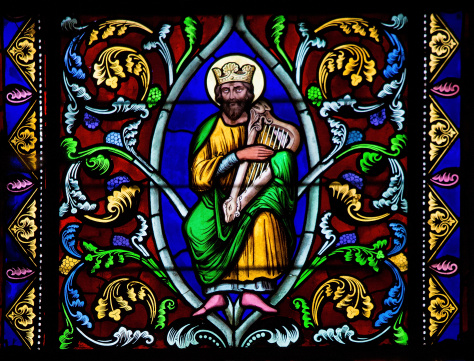
King David

2 Samuel 6:1-5, 13-19 (6:14) – July 14, 2024

            The wise theologian (and humorist) Erma Bombeck described an experience she had years ago in church. “A row or two in front of her sat a mother with a normal five-year-old boy, which means, he couldn’t sit still. As he squirmed and looked over the pew at those behind him, he was smiling. Then Erma heard the mother sternly whisper, “Stop smiling! Don’t you know that we’re in church?” [1]

            Our Bible reading this morning talks about how a large crowd behaved when they were at worship, including their leader, their King David. How different would this reading be if God’s people decided to be all stern, and stiff, and poker-faced when they came to worship? Can you imagine a stern, stiff, solemn service at this time? Or, is this joyful, musical, dance-filled procession from 2 Samuel pleasing to the Lord? Which service could you see yourself in?

            Let us listen again to a part of this reading: “David and all the Israelites were dancing and singing with all their might to honor the Lord. They were playing harps, lyres, drums, rattles, and cymbals. 15 And so [David] and all the Israelites took the Covenant Box up to Jerusalem with shouts of joy and the sound of trumpets.

            I cannot even begin to imagine the joy and exuberance of this procession! But, why so much excitement? For that, we will need to go back several chapters. Some while before, the enemy Philistines captured the Ark of the Covenant, God’s Covenant Box, and brought it back to their territory. Except, things did not go well for them. Their priests told the Philistine king that they needed to send the Covenant Box back to Israel! So, they did, and through some adventures King David and the people of Israel finally brought the Covenant Box back into Jerusalem.

            This was a rocky number of months, for the people of Israel! Losing the Covenant Box, the Ark of the Covenant, was devastating for Israel. “This was the most holy object God’s people had. The [people of Israel] had carried it as they walked through the wilderness and kept it in a special tent in the center of their town. Image how they felt when the Philistines captured it and carried it off to their country AND how they felt when they felt when they got it back.” [2]

This priceless Box was not only a beautiful, holy and precious artifact, this Covenant Box signified the very presence of God. Just imagine the rejoicing as King David and tens of thousands of Israelites danced, sang and played music as they brought the Ark into Jerusalem!

To the people of Israel, the Covenant Box was an important object, telling a story. The Ark of the Covenant “points to the larger narrative of God’s delivering the people from slavery and divine guidance into the promised land. It reminds the people of this salvation history and of the nearness of God’s Presence with them always. It provided continuity from the time of Moses to the present moment described in 2 Samuel 6.” [3]

In this chapter from 2 Samuel, God’s Covenant Box signaled God’s Presence among the people – all the people. What is more, this signified God’s promise to them! As you and I come together in our worship service today, what symbols, objects or stories help us to worship? Which of these help us to have “eyes to see and ears to hear” God’s Presence among us today? Which help us to praise and worship God, even to sing and dance before the Lord in thanksgiving?  

I know I preached on this reading three years ago, and I asked then, have you ever been to a worship service where people praised the Lord in all kinds of ways? More than singing hymns and worship songs. I mean, playing all kinds of instruments, dancing before God, and other kinds of artistic expressions.

Perhaps you have just been to worship services where there were piano and organ – and nothing else. Do you know that in a great many worship services across the world today drums are the chief instrument of praise? Drums and the human voice, the beat of human feet and clapping of hands make a joyful noise to the Lord across many cultures and in many countries today. Christians from those worship services might feel really strange if they came to a solemn service like ours where no one was actively praising God and dancing in the aisles!

We are left with a question: how do you and I respond to God’s holy Presence? We can see that King David and thousands of his people danced before the Lord “with all their might!” Pianos and organs are wonderful musical expressions, and so are praise bands and bluegrass bands and full orchestras and all kinds of percussion! Exuberant joy and dancing in the aisles is certainly a wonderful response to God! [4]

But, that is only one way. God may instead call us to quiet contemplation, or sometimes bold action. We are not required to only worship God in church buildings! No, God can be worshiped in the mountains, on the beach, or in a park. And, sometimes things can be new and different for each of us, to allow our hearts to worship in new and different ways.  

Today we can connect to God’s Presence in ways that are significant and touch the heart and soul, that are meaningful to each of us – and celebrate others for connecting in ways that are meaningful and soulful to each of them! Whether dancing and leaping, praising in loud voices, praying quietly, singing hymns and songs, drawing and painting, making banners or wall hangings. We humans have a multitude of ways to come before our God!

How does God respond to all these different types of worship, whether quiet and solemn, or joy-filled and exuberant? I go back to Carolyn Brown’s excellent commentary where she mentions the children’s tune “Hokey Pokey” “to explore the truth that we have to put more than just our left hand or our right foot in [to worship]. We must put our whole selves into worship, life, prayer, everything.[5]

 Sometimes these simple, straight-forward ways are the best ways. Put our whole selves into worship, life, prayer, everything. That’s how to honor, praise and enjoy God the best.

And, the Lord is so pleased when God’s people come together to worship! Praise the Lord!

@chaplaineliza

(Suggestion: visit me at my other blogs: matterofprayer: A Year of Everyday Prayers. and  A Year of Being Kind . Thanks!


[1] https://bible.org/seriespage/lesson-7-worship-joyful-celebration-2-samuel-6

[2] http://worshipingwithchildren.blogspot.com/2015/06/year-b-proper-10-15th-sunday-in.html

[3] https://www.workingpreacher.org/commentaries/revised-common-lectionary/ordinary-15-2/commentary-on-2-samuel-61-5-12b-19

[4] https://www.workingpreacher.org/commentaries/revised-common-lectionary/ordinary-15-2/commentary-on-2-samuel-61-5-12b-19

[5] http://worshipingwithchildren.blogspot.com/2015/06/year-b-proper-10-15th-sunday-in.html

Unknown's avatar

A Hometown Reaction?

“A Hometown Reaction?”

Mark 6:1-7 (6:5) – July 7, 2024

            I have not rubbed shoulders with many VIPs – Very Important People – in my life. All of those VIPs grew up somewhere. All of those high-profile people started out as kids, and teenagers, and some grew up in small towns before they hit it big. When they went back to the old neighborhood where they grew up, how were they received? Were the older people from the neighborhood filled with awe or pride? Or, did these VIPs get disrespected?

            From what our reading tells us, the people from the old neighborhood in Nazareth did not think very much of the newly-minted Rabbi Jesus. Starting at verse 2, “On the Sabbath Jesus began to teach in the synagogue. Many people were there; and when they heard him, they were all amazed. “Where did he get all this?” they asked. “What wisdom is this that has been given him? How does he perform miracles? Isn’t he the carpenter, the son of Mary, and the brother of James, Joseph, Judas, and Simon? Aren’t his sisters living here?” And so they rejected him.”

            The folks from the old neighborhood – from where Jesus grew up – would not see Jesus as He had become. They insisted on seeing Him as the young boy who had grown up down the block, where His extended family still lived. Nothing more. Talk about disrespect! “There is an undertone of ‘who does he think he is’ in this passage. Not the warm welcome you might expect your home crowd to give you. And yet is it not often the case that when people know you, really know you, that they can be quick to believe the gossipmongers?” [1]

            When our Lord Jesus went home, things did not go well for Him, as we see here. How many of us wish to “go home,” wherever “home” is for you?

            Of course, a great deal depends on our family of origin and the situation of our growing up, the neighborhood where we were born, even how long we lived there. Did our family move from place to place several times during the time we were children? What about the place were we were born – was it in a large town, or a little village, or on the wrong side of the tracks?

            And, what about where you were in the birth order in your family? Some families have definite birth orders, while other family structures are more lackadaisical and some even haphazard. How many of us do not get respect from brothers or sisters or family elders simply because of place in our family “pecking order?” Certainly, Jesus got this kind of attitude when he went home and preached in Nazareth. [2]

Mark’s Gospel clearly says that a number of townsfolk took offense at Jesus. Some commentaries particularly mention this word. In Greek, it is “skandalon,” from which we get the word “scandal.” Can you imagine being scandalized by a young man from your hometown or neighborhood actually preaching, teaching, and even doing miracles? I cannot imagine it. It’s a little beyond me, but Mark says it’s so, right here in chapter 6.           

            Jesus said to them, “Prophets are respected everywhere except in their own hometown and by their relatives and their family.” He was not able to perform any miracles there, except that he placed his hands on a few sick people and healed them. Jesus was greatly surprised, because the people did not have faith.

            Jesus realizes that His teaching, preaching and miracles would not always be well-received. But, this is still the beginning of His ministry. Jesus is still building His team and training them for the work He knows they will have to do. Jesus knows that it will not be easy and the teaching and preaching of the disciples will not always be well-received or even welcome – although even Jesus is amazed at how hostile the crowd in Nazareth are. [3]

But, what if we took the sad situation in Nazareth – or wherever our small town or old neighborhood is – and flipped it upside down? What kinds of things might happen? Instead of some hometown boy or girl coming back and being disrespected, what might happen?

            What if you and I are more alert and more attuned to what God can do in our world than Jesus’s neighbors in Nazareth were? Can we watch for God at work in our world? How about on our block or down the street? Does God work here, today, and not just in Bible times? A pastor friend of mine (another Pastor Joe) calls these “God sightings.”

What about an older brother or sister leaving friends to take care of a younger sibling? What about some young people working on and repairing an elderly church member’s house? What about a son or daughter (or grandson or granddaughter) getting a first job at a local mission agency or food pantry, like A Great Harvest hear the Howard Street El station? I used to take the baked goods from Maier’s Bakery there for a number of months. What about a church member bringing a dinner or some take-out to a shut-in or someone recently returned from the hospital? Aren’t these all “God sightings?”  God working through ordinary people – like us?

            We can see from our Gospel reading today that the Rabbi Jesus came home, but He wasn’t “at home.” How were His friends and disciples His new “found family,” or “family of choice?” Are you – am I more comfortable with a “family of choice?” And, does God support us when we find family in unexpected places? Each of us – all of us can find family and can find “God sightings” each and every day!

            I encourage all of us to open our eyes and look for these everyday ways that God works in our lives, our homes, and our neighborhoods each day. We all have the opportunity to support “God sightings!” Plus, we all have regular opportunities to find places where you and I can get active and perform one of these “God sightings” ourselves!

Today, this week, whenever we can.

            Don’t be like the people in Nazareth, hostile and scandalized at Jesus and His ways of doing God’s work. Instead, celebrate – support – and get involved in any of the places where God is at work in our neighborhoods, today! Alleluia, amen!

@chaplaineliza

(Suggestion: visit me at my other blogs: matterofprayer: A Year of Everyday Prayers. and  A Year of Being Kind . Thanks!


[1] https://www.churchofscotland.org.uk/worship/weekly-worship/monthly/2024-july/sunday-7-july-2024-seventh-sunday-after-pentecost-year-b

[2] http://www.word-sunday.com/Files/b/14-b/A-14-b.html

“Going Home,” Ordinary 14B, Larry Broding’s Word-Sunday.Com: A Catholic Resource for This Sunday’s Gospel

[3] https://www.churchofscotland.org.uk/worship/weekly-worship/monthly/2024-july/sunday-7-july-2024-seventh-sunday-after-pentecost-year-b