Unknown's avatar

Dance Before the Lord!

“Dance Before the Lord!”
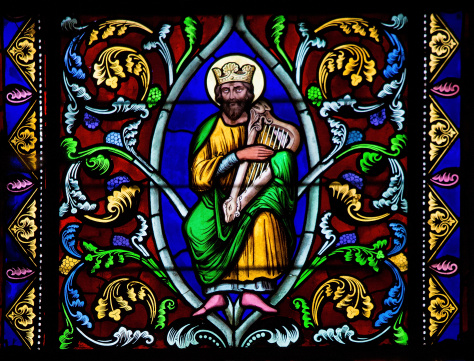
King David

2 Samuel 6:1-5, 13-19 (6:14) – July 14, 2024

            The wise theologian (and humorist) Erma Bombeck described an experience she had years ago in church. “A row or two in front of her sat a mother with a normal five-year-old boy, which means, he couldn’t sit still. As he squirmed and looked over the pew at those behind him, he was smiling. Then Erma heard the mother sternly whisper, “Stop smiling! Don’t you know that we’re in church?” [1]

            Our Bible reading this morning talks about how a large crowd behaved when they were at worship, including their leader, their King David. How different would this reading be if God’s people decided to be all stern, and stiff, and poker-faced when they came to worship? Can you imagine a stern, stiff, solemn service at this time? Or, is this joyful, musical, dance-filled procession from 2 Samuel pleasing to the Lord? Which service could you see yourself in?

            Let us listen again to a part of this reading: “David and all the Israelites were dancing and singing with all their might to honor the Lord. They were playing harps, lyres, drums, rattles, and cymbals. 15 And so [David] and all the Israelites took the Covenant Box up to Jerusalem with shouts of joy and the sound of trumpets.

            I cannot even begin to imagine the joy and exuberance of this procession! But, why so much excitement? For that, we will need to go back several chapters. Some while before, the enemy Philistines captured the Ark of the Covenant, God’s Covenant Box, and brought it back to their territory. Except, things did not go well for them. Their priests told the Philistine king that they needed to send the Covenant Box back to Israel! So, they did, and through some adventures King David and the people of Israel finally brought the Covenant Box back into Jerusalem.

            This was a rocky number of months, for the people of Israel! Losing the Covenant Box, the Ark of the Covenant, was devastating for Israel. “This was the most holy object God’s people had. The [people of Israel] had carried it as they walked through the wilderness and kept it in a special tent in the center of their town. Image how they felt when the Philistines captured it and carried it off to their country AND how they felt when they felt when they got it back.” [2]

This priceless Box was not only a beautiful, holy and precious artifact, this Covenant Box signified the very presence of God. Just imagine the rejoicing as King David and tens of thousands of Israelites danced, sang and played music as they brought the Ark into Jerusalem!

To the people of Israel, the Covenant Box was an important object, telling a story. The Ark of the Covenant “points to the larger narrative of God’s delivering the people from slavery and divine guidance into the promised land. It reminds the people of this salvation history and of the nearness of God’s Presence with them always. It provided continuity from the time of Moses to the present moment described in 2 Samuel 6.” [3]

In this chapter from 2 Samuel, God’s Covenant Box signaled God’s Presence among the people – all the people. What is more, this signified God’s promise to them! As you and I come together in our worship service today, what symbols, objects or stories help us to worship? Which of these help us to have “eyes to see and ears to hear” God’s Presence among us today? Which help us to praise and worship God, even to sing and dance before the Lord in thanksgiving?  

I know I preached on this reading three years ago, and I asked then, have you ever been to a worship service where people praised the Lord in all kinds of ways? More than singing hymns and worship songs. I mean, playing all kinds of instruments, dancing before God, and other kinds of artistic expressions.

Perhaps you have just been to worship services where there were piano and organ – and nothing else. Do you know that in a great many worship services across the world today drums are the chief instrument of praise? Drums and the human voice, the beat of human feet and clapping of hands make a joyful noise to the Lord across many cultures and in many countries today. Christians from those worship services might feel really strange if they came to a solemn service like ours where no one was actively praising God and dancing in the aisles!

We are left with a question: how do you and I respond to God’s holy Presence? We can see that King David and thousands of his people danced before the Lord “with all their might!” Pianos and organs are wonderful musical expressions, and so are praise bands and bluegrass bands and full orchestras and all kinds of percussion! Exuberant joy and dancing in the aisles is certainly a wonderful response to God! [4]

But, that is only one way. God may instead call us to quiet contemplation, or sometimes bold action. We are not required to only worship God in church buildings! No, God can be worshiped in the mountains, on the beach, or in a park. And, sometimes things can be new and different for each of us, to allow our hearts to worship in new and different ways.  

Today we can connect to God’s Presence in ways that are significant and touch the heart and soul, that are meaningful to each of us – and celebrate others for connecting in ways that are meaningful and soulful to each of them! Whether dancing and leaping, praising in loud voices, praying quietly, singing hymns and songs, drawing and painting, making banners or wall hangings. We humans have a multitude of ways to come before our God!

How does God respond to all these different types of worship, whether quiet and solemn, or joy-filled and exuberant? I go back to Carolyn Brown’s excellent commentary where she mentions the children’s tune “Hokey Pokey” “to explore the truth that we have to put more than just our left hand or our right foot in [to worship]. We must put our whole selves into worship, life, prayer, everything.[5]

 Sometimes these simple, straight-forward ways are the best ways. Put our whole selves into worship, life, prayer, everything. That’s how to honor, praise and enjoy God the best.

And, the Lord is so pleased when God’s people come together to worship! Praise the Lord!

@chaplaineliza

(Suggestion: visit me at my other blogs: matterofprayer: A Year of Everyday Prayers. and  A Year of Being Kind . Thanks!


[1] https://bible.org/seriespage/lesson-7-worship-joyful-celebration-2-samuel-6

[2] http://worshipingwithchildren.blogspot.com/2015/06/year-b-proper-10-15th-sunday-in.html

[3] https://www.workingpreacher.org/commentaries/revised-common-lectionary/ordinary-15-2/commentary-on-2-samuel-61-5-12b-19

[4] https://www.workingpreacher.org/commentaries/revised-common-lectionary/ordinary-15-2/commentary-on-2-samuel-61-5-12b-19

[5] http://worshipingwithchildren.blogspot.com/2015/06/year-b-proper-10-15th-sunday-in.html

Unknown's avatar

Dance Before the Lord!

“Dance Before the Lord!”

2 Samuel 6:1-5, 14-19 (6:14) – July 11, 2021

            Have you ever been to a worship service where people praised the Lord in all kinds of ways? More than singing hymns and worship songs. I mean, playing all kinds of instruments, dancing before God, and other kinds of artistic expressions. I know some churches regularly have multiple expressions of praise to God, in lots of different ways!

            This full reading from 2 Samuel chapter 6 is a long, extended one. I left out some of the material in the middle, not because it isn’t important. Following God’s explicit instructions and God’s subsequent punishment certainly is important! However, I wanted us to focus on the second part of today’s reading: King David and his joyous dancing before the Lord.

            Have you ever attended a church that had a dance ministry? Where members of that church performed sacred dance before the Lord? I have been a guest in such churches and worship services. This can be a beautiful and expressive way of praising God, and offering up the best of what creative people can give to God. Just as much as singing a worship song as solo or duet can be, or playing an instrument for special music in church.

            Let’s take a closer look at this narrative from 2 Samuel 6. The Ark of the Covenant – or, as our reading says, God’s Covenant Box – had been taken hostage by the Philistine army. That did not go well for them. If you happen to remember the movie made some years ago where the fictional archaeologist Indiana Jones found the Ark of the Covenant hidden away in Egypt, things did not go well for the Nazis who appropriated the Ark from Indy and his friends.  

Meanwhile, the Philistines decided God’s special Covenant Box was too much for them to hold hostage any longer. God convinced them to return the Ark by sending plagues on the Philistines. So, they shipped it back into the land of Israel on an ox-drawn cart with no driver.

King David was so excited to have the Ark of the Covenant back in Israel’s hands. He organized a big procession to bring it back into Jerusalem, his capitol city.

Sadly, I will not have time to take a close look at the sudden death of one of the men entrusted to walk beside the special Covenant Box. Following God’s specific instructions could be a sermon topic all on its own! We are going to continue on to look at the next episode of this narrative: where King David and a whole bunch of priests and Levites – the leaders in charge of all Israel! – dance and praise before the Lord as they march on the way to the Tabernacle.    

I remember several leaders of some churches where I belonged, years ago. I cannot imagine any of these leaders dancing and leaping before the Lord. Either because of embarrassment or pride, anxiety or impatience, or some other emotions altogether, these church leaders probably would never, ever dance in joy before the Lord. Never, ever.

But, our writer tells us that not only David and some priests and Levites dance, but says that eventually almost everyone in Israel joins in! They all join in worship and praise to the Lord. Celebrating God’s special Presence in the Ark of the Covenant, God’s special Box.

  Many people could see the Ark as it was brought into the city. They could sing and march and dance because it had returned from the Philistines. And, the people of Israel could be greatly blessed because now the Ark of the Covenant was back where it belonged, among God’s special people. And, God’s special Covenant Box signaled God’s Presence to all of Israel.

            Today, no one knows where the Ark of the Covenant is, if it even still exists. Nevertheless, God’s Presence is still very much in evidence among God’s people, right now. As one of my commentators mentions, “What symbols, objects or stories help us ‘have eyes to see and ears to hear’ God’s Presence among us? Stories from scripture, such as the exodus from Egypt, can make God present now.” [1]

            What special objects or stories mean a great deal to you? What special objects or stories are all-important to you, so important that you cannot imagine a worship service without them? Some imagine a large cross in the front of the church. Others think of the big Bible on the altar or lectern. Christian worship services often hold special things as quite valuable.

            “The danger, of course, is that the special objects or rituals will become idols in themselves, rather than signs pointing to God-with-us. So we must cultivate dynamic awareness that allows our rituals and objects to act as a sort of hyperlink, moving us beyond them to the larger Presence there.” [2] Just so, today we can connect to God’s Presence in ways that are significant and touch the heart and soul, that are meaningful to each of us – and celebrate others for connecting in ways that are meaningful and soulful to each of them! Whether dancing and leaping, praising in loud voices, praying quietly, singing hymns and songs, drawing and painting, making banners or wall hangings. We humans have a multitude of ways to praise our God!

            What ways are especially meaningful for you to connect to God’s presence?

            Just as David and the other leaders of Israel danced and praised God, we can dance and sing and march. Make some noise, too! Immanuel, God-with-us, the Lord’s Holy Presence is always with us – not just in church. Not just when we open the Bible. We can praise through spiritual practices, through the Lord’s Supper, through God’s beautiful creation, too.

We can all be attentive to God at any time, and at all times. And, the Lord is so pleased when God’s people bring a sacrifice of praise! Praise the Lord!

@chaplaineliza

(Suggestion: visit me at my other blogs: matterofprayer: A Year of Everyday Prayers. #PursuePEACE – and  A Year of Being Kind . Thanks!

(Thanks to Illustrated Ministries for their lesson for the 7th Sunday after Pentecost from 2 Samuel 6, from their 2020 Summer Children’s series.)


[1] https://www.workingpreacher.org/commentaries/revised-common-lectionary/ordinary-15-2/commentary-on-2-samuel-61-5-12b-19

[2] Ibid.

Unknown's avatar

Letter of the Law?

“Letter of the Law?”

Exodus 20:1-17 – March 7, 2021

            I enjoy driving very much. My husband is happy to let me be the primary driver in our house. I used to be a commercial driver some years ago, and I still hold a commercial driver’s license. So, I do know a good deal about the rules of the road.

            What would it be like if drivers did not obey these rules of the road? Just think of stop lights. We all know what happens when cars or trucks run a red light. Accidents happen, and sometimes, people get very badly hurt. All this happens because people just plain break the rules of the road.

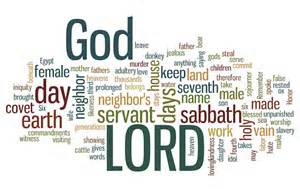
            Our Scripture reading today comes from Exodus 20, and is a listing of God’s rules for living – the Ten Commandments. What would happen if people just plain broke God’s rules for living, any time they felt like it?

            One of my favorite Bible commentators is Carolyn Brown. She is now retired, but she was a longtime Children’s Ministry Director in the Presbyterian church. She wondered what would happen if we turned the Ten Commandments on their head, and made them the complete opposite of what God intended? Here are Ten Ways to Break God’s Rules.

1.    You are your own boss.  Do whatever you want to do whenever you feel like it. 

2.    Decide who and what is important to you.  Pay attention only to those people and things. Everyone else can drop dead.

3.    It does not matter when or how you say God’s name.  You can use it to swear or cuss or to get what you want (as in “God is on my side so you better do things my way, or else!”).

4.    It doesn’t matter if you never worship with God’s people on Sunday, or regularly.  If there are other things you’d rather do, go do them.

5.    Parents don’t get it.  Ignore them whenever you can.

6.    Kill whatever or whoever gets in your way.  The strongest live longest.

7.    Don’t worry about your family.  Think only about yourself and what you want.

8.    Finders keepers!  Toddler’s Rule of possession:  I see it, I want it, it’s mine! 
If you want it, figure out how to get it; cheat if you need to.

9.    Lie if you have to get out of trouble. Lie to get what you want.
Lie to make yourself look good – even if it makes someone else look bad.

10. The one who dies with most toys wins.  The world is full of awesome things.  Get your share, no matter what! [1]

            What was all that? Those Ways to Break God’s Rules sound totally selfish, absolutely self-centered, and completely against any kind of moral code or rulebook.

Why did God give God’s people the Ten Commandments, anyway?

“We suppose it is for our own good. Right? Well, you have to wonder. Is God one to bring the whole nation of Israel out into the wilderness for a time out? Is this conversation started with a wag of the divine finger and slow shake of the holy head, displaying disappointment and the prelude to punishment? Are these ten [commandments]given because the people of God have proved unworthy, have fallen short of who they were intended to be? Are they being grounded by these words” like a big bunch of misbehaving teenagers? [2]

            Let’s look at the beginning of the commandments. ”I am God.  I brought you out of slavery in Egypt.  I opened the sea for your escape.  I am the one and only God.  Don’t worship or pray to anything or anyone else.” The Lord tells the people of Israel exactly why God gave them these rules: to help them know how to live together as God’s free people. Not as slaves anymore! No, the Lord brought Israel out of slavery in Egypt: Exodus 20 tells us so!

            God is also warning the people of Israel about the different idols and gods of Egypt. People in Egypt worshiped many different gods. So, to ask the people of Israel who had just left Egypt to worship the Lord – and only the Lord – was a big stretch. A huge challenge! We might think we are only worshiping one God – but, are we? What are our modern-day idols? Do we worship money? Possessions? A job? What about how many “likes” we get on social media? What keeps us from making God the center of our lives? What distracts you and me? [3]

            These rules are not super-strict laws for people to follow reluctantly, or with their arms twisted behind their backs. Instead, as we read them, we can see descriptions of the kind of people God wants us to be. Not because God is a mean or nasty Heavenly Parent, but because we can strive to be that kind of people, the Lord’s relatives, in close relationship with our God.

            Remember, God will not say, “Jump through these hoops, or over these hurdles, and only then will I love you!” No! Instead, God says, “My love for you will shape you into these kinds of people, this kind of loving, beloved community.”    

            Let us strive to live together as a people of faith, as a community loved by God. Amen!


[1] http://worshipingwithchildren.blogspot.com/2015/02/year-b-third-sunday-in-lent-march-8-2015_7.html

Worshiping with Children, Lent 3B, Including children in the congregation’s worship, using the Revised Common Lectionary, Carolyn C. Brown, 2015

[2] https://www.umcdiscipleship.org/worship-planning/rend-your-hearts-claiming-the-promise/third-sunday-in-lent-year-b-lectionary-planning-notes/third-sunday-in-lent-year-b-preaching-notes

[3] https://www.churchofscotland.org.uk/__data/assets/pdf_file/0005/74507/7-March-3-Sunday-in-Lent.pdf

Third Sunday in Lent – 7 March 2021 The Faith Nurture Forum would like to thank Rev Jonathan Fleming, Minister of Cumbrae with Largs St John’s.

@chaplaineliza

(Suggestion: visit me at my other blogs: matterofprayer: A Year of Everyday Prayers. #PursuePEACE – and  A Year of Being Kind . Thanks!