Unknown's avatar

The Word Became Flesh

“The Word Became Flesh”
John 1:1-14 – December 25, 2025

            Words, words, words, words!! Words of every kind, of every description. Words that tell, words that show, words that praise, words that criticize. Words separate and draw together. Words fill people with joy and peace as well as with suspicion and animosity. Words have power. Whether insightful words or divisive words, encouraging words or capitulating words, words have the ability to shake emotions and to inflame passions for good or for evil.

            How do people use words and language, anyway? People speaking a common language need to agree upon the sense of what they say. It helps to be bound together by social convention as well as language rules of practice and use. In fact, language provides the structure of our common experience, understanding and perspectives. But I don’t want to get all high-falutin’ and theoretical. I want to bring this home to where we live.

            We all use language. Every day. In conversation at home, or on the telephone, or at work. Reading a newspaper or writing e-mail. All of these uses of language use words. Words communicate meaning, ideas, stories. Each one of us has a personal story, of what it was like, what happened, and what it’s like now. Our stories are communicated using words and language, and each individual has a creative, unique way to tell his or her story.

            The story of an individual’s own personal life makes sense because it is part of a larger story, the Story that has the story of Jesus Christ at its center. It is a story of God’s initiative which calls for my gratitude and response, a Story some theologians have called ‘the history of salvation.’ It is the Story of Jesus, the Story set forth in the Word of God that attracts, crossing boundaries and transcending lines of race, class, culture and age.

            Our gospel text for today, the first 14 verses of the Gospel of John, is a restatement of an old theme. Remember Genesis 1:1? “In the beginning, God created the heavens and the earth.” Most scholars today believe the apostle John was thinking of that introduction to the Greatest Story ever told when he wrote his own portion of it. John 1:1: “In the beginning was the Word.” John reframed that Story, and gave it a new look from a different perspective.

            In John, Chapter 1, we have God, the creative God who made heaven and earth. The almighty God wanted to communicate with us puny, limited human beings. But how was God supposed to communicate His Story?

            I can remember when my children were younger, in first and second grades. Sometimes they would need help with their homework at night. Years before, I had taken several courses of math in college . . . college algebra, trigonometry, analytical geometry. But, after considering more advanced mathematical ideas, how was I supposed to explain simple addition and subtraction to my young children in language they would understand?

            That’s the way I look at God’s problem sometimes. It’s sort of like God, able to do the most advanced mathematics possible–in God’s head!!–and God needed to be able to explain the simplest addition and subtraction problems to us ordinary, simple-minded human beings.

            There was another problem, as if the simple-mindedness of humanity wasn’t enough. That problem was (and is!!)  sin. Funny thing, how sin keeps cropping up in our lives and getting in the way. Sin divides people from one another as well as from God. Sin isolates and forces apart. Sin happens on a horizontal plane with other people as well as on a vertical plane with God. And sin causes humanity to walk in darkness and to run from God’s presence.

            So here we have a loving God, a God of light, a God who wants so much to communicate with us fallen, sinful human beings. But how was God supposed to communicate God’s Story?

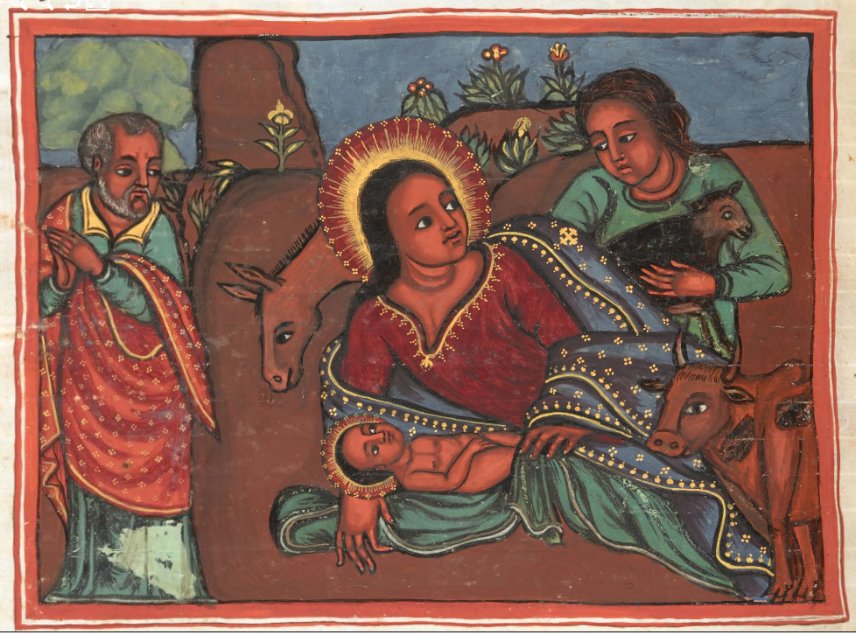
            The Gospel of John tells us how. In the beginning was the Word. The Word was God. The Word is God. Jesus is the Word. John 1:14 says that the Word, Jesus, became flesh,  and . . . the Word dwelt among us.

            Think about it: the whole idea of God becoming a helpless baby, a human being, able to feel cold and heat, able to be hungry and thirsty, with blood and bones and a nervous system and a digestive system. So staggering was this idea that some of the people in John’s day could not believe it. God? the creative God who made heaven and earth? Coming to earth as a helpless, human baby? No way!!

            And, that’s not all!! Not only did this Creator God appear in creation so that our eyes could see Him, this almighty God, after making Himself flesh and blood, has the crazy idea of dwelling among people. Becoming one of us limited human beings, sharing our food and living in our midst. Jesus became fully man. He didn’t just seem to be a man, and pretend to be human. He really and truly became human, living with us as one of us.

            What a way for the almighty, eternal, creative God to communicate to us in a way that we limited human beings might possibly understand. God wanted humanity to understand His Story of good news, the Bible, but God also wanted humanity to understand God’s Word made flesh, the one called Jesus of Nazareth.

            Jesus (the Word incarnate) is the central principle of Scripture as well as the central character of the Greatest Story ever told. Reformed believers have throughout the centuries been finding new ways to confess their faith, using the fallible, limited resources of language that have been handed down to humanity throughout the generations. God helps us understand His Story, and there is nothing God wants more than for us to want to understand God’s Story better and better.

            A good many years ago, a bible translator went to a remote, mountainous region in the interior of Africa. He worked hard at turning an obscure oral language into a written language, which involved decoding the language, writing a grammar, learning extensive vocabulary, and finally translating a portion of the Bible into the heart language of that particular people-group.

            After several years of intense work and language preparation, when he felt he was ready, the missionary made his first presentation of the Story of Jesus to a group of headmen from the tribe. He was surprised at their response, which was unlike any he had ever had before in all his years of being a missionary and telling people the Story of Jesus. The group of men just sat there in silence, and then the chief came forward.

            The chief grasped the missionary’s hands and, with tears in his eyes, thanked him for coming to tell them the Story of Jesus. “This Story of good news is the one my people have waited for, all their lives long!!” And then came the clincher: the chief asked, “Your tribe has had this Story for many, many years. What took you so long to tell us?”

            Communicating the Story of Jesus has power! Awesome power! This is a Story that can change people’s lives for eternity. Telling the Story in someone’s heart language is one of the best ways to communicate how much God loves us.

            When Jesus came to this earth, He spoke the language of the people of His region, and He communicated ideas in ways people could understand. Yes, He was the Word become flesh, and yes, He showed us how to live this life that we have to live. Jesus, ‘the one Word of God which we have to hear and which we have to trust and obey in life and in death.’

            Praise God that God sent the Son Jesus into this world, the Word incarnate, the Word that became a helpless baby in Bethlehem. Praise God that God has given us the right to repair that broken relationship with us, and to be called the children of God. And praise God that God loved us so much that He gave His only begotten Son on our behalf, to reconcile us to God for eternity.

            Gloria in excelsis Deo.

@chaplaineliza

(Suggestion: visit me at my other blogs: matterofprayer: A Year of Everyday Prayers. #PursuePEACE – and  A Year of Being Kind . Thanks!
Unknown's avatar

Continue – Persist – Be Faithful!

“Continue – Persist – Be Faithful”  

2 Timothy 3:14-4:5 (4:1-3) – October 19, 2025

Have you seen the comics lately? I’m sure everyone here is familiar with the comics section of the newspapers–the daily comics in black and white, and the Sunday comics in full color–even if you don’t read them regularly. Can you picture this scene from the comics? A single panel, showing two business men by an office water cooler. One looks like a boss, and he says to the other, “If there’s one thing I hate, it’s a yes-man. Isn’t that right, Baxter?”

We chuckle, because we all are familiar with that kind of attitude. I’m sure we can recognize that tendency in other guises, other forms. In some other places, not only a place of employment but also clubs, associations, even places of worship. Getting some yes-man to tell us what we want to hear . . . not what’s good for us to hear, not what we need to hear, but instead what we want to hear. This kind of black-and-white attitude is going way overboard!  

            As we consider this Bible reading from 2 Timothy chapter 3 today, let us reflect again on these words from the older man Paul to his young friend Timothy: “But as for you, continue in what you have learned and have become convinced of, because you know those from whom you learned it, 15 and how from infancy you have known the Holy Scriptures, which are able to make you wise for salvation through faith in Christ Jesus.”

            I suspect that Paul – and his friends, the other disciples, and other, older believers – could easily relate dozens of times that they had experiences in the faith communities they called home. Experiences where “yes-men” (or, “yes-people”) put in their definite opinions, where one group of people held up “tradition” as the gold medal standard, and everything had to bow before “tradition.” This “traditional” group of believers sound as intolerant as the “black-and-white” people I mentioned just before. A pendulum swinging way to one side or the other.

            Our commentator Dr. Dirk Lange says, “We have always done it this way” can mean anything from the worship of the early church to what a congregation has done for just the past twenty years. The writer to this particular church community, and especially to this follower named Timothy calls upon tradition. It is not to be ignored! “Continue in what you have learned” and not just recently but since your childhood.” [1]  You and I need to sit up straight and find out exactly what the older man Paul had to say about tradition! Or, is it about the Word of God, instead?

            The Hebrew Scripture reading for this Sunday comes from Jeremiah 31, and tells us that “The day will come when God’s word will not be on stone tablets or in books, but written into our very hearts.” This reading from 2 Timothy and the reading from Jeremiah are all about the Word of God! Except, how does that square with a concentration on tradition?

            When a pendulum swings, especially if it swings widely, we can watch the wide swing get more and more extreme. This is so similar to observing people with firm, set-in-their-ways opinions and manner of thinking and behavior.    

            Our writer Paul tells Timothy he could be sure of one thing: his firm foundation of the Word of God, taught to him by reliable elders in the faith. Not twisting this way and that, not susceptible to following “tradition” blindly, like so many sheep.

             But, Paul does not stop there. This is a letter to Timothy, after all. Timothy is a church leader, a pastor of a congregation, and Paul uses this letter to not only give advice to his younger friend, but to advise and instruct. “Timothy is instructed to be a faithful student and teacher of the Word.  Under that is the belief that to be a strong, true church a congregation must be made up of people who know their Bible well.” [2]  Not in the sense of bashing others over the head with their superior biblical knowledge, no! No, we are to use the Bible as a standard, as a measuring tape or yard stick to guide others along the road of journeying with Jesus.

            We have the assurance, from our scripture passage today, that Timothy had the opportunity to know God. He had the opportunity to read some of the same texts we have to read today! Timothy was instructed, from the time he was very young, in the way of salvation through Jesus Christ. His mother and grandmother were both women of faith, and Timothy grew up in a believing household, a household that put God first.

            The descriptive words to Timothy that Paul uses here are important: teaching, correcting, training. “The Scripture invites us into a pattern of gospel living. It does not provide “yes” and “no” answers to every situation, every question, every dilemma. Those who have “confessed” the faith in life-threatening situations understand that there are many gray areas, hard to resolve through Scripture alone (take the example of Dietrich Bonhoeffer or Martin Luther King, Jr.).”  [3]

I consider the commands in this passage to be good advice to anyone wanting to follow Christ more nearly, even in gray areas, even through difficult times. We are to proclaim the message. Communicate the Good News! In whatever way we can. How do we put it into practice? How do we live the Christian life? Now what, in other words?

            This command may give some people pause. How can I preach the Good News? Another way of thinking about it is . . . telling what God has done in your life. What has God done for you? How has God made a difference in your life? How has God made a difference in mine? What new things have you and I learned from the Lord lately? What an opportunity it is to share these things with others, with our friends, with those who might not know God.

            Thank God we have been given this Good News! I can tell about God’s faithfulness in my busy, hectic life. I can praise God for helping me to walk the Christian walk, one day at a time, and so can you. That’s truly something to celebrate. That’s truly Good News to share. Alleluia, amen.

@chaplaineliza

(Suggestion: visit me at my other blogs: matterofprayer: A Year of Everyday Prayers. #PursuePEACE – and  A Year of Being Kind . Thanks!

[1]  https://www.workingpreacher.org/commentaries/revised-common-lectionary/ordinary-29-3/commentary-on-2-timothy-314-45

[2] https://worshipingwithchildren.blogspot.com/2013/09/year-c-proper-24-29th-sunday-in.html

[3] https://www.workingpreacher.org/commentaries/revised-common-lectionary/ordinary-29-3/commentary-on-2-timothy-314-45

Unknown's avatar

Let’s Go Deep!

“Let’s Go Deep!”

Luke 5:1-11 (5:4) – February 9, 2025

When did God become real to you? Were you sitting in Sunday school, when you felt deep within that God was real, and you felt wonder? Or, were you at a camp or retreat, around a campfire, when something let you know God was the real thing, and you felt nothing but awe? Or, perhaps, were you praying next to a loved one’s bed in the hospital, and you powerfully understood that God is real, and you felt deep comfort? Have you had a God-encounter?

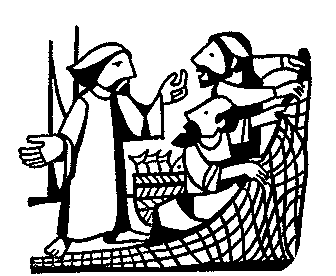
            The situation here today is where God becomes real for these people. Edward just read the Gospel lesson from Luke 5 to us, and we heard about Jesus calling the first disciples. But, we need to back up in this reading, before the Rabbi Jesus calls anyone to be a disciple.  

            We break into the action quite early in the public ministry of Jesus. So early, in fact, that He has not even called anyone to follow Him, to be His disciples. We see Rabbi Jesus, alone, teaching, preaching, healing, and beginning His ministry. Luke starts off with the phrase “One day as Jesus was standing on the shore of the Lake of Gennesaret.” I think Doctor Luke meant this to say that this was a typical day in the life of Jesus. Teaching, preaching, doing miracles. All in a day’s activities, for the Rabbi Jesus.

            But, Jesus is not the only one mentioned in this Gospel reading today. We are introduced to Simon. (or Simon Peter, but that name comes later on.) Simon did not have a good night fishing. In those days, people fished at night.

“The fishermen would spend the night in the shallows, tossing their nets and pulling in the catch. Then as dawn broke, they would bring the fish to shore and sell them at the market. Because of a lack of facilities for preserving fish, this was a daily event. Except this day.” [1]

            Have you ever had a bad day (or night) at work, too? Or how about at school? Has everything gone off the rails? Did you get off on the wrong foot? Or, was your supervisor, or teacher, or co-worker just downright grumpy, and their negative attitude threw a monkey wrench into the whole day?

            I suspect our friend – and future disciple – Simon could relate. He caught nothing the whole night long, so he had nothing to sell at the local market, and nothing to take to his folks at home to eat. No one knows for certain how Simon was feeling, but I know that many people in a similar situation would feel demoralized, defeated, or just plain empty inside. All because the nets had been empty all night long! But this Gospel reading does not only feature Jesus and Simon, No, there is a crowd, too!

The crowds who have gathered to hear the Rabbi Jesus teach and preach—and watch the miracles!—I suspect are filled with wonder, curiosity, and questions. Who is this rabbi with such clarity in teaching the word of God? Who is this rabbi with such power and authority? Yes, we see the people crowding around Jesus so much that He got in a boat by the seashore, put out a little way, and then preached to the crowd.

(Did you know—little known fact—that Jesus was using the natural amplification of the water to make His voice heard better? When someone is out in the water a little distance from shore, their voice can be heard as naturally amplified because of the sound waves bouncing off or echoing off of the surface of the water and traveling on towards the shore.)

            Doctor Luke tells us what happened next. When Jesus was done preaching, He asked Simon to cast off, take the boat out again, and lower his nets. Now, fishermen would customarily dock the boats, then wash their nets away from the boats. They had already cleaned up after a night and early morning’s work and were ready to go home. [2]

And yes, this non-fisherman Rabbi Jesus asked Simon to start all over again. To go out into the deep water and go fishing – again! In the daytime! Against his better judgment, Simon agrees to traipse out to the deep water to go fishing, even though they have worked hard all night, because Jesus requested that he and his co-workers go out and try fishing again.

We know what happened. Hardly had the nets gone into the water, but the fish came swimming into the nets. The nets were filled to bursting! It was a miracle. Simon Peter and his co-workers experienced it—they were eye witnesses.  

“Just think. A little invitation from Jesus, a small inconvenience, and before you know it, Simon was in over his head. Did Jesus show up that day looking for followers? Or was that a bonus? The catch of the day?” [3] Was this all because Jesus asked them to go deep, and to set sail for deep waters?

What was the surprising response? Continuing from Luke 5: “When Simon Peter saw this, he fell at Jesus’ knees and said, “Go away from me, Lord; I am a sinful man!”For he and all his companions were astonished at the catch of fish they had taken, 10 and so were James and John, the sons of Zebedee, Simon’s partners.”

What happened? Simon Peter had a God-encounter, there in the boat. God became real to him. Simon Peter deeply experienced God as very real to his life, but couldn’t handle it. What is Jesus’s unexpected response? Jesus tells Simon Peter and his co-workers, “Don’t be afraid; from now on you will fish for people.” Jesus calls them into a God-encounter.

For Simon Peter and his co-workers, his friends, this was decision-time. They decided to drop their nets on the shore, leave their boats where they were, and follow Jesus. There were many, many people in the crowd who also had the opportunity to follow Jesus, but they did not. The crowd only stayed for the good preaching and the miracles, not the following-Jesus-part.

Has Jesus struck you to the heart and soul, like Peter? Has God become real to you, through this Scripture reading? I encourage you to follow Him today. Thank Him for forgiving your shortcomings and sins. Thank Jesus for inviting you to come with Him for the journey.

What can we do with this newfound, exciting relationship with God? Become a disciple. Go out and talk about how God became real in your life. Talk about God’s Good News, today. God will be wonderfully praised by all who tell how God has become very real to them, and changed their hearts and lives.

How has God become real to you? Go deep. Become a disciple. Go and tell.

@chaplaineliza

(Suggestion: visit me at my other blogs: matterofprayer: A Year of Everyday Prayers. #PursuePEACE – and  A Year of Being Kind . Thanks!


[1] https://www.umcdiscipleship.org/worship-planning/where-you-are-far-horizons/fifth-sunday-after-the-epiphany-year-c-lectionary-planning-notes/fifth-sunday-after-the-epiphany-year-c-preaching-notes

[2] http://www.word-sunday.com/Files/c/5-c/A-5-c.html

[3] https://www.umcdiscipleship.org/worship-planning/where-you-are-far-horizons/fifth-sunday-after-the-epiphany-year-c-lectionary-planning-notes/fifth-sunday-after-the-epiphany-year-c-preaching-notes

Unknown's avatar

The Baptism, the Love!

“The Baptism, the Love!”

Mark 1:1-11 (1:11) – January 14, 2024

            I don’t know about you, but I love taking a bath! My husband is more of a shower person, instead. What do we need when we take a bath? How about a bar of soap, a bottle of shampoo, and maybe a back scrubber? I remember my small children liked a big, fluffy towel, and perhaps even bath toys! That was when they were really small.

            I know people need to take regular baths and showers. That’s in order to stay clean and healthy. And, we take baths and showers again and again, because we keep getting dirty and keep needing the cleansing that soap and shampoo provide.

But, what does this have to do with our Scripture reading today? Did you realize that some people – certain faith traditions – refer to baptism as a bath? Do we need soap, shampoo, or bath toys for a baptism? No, not quite the same thing. But, we do need water, and we definitely need the Word of God for this sacrament. [1]

We read these words from the Gospel of Mark: “John the Baptist appeared in the wilderness, preaching a baptism of repentance for the forgiveness of sins. The whole Judean countryside and all the people of Jerusalem went out to him. Confessing their sins, they were baptized by him in the Jordan River.” Not the same thing as taking a bath in a roomy tub, is it?

John the Baptist is specific about a baptism of repentance! And, the Gospel record says that many, many people from Jerusalem and the surrounding countryside flocked to the River Jordan to get baptized.

John the Baptist and Jesus are cousins, and I suspect they grew up together, talked, walked and interacted with one another often. Perhaps studied together, too. Now, John has burst upon the public scene and is proclaimed as a prophet of God! John even has the audacity (and temerity) to call for public confession of sins and a subsequent baptism in the River Jordan! The chief draw was John’s urgent call for the forgiveness of sins. That is the attraction!

Let us shift our focus from the general baptism for the repentance of sins to the specific baptism of Jesus. This special event happens right up front, at the very beginning of the Gospel of Mark. John already has a following, and disciples. John’s getting a great deal of publicity in Palestine. His star is rising, for sure.  And what should happen but Jesus shows up at one of John’s baptism events by the river?

Remember, this was before Jesus even started His ministry, before He ever said anything important, or healed anyone, or done anything special at this point. Just think: there is so much pressure on people to be successful in this day and age.

If John the Baptist were our contemporary and had his prophetic ministry today, I can just see him on television, perhaps YouTube. Maybe even short TikTok videos. He was probably too much of a rebel and outsider to be on the inner circle of any denomination or official structure, but I think John would definitely make a splash and be well-known for his straight talking and action-oriented way of communication!

And get this – Jesus asks John to be baptized! Just as Jesus began His ministry with obedience to God, with being baptized, so we are encouraged to begin our lives, our ministries, with baptism, too. 

As we consider Jesus being baptized, what happened as He was with His cousin John in the river? Listen to the words of Mark’s Gospel: “Just as Jesus was coming up out of the water, he saw heaven being torn open and the Spirit descending on him like a dove. 11 And a voice came from heaven: ‘You are my Son, whom I love; with you I am well pleased.’”

Remember: this was before Jesus had ever done a miracle, preached a sermon or done anything else that was special. And God said that Jesus was loved and God was well-pleased with Him. “Notice in Mark’s treatment of the story of Jesus’ baptism two things. First, notice God’s words to Jesus. They are personal, poignant, and powerful. “You are my beloved son. With you I am well pleased.” Wrapped in these words of acceptance are the blessings of identity, worth, and unwavering regard.” [2]

What about you and me? When we were baptized, do you think we were loved by God? Yes, God was well-pleased with us, and with every other human of God’s creation! Yes, you and I are also accepted, with the added blessings of identity, worth and unwavering regard, too!

You may remember bracelets and t-shirts with the initials “WWJD” imprinted on them. The words “What Would Jesus Do?” were a Christian, even pop-culture, trend some years ago. Remembering this trend brings up a valid question. Let’s reframe it into a question about baptism. Who would Jesus exclude? For that matter, who would John turn away from baptism?

We celebrate this event in our Lord’s life each year during the season of Epiphany, during January. Yes, praise God, Jesus went into the waters of baptism, and served as an example for us. Plus, this day is a reminder for each of us who have been baptized. Maybe we made our own promises, or perhaps someone made them on our behalf. [3] Regardless, all are welcome to the waters of baptism! This is a sacrament of repentance, forgiveness, and of radical welcome.

St. Luke’s Church, our church, is a member church of the United Churches of Christ. UCC churches are supposed to welcome everyone. No matter if someone is grumpy, or mean, or stingy. You are welcome here at St. Luke’s Church. No matter if someone is painfully shy, or has some physical or mental infirmity, or has a really strong personality. No matter what your gender or sexual orientation is, either. All are welcome here, in this particular church, too. 

That means a radical, open-hearted, open-handed welcome to all people, no matter what. No matter who. You and I are welcome with God. We are welcome to the waters of baptism, and with you – and me – God is well-pleased. Amen, alleluia.

@chaplaineliza

(Suggestion: visit me at my other blogs: matterofprayer: A Year of Everyday Prayers. and  A Year of Being Kind . Thanks!


[1] https://www.stewardshipoflife.org/2015/01/wet-well-pleased/

[2] https://www.davidlose.net/2015/01/baptism-of-our-lord-b/

[3] https://www.stewardshipoflife.org/2015/01/wet-well-pleased/

Unknown's avatar

Times of Tumult

“Times of Tumult”

2 Timothy 3:14-15, 4:1-5 (4:2-3) – October 16, 2022

Have you turned on the television or the radio lately? Even looking at social media, political advertisements seem to be everywhere. Are you familiar with anyone who wants to only be with people who tell them exactly what they want to hear? Campaign rhetoric is constantly beating on our ears, and will be until the election in just a little over three weeks from now. And for some people, their itching ears lead them to hang out with cookie-cutter people who agree with them and their viewpoints one hundred percent.

The Apostle Paul knew a good deal about people with itching ears, who only wanted to hear cookie-cutter opinions from cookie-cutter people who agree with them, one hundred percent of the time. I am afraid life does not work that way, and neither does the Word of God.

This whole service today lifts up the Word of God. The books of the Bible – both Hebrew Scriptures and the New Testament – are so meaningful to Christianity. Especially Protestant Christianity, which we will continue to celebrate in a wonderful way in just two weeks, with the marking of Reformation Day on October 31st.

Let us listen again to the words of Paul from 2 Timothy 4:3-4. “For the time will come when people will not put up with sound doctrine. Instead, to suit their own desires, they will gather around them a great number of teachers to say what their itching ears want to hear. They will turn their ears away from the truth and turn aside to myths.” Isn’t this very similar to what I have just said about turning aside to gather cookie-cutter people around them with cookie-cutter opinions? Saying what their itching ears want to hear?

On a pastors’ message board which I look at from time to time, Pastor Sybil from Kansas posted recently, referring to this very Scripture reading. “My dogs frequently scratch their ears, and our vet recently told us that ear infections can be common in dogs, especially if they swim in ponds (like ours do). One sign of the infection is constant itching. Our ears have been assaulted for months by campaign rhetoric (in the USA), and we have trouble discerning what is truth in what we hear.” [1]

We not only need to watch what we hear and what we listen to. But because Paul raises up the Bible as such a wonderful resource for us, we need to be careful of what we read, too!  These verses from 2 Timothy as well as our verses from the great Psalm 119 give us a lot of insight into God’s Word and how much good it can do for us. God’s Word can aid us to grow in Godly wisdom and understanding, too.   

Timothy was trained in understanding the Scriptures from a very early age, from his mother and grandmother’s careful teaching. So, Timothy had great training in and respect for the Word of God. Yet, Paul directs Timothy to continue to study the Scriptures, which make us wise for salvation through our Lord Jesus Christ.

But, this does not only go for pastors and ministers. Yes, it’s true that pastors have a special responsibility to care for their churches, their flocks. But Paul’s words go much further than that. When you and I read the Bible, we all have the responsibility for passing on the truths we absorb. We all need to share the wisdom and experience we receive from Scripture. We can continue to learn ourselves, to better understand the teachings, doctrines and texts of our faith.

I suspect we all remember receiving letters. Maybe not much anymore, but I have several handwritten letters I received many years ago from two older friends. I still keep them, and take them out and read them from time to time. Both older friends have died, and I can’t just lift the phone and call them to continue the friendship. And, we did not agree all the time. We were not cookie-cutter friends, agreeing one hundred percent of the time. But, I still have those several letters. I can still read them and reminisce about the things we said and did together.

Isn’t the Word of God so similar to those letters of mine? We can pull out our Bible and read those letters to friends from the New Testament where there were disagreements, or the other parts of the Gospels or Hebrew Scriptures. Paul tells us to “embrace the totality of the scriptures, even the parts you wrestle with, the parts that confuse you. Don’t just hold on to that which agrees with your current preference and inclination. Keep reading, be challenged, be stretched, be troubled by this word. And keep asking this question: how does this text help me know Jesus better? How is the Word made flesh revealed in this written word?” [2]

Just like my dear relationships I had with my two older friends, we can think about our relationship with our Lord Jesus. As you and I read these sections of the Bible, do the words of Scripture help me – help you – to draw closer to Jesus? Are we in a closer relationship with God because of the amount of time we spend with God?

“All of us are charged with sharing our most precious relationship [with Jesus]. All of us are called to reveal that which defines us, the one who shapes us. All of us are called to tell our story in ways that issue invitations and gather up those who have been left out. And the mentor [Paul] tells us that it isn’t always going to work. There aren’t always going to be responses that let us know we’re on the right track.” [3]

The more you know this Jesus, the more you can preach this gospel, the more you can tell others this good news about our BFF, our best friend forever. Jesus. Isn’t this the best news of all?


[1][1] https://desperatepreacher.com//texts/2tim3_14/2tim3_14.htm

[2] https://www.umcdiscipleship.org/worship-planning/not-ashamed/nineteenth-sunday-after-pentecost-year-c-lectionary-planning-notes/nineteenth-sunday-after-pentecost-year-c-preaching-notes

[3] Ibid.

@chaplaineliza

(Suggestion: visit me at my other blogs: matterofprayer: A Year of Everyday Prayers. #PursuePEACE – and  A Year of Being Kind . Thanks!

Unknown's avatar

The Word Became Flesh

“The Word Became Flesh”

John 1:14 – December 27, 2020

            We all use language. Every day. In conversation at home, on the cellphone, or at work. Reading a news site or writing e-mail. Words communicate meaning, ideas, stories. Each one of us has a personal story. Each story is individual and unique. Our stories are communicated using words and language, and each individual has a creative, unique way to tell his or her story.

The story of a personal life makes sense because it is part of a larger story, the Story that has the story of Jesus Christ at its center. This story of God’s initiative calls for my gratitude and response, a Story some theologians have called ‘the history of salvation.’ It is the Story set forth in the Word of God that crosses boundaries and transcends lines of race, class, culture and age.

Our Scripture text for tonight, the first 14 verses of John’s Gospel, is a restatement of an old theme. Remember Genesis 1:1? “In the beginning, God created the heavens and the earth.” Scholars believe the apostle John was thinking of that introduction to the Greatest Story ever told. John 1:1: “In the beginning was the Word.” John reframed that Story, and gave it a new look from a different perspective.

            The almighty God wanted to communicate with us puny, limited human beings. But how was God supposed to communicate God’s Story? What with the stress, anxiety, isolation and depression running rampant, all across our country? For that matter, what about communicating God’s Story in the time of COVID?

            The Gospel of John tells us how, no matter what the earthly situation holds. In the beginning was the Word. The Word was God. The Word is God. Jesus is the Word. John 1:14 says that the Word, Jesus, became flesh,  and . . . the Word dwelt among us.

            Think about it: the whole idea of God becoming a helpless baby, able to feel cold and heat, to be hungry and thirsty, with blood and bones, a nervous system and a digestive system. So staggering was this idea that some of the people in John’s day could not believe it. God? the creative God who made heaven and earth? Coming to earth as a helpless, human baby? No way!!

            And, not only did this Creator God appear in creation so that our eyes could see Him, this almighty God has the crazy idea of dwelling among people. Becoming one of us limited human beings, sharing our food and living in our midst. Jesus became fully man. He didn’t just seem to be a man, and pretend to be human. He really and truly became man, living with us as one of us.

            What a way for the almighty, eternal, creative God to communicate to us in a way that we limited human beings might possibly understand. God also wanted humanity to understand His Word made flesh, the one called Jesus of Nazareth.

            A good many years ago, a bible translator went to a remote, mountainous region in the interior of Africa. He worked hard at turning an obscure oral language into a written language, which involved decoding the language, writing a grammar, learning extensive vocabulary, and finally translating a portion of the Bible into the heart language of that particular people-group.

            After years of intense work and language preparation, when he felt he was ready, the missionary made his presentation of the Story of Jesus to a group of headmen from the tribe. He was surprised at their response, which was unlike any he had ever had before in all his years of telling people the Story of Jesus. The men just sat there in silence. Then, the chief came forward.

            The chief grasped the missionary’s hands and, with tears in his eyes, thanked him for coming to tell them the Story of Jesus. “This Story of good news is the one my people have waited for, all their lives long!!” And then came the clincher: the chief asked, “Your tribe has had this Story for many, many years. What took you so long to tell us?”

            This is a Story that can change people’s lives for eternity. Telling the God’s story in someone’s heart language is one of the best ways to communicate how much God loves us.

            Praise the Lord that God sent Jesus into this world, the Word incarnate, the Word that became a helpless baby in Bethlehem. Praise God that God has repaired that broken relationship with us, and to be called the children of God. The Lord loved us so much that God gave His only begotten Son on our behalf, to reconcile us to God for eternity.

            Gloria in excelsis Deo.

@chaplaineliza

(Suggestion: visit me at my regular blog for 2020: matterofprayer: A Year of Everyday Prayers. #PursuePEACE – and my other blog,  A Year of Being Kind . Thanks!

Unknown's avatar

Jesus Says Relationships Matter!

“Jesus Says Relationships Matter!”

Matt 5-22 angry, bird

Matthew 5:21-26 – February 16, 2020

The Psalm reading for today tells us all about the Bible, and how wonderful it is. Every single verse of Psalm 119 – and it is the longest psalm in our Bible – mentions the Word of God. We get just a taste of this with our reading today. The first eight verses, talk about the law, the statutes, the decrees and the commandments of God, using different names in each verse for the marvelous book, the Bible.

These words from Psalms are all describing God’s Word. I want us all to get this concept in our heads: this psalm praising the Bible is describing God’s Word as God’s rules for living life.

Some might already know one or two verses from Psalm 119. These two verses are extremely meaningful to me, and I have memorized both of them. The first, Psalm 119:11 – “I have hidden Your Word in my heart, that I may not sin against You.” The second, Psalm 119:105 – “Your Word is a lamp to my feet and a light to my path.” In other words, it’s all about the Bible, the Word of God.

The same with our Gospel reading today. In this part of the Sermon on the Mount, the Rabbi Jesus is giving an extended talk on the Law of Moses, part of the Word of God, the Bible. But, what do we do when the words of Jesus are difficult to swallow?

What gives, Jesus? I can understand a murderer getting sent to hell. That’s what Jesus said in verse 21: 21 “You have heard that it was said to the people long ago, ‘You shall not murder, and anyone who murders will be subject to judgment.’” Okay. Depending on people’s views on capital punishment today, they may not exactly agree with the Law of Moses and its rules and punishment on murder, but few people would have serious discussion with the Rabbi Jesus for stating this rule from the Law of Moses.

Here is the part that is hard to swallow. Listen to the next verse, the next thing Jesus says: “22 But I tell you that anyone who is angry with a brother or sister will be subject to judgment. Again, anyone who says to a brother or sister, ‘Idiot!’ is answerable to the court. And anyone who says, ‘You fool!’ will be in danger of the fire of hell.”

Seriously, Jesus? Really? Look here, Jesus, You have got to be kidding. Aren’t You? I mean, Getting sent to hell for losing my temper and calling someone an idiot? That’s only human. We are all fallible. We all lose our tempers and get angry, once in a while. Don’t we?

Let’s go back to the idea of the Bible described as the rulebook God gave us for our lives. We all know about rules. Good, clear rules make a great deal of sense and make lots of things easier. If it wasn’t for traffic rules, the rules of the road, there would be lots more accidents and lots more people getting hurt on the road.

What about rules for playing games, and rules for different sports? I bet we all know lots of rules. For baseball, a basic rule is “three strikes and you’re out!” In football the ball proceeds down the field ten yards at a time: “First down!” And, in basketball, the object of the game is to get the ball through the opposing net. If players did not follow these basic rules, they would end up in the penalty box – like in hockey! And, if we do not follow God’s rules for life, what happens? Is there a heavenly penalty box that we can end up in? Or, something even worse?

“That isn’t fair!” How many times have we heard that, either on a playing field or over a board game? Following the rules can be a tricky business. Some people take rule-following to an extreme. But, isn’t there a way to follow the spirit of the rules – or the spirit of God’s laws?

That is what I think Jesus is getting at here in Matthew 5:22. My goodness, if God decided to throw everyone into hell for name-calling, getting angry and calling each other “idiot” and “stupid,” would anyone end up in heaven? I seriously doubt it. I don’t think Jesus means this literally – He is exaggerating to make a point, like He did a few verses further on, in verses 5:27-28. Jesus talks about cutting off hands or plucking out eyes to keep from sinning. Plus, many other commentators believe this, too. Jesus is using hyperbole here, exaggerating to make an important point: Jesus cares about relationships between people. He cares, and cares very deeply!

One of my favorite commentators, Dr. David Lose, said exactly this: “our God cares about our relationships—cares deeply and passionately, that is, about how we treat each other because God loves each and all of us so much.” [1]

If we acknowledge that our relationships with one another matter deeply to God, we are being faithful to the spirit of this reading. We agree with the nature and the purpose of God’s commands and God’s rule-book. Jesus doesn’t just heighten the force of the Law of Moses, He broadens it. Jesus makes this relational command all-encompassing. “It’s not enough just to refrain from murder. We should also treat each other with respect and that means not speaking hateful words.” [2]

What a profound concept. Jesus gives each of us a basic lesson on how to get along with each other in the next verses—how to reconcile with each other.

Jesus knows people get angry. What is a common saying? “I’m only human!” A shrug of the shoulders, and people try to sweep their anger and bitterness under the rug. Not deal with it, and avoid it. (This is not psychologically healthy.) However, Jesus gives us an excellent suggestion on how each of us can cope with anger. Everyone does get angry, sometimes. As commentator Carolyn Brown says, it just happens. “Good people get angry as often as bad people do. Adults, teenagers, and children all get angry. So the question is, ‘what do you do when you get angry?’” [3]

Jesus says not to wait too long to do this. (We all know that anger and bad feelings can fester if left alone for too long.) Name the problem that makes us angry, and figure out something each of us can do about it. Jesus wants us to be reconciled with the person who made us angry. That means for each of us to work it out together, to figure out how to solve the problem between us. That is not easy, and it may help to get advice or help from other, trusted friends. [4]

Commentator and preacher David Lose has a suggestion. He would like each of us to call to mind one of the relationships in our lives that is most important to us. One that is healthy, whole, and good, and sustains each of us regularly. What makes that relationship good? Why is it important? We are invited to give God thanks for that person and the relationship we share.

Second, think of a relationship that is also important, but has suffered some damage. Please don’t concentrate on the blame for that hurt. Let us hold that person and relationship in prayer, right now. Let us offer that broken relationship to God as an offering, and ask God to help us and heal that relationship. What might each of us do to move that relationship to great health and wholeness?

Each of us, let us pray that God would continue to use both God’s commands and God’s Good News of the Gospel to heal and restore ALL our relationships. [5]

Alleluia, amen.


(I would like to thank the commentator David Lose for his article on “The Relational God,” and Matthew 5 from Dear Working Preacher in February 2014. For this sermon, I have borrowed several ideas and quotes from this devotional. I also thank Carolyn Brown and her excellent blog Worshiping with Children, for the week of Epiphany 6. I used some material from her blog, too. Thanks so much!)

[1] http://www.workingpreacher.org/craft.aspx?m=4377&post=3071

“The Relational God,” David Lose, Dear Working Preacher, 2014.

[2] Ibid.

[3] http://worshipingwithchildren.blogspot.com/2014/01/year-sixth-sunday-after-epiphany-sixth.html

Worshiping with Children, Epiphany 6, Including children in the congregation’s worship, using the Revised Common Lectionary, Carolyn C. Brown, 2014.

[4] Ibid.

[5] http://www.workingpreacher.org/craft.aspx?m=4377&post=3071

“The Relational God,” David Lose, Dear Working Preacher, 2014.

@chaplaineliza

(Suggestion: visit me at my regular blog for 2020: matterofprayer: A Year of Everyday Prayers. #PursuePEACE – and my other blog,  A Year of Being Kind . Thanks!

Unknown's avatar

Proclaim Good News!

“Proclaim Good News!”

Luke 4:14-21 (4:18) and Romans 12:1-13 – January 20, 2019 – Ecumenical Prayer Service for Christian Unity, St. Martha’s Catholic Church, Morton Grove, Illinois

luke 4-18 proclaim good news

[The (Ecumenical) John 17 Fellowship is an informal group of Catholic and Protestant churches in the northwest Chicago suburbs. We celebrated the Week of Ecumenical Christian Unity with a prayer service for unity this afternoon, on Sunday, January 20. I was asked to preach. Here is my sermon.]

What do you want to be when you grow up? That is a familiar question to many children and young people. I dare say lots of people wonder what they will be as adults, today.

I wonder whether Jesus was asked that question while He was growing up? In our Gospel reading today from St. Luke, our Lord Jesus makes some bold statements while at worship with His fellow townsfolk in Nazareth. But first, we ought to set the scene.

Sure, this was the very beginning. Jesus was just starting to make a name for Himself as an itinerant rabbi. And, He came to His hometown, the place where He grew up. Maybe where the butcher and baker down the street were good friends with His parents from way back. Maybe the real estate agent across the square sold His parents their house some years before, the house where His mother Mary still lives. In other words—I suspect everyone in that town was there in the synagogue that day to hear what the Rabbi Jesus—their hometown boy!—had to say.

Jesus already had generated some buzz in the greater Nazareth area. “Have you heard the latest about that Jesus? The one who says He is a Rabbi? The one who was baptized in the River Jordan by that Baptizer fellow? And, there was something about the heavens cracking open, a dove flying out of a clear blue sky—and a voice from heaven! I’m not saying all this was for real or not, but that is what people are saying about this Jesus. You know, the guy from our town.”

Our Lord Jesus had hardly started to do His public ministry, and people were already talking about Him and what had happened in His life. Especially in Nazareth, the town where He had grown up.

In this scene from the synagogue in Luke chapter 4, the townsfolk did what they habitually did every week in worship. In addition to the prayers, the townsfolk read from the Bible, and then someone made an interpretation of the reading. Biblical exegesis, or midrash.

Isn’t that what we do in worship each week? In addition to the prayers, we also read from the Bible, and then someone (usually the priest or pastor or minister, but not always) makes an interpretation of the reading.

The Bible is so important, to all of us. Here in our Gospel reading today, the Rabbi Jesus reads from the book of the prophet Isaiah. Ecumenically, all of us here from different church traditions and even various places across the globe can agree that the Bible—the Word of God—is one important way that God communicates with us all.

When I was younger, a teenager and in my twenties, I memorized a number of verses from the Bible, from both the Hebrew Scriptures and from the New Testament. I have not kept up with my bible memorization, but I still remember a good deal. Like, for example, two verses from Psalm 119. Verse 11, “Your Word have I hid in my heart, that I may not sin against You.” And Verse 105, “Your Word is a lamp to my feet and a light to my path.”

These verses are just two of the many places in the Bible that remind us of the importance of God’s Word, and what a central role the Bible ought to have in our lives. Our Lord Jesus tells us so. What’s more, He shows us what we are to do.

Our Lord Jesus was attending worship services—as was His custom. He was reading the Bible. What’s more, Jesus always lived out what the Bible said to do. Always.

Listen again to what our Lord Jesus read: “He found the place where it is written:  “The Spirit of the Lord is on me, because God has anointed me to proclaim good news to the poor. He has sent me to proclaim freedom for the prisoners and recovery of sight for the blind, to set the oppressed free, and to proclaim the year of the Lord’s favor.”

In another sermon two and a half years ago, I preached on this same Gospel reading. I told my congregation that this was where our Lord Jesus preaches His first recorded sermon. It is quite a bit like political campaigns. The various candidates all have their position distilled down to a simple message. What they stand for. What they will strive to do. Just so, with Jesus. Jesus is here to proclaim the Gospel. Share the Good News, indeed!

The Apostle Paul was so moved and energized by the risen Jesus that he made it his life’s work to share that Good News. Paul went to endless places and preached the Gospel to just about everyone he met. What is more, he used his organizational skills to help the growing gatherings of believers, as we can see from our second reading from the book of Romans today.

These words from St. Paul not only tell his fellow believers about their gifts and how much God has blessed each of them, individually, but also to let them know how they ought to live together, and bless each other as a church community. We can take that one step further, and see how Paul’s fellow believers—that is all of us, as Christians—ought to live in love and justice in our neighborhoods, and with our fellow citizens.

Let’s go back to Luke chapter 4. My first thought is, I’m not poor! Or, a prisoner, or blind, or oppressed, either. I am not any of those things. Seriously, what is the Rabbi Jesus saying here? Does He have some kind of secret message? If these are the types of people Jesus says He is going to preach and minister to, I am not sure I would be comfortable with it.

All that talk about the poor and blind, grief-stricken and oppressed, that is giving me some hesitation about following this new Rabbi Jesus.

But, let’s take a closer, deeper look. Here Jesus is addressing the poor. Could that be the poor in spirit, as well as poor, materially-speaking? Next up, He addresses the prisoners. Perhaps, prisoners of sin? Then, speaking to the blind; blind to the love and gifts of God in their lives? And, our Lord Jesus came for the oppressed. Oppressed by anxiety, doubt, fear, anger, self-loathing, self-pity, self-righteousness. (I could go on, but I think you all have the idea.)

That is why Jesus has come to earth. That is His message. Our Lord gives His purpose statement, distilled down to the pure essence.  

Our Lord Jesus speaks to each one of us, as individuals. The Apostle Paul speaks to us as a group, to the church.

So—what do you want to be when you grow up? Do the words of Paul or the purpose statement of Jesus make a difference to you? Do these words change your life or your path? Following God’s Word can make all the difference in the world. It did for our Lord. It did for Paul. Will following God’s Word make a difference for you and me today?

            God willing, may it be so.

Alleluia, amen.


Unknown's avatar

The Lord Calls

“The Lord Calls”

1 Sam 3 speak-Lord-your-servant-is-listening

1 Samuel 3:1-20 (3:10) – January 14, 2018

When I was a young child growing up on the northwest side of Chicago, every once in a while I would hear my mother and my aunts talk about my great-aunt Bertha, my grandmother’s older sister. Sister Bertha. She was an actual “Sister.” She was a Catholic nun, from a local area convent in the Chicago suburbs.

Sister Bertha had taught school for all the years of her active service to God. She must have been a particularly stern teacher. I only remember seeing her one time, at the convent retirement home where she was living, on the occasion of her 90th birthday. She certainly had a commanding presence. I was about eight or nine years old, and I could definitely sense that sternness about her.

My great-aunt Bertha and the other nuns—and Catholic and Orthodox priests, and other Protestant ministers, for that matter—had a calling. They have been “called” by God. I know that I have been “called” by God, too. But, what exactly does that mean?

In both Scripture readings today, we hear about the call of God. From the Hebrew Scriptures in 1 Samuel, the young Samuel is called. In the Gospel of John, several disciples are called. Again, what is this “call” we are talking about?
We turn to our reading from 1 Samuel 3, starting with the first verse. “The boy Samuel was serving God under Eli’s direction. This was at a time when the revelation of God was rarely heard or seen.” There was little written down from God—only some laws handed down from Moses. You can’t just go home and pick up your personal copy of the Old Testament or Psalms and Proverbs to read. And God rarely—if ever—spoke to people at that time. God-sent visions were extremely rare, too. I love the Hebrew word for “rare.” It means “precious.”

“In biblical Hebrew, the descriptor of “rare/precious” is typically reserved for an item like jewelry, the idea of something extremely valuable due to pure lack of supply.” [1]

Do we begin to have some sort of idea how valuable—how rare and precious it was for anyone to hear from God, the Lord Almighty, who made heaven and earth? If we are abandoned to total silence from God, that must be a very sad time, indeed. And, what does this reading say about the boy Samuel? “Now Samuel did not yet know the Lord: The word of the Lord had not yet been revealed to him.”

Ah, now young Samuel enters the scene.  He works in the special tent where God’s special presence is located, where the special wooden Ark of the Covenant with the Ten Commandments inside. Samuel is the High Priest’s assistant, serving in the Tabernacle.

Reading more from this passage: “and Samuel was lying down in the house of the Lord, where the ark of God was. Then the Lord called Samuel. Samuel answered, “Here I am.” And he ran to Eli and said, “Here I am; you called me.” But Eli said, “I did not call; go back and lie down.” So he went and lay down.

Again the Lord called, “Samuel!” And Samuel got up and went to Eli and said, “Here I am; you called me.” “My son,” Eli said, “I did not call; go back and lie down.”

Samuel still doesn’t know who is calling him—by name. Similarly, when God’s voice comes to us today, can we make it out through the roar? “There are many voices competing for our attention and how many of us can say that we really know God well enough to recognize a word as being from God or someone else?” [2] Can we recognize the voice of God calling us?

Let’s return to my initial question, the question I started this sermon with. What is a “calling?” We will turn to the dictionary. One definition is “a vocation, profession, or trade.” My husband is an editor. I have a friend who is a photo-journalist. Other people are nurses, or mechanics, or accountants, for example. That is their calling, their daily work in life.

However, in this sermon, the definition that is most important to us today is the second one: a call or summons, especially when accompanied by conviction of divine influence. We turn to our Gospel lesson for today, from John, chapter 1.

“The next day John was back at his post with two disciples, who were watching. He looked up, saw Jesus walking nearby, and said, “Here he is, God’s Passover Lamb.” 37-38 The two disciples heard him and went after Jesus. Jesus looked over his shoulder and said to them, “What are you after?” They said, “Rabbi” (which means “Teacher”), “where are you staying?” 39 He replied, “Come along and see for yourself.” They came, saw where he was living, and ended up staying with him for the day. It was late afternoon when this happened.”

John, his brother James, and their friend Andrew all followed Jesus, and they all acknowledged Him as Messiah. What do we have here? A call or summons, especially when accompanied by conviction of divine influence. That is how the disciples started to follow Jesus! They received the call, the invitation. The summons.

That is how nuns, priests, ministers, and every other person follows Jesus, as well—especially when accompanied by repeated conviction of divine influence. They receive a call.

I’d like everyone to turn to the back page of today’s bulletin. See the listing of all the people who take part in ministry here at our church? What leads the listing? Who are the ministers at our church? All St. Luke’s members, that’s who. All of us are ministers of God. The Lord has called each one of us into God’s service.

Let us see what happens to Samuel. We see that the high priest Eli finally gets the message. It is the Lord calling in the night, not Eli himself. Wisely, Eli tells Samuel what to do and how to answer when the call comes again. And, the call does indeed come again. The Lord came and stood there, calling as at the other times, “Samuel! Samuel!”

Samuel’s response to God? “Then Samuel said, “Speak, for your servant is listening.” We can all take comfort in the fact that God didn’t give up on Samuel.  The Lord called, called, and called again.  How many times has the Lord needed to call to us? God called until Samuel learned how to listen. How long has God been calling your name, and mine?

God doesn’t just call us to gather us in heavenly arms of comfort. Well, yes, we are God’s beloved children. The Lord greatly desires all to come, to follow. But, that is not all! God also calls us—we are offered the opportunity and experience to work for God. Not to get on the Lord’s “good side” or to gain “brownie points,” but we serve in gratitude and appreciation for all we have been given. Also important, we have the opportunity to respond to the goodness and love of the Lord for each one of us.

Since the late 1990’s, millions of people across the United States “have celebrated Dr. King’s legacy by turning their community concerns into volunteer service and ongoing citizen action on King Day and beyond.” Martin Luther King Jr. gave us an encouraging example. “Life’s most urgent question is: What are you doing for others?”

Global Citizen is “a non-partisan organization dedicated to promoting civic engagement, community volunteering, civic responsibility, and sustained active citizenship among diverse groups, particularly young people. Global Citizen promotes democracy building, voter education, and participation, locally and globally.” [3]

Houses of worship across the country have partnered with this organization in a day of service commemorating Dr. King—service where we reach out to others in need with a hand of assistance, support, and encouragement. What a marvelous way to reach out with the love of Christ. Have you heard God’s call? Yes, God’s call of love, and yes, God’s call to serve.

Speak, Lord. Your servant is listening.


[1] http://www.workingpreacher.org/preaching.aspx?commentary_id=2305

Commentary, 1 Samuel 3:1-10, Roger Nam, Preaching This Week, WorkingPreacher.org, 2015.

[2] Commentary on 1 Samuel 3:1-10 [11-20]

http://www.workingpreacher.org/preaching.aspx?commentary_id=1185  Callie Plunket-Brewton

[3] http://mlkdayofservice.org/about-the-greater-philadelphia-martin-luther-king-day-of-service/

@chaplaineliza

(Suggestion: visit me at my regular blog for 2018: matterofprayer: A Year of Everyday Prayers. #PursuePEACE – and my other blog,  A Year of Being Kind . Thanks!)

Unknown's avatar

The Word Became Flesh

“The Word Became Flesh”

john-1-14-word-made-flesh-stained-glass

John 1:14 – December 25, 2016

Words, words, words, words!! Words of every kind, of every description. Words that tell, words that show, words that praise, words that criticize. Words separate and draw together. Words fill people with joy and peace as well as with suspicion and animosity. Words have power. Whether insightful words or divisive words, encouraging words or cajoling words, stirring words or capitulating words, words have the ability to shake emotions and to inflame passions for good or for evil.

How do people use words and language, anyway? People speaking a common language need to agree upon the sense of what they say. It helps to be bound together by social convention as well as language rules of practice and use. In fact, language provides the structure of our common experience, understanding and perspectives. But I don’t want to get all high-falutin’ and theoretical. I want to bring this home to where we live.

We all use language. Every day. In conversation at home, or on the telephone, or at work. Reading a newspaper or writing e-mail. Watching television or giving a sermon. All of these uses of language use words. Words communicate meaning, ideas, stories. Each one of us has a personal story, of what it was like, what happened, and what it’s like now. Each story is individual and unique. Our stories are communicated using words and language, and each individual has a creative, unique way to tell his or her story.

The story of an individual’s own personal life makes sense because it is part of a larger story, the Story that has the story of Jesus Christ at its center. The Story of the Baby in Bethlehem that is so familiar to so many. It is a story of God’s initiative which calls for my gratitude and response, a Story some theologians have called ‘the history of salvation.’ It is the Story set forth in the Word of God that attracts, crossing boundaries and transcending lines of race, class, culture and age.

Our gospel text for today, the first verses of the Gospel of John, is a restatement of an old theme. Remember Genesis 1:1? “In the beginning, God created the heavens and the earth.” Most scholars today believe the apostle John was thinking of that introduction to the Greatest Story ever told when he wrote his own portion of it. John 1:1: “In the beginning was the Word.” John reframed that Story, and gave it a new look from a different perspective.

In John, Chapter 1, we have God, the creative God who made heaven and earth. The almighty God wanted to communicate with us puny, limited human beings. But how was God supposed to communicate His Story?

I can remember when my children were younger, in first and second grades. Sometimes they would need help with their homework at night. Years before, I had taken several courses of math in college . . . college algebra, trigonometry, analytical geometry. But, after considering more advanced mathematical ideas, how was I supposed to explain simple addition and subtraction to my young children in language they would understand?

That’s the way I look at God’s problem sometimes. It’s sort of like God, able to do the most advanced mathematics possible—in God’s head!!—and God needed to be able to explain the simplest addition and subtraction problems to us ordinary, simple-minded human beings.

There was another problem, as if the simple-mindedness of humanity wasn’t enough. That problem was (and is!)  sin. Funny thing, how sin keeps cropping up in our lives and getting in the way. Sin divides people from one another as well as from God. Sin isolates and forces apart. Sin happens on a horizontal plane with other people as well as on a vertical plane with God. And sin causes humanity to walk in darkness and to run from God’s presence.

So here we have a loving God, a God of light, a God who wants so much to communicate with us sinful human beings. But how was God supposed to communicate God’s Story?

            The Gospel of John tells us how. In the beginning was the Word. The Word was God. The Word is God. Jesus is the Word. John 1:14 says that the Word, Jesus, became fleshand . . . the Word dwelt among us.

Let’s look at this verse more closely. The Word became flesh. The Greek word for “flesh” is sarx, the same word that the apostle Paul uses when he talks about the flesh. Except that Paul meant sinful flesh, and Jesus as God incarnate had sin-less flesh.

Think about it: the whole idea of God becoming a helpless baby, a human being, able to feel cold and heat, able to be hungry and thirsty, with blood and bones and a nervous system and a digestive system. So staggering was this idea that some of the people in John’s day could not believe it. God? the creative God who made heaven and earth? Coming to earth as a helpless, human baby? No way!!

And, that’s not all!! Not only did this Creator God make Himself appear in creation so that our eyes could see Him, this almighty God, after making Himself flesh and blood, has the crazy idea of dwelling among people. Becoming one of us limited human beings, sharing our food and living in our midst. Jesus became fully man. He didn’t just seem to be a man, and pretend to be human. He really and truly became man, living with us as one of us.

What a way for the almighty, eternal, creative God to communicate to us in a way that we limited human beings might possibly understand. God wanted humanity to understand His Story of good news, the Bible, but God also wanted humanity to understand His Word made flesh, the one called Jesus of Nazareth.

Jesus (the Word incarnate) is the central principle of Scripture as well as the central character of the Greatest Story ever told. Reformed believers have throughout the centuries been finding new ways to confess their faith, using the fallible, limited resources of language that have been handed down to humanity throughout the generations. God helps us understand the Greatest Story ever told, and there is nothing God wants more than for us to want to understand His Story better and better.

A good many years ago, a bible translator went to a remote, mountainous region in the interior of Africa. He worked hard at turning an obscure oral language into a written language, which involved decoding the language, writing a grammar, learning extensive vocabulary, and finally translating a portion of the Bible into the heart language of that particular people-group.

After several years of intense work and language preparation, when he felt he was ready, the missionary made his first presentation of the Story of Jesus to a group of headmen from the tribe. He was surprised at their response, which was unlike any he had ever had before in all his years of being a missionary and telling people the Story of Jesus. The group of men just sat agthere in silence, and then the chief came forward.

The chief grasped the missionary’s hands and, with tears in his eyes, thanked him for coming to tell them the Story of Jesus. “This Story of good news is the one my people have waited for, all their lives long!!” And then came the clincher: the chief asked, “Your tribe has had this Story for many, many years. What took you so long to tell us?”

Communicating the Story of Jesus has power! Awesome power! This is a Story that can change people’s lives for eternity. Telling the Story in someone’s heart language is one of the best ways to communicate how much God loves us.

When Jesus came to this earth, He spoke the language of the people of His region, and He communicated ideas in ways people could understand. Yes, He was the Word become flesh, and yes, He showed us how to live this life that we have to live. Jesus, in the words of the Barmen Declaration, “the one Word of God which we have to hear and which we have to trust and obey in life and in death.” [1]

Praise God that God sent the Son Jesus into this world, the Word incarnate, the Word that became a helpless baby in Bethlehem. Praise God that God has given us the right to repair that broken relationship with us, and to be called the children of God. And praise God that God loved us so much that—as John 3:16 says—God gave His only begotten Son on our behalf, to reconcile us to God for eternity.

Gloria in excelsis Deo.


[1] 8.11, The Barmen Declaration, The Book of Confessions, (Louisville, KY: Office of the General Assembly, Presbyterian Distribution Services, 2014) 283.

@chaplaineliza

(Suggestion: visit me at my regular blog for 2016: matterofprayer: A Year of Everyday Prayers. #PursuePEACE – and my other blog,  A Year of Being Kind . Thanks!)